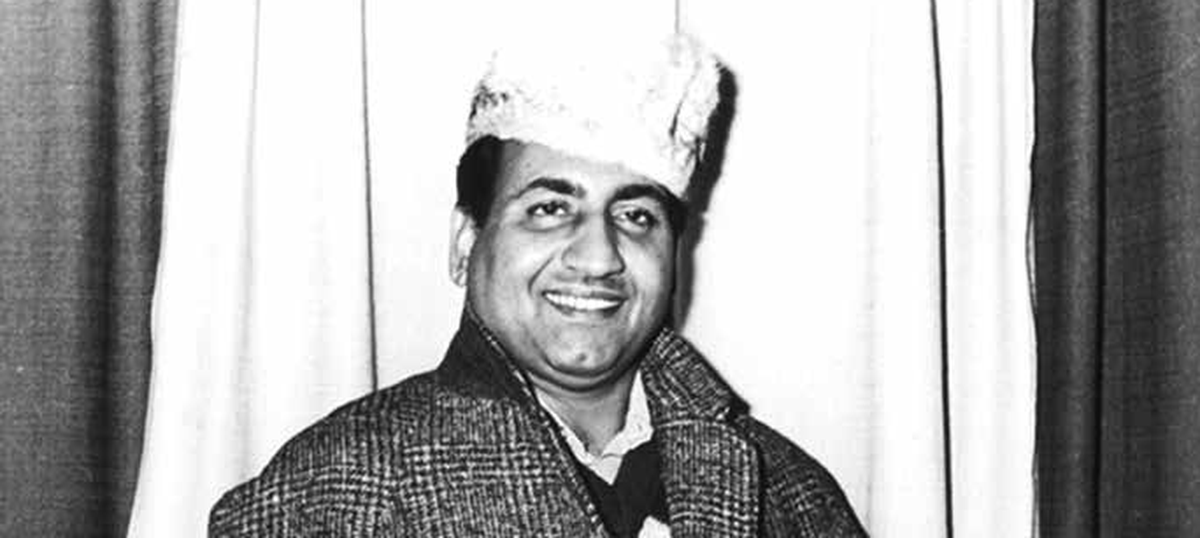
The legendary singer extended his vocal range to foreign languages whenever he got the opportunity.
Mohammed Rafi | Sujata Dev
Mohammed Rafi’s first break as a singer came in 1942, when he sang the duet Goriye ni Heeriye ni with Zeenat Begum for composer Shyam Sunder in the Punjabi film Gul Baloch (1944). Since then, he sang an estimated 4,500-5,000 songs in 14 Indian languages and four foreign languages until his death on July 31, 1980.
Not a bad feat at all for a singer who struggled with even English. In the biography Mohammed Rafi: Golden Voice of the Silver Screen, Sujata Dev writes about how the unlettered singer would politely turn down requests for autographs as his fame grew. “He began practising his signature diligently and when Ammi (mother) enquired why he was wasting reams of paper, he told her that he did not want to deprive his fans and so was learning to sign his name in English,” Rafi’s son, Shahid, told Dev. “Soon he began signing autographs in English and enjoyed doing so. It came as a great compliment for all his efforts when a journalist mentioned that he had the best signature in the industry.”
Rafi was born on December 24, 1924, in Kotla, a village near Amritsar. Singing in English became one of his greatest triumphs, especially since the language was a stumbling block throughout his life. When music composers Shankar-Jaikishen approached him to sing English numbers for a non-film music album in 1968, the singer was hesitant. Maverick actor-writer Harindranath Chattopadhyay , an ardent fan of the singer, wrote the lyrics. He convinced Rafi to take up the assignment, helping the singer perfect his diction for the recording. The two songs were Although we hail from different lands, based on the same composition as Baharon phool barsao (Suraj, 1966), and The she I love, based on the composition Hum kaale hain toh kya hua (Gumnaam, 1965).
Rafi’s English songs pale in comparison to the command he had over Hindi songs but never one to back down, he made a valiant effort to overcome his fears and grasp his limitations as a singer. It also gave him the courage to test his vocals in other foreign languages such as Dutch, Creole and Persian.
In this clip, Rafi sings in Creole, the local language of Mauritius, when he toured the country in the 1960s. He sings Mo le coeur toujours soif zot l’amour camarade (My heart will always be thirsty for your love, my friends), based on the tune of Ehsaan mere dil pe tumhara hai doston(Gaban, 1966).
‘Mo le coeur toujours soif zot l’amour camarade’.
This video clip shows Rafi performing at a concert in Dutch. He sings Ik zal jou nooit vergeten al zal ik in India zijn (I will never forget you, although I will be in India). The music is by Shankar-Jaikishen from the composition Baharon phool barsao, which remains immensely popular among Rafi fans.
https://www.youtube.com/watch?v=vz2piQTmraY
‘Ik zal jou nooit vergeten al zal ik in India zijn’.
For the Persian track Aye Taaza Gul (O fresh flower), Rafi collaborated with Afghani singer Zheela.
‘Aye Taaza Gul’.
In Mohammed Rafi: Golden Voice of the Silver Screen, Sujata Dev writes, “Kersi Lord, the multi-faceted musician had a long association with Rafi. He also happened to be the singer’s next door neighbour. ‘I remember once an Iranian couple had come to India and they wanted Rafi Sahab to sing an Iranian song. He called me home to play the synthesizer as he sang the song, with a fluency that made it seem as if it was his own mother tongue. The couple was left spellbound.”
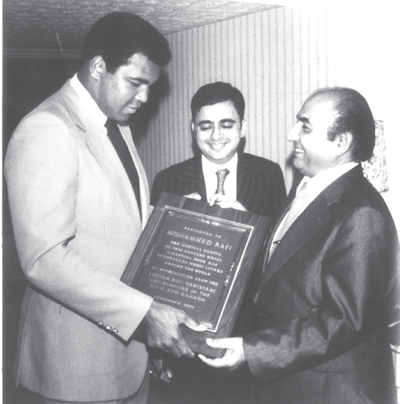
Boxer Muhammad Ali felicitates Rafi in Chicago during one of his tours. Courtesy Sujata Dev’s ‘Mohammed Rafi’.
source: http://www.scroll.in / The Scroll / Home> The Reel> Tribute / by Manish Gaekwad / July 31st, 2016
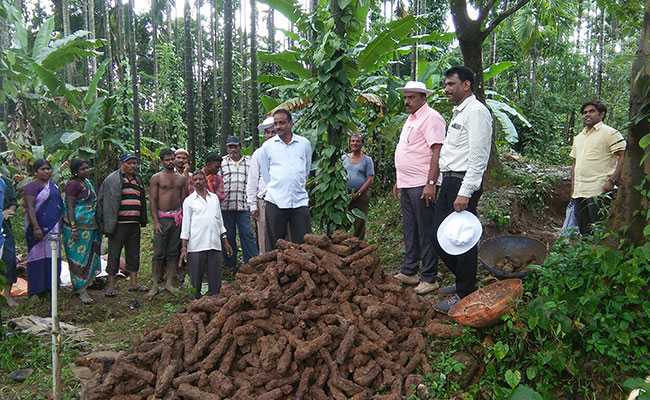
Over 1000 war rockets of Tipu era have just been found in a fort in Karanataka. Tipu Sultan was the first warrior in history to have used rockets in his warfare against the British.
Recall Tipu Jayanthi celebrated by the Karnataka Government under Siddaramaiah and the violent opposition it evoked from the BJP and Hindutva forces who overlooked Tipu Sultan’s fierce fight against British rule and only focused on his Islamic identity. An Union Minister publicly refused to participate in the Tipu Jayanti celebrations.
The fanatical opposition to Tipu Sultan by BJP and its top leadership has been so intense that it did not even accept the speech of President of India Ramnath Kovind who while addressing the Karnataka Assembly appreciated Tipu Sultan, among others, and flagged his pioneering role in employing the first ever rocket in the history of warfare against the British.
In their blind opposition to Tipu Sultan just because he was a Muslim, the BJP leaders of Karnataka did not hesitate even to diminish the dignity of the President of India by refusing to acknowledge his speech and dismissing it as as a draft prepared by the then Karnataka Government. Even Prime Minister Narendra Modi while campaigning for BJP candidates in the Karnataka elections sarcastically said that the Congress Government was celebrating the Jayanti of “Sultans”.
Let us be mindful of the fact that a sketch of Tipu Sultan finds a prominent and place in the calligraphed copy of the Constitution where the sketch of Lord Ram, Akbar and other outstanding figures of Indian mythology and history occupy a hallowed place.
It is not that President Kovind is the first President of our Republic who invoked Tipu Sultan’s glorious legacy. Earlier President K. R. Narayanan in his speech delivered at the banquet hosted by the President of the French Republic, Jacques Chirac, on April 17, 2000 in Paris referred to the correspondence exchanged between Tipu Sultan and Napoleon Bonaparte for the purpose of forming a grand alliance to defeat the British and throw them out of India.
In an appendix of the publication, The Sword of Tipu Sultan, authored by Bhagwan Gidwani, there is a text of letter written by Napoleon to Tipu Sultan bringing out the strategic affinity and understanding between India and France in the late 18th century.
Napoleon wrote in the letter to Tipu Sultan : “You have already been informed of my arrival on the borders of the Red Sea, with an innumerable and invincible Army, full of the desire of delivering you from the iron yoke of England.”
Before the letter could reach Tipu Sultan, the British intelligence succeeded in intercepting it. Then President Narayanan in his aforementioned banquet speech rsaid: “…Napoleon’s demarche perhaps underlined the strategic affinity that links India and France and the responsibility we hold in creating a more equal and democratic inter-national order in the multipolar world.”
It is all the more significant to note that the concept of ” creating a more equal and democratic inter-national order in the multipolar world ” was taken up by Narayanan by invoking Tipu Sultan along with Napoleon who is a national hero for the French. I recall that the leadership of France deeply appreciated this speech and thanked the then Indian President for contextualizing the strategic dialogue started between the two countries in the 21st Century by referring to the strategic understanding forged in the 17th Century.
Abdul Kalam in his writings published before he became President of India had outlined Tipu Sultans stellar contributions as the first warrior in history of warfare for having used rockets against the British who were completely on the defensive. The account given by President Kalam of the rockets used by Tipu Sultan in his war against Britishers makes a fascinating read and the younger generation should be educated about it. He also refers to the Royal Artillery Museum, London that has exhibited the rockets used by Tipu Sultan with the claim the he became the first warrior to do so.
It is rather fascinating to note that the French Revolution and its ideals deeply impacted Tipu Sultan and he celebrated the Revolution with great fervour. Possibly he was the first monarch in India who remained wedded to the enduring ideals of the Revolution- liberty, equality and fraternity- and planted a tree in Srirangapatnam to commemorate it. He enlisted himself as a member of the Jacobin Club which constituted one of the prominent political formations of the Revolution proclaiming egalitarianism and affirming a social order informed by liberty, equality and fraternity.
His strategic vision encompassed in its scope a modern navy which he founded in 1796 and set up two dockyards where ships could be used and equipped with necessary facilities for conducting warfare. It greatly supplemented his military capability based on his land based armoury and armed forces.
His critical understanding that a strong economy could sustain a strong military paved the way for him to take manifold measures to augment and expand trade and commerce and set up a chain of industries. His farsightedness in understanding the danger posed by the advancing British forces in the 18th century stood him out as an unparalleled leader with a firm grasp over military and strategic affairs. British historians have recorded his accomplishments with admiration. And recorded the fact that the conditions of the peasants of Mysore were far better than their status in the British provinces of that era.
Historians have recorded that Tipu Sultan liberally gave grants to numerous Hindu shrines and respected the faith of others. Such a legacy rooted in respecting all religions makes Tipu Sultan relevant for our contemporary period which is witnessing majoritarian tendencies.
He relentlessly fought against British occupation and aggression and eventually attained martyrdom. His heroism and bravery to fight against colonial subjugation constitutes an important portion of Indian history. It is important to celebrate that legacy and enrich it.
Jawaharlal Nehru in his Discovery Of India wrote “Haider Ali and Tipu Sultan .. inflicted a severe defeat on the British and came near to breaking the power of the East India Company.” Such a glorious phase of Tipu Sultan who almost broke the power of the East India Company and who remained wedded to ideals of French revolution inspires India of twenty first century. We need to immortalize it by affirming its enduring value which is far above party politics and ideological rivalry.
As the twenty first century India faces threat from Hindutva forces engaged in lynching people and polarizing them in the name of cow protection, love jihad and religion we need to reinvigorate the legacy based on liberty, equality and fraternity which remained at the heart of the French Revolution, guided Tipu Sultan and inspired our freedom fighters and the framers of our Constitution to shape the destiny of India based on progressive values.
(S.N.Sahu served as Officer on Special Duty to late President of India K.R.Narayanan and also as Director in Prime Minister’s Office under Manmohan Singh).
source: http://www.thecitizen.in / The Citizen / Home / by S.N. Sahu / July 30th, 2018
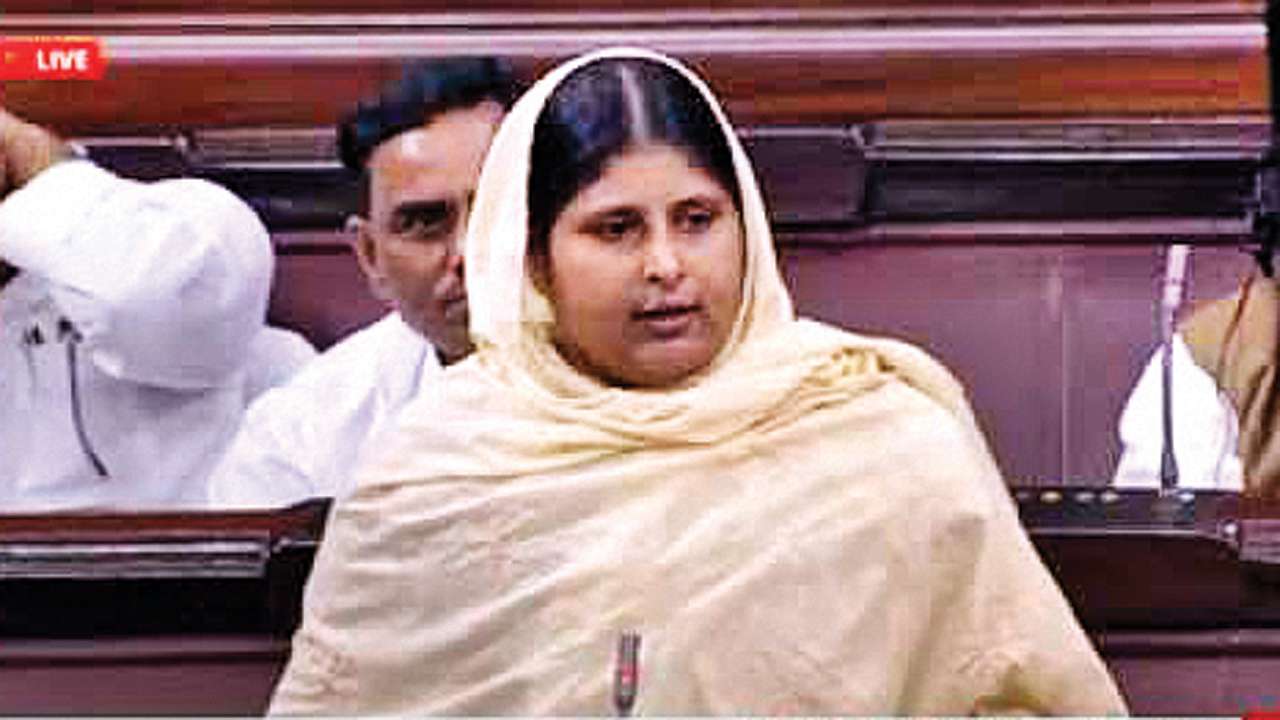
Kahkashan Parveen File photo of JD(U) member Kahkashan Parveen
In the Rajya Sabha the proceedings were disrupted as members of several parties stormed the well over various issues including India’s biggest bank scam and special package for Andhra Pradesh, as soon as the listed papers were laid.
Chairman M Venkaiah Naidu did not wait and adjourned the proceedings till 2:30 p.m. observing, “One week has gone waste. This is no good. This is sad.”
Before adjourning the house, Naidu announced the nomination of JD(U) memberKahkashan Parveen on the panel of presiding officers to conduct the proceedings of the House, making her the first woman to be included in the panel in the recent times.
The move came a day after the Women’s Day when several members demanded inclusion of a woman member in the panel, which was agreed to by the Chairman.
Parveen would replace Basawaraj Patil, whose term expires on April 2, Naidu said, adding that she has been a mayor and the chairperson of the Bihar Mahila Aayog.
When senior Congress member Viplove Thakur who had demanded the inclusion of a woman in the presiding officer’s panel, rose to thank him, Naidu, in a lighter vein, said he wanted to nominate Thakur, but she would have lost her voice in the panel.
“Viplove, in our language, means revolution,” he said.
When the Upper House reassembled to take up the Private Members’ Business, Pramod Tewari of Congress tried to raise a point of order on the issue of the banking scam.
However, Deputy Chairman P J Kurien disallowed him and instead asked him to persuade his protesting party colleagues to return to their seats from the well.
source: http://www.dnaindia.com / DNA / by DNA Correspondent / March 10th, 2018
With the demise of Dr Naseer Ahmad Shah (January 5, 1929 – October 11, 2017), an era is over. A key decision maker in the health and medical education, he has many things to credit.Saima Bhatmeets some of his students, contemporaries, his widow Dr Girija Dhar, who died on July 13, and daughter to explain the phenomenon called Dr Naseer
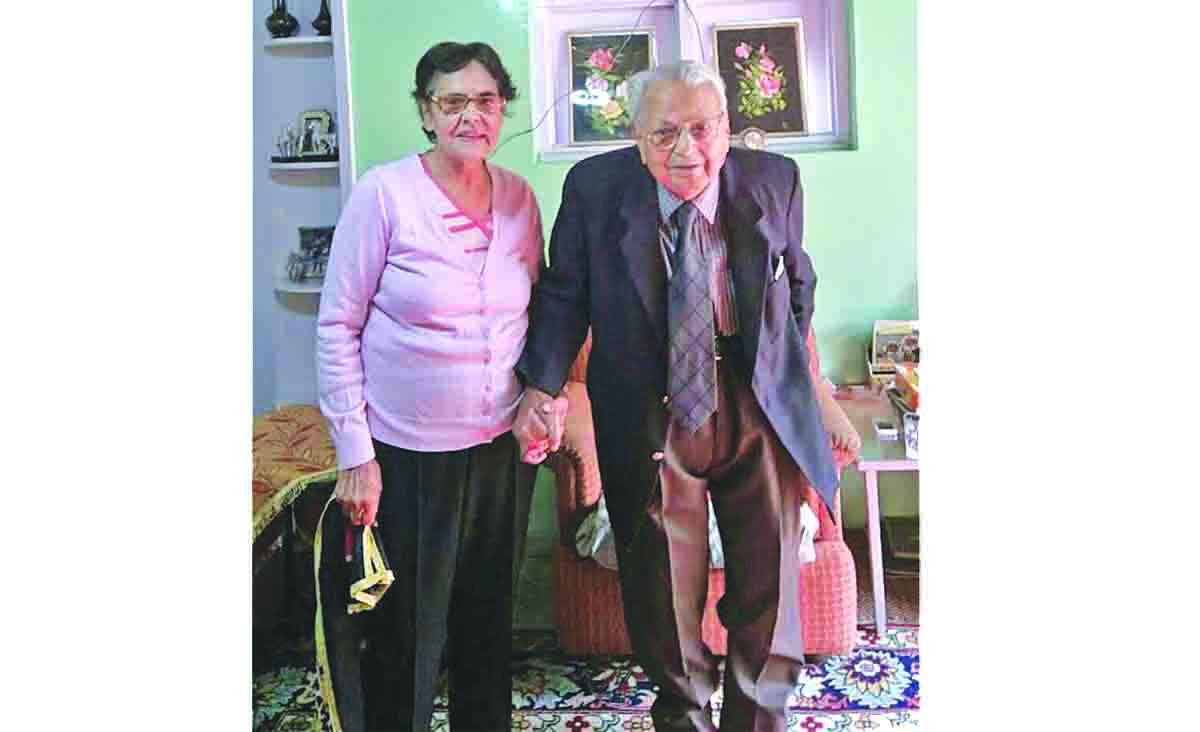
Dr Naseer Ahmad Shah and Dr Girija Dhar
In the first week of October 2017, Noor Jahan, a lady in mid-60s was seen wandering in the corridors of Valley’s only women hospital, Lala Ded. Her only concern was to know about the well-being of her doctor, Dr Naseer. She was perturbed after hearing that “Dr Naseer is unwell.”
Not knowing Dr Naseer’s address, she knocked at the doors of all the senior doctors whom she thought could help her get exact information. She had a belief that only Dr Naseer knew “the treatment of her ailment.”
A week later, on October 11, 2017, the lady lost hope when the news broke about Dr Naseer’s demise. With the death of Dr Syed Naseer Ahmad Shah, at his at Kral Sangri, Nishat residence, an era ended.
As the relatives were preparing for his funerals, not able to comprehend the loss, Kashmir’s renowned gynaecologist, Dr Girija Dhar had a major heart attack. Dhar was Shah’s wife. As an ambulance drove her to the hospital, the coffin moved to the cemetery.
Dr Naseer was an icon, his students say. They termed his era in Government Medical College (GMC) as ‘golden era’ of medical education. Nobody before or after him, they insist, could match what he gave to GMC.
Born on January 5, 1929, in an official quarter in Booniyar (Baramulla), where his father, Ahmad Ali Shah was posted as Forest Range Officer, Dr Naseer’s family has roots in Teetwal village of Karnah. Then, it was part of the Muzaffarabad district in the erstwhile state of Jammu and Kashmir.
The family was well-educated and most of his siblings were serving in good positions, remembers Dr Muneer Masoodi. Syed Nazir Ahmad Shah retired as district and session judge, Syeed Ahmad Shah retired as DIG police, Zameer Ahmad Shah retired as Major in the army, Mehmooda Ali Shah retired as principal of Women’s college M A Road Srinagar. Rehana Jalaluddin Qureshi, remembers Dr Masoodi, also belonged to them.
Dr Masoodi joined GMC Srinagar the month Dr Naseer opted for his voluntary retirement.
The family, according to Dr Javid Khan, a student of Dr Naseer and also a Teetwal resident, has significantly contributed to raising the graph of education in the Valley. “We have a renowned shrine near our house that actually belongs to Dr Naseer’s grandfather,” Javed said. “But his father decided to move out of that place though all their relatives are still living there.”
Dr Naseer had an interesting history. Soon after he finished his MBBS at King Edward Medical College, Lahore, Naseer, according to Meera Khana’s book A State In Violent Peace was arrested in Pakistan for his alleged role in spying. The allegation was later proved to be baseless but only after spending nine months behind the bars.
The time in Jail as shared by Dr Naseer with Khana was spent imagining the long queues of patients. Once out, he was sent to Srinagar, primarily because of his sister Miss Mehmooda’s influence.
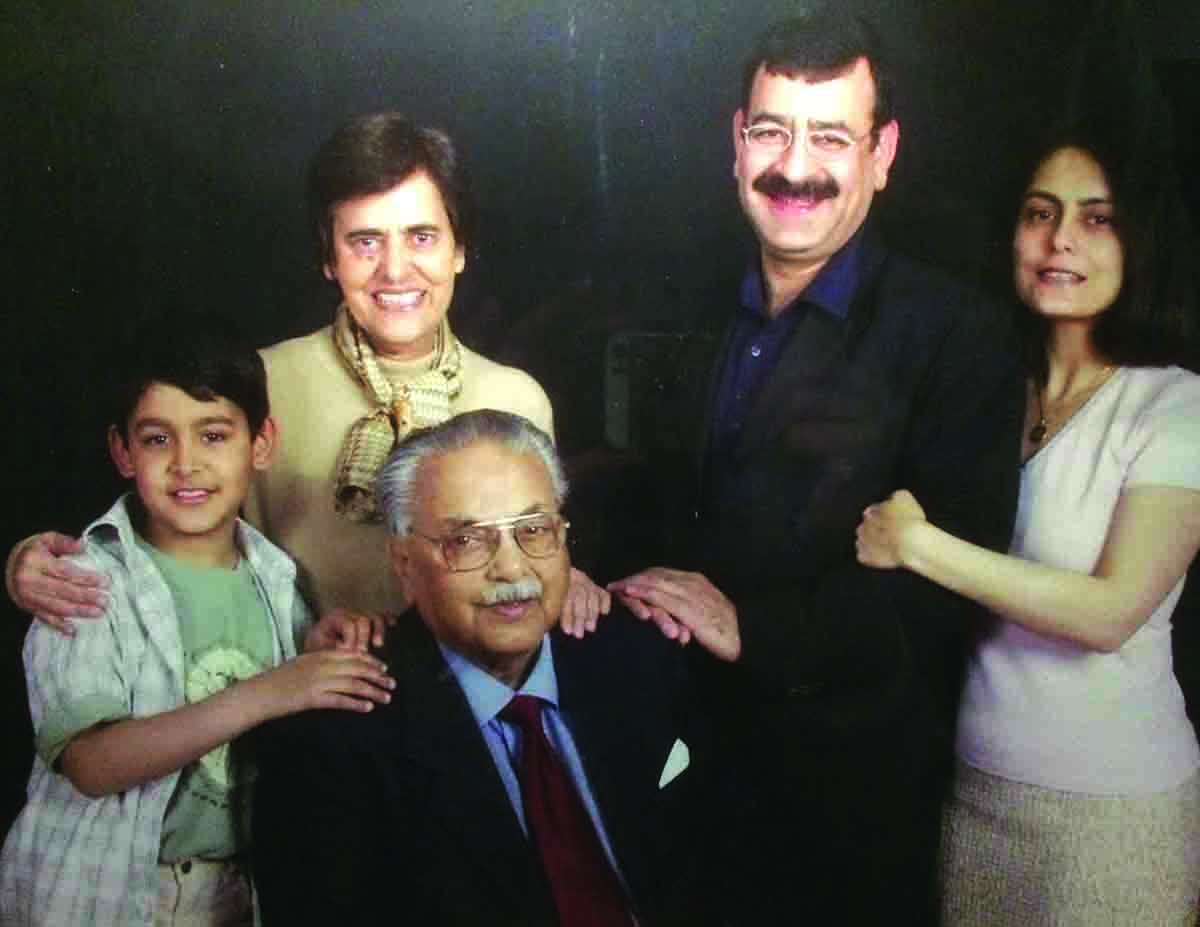
Dr Naseer Ahmad Shah and Dr Girija Dhar with their daughter, son-in-law and grandson.
Back home in the mid-1950s, Dr Naseer tried to look for a job. But Sheikh Muhammad Abdullah was the reason he could not get it, says one of his student on condition of anonymity. This was despite the fact that Sheikh had stayed with Shah in Pakistan, earlier.
“I vividly remember during the college days Sheikh Sahib used to stay with him in Pakistan but once in Srinagar, Sheikh never helped or supported him,” he said.
Literally heartbroken, Dr Naseer left for the United Kingdom to pursue higher education. Once there, he completed his MRCP and became the member of the Royal College of Physicians in London. With one more diploma, he became the first qualified specialist in tropical diseases in northern India.
Specialisations apart, it was his stay in England where he met the love of his life, a Pandit girl, who later became his wife. The couple took seven years to decide whether to marry or not. Finally, the marriage took place on February 05, 1965.
Recuperating from the loss of losing a partner of over five decades and a recent heart attack, Dr Girija Dhar remembers their stay in England and situation before the final call of the marriage.
“We knew each other before as our families knew each other. “Actually we had a lot of understanding and many of our ideas were very similar. He was not a very religious man nor was I, so we thought we won’t do any harm to any religion by marrying each other but still, it took us seven years to decide if we should really marry.” Dr Girija said with a giggle.
Aware of the societal compulsions, the couple before coming to Srinagar decided not to disclose about their marriage but “the news reached Srinagar before we landed.”
Back home, the couple, as per their plan, started living separately. Later, Dr Girija’s mother, a widow, invited Dr Naseer to her home and asked him to take his bride home.
As Dr Girija started to live with her in-laws, she recalls her mother-in-law as a generous lady. Understanding the dilemmas, she told the newly married couple to look for a separate accommodation. “She was of the opinion that if my family wanted to visit me they will hesitate in coming or having any food in our house,” Dr Girija said.
So they got a government accommodation in Tulsi Bagh and started living there. By the time, the couple had joined the newly opened GMC Srinagar, where Dr Naseer was given the post of Assistant professor.
Dr Girija too had a specialisation. When she went to London, women in Kashmir were suffering from a disease Vesicovaginal fistula (VVF), which was usually the outcome of improper care after their delivery. “Because of the high pressure on their bladder, they couldn’t control their urine, they had dribbling urine and as a result of which their families had abandoned them,” Dr Girija said. So in London, she had a special training so that back home she could take care of new mothers in Kashmir.
Dr Naseer rose through the ranks, quickly. Surpassing his two seniors, Dr Karnal Koul and Dr (Prof) Ali Jan, the government led by GM Sadiq appointed him as the Principal and Dean faculty of medicine, GMC Srinagar in 1969. Dr Koul was appointed as director health and Dr Ali Jan retired voluntarily. Naseer retained the position for 12 years, till he opted for premature retirement in November 1981 at the age of 52 years. The reasons were ‘personal’.
The era of Dr Naseer was “golden”, says people who have seen him working. During his tenure, the college received recognition by Medical Council of India (MCI). He started multiple academic activities in the Medical School including the first-ever national conference in Pharmacology. A postgraduate laboratory was established in the Medical School for advanced biochemical laboratory tests. He strongly supported post-graduation in various specialities and used his personal influence to get it started and recognized by the MCI.
An outreach programme, the Chitranjan Mobile Hospital was his significant contribution. This hospital extended high-quality healthcare to far-flung regions of the state including border regions like Karen, Kargil, Karnah and Gurez.
Making the medical graduation impactful, GMC Srinagar had reached No 4, in an all India ranking. “This made a big impact as the acceptability of medical students at national and international level became easier and smoother,” says a student.
In between, he was also awarded the prestigious fellowship of the Royal College of Physicians, for his performance as a medical profession both as a treating physician and as a medical academician.
Besides medical competence, Dr Naseer raised the bar of GMC in many ways. During those days, Dr Muneer says Prime Minister of J&K would never dare to call the principal of GMC to the secretariat. “But with due respect, they were invited for tea in their houses. And up to Dr Girija Dhar, no principal ever visited secretariat.”
Recalling his student days in GMC, Dr Muneer vividly remembers how Dr Naseer used to book cinema for all of his students and during cultural programme or sports week, Sheikh Abdullah used to join the students. This precedence continued till GM Sadiq’s tenure, Kashmir’s ‘armchair’ Chief Minister for managing the state from his office.
“He was a fatherly figure for all of us, including the international students who used to come to GMC Srinagar under an exchange programme. He even used to buy books for the students who couldn’t afford it,” Dr Muneer adds.
There are little disagreements that some of his students talk about. One is that he permitted his daughter to avail the backward certificate to get into GMC despite being a proud city resident.
A farsighted person, Dr Naseer, however, changed lives. During his tenure as the principal, he was known for his ‘recommendations’. “I once approached him for my post-graduation seat but instead he advised me to work hard. I felt very bad that time but in the long run, that advice helped me a lot to grow,” remembers one of his students.
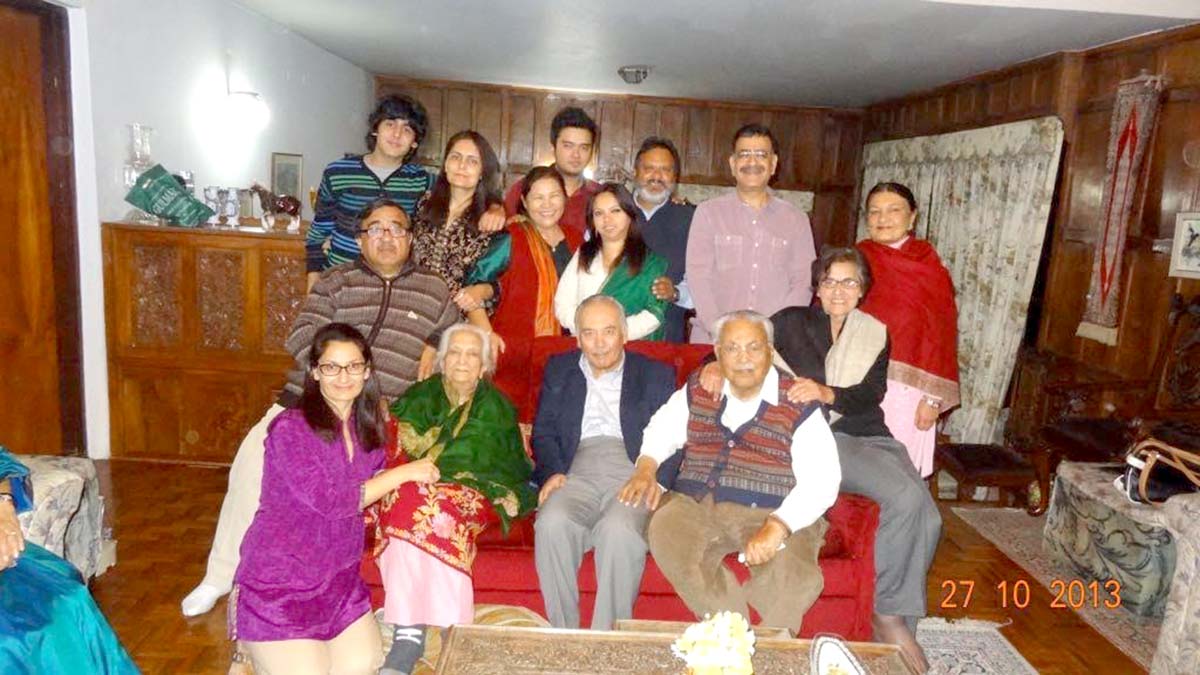
Family picture of Dr Naseer Ahmad Shah.
Dr Naseer helped students who were in extracurricular activities. Dr GM Malik, his student who later became a GMC faculty says he was one among the topmost students of his batch with Dr Jalal ud Din (medicine) and Dr Ashiq Hussain (surgery), “We were dropped from the MD list as he had started giving preferences to the students who were active in cultural programmes.” Malik said they had to fight with the government to cancel the list.
Malik once interviewed Naseer for his medical journal and asked him this uncomfortable question. “He accepted the fact that he used to help ‘needy’ people by going out of the way. And some people below the ladder ‘misused’ their position,” Malik said. “He was generous so he would help anybody but that was at the cost of meritorious students.”
Cited as “personal reasons” for opting voluntary retirement had actually many contributing things. The primary reason being, Dr Naseer was not “happy the way the government was treating him.”
“During Sadiq’s time he enjoyed absolute powers up to minister level and every decision was taken by him which include the selection of MBBS as well as PG candidates, even appointments in the health department used to be as per his choice, health secretary too was appointed by him,” says another student, wishing anonymity.
It changed when Abdul Gani Lone became a health and education minister. “Lone got PGI director Dr Santokh Singh as secretary cum advisor to the health department and all the selections were done as per PGI Chandigarh guidelines,” another of his students, who wish to remain anonymous, said. “When Sheikh Abdullah resumed power, DrAllaqbandh was given powers of all associated hospitals and it was parallel to the principal post and in Jammu, the responsibilities were given to Dr Zutshi.”
Dr Malik says, Dr Naseer was short tempered but at the same time he would forgive and forget things, which are the qualities of a great man. “He was a good administrator. He would not bother with smaller things. We as students could freely enter his room. He was never into corruption and he would hardly go to the secretariat. He would settle all student problems in college only,” Dr Malik said. “That was the reason why after so many decades of service, he just had only his home as the main property.”
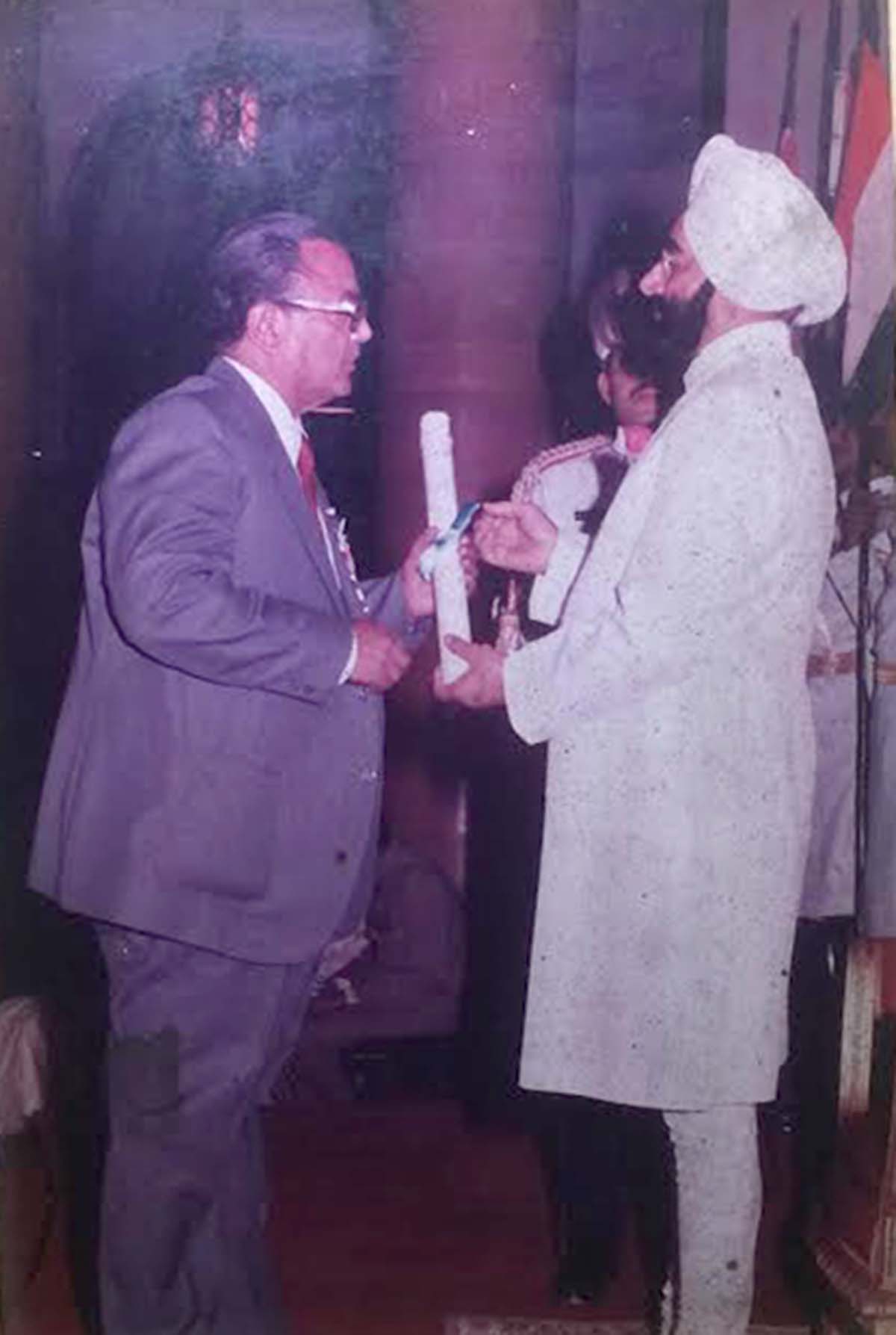
Doctors who served under him said that he was known to stand by his principles. After his retirement, he was appointed as a member of legislative council in 1996, and he held the position for six years, left it in 2002. He was also awarded Padma Shree in 1984.
Dr Naseer being facilitated by then president of India Gyani Zail Singh
Post-retirement, he continued his practice at his Dalgate clinic. On weekends he would visit Gulmarg along with his family where he used to treat the people of Gulmarg and Tangmarg for two decades (the 60s and 70s) free of cost. He even used to distribute medicines and sometimes he would buy medicines for the destitute patients. His contemporaries say his medical practice was highly ethical.
At home the doctor couple had a girl child, Tina Angila Shah, born in 1967. A doctor by profession, 50-year-old Tina is currently practising medicine in England, the place where her parents, met, married and studied. She is married to Anil Koul.
Remembering the day Tina was born, Dr Girija says by then both families had adjusted, reconciled fully and there were great celebrations.
Tina remembers her father as a friend of whom she was never scared off. “My childhood was happy like any other normal child but I was brought up in a very liberal atmosphere where I was encouraged to think. Nothing was enforced on me and I was able to make my own choices.”
By the time Tina was four years old, her family adopted a Ladakhi girl child, Deldun, then 7, who could give company to their daughter all the time.
Deldun, now a senior technician in SMHS, was an orphan and had a posthumous birth. She says those days education was not very common in Ladakh so she came to Kashmir and got a new family.
When Tina was studying in Presentation Convent School, Deldun started her education from Kothi Bagh Girls School, and after completing their 12th exams Tina got admission in GMC and Deldun got interested in Lab and joined Diploma in Medical Laboratory Technology (DMLT).
While in SMHS, Deldun says she is witness to her Dadu (Dr Naseer’s) generosity who helped a number of doctors financially. “He used to call class four employees before retiring and ask them if they have any source of income. In case of negative response, he managed employment for any of their family members,” Deldun said.
After Tina left for England, Deldun decided to stay with the couple till she got married in 1984. “We had a big shamiyana on my marriage and now for the second time it was on his death,” she said and broke down. Deldun’s marriage was a grand affair, she remembers. She said that Indira Gandhi also attended her wedding and she had all Kashmiri cuisine. “All of the father’s rights were paid by Dadu on my marriage. And after that, I used to frequently visit them.”
Deldun says he always used to wear good matching clothes and everything had to be in order, perfect and clean.
Dr Naseer’s address changed many times since 1952. It was Dalgate first, then they moved to Tulsi Bagh and later to 5 Transport Lane, behind SP College and finally to Kral Sangri in late 70’s, which they owned. Dr Naseer was fond of golf.
In March 2016, Dr Naseer had a fall in Jammu and fractured his right arm, which later became a cold shoulder. But Dr Girija says before that fall he had developed some spinal problem. For a complete year, he had no major illness but the problem was with his mobility only.
“He was a great storyteller and had a fantastic memory. If he would have been here, he could have told you each memory with dates,” shares Tina, who herself refused to talk much about her memories saying they are ‘personal’. “Generosity is the word to describe my father.”
But Dr Girija, who does not remember many things now, says that she has now realised what kind of a person he was. “We never boasted about our work but now when I am receiving patients from far-flung areas who come to pay their condolences, I am realising what kind of a person my husband was.”
After taking seven years to decide, the couple lived together for 52 years. The heart attack, moments after Dr Naseer was taken for final burial revealed the bond the two souls shared. As Dr Girija talked about Naseer, her eyes were moist.
source: http://www.kashmirlife.net / Kashmir Life / Home> Obituary / by Saima Bhat / July 21st, 2018
A biopic is being made on Syed Abdul Rahim, the architect of modern Indian football
More than 62 years after an Indian football team came within a whisker of winning an Olympic medal, a Bollywood movie is being made on the Hyderabad coach who made it happen: Syed Abdul Rahim.
“About a year ago, Joy Sengupta, an ad filmmaker, approached me saying he wanted to make a movie about Rahim sahab. I shared all the information with him. They expected I would ask for money. I don’t want money, I want the younger generation to know about the glorious golden period of Indian football and my father’s contribution,” says Syed Shahid Hakim, son of S.A. Rahim and a Dhyan Chand awardee.
Reliving glory
The biopic is expected to bring alive S.A. Rahim’s life, who led a stunning rise of the Indian team in the 1950s. His biggest achievement? Getting a walkover in the 1956 Melbourne Olympics against defending champion Hungary even as its Magic Magyars withdrew due to Hungarian Revolution; beating Australia 4-2 before losing to Yugoslavia 1-4 in the semifinals. At the Asian Games inaugural, Rahim’s team won gold for India as the then Prime Minister, Jawaharlal Nehru, watched from the VIP stand. On Friday, Zee Studios tweeted about its project: “Elated and proud to announce a story never told as @ZeeStudios_ #BoneyKapoor & @freshlimefilms come together for a biopic on India’s legendary #Football coach, Syed Abdul Rahim, starring @ajaydevgn, directed by @CinemaPuraDesi.”
Mr. Shahid Hakim, who played under his father, later coached and was a referee as well before retiring from the National Institute of Sports, Patiala, has been bombarded with calls about his father since then.
The trigger was perhaps Novy Kapadia’s book Barefoot to Boots that’s partly instrumental in spotlighting the coach, who was almost forgotten except in the rarefied field of Hyderabad’s football circles. Rahim worked his magic on Indian football teams between 1948 and 1960 bagging Asian Games gold in 1951 and 1962. In the 1960 Rome Olympics, India was jinxed in the death group ‘D’ which had Hungary, France and Peru. India lost to Hungary 2-1 and drew 1-1 with France before losing 2-0 to Peru. It was here that Balaram and P.K. Banerjee scored a goal each. In that period, the Hyderabad police team brought home five Rovers Cup trophies.
Football prophet
Rahim was a school teacher who drifted into football coaching. Noticing that Indian footballers used to dribble needlessly, he came up with the concept of one-touch football. “The player had to get the ball and pass it. A dribble would be considered a foul and a free kick awarded,” says Hakim, as he reels out names of playgrounds in Hyderabad and tournaments that used to be played here.
“People bemoan our football skills. But where are the grounds for children to play? Football is the most democratic game. One ball and two goal posts can engage 22 players. But our government is interested in promoting individual sports. Money, land, academies are gifted to players. Team games get a short shrift,” rues Mr. Hakim, promising to share all the trials and tribulations of his father with the movie-makers. “He was a strict disciplinarian. I was treated as just one of the players. There were so many talented players that we used to hide injuries, lest someone else play and take our slot. He used the 4-2-4 combination before anyone used it,” says Mr. Hakim.
While football grounds have disappeared and the beautiful game is played only by a few expats in Hyderabad, the biopic is sure to make Indians remember a time when India was a name to reckon with in world soccer scene.
source: http://www.thehindu.com / The Hindu / Home> News> Cities> Hyderabad / by Serish Nanisetti / Hyderabad – July 14th, 2018
Maintained in pristine condition, it is used as Army mess.
Saif Gulshan was the residence of Sultan Saleh bin Ghalib al Quaiti, Nawab Saif Nawaz Jung, a prominent noble in the Nizam’s court.
Hyderabad:
The erstwhile Hyderabad state had the largest army in the country, and what is now the Sarojini Devi Eye Hospital was the first hospital for the Army here.
The First Lancers of the Hyderabad Army at Asafnagar is still being maintained in its original condition. All of this was originally part of the Golconda Fort and, not surprisingly, there are two Qutb Shahi-era tombs within this area. The Nizam had great respect for the army.
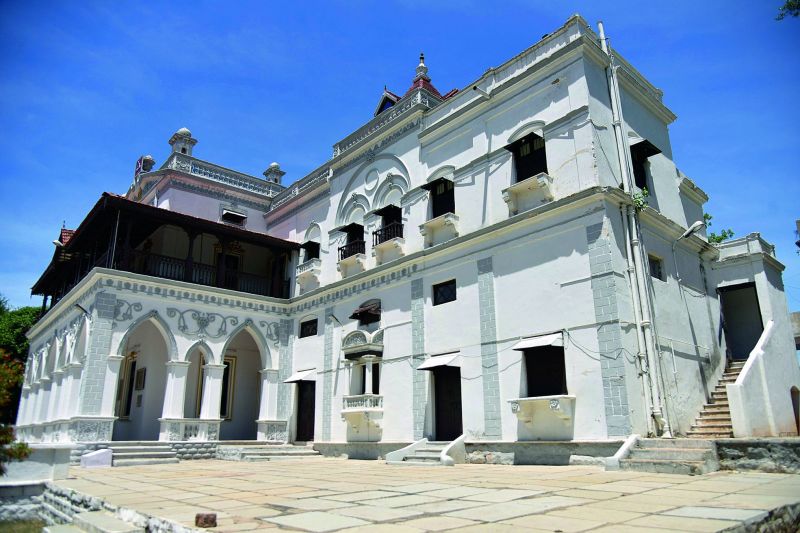
Saif Gulshan was the residence of Sultan Saleh bin Ghalib al Quaiti, Nawab Saif Nawaz Jung, a prominent noble in the Nizam’s court. Constructed in 1912 it has a mixture of European and Qutb Shahi styles. This residence is being maintained in pristine condition and is used as an Army mess.
The building has an elevated basement, which seemed to be in style those days. It has been built with great care, leaving a lot of open space, both in the front and at the sides. A well on one side of the house must have been the water source and it must have been an open and beautiful structure. There are many jharokas and the first floor has rooms. The terrace is covered by a low-tiled roof, which is supported on wooden posts.
The beautiful facade of the building has been well-maintained by the Army. A lot of wood, stained glass and stucco work has been used in the building, which has verandas on three sides, each one ending in a room. The windows look out to this narrow veranda, which has exquisite tiled flooring. The veranda has Gothic arches and since the entire building is on an elevation, it looks imposing. European influences and Indian elements blend wonderfully well in the building.
There is another impressive building about a 100 yards away. This too was connected to the army and officials must have lived here. Or it could have been a zanana. Smaller in size, that building is surrounded by wooden eaved projections with windows on all sides. There are four rooms with one in each corner and in those days the centre used to be a courtyard, open to the sky. It is now covered and is like a big hall. In 2012, the building bagged an Intach award. According to the citation, Awadh bin Abdullah, the founder of the al Quaiti clan, was the first to travel to India in the last quarter of the 18th century. During his brief stay in the country, Awadh is said to have served the Nizam during the Second Mysore War. His son Omar migrated to India in the early 19th century and after a brief stint with the Raja of Nagpur, ended up in Hyderabad as head of the Arab mercenaries who formed a bulk of the Nizam’s irregular troops.
The main structure of the building is flanked on either side by projecting blocks. “The structure is flanked on either side by projecting blocks crowned with tiled pyramids lending majesty to the structure. The central portion is surmounted by a highly decorated pediment which bears the monogram of Saif Nawab Jung in stucco,” says the Intach citation.
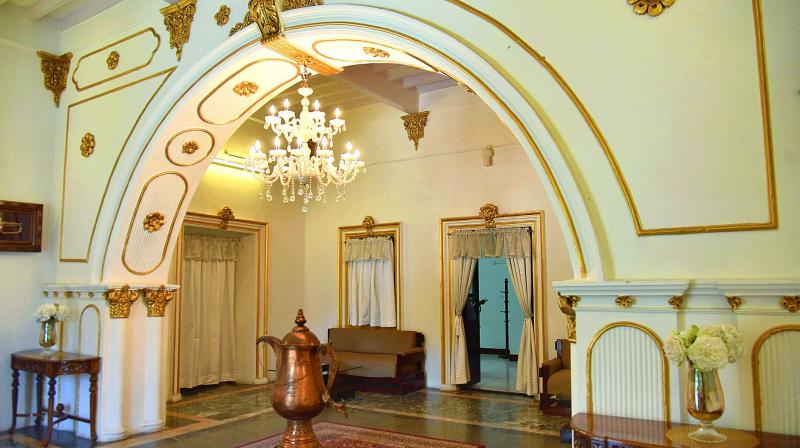
The interiors show that the building was well-planned, with huge arches and windows and doorways with stucco to highlight the structure.
A lot of wood has been used and there is a wooden staircase leading to the first floor. Elegance and form are the highlights of this building.
This building stands along with the other smaller building in the midst of a forest and a fountain, while a road nearby brings in the sound of traffic.
Well-kept and still maintained in its original form of limestone and brick, with a little bit of granite, the Army must be lauded for the care it has invested in maintaining this landmark building.
source: http://www.deccanchronicle.com / Deccan Chronicle / Home> Nation> Current Affairs / by Lalitha Iyer, Deccan Chronicle / July 15th, 2018
The coins till the police action were in the pattern of Moghal coinage before it was changed in 1858.
Nizam VII Mir Osman Ali Khan
Hyderabad:
The first series of paper currency introduced during the rule of Nizam VII Mir Osman Ali Khan were printed in London.
The currency notes of one five, 10, 100 and 1,000 rupee denominations were widely appreciated for their design and quality of paper, said Mr Amarbir Singh, an eminent numismatic. “The need for having paper currency was felt as there was a shortage of metal after World War I,” he said during a lecture here.
The notes had Islamic resemblance without any pictures of animals, plants or buildings and contained four languages — Urdu, English, Kannada and Telugu.
“The Nizam ensured that they were without any signature of the finance committee member. Only when they landed in the Hyderabad did they gain complete form,” Mr Singh said. The second series of notes, smaller in size, were introduced in the 1930s and printed at the Government Printing Press at Malakpet.
The regular coinage of Hyderabad in large circulation was the one rupee coin, the Osmania ‘Sicca’. The one rupee note was unpopular, and people were put off by its black colour.
The coins till the police action were in the pattern of Moghal coinage before it was changed in 1858.
Hyderabad had a mechanised mint at Saifabad where gold silver and copper coins were printed.
The highest coin for public circulation was silver one rupee.
source: http://www.deccanchronicle. com / Deccan Chronicle / Home> Nation> Current Affairs / by Asif Yar Khan, Deccan Chronicle / July 15th, 2018
Hyderabad boy Muzammil Khan and son of retired IPS officer, AK Khan grabbed All India Rank (AIR) 22 in the Union Public Service Commission (UPSC) examination.
Hyderabad :
Hyderabad boy Muzammil Khan and son of retired IPS officer, AK Khan grabbed All India Rank (AIR) 22 in the Union Public Service Commission (UPSC) examination.
Results of civil services exam for 2016 were declared on Wednesday. Muzammil Khan told Express that he would be opting for Indian Administrative Service (IAS). Khan had attempted civil services exam four times earlier. He was even selected two years ago and recently finished his probationary period as an officer with Indian Railways. However, he had been aiming for IAS and gave the exam during his service with railways. Earlier he had worked as a Probationary Officer with the State Bank of India. Khan did his under engineering from BITS Pilani. For the UPSC Mains exam, he chose Anthropology.
AP students shine
A total of 1,099 candidates were selected in the exam. Kothamasu Dinesh Kumar from Vijayawada, secured rank 6. Gopalakrishna Ronanki from Srikakulam in AP bagged rank three.
Kothagudem boy secures rank 36
Kothagudem boy, Mikkilineni Manu Choudary bagged rank 36 on his first attempt. He said, “I knew I would be in the top 1,000 ranks but was not expecting to get 36. On a daily basis for one year I put in an average of nine hours in preparing for the examination.”
source: http://www.newindianexpress.com / The New Indian Express / Home> States> Telangana / by Express News Service / June 01st, 2017
Recalling ups and downs in his career as a police officer, 1981-batch IPS officer Abdul Khayyum Khan, (known as A K Khan) said that police service is the best job in serving people and only a police officer can directly help the public.
ACB director general AK Khan speaking during his retirement programme in Hyderabad on Saturday | Express photo
Hyderabad :
Recalling ups and downs in his career as a police officer, 1981-batch IPS officer Abdul Khayyum Khan, (known as A K Khan) said that police service is the best job in serving people and only a police officer can directly help the public. Khan retired as director general of the Anti Corruption Bureau (AC B), Telangana State on Saturday.
He is the first chief of AC B after formation of Telangana State. Khan is also the chairman and vice-president, Telangana Minorities Residential Educational Institutional Society. At the age of 25, Khan finished his training as IPS probationary off i cer and was pos ted i n Vijayawada. He further stated that when he took charge as the DG of AC B, the conviction rate was low.
“I took measures by providing proper training to public prosecutors and staff of the agency that helped in enhancing conviction rate to 70 per cent in the AC B. The AC B staff have been trained in various ways in detecting cases of illegal assets and trap the accused officials,’’ Khan said. Khan has worked in various important capacities as SP Nalgonda, SP Prakasham, SP East Godavari and DCP traffic, West Zone. On promotion, he worked as DIG , Guntur, DIG, CID and later as IGP.
He was also posted as Additional Commissioner of Police, L&O and Additional Commissioner of Police, Traffic in Hyderabad and later as Commissioner of Police in Visakhapatnam. On promotion as Additional DGP, he worked as DG Fire Services, Additional DGP (L&O) and Commissioner of Police, Hyderabad. He also worked as Vice Chairman and Managing Director of APSRTC.
source: http://www.newindianexpress.com / The New Indian Express / Home> States> Telangana / by Express News Service / January 01st, 2017
Maulvi Barkatullah Bhopali believed the spirit of Marx’s thought and divine religions was the same. “The objective of both is to provide a dignified and peaceful life to the oppressed.”
Maulvi Barkatullah Bhopali, who was born 164 years ago this month, was a glorious standard-bearer of the Indian independence movement. He toured Great Britain, Europe, Japan and America, in addition to the Soviet Union in connection with the struggle against British imperialism. He was among those few ulema who travelled to Moscow in May 1919, just a short period after the Bolshevik Revolution; he saw the conditions there with his own eyes, and met Lenin and other Bolshevik leaders. During his stay in Moscow, he said during an interview with the Izvestia newspaper:
“I am not a communist or a socialist, but right now my political program includes throwing the British out of Asia. I am a staunch enemy of European capitalism in Asia. Therefore, there is complete compromise between myself and the communists over these objectives and we are allies on this field. I do not know what shape the future events will take, but what I can definitely say is that the famous appeal of the Soviet government of Russia, in which the people of all nations have been requested to rise up and conduct jihad against capitalists, has greatly influenced us, and what we like more than that is that the Soviet Union has revealed all the secret agreements (between Russia and Great Britain) whose objective was to enslave other nations, especially the Eastern nations. Not only this, but the Soviet Union has unilaterally cancelled all such agreements. Russia accepts the principle of equality and evenness between all small and great nations. The ideas of the Bolsheviks, which we call socialism, are also making a place in the hearts of the common Indian people.”
In his book, Bolshevism and Islamic Nations, Maulvi Barkatullah writes, “The actual spirit of Marx’s thought and divine religions is the same. The objective of both is to provide a dignified and peaceful life to the oppressed, punished people of god by freeing them from cruelty and oppression.”
“The philosopher Plato has presented such a map of his ideal Republic in which ownership would be common and public. The provision of basic needs, sources of entertainment, opportunities for employment will be equal for all. Because of the progress of education, every individual of the nation will benefit from knowledge in a way that his every act will be reasonable and right. These are the basic principles on whose foundation Karl Marx presented the majestic structure, behind which was the knowledge and experience of many generations,” he continued.
Maulvi Barkatullah bemoans the fact that in his time, there is not even a single Muslim kingdom which can be called independent in a meaningful sense. He writes, “Today not even a single independent Muslim state remains because Muslim countries have been subdued at the hands of British imperialism and the dictatorial royal tsar, French or Italian colonialism in the 20th century. They are being fully exploited.”
But he is not hopeless with this situation. He says,
“There is no cause for hopelessness. After the dark night of the czar’s oppression and tyranny, the dawn of human freedom has arisen on the horizon of Russia in which Lenin is giving the good news of human prosperity, sprinkling the light of his ideas like the sun (sic). That grand scheme which was presented 2000 years before by the philosopher Plato, which was transferred as a great heritage from one generation to the other; today the principles and ideologies of this ideal republic are being given practical shape. Under the leadership of Lenin, this is being popularly accepted as a reality. Across the length and breadth of Russia and in Turkistan, the entire arrangement and administration has been given to workers, people employed in agriculture and ordinary soldiers. The equal rights of all classes and nations have been accepted, every individual has been guaranteed a better life.’
Maulvi Barkatullah not only completely supported the Bolshevik government of Russia, but appealed forcefully to the Russian people, especially the Muslims of the eastern region, to support the Soviet government wholeheartedly and array themselves against its enemies so that the successes of the revolution could be defended; and the intervention and conspiracies of the imperialists could be countered.
He says, “Now the time has come that the Muslims of the whole world and Asian nations obtain complete information about Russian socialism, understand those golden principles and accept them with full passion and sincerity. The noble and high objectives hidden in the foundation of this modern system demand that Muslims should completely support and defend it. They should unite with Bolshevik forces to make the aggression of British followers and other tyrant rulers unsuccessful; send their children to Russian schools without wasting time so that they can obtain modern science, high arts, practical physics, chemistry and mechanical technique.’
In her book, Haj to Utopia, Maia Ramnath writes that Barkatullah “single-handedly embodied the overlap between the Bolshevik and Pan-Islamist networks, utilising the connective tissue of the Ghadar infrastructure to do so. She cites a foreign office report of 1915 as saying: “It would appear that Barkatullah was a sort of connecting link between three different movements, namely, the Pan-Islamic, Asia for the Asiatics and the Indian Sedition”. A German diplomat wrote that he was “first in line a nationalist and then a Moslem”.
Maulvi Barkatullah’s was a warrior life. He passed away in San Francisco on September 20, 1927.
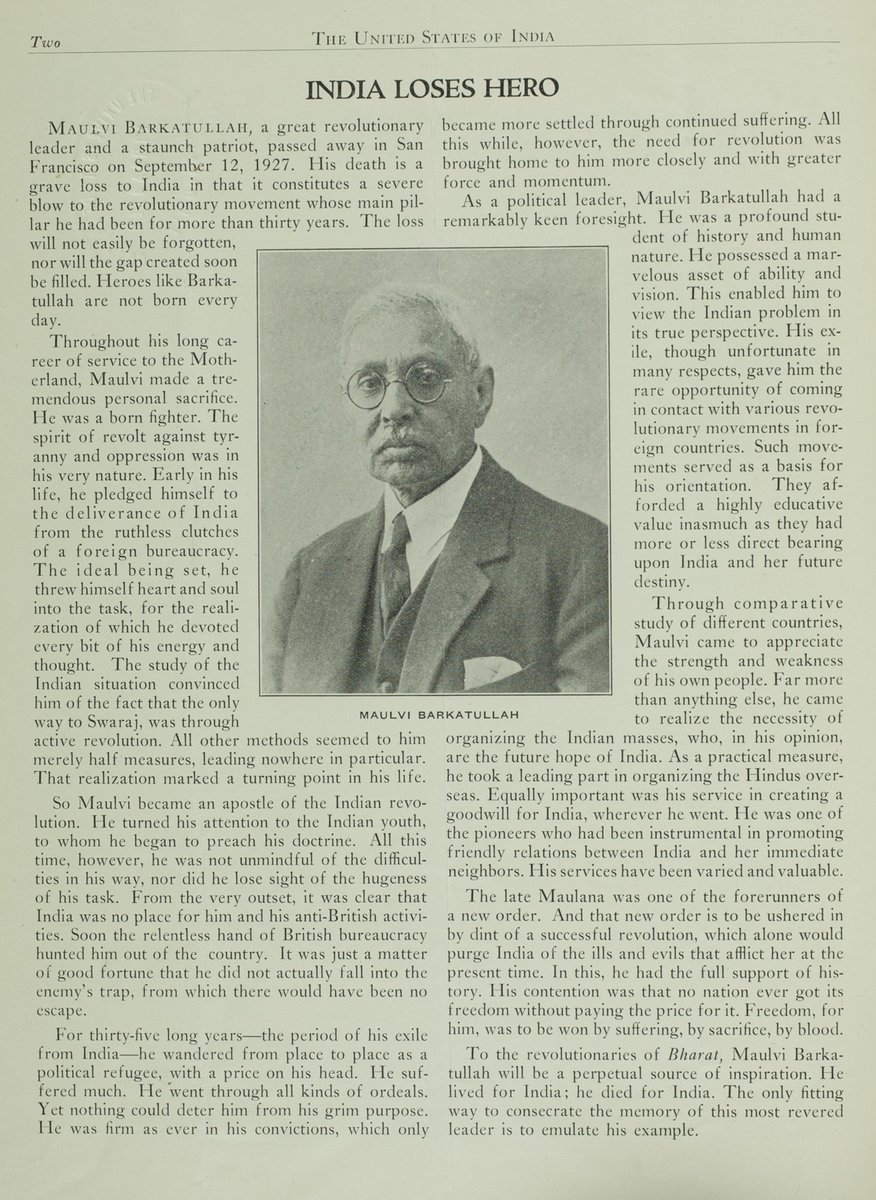
Tribute paid to Barkatullah in the United States of India, a publication of the Ghadar Party in the United States, in 1927. Credit: South Asian American Digital Archive
Barkatullah had been one of those who had backed the Ghadar uprising against the British during and after World War I. In a tribute to him after his death, published in the United States of India, a publication of the Ghadar Party in the US, the magazine wrote:
“To the revolutionaries of Bharat, Maulvi Barkatullah will be a perpetual source of inspiration. He lived for India; he died for India. The only fitting way to consecrate the memory of this most revered leader is to emulate his example.”
Raza Naeem is a Pakistani social scientist currently teaching in Lahore. He is also the president of the Progressive Writers Association in Lahore. His most recent work is an introduction to the reissued edition (HarperCollins India, 2016) of Abdullah Hussein’s classic novel The Weary Generations. He can be reached at: razanaeem@hotmail.com .
source: http://www.thewire.in / The Wire / Home> History / by Raza Naeem / July 15th, 2018