Category Archives: Leaders

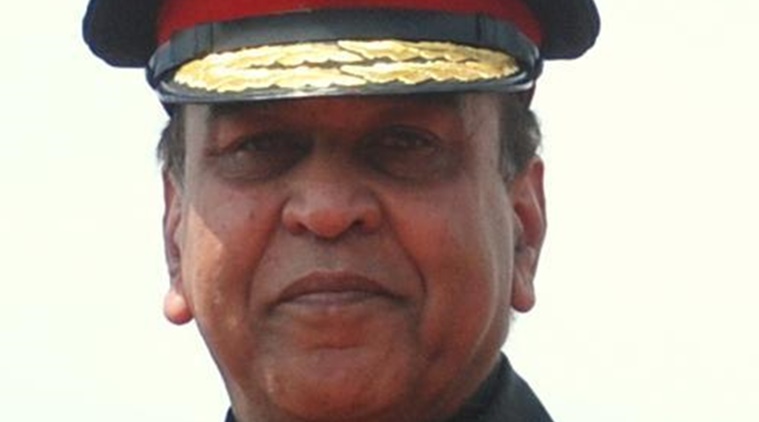
Ex-military secretary Syed Ata Hasnain appointed chancellor Central University of Kashmir

NEW DELHI :

Hasnain (65) has served in Kashmir in many capacities during his career in the Army. The last post he held was that of Corps Commander of the Srinagar-based Chinar Corps. He retired as military secretary in June 2013

Hasnain (65) has served in Kashmir in many capacities during his career in the Army

Former military secretary Lt General Syed Ata Hasnain has been appointed as the chancellor of the Central University of Kashmir, according to a notification issued here Friday. “The President of India in his capacity as the Visitor of the Central University of Kashmir is pleased to appoint Lt Gen Syed Ata Hasnain, former Military Secretary, Indian Army, as the chancellor of the university, for a term of five years,” it stated. The notification was issued by the registrar of the university.

Hasnain (65) has served in Kashmir in many capacities during his career in the Army.

The last post he held was that of Corps Commander of the Srinagar-based Chinar Corps.

He retired as military secretary in June 2013.

source: http://www.indianexpress.com / The Indian Express / Home> Education / PTI / Srinagar – July 13th, 2018

Woman In Khaki

LADAKH / JAMMU & KASHMIR :

ShaheenMPOs14jul2018

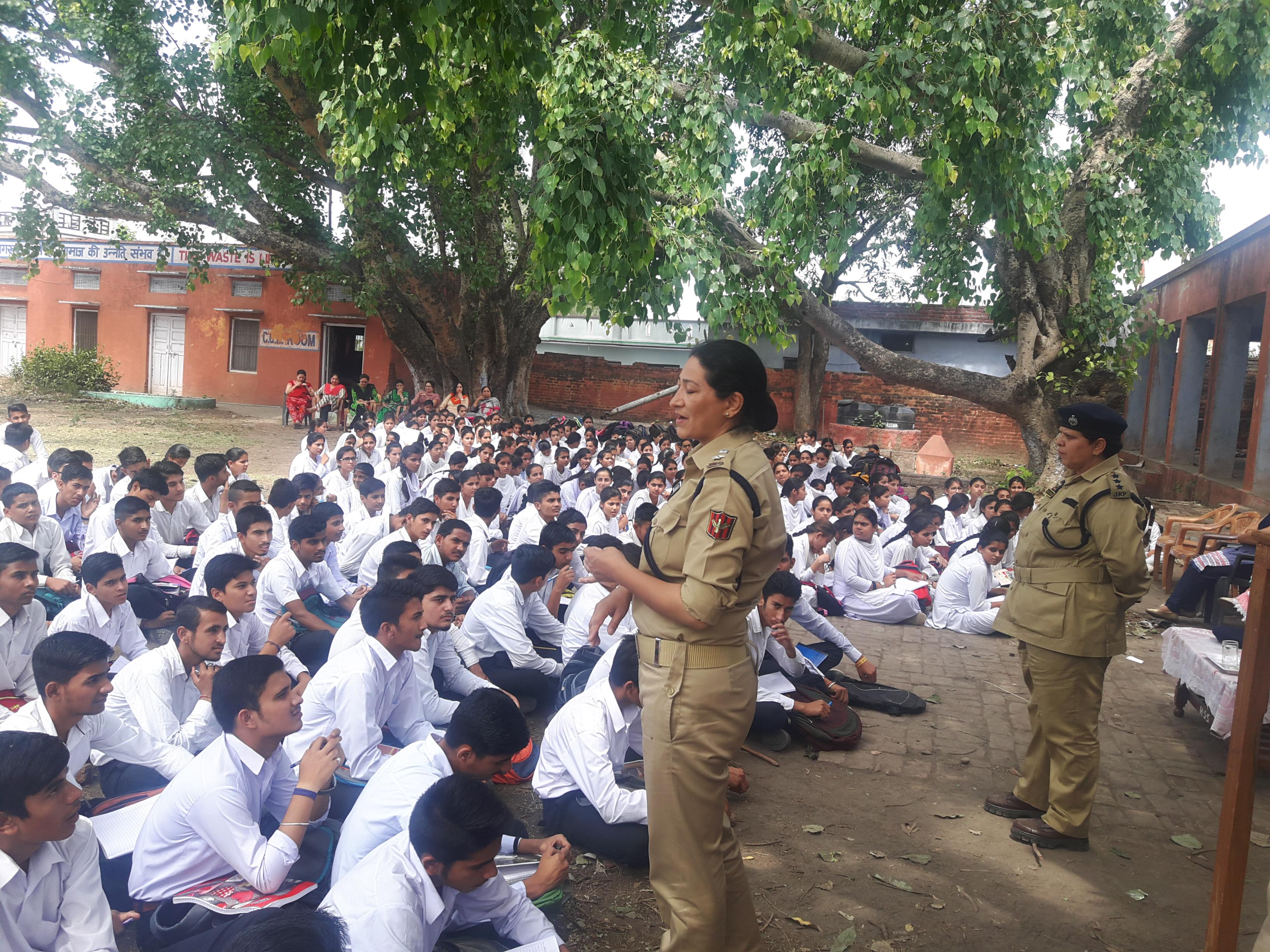
Few decades ago, a few women were out and about. With increase in number of enrollment in schools and level of education, we have witnessed increase in number of women working and earning their livelihood. And not just that, they hold powerful and influential designation and are in no way any lesser than their counterpart gender. To bring forth such exuberant women in uniform, whose aura will definitely leave you in awe, ‘We The Women’ brings for you a section ‘Woman In Khaki’.

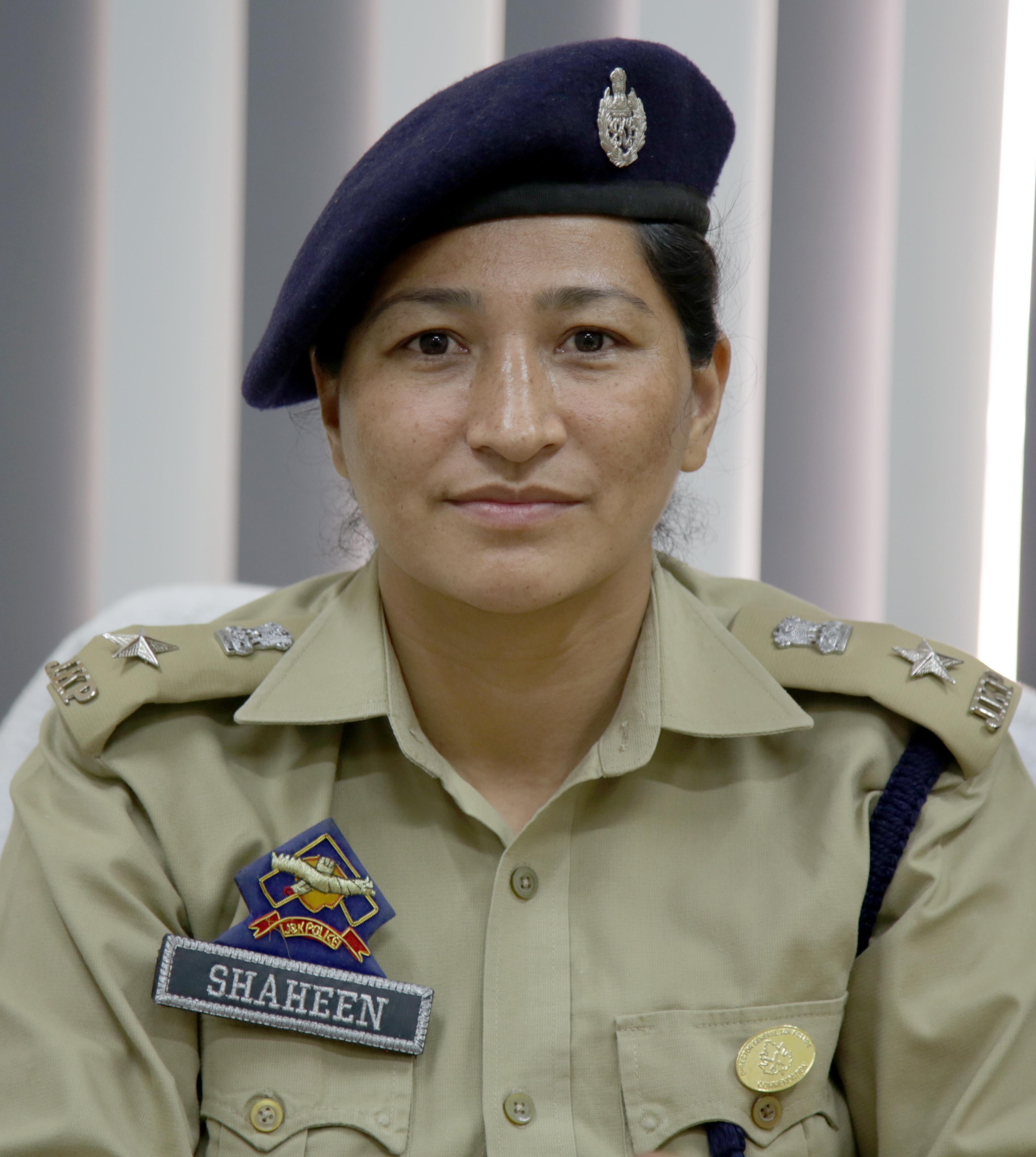
Have you ever come across a woman in uniform? What feelings and thoughts did it induce in you? Well, whatever that may be, I was flooded with feeling of admiration and respect. So, to know more about life of women in uniform we met Shaheen Wahid, SP Traffic Jammu Rural. And the conversation only amplified the pre-existing feelings.

Shaheen was born and brought up in tough terrain of Ladhakh, in a tribal area, where ‘work culture’ prevails and is practiced in every family, whether rich or poor. Which means unlike the excessively comfy environment kids these days are brought up in, children then, were involved in household chores. Shaheen reminisces that despite being first child in her maternal and paternal family she was loved and pampered a lot. But that does not mean that you were allowed to get spoilt. Along with studies, she used to help her mother, break coal for ‘Bukhadi’ (heater), bring home water to drink, go to the streams to wash clothes; but life was adventurous and peaceful. Shaheen shared’ “My parents gave me best of education, they possibly could; the school I was in till 10th was one of the best, where we were encouraged to indulge in mountaineering, trekking and other sports”. After class 10th Shaheen went to Chandigarh for higher education, where she completed her 12th, graduation as well as master’s degree.

Shaheen02MPOs14jul2018

On being asked, if being in Police was planned she told, “It was by chance not by choice”. She explained that she was more inclined towards Civil Services, but when her friend applied for Police, she thought of giving it a chance as well. She adds, although was by chance, but she is content that she made it into this field, because of how much it synced with her individuality. “I used to enjoy the physical activities which others used to find exhausting, because I was already used to leading such tough life” says Shaheen. And so, she encourages others as well, to explore Policing as career option as well.

Shaheen got into the chair of SP Traffic Rural Jammu in February from State Crime Record Bureau, which is completely different. Earlier she used to collect data and conduct surveys regarding Crime rate and so on and submit it to NCRP, NHA and like departments. Today, she has four districts, Rajouri, Poonch, Samba and Kathua under her jurisdiction. Her work includes touring, inspection, surveys, law enforcement and so on. Along with this, since the scenario of work policy in police is transitioning from being brute force to community police, which aims to built a repo among society and work along with it. She mentioned, “Traffic is very big challenge. Although crime rate is very high, think for an instance, number of people you know who have committed any crime and then think of people who are on road for one reason or another, every single day. The more people there are on road, the higher their chances of disobeying the law and order. You cannot bring a change just by mere enforcement of law or by ‘chalanning’; people need to be made aware about the rules and regulations as well as the need to follow them. No doubt that nobody is spared if we come to impose ‘chalan’ but we take a different strategy when it comes to interacting with public”.

Being in such position might appear luxurious and comfortable but is it so? “Uniform gives you a sense of authority but it is also a reminder that we are servant to the society and hence we should not let that sense of power into our head” Says Shaheen. At times Shaheen has to start around 4 in the morning, reach to extreme of her jurisdiction, spend day doing whatever is needed, say inspection, survey or enforcement and then reach back around mid-night. And even when she is in office the work load of such large area can be well estimated. And let’s not assume that she has no personal responsibilities. She is mother of three, elder one aged around six and youngest one around one. Her family also includes her parents-in-law and her husband. Despite having such schedule, Shaheen believes that it is essential to balance between both family and work. Here she emphasis on importance of having a support system to help her through. She thanks her mother-in-law for taking care of her children when she is out and about.

Talking about women in general, according to Shaheen Women is epitome of sacrifice and patience. “In our society, people get sad when a girl is born to them. Even when they provide her with same facilities as they provide their boy, there is difference in their attitude as well as their expectations from both of them. Girls are expected to take care of everyone’s need in family and be dedicated towards their responsibilities. I have no objection with that as I believe everyone should be self reliant. If a girl can be asked for a glass of water when anyone comes home, a boy should be expected to do the same. We need to have parity among both the genders even in our behavior and expectations; only then we can inculcate same set of qualities in males as well. After all, a little patience and sense of putting someone else’s interest can resolve so many issues that are prevailing and hence help us grow as a nation.

On being asked who empowered woman is, Shaheen replied that she believes, every woman is empowered if she exercises her duties as well as rights; every woman who is aware about her strength and the value of her contribution in her family as well as society is ‘Empowered’. She added, “If being at such designation, I am not confident enough that I can execute my responsibilities well, I am not empowered at all, despite that.” To women out there, she says that they should take up every challenge and strongly get through them; never letting the fact that they are women, become an excuse.

source: http://www.thenewsnow.co.in / The News Now / Home / by Akriti Jamwal / July 06th, 2017

Woman doctor dons police uniform to follow father’s footsteps

Jammu, JAMMU & KASHMIR :

SunniyaWaniMPOs14jul2018

Udhampur:

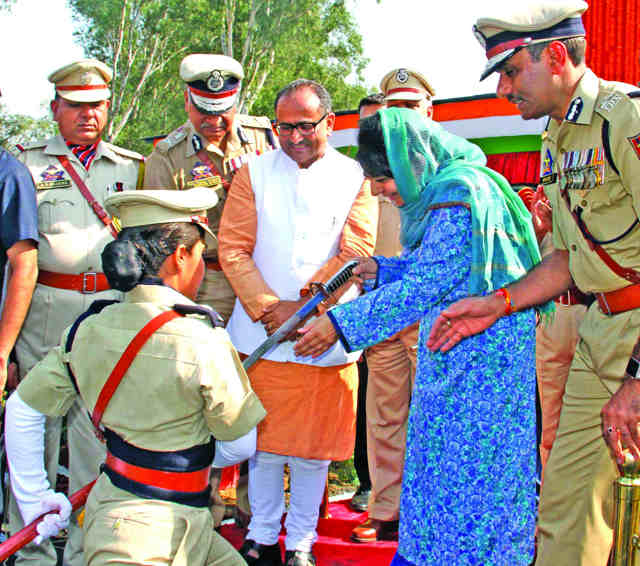
It was a moment of great pride for Deputy Inspector General of Police (Jammu-Kathua Range) Ashkoor Wani as his daughter was the only woman in the passing-out parade of the 11th batch of Deputy Superintendent of Police here today.
Dr Sunniya Wani was the only woman among the 17 officers in the passing-out parade at the Sher-i-Kashmir Police Academy.
Wani also became the first woman Kashmir Police Service (KPS) officer to get the best all-round award for her performance during her over-a-year-long training. She was awarded the trophy and citation by Jammu and Kashmir Chief Minister Mehbooba Mufti, who is also the first woman to hold the post in the state.
Lauding Wani, the chief minister said she was proud of her achievement.
“I am proud of your achievement and I wish more and more girls follow your footsteps.
I am also happy to see girls competing in every field and in many fields outnumbering boys,” she said. Ashkoor Wani said: “I am really proud of my daughter for her achievements. It is really a matter of pride and honour for me and my family that my daughter became the first female KPS officer to get the all-round award that too from the hands of Chief Minister Mehbooba Mufti.”
He said that his daughter always enjoyed the freedom to follow her dream and that he always encouraged her for that. “She is a medical doctor by profession and then she decided to wear the uniform. From childhood, she always wanted to contribute to the society and I hope and pray that she will become a good and dedicated police officer and would serve the nation, state and the community,” Wani said.
Sunniya Wani said that her father has always been an inspiration for her and she would follow the footsteps of her father to become a dedicated police officer.
“My father has always been an inspiration for me. I grew up watching him in uniform and I always wanted to follow his footsteps and wear the same uniform. I am happy that I made my father proud today,” she said.
Dr Wani said the sky was the limit for today’s women. “I want to tell girls to follow their dreams as nothing is impossible and the sky is the limit for them,” she said. (PTI)

source: http://www.news.statetimes.in / State Times / Home> News> Jammu & Kashmir > Jammu / by Tejinder Singh Sodhi / October 29th, 2016

”Taj – A Monument Of Blood”: New Series On Mughal Empire In The Pipeline

Agra, UTTAR PRADESH :

The series will capture the dark side of the story of the Mughal empire and had emperors like Akbar, Jehangir, Shah Jahan and Aurangzeb.

Mumbai :

“Taj – A Monument of Blood”, a period drama series on the rise and fall of the the Mughal empire, is set to be produced by Applause Entertainment in partnership with Contiloe Pictures, who are confident of presenting a story with a mix of blood, betrayal, power, beauty, deceit and heartbreak.

The series will capture the dark side of the story of the Mughal empire, which ruled India for just over 3 centuries and had emperors like Akbar, Jehangir, Shah Jahan and Aurangzeb. Writing is currently underway.

The tale will be told over 5 seasons of twelve episodes each, using the birth and death of Shah Jahan as bookends. It will delve deep into the Mongol origins, bloodlines mixing with Persian and Rajput royalty, the court and palace intrigues, the repeated purging of aspirants to the throne, and the arrival of the British and Portuguese.

Sameer Nair of Applause Entertainment calls himself a big fan of revisionist narratives of history.

“Our history books have been written by victors and often paint very two-dimensional pictures about past empires. When Abhimanyu Singh (Contiloe Pictures) and I first discussed this idea, we immediately moved away from a typical historical to a darker and edgier version of the Mughal empire, a version in which symbolically the Taj is more a monument of blood, than a monument of love,” Mr Nair said in a statement.

Mr Singh, who has produced a slew of historicals for the small screen, says the new series will show viewers the historic journey through a fresh lens.

“It will take viewers on a historic journey showing them an unseen perspective of this illustrious dynasty which lead to their rise as the greatest empire in medieval times and the quest for power, within it, that finally lead to its downfall.”

source: http://www.ndtv.com / NDTV / Home> All India / by  Indo-Asian News Service / July 12th, 2018

Chikankari Embroidery

Lucknow ,  UTTAR PRADESH :

Rehana Begum, a master of Chikankari work. Photo: R. Shivaji Rao | Photo Credit: R. Shivaji Rao

A pantheon of craftsmen and their art are on display at Kaivalam, under way in Chennai. Rashmi R.D. introduces us to some Living Legends of Indian crafts. Meet Rehana Begum

“I learned from my father Shree Hasan Mirza, who received a national award in 1969 for his craftsmanship,” says fifty eight year old Rehana Begum.

Hailing from a long line of chikankari exponents, Rehana Begum began her work with this form of embroidery at the age of thirteen.

Chikankari dates back two centuries. The word chikan is thought to be derived from a Persian word; one theory is that the form travelled to India when its artisans migrated from Persia in search of better patronage. I t is believed that these artisans found a patroness in Mughal Empress Noor Jahan, wife of Emperor Jehangir, and that she did a lot to promote and popularize this craft form.

Rehana Begum works from her home in Thakur Ganj, Napier Road, Lucknow. “We are Lucknowi, born and bred.” Her whole family is involved with making Chikankari embroidery. They work as a group in one room which has become the embroidery room of the house.

“When I was younger we embroidered kurtas, topis, angarkhas jaise nawab log pehn te te (just like the nawabs used to wear). Now we do saris, suits (salwar kameez), ladies tops, whatever the new styles of dressing are in fashion now we embroider.”

Chikankari, she says, was traditionally done only on pure, un-dyed white shazaada cotton or Dhaka ki mulmul, both sourced from Dhaka, Bangladesh. The katcha daagha, the thread used for the embroidery, was also white and procured from Calcutta or Dhaka. Rehana Begum defines Chinkankari in her terms as ‘white on white’ embroidery.

“The first thing I made all by myself was a table cover. It took me one and half years to complete.”

And how long does it take to embroider a sari? “About two years. We usually work six to eight hours a day. My eyes aren’t what they used to be, so now I only do about two hours of embroidery work a day. I spend the rest of the time supervising the work of my apprentices and teaching them the various stitches.”

Rehana Begum takes her inspiration for her embroidery motifs from Mughal architecture. The delicate marble jaali (trellis) pattern of Mughal-style windows and parapet walls is transposed onto the fabric as a fine gossamer trellis of thread work. She also replicates the inlay patterns from Mughal monuments on the fabric she embroiders.

Chikankari has six basic stitches and over thirty-five other traditional stitches used in various combinations based on what the pattern to be embroidered requires. The names of some of these stitches are phanda, chana patti, ghaas patti, bijli, jaali, tepchi, bakhiya, hool, zanzeera, rahet, banaarsi, kharau, keel kangan, bubul and hath kadi. Depending on the type of garment and the pattern to be embroidered the entire process happens in a series of stages over a period of months or even years. Also, the embroidery itself is divided among the artisans, with pairs or groups of three or more specializing in one particular stitch. When one group completes their particular stitch for a garment, it is passed on to the next group to add their specialty stitch. One group may also have mastery of two or more stitches.

The pattern to be embroidered is stamped onto the fabric by hand with a wooden pattern block that has been coated with neel (indigo). The fabric now has the outlines of the designs that will be embroidered into the delicate ‘shadow’ embroidery motifs that are the defining feature of Chikankari.

“I would like to open a shop of my own someday,” Rehana Begum says hopefully. “What we kaarigars (artisans) get at the end of the day, after the shops and agents have taken their percentage—it isn’t much. I’d like to be able to meet directly with people who want to buy our work. Maybe we should have something like a kaarigar market…”

She and her family do travel extensively to participate in national textile fairs and handicraft exhibitions, but though sales are good, the travel costs add up. The price of raw materials has increased too, with good quality cotton and thread getting steadily more expensive.

“I love what I do,” she says emphatically. “There’s no way I could have done this for so long if I didn’t. I get a lot of satisfaction when I finish a piece. I have a large sample swatch that I take with me to exhibitions or when I get called to travel abroad. It took me three years to embroider. When I show it to people they are always amazed by the work. I feel very happy when I see their reactions.”

Rehana Begum has been invited to show case her work in Hamburg (Germany), Ireland, Cuba, Dubai and Muscat (Oman).

In 1976, she was given a State Award from the Uttar Pradesh government, and her work has been on display in the Crafts Museum of Uttar Pradesh. In 2003 she received the Shilp Guru award for her contribution to Chikankari.

“I am excited about coming to Chennai in October. I haven’t been to that city in a long time. I see it as an opportunity to show the international artisans who will be attending this event that Hindustan has great craft talent. They will be able to see what a wealth of kaarigars we have. Jo bhi kaarigar waha maujood honge, hum sab milkar hamare desh ka naam roshan karenge. (All of the artisans who gather for this event, together we will make the name of our country shine).”

source: http://www.thehindu.com / The Hindu / Home> Indian Crafts> Crafts / by Rashmi M.D. / Chennai – October 10th, 2012
Young achievers honoured by Stars of North East

Burnihat, ASSAM  :

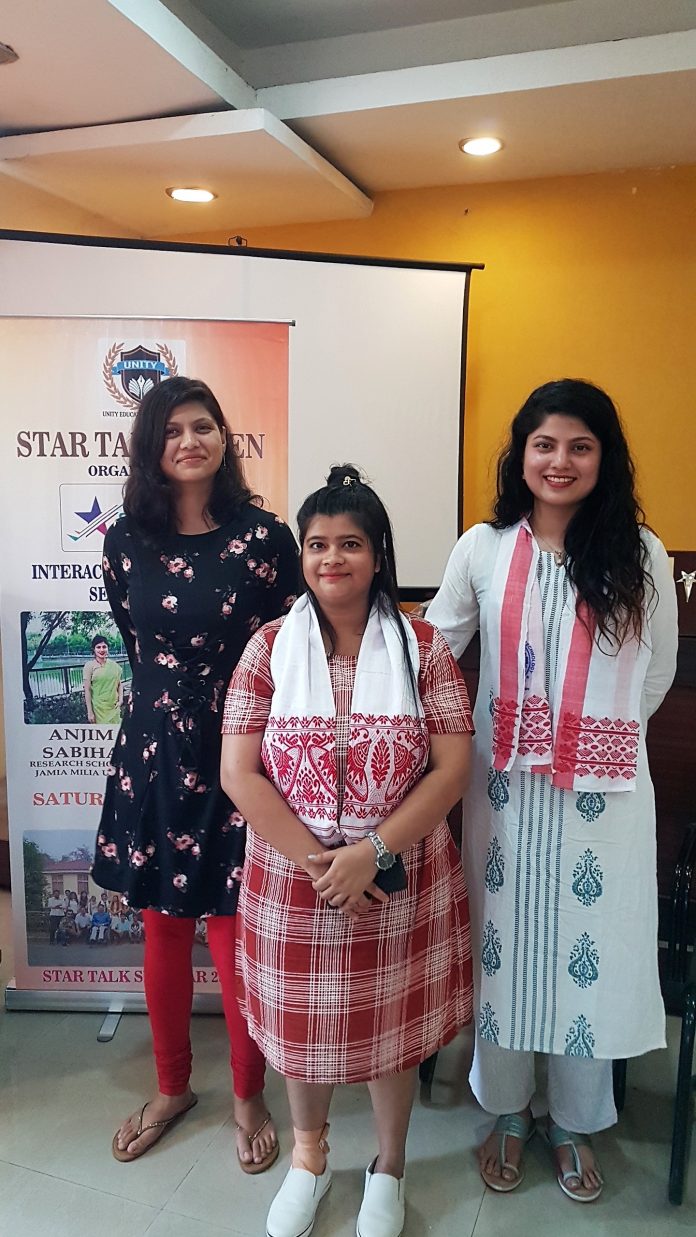
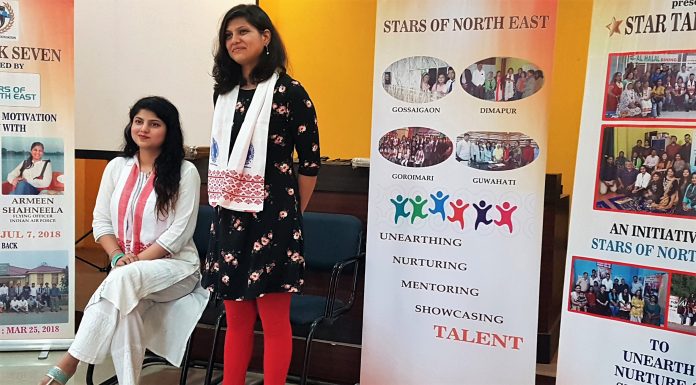
Armeen Shahneela, Flying Officer, Indian Air Force; Salma Hussain, human rights worker; and Anjim Sabiha, research scholar, Jamia Millia Islamia University Delhi at the “Star Talk Seven” event held at Burnihat on Saturday

Guwahati:

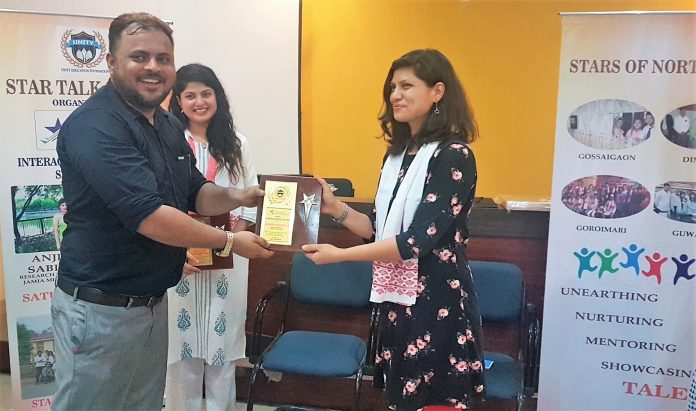
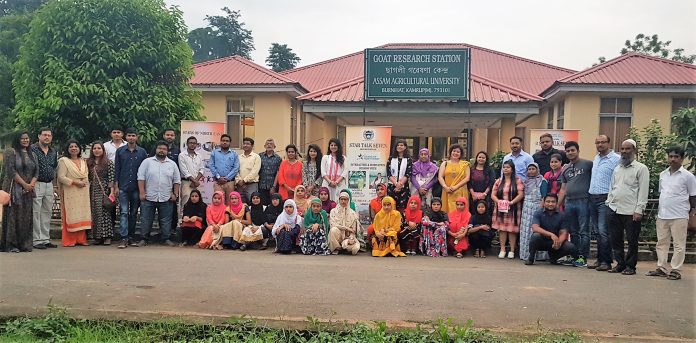
Three young achievers  -all girls and path breakers were felicitated at the “Star Talk Seven” event organised at the Goat Research Station Auditorium at Burnihat on Saturday. Anjim and Armeen received the “Star Role Model Award” given by the Unity Education Foundation, Guwahati. They were also presented gifts by the University of Science & Technology Meghalaya (USTM). Fauzia Khan, MD of Ascentials, presented diamond jewellery to the achievers.

Along with the girls their proud parents were also facilitated.

Anjim Sabiha and Armeen Shahneela sisters from Puronigudam Assam are both top achievers in their respective fields.

Anjim Sabiha, research scholar, Jamia Millia Islamia University Delhi and Armeen Shahneela, Flying Officer, Indian Air Force, who received “Star Role Model Award” at a function held at Burnihat on Saturday are seen together

Anjim Sabiha is pursuing her PhD from Jamia Millia Islamia University New Delhi and has been selected for presentation of a research paper titled “Women Empowerment through Microfinance in Assam” at the forthcoming International Conference on “Empowering Women: Fostering Entrepreneurship, Innovation and Sustainability” to be held in Delhi on 16-17 July.

Her sister Armeen Shahneela, an alumnus of Jorhat Engineering College Assam, was commissioned as a Flying Officer of Indian Air Force at the Investiture programme at Hyderabad Air Force Academy where she was commissioned by Admiral Sunil Lanba, PVSM, AVSM, ADC, Chief of the Naval Staff on Dec 6, 2017. On Sunday, Armeen is reporting for duty at one of the Indian Air Force bases in the North East.

Armeen Shahneela, Flying Officer, Indian Air Force receiving the “Star Role Model Award” from Abu Zakaria, IT & software entrepreneur, at the “Star Talk Seven” event held at Burnihat on Saturday.

And the third star Salma Hussain, a youngster from Sontoli Village in Kamrup Rural District of Assam, has been selected for the Andi Leadership Institute Programme 2018 for Young Women Peace Builders. One among only eight young women selected from all over the world and only one from India, Salma will undergo training from August 5 to18, 2018 in Washington, D.C.

Salma plans to visit a few other places and meet important human rights workers to gather ideas for implementing her dream project of adopting a village in Assam and make it a model abode of peace.

Members of Stars of North East, guests and students from Shaheen Academy Guwahati are seen together with Anjim Sabiha, research scholar, Jamia Millia Islamia University Delhi and Armeen Shahneela, Flying Officer, Indian Air Force at an event held at Burnihat on Saturday.

source: http://www.twocircles.net / TwoCircles.net / Home> Education> Event> Indian Muslim / Guwahati – July 08th, 2018

Former minister B.A. Moideen passes away

Mangaluru, KARNATAKA :

B.A. Moideen. File photo. | Photo Credit: H.S. Manjunath

Former Karnataka Higher Education Minister B.A. Moideen passed away in a hospital in Bengaluru on Tuesday. He was 81.

Born to Abdul Khader and Haleema at Pejawar in Bajpe village in May 1938, Moideen, joined Congress in 1969 and held various positions in the party before getting elected to Karnataka Legislative Assembly in 1978 from Bantwal assembly constituency in Dakshina Kannada district. However, he was denied party ticket to contest subsequent elections following which he joined Janata Dal in the later days.

Moideen was a member of the Legislative Council for two terms, from 1990 to 2002. He was the Minister for Higher Education in the J.H. Patel government between 1995 and 1999, when he earned the name of a honest administrator. He rejoined the Congress later. Moideen, a staunch follower of D. Devaraj Urs, was conferred with the Devaraj Urs Award instituted by the State Government in 2016.

Moideen’s autobiography, Nannolagina Naanu (Me within Me) was to be released shortly. Though he was reluctant to pen down his life,  two writers, Muhammed Kulai and B.A. Muhammad Ali, coaxed him to do so and wrote the book.

Moideen, recalling his early political days, was learnt to have blamed three senior Congress leaders, M. Veerappa Moily, B. Poojary Poojary and Oscar Fernandes for his political debacle after 1983. “I didn’t do any harm to them and in fact had helped them when needed. Yet I can’t understand why they did hold grudge against me,” he had said.

source: http://www.thehindu.com / The Hindu / Home> News> States> Karnataka / by Special Correspondent / Mangaluru – July 10th, 2018

Meerut scissors struggle to cut through Chinese competition

Meerut, UTTAR PRADESH :

GI Tag Product Buyers demanding local high quality product at the price of Chinese scissors, say manufacturers.

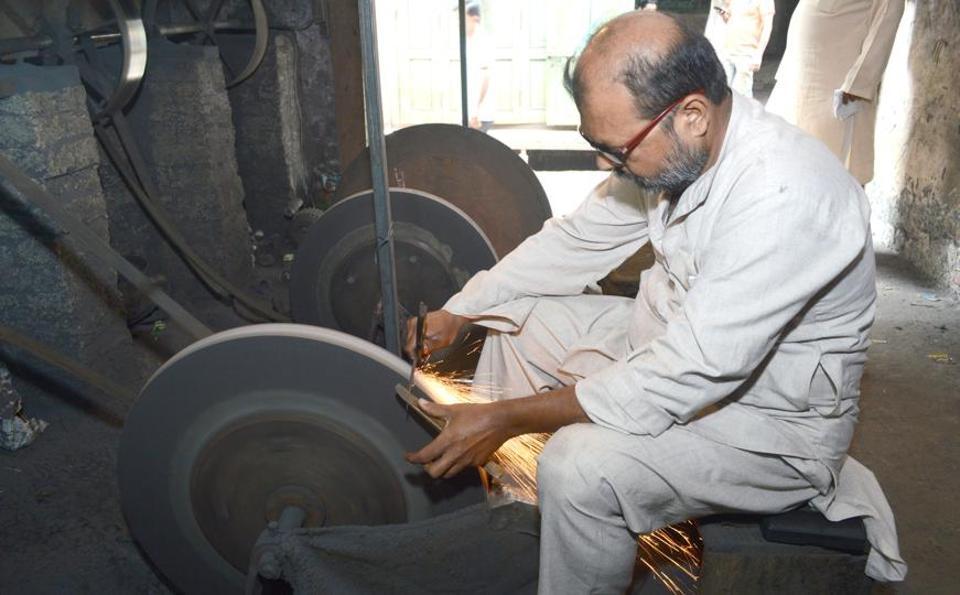
Sunil Sharma / HT Photo(“The cottage industry that used to manufacture around two lakh pieces a month, has declined to almost 40% of its size now.”)

The Meerut scissors are straining to cut through the intense competition being offered by low-cost Chinese scissors that are flooding the domestic market, say local businessmen. Despite being a WTO geographical indication (GI) registered product since 2013, the scissors are still to find the national and international recognition that is deserved, they say.

“Meerut scissors have a unique identity. For centuries, this was a popular product across the country. But the industry received a set back in the past one year with the imposition of 18% GST. That and the inflow of low-cost Chinese’s scissors in the domestic market badly impacted the sales, and there is no sign of improvement,” said Sharif Ahmad, a seventh generation craftsman and the owner of Asli Akhuji Scissors Works.

“The cottage industry that used to manufacture around two lakh pieces a month, has declined to almost 40% of its size now,” he added.

Octogenarian Saeed Ahmad, who has been running ‘Sheikh Scissors’ since 1965, agrees. “I have never seen such a bad condition of the industry in the past five decades. This is due to imposition of high tax and Chinese scissors flooding the market,” he said.

Manufacturer Farmanuddin said that many clients in South India cancelled orders for Meerut scissors over the past few months because of “escalated prices”. “We manufacture scissors ranging from size of 3 inches to 18 inches. They are priced from Re 1 to Rs 1,000. Our problem is that buyers have now started demanding our quality product at the price of Chinese scissors! We don’t know how to deal with this situation,” he said.

A 350-YEAR-OLD COTTAGE INDUSTRY

Scissors manufacturing is a 350-year-old cottage industry in Meerut.

A local blacksmith Akhunji is said to have combined two swords to cut leather in 1645 during the Mughal period, creating the first scissors in India.

“Since then, our family has been in the business,” said Sharif Ahmad who represents the seventh generation of the family. “Scissors manufacturing is still our family business. Gradually, the sizes and designs of the products changed. Today, our scissors are used for multipurpose cutting,” he said.

At present, Meerut has 225 small and medium scissors manufacturing units, out of which there are 30 registered units that feed only the domestic market. Although there are some vendors who cater to the overseas markets too, they don’t export directly.

More than 25,000 artisans and their families depend on this industry.

GI TAG IN 2013

Sharif Ahmad said the scissors manufacturers collected historic evidence for over two years to represent their case in front of the GI committee that examines documents before declaring a product GI certified.

Ahmad, who is also the vice president of the Meerut Scissors Manufacturers’ Special Purpose Vehicle — an association of scissors manufacturers — said that officials of the association worked hard to plead their case in front of the committee. “With our combined efforts, Meerut Scissors was certified as the country’s first GI scissors,” he said.

Association president Farmanuddin added, “We provided the GI committee with printed packing material, copy of Gazette and other evidences to support our claim that the scissors first originated here (in the country).”

However, he added that although it was a great achievement and a matter of pride for the city and the state, “very few people are aware of the Meerut scissors’ international status”.

Uttar Pradesh has only 20 GI products. Out of these, 15 are handicraft and two are agricultural products. Only three products from the state figure in the ‘manufactured’ category of GI products.

To recall, after the Meerut scissors received the GI tag, the then state government had established a scissors cluster at Lohia Nagar here in 2014. However, manufacturers assert that unless the issues of heavy taxation and competition from Chinese scissors were addressed, the industry would not revive.

GI PRODUCTS OF UP

  • Lucknow Chikan Craft (handicraft)
  • Mango Malihabadi Dussehri (agriculture)
  • Varanasi Glass Beads (handicraft)
  • Khurja Pottery (handicraft)
  • Saharanpur Wood Craft (handicraft)
  • Agra Durrie / Dari (handicraft)
  • Farrukhabad Cotton Print (handicraft)
  • Lucknow Zardozi (handicraft)
  • Banaras Brocades and Sarees (handicraft)
  • Meerut Scissors (manufactured)
  • Banaras Gulabi Meenakari Craft (handicraft)
  • Banaras Metal Repousse Craft (handicraft)
  • Varanasi Wooden Lacquer Ware & Toys (handicraft)
  • Mirzapur Handmade Dari (handicraft)
  • Nizamabad Black Pottery (handicraft)
  • Azara Ghansal Rice (agriculture)
  • Firozabad Glass (handicraft)
  • Kannauj Perfume (manufactured)
  • Kanpur Saddlery (manufactured)
  • Moradabad Metal Craft (handicraft)

INDIAN GI PRODUCTS IN ‘MANUFACTURED’ CATEGORY

  • Meerut Scissors
  • Mysore Agarbati
  • Coimbatore Wet Grinder
  • Mysore Sandalwood oil
  • Mysore Sandal Soap
  • Goa Feni
  • Nashik Valley Wine
  • Kannauj Perfume
  • Kanpur Saddlery

source: http://www.hindustantimes.com / Hindustan Times / Home> Cities> Lucknow / by S. Raju, Hindustan Times,Lucknow / July 09th, 2018

Meet the ‘mango man’ who has grown 300 varieties of mangoes on one tree

Malihabad (Lucknow District)  , UTTAR PRADESH :

HajiKalimullahKhanMPOs09jul2018

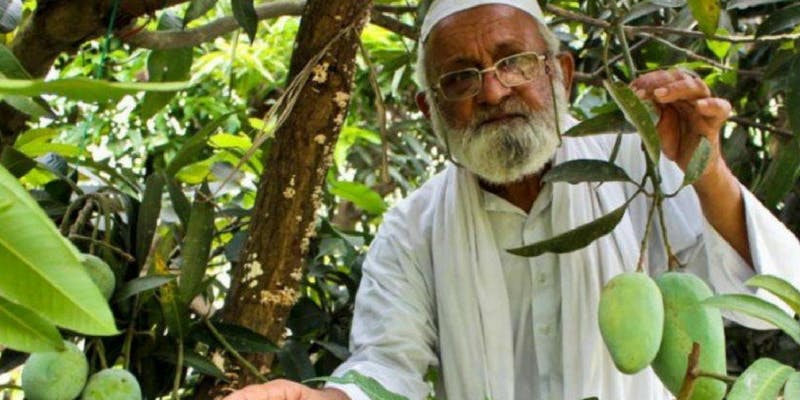
Last year, when newspapers and social media woke up to the news of a certain mango variety being dedicated to Prime Minister Narendra Modi, everyone’s attention shifted to 78-year-old “Mango crusader”. Hailing from Malihabad in Uttar Pradesh, Haji Kalimullah Khan is a mango cultivator who is either growing varieties of mangoes, experimenting with its flavors, naming a celebrity over each of the indigenous brands, or growing 300 varieties of mangoes on a single tree. Yes, you heard it right!

This sixth standard pass-out has pioneered the art of cultivating mangoes. He says,

Mango cultivation runs in our family, and we have been doing this for the past 300 years. Our ancestors in our rajwadas used to have huge mango orchards that grew beautiful hybrids. I cultivated a mango tree at the age of 17, which had seven varieties of mangoes in it, and all had different tastes and flavours.

Since then, I have been trying to grow new hybrids every year to show that it is possible to introduce newer varieties, he told NDTV.

Father of eight children, Kalimullah grabbed the headlines when he named a mango variety after Prime Minister Narendra Modi, and called it “NaMo Aam“. A hybrid of Kolkata’s Husn-e-Aara and Lucknow’s Dussehri, he plans to grow the variety at Modi’s hometown. In the past, he had dedicated mango varieties to yesteryear actor Nargis Dutt, Bollywood actor Aishwarya Rai Bachchan, Cricket prodigy Sachin Tendulkar, and Anarkali, the popular character in the movie “Mughal-e-Azam.”

Source: AmarUjala
Source: AmarUjala

“The ‘NaMo’ mango will remain even when we are gone and will remind people of Narendra Modi and his success. We wish to meet him once. We will be very happy if he visits us once and sees the ‘NaMo aam’ ripen, he told Zee News .

He also grows a certain breed of guava, which on ripening becomes as red as an apple. Kalimullah is also the recipient of the Padma Shri award

source: http://www.yourstory.com / YourStory / Home> Social Story> Think Change India / June 07th, 2018

Dine Like a Nawab of Bengal

BENGAL :

BengalNawab01MPOs08jul2018

Mir Qasim Ali Khan Bahadur was the Nawab of Bengal between 1760 and 1763. He is most famous for his dealings with the British: he was put on the throne through the intervention of the East India Company, but a few years later was defeated by their forces at the Battle of Buxar. This defeat marked the decline of the political power of the Nawabs of Bengal and was an important moment in East India Company imperial consolidation in Bengal.

All of this is important, of course, but I’m here to discuss a far more pressing question: what did the Nawab and his contemporaries eat?

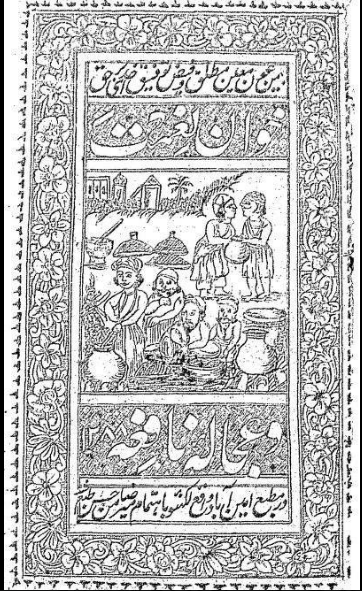
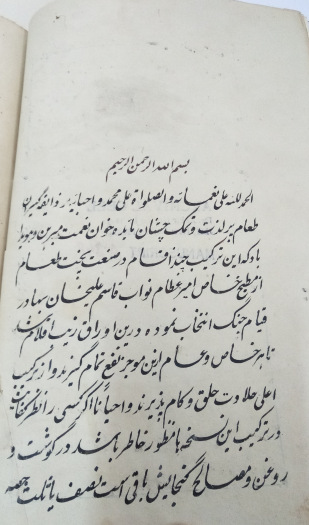
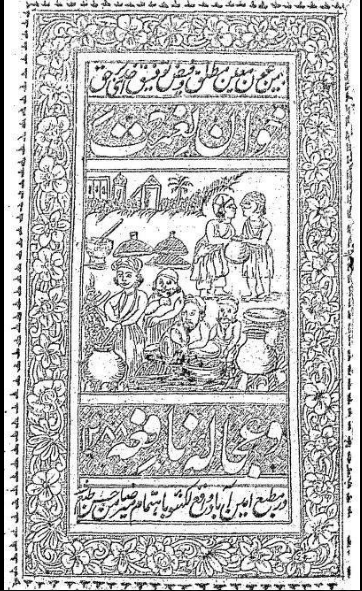
I encountered this manuscript, titled Khwan-e Nimat, “The Beneficent Table,” at the library of Jamia Millia Islamia here in Delhi. Composed in Persian, the text promises its readers a description of “the art of cooking from the private kitchen of the chef of Nawab Qasim Ali Khan Bahadur.”

BengalNawab02MPOs08jul2018

The text describes how the Nawab’s chef prepared fish kabab with rice, several types of meat kababs, fried eggs, sweets made with almonds, a few different types of pickles, pulao, khichri, qorma, various dals, mango jam, sheermal (a sweet bread), and on and on.

Although I originally encountered this work in manuscript form at Jamia, after some hunting I discovered that a lithographed version was printed in 1871 in Lucknow.

BengalNawab03MPOs08jul2018

The printing was done by a small press, but it means that there was at least some awareness of and interest in the text in the late nineteenth century, a century after the political power of the Nawabs of Bengal had waned. As such, it offers us insight into not only the culinary preferences of Mir Qasim and his court, but also the culinary interests and understanding of food history among North Indians in the high colonial era.

Over the course of my research I’ve stumbled on several cookbooks written in Persian and Urdu over the course of the eighteenth and nineteenth century, but I’ve found there is very little written on colonial-era traditions of writing about food in these languages. Many of the Indian food histories written on this period focus on the British adaptations of Indian cuisine, and exchanges between British and Indian cooks and palates. This text and its later publication tell an alternative (and I’d argue more interesting!) story: that of Indian interest in various local cuisines, and the desire of members of broader literate classes to know and perhaps try to prepare cuisines cooked by regional elites and leaders.

I’m craving fish today, so here’s a rough translation of how the Nawab’s chef prepared his fish kabab. Following these recipes is a bit of a challenge because most of the units of measurement appear to be regionally or temporally specific, and have changed significantly; many are not in any of the Urdu or Persian dictionaries I’ve consulted. I’ve therefore taken educated guesses based in large part on what I know about cooking, and the limited information I could find on the units used.

Ingredients:
Fish (type not specified, perhaps about 650 grams)
Butter (possibly referring to ghee; approximately 80 grams)
Onion (perhaps two-three)
Curd (approximately 15 grams)
Malai (approximately 20 grams)
Coriander (approximately 20 grams)
Black pepper (approximately 15 grams)
Gram (Chickpea) Flour (approximately 60 grams)
Pepper (mirch, presumably red?) (approximately 20 grams)
Cloves
ٓA pinch of lemon juice
A pinch of cardamom
Several pinches of salt

Cut the fish into chunks in the size of kababs and place them aside. Prepare the gram flour well (toast it?). After that, mix it together with the salt, pepper, crushed coriander, and some of the butter. Mix this into each kabab. Then finely chop up the onions, and fry them in some butter and then also mix the onions with some butter into the kababs. Then mix the lemon juice, cloves, and cardamom together. Drain the curd of water and strain the malai, and coat the kababs with these things. Then place these kababs in pot with the (cooked?) rice, and take the remaining spices and sprinkle them into with the rice and kababs. Roast/fry (prepare over a hot surface) and enjoy!

source: http://www.archivaldistractions.wordpress.com / Archival Distraction / by Amanda Lanzillo / July 07th, 2018