A three-day international seminar on Indo-Iranian Persian Literature organised by the Department of Persian began at the University of Kashmir in the auditorium of Ibn e Khuldun Alama Iqbal library on Thursday.
The theme of the seminar is “emergence of moral and ethical values in Indo-Iranian Persian literature and its relevance in modern times”.
The scholars and professors from different countries of the world have taken part in the 3-day seminar to present their research papers and to share their experiences with the students, various scholars and professors from the different states and different universities including Delhi, Lucknow has also participated.
The seminar was started with the recitation of Holy Quran by Dr Shanawazz shah followed by the naat by Syeda Mysooma.
Vice Chancellor Prof Khurshid Iqbal Andrabi presided over the seminar, addressed the guests and welcomed them with his warm speech.
In his presidential address, Prof Andrabi said that morals are the basic requirement of an individual, and is very fascinated by the beautiful culture, language of Iran.
Dr Jehangir Iqbal, Coordinator, Department of Persian, underlined the aims and objectives of the seminar and also highlighted the achievements of the department over the years.
Prof Shaief Hussain Qasmi delivered the keynote address.
Dr Ali Raza Ghazvey, Director literary Innovative center Academy of Art Tehran, Iran said: “it seems that we have entered a little Iran with the same culture that we are sharing with each other and the effect of Awraadi Fatah by Mir Syed Ali Hamadani ( rah) has kept the lost glory intact.”
Another guest and professor from the University of Kabul Afghanistan while presenting his research paper and sharing his experience with the students present there said: “we must look to the Persian language, not as an option but we must take it as the objective.”
Meanwhile, Arif Ayoubi who is a chairman Fakhhur Din Ali Ahmad committee said that the best students and scholars will be awarded the gold medals and some cash where they also would be helped and guided in future.
Now the next 2 days of the international seminar will be dedicated to the students and scholars from various faculties and universities to present their papers during these 2 days.
source: http://www.kashmirlife.net / Kashmir Life / Home> Kashmir Latest News / by KL News Network / June 21st, 2018
Zurriyat Hussain Kazmi, 116, one of the oldest citizens of the country, died on Sunday night.
After his condition deteriorated, Kazmi was rushed to a private hospital in Rampur Garden locality. He was, however, declared dead upon arrival by doctors.
Kazmi, maternal grandfather of Union minister Mukhtar Abbas Naqvi, was fond of Samajwadi Party patron Mulayam Singh Yadav.
Born on January 1, 1902, Kazmi would say the secret of his long life was 10 kilometres of daily walk.
“He was not suffering from any illness. He died due to his long age,” said Azadar Hussain Kazmi, his youngest son and caretaker.
“My grandfather was a zamindar and had 2,000 bighas at Kulbhara village in Moradabad .
After my father joined British police in 1922, it disappointed my grandfather that his son was doing a job for Rs 10. Working under someone was not considered good then. My father later worked for Indian police. He met Mahatma Gandhi at Chowki Chauraha when the latter visited Bareilly during the struggle for independence,” said Azadar.
“Despite his long age, my father would cast his vote in every election. He believed that voting is an important right. He was fond of Mulayam and later became a fan of Prime Minister Narendra Modi ,” said Azadar.
source: http://www.timesofindia.indiatimes.com / The Times of India / Home> News> City News> Bareilly News / TNN / June 19th, 2018
Goalpokhar (North Dinajpur District) , WEST BENGAL :
The Urdu teacher at Dharmapur High School at Goalpokhar in Bengal’s North Dinajpur district won from Belon in Goalpokhar 2 block.
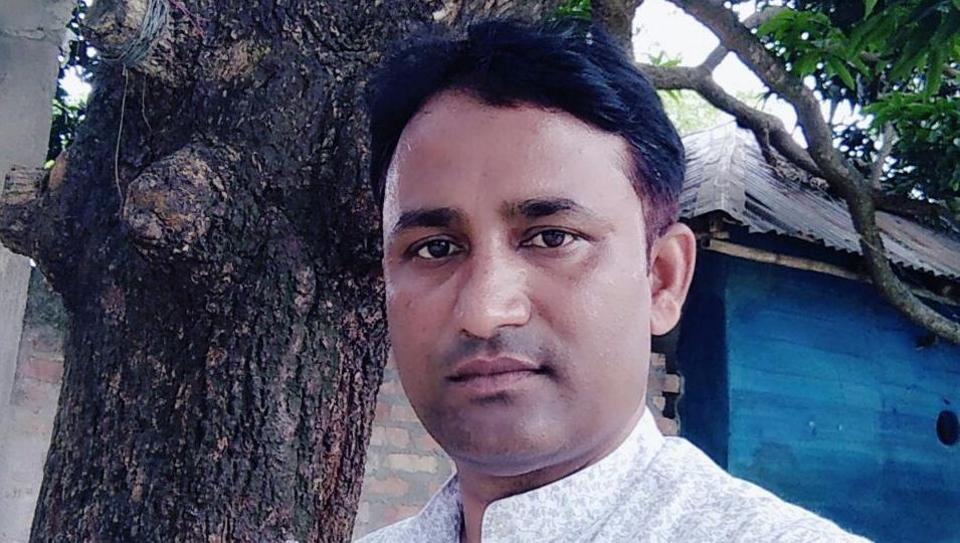
Md Shahid Siddiquee joined politics eight months ago after he was inspired by Forward Bloc MLA from Chakulia in North Dinajpur district, Ali Imran Ramz.(HT Photo)
Eight months ago, Md Shahid Siddiquee,32, a former student of Aligarh Muslim University, was a newcomer in All India Forward Bloc, a partner in Bengal’s Left coalition.
When results to the polls in the state’s three-tier panchayats were released, Siddiquee emerged as winner of the sole zilla parishad (district council) seat for the Marxists who were facing rout.
The Urdu teacher at Dharmapur High School at Goalpokhar in Bengal’s North Dinajpur district won from Belon in Goalpokhar 2 block. This is the Left’s only zilla parishad seat out of 825 (only 622 saw contest) in Bengal. Siddiquee defeated veteran Trinamool Congress leader Abdul Ghani by 1,156 votes.
Communist Party of India (Marxist), Communist Party of India and Revolutionary Socialist Party, the three other big constituents of the 10-party Left Front, could not win any seat in the highest tier of the panchayats.
Interestingly, Siddiquee is not even known to many of the top Left leaders in these parties. He will be introduced to them at a meeting of the Left Front leaders on May 26.
Siddiquee joined politics eight months ago after he was inspired by Ali Imran Ramz, Forward Bloc MLA from Chakulia in North Dinajpur district. Ramz is the second youngest MLA in the Bengal assembly.
“I was always a Forward Bloc supporter but it was Ramz who inspired me to join active politics. He also inspired me to contest. The credit for my victory goes to him,” said Siddiquee.
“Had Trinamool supporters not resorted to violence at eight booths our margin would have been higher. But I am sure many Trinamool supporters also voted for me,” he added.
Ramz claimed that Siddiquee’s victory has proved that Left Front can put up a fight against Trinamool if it keeps in touch with people at the grassroots. “From the very beginning I was against seat adjustment with any party outside the Left Front. In North Dinajpur, Forward Bloc contested on its own. I am grateful to our voters,” said Ramz.
CPI(M) Politburo member and MP from Raigunj in North Dinajpur, MP Salim, said the Left would have done much better in the north Bengal region had Trinamool not resorted to violence.
source: http://www.hindustantimes.com / Hindustan Times / Home> Cities> Kolkata / by HT Correspondent / May 22nd, 2018
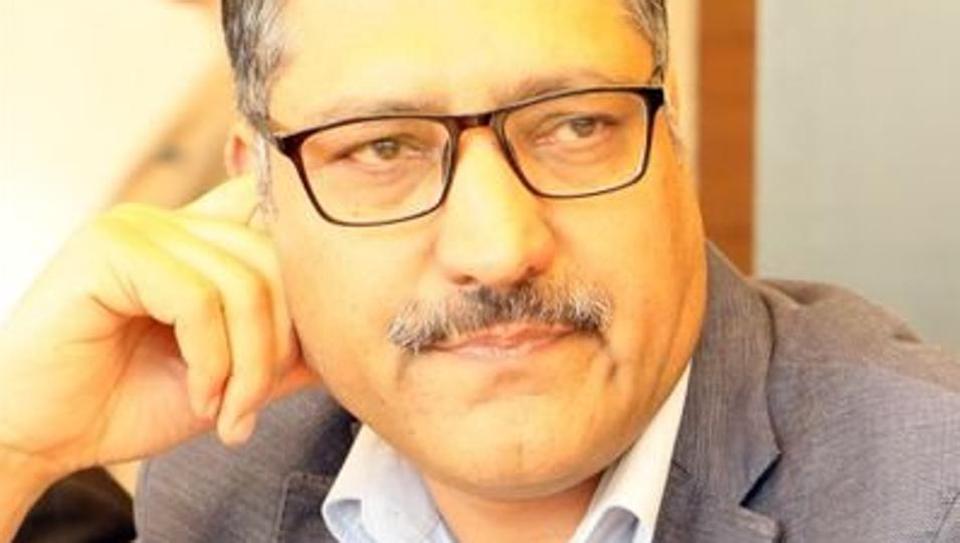
Shujaat Bukhari was leaving his office in Press Enclave in Srinagar’s Lal Chowk when he was shot at. He is in a critical condition, police said.
Shujaat Bukhaari is the editor of newspaper Rising Kashmir. (Picture courtesy: Twitter/Shujaat Bukhari)
Veteran journalist and Rising Kashmir editor Shujaat Bukhari was shot dead by unidentified gunmen outside his office in the heart of this Jammu and Kashmir capital, police officials said on Thursday.
Bukhari, who was leaving his office in Press Enclave in the city centre Lal Chowk for an iftar party when he was shot, officials said.
The two policemen who were guarding him are also injured, they added.
source: http://www.hindustantimes.com / Hindustan Times / Home> India / by PTI, Srinagar / June 14th, 2018
It is 8am on Saturday and big black cauldrons that will slowly simmer dal in them have been put up on burning embers with the help of two strong men. For the past 179 years, the ritual has been repeated every Ramzan in the bawarchikhana (kitchen) within the premises of the Chhota Imambara.
While it is dal and tandoori roti that is cooked for three days, an Awadhi delicacy called ‘taley hue aaloo ka salan’ (fried potato curry) with roti follows for the next three. The cycle continues for the entire month of Ramzan, feeding around 600 poor people as their dinner the the entire month of Ramzan.
In the same kitchen, a different set of snacks is also prepared for the specific purpose of serving rozedars coming to offer prayers in 15 mosques under Husainabad & Allied Trust (HAT).
Around 2,500 people will receive a plate of gujhiya, phulka, chana, suhaal, dates, a fruit (preferably banana) along with bread-butter and cake outsourced from a bakery, thanks to a king’s commitment to the poor.
The third King of Awadh, Muhammad Ali Shah, had created the Husainabad Endowment Deed in 1839 to feed the poor. Since then, the two massive community kitchens within the Chhota Imambara have been following the tradition of sending out iftari to the 15 mosques under its umbrella.
Every Ramzan, by the end of the day, this kitchen would have fed over 3,000 mouths.
“A sum of around Rs 16 lakh is passed for the iftar and dinner services every year. Two separate dedicated teams of chefs and their assistants are engaged for it. Everyday, activity in the kitchens begins at 8am. By 4.30pm, we send out the first batch of iftar food for the mosques,” said Habibul Hasan, an official from HAT.
The 179-year-old Nawabi tradition saw a break only in 2015. During Ramzan that year, a movement against alleged corruption in the UP Shia Central Waqf Board being spearheaded by Shia cleric Maulana Kalbe Jawad had brought the tradition to a halt. Protesters had locked the entrances to both the Bada Imambara and Chhota Imambara, restricting all entry. Even the kitchens could not function.
However, people from the neighbourhood of the 15 mosques came together to fund the food. HAT had also roped in private bakeries. Even during the mourning months of Muharram, food is served from the traditional kitchens of the Imambara.
source: http:///www.timesofindia.indiatimes.com / The Times of India / Home> News> City News> Lucknow News / by Yusra Husain / TNN / May 21st, 2018
Syed Mudeer Aga, Janata Dal (Secular) MLC, died of cardiac arrest in Bengaluru on Saturday.
A prominent minority community leader from Ramanagaram town, Mr. Aga had been staying in Bengaluru for the past several years. He complained of severe chest pain late on Friday and was shifted to a hospital, where he breathed his last in the early hours of Saturday.
The body was brought to Ramanagaram where it was received by senior officials of the district administration. Later, the mortal remains of Mr. Aga were kept at his residence in the town to allow the public to pay their last respects. The former Prime Minister H.D. Deve Gowda, Chief Minister H.D. Kumaraswamy and a host of leaders cutting across political and religious affiliations paid their last respects to Mr. Aga.
Mr. Gowda and Mr. Kumaraswamy termed Mr. Aga’s demise a great loss to society.
Minister for Food and Civil Supplies B.Z. Zameer Ahmed Khan, and MP for Bengaluru Rural D.K. Suresh also paid their respects to the departed leader. According to the sources in the Ramanagaram district administration, Mr. Aga was elected as an MLC in June 2012 and his tenure was due for completion on June 17, 2018.
The final rites of Mr. Aga will be performed at Ramanagaram at 10 p.m. of Saturday, or on Sunday morning as some of his relatives are expected to arrive from Middle East, sources added.
source: http://www.thehindu.com / The Hindu / Home> News> States / by Special Correspondent / Mandya – June 09th, 2018
In Odisha, Rumana Jafri who was born and brought up in Bhubaneshwar is working tirelessly for the service of others.
Rumana Jafri happens to be the first female and the 46th Block Development Officer, at Madanpur Rampur, at Kalahandi district in Odisha. She has taken it upon herself to work towards the betterment of the region, and its people.
Born and brought up in Bhubaneshwar, she topped her Class 12, and graduation exams. She appeared for the civil services exams and even taught students who aspired to be in the service. She cleared the Odisha Administrative Services exams, and is a 2015 batch cadre.
Barely a month since she took office, but Rumana Jafri has been tirelessly working for the upliftment of others, in Odisha.Image Credit: Partha
It all started within a week of her joining office when she decided to remodel the grievance procedure of her block. She decided to appoint a grievance redressal coordinator, who registered any complaints of the people. Within eight days, the complainants would get the status of their grievances/applications. Time, money and energy were saved, as the public was prevented from making repeated trips to the block office, only to be harassed by middle-aged men.
But Rumana Jafri did not stop there. Her true moment came, when an elderly woman in a remote village in Madanpur Rampur, required assistance. Her land encroached, the poor lady was distressed. Rumana Jafri attended to the lady herself, at midnight, and arranged for an ambulance to shift her to the district hospital around 60 kms away.
This was the first time any BDO from Madanpur Rampur, had visited a patient, that too at such a late hour. Further, it was a Sunday, so the officer even succeeded in breaking the myth that there is no work on Sundays for civil servants.
For Odisha’s Rumana Jafri, no hour is too late, when it comes to helping those who need it.Image Credit: Partha
The OAS Officer has been braving issues that come her way, unwilling to back down, and continuously working 24X7 for the betterment of the people. According to her, it is never the question of a working or a non-working day, as every day is a day of performing your duty.
She has made sure all the complaints are taken down in writing, so accountability and transparency are maintained constantly. This ensured that not only were the complaints noted, but they were also resolved, and followed up.
It is indeed commendable, because Rumana Jafri has been in office for just a month, but is bent on giving her best and pushing the barrier for good work.
Madanpur Rampur, in Kalahandi, is lucky to have an OAS officer who actively looks after the needs of people, placing them before any personal priorities.
Edited by Shruti Singhal.
source: http://www.thebetterindia.com / The Better India / Home> Civil Services> Inspirational> Odisha> Women / by Rayomand Engineer / June 06th, 2018
He was the only one from Congress elected from this region
Undivided Dakshina Kannada, which had elected just one Congress MLA from out of the 13 constituencies, got a Cabinet berth in U.T. Khader, when he was sworn in Minister in the H.D. Kumaraswamy-led Janata Dal(S)-Congress coalition government in Bengaluru on Wednesday.
A fourth-term MLA representing Mangaluru (formerly Ullal), Mr. Khader had been a Minister in the erstwhile Siddaramaiah government, initially holding Health and Family Welfare portfolio, followed by Food and Civil Supplies Ministry. Seen as being close to Congress president Rahul Gandhi, Mr. Khader had earned a name as a Minister in both the departments.
While the BJP swept the entire southern coast riding the Hindutva-Modi wave in the May 12 elections to the Legislative Assembly, Mr. Khader held on to his turf thereby providing a saving grace to the erstwhile ruling party. He defeated BJP’s Santosh Kumar Rai Boliyaru with a margin of 19,739 votes. He had won the 2013 Assembly elections with a margin of 29,111 votes.
Mr. Khader entered the Legislative Assembly in 2007 when by-elections were held for Ullal after the death of his father and MLA U.T. Farid. Thereafter, he registered victories in successive elections in 2008, 2013 and 2018.
While Mr. Khader has the responsibility of ensuring orderly development of his constituency which is getting urbanised very fast due to its proximity to Mangaluru, the Ministerial berth has added to his responsibilities.
source: http://www.thehindu.com / The Hindu / Home> News> Cities> Mangaluru / by Special Correspondent / Mangaluru – June 07th, 2018
Muslim women who were at the forefront of the nationalist and feminist discourse in the country, during and after the independence movement, were eventually overlooked or excluded from the mainstream narrative.
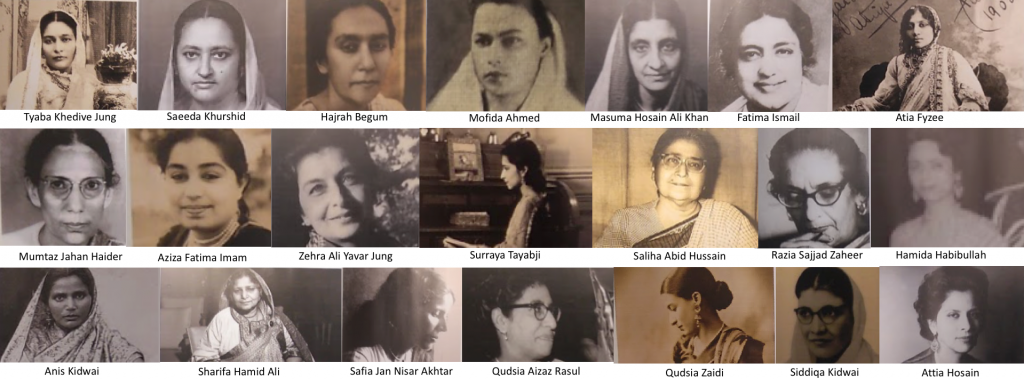
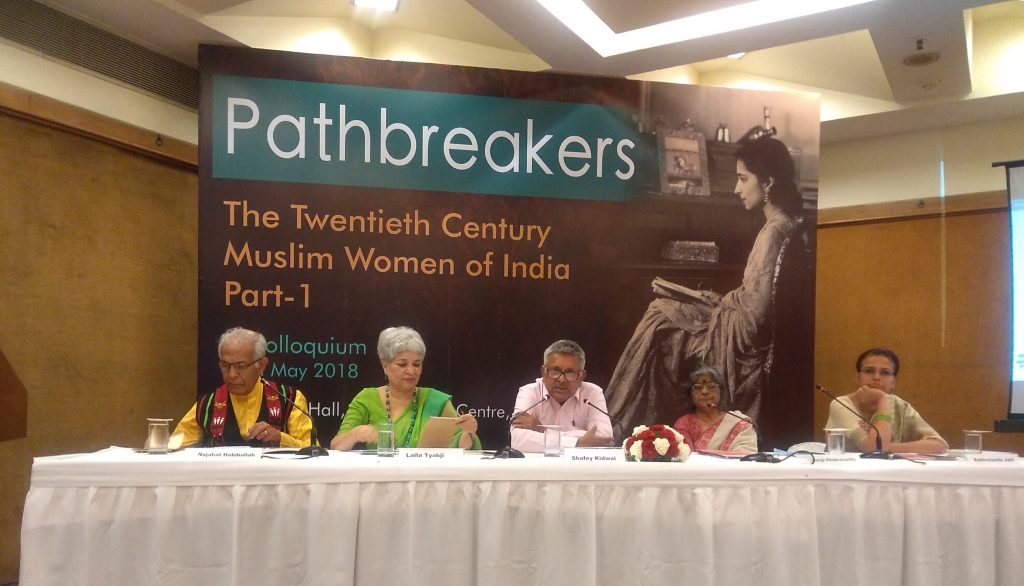
MWF exhibition featured 21 Muslim women who contributed to nation-building during and after the independence struggle. Credit: Khushboo Kumar
New Delhi:
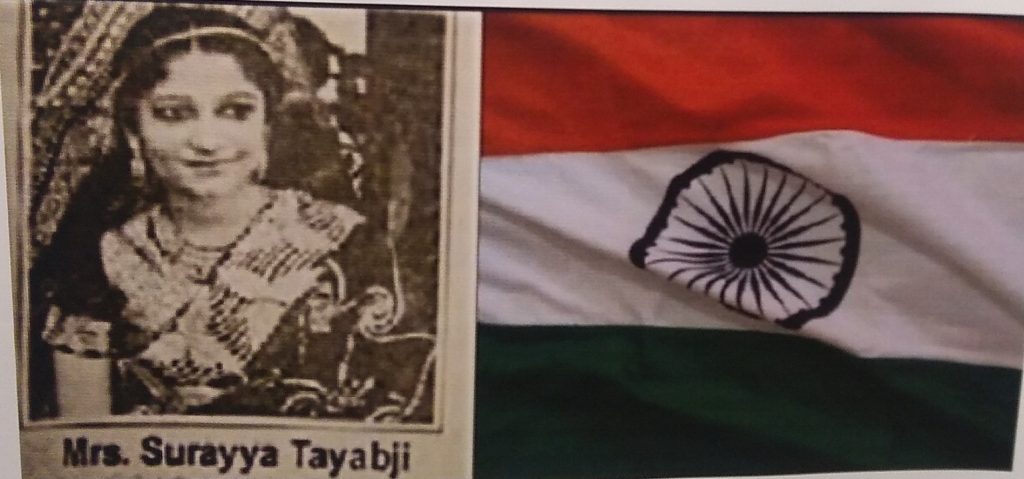
Most Indians today may not be aware that the national flag was designed by a Muslim woman, Surayya Tayabji, an active member of the Indian National Congress. Jawaharlal Nehru assigned this task to Tayabji, and it was her idea to replace the symbol of the charkha used and popularised by Mahatma Gandhi with that of Ashoka Chakra at the centre of the flag. Tayabji felt that the charkha, a symbol of the Congress party, might appear partisan.
Narratives like this – often forgotten or lost in public memory – were the central theme of a colloquium that was organised by the Muslim Women’s Forum (MWF), an organisation engaged in the advocacy of Muslim women’s rights. Titled ‘Pathbreakers: The Twentieth Century Muslim Women of India’, the colloquium held in partnership with UN Women showcased the achievements of 21 Muslim women in various spheres of public life during and after the independence struggle.
Other women who featured in the exhibition included Saeeda Khurshid, Hamida Habibullah, Aziza Fatima Imam, Qudsia Zaidi, Mofida Ahmed, Zehra Ali Yavar Jung, Razia Sajjad Zaheer, Tyaba Khedive Jung, Atiya Fyzee, Sharifa Hamid Ali, Fathema Ismail, Masuma Hosain Ali Khan, Anis Kidwai, Hajrah Begum, Qudsia Aizaz Rasul, Mumtaz Jahan Haider, Siddiqa Kidwai, Attia Hosain, Saliha Abid Hussain and Safia Jan Nisar Akhtar.
The speakers participating in the discussion talked about the need to reclaim the lost narratives of Muslim women and take control of their representation.
Speaking on the occasion, Seema Mustafa, an Indian print and television journalist, pointed out that these women would not fit even the current stereotypical representation of hijab-clad, oppressed and orthodox Muslim women, who need a messiah to rescue them. Mustafa, in her keynote address, said that these women had broken barriers and challenged patriarchal order in their time; they followed Islam in its liberal spirit, refusing to be shackled by societal norms. Most of them abandoned the purdah system, she said.
Speakers panel for the session ‘Recognising and Nurturing Pathbreakers’ at Muslim Women’s Forum colloquium. Credit: Khushboo Kumari
Stereotypes in modern India
The speakers insisted that the reality was and still is that Muslim women, just like women belonging to any other socio-cultural group in India, do not constitute a monolithic, homogenous entity. They come from diverse backgrounds and subscribe to varying ideologies. Muslim women have been and still are writers, teachers, artists, scientists, lawyers, educators, political workers, legislators in parliament and in assemblies. The speakers said clubbing them under the generic rubric of backwardness was a misrepresentation.
As the regular use of terms like triple talaq, halala and purdah has come to demonstrate subjugation of Muslim women, Islam has acquired the status of the most oppressive religion for women, the speakers said. Muslim women have become an object of pity.
Commenting on Islam and feminism, Farida Khan, former dean of education at Jamia Millia Islamia and former member of the National Commission for Minorities, pointed out that gender oppression is common to all religions. “Why should Islam have the burden of taking on feminism?” asked Khan. She further explained that Islam should be perceived and understood in the social and historical context of the day. Every religion has to and does evolve with time.
Referring to the exhibition, Khan said, “It makes me sad to think that you need to have an exhibition and you need to project these women in a country where they should be well known, where they should be part of the mainstream, where everybody should know their names and know the work they have done.”
Gargi Chakravartty, former associate professor of history in Maitreyi College and author, said, “Muslim women’s political and social contributions in the pre-independence period during the major Gandhian movements or in the field of spreading education, or in the sphere of literary activities, cannot be erased from history.” She shared many anecdotes that came up in her own research about largely unknown Muslim women who have extensively worked among the poor throughout the 20th century and still continue to do so.
An eminent speaker at the colloquium, Rakshanda Jalil, recently wrote a book A Rebel and Her Cause on the life of Rashid Jahan. Jalil spoke of the inspiring life of Jahan, who was a doctor, writer, political activist and member of the Communist Party of India.
Farah Naqvi, member of the Post-Sachar Evaluation Committee (Kundu Committee) 2013-2014, summed up the purpose of the colloquium and the exhibition. “This colloquium is a response. There is a nostalgia about it. But it is not just about the nostalgic nawabi Muslim. It has a political purpose, the colloquium, which is that you cannot allow any one strand of history to be obliterated from this country. Any strand. It could be Muslim women today. It could be someone else tomorrow,” Naqvi said.
Questioning if Muslim women needed to be forced into a separate constituency, Naqvi said it was indeed a tragedy that these women’s contributions were not a part of mainstream knowledge – and that reflected failure on the part of Indian historiography.
Naqvi also pointed out that the undercurrent of the entire exhibition was nation-building because they were “also responding to a moment when Muslims are repeatedly being told that they are ‘anti-national’”. She further explained that against such a background, the Muslim community in general should not take the bait of proving that they are ‘good’ nationalists. Instead they should take pride in the achievements they have made in their respective spheres of work – especially for those who stayed on in India after the Partition.
Wajahat Habibullah, India’s first chief information commissioner and the son of Hamida Habibullah, one of the 21 women featured in the exhibition, talked about Partition and how it divided his family. He said, “It is necessary to remember and nurture the memories of all those Muslim women who then very consciously, despite family pressure and contradictions within the family, opted clearly to be a part of India”.
Contribution to literature, politics and education
The exhibition showed how extensively Muslim women have contributed in the spheres of politics, literature, education and social work.
Many like Saeeda Khurshid, founder of the Muslim Women’s Forum, actively campaigned for the Congress party. Hamida Habibullah was the the president of the Mahila Congress. Few like Aziza Fatima Imam, Fathom Ismail, Anis Kidwai, Siddiqa Kidwai and Qudsia Aizaz Rasul were members of the parliament and legislative assemblies for years.
Rasul was also the only Muslim woman member of the constituent assembly.
Sharifa Hamid Ali founded the All India Women’s Conference (AIWC), with the likes of Sarojini Naidu, Rani Rajwade and Kamaladevi Chattopadhyay, and was involved in its work alongside others like Masuma Hosain Ali Khan and Hajrah Begum – who also founded the National Federation of Indian Women.
These women actively worked with the poor and marginalised sections of society, trying to improve their access to health and education.
Zehra Ali Yavar Jung, who was awarded the Padma Bhushan in 1973, worked to improve the condition of women detainees in Hyderabad’s prisons and presided over a women’s workshop that trained and provided employment to destitute women. Fathom Ismail helped in opening rehabilitation clinics for children suffering from polio. Anis Kidwai worked tirelessly in refugee camps after Partition.
Surayya Tayabji and the Indian national flag displayed at the MWF exhibition. Credit: Khushboo Kumari/The Wire
Mumtaz Jahan Haider, who was appointed the principal of the Aligarh Women’s College in 1937, worked for women’s education her entire life.
Sharifa propagated legal reforms for Muslim women, including raising the age of marriage and drafting a model marriage contract ‘nikahnama‘.
In the field of literature and arts, these women won multiple awards. Razia Sajjad Zaheer, the recipient of the Nehru Award and Uttar Pradesh State Sahitya Academy Award, wrote novels like Sar-e-Sham, Kante and Suman. Anis Kidwai recieved the Sahitya Kala Parishad Award.
Attia Hossain used to write for Pioneer, Statesman and Atlantic monthly and wrote several novels, most notably Sunlight on a Broken Column and a short story collection Phoenix Fled. Aliya Fyzee wrote Indian Music (1914), The Music of India (1925) and Sangeet of India (1942) with her husband.
Qudsia Zaidi wrote and translated books for children, with Chacha Chakkan ke Draamae among the most loved ones. She also founded Hindustani Theatre in 1954, the first urban professional theatre company in independent India.
Khushboo Kumari has a BTech in information technology and is pursuing an MBA in marketing from MICA, Ahmedabad. She is an intern at The Wire.
source: http://www.thewire.in / The Wire / Home> History> Religion> Women / by Khushboo Kumari / May 30th, 2018
Many participated actively in the agitation for Statehood
At a time when the Telangana sentiment was at its peak, several Muslims and Muslim organisations jumped into the movement. Be it the 1969 agitation or, for that matter, more recently, in 2008 and 2009. And with the anniversary of the formation of the State on Saturday, some of those involved in the movement share their experiences.
Jamaat-e-Islami Hind Telangana and Odisha president Hamid Mohammed Khan says that it was in 2008 that the socio-religious organisation jumped in to the fray.
The Jamaat, he says, was aware of the region’s backwardness and its causes which is why the decision was taken to join the movement.
“We formed an advisory committee to study these injustices. We analysed a lot of government released data, Planning Commission reports and the distribution of resources to Telangana region. We analysed government employment patterns too. In 2008 we decided to wholeheartedly support the movement,” Mr. Khan says.
Organised garjanas
The Jamaat, he says, was a part of the Telangana Joint Action Committee, and its organs supported the cause. “We organised Telangana garjanas in all districts and used our established units to further the cause of Telangana,” he says.
While the Jamaat formally took part movement in 2008, the All India Majlis-e-Tameer-e-Millat (AIMTM), another socio-religious organisation was active during the 1960s.
According to its vice-president Ziauddin Nayyar, it was in 1969 that the then general secretary Laiq Ali Khan was actively associated with the Telangana Praja Samithi, co-founded by the then chief minister of erstwhile Andhra Pradesh M. Chenna Reddy.
“Several of the Tameer-e-Millat’s leaders were even jailed for being a part of the agitation. Our ties were so close with the movement. Another member, Tahir Osmani, was well known for his renditions of poetry and slogans for Telangana statehood,” Mr. Nayyar recalled.
Observers said that with the passage of time and weakening of the organisation, the AIMTM could not be an active part of the later years of the Telangana movement.
“Apart from these two organisations, several individuals too took part in the movement. They were well aware of the injustice meted out to the people of the state,” an observer said.
source: http://www.thehindu.com / The Hindu / Home> News> Cities> Hyderabad / by Syed Mohammed / Hyderabad – June 04th, 2018