Category Archives: Leaders

Noorpur Assembly bypoll results: Samajwadi Party’s Naim Ul Hasan defeats BJP’s Avani Singh

Noorpur (Bijnor District) , UTTAR PRADESH :

Samajwadi Party leader Naim Ul Hasan has defeated Avani Singh of the Bharatiya Janata Party (BJP) by 6211 votes.

The bypoll in the Noorpur Assembly seat was necessitated after the death of sitting BJP MLA Lokendra Singh Chouhan. He was a two-time MLA from the seat.

While the BJP had reposed faith in Avani Singh, wife of late MLA Lokendra Chauhan, as its candidate, former chief minister Akhilesh Yadav-led Samajwadi Party fielded Naim Ul Hasan as its candidate.

Meanwhile, in Kairana Lok Sabha seat, BJP candidate Mriganka Singh is trailing against RLD leader Tabassum Hasan, who has been backed by opposition parties Congress, Samajwadi Party and Bahujan Samaj Party.

After the defeat of the BJP in Gorakhpur and Phoolpur Lok Sabha bypolls, opposition parties were upbeat aiming to consolidate anti-BJP votes, whereas the ruling BJP had made extra efforts to retain both Kairana Lok Sabha and Noorpur Assembly seats in order to send a message to voters, party cadres — as well as opposition parties — that the recent reversals are a closed chapter now, and that it was still strong in western UP.

source: http://www.zeenews.india.com / Zee News / Home> News> India> Noorpur Assembly Bypoll Results / by Zee Media Bureau / May 31st, 2018

Prof. Durrani Passes Away

Mysuru, KARNATAKA :

ProfDurraniMPOs02jun2018

Mysuru:

Prof. Mohammed Ismail Khan Durrani, popularly known as Prof. M.I.K. Durrani (91), passed away in the wee hours of today at his residence ‘Durrani Manzil’ on B.N. Road, Mandi Mohalla.

He leaves behind his wife, two daughters, grand-children and a host of relatives and friends.

Namaz-e-Janaza was offered at Masjid-e-Umar Khan, B.N. Road, at 11.30 am followed by burial at Old Khabarasthan, behind Central Jail, Mysuru.

Profile: Prof. Durrani used to occasionally write a column titled Recollections…which was very popular among Star of Mysore readers during 2012-2016.

Prof. Durrani joined University of Mysore as a Lecturer in English in 1950, immediately after getting his BA (Hons) degree. Except for about three years during which he worked as a Lecturer at Intermediate College, Mandya, Prof. Durrani taught English at the constituent colleges of University of Mysore for 35 years.

He was associated with Yuvaraja’s College as a Lecturer and later on as a Reader for a major part of his career (about 25 years). In the year 1983, he was transferred to University Evening College as Professor of English from where he retired in 1988.

During his career as a Lecturer at Yuvaraja’s College, Prof. Durrani also served as an NCC Officer apart from producing and directing several English dramas.

After retirement, he joined the Muslim Educational Society, Mysuru, as an Executive Committee member and became the Founder-Principal of MES First Grade College in 1995. He also served as the President of  Muslim Educational Society which is catering to the educational needs of the community from nursery to college level.

source: http://www.starofmysore.com / Star of Mysore / Home> News / June 01st, 2018

Meet Tabassum Hasan, UP’s only Muslim lawmaker in Lok Sabha since 2014, who crushed BJP in Kairana

Kairana, UTTAR PRADESH :

Tabassum Hasan PTI
Tabassum Hasan PTI

Tabassum Hasan is no stranger to Uttar Pradesh politics. She is wife of late Samajwadi Party leader Munawwar Hasan, who was an MP from UP during 1996 to 1998.

Tabassum Hasan, a former BSP MP who later joined the SP, fought the prestigious Kairana Lok Sabha bypolls on RLD ticket.

The face of united Opposition, who crushed the BJP in communally-sensitive Kairana Lok Sabha bypolls today, is Uttar Pradeh’s only Muslim lawmaker since 2014.

Though BJP’s Mriganka Singh, the daughter of late MP Hukum Singh, was banking on sympathy wave, on May 31st, the verdict showed that Kairana’s daughter-in-law had defeated ‘Kairana’s daughter’.

Hasan did her schooling from UP’s Saharanpur and studied till class X. She married late Munawwar Hasan in 1986 and has two children.

One of the key debating points in Kairana bypolls was the exodus Hindus from the area. Both Mriganka and Tabassum had divergent views on the exodus of Hindu families from Kairana, a claim made by Mriganka Singh’s father which became a major issue in the 2017 Uttar Pradesh Assembly election.

The exodus of Hindu families from Kairana has stopped, Mriganka  had said.

Before the 2017 UP Assembly elections hundreds of Hindu families had fled from Kairana out of fear and harassment. However, after the BJP government under Yogi Adityanath was formed, the law and order scenario in the region improved, she had said during campaigning.

However, Hasan maintained that there was no exodus from Kairana in the first place. Both Hindus and Muslims have been living here in harmony for generations. The exodus issue was flagged only to divert attention from important issues, to add a communal colour to the elections and divide voters, she haad said.

Conceding her defeat, Mriganka Singh today congratulated Hasan and said that they have emerged strong and BJP has to prepare for future.

“Many voters did vote for BJP, but with a lead of some thousand votes alliance has won. I would like to congratulate the candidate. The alliance has emerged strong and now we have to prepare better for future,” Mriganka told ANI.

The Kairana seat fell vacant in February 2018 after the death of BJP leader Hukum Singh, following which the party fielded his daughter Mriganka Singh from this seat.

(With agency inputs)

Thottara Puncha rice brand to hit market by June

Ernakulam (Kochi) , KERALA :

The Thottara Puncha before harvest. | Photo Credit: Special Arrangement

Government’s farming success story sees revival of 652 acres of paddy land

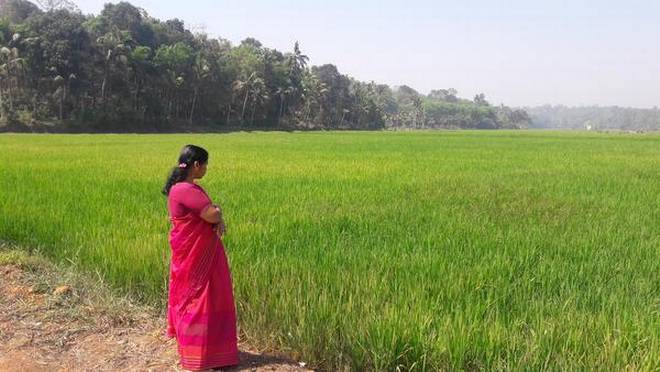
A rice bowl that had been lying almost fallow for over a decade has now been revived fully to produce some 1,500 metric tonnes of paddy in a joint effort by the Ernakulam district administration, Agriculture Department, paddy field collectives, and local bodies.

The rejuvenated Thottara Puncha, where 652 acres of paddy land were brought under cultivation last year, will now be a brand, with the rice produced here hitting the market in that name in the first week of June. The effort to breathe life back into the Puncha, trapped amid some nine hills, was spearheaded by District Collector K. Mohammed Y. Safirulla.

The plan is to market some 20 tonnes of rice initially, followed by another batch of 20 tonnes. Keecheri Service Cooperative Bank has completed collection of paddy, threshing, packing, and branding, said a release issued here.

Mr. Safirulla sought the support of Amballoor and Edakkattuvayal panchayats to cultivate some 350 acres of the 990 acres of the Puncha in Ernakulam district (the remaining 1,082 acres are in Kottayam) in 2016-17, and the results were stunning. “Preparation of fields itself was a challenge, but paddy field collectives worked in tandem to make it happen. This time around, we were able to bring under cultivation the maximum cultivable area — around 700 acres over nine paddy land collectives barring areas acquired for various projects, canals, farm roads, and irrigation channels,” said C.K. Prakash, general coordinator of the project.

Several departments, including irrigation, Land Development Corporation, and the State Electricity Board, supported the initiative. The canals were cleaned, and pumping facility was added to the sluices at Olippuram and Pulimukham (as a chunk of the Puncha being in low-lying areas will get heavily inundated during the monsoon).

“It posed some challenges, as not every area could be cultivated in October, which delayed harvesting too. We have now set up 12 high-power submersible pumps along the Puncha for de-watering, which will help us harvest the entire field by March next. This is going to drastically reduce the harvesting cost as well. And, the idea is to incorporate Kudumbasree in threshing paddy at our own mill and brand it,” said Mr. Prakash.

A Thottara Puncha Development Council will soon be formed, and a mill will be set up at a cost of ₹40 lakh. Terming it his pet project, Mr. Safirulla said all agencies and stakeholders had chipped in with verve to script the success story.

source: http://www.thehindu.com / The Hindu / Home> News> Cities> Kochi / by Special Correspondent / May 25th, 2018

60 mushroom species documented at Yenepoya campus

Mangalore , KARNATAKA :

MushroomsYenepoyaMPOs29may2018

Mangaluru :

In an unique initiative, Yenepoya (deemed to be university), has undertaken a comprehensive study of the mushrooms present on the Derlakatte campus.
The study, which was conducted over a period of six months, has yielded rich information on the macrofungal resources of the campus. About 60 species of mushrooms have been observed on the campus, out of which about 40 have been described in the book. Out of the 40 species published, 12 species are edible, 12 species are medicinal, two species ectomycorrhizal and one species is parasitic. Two species which are rare and known to be poisonous are also recorded.

The information was documented in a ready reference book titled ,‘Macrofungal resources of Yenepoya University’.  Yenepoya chancellor Abdullah Kunhi released the book at a ceremony held on the campus on Tuesday, in the presence of vice-chancellor M Vijayakumar and registrar G Shreekumar Menon. The book is dedicated to M Abdul Rahiman, former vice-chancellor, Kannur and Calicut Universities.

Yenepoya is the first educational institution in the region to initiate such a study of mushrooms on the campus. Though mushrooms play a unique role in the ecosystem, importance is always given to only flora and fauna, said sources. Yenepoya has initiated other similar studies to document the flora and fauna of the campus too.

The study of macrofungal life on the campus was undertaken by a research team led by K R Sridhar, Dr N C Karun and Dr Bhagya B Sharma from June-November 2016.

Yenepoya has striven to make its 32 acre campus into an eco-friendly zone. The institution has undertaken various measures for greening the campus with different landscapes like lawns, arboretum, bamboo thickets, medicinal plant garden, areca plantation and acacia grove. The campus includes a large rainwater harvesting pond, roof water harvesting facilities, waste water treatment and recycling plant, vermicompost unit and solar power generation facility. The university carries out a regular environmental audit of the campus and has an eco club for students. It is hoped that these activities will inculcate a love for nature among the students who study here, and inspire them to act as brand ambassadors for nature conservation in their future life.

source: http://www.timesofindia.indiatimes.com / The Times of India / News> City News> Mangalore News / by Kevin Mendonsa / TNN / May 23rd, 2018

Edit

Life in black and white

Vernawada, Palanpur, GUJARAT :

In a career spanning 70 years, A.L. Syed became one of the important figures of 20th-century Indian photography. Working in black and white, his apparently neutral stance conceals a deeply compassionate vision of human existence,  says  HAVOVI ANKLESARIA.

THIS collection of 93 masterly duotone photographs by Abid Mian Lal Mian Syed is a tribute to the man and a selection of his work. In a career that spanned 70 years, he was perhaps one of the most important figures in the world of 20th-century Indian photography. Born in 1904, Syed spent his childhood in Palanpur where he and his brother became the official photographers of Palanpur State and much of their professional work was done for the royal families of various North Indian States.

In 1923 Syed won first prize in The Illustrated Weekly of India Photo Contest for his photograph of the sunrise at Chowpatty, unfortunately not included in this selection. He began publishing his work in 1925 and towards the end of his life claimed to have been published in every Indian magazine. In 1935, he won the Popular Photography award for his photograph “Traveller of the East, Palanpur” and, with it, instant international recognition.

For generations of viewers overwhelmed by colour, the black and white image is the medium of the master-craftsman and Syed does not disappoint. His eye is impeccable. These are wonderfully evocative photographs sans colour but with varying intensities of light and shadow. O.P. Sharma’s Foreword is slightly overburdened with accolades, but he does a good job of introducing his subject. Syed’s range was vast — from portraits of the rich and powerful to day-to-day village scenes. Much of the attraction of the photographs is the strong emphasis on line and form, particularly the section on his historical buildings and religious monuments. Like many of his generation, he was a keen hunter, but in this collection there are no trophies, only living birds and animals.

The book begins with a series of portraits of the royal families of Northern India in their resplendent gear. Most of the portraits are taken in isolation. The fixed frontal alignment, the expression of supreme assurance from individuals who know their social and political identity, symbolise a way of life and attitudes that are somewhat diminished in contemporary India. The portraits are nonetheless important as a part of the national archive. The first photograph is a long shot of a very young Gayatri Devi of Jaipur seated in a dark room. Her freshness and youth contrasts sharply with the antique grandeur of her surroundings and accentuates the loneliness of her surroundings.

Syed was obsessed with the desert, which penetrated his consciousness almost totally. The desert as star recalls the haunting scenes in the film “Lawrence of Arabia”, though Syed’s photographs predate the film by several decades. Most of his outdoor photographs have a feel of desolation. Even relatively busy scenes evoke a sense of vastness. One of the great classics of this collection and possibly in the history of photography is “Different Climb, Jaisalmer” in which a camel is being drawn up a sand dune. The camel and the man are not in prominent focus. What is emphasised is the sharp angle of the dune’s gradient, evoking the terror and seductiveness of this featureless terrain.

In “Desert Child”, child and lamb pose in front of the camera unselfconsciously. Innocence declares itself without surrendering to the “cutesy bunny” manipulations traditionally associated with photographs of children and animals. Their vulnerability is brought into focus in the context of a remorseless desert existence.

Perhaps one of the most extraordinary photographs in this collection is “Risky Balance” showing a man perched on a rope on one leg with a donkey strapped to his back. The upward tilt of the camera captures the perfect equipoise of the acrobat featured against a dull grey sky. But it is not simply the showmanship that amazes. The image resonates with a sense of perilous uncertainty of living on the edge with no guarantees and of having to depend on skills whose rewards are irregular. Indeed the title is ironic in a way that Syed may not have intended.

In 1971 Syed developed Parkinson’s disease, but continued to work. He died in 1991. Towards the end of his life, he was critical of contemporary Indian photographers and photo-journalists for parading the spectacle of poverty and human misery to satisfy the international market. Syed’s camera was not an instrument of authorship. There is nothing of the vicarious or the gratuitous in these pictures. The frame is a medium of documentation whose artistry is concerned with the simple, direct act of viewing. His apparently neutral stance conceals a deeply compassionate vision of human existence as one of isolation, loneliness and incompatibility.

Visions from the Inner Eye: Photographic Art of A.L. Syed, Introduction by O.P. Sharma, Mapin Publishing Pvt. Ltd., p.111, Rs. 1000.

source:  http://www.thehindu.com / The Hindu, Online Edition  / Home> Literary Review / January 06th, 2002

A. L. Syed (1904-1991)

Vernawada, Palanpur, GUJARAT :

ALSyed01MPOs26may2018

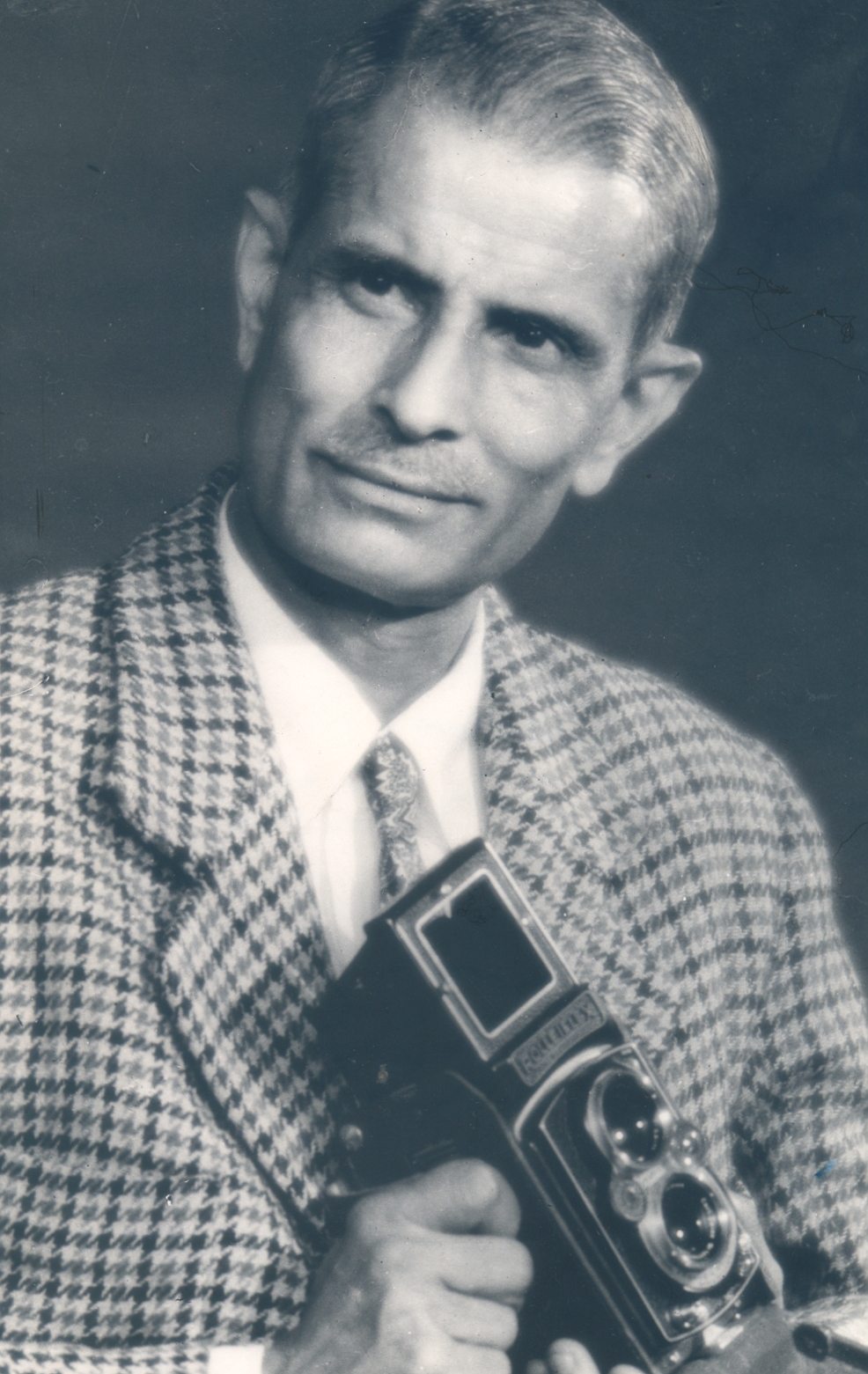
Abidmian Lalmian Syed (1904-1991), more popularly known as A.L. Syed, is the Doyen of Indian photography. He is regarded as one of the key figures whose works have captured the glory and aura of the Princely States of pre-Independence India.

Born on February 2, 1904, in Vernawada, a village 16 kms from Palanpur, he spent his early childhood in the town where his father was hakim of the Royal family. It was a school tour of Mumbai in 1923 that played an important role in shaping his life. On that trip, a photograph he clicked of sunset at Chowpatty won him the First Prize in Illustrated Weekly of India’s snap shot competition. For the next five decades, his photographs were regularly featured on the pages of the Weekly.

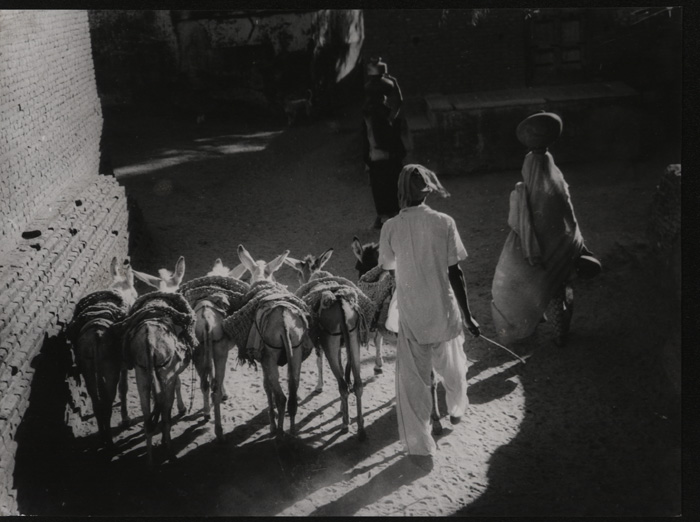
Morning Time In Dyara - 1938 - A. L. Syed
Morning Time In Dyara – 1938
– A. L. Syed

In 1925, his images first began appearing in Kumar, a Gujarati magazine, edited by well- known artist Ravi Shankar Raval, and he was a regular contributor, with photos and feature articles till the publication ceased in 1940. 

At that time he was already working with his elder brother, K.L. Syed, a well known freelance and also official court photographer in Palanpur. But unlike his brother, A.L. went beyond portraits, and his famous photograph ‘Traveller of the East’ taken in 1934, won international recognition and was published as one of the world’s best photographs in Odhan Press Home Library series. Since then it has been a part of over 40 international exhibitions and winner of the annual Popular Photography award in 1935, and later became part of the famous Hutchinson Collection in the USA.

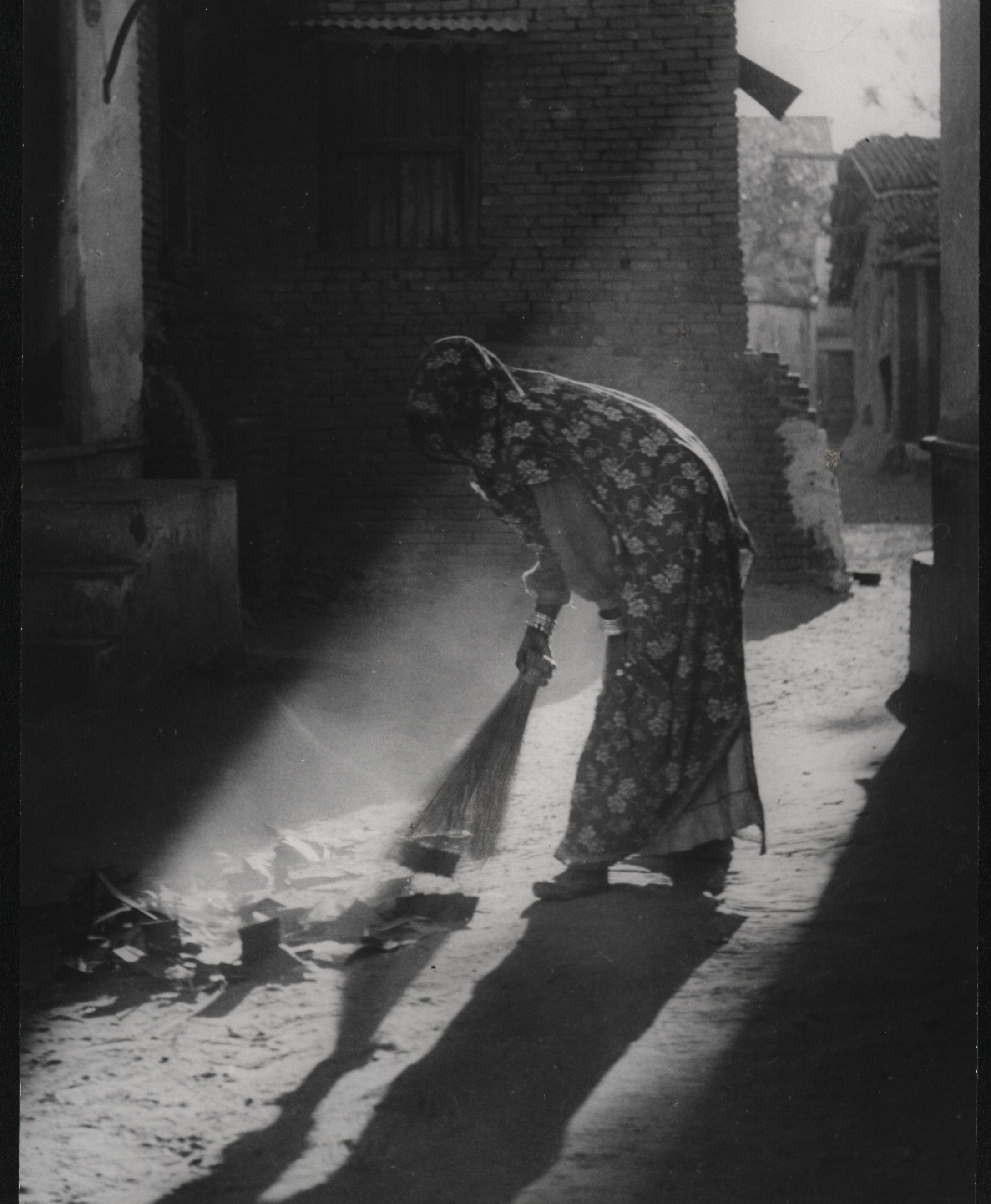
Street Sweeper - 1938 - A. L. Syed
Street Sweeper – 1938
– A. L. Syed

One of his many one-man shows was inaugurated by the then President of India, V.V. Giri, on the occasion of the 6th Convention of the Federation of Indian Photography hosted by the Camera Society, Delhi.

Another of his photographs, ‘Difficult Ascent’ was chosen for an award from among the 2,500 received from 15 Asia Pacific countries in the Asia Pacific Cultural Center for the UNESCO (ACCU) Photo Contest in Tokyo in 1977, and in 1980 he was given the honour of inaugurating a photographic exhibition organized by Illustrated Weekly of India to commemorate its centenary. Later in 1983, he was one of the 10 eminent photographers of the world to receive the India International Photographic Council’s highest honour, the Honorary Fellowship for outstanding contribution and service to various branches of photography. 

Mr. Syed was more than a photographer; he was a master artist, highly respected in Indiaand abroad, both professionally and personally. His skill in bringing alive remarkable images of day to day life around the country and crafting exquisite portraits have made his work live long after he passed away on August 30, 1991.

source: http://www.palanpuronline.com / Palanpur Online / Home> Personalities

Danish Ali’s moment in the sun

Hapur, UTTAR PRADESH / NEW DELHI / KARNATAKA :

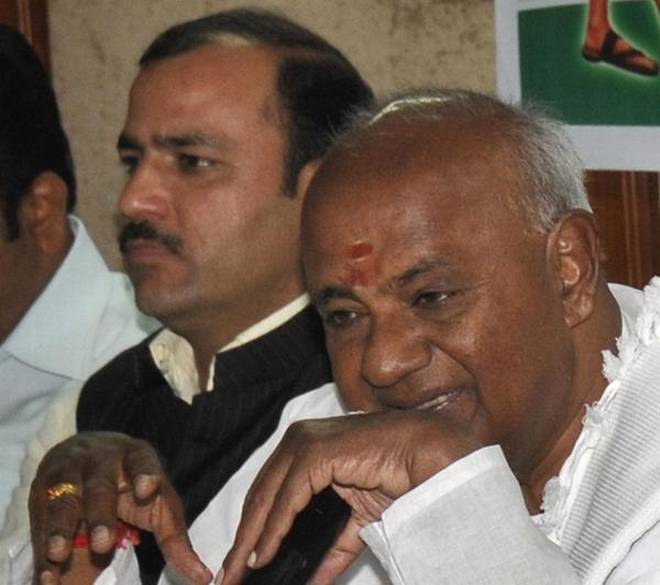
Key player: JD(S) leader Danish Ali (left) with party supremo H.D. Deve Gowda.

Gowda loyalist and JD(S) stalwart piloted alliance with Congress

The speed with which the Congress-Janata Dal(S) alliance came about on the afternoon of May 15 was a matter of much surprise to those who knew the strained relations between the two parties. That the alliance was stitched up, publicly announced and on the road to Raj Bhavan far ahead of the BJP’s move, was the product of three days of intense backroom talks between the two parties.

While the role of Leader of the Opposition in the Rajya Sabha Ghulam Nabi Azad is now well-known, the part played by JD(S)’ secretary general Kunwar Danish Ali remained unknown until he made it to all the photo-ops of Karnataka Chief Minister-designate H.D. Kumaraswamy with Congress president Rahul Gandhi.

According to sources, it was a midnight call between Mr. Azad and Mr. Ali on May 13, two days before the results were out, that set the ball rolling.

“It was clear to the JD(S) that talk of a secret deal with the BJP during the campaign had resulted in a desertion by minorities. The Congress, too, anticipated a less than stellar performance,” said a source. Mr. Ali was instrumental in speaking to both former prime minister Deve Gowda and Mr. Kumaraswamy about Mr. Azad’s call, but only on the night of May 14.

“Mr. Deve Gowda just told him to speak to Mr. Kumaraswamy, while the latter was a bit apprehensive after the bitter campaign by the Congress,” said a source. Mr. Deve Gowda was for a wait and watch approach, sources said, but Mr. Kumaraswamy, once convinced by Mr. Ali, issued a public statement sealing the alliance.

“He was convinced that this alliance would have far-reaching consequences for the 2019 polls too,” said a source.

Mr. Ali, 54, had also sewn up the party’s alliance with the Bahujan Samaj Party (BSP) and the All Indian Majlis-e-Ittehadul Muslimeen (AIMIM) before the polls, with the BSP contesting in 20 seats and winning one, a historic first for them.

He entered politics as the national president of the Janata Dal student wing in 1994, as a student in Delhi’s Jamia Millia Islamia University, and has stuck with the Gowdas through thick and thin. He came to the attention of the former prime minister especially during the 1994 Assembly polls in Karnataka when he was speaking at a rally in Ramanagara.

In his more than quarter of a century with the Janata Dal(S) and its earlier avatar, Mr. Ali has contested one Assembly poll from Garhmukhteswar in Uttar Pradesh, the State he hails from. Apart from his grand uncle, Kunwar Mahmood Ali, who owed allegiance to the Indian National Lok Dal under late prime minister Chaudhary Charan Singh, and was Governor of Madhya Pradesh between 1992-93, no one else from his family is in politics.

source: http://www.thehindu.com / The Hindu / Home> News> States> Karnataka / by Nistula Hebbar / New Delhi – May 23rd, 2018

The Calligrapher’s Den

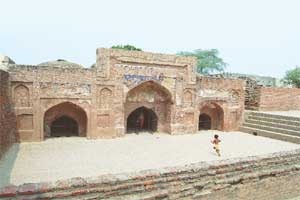
Amritsar, PUNJAB :SaraiAmanatKhanMPOs24may2018

His was the hand behind the Arabic inscriptions on the Taj Mahal, which have captivated tourists from across the world.

But today, the mausoleum and the dwelling of Amanat Khan, the calligrapher of the Taj Mahal, lies in decay, neglect and encroachment.

Sarai Amanat Khan, about 29 kilometres south-east of Amritsar on Tarn Taran Attari road, was built by Khan in 1640, where he lived a reclusive life following the death of his elder brother Afzal Khan, the prime minister of Shah Jahan.

But here too, Khan, who came to India from Iran in 1609 and whose real name was Abdul Haq before being conferred the title of “Amanat Khan” by Shah Jahan for his impressive calligraphy, has left the imprint of his craft — the sarai has beautiful Islamic calligraphy inscribed on its fading blue and yellow tiles.

Sarai Amanat Khan was also a guest house, where travellers on the Lahore-Agra route on the Grand Trunk Road would stop for rest in the middle of a long strenuous journey. They would live in the small rooms inside the sarai, and pray in the adjacent mosque and large courtyard.

Today, Sarai Amanat Khan is dilapidated — the Nanakshahi bricks are falling off, and the eastern gate is in disarray; some 800 feet below it is Khan’s ruined tomb.

The sarai is in the middle of a densely populated village, also named after Amanat Khan.

With several shops in its immediate vicinity, the Archaeological Survey of India-protected monument is a site of rampant encroachment. Several families live inside the rooms of the sarai illegally, and claim to have been doing so since Partition. “I was born here,” says 50-year-old Ranjit Singh. “People have been living here since 1947. There had been talks about giving us alternative land and compensation, but those have not materialised,” he adds.

source: http://www.archive.indianexpress.com / The Indian Express / Home> Archive / by Navjeevan Gopal, New Delhi / July 29th, 2012

‘Urdu’s Space In Kalina Not Byculla’

Mumbai, MAHARASHTRA :

In 2014, the Congress-led government had sanctioned Rs 10 crore for the construction of an Urdu Bhavan at Mumbai University’s Kalina campus to promote the language

The state govt’s proposal to set up a centre for the language outside of the university, where it even has an allocated space, has language lovers crying foul

In 2014, the Congress-led government had sanctioned Rs 10 crore for the construction of an Urdu Bhavan at Mumbai University’s Kalina campus to promote the language. Land was allocated and bhoomi poojan was performed. However, the project never saw the light of day.

Cut to present: The state government has proposed building the Urdu Bhavan in Byculla,. “The bhavan will come up on a 10,000 sqft area near the Agripada police station. And, if we get a larger FSI, we will be able to construct a four-storeyed structure with state-of-the-art facilities. We have asked the Centre to provide us with R50 crore for this,” says advocate Waris Pathan, All India Majlis-e-Ittehadul Muslimeen (AIMIM) legislator from Byculla, who has been at the forefront of getting approvals for this project. As per the proposal, the bhavan will have a library, convention centre, a girls’ hostel and will offer a range of new courses. “The Urdu readership in Byculla is high so it will see a lot of traction,” says Pathan

‘It’s not a Muslim language’
Yet, the news of the bhavan coming up at Byculla has lovers of the language divided. Members of Jai Ho Foundation, a charity organisation in Kurla, have written a letter to the Union Minority Affairs minister Mukhtar Abbas Naqvi, CM Devendra Fadnavis, Governor C Vidyasagar Rao, education minister Vinod Tawde and MU VC Suhas Pednekar, requesting them to reconsider the location. “We want the centre to be built inside the varsity because that will make it more accessible to students. By constructing it in a Byculla bylane, they are propagating the misguided notion that it’s a Muslim language,” says Jai Ho’s president Afroz Malik. Presently, the MU has a bhasha (language) bhavan dedicated to Marathi and Sanskrit.

There have been talks about building a Hindi bhasha bhavan as well. Malik says Kalina is a strategic location which makes it convenient for people commuting from both the suburbs as well as from South Mumbai. Moreover, setting it up in a healthy academic atmosphere will only help promote the language, he adds. “MU has people enrolling from all walks of life. It also has students from overseas. Urdu will get more exposure,” he states.

A matter of space
Meanwhile, the land allocated to the Urdu Bhavan at Kalina remains vacant. This is in stark contrast to the buzzing Urdu department, which has seen a sharp growth in the number of students as well as non-teaching staff. “The increasing curiosity around the language has translated into more people signing up for courses. The MA course sees more enrolments,” Dr Sahab Ali, head of Urdu department, says. Presently, the department has an overall strength of 200 students. While Dr Ali is happy to learn of a bhavan coming up in Byculla, he says it’s not enough. “I would want the centre to be built here because we are running out of space to accommodate students,” he says. The Urdu department at MU was established in 1982.

In 2013, Dr Ali had written to the Department of Minorities Affairs requesting the need for a bhasha bhavan to cater to the growing needs of the language. The request received the green light in 2014. The change in ruling parties resulted in the project languishing for years.

Farid Khan, convenor of Urdu Caravan, an NGO that promotes Urdu language and culture, says he sees merit in NGO Jai Ho’s stand. “I believe a language will thrive in an academic setting.”

source: http://www.mid-day.com / mid-day.com / Home> News> National News / by Anju Maskeri / May13th, 2018