Category Archives: Leaders

RAAG TAAL GHARANA – The legend of Mian Tansen

Gwalior, MADHYA PRADESH : 
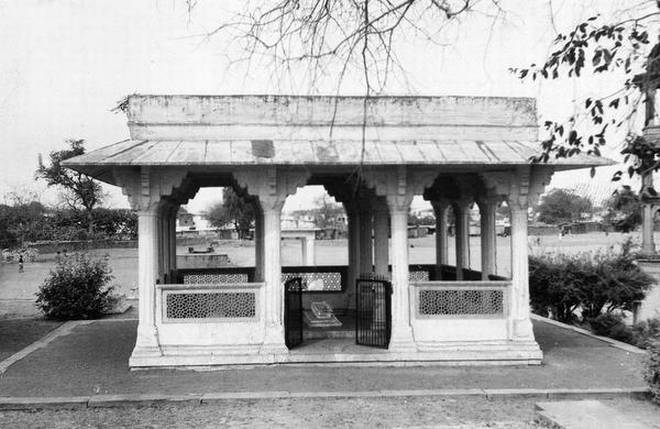
Tansen's tomb in Gwalior | Photo Credit: HINDU PHOTO ARCHIVES
Tansen’s tomb in Gwalior | Photo Credit: HINDU PHOTO ARCHIVES

He created many ragas, could produce any sound and lent a distinct style to Senia gharana

This gharana is made up of the legend of Tansen, the father of Indian classical music. Though Tansen was a vocalist, the gharana also produced sitar maestros. The Senia style of sitar playing started with the legendary Ustad Maseet Sen, who belonged to the sixth generation in the Tansen lineage. ( The pioneer of Maseetkhani style, even today, 100 years later, the Maseetkhan Baj is played by the sitarists of this gharana. These musicians came to be known as the sitarists of Jaipur Senia Gharana. They lay emphasis on the purity of raga and technique. Their style of playing was that of the bin or veena. Ustad Mushtaq Ali Khan, son of Ashiq Ali Khan of Varanasi had the privilege of learning from Ustad Barkhat Ali khan of Jaipur, who went by the title ‘Aftab-e-Sitar’. Pt. Debu Choudhuri was fortunate to learn from ‘Dada Guru’ (Ustad Mushtaq Ali Khan).

On the vocal front, the gharana is referred to as Qawwal Bachcha. Its most well-known exponent of our time is the Lucknow-based Ustad Shamshudeen Khan, popularly called Ustad Gulshan Bharathi (recepient of ‘Yash Bharathi’ award). This style is known as bol bant ki gayaki and bol banav ki gayaki. Short and crisp bol taans are significant features, while the aakar is sparingly used. Many of his disciples have made a mark in films, notable among them being Shashi Suman, music composer of Bajirao Mastani and Harjeet Saxena.

Coming back to Mian Tansen. He was born as Ramatanu and later came to be known as Tanna. There are many legends woven around his life. It is said that he could produce any sound. The story goes that once when the sadhus were crossing a field they heard a lion’s roar and located it to a young boy sitting on a tree. They advised his father to send him to Swami Haridas for training.

However, it is believed that Tansen was born dumb and was taken to the Sufi saint Murshid Mohammed Ghouse Gwaliari. On reaching Gwalior, he visited the Sufi saint and found him in the company of Swami Haridas. The saint blew air into the mouth of the child and Tanna began to speak. When the saint came to know the child was also deaf, he blew air into his ears and he was cured. The Sufi saint then asked Swami Haridas to take him into his fold. Thus began his musical journey (M.A Bakhy).

Titles to Tansen

Tansen was the title given to him by Raja Vikramjit of Gwalior. Tansen was a court musician in the darbar of Raja Ramachandra of Bandavagarh (Rewa).

When Akbar heard of his prodigious talent, he sent a ‘firman’ to the king asking for Tansen and made him one of the Navaratnas in his court. He gave him the title of ‘Mian’. Tansen is also known as the ‘Sangit Samrat’, according to Musical Heritage of India by Lalita Ramakrishna.

Abul Fazl records in his Ain-i-Akbari that Akbar gave Rs 2 lakhs to Tansen for his first performance in the court. He composed many dhrupads on Ganesha, Shiva, Parvati and Rama. He also composed songs on his patrons.

Kalpadruma is a compliation of 300 of his dhrupads that were in Gauhar Bani. Tansen composed in his favourite ragas — Multani, Bhairavi and Todi .

He invented the night raga Darbari Kanhra, morning raga Mian Ki Todi, mid-day raga, Mian ki Sarang, seasonal raga Mian ki Malhar. His descendants and disciples are called Seniyas.

While Tansen graced the court of Akbar, many aspiring singers would practice round the clock and caused a lot of disturbance to him. This came to the notice of Emperor Akbar and he banned one and all from pursuing music. The story goes that a competition was organised between Baiju Bawra, also a disciple of Swami Haridas, and Tansen. The loser was to be executed. The two sang under the magic spell of love and reverence to their Guru. Tansen’s tanpura string broke. Baiju asked Akbar to grant him three wishes — not to execute Tansen, to lift the ban on singers and to set free the people who were innocent.

Another famous story is about theintrigue to bring about Tansen’s end by making him sing Raga Deepak. Tansen, who was known for the purity of his renditions, foresaw his fate, but could not say ‘no’ to the emperor. He had asked all the lamps in the court to be extinguished. As he sang, the lamps lit and the flames engulfed him.

On hearing this, his wife Husseini broke into raga Megh Malhar, beckoned rains and saved Tansen. This was a turning point in the legendary singer’s life and he went back to Sufi saint Hazrat Ghouse Gwaliari. While the Tansen samorah in Gwalior commemorates him as a singer, the yearly Urs has canonised him as a saint.

source: http://www.thehindu.com / The Hindu / Home> Entertainment> Music / by Jyoti Nair / March 01st, 2018

Could Chicago’s Sameena Mustafa become the first Muslim woman in Congress?

Chicago, IL ,  U.S.A :

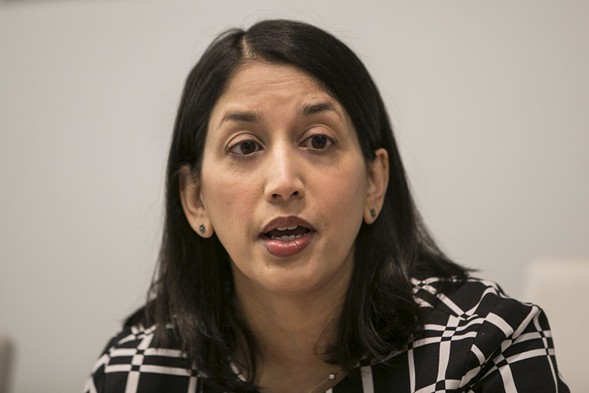
Sameena Mustafa / RICH HEIN/SUN-TIMES
Sameena Mustafa /
RICH HEIN/SUN-TIMES

Sameena Mustafa has had a successful career as a real estate broker working with nonprofits and small businesses in addition to a rising profile in the city’s comedy scene. In 2015 she cofounded Simmer Brown , a South Asian comedy collective. But the 2016 election made her take a hard look at the local political arena and decide to get involved. Now Mustafa, 47, is one of three Democratic primary challengers to incumbent Fifth District U.S. representative Mike Quigley, who’s held that office for nearly a decade. Mustafa believes he’s out of touch with the progressive values that she sees to be increasingly animating the district. If she wins, Mustafa would be the first Muslim woman in Congress and the first Indian-American woman to represent Illinois.

Here at the Reader we’re familiar with your comedy work. Have you always been doing comedy alongside your real estate career?

I started comedy in 2014, and that’s the newest venture. Real estate I started in 2003. I was still working full-time while I was performing. Comedy is a late-night venture, as it were, so it’s not something that would conflict with business meetings.

I had been creative when I was younger. I wrote poetry, and I wrote in high school. So I had that creative side of me, and it was one of those things where someone was like, “Take a class at Second City!,” and it was fine. I took another one and a friend suggested, “Hey, if you like this but you want something a little bit different, try this women-only stand-up and storytelling class,” and that was the Feminine Comique. My graduation was four years ago, my comedy graduation. I never actually performed onstage before that graduation. It was so different from anything I’ve done in terms of writing. I did debate in college, so I had no problem speaking in public, but this is very different—it was me bringing my political ideas, my creative side, and my comfort with being in front of people. Immediately I had an affinity for it. I really enjoyed it. I was nervous the first time I was onstage, but I loved it.

I can’t find any of your stand-up on YouTube. Is there a reason for that?

I see comedy as something you do. It’s something you can be doing for 20 years and still be learning and evolving—it’s like any craft. To me it was more important for people to come to shows. I didn’t want to do, like, a Facebook live. It was more about having the interaction and immediacy. We’re essentially creating an experience, a community in real time.

You’re running against an incumbent who’s held this seat for nearly a decade. Some would say that it’s not a great strategy for a first attempt at political office. Why did you decide to spend your time and money on a race that’s really stacked against you?

The electorate is looking for a different type of leader, one that’s grassroots, connected to the community, that isn’t somebody that’s been selected for them. If you look at the last ten years, Democrats have lost over 1,000 seats on every level including the White House. So it’s one of those things where all the data is pointing against your assumptions, yet you’re still holding those assumptions? To me this was a district, this was an incumbent that was important enough to challenge because we have a completely different environment than we did two years ago. And so to have someone in that seat who doesn’t advocate for the values of the voters of the Fifth District was an opportunity to bring that, to bring that leadership.

And having lived in the district as long as I have and had immediate contact with people from all walks of life and different parts of the district—you get a sense of what people value. When you’re in an environment like a comedy show, it’s a flash focus group. It’s not hard to figure out what people are thinking and feeling and what they care about. Mike Quigley refused to do a town hall following the inauguration, which was something being done by Republican lawmakers across the country. And I thought: Why is my Democratic congressman, in a very Democratic district, refusing to do them?

You’ve been living in the district for 30 years. When did you first learn anything about your congressman? And can you describe your relationship with the congressman over the years?

I knew who he was and, frankly, because he has never been challenged, I voted for him. I knew he had the baseline: he was pro-choice, he was pro-LGBT. Then when I started looking at my stack of leaders up and down the ballot and started thinking about the issues I cared about and started doing some research on some stances that Mike Quigley had taken, it occurred to me that he may be good on those two issues but there’s so many issues on which he is falling short. Or, frankly, is in opposition to the values that I hold and that the voters hold in the district. Mike Quigley is not someone who sticks his neck out on issues.

If you were elected, you’d be the first Muslim woman in Congress. What goes through your mind as you consider that prospect?

It would certainly be a milestone, but I’m optimistic that people in Democratic politics are increasingly accepting of leaders irrespective of their religion, gender, or ethnicity and are looking for candidates who stand with them on the issues and share their values. More doors are opening for candidates who have something to offer but who historically have not had opportunities to serve.

In light of the conversation that you participated in with the Reader last year, talking about feminism and intersectionality in what would be considered a nonmainstream way, how are you bringing your political consciousness as a feminist committed to intersectionality to this very mainstream political arena?

It’s in how I’ve organized my campaign, it’s in how I’ve talked about the issues. . . . I gotta tell you, we’ve talked to thousands of voters, and this is a progressive district. So when you approach them, they assume you’re agreeing on some baseline principles. Are you pro-choice? Are you pro-LGBT? Do you support the Dreamers, immigration reform? Are you going to be supporting health care access for all? This is something I’ve found is resonating with voters.

On the intersectionality piece per se, I have made it a point to have a very inclusive team. The majority of the leaders on my team are women and women of color. Those are the kinds of things that resonate with volunteers, with donors, with voters.

And are you also mentally preparing yourself to step into an electoral political space which requires compromise and working with people who have a radically different political understanding of things?

I’ve spent the last 13 years advocating for people and organizations that are founded on values—nonprofits that are working on important issues like immigration, sexual assault survivors. It’s something where I’m literally negotiating against people who don’t necessarily share those values and they are not really committed to those outcomes. And they have their own agenda, and they have their own profit motive, specifically in the space of commercial real estate.

As it relates to being a public figure and having criticism—I’ve been doing it for the last six, seven months. I have put myself out there in a way that’s public, and in some ways it was an extension of what I was doing in the arts community. Because when you’re onstage, you’re essentially saying,  “I am open to anything. I’m declaring my values, I’m declaring my beliefs,  and I welcome you to challenge them.” But I’m not shying away from being a public figure.

You’ve talked about how problematic gerrymandering is, how it creates this strange monoculture of an electorate in one particular district. Is there anything you’ve been either pleasantly or unpleasantly surprised by as you’ve been campaigning around the absurd contours of the Fifth District?

I know this district, this is the district I grew up in, my parents have lived here for over 40 years, and I felt confident in my knowledge of what the values were that I held and that were shared by the voters. And one thing that I keep getting positive reinforcement on is how much, despite the gerrymandering, how much the voters and the district value diversity and believe in inclusion and view it as one of our strengths. I’m getting phone calls, e-mails, and messages from people who are saying, “We want to help you, we support you, we share your values and we want to see a leader like you represent us.” It’s humbling, and it’s an honor. This has been an incredible opportunity to connect with people on values and policies that they care about.

source: http://www.chicagoreader.com / The Chicago Reader – TheReader / Home> News> Politics> The Best of Chicago / by Maya Dokmasova / February 27th, 2018

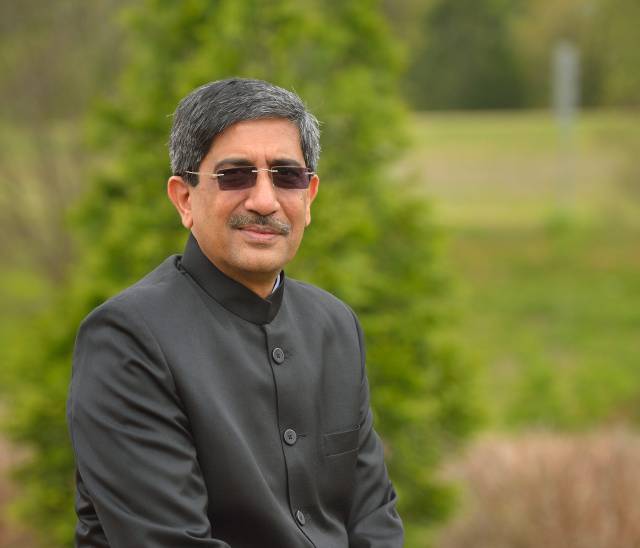
Parveez Shaikh is M&C Saatchi’s senior VP and ECD

Bengaluru, KARNATAKA / Mumbai, MAHARASHTRA :

M&C Saatchi India has appointed Parveez Shaikh as their senior vice president and executive creative director.Shaikh is best known for building Contract’s creative reputation during the 11 years that he spent at the agency before he quit, in 2003. He has worked as a creative consultant with a few leading agencies for a few years after that.

ParveezShaikhMPOs28feb2018

M&C Saatchi India has appointed Parveez Shaikh as their senior vice president and executive creative director.

Shaikh is best known for building Contract’s creative reputation during the 11 years that he spent at the agency before he quit, in 2003.

He has worked as a creative consultant with a few leading agencies for a few years after that.

Shaikh has worked on premium, blue-chip clients such as Philips Audio, Franklin Templeton AMC, Asian Paints, Shoppers’ Stop, ICICI Bank and Cadbury India.

He has won over a hundred national and international awards, including two Cannes Lions and five finalists at the prestigious Cannes Advertising Festival, an entry in the D&AD, the One Show, the New York Festival and the ‘Copywriter of the Year’ award.

He has also featured in the Indian Copy Book as one of the 16 best Indian copywriters of all time. Shaikh will be based in Mumbai.

source: http://www.campaignindia.in / Campaign India / Home> Advertising / by Campaign India Team / May 22nd, 2008

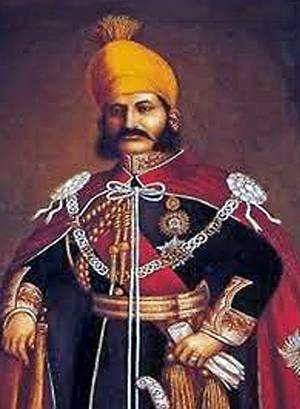
The story of a Hyderabad Nizam and his diamond paper weight

Hyderabad, TELANGANA (formerly ANDHRA PRADESH ) :

Mahboob Ali Khan
Mahboob Ali Khan

Mir Mahboob Ali Khan was taken to court by the trader who sold him the huge Jacob diamond

Of all the Nizams who ruled Hyderabad ,Mir Mahaboob Ali Khan — the sixth Nizam — was the most delightful and pleasure-loving monarch. He had great liking for everything western, be it dress, cars, manners and habits.

Born in 1866, he came to the throne at the age of three after the death of his father Afzal ud Daulah, and ruled till 1911. Mahaboob Ali kept the most lavish court in Hyderabad that several native rulers in India tried to emulate. He had a passion for expensive jewellery and precious diamonds. A number of exquisite pieces of jewellery including that of the famed necklace of Mary Antoinette of France, found place in his prized collections. However, the most renowned in his collection was the Jacob diamond, said to be the fifth biggest in the world.

Victoria Diamond

Originally known as Victoria Diamond, Jacob diamond had a short, but eventful, history  before reaching Hyderabad. It was found in Kimberly mines in South Africa in 1884 and was secretly transported to England to avoid heavy duties then in place for raw diamonds. It was sold to a consortium of jewellers at the Hutton Garden diamond market in London. The gem was then sent to Amsterdam in 1887 where it was polished in a specially erected workshop. The finished gem, with 58 facets, weighing 185. 75 carats was stunningly beautiful, in its cut, clarity and colour. (Kohinoor weighed only 105.6 carats).

DiamondMPOs28feb2018

It was this Victoria diamond, also called Imperial diamond that Alexander Jacob, the Shimla-based diamond dealer, sold to Mahaboob Ali Khan, the Nizam of Hyderabad in 1891. Since then it came to be called, Jacob Diamond.

Deal Went Murky

Like many famous diamonds of the world, Jacob diamond too had its own tale of woes due to the shady deal in its sale by Jacob to the Nizam. Jacob was a well-known, but notorious, Jewish merchant dealing in antiques and jewels having a shop in Shimla. Quite aware of Mahaboob Ali Pasha’s obsession for diamonds, Jacob arrived in Hyderabad in early 1891 to sell the Victoria diamond that was still in London. Jacob met the Nizam through Albert Abid, Nizam’s trusted Chamberlin, himself a jeweller and like Jacob, a Jew.

Jacob, with his alluring eloquence, spoke of the fabulous Victoria diamond and showed its glass replica that he had got made. Finally, after negotiations, both agreed for a mutual price of ₹46 lakhs. Half of the agreed amount, ₹ 23 lakhs, was paid as advance immediately by depositing in the bank and the remaining amount was to be paid on delivery of the diamond.

_______________________________________________

Czar Nicholas views Nizam’s Jewels
  • Czar Nicholas II, the last Emperor of Russia, was a guest of Mahboob Ali Khan in Hyderabad. Nicholas, as the Grand Duke of Russia, visited Hyderabad in 1892, two years before he succeeded his father as Emperor of Russia. The Duke stayed at the Falaknuma Palace along with other Russian officials accompanying him. The Nizam exhibited his famed jewel collection for the Russian Prince at a specially erected grand pavilion at the Chowmahalla Palace. Nicholas went on a hunting expedition in the Nekkonda forests near Warangal. A number of sports events were also organised at the magnificent Mahaboob Mansion in Malakpet for the visiting Prince and his entourage.
  • Much later, in the wake of Bolshevik Revolution that broke out in Russia, Czar Nicholas II was executed with family in July 1917

_________________________________________________

It was Jacob’s suggestion that the Nizam would use it as a paper-weight on his official papers and that his image would go up with such a use.

On July 21, 1891, when Jacob came with the original diamond, the Nizam to his disappointment found the diamond was much smaller than what the model was. Therefore he refused to buy the diamond and Jacob was asked to return the money paid as advance. But the wily Jacob by then, contrary to the understanding, had withdrawn all the advance money from the bank.

Jacob insisted that the Nizam pay him the remaining amount, and went so far as to file a case in the High Court in Calcutta. During the trial, the Calcutta High Court wanted to interrogate the Nizam as a witness. Accordingly, the Nizam met the commission at the Residency on October 5, 1891 but felt it an insult to go before a Commission of enquiry. On returning from the Residency, the angry Nizam, wrapped Jacob Diamond in a piece of cloth that was used to wipe the nib of his pen, pushed it into a shoe, and staved it off in his table draw, vowing never to open.

His son and successor, Mir Osman Ali Khan who succeeded his father in 1911, discovered it and used as paper weight, the purpose for which his father bought it.

What happened to Jacob?

The case Jacob filed proved to be his nemesis for, he had to spend all his money on his advocates. Born in Armenia , to Jewish parents, Alexander Malcolm Jacob was an ambitious and unscrupulous person. He came to India in 1871 with nothing and grew enormously influential as a dealer in jewels, diamonds and antiques. After his relations with the Nizam were strained, other native rulers treated him like the plague and refused seeing him. Jacob ultimately died in penury in Bombay. His life served a model for India-born Rudyard Kipling, to create the character, Lurgan in his Nobel prize winning novel, Kim, published in 1901.

source: http://www.thehindu.com / The Hindu / Home> Society> History & Culture / by K S S Seshan / February 21st, 2018

Vidarbha skipper Faiz Fazal showing his aggressive side in DY Patil T20

Vidharba, MAHARASHTRA :

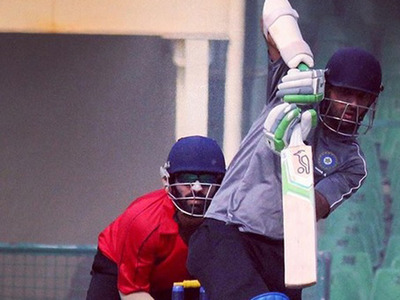
Faiz Fazal's strike rate in the tournament is currently 253.
Faiz Fazal’s strike rate in the tournament is currently 253.

Nagpur :

Faiz Fazal has always been a free-flowing player. He has all the shots in the book.

In fact, during his Under-19 days, he was known to be one of the talented stroke players in the country. His highest score in limited overs cricket at the Under-19 level was 181, which came against Railways. However, with responsibilities in the Vidarbha fold, he had to curb his natural instincts. He became the mainstay of Vidarbha batting right from his first season.

Despite scoring 912 runs in the latest Ranji Trophy, Faiz didn’t get a look in for the IPL. However, that hasn’t stopped him from performing well. The Vidarbha skipper is in blazing form during the ongoing DY Patil Twenty20 tournament in Mumbai, where most of the IPL players are playing.

Faiz, who plays in the Times Shield and DY Patil Twenty20 for Jain Irrigation, is hitting some big sixes. In fact, his power hitting has surprised some of the IPL scouts, who are keeping an eye on their players’ performance. His strike rate in the tournament is currently 253. His brilliant performance has helped Jain Irrigation qualify for the knockouts.

In the qualifier match against Income Tax, Faiz hit 72 in just 27 balls, which had eight sixes and two fours. “He hit some big sixes. Most of the hits were sixes in any ground in the world. It’s just pure bad luck he couldn’t get into any IPL team. Maybe this performance can remind talent scouts about this different aspect of his batting. This is a quality tournament where you get good bowlers,” a talent scout, who doesn’t wish to be named, told TOI on Thursday.

He had watched Faiz’s knock against Income Tax. Incidentally, Faiz got out to Vidarbha allrounder Himanshu Joshi.

The tournament, which is generally prelude to the IPL, was postponed as the BCCI preponed the Syed Mushtaq Ali Twenty20 Trophy. Now, it’s acting as a preparatory tournament for the IPL. In the first match of the main draw against Reliance 1, Faiz scored 31 in just 13 balls, hitting four boundaries and two sixes. He took India Under-19 pace sensation Kamlesh Nagarkoti to cleaners pulling him for a six and four. He also smashed Punjab seamer Baltej Singh for a six and four in the first four balls. Reliance 1 also had the Kerala seamer Nidhish MD, India Under-19 spinner Ankul Roy and leg-spinner Rahul Chahar.

Former India stumper Kiran More, who is part of the Reliance support staff, was all praise for Faiz’s aggressive display. “He played extremely well against us. There are a lot more permutations combinations in the IPL. There are many international players who didn’t get to any team. Teams know what and who they want and you need to fit into their requirement,” More told TOI.

“Faiz is good, compact player with a solid technique. He has all the shots in the book. If he performs like this, he will surely get his chances. He has played for the country so he knows what it takes to get there. Sometimes you need a bit of luck going your way. I don’t see age will be an issue for him,” More added.

In the second match against Air India, the 32-year-old scored 34 in just 16 balls with the help of four boundaries and two huge sixes. Jain Irrigation won both the matches by comfortable margins. These knocks are perfect answers to those who only term him a four-day player.

source: http://www.timesofindia.indiatimes.com / The Times of India / News> Sports News> Cricket News / by Ruchir Mishra / TNN / February 25th, 2018

Indian community bids farewell to Saleem

Riyadh, SAUDI ARABIA :

SaleemMPOs28feb2018

Riyadh  :

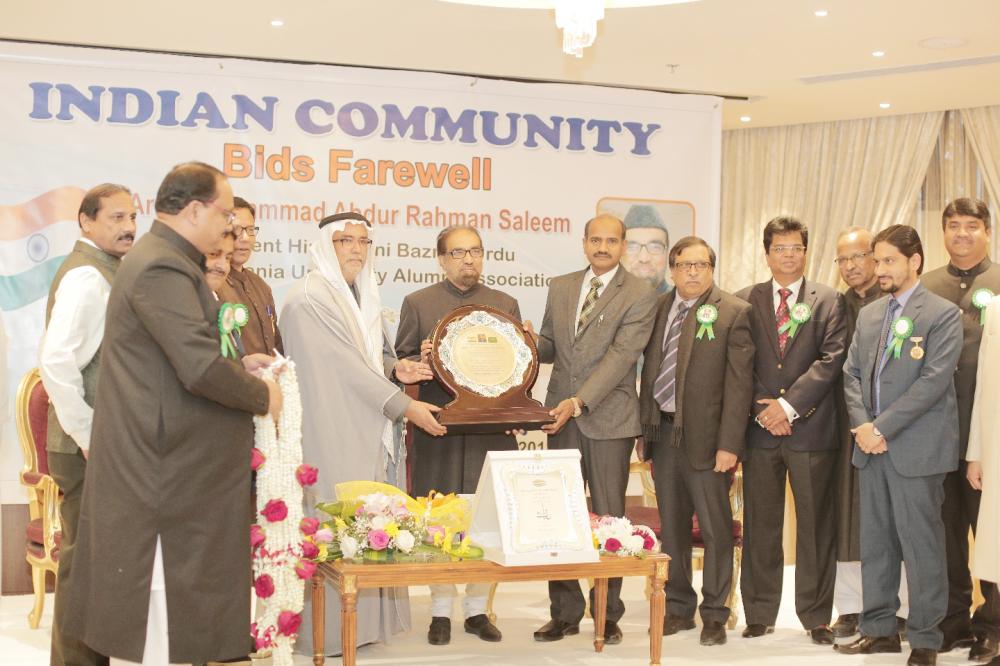
The Indian community here bid farewell to longtime resident and senior NRI Arch. Mohammed Abdur Rahman Saleem, who is leaving the Kingdom after over four decades here.

Saleem who spent 43 years in the Kingdom, was a prominent social activist and promoter of the Urdu language and culture. He established different cultural and social organizations and organized many cultural events.

Saleem was the torch bearer of Urdu culture and tradition. After successfully establishing many organizations he formed the Toastmasters Club in Riyadh. Bazm-e-Urdu Toastmasters Club (BUTMC), which is successfully running with many youth joining it to excel in linguistic skills along with personality development and public speaking abilities.

By organizing elocution competitions for the students of Indian schools in Riyadh, Saleem was successful in attracting students to get interested in and opt for Urdu in their studies.

Chief Guest Dr. Hifzur Rahman Azmi, First Secretary, Embassy of India Riyadh, said, “Nowadays people with positivity are rarely found in our society whereas Saleem is a multi-faceted person who is filled with positivity. He dedicatedly works likes an organization in himself, and has organized many events on a grand scale. Even the Embassy needs the help of different organizations to arrange such events. In addition to organizing cultural events for entertainment, he has striven for many constructive works and events; elocution competition for school students is one such example.”

Rahman also disclosed that Saleem holds the credit of organizing the first Republic Day Mushaira in Riyadh, over 25 years back, under the banner of the Indian Embassy. His organization was associated with all the Mushairas organized by the Indian Embassy as he regularly felicitated all the poets.

Saleem successfully tried to link the people from all parts of India and managed to make an excellent group of like-minded people and hoped that his team will carry forward his legacy, he added.

In his welcome address THH and OUAAAR President Mohammed Qaiser said, “As an architect Saleem played an important role in giving beautiful buildings to this country. In addition to his professional commitments, his services and contributions towards the Indian community and for the promotion of Urdu were remarkable.”

K.N. Wasif read out a sketch about Saleem and said that he always was for justice among all and hence represents the justice of Jahangir. Ghouse Arsalan also read another sketch titled “Hindustani Tahzeeb ke Me’maar” (Architect of Indian culture) and said, Saleem truly represented the Deccani culture and tradition in the Kingdom and in USA.

Firasat Ali Khusro paid poetic tribute to Saleem’s long services and contributions. He said Saleem always did good deeds and never showed off, and it is very rare to find such humble people in the current period.

Taqiuddin Mir presented a humorous sketch “Pati Patni Aur Woh” about Saleem’s addiction to mobile and using social media to get in touch with all his friends. The community leaders from all parts of India spoke on various aspects of Saleem’s personality.

Zaigham Khan from Aligarh said that Saleem is Baba-e-Urdu of the Kingdom and will be remembered here for the long time. Ghazanfar Ali Khan said that Saleem has been the cultural ambassador of India to the Kingdom for over four decades.

Ghizal Mahdi appreciated Saleem’s affection for the Urdu language. Representing Jamia Millia Islamia, he said, Jamia played an important role in freedom struggle and its founders laid emphasis on education through mother tongue. Due to this factor Mahdi had long time association and friendship with Saleem.

Prominent Businessman Nadeem Tarin said that Saleem and his associates played an important role in introducing Hyderabadi community to the north Indian community, especially Aligs. Due to this a new impetus was prominent among both the communities and it was evident with the successful and historical events arranged and attended by all these communities.

AIUS President Dr. Mohammed Ashraf Ali appreciated the contributions and services of Saleem as he invited many prominent personalities from India and offered a platform to the community to interact with them.

Senior banker Shahid Ali Khan recalled his long time association with Saleem. Vice President Hindustani Bazm-e-Urdu Eng. Abdul Hameed introduced Saleem with the help of PPT presentation. Prominent Businessman Mir Muzaffar Ali was the Guest of Honor.

Saleem thanked the organizers, speakers and attendees for the marvelous display of love and affection for him. He promised that he will continue to strive for the promotion of Urdu wherever he goes. He announced that he will try his best to start Urdu Toastmasters Clubs in Hyderabad and USA.

On this occasion Mubibb-e-Urdu award was presented to Saleem. The organizing committee members presented him a memento of appreciation in recognition of his contributions and services.

Floral bouquets and gifts were presented by different organizations — Deccan Cultural Association, All India United Society, Ghazal Sara Group, Telangana NRI Forum, Paradise Group, Bazm-e-Farogh-e-Urdu and Bihar community.

Organizing committee members Aftab Nizami, Mohammed Mubin, Sohail Siddiqui, Mohammed Kaleem, Syed Ateeq, Aliuddin Ahmed, Shakeel Mah presented freshly prepared beautiful garland specially arranged for the event.

Mohammed Farooqui Shahbaz conducted the proceedings, while Dr. Shoukat Pervez, principal IISR proposed the vote of thanks. Hafiz Abdul Malik recited verses of Holy Qur’an at the start of the event. — SG

source: http://www.saudigazette.co.sa / Home> Saudi Arabia / Riyadh – February 22nd, 2018


UM’s Ikhlas Khan Wins Lifetime Achievement Award

Aligarh, UTTAR PRADESH / Mississippi,  U.S.A  :

Ikhlas Khan. Photo courtesy of Ole Miss Communications

Ikhlas Khan, director of the National Center for Natural Products Research at the University of Mississippi School of Pharmacy, is the winner of AOAC International’s 2018 Harvey W. Wiley Award, which recognizes lifetime scientific achievement.

AOAC International develops global quality standards for microbiological and chemical materials, ranging from food to pharmaceuticals in an effort to ensure public health. Khan, who has been with the university since 1992 and directed the natural products center since 2017, has spent much of his career developing standards for dietary supplements.

“I’m very pleased to receive this award,” Khan said. “AOAC is the top organization for chemical standards, and I appreciate this recognition of my work in this area.”

As part of the honor, Khan will deliver the Wiley Award address and chair the Wiley Award Symposium at AOAC’s annual meeting in August in Toronto.

The Harvey W. Wiley Award has been given to one person a year since 1957, with past recipients including scientists from government, industry and academic institutions from around the world.

The National Center for Natural Products Research maintains a repository with more than 18,000 natural product specimens, derived extracts and pure compounds. Photo by Robert Jordan/Ole Miss Communications

Story by Sydney Slotkin Dupriest, courtesy of Ole Miss Communications

source: http://www.hottytoddy.com / HottyToddy.com / Home> Headlines> News & Views / February 21st, 2018

HAM Leader and Former Minister Shahid Ali Khan Dies of Heart Attack

Patna, BIHAR :

HAM leader Shahid Ali Khan (file photo) / Patna Daily

Patna:

Former Bihar Minister and senior Hindustani Awam Morcha (HAM) leader Shahid Ali Khan died of a massive heart attack on Thursday during his visit to Ajmer Sharif in Rajasthan where the 54-year old politician had gone to pay a visit to the tomb of Khwaza Moinuddin Chishti.

Party spokesperson Danish Rizwan informed the press in Patna about the sudden passing away of Khan’s death.

Khan was elected to the state Assembly for the first time in 1990 from Sitamarhi on Janata Dal ticket, the forebearer of the current Rashtriya Janata Dal (RJD). At the time, he was the youngest person ever to be elected to the Bihar Assembly.

He was re-elected from the same constituency in 2000 under the RJD ticket and won twice as a Nitish-led Janata Dal – U candidate in 2005 and 2010 from Pupari and Sursand constituency. He held different portfolio under Nitish administration that included the Minority Welfare, IT, and Law departments.

He later resigned from the JD-U and joined hands with former Chief Minister Jitan Ram Manjhi pledging allegiance to the HAM.

Khan leaves behind his wife and three daughters along with other family members.

Chief Minister Nitish Kumar, HAM President Jitan Ram Manjhi, former ministers Brishan Patel, Mahachandra Prasad, and JD-U state President Vashisht Narayan Singh were among many who expressed their condolences to the grieving members of the family calling it a huge loss for the state.

Khan had hit the headlines in 2014 when rumor of his alleged links with Indian Mujahideen terrorist outfit led to an investigation against him. He later, repeating a famous line from Bollywood actor Shah Rukh Khan’s film ‘My Name is Khan’, said “I am Shahid Ali Khan and I am not a terrorist” in the state Assembly.

The so-called investigation did not go anywhere as Chief Minister Nitish Kumar, at the time, called it a conspiracy by the ‘communal Bharatiya Janata Party (BJP)’ to malign a member of the minority community and a minister in the Nitish government.

The Chief Minister has announced a state funeral for the former minister.

source: http://www.patnadaily.com / Patna Daily / Home> News / January 04th, 2018

Africa, India and royalty

An on going art exhibition reveals the African legacy in India begins even before the Mughal period

Thriving in india -- Politically, culturally and socially
Thriving in india — Politically, culturally and socially

Gujarat is not only home to the lost city of Dwarka, but also houses another secret heritage, of African kings in India. Till date, two dynasties of African kings live on in the former princely states of Sachin and Janjira.

The exhibition “Africans in India — A Rediscovery”, on view at the Southern Regional Centre of the Indira Gandhi National Centre for the Arts (IGNCA), remembers their forgotten legacy. The exhibition has been curated by Dr. Sylviane A. Diouf and Dr. Kenneth X. Robbins of the Schomburg Center for Research in Black Culture, part of the New York Public Library.

The exhibition reveals how the African legacy in India begins even before the Mughal period in the 1400s. Beginning as slaves migrating from East African regions around Ethiopia, Eritrea and Somalia, Africans rose up the social ladder to become generals, commanders, admirals, prime ministers, rulers and architects, largely known as Sidis or Habshis.

“The exhibition portrays how a community that travelled across the globe and came to India thrived here, politically, culturally and socially. Most of the immigrants came as slaves and some of them reached high offices in the army, some even became rulers,” says Dr. Mangalam Swaminathan, Programme Director, IGNCA, New Delhi.

According to Mangalam, this aspect of heritage isn’t widely known because of lack of information and research. “Even this exhibit, according to curator Sylvianne is only a fraction of the material lying scattered,” she adds. Through photographic reproductions of paintings from several collections across U.K. and U.S.A., the exhibition thematically displays several significant milestones of this heritage captured in diverse paintings spanning across eras. The exhibition showcases the role played by the Africans in four major kingdoms in the regions of Bengal, Deccan, Sachin and Janjira.

Some of the most famous African rulers were Prime Minister Ikhlas Khan who was Prime Minister and Commander-in-Chief for the Bijapur Sultanate, Malik Ambar, who was regent and Prime Minister in the Deccan and the Nawabs of Janjira and Sachin.

The forts, mosques, mausoleums and other physical testimonies to their skills as city planners, architects and rulers, can still be found in these regions. There were also some famous African queens, Mehr Lekha Begum Sahiba, Yasmin Mahal and Bamba Muller.

“The major aspect that one can take away India was a flourishing nation, where people came seeking employment, as far back as fourth century. Indian culture assimilated them into the society, as it had done with several other faiths, cultures and lifestyles. There was mutual give and take culturally, part of the broadminded tolerance of India. Africans in India are an indelible part of Indian history and heritage. We need to do more research and come up with exhibitions, research papers and publications,” says Mangala.

The exhibition was also taken to UNESCO in Paris, IGNCA New Delhi, National Science Center in Surat, M.S. University in Baroda and Gujarat National Law University in Ahmedabad. It was also shown at the India Africa Forum Summit in New Delhi.

The exhibition will be on view till December 26 at IGNCA-Southern Regional Centre (SRC), Kengute Circle, Magadi-Kengeri Ring Road, Near IIPM, Mallathalli, Jnanabharathi Post.

source: http://www.thehindu.com / The Hindu / Home> MetroPlus / by Harshini Vakkalanka / December 21st, 2015

MCD Elections 2017: Congress candidate Yasmin Kidwai wins Darya Ganj ward after recounting

UTTAR PRADESH / NEW DELHI :

New Delhi :

In a setback to Bharatiya Janta Party, Congress candidate Yasmeen Kidwai has won Darya Ganj seat after recounting of votes.

Delhi State Election Commission has earlier declared the Bharatiya Janta Party candidate Meeta Bhambri declared victorious after the first round of counting. Darya Ganj has been a stronghold of Congress for many years.

Former cabinet minister Harun Yusuf also hails from old Delhi. However, the territory of Muslim areas have been snatched by the saffron party. The party has fared well in the neighbouring of Chawri Bazar and Kashmiri Gate. The party is leading on 179 seats in MCD.

In an earlier development, Delhi Congress President Ajay Maken resigned from the post.

Former Cheif Minister Sheila Dikshit had accused him of leading the party in an irresponsible manner. Former Congress Delhi women Chief had accused him of not listening to party workers. She later joined the Bhartiya Janta Party after Arvinder Singh Lovely and Amit Malik embraced the saffron party.

source: http://www.india.com / India.com / Home> News> India / by Ravi Kaushal / April 26th, 2017