Category Archives: Leaders

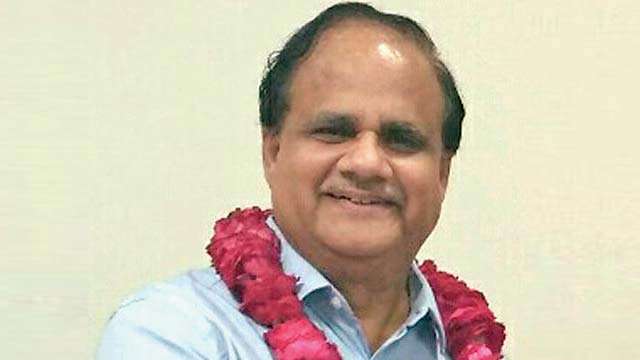
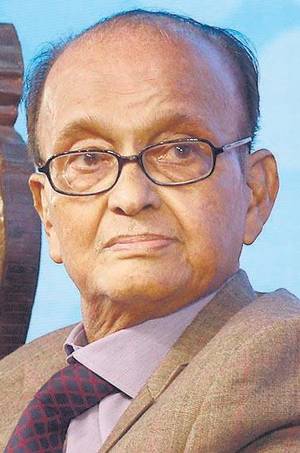
For Habibullah Badsha, public interest trumped officialdom

Chennai, TAMIL NADU :

Habibullah Badsha
Habibullah Badsha

He was respected by judges and lawyers alike, and many others

Habibullah Badsha (1933 – 2017) was born in an illustrious family and was apprenticed to an illustrious lawyer. He joined S. Govind Swaminadhan in 1956 and became one of his favourite juniors. Soon he acquired an extensive practice of his own. For several decades, that trio — SGS, A.C. Muthanna and Badsha — were a combination hard to beat.

Badsha was steeped in the mould of his senior. He held every important law office, and in each he ensured that fairness overrode partisanship, and public interest trumped officialdom and politics. As Public Prosecutor, he would readily concede that the State had no case, as Central Govt Counsel he declined to support Emergency orders of detention, as Advocate – General he made it clear that if the government disregarded his advice, they could look for a new A-G.

When he took on a public interest case, he made sure that he gave to it the same amount of prodigious labour and interest as a paying brief. When he took on a public cause, eg. protesting the city being shut down for a mega wedding organised by a former Chief Minister, he was undeterred by threats. Manifold public organisations and charities benefited from his support. Many individuals did too, monetarily and otherwise, but this came to light only when unknowns came to pay respects to the departed soul; he followed the adage — for your generosity let the left hand not know what the right hand giveth.

He was respected by judges and lawyers alike, in his home court and the apex one, and many others in the country. Many juniors looked upon him as a role model and tell of his generosity of time, ensuring that the young lawyer was well paid, and other acts of help and assistance; he always responded when asked and sometimes surprised the recipient unasked. His attitude and manner of mildness, gentleness and soft speech was a constant — at home, in society, and in court. Dispelling the notion that the litigation lawyer must display aggression, Badsha always displayed calm and courtesy; these traits would coax the judge into agreeing with him and then virtually espousing his cause to the chagrin of the other side.

He was mindful of the fact that the Muslim community, of which he was a prominent member, needed his special attention, and he was a prominent name in several prominent organisations. But that did not prevent him from being secular in outlook, thought, speech and practice. In declining judgeship when offered, he did what his senior had done; there are many voices which are critical of the best lawyers staying clear of the Bench, but it must also be kept in mind that his outstanding services in many areas would not have been forthcoming from that gilded cage. Nevertheless, it was a matter of pride for him that three of his juniors became High Court judges and served with distinction — Justices Sudhakar, Kirubakaran and Akbar Ali.

In his closing years he was saddened by falling standards in the legal professions, Bench and Bar and academics. It was much better in our time, he used to say. We agree; and when a prominent member of the old guard leaves us, we feel it all the more.

(The writer is a senior advocate in the Madras High Court. His email id is sriram.panchu@gmail.com)

source: http://www.thehindu.com / The Hindu / Home> News> States> Tamil Nadu / by Sriram Panchu / Chennai – November 25th, 2017

Bastar SP Sheikh Aarif Hussain is first IPS officer to be honoured with IACP award

Bastar, CHHATTISGARH :

Pennsylvania :

Arif Sheikh has become the only Indian Police Service (IPS) officer of the country to win this award in community policing twice in a row.

Arif Sheikh has become the only Indian Police Service (IPS) officer of the country to win this award in community policing twice in a row. (Photo: ANI | Twitter)

Bastar:

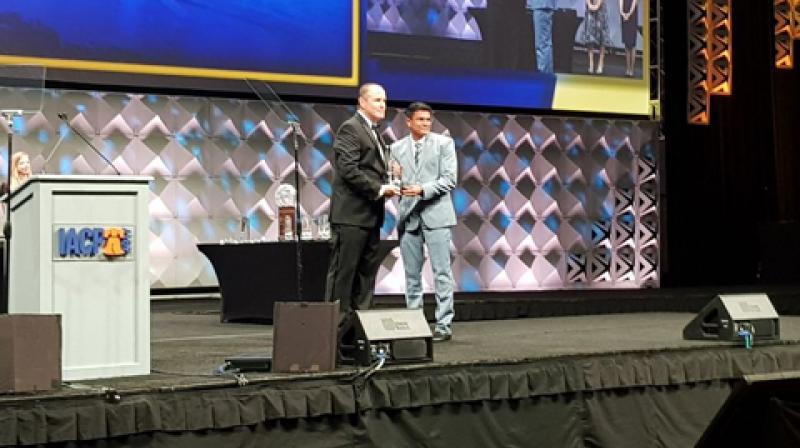
Bastar Superintendent of Police (SP) Sheikh Aarif Hussain has been awarded the prestigious International Association of Chief of Police (IACP) Award 2017 in Pennsylvania in the ‘Homeland Security’ category for his campaign ‘Amcho Bastar, Amcho Police’.

Arif Sheikh has become the only Indian Police Service (IPS) officer of the country to win this award in community policing twice in a row.

Arif Shaikh has dedicated this award to the martyrs, who have sacrificed their life at the altar of their duty in Bastar and to the brave and innocent tribals of the region, who have supported and collaborated with the Bastar Police in this fight against the Naxalism.

Through his campaign, the Bastar Police have come to the aid of few children, who were trapped in the clutches of the Bal Sangham of Maoists, who were used to plant IEDs against the security personnel. They also tried to bring back the surrendered Maoists into the mainstream by giving them alternative earning opportunities.

The ‘Amcho Bastar, Amcho Police’ initiative aimed at bridging the gap between the police and the tribal communities by assimilating with their culture. At the same time, the police has focussed on neutralising the Left wing extremist and also by encouraging the ultras to surrender and join the main stream.

The annual IACP award ceremony and Banquet was held on Wednesday in the Pennsylvania convention centre in a majestic ceremony.

The IACP is a 126-year-old organisation of all the chiefs of police in the U.S. with its headquarters located in Virginia.

The IACP president, Donald W. De Lucca, was the chief guest. The other guests of honour were the executive board directors of the IACP.

Total 15 different awards were given in various categories including forensic sciences, prevention of terrorism, community policing, human rights awards, victim services awards and Reuters awards for excellence in criminal investigations et al.

The IACP/Cisco Leadership award in community policing recognises outstanding community policing initiatives undertaken by law enforcement agencies worldwide.

The other agencies across the world which won the community policing awards were the Oelwein Police department from Iowa, the Monrovia Police department from California, the Roanoke Police department from Virginia, the Fujairah Police department from the UAE and the Arlington Police department from Texas.

source: http://www.asianage.com / The Asian Age / Home> Newsmakers / by ANI / October 25th, 2017

Mughals were leaders of first independence war, says NALSAR University of Law V-C

Aligarh, UTTAR PRADESH :

SirSyedMPOs22nov2017

Lucknow :

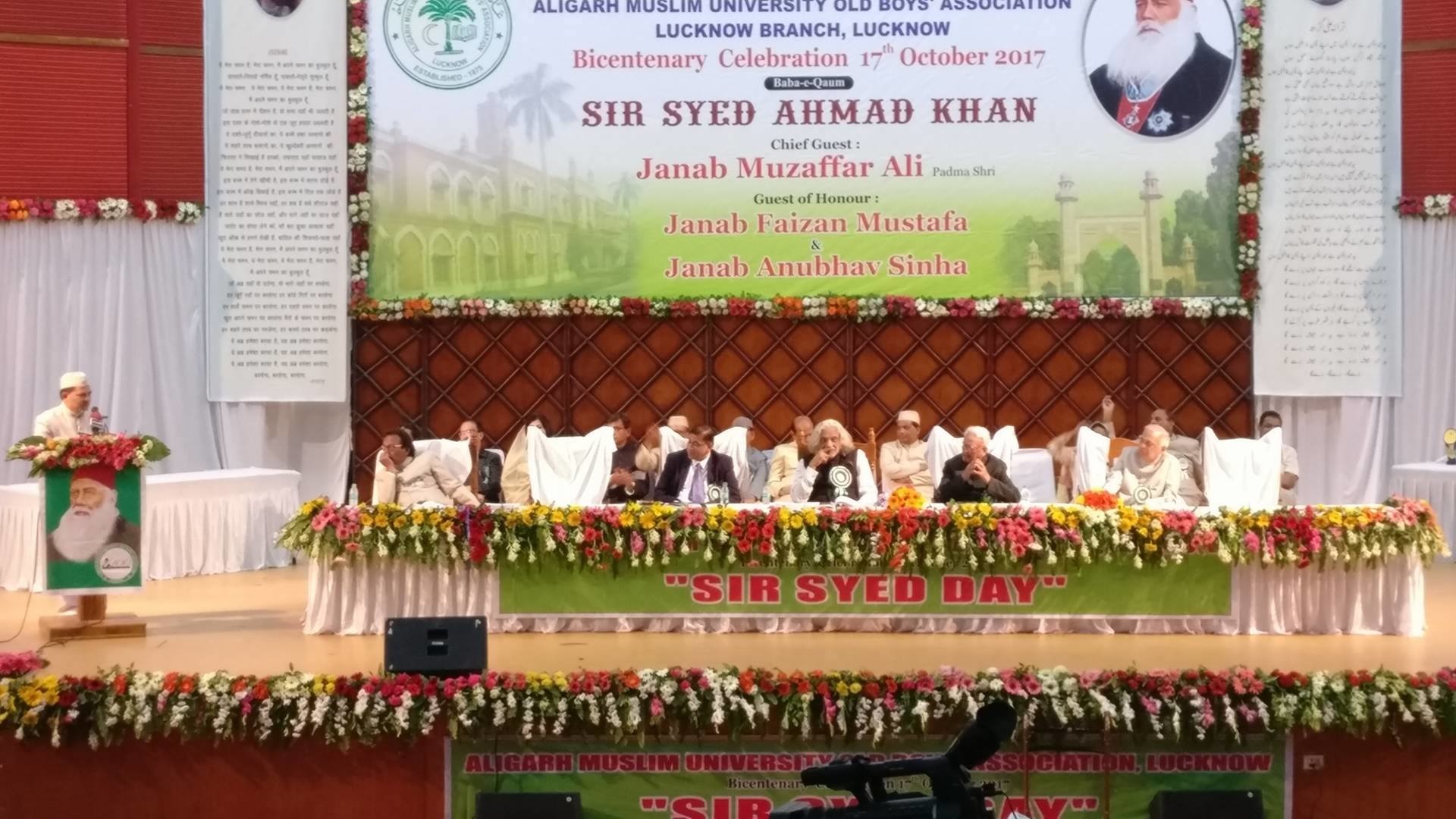
These are times of aggressive nationalism we are living in, said vice chancellor of NALSAR University of Law, Hyderabad, Faizan Mustafa, where we have started to consider Mughals not part of the country. Mustafa speaking at the grand 200th bicentenary birth anniversary celebrations of Sir Syed Ahmad Khan in Lucknow on Tuesday went ahead to say that Mughals were in fact leaders of the first war of independence of 1857 and were considered so by the likes of Tipu Sultan, Tatya Tope and others.

“Mughals were an integral part of India who could not be fragmented from its soul and now we are here in these times of aggressive nationalism where we are having doubts about them. And this nationalism has not only made us target the Mughals, but also recently there were similar talks about Rabindranath Tagore,” said Mustafa who was the guest of honour at the Sir Syed Day organised by Aligarh Muslim University’s (AMU) Old Boys’ Association. Filmmaker Muzaffar Ali was the chief guest on the day, both of whom being former pupils of the university, recounted their time spent at AMU.

Mustafa also cleared that now when criticising the government is equated to being seditious, it was in 1860 after a fatwa (decree) from clerics at Deoband against the British that the law of sedition as a charge was enacted. Mustafa also exhorted his fellow Aligs (as past pupils of AMU are popularly known) that the dream of Sir Syed has not yet been realised with Muslims lagging in both modern education and securing government jobs.

In his brief speech, Mustafa also touched upon the controversy around AMU’s minority status and said, “People say that the minority status was for the college and with AMU a university, it does not stand now. I researched for this when I had to submit in Allahabad high court as AMU’s stand on the case and I found that when Sir Syed laid the foundation of the madrasa it was the university he had in mind and when he gave his first speech in 1877 when the school was raised to the college level, in front of Lord Lytton he said that one day the college would be a university.

Mustafa also said that blaming Sir Syed for the two nation theory was not just wrong but also absurd. “In several of his recorded speeches, he has identified and defined both Hindus and Muslims as not separate identities but one qaum (community) and one nation. Mustafa considered an authority on law also said that reforms in Muslim personal laws were needed and could only be possible through the ideas of Sir Syed Ahmad Khan.

ON the day, the AMU Old Boys’ Association and its members that had gathered in the city from different parts of the state passed the resolution to raise demand of Bharat Ratna for Sir Syed and to generate funds for a Sir Syed House in Lucknow to carry on his Aligarh movement of education.

source: http://www.timesofindia.indiatimes.com / The Times of India / News> City News> Lucknow News / by Yusra Hussain / TNN / October 18th, 2017

Jaipur: This Kayamkhani family is all IAS, IPS and RAS

Jaipur, RAJASTHAN :

Zakir Hussain
Zakir Hussain

Jhunjhunu’s Nuan village can easily be dubbed nursery of civil servants. This village of Kayamkhani Muslims has three IAS, one IPS and five RAS from a single family. Former union minister and an army officer Captain Ayyub Khan also belongs to this village.

Recently, this tiny village got an IAS officer in Zakir Hussain whose elder brother, Ashfaq Hussain is already an IAS officer. Their elder brother Liaqat Ali Khan is retired IPS officer. The villagers erupted with joy when they got the news of Zakir’s success who is 10th civil servant in the family. He was officer of accounts service who has now been promoted to IAS. His wife Wasim Bano who had come to her parents home said, she was very happy after her husband’s promotion. Her father engineer, Akhtar Hussain said that everyone was happy and proud of his son- in- law.

This is perhaps the first instance in the state’s bureaucracy that two brothers are serving as IAS at the same time. Zakir’s brother, Ashfaq is also IAS and posted in the education department.

The extraordinary of this family begin with Hayat Muhammed Khan who served in the army. He ensured that his children get education and create a niche for themselves.

Three of his five sons are IAS and one is IPS. One is retired from the education department. Farah Khan, his granddaughter and daughter of IAS Ashfaq Hussain is officer of Indian Revenue Service (IRS); she recently got married to IAS Qamar-ul Zaman Choudhary, while Shaheen Ali Khan, the grandson of Hayat Khan and son of retired IG Liaqat Ali Khan is, RAS. Shaheen’s wife Monika is Dy. SP in the jail department.

Children of Hayat Khan’s daughter Salim and his wife are both RAS. Hayat Khan’s younger brother Abdul Samad’s son Zaki Ahmed Khan was colonel in the army and his children Shaqib and Ishrat are also colonel in the army.

Liaqat Ali Khan, retired IPS. He was also chairman of the Waqf board.

Ashfaq Hussain, promoted from RAS to IAS. He was Dausa collector and currently posted in education department.

Zakir Hussain, joint secretary in the accounts service promoted to IAS.

Farah Khan, IRS, daughter of IAS Ashfaq Khan

Shaheen Ali Khan RAS currently posted in EGS (NREGA) as additional director. He is son of retired IPS Liaqat Ali Khan. His wife Monika is Dy SP in jail department.

Salim Khan, RAS is secretary in Madrasa Board. He is son of Liaqat Ali’s sister Akhtar Bano. His wife Sana Siddiqi is assistant settlement officer in the secretariat.

Qamar Ul Zaman IAS is married to daughter of IAS Ashfaq Khan and his wife Farah is IRS.

Javed RAS belongs to Nuan and currently posted in Alwar and married to daughter of Liaqat Ali’s sister.

FEAT ACHIEVED

The extraordinary feat of this family began with Hayat Muhammed Khan who served in the army. He ensured that his children get education and create a niche for themselves. Three of his five sons are IAS and one is IPS. One is retired from education department.

source: http://www.dnaindia.com / DNA – Daily News & Analysis / Home> India News> Jaipur News / by Sandip Khedia / November 14th, 2017

Meet Manipur’s ‘First’ Activist Governor – Dr. Najma Heptullah

Bhopal,  MADHYA PRADESH  / MANIPUR :

NajmaHeptullahMPOs18nov2017

NET EXCLUSIVE :

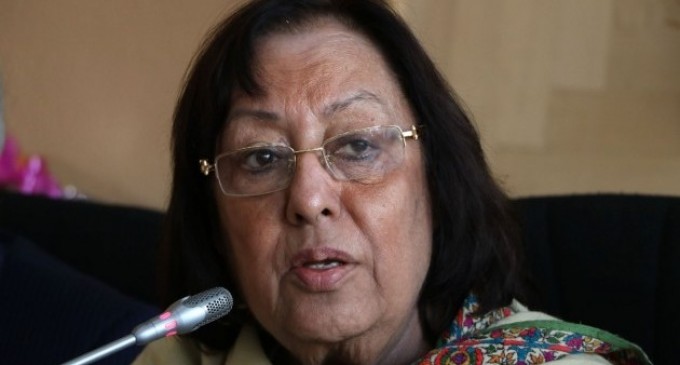
A myriad of firsts and distinctions in a journey that has spanned four decades,  Dr Najma Heptullah, Governor of Manipur, breaks the traditional sit-in role of the Governor with her penchant for engaging with the common people.

Grand niece of Freedom Fighter Maulana Abul Kalam Azad, the techno-savvy septuagenarian is a paragon of age being just a number as she greets and meets people from all walks of life in the state in between a hectic schedule of official engagements.

The youngest Deputy Chairperson of the Rajya Sabha at the age of 45, the first woman President in 115 years of the Inter Parliamentary Union at Geneve, and  the first woman Governor of Manipur, Dr Najma Heptullah opens up on a one-to-one with NET –with characteristic humor, wit and anecdotes.

NET: How is Manipur so far?  A lot of people are saying that you are the first Governor in recent times to be actually involved real time with the public? What do you have to say about it?

DR NAJMA HEPTULLAH: When i came to Manipur in August 2016, there were lot of problems in Manipur. There were bandhs, blockades, nothing was available in the market. Essential commodities, food items, medicine, petrol, diesel, cooking gas -everything was so expensive. And there was insurgency everywhere. Nobody was coming out of the house after sunset, even in the Imphal city.

The state was in a bad shape.  So I tried to work hard, I tried to understand the problem afflicting the state. I had many, many seminars at the Raj Bhavan, I interacted with the people, talked to them and communicated to them.

And in the process, I realized the basic problem was lack of development – lack of opportunites for jobs, for entrepreneurship, etc, though Manipur had tremendous possibilities. There was so much talent in the Manipuris, the students are very smart. They are very nice people, basically very nice people.They are peace-loving people. But lack of development made them take a different attitude.

And I am so happy that I made appeals to the people and teh people responded to those appeals. For example, there were 9 dead bodies in Churachandpur that were not cremated for more than a year.I spoke to them and told them that at least bury the dead, they were victims of violence. Bury them, at least they would get mukti, I said to them. They listened to me.

Then I called the people who were holding a blockade on the highway. I said why you were holding a blockade for the livelihood of the people. They too responded.

Then at the elections, I made an appeal to the people, ‘Let’s have a peaceful election.’ There, at the election, the Manipur which everybody thought was full of unrest, violence, bandhs and blockades, recorded a turnout of 87%, the highest in the country.

The new government at the Centre realized the problem was of a lack of development. So it too decided to focus on development, on job creation.

I suggested a plan for the state. I suggested focus on skills training, since I had experience in skills training for job creation during my tenure as Minority Affairs Minister.

My suggestion has been approved by the Centre. And today itself is a very happy day for me, because, when I met the PM and DoNer Minster Shree Jitendra after my swearing-in here, I said to him that in the Hills area, the basic problem is lack of access to health facilities. So I suggested the Flying Doctor, which I had seen in Australia. It helped that Shree Jitendra was himself a doctor, and someone who came from Kashmir, so he understood the problems lying at the hills.

Today, this very day, there is news that they are going to have the Flying Dispensary.

I am really happy. I have thanked the PM for having accepted my proposal  -my first proposal actually.

My second proposal was skill development  -the livelihood programme, which has also been accepted.

I thank the Centre for having accepted my proposals. I have been to places around the world, and I would like the best of everywhere to be followed in Manipur.

NET : How would you describe your political journey so far

DR NAJMA HEPTULLAH:  Ohh, my political journey is a long journey. I am grandniece of Maulana Abul Kalam Azad. I have seen the freedom struggle and how my family suffered with that  -when he used to be jailed, and how they left Calcutta and came and settled in Bhopal. I was born in Bhopal.

You know, I was remembering one thing the other day. Whenever the National Anthem was being played at official functions, I remembered that the first time I learnt the National Anthem was –you won’t believe- at the age of 8! It was the first anniversary of the Independence Day. Me and my cousin who was 9 years old then. You can imagine, it was the first anniversary of Independence Day in front of a large audience in Bhopal.

NET: Off the record, actor Amir Khan is also related to you, right?

DR NAJMA HEPTULLAH: Why should it be off the record? It should be on the record(laughs). Yes he is my nephew, my cousin’s son. My cousin, his father and his uncle Nasir Huissain, we grew up in the same house. It was a large joint family. We were all very close. We are like brothers and sisters, not cousins, very close.

His mother and sisters came here, In Manipur, in April this year. They were my guests.

NET: In your career, what has been the most challenging part so far?

DR NAJMA HEPTULLAH: Hmm (sighs) You know, at different levels you have challenges. In our childhood it was education, it was education. But fortunately, I had no problem in education. My family was very much for the education of women. My aunt brought me up. Whatever I am today, I owe it to her, because of her rigorous training.

I finished my PhD at the age of 22, Masters at 20. I topped the University in Masters. Topping the University (in light vein) was not a challenge really, because I knew I was going to top it! Pandit Jawahar Lal had come to the university the city the previous year, and I had told him that he should come the next year because I was going to top it! (laughs). Yes, I remember the letter that I wrote to him after I topped the University.

Then, another challenge is, when I became the Rajya Sabha Deputy Chairman at the age of 45, the youngest to be so  -when Rajiv Gandhi came to power.

You know, to be presiding over a House where so many senior members like Bhupesh Gupta, Pilloo Mody, Pranab Mukherjee, Atal Behari Vajpayee, LK Advani   -you know, to be presiding where there were so many senior veterans, it was a challenge really.

Rajiv Gandhi asked how I was going to preside over the House. I said. ‘’Sir, my education is going to give me the confidence.

But, if nothing works, my sense of humour will take me through!’’

And it is actually true that it was the sense of humour part that actually came to my help in running the House.

I am the first woman in 115 years in the world who got elected as the President of the Inter-Parliamentary Union, that is a Union of the parliaments of 175 countries.

And also I am the first woman Governor of Manipur! (laughs)

NET: You have also been the Union Minority Affairs Minister in the past. Can you cite us a few accomplishments which the department achieved under your tenure?

DR NAJMA HEPTULLAH: As MAMs, my focus was on skill-development. For example, I started a programme called USTAD. Ustad we call a person who is an expert, a teacher. And the acronym USTAD means, Upgradationof Skills and Training of Arts and Crafts for Development. That was the programme. Lots of the minority people are engaged in traditional arts and cratfts. Muslims are engaged in weaving,  in Punjab, those that are engaged in the special kind of Phulkaris, are Sardars, similary there are many minorities who are involved in handicrafts. The best carpenters are there in Muradabad.

They are doing excellent work and they are all minorities. I had them orgainized under this programme USTAD to upgrade their skills. Over 1 lakh 50 thousand have benefitted from this programme.

Then I started the MANAS programme, Maulana Azad National Academy for Skills. Then there was the Nayi Manzeel for school drop-out children.  Likewise, many such schemes and programmes which have benefitted thousands of lives today.

NET:There is a misconception of the people from the rest of the country about the Northeast, especially Manipur. How do you think these misconceptions be corrected and rectified?

DR NAJMA HEPTULLAH:  That is the reason, the PM realized it, and he said, ‘’Look East, and Work East.’’

Distance is the problem. That is why I had suggested to the Aviation Minister, to have direct but less costly flights, because if the mode of travelling for the people is flight, but flights are expensive, then people will have problem coming here. If flights stop at Guwahati for 3 times a week, instead of directly coming to Imphal, then there is the travel gap. So people don’t come or go.

But Aviation Ministry is considering it, the issue.

Second, people have the misinformation that Manipur is plagued by insurgency. That is also the reason. But, now you see, things are improving. Can you imagine, 6 months ago, people did not come out in the Imphal streets after sunset, but now thousands of people are coming out to enjoy a certain thing called ‘Imphal Evening’?

This is the confidence-building among the people. I go and mix up with the people, in spite of my security’s warnings . Sometimes I must be giving my security the fright! But I go and mix with the people, because I know Manipuris are peace-loving, nice people.

NET:Have you travelled to any other North-eastern state?

DR. NAJMA HEPTULLA: Up to Shillong. Unfortunately, might schedules make me ineligible to travel much these days. My routines saunter between Imphal and Delhi.

NET:Who have been the most influential person in your life

DR NAJMA HEPTULLAH: There can never be one person, there have to be many. We all take ideas and influences from many walks of life.

But the one person who has influenced me most is my grand uncle Maulana Abul Kalam Azad. He was one Indian Muslim who gave the correct picture of a true Muslim. Today, the image of a Muslim is somewhat distorted.

NET:If you have not entered politics, how would have the world known you then?

DR NAJMA HEPTULLAH: Actually I did not want to join politics. Politics was fate. I wanted to be a scientist. I wanted to do research.

We were the people of that generation where young boys and girls dreamt of being Nobel Prize winners, things like that.

I was offered a Rutherford scholarship, and also a job at NASA because I worked at high-flying birds, how the high birds functioned in the high altitude, which was interesting to the NASA people.

My idea is, those were the things those days. Science was my passion.

NET: Any special message that you would like to give to our readers.

DR NAJMA HEPTULLAH: I always have one message for everybody. Education.

Give education to the people, it opens the mind. The first message of the Quran to Prophet Muhammad was ‘’Iqra’’, which means ‘’Read.’’ Every religion talks about knowledge, education, to know your Creator.

So, educate your boys and girls. And I am very happy that here in Manipur, women are very empowered in the sense that women’s education is pursued fully here.

source:  http://www.northeasttoday.in / Northeast Today / Home> Manipur / by Northeast Today / November 17th, 2017
N.Md. Farooq is Council Chairman

ANDHRA PRADESH :

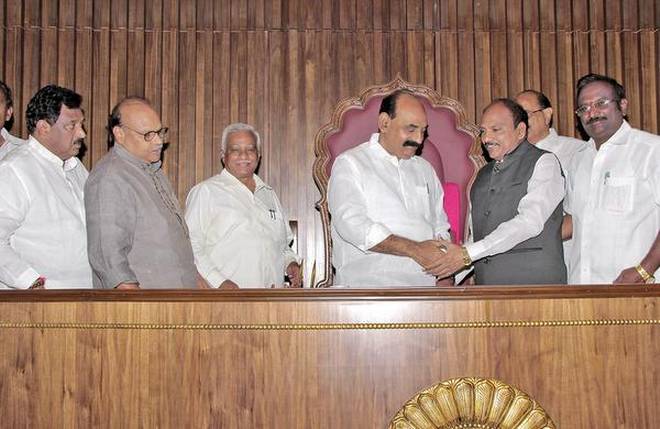
N.Md. Farooq being greeted after taking over as Chairman of the A.P. Legislative Council on Wednesday. | Photo Credit: HAND_OUT

Payyavula Keshav appointed chief whip; Dokka, three others made whips

Former Minister and Deputy Speaker in undivided Andhra Pradesh N.Md. Farooq was unanimously elected Chairman of the Andhra Pradesh Legislative Council here on Wednesday.

He succeeded A. Chakrapani, whose term ended after the monsoon session.

Mr. Farooq was escorted to the podium by the Leader of the House and Finance Minister Yanamala Ramakrishnudu.

The Finance Minister and other Ministers such as Kimidi Kala Venkata Rao and Ch. Ayyanna Patrudu recalled how Mr. Farooq played an active role in public life.

Mr. Patrudu recalled how he and Mr. Farooq worked in the NTR Cabinet and lived in the same street.

Ministers N. Chinarajappa, Kamineni Srinivas, Devineni Umamaheswara Rao, K.S. Jawahar, and K. Atchannaidu, and former Minister Gali Muddukrishnama Naidu said the election of Mr. Farooq ensured proper representation to the Muslim community.

The Chairman’s post was a highly respected one and the Muslims in the State were happy that it had been given to a leader from their community.

The Ministers said that Mr. Farooq had worked as a Minister for 11 years and as Deputy Speaker in the undivided A.P., and had the experience needed for holding the high post.

TDP MLC Payyavula Keshav was appointed chief whip. The government also appointed Dokka Manikya Varaprasad, Buddha Venkanna, P. Ramasubba Reddy, and Sharif Mohammad Ahmed as whips.

source:  http://www.thehindu.com / The Hindu / Home> News> States> Andhra Pradesh / by Special Correspondent / Amaravati – November 16th, 2017

Mukhtar Abbas Naqvi to inaugurate 4th ‘Hunar Haat’ today

UTTAR PRADESH / NEW DELHI :

Union Minister of Minority Affairs Mukhtar Abbas Naqvi will today inaugurate the fourth edition of the Centre’s ‘Hunar Haat’ at New Delhi’s Pragati Maidan, where works of artisans belonging to minority communities and Tihar Jail inmates will be on display.

Union Minister of Minority Affairs Mukhtar Abbas Naqvi will today inaugurate the fourth edition of the Centre’s ‘Hunar Haat’ at New Delhi’s Pragati Maidan, where works of artisans belonging to minority communities and Tihar Jail inmates will be on display. (Image: IE)

Union Minister of Minority Affairs Mukhtar Abbas Naqvi will today inaugurate the fourth edition of the Centre’s ‘Hunar Haat’ at New Delhi’s Pragati Maidan, where works of artisans belonging to minority communities and Tihar Jail inmates will be on display.

Speaking at a press conference, the Union Minister said that the fourth edition will continue till November 27 and will exhibit the country’s rich heritage and skills. “This Hunar Haat is unique from earlier exhibitions as for the first time products made by inmates of Delhi’s Tihar Jail are also available. These products include furniture, handlooms, handicrafts, bakery items, hand-prepared oil, organic spices and grain,” Naqvi said.

He added that the artisans’ exquisite pieces of handicraft and handloom works such as cane, bamboo and jute products of Assam; Tussar, Geeja and Matka silk of Bhagalpur (Bihar) and traditional jewellery from Rajasthan and Telangana will be on display at the Haat. “New products to be displayed include baskets made from natural grass by artisans from Puducherry and Uttar Pradesh, Gotapatti work from Rajasthan and mural paintings from Gujarat,” the Union Minister said.

He added that the ministry had earlier organised the Haat for the first time at Pragati Maidan last year.

“The second and third editions were organised in the national capital and Puducherry, which received huge response. ‘Hunar Haat’ will also be organised in Mumbai, Kolkata, Lucknow, Bhopal and other cities in the coming days,” the minister said. He further said that the Ministry is working to establish a Hunar Hub in all states of the country where artisans will be provided training as per present requirement.

‘Hunar (skill) Haat’ is a platform created by the Minority Affairs Ministry to offer employment and market opportunities to artisans and craftsmen from minority communities.

source: http://www.financialexpress.com / Financial Express / Home> India News / by ANI / November 15th, 2017

A Nikah with a difference!

Deoband, UTTAR PRADESH :

Mohammed Qasim lived in a small town in north India. One afternoon he came home and sat on the ‘palang’ placed in the courtyard. While serving the lunch, his wife said, ‘What have you planned about the marriage of our daughter?’ Sitting on the chabutra of the kitchen, the daughter was washing the lentils, at a short distance. Mohammed Qasim glanced at his daughter. He got down from the ‘palang’, wore slippers and went into the ‘baithak’. His wife shouted from behind ‘at least have lunch!’

Mohammed Qasim asked a person to call Maulvi Abdullah. Abdullah was his nephew and was still studying in a madrasa. He lived in a room nearby. He rushed to the call of his uncle. His dress would be always clean but the trouser had a tear and the shirt had a stain of ink.

Mohammed Qasim asked his nephew. ‘Son! Do you have any plans about your marriage?’

Abdullah was a little embarrassed by the question. He said ‘how can I think of my marriage in the presence of my elders?’

What do you say about ‘Ikraman’? If you agree Nikah would be solemnised’.

Abdullah thought for a while, and said ‘Uncle whatever decision you and father will take, I won’t dare to reject.’

Mohammed Qasim’s brother-in-law lived in Gwalior. He had told Qasim to marry Abdullah if he finds any suitable proposal. Listening to the reply of Abdullah, Qasim asked him to stay there itself, went inside the house and told his wife. ‘what do you say about Abdullah for our ‘Ikraman’? He is our relative; there is nothing to enquire about him. If you agree let us solemnize their Nikah.’

Qasim’s wife also found the proposal suitable. Both agreed Mohammed Qasim came to his daughter. She was still busy washing lentils. He sat beside his daughter and said ‘Daughter! We have decided to solemnized your Nikah with Maulvi Abdullah. First let us have your consent?’

Ikraman buried her face between her knees in shame.

Qasim’s wife told him, ‘How can you talk of her marriage with a girl? Qasim said’ what’s wrong in that. It’s about shariah. It is necessary to have girl’s consent. There’s no place of shame in the matter of shariah. If Ikraman doesn’t agree, we will find another match. But it is necessary to have her consent.’

Qasim’s wife said ‘modest girls don’t show their consent openly. Had she to refuse the proposal she would have looked at me or would have left the room. This way I would have understood her wish. In such matters girls’ silence is their consent.

After listening to his wife Mohammed Qasim stood up and went outside. Abdullah was still waiting for his uncle in the ‘baithak’. Two or three other persons were also present. Mohammed Qasim called them and said. ‘I am giving the hand of my daughter Amtul Ikram in the hands of Maulvi Abdullah for Nikah.’

He gave 2 paise to a man and asked him to bring dried dates from the shop at the corner of the street. The persons present there became witnesses, and the Nikah was solemnized in few moments. Then Mohammed Qasim asked the groom bring a Doli (palanquin) and take away his bride. When the doli arrived Mohammed Qasim came into the house and sat beside his daughter who was on the prayer mat to offer Zohr prayer and said, ‘Daughter! By the grace of Allah I’ve solemnized your Nikah. Maulvi Abdullah is waiting for you outside, now you go to your house with him.’

Mother was also surprised, she said ‘you should have given me some time. I would have made some good dresses for our daughter. At least I would have changed her dress at the time of Nikah.’

‘Why what’s wrong in this dress? Can’t she offer Namaz in this dress? When her dress is good for namaz why not for Nikah’ asked Qasim.

Meanwhile Ikraman wore burqa. Mother prayed for her, father patted her and took her to the doli. On their way he gave her sound advices about rights of husband and domestic responsibilities.

The next day Qasim invited daughter and son-in-law at his house. Served whatever food was available in the house to the people present in the ‘baithak’ and told them that it was the valima of Maulvi Abdullah.

The story is of Deoband. Mohammed Qasim was later popularly known as Maulana Mohammed Qasim Nanotvi, the founder of Darul-uloom Deoband. His nephew Maulvi Abdullah used to study in Darul Uloom Deoband itself. After passing out from there he went to Aligarh. He was counted among close friends of Sir Syed Ahmed Khan and became the first Nazim-e-Deeniyath of Aligarh college.

Narrated by Mohammed Tariq Ghazi, grandson of Maulana Abdullah Ansari

source: http://www.siasat.com / The Siasat Daily / Home> Islamic Hub / November 16th, 2017

Memory of a SUFI SAINT

Hyderabad, TELANGANA :

The view from outside | Photo Credit: Serish Nanisetti

Mir Mahmood’s dargah comes alive during the Urs

It is an unmissable green dome that can be seen for miles around in the Rajendranagar area. Overlooking the massive Mir Alam Tank, built on the edge of the hillock now called MM Pahadi or Mir Mahmood ki Pahadi, is the dome of Sufi saint Mir Mahmood. “Mir Mahmood saheb came from Iraq. He came during the rule of Abdullah Qutb Shah and settled down here. When the king was constructing other buildings, Mir Mahmood paid double the wages to pregnant women and more people liked to work here. He lit a torch in the lake to carry on the building activity in the night,” says a caretaker.

According to historians, Syed Shah Emaduddin Mohammed hailed from Najf in present day Iraq and migrated to Bidar along with 50 other Sufis. Here, he came into the influence of Moulana Syed Shamsuddin Hussaini who inducted him to the Nimatullahi order and asked him to move to Hyderabad. He reached here during the reign of Abdullah Qutb Shah and stayed at the hillock overlooking the lake. The people started calling him Mir Mahmood Saheb. Within a few years, he started constructing his own tomb and on the other side of the lake, the new king Abul Hasan Tana Shah began constructing the dome of his spiritual master Shah Raju Qattal II. The workers and people knew that a miracle was taking place as the labourers were paid higher wages though the there was no known source of income for the Sufi who spent most his time in a trance like state. Now, the dome of Shah Raju is visible from Mir Mahmood’s dargah and Mir Mahmood’s dargah is visible from Shah Raju’s tomb in Misrigunj. But while Mir Mahmood’s dargah has a coat of green that shimmers in the sunlight, Shah Raju’s tomb is a dull grey requiring maintenance.

Mir Mahmood lived only on the hillock and never went to see any other place though the Charminar was very much visible from where he lived. He passed away two years after Hyderabad was conquered by Aurangzeb.

Most of the inscriptions, jali work and stucco work in the dargah have been erased over the years with layers of paint and repair work but the few remnants show that the tomb is a work of art. Inside the dome, there is a box with some prized relics, which is rarely opened. The real grave of the Sufi can be reached from the outside on the northern side at a lower level.

Just outside the entrance of the dargah is a small masjid where not more than five people can pray.

With land grants from kings and noblemen, the Dargah once had an estate of 600 acres. Now, much of it is occupied and the houses built on the southern slope have reached up to the hillock.

The Urs is celebrated on 13th Shaban which will be in April. During the Urs, the area comes alive as individuals and families jostle to touch the chadar and lay flowers on the grave of Mir Mahmood Saheb. Visitors who come to ask for dua and pray spend time in meditation in absolute calm. “People from across the region, Bidar and its surrounding areas, come here. Many of them stay here for three days participating in various activities and having food from the community kitchen. Even the lower levels of the hillock are occupied by visitors on those three days,” says Syed Afroze, who lives on the edge of the Mir Alam Tank.

The Mir Mahmood hillock is at an elevation of 530 metres above sea level. The Golconda fort is at an elevation of 539 metres. Even with construction of multi-storied housing and office blocks, most of the hillocks give a vantage point view of Golconda fort.

source: http://www.thehindu.com / The Hindu / Home> Life & Style / by Serish Nanisetti / November 13th, 2017

Dr Lone gets Award of Excellence in Lucknow

JAMMU & KASHMIR :

Jammu :

Dr. Parveen Akhter Lone, Prof. & Head of the Department of Oral and Maxillo-Facial Surgery, Indira Gandhi Government Dental College, Jammu has been conferred with Award of Excellence at Golden Jubilee Celebrations of King George Medical University, Lucknow .

Dr Lone is a distinction-holder and gold medalist during her BDS and was awarded with ‘Outstanding Student of BDS’ by International College of Dentists in 1991.
She has completed advanced course in trauma and attended various Workshops and conferences along with presentation of research papers & posters at national and international level.
She is also the Vice-President of J&K Chapter of the Association of Oral and Maxillo-facial Surgeons of India (AOMSI).

Recently, for her consecrated achievements in Dental field, she was awarded with Women Achievers Award – 2017 by Times of India Group.

source: http://www.dailyexcelsior.com / Daily Excelsior.com / Home / by Excelsior Correspondent / November 10th, 2017