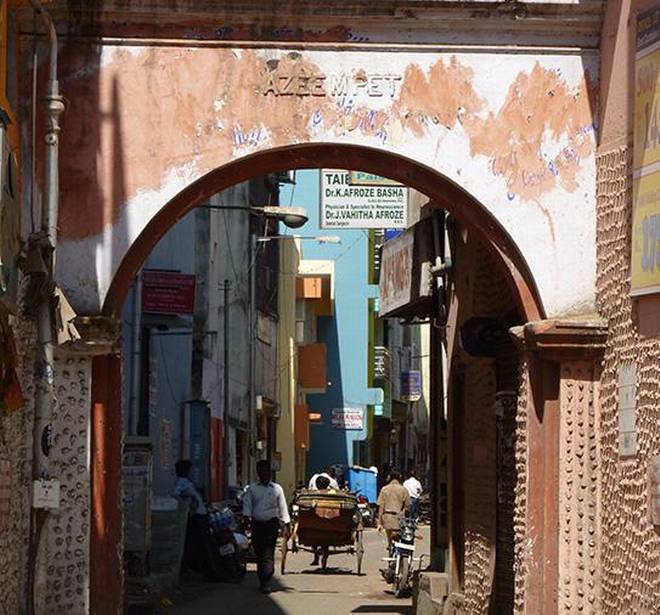
Kaman Darwaza in Chennai | Photo Credit: Kombai Anwar
Madras was in the eye of a power storm, 200 years ago
An ailing or aged ruler triggering a political crisis is not something new in Indian history, but what is interesting about the recent drama that unfolded in Chennai has its parallels to a power struggle that Madras was witness to a little more than 200 years ago. The drama then too had an ailing ruler, various aspirants including a ‘sister’ scheming to take over power upon his death, and a Governor keenly assessing the situation.
The only visible token of the dramatic events that unfolded in 1801 when Umdatu’l-Umara, the Nawab of Arcot, died, is a nondescript arch with the name ‘Azeempet’ chiselled on it, that still stands on Chennai’s Triplicane High Road, a few yards away from the Walajah Mosque. It is a reminder of sibling love that turned bitter and ultimately led to the dramatic fall of the House of Arcot, paving the way for the East India Company to establish itself firmly in the saddle and change the course of Indian history. Old timers remember this arch as the gateway, ‘Kaman-Darwaza,’ to the palace of Sultanu’n-nisa Begam, the daughter of Nawab Muhammad Ali Walajah and sister to Nawab Umdatu’l-Umara.
Nawab Umdatu’l-Umara, who succeeded Muhammad Ali Walajah upon the latter’s death in 1795, was very fond of his sisters, especially his senior sister (meaning the eldest of his younger sisters) Sultanun’n-nisa, also known as Buddi Begum. Sultanu’n-nisa was equally fond of her brother so much so that, out of concern for his safety, and to ward off evil, she used to send everyday a rupee coin to the Nawab, which he would dutifully tie it on his upper arm.The Nawab very often spent his evenings at the palace of his senior sister, listening to musicians, watching a dance recital or just having dinner. He had a room in her house, where the Nawab met with his officers and others. It was widely believed that Sultanu’n-nisa was the actual power behind the throne. Somewhere down the line, Sultanu’n-nisa had assumed that her son Raisul Umara would succeed her brother to the throne. But she was not the only one eyeing the throne, as the Nawab himself would lament – “I intend my son for the throne; Sayful Mulk (the Nawab’s younger brother) intends that the throne is for him; my senior sister has in mind that her son is meant for the throne after me; and the firangs (foreigners – the East India Company) are waiting for their opportunity. But it shall be as the Supreme Ruler wills.” The Nawab wrote a will on his deathbed, making his son Tajul Umara his successor, a move that enraged his sister, who felt betrayed. It was an opportunity too good to miss for the firangs, who were looking for an excuse to take over the Carnatic entirely.The English used the simmering anger of Sultanu’n-nisa and spread the rumour that a coup against the Nawab was in the offing. With the connivance of Nawab’s Diwan, Col. Barret, they surrounded the ailing Nawab with the Company’s troops.
When Nawab Umdatu’l-Umara died in 1801, a bitter Sultanu’n-nisa would not forgive her brother. She refused to let the coffin pass through the Kaman-Darwaza. It had to be left the whole night with guards in a hall opposite the arch. After failing to persuade his aunt to let the coffin through, Tajul Umara, son of the deceased Nawab, decided to break the wall behind Nusrat-mahall and send the coffin to Trichy, to be buried next to the tomb of his grandfather Nawab Walajah.
This power struggle enabled Governor Edward Clive to make a man of Company’s choice as the next Nawab, a man who was willing to sign away the Kingdom, which the young Tajul Umara, the rightful successor, refused to do. Umara’s cousin Azim-Ud-Daula was anointed as the next Nawab. Tajul Umara died within a few months. Sultanu’n-nisa and her son left for a Hajj pilgrimage and chose to settle down in the holy city of Karbala in Iraq, where she eventually died.
Two hundred years later, the arch still stands, a mute witness to the bitter power struggle that not just led to the tragic fall of the House of Arcot .
Kombai Anwar is a writer, photographer and film maker.
source: http://www.thehindu.com // Th Hindu / Home> Society> History & Culture / by Kombai S. Anwar / February 17th, 2017
A tribute to Nawab Wajid Ali Shah, a patron of classical dance and music, is set to come in the form of a dance ballet with the city witnessing its first Kathak on sufi qawwali. ‘Rang’, the hour-long dance ballet is directed by Muzaffar Ali and would feature at the fourth edition of the Annual Nawab Wajid Ali Shah Festival to be performed at Dilkusha Garden on February 14.
This year’s edition of the festival that is organised by the Rumi Foundation and supported by UP tourism department happens to fall on UP Tourism Day too. The ballet would be performed by Anuj Mishra of the Lucknow gharaana. It would depict the Nawab’s emotional conflict while he left his motherland for Matiaburj along with ten thousand followers.
The dance ballet is inspired by the compositions of the nawab. Other attractions of the evening would be Kathak performances from the Lucknow and Delhi gharanaas and Oddissi on sufi qawwali.
Speaking about the event, Ali said, “Wajid Ali Shah was perhaps the only Avadh ruler who promoted Lakhnawi culture. He was a learned man himself and was well versed in dance and poetry. Thus, this event is a tribute to the Nawab. It’s just a small effort to showcase the talent of the person. And also to make people aware of their rich heritage and carry the legacy forward through the festival.
“The youth today believes in taking life easy. They believe in instant gratification. Unko azaadi ki pehli jung aur Wajid Ali Shah ki baatein kahaaniyan lagti hain. So, the focus of the youth has to be put in the right place first,” said a member of the Young Rumi Forum.
source: http://www.timesofindia.indiatimes.com / The Times of India / News> City News> Lucknow News / TNN / February 12th, 2017
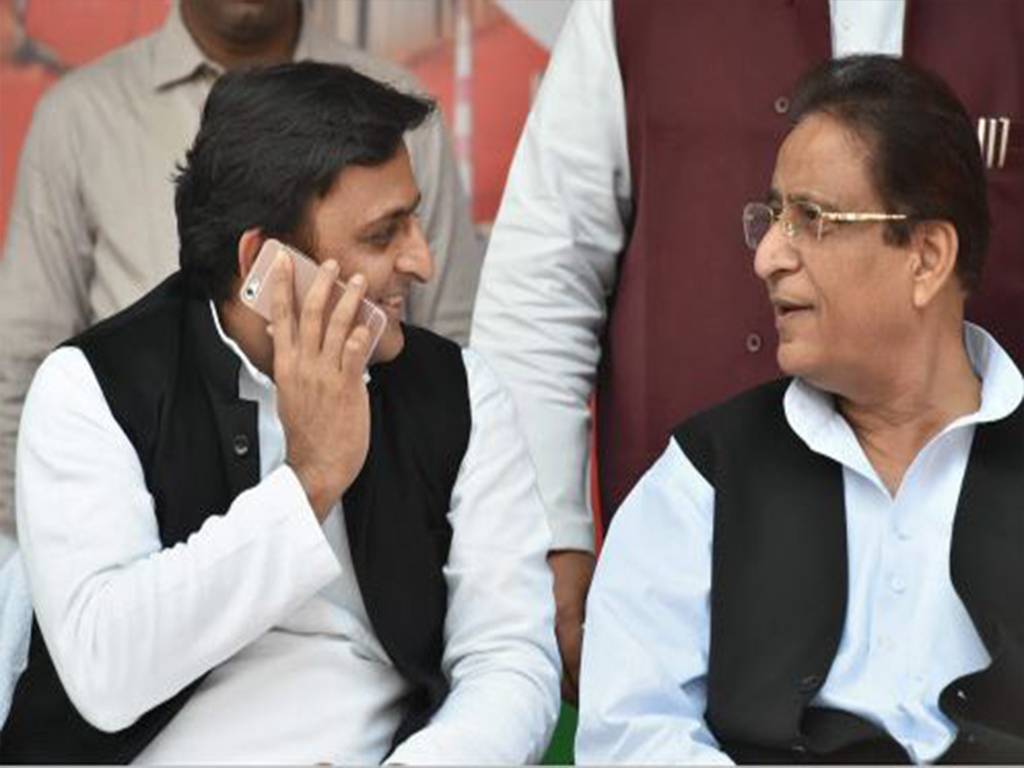
On the way to Maswasi Village, where Azam was to hold a public meeting, Abdullah explains that he could have opted any other “easy” seat to launch his political career but his decision to contest from SwarTanda was taken because of public demand. “After the election commission imposed a ban on my father during the Lok Sabha elections in 2014, I addressed the public for the first time from Swar on the request of chief minister Akhilesh Yadav.Since then, the public has been demanding that I should contest from here and bring development to the area,” said Abdullah, while showing roads, drains, bridges and electrification of few villages completed under his direction in the past three years.
“No candidate was interested in contesting from here, but I took it as a challenge and will create a record by defeating the nawab,” he added.
Abdullah, Azam and their convoy stopped at Maswasi village, where a crowd of nearly 10,000 was waiting for the two leaders to arrive.The father-son duo was given a grand welcome with the bursting of firecrackers and slogan-shouting.
In his two-minute speech, Abdullah said, “During campaigning, a man asked me when the road in his area would be constructed. And when I told him that the project had already been passed, he didn’t believe me as politicians from Noor Mahal (residence of the royal family of Nawab) and BJP always made false promises.”
Azam started his speech saying that his son does not have the experience of a seasoned politician but that Abdullah will soon learn the tricks of the trade.
“A family has always oppressed you and the time has come to show your power.Whatever money , clothes and food, they (royal family) have are yours,” said Azam.
After the end of the event, the local leaders pleaded to make way for Azam and his son to return to his vehicle.The crowd followed him even when he was seated in his car. They ran beside the car to shake hands with Azam and Abdullah as they drove out of the rally ground. In Swar-Tanda constituency, SP leader Azam Khan’s 26year-old son, Abdullah Azam Khan, will take on BSP’s Nawab Kazim Ali Khan, who is the present titular head of Rampur and four-time MLA.The junior Khan is relying on his father’s star power to draw votes. TOI trails the SP leader on one of the five evenings he promised to campaign for his son.
source: http://www.timesofindia.indiatimes.com / The Times of India / News> Chennai News> Kanpur News / Priyangi Agarwal / TNN / February 10th, 2017
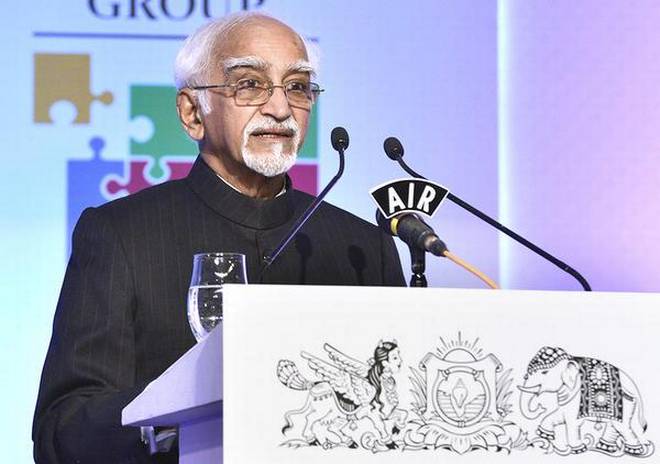
Vice-President Hamid Ansari at the inaugural session of The Huddle in Bengaluru on Friday.
Gap between rich and poor is not narrowing, he says at The Huddle
Vice-President Hamid Ansari on Friday called attention to the increasing economic inequality worldwide, particularly in India with all its social and political consequences, and noted that protest movements globally are being fuelled by public despair.
Delivering the inaugural address, titled ‘Living in Febrile Times’, at The Huddle, a three-day conclave of ideas, he said, “We need to ask ourselves some uncomfortable questions. Can we just accept the growing insularity, intolerance and discrimination?”
Noting that the gap between the rich and poor shows no sign of narrowing, Mr. Ansari suggested that the situation demands impatience with business-as-usual development policies. “Perhaps the time has come,” he said, “to move the development discourse beyond the current discussion of outcomes and opportunities. A conceptual framework is provided by Amartya Sen and others who see human capabilities as the capacity and freedom to choose and to act; and calls for opportunities that give individuals the freedom to pursue a life of their own choosing to be equalised.” He linked such a compact back to the Preamble to the Constitution and cited the World Economic Forum’s Global Risk Report of 2017 to frame the dangers of failing to bridge income inequality: the rise of populism. In India, he pointed out, the richest 1% have claim to 60% of the country’s wealth, and the bottom 50% to 2%. “Rising inequality is seen as a contributing cause for the rise of authoritarian leaders, often with a divisive agenda fuelled by sectarianism, xenophobia and nationalism,” he said.
Rising inequality results in conflict, and threatens the stability of democracies. Surveying protests worldwide such as the Occupy Movement and the Arab Spring, he highlighted the Naxalite issue: “The growing threat of left extremism, which has been repeatedly acknowledged as the gravest security threat to [the] Indian state, has its roots in economic deprivation and inequality in access to resources.”
Calling for equity in development, Mr. Ansari cautioned against writing off inequity as an “inconvenient truth” in the quest for a “shining future”. He counselled a rethink on the trickle down model of growth, and cost-benefit analysis of the environmental impact of “our material progress” – as well as an appraisal of India’s investment in human capital and public goods.
Equity is integral to justice and fairness, he said, and went on to ask the ‘uncomfortable question’: “Are conflicts and human suffering the new normal? To what extent are they induced by failed ventures in [the] quest for unrealisable utopias?”
Earlier having made a passing reference to the age of “post-truths” and “alternate facts”, Mr. Ansari’s was in total a plea to see the complete picture: not just the rising incomes of many, but also the rising inequality in wealth and income; not just the number of people lifted out of abject poverty, but also “the majority of people on the planet today… in countries where economic disparities are bigger than they were a generation ago.”
source: http://www.thehindu.com / The Hindu / Home> News> National / by Special Correspondent / February 11th, 2017
You might have read stories of a diamond merchant in Surat gifting cars to his employees.
Here is a similar feel-good story in Mysuru district where a school has gifted cars to its teachers who have rendered more than 25 years of dedicated service.
The occasion was the birth anniversary of Javeed Ahmed, the Founder of Citizen’s Group of Institutions, Nanjangud, which the school celebrates as “Founders Day” on Feb. 2. This year, however, the celebration was special and five teachers had a pleasant surprise as the school management handed over the keys of Maruti Altos, recognising their services.
The school, located on the Ooty Road and started by Javeed Ahmed 25 years ago with seven students, has provided quality education to thousands of students.
The cars, each costing about Rs. 4.3 lakh, were handed over by Mashooda Javeed Begum, now President of the institutions, to Head Mistress Hena Kannan, Accountant Shantha, Assistant Teacher Sandhya, Assistant Head Mistress Kutub Tara and Principal Mythili Lakshman.
Receiving the car keys, the teachers appreciated the school management’s gesture and said that it was a pleasant surprise. They said that though people say that teaching is a thankless job as teachers remain in the background, their institution was different in recognising their efforts in shaping children’s lives. “Every year all the staff receives gifts and this year five of us have got cars,” they said.
Hena Kannan said the School Secretary Noor Mohammed Ali studied in the same school and he was her student. Both her daughters studied in the same school. The School President said that they had decided on gifting cars as the teachers had put in more than 25 years of service.
source: http://www.starofmysore.com / Star of Mysore / Home> General News / February 04th, 2017
Reminiscing about his school days, Wipro chief Azim Premji on Saturday said he spent a lot of time outside the classroom kneeling for being naughty.
“Yes, I was very naughty when I was a kid and those days, we got rapped on the knuckles and hit on the head and you had to be kneeling outside the class for a long time. Some of these practices are no longer there, but I spent a lot of time outside the class kneeling,” he said.
He was replying to a query in an interaction with students at the celebrations of Wipro’s 2016 Earthian Awards here.
Asked why he left college early in his life, Premji said he did it for taking up responsibilities of his father who died very young, but completed masters in electrical engineering many years later.
“I left the college in between, primarily because I had to take responsibilities from my father who died at a very young age, but eventually many years later I did get a masters degree in electrical engineering,” he said.
Asked about the future of children, especially girls, Premji said girls are more serious than boys about their career, provided they are getting support from parents.
“Girls take their careers much more seriously, and girls particularly in villages take their careers even more seriously, once the parents give them the latitudinal support,” he said.
“Unfortunately, many parents put young girls to take care of the younger child, because the mother goes out to earn in addition to husband’s earning,” he said.
Premji further said girls fare better than boys in getting academic awards and are street-smart.
“I have travelled enough to schools in villages and colleges too, the girls always turn out to be street-smart, consistently. Just look at the quality of questions you get from the ladies in the audience. In my opinion, girls ask far more intelligent questions than boys,” he said.
“I also find, wherever the schools are following ranking system, 50% of the awards go to girls in a class,” Premji added.
source: http://www.deccanherald.com / Deccan Herald / Home> City / DHNS – February 05th, 2017
The sixth Nizam Mahboob Ali Pasha is remembered for combining tradition with modernity
Among the rulers of all the native states in British India, Mahboob Ali Pasha, the sixth Nizam of Hyderabad is reputed to have had the most lavish court. Born in August, 1866, Mahboob came to the throne at the age of three after the death of his father, Afzal ud Daulah. Mahboob Ali, thus knew no day when he was not the King.
A Regency under Sir Salar Jung I was set up for the young Nizam till he came of age. The Viceroy, Lord Ripon came to Hyderabad for the investiture ceremony held on February 5, 1884 and presented the Nizam a diamond-studded gold sword on the occasion.
Mahboob Ali was a perfect example of a Victorian Prince. He had a great taste for western culture and modern ways of life.
His English tutor, Major John Clark (who had earlier tutored the Duke of Edinburgh) had instilled in young Mahboob the customs and manners of high English society. As a result he imbibed great taste for all that was western. His western etiquette was so perfect that there was a rumour among the courtiers that the Nizam visited European countries incognito without the knowledge of any one!
His obsession for clothes and cars was legendary. His collection of garments was one of the most extensive in the world of his time.
The best English tailors were brought to Hyderabad to stitch the Royal robes combining tradition with modernity. There was a new dress for every day and he never wore the same dress for the second time.
It is no wonder that Mahboob Ali had a huge wardrobe in his palace that ran for more than hundred feet in length, considered to be the longest in the world. As his wardrobe was on the first floor of the palace, a lift was fitted for the Nizam to access his wardrobe every day with ease.
It is interesting to note that this hand-operated wooden lift at the Purani Haveli palace, in its shining best is still in perfect working condition.
His passion for cars was unparalleled and owned a good fleet of them. A Rolls Royce Silver Ghost that was made to order but delivered after he died in 1911, is now on display in the Chowmahalla palace fully restored, due to the efforts of Princess Esra Jah wife of the present Mukharam Jah.
The resources of the Nizam as well as the spirit of the times to which he belonged never discouraged lavish spending of money. Hyderabad came to be known for Mahboob Ali’s extravagant entertainments and lavish hunting expeditions.
Interest in medicine
It was under Mahboob Ali’s patronage, that Hyderabad Chloroform Commission was set up in 1889 and Chloroform as a safe anesthesia agent in surgeries was proved by Dr. Edward Lawrie, Principal of Hyderabad Medical School. The Nizam was personally interested in the work of the Commission. Two Hyderabadi doctors, Dr. M.G. Naidu (husband of Sarojini Naidu) and Dr. S. Mallanna (father of the future Gen. S.M. Srinagesh) were sent to England with funds provided by the Nizam to prove the efficacy of Chloroform in surgeries.
The British Medical Association journal, Lancet, hailed the work of this Commission. Mahaboob Ali, personally being interested in healing was famously known to administer a herb-based medicine to cure snake bite. During his reign, the first Hyderabad- Nagpur Railway line was laid in 1874. The advent of telegraph, telephone and electricity opened up Hyderabad towards economic growth.
Chirag Ali, a well known educationalist from Aligarh was invited by Mahboob Ali to spread English education in the Nizam’s dominions. Mahboob College in Secunderabad and Nizam College in Hyderabad stand testimony to the development of higher education initiated by Mahaboob Ali Khan. Aghornath Chattoadhyay, the father of Sarojini Naidu, the first Indian to have obtained Ph.D in Biology from Edinburgh University, was the first principal of the Nizam College.
Mahboob Ali Khan was a good polo player and an excellent marksman. He was probably the first Indian prince to have a court photographer, Deen Dayal. With his wonderful skills in photography, Deen Dayal, on whom the Nizam conferred the title, Raja, immortalised the Nizam and his times. Raja Deen Dayal employed in his studio an English lady to help him in taking the photos of the women members in the Nizam’s Palace.
Mahaboob Ali passed away on August 29, 1911 when he was hardly 45 years and was succeeded by his son, Mir Osman Ali Khan, regarded as the world’s richest man but the most frugal of all the Nizams, an antithesis to his flamboyant father.
Among the numerous expensive jewels that Mahboob possessed during his reign was the famous Jacob Diamond weighing 162 Carats, bought from the reputed London jeweller, Jacob.
Years later, Osman Ali Khan used this fabulous diamond, said to be next only to Kohinoor, as paper weight, the purpose for which Mahaboob Ali bought it.
Mahboob Ali also ever lives in the minds of the gastronomists, be the natives or visitors to this city for the aroma and the taste of the distinct Hyderabadi dhum biryani, the perfection for which the Nizam, Mahboob Ali Pasha justifiably took pride.
source: http://www.thehindu.com / The Hindu / Home> Society> History & Culture / by K.S.S.Seshan / February 02nd, 2017
Indian Union Muslim League (IUML) national president and former Minister of State for External Affairs E. Ahamed, who suffered a cardiac arrest in Parliament on Tuesday, passed away at the Ram Manohar Lohia Hospital in New Delhi.
His death was confirmed at 2.30 a.m. on Wednesday. He was 78. His body will be kept at his official residence for public homage till noon and will be flown to Kozhikode airport at 2 p.m. Thereafter, it will be taken to Haj House at Karipur and then to the League House in Kozhikode. The burial will be held in Kannur on Thursday.
President Pranab Mukherjee took to Twitter to express his grief, saying, “E. Ahamed was a friend and colleague of long years.”
Mr. Ahamed was elected to the Kerala Legislative Assembly in 1967, 1977, 1980, 1982 and 1987. From 1982 to 1987, he served as Cabinet Minister for Industries, Government of Kerala.
From 1971 to 1977, he was the founding chairman of the Kerala State Rural Development Board. From 1979 to 1980, he was the executive chairman of the Kerala State Small Scale Industries Development Corporation. From 1981 to 1983, he was the chairman of the Municipal Council of Kannur.
Mr. Ahamed was elected to the Lok Sabha in 1991, 1996, 1998, 1999, 2004 and 2009. During May 2004 – May 2009, he served as the Minister of State for External Affairs. During May 2009 – January 2011, he was the Minister of State for Railways. He assumed charge again as Minister of State of External Affairs on January 24, 2011. Mr. Ahamed assumed the additional charge as Minister of State for Human Resource Development on 12 July, 2011.
During his tenure in Parliament, he was a member of several parliamentary committees, including External Affairs, Railways, Civil Aviation and Tourism, Public Undertakings, Science and Technology, Environment and Forests. He was also the chairman of the Government Assurance Committee.
Mr. Ahamed graduated from Govt. Brennen College in Thalassery and later obtained a Law Degree from the Government Law College in Thiruvanathapuram.
Mr. Ahamed is widely travelled and has represented India in the United Nations six times between 1991 and 2009. In 1984, he was sent to GCC countries as an Emissary of then Prime Minister Indira Gandhi.
Born on 29 April, 1938, Mr. Ahamed has performed Hajj seven times – five times as a Member of Government of India Haj Goodwill Delegation. He has also authored 3 books in English and Malayalam.
He was married to Late Mrs. Zuhara Ahamed. Mr. Ahamed has two sons and a daughter.
His hobbies include reading, writing and watching sports.
At least 10 politicians affiliated with the ruling Bharatiya Janata Party have been appointed as independent directors on the board of top public sector firms.
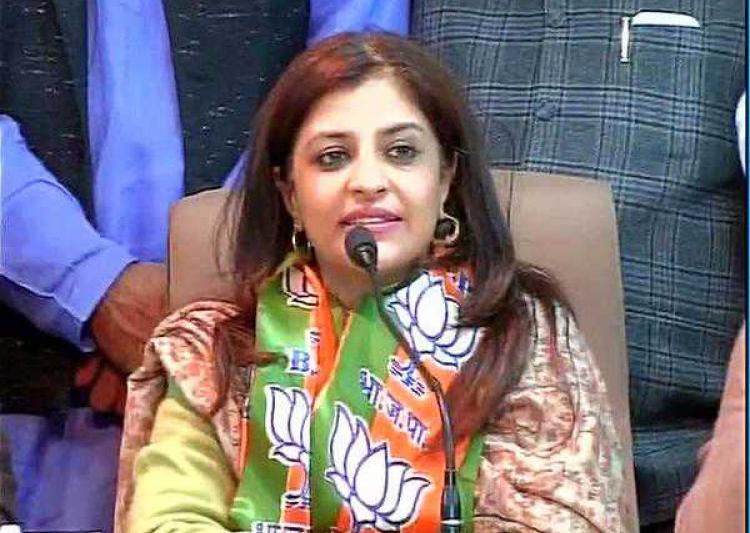
Shazia Ilmi
Among those who feature in the list of directors appointed by NDA last week, are BJP’s Delhi unit Vice President Shazia Ilmi, Gujarat IT cell convenor Rajika Kacheria; minorityface of the BJP in Gujarat Asifa Khan; former BJP MLA candidate from Odisha Surama Padhy and former Bihar MLC Kiran Ghai Sinha, reports Indian Express.
These politicians have found themselves on the boards of Navaratna PSUs that include Engineers India Ltd (EIL), Hindustan Petroleum Corporation Ltd (HPCL), Bharat Heavy Electricals Ltd (BHEL) and the National Aluminium Company Ltd (NALCO).
While Ilmi, a former journalist has been appointed an independent director at Engineers India Ltd, Kacheria, a cosmetologist by profession, has been named the head of Cotton Corporation of India Ltd.
Also, while Kiran Ghai Sinha has been listed as an independent director of the National Aluminium Company, Asifa Khan will be on the board of Hindustan Petroleum Corporation Ltd.
Former BJP MLA candidate from Odisha Surama Padhy has been given a position on the board of Bharat Heavy Electricals; and BJP’s Karnataka unit secretary Bharathi Magdum will serve on the state trading board.
source: http://www.indiatvnews.com / India TV / Home> Politics> National / by India TV Politics Desk, New Delhi / January 27th, 2017
V Shoba follows the footsteps of a warrior king and listens to the voices of admiration and anger that echo his still volatile legacy
————————————————————–
In the green, hilly tracts of Kodagu, a small district in Karnataka bordering Kerala, the past is urgent, pressing. A king’s ghost has been summoned again, so his story can be rewritten to suit the age. Tipu Sultan. Perhaps no other Indian king has been mummified by as much subjective judgement. Invariably, he is either a justified villain or an unjustified hero, a tele-serial star or a wanton killer of Hindus. In Kodagu, where Tipu is believed to have put thousands to the sword, a destabilising interrogation of his legacy recently claimed two more lives, over 200 years after the king perished in the British siege of Srirangapatna in 1799. Even as the Karnataka government’s plans to celebrate Tipu Jayanti on Deepavali day—10 days ahead of his date of birth, 20 November—predictably met with opposition from Hindu organisations, the Muslims of Kodagu, many of them descendants of migrants from Kerala, appropriated him as their hero overnight.
DS Kuttappa’s widow Chinnamma and son Dani
On the appointed day, the communities clashed violently in the tourist town of Madikeri, the headquarters of the district, resulting in two unfortunate deaths: 65-year-old DS Kuttappa, the district organising secretary of the Vishva Hindu Parishad, was killed when he fell or was pushed from, depending on who you believe, a height during the riot; and 22-year-old Shahul Hamid from Siddapur was shot while returning in a truck from Madikeri. Observers blame the deaths on police and administrative negligence, but the reality of the unrest in Kodagu runs deeper.
Naseer and Kulusu, Shahul Hamid’s bereaved parents
From his perch in Srirangapatna near Mysore, Tipu Sultan—and before him, his father Haider Ali—had repeatedly attacked Kodagu in the 1780s in order to secure free passage to Malabar. His incursions into Coorg, replete with the plunder and destruction of temples—a common practice in medieval times even among Hindu rulers—were time and again thwarted by native Kodava warriors, but the region eventually succumbed to the assaults. According to historical accounts, Tipu then ordered ‘both the slain and the prisoners, with the women and children, to be made Musalmans.’ “Kodavas were deeply scarred by Tipu’s excesses but they did not give up. They had their tiri-toks—country guns—and they were skilled at guerrilla warfare. For Tipu’s army, the leeches alone proved a deterrent,” says Addanda C Cariappa, a writer, actor, theatre person and former president of the Karnataka Kodava Sahitya Academy, who is working on a book in Kannada on Tipu Sultan. His pride in the community’s martial heritage and its achievements in the military soon dissolve into alarmism as he talks about the shrinking Kodava population. “We are a dwindling race with a population of just 1.25 lakh. Soon, we will be the Kashmiri Pandits of south India. The religious turbulence of Tipu’s reign is partly to blame,” Cariappa says.
There is no love lost between Kodavas and the erstwhile ruler of Mysore: they will tell you that Tipu was no son of the soil; that he preferred Persian to Kannada and wanted to propagate Islam across south India; and that his epitaph in Srirangapatna and the inscription on his sword commemorate him as a sultan who lived and died for the faith. This, then, was the majoritarian cultural sentiment that formed the backdrop of the Tipu Jayanti celebrations in Kodagu. The Siddaramaiah government has been accused of inciting riots for political gain in a district where all the legislators—two MLAs, KG Bopaiah and Appachu Ranjan, and Prathap Simha, the lone MP from Kodagu—belong to the BJP. Conspiracy theorists go to the extent of alleging that a law-and-order crisis was precipitated by the Siddaramaiah camp to show the new home minister of the state, G Parameshwara, in poor light. Whatever the provocation, the celebrations marked a dark day for communal harmony in the state.
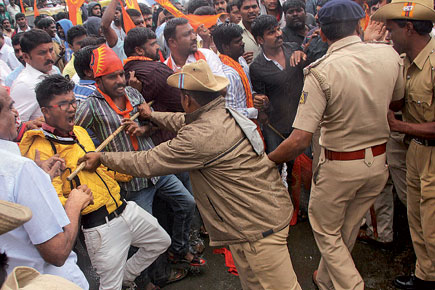
A scuffle breaks out during the Tipu Jayanti celebrations in Madikeri (Photo: KPN)
It is dark when we halt at Kuttappa’s house near Madhapur, about 20 km north-east of Madikeri, at the end of a long, snaking drive through banana and paddy fields. The sitting room is bustling with local reporters, Sangh Parivar activists and Kuttappa’s scampering grandchildren. His son Dani wears a dhoti and an unreadable expression. His mother sits unmoving in a corner, her long hair undone,face buried between her knees. “Father knew his life was in danger. But anything could have happened in Madikeri that day and he could not stay away,” says Dani, who works at a factory in Madikeri and is an RSS activist. “They beat him and stoned him, then pushed him to his death. There are eyewitnesses who saw what happened near General Thimmaiah Circle.” The police are awaiting the autopsy report that may throw light on the cause of his death.
On that Tuesday morning, a few thousand people carrying Tipu flags marched towards Town Hall, where his birthday was to be celebrated. The 2,000 policemen who were later deployed to keep vigil over the small district—4,100 sq km of it—had not yet been called in; the district administration was wholly unprepared for trouble. As supporters of the Social Democratic Party of India (SDPI) and Sangh Parivar activists hurled stones at one another, the situation quickly spiralled out of control and the police resorted to a lathi charge. “The Muslims came armed with stones and swords,” alleges Dani. Soon, he is no longer talking about the death of his father, but building a case against “radical Muslims” who, he alleges, have destroyed the peace of the region.
Kodagu is a peaceable place where enmities that lay buried in the dim mists of the past are not easily kindled. Before the flare-up around Tipu Jayanti, the Sultan’s exploits here were largely forgotten—although, if you visit enough Kodava homes, you will have occasion to pet dogs named Tipu. The last time there was a Hindu- Muslim clash in Kogadu was in December 2001, when miscreants vandalised the Harishchandra temple at Palur, about 20 km from Madikeri. Angry Hindu mobs gathered in town, blocking roads and attacking Muslim worshippers; Section 144 was eventually imposed. Like most riots, the 2001 incident reeked of political opportunism and widened the space between Kodagu’s communities. This is happening again now, thanks to a king who has captured the fancy of a nation in search of heroes. Tipu introduced land reforms and modern banking. He abolished alcohol and donated to temples. He was the last Indian ruler to consistently rebel against the British. Yet, large sections of Kodavas do not hesitate to judge an 18th-century ruler by 21st-century morals. “He killed Hindus and converted them. These people who want to celebrate him—what are they celebrating exactly?” Dani asks.
“The problem is that people think in terms of religion in this country,” says actor and playwright Girish Karnad, who received a death threat on social media after remarking that Bengaluru International Airport would have been named after Tipu Sultan, and not after city founder Kempegowda, had the king been Hindu. “It is not as though our politics has changed in 200 years. We still see leaders using atrocities to build their careers. At least Tipu Sultan did not commit these atrocities against his people. I can’t see how what he did was more condemnable. The people of Mysore were happy with him,” he says.
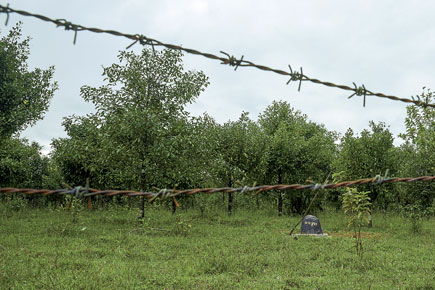
A memorial at Ayyankeri, a Karnataka village 6 km from the temple town of Bhagamandala, marks the location of Tipu Sultan’s alleged massacre of Kodavas (PHOTOS: DIPTI DESAI)
On the banks of the Cauvery at Ayyankeri, a village 6 km from the temple town of Bhagamandala on the road to Madikeri, is a patch of flat forest land planted with kodampuli (Malabar tamarind) trees. A barbed wire fence separates it from private land where rising water levels have made cultivation difficult; consequently, a lush pastoral meadow stretches all the way down to the river, its waters screened from sight by a thin line of trees. Inside the fence stands a small, rounded black stone with the date ‘13.12.1785’ painted on it, next to the words ‘Holocaust of the Humans’. Visiting what is described to me as the Auschwitz and Jallianwala Bagh of Kodagu, I am struck by the absence of history around it. No one in the neighbourhood has heard of Devattiparambu, the grounds where Tipu Sultan is said to have massacred over 30,000 Kodavas on a single day after inviting them to a feast. Yet, Kodavas like Addanda Cariappa are convinced that this is where the king all but wiped out a thriving, fearless people. Cariappa’s book is to be released on 13 December to commemorate the incident. “We used to call this area periya parambu (big ground). The NCC camped here in the 1950s to build a bridge,” says Abdul Rahman, a villager who owns some land next to the river, speaking in Malayalam. “A couple of months ago, some people from the Codava National Council [which has been campaigning for ethno-linguistic tribal minority status for Kodavas] came and looked around for a place to install the memorial. Since this is forest land, they thought it would be safe here,” he says. Rahman and his neighbours attended the Tipu Jayanti celebrations in Madikeri because they were puzzled at the calumny suddenly hurled at their village. Tipu allegedly converted thousands of Kodavas, whose descendants are now known as Kodava Mappilas. Muslims living in Ayyankeri, however, say their ancestors migrated from Kerala. “We have a mosque here that is said to date back 300 years and there are no records of conversion by Tipu Sultan in these parts,” says Rahman. “Nor is there any proof that this was Tipu’s killing field.”
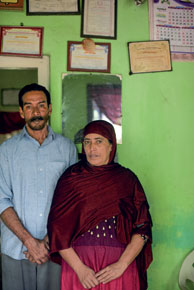
Was Tipu really a monster of ego and a jihadist? Or could he have liberated India from the imperialists? “How does it matter? Lives have been lost,” says Abdul Naseer, the father of Shahul Hamid. “We have lost our only son.” In a small house with green walls, Naseer and his wife Kulusu contemplate their misfortune. “Shahul worked at a Toyota showroom in Bengaluru. He had come to Siddapur to apply for a BPL card so that we could get a discount on his sister’s kidney stone surgery in Mangalore,” says Kulusu. “He did not know a thing about Tipu. He just hitched a ride back home from Madikeri.” About 300 Muslim youth from Siddapur, Kodagu, attended the event, and most of them have since fled the area fearing arrest. “There are no youth in town today. There is fear. The police keep coming back with inquiries,” says Naseer. Police have made over 60 arrests so far and filed 35 cases. A magisterial probe has been ordered. “The people who killed my son go scot free even now,” Naseer says. He flew in from Dubai, where he works as a driver, when he heard his son had been shot. “I remember thinking, ‘It is a bullet to the head, he won’t make it’,” says Naseer, who has no plans to return to the Middle East. “There is no one to earn for,” he says.
While the Madikeri incident may have been precipitated by an unmindful government decision, there is a discernible trend of Muslim radicalisation in Kodagu, says KB Ganapathy, editor-in-chief of Star of Mysore, a widely- read evening newspaper. “I grew up in Kodagu. Muslim women never wore burkhas until a few years ago. Just two years ago, a women’s college in Virajpet took issue with students suddenly appearing in burkhas. The women in turn asserted their fundamental right to wear them, and eventually the parties came to the compromise that they could wear the burkha till the college gate but no further,” he says. “In this situation, the Congress may well be trying to capture the Muslim vote.”
In Srirangapatna, the anniversary of Tipu Sultan’s death is celebrated with much gusto. Followers waving banners with his emblem—a blazing sun amidst tiger stripes— participate in a procession from his mosque to his grave, where they smear sandal paste on the tomb. “I have attended many of these processions—called urs—and they have been peaceful. It is when you politicise the celebration that problems occur,” Ganapathy says. He has argued against idolising Tipu over other kings who fought the British. “Why doesn’t Mamata Banerjee celebrate the birthday of Siraj-ud-Daulah, the last independent Nawab of Bengal? He lived before Tipu’s time,” the editor says.
Tipu was a multicultural icon, a proto-nationalist who understood the future and respected other religions, says leftist historian KN Panikkar, who wants the country to remember him “not as a Muslim ruler but as a ruler of Mysore who gave us an anti-imperialist legacy”. Must we celebrate kings in democratic India? A king is not a perfection of noble qualities. He may fight an intercontinental cast of foes, but he is first and foremost fighting for his territory. “Freedom as we know it today was not part of Tipu Sultan’s imagination,” says Addanda Cariappa. “Just as it was not part of the imagination of the Peshwas or the Rani of Jhansi. They all fought for themselves.”
‘Happy is the country that needs no heroes,’ wrote Bertolt Brecht. Let us live up to the perils of the era and not drag a long-dead ruler to court with us.
source: http://www.openthemagazine.com / OPEN / Home> Cover Story / by V. Shoba / November 27, 2015