Category Archives: Leaders

Mufti Mohammad Sayeed : A Life In Full

Kashmir, JAMMU & KASHMIR :
The late bloomer Mufti Mohammad Sayeed (1936–2016) leaves behind a legacy of reconciliation. Make use of it
 
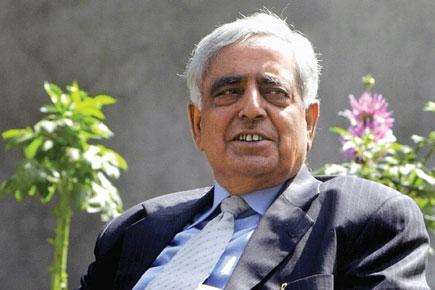
Mufti Mohammad Sayeed (Photo: SAJJAD HUSSAIN/GETTY IMAGES)

Sheikh Mohammad Abdullah, the ‘Lion of Kashmir’, died in September 1982. He was three months short of seventy-seven. He had been ailing, especially since a heart attack in 1977. Sheikh Abdullah’s funeral procession was gigantic. It may have been the single largest ever seen in the Subcontinent. The mass outpouring of grief was a measure of the stature he commanded among his people even in the twilight of his life. He had, after all, been the dominant figure of Jammu & Kashmir’s politics for a full half-century.

A decade later, Abdullah’s grave—near Srinagar’s Hazratbal shrine, on numerous occasions his base and pulpit over that turbulent half-century—was under guard by Indian paramilitary forces to prevent its desecration by armed militants and angry mobs.

The apparent reversal in the Sheikh’s standing among his people was not as astounding as it might seem. The accord he made with Indira Gandhi’s Government in 1975 in return for his personal liberty and political restoration—after 22 years mostly spent in prison—was widely viewed among his popular base and in his own organisation as an abject surrender to and for power. The Abdullah of 1975-1982 was a lion in winter, a far cry from the leader who had long defied and dared New Delhi. In his last years, he even fell out with a lifelong loyalist like Mirza Afzal Beg, the only one of his four cabinet colleagues who had stood with him against the Delhi-sponsored palace putsch of 1953 that deposed him from power (Beg also signed the 1975 capitulation on his behalf). The grand farewell he got from his people on his death was in recognition of his decades of suffering in the cause of ‘self-determination’. The same sentiment, coupled with his party’s grassroots machine, propelled his resounding election victory in 1977 and his son’s equally emphatic win in 1983.

Mufti Mohammad Sayeed, who has died a few days short of eighty, is not comparable to Sheikh Abdullah. For all his faults and flaws, the Sheikh is in a league of his own in Kashmir’s political history—the leader who brought mass political mobilisation to the Valley in the 1940s, emancipated the peasant masses from generations of serfdom through land reforms in the early 1950s, and challenged New Delhi’s machinations and stooges in Kashmir for more than two decades after his removal from power. Abdullah’s political capital was his mass base. The Mufti, for most (over two-thirds) of his nearly six decades in politics, was distinguished by the reputation he gained as a Machiavellian schemer and operator; he had almost no standing among his people and was disliked, distrusted, and perhaps even detested by most of his fellow-Kashmiris.

While I have not seen a single proper obituary of Mufti Mohammad Sayeed in the Indian (or specifically the Kashmiri) media, it has emerged in piecemeal life- sketches that he began his political life in the late 1950s in something called the ‘Democratic National Conference’. This was a dissident faction of a cabal that was installed in office in Srinagar after the 1953 coup, which was formally executed by the barely-adult Karan Singh in his Sadr-e- Riyasat capacity and was followed by the suppression through police and military action of massive protests against it, with dozens killed in firing and thousands arrested.

The cabal, which comprised many though not all of Abdullah’s former comrades (there were important exceptions like Afzal Beg and Maulana Masoodi), falsely appropriated the National Conference name. The real NC was reconstituted as the Jammu & Kashmir Plebiscite Front in 1955 with Beg as its first president and the incarcerated Abdullah as its ‘patron’, and existed under that name until 1975. But the cabal in power developed a schism in 1957 when Bakshi Ghulam Mohammad, Abdullah’s successor as J&K’s Prime Minister, failed to appoint any members of the faction clustered around GM Sadiq to cabinet positions after the first elections to the J&K Legislative Assembly. The ruling pseudo-NC had ‘won’ 69 of the assembly’s 75 seats in these elections; of the Valley’s 43 seats, 35 had been won without any contest (‘elected unopposed’). After the rift, 15 of the 69 legislators joined the rebel group led by Sadiq. The rift was papered over in late 1960 through New Delhi’s intervention and the pseudo- NC entered the 1962 Assembly elections formally re-united.

The young, ambitious Mufti Sayeed entered the Assembly in 1962 from his hometown, Bijbehara. It was not difficult— the official NC ‘won’ 68 of the 74 seats, and 32 of the Valley’s 43 constituencies were won without any contest. It was after these elections that Prime Minister Nehru, worried by adverse international media coverage, famously wrote to Bakshi Ghulam Mohammad mildly rebuking him for not having ‘lost a few seats to bonafide opponents’.

Mufti retained his seat in 1967. It was again a cakewalk. By this time Bakshi was in the doghouse and the ruling party—led since 1964 by Sadiq (who made Mufti a deputy minister in his government)—had metamorphosed in 1965 into the Jammu & Kashmir Pradesh Congress. The Congress won a four-fifths majority— 60 of the 75 seats—in the J&K Assembly in 1967. Of the Valley’s 42 constituencies, 22 saw no contest, and 118 candidates who filed nominations were rejected, 55 because they had not taken the compulsory oath of allegiance to India and the rest with no reason given.

Only a very few undesirables got through this gauntlet. A young Plebiscite Front leader, Ali Mohammed Naik, took the oath of allegiance, managed to get his papers approved, and was elected to the Assembly as an independent from Tral, a southern Valley town fairly close to Bijbehara. Another successful opposition candidate was none other than Bakshi Ghulam Mohammad, disgraced and sulking since his fall from power in late 1963. In 1967, J&K elected Lok Sabha members for the first time. The Congress won five of the six Lok Sabha seats, including two of the Valley’s three. The exception was Srinagar, where Bakshi stood on a platform of Kashmiri pride and won despite attempts by intelligence operatives sent from Delhi to ensure his defeat. When he turned chameleon and ran from Srinagar as a Congress candidate in the 1971 Lok Sabha elections, he lost badly to Shamim Ahmed Shamim, a journalist and Plebiscite Front supporter who contested as an independent.

The people’s interest and allegiance lay elsewhere, outside this ‘democratic process’. On 18 April 1964, Sheikh Abdullah arrived in Srinagar after being released from prison. The Central and J&K governments had decided to free him in a desperate bid to calm down the Valley, which had been in a state of uprising since end-1963, turmoil triggered by the temporary disappearance of Prophet Muhammad’s hair from the Hazratbal shrine but rooted in pent-up rage at the police-state repression and fraudulent governments since 1953. It was reported that Abdullah ‘entered Srinagar and was greeted by a delirious crowd of 250,000 people. Srinagar was a blaze of colour and everyone seemed out on the streets to give him a hero’s welcome… Addressing a gathering of 150,000 people on 20 April, Abdullah said that in 1947 he had challenged Pakistan’s authority to annex Kashmir on grounds of religion, and now he was challenging the Indian contention that the [Kashmir] question had been settled’. Abdullah remained at liberty until May 1965, when he was re-arrested under the Defence of India Rules, a colonial-era regulation used by the British against Indian freedom fighters.

In March 1968, during another, shorter spell out of prison, ‘almost the entire population of Srinagar turned out to greet him’ as he arrived in the city, The Times of India reported. It added that the hundreds of thousands were chanting: “Sher- e-Kashmir zindabad, Our demand plebiscite!” Days later, Abdullah told a 100,000-strong gathering in Anantnag that “repression will never suppress the Kashmiri people’s urge to be free”. In 1968, Abdullah also said: “The fact remains that Indian democracy stops short at Pathankot. Between Pathankot and the Banihal [Pass] you may have some measure of democracy, but beyond Banihal there is none. What we have in Kashmir bears some of the worst characteristics of colonial rule.”

Consistent with the normal pattern of progression of politicians, Mufti Mohammad Sayeed became a cabinet-rank minister in the J&K government after the 1972 state Assembly polls. The Congress had won a three-fourths majority, 57 of the 75 seats, under the leadership of Syed Mir Qasim, who became Chief Minister after Sadiq’s death in 1971. The 1972 election had a back-story. In 1969 the Plebiscite Front had run as independents in panchayat elections and swept the Valley. Then, in December 1970, the Front announced that it would contest both the Lok Sabha polls in March 1971 and the state polls in 1972. Qasim later wrote in his autobiography, My Life and Times (1992), that since its formation in the mid-1950s the Plebiscite Front had ‘reduced [the ruling group] to a non-entity in Kashmir’s politics’ and ‘if the elections were free and fair, the Front’s victory was a foregone conclusion’.

+++

Speaking in Jammu city on 23 December 1970, Prime Minister Indira Gandhi made it clear that she would not tolerate this scenario. Asked by journalists how it could be prevented, she replied cryptically: “Ways will be found.”

On 8 January 1971, ‘externment orders’ were served on senior Front leaders Afzal Beg and GM Shah (the Sheikh’s son-in- law), which required them to leave J&K. During the night of 8-9 January, 350 leading Front activists were arrested across the state under the J&K Preventive Detention Act. On 12 January, the Centre declared the Front illegal under the Unlawful Activities (Prevention) Act. The only reason the Congress did not cross the four-fifths majority mark in 1972 was that five Valley seats were given to the Jama’at-i-Islami in an underhand deal. The fundamentalist pro-Pakistan fringe entered J&K’s legislature through the backdoor.

During the subsequent phase of Indira Gandhi’s wary accommodation of the Abdullahs—on her own terms—Mufti Sayeed emerged as her chief in-state henchman as J&K’s top Congress leader. The Congress-NC rapprochement famously broke down in 1983 and it is more than plausible that Mufti was a key player in the Delhi-sponsored conspiracy that brought down Farooq Abdullah’s democratically elected government in mid-1984. When Farooq’s brother-in-law GM Shah, the Congress-backed replacement, had outlived his usefulness and needed to be disposed of two years later, an episode of rioting targeting Pandits in villages around Bijbehara in March 1986 provided the pretext for his government’s dismissal under Article 356 and Governor Jagmohan took over. Mufti bitterly quit the Congress and joined VP Singh’s bandwagon after Rajiv Gandhi cut his own deal, with its well-known disastrous consequences, with Farooq Abdullah in end-1986.

During the political and human tragedy that engulfed Kashmir through the 1990s, the small town of Bijbehara became one of numerous sites of massacres of civilians. In October 1993, BSF troops fired on a march in the town taken out in solidarity with Jammu & Kashmir Liberation Front (JKLF) militants besieged by the Army in Srinagar’s Hazratbal shrine. Some three dozen people were killed and double that number seriously injured.

The Mufti’s re-emergence at the end of that bloody decade in a brutalised Kashmir in a completely new political avatar alongside his campaigning daughter was nothing short of extraordinary. The platform and rhetoric—dignity, self-respect, rights, and ‘self-rule’—were reminiscent of the Sheikh Abdullah of yore, albeit expressed in a less confrontational, more measured tone. By standing—at last—with his distressed, traumatised people instead of serving the masters in New Delhi, Mufti was able to build a genuine popular following.

The metamorphosis can and does have different explanations, from the romantic to the cynical. Yet one thing is certain. The septuagenarian Sheikh Abdullah was a spent, defeated politician. The septuagenarian Mufti was not. He performed competently as Chief Minister from late 2002 to late 2005, as J&K struggled to move beyond the violence of insurgency and counter-insurgency, until he was compelled to prematurely step down. A decade later, he was able to negotiate, in a spirit of equality, an ‘agenda of alliance’ document with the BJP, which embodies a concrete vision of resolving the Kashmir conflict in its multi-dimensional totality. Because of his past, he retained credibility among Jammu Hindus and Ladakhi Buddhists even while seeking to give voice to the grievances and aspirations of the Valley’s Muslims.

The later political life of Mufti Mohammad Sayeed— 1999- 2015 —has left a genuinely valuable legacy. Jammu & Kashmir, and India, cannot afford to—and must not—lose this legacy.

source: http://www.openthemagazine.com / Open / Home> Open> Voices> Open Essays / by Sumantra Bose / January 15th, 2016

 SumantraMPOs02feb2016Sumantra Bose is Professor of International and Comparative Politics at the London School of Economics and Political Science. His most recent book, Transforming India (2013), includes an analysis of contemporary Kashmir as one of Indian democracy’s unresolved challenges

Flower show in Madikeri today

Madikeri (Kodagu) , KARNATAKA :

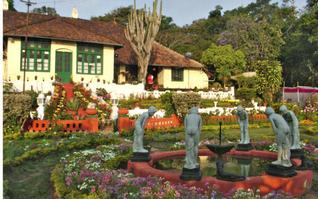
Vibrant:The flower garden at F.M. Khan's home at Boikeri in Kodagu. The annual flower show will be open for public on Saturday and Sunday.
Vibrant:The flower garden at F.M. Khan’s home at Boikeri in Kodagu. The annual flower show will be open for public on Saturday and Sunday.

Madkeri :

The annual flower show being organised at former MP F.M. Khan’s home at the Balayatrie Estate at Boikeri, on the Madikeri-Sunticoppa-Mysore Road, near Madikeri, is sure to become a hit when it opens for the public on Saturday and Sunday.

Mr. Khan played host to the presspersons at his home on Friday as they were taken around the flower arrangements made in front of his home in Boikeri. More than 80 varieties of flowers, all swaying to the gentle breeze and glowing in different hues, are bewitching to watch. Flower-lovers will be surely in for this annual treat, an arrangement being steadfastly followed by Mr. Khan and his family members for many years now.

Name them, the varieties are there. Dahlia, daisy, zerbera, anthurium, lady lock, cactus, marigold, chrysanthemum, bougainvillaea, bonsai, geranium, love in mist, orchids, exora, spider flower, rose, zenia, pinks, and keep counting them, there are more than 80 varieties providing a magnificent sight. It is not an easy task unless one gives personal attention, says Mr. Khan, who was once a firebrand politician and a close confidante of the late Prime Minister Indira Gandhi. However, Mr. Khan says transition from political arena to the kingdom of flowers was not difficult at all.

Mr. Khan had organised flower shows in New Delhi when he was the MP and came under lavish praise from the parliamentarians and flower lovers in the past. Dew drops settled on the flowers on a dewy morning had given a special lustre to the environment. Mr. Khan admits that rearing flowers was a tough task. He rues over the fact that many plants were lost due to unseasonable rains. He has plans to open seed bank in future for the benefit of flower lovers in the district.

Mr. Khan told presspersons that no person in the private sector had opened the flower show for public and he would set his eye on entering the Limca Book of Records in sometime.

A.M. Khan, brother of Mr. Khan, recalled how their father, Yousuf Ali Khan, loved flowers . The show would be open for public from 10 a.m. to 5 p.m. on Saturday and Sunday.

source: http://www.thehindu.com / The Hindu / Home> Karnataka / by Staff Correspondent / Mysore – January 21st, 2012

Annual Flower Show at Balyatri Estate near Madikeri Today, Tomorrow

Madikeri (Kodagu) , KARNATAKA :

F. M. Khan is taking a walk in his home garden. Picture right shows Dahlia in full bloom.

Madikeri :

Former Rajya Sabha member F. M. Khan is holding the annual flower show at his home garden for the public in Boikeri, near Madikeri, on Jan. 30 and 31.

The garden at Khan’s Balyatrie Estate, with more than 100 varieties of flowers — most of them rare — is spread over more than half-an-acre in front of his house.

Multi-hued roses, dahlia, chrysanthemum, jasmine are in full bloom to welcome the visitors.

Addressing media persons here yesterday, he said floriculture helps in the economic progress of the country and urged the government to support floriculture.

Stating that there is a huge demand for flowers at the international market, he said floriculturists should grow flowers in a natural atmosphere.

With the vagaries of nature, one needs to give special emphasis on protection of plants, he added.

Flowers like Jasmine, anthurium, marigold, salvia, Gerbera, Zenia, Dahlia, Cosmos, croton, colin, Plectranthus, Impatiens, Daisy, Gardenia, sun flower, Hollyhocks, Clarkia, Cockscomb, Lupine, Verbena, Fuchsia, pinks, spider flower, oster flower, calendula flowers, cupia, Gazania, Sweet pea, Cineraria, stock flower, love in a mist flower, devil in the bush and others are on display.

The flower show will be open to visitors from 10 am to 5 pm today and tomorrow.

source: http://www.starofmysore.com / Star of Mysore / Home> General News / January 28th, 2016

Floating solar plant at Banasura Sagar reservoir inaugurated

Kozhikode :

Power minister Aryadan Mohammed inaugurated the state’s first floating solar plant at Banasura Sagar reservoir in Wayanad on Thursday.

The 10-kilowatt-capacity plant, spread over 1,200 sq ft has been installed on concrete floaters with hollow insides. The platform can carry 45 tonnes and the power generated will be fed to the KSEB grid through cables drawn through the reservoir bed. KSEB officials said that it is the first floating solar plant to be set up inside a reservoir in the country.

The innovative power generation system, set up at a cost of Rs 20 lakh, is the brainchild of two young entrepreneurs from Wayanad – Ajay Thomas and V M Sudhin. The duo’s startup firm Vatsaa Energy Private Ltd has implemented the project with financial aid from KSEB under its Energy Open Innovations Zone.

Inaugurating the plant, Aryadan Mohammed said that KSEB was making a big push in the area of renewable energy. He added that the government has acquired 500 acres of land in Kasaragod to set up a 200 MW solar park. A further 1500 acres will be acquired for the project.

The KSEB also has plans to convert the largest earthen dam in the country to a hub of solar power generation with the launch of construction works for two other solar projects at the site.

The projects include a proposed 500-kW floating solar plant at the reservoir and a 400kW ‘dam- top’ solar power generation project. The former is a scaled-up version of the 10kW concrete floating plant. The Rs 9.25-crore project will be spread over the water surface of the reservoir across 1.25 acres.

The minister will also inaugurate the works of the 400-kW dam-top solar project by installing solar panel canopy over the walkway atop the dam at a cost of Rs 4.6 crore. Another hydel tourism development project is being envisaged near the dam premises.

Ajay Thomas, who had developed the indigenous technology for the floating plant, said the device has around 20% higher efficiency compared to ground-mounted units as the cooling effect of water helps in keeping the temperature of the solar panels low, thus boosting output.

“The low dust environment in the reservoir also aids in enhanced performance of the photo-voltaic panels. Water bodies in the state, including those in large hydroelectric projects, can be used for large-scale solar power generation through floating plants,” he said.

KSEB chief engineer (renewable energy and energy savings), Suku R, said the floating solar plant was designed for dam reservoirs in the state, also taking into consideration the seasonal water level variations, heavy rain and winds.

M V Shreyams Kumar MLA presided over the function. KSEB chairman and managing director M Sivasankar, academician RVG Menon among other spoke.

www.timesofindia.indiatimes.com / The Times of India /  News Home> City> Kozhikode / K.P. Rajeev / TNN / January 21st, 2016

Older than Bengaluru, Stands a Grizzled Guard

Bengaluru, KARNATAKA :

Pics: Pushkar V
Pics: Pushkar V

Bengaluru :

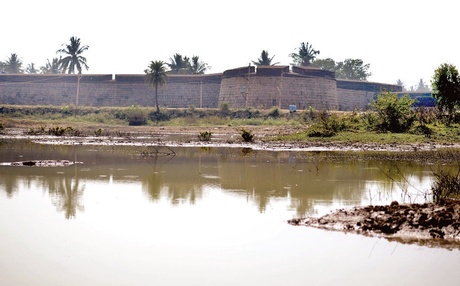
The Devannahalli fort, which stands 35 kms away from Bengaluru, is older than the city itself by 37 years.

The fort has been occupied by different dynasties over time. It was built in 1501 by Kempegowda’s ancestor, Malla Baire Gowda. But in 1747, in a battle led by Nanjarajaiah, the dalwai of Mysore, the clan lost it to the Wadiyar dynasty. Marathas later claimed it and lost it back to the Mysore state, in a siege led by Hyder Ali in 1746.

Arun Prasad, from Discover Bangalore Project, says that though Hyder captured the fort, it was his son Tipu Sultan who was responsible for modelling and building the Pulkad fort.

The town surrounding the fort was meant to be a a centre of learning and arts. “The Devannahalli town was supposed to be a place for learned artisans and intellectuals to inhabit,” says Prasad.

Devannahalli was a town typical of the time, with protected farmlands and fields. A lake, behind the fort and seen from the bastions, was meant to serve the needs of the inhabitants.

Today, the lake is dried up and is a sad sight to notice. Prasad blames it on poor urban planning. Earlier, a highway used to pass through the western part of the town. Now, a road has been built, which passes over the lake. A  good portion of the lake was used up for it.

“The lake has always been rain-fed. But the new road cut the lake away from the adjoining canals and channels,” says Prasad. “The rain water could not flow in and the lake dried up. The vast area of 400-500 kms metres has only weeds and little water due to rains. You can also spot some tattered measurement devices, which was a failed attempt to study the level of water in the lake.”

Pics: Pushkar V
Pics: Pushkar V

Bastions

Built on a higher ground, the bastions were used to keep a watch out for the enemy. The fort is 30 to 35 feet high and bastions, along the fort, are placed at equal distance from each other. “The bastions have well protected chambers, used by soldiers. The gun points are holes in the wall which can still be seen today. They are built from lime and brick. The holes were used to keep guns during the war,” adds Prasad.

Tipu’s Birthplace

South-west of the fort, there is memorial with a board, which proclaims that Tipu was born here. A six-foot-tall enclosure marks the spot.

When Tipu was born in 1750, his father Hyder Ali was engrossed in a battle. His mother, Fatima Fakhr-Un-Nisa, was secretly ushered into a carriage to give birth at the fort, as it was considered a safe place. However, she ended up giving birth inside the vehicle, right outside the fort. The monument is built over this birth spot.

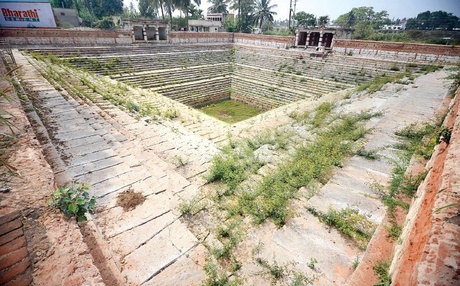
A pond was built under the administration of Purnaiah, the then Dewan of Mysore. It is a beautiful pond with the stones and excavations intact. “The water is used for rituals and festivals,” says Prasad. “People take baths here as well.”

Pics: Pushkar V
Pics: Pushkar V

Temples

Inside the Devannahalli fort, there is the Venugopalswamy temple. The temple, which was built in the Vijaynagara style, has several depictions from the Ramayana on the walls. “At the entrance, the two horsemen are believed to belong to the Western Ganga dynasty (which ruled 350 and 1000 AD),” said Prasad.

There are sculptures of seamstresses, as you enter, from the same era. The north and south walls have sculptures showing Rishyasringa being brought from a forest to Ayodhya accompanied by dancing girls. There is also a scene of Vishwamitra caught in a  an archery battle with Rama. The south wall has ten incarnations of Lord Krishna and Rama’s father performing a sacrifice.

Pics: Pushkar V
Pics: Pushkar V

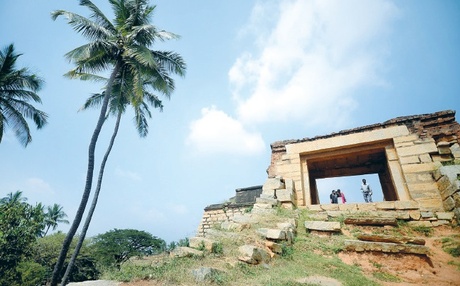
The fort gate and the fort walls are crumbling and there are scribblings on the walls. There is no security at the entrance and anyone can walk in. The commercial establishments all around have failed to preserve the authenticity of the past. “An ASI (Archeological Survey of India) office is located at the entrance, which is always closed and does not provide much information,” says Prasad. “The fort area needs to be protected by ASI and does not come under the corporation. The northern gate is crumbling as well.”

How it Began

Refugees on the run from Kancheepuram settled down near the Nandi Hills. Legend has it that Rana Baire Gowda, their leader, was told in a dream that he had to build a settlement in this region. This family goes by the name of Morasu Wokkalu. His son Malla Baire Gowda founded Devanahalli. Kempegowda also belongs to this family.

source: http://www.newindianexpress.com / The New Indian Express / Home> Cities> Bengaluru / by Seema Prasad / January 28th, 2016

Jain University to host running gala on Jan 31

Bengaluru, KARNATKA :

Bengaluru :

Fitness enthusiasts in the city can add one more event to their workout calendar with JGI-Jain University announcing the launch of ‘My Country Run 2016’, which will see thousands of runners stream through the picturesque Cubbon Park as they compete in the 5k and 10k events on January 31.

The Sree Kanteerava stadium will be the hub of the activity as the races, which begin from 4pm, start and finish at the venue. “We have had an enthusiastic response so far as more than 3,000 people have already registered for the race. Though there are many road races in Bengaluru, we still need to do a lot more to get more and more people running,” race director Gul Mohammed Akbar  told TOI.

Akbar said the first prize of Rs 1 lakh has attracted many elite runners, including athletes from Ethiopia and Kenya.

“Some of them are staying back after competing in the Mumbai marathon,” he said. Athletes who have finished the 10k in less than 60 minutes will fall in the elite category.

JGI Group chairman Chenraj Roychand said the proceeds generated from the race will go towards supporting the 30-35 athletes from below-poverty-line families, which are being looked after by the Jain Group. The money will be used to give them foreign exposure. “After looking at the savings, the trust will put in an equal amount to create a corpus that will be used to help these kids,” he said.

Uthappa lauds Jain College Returning to his alma mater along with ace cueist Pankaj Advani as the brand ambassador of the race, star cricketer Robin Uthappa recalled how the institution helped him through his college days. “I was frantically looking to get an admission for a degree course when I got a call from Jain College, expressing their willingness to start even a new course. Shankar sir was very helpful throughout my college days and the college even conducted special classes for all the sportspersons.

Now they want me to complete my MBA and I’ve promised to do that. I can confidently tell that Jain College is the best any sportsperson can aspire for,” recalled Uthappa, in the presence of his fiancee and former tennis player Sheetal Goutam.

The marriage is scheduled on March 3.

Roychand, meanwhile, recalled how he helped Uthappa to get back his focus after he was on the verge of quitting cricket.

“Robin once called up and said he wanted to quit the game but I told him that he was born to play cricket and put him through a few meditation sessions. Eight days later, he was back with a bang, cracking 165 runs,” the JGI chairman said.

He said the college has supported not only cricket but other sports as well, involving more than 300 international sportspersons, which included seven Olympians. “I’ve told Gul to reach out to rural schools and identify talent who can be nurtured to become top-class athletes. If we put in the hard work for the next 10-15 years, we can get more gold medals at the Olympics,” Roychand added.

UV Shankar, Director of Sports, Jain University, said the race will be an annual event. “The idea is to get everyone (men, women and kids) on one platform.”

The total prize money is Rs 5.35 lakh with Rs 1 lakh for the winner of the elite race. The registration fee is Rs 1,000 (Rs 800 for students) for Open 10K and Rs 700 (Rs 600) for the 5k race.

For online registrations, log on to www.mycountry.run.

source: http://www.timesofindia.indiatimes.com / The Times of India / News Home> Cities> Bangalore / by Biju Babu Cyriac, TNN / January 19th, 2016

Sheik Ali gets first Kalburgi award

SheikAliMPOs21jan2016

KARNATAKA :

The Kannada Book Authority (KBA) has instituted the Dr. M.M. Kalburgi Award, which carries a cash prize of Rs. 75,000 and citation, for writers in humanities. This year’s award, in memory of the renowned scholar, has been conferred on historian B. Sheik Ali.

Announcing the awards, KBA chairperson Banjagere Jayaprakash said Prof. Sheik Ali served as Vice-Chancellor of the Mangalore and Goa universities and was responsible for the emergence of a number of History scholars.

Research work

A major share of his research work relates to the period of Hyder Ali and Tipu Sultan. Prof. Sheik Ali has around 40 major works to his credit, including eight in Urdu.

source: http://www.thehindu.com / The Hindu / Home> National> Karnataka / by Muralidhara Khajane / Bengaluru – January 20th, 2016

Seer seeks stronger ties between Hindus, Muslims

People donating blood at the camp organised by the Pejawar Blood Donating Team and the District Muslim Paryaya Souharda Samiti in Udupi on Sunday.
Udupi, KARNATAKA :
Blood donation camp organized by Pejawar Blood Donating Team, District Muslim Paryaya Souharda Samiti

A large number of people participated in the voluntary blood donation camp organised by the Pejawar Blood Donating team and Udupi District Muslim Paryaya Souharda Samiti on the SMSP Sanskrit College premises here on Sunday.

The camp had been organised as a mark of respect to Vishwesha Tirtha Swami of Pejawar Mutt, who will be ascending the Paryayat Peetha for a record fifth time on Monday.

Inaugurating the camp, Vishwesha Tirtha Swami of Pejawar Mutt said that the bonds between the Hindu and Muslim communities should become stronger.

The Muslim community had fully co-operated in the run up to his fifth Paryaya, he said.

Members of the District Muslim Paryaya Souharda Samiti had supplied buttermilk to his devotees on his “Pura Pravesha” (entry to the city) on January 4.

The samiti had also donated foodgrains and vegetables as “horekanike” a few days ago.

Now, they had organised a blood donation camp on the eve of Paryaya. This showed their harmonious nature.

“The spirit of cooperation between Hindus and Muslims should increase. This should become a model to the country” he said.

He recalled that his preceptor’s guru, that is his guru’s guru, Vishwajna Tirtha, had accepted ‘horekanike’ from the philanthropist Haji Abdullah Saheb, also the founder of Corporation Bank, during his Paryaya in 1904.

Haji Abubakar Parkala, president of the samiti, Mohammed Arif, secretary, and others were present.

source:  http://www.thehindu.com / The Hindu / Home> National> Karnataka / by Special Correspondent / Udupi – January 18th, 2016

Chennai floods: 14 heroes honoured

Chennai, TAMIL NADU :

Chennai :

They have no cutouts in cinema theatres. They have no big fan following. They led a simple life just like anybody else until the rain gods lashed their fury on Chennai in December.

They rose to the occasion. They saved lives and brought smiles to many others. “We had to make a choice. Whether to sit at home or get out there and save people,” they said. They then became real heroes.

On Monday, 14 people, who volunteered in flood relief work and did a heroic job, were honoured with awards at the Adding Smiles Ambassador Awards 2016 organised by Adding Smiles Foundation.

“We were doing our duty to help someone who is in need,” said Blue Cross general manager Dawn Williams, one of the awardees, in a video on the awardees.

All the 14 volunteers, including Peter Van Geit, Chennai Trekking Club founder and senior citizens of Anandam Homes, were presented with ‘Real Hero Awards’.

Awards were also given to celebrities, who were active during flood relief. The team ‘Mana Madras Kosam’ with Telugu film actors including Navdeep, Kajal Agarwal and Samantha , Sathyam Cinemas and Tamil actor Parthepan were presented awards.

 “I am doing whatever little I can do. I have changed myself. As you grow older, you get fearless and want to do things before you go away,” the award winning composer said.

Activist and founder of NGO Prajwala Sunitha Krishnan, team from National Award winning Tamil film Kaaka Muttai, former RBI governor C Rangarajan, national paralympic swimming champion Madhavi Latha, founder and dean of Great Lakes Institute of Management Prof Bala V Balachandran, acid attack survivor Soniya Choudhary were some of the awardees in the ‘ambassador awards’ category.

The highlight of the evening was music composer AR Rahman, who was one of the awardees in ‘Adding Smiles Ambassador Awards’ category. The category included people, who have come the hard way to live a dream and spread smiles in the life of others by way of help.

source: http://www.timesofindia.indiatimes.com / The Times of India / News Home> City> Chennai / by V. Tejonmayan, TNN / January 19th, 2016

UOM Syndicate gets six nominated members

Mysuru, KARNATAKA :

Mysuru :

Exercising its powers under provisions in Section 28(1)(G) of the Karnataka Universities Act 2000, the Karnataka Government has nominated six members to the Syndicate of the University of Mysore (UoM) through a circular issued by In-Charge Principal Secretary to the Department of Education K.L. Subramanya.

Those nominated to the UoM Syndicate are Prof. D. Nanjundaiah, resident of Vijayanagar 2nd Stage, Ln. H. Ramesh, resident of Kestur Koppal in K.R. Nagar taluk,  Mohammed Abbas Salam Tanveer, resident of Chamaraja Mohalla, Shruthi Tharun Giri, resident of Yadavagiri , Kumar, retired Principal and a resident of Kuvempunagar and M.S.S. Kumar (Marballi Kumar), resident of Marballi in Mysuru taluk.

Ln. H. Ramesh, who retired after serving as Accounts Officer at KPTCL, is now serving as the Vice-President of the State Unit of KPTCL Employees Union, President of KPTCL Housing Co-operative Society besides serving as the Regional President of Lions Club of Mysore Kuvempunagar.

M.S.S. Kumar (Marballi Kumar), son of former Taluk Board President late M.D. Shivappa, is the General Secretary of Mysore District Congress Committee besides serving the Greater Mysuru Housing Society as its President.

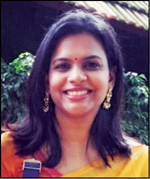
 Shruthi Tharun Giri
Shruthi Tharun Giri

The only lady nominated to the Syndicate

The only lady nominated to the Syndicate is Shruthi Tharun Giri. She holds a Post Graduate Degree in International Relations from the University of Nottingham, England and has a Bachelors Degree in Political Science from the prestigious Lady Shriram College in New Delhi.

Shruthi Tharun Giri is married to Tharun Giri, Managing Director of Windflower Resorts and Spa, Mysuru.

Shruthi has experience in opening Placement Cells in Colleges and has also helped her husband set up a chain of Ayurvedic Spas, which have gone on to win numerous awards and recognition.

She is also actively involved in local charity organisations with focus on providing education and infrastructure for under privileged women and children.

source: http://www.starofmysore.com / Star of Mysore / Home> General News / Sunday – January 10th, 2016