Category Archives: Leaders

Deve Gowda to launch Mysore Varsity Alumni Assn.

Mysore :

Former Prime Minister, H.D. Deve Gowda will be launching the Alumni Association and various other programmes of University of Mysore at 10.30 am on Oct. 16 at Crawford Hall.

As part of the centenary celebrations, the ex-PM will release a booklet, Convocation Address Vol.II, Centenary Account Gateway and lay foundation stone for School of Planning and Architecture.

MPs R. Dhruvanarayan, C.S. Puttaraju and Pratap Simha will be the guests of honour. Prof. K.S. Rangappa, VC, will preside.

On the occasion, two of the oldest Alumni — former VCs Prof. D. Javaregowda and Prof. B. Sheikh Ali — will be felicitated.

source: http://www.starofmysore.com / Star of Mysore / Home>General  News / Wednesday ,  October 15th, 2014

Lucknow Expressions society hosts literary evening with british scholar Rosie Llewellyn Jones

It was a packed house when the Lucknow Expressions society organised another literary evening, this time with historian Rosie Llewellyn Jones.

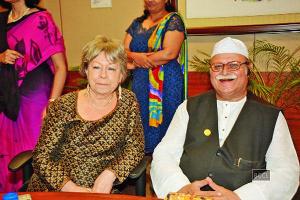
Rosie Llewellyn Jones (left)

Rosie’s writings on Nawab Wajid Ali Shah were released by filmmaker Muzaffar Ali, who was the chief guest at the event. Introducing the audience to the life of Wajid Ali Shah, Jayant Krishna expressed disappointment over the lack of monuments or places in the city named after the Nawab.

“Perhaps, we are looking for the international airport to be named after him,” joked Jayant. Muzaffar Ali, on the other hand, spoke about a temple in Vrindavan with a statue of Nawab Wajid Ali Shah.

The event concluded with a question-answer session, followed by high tea.

source: http://www.timesofindia.indiatimes.com / The Times of India / Home> City> Lucknow / by Renu Singh, TNN / October 16th, 2014

Export Inspection Council of India branch to serve exporters

Export Inspection Council of India (EIC) logo. (Photo: Official websit of EIC)

Nellore:

Export Inspection Council of India (EIC), a regulatory authority for quality control and pre-shipment inspection of notified export commodities to European Countries, opened its branch in Nellore.

The new branch is a boon to 13 shrimp, fish and fishery product establishments and two milk establishments in Nellore. Hitherto these companies used to go all the way to Chennai for certification for export and the new branch has put an end to their ordeals.
This is the third branch for EIC, which got branches in Bhimavaram and Visakhapatnam in AP.

According to the Director of EIC, Dr S.K. Saxena, EIC is nodal certification body for certificate of origin under various preferential tariff schemes, designates and approve private inspection agencies and laboratories to supplement its own activities through Export Inspection Agencies.

It is also an advisory board to Government of India on measures to be taken for enforcement of quality control and inspection of commodities intended for export and to draw up programme for quality control and inspection of commodities.

He said that the new office in Nellore is the seventh sub-office under Export Inspection Agen-cy, Chennai and 27th sub-office under Export Inspection Council of India.

The inception of the Nellore sub-office is to cater the need of fish and fishery products and food establishments at Nellore and surrounding areas also covering the primary production level.

“As a major port in Asia, the export and import activities have been increased by manifolds in Krishnapatnam port. Certification activities of EIA, Chennai, in the issuance of certificate of origin are also expected to be more in the coming years. To ease the trade community for approaching EIA, Chennai regional office at Che-nnai for all the activities, the new sub-office at Nellore is established with modern laboratory facilities,” the Director said.

Nellore mayor and noted shrimp exporter Abdul Azeez said that the branch will save time to the exporters located in and around Nellore.

source: http://www.deccanchronicle.com / Deccan Chronicle / Home> Nation> Current Affairs / DC Correspondent / October 12th, 2014

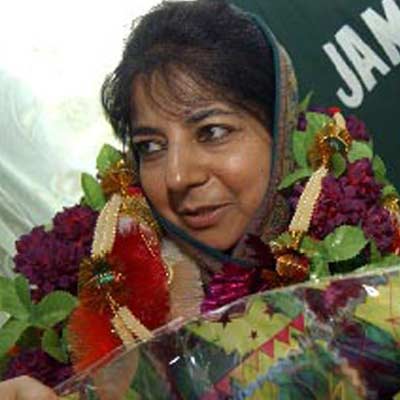
Mehbooba Mufti urges Centre to rebuild health sector in Jammu and Kashmir

MehboobaMPOs150ct2014

PDP leader Mehbooba Mufti today sought financial help from the Centre to rebuild health sector in Jammu and Kashmir besides a medicine bank and AIIMS-like institutes.

In the Consultative Committee of Parliament for the Ministry of Health and Family Welfare, Mufti said health sector was affected the most in recent  floods and the mountainous region of the state needed fully-equipped ambulances. Health Minister Harsh Vardhan  chaired the first meeting of the committee since the BJP government came to power.

The militancy-hit state also required trauma centres due to large scale violence and cases of road accidents, she said.

Mufti, whose party is in opposition in the state, also drew Vardhan’s attention to the non-functioning status of super-specialty hospitals in the state, saying only buildings exist and no patient care is available there.

She said there should be a nodal officer at the Centre to oversee the central-sponsored projects in the state and added that Centre should partner the state to provide health insurance to people. The premium of the scheme, she said, should depend of the financial status of the people.

Given the magnitude of damages, the situation calls for both material and technical intervention from the Centre to bring the health sector back on rails, Mehbooba told the Health Minister, according to a statement released in Jammu.

“Most of the vital diagnostic equipments including CT scans, X-ray plants, laboratories and blood banks at Srinagar’s referral hospitals – SMHS, Bone and Joints, Lal Ded, JVC and GB Pant – have suffered immense damage due to floods and needs to be restored on priority,” she said.

She also urged the Centre to ask the Medical Council of India (MCI) to relax the norms for J&K so that the newly sanctioned five medical colleges are made functional immediately to cope up with the shortage of doctors. She pointed out that the doctor-patient ratio in Kashmir was 1:1000, far below the World Health Organization (WHO) standard of 1:500.

Apart from medical colleges, Mehbooba also stressed on the need for paramedical institutes like nursing colleges and demanded the setting up of All India Institute of Medical Sciences (AIIMS) and a National Institute of Public Health in the state.

She also stressed the need for strengthening referral healthcare facilities at the district level by setting up integrated super-specialty, trauma, maternity, pediatric and other such institutions in the peripheries so that the patient rush is lessened at existing facilities in the urban centres.

“A major crisis  witnessed during floods was that due to complete breakdown of the healthcare infrastructure in Srinagar and lack of connectivity, the patients had to be diverted to less equipped hospitals both within and outside the city,” she said.

The PDP president also drew the Centre’s attention to lack of funding for equipping health care  centres with necessary infrastructure.

Due to the massive damage to major medical stores in Kashmir because of floods, there is a pressing need for ensuring adequate drug supplies to hospitals in J&K especially for patients suffering from life-threatening diseases, cancer, cardiac problems, diabetes, kidney problems, maternity problems and psychiatric disorders etc, she said.

“A drug bank should be created both at the provincial and district-levels to ensure speedy availability of quality life-saving  drugs  and surgical support on subsidised rates to the patients,” she said.

Mehbooba also called for moving the health sector from a “cure” to a “care” model and introducing Patient Protection and Affordable Care Act which seeks to link the quality of care with the cost of care.

“This law must seek to rebalance the system’s resource allocation and reward the value of care over volume of care,” she said.

She also called for focusing on primary healthcare with thrust on public-private participation in tertiary and super-specialty arenas.

source: http://www.dnaindia.com / DNA / Home> News> India / Place: New Delhi, Agency: PTI / Wednesday – October 15th, 2014

Former Maharashtra labour minister Sabir Shaikh dies

Kalyan :

Senior Sena leader and former state labour minister Sabir Shaikh died on Wednesday due to prolonged illness in a private hospital in Bhiwandi. Qureshi was 71-year-old.

Shaikh who was unmarried was living alone at Kongaon area in Bhiwandi. He was only biggest Muslim face of party who win three times MLA election and was also posted at state labour minister post during Sena-BJP government in state.

It is said that Shaikh was suffering from illness and recently he was admitted in Ved hospital in Kongaon where he died during the treatment.

source: http://www.timesofindia.indiatimes.com / The Times of India / Home> City> Mumbai / Pradeep Gupta, TNN / October 05th, 2014

Thankful for His Teachers

A volley ball enthusiast, ever-learning photographer, avid reader of science-related articles, ardent blogger and a passionate father would be too few words to describe Syed Maqbool Ahmed, who is presently heading the Central Instrumentation Laboratory of the University of Hyderabad, where he oversees the day-to-day functionings.

Perhaps the description that instantly draws eyeballs to him would be of his association with India’s successful Mars Orbiter Mission, Mangalyaan. Ahmed is the person who developed a quadrupole-based mass spectrometer, CHACE (Chandra’s Altitudinal Composition Explorer), which was used in India’s mission to the moon, Chandrayaan-1, which discovered water there. An upgraded variant of CHACE, named MENCA (Mars Enospheric Neutral Composition Analyser), is aboard Mangalyaan.

The 53-year old Principal Scientific Officer is known for his passion for science. Having worked at NASA’s Jet Propulsion Laboratory in the US earlier (1994-96) and with ISRO’s Chandrayaan-1 project, Ahmed is a content and accomplished scientist who acknowledges the role of destiny and his teachers in his success.

Ahmed was the project manager of the team of scientists who, as part of the Moon Impact Probe (MIP) mission, developed an indigenous science payload called CHACE, which detected the presence of water on the Moon in November 2008.

Hailing from a middle class family in the remote village Alampur in Mahabubnagar district of Telangana, Ahmed went to Hyderabad for higher studies after completing his schooling in the Telugu medium. “My family, comprising five brothers and three sisters, wanted me to become an Engineer due to obvious reasons of poverty. I gave the EAMCET entrance test thrice and failed each time. That was a big jolt in life, but my aspirations were alive,” says Ahmed.

Back then, he had no passion for Science. After BSc Honours from New Science College in the city, the biggest turnaround happened in his life when he gave the interview for MSc Physics at University of Hyderabad in 1982. “Out of the 30 faculty members in the Physics department, 28 were US returned. In the interview, I could barely understand the questions due to the complex language,” recalls Ahmed.

“AK Kapur sir in the panel understood my difficulty and started asking me questions in Hindi and translated others’ questions too. The panel was happy and I got through. Had he not done that, I would neither have got through nor have realised my passion for Science. Such teachers of exceptionally high standards are hard to find,” says Ahmed.

Soon after his postgraduation, while his parents wanted him to go to the Gulf to earn a living, he decided to join Physical Research Laboratory (PRL), Ahmedabad for a PhD in 1985. “I had to literally fight with my siblings to pursue my PhD and I had to choose PRL over two IITs because of a few hundred rupees extra I would receive towards fellowship,” quips the scientist.

He went on to complete his PhD in Simulation of Planetary Atmosphere or Laboratory Astrophysics in 1990 and joined the Institute for Plasma Research (IPR), Gandhinagar, in 1992 and continued to work as Associate Professor, till 2004. During a sabbatical in 2001-02, he was engaged with the Swiss Federal Institute in Switzerland.

Ahmed joined ISRO’s Chandrayaan project in 2005 and developed a quadrupole-based mass spectrometer, CHACE, which worked successfully in India’s Moon mission. He left ISRO at the age of 46 when he found about a mysterious disease that had infected his daughter. The same year, he joined Central Instruments Laboratory of University of Hyderabad as Principal Scientific Officer.

For him, life has been driven by serendipity. “ISRO happened to me by chance. It was a coincidence when I met Prof R Sridharan, Director of Space Physics Lab (SPL). He took me to the Chief, Madhavan Nair, who handpicked me from Department of Atomic Energy (IPR comes under this department) to Department of Space. This was incredible,” recollects Ahmed.

Acknowledging the contributions of his teachers in his life, Ahmed, presently, apart from heading CIL, holds regular talks on Indian space programmes and also conducts training sessions for Science teachers.

“Schools have to ensure Science is taught with passion. The introduction of the subject is very important. It is very difficult to capture students’ attention for more than half an hour. I try to link the subject to day-to-day activities,” he points out.

He believes a bit of Psychology and sequencing of dosage where teachers ensure students understand the basics first before moving on to bigger things too is important in teaching.

“Students today are much aware of things around them. When they ask me well-prepared questions, I am forced to say I don’t know,” says Ahmed, who believes teachers need to be honest and prepared to bring their experiences and observations from life into the classroom.

According to him, India has failed to attract the best minds into research. “The reason US prospers in Science and research is because they have attracted the best minds and are providing incentives. Our people are doing programming at the same time,” he laughs.

On the CHACE-turned-MENCA, he offers, “It is a very sensitive instrument and I am confident that we will be the first to locate water on Mars,” says the proud scientist, who has been blogging about Mangalyaan for the past 18 months.

Rahul.v@newindianexpress.com

source: http://www.newindianexpress.com / The New Indian Express / Home> Education> Edex / by Rahul V. Pisharody / Hyderabad – October 13th, 2014
ISL Tour Diary: Kolkata, a city that offers something new every time

Kolkata is known for its love for the game of football. (Photo: Shubasish Dutta)

Being a Probashi Bengali (a non-resident Bengali), my affair with Kolkata is a long-standing one. Born to parents who were originally from Kolkata, I have been brought up in Delhi all my life. I always had a strange feeling whenever I visited the city, predominately because of the culture difference. While I was growing up, I have always seen Kolkata as an outsider, without having a chance to feel the soul, the spirit of the city.

But each time I had been there, the city gave me a sense of belonging, offered me something new to take back. The City of Joy, as it is affectionately called, does something to you which cannot be upturned. Every time I have travelled to this city, it left an everlasting impression on me as a person.

My latest trip to the city was an official one, for two days, to cover the inaugural game of the Indian Super League (ISL) – the new hope of Indian football. I have always heard of the city’s madness for football but it was only this time that I had the opportunity to witness it from close quarters.

The city is crazy about football

The people of Kolkata force you to rethink the definition of passion. The zeal with which they follow their game is probably something I haven’t seen before. Wherever you go, from a narrow lane in north Kolkata to swanky grounds of the south, you would see a bunch of kids playing football. A day before the match I planned to travel around the stadium and see the buzz generated by the ISL in the city. It was a rainy afternoon, drizzling to be precise, and I saw people unmoved from their queues, standing undeterred in front of the ticket counters at the iconic Salt Lake Stadium.

From school kids to senior citizens, everybody braved the rain to get their ticket. If this was not enough, then on the match day when I checked out of my hotel to reach the stadium, a journey of not more than 10 minutes took an hour to complete. Hoards of people were charging towards the stadium entrance giving the traffic police a nightmare. It wasn’t a Kolkata derby clash but people here just love the game. The stadium was jam-packed with sixty thousand plus attendance. The crowd made Mexican wave on every good move by the home team Atletico de Kolkata, which eventually won 3-0 against Mumbai City FC. If you want to watch football, Kolkata is the place for you. The city’s passion for the game is second to none.

An unplanned visit to Syed Rahim Nabi’s home

It happened to be that I went to attend a lunch invite to one of my relatives living in Howrah. In the middle of a lunch-table conversation, when I disclosed my purpose of visiting the city, my uncle quickly rose up and with an animated face, said: “Nabi lives near our house! Yes, footballer Nabi lives a few blocks away.” And suddenly all my focus shifted from the delicious lunch cooked by my aunt to Nabi’s house. So quickly after finishing the food (leaving the table without finishing the food is a sin in Kolkata), I went to check out Mumbai City FC captain’s house.

But the visit left us disappointed when we realised that nobody was at home. However, I was left flabbergasted with the modesty of Nabi’s home. It was a simple three-storey building located in one of the narrow lanes of Howrah. For a person unfamiliar with the locality, it was not until I saw the sign board that I realised that I am standing in front of Nabi’s home. It speaks a volume about Nabi’s character and the hardship behind his success.

The Maidan Area – home of the legends
If you are in Kolkata and the purpose of the visit is football, then a visit to the Maidan area is a must. The name of the area struck me at first when I heard it but when I reached there I realised why it is called the Maidan area, mostly because of the gigantic grounds. The place is home to three of the most legendary football clubs in the country – Mohun Bagan, East Bengal and Mohammedan Sporting.
These clubs have so far ruled over the city, creating a divide in the fan base. Not just these, many more city football clubs are located in the area, which is maintained by the Army. There’s also a statue of Gostha Pal, which grabbed my attention. Pal is considered one of the most celebrated and gifted defenders the country has ever produced. A Mohun Bagan legend, Pal was nicknamed “The Great Wall of China” for his great defensive skills. He was the first Indian footballer to be honoured with the Padma Shri award.

Incidentally, my fascination towards the Maidan area didn’t end here. It is also home to the Mecca of Indian Cricket – The Eden Gardens. And even on a tour to cover football, I couldn’t resist but to quickly grab a few clicks of the legendary stadium.

source: http://www.ibnlive.in.com / IBN Live / Home> Football Next> News / by Subhasish Dutta, IBN Live Sports / October 14th, 2014

Razzak elected chairman of UP Bar Council

Lucknow-based lawyer Abdul Razzak Khan was declared elected as chairman of the Bar Council of Uttar Pradesh on Sunday.

Razzak won unopposed as all the other contestants- Hari Shankar Singh, Anil Pratap Singh and Shree Nath Tripathi withdrew their nominations in his favour. All the 25 members of the Bar Council, who had to elect the chairman, were present at the headquarters of the Bar Council of UP at Thrornhill Road on Sunday.

Later, Khan promised to make all possible efforts to get welfare schemes for lawyers implemented. Outlinign his priorities, he said that first of all, he would persuade the state government to implement the insurance scheme worth Rs 5 lakh for the welfare of lawyers. Secondly, he assured to request the state government to implement the scheme of stipend to new lawyers.

He even warned the state government that if these two long standing demands were not fulfilled expeditiously, then he would lead the members on a dharna in front of chief minister’s residence on October 31, to pressurize the state government to provide all the necessary assistance to get these two welfare schemes for lawyers implemented.

He further promised to taken more steps for the welfare of lawyers after getting the aforesaid two demands implemented.

source: http://www.timesofindia.indiatimes.com / The Times of India / Home> City> Allahabad / TNN / October 12th, 2014

Thumbay Group among Forbes ME ‘Top 100’ in Arab world

Ajman :

Thumbay Group has crossed another milestone today. Thumbay Group has been listed in “Top 100 making an impact in the Arab World”, a list compiled by Forbes Middle East Magazine in the May 2013 Issue 14. Rankings, awards, undoubtedly play an important role in recognizing an organization’s success. Thumbay Group, UAE ranks 44 in the list of “Top 100 Making An Impact In The Arab World”.

ThumbayMoideenMPOs12oct2014

Thumbay Group, UAE established in the year 1997 has come a long way. It has developed into a conglomerate having multifarious business activities and operations spread across the globe. The Thumbay Group, UAE today is a leading conglomerate with a host of medical and healthcare institutions under its ambit. The Group encompasses Gulf Medical University, GMC Hospital and Research Centre, Gulf Medical Centre & GMC Pharmacies in Dubai, Sharjah, Ajman and Fujairah.

Gulf Medical University has a student cohort from 67 nationalities, majority of them are locals and Arabs from the GCC, medical professionals and staff from 22 countries. Patients from over 175 nationalities ranging as far as Africa, Iran, Afghanistan, Pakistan, GCC countries and Western Europe receive treatment at GMC Hospitals & Research Centre, a constituent private teaching university hospital with a capacity of 250 beds housed with ultra-modern facilities. The Group also owns and manages international chain of Health Clubs and Coffee Shoppe, Chain of GMC Diagnostic laboratories, Chain of Pharmacies, Chain of Optical Centres.

“In a short span of time we have worked our way to reach to this position today. I thank the Almighty God, the great leaders of this country, all our staff members for their continued support in achieving this proud status today. We have very big and ambitious plans and God willing with each and every immeasurable support we will be able to reach to the pinnacle of success one day” commented Thumbay Moideen, founder president of Thumbay Group, UAE.

source: http://www.daijiworld.com / DaijiWorld.com / Home> Gulf / Media Release / Ajman – May 22nd, 2013 / posted Wednesday – May 22nd, 2013

Freedom fighter Captain Abbas Ali dies

Freedom fighter Captain Abbas Ali, 95, died of a heart attack around Saturday morning, at a hospital here.

Ali was a captain in the Indian National Army led by Netaji Subhash Chandra Bose.

Later he joined the socialist movement and was a close associate of Ram Manohar Lohia.

He left party politics in 1988.

His son senior journalist Qurban Ali told IANS: “Captain Sahab was active till the last minute”

Abbas Ali was born in in 1920 Khurja, Bulandshahr district of Uttar Pradesh. Early in life he was inspired by Shaheed Bhagat Singh.

source: http://www.business-standard.com / Business Standard / Home> News-IANS> Politics / IANS / Aligarh – October 11th, 2014