Freedom fighter and Indian National Army war veteran, Captain Abbas Ali, 92, died of cardiac arrest today at the Jawaharlal Nehru Medical College.
Capt. Abbas Ali was born on 3rd January 1922 in Bulandshahr district of Uttar Pradesh. From his early days, he was inspired by the revolutionary ideas of Shaheed-e-Azam Bhagat Singh. While pursuing his studies in Aligarh Muslim University, he came in contact with great communist leader of his time Kunwar Muhammed Ashraf. On his inspiration, he joined British Army in 1939 and was posted in South East Asia during World War II.
In 1945 when Netaji Subhash Chandra Bose called for revolt, he left British Army and joined Netaji’s Indian National Army (INA) but later he was arrested, court marshalled and awarded death sentence. After India gained Independence in 1947, he was released by Indian Government.
In 1948, Capt. Abbas Ali joined Socialist Party led by Acharya Narendra Deva, Jai Prakash Narayan and Dr Ram Manohar Lohia and remained associated with the Socialist Party till its merger with the Janata Party in 1977. He was General Secretary of Uttar Pradesh Unit of Socialist Party in 1967 and 1974 and member of its Parliamentary board.
In 1967, he played a key role in formation of the first Samyukta Vidhayak Dal (SVD) government led by former Prime Minister, the late Chaudhry Charan Singh in Uttar Pradesh. In 1977, when Janata Party came into power, he was appointed first President of Uttar Pradesh Unit of Janata Party.
In 1978, he was elected to UP Legislative Council for six years. He had been a member of UP Sunni Central Waqf Board for six years.
Abbas Ali is survived by his son, noted journalist Qurban Ali and two daughters. He will be laid to rest later this evening at Qila Road graveyard.
source: http://www.twocircles.net / TwoCircles.net / Home / by TCN News / October 11th, 2014
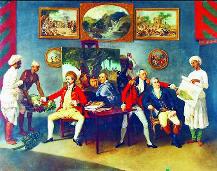
The painting titled ‘General Claude Martin and his Friends’ or ‘Colonel Polier with his Friends’ depicts Colonel Antoine Polier, Claude Martin, and John Wombwell with the painter himself, Johann Zoffany (1733-1810), in the background, being waited on by Indian servants, probably in Lucknow around 1786-87.
Kolkata :
The Victoria Memorial Hall’s collections will find a place in the largest-ever digital repository of exhibits and collections on a global platform created by Google. Apart from Victoria, some others on the list are Metropolitan Museum of Art and Museum of Modern Art in New York, British Museum, National Gallery and Tate Gallery in London, Musee d’Orsay in Paris, Acropolis Museum in Athens and Hiroshima Peace Memorial Museum.
Victoria Memorial curator Jayanta Sengupta told TOI that the museum and its finest collection of art and artifacts are expected to join the Google Cultural Institute, a cyber platform created by Google Art that enables users to view high resolution images from various museums and even compile their own digital collection. It is fast emerging as an invaluable resource for researchers as they can have access to objects from museums across the world and learn about art objects, their history and artists at the click of a mouse.
“A team from Google will reach Kolkata with sophisticated video and still cameras to film the museum and photograph the 120-odd highlights. Of these, they will select one item and photograph it with high-definition gigapixel camera so that it can be magnified online without distortion. Once the exercise is over in a couple of months, a virtual tour of the galleries at Victoria Memorial will be created and the images uploaded on Google Cultural Institute,” said Sengupta.
Victoria Memorial signed a memorandum of understanding with Google Art in February 2013 and has been communicating with the team since. The museum has sent the list of 120 items it considers the best among its collection of 33,000+ objects of art apart from the 10,000+ small objects like stamps.
Though the Google team is at liberty to select any one of the 120 objects listed by Sengupta’s team as the museum’s highlight for the gigapixel photography, the curator has suggested a painting titled ‘General Claude Martin & his Friends’. The painting that has an alternative title ‘Colonel Polier with his Friends’ depicts Colonel Antoine Polier, Claude Martin, and John Wombwell with the painter himself, Johann Zoffany (1733-1810), in the background, being waited on by Indian servants, probably in Lucknow around 1786-87.
“We have suggested the painting by 18th century German neoclassical painter because it is intricate. There are six paintings within the painting that can be enlarged and viewed in detail when photographed in a gigapixel image,” explained Sengupta. Other paintings that make the cut are ‘Bharat Mata’ and ‘Passing of Shah Jahan’.
Among the other objects in the highlights shortlist are oil paintings by Thomas and William Daniel, Abanindranath Tagore and Gaganendranath Tagore, a 1964 copy of the Ain-e-Akbari manuscript, Persian translation of Aristotle’s treatise Six Principles of Ethical Life and commentary by Dara Shukoh as well as his Persian translations of Gita and Upanishad, Aurungzeb’s personal Quran, Tipu Sultan’s dagger, Maharaja Ranjit Singh’s sword and Queen Victoria’s piano.
“Once Victoria Memorial Hall joins the others on the Google Cultural Institute website, all objects that comprise the museum highlights will be there for the world to see and experience online. We have been working on documenting each object, detailing the history, the artist and its relevance. We are currently in the final lap of that exercise and expect to be on the website by this yearend or early next year,” said Sengupta.
source: http://www.timesofindia.indiatimes.com / The Times of India / Home> City> Kolkata / by Subhro Niyogi, TNN / September 07th, 2014
One of Kolkata’s favourite sons, V.V.S. Laxman, will deliver the prestigious Mansur Ali Khan Pataudi Memorial Lecture here on October 19, the eve of India’s fifth One-day International against the West Indies at the Eden Gardens.
Laxman will be the third cricketer to deliver the lecture after the peerless Sunil Gavaskar and Anil Kumble.
The Cricket Association of Bengal (CAB) has decided to invite all former India captains to the lecture as this will form a part of the celebrations of 150 years of Eden Gardens.
The lecture was originally slated for October 18 but was postponed by a day by the Board.
A book and a documentary will be released on October 16 where former captain Chandu Borde and Salim Durrani are expected to be present.
Chief Minister along with his cabinet reached MLC Mohammed Saleem’s residence for Eid Milap on the occasion of Eid-ul-Azha. He stayed there for more than an hour. During the period he discussed party position in Telangana state and Minority welfare.
According to sources KCR had made a vow (mannat) to visit Dargah Hazrat Khaja Moinuddin Chishti after formation of Telangana and now he wishes to visit Ajmer Shareef through a special train.
He told Mohammed Saleem that he plans to construct a building with the cost of Rs. 5 crore in Ajmer Shareef for the convenience of devotees.
He directed Mohammed Saleem to contact Rajasthan government and try to obtain land for the same.
Siasat news
source: http://www.siasat.com / The Siasat Daily / Home> Hyderabad / Wednesday – October 08th, 2014
Alhaj Mir Vizarat Ali Pasha founder and Secretary Tur Baitul Mal passed away at the age of 94. Funeral prayer will be offered on Wednesday, October 8, after Zuhr prayers at Jama Masjid Mir Vazeer Ali Khan, Fateh Darwaza. Burial will be performed at Shah Raju Qattal Husaini premises, Misri Gunj.
Fateha Seyaum will be held on October 9 at Jama Masjid Tur Qazipura at 4 pm. Details can be had from phone no’s 9394777849 or 9397626685.
Tur Baitul Mal will not function on October 8 & 9 due to sad demise of founder and Secretary Tur Baitul Mal.
Siasat news
source: http://www.siasat.com / The Siasat Daily / Home> Hyderabad / Wednesday – October 08th, 2014
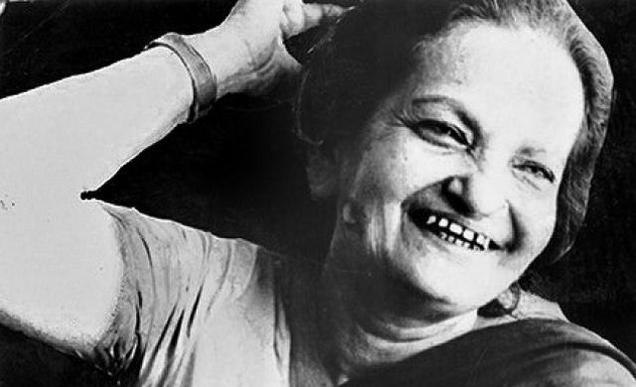
As the Centre rolled out a year-long commemoration of the birth centenary year of ghazal queen Begum Akhtar on Tuesday, the lament of her disciples and close confidantes is that Uttar Pradesh – the State where she was born and lies buried – has shown no interest in keeping her legacy alive.
Coins released
The official launch of the birth centenary commemoration with the release of commemorative coins at National Museum here saw another disciple Rita Ganguly enthral the houseful gathering with a rendition of her teacher’s aye mohabbat tere anjaam pe rona aaya…’’
But for recent efforts by individuals to salvage what remains of `Pasanda Bagh’ in Lucknow – where Begum Akhtar was buried in October 1974 – even her grave would have been lost to encroachers. Now, the space around her grave and that of her mother’s has been restored — courtesy a grant from the Department of Archaeology of the Government of India – and this evening resonated with the voice of Shubha Mudgal.
“But not many people will be able to attend Shubha’s musical offering as `Pasanda Bagh’ has shrunk to almost the size of a room where not more than 40 people can be accommodated. Our effort is to have an annual ‘Urs’ on her ‘barsi’ but we need a bigger venue so that the public can participate in larger numbers. But this is not something that the few of us can do on our own,’’ said Salim Kidwai, founder-member of Sadbhavna Trust.
“We maintain the mazaar from our own pocket,’’ Mr. Kidwai said; adding that successive Uttar Pradesh governments ignored efforts to get some local governmental support. “We are hoping that the State Government will at least include her mazaar in the tourism map as people have begun visiting it ever since we redid the place two years ago.”
Website soon
Vocalist Shanti Hiranand – a disciple of Begum Akhtar who along with Mr. Kidwai drove the effort to restore the mazaar — told The Hindu that one of the pressing tasks ahead is the setting up of a website on the ghazal queen who was equally accomplished in the `dadra’ and `thumri’ genres of Hindustani classical music. The website will be set up as part of a project of the Indira Gandhi National Centre for the Arts which will also organise a three-city showcase of Begum Akhtar as part of the commemoration.
source: http://www.thehindu.com / The Hindu / Home> News> National / by Anita Joshua / New Delhi, October 08th, 2014
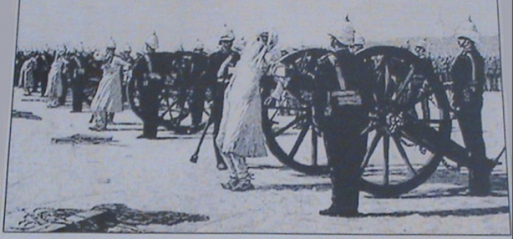
[A sketch of Maulvi Baqir’s execution. He and other scholars were tied to canons and were publicly blown away]
Maulvi Muhammad Baqir was a great advocate of Hindu Muslim unity. When in order to weaken the freedom struggle the British started to sow the seeds of discord among the public Delhi Urdu Akhbar challenged them. On 4 June 1857 Maulvi Muhammad Baqir warned the masses of the conspiracies of the British and appealed to them to remain united. ‘Remember whoever misses this opportunity, falls prey to the tricks and is thumped by the inducements, tricks, and promises or is overwhelmed by the pomposity of the British, he is destined to face embarrassment in this world and the hereafter. No remorse will be of any help then and everyone will have to repent.’
.
By Laiq Rizvi
History of the Freedom Struggle is a live and self-narrating tale of dedication and selfless sacrifices. No one knows how many mothers lost their sons, how many women got widowed and how many spent their lives in prison cells and died there in the struggle to get their motherland freed from the clutches of slavery. Urdu writers too played active and leading role in this struggle. Pens became the swords and words banners of expression. The first name among those journalists who did not hesitate in sacrificing their lives for their country’s liberation by all means is that of Maulvi Muhammad Baqir, editor of Delhi Urdu Akhbar.
An sketch of Maulvi Baqir. He was tied to a canon and was publicly blown away.
A sketch of Maulvi Baqir’s execution. He and other scholars were tied to canons and were publicly blown away.
Maulvi Muhammad Baqir came from a respectable and educated family of Delhi. His father Maulana Muhammad Akbar Ali was a known Shi’a scholar and a known Mujtahid of his time of Delhi.
After finishing his religious education Maulvi Muhammad Baqir went to Delhi College for further education. After completion of his education he took up several jobs such as teaching at Delhi College and as a Tehseeldar in the Revenue Department but that was not his final goal.
In 1836 when the Government, after amendment in the Press Act, allowed publication of newspapers, he entered the field of journalism that became his art and identity.
In January 1837 Maulvi Muhammad Baqir launched weekly Delhi Akhbar. After Jam Jahan Numa of Calcutta this was the second Urdu language newspaper in the Indian sub-continent and first in north India. This newspaper survived for about 21 years during which its name was changed twice. On 3 May 1840 it was renamed as Delhi Urdu Akhbar while on 12 July 1857 Delhi Urdu Akhbar was renamed after the Mughal Emperor Bahadur Shah as Akhbar-al-Zafar. And then its ten last issues came out with this name.
Delhi Urdu Akhbar is the pioneer and founder of National Urdu journalism. Maulvi Muhammad Baqir used and introduced modern technology in the newspaper and shaped it to meet and fulfil contemporary demands. He focussed on news creating interest and newsworthiness in headline and newswriting and classified the news items. The section for Court (government) news was headed as ‘Huzoor-e-Wala’ while [East India] Company’s news was carried under ‘Sahib-e-Kalan Bahadur’.
In order to get latest news he had developed a network of authentic and reliable waqa-e-nigar [narrators or correspondents] who had access to higher authorities.
Delhi Urdu Akhbar was the proclaimer of the feelings of the nation. That was the period when there was no political party in the country. In such an atmosphere the newspaper played vital and leading role in creating political awakening in the masses and uniting them against the foreign rulers. It ignited the love of freedom and gave the courage and confidence to rally against the British Raj. An official report of 1853 described it as a wide-mouthed and outrageous newspaper.
Soon after the start of freedom struggle it became a freedom fighter itself. The fire of Freedom that got ignited in Meerut on 10 May 1857 helped Mujahideen [freedom fighters] reach Delhi by 11 May. Following this started a series of events of the magnitude that shook the ground underneath the feet of the Britishers. Maulvi Muhammad Baqir responding to this call to freedom was busy doing jihad with his pen. In its report of 17 May 1857 Delhi Urdu Akhbar carried a detailed report of the advance of Mujahideen. Following is an excerpt from the report.
’11 May 57 AD, due to the summer weather court proceedings were being held in early morning. Saheb Magistrate was busy presiding in the court room… At about 7 am Bridge In charge came and informed, “Some Turk soldiers have gone on a violent spree and started beating us. They wanted to plunder the collected revenue. Under some pretexts I engaged them in chatting and ulocked the barrage so that they could not advance further. They have burnt down the Revenue office and Saheb’s Bungalow at Sleempur Road.” As Saheb became thoughtful for a while and then stood up and went to Col Magistrate who was holding a session in the adjoining room. After some ghitpit [chatting in English] he went to the Treasury Room and in consultation with the Treasury Officer secured the treasury and ordered the treasury guards to get ready. As per order they loaded their guns and stood in a stand by position. Security was also deployed at the Jungi Darvazah at Kachehri. It spread panic in the court room and its staff. Then with that information Magistrate Saheb went to the Commissioner. In the meanwhile rumours said that the Turk riders had gathered under the Jharonka of the Fort… A little later reports were heard that Qiladar, Bade Saheb, Dr Saheb and maim log [English ladies] had been killed at the gate and the riders had managed to enter the fort. His Lordship, wearing the ritual turban and an English sword also came to the court.
‘Initially these were few riders who came to the city and slaughtering the Britishers in Daryaganj, setting fire to the bungalow sent Dr Chaman Lal to the real Darul Shifa [killed him]. They were later joined by more riders and voices were heard and [rumours] that such and such British had been killed here and another such and such is lying killed there.’
In addition to eyewitness report about Delhi this issue also carries the news of freedom struggle from various parts of the country including Meerut, Saharanpur, Lucknow and Ambala. Reporting the causes of the revolt it reads, ‘There was already discontentment among Turk Riders and the fact that cartridges are greased with pig fat and tallow… For refusing to carry orders 85 soldiers have been imprisoned and on Monday inspired by religious spirit [Islam] and the zeal to defend religion flared up. All of a sudden all those in the platoon and the riders, in whatever state they were, took up their arms and freed their brethren from the jail and attacked the platoon and the whites.’
In order to encourage freedom fighters Maulvi Baqar commended them strongly and persuaded the masses to cooperate with them and participate in their struggle. Such stimulating writings may be seen in several issues of Delhi Urdu Akhbar. ‘This gallantry of yours and the courage and zeal with which you have shattered the perversity of such a strong and arrogant empire and have humbled its Pharaoh like ego and Shaddad like pride will be remembered in channels of history…and you have relieved the masses of India from the unseen curse that had fallen upon them.
‘O my countrymen, Rule has changed; time has changed. System and management of government has changed. Now you too should change your habits, get rid of easy life style and your love for comforts that you have been accustomed since your childhood. Reform yourselves. Discard your habit of carelessness and fearfulness and embrace courage.’
Delhi Urdu Akhbar did not carry Maulvi Muhammad Baqir’s byline but researchers are of the opinion that most of the writings came from his forceful pen. At times Maulana Muhammad Hussain Azad also gave a helping hand to his father. The issue of 24 May 1857 includes his poem Tareekh-e-Inqalab Ibrat Afza [History of change is a lesson] that enthused in masses a new spirit and zeal. Some of the verses are:
Hai kal ka abhi zikr keh jo qaume nasara thi
Saheb-e-Iqbal o jahan bakhsh jahandar,
Allah hi Allah hai jis waqat keh nikle
Aafaq men taigh-e-ghazab Hazrat Qahar,
Sab jaohare aqal unke rahe sab taq pe rakhkhe
Sab nakhun tadbeer-o-khirad ho gai bekar,
Kaam aaee na ilm-o-hunar hikmat-o-fitrat
Poorab ke tilangoN ne liya sab ko yahan maar.
This forceful and armed resistance shook the British badly. In order to intimidate the masses notices from officials were displayed at various points. Maulvi Muhammad Baqir reproduced the text alongwith a strong and well-argued rebuttal. To defeat the British he uses their own phoney claims:
‘They [the British] call themselves the protectors and custodians of their subjects. Therefore it is incumbent upon them to return the trust, i.e. India back to the Indians unchanged and unaltered.’
Delhi Urdu Akhbar linked journalism to social issues as well. [Political] Situation coupled with the conspiracies of opportunists would lead to the shortage of food items and commodities of daily use. [Hence] Dishonest shopkeepers started charging prices as they pleased. It also created a situation of loot [illegal profiteering] and hoarding. Delhi Urdu Akhbar showed the mirror to those who were involved in such activities like this:
‘Shopkeepers of the city have gone on a rampage of high handedness and are behaving in a very cruel manner. With regard to cereals and other essential items people are suffering as most of the commodities are not available and if available then they are very expensive. In every market only small number of shops remains open and what remain open they present the [proverbial] scene of customers as ek anar sau beemar [one pomegranate for one hundred patients]. Similarly cereals [sold] are rotten and other commodities are of inferior quality. But hunger is powerful and lacks mercy and desperation worsens the situation. Helpless customers have no choice and buy whatever is available thinking it a blessing.
‘Because of this profiteering and black market masses are worried and confused. Be they the city dwellers or the outsiders most of them have resorted to plundering and the power and writ of police stations has become nil… The city is being looted. Many disguised as soldiers indulge in extortion and loot.’
Maulvi Muhammad Baqir was a great advocate of Hindu Muslim unity. When in order to weaken the freedom struggle the British started to sow the seeds of discord among the public Delhi Urdu Akhbar challenged them. On 4 June 1857 Maulvi Muhammad Baqir warned the masses of the conspiracies of the British and appealed to them to remain united. ‘Remember whoever misses this opportunity, falls prey to the tricks and is thumped by the inducements, tricks, and promises or is overwhelmed by the pomposity of the Christians [the British], he is destined to face embarrassment in this world and the hereafter. No remorse will be of any help then and everyone will have to repent.’
By the beginning of September 1857 when Mujahideen became weak and started facing defeats, somewhere along the lines Maulvi Muhammad Baqir also started losing heart. The issue of 13 September 1857 reflects this and this proved to be the last issue [of Delhi Urdu Akhbar]. Maulvi Muhammad Baqir was arrested for revolt and without being tried, on 16 September 1957 was tied to a canon and was publicly blown away in front of the Khooni Darwaza. But this martyrdom strengthened the ongoing freedom struggle and sharpened the resolve of Mujahidana zeal of Urdu journalism. Contemporary publications and later newspapers and magazines followed the same national spirit and the mission to fight for liberation that had been set by Maulvi Muhammad Baqir.
Maulvi Muhammad Baqir’s newspaper had played a key role in igniting the spirit and courage in his fellow countrymen to fight for freedom. Any description of the freedom struggle will always remain incomplete without mentioning this brave and selfless Urdu journalist. Garabchand Chandan writes, ‘The short comments in Delhi Urdu Akhbar criticised the nepotism of the British, inefficiency of its police and bad practices of government departments. Therefore this newspaper did a tremendous service in creating an environment for and in providing complete information about the great rebellion of 1857.’ (Urdu Sahafat, Urdu Academy, Delhi, Page 88)
Delhi Urdu Akhbar was part of a mission. It was not launched for financial gains or fame and recognition. After paying for the expenses whatever return remained Maulvi Muhammad Baqir used to distribute it to help the poor. Its issues from January 1840 to September 1841 are available in the National Archive. In 1843 Maulana had also launched a religious magazine Mazhar-e-Haq that lasted until 1848.
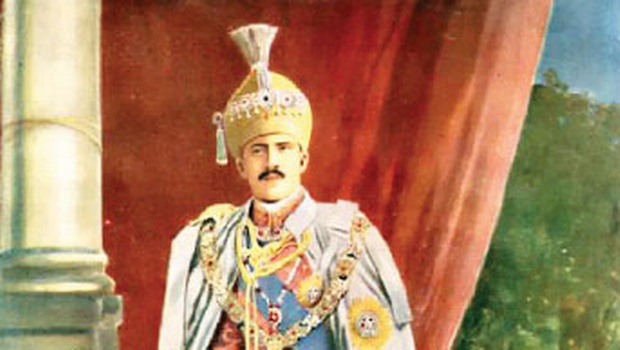
His name was Mir Osman Ali Khan Siddiqi. He used a 185-carat diamond worth $200 million for a paperweight, had enough pearls to pave Piccadilly Circus and a stable of horses that would’ve put Godolphin to shame.
His ancestor Mir Qamaruddin Khan started a dynasty on behalf of the Mughals on July 31, 1720, which ended in a sheep farm.
Qamaruddin Khan was Hyderabad’s first Nizam—Urdu for Administrator of the Realm— and Osman Ali Khan was the 7th and last Nizam who has been declared the world’s richest Indian ever—after adjusting his wealth to current inflation figures. In the 1940s, his fortune was estimated to be $2 billion, which was about 2 per cent of the US economy while Independent India’s annual revenue then was only $1 billion.
The British gave him the title of His Exalted Highness because of the taxes he paid to the Empire—his main palace had 6,000 staffers. The only job 38 of them were entrusted with was dusting chandeliers.
The world’s richest Indian was also an enigma: the Nizam was so stingy that he wore the same fez cap for 35 years, wore crumpled pajamas, ate off a tin plate and smoked cigarette butts, refusing to buy even one fresh pack all his life.
His treasury would have put to shame the wealth of the richest oil sheikh: hundreds of millions of pounds worth of gold and silver overflowing in his coffers as well as jewels worth £400 million. He had a prodigious appetite for sex, and had one of the largest private pornographic collections in the world—using hidden cameras inside his zenana and private guest quarters.
Before he died, he sired children from 86 mistresses in his harem and had more than 100 illegitimate children. He also left behind a legacy of legal disputes with hundreds of descendants fighting over money and real estate.
By the 1990s, claimants to his wealth had gone up to 400 legal heirs. Of the Nizam’s 34 children, two sons and three daughters are still alive while there are a total of 104 grandchildren.
The most helpless of all of them is Prince Mukarram Jah who was nominated by his grandfather, the 7th Nizam, to succeed him: he didn’t think his sons deserved to be ruler after his death.
Unfortunately, His Exalted and Imperial Highness Rustam-i-Dauran, Arustu-i-Zaman, Wal Mamaluk, Asaf Jah VIII, Muzaffar ul-Mamaluk, Nizam ul-Mulk, Nizam ud-Daula, Nawab Mir Barkat Ali Khan Bahadur, Sipah Salar, Fatah Jang, Nizam of Hyderabad and Berar, Imperial Prince of the Ottoman Empire and Honourable Lieutenant-General, or simply, Mukarram Jah lives as a frail old diabetic in Istanbul, amidst memories of untold wealth, expensive ex-wives and 14,718 courtiers who bled his inheritance dry.
Of his life in Australia as a sheep farmer decades ago, an aide told an Australian newspaper that “Jah loves to be surrounded by court jesters, just like the maharajahs of the past”.
The remains of his inheritance lie in NatWest Bank, London—£1m deposited by his grandfather in 1948. Now the money is worth almost Rs 3 billion.
When the 7th Nizam deposited the money, the future of Hyderabad was at stake. India wanted Hyderabad to be part of the Union, but the Nizam was inclined to make Hyderabad part of Pakistan—like an Indian West Berlin in the 1940s.
As Mir Barkat Ali Khan remained in a state of indecision, his finance minister Moin Nawaz Jung, who was in charge of the money—£10,07,940 and nine shillings— signed it over to H I Rahimatoola , Pakistan’s new high commissioner in London.
The Indian government came down on the Nizam with all its newly acquired might and forced him to cable Westminster Bank to freeze the account. In September 1948, the Indian Army formally annexed Hyderabad.
The British government converted the money into war bonds and subsequently turned it into a fixed income deposit as it remains to the day.
National Westminster Bank, now incorporated into the Royal Bank of Scotland, refuses to release the sum unless all three parties—India, Pakistan and the Nizam’s heirs—come to an agreement.
The Nizam’s heirs have wanted the foreign ministers of both India and Pakistan to sort it out when they met in Islamabad in September, but they were disappointed.
Nawab Najaf Ali Khan, the other grandson of the seventh Nizam, had even written to President Zardari seeking help. India has offered an out-of-court settlement, but Zardari has not been forthcoming. There is even a Nizam Family Welfare Association.
In 2008, they met Prime Minister Manmohan Singh and then foreign minister Pranab Mukherjee to help them. They are also pressuring the Pakistan government to initiate a dialogue with the Indian government. If the dispute ever gets resolved, the money would be shared between all three as India was owed crores of rupees in back taxes.
Meanwhile, Mukarram lives in penury in a small Istanbul apartment.
He and his brother Muffakam Jah share a London lawyer—Allen & Overy— in a case against NatWest; at one time, he was so poor he couldn’t afford legal fees. Mukarram wasn’t as prolific as his grandfather, but he had married five times only, including a former Miss Turkey who was his third wife.
Turkey has a karmic link with the Nizam—his mother and his first wife Princess Esra were Turkish. So was his last wife, Princess Orchedi.
In the 1980s, when he was moving to raise sheep in Perth, he met and married Helen Simmons, who died of AIDS later.
The third wife was Turkish. The match was arranged by his Turkish aide, Demir Bukey, who was sent to Istanbul with $100,000 to find him a bride. Bukey introduced Manolya Onur, whom the Nizam married in 1990 because on their first meeting in Istanbul, she seemed to him as a woman who “might open a station gate”.
The marriages and subsequent divorces cost him a lot of money in alimony—Esra got alimony of £12 million.
It’s thanks to Esra who returned to India a decade ago with her two children, that the Nizam’s royal residences—Chowmahalla and Falaknuma—were renovated and a semblance of order was brought to the accounts.
Legal wrangles have cost the once flamboyant Mukarram dear: when the Indian government forced the Nizam’s trustees to sell the famous jewels in lieu of tax, the price the court fixed for it was only £43m, lower than the £230m the Nizam’s family had estimated. Mukarram’s share was £13m, but he did not get the money thanks to litigation by his grandfather’s illegitimate dependants.
Mukarram faces 800 writs from relatives—legitimate and illegitimate—who are challenging his entitlement for the privileged share in Nizams’ private estate. In the end, he got Rs 218 crore for the jewellery.
Mukarram’s inheritance originally included one of the world’s most expensive jewellery collection, starting from the 18th century to fin de siècle 20th century. The collection comprised 173 jewels that include over 25,000 diamonds, Colombian emeralds, diamonds from the Golconda mines, Burmese rubies and spinels, pearls from Basra and the Gulf of Mannar. The diamonds alone weigh over 12,000 carats; 2,000 emeralds weigh over 10,000 carats; and pearls exceed 40,000 buddums—the Satlada, the seven-stringed Basrah pearl necklace which has 465 pearls embedded in it is a legendary piece of jewellery.
Mukarram would already have known that his grandfather was the world’s richest Indian ever. In the small Istanbul flat he shares with his fifth wife Princess Orchedi, does he remember his own words to a journalist, “I’m not supposed to have financial problems… I’m supposed to have good advisers.” It seems a fitting epitaph to one of the most legendary royal treasures of all time.
source: http://www.newindianexpress.com / The New Indian Express / Home> Magazine / by Anika Mohla / October 21st, 2014
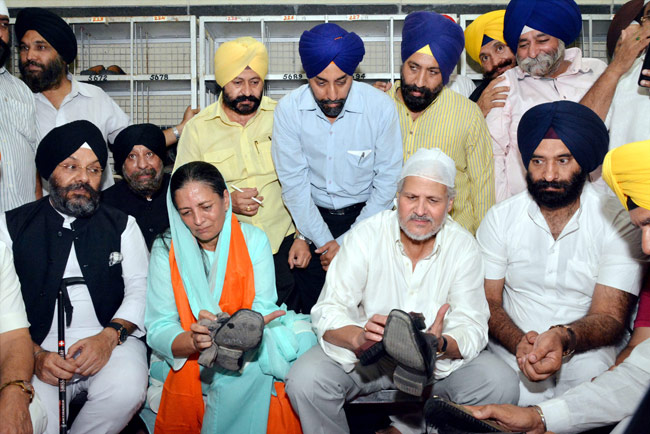
Delhi Lt Governor Najeeb Jung at the Bangla Sahib Gurudwara (Photo: PTI)
Taking Prime Minister Narendra Modi’s Swachh Bharat mission forward, Delhi Lt Governor Najeeb Jung on Thursday morning visited the Bangla Sahib Gurudwara and performed kar sewa.
The Lt Governor, who was accompanied by his wife Ameena, polished shoes of devotees as part of the kar sewa at the gurudwara in the heart of the capital.
Kar sewa, which translates as a form of selfless service, is a Sikh ritual.
“A clean India was the vision of Mahatma Gandhi and government has done a symbolic gesture by starting the drive today to make it come true. The cleanliness drive in Delhi is a five-year mission and will go on till 2019,” Jung said.
“I request the government, municipal bodies, hospitals, and the people to make combined efforts to keep Delhi clean. Let cleanliness become a habit,” the Lt governor said.
Describing polishing shoes as a “humbling experience”, Jung said he wanted to visit the gurudwara since a long time and this is the reason he chose it to launch the campaign.
Jung was also given a tour of the temple’s heritage museum where he interacted with the staff.
“My message to public is that India is a secular country and that I feel very happy coming to this place of worship,” he said.
source: http://www.indiatoday.intoday.in / IndiaToday.in / Home> India / New Delhi – October 02nd, 2014
With their help government agencies and NGOs have been able to establish their reach in a community overwhelmingly orthodox and conservatives
Jaipur:
Every day after namaz is over, Abdul Aziz, imam of Masjid Alam Shah in Tonk doesn’t forget to deliberately engage himself in talks with a different group of people. After some informal chat about family and work, he comes down to the business; He talks to them about importance of institutional deliveries and family planning.
Unbelievable as it may sound, a group of 26 clergymen has become voice of change in their community. Breaking stereotype image of Muslim clerics, the one holding rigid orthodox views particularly on health and family planning, they have been spearheading a campaign to save mothers and newborns.
With their help government agencies and NGOs have been able to establish their reach in a community overwhelmingly orthodox and conservatives.
High rate of illiteracy and extreme poverty had only complicated things further for government health workers and volunteers. Not surprisingly, Tonk was one of the worst performers in IMR and MMR in Rajasthan as people resisted to formal health care, family planning and immunisation for the fear of breaking religious laws.
“We have seen women beaten by their men even if they went to aanganwari centre where pregnant mothers and young children are provided nutritional food,” said Ejaz Hussain, who is also a cleric.
“We needed a credible voice to convince people to adopt standard health practices. Someone who could assure people that deliveries, immunisation or family planning was not against their religion, which only clerics could have done,” said Hemant Acharya, campaign coordinator for Save the Children in Rajasthan which came up with the idea of engaging religious leaders with the campaign to reduce IMR and MMR in Tonk.
Mohammed Iqbal, a Muazzin couldn’t agree more.
“Since I am a religious leader, people listen and act on what I say. There is a large family of eight brothers and about same number of sisters but none of them had received vaccines because they feared that it would make them ill. I was approached by a volunteer to convince the family for immunisation. The family agreed to get vaccines after I told them,” he said.
source: http://www.deccanchronicle.com / Deccan Chronicle / Home> Nation> Current Affairs / DC / Sanjay Bohra / October 04th, 2014