Category Archives: Leaders

Winners of 3rd National NGO Awards . 86 NGOs & 100 Changemakers honoured with 3rd AMP National Awards for Social Excellence 2023!

NEW DELHI :

Lifetime Achievement Award presented to Late Zaheeruddin Ali Khan, renowned Managing Editor, The Siasat Daily, for his immense contribution in the welfare of the people of the country, especially, States of A.P. & Telangana.

Winners of 3rd AMP National Awards for Social Excellence (NASE) 2023 were announced, on the evening of Independence Day, 15th August 2023, in an eagerly awaited function graced by honourable guests and a large gathering of participants from across India. 

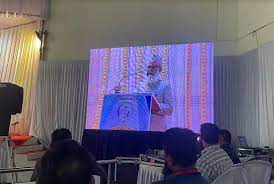
A memorable event to announce the awards and felicitate a few awardees present, was held at Hakeem Abdul Hameed Auditorium, Jamia Hamdard, Hamdard Nagar, New Delhi. 

86 National & State level NGOs were awarded with Best NGO Awards. 100 inspiring individuals were given Changemaker Awards. 

Following are the NGOs (in alphabetical order) who were given the Best NGO Award;

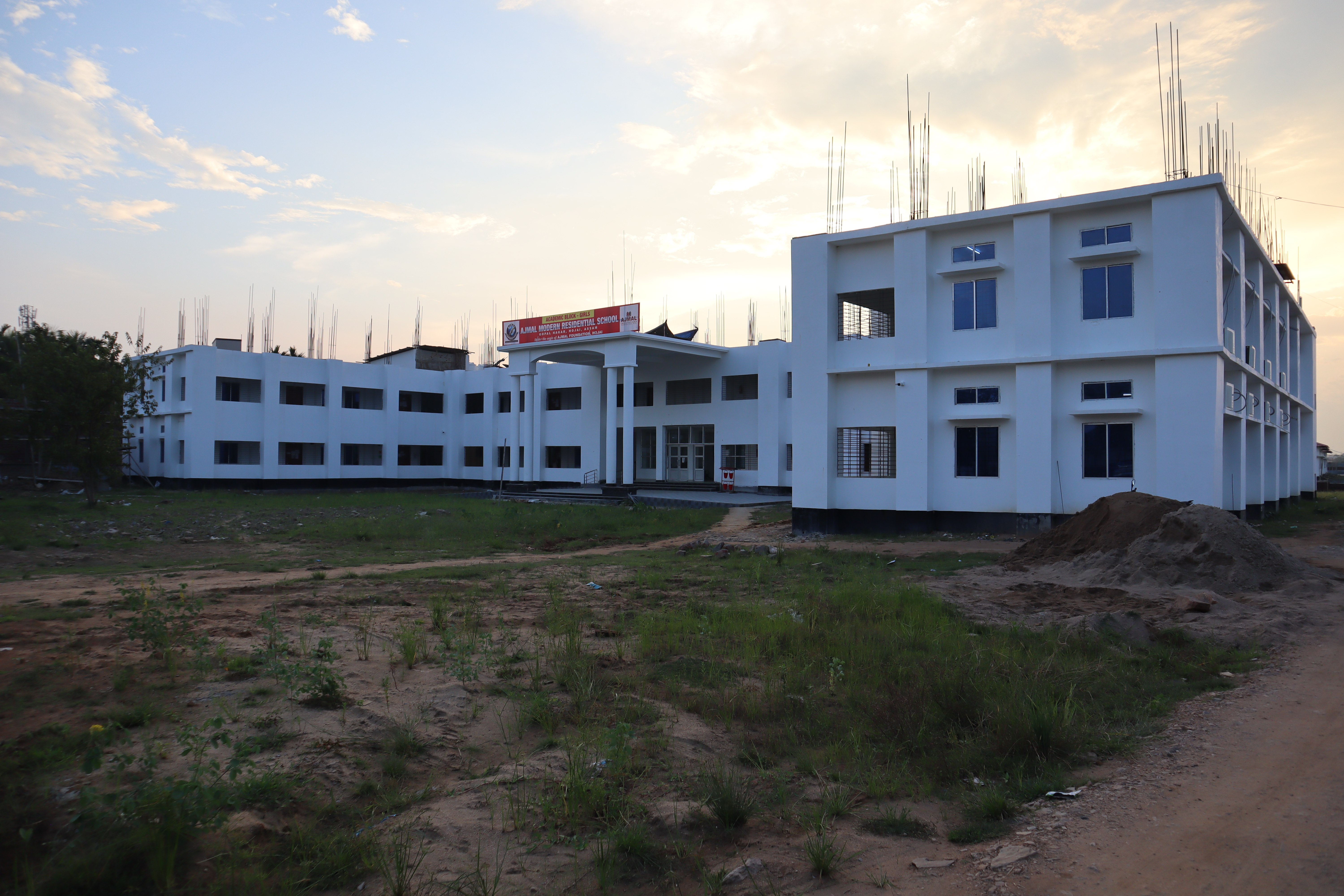
  1. Ajmal Foundation, Assam
  2. All India Educational Movement (AIEM), Delhi
  3. All India Payam E Insaniyat Forum, Uttar Pradesh
  4. Daya Rehabilitation Trust Thanal, Kerala
  5. Miles2Smile Foundation, Delhi
  6. Manappat Foundation, Kerala
  7. M S Education Academy, Telangana

Apart from NGOs, 100 individuals were honoured with the AMP NASE Change Maker Awards.

These are the individuals who went beyond their personal and social limitations and made a difference in the lives of the underprivileged. Some of the notable Change Makers who have been honoured are;

  1. Shams Ur Rehman Alavi
  2. Firdouse Qutb Wani
  3. Aqueel Khan
  4. Dr. Faruk G Patel
  5. Asad Ashraf
  6. Dr Sana Ali Khan
  7. Faiqa Saulat Khan
  8. Mohammad Anas

The Lifetime Achievement Award was presented to Late Zaheeruddin Ali Khan, renowned Managing Editor, The Siasat Daily, for his immense contribution in the welfare of the people of the country, especially, States of A.P. & Telangana. 

The Omar Khatani Special Award was given to Business & Employment Bureau (BEB), Jamia Hamdard.

For more details of award list and certificate
www.ampindia.org/AMP_National_NGO_Award_2023

Shri Tariq Anwar, Former Minister of State, Agriculture & Food Processing, Govt. of India, was the Chief Guest at the event. He said “It should be appreciated that AMP has been working in areas of Education and Empowerment of those who have been left behind in comparison to other sections of the Society. In conjunction with politicians, the NGOs can help to bring a positive and significant change in the Society.”

Guest of Honor, Prof. Akhtarul Wasey, Former President, Maulana Azad University, Jodhpur, congratulated AMP for organising the event at Jamia Hamdard which has been at the forefront of Social Development and Education. He said, “Within 15 years AMP has done significant work for the development of the Community and has managed to successfully changed the taali & gaali culture to that of serving the Society.”

Aamir Edresy, President, AMP, presented the Keynote address, wherein he mentioned that AMP believes in Collaboration and since its inception has been working with multiple organisations. He mentioned that through its NGO Connect project, AMP is connected with social organisations in each District of India, through which it implements its social welfare projects and also helps in their capacity building. He further said that these Awards are a small way of appreciating their efforts and helping to motivate them to do better.

Dr. Shahid Akhtar, Professor, Jamia Millia Islamia & Member, National Commission for Minority Educational Institutions (NCMEI), Govt. of India, said “AMP deserves the appreciation for rewarding & motivating various organisation & individuals for their work. We will work together with AMP for guiding Minority Institutions to register with NCMEI so that they get the benefits of Government’s education policies.”
 
Farooq Siddiqui, AMP NGO Connect Project Head, hosted the event very successfully and announced the awards for various categories at the National & State level. While addressing the gathering he said “We have successfully reached out to 6000+ NGOs in a short span of  3 years and associated with them on multiple AMP projects. These include Job Fairs & Job Drives, National Talent Search (NTS), Career Guidance Seminars (CGS), IndiaZakat.com and others.”

Prof. Mohammad Afshar Alam, Vice Chancellor, Jamia Hamdard welcomed the Guests and the participants.  Shaukat Mufti, Executive Secretary, Business & Employment Bureau (BEB), Jamia Hamdard, presented the vote of thanks.

The 9-member jury which selected the winners were led by A. R. Khan, Retd. IAS Officer & President A. R. Welfare Foundation and U. Nisar Ahmed, Retd. IPS Officer & Chairman National Centre for Research & Development. Mirza Mobin Beg, Sr. AMP Member was In-charge & Jury Co-ordinator for AMP NASE Awards 2023.

source: http://www.ampindia.org / Association of Muslim Professionals (AMP) /Home / August 15th, 2023

Renowned researcher, author Dr. Shamsul Islam, to deliver BV Kakkilaya Inspired Oration 2023

NEW DELHI:

Mangaluru:

Renowned researcher, author, and former Associate Professor of Political Science at the University of Delhi, Dr. Shamsul Islam, is scheduled to deliver the BV Kakkilaya Inspired Oration for 2023. The oration, titled “Joint Martyrdoms, Joint Heritage of 1857 War of Independence,” will take place on Saturday, September 9, 2023, at 10 a.m. at Ravindra Kalabhavana, University College, Mangaluru.

The annual BV Kakkilaya Inspired Orations serve as a tribute to the life and contributions of Sri BV Kakkilaya (1919-2012). Kakkilaya was a freedom fighter, a leader in the Karnataka unification movement, a prominent figure in the Communist Party of India and All India Trade Union Congress, a member of the first Rajya Sabha, and the Karnataka State Assembly.

He was also an award-winning writer and thinker. The oration aims to promote alternative thoughts and approaches to address the challenges faced by the underprivileged masses in India. The event is organized by Hosatu Monthly, Bangalore, MS Krishnan Trust, Bangalore, and Samadarshi Vedike, Mangalore, in collaboration with the Department of History, University College, Mangaluru.

During the event, Dr. Shamsul Islam’s book, “The Untold Amazing Stories of 1857,” will be released in its Kannada translation, titled “Bharatada Modala Swatantrya Sangrama 1857 – Helade Ulida Adbhuta Kathegalu.” The book is translated by Dr. B.R. Manjunath and published by Navakarnataka Publications. Dr. Jayaraj Amin, Vice Chancellor of Mangalore University, will have the honor of unveiling the translated work.

Additionally, the event will feature the publication of the names of 128 martyrs from Karnataka, who hailed from diverse backgrounds including various castes, religions, sects, and socio-economic strata. These martyrs gave their lives during the 1857-58 anti-British revolts. Dr. Shamsul Islam compiled this list from national archives, and the occasion will be marked with tributes to these brave individuals.

The public is warmly welcomed to attend this significant event.

source: http://www.varthabharati.in/ Vartha Bharati / Home> Karnataka / by Vartha Bharati / September 09th, 2023

Abdul Ahad to take charge as DCP of Bengaluru City Crime Branch

Moodbidri (Dakshina Kannada District), KARNATAKA:

 IPS Officers’ Transfer Order Modified

Bengaluru:

Following a major reshuffling in the police department by the Karnataka government on Tuesday morning, the government issued another order in the evening modifying/cancelling some transfer orders issued earlier in the day.

The latest order also modified the posting of Senior IPS officer Abdul Ahad who was serving as the Superintendent of Police Coastal Security Police, Udupi. In the earlier order he was transferred as the Deputy Commissioner of Police, Central Division, Bengaluru City. However, in the latest order, his posting has been as modified and he has been posted as Deputy Commissioner of Police, City Crime Branch, Bengaluru.

Abdul Ahad, who is from Moodbidri in Dakshina Kannada District has earlier served as DCP, Whitefield, SP of Anti Corruption Bureau Bangalore City, SP of Economic Offenses wing of CID and Commandant of Karnataka State Reserve Police.

Shekhar H Tekkannavar will now take charge as the Deputy Commissioner of Police Central Division, Bengaluru City.

Among the other changes, the order posting Karthik Reddy, SP of Ramanagara District as Deputy Commissioner of Police, Traffic South, Bengaluru has been cancelled.

Anita Bhimappa Haddannavar SP of Karnataka Lokayukta, Vijaypura has been transferred as the Deputy Commissioner of Police, Traffic West Division, Bengaluru city while Ashok KV, SP of Karnataka Lokayukta has also been transferred as SP of Tumkur district.

source: http://www.varthabharati.in/ Vartha Bharati / Home> Karnataka / by Vartha Bharati / September 05th, 2023

‘Muslim women fly planes, serve in police and armed forces, write books and create art’

Lucknow, UTTAR PRADESH:

Lucknow :

Muslim women are not a monolith, says Dr Farah Usmani, the founder and honorary editor of the “Rising Beyond The Ceiling” (RBTC), an initiative born out of frustration with the stereotypical narrative surrounding Muslim women in India. RBTC is preparing a directory of Muslim women who have excelled in different fields.

However, millions of Indian women, who identify themselves as Muslim, reach across spectra of ethnicities and languages, states and union territories, do not look the same or sound the same and contribute towards nation building in a variety of ways, says Dr Usmani adding that the compendium is under finalisation.

Member, UP Sunni Central Waqf Board, Sabiha Ahmad, who is busy preparing the list of prominent Muslim women in Uttar Pradesh, said, “The organisation is in the process of preparing a directory of such Muslim women who hold certain positions in social, corporate and professional workspace.”

She says the women spotlighted here from Uttar Pradesh do many things—they fly planes, serve in police and armed forces, they are skeet shooters and bike riders, write books and poetry, create art, play snooker and tennis, administer and govern, espouse social issues, serve as lawyers, scientists and doctors, are entrepreneurs and corporate professionals and are substantive contributors to the progress of the country.

Recently an online international meeting was organised in which the issue was discussed at length.

Veteran politician Mohsina Kidwai; vice chancellor, Era University, Lucknow, prof Farzana Mahdi; writer Sabeeha Anwar; artist Dr Farzana Shahabuddin and Samreen Ahmad were prominent among those who attended the virtual event.

Ahmad further says there is a myth surrounding Muslim women in India that they are highly conservative, prefer to stay home, not at par in education with women of other communities.

“Rising Beyond the Ceiling (RBTC), a non-profit organisation focused on supporting and promoting Indian Muslim women and their leadership and contributions in their respective fields, is working to bust this myth,” says Ahmad, who is also incharge, RBTC UP 100 .

RBTC UP 100 is a congregation of 100 women representing 22 million (2.2 crore) Muslim women from UP.

It is working under the leadership of Dr Farah Usmani, the founder and honorary editor of RBTC initiative who is also serving at United Nations Population Fund (UNFPA) headquarters in New York as director-1 level.

“The stories of these Indian Muslim women are for all women and girls to draw inspiration, role model them and thus become mentors in their own districts and neighbourhoods thereby become inspirations themselves for future generations,” Ahmad adds.

source: http://www.hindustantimes.com / Hindustan Times / Home / by HT Correspondent, Lucknow / September 22nd, 2021

The First Cigarette

Delhi / Calcutta, BRITISH INDIA:

The 1860s and 70s were a difficult time for the old and noble families of Delhi. The changes ushered in after the rising of 1857 had precipitated the decline of the city that had begun with the invasion of Nadir Shah over a century ago. The grandeur of the old Mughal capital was gone and with it disappeared the wealth and commerce. This was the era of Mirza Asadullah Khan Ghalib and his poetry of decrepitude and nostalgic longing. Old merchant families were particularly badly hit.

The Ellahies were just such an old family of Delhi merchants. By the 1870s it was being run by Hajee Karam Ellahie. The writing was however, on the wall and the family realized that opportunities in Delhi were dwindling. Karam’s much younger brother, Bukhsh, an ambitious young man therefore decided that he would not sit around waiting for the decline to be complete. Rather he would take on the challenges of the new era head on.

If Delhi was in decline, the new capital of the British, Calcutta, had been growing rapidly over the same period. By the second half of the nineteenth century it was a city bursting with opportunities, ideas and wealth. Young Bukhsh decided the best way to approach the new age was to move to Calcutta. In 1878 he joined an old Muslim firm in Calcutta as a young apprentice hoping to pick up enough skills to survive in the new order.

Gauhar Jaan in a Cigarette Advertisement

During his time in the city, Ellahie also keenly observed his fellow denizens closely. Amongst the new fashions that caught his eye was the habit of smoking cigarettes. The British army had picked up the habit during the Crimean War in the mid-1850s from their Turkish rivals. Unbeknownst to Ellahie precisely around the 1880s, when he was apprenticing in Calcutta, a new cigarette-rolling machine was making it faster and cheaper to produce cigarettes commercially.

A shrewd businessman, Bukhsh soon asked his older brother to lend him some capital to start a business importing tobacco to make cigarettes. In 1885, with his brother’s loan, Bukhsh set up Bukhsh Ellahie & Co. Apart from new production techniques he also adopted new advertising techniques to popularize the new trend in the city. Cashing in on the growing celebrity of the Hindustani classical singer, Gauhar Jaan, Bukhsh Ellahie launched a brand of local cigarettes called the ‘Gauhar be Baha’. he also distributed free cigarettes to the army as a precocious new promotional tool.

The brand and the business were an enormous success. Before the century ended, Bukhsh was one of the richest men in the city. So complete was Bukhsh Ellahie’s domination of the local market that when foreign firms such as Wills and ATC first came to India, they had to enter into partnerships with Ellahie and depend upon the latter’s distribution networks.

Bukhsh Ellahie & Co Offices

Until 1901 the firm of Bukhsh Ellahie therefore remained the sole agents for the major foreign tobacco companies. It was only in 1901 that E.J. Parrish, the manager of ATC’s Indian operations eliminated Ellahie’s sole agency and instead set up its own distribution depot at 95, Clive Street, Calcutta, with its own devoted staff. While the partnership flourished however, Ellahie innovated once more and advertised the partnership using yet another then still fairly new commodity, i.e. matchboxes.

Matchbox label issued by Bukhsh Ellahie & Co. advertising their partnership with British American Tobacco.

Bukhsh Ellahie & Co. were, as they themselves would later advertise, unquestionably the “Pioneer of the Tobacco Trade in India”. Yet, their mercantile portfolio were not limited to tobacco, or indeed matches. Ellahie was a general merchant and dealt in a wide variety of goods. He was also an official supplier for the Indian Army, thereby acquiring a large and lucrative captive market. Above all, they were one of the first local firms to recognize the importance of foreign trade and worked hard to develop international trading partnerships.

In time, Hajee Bukhsh Ellahie became members of both the Bengal and Punjab Chambers of Commerce and was honored by the British government, first with the title of Khan Bahadur and later, with the Companion of the Indian Empire (C.I.E.). He also became a well-known philanthropist and built or sustained several charitable institutions in his adopted city, Calcutta. On Chitpur Road he built a Musafirkhana or a Traveler’s Lodge. He also founded an orphanage and an association for the burial of indigent Muslims.

Khan Bahadur Haji Bukhsh Ellahie

Notwithstanding recent awareness of the unhealthfulness of smoking, Calcuttans continue to smoke in large numbers today. A recent survey found the city is the highest consumer of cigarettes in all of India. Few of these modern smokers however, have ever heard of Bukhsh Ellahie. His once legendary fame and wealth have, alas, disappeared from public memory like the smoke from his Gauhar cigarettes.

Posted in: Businesses PastCalcutta By GaslightGaslit Glamour

source: http://www.web.sas.upenn.edu / Calcutta by Gaslight / by Projit Bihari Mukharji / August 09th, 2018

Anwar Basha Unopposed Nominee for Karnataka Waqf Board Chairman’s Position

Chitradurga, KARNATAKA:

Bangalore:

Anwar Basha has emerged as the sole candidate for the Karnataka Waqf Board chairman’s position, which had been left vacant following Shafi Saadi’s resignation. The nomination papers, submitted by Anwar Basha, who hails from Chitradurga district, were the only ones received by election authorities.

The unexpected development has caught the attention of political circles and residents alike. Anwar Basha’s unopposed nomination suggests a level of consensus and support within the relevant political factions.

Shafi Saadi, the former chairman, had resigned from his post earlier this year. Since then, the position had remained vacant, leading to speculation about who would fill the void. Anwar Basha’s decision to step forward as the sole candidate has now resolved this uncertainty.

While the election authorities have yet to officially announce Anwar Basha’s selection, it is widely expected that he will assume the chairman’s role unopposed. The official announcement regarding his confirmation is scheduled to be made tomorrow, and it is anticipated that the transition will proceed smoothly.

Anwar Basha is known for his background in the Chitradurga district, where he has been actively involved in various community and political activities. His nomination and imminent appointment as chairman signal the potential for new leadership in Bangalore, and many are eager to see how he will address the challenges and opportunities facing the Waqf department.

source: http://www.thehindustangazette.com / The Hindustan Gazette / Home> News> National> Karnataka / by Nihal Mohammed / September 04th, 2023

Inside The Tablighi Jamaat: A Book Review

INDIA:

As Tablighis came under the scanner of the government post lockdown in India for allegedly ‘ spreading the coronavirus intentionally’, journalist and noted author, Ziya Us Salam pens down a topical book on the history and evolution of this Jamaat. The book is being published by Harper Collins India.

Cover Page of The Book : Inside The Tablighi Jamaat 

A book such as Inside the Tablighi Jamaat is an important intervention to understand the historical continuity of a contemporary phenomenon, more so in the context the controversy involving the movement and its headquarters popularly known as Markaz. Tablighi Jamaat has been in existence for almost one hundred years but it preferred a life of quietude till such time it was made the focus of sustained media attention in the month of April for its congregation in the context of the pandemic.

Many would have preferred to remain quiet on the issue but Ziya us Salam chose to dig out material from the history and place them and the movement in the contemporary context. Devoting twenty four chapters and 260 pages to unravel the layers of the existence of the movement must be viewed with as much seriousness as the book deserves. The scholarly community as well as an interested reader would find mist evaporating from the body and the movement that were initiated about a hundred years ago.

The clarion call of the movement has been to invite the Muslims to become better Muslims and follow the prescribed rituals of Islam. But in the course of doing so it moved in the direction of revivalism in personal life of a member of Jamaati and then spreading out to those who would come under its influence through personal contacts in the course of conducting Chilla whether for three days or forty days or a year. The very fact that the Jamaatis would invite their contacts to live a life of piety as modeled during the times of the Prophet Muhammad and his companions.

For the purpose of helping a new entrant to the charmed circle of the Jamaatis, a book consisting of several volumes known as Fazail-i-Amal was compiled, generally believed to have been done in good faith preaching lessons from the Islamic scholarship and traditions. Among the jamaatis the book evokes tremendous respect and acceptability. As a matter of matter of fact in their circle the book attracts much greater attention than any other book. It is believed that for a Jamaati there is no word beyond Fazail-i-Amal. But the author is not quite impressed as his scholarly scrutiny of the movement takes him to argue, “In other words, Fazail-i-Amal introduces a lot that is biddah (a practice not approved in Islam) based on hearsay. The stories and anecdotes might seem attractive to a layman, but they do not always pass the crucible with scholars of Islam.” (p.102)

An overwhelming emphasis on the good conduct and personal piety does not create conditions of bringing about social reforms within the community of believers. For instance it has opened the door of the Jamaat on women without laying emphasis on social reforms leading to an ideological and cultural climate of gender equality. The Tablighi Jamaat has been shying away from the question of women performing namaz in masjids. The author has highlighted instances where tablighi controlled masjids have been openly hostile to the idea of men and women performing namaz simultaneously. Precedents from the instructions by Hazrat Umar are invoked while a reference to Surah Tauba talking about men and women going for prayers in a masjid is ignored.

The author explains has argued that the tablighis rarely engage themselves in issues which social and political bearings. This benign neglect of contemporary issues such as Tripple Talaq or the issue of Babri Masjid judgement etc. is borne out of their understanding of the movement that it must not get involved in the worldly affairs. This reclusive approach has helps the movement to keep itself away from the gaze of public and the government of the day. However, the fact remains that values imbibed on social plane have bearings in personal life too as it become hard to maintain a distinction between the two. Seen in this perspective, life of an average tablighi is reflective of the larger values they inculcate in the course of their interactions within the organization.

However, such an approach has borne them fruits of a different kind. Their apolitical nature and tendencies to avoid getting involved in contentious issues have gained them access to far off land in the Western hemisphere. They have significant bases in countries such as the UK and USA in a significant way. They have managed to penetrate certain African nations such as South Africa and others without difficulty. However, South-east Asian nations such Indonesia and Malysia have proved to be fertile grounds for the expansion of the Tablighi work. But in the Central Asian countries a similar luck eluded the movement as many regimes suspected it for spreading too much religious mindedness and making masjids as centers of their activities.

While the author has subjected the tablighi movement to scrutiny in a number of ways especially as regards gender justice in spiritual spaces he emerges a trenchant critic of the movement as regards the leadership issues. He raises the issue of absence of democratic values within the oragnisation as no member of the organization has risen to the leadership position due to the stranglehold of the family since the time of Maulana Ilyas. There is a dedicated chapter, ‘All in the Family’ and has argued, “Right from the 1920s to 2020 not a single president has come from outside the family.” (p.138)

The most interesting aspect of the book is its journey into the past to explore historical dimensions of the Tablighi Jamaat and return to the contemporary to examine the continuity and digressions and adjustments. Attempts to locate its genesis take the readers to 1920s when the Shudhi movement under the aegis of the Arya smamaj, especially it’s leader Swami Shradhanand was launched. Culturally vulnerable groups were targeted. Much like the Ghar Wapsi campaigns in recent years.

The author has cleverly used his skills of navigating between the popular and academic language format, which makes the book immensely readable. While it is a book on Tablighi Jamaat, it quietly introduces myriad dimensions of the Islamic religious traditions to the readers.

 ( Views are personal) 

The Reviewer, Prof. Rizwan Qaiser teaches History at Jamia Millia Islamia. 

The Author , Ziya Us Salam writes for Frontline Magazine. 

source: http://www.outlookindia.com / Outlook / Home> Books / by Rizwan Qaiser / September 29th, 2020

The Tobacco Tycoon: Man Behind The Birth Of ITC

Delhi / Calcutta, BRITISH INDIA:

Ace entrepreneur Haji Bukhsh Ellahie launched India’s first brand of local cigarettes which became a huge success.

Making History: (Left) Promotion board; (Right Portrait of Haji Bukhsh Ellahie
Making History: (Left) Promotion board; (Right Portrait of Haji Bukhsh Ellahie Photo: Bukhsh Ellahie Archive

In 1906, Jellicoe and Page, representing British American Tobacco, were unsuccessful in finding an agent in Mumbai to sell their W.D & H.O Wills cigarette brands. In Calcutta, they had no choice other than to tie up with Indian entrepreneur Haji Bukhsh Ellahie. He had made a fortune with his indigenous cigarette brand named after Gauhar Jaan, an upcoming Hindustani music singer who would go on to become the first to be recorded for the gramophone.

Bukhsh Ellahie had moved to Calcutta from Delhi in 1878 in the hope of making his fortune in the then capital of India. His brother, Karam Ellahie, stayed back to mind the family business. Enrolling himself as an intern with a business house, Bukhsh Ellahie soon learnt the tricks of the trade and was all set to take off on his own.

In the Crimean War (1853-1856), French and English officers acquired the habit of cigarette smoking from their Turkish allies. This addiction soon spread all over Europe. There was a great demand from the armies of the Western world for cigarettes. Bukhsh Ellahie saw the potential and realised it would replace pipes and the Indian hookah. When he came across a new and fast model of a cigarette-rolling machine, an innovative business idea germinated.

In 1887, he registered a company under the style of Bukhsh Ellahie & Co., Calcutta. Borrowing capital from his brother to import tobacco, he launched India’s first cigarette branded ‘Gauhar de Baha’, named after the legendary Gauhar Jaan. Bukhsh Ellahie did not just have the vision for business but also an uncanny knack for marketing. What he created then are now standard principles in marketing and promotion. He named his product after a popular singer to cash in on her popularity.  He launched a campaign in which the visual showed her relaxing on a couch, listening to the gramophone almost in supine listlessness, holding a cigarette with smoke gently curling from it. The outrageous visual broke all traditions and advertising stereotypes. The campaign grabbed the attention of the audience. Bukhsh Ellahie then launched her face on matchboxes. These were printed in Austria. This was another first in India’s marketing scene.

To promote the product, he also sent free boxes of cigarettes to the Indian Army thereby building a demand which could be best termed as creating ‘brand addiction’. The shift to cigarettes was rapid, as Bukhsh Ellahie had envisioned, and he became one of the richest men in Calcutta by the 1900s. The trend of sending free cigarettes continued for two decades as letters sent to the Army prove. Joined by his son, Abdur Raheem, Bukhsh Ellahie grew the business and soon their portfolio included various types of goods and they took up imports, partnering with several international firms. When Jellicoe and Page came to India, they appointed Bukhsh Ellahie & Co as the first agent of Wills. This was, in a way, the birth of ITC, the multi-business conglomerate of today.

The father and son also contributed to the Army War Fund and towards building hospitals and relief work for natural disasters. Abdur Raheem held several positions including that of Commissioner of Calcutta Corporation from 1913-1923. They also built a traveller’s lodge, founded an orphanage and formed an association for the burial of indigent Muslims. Bukhsh Ellahie was bestowed the title of Khan Bahadur and later, the Companion of the Indian Empire (CIE) was awarded to Abdur Raheem.

The business is tracked till the 1930s and it is assumed that organised cigarette manufacture, including competition from new cigarette companies such as Vazir Sultan Tobacco Company and imports by others dented it. Abdur Raheem had no sons but his daughters were married off into eminent families in Delhi. The next generation took up legal practice. Bukhsh Ellahie’s great grandson was the managing director of Kalinga Airways and his sons went into trade and started their now flourishing tea and export business that spans continents.

(Views expressed are personal)

Rajiv Soni is a brand engineer and mentor

source: http://www.outlookindia.com / Outlook / Home> Profile / by Rajiv Soni / September 03rd, 2023

Lawyer for justice: Son of Muslim leader undertrial for 2 decades takes up the fight

KERALA:

Abdul Nasir Maudany and his son Salahudeen Ayyoobi

Salahudeen Ayyoobi was 10 months old when his father and Peoples Democratic Party chairman Abdul Nasir Maudany got arrested and sent to Coimbatore central jail in 1998. Unlike other kids, Salahudeen grew up visiting his father in jail. 

Salahudeen rarely spent time with his father during his childhood. His limited memory was those periodical visits to the jail, amidst tight security, and looking at his beloved father standing behind the bars at the visiting space and graciously looking at his skull cap and a magnificent beard. 

His father’s oratory skills, analytical and intelligent skills, empathy, and caring nature, Salahudeen learned through the admirers across Kerala, was a forbidden treasure for him to enjoy. Every day in his life, he lived the injustice unleashed by the Indian judiciary system and coped through the vacuum created by his father’s absence.

“Father’s absence left a void in my life which cannot be filled by anything. There are no ways to cover it up. I crave for his presence during Eid days and to guide me through my academics,” said Salahudeen, while sitting in the guest area of his two-storey house in Ernakulam district’s Kaloor.

However, at least two decades later, an example of poetic justice can be seen in the enrollment of Salahudeen at the Kerala High Court. He graduated from Bharat Mata College with a degree in Legal studies in January 2023 and has now enrolled today, March 19, 2023.

According to Salahudeen, the degree of injustice his father and family faced throughout his life and the prolonged legal fight in the Indian courts are the major driving force behind his decision to study law and his father inspired him to pursue law.

Salahudheen’s father Abdul Nasir Maudany, an assertive Muslim politician who founded Islamic Sevak Sangh and People’s Democratic Party, was arrested in connection with the Coimbatore bomb blast on 31 March 1998. After spending around 9 years in jail, he got acquitted of all charges in August 2007. 

However, in August 2010, he was arrested and taken to Parappana Agrahara central prison in Bangalore in connection with the 2008 Bangalore blast case. In July 2014, Maudany got bail on medical grounds by the Supreme Court on the condition that he will not leave Bangalore and the government is at liberty to take all steps, including putting him under surveillance, to ensure he does not get in touch with witnesses in the case.

Similarly, his wife Sufiya Madani was arrested from her residence in December 2009 in connection with the burning of a Tamil Nadu bus in Kerala’s Kalamassery in September 2005. She got bail in 2009 from rom the NIA court under the condition not to leave Ernakulam district without permission. The court later relaxed her bail in July 2014 after she approached the court to grant her permission to visit her husband in Bangalore who was battling with many health issues, including diabetes and urinary issues. 

Maudany lost his right leg in August 1992 following a bomb attack from an RSS cadre near Anwarssery in Kerala’s Kollam district. In April 2021, the Muslim leader moved the Supreme Court seeking permission to leave Bangalore for his hometown in Kerala, citing health issues. However, the then chief justice of the apex court denied him permission and called Maudany a “dangerous man.”

Salahudeen spent most of his childhood thinking that it’s normal for a grown-up person to end up in jail and similar to him most of the kids’ fathers are in jail.

Salahudeen Ayyoobi. Photo: Thoufeeq K

“I thought the only time they were allowed to meet is during festivals or another day of special occasions,” he said.

Although Abdul Nasir Maudany will not be able to attend his son’s enrolment due to safety reasons and bureaucratic red tape, he is so satisfied and happy with his son’s achievement.

An elixir of happiness amidst the dark days and nights of grave injustice,” his father took to Facebook to share Salahudeen’s achievement.

“I want to meet him in person and need to watch that excitement in his eyes,” Salahudeen said with proudness in his eyes.

Maudany is currently struggling with a lot of illness and was advised to take rest by his doctors. They also advised him not to talk over the phone for a long time. 

“I missed my parents’ presence almost all important stages of my life. The prolonging tale of injustice is the sole reason behind those missing,” Salahudeen said.

Salahudeen made up his mind to pursue law while he was studying in the ninth standard.

“It’s the need of the hour for the marginalised community including Dalits, Muslims, and Adivasis to study law, represent them in court, and fight for justice. They must be part of the judiciary and law-making institutions,” he added, stating the importance of representation in the legal sector.

According to him, a judge from a marginalised community or with lived experiences of injustice might be able to ensure righteous judgments. “They will be able to understand and empathise with the pain, injustice, and problems faced by the common man and its impacts on their daily life. Instead of merely seeing it as a profession,” he said.

However, due to his father’s prolonged imprisonment under draconian laws, Salahudeen missed the privilege of having a smooth school education. He spent the lion’s share of his academic life, almost 13 years, in boarding school as his family don’t want his study to get affected by the case. There were days in which Salahudeen cried the whole night in hostel beds due to the injustice faced by his family.  

“We have experience in the management of an educational institution expressing their concern over continuing my studies due to case-related issues. We respected their concern, discontinued the course, and enrolled in other institutes,” he said.

“Although we faced many hardships in life, there were many people who supported us, considered us as their family members, and showered us with love and care. Those love and affections healed us and empowered us to survive,” he said while showing a black-coloured Mont Blanc pen gifted by renowned writer Kamala Surayya’s son Nalappad in his childhood wishing him successful academics. “I am planning to carry this pen with me on my enrolment day,” he said.

Although many college-mates empathised Salahudeen’s cause and offered solidarity, a few of them were of the notion that his family is of terrorists. “As they started interacting with me closely, hanging out with me, understanding my ideals and principles, they started to rethink about the manipulated portrayal of my family and became so close in the next 5 years,” he said.

Salahudeen points out the media trial as the main reason behind the vilification of his family. “Those innocent people portrayed as criminals and terrorists by the media, have to carry the scar of accusation even after they got acquitted. There are many lives in the country destroyed by the media. Those lives include our family too. For the general public, their reference materials are those distorted facts and constructed lies peddled by the media. Common conscience was formulated from those biases,” he said.

During our one-hour-long conversation, he highlighted that the prolonged jailing of undertrial prisoners is a grave injustice not only for them but to their close ones including children, parents, spouses, and comrades.

“This crisis must be addressed with seriousness by civil society. Such prolonged incarcerations might halt the creative intervention by those individuals aimed at societal change and would affect the progress and welfare of the society as a whole,” he said.

The system ensures prolonged incarceration mainly by delaying the filing of the chargesheet and presenting fabricated evidence and witnesses in court. Salahudeen alleged many witnesses presented by the investigation agencies on his father’s case later confessed to the court that they were forced by the investigation agencies to give false testimonies and a few of them were not even interrogated but their testimonies were included. 

“Under the present circumstances, it’s easy for an investigating officer or an agency to persuade an individual or force him/her to give false witness testimony in court. There must be a responsible system to effectively monitor the investigation process and ensure transparency,” he said. 

Although many people were offering solidarity and empathising with political prisoners, most of them were unable to stay with the cause for long term. In most cases, family and closer ones of the prisoners were left to fight the battle alone, he said, questioning the silence of the Kerala society over his father’s arrest.

“Be it the public or responsible individuals, most of them were silent on the injustice faced by my father. My father has been battling with various issues including legal and health. He is fighting every day for his existence. But the concerned authorities and rights advocates were relatively silent,” he added.

Being the elder son of a man who propagated the politics of the unity of the oppressed in Kerala at least three decades ago, Salahudeen is well aware of the hope and aspirations many people have in him. “There are many unfinished social justice missions and movements kickstarted by my Vaapachi (father). I am planning my future in a way to be part of it and play my role in it,” he said.

source: http://www.maktoobmedia.com / Maktoob / Home> Features> India> South India / by Ashfaque EJ / March 19th, 2023

Indian American Muslim Woman Is Key NASA Scientist Behind $10 billion James Webb Telescope

Hazratganj (Lucknow), UTTAR PRADESH / U.S.A:

Dr. Hashima Hasan tells AMT about her dream of working for NASA and her extraordinary role in launching the largest, most expensive space telescope in history.

A young girl stands in awe with her family in their yard, as their heads tilt back to watch the Russian Sputnik satellite pass through the clear morning sky in Hazratganj, India, in 1957.

“I still remember watching it and saying, ‘Wow, I’d like to do that,’” said Dr. Hashima Hasan. “That was an inspirational moment.”

Over half a century later, Dr. Hashima is now one of NASA’s leading scientists and has helped develop the device that is currently enthralling the world, by relaying the first quality images of billions of years of the universe.

The James Webb Space Telescope is being used to focus on the first light in the assembly of galaxies in the early universe, the birth of stars and protoplanetary systems, as well as planets.

James Webb Space Telescope

“I am personally delighted to see the hard work of the thousands of talented individuals across the nation, Europe and Canada rewarded by the success of the mission as evidenced by the flawless launch, commissioning and the stunning images,” says Hasan. “My colleagues and I are eagerly awaiting the scientific discoveries which are yet to come.”

From the images captured, which were released at a live event by NASA on July 12, scientists will be able to make discoveries about the life cycle of stars, galaxies, and planets and use that information to understand the ever-expanding universe. Hasan was part of the committee that identified candidate objects to be imaged to demonstrate that the powerful new instruments were ready for science.

“Although I didn’t know which images we would use for the demonstration, I was overwhelmed by the depth and details of the images,” said Hasan.

Hubble Space Telescope

Hasan is an expert when it comes to optics, which are used to control the telescope instruments and keep the mission on track. She was actually hired by NASA in 1985 to write simulation optics for the Webb’s predecessor, the Hubble Space Telescope, and played a critical role in fixing the flawed mirror that resulted in it relaying blurry images.

“I was appointed as the Telescope Scientist at the Space Telescope Science Institute and my job was not only to analyze the error but to keep the telescope ‘in the best focus’ while we were trying to figure out how to fix it,” said Hasan.

A few years later in 1989, Hasan was put on the project, at the time called the next-generation space telescope. This project was renamed in 2002 to what is now known as the James Webb Space Telescope, after the former NASA chief who headed the space agency from 1961 to 1968. In her role as the Deputy Program Scientist for the $10 billion telescope, Hasan and her team are responsible for ensuring the instrument stays on mission.

The Webb telescope will play a huge role in advancing understanding of the origins of the universe. The telescope took 30 days to travel almost a million miles away from Earth and will remain to capture infrared light from stars that formed 15 billion years ago.

Carina Nebula

“Until now, we have not been able to see the first stars and the first galaxies forming, so this is the key knowledge that we are planning to get from this telescope,” said Hasan. “We can even look closer to Earth in our own galaxy and we can see stars being born within our own galaxy. We can also see our planets more clearly and get more information on them. We can also see how the elements which form life.”

The James Webb telescope had a number of false starts through its decades of development due to a myriad of issues. Its first planned launch in 2007 was delayed by over a decade but its 2018 launch was canceled due to technical difficulties. As the Covid-19 pandemic hit it was rescheduled two different times. Finally, on Dec. 25, 2021, the telescope successfully launched from Kourou in French Guiana.

As the Webb joins the Hubble telescope it is expected they will work together in capturing images of celestial objects. However, the Webb surpasses its predecessor in its technological abilities. The Hubble telescope does not have the capability to capture infrared light in the same way and the Webb will orbit the sun rather than the Earth as the Hubble does.

Hasan says scientists have already lined up a menu of observations with Webb for the coming year and will soon submit proposals for which celestial mystery they will begin to uncover next.

“What excites me the most is the discovery of the unexpected and unknown,” said Hasan.

source: http://www.medium.com / Medium.com / Home / source: American Muslim Today / by Maya Gayler / July 15th, 2022