Karnataka government has awarded the Rajyotsava award to 68 people including ISRO Chairman S Somanath and golfer Aditi Ashok.
S Somanath, Chairman, ISRO
Here’s the complete list:
The Karnataka government’s Rajyotsava Award will be given to 68 people this year, including ISRO Chairman S Somanath and golfer Aditi Ashok, for their excellent service in their fields.
The Rajyotsava Award is the state’s second-highest civilian award given by the Karnataka government annually. The 68th Karnataka Rajyotsava Awards will be conferred on the occasion of the state’s formation day on November 1. This year is the golden jubilee of renaming Mysore state as Karnataka.
Chief Minister Siddaramaiah is the head of the Award committee, who has selected the winners.
The government also decided to give 10 awards to organisations along with 68 Rajyotsava awards on the occasion of ‘Karnataka Sambhrama’.
Minister for Kannada and Culture Shivaraj Tangadagi said that it is ensured that every district has been given representation while selecting the awardees. The awardees also include 54 men, 13 women and one transgender. The list also has two centenarians.
The Rajyotsava Awardee will get cash rewards of Rs 5 lakh, a 25-gram gold medal and a plaque.
Here’s the complete list of Rajyotsava Awardees
Music/Dance
Nayana S. More (Bengaluru)
Neela M. Kodli (Dharwad)
Shabbir Ahmed (Bengaluru)
Balesh Bhajantri (Belagavi)
Sculptures/Art/Handicraft
T. Shivashankar (Davangere)
Kalappa Vishwakarma (Raichur)
Martha Jakimovich (Bengaluru)
P. Gowraiah (Mysuru)
Yakshagana
Agrodu Mohandas Pai (Udupi)
K. Leelavathi Baipadithaya (Dakshina Kannada)
Keshappa Shillikyathara (Koppal)
Dalawai Siddappa (Vijayanagara)
Folk Art
Husenabi Buden Sab Siddi (Uttara Kannada)
Shivangi Shanmari (Davangere)
Mahadev (Mysuru)
Narasappa (Bidar)
Shankuntala Devala Naik (Kalaburagi)
H.K. Karamanchappa (Ballari)
Shambu Baligara (Gadag)
Vibhuti Gundappa (Koppal)
Chowdamma (Chikkamagaluru)
Social Service
Huchchamma Chowdri (Koppal)
Charmadi Hasanabba (Dakshina Kannada)
Roopa Naik (Davangere)
Nijagunanda Mahaswami (Belagavi)
Nagaraju G. (Bengaluru)
Administration
G.V. Balaram (Tumakuru)
Film/Cinema
‘Dingri’ Nagaraj and B. Janardhana (both Bengaluru)
Theatre
A.G. Chidambara Rao Jambe (Shivamogga)
P. Gangadhara Swami (Mysuru)
H.B. Sarojamma (Dharwad)
Thaiyabkhan M. Inamdar (Bagalkot)
Vishwanath Vamshakrutha Mata (Bagalkot),
P. Thippeswamy (Chitradurga)
Medical
C. Ramachandra (Bengaluru)
Prashanta Shetty (Dakshina Kannada)
Literature
C. Naganna (Chamarajanagar)
Subbu Holeyar (Hassan)
Satish Kulkarni (Haveri)
Lakshmipathi Kolara (Kolar)
Parappa Gurupadappa Siddapura (Vijayapura)
K. Sharifa (Bengaluru)
Education
Ramanna Havele (Raichur)
K. Chandrashekar (Kolar)
K.T. Chandru (Mandya)
Sports
Divya T.S. (Kolar)
Aditi Ashok (Bengaluru)
Ashok Gagigeppa Yenagi (Dharwad)
Judiciary
V. Gopala Gowda
Agriculture/Environment
Somanatha Reddy Poorva (Kalaburagi)
Dhyavanagouda T. Patil (Dharwad)
Shivareddy Hanuma Reddy Vasana (Bagalkot)
Miscellaneous
A.M. Madari (Vijayapura)
Haji Abdulla, Parkala (Udupi)
‘Mimikri’ Dayananda (Mysuru)
Kabbinale Vasanth Bharadwaj (Mysuru)
Lieutenant General Codanda Poovaiah Cariappa (Kodagu)
Media
Dinesh Amin Mattu (Dakshina Kannada)
Javarappa (newspaper distributor from Mysuru)
Maya Sharma (Bengaluru), and Rafi Bhandari (Vijayapura)
Science/Technology
S. Somanath (Bengaluru)
Gopalan Jagadish (Chamarajangar)
NRI Kannadigas
Seetharam Iyengar
Deepak Shetty
Shashikiran Shetty
Freedom fighter
Puttaswamy Gowda (Ramangara)
Organisations receiving the Rajyotsav Award
Here’s the list of organisations which received the award.
Karnataka Sangha (Shivamogga)
B.N. Shivarama Pustaka Prakashana (Mysuru)
Mythic Society (Bengaluru)
Karnataka Sahitya Sangha (Yadgiri)
Moulana Azad Shikshana and Samaja Kalyana Sanskrithika Sangha (Davangere)
Muslim Education Institutions Federation (Dakshina Kannada)
Sneharanga Havyasi Kala Samsthe (Bagalkot)
Chinnara Bimba (Mumbai)
Maruthi Janaseva Sangha (Dakshina Kannada)
Vidyadana Samithi (Gadag)
source: http://www.business-standard.com / Business Standard / Home> India> News / by Sudeep Singh Rawat, New Delhi / November 01st, 2023
Even when nothing works out as you planned, don’t lose your trust in yourself, this is what Mr. Shamsudheen has to share with us.
Being the Managing Director of Nellara Groups, Address apparel, and more venture, Mr. Shamsudheen a successful Multipreneur from Kerala, has a story of dreams & hard work to share with us.
Since his teenage years, he started working to earn money to pursue his passion, establishing a business. He kept a keen interest in designing shirts, and from a native tailor, Mr. Shamsudheen acquired skills to stitch them, not knowing it would be a turning point in his life.
As he grew up, his dreams got life, and ‘Nellara food products, ’ a chain that provides premium quality food products, was born.
Still, his passion to design fashion was the same, and the concept of gifting people the best ones at an affordable range gave life to a clothing brand, ‘Address Men’s Apparel’.
With cunning strategies and proper implementation, Address caught global attention, and it is now a brand with 60+ outlets across 12 countries. Team Address focuses on designing desired outfits in premium quality that every man dreams of.
Address, a brand exclusively for men, was a dream of Mr. Shamsudheen, and with years of research and market study, the brand was revealed with an exceptional array of supreme comfort shirts. They have a well-experienced and truly professional team of fashion designers to gift everyone the best outfit.
Offering a wide range of shirts, including Supima, Cargo, and Solid shirts, Address Apparel promises superior quality garments because their team leader, Mr. Shamsudheen, believes in extending everything at the best level without compromising quality.
Mr. Shamsudheen Nellara, One who believes in making changes by marking goodness, carries the title of one of the best entrepreneurs in India with all commitment and future goals.
source: http://www.freepressjournal.in / The Free Press Journal / Home> Business / by FPJ Web Desk / July 04th, 2023
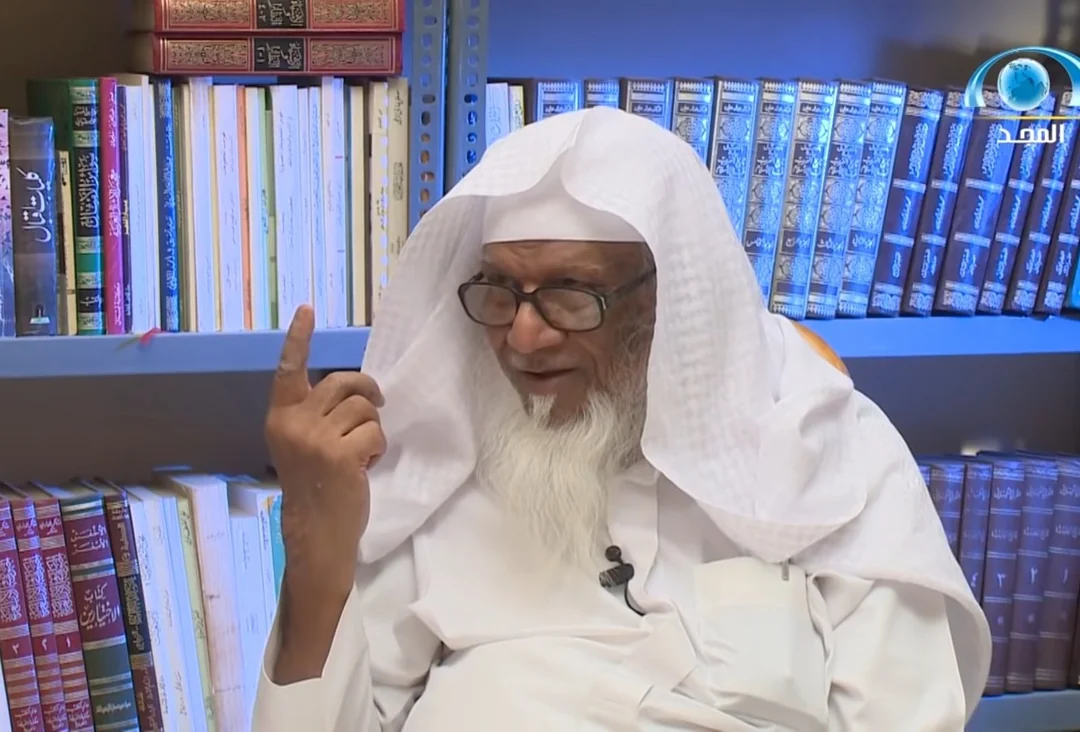
On Friday morning, author of the famous and most resourceful Madinah Arabic Book, Shaikh Dr. V Abdur Raheem, passed away in Madinah, Saudi Arabia at the age of 90.
A master of the Arabic language, a world renowned Islamic Scholar, multi-linguist, author, teacher and translator he dedicated his life to extraordinary contributions to Arabic literature by helping millions learn the Arabic language in his over 50 years of experience.
Born in 1933 in Vaniyambadi, Tamil Nadu, he obtained his B.A in English from the University of Madras and M.A in Arabic from the Aligarh Muslim University, India in 1962. He also held a M.Phil. and a Ph.D. in Arabic Philology from Al-Azhar University, Egypt.
A recipient of the National Award from the President of India in 1997 for his services in teaching, he was a self made man who learnt Arabic from the scarcest resources available to him in his little town. His three-volume series, Madinah Arabic Book, a one of a kind in its field, is the official curriculum of the Madinah University, Saudi Arabia, and is also used widely in schools and universities across the world to teach students the Arabic language.
Former Professor of Arabic Language for 30 years at the International Islamic University of Madinah, he has taught Arabic Language at Islamic Universities around the world including at Omdurman in Sudan, Germany, Washington D.C and British Guyana. An expert on European Languages and their etymology, phonetic change and semantic development he was a former Director of the ‘Institute of Teaching Arabic as a Foreign Language’, at the Islamic University of Madinah.
A close associate of the Islamic Foundation Trust (IFT), Chennai, majority of his books have been published by IFT.
Along with the Madinah Arabic Book series he has to his credit a host of other books too including ‘Let’s Begin to Read Arabic: A Beginners Guide to Learning the Arabic Language and the Qur’aan’, ‘AL-TIBYAAN – Easy way to Qur’aanic Reading’, ‘Arabic Course for Non-Native Speakers of Arabic: Originally Devised and Taught at Islaamic University, Madinah’, ‘From Esfahan To Madinah In Search of Truth: Salmaan al-Faarisi’s Hadiith’,‘Both These Lights Emanate from the Same Niche’ – Hadiith of Umm Salamah (raDiyAllaahu “anhaa).’ ‘Suurah al-Hujuraat – With Lexical and Grammatical Notes and DVDs’.
His passing is indeed a great loss to both the Muslim world and to Islamic literature.
source: http://www.thecognate.com / The Cognate / Home> News / by The Cognate News Desk / October 21st, 2023
The Indian National League (INL), a part of the ruling Left Democratic Front (LDF) coalition government in Kerala, has lauded its leader, Ahammad Devarkovil, who serves as the Minister of Ports in the state cabinet, for initiating a massive international seaport project in Vizhinjam near Thiruvananthapuram.
Marking a historic milestone in the development of Indian port, Kerala Chief Minister Pinarayi Vijayan waved the green flag on Sunday to welcome the first-ever ship at the Rs 7,700 crore deep-water international Vizhinjam port.
He was joined by Minister of State for External Affairs V Muraleedharan, Kerala’s port minister Ahammad Devarkovil, Congress Member of Parliament Shashi Tharoor, various state ministers, and APSEZ CEO Karan Adani.
They waved a green flag, signaling the tugboats to guide the massive Chinese ship, Zhen Hua 15, from the wharf to the docking yard. This under construction seaport is India’s first deep-water container transshipment port with the capacity to host large cargo ships and the world’s largest luxury cruise ships.
Owned by the Government of Kerala, it will be operated by the Adani Group for 40 years, handling 75 percent of India’s container trans-shipment needs and reducing reliance on ports in other neighboring countries upon full commission.
Emphasizing its international importance, the Chief Minister announced that it would be commissioned by May next year. However, the flagging-off ceremony sparked political controversy, with both the ruling LDF and the opposition UDF claiming credit for the project. Congress leaders argued that former Chief Minister Oommen Chandy was the driving force behind the project, but the LDF dismissed the claims.
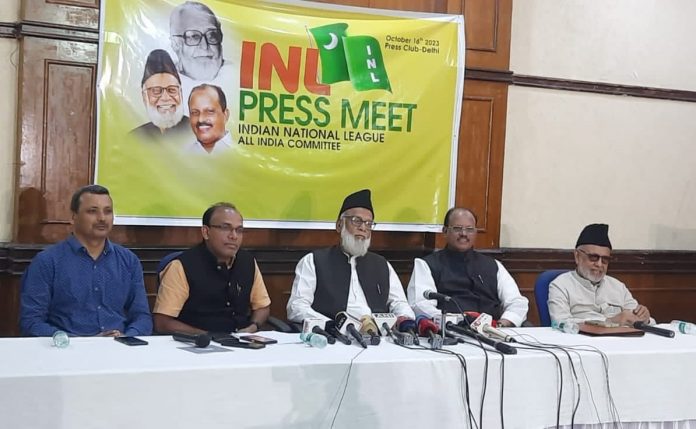
During a press conference at the Press Club of India here on October 16, leaders of the INL spoke on various issues, including the Palestine-Israel conflict, opposition coalition INDIA, the caste census, News Click raids, and the minority character of Aligarh Muslim University.
INL National President Prof. Mohammed Suleiman, Kerala State Chief Ahmed Devarkovil, its All India General Secretary Muzammil Hussain, National Committee Member CP Anwar Sadat, Delhi Head Rafi Ahmed Khan, and General Secretary Qamar Ali addressed the media.
Addressing the press conference, Prof. Suleiman said that India’s support for Israel was tarnishing the country’s international image. He demanded a national-level caste census to ensure the welfare of minority communities and protect their rights. Expressing concerns over the media raids, Prof. Suleiman said that the raids against NewsClick and other journalists were a continuation of the Union government’s attempts to intimidate the media.
The INL, working in 11 states since its establishment in 1994, issued a press release stating its commitment to working nationwide against the Hindutva forces led by Narendra Modi. The statement said, “the party aims to establish a secular and democratic coalition called “INDIA” to eliminate communal and fascist influences from the national political landscape. The INL started its campaign in Kerala as well as other states to make the voters ready to strengthen the anti BJP platform.”
Praising Ahammad Devarkovil, the INL emphasized that in his role as the Minister of Ports, he has showcased his acumen and talent, as evident from Sunday’s ceremony when a large ship from China was anchored at Vizhinham.
Calling on the international community for opening the blockade of Gaza and ensure supply of medicines, food, water and electricity to the suffering people of Gaza, the INL said that the party supported the persecuted Palestinians who were fighting against the illegal occupation of their land by the Zionist regime of Israel. To ensure durable peace an independent, the INL demanded a sovereign Palestine state must be established.
Strongly objecting to what it described as the BJP government’s nefarious designs to abolish the autonomy and minority status of Aligarh Muslim University, the party has called for the reinstatement of the AMU Amendment Act of 1981. Moreover, it demands the prompt commencement of the process to appoint a permanent Vice-Chancellor and the immediate scheduling of elections for the AMU Student Union.
The INL has also announced that Dr. Baseer Ahmed Khan, former Pro Vice-Chancellor of Indira Gandhi Open University and former Chairman of the AMU Students’ Union, has joined the Indian National League.
source: http://www.indiatomorrow.net / India Tomorrow / Home> Development / by Anwarulhaq Baig / October 17th, 2023
Purdadtoor Town (Kadapa District), ANDHRA PRADESH:
Dr Khadar Vali, the Millet man of India
Coarse grains or millets are ancient foods which contain key nutrients like vitamins, zinc, beta-carotene, and magnesium. These foods keep blood sugar under control and reduce obesity. If one eats healthy food one can simply avoid disease and medicines.
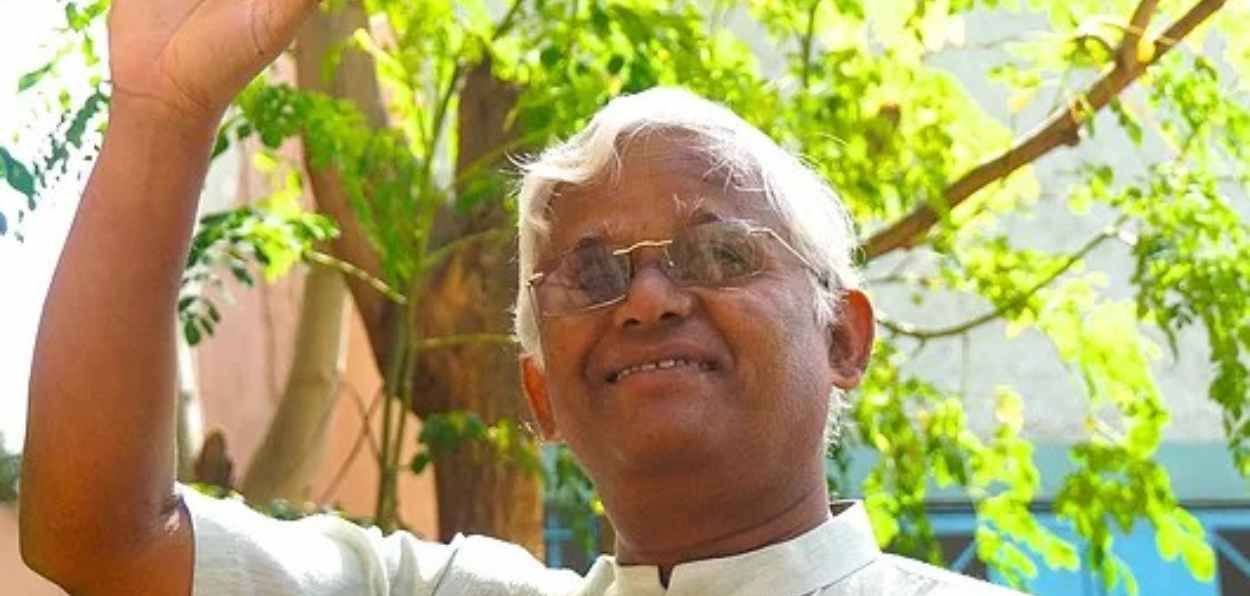
This is the message from India’s leading agronomist Dr. Khadar Vali, who is also called the Millet man of India.
Dr. Vali is an independent scientist and food expert. He has brought back five species of millet that had disappeared from the world. Today, at 66 years of age, Vali is one of the leading proponents of millet cultivation in the world. He has made world realize the importance of grains.
Millets are available not only in India but everywhere in the world. These are known by different names in each country. To date, people around the world have eaten 200 different types of whole grains.
It’s important to note that the United Nations Food and Agriculture Organization (FAO) declared 2023 as the International Year of Millets at the insistence of India.
Khadar Vali says that the cultivation of millets can solve problems of soil erosion and irrigation also. The food we eat creates an imbalance in blood glucose levels. It makes people sick. But all this can be avoided if we use coarse grains. If you eat millet, you never need medicine.
He says it’s a misconception that coarse grains are food for animals and birds. He says these are super foods that can prevent disease as these contain fiber that cleanses the body. These grains protect the human race and other species. Millets are food for the whole planet.
Fox millet or Bajra
Dr Khadar Vali hails from Purdadtoor town in the Kadapa district of Andhra Pradesh. He has been working for 20 years to revive Sridhanialu, an Indian concept about food habits that are in sync with the nature and the human body.
Earlier, he worked in a good position in the USA. Dr Vali is a post-graduate from the Regional Institute of Education, Mysore, and did his PhD on Steroids from the Indian Institute of Sciences, Bengaluru.
Vali did his postdoctoral research on a fellowship in Environmental Science from the United States. His research focused on the inactivation of deadly chemicals such as Agent Orange and dioxins. His research came at a time when food was becoming increasingly commercialized.
Around 1986-87, Dr. Khadar Vali raised the issue of food-related consequences in society when he came across a case of a girl who started menstruating at the age of 6. He decided to return to his country.
He returned to India in 1997 and worked hard to revive five different varieties of millets in Mysore that were rapidly disappearing. More than two decades later, India’s ‘Milletman’ Dr. Khadar Vali was awarded the Padma Shri on the occasion of the 74th Republic Day celebrations.
Dr. Khadar Vali says that millet has long been part of the mainstream diet but over the past 75 years, corporations marketing rice and wheat have Institutions subjected them to “systematic destruction”.
He has told the world about the benefits of coarse grains along with the negative effects of other grains from his long research on millet. Some points of his research are as follows. His research on food grains has led him to categorized them as negative, neutral, and positive.
Negative: These Grains cause diseases and include paddy rice and wheat. The fiber content of these grains is below 2 percent.
Neutral: Grains don’t cause new diseases, however, can’t help to cure health disorders and diseases. These are jawar, bajra, finger millet, proso millet, etc which carry fiber content from 3 to 6 percent.
Positive: Grains, which help to cure health diseases and disorders. These are Foxtail millets, Barnyard millets, Browntop millets, Little millets, and Kodo millets; which have fiber content from 8 to 12 percent. He named these millets Siri Dhanyaalu. Siri means wealth, which is indirectly health. .
Based on Dr. Khadar Vali’s research and findings, below are the diseases and disorders cured by the positive millets (Siri Dhanyaalu)
Prime Minister Narendra Modi has given the name Shree Anna to coarse grains.
The year 2023 was declared by the United Nations as the International Year of Coarse Grains, after which the Grammy Award-winning Indian-American singer Fallo prepared a song, saluting the efforts of Prime Minister Modi.
In one of his tweets, Fallow mentioned the Prime Minister’s support in producing the song. This song has been prepared with the aim of promoting coarse grains and helping farmers to cultivate them and encouraging efforts to eradicate hunger from the world.
source: http://www.awazthevoice.in / Awaz, The Voice / Home> Story / by Mansooruddin Faridi / October 07th, 2023
Three years older than Hakim Ajmal Khan, one was reminded of him when Ajmal Khan’s great-granddaughter came for admission to Hamdard University last week, accompanied by her father.
While Ajmal Khan’s name lives on beyond his ancestral haveli, Sharif Manzil in Ballimaran, Hakim Nabina had no fixed abode and believed to have been born in the Walled City too, got most of his fame in South Delhi where he was brought by some dealers in Unani medicine.
Born in the same year as Rabindranath Tagore, he was 105 when Dr. S. A. Ali of Hamdard met him in 1965 to seek medication for a digestive problem. The hakim, who had probably been born blind or had lost his vision in childhood, felt the patient’s pulse and diagnosed that his heart and liver were in good trim but not his digestive system. “Did you by any chance eat arbi (yams)?” he enquired. Dr Ali confessed that he had in fact had a piece of the vegetable though he was not fond of it. The hakim told him to have light food in future and prescribed some medicine which cured his ailment.’
Syed Ausaf Ali, himself an octogenarian now, says Nabina lived at Hazrat Pattey Shah’s dargah, behind Humayun’s Tomb. What he prescribed was dispensed by dealers in Unani drugs. When someone complained that the charges were very high, he advised them not to go to the dispensers but take medicine from him directly.
Pattey Shah or the saint amid tree leaves was actually named Shamsuddin Ataullah and died in AD 1300 during the reign of Alauddin Khilji. He got the nickname because whenever Hazrat Nizamuddin Auliya visited his khanqah or hospice, he would hide behind bushes and tree leaves, saying he was not worthy of coming face-to-face with the Auliya. This is what has been affirmed in Sadia Dehlvi’s book on the Dargahs of Delhi. It is said that the Shah belonged to the Chishti silsila or order of saints. “During the day he would light a fire and cover himself with its ashes, while at night he slept in a grave-like hollow (something emulated by the eccentric Spanish painter Salvador Dali, who spent his nights in a coffin). When he died Hazrat Nizamuddin led the funeral prayers as per the Shah’s last wish. Hakim Nabina seems to have developed a spiritual rapport with Pattey Shah and lived most of his long life at the latter’s shrine. When he died is not known but it was probably during Indira Gandhi’s first prime ministership, which would mean that he was nearly 110 years old at that time.
The hakim is not to be confused with Hafiz Nabina Doliwale, the blind mendicant who lived under a tree near the southern gate of the Jama Masjid. Nobody knew his real name also, except that he was one who could recite the Quran by heart (Hafiz), was blind (Nabina), wore no clothes and loved to travel free in a doli or palanquin. He and Hakim Nabina were both born in the same year (1860), when Bahadur Shah Zafar was passing his last days in Rangoon. But Hafiz Nabina died at the age of 87 much before the hakim sahib. Everybody in the city knew him and he also finds mention in Ahmed Ali’s “Twilight in Delhi” as he often visited the hero of the book, Mir Nihal. He was regarded as a majzoob (a man possessed), lost in himself and supposed to be in contact with the jinns, without much care for hygiene.
However Hakim Nabina, despite his mystical leanings, never gave the impression that he was a majzoob. His direct communion was with Pattey Shah and he passed his life in the service of those who came to him to be healed. That he could tell a patient what his illness was merely by touching him and pointing out, “Thou ailest here and here,” was a sign of his deep knowledge of human nature and anatomy and the Unani system of medication. Like Hafiz Nabina, he was a recluse but of a different sort who did not discard the ways of the world in matters of dress, behaviour and etiquette. Old-timers remember him as a worthy contemporary of Hakim Ajmal Khan, who had acquired the halo of Massiha (messiah) of the ailing populace!
source: http://www.thehindu.com / The Hindu / Home> Features> MetroPlus> /Down Memory Lane / June 22nd, 2014
We, The Indian Muslims are proud to be citizens of this great country. We have been an architect of this land all through centuries since the days of dynastic rule. Whether it was construction of world class network of transport facilities like Grand Trunk Road linking major cities, founding new cities of highest standards for that age, huge monumental structures to attract the world, development of living standards and maintain cordial relationships between groups belonging to various religions, languages, castes and cultures, we pioneered justice and maintained the system.
With the passage of years, decades and turn of events, the foreign forces got attracted to it and slowly took over the rein of rule.
We were first to challenge and fight for country’s independence valiantly. Even our clergymen took to streets and fought, thousands laid down their lives. Colonel Balwan Singh Nagial, a third-generation Indian Army officer who retired in 2019 wrote in Times of India (April 23, 2022), thus: “Muslim leadership contributed enormously to divergent phases of the Indian struggle for independence. They (Muslims) played a larger-than-life role and made significant sacrifices in this struggle for independence.
From the last Mughal ruler Bahadur Shah Zafar to nawabs, princes, landlords of all sizes, clergy, ulema and the ordinary people, they all stood for the cause and took on enormous challenges and made supreme sacrifices.
When the INC was formed in 1885, the Muslims responded enthusiastically and supported all its efforts throughout the freedom struggle until India became free. The most enthusiastic support for the INC was from the Muslims of the conservative Ulama of Deoband. Earlier, the Ulama had participated in the 1857 uprising with heart and soul.
They made great sacrifices, and hundreds of them were sent to Andaman-Nicobar and many to Malta, an island to the south of Italy.
Muslim leaders who contributed to India’s struggle for independence were:
Khan Abdul Ghaffar Khan, Maulana Abul Kalam Azad, Maulana Muhammad Ali, Maulana Shaukat Ali, Allama Iqbal, Muhammad Barkathulla, Bi Amma (mother of Ali brothers), Badarudeen Tyabji, Hakim Ajmal Khan, Mohammad Ali Jinnah, Dr M.A. Ansari, Dr Siafudeen Kichlu, Dr Basheer Ahmad, Syed Ameer Ali, Dr Syed Muhammad, Hasrat Mohani, Nawab Abdul Latheef, Altaf Hussain Hali, Syed Ahmad Sirhindi, Syed Ahmad Bareilly, Maulana Shibli Numani, Munshi Karamat Ali, Munshi Zakaullah.
Hindus and Muslims together fought the foreign forces shoulder to shoulder. A report by the ‘Milli Chronicle’ says that names of 95,300 freedom fighters are etched on the India Gate in Delhi, and remarkably, 61,945 of these names belong to Muslims, signifying that 65% of these brave individuals were Muslims. The significance of this statistic is eloquently captured by the renowned writer Mr. Kushwant Singh, who boldly declared that the story of Indian freedom is etched in the blood of Muslims, emphasizing their large contribution to the freedom struggle, considering their dis-proportionately smaller population percentage.
The annals of history are adorned with the stories of Muslim freedom fighters who put their lives on the line to liberate India from the shackles of British oppression. These individuals, driven by an unwavering determination to secure their homeland’s independence, demonstrated exceptional courage and resilience.
All through ages we find tall personalities like Sultan Haidar Ali, father of Tipu Sultan, (he pioneered the fight against British colonial forces); Tipu Sultan, son of Haider Ali; (he pioneered the use of iron-cased rockets); Ashfaqullah Khan,(noted for his daring attacks on British government trains); Maulana Abdul Kalam Azad, the youngest President of the Indian National Congress,(who rallied Hindus and Muslims alike against British oppression); Maulana Hasrat Mohani, Khan Abdul Ghaffar Khan, (a pivotal figure in the Khilafat movement); was jailed for 13 years by the British), Sirajud Daula, (the last Nawab of Bengal), Badruddin Tyabji (of Indian National Congress); his wife, Suraiya Tayabji, who designed the present Indian flag., Zain-ul-Abideen, an officer of the Indian National Army (INA), coined the iconic patriotic slogan “Jai Hind.”
While recounting the names of every Muslim freedom fighter may be an impossible feat, their contributions and sacrifices in the fight against British colonialism are immeasurable and undeniable. The fact that many chose to remain in India underscores their deep-rooted connection to the land. Despite attempts to distort history, India will forever be the cherished home of its Muslim citizens. We gave the independent India Maulana Abul Kalam Azad, the first Education Minister, Dr. Rafi Ahmed Qidwai, Dr.Zakir Hussain (an Educationist and Vice President), and numerous figures as servants to the country in the form of politicians, officers, industrialists, entrepreneurs, researchers, technocrats etc. in every field.
Our very recent contribution to the nation’s public service has been the world famous Scientist/Technocrat and President Dr.A.P.J. Kalam. He set the highest, un-believable standard of honesty, transparency and clean image in public life. A glimpse into the life he spent in the Rashtrapati Bhavan as President gives a shocking information. The same is as under: Mr. P M Nair, (retired IAS officer, then Secretary to Dr. Abdul Kalam, the President writes in his book “Kalam Effect” that Dr. Kalam used to receive costly gifts whenever he went abroad (as it is part of custom & protocol) used to ask the gifts to be photographed and then catalogued and handed over to the archives. Afterwards, he never even looked at them. He did not take even a pencil from the gifts received when he left Rashtrapathi Bhavan. It was a regular practice for every President to host an Iftar party, a routine. Upon being reminded about it Dr. Kalam asked Mr. Nair why he should host a party to people who are already well fed. Instead he estimated and donated Rs.22 lac being the cost to a few selected orphanages in the form of food, dresses and blankets besides a cheque for Rs.1.lakh from his personal funds. Though himself a devout Muslim, he never organized Iftar parties in President’s house at Public expense. Once Dr. Kalam invited 50 of his relatives to come to Delhi and they all stayed in Rashtrapathi Bhavan. He organized a bus for them to go around the city which was paid for by him.
No official car was used. Their lodging and food bill which came to Rs.2 laks was paid by him as per his instructions. Dr. Kalam’s elder brother stayed with him in his room for the entire one week as Dr Kalam wanted his brother to stay with him. When they left, Dr. Kalam wanted to pay rent for that room also. Imagine the President of a country paying rent for the room in which he is staying. This was any way not agreed to by the staff who thought the honesty was getting too much to handle. When he was to leave Rashtrapathi Bhavan at the end of his tenure, every staff member went and met him and paid their respects. Mr. Nair went to him alone as his wife couldn’t as she was confined to bed due to fracture. Upon noticing her absence and knowing the reason Dr. Kalam visited his house and chatted with her for some time. The following property was left behind by Dr.A.P.J.Abdul Kalam: 16 doctorates, 1 website, 1 twitter account, 1 email id, 2500 books, 1 Padmashri, 1 Padmabhushan, 1 Bharat Ratna, 1 flat (which he has donated), 6 pants & 4 shirts (DRDO uniforms), 3 suits (1 western, 2 Indian). He didn’t have any Car, jewelry, stocks, TV, AC, land or any bank balance. He had even donated the last 8 years’ pension towards the development of his village. He was a real patriot and true Indian Muslim. We are proud of him.
Our character building efforts continued even through the present 21st century in the country with unique results as records vouch. For example, the city of KAYALAPATTANAM (in Tamil Nadu) with 100% Muslim population goes. There is no Police Station, no cinema and no crime in the city because there had been no crime there for decades.
The present day situation in the country may appear to be disheartening and disappointing for some. The irresponsible attitude towards Muslims by some extremist groups in the country belonging to a certain ideology should be viewed as a momentary period. Their efforts to demoralize, degrade, deny civil rights are synonymous with their declared intentions. A great majority of country-men still believe and practice true Hinduism as had been for centuries in the past. True Hindus do not endorse hatred, support arson and distrust.
A long history of peaceful co-existence of Muslims and Hindus for centuries with mutual respect, rejoicing specially the occasion of festivals and long socio-economic ties in every nook and corner of the country is its evidence.
Our country has been an example of ‘Unity in diversity’ for the world for a long time. Nobody from either community can imagine a survival without another. The bond has been and will surely be strong as Steel. The ever increasing social evils like Corruption, nepotism, frauds, woman-bashing and vandalism like termites in the country have made the life of common man miserable.
Decline in the values like increased greediness, and wide spread of dishonesty, revenge, vindictiveness, and non-adherence to law need to be challenged and controlled. The ‘PLEDGE’ we used to read in our text books once in first page is long missing both from the book and in practice.
We the Indian Muslims, whether a common man, clergy, intellectual, and technocrat, worker or even those with any political group should realize that notwithstanding the company or area, we have a responsibility towards the country and duty-bound to work for our own community. We need to understand todays challenging scenario and strengthen its unity. We are the inheritors of a great legacy, and not followers of the ilk of this day. We Muslims should remember that we are ordained by the Almighty Allah to be united, behold his Commands; make efforts to spread virtuous deed and work eradicate evils. The entire country is looking forward for the honest.
As the phrase rightly goes, ‘Service to humanity is service to God’. Our population in the country according to 2011 census stands at about 200 million which constitutes 15%. We need to contain our extravagant life-style especially in matters of functions and festivals.
We should stop depending on politicians, their promises and focus on a self, collective effort. We need to move forward together in the fields of education, employment opportunities generating plans through mutual cooperation. For this purpose and as in the days of our Prophet, we should make our area Masjid a center for gathering, deliberation, planning, guidance and service as per law.Experts and experienced in relevant fields can be roped in for the purpose and the available resources can be put to work.
سبق پڑھ پھر صداقت کا، شجاعت کا، عدالت کا۔۔ لیا جائیگا تجھ سے کام، دنیا کی امامت کا۔۔
source: http://www.muslimmirror.com / Muslim Mirror / Home> Indian Muslim / by Syed Ilyas Basha / October 03rd, 2023
India’s first student-focused non-academic business incubator, Edventure park has incubated 157 student start-ups, out of which 30 have already been launched in the market and more than 10 have raised funding from institutional investors.
Founder and CEO Meraj Faheem told The Siasat Daily that the incubator has an army of campus leads who identify talented entrepreneurs with innovative ideas and provide them with the environment, support, and encouragement that they need.
“We have a four-month-long pre-incubation program where we work with idea-stage start-ups,” he added.
The students come up with ideas, the incubator assesses the ideas and after an application process, there’s a three-round interview process. This is followed by the selection of upto 25 start-up ideas that then go through a four-month-long pre-incubation program.
“On the basis of their progress, Edventure park selects 10 out of the 25 start-up ideas who are then taken to the incubation program, and then the acceleration program,” Meraj Faheem remarked.
source: http://www.siasat.com / The Siasat Daily / Home> News> Hyderabad / by Usama Hazari / June22nd, 2022
Fouzia Tarannum started her preparation for UPSC in December 2010. She quit her job as a Business Analyst with Tata Consultancy Services Ltd. In CSE 2011, she cleared with AIR of 307, thereby joining the IRS (IT). The attempt in 2012 didn’t see any improvement in her rank/service.
Her preparation journey: Once posted she started feeling the difference in service – IAS and IRS. She felt that she should try one last time for her dream service and give one last attempt. A few weeks before 2014 prelims she jumped into preparation mode.
What made her successful this time? She reread the standard books, along with the sources available online. She feels that a big part of the improvement in rank to AIR 31 this year was due to her growth as a person, becoming more mature, having seen more of this world and a creeping sense of practicality and realism in approach, compared to an over-idealistic one earlier.
Her advice: She advises that UPSC is actually looking for more rounded personalities with problem solving approach and an analytical mind. The UPSC journey should be looked at in this light, and not merely reading of books.
How difficult it was to prepare with her job? She felt a deep sense of duty and responsibility towards her work that she doesn’t compromise on her present work while giving this attempt. She had to be more than justifying the salary that she was taking home.
Though it was tiring at times, but she made sure that at office, she would concentrate on work, and at home on preparation efforts.
How did she balance both? The balance came from management of time. There will never be enough time; rather we have to make time for everything. She took no leave before prelims, took 30 days leave before mains and 5 days leave for interview.
How did she plan her studies? She studied for atleast 2 hours a day, on working days – depending on her work day either early morning or late night – August to December 2014. She also managed to take a few Fridays off after the prelims results, so as to get 3 days of continuous studies.
She finished weekly newspapers that she piled up and studied for about 4 hours a day, on weekends and holidays.
How did she manage her different subjects? She focused on revising her strong areas (economy, geography, etc.) and re-prepared her weak areas (history, culture, sociology, etc.) along with preparing for the newly introduced topics.
She focused on current events and ensured that she remained updated with GS.
Optional Subjects: she chose Sociology as optional because it takes lesser time to prepare in comparison and enjoyed reading this subject, though she had never studied this subject academically.
Her tips for Ethics- GS Paper 4: She just read a few solved papers and looked up definitions on all the terms used in the syllabus and made short notes. She suggests that one must give true answers to most situational questions/case studies.
Did she practice writing answers? She says she couldn’t practise writing due to lack of time and also feels that if she had practised, she could have scored better.
Tips to write answers: She gave many examples in her answers, and tried to keep them interesting to whoever was to read them.
Time Management: There is a dire need for short, productive periods of reading through the day. For instance, she read the news feeds after returning from lunch at office, watched news/saved videos while travelling to and from office, etc. Such reading of 15 minutes in short bursts 4-5 times a day really adds up and contributes immensely to our efforts.
Whenever she felt low in her studies: She use to take up a subject that she liked and enjoyed when she would feel depressed. This really helps make our efforts more productive. She suggests one should be judicious in the time one allots to various “sub-subjects”.
Writing style: She feels short, to the point, bullet points, covering as many dimensions and aspects as possible is the best way to write answers. She didn’t focus much on word limits, for some answers she looked for more space and for some she just jotted down half a page. She suggests interlinking of topics and use of diagrams/charts. She also underlined important points while writing.
Her suggestion: A lot of resources are available online, one must have a look and settle for what works best and not waste time on internet unnecessarily.
Do not lose focus and never lose faith. Stay consistent in your efforts. Believe in yourself! Don’t forget to keep learning and to keep improving!
Though a certain amount of luck is required, hard work does pay!
” She says- “I have not studied in big “Ivy League” institutions, nor do I have any civil servants in my family. I come from a very simple, ordinary, loving household, where education has never been very important”.
source: http://www.civilsdaily.com / Civils Daily / by Root
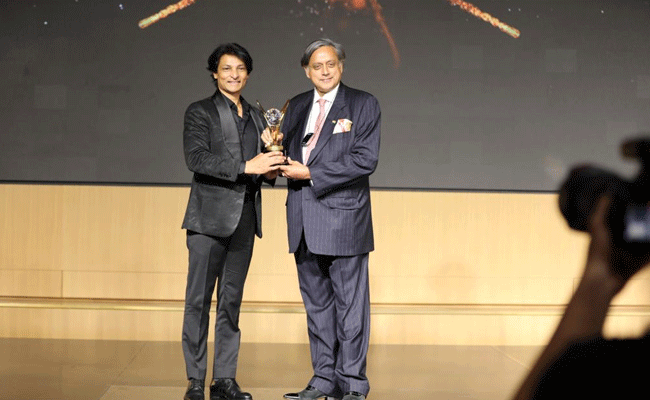
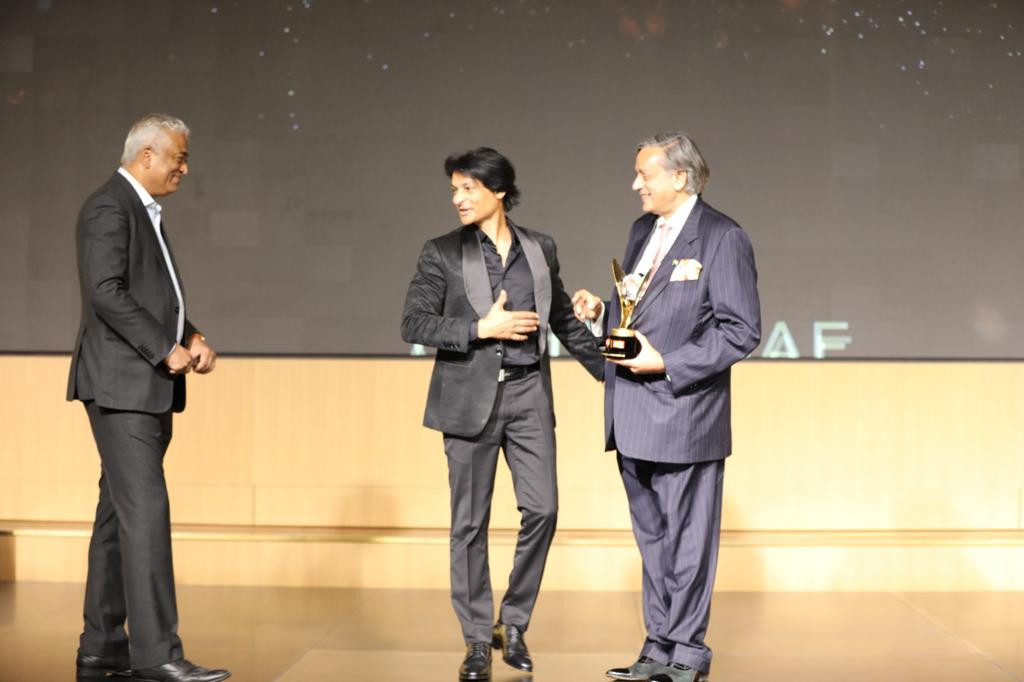
In a ceremony held at Taj Exotica, The Palm, Dubai, NRI entrepreneur Nasir Syed was honored with Business Icon award by NKN Media, celebrating the success stories of Indian business leaders in the UAE.
The event, boasting 16 icons from diverse industries, was graced by the presence of Dr. Shashi Tharoor, former Minister of State for External Affairs and acclaimed author, who handed over the award to Nasir Syed.
Nasir Syed, a prominent figure hailing from Moodbidri and the son of Syed Mohidin from Dakshina Kannada, has established himself as a renowned entrepreneur and international superbike rider in the UAE. He is the founder and CMD of Creative House Scaffolding.
The prestigious event was organized in collaboration with India Today Group, one of India’s leading media houses. The ceremony was broadcasted on India’s prominent news channels, Aaj Tak and India Today TV. The award aimed to celebrate visionary leaders and recognize their significant impact on the UAE’s business landscape and community.
Renowned actors and influencers, including Vivek Oberoi and Salman Yusuff Khan, shared exclusive video messages with their dedicated fan base, expressing their anticipation for the event.
In addition to these messages, India’s leading news anchor, Rajdeep Sardesai, graced the occasion with his presence.
The ceremony served as a platform to showcase the inspiring journeys and remarkable accomplishments of these business icons. Engaging 30-minute episodes highlighting their stories will be broadcasted, allowing viewers to gain insights into the experiences and achievements of these influential personalities.
source: http://www.english.varthabharati.in / Vartha Bharati / Home> Business / by Vartha Bharati / September 30th, 2023
)


_(1).jpg)