Category Archives: NRI’s / PIO’s

Victoria’s secret: Karim’s great grandson lives in Bengaluru!

Bengaluru, KARNATAKA :

The family had moved to England at the Queen’s behest, bringing great solace to an increasingly homesick Karim, said Mahmood.
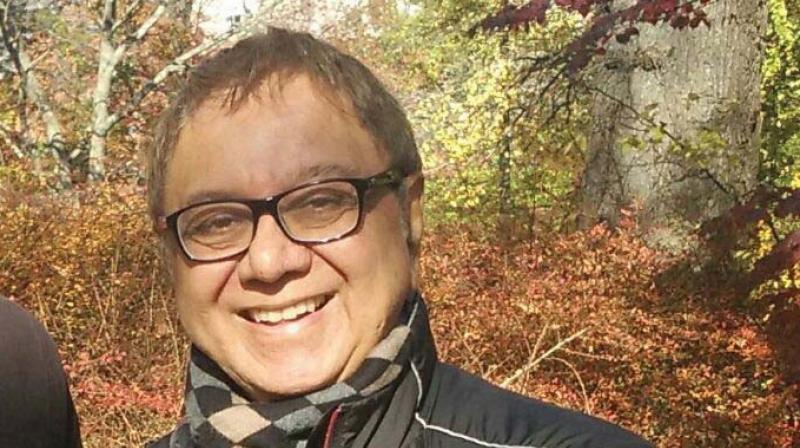
 Javed Mahmood, Abdul Karim’s great grandson
Javed Mahmood, Abdul Karim’s great grandson

It was an April morning in Bengaluru and Javed Mahmood, as was his custom, sat down to flip through the newspapers. The year was 2010, nearly two decades since he had moved to the city to live a quiet retired life. His relatives were scattered between Bengaluru and Karachi, as they had been since Independence. Very little remained of the family’s rich history, much of what they had left was lost in the traumas of Partition and mostly forgotten. That summer morning in 2010, however, everything changed. Mahmood found, to his astonishment, that Indian author Shrabani Basu’s Victoria and Abdul: The True Story of the Queen’s Closest Confidant had uncovered the truth behind his great grandfather Abdul Karim telling a tale of friendship and loyalty. Mahmood talks to Darshana  Ramdev about a family that has been steeped in history since, with his father, Anwar being a founding member of Bata in 1933.

“I rushed at once to the British Council and asked them to help me contact her,” said Mahmood, whose grandfather, Abdul Rashid, was Karim’s adopted son. “We didn’t actually know he was adopted until Karim’s death in 1909 and the inheritance had to be dealt with.” The family had moved to England at the Queen’s behest, bringing great solace to an increasingly homesick Karim. “The Queen made them feel very much at home my grandfather received the same education that Edward VII and the rest of her children had earlier received.” The Queen, who was aware of the couple’s inability to have children, sent her personal physician, Dr. John Reid, to examine (much to his horror) Karim’s wife.
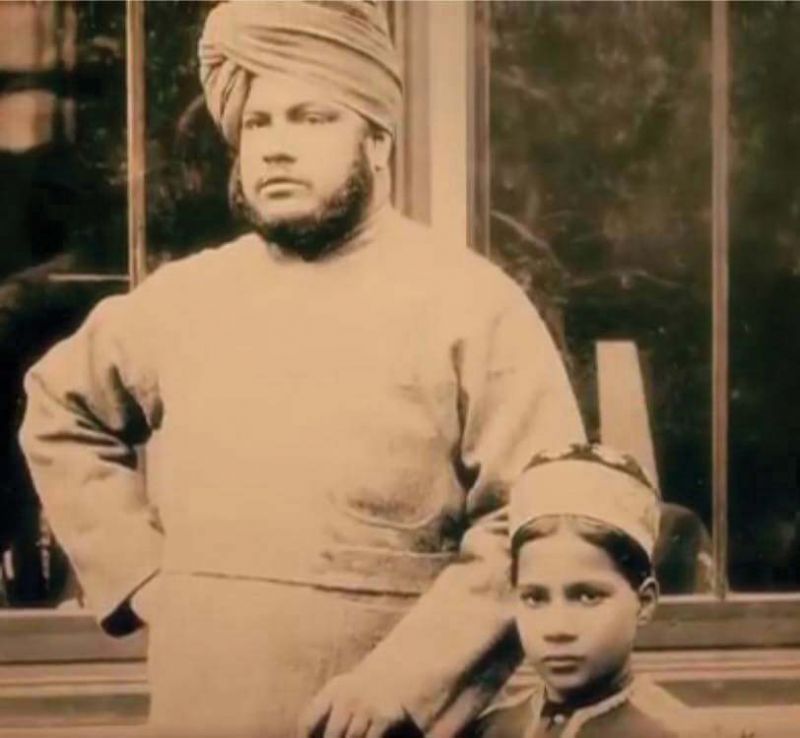
Abdul Karim with his adopted son, Abdul Rashid in England

“Abdul Karim had been greatly maligned by historians the Queen’s family may have wanted to destroy all trace of his presence in the court. Ms Basu had gained access to hidden archives, however. Our family still had a few documents – the diary being one of them, so Shrabani and I hopped on a plane to Karachi at once!” Karim’s descendants there were understandably wary, but Mahmood succeeded in coaxing them to part with the diary. Like most people of the time, Karim maintained meticulous written records into his life, which helped set the record straight on the stream of allegations that had been made against his character. “The diary proved beyond doubt that their relationship was marked by great affection, but had remained platonic always,” said Mahmood.
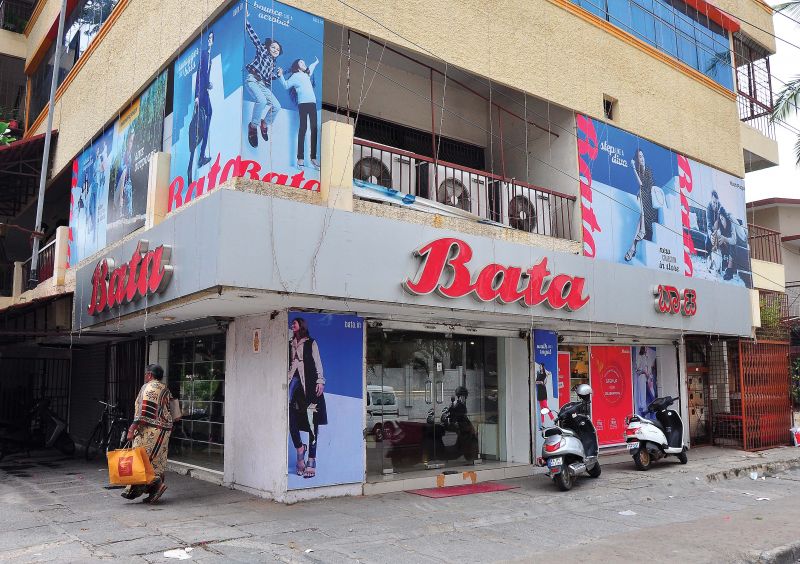
Javed Mahmood’s father, Anwar Mahmood, was one of the founding members of Bata in 1933. He started the Trot Shoe Company in 1963, setting up a second factory in Whitefield in 1970.

It contained valuable insights into Queen Victoria’s much loved Munshi, or teacher, the prepossessing young man who won the affections of a foreboding monarch with a reputation for a heart of stone. He was presented as an orderly to the Queen, which he didn’t like it was not a fitting position for the son of a landed ‘doctor’.  He soon found himself promoted to Munshi, leading the now ailing Empress to a discovery of India. The Queen’s love for her young munshi drew jealousy, hatred and racial prejudice in a society known for its repressive puritanical leanings. Neither cared, however, with the Queen sticking her neck out on numerous instances to defend her young friend. “She was always caring and appreciative of our customs every Eid, she would walk across the grounds to Karim Cottage (on the Osborne House estate) to visit the family.” They were, in turn, invited up to the palace for tea during Christmas “The Queen would even have the windows covered with silk curtains so Karim’s family could keep the purdah. He was also a wonderful cook  he would cook for her on occasion, as an act of love.”

Little was known of his life after the Queen’s death in 1901: Karim and his family were unceremoniously deported, almost at once, by a jealous Edward VII, who been aroused to such fits of rage that he had even attempted to force his mother to abdicate from office, on grounds of insanity. “Soon after the Queen’s death, King Edward arrived at Karim Cottage in Osborne House and ordered Rashid, who was a teenager at the time, to scour the house for any heirlooms or documents that contained the royal insignia. The little they could salvage, including Karim’s diary, returned with him to Agra in 1901, where he died eight years later. “He died at the age of 48 and the family was given his inheritance,” said Mahmood.

These remained with the family for some decades, until talk of Partition began to do the rounds. “We were a fairly prominent family and were advised at the time to shift temporarily to Bhopal, until the trouble blew over,” said Mahmood. This they did, greatly underestimating the scope of the problem and packing only the essentials. When the Partition took place, the family was evacuated to Mumbai, but many of the treasures were lost in transit. “The diary was with my grandfather, who was the custodian of Karim’s things.” The family moved to Karachi, save for Mahmood’s mother, Begum Qamar Jahan and two sisters. The diary went to Pakistan with them. “One of the sisters eventually shifted to Pakistan too,” he explained.

Meanwhile, in 1933, Bata, which was a burgeoning Czech company, found itself in hot water after the nation was declared Communist. The company decided to set up a factory near Calcutta, where leather was widely available. The large Muslim population in the area was another perk, providing the tannery services they so badly needed. “My father, Anwar Mahmood, was one of the founding members of the company,” he said. He joined the company at the age of 16 and worked there for nearly 30 years before he started his own business, the Trot Shoe Company. The first factory was set up in Kolkata in 1963 and the second in Whitefield, in 1970. “The organised shoe industry didn’t exist in South India and the Karnataka government had offered businesses a number of benefits, which led us here,” said Mahmood. Natural rubber, an important raw material and was grown abundantly in Kerala, making it easily accessible.  “My elder brother managed the factory here, I handled the one in Kolkata and my parents shuttled between the two cities. When my younger brother was ready to start work, we established a third branch in Hosur.” Javed Mahmood and his younger brother still call Bengaluru home.

Mahmood tells his story from San Francisco, where calls have been pouring in from across the world since the release of the film, Victoria and Abdul. “The film is doing very well, it’s being shown at local theatres here as well and friends have been getting in touch to tell me how much they enjoyed it,” he smiles.

“My great grandfather’s relationship with the Queen had been presented as scandalous and sleazy he was falsely accused of every imaginable sin. Ms Basu read Karim’s diary cover-to-cover and brought those insights into the second edition of her book.” And that’s how Abdul Karim’s story received its long overdue re-telling, well over a 100 years after his death in 1909. “Queen Victoria was a woman far ahead of her times, rising well above the prejudices that so plagued her society, to defend the young Indian man she called a friend. I think there’s a lesson in it for all of us even today.”

source: http://www.deccanchronicle.com / Deccan Chronicle / Home> Nation – In Other News / by Darshana Ramdev, Deccan Chronicle / October 14th, 2017
A Place for Us a ‘quintessentially American’ tale? Fatima Farheen Mirza answers

Hyderabad, INDIA / California, U.S.A :

Writing about an immigrant Muslim family in America, A Place for Us author Fatima Farheen Mirza says she wanted to place their lives and concerns at the centre of the narrative.

Visiting India for the first time five years ago, author Fatima Farheen Mirza visited the masjid (mosque) where her parents had her nikkah (wedding), in the city of Hyderabad. Fatima was then the same age that her mother was the same number of years ago.

“A man was sitting outside in the courtyard, threading flowers that would decorate one of the shrines. I asked if I could have one flower, because I wanted a souvenir of the place, and he denied me. I remember telling him, ‘But my mother got married here’. And he looked at me, asked me to wait for a minute, and then threaded an elaborate string of flowers that I could tie to wear in my hair. I’ll never forget it.”

This is how Fatima describes that moment. It is almost as if this passage has filtered out of the consciousness of one of the characters of her famous debut, A Place for Us. As a family gathers for the nikkah of their eldest child, the obedient, precocious doctor Hadia, their youngest, the delinquent, the errant Amar, cannot be found for the family photograph. This is a family, but the discord is unbelievable, and the silhouette of the elephant in the room grows darker and darker.

“I wanted to do my best [for] this family. I wanted to do justice to their lives, I wanted to understand their experience with as much complexity and care as I possibly could. I loved them, and it was a privilege to be able to write about them,” says Fatima about the book’s keenly felt impulses, its ability to pick up life’s mundane moments lying unnoticed in our midst and light them up with meaning. A Place for Us was recently chosen by Sarah Jessica Parker — Carrie Bradshaw of the hit American sitcom Sex and the City — for her publishing debut with her imprint for Hogarth Press. And while Parker has called it a “book about a quintessentially American family”, Pulitzer Prize-winner novelist Paul Harding has exalted it as “a work of extraordinary and enthralling beauty”.

Born and raised in California, it is natural to assume that Fatima not only spoke and wrote English for the majority of her life, but wrote about characters that belonged to a certain place, a certain way of life. How did the book come about? “Writing has always been a part of my life. Recently, I was surprised to find a story from when I was maybe seven or eight, because it was written in both Urdu and English—an impulse that returned when I was working on the novel. But throughout high school, I wrote about characters with names like Corrie, and now I wonder if my imagination had internalized the belief that stories belonged only to the kind of characters I’d grown up consuming. I remember pausing when I first wrote the name Hadia, how I not sure if I could proceed, but once I started writing about this family, I was committed,” says Fatima.

But conceptualising Hadia — which means the ‘guided one’, and is the ideal daughter, freethinking but also committed and devoted, and thinking for her — surely must have come somewhere from inside Fatima, who was once pursuing medicine, and has similar beliefs about religion and autonomy?

“Once seeds from one’s own life are planted into the novel, they are altered by the personality of the characters, and begin to take on their own significance. I might relate to the pressure Hadia feels to pursue a medical career path in order to make her parents proud, or Amar, keeping journals and looking to lines of poetry as a way to make sense of his own life — but the way these pursuits and pressures manifest in Hadia and Amar’s life is theirs alone,” Fatima shares.

At a moment in the novel, Hadia, soon to turn nine, contemplates intensely on the looming prospect of wearing the hijab, which her faith requires of her. With religious symbols coming under a lot of fire lately throughout the world, how does choosing or rejecting the hijab empower Hadia or her mother Layla? “Each character is aware of what the world wants from them. They have to navigate what their community, family, and faith want from them. It can be difficult, in the face of all of this, to know what they want for themselves. Figuring out their desires and attempting to make choices is what each of the characters contends with,” she says.

“[So], they are empowered when they make a choice that is aligned with their inner voice. This also applies to religious practices — Layla is empowered when she wears the hijab, and Hadia, when she decides not to.” And indeed, when not touching your deepest impulses about life and relationships, A Place for Us is a work about the significance of choices: An otherwise patriarchal father passes on a watch meant for a son, to his daughter. A deeply conservative mother gathers the courage to roll up her shalwar to meet her little son in the river. A young couple in love chooses to continue to meet in private, risking everything at stake for their families.

In this book about a quintessentially American family, white characters make short appearances as the immigrant minority dominates the focus, and their customs and sensibility — Sunday school, the significance of prayer, community gatherings — comes to the forefront of an American consciousness. Can one interpret this novel, then, as an attempt to envision a new America?

“This is rather [my way] of presenting the experience of living in America that is true to these characters. I wanted to place their lives, their concerns, at the centre of the narrative. If what results is a version of America that seems new, then what that speaks to is the lack of adequate representation in literature — because these lives are here, they have been here, and they have stories to tell,” Fatima says.

Modest though she may be — Fatima has undeniably mastered the art of sticking to describing life through memory. From the first scene, the narrative shifts into a series of flashbacks, in no particular sequence, from the collective consciousness of this family. From the parents’ wedding in India, their relocation to the US, the birth of their kids, the little moments as they grow up — the childhood stories, picnics, crushes, school, their rivalries and revelries — the narrative reveals itself both all at once and in parts.

And she explains the systematic revelation and withholding of information that take place through such a technique. “The [flashbacks] appear the way memories rise in a mind trying to understand something about one’s past — seemingly at random, skirting around a conflict, until enough context is understood that the centre of the conflict can be tunneled towards.”

Most of A Place for Us is poetry, and poetry is what moves its author. “I loved and returned to The Lover by Marguirite Duras and The Great Fire by Shirley Hazzard. I listened endlessly to Samuel Barber’s Adagio for Strings, trying to pay attention to the mood and movement in it, and how that could translate into the way I thought about the structure for the sections within the novel. I wrote and rewrote quotes by Muhammad Ali into my journal to stay focused,” says Fatima, who is learning boxing these days.

Interact with the author @Prannay13

source: http://www.hindustantimes.com / Hindustan Times / Home> Books / by Prannay, Hindustan Times / September 19th, 2018

NRI becomes first Muslim Lord Mayor of UK town

KENYA / Leicester, UNITED KINGDOM:

Leicester previously had Hindu and Sikh Lord Mayors,but Abdul Osman is first Muslim to hold the office.

Indian-origin councillor Abdul Razak Osman has become the first Lord Mayor of the Islamic faith to hold the high office in the multi-cultural town of Leicester,which has a large minority of Indian origin people.

Osman was born in Kenya and arrived in the UK in 1971.

His late father Yousuf Razak worked on the East African Railway,and worked for a local engineering firm after moving to Leicester.

The Lord Mayor is Leicester’s first Citizen and has a high profile role maintaining and promoting the interests of the city and its citizens, by attending a variety of civic engagements during the year.

Leicester previously had Hindu and Sikh Lord Mayors,but Osman is the first Muslim to hold the high office.

Incidentally,the office of the Deputy Lord Mayor of Leicester is also held by an Indian-origin councillor,Mustafa Kamal,who hails from Ferozepur,Punjab.

Osman has worked with several charity organisations and was instrumental in fundraising to build two villages and a school in Kutch,Gujarat for orphaned children,following an earthquake in 2011.

Osman,who joined the city council in 1996,takes over from Councillor Rob Wann.

Osman said after being sworn in at the Town Hall last night: “It’s an important year,with the Diamond Jubilee and the Olympics,so it’s a privilege for me to hold office with everything that’s going on”.

He added: “I want to focus on visiting the communities and raising the profile of the office of Lord Mayor.

I’m proud to be the first Muslim councillor to hold the position – we’ve had Christian,Hindu,Sikh and now I’m able to bring the Islamic faith to the office which is a great honour”.

Osman,who previously held the office of High Bailiff and Deputy Lord Mayor,is married to Shaina,who will serve as the Lady Mayoress.

The couple have two children.

The term of Leicester’s Lord Mayor is one year,and runs from May to May. Each year the longest serving City Councillor is offered the role. Leicester has had a Mayor since the year 1209. From 1928,the Mayor became a Lord Mayor.

The town also has a separately elected Mayor,currently Peter Soulsby (Labour).

source: http://www.indianexpress.com / The Indian Express / Home> News Archive> Print / by Agencies, London / May 18th, 2012

South African Indian cinema mogul Moosa Moosa passes away

Johanessburg, SOUTH AFRICA :

South African Indian cinema doyen Moosa Moosa has passed away. He was 75. Moosa succumbed to a heart attack on Sunday after undergoing surgery.

He was buried in Johannesburg on Monday according to Muslim rites.

Moosa had earned the title of being the longest-serving cinema group executive in the world, adding to the company’s reputation of having the longest relationship with Hollywood production house 20th Century Fox for almost eight decades now.

In 2007, Moosa received the South African Film and Television Industry Lifetime Achievement Award.

Tributes from all across the world continued to pour in for Moosa as the news of his demise spread.

Family and friends recalled how Moosa had taken over the family cinema business of the Avalon Group, started by his father 79 years ago as the first and still only Indian-owned cinema group in South Africa, after most of the 18 cinemas in the group were shut down by the draconian apartheid-era laws restricting property ownership in city centres to the minority white community.

Undeterred by this as the Avalon Group continued with just one cinema in an area designated for Indians in Durban, Moosa took on the seemingly impossible task of challenging the monopolies of white-owned major national cinema chains and won legal battles in the new democratic South Africa headed by President Nelson Mandela.

Moosa then started rebuilding the business as his son Aboobaker, popularly known as AB, also joined the business as the chief executive officer.

Currently they have cinemas in three major South African cities where new Bollywood releases play alongside Hollywood titles every week.

“My father showed tenacity and strength in keeping alive the Avalon dream through the tough times,” AB Moosa said in paying tribute to his father.

“When many had already begun to write the company’s obituary, my father’s resolve never wavered,” he added.

Many community leaders also paid tribute to Moosa for his support of community initiatives.

“He was always willing to support a variety of important social justice issues and always availed Avalon cinema venues for such events at no charge,” said Lubna Nadvi, from the University of KwaZulu Natal’s School of Social Science.

“Moosa will be justly remembered as a courageous and articulate businessman who was determined in his challenge of white monopolies in the 1980’s,” businessman Nirode Bramdaw recalled.

source: http://www.thehindu.com / The Hindu / Home> News> International / by PTI / June 26th, 2018

Doctor shares her journey in medicine in Canada by mentoring other immigrants

INDIA / CANADA :

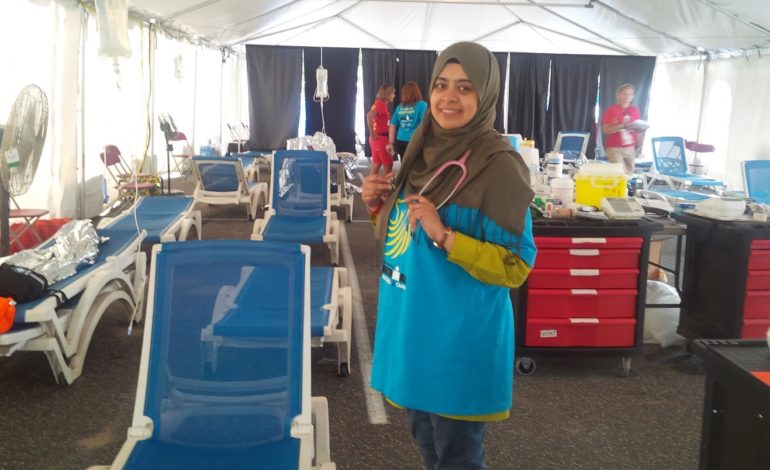
Dr. Nusrat Parveen shares her journey in medicine in Canada by mentoring other immigrant doctors.

Dr. Nusrat Parveen was an established gynecologist in the Middle East. A medical graduate from Aligarh Muslim University in India, she acquired post-graduate qualifications including membership of the Royal College of Obstetricians and Gynaecologists in London, U.K., and a diploma in the same field from the University of Dublin in Ireland. But this long list of educational achievements was not enough to get Parveen a job in Canada.

The process to become a doctor in Canada takes time, and now Parveen shares her own journey to medical licensure with fellow international medical graduates (IMGs) who aspire to practise medicine in Canada. For her efforts as a mentor to IMGs, she was recently recognized by Ontario Premier Kathleen Wynne with the Volunteer of the Year Award for community services. 

How did you come up with the idea of mentoring other IMGs?

My husband and I were volunteering with a food bank, when we came across an IMG who was lonely and felt lost as she did not have anybody to support or guide her. But she had the passion to practise medicine in Canada. Her situation had not dampened her spirit. It was her story that first inspired us. 

How did you find other IMGs to mentor?

The spark to help fellow IMGs and knowing that many are not aware of the process and are struggling, made us start the IDEAS program at Thorncliffe Neighbourhood Office (TNO) where the relevant support and resources are provided to IMGs. 

What has been your experience of supporting other IMGs?

Initially, it was scary. I had my commitments to my family and to bring up my two children. I was studying full time toward the physician’s assistant program at the University of Toronto, so my hands were full. But the fact that everything came together so nicely and the enthusiasm from the IMGs kept me going. 

Where exactly are you in your own professional journey?

I have cleared MCCEE, MCCQE1, NAC OSCE, IELTS and workplace culture and OSLT courses. The physician’s assistant program has prepared me for the supervised clinical practice and gave me an opportunity to refresh my clinical skills. In short, it has prepared me to integrate well into supervised clinical practice while building connections and references. 

You have not yet completed your own journey to practising medicine in Canada, so what gave you the confidence to mentor other IMGs?

I realized that there are many IMGs who need support, resources and peer mentoring. As I had prepared for my exams, I had a good idea of how things worked here and knew the process and where to look for resources. This knowledge of the system and process gave me courage and confidence to support fellow IMGs. I did have some doubts, which quickly vanished with my husband’s unflinching support. 

Why are you so committed to helping others through this mentoring program?

I have given so much of my time and dedication to the medical profession, as it has given me opportunities to serve people. Mentoring IMGs is yet another way of giving back to the community.

What is your advice to your fellow IMGs looking to get accredited in Canada?

Perseverance and extensive networking to build connections and references is the key to success in Canada. Try studying a program like the PA program, which helps to refresh your skills and connect to a practice.

source: http://www.canadianimmigrant.ca / Canadian Immigrant / by  Baisakhi Roy / November 20th, 2015

Meet Rehan who prepared microchip to predict traffic jam, weather conditions

Hyderabad, TELANGANA / AUSTRALIA :

MohamedRehanMPOs20sept2018

Hyderabad:

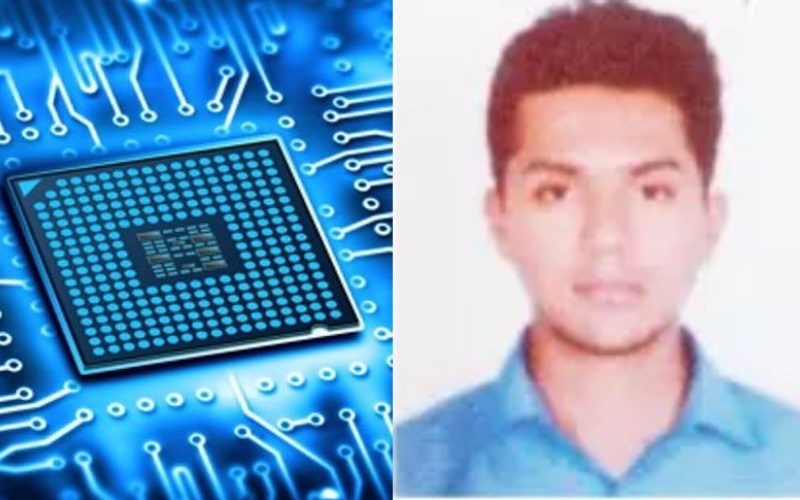
Mohammed Rehan, a student of Deakin University, Australia studying in the Dept. of Electronics has prepared a microchip using Artificial Intelligence.

This microchip will predict weather conditions, traffic jam and other functions.

His effort is being applauded as this system is very useful for humanity.

Mohammed Rehan, son of Mohammed Abdul Basith is a native of Nizamabad. He worked under his mentor Dr. Hamid Abedi.

Faiz-e-Aam Trust extends help of Rs. 2.99 cr to poor students, families – Siasat’s role applauded

Hyderabad, TELANGANA :

FaizeAzamTrustMPOs13sept2018

Hyderabad:

According to the report furnished by Mr. Iftekhar Husain, Secretary of Faiz-e-Aam Trust, a sum of Rs. 2.99 crore was spent on various schemes of financial assistance to poor students and families.

In 2016-17, the trust spent Rs. 59.81 lakh for primary education, Rs. 21.21 lakh for technical education, Rs. 29.5 lakh for relief and Rs. 7.85 lakh for treatment of patients.

In this manner, from April 2017 to January 2018, Rs. 40.46 lakh, Rs. 21.21 lakh, Rs. 18.68 lakh and Rs. 3.58 lakh were spent on the above mentioned works.

So far, the trust has help 625 students of primary education, 731 of SSC, 1237 of Intermediate, Degree, PG, Engineering, MBA, MBBS and Paramedical Courses.

He further told that the trust was established in 1983 by his brother-in-law, Mr. Zulfekhar Husain. It enjoys full support from Mr. Zahed Ali Khan, Editor of Siasat Urdu Daily. The trust is now helping 1456 students ranging from primary school to Engineering and Medical courses. It is also extending financial help to 1256 patients. It rehabilitated 2280 persons.

Faiz-e-Aam Trust helped Kareemunnisa whose husband, an autodriver had left her helpless. Her sons, Syed Hasan and Syed Yaseen and daughter, Saba Begum were adopted by the Trust for educating them. Syed Hasan completed MBBS whereas Saba Begum is doing the same course. Her eldest son, Syed Yaseen has completed Hifz-e-Quran.

Ms. Farukh Parveen Jamal, Chairperson of Trust, Aurangabad and Mr. Siraj Tahir, Trustee of Faiz-e-Aam Trust attended the meeting and listened to the details of the poor families.

FaizeAzamTrust02MPOs13sept2018

In collaboration with Siasat Millat Fund (Clothes bank) it helped 1552 families. Destitute Muslims of Muzaffar Nagar received help through Siasat Millat Fund. It also helped Salwa Fatima and Sania Siddiqui for their ambitions to become pilots. For Old Age Home of Siasat, the trust gave a donation of Rs. 5 lakh.

The trust also helped Nuzhat Fatima, a student of MBBS, Shaik Nazeer Ahmed and Ayesha, students of MD.

During the past three years, the trust has spent Rs. 1.6 lakh for primary education, Rs. 43.33 lakh for technical education, Rs. 71.15 lakh for rehabilitation, Rs. 23.35 lakh for treatment of patients.

It may be mentioned that Syed Hasan had secured a free seat in MBBS. Mr. Ali Asghar played a key role in getting financial help for this family.

Hajera Begum is a second year MBBS student. Her father is a tailor and her mother manufactures beedis. She has two sisters. The expenses of her MBBS fees were paid by her parents by mortgaging ornaments. Dr. Makhdoom Mohiuddin’s wife, Dr. Shaista Mohammedi Husaini received a message on WhatsApp for helping Sabera Begum which she forwarded to Secretary of Faiz-e-Aam Trust who arranged Rs. 1.27 lakh for getting back the ornaments which were mortgaged.

Mr. Rizwan Haider, Trustee welcomed the guests. Ms. Amena Saher conducted the meeting.

These details were given in a special meeting held at Faiz-e-Aam Trust which was attended by Ms. Farhat Yasmeen and Mr. Siraj Tahir, Trustees.

The other persons who attended the meeting were Dr. Samiullah Khan (Director Shadan College and MESCO member), Dr. Saukat Ali Mirza (Chairman Helping Hand), Mr. Ali Abedi (Social worker, London), Mr. Mudasir Alam (US), Mr. Jameel Haider (US), Fakhri Saheb (US), Anees Iftekhar Ali (US), Ruqayya Begum (US), Syed Haider (member, Faiz-e-Aam Trust), Aijaz Husain (US), Jafar Ahmed (US), Syed Jafar Husain (Sada-e-Husaini), Hamid Ali, Prof. Shaukat Hayat and Mr. Ahmed Basheeruddin Farooqui (former Dy.DEO).

source: http://www.siasat.com / The Siasat Daily / Home / by  Sameer, The Siasat News / January 18th, 2018

Transforming healthcare for the better: Dr Shafi Mulk

ANDHRA PRADESH , INDIA / UNITED ARAB EMIRATES :

[SPONSORED CONTENT] Dr Shafi Ul Mulk had an idea that grew into a vision for change. Today, that vision is a reality, having grown his multiple dual concept diagnostic centres into a leading healthcare brand in the region

DrShafiUlMulkMPOs12sept2018

Through his healthcare services, Dr Mulk touches millions of people from around the world and has been celebrated on many prestigious forums. He has also added significant feathers to his illustrious cap, being honoured with Forbes magazine’s Top 100 Indian Entrepreneurs and Leaders in the Middle East two years in a row.

HUMBLE BEGINNINGS

The origins of Global Hawk were not unlike some world-renowned companies of today. Dr Mulk started with a personal staff of only two, working in Hamriya free zone, Sharjah. Dr Mulk created his company – the internationally acclaimed Global Hawk chain of diagnostic centres (that utilizes Global Hawk’s innovative technology in telemedicine and teleradiology).

THE START OF SUCCESS

The company grew quite rapidly, expanding across the globe and into a world-renowned healthcare empire worth more than US$200 million. The phenomenal success of the establishment can be directly attributed to the visionary leadership of Dr Mulk, who is widely considered the pioneer of teleradiology in the region.

His brainchild, Global Hawk Telemedicine/Teleradiology with IT solutions including RIS, Mulk Digitizers and Mulk Viewers products installed globally in major hospitals and medical centres have revolutionized the healthcare industry. In fact, the runaway success of Global Hawk Telemedicine encouraged him to start the chain of Global Hawk Imaging and diagnostic centres (GHID) which eventually led him to a number of accolades and international awards.

FAST RISE TO THE TOP

From a single branch in Deira, GHID has grown rapidly with many centres across multiple locations all with state of the art radiological technology, all the main imaging modalities – including open and closed MRI, CT scan, CBCT, 2D, 3D/4D Ultrasound, Digital Mammography, Bone Densitometer as well as top rated clinical laboratory diagnostic devices, all under one roof.

The centres are today considered as one of the best in terms of state-of-the-art, high-quality diagnostic imaging services and patient-centred care. With its goal of becoming a dedicated healthcare provider and imaging resource and research centre across the globe, GHID serves as a gateway to international expert standards diagnostic opinions – while also streamlining management and investigative recommendations.  Today, this is a vital requisite in the current medical environment.

THE NEXT STEP: MORE GROWTH

Dr Mulk’s company has spearheaded an AED250 million expansion plan, which includes a chain of Global Hawk Diagnostic Centres with dedicated PET-CT / MRI and Cyclotron unites across the GCC, India and Eastern Europe, and a chain of Global Hawk multi-speciality Polyclinics and Medical Centres. The group is also looking to start a 50 bed Mulk oncology charity hospital in India, as well as Mulk speciality hospitals in the UAE.

BACKGROUND IN EDUCATION

Dr Mulk’s passion for innovation and medical technology can trace its roots from his impressive educational experience. A prominent neurovascular radiologist in the UAE, his formative medical education began at Kurnool Medical College, Andhra. He also has completeld fellowships at Michigan, USA and Multon Keynes, UK.

Being a passionate teacher, he freely shares his knowledge by teaching university students and mentoring junior radiologists. Dr Mulk has been consistently invited to speak at major international forums of radiology and imaging, as well as healthcare entrepreneur platforms. He was honoured as a guest speaker by the Arab Health Committee and International Health Organisations for his overall contribution to the Healthcare Sector, resulting from his wealth of experience in Radiology for two decades.

THE MAN BEHIND THE BUSINESS

Dr Mulk’s zeal and enthusiasm for success doesn’t limit itself to the professional fields, but also in his love for sports. A former national Bandminton player, he was named a ‘young Hopeful of India’ by a leading Indian Sportstar magazine at the age of 13. An ardent supporter of Badminton Associations of the region and sponsor of major Badminton tournaments, he is one of the top ranked players in the UAE, with winning accolades in the Masters Men event of the UAE Open Championship of 2016 and 2017.

But one of the most essential characteristics of his personality is his compassionate outlook towards the community. Dr Mulk is a well-respected member of various social and Islamic organizations in India and the UAE, and he actively engages in various charitable activities focusing on building a better tomorrow.

A true believer in strenghth of the family unit, Dr Mulk candidly acknowledges that the support he receives from his soulmate, Dr Yasmeen Ul Mulk, and their sons Zoheb Ul Mulk and Zain Ul Mulk is what most encourages him to follow his passion.

INTERNATIONAL RECOGNITION

Dr Mulk scored a double win at the Annual Health Awards in the UAE this year, winning the Distinguished Achiever award in Healthcare and Innovative Technology. These accolades add to his illustrious list of accolades and awards in 2017 alone; including being honoured with the World Healthcare Innovative Entrepreneuier of the year 2017, by the Global Association of Physicians of Indian Origin and the Indian Business Exceppent Awards – IBPC 2016 and 2017 – from H.H. Sheikh Nahyan Bin Mubarak Al Nahyan.

He has also received the Star Quality Award in Geneva 2014, The World Inspirational Company USA awards in 2015, as well as the International Medical Quality Award May 2016, which was held in Monte Carlo, Monaco.

Dr Mulk and his company have also been honoured and lauded with the ‘World’s Greatest Brands’ and ‘World’s Greatest Leader’ awards in 2017.

source: http://www.arabianbusiness.com / Arabian Business / Home> CEO> Business / by Global Hawk / July 23rd, 2017

Indian Muslim group wants senator to push minority rights

Kuala Lumpur , MALAYSIA :

Muslim People’s Coalition president Amir Amsaa Alla Pitchay speaks during a press conference in Kuala Lumpur August 5, 2018. — Picture by Firdaus Latif
Kuala Lumpur  :
A group comprising mostly Indian Muslims urged the government today to appoint a senator to champion minority rights.
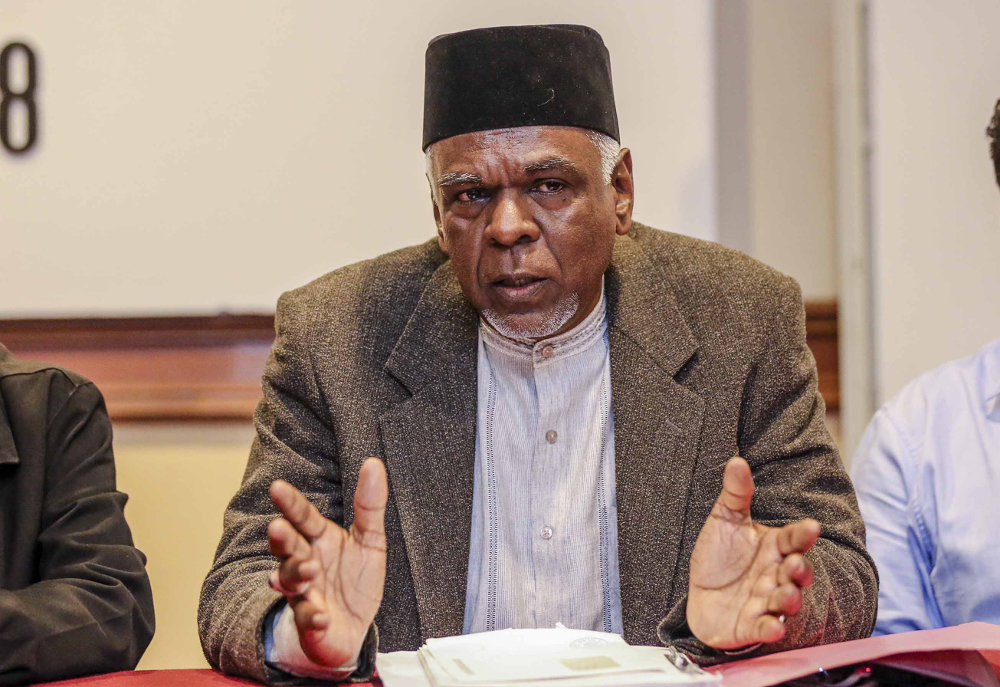
The Malaysia Muslim People Coalition (Irimm) headed by Amir Amsaa Alla Pitchay, who used to be president of the pro-Barisan Nasional (BN) Malaysian Indian Muslim Congress (Kimma), also declared their support for the Pakatan Harapan (PH) government.

“We (Irimm) do not have any senatorship to highlight or voice our grievances from the grassroots through to the ministry level,” said Irimm president Amir Amsaa Alla Pitchay.

“This kind of things is where PH has to engage and appoint a person in every state to help the community,” he added.

Irimm, with just over 5,000 members nationwide, was formed in 2012 to champion the cause and help Muslim-minority communities in the country.

Amir Amsaa said he hopes that with the support of the PH government, more large scale events and welfare programmes can be organised and executed by Irimm.

He added the coalition was in the process of reaching out to Prime Minister Tun Dr Mahathir Mohamad and Deputy Prime Minister Datuk Seri Dr Wan Azizah Wan Ismail to arrange a meeting to officiate their support towards PH.

“We hope to have large scale events with the government’s support, as we are also looking to have the support of the ministers to help the causes we are championing,” he said.

source: http://www.malaymail.com / Malay Mail / Home> Malaysia / by Emmanuel Santa Maria Chia / August 05th, 2018

Indian Prodigy Sara shines in Dubai

Malegaon, MAHARASHTRA / Dubai,  U.A.E :

SaraAnsariMPOs31jul2018

Where there is will there is a way, Sara Ansari proved the cliché with her exceptional qualities and abilities. Indian born Sara, who is a resident of Dubai now, has not only makes her parents proud over her success, India and Dubai too delighted over her achievements.

Born in Malegaon a small town in Maharashtra and brought up in Dubai Sara has secured 98% marks in CBSE 10th Examination which was held in March 2018 and result of which was declared on May 29th. Interestingly she got 100% in Mathematics as well as in Science.

She aims to pursue her career in Astro Physics which deals with space research. She believes that by pursuing this career she can participate in promotion of science education and eliminate the poverty and hunger from the world.

Sara is not only excellent academically but also proved her talent in many extracurricular activities.

She has been awarded by the prestigious Diana Award in recognition of her outstanding contribution to society. The Diana Award is bestowed upon inspiring courageous, Compassionate young people, positively transforming the lives of others in Diana, “Princess of Wales” memory and legacy.

She is a confident speaker and an outstanding Debater too.This Year at the occasion of Independence Day, she has been awarded by “The Best Speaker “ Award by the Consulate General of India in Dubai in recognition of her performance in Inter School Debate Competition.

She is a prefect of Model United Nation Club in her school. She has visited United Nation New York, U.S.A. in July 2014 as a part of her Global Young leader conference. and attended several MUN Conferences in Dubai and Globally and achieved the Best Delegate Awards. Model United Nation also known as MUN is an extra-curricular activity in which students typically role-play delegates to the United Nations and simulate UN Committees. This activity takes place at MUN Conferences which is usually organized by High school or Collage MUN Club. Her paintings too won her many awards and accolades.

“We are so proud of her that there is no word to explain” says her father Iqbal Ansari, adding that her achievements have been a direct result of self-discipline and dedication to performing the required research and practice necessary for success in such endeavors.

The student of The Millennium School, Dubai has also won the prestigious Sharjah Award for Educational Excellence for the academic year 2015-2016. This award is instituted by Ruler of Sharjah H.H. Dr. Shaikh Sultan Bin Mohammad Al Qasimi for recognizing outstanding achievers in academics and co-curricular activities, with special emphasis on social responsibilities.

The award was presented to her by Crown Prince and Deputy Ruler of Sharjah, HH Sheikh Sultan bin Mohammed bin Sultan Al Qasimi in a glittering ceremony held at University City hall, Sharjah on Thursday, 21st April 2016.

“It is a glorious moment for our country, family & school that Sara Ansari was awarded the prestigious Sharjah Award for educational excellence for the ‘Most Distinguished Student’, for the academic year 2015-2016”, says her father.

Sara was also the winner of prestigious Sheikh Hamdan Award for Distinguished Performance 2015, the award recognises the students from Gulf Countries who excel not only in Academics but social, religious, cultural, sports activities. The award was presented to her during 2015 by Deputy Ruler of Dubai HH Shaikh Hamdan Bin Rashid Al Maktoum.

Sara and her partner design a Drone under theme “Drone to Rescue” which would help mountaineers for rescue, the project won first award for deigns during Makers Day 2016 which was organised by GMS. The project was chosen top 10 finalist out of 700 projects presented by different UAE schools at GEMS Wellington School Dubai. The project was selected by Arab Innovation Centre for Educational Excellence for AICE accelerator Programme, as a part of this programme they got funding and mentoring from industry experts to expand the project scope and evaluate the commercial and technical feasibility.

Social Activities: Sara’s passion is Art & craft, she knows several Art & Craft techniques like Decoupage, paper quelling, embroidery, par cord. She has taught the skills to less fortunate people in Sri Lanka, India, UAE. She was recognised for her efforts and appreciated by community members and international NGO’s. Kindly visit her website www.facebook.com/sarastalent to know more about her activities.

Sara’s talent is drawing & painting, she has won many certificates and award from different bodies and international organisations. She has a special skill of Pyrography, the art or technique of decorating wood or leather by burning a design on the surface with a heated metallic point.

She is also very good swimmer and also interest in ice skating, roller skating and participated in marathons.

source: http://www.theindianawaaz.com / The Indian Awaaz / by The Correspondent , The Indian Awaaz / June 04th, 2018