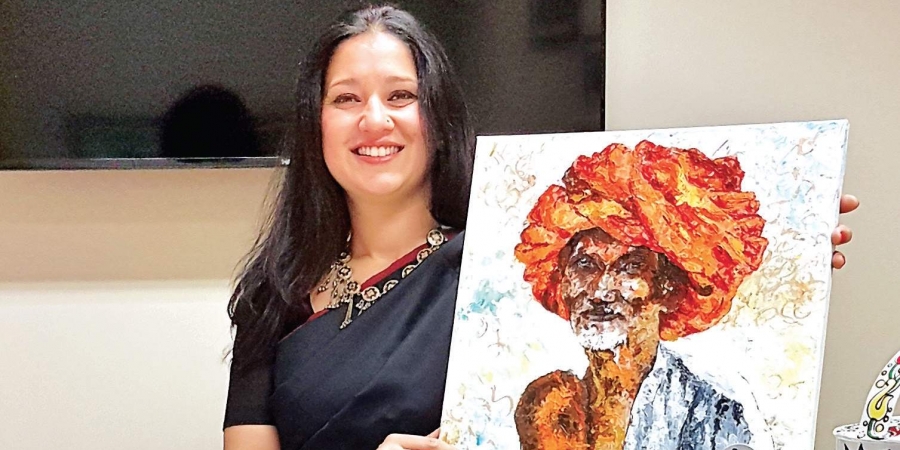
Lucknow-born Bushra Hasan, who has made her mark in Australia through her Indian-influenced art, now wants to use it as a therapy.
Bushra Hasan
If art enables us to find and lose ourselves at the same time, Lucknow-born graphic artist Bushra Hasan has used art to create an identity for herself Down Under, her new homeland. Hasan, who moved to Australia in 2013, has added beautiful hues to her varied creative portfolio.
In five years, her different strokes have left an indelible mark on the artistic landscape in Australia, and made Hasan a name to reckon with for her brushwork. Be it the painting of a life-size puppet elephant for Moomba Parade, or the Indian truck style art adorning the trams of Kolkata and Melbourne, or the recent community art workshop that she held for immigrants, the shades of her creative sensibilities have charmed one and all.
Armed with a mixed bag of experience in designing newspaper pages and magazine covers in India, Hasan moved to Australia’s cultural capital Melbourne after “falling in love with its vibrant, stylish and arty feel”. The City of Secrets embraced the artist and her India-influenced art with open arms, and she went on to join the Multicultural Arts Victoria (MAV) as Community Liaison Officer in 2018.
“I started looking for jobs after moving to Melbourne. In between, I also launched my art brand Indybindi and started putting its products in various makers’ market. People noticed my art and MAV expressed its keenness to hire me to conduct workshops. In January 2015, Moomba Parade organisers approached me to paint a life-size puppet elephant in Indian art style, and they have used it for all parades since then,” she says.
MAV introduced her to Roberto D’Andrea, a former tram conductor, and an activist who had been working on the unusual friendship between Melbourne Tramways and Kolkata Tramways for 21 years. “Kolkata Tramways had sent an SOS to all the tram-running cities requesting them to put pressure on the West Bengal government to rethink its decision to abolish trams in Kolkata. Only Roberto responded and went there with his team, collaborated with Indian activists and organised shows, etc., that worked and the state government postponed its decision,” she says, fondly recalling her artistic collaboration with Roberto. She used kitschy Indian truck art style to tell the story of 21 years that found its way to the trams of Kolkata to celebrate the iconic tram friendship between the two cities.
“Indian tribal art hugely inspires me, and I am proud to flaunt my Indian roots in my artwork,” she says. Hasan redesigned her artwork and turned it more colourful, and reflective of India’s diverse artistic culture and submitted her entry for the 5th edition of the annual Melbourne Art Trams project. She was one among the eight artists whose design made the cut, and Tramjatra, her artistic tribute, chugged along, happily for seven months from October 2017 to April 2018 on the trams in Melbourne.
She recently led a nine-day long art exhibition for people to share their ‘immigrant journey’ through art at the Emerge In The North festival. “The workshop was an effective step towards building relationships within the community,” she says.
Having used art to create an identity, she wants to use it to heal others. Talking about her next project, she says, “I want to do a lot more to keep myself creatively engaged. I am working on a module that will focus on helping children who are victims of sexual abuse to overcome their trauma through art therapy, heal themselves, and emerge stronger.”
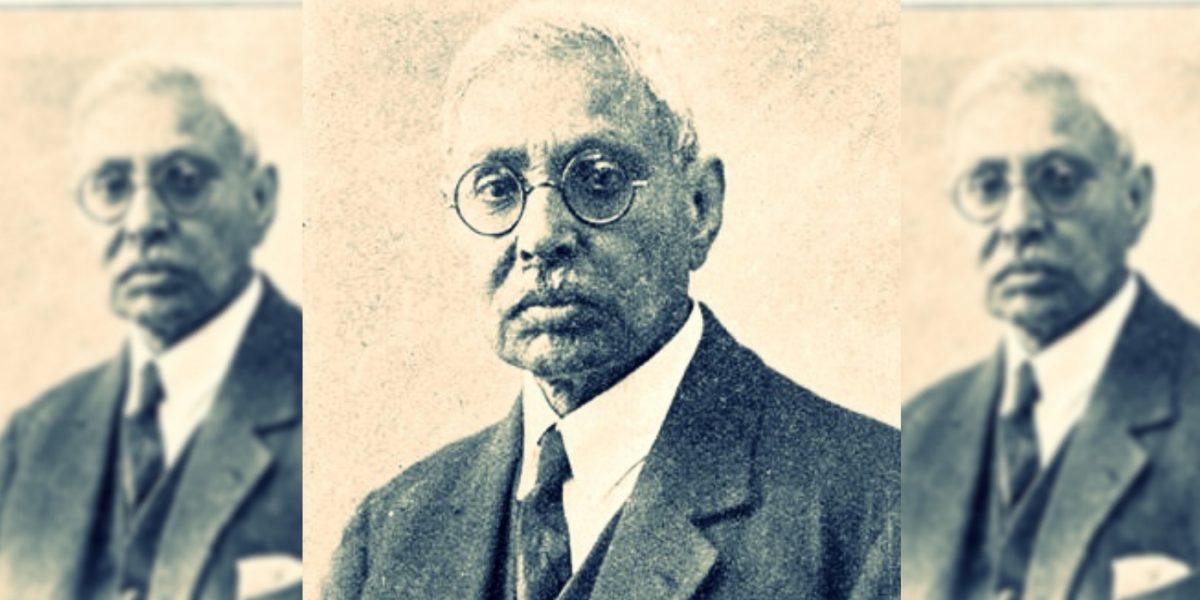
Maulvi Barkatullah Bhopali believed the spirit of Marx’s thought and divine religions was the same. “The objective of both is to provide a dignified and peaceful life to the oppressed.”
Maulvi Barkatullah Bhopali, who was born 164 years ago this month, was a glorious standard-bearer of the Indian independence movement. He toured Great Britain, Europe, Japan and America, in addition to the Soviet Union in connection with the struggle against British imperialism. He was among those few ulema who travelled to Moscow in May 1919, just a short period after the Bolshevik Revolution; he saw the conditions there with his own eyes, and met Lenin and other Bolshevik leaders. During his stay in Moscow, he said during an interview with the Izvestia newspaper:
“I am not a communist or a socialist, but right now my political program includes throwing the British out of Asia. I am a staunch enemy of European capitalism in Asia. Therefore, there is complete compromise between myself and the communists over these objectives and we are allies on this field. I do not know what shape the future events will take, but what I can definitely say is that the famous appeal of the Soviet government of Russia, in which the people of all nations have been requested to rise up and conduct jihad against capitalists, has greatly influenced us, and what we like more than that is that the Soviet Union has revealed all the secret agreements (between Russia and Great Britain) whose objective was to enslave other nations, especially the Eastern nations. Not only this, but the Soviet Union has unilaterally cancelled all such agreements. Russia accepts the principle of equality and evenness between all small and great nations. The ideas of the Bolsheviks, which we call socialism, are also making a place in the hearts of the common Indian people.”
In his book, Bolshevism and Islamic Nations, Maulvi Barkatullah writes, “The actual spirit of Marx’s thought and divine religions is the same. The objective of both is to provide a dignified and peaceful life to the oppressed, punished people of god by freeing them from cruelty and oppression.”
“The philosopher Plato has presented such a map of his ideal Republic in which ownership would be common and public. The provision of basic needs, sources of entertainment, opportunities for employment will be equal for all. Because of the progress of education, every individual of the nation will benefit from knowledge in a way that his every act will be reasonable and right. These are the basic principles on whose foundation Karl Marx presented the majestic structure, behind which was the knowledge and experience of many generations,” he continued.
Maulvi Barkatullah bemoans the fact that in his time, there is not even a single Muslim kingdom which can be called independent in a meaningful sense. He writes, “Today not even a single independent Muslim state remains because Muslim countries have been subdued at the hands of British imperialism and the dictatorial royal tsar, French or Italian colonialism in the 20th century. They are being fully exploited.”
But he is not hopeless with this situation. He says,
“There is no cause for hopelessness. After the dark night of the czar’s oppression and tyranny, the dawn of human freedom has arisen on the horizon of Russia in which Lenin is giving the good news of human prosperity, sprinkling the light of his ideas like the sun (sic). That grand scheme which was presented 2000 years before by the philosopher Plato, which was transferred as a great heritage from one generation to the other; today the principles and ideologies of this ideal republic are being given practical shape. Under the leadership of Lenin, this is being popularly accepted as a reality. Across the length and breadth of Russia and in Turkistan, the entire arrangement and administration has been given to workers, people employed in agriculture and ordinary soldiers. The equal rights of all classes and nations have been accepted, every individual has been guaranteed a better life.’
Maulvi Barkatullah not only completely supported the Bolshevik government of Russia, but appealed forcefully to the Russian people, especially the Muslims of the eastern region, to support the Soviet government wholeheartedly and array themselves against its enemies so that the successes of the revolution could be defended; and the intervention and conspiracies of the imperialists could be countered.
He says, “Now the time has come that the Muslims of the whole world and Asian nations obtain complete information about Russian socialism, understand those golden principles and accept them with full passion and sincerity. The noble and high objectives hidden in the foundation of this modern system demand that Muslims should completely support and defend it. They should unite with Bolshevik forces to make the aggression of British followers and other tyrant rulers unsuccessful; send their children to Russian schools without wasting time so that they can obtain modern science, high arts, practical physics, chemistry and mechanical technique.’
In her book, Haj to Utopia, Maia Ramnath writes that Barkatullah “single-handedly embodied the overlap between the Bolshevik and Pan-Islamist networks, utilising the connective tissue of the Ghadar infrastructure to do so. She cites a foreign office report of 1915 as saying: “It would appear that Barkatullah was a sort of connecting link between three different movements, namely, the Pan-Islamic, Asia for the Asiatics and the Indian Sedition”. A German diplomat wrote that he was “first in line a nationalist and then a Moslem”.
Maulvi Barkatullah’s was a warrior life. He passed away in San Francisco on September 20, 1927.
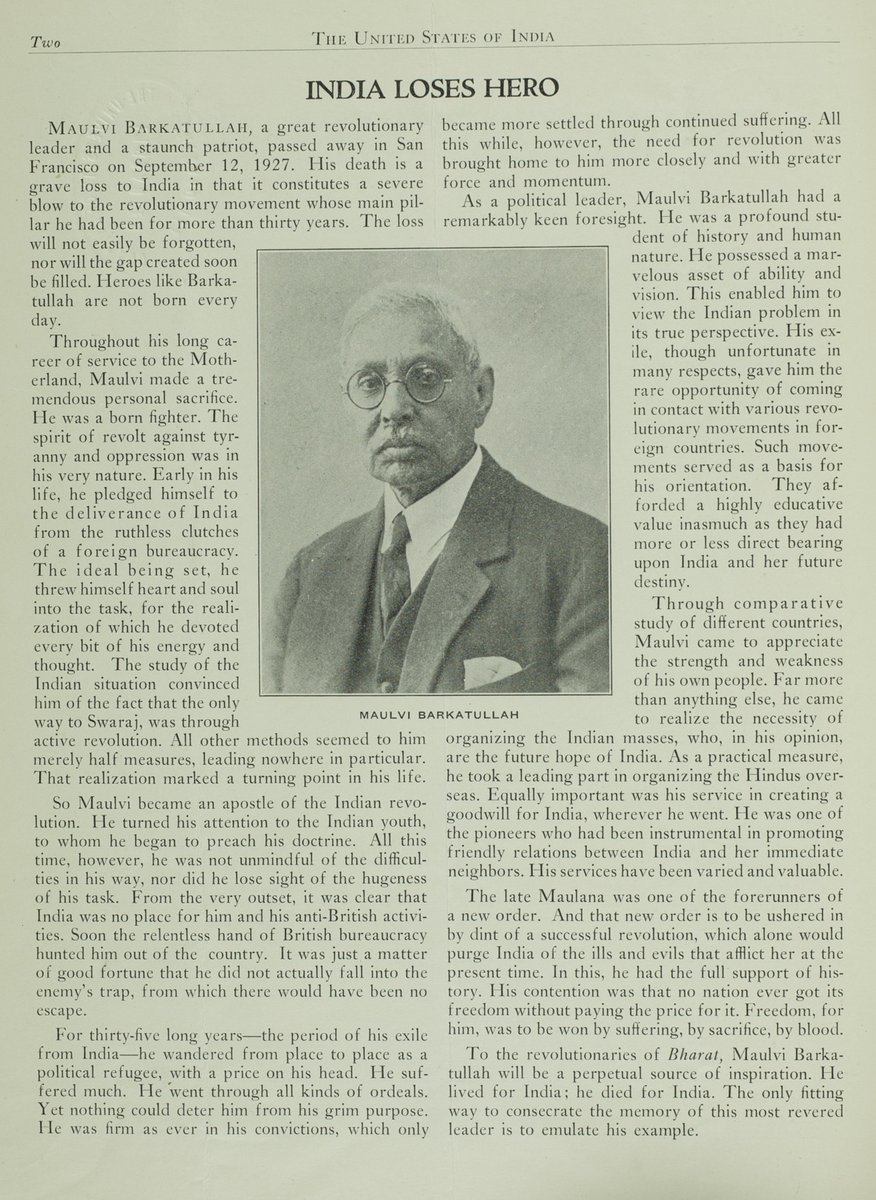
Tribute paid to Barkatullah in the United States of India, a publication of the Ghadar Party in the United States, in 1927. Credit: South Asian American Digital Archive
Barkatullah had been one of those who had backed the Ghadar uprising against the British during and after World War I. In a tribute to him after his death, published in the United States of India, a publication of the Ghadar Party in the US, the magazine wrote:
“To the revolutionaries of Bharat, Maulvi Barkatullah will be a perpetual source of inspiration. He lived for India; he died for India. The only fitting way to consecrate the memory of this most revered leader is to emulate his example.”
Raza Naeem is a Pakistani social scientist currently teaching in Lahore. He is also the president of the Progressive Writers Association in Lahore. His most recent work is an introduction to the reissued edition (HarperCollins India, 2016) of Abdullah Hussein’s classic novel The Weary Generations. He can be reached at: razanaeem@hotmail.com .
source: http://www.thewire.in / The Wire / Home> History / by Raza Naeem / July 15th, 2018
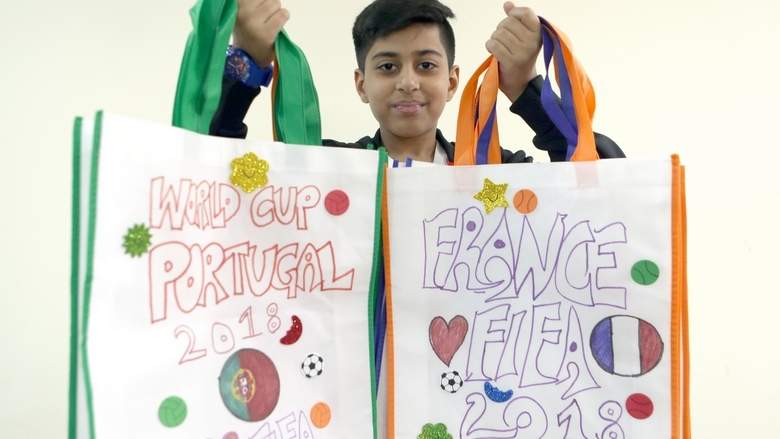
Mohammed distributed hand-decorated reusable ‘World Cup’ bags to a number of groceries.
A 10-year-old Dubai student who turned his love for the World Cup into an innovative way to reduce plastic bag waste, has been honoured by the Dubai Municipality (DM).
Following the Khaleej Times article on June 25, ‘Boy uses football frenzy to send a message against plastic waste’, Abdulmajeed Abdulaziz Saifaie, director of waste management department, was keen to meet the boy behind the story , Faiz Mohammed. And during a meeting between the two on Tuesday, he named the youngster one of the municipality’s ‘Sustainability Ambassadors’.
Using his own Eid money, Mohammed distributed hand-decorated reusable bags to a number of groceries near his home in Karama, after he grew tired of seeing so many plastic bags being wasted on home deliveries.
His own investigations revealed that on average, each small grocery was using about 1,200 bags a month to deliver goods. To combat the excess wastage, he distributed the free tote bags in replace of plastic ones. And it was that smart and sustainable thinking that caught the attention of Saifaie.
“I was so proud and happy to see the story. If you keep doing what you’re doing, we will see big change. Going forward I want you to keep in close contact with my team and give more ideas to help tackle waste here in the UAE,” Saifaie told Mohammed.
The municipality’s Ambassador for Sustainability initiative was launched in 2013 with the aim to train students on how to carry out lectures and workshops on various environmental topics.
“The fact that this boy didn’t use that Eid money to buy a ball, toy, something for himself, is commendable. He has a good hobby. If his family and community keep encouraging that, he will have a good future and so will the environment.”
Discussing different ideas to work on together in the future, Mohammed said his plan is to scale up his reusable bags initiative to groceries across Dubai. Only this time, Saifaie told him that the DM will help fund his move.
“We will visit you at your school and speak to your fellow students to spread awareness about what you are doing. We spend millions per year to bring this idea of sustainable practice into students’ minds, but you are doing it on your own. We will support you. You do not need to take money from your own pocket anymore.”
Thanking the municipality for the opportunity, Mohammed said he felt honoured to be named a Sustainability Ambassador.
“I feel so glad to be here. It gives me much encouragement to meet the director of waste management. He has been telling me to continue in my path to help curb waste so I will keep urging friends, family and shop workers about the importance of using reusable bags in place of plastic ones.”
kelly@khaleejtimes.com
source: http://www.khaleejtimes.com / Khaleej Times / Home / by Kelly Clarke , Dubai / July 04th, 2018
Underneath the violence, the festering heart of Kashmiri society
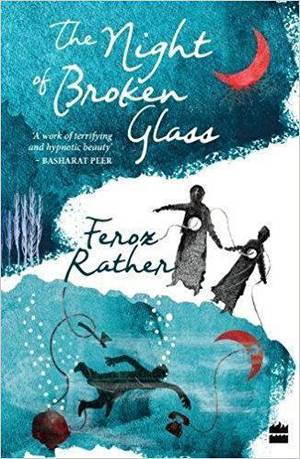
Fiction has the power to transform our perceptions about peoples and places. Feroz Rather’s The Night of Broken Glassis such a book; it hits you right in the gut. The author peeks into the dark, festering heart of Kashmiri society, while dramatising the spectacle of military violence. Recurring characters interconnect the 13 chapters/ short stories of the novel. Through these characters the author reveals the larger issues of religion, caste and gender that shape Kashmir.
The first story, ‘The Old Man in the Cottage’, is a disturbing tale of unfulfilled revenge, narrated by a man who seethes with an anger he has buried inside for 25 years. He broods and savours the idea of killing a policeman who tortured him along with Major S, a sadistic military man.
Major S’s presence hovers like a dark cloud over the lives of all the characters. After inflicting unthinkable violence on them he has to deal with his restive subconscious. ‘The Nightmares of Major S’ captures his internal chaos acutely and is probably the most powerful story.
The author pierces the blanket of violence that envelops the lives of these characters, and draws the reader’s attention to the internal contradictions of Kashmiri society. The mosque, for example, is a site of caste hierarchy, where Gulam, a lower-caste cobbler, is under great social pressure.
When two friends, Mohsin and Tariq, are incarcerated together, I was struck by the force of Tariq’s words: “Faith, my friend, is the consolation of the weak and foolish…”
Rather’s lyricism evokes the scarred landscape beautifully. His sense of place is so strong, it reminded me of Banville and Nabokov.
Rather is a poet at heart who has decided to engage with history, a sentiment reflected in the epigraph from the Polish poet Wislawa Szymborska: “History did not greet us with triumphal fanfares/ It flung dirty sand into our eyes.”
The writer is assistant editor with New York-based magazine Café Dissensus, and writes for several publications in India and Pakistan.
The Night of Broken Glass; Feroz Rather, Harper Collins, ₹399
source: http://www.thehindu.com / The Hindu / Home> Books / by Adil Bhat / July 07th, 2018
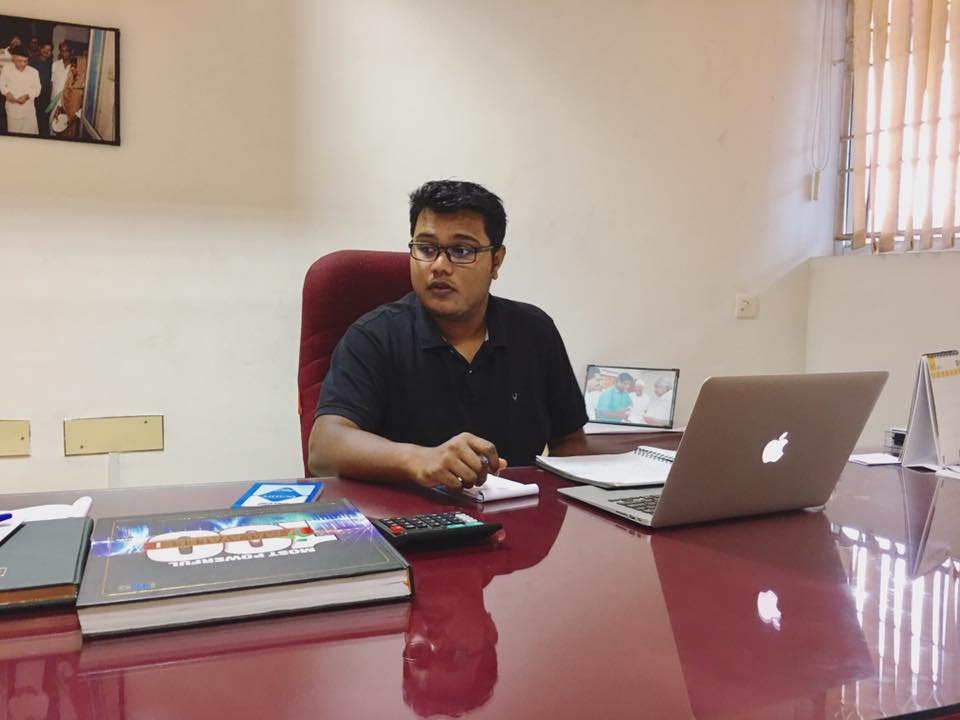
Today, Jawad is the managing director of TNM Online Solutions, a multi-crore IT establishment that deals with e-commerce, web designing and app development, and has a large clientele base from across the world.
It was a computer gifted to TNM Jawad which overturned his fortune and changed his life for the better. The 21-year-old from Kannur, Kerala, is a millionaire today and owns a company that rakes in an annual income of ₹2 crore. He also owns a house and a BMW car—and all this is thanks to Google!
This is the inspiring story of an enterprising youngster who entered uncharted territory at a very young age and emerged a winner through sheer hard work and trust in his abilities.
Today, Jawad is the managing director of TNM Online Solutions, a multi-crore IT establishment that deals with e-commerce, web designing and app development, and has a large clientele base from across the world.
But let’s go back to where it all began.
All of 10, a young Jawad made every possible use of the computer his father had gifted him along with an internet connection. Interestingly, Jawad’s original name is Mohammad Jawad TN, and it was his father who created his Gmail ID.
The 21-year-old genius.
“At that point, the user ID with my name wasn’t available, and instead Google came up with the suggestion ‘TNM Jawad’, and the name stuck! When I look back, that instance was the beginning of everything good in my life,” says the 21-year-old to The Better India.
Back then, Orkut and similar social networking sites were the rage, and this always intrigued Jawad. “I was keen to learn about everything—like how websites were created and how they worked and spent most of my after-school hours in the same pursuit. You could say that I was addicted to the computer but in a good way,” he recalls.
He soon learnt the basics of blogging and web design through free website building applications and even made a few blogs on his own. By the time he was a Class 10 student, he had launched a website along with his classmate, Srirag, named jasri.tk.
“Both of us were equally passionate about everything web related, and this was our first outing. However, we couldn’t afford a dot-com domain since we didn’t have any pocket money, so we created the site through a free domain,” Jawad adds.
Even as this went on, Jawad made sure that his studies never suffered. After scoring an ‘A1’ grade in all subjects in his exams, he had a lot of time on his hands and decided to explore the field further. He spent his vacation time understanding how great performing websites were different and what made them better.
By then, Jawad’s interest started becoming more pronounced. Realizing that there was a looming scope for website development, he decided to take the plunge by registering his first domain name—TNM Online Solutions—and running it as a virtual company. He started out by announcing on Facebook about designing a website at prices starting from ₹1,000.
Soon enough, enquiries started pouring in, but he admits to being technically ill-equipped to handle almost 99 percent of the queries that came his way.
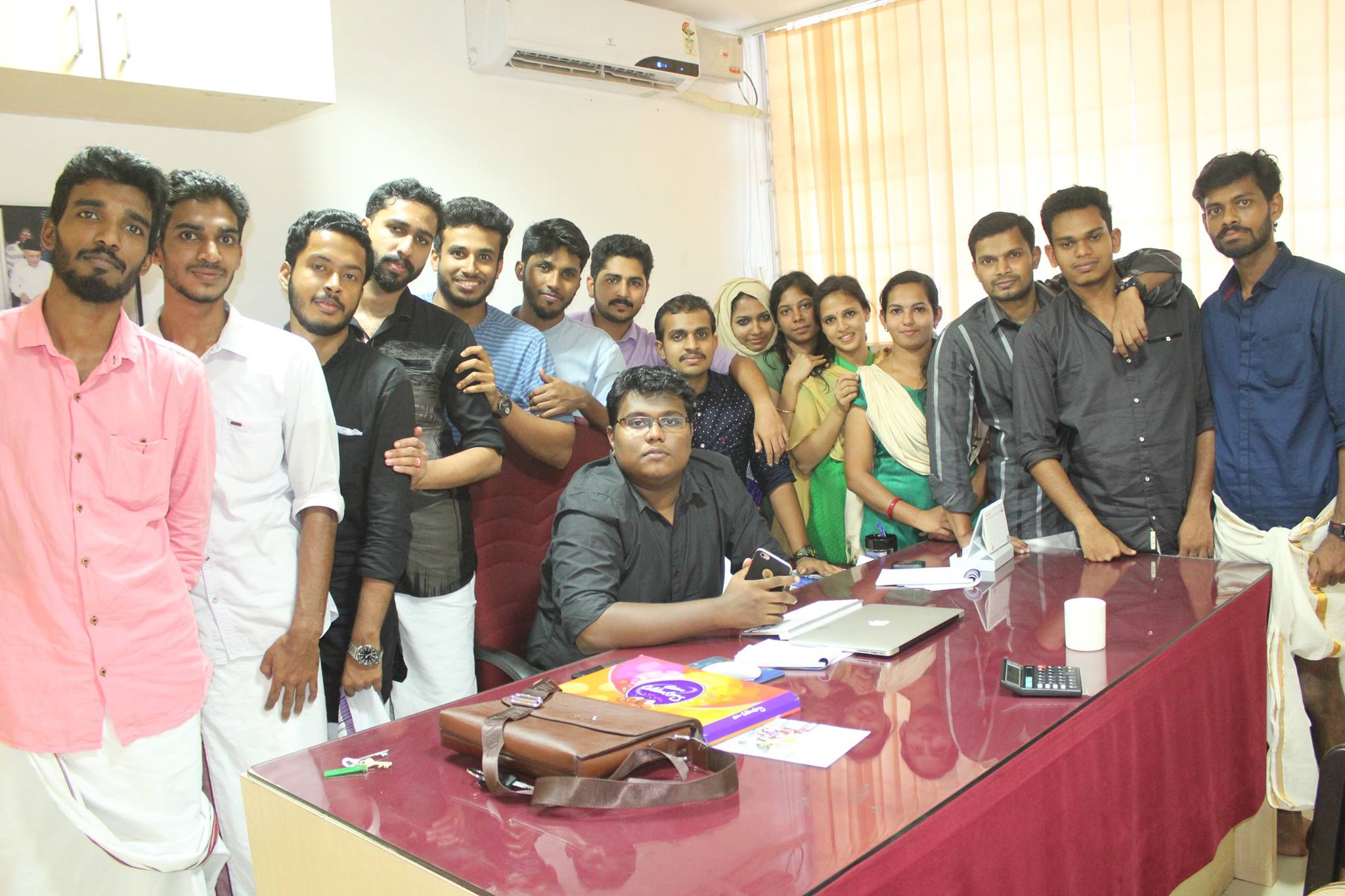
Jawad and his workforce.
“That is when I realised that I lacked strong tech-based skills that are important for website development, and to learn more, I even visited a couple of website design companies in Kannur and saw how they worked,” says Jawad.
When nothing seemed to be working for Jawad, the silver lining came in the form of a teacher from his school (where he was pursuing his higher secondary education) who had seen his Facebook post about website building. “Her brother had been an interior designer and was in need of a website. She came looking for me and requested if I could help, and guaranteed that she would pay the full amount I had quoted,” he recalls.
That was the first website formally developed under TNM Online solutions. “My teacher paid me the first ever remuneration I’d ever received in my life. Until then my folks at home had no clue about the company, so naturally, my mother, Fareeda, was shocked when I handed over an amount of ₹2,500 to her, and I had to explain what had happened,” laughs Jawad.
Somewhere around this time, Jawad’s family started grappling with a severe financial crunch after his father, who had been working in the banking sector in Dubai had to leave his job and return to India.
“Things started going from bad to worse, and I knew there was no time to brood over what had happened. Instead, I raised the subject of starting my own company to my parents and requested my father to somehow source ₹1 lakh for the venture. Knowing my penchant for computers and proclivity for web-based work, they wholeheartedly supported my ambition,” Jawad says.
In the meantime, he had signed up with an IT academy in Kannur, where he spent about a month professionally learning about website building and designing. This became yet another landmark turn in his life, as Jibin and Dinil, two of his teachers at the academy, agreed to work for him as salaried employees.
And thus on 23 June 2013, 17-year-old Jawad flagged off TNM Online Solutions at a small office in South Bazaar. Ably juggling school and work, Jawad would rush from school to office and work till 9:00 p.m., following which he would discuss business with clients till 2:00 a.m.
Jawad’s mother, whom he calls his backbone, was a constant pillar of support throughout his days of struggle.
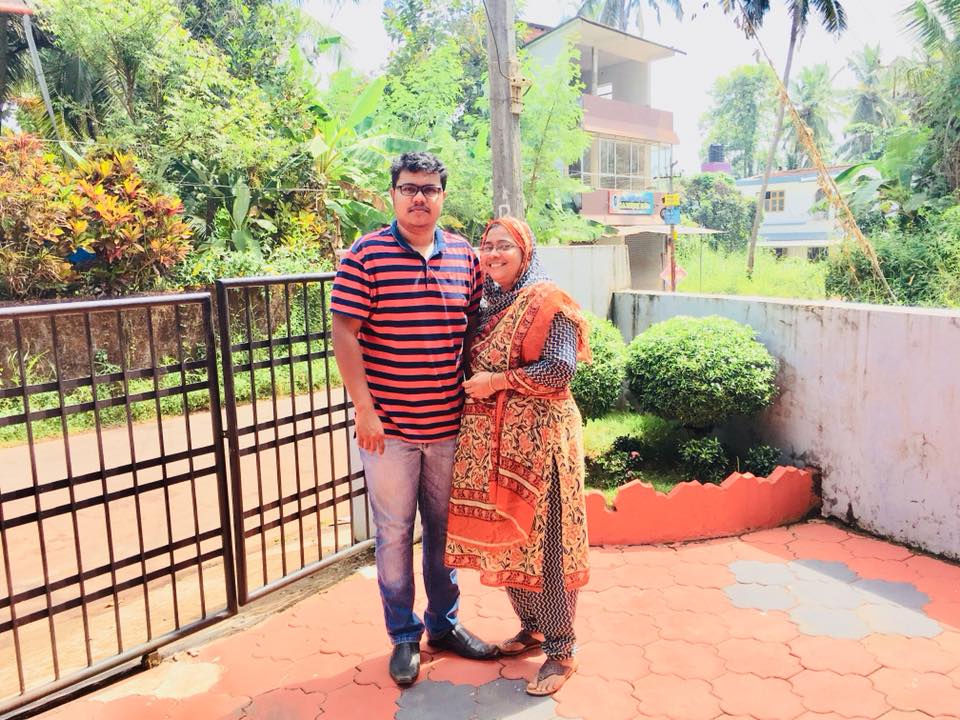
Jawad with his umma, Fareeda.
What makes his commitment even more worthy of appreciation is that he managed to score 85 percent in his higher secondary exams.
However, nothing in life comes devoid of obstacles.
Jawad had been offering designing services at a paltry sum, and this provision wasn’t enough to cover the company expenses that included office rent and employee salaries. Also, business was slow, and the team was only getting 1-2 projects per month. That is when his mother stepped in and offered to pledge her golden bangles for money, as she was against the idea of not paying the employees on time.
After two years of testing times and learning curves, TNM Online solutions had worked with over 100 small-scale clients within Kerala itself. “In this time, I learnt that more than revenue generation, it is one’s portfolio that matters,” he adds.
Jawad cites his participation in the YES Kerala Summit for young entrepreneurs that gave him and his venture the visibility it needed and brought in many new projects, as a landmark achievement in his career.
The young man was always keen on living in his own home because, despite the fact that his father had a well-paid job while he was abroad, his family had always lived in rented houses. At the age of 19, he fulfilled this dream by building a home of his own in Varam.
Today, the 21-year-old works with clients from over 18 countries and has opened an office in Dubai, which has a clientele base of over 900.
The young man with his prized possession.
Another significant trajectory for TNM Online Solutions started when Jawad started incorporating Search Engine Optimisation (SEO) for the websites he created, making it much easier for websites to be found during a search.
For his incredible achievements at such a young age, Jawad was recently felicitated in the UAE and bestowed with an award by Dr Ram Buxani.
At present, Jawad is busy with a new initiative. He has started the TNM academy that provides professional training in areas like web designing and digital marketing to youngsters. The academy was recently inaugurated in Kannur and is open for anyone, irrespective of age.
Jawad’s resilience and determination deserve to be admired and recognised, and his story will surely motivate everyone. We wish him great success in life and hope that all his future endeavours are fruitful.
Maihar, MADHYA PRADESH / Kolkata, WEST BENGAL / San Alselmo – California, USA :
Kolkata :
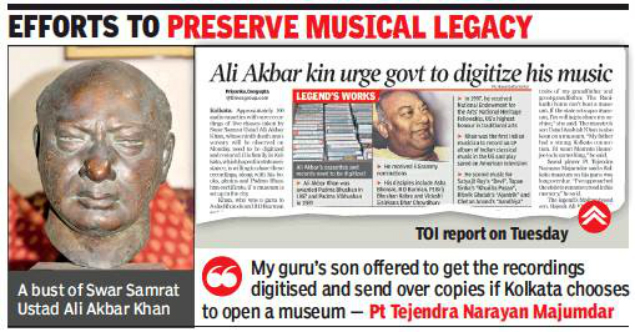
A day after Ustad Ali Akbar Khan’s family in Kolkata urged the government to digitise his 100-odd audio cassettes, offers to restore his works started pouring in. On Khan’s ninth death anniversary, TOI had reported about how the rare recordings of the Swar Samrat faced the risk of being lost forever.
On Monday, Raki Sree Eleperuma showed TOI the collection of her grandfather’s recordings of bandishes as well as orchestra pieces. The audio cassettes are currently with Raki’s mother. “They urgently need digitisation. It’s not possible for an individual to professionally treat these tapes with the latest technology to ensure long-time preservation. I hope, the state government offers professional expertise to preserve them properly,” she told TOI.
Immediately after the article was shared on social media by Khan’s disciple Pt Tejendra Narayan Majumdar, the legend’s California-based son responded. “I was so happy to see my guru’s son — Alam Khan – react immediately. He offered to get the recordings digitised at the Ali Akbar Khan library and send over copies if Kolkata chooses to open a museum. He also wanted to discuss this with Raki. Kishore Merchant — an art connoisseur in Mumbai — has also offered to help,” said Majumdar.
National Award-winning producer Sani Ghosh Ray was equally keen to chip in and help in the digitisation process. “These are part of our heritage. I don’t have any idea about the amount of money that is required to digitise them. But I’m ready to do my bit to get the funding for preserving this priceless collection. We just can’t let the recording get destroyed. If required, one can try to get crowdfunding,” he said from Mumbai.
Raki is happy that music connoisseurs are showing this interest in preserving a legacy. “I’m glad. I hope the government comes forward to digitise this collection,” she said.
source: http://www.timesofindia.indiatimes.com / The Times of India / Home> News> City News> Kolkata News / by Priyanka Dasgupta / TNN / June 20th, 2018
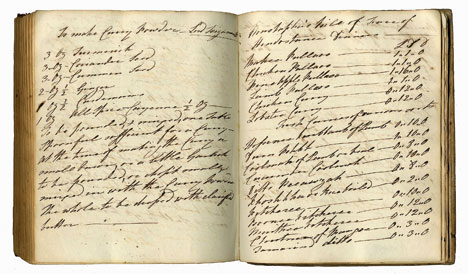
RICH DIET: A handwritten cookery manuscript containing a glimpse of the menu from England’s first Indian restaurant has sold for $11,344 (Rs 7.6 lakh) at a London book fair.
It refers to dishes like “pineapple pullaoo” and “chicken currey” from the Hindoostane Dinner and Hooka Smoking Club, opened in 1809 at Portman Square, London, by Sake Dean Mahomed, whose roots lay in Bihar.
“This is the first known record of a priced menu from Britain’s first Indian restaurant – at a time when printed menus were rarely available,” said Brian Lake of Jarndyce Antiquarian Booksellers in London, which sold the volume at the ABA Rare Book Fair to an American institution last month.
The manuscript, titled Receipt Book 1786 on the front, also contains handwritten recipes and receipts. It includes a two-page “bill of fare” from Hindoostane, listing 25 Indian dishes with prices.
These include makee pullaoo (1.1.0 pounds), pineapple pullaoo (1.16.0 pounds), chicken currey (0.12.0 pounds), lobster curry (0.12.0 pounds), coolmah of lamb or veal (0.8.0 pounds), together with breads, chutneys and other dishes.
It ends by noting that there are “various other dishes too numerous for insertion”.
Towards the end is a recipe “to make a curry powder”, attributed to Lord Teignmouth (1751-1834), who was governor-general of Bengal between 1793 and 1797 and later became a patron of Mahomed’s restaurant.
Mahomed went bankrupt in 1812, and the eatery struggled on as Hindostanee Coffee House under a new management before disappearing in 1833.
source: http://www.telegraphindia.com / The Telegraph,Calcutta,India / Home> India / PTI / June 04th, 2018
In the heart of Hazratganj, at the cut which turns into Lalbagh, stands a large bank. The cars and two-wheelers parked there spill onto the road. There are vendors, mechanics, and just people waiting to go back into the bank when the clerk beckons them. The atmosphere looks like any bland public sector office.
However, a few steps into the compound will lead you to a large colonial-era house. The exterior is yellowing, the plaster is coming off but the sheen of its wooden door frames is intact. The windows, too, retain the same glass, broken at several places but reflecting, literally, the charm of what the house must have seen through the years.
Called No. 2 Mall Road by the family that lived there and generations after it, the house did not belong to ordinary people. It was the abode of one of the finest writers Lucknow has produced.
Author Attia Hosain was born in that house in 1913 and lived there for the first 19 years of her life. Traces of the house are found in her only but much acclaimed novel, ‘Sunlight on a Broken Column’. It is also part of the Masters’ in English syllabus at Delhi University.
“The front part was my grandfather’s domain — a big study filled with books. Here he entertained visitors. The rear part of the house was my grandmother’s domain. Behind the house was a garden. There was a second house, called the small house, but in fact two stories high, and each of the children had their own rooms,” says Shama Habibullah, Attia’s daughter, now 75 years old. She is a filmmaker and lives in Mumbai. She spent a large part of her childhood there.
The house was sold to government in 1956. Attia’s older brother sold it because zamindari was abolished and no one had the means to maintain a house of that size. Besides, he was nominated for foreign service and had to leave India. “No matter how much we miss it, at that time, selling the house was the best solution and it was the right thing to do,” says Shama.
Eighty-six year-old Shahid Mushir Kidwai was born in No. 2 Mall Road in 1929. “I lived there for the first 10 years of his life. I used to go to La Martiniere College from there,” says Kidwai, the son of Attia’s eldest sister. Attia khala is special to him. “She loved me dearly. When my mother was carrying me, she felt it would be a daughter but Attia khala said she would have a son. When I was born, Attia khala was delighted.”
Kidwai vividly remembers Attia’s wedding in 1933. “Her husband Ali Bahadur Habibullah’s family lived across the street in Hazratganj. He was my aunt’s son. We used to have lot of fun running across both houses. It was a beautiful wedding.” Many characters in Attia’s stories are people Kidwai saw in his childhood. “From a servant we had to a pet dog, many have figured in her stories on some form or the other,” he says. Not only the family, but several homeless and destitute people lived in that house, that had exquisite Carrara marble floors. “After it was sold, whenever my mother, her siblings or their children passed by that side in Ganj, they never looked at the house. Such was the pain of losing it,” he says. “It is a period piece. It could have been a heritage building. Now, there is a garbage heap in front of it. People spit against the walls. It is sad,” says a family member.
Attia left India in 1947 when her husband was sent on an assignment to England. However, they never knew they wouldn’t come back. “The Partition of India was a major setback to her. She was distraught. She didn’t want to see the pain of partition in India. Hence, she stayed in Britain.
But Lucknow never left her,” says Shama. There is a poem, The City, by CP Cavafy. That best describes her bond with Lucknow, she says. The memories of Lucknow that Attia instilled in Shama are what brought Shama back to India. In the 1990s, when she was not in the best of heath, there were restrictions on her food. However, during a trip to Lucknow, she asked for kebabs and they did her no harm. Instead, she gained healthy weight and felt much better. “It wasn’t disease but the atmosphere that made her unwell. The atmosphere of Lucknow cured her,” says a member of the family.
Attia died in January 1998 in England.
In 2013, Shama and her brother filmmaker Waris Husein organized a small function to mark her centenary year. That was their last visit to Lucknow. There were films, book readings and recordings at the event. About the house, Shama says, “The house is a symbol of a Lucknow kept alive only in writings and memories. Attia took these memories to the world. She made the story of her displacement a story of everyone else.”
Attia’s works Phoenix Fled, 1953 Sunlight on a Broken Column, 1961 Cooking the Indian Way, 1967 Distant Traveller: New and Selected Fiction, 2013 (Chapters from an unfinished novel and unpublished stories)
The last work The last literary piece Attia created was not written but recorded by her. It was for a compilation called “Voices of the Crossing”. It was about the impact of Britain on writers from Asia. Due to ill-heath and failing eyesight, Attia recorded the chapter “Deep Roots” and it was transcribed and printed in big fonts for her to verify. She spoke of Partition in it. “This can be termed her last work,” says Shama
Shakespearean Urdu at BBC Attia was a born actor, Shama says. Working for the Urdu Service of BBC in England, Attia was once playing Lady Macbeth. The iconic dagger scene, Shama says, is one she can never forget. “Khoon, khoon”, she went. This was Shakespearean Urdu I was listening to on BBC.” She adds in the same breath that it was unfortunate that AIR, in 1995, could not record her when she visited Lucknow. “My mother and I went to AIR for a possible recording show but they said their tape recorder wasn’t working!”
source: http://www.timesofindia.indiatimes.com / The Times of India / Home> News> City News> Lucknow News / TNN / January 17th, 2016
Attia Hosain, writer: born Lucknow, India 20 October 1913; married Ali Bahadur Habibullah (one son, one daughter); died London 23 January 1998.
The people who came to see Attia Hosain honoured at a book launch a few weeks ago could have been forgiven for expecting a subdued and fragile old lady. After all, Hosain was 84, had had a long and turbulent life and for years had been in poor health. The launch demanded nothing of her but that she sit on stage as a sort of icon and accept the homage of her admirers, while her daughter – the film producer Shama Habibullah – read from one of her mother’s early World Service pieces.
But Hosain was not one to sit back passively letting encomiums wash over her. Despite her physical difficulties, she immediately engaged with her audience, vividly sharing her emotions and memories. Her indomitability and eloquence swept problems aside, with a degree of hauteur and a magnificent sense of style.
Those qualities must have stood her in good stead. She was born in 1913 into an aristocratic family in Lucknow – a city that is a byword for Muslim scholarship and culture. From her father she inherited a keen interest in politics and nationalism. From her mother’s family of poets and scholars she drew a rich knowledge of Urdu, Persian and Arabic. Her knowledge of English came from an English governess, and subsequently as one of the few Indian girls at an English medium school. She was the first woman from her background to take a degree at Lucknow University.
From early on she was a communicator, first through feature articles for Indian papers, the Pioneer and the Statesman, and membership of the radical Progressive Writers’ Movement. The fiction came later, as a result – she recently speculated – of politics and dislocation.
In 1947, when India was partitioned into India and Pakistan, Hosain was in London with her husband, who had been posted the year before to the High Commission. The division of the two countries and the separation of two religious communities caused her great pain. Immensely proud of her heritage as both a Muslim and an Indian, she chose to remain in England and bring up her daughter and son – now the film director Waris Hussein – on her own. The change brought her a career as a regular broadcaster with her own women’s programme on the BBC World Service and a new perspective.
But the sense of damaged cultural roots never fully died away. “Here I am, I have chosen to live in this country which has given me so much; but I cannot get out of my blood the fact that I had the blood of my ancestors for 800 years in another country.” It was that, she said in her last piece – to be published in an anthology later this year – that drove her to write.
In 1953, Chatto and Windus brought out her book of short stories Phoenix Fled. Eight years later came Sunlight on a Broken Column, an evocative and carefully detailed novel which traces, via the story of young Laila, a society in transition. It was over 20 years, however, before the book was widely recognised. Brought out of oblivion by Virago in their splendid Modern Classics in 1988, it re-established Attia Hosain in the public eye and gave her a platform which she embraced with zest.
– Naseem Khan
source: http://www.independent.co.uk / Independent / Home> News> Obituaries / by Naseem Khan / February 05th, 1998
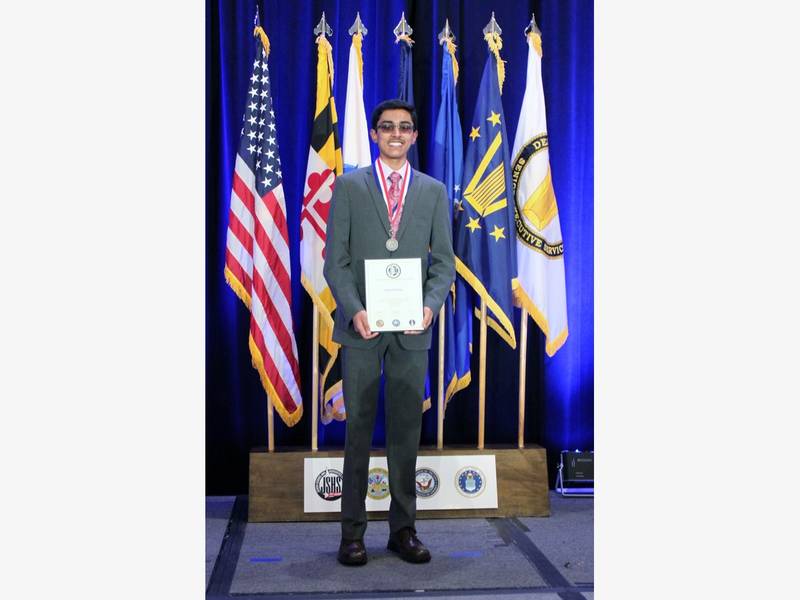
Amaan Khan placed at the National Junior Sciences and Humanities Symposium in Maryland.
PLAINFIELD, IL :
Plainfield South High School sophomore Amaan Khan won second place in the National Junior Sciences and Humanities Symposium (JSHS) held in Maryland May 2 to May 5, 2018, for creating a self-driving model car.
He advanced to the national competition after winning first place at the regional JSHS competition in March.
Khan’s model car can drive within designated lanes, stop and go at traffic lights, and avoid obstacles.
His second-place finish earned him an $8,000 scholarship in addition to the $2,000 scholarship for winning the regional event. The regional competition is open to ninth through twelfth grade students.
Most of the 97 national competitors were high school juniors and seniors. “Second in national is still really great,” Khan said.
Students compete in several categories including computer science and math, bioengineering, behavioral science, medicine, health, physics, engineering and environmental science.
Khan wants to enter the Intel International Science and Engineering Fair next year, he said.
Photo/article via District 202
source: http://www.patch.com / Plainfield Patch / Home> Kids & Family / by Shannon Antinori , Patch National Staff / May 17th, 2018