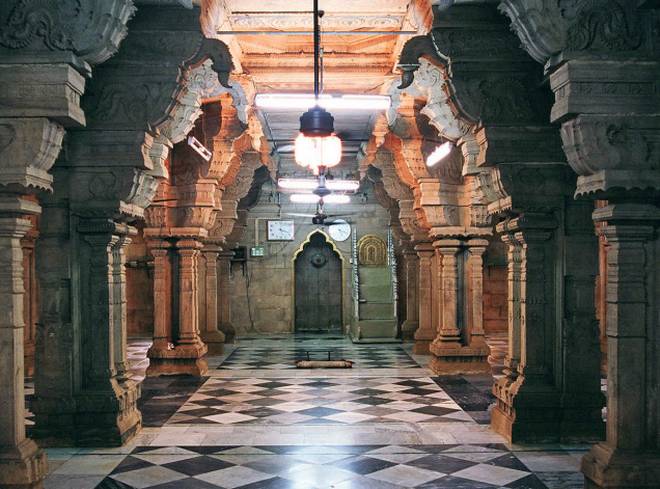
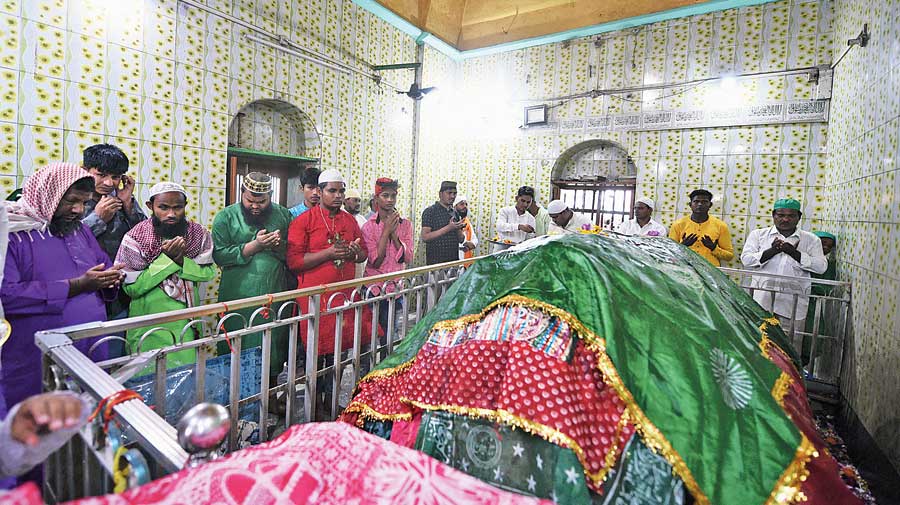
The 17th century mosque in Keezhakarai is the finest example of Dravidian-Muslim architecture.
Yaadhum , a documentary film, tracing the history and identity of the Tamil Muslim community, has won the Bronze Remi award at the 48th WorldFest -Houston – the third longest running International Film Festival in North America.
“The film is a Tamil Muslim’s journey in search of his roots and identity,” says Kombai S. Anwar, the film-maker who won the award under the Cultural/Ethnic category. There were participants from 33 countries and more than 550 international film-makers attended the festival. The film was also screened at The Hindu Literary Festival.
Distorted history
Mr. Anwar said his objective was to set right the distorted history of Muslims constructed by Western historians.
“Contrary to the popular perception that Islam made advances through violent conquests, in Tamil Nadu the religion arrived with trade. The sculpture found in the Tirukurungudi temple explains the maritime trade with the Arabs,” he said.
Inspiration
Two incidents — late writer Sujatha’s argument that thousands of Vaishnavites were killed during the Muslim invasion and Anwar’s role in helping the local community preserve the Kallupalli (the mosque made of granites) — became the inspiration for the film.
“Muslims in Tamil Nadu adapted themselves to the local cultures and combined the elements of Dravidian architectures while constructing mosques,” he said.
Dravidianarchitecture
Even though there are a lot of mosques built following the Dravidian architecture, the 17thcentury mosque in Keezhakarai constructed by Seethakathi, known as Vallal Seethakathi, remains the finest example of Dravidian-Muslim architecture.
The film covers excavations, inscriptions, old mosques built in the architectural traditions of Tamil Nadu and Kerala, literature and interviews with well-known historians.
It attempts to correct the distorted historical account of how the community came to the State
source: http://www.thehindu.com / The Hindu / Home> News> States> Tamil Nadu / by B. Kolappan / Chennai – May 15th, 2015
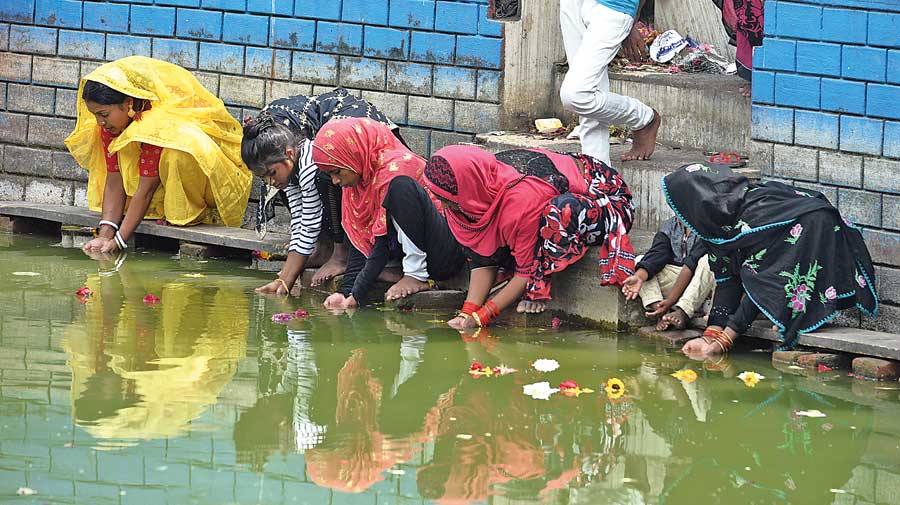
A Hindu woman (in yellow sari) prays at the pond in Ghutiari Sharif compound with Muslim women / pix: Gautam Bose
A BJP rally kept raising high-pitched “Jai Shri Ram” cries as it marched along the Baruipur-Canning Road in South 24-Parganas on Friday afternoon.
Slogans in support of the incumbent regime in Delhi were belted thick and fast and scorn was heaped on “infiltrators and termites”. It was around 12.30pm and the road was not busy. But some cars were stalled by the rally.
One of them was headed to a shrine dedicated to a Muslim saint, 35km from the heart of Calcutta and two stops before Canning, the gateway to the Sunderbans. All the occupants of the car were Hindus.
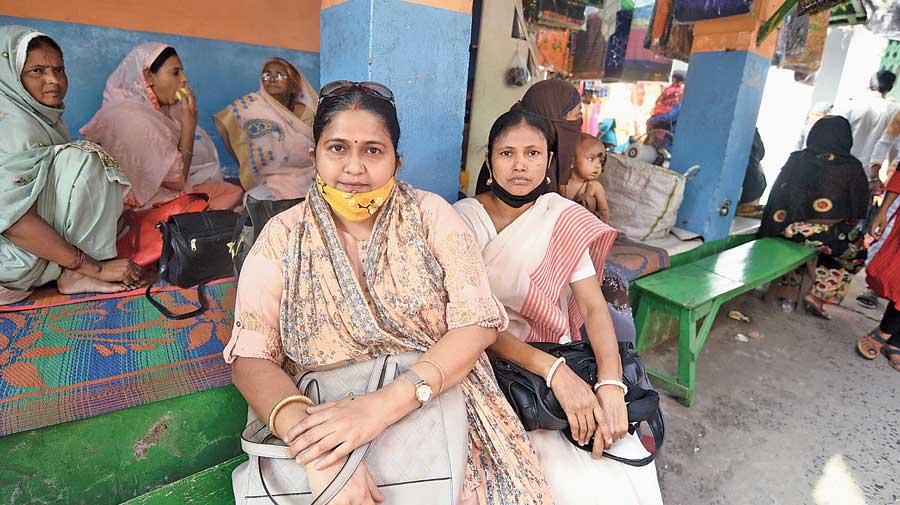
Debi Majumder (left) and Umme Habiba Laskar at the Ghutiari Sharif shrine on March 26. Majumder is a Lake Market resident . Laskar is an ayah employed by a neighbour of Majumder. The picture was taken minutes after the two dipped their palms into the pond together / pic: Gautam Bose
“I am going to Ghutiari Sharif for the first time. I have heard that if you pray sincerely, Ghazi baba answers your prayers,” said Suparna Dutta, 22, part of the group from Garia.
A suburb in South 24-Parganas, Ghutiari Sharif is known for the mazaar (resting place) of Pir Ghazi Mubarak Ali, a revered 17th century figure.
It is also a testament to the secular character of the popular devotional culture of Bengal at a time religious polarisation is the dominant narrative everywhere from political rallies to election manifestos.
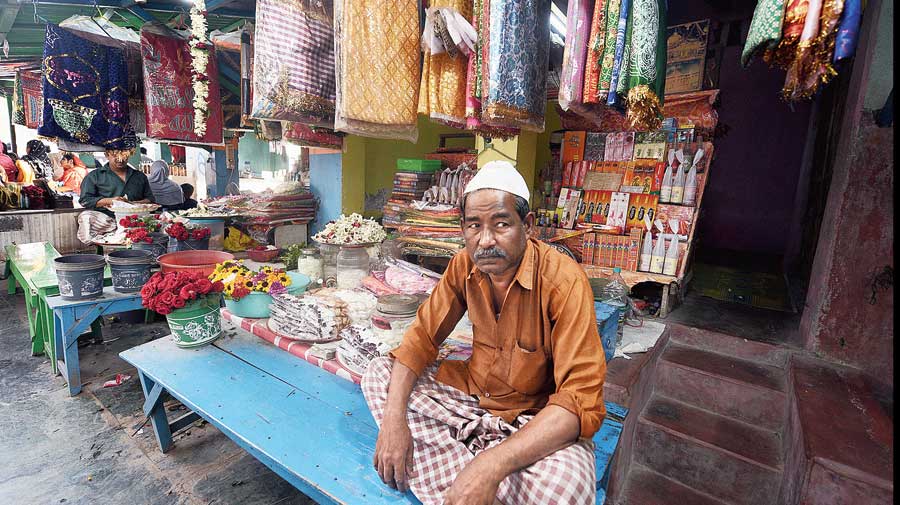
Salim Dewan, 65, who owns a store selling incense sticks, flowers, chadars and other objects offered to the Pir’s resting place / pix: Gautam Bose
Legends and folklore in Bengal are often a part of everyday life, transcending barriers of religion and caste. When this reporter visited the shrine on Friday, scores of women with sindoor-smeared foreheads were seen dipping their palms into a pond in the shrine compound, praying silently to have their wishes (manat) fulfilled.
The shrine embodied the deep-rooted syncretism in Bengal’s culture, something that social scientists said would pose a formidable challenge to any political party seeking to polarise voters.
That syncretism was perhaps best represented by an image of two women — Debi Majumder and Umme Habiba Laskar — dipping their palms together in the pond.
Majumder, a first-timer at Ghutiari Sharif, had come from her home in Lake Market. She came to know of the place from Laskar, an ayah who looks after one of Majumder’s neighbours. Laskar is a resident of Champahati, another suburb not far from Ghutiari Sharif, and has been there several times.
They had boarded a train from Ballygunge to reach the Ghutiari Sharif station on Friday. The shrine is a less than five-minute walk from the station. Around 1.30pm on Friday, the two dipped their palms into the pond together.
“I prayed at the mazaar and then made my wish at the pond. I have skipped breakfast, in keeping with the ritual,” said Majumder. Many visitors fast till they pray at the mazaar.
Suparna Naskar, who lives in Baruipur, had accompanied a Muslim friend who had come with her newborn. “She had wished for a child. Today, we have come to thank Ghazi baba for granting the wish,” said Naskar.
The shrine is a five-minute walk from the Ghutiari Sharif railway station in the Sealdah-Canning suburban section. The narrow road is dotted with shops. The resting place of the pir is at the centre of the compound. The top of the shrine has a mosaic dome with four towers.
Legend has it that the area, then part of the Sunderbans, was hit by a severe drought four centuries ago. Pir Ghazi Mubarak Ali is said to have brought rainfall to the area. He is also said to have cured a Hindu king, Madan Roy, from a severe bout of illness, after which Roy gifted him swathes of land. The mazaar stands on that land.
“Baba’s spirit still endures, taking care of this place. He did not discriminate between people. We have maintained that tradition. Around one-third of my customers are Hindus,” said Salim Dewan, 65, who owns a store selling incense sticks, flowers, chadars and other objects offered to the pir’s resting place. Dewan is a common title given to the future generations of the pir, some of whom are also part of the managing committee of the shrine.
“Many such mazaars and dargahs in Bengal are entrenched in a syncretic culture. The devotees come from all faiths, light incense sticks and offer sinni (a sweet concoction of milk, flour, bananas, raisins and other fruits, usually made during pujas in Bengali homes) and other homely food to the presiding saint,” said Epsita Halder, who teaches comparative literature at Jadavpur University and has researched on the scriptural understanding and popular devotionalism of vernacular Islam in Bengal.
“In medieval Bengal, many Islamic preachers became popular among the common people because they spoke in a simple language that everyone could connect with. They were not heavy on scriptural understanding of a religion but talked about devotion as a way of life,” Halder said.
Ghutiari Sharif falls under Canning West Assembly seat, won by Trinamul’s Shyamal Mondal in 2016. This time, the ruling party has fielded Paresh Ram Das. His main contender is Arnab Roy of the BJP.
Roy switched sides from the TMC to the saffron camp recently and his candidature has triggered protests from local BJP workers, like at so many other places of the state.
The influence of the shrine goes far beyond one constituency.
Ghutiari Sharif hosts two major fairs in a year. One is in the first week of August, commemorating the death anniversary of the pir. The other is in June, which coincides with the famous Ambubachi Mela at the Kamakhya temple in Assam. According to the local legend, King Madan Roy, a regular at the Kamakhya temple during the fair, started a similar fair near his home after being impressed by the pir.
Special trains are run during the fairs and lakhs of people, Hindus and Muslims, throng the shrine, apart from tens of thousands every week.
Those at the helm of the shrine said they kept off politics.
“We have always practised an inclusive culture and will continue doing so, irrespective of which party comes to power,” said Siraj Dewan, caretaker of the managing committee of the shrine.
Political commentator Maidul Islam said the politics of polarisation has yielded dividends in the urban middle class but suburban and rural Bengal was a different ballgame.
“The urban middle class is divided into the conservative and the liberal sections. The conservatives have already sided with the saffron brigade. There is a deep churning in a large section of the liberals. Many of them are still undecided among the Left and Trinamul. But the syncretic culture of rural and suburban Bengal is so deep-rooted that it will not be erased in the course of one election,” he said.
The resting place of Pir Ghazi Mubarak Ali. / pix: Gautam Bose
Ghutiari Sharif is not far for the Sunderbans, the land of another syncretic legend, Bon Bibi, the protector of humans and the forest, worshipped by Hindus and Muslims alike.
“All across the Sunderbans, rituals to Bon Bibi are performed by Hindus as well as Muslims. I think it is a wonderful kind of syncretism that you see there. In popular culture, in Bengal, it is incredibly mixed. These traditions, they are impossible to pick apart and say this is Hindu and this is Muslim. I think that’s what makes the popular culture of Bengal so vibrant and so interesting,” author Amitav Ghosh, who had introduced Bon Bibi to the world, said of the legend while speaking on the occasion of a literary meet in Calcutta in February.
source: http://www.telegraphindia.com / The Telegraph Online / Home> West Bengal> Calcutta / by Debraj Mitra, Calcutta / March 31st, 2021
Mohammad Mirza is a travel writer and a social media executive from Hyderabad. He is currently based in the Middle East. His Instagram page “Mosques of India” is stocked with images of abandoned mosques with striking architecture that has remained elusive to the imaginations of present-day craftsmen.
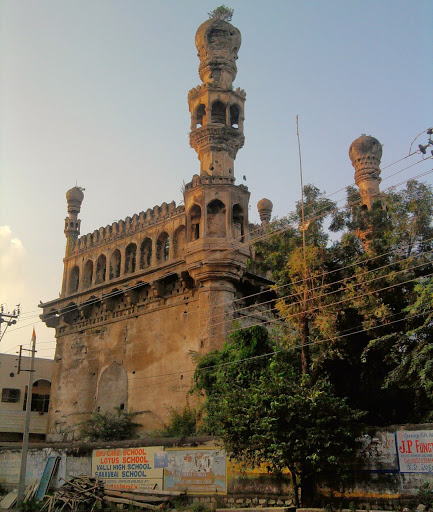
Ten years ago, walking through the bustling street of Shaikpet in Hyderabad, thirty-year-old Mohammad Mirza was distraught to see the sight of a tumbledown Shaikpet mosque. Once, the Shaikpet mosque would echo with prayers, stirring the hearts of many. Seeing the plight of the mosque, Mirza started on a journey to research and write about the abandoned “Mosques of India.”
His aim is for the Archaeological Survey of India (ASI) and Muslim Waqf Boards to recognize these mosques as state-protected monuments.
Picture Courtesy: Muslim Mirror
“I started writing about the abandoned mosques of India in lockdown. I am a history junkie and I read vastly on architecture,” Mirza told TwoCircles.net.
“I didn’t want to post the images of the mosques alone. I wanted to create awareness about their poor and dilapidated condition. I also try to extensively research and write about the historical significance and the cultural heritages of these mosques,” he said.
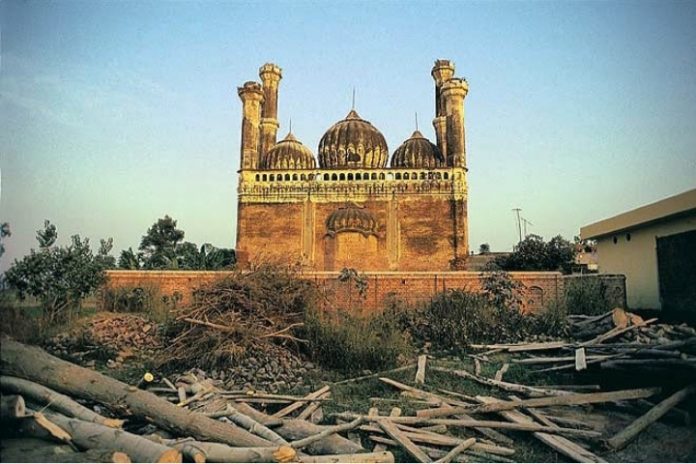
His page features an assortment of solitary mosques, which include the Palaiya Jumma Palli, one of the oldest mosques in India located at Keelakari in Tamil Nadu, which has a semblance of Dravidian Islamic Architecture and was constructed around 628 – 630 AD, the Akbari mosque in the sleepy town of Kalanaur, Punjab. The Akbari mosque is speculated to be the coronation place of Akbar the Great. Each mosque featured on the page has a unique ‘unknown’ history but are in ruins at present.
Picture Courtesy: Gurmeet Singh
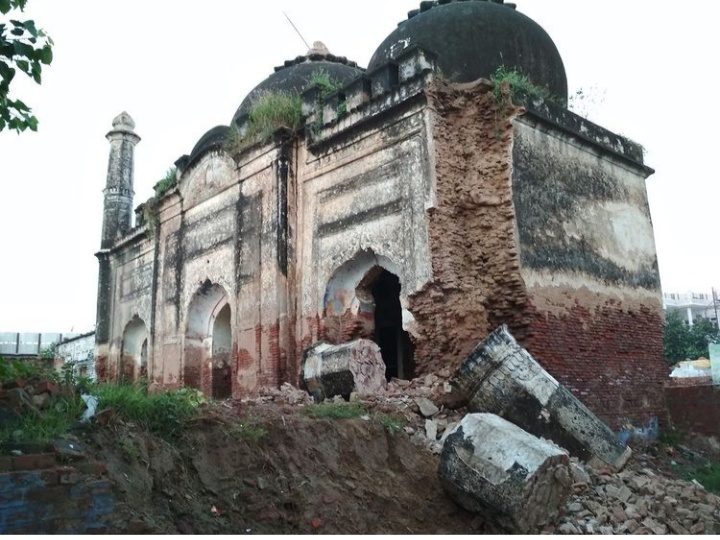
“The Arabic calligraphy and inscriptions are still intact in some mosques, but most of the mosques are in a very bad condition. The minarets and domes are broken. The walls of the mosques have plants and trees growing out of their fissures, and sometimes they are just cloaked in algae,” says Mirza.
Mirza archives the heritage of these mosques by doing ‘short series’ items on these old and abandoned mosques. “The short series helps people to focus on a particular place filled with heritage,” he says.
In his first series, he wrote about eight different “Abandoned Mosques of Haryana” (as he calls it). It featured mosques from the villages of Gondar, Fatehabad, Kahni, Turkiawas, Meham, Dujana, Urlana Kalan and Jalmana.
“Sadly today these mosques are encroached and used as residences and cowsheds. Mosques used to be a house of prayer for Muslims. There are no Muslims in these small villages to worship in these mosques as they have migrated during the partition,” he says.
In one of his series, Mirza writes that Haryana is blessed with so many historical monuments, and “there is perhaps no other state in India where historic monuments are left to vagaries of nature like they are in Haryana.” He is talking about a forsaken mosque of Fatehabad, Haryana.
Mirza says that these mosques are the symbol of India’s pluralism and they must be preserved. “Not only mosques, I see many historical monuments in ruins too. Conserving the architectural heritage of a place depends upon the state’s recognition of its value,” he said.
Mirza says that “we must rebuild all these mosques so that our future generation can see all of this great history of their predecessors.”
“Hopefully, Muslims can visit and transfer these mosques hopefully,” says one of the followers on his page.
Mirza’s work is in line with Adopt a Heritage (2018) scheme, which was jointly established by the Ministry of Tourism, Ministry of Culture and Archaeological Survey of India. The project faced repercussion for its public-private partnership to sustain the monuments of cultural heritage and for selecting the sites based on tourist footfall. Activists had then sought to take into consideration the need to preserve and manage such cultural heritage before the adoption policy.
“These mosques are not just cultural heritage, they have religious significance too. The respective estates must give recognition to them and bring them under their protection,” says Mirza and adds, “I always wanted to be an armchair historian.”
source: http://www.twocircles.net / TwoCircles.net / Home> Lead Story / by Shalini S, TwoCirlces.net / March 31st, 2021
According to the INTACH’s listing of heritage structures in the national capital, Jharna was built around 1700 in which additions were made subsequently by later rulers of Delhi.
The tomb of Bijri Khan is located on the Venkateshwara Marg. (Photo| EPS)
New Delhi :
Two inconspicuous heritage sites Jharna, a Mughal era garden in Mehrauli and the Tomb of Bijri Khan in RK Puram are set to get a new lease of life.
The Indian National Trust for Art and Cultural Heritage (INTACH) will develop and promote these historical buildings, victims of urban sprawling, as venues for cultural and literary events under the ‘adopt a heritage scheme’.
The archaeology department of the Delhi government and INTACH have also signed a memorandum of understating (MoU) for regular upkeep and sprucing up of their surroundings. Vikas Maloo, head of office (archaeology), said that the department would soon start working on a plan to develop these site for events.
“We will determine what needs to be done apart from basic amenities such as pathways, installation of dustbins, and toilets. Some requirements are site-specific, which are to be ascertained. Hopefully, both the places will be available for the events soon,” said Maloo.
According to the INTACH’s listing of heritage structures in the national capital, Jharna was built around 1700 in which additions were made subsequently by later rulers of Delhi.
The walled garden earned its name from a waterfall, which was constructed to drain off excess water from Shamshi Talab located in its vicinity. Mughal kings Akbar Shah II and Bahadur Shah Zafar added two pavilions to the place.
The Lodi-period mausoleum of Bijri Khan is located at a raised mound along Venkateshwara Marg. Khan was probably a noble. Apart from this fact, no significant information is available about the tomb and the person buried at the site. The grave inside the sepulchre has no inscription.
As per the MoU, the sites, once ready, will be available for cultural events and activities such as Sufi musical recital, poetry symposiums, book readings, theatrical plays and also for products launches. The officials, in the know of the matter, said that INTACH will tie up with different organisations and corporates for their better maintenance and create awareness about their significance.
“The idea is to promote and bring more footfalls to small monuments. The events, majorly connected with culture, will pave the way for their popularity. They can be utilised for art exhibitions, book launches, musical programmes, and other purposes. Corporates can be roped in to run a cleanliness drive etc. The association will result in their better upkeep and make people more aware of the heritage of Delhi,” said Ajay Kumar, project director, INTACH (Delhi chapter).
The sites will be available for corporate or private events on nominal charges. INTACH will ensure proper illumination and facilities such as a sitting area, benches, kiosks for refreshments, and signage or information panels about the history of the site.
source: http://www.newindianexpress.com / The New Indian Express / Home> Cities> Delhi / by Parvez Sultan, Express News Service / March 21st, 2021
Salman Shah (29) was handed over certificate of appreciation by DCP (zone-1) Suresh Mengade, flanked by senior inspector Ravindra Patil of NRI coastal police station
Navi Mumbai :
An autorickshaw driver from Belapur village was felicitated for saving a 11-year-old girl from being sexually assaulted the second time.
The NRI coastal police felicitated Salman Shah for rescuing the girl on January 31 from a 16-year-old accused.
Senior inspector Ravindra Patil, said, “On January 31, at around midnight, the accused, a stranger, called the girl outside her society, when her parents were busy at a religious gathering held in their society. He took her to an isolated spot behind a petrol pump near CBD railway station and sexually assaulted her.”
Patil added, “The juvenile accused was arrested a month after the incident when he was traced to a CBD restaurant and bar where he worked as a waiter. We booked him for rape under the Pocso Act. He has been sent to the juvenile remand home at Bhiwandi.
Auto driver Shah said, “The boy was with the minor girl on the streets in the odd hours and the girl appeared scared. When I questioned the teenager, he panicked and ran away.”
He added that the girl told me that the teenager had kidnapped her and sexually abused her behind the petrol pump . “I contacted the girl’s father with the help of the mobile number the girl gave me. I informed him that his daughter was safe and I had rescued her from a kidnapper, who escaped. Her father told that they were looking for her since two hours,” added Shah.
source: http://www.timesofindia.indiatimes.com / The Times of India / Home> City News> Navi Mumbai News / by George Mendonca / TNN / March 20th, 2021
The flight is said to have landed at 8.05 am at Jaipur Airport following which a doctor and an ambulance was arranged.
Dr Subhana Nazir
Bengaluru :
A North Western Railway Zone doctor was lauded after she assisted in the delivery of a baby girl onboard an IndiGo flight from Bengaluru to Jaipur on Wednesday. An official communique from the airlines stated that the baby was delivered with the help of the flight crew under the guidance of Dr Subhana Nazir. There were 116 passengers onboard the flight.
The flight is said to have landed at 8.05 am at Jaipur Airport following which a doctor and an ambulance was arranged. The baby and the mother are safe, the airlines said.Dr Subhana received a rousing welcome on landing at Jaipur Airport and was also lauded by her railway zone.
“Committed to duty… anytime… anywhere. Dr Subhana Nazir, a railway doctor of North Western Railways, while travelling Indigo6E from Bengaluru to Jaipur attended to the medical emergency and helped deliver a baby on board. #Proudrailwaywoman,” tweeted the NW zone.“The Indigo crew were able to help the doctor after having received special training for such situations,” said an airline representative. In October last year, the airline had faced a similar situation on a Delhi-Bengaluru flight.
Indigo permits expectant mothers till the end of 36 weeks of pregnancy, provided there are no prior complications, to board flights. If the pregnancy is between the 33rd and 36th week, a fit-to-fly certificate from the treating obstetrician, dated not more than seven days before the date of travel, is required.
source: http://www.newindianexpress.com / The New Indian Express / Home> Good News / by Express News Service / March 18th, 2021
Hamid Barkzi was part of Nikhil Chinapa’s team. (Photo: PR)
23-year-old Delhi boy Hamid Barkzi is the winner of adventure reality show MTV Roadies Revolution.
Hamid Barkzi was declared the winner of adventure reality show MTV Roadies Revolution on Saturday. Part of Nikhil Chinapa’s team, Barkzi beat Michael Ajay and Jayant Yadav to take home the winner’s title.
Having started his journey as an underdog, the 23-year-old Delhi boy, who was part of Nikhil’s Team ‘Loyalty’, impressed everyone with his performance in tasks and fair play throughout the season. He eventually emerged victorious in the finale task on Saturday.
On winning Roadies Revolution, Hamid Barkzi in a statement said, “This is one of the most special moments of my life. Roadies Revolution has been instrumental in changing my outlook towards some of the important things in life. I have had my own share of ups and downs, but that has only made me stronger to move up the ladder and emerge victorious. I can’t thank Nikhil Sir enough for this win. He has fought for his team, stood by each one of us at every step of the way. This journey wouldn’t have been possible without the support of Rannvijay Sir and other leaders, Neha Ma’am, Prince and Varun Sir, who have been wonderful mentors. This is just the beginning. Looking forward to many more challenges and victories.”
Gang leader Nikhil Chinapa also expressed his excitement. He said, “Reaching the finale for the first time amongst competitors like Prince, Neha and Varun, it’s an important win for me, Hamid and for Team ‘Loyalty’ that I’ve been so lucky to have. Roadies Revolution has been challenging but fulfilling, and I couldn’t be more grateful to have the squad by my side throughout this journey. The game was pretty intense, and everyone performed to the best of his or her ability. Hamid has been an exceptional player, emerging as one of the strongest contenders in the show.”
Launched last year in February, MTV Roadies Revolution was shot in Rishikesh, Rupnagar and Garli village before the coronavirus-induced lockdown in March. Once shoot resumed, the team shot the remaining episodes in the outskirts of Mumbai. This season, the celebrity leaders included Neha Dhupia, Nikhil Chinapa, Varun Sood and Prince Narula, while Rannvijay Singha was back as the host.
source: http://www.indianexpress.com / The Indian Express / Home> Entertainment> Television / by Sana Farzeen, Mumbai / January 17th, 2021
Starting out so early is not surprising given that he belongs to a family that runs a chain of restaurants in Chennai. His father Hashnas Abdulla is from Payyoli and mother is from Feroke.
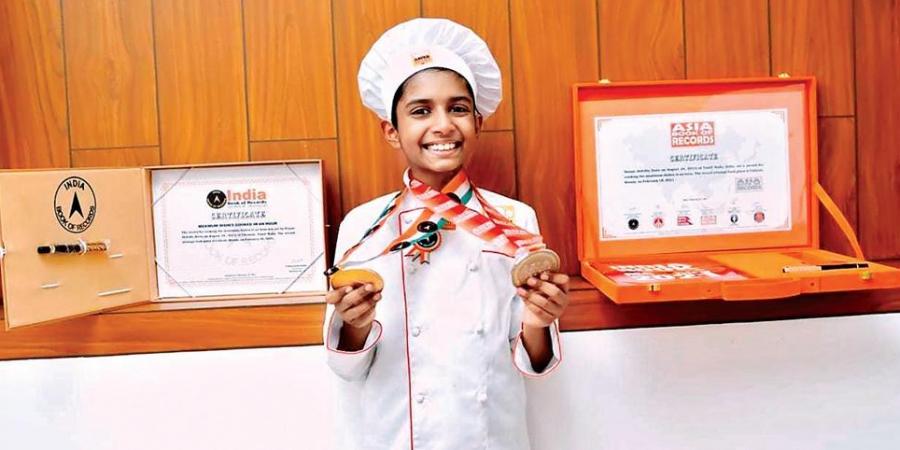
Hayan Abdulla with certificates and medals of Asia Book of Records and India Book of Records
Kozhikode :
9-year-old Hayan Abdulla of Feroke has entered the Asia Book of Records and the India Book of Records by cooking 172 dishes, including biryanis, juices, pancakes, dosas, salads, milk shakes and chocolates, in one hour.Cooking became his hobby when he was just four. “He showed interest in cooking and began helping me in kitchen,” said Rasha Abdulla, Hayan’s mother.
Starting out so early is not surprising given that he belongs to a family that runs a chain of restaurants in Chennai. His father Hashnas Abdulla is from Payyoli and mother is from Feroke. “My family noticed that I cook fast. Then I thought why not work on it and be different. For the past one week, I have been recording the time of my cooking. There were no special preparations for the competition,” said Hayan, who is a Class III student of Sherwood Hall Senior Secondary School in Chennai.
Because of Covid-19 regulations, the competition took place online. He owns a YouTube channel called Hayan Delicacies which explains the making of various dishes in detail in three languages — English, Malayalam and Tamil. While he is passionate about cooking, Hayan aspires to become a pilot. His dream culinary venture is to set up a pasta bar.
source: http://www.newindianexpress.com / The New Indian Express / Home> Good News / by Express News Service / February 19th, 2021
In the recent past, Jammu and Kashmir has been giving to the country several women professional pilots—young women who have struggled hard to get their wings to fly. The latest to join the club is Kaneez Fatima who became the second lady from Ladakh to become a pilot.
Talking to The Sunday Guardian, her mother Shakeela Bano said that her daughter’s success was because of her, the mother’s, struggle as she had single-handedly brought up Kaneez and provided her with the required education. Shakeela was divorced at a young age and devoted her life to bring up her two daughters.
Shakeela said that she saw a spark in her daughter and was very keen for her education. “I got myself transferred from Ladakh to Srinagar only for the better education of my daughter. I gave her my best as a single parent, I tried my best to give her everything she needed,” she told this newspaper.
She said she was satisfied that her daughters were settled in their lives and added that the burden of her bank loan for their education was no longer occupying her mind. Her elder daughter Nahida is an engineer with HAL. She did her engineering from Srinagar.
“I took a huge loan from a bank in Srinagar for the education of my daughters. Now it is all over. I have achieved what I wanted for my daughters,” said a smiling Shakeela. She said that she could get her daughter admitted to the Government Aviation Training Institute at Bhubaneswar, Odisha. Kaneez, according to her mother, went through a six-year training course and subsequent flying experience.
According to Shakeela, another girl from Leh was so inspired by her daughter’s struggle that she too got herself enrolled for training in the same institute.
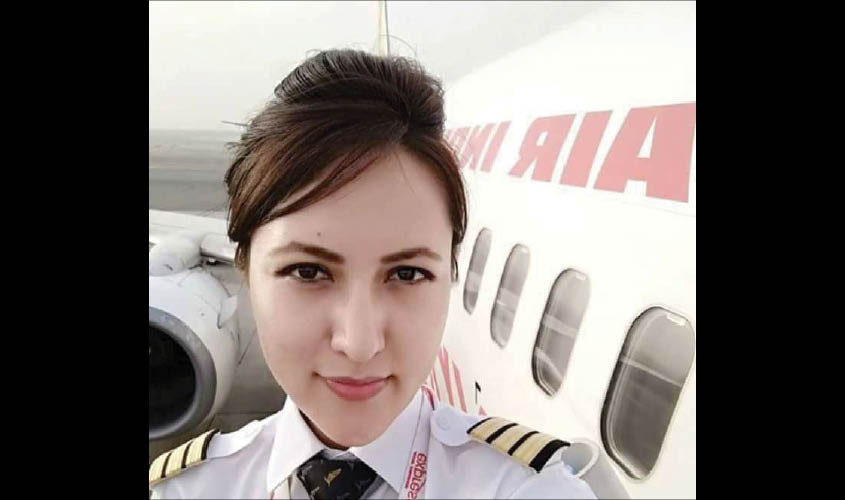
J&K came into prominence when Captain Tanvi Raina became a pilot. It was followed by other success stories of women pilots Ayesha Aziz and Iram Habib. The state got its first Muslim pilot Hina Masood, who is working with Air India now, and belongs to Ladakh. Like Hina, Kaneez has also joined Air India. Ayesha is flying fighter jets and has roots in Kashmir as her mother is from the Valley.
source: http://www.sundaygurardianlive.com / TSG – Sunday Guardian Live / Home> News / by Noor ul Qamrain / September 22nd, 2018
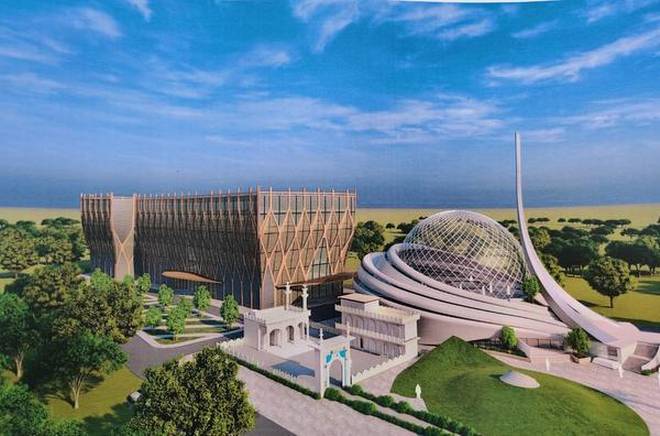
The design of a mosque and a hospital to be built on a five-acre land in Ayodhya’s Dhannipur village was unveiled on December 19, 2020. Photo: Twitter/@IndoIslamicCF
The new mosque will be bigger than Babri Masjid, says war veteran Mohammad Afzaal Ahmad Khan
The new mosque will be bigger than Babri Masjid, says war veteran Mohammad Afzaal Ahmad Khan
The trust entrusted with building a mosque and hospital in Ayodhya’s Dhannipur village on Tuesday nominated war veteran Mohammad Afzaal Ahmad Khan as its tenth trustee, officials said.
The Dhannipur mosque project was formally launched on Republic Day at Dhannipur, around 24 km from the Ram Janmabhoomi, exactly six months after the Sunni Waqf Board constituted the mosque’s trust — Indo-Islamic Cultural Foundation (IICF).
The trust was constituted following the 2019 Supreme Court verdict that backed the construction of a temple at the Ram Janmabhoomi and ruled that an alternative five-acre plot be found for a mosque in Ayodhya in lieu of the Babri Masjid.
The blueprint of the mosque complex, which includes a hospital, was unveiled on December 19.
In a virtual meeting of the IICF in Lucknow, it unanimously nominated 80-year-old Khan as its tenth trustee, officials said.
Khan is a veteran of the 1965 and 1971 wars and a recipient of the Sena Medal. He is also a recipient of the President Award – Samaj Ratan.
The Ayodhya Mosque project of the IICF is based on serving humanity. The hospital will be the centre stage of the project, Khan said.
“We will provide free of cost treatment to the ailing poor through this hospital, and our community kitchen, another important part of our project, will feed at least 1,000 people daily, and the research centre that is also part of the project will be dedicated to great freedom fighter of Awadh Maulvi Ahmadullah Shah,” he said.
The new mosque will be bigger than Babri Masjid, but won’t be a lookalike of the structure which once stood in Ramjanmabhoomi premises.
Meanwhile, the Indo-Islamic Cultural Research Centre, to be built by Uttar Pradesh Sunni Central Waqf Board in Ayodhya, would be named after freedom fighter who led the first war of Independence in the Avadh region, Maulvi Ahmadullah Shah.
The decision was taken in the IICF meeting, spokesperson of the trust, Athar Hussain said.
The research centre will have a museum, library and publications to showcase Indo-Islamic culture of shared struggle and accomplishments of Hindus and Muslims of India, he said.
Shah had led the first war of Independence in 1857 in the Avadh region.
The spokesperson said that as the Allahabad High Court has dismissed a petition filed by two Delhi-based sisters claiming ownership of the five-acre land at Dhannipur village in Ayodhya, the process to speed up the project will begin now.
source: http://www.thehindu.com / The Hindu / Home> News> National / by PTI / Ayodya, Lucknow / February 10th, 2021