Category Archives: Travel & Tourism

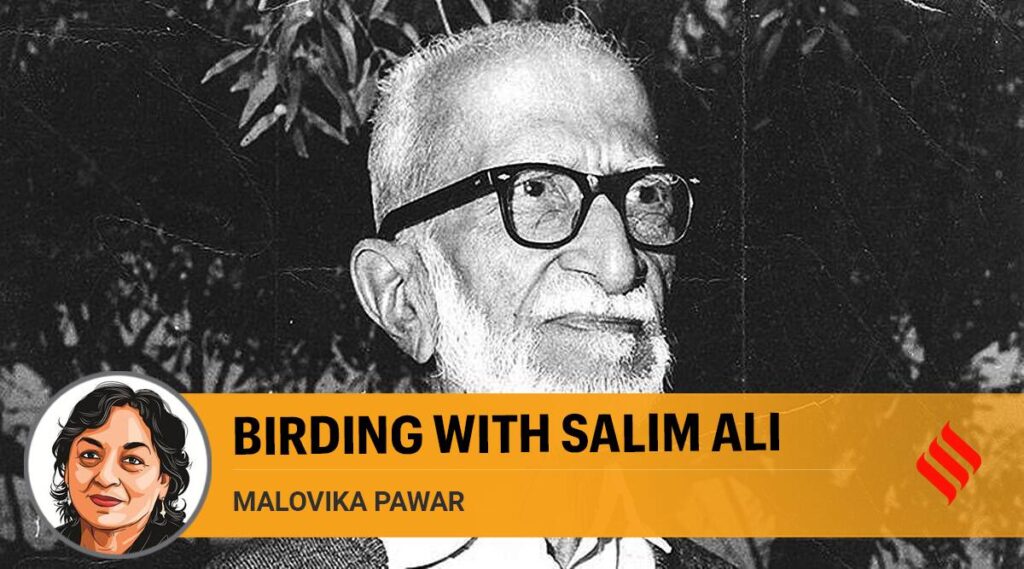
Why Salim Ali’s ‘The Book of Indian Birds’ is Indian birdwatchers’ favourite guide

Mumbai, MAHARASHTRA :

Glossier, more attractive birding books have been published in the 80 years since Ali’s guide first appeared, but it remains indispensable.

The first edition of Salim Ali’s book appeared in 1941. (Source: Wikimedia Commons)

It is a small book, my copy of Salim Ali’s The Book of Indian Birds — a hardcover version, bound in green, a mere 187 pages. I have the 1979 edition. The cover is long gone, leaving behind a few tatters of the original, but I am hard put to think of a book I have treasured and used as much. The book and an old pair of Bushnell binoculars acquired some 20 years ago are a part of my essential travelling kit, as essential as a toothbrush and comb.

The first edition of the book appeared in 1941. Jawaharlal Nehru , a keen nature lover, gifted a copy to his daughter while lodged in Dehradun jail.

Ali was quite matter-of-fact in his autobiography, The Fall of a Sparrow. According to him, the book was “acknowledged as largely responsible for creating and fostering much of the interest in birds and birdwatching seen in the country today”. Indeed, for people of a certain generation, no other guide has been valued and loved in the same way, and even among Ali’s other classic works, it is this book that has iconic status among Indian birdwatchers. While setting off on a birding trip, we would ask each other: “Have you taken your Salim Ali?” Or: “Oh, no, I forgot my Salim Ali.” It was always the small green book that we were talking of. It is the essential — the foundational — field guide for Indian birders. It is now in its 13th edition. No other book can take its place.

I came to birdwatching by serendipity. No one on either side of my family was even remotely interested in birds. By a throw of the dice, I was allotted Bharatpur for my district training in the IAS. The Keoladeo Ghana National Park beckoned. I was hooked. Ali, who had done more than anyone alive to create this “Garden of God” out of a Maharaja’s private wetlands reserve, was still alive, and visited a few times while I was there. Two bird guides, Sohan Lal and Bholu Khan, still active today, were being trained by him and other naturalists. They were to mature into fine birding guides, much in demand.

The Book of Indian Birds is where we learned our basic vocabulary of birdwatching. For instance, we learned that “pied” meant black and white, that “rufous” meant reddish-brown as in rust or oxidised iron, and that “fulvous” indicated tawny. Every carefully chosen word signified something. The clarity and the precision of expression meant that in a short half-page entry, we would have all the necessary information about a species. Each write-up was organised around five or six points — size, field characters or appearance, distribution, habits, food, call and nesting. Size was always charmingly described as myna plus, or house crow minus, or with reference to a sparrow, a bulbul or other common bird. Under “field characters”, Ali beautifully and accurately described the appearance: Colour of the feathers, the shape of the bill, silhouette in flight. A crimson-breasted barbet was “heavy-billed”, a blue-throated barbet “a gaudily coloured, dumpy green, arboreal bird” and the common grey hornbill a “clumsy brownish-grey bird”. Birds are described variously as handsome, squat, soft-plumaged, lively, dapper, dainty, spruce, slim, perky, well-groomed. The common roller or blue jay (neelkanth) is described as a “striking, Oxford and Cambridge blue bird”.

People who have always noticed the easy readability of the prose might not be aware that Ali himself gave credit to his wife, Tehmina, for ironing out the “stilted passages” and for “moderating the language”. He did not fail to praise her “remarkable feeling for colloquial English prose style”.

My Salim Ali bears the marks of the trajectory of my life, where I went, what I did. It is not merely well-worn and well-thumbed, with an unravelling spine and precarious binding; it also bears the added signs of pickle stains and tick marks in ink and pencil. Like me, it has seen better days. I know that many bird guides have been subsequently published with much better production values and better colour plates. I am aware that many of the illustrations in the Salim Ali book are decidedly not true to life. For instance, never did a rosy pastor look as pink in real life as it does in the book. But this is mere quibbling. The core and kernel of the book is that it communicates to us so successfully the magical universe of the birds of India.

The international jury which selected Ali for the J Paul Getty Wildlife Conservation Prize of the World Wildlife Fund in 1975 said in its citation: “Your message has gone high and low across the land and we are sure that weaver birds weave your initials in their nests, and swifts perform parabolas in the sky in your honour.”

On his 34th death anniversary on June 20, it is time to remember the book that Ali gave us, which took us on this magical journey to the birds.

This column first appeared in the print edition on June 19, 2021 under the title ‘Birding with Salim Ali’. The writer is a former IAS officer.

source: http://www.indianexpress.com / The Indian Express / Home> Opinion> Columns / by Malovika Pawar / June 19th, 2021

All about Rezoy, one of India’s first food delivery apps by a restaurant association

KERALA :

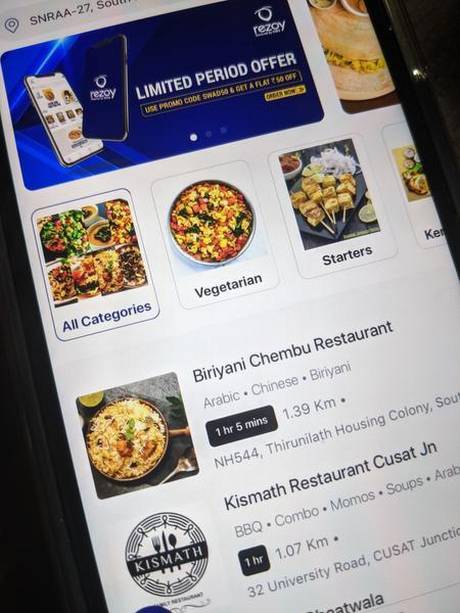
Starting with Kochi, Rezoy — launched by Kerala Hotel and Restaurant Association — is set to start full operations in other parts of the State. We explore how the app works and why it benefits the industry:

When Kerala Hotel and Restaurant Association (KHRA) launched Rezoy, the Kerala-based food delivery app, the intention was as much to support restaurateurs as much as customers, says Azees Moosa, Ernakulam district president of KHRA.

What makes Rezoy unique is that it is one of the country’s first food delivery apps by a restaurant association. The app, available to both iOS and Android users, has been developed by Ludhiana-based developer Jungleworks for KHRA.

Although the beta version was available in December 2020, it was finally formally launched in May, in Kochi. For now, the app’s reach is limited to parts of Kochi; the plan, however, is for it to be available across Kerala.

Going online was inevitable since doorstep delivery became a reality, a lesson learnt during the lockdown. “We are increasing our geo-fencing to cover a wider area. Although the app is available in Thiruvananthapuram, Malappuram and Thrissur, Rezoy does not have delivery executives there yet. We are working out the logistics and payment gateway. For now, the restaurants in these cities use their own delivery staff,” Azees says.

Working through the lockdown

Lockdown restrictions and containment zones in Kochi have thrown a spanner in KHRA’s expansion plans. “It will take time, but we are committed to this app and making it work. So far we have 300 listings [of hotels and restaurants] in Kochi . We don’t have the financial resources of the large food aggregators; our growth is bound to be slow in comparison,” he adds. Business owners have invested in developing the app and get it running, he says, adding that contributions vary based on how much a business owner can afford.

Rezoy charges a 10% commission from restaurant owners, towards salary for delivery staff and expenses incurred on delivery.

Since it is one of the first in the country, all eyes are on it. “We are the first food delivery app launched by an association such as ours, hence we have been getting enquiries from peers in neighbouring states about how it works,” says Azees.

source: http://www.thehindu.com / The Hindu / Home> Life & Style> Food / by Shilpa Nair Anand / Kochi – May31st, 2021

‘Piya ka des’: 165 years on, Nawab Wajid Ali Shah’s legacy lives on in Kolkata

Awadh, UTTAR PRADESH / Kolkata, WEST BENGAL :

The nawab, who was deposed by the British, came to plead his case with Governor General Lord Charles Canning, only to be imprisoned at Fort William.

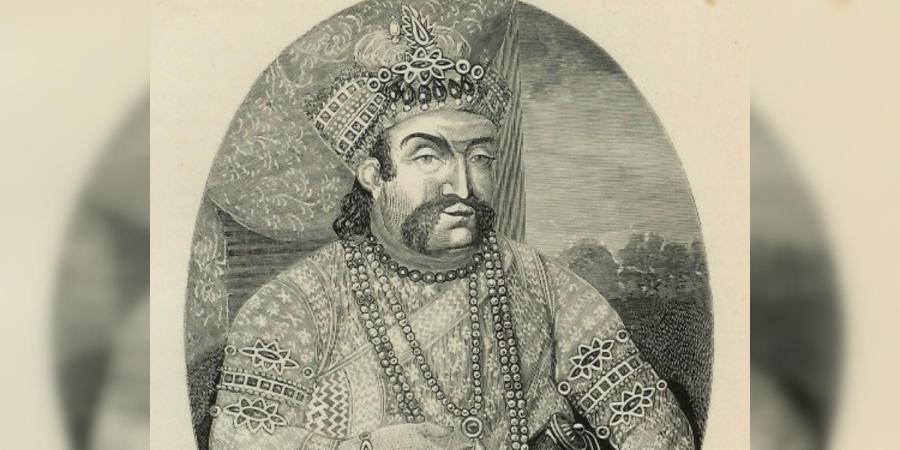
Nawab Wajid Ali Shah (Photo| Wikimedia Commons)

Kolkata :

Some 165 years ago, in the month of May, Nawab Wajid Ali Shah — the last ruler of Awadh — is believed to have written the now-famous lament “Babul Mora Naihar Chooto Jai…Mein Chali Piya ke Des” (O father, my home I leave behind…I go to my beloved’s land), as he made his way to Kolkata to live the next 31 years of his life in exile.

The nawab, who was deposed by the British, came to plead his case with Governor General Lord Charles Canning, only to be imprisoned at Fort William as the East India Company feared that he may turn into a rallying point for sepoy mutineers during the first war of Indian Independence, which broke out the very next year.

After he was freed two year later, Wajid Ali and many from his court who chose to join him in exile decided to live in his ‘Piya ke Des, gifting a legacy of music, dance, Urdu poetry, fashion and fusion cuisine to the syncretic culture of the metropolis.

“My great, great, grandfather Wajid Ali Shah, who landed here by steamer on May 13, could have chosen to live anywhere after he was freed…but he chose this city. We believe he fell in love with its culture and found remnants of his beloved Lucknow in Metiabruz or Matiaburj where he chose to settle,” said Shahenshah Mirza, 54, a civil servant and a history buff.

The nawab, over the years, built some 18 palaces and the landmark Sibtainabad Imambara in Calcutta, but his descendants live scattered as the British demolished the palazzos on one pretext or the other.

Mirza and his father, 86-year-old Sahebzada Wasif Mirza – the president of the Awadh Royal Family Association — now live in a modest though stately old house at Talbagan Lane, off Dargah Road, in the heart of the eastern metropolis.

“Just 500 of his followers came with him in 1856, but as news spread that he was building a Lucknow-like city within a city, at Metiabruz in Calcutta, many of his nobles, artisans and musicians followed and flourished here,” said Mirza.

Though much of the original mini-city which Wajid Ali built was taken over for Garden Reach shipyards, Metiabruz still exists and is now famous as a garment tailoring hub — reportedly accounting for Rs 15,000 crore worth of textile trade a year — mainly on account of the skilled tailors who came here as part of the Nawab’s entourage.

Wajid Ali, who used the pen name “Akhtarpiya” for his poetry, prose and thumris, was a known patron of arts, and with the destruction of Mughal cities in the aftermath of the 1857 revolt, Kolkata subsequently became the new cultural capital, attracting talent from all over north India.

As time progressed, Bengal’s zamindars and rich ‘bhadraloks’ (gentlemen) enthusiastically developed a taste for the Nawab’s leisure activities ‘mujra’ (music and dance soirees), kite-flying and pigeon games (kabootar baazi). “Even today some 3,000 people are engaged in the business of making kites in this city,” explained Mirza.

The nawab introduced the citys elite to Thumri, Dhrupad and Kathak. “Singers and dancers of the calibre of Bindadin Maharaj, Piyari Sahab, Gauhar Jaan, Malka Jaan, Jauhar Jaan came to settle here…Kolkata opened up to Kathak and thumris,” said well-known Shantiniketan-based musicologist Rantideb Maitra.

This, in later years, influenced the film industry and the dance and music forms became part of the pan-Indian culture.

The song ‘Babul Mora’ itself was popularised by Kolkata-based music director Rai Chand Boral when he got Kundan Lal Saigal to sing it for the movie ‘Street Singer’ in 1938, nearly 80 years after it was written.

“Kathak, though it started as a temple dance, had taken a stylised form under the Mughal patronage. When brought to Kolkata by Wajid Ali, who himself often danced as Krishna, it blossomed into a popular classical dance form,” said Shyam Banerjee, another musicologist and Urdu translator.

However, if the average Kolkatan remembers the Awadh ruler with fondness, it is because of the gastronomic legacy he left behind.

Said Manzilat Fatima, another of Wajid Ali’s descendants from his junior begum, Hazrat Mahal — who led mutineers in Lucknow and eventually escaped to Nepal — “He (Wajid Ali) tried to recreate Lucknow but with a difference…(among other things) his kitchen became an experimental centre for new dishes.”

Fatima (53), who runs the up-market restaurant Manzilat’s explained that experiments led to the inclusion of potato — then a rich man’s exotic vegetable favoured by Europeans — and eggs to Awadh’s Biryani. “New spices, coconut milk, mustard oil, all went into the making of Awadhi dishes and the result was the unique dum-pukht Kokata Biryani, now so popular all over,” she said.

The Nawab also set up a printing press in Metiabruz and came out with a weekly gazette in Urdu, adding to the literary and journalistic tradition of the city, which boasts of being the cradle to some of India’s oldest newspapers.

“We feel he was more popular in the city he chose to make his own than in Lucknow…When the legendary filmmaker, Satyajit Ray, asked my father how he saw Wajid Ali’s legacy, he had explained that it lives on, as is evident from the fact that ‘you chose to make your first Hindi movie – Shatranj ke Khilari – on a novel based on the the Awadh ruler’s life’,” added Mirza.

source: http://www.newindianexpress.com / The New Indian Express / Home> Kolkata / by PTI / May 23rd, 2021

Residents welfare group to offer free car ride, ambulance service in Bengaluru amid pandemic

Bengaluru, KARNATAKA :

A popular ambulance service the group ran during the COVID outbreak last year to cater to its residents, which stopped two months ago owing to a dip in cases, will be revived again in a week’s time.

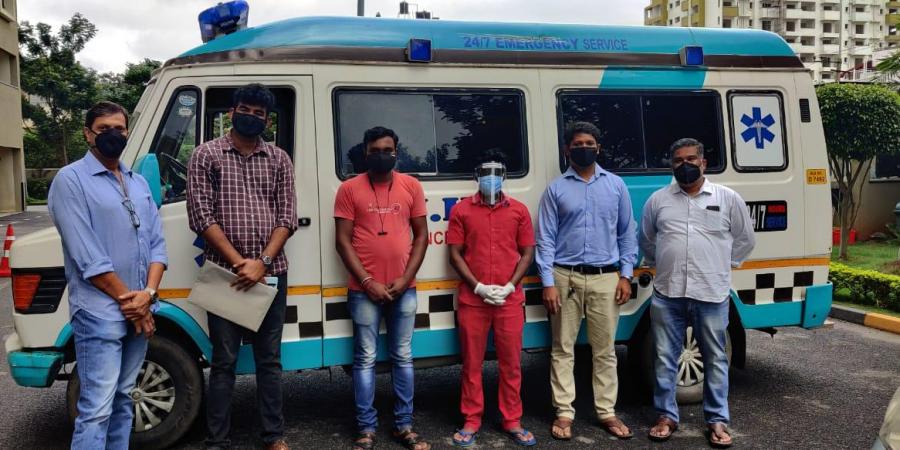
Changemakers of Kanakapura Road plan to revive its ambulance service for residents which was launched during the first COVID wave and later stopped (Photo | Special arrangement)

Bengaluru :

In light of the hardships experienced by the public to get taxis as well as ambulances during the ongoing pandemic, an umbrella organisation of over 60 resident welfare organisations in Kanakapura Road has decided to come to the rescue of residents. It will offer a car free of cost to help residents reach anywhere for treatment as well as revive the popular ambulance service it ran when the pandemic broke last year.

Speaking to The New Indian Express, Abdul Aleem, president of ‘Changemakers of Kanakapura Road’ said, “With COVID cases rising, we want to help out the nearly 30,000 residents who are our members. We facilitated arrangement of an Innova car through Sathya Sai Tourist service. Our group will bear the diesel and driver charges.”

Explaining the rationale behind it, Aleem said when members of the public use their own car to ferry their family members affected by COVID-19, there is a big risk to others using it. “We want to offer this alternative to them. We will be maintaining the vehicle in a fully sanitised condition so that it is safe for all to travel,” he said.

A popular ambulance service the group ran during the COVID outbreak last year to cater to its residents, which stopped two months ago owing to a dip in cases, will be revived again in a week’s time. “It costs us around Rs 2.4 lakh to maintain the vehicle supplied by J K Ambulance. We had collected Rs 60 per family to sustain the fuel and driver costs last time and plan to repeat it. We have three medical staff available 24×7 and 2 drivers to run the service,” he said.

A ventilator, suction apparatus, cardiac monitor, oxygen cylinder and infusion pumps are among the equipment in the ambulance.

There is a back-up arrangement with the provider so that if there is an emergency and someone has booked this ambulance, another would be supplied, he added.

source: http://www.newindianexpress.com / The New Indian Express / Home> Good News / by S Lalitha , Express News Service / May 13th, 2021

Ismail Shariff the ‘Snow Leopard Man of India’ shares his journey

TELANGANA :

What started as documenting his own life in Europe while pursuing his Masters gradually gained direction and came to focus on wildlife photography.

Hyderabad:

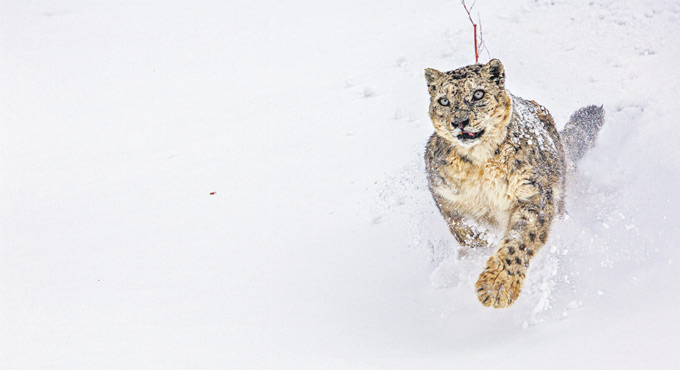
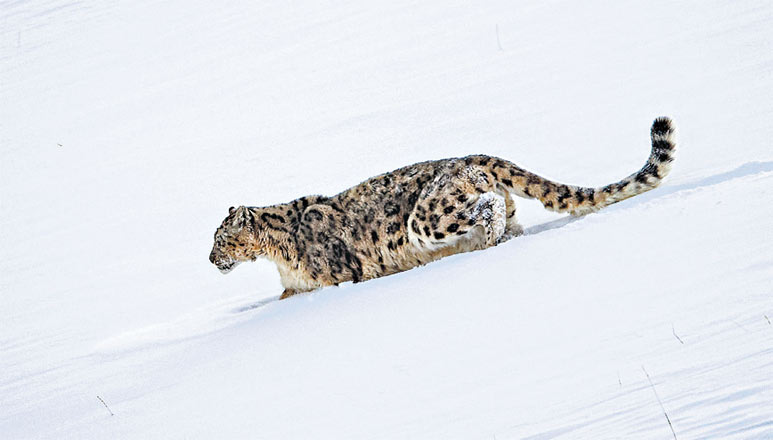
 His photographs of a snow leopard from Spiti, Himachal Pradesh broke the internet, literally. Yet the man is still calm, unassuming.

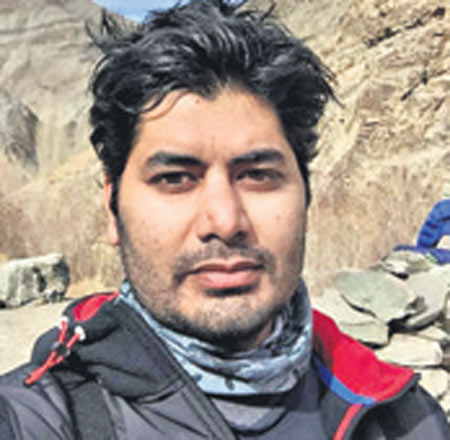
Ismail Shariff, Hyderabad-based nature and wildlife photographer, is known to wildlife and photography enthusiasts as the ‘Snow Leopard Man of India’. His long and passionate association with photography began in his student days. What started as documenting his own life in Europe while pursuing his Masters gradually gained direction and came to focus on wildlife photography.

Picking up his first camera in 2005, Ismail was treated to the magnificent sight of a huge male tiger in 2008 while on a trip to the Kanha National Park in Madhya Pradesh. That was the defining moment of his life. “It became one of the reasons for me to move back to India to pursue of wildlife photography and tourism here,” he said.

Ismail, an alumnus of the Hyderabad Public School, Begumpet, has been part of nine snow leopard expeditions in the last seven years with the recent one being in 2020, apart from several other wildlife expeditions. The first thing that strikes his mind about snow leopards is the long fluffy tail, blue eyes, thick fur and a true-blue cat attitude. Snow leopards are one of the world’s most elusive animals and the most common way to spot one is high up on the mountain ridges. After an hour or more of patient stalking in Spiti in 2017, he finally spotted a snow leopard passing by. The shots he posted on various wildlife photo websites are trending even today.

“I was obsessed with snow leopards ever since a photograph taken in 2012 by Dhritiman Mukherjee, India’s leading wildlife photographer,” said Ismail, adding that seeing the mysterious ghost of the mountains for the first time in Hemis National Park, Ladakh, was an unforgettable experience in itself.

Ismail said the snow leopard is a notoriously elusive creature. It is also listed as “Vulnerable” on the IUCN Red List since the global population is estimated to be between 4,000 to 6,000. India is believed to have less than 1,000. That adds stars to his journey from just another photographer to being called the Snow Leopard Man of India.

“There were struggles. My parents were expecting me to get a corporate job. But I chose photography as my career. It was tough initially, since you’ve to invest a lot of time and money with very uncertain returns to make a name. But at the end of the day, if you want to be successful, you have to be willing to work hard, even if it means making more than a few sacrifices along the way,” said Ismail, a Computer Science engineer from Central European
University, Budapest, Hungary.

He moved to Paris to work there for two and half years before wildlife photography took over him.

Ismail, who has had solo photography exhibitions on Snow Leopards even in Los Angeles and New York, also indulges in fine art printing. He also works with the Snow Leopard Trust in helping raise funds for their conservation efforts.

source: http://www.telanganatoday.com / Telangana Today / Home> Hyderabad / by Sowmya Sangam / May 01st, 2021

Kochi businessman gives away 15 tempos for Covid fight, turns them into ambulances

Thrikkakara (Palakkad) / Kochi, KERALA :

“I wondered if there is something I can do. My vehicles have been lying in the garage for months now, why not use them, I thought,” said Najeeb.

Najeeb in front of his tempo traveller that was recently converted into a Covid care ambulance by attaching first-aid kits and stretchers

Kochi : 

At a time when the state is grappling with the second wave of Covid, a Kochiite who owns a fleet of tempo travellers has decided to convert his vehicles into Covid-care ambulances, given the shortage of facilities in the district.

Recently, Najeeb Vellakal who hails from Thrikkakara himself faced a crisis when he couldn’t get a vehicle to drop his Covid positive staff to his hometown in Palakkad.  He converted one of his 20 tempo travellers under Zainul Travels into a Covid ambulance to drop his staff. “I removed all the seats except the long one in the back.

I bought a PPE kit for the driver and separated the driver’s cabin using a plastic sheet and dropped the Covid positive person in Palakkad,” said Najeeb, who has been in the vehicle  rental business for over 20 years. The incident, however, left him pondering over the struggles of common people during the pandemic. “I wondered if there is something I can do. My vehicles have been lying in the garage for months now, why not use them, I thought,” said Najeeb.

“It costs around Rs 10,000 to convert a traveller into an ambulance by adding stretchers, fixing oxygen cylinders and first aid kits,” he added. On a trial basis, the Ernakulam mayor suggested converting one vehicle into a Covid ambulance. 

“I am willing to convert the rest of my 15 vehicles into Covid ambulances if they agree,” Najeeb said. He also said that the ambulance will only charge an affordable rent from people, enough to pay the driver and get fuel.  The 43-year-old  has been working at Kakkanad Infopark arranging transportation for its employees. His business has been dull since work-from-home became the new norm.

You may contact Najeeb on 7907034416

source: http://www.newindianexpress.com / The New Indian Express / Home> Good News / by Aishwarya Prabhakaran, Express News Service / April 28th, 2021

Bhopal auto driver sells wife’s jewellery, converts vehicle into free ambulance for Covid patients

Bhopal, MADHYA PRADESH:

Javed Khan said he and his wife often saw painful visuals over TV, showing people die in the want of ambulance and also having to pay hefty sums to get the ambulances.

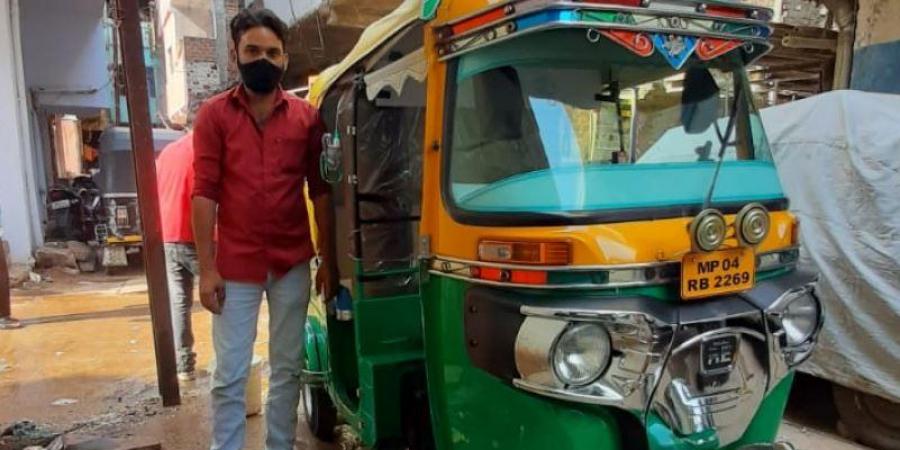
Javed Khan with his autorickshaw-ambulance in Bhopal (Photo | Special arrangement)

Bhopal :

A 34-year-old autorickshaw driver in MP capital has turned his bread-winning vehicle into free ambulance service. 

Meet Javed Khan, the Aishbag resident, who since the last three days has saved at least 15 lives by timely rushing them free of cost to different hospitals of Bhopal — which is among the top two Covid hotspots of MP.

Khan, the father of three kids (two daughters and a son), who also takes care of his three daily wage labourer brothers (who don’t have jobs owing to the corona curfew) sold his wife’s gold necklace for Rs 5,000 to fund his mission of rendering the free auto-rickshaw ambulance to Covid and other patients.

“I stocked three months’ ration for my family and subsequently used the money secured by selling wife’s necklace to fund the conversion of the autorickshaw into an ambulance. The 7 kg oxygen cylinder fitted in the auto-rickshaw has been gifted by social activist Bharti Jain,” Khan told The New Indian Express on Friday.

“Besides selling my wife’s chain, I’ve also stopped the payment of the instalment of Rs 10,500 on the purchase of the auto-rickshaw to ensure that my ambulance continues to run effectively and my family too doesn’t have any problems in the coming days. Some people have donated Rs 1,500 which too is helping my cause,” said Khan.

The money has been used to refill the cylinder, buy pulse oxymeter, sanitizer and  PPE kits and other protective gear to keep himself safe.

According to the father of three kids, for whom the auto-rickshaw was the lone bread-winner, he and wife often saw painful visuals over TV, showing people die in the want of ambulance and also having to pay hefty sums to get the ambulances.

“In agreement with my wife, I decided to start the autorickshaw-ambulance service which can be availed by anyone just by dialling my cell number 7999909494. In the last three days, I’ve rushed 15 Covid patients to hospitals, including AIIMS-BHOPAL, Hamidia Hospital and Paliwal Hospital. Even if people are willing to pay me, I tell them that this is for the human cause during the holy month of Ramzan,” Khan said.

While Khan is the lone autorickshaw driver to start this service, he also claims that there are 10-12 more autorickshaw drivers in the city, who are ready to operate a similar service if supported by generous donors.

source: http://www.newindianexpress.com / The New Indian Express / Home> Good News / by Anuraag Singh / Express News Service / April 30th, 2021

Now Muslim women have a place to unwind in Hyderabad

Hyderabad, TELANGANA :

The Luqma Studio started by Safa Society provides a platform for like-minded women to network and exchange ideas.

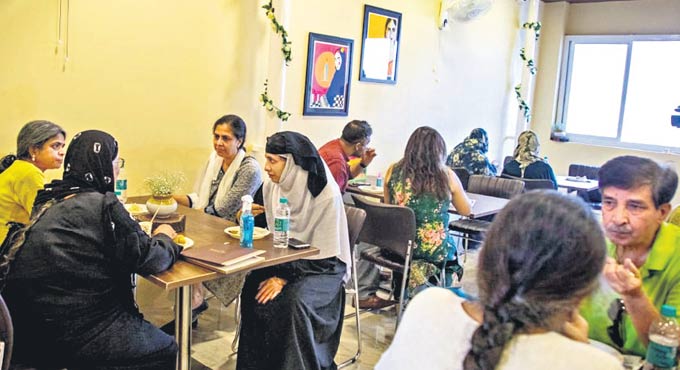
There aren’t many places for women to hang out and unwind in Hyderabad. But now, they can boast of a women-only space. Yes, Darulshifa, the heart of the old city, offers such a legroom for them. At Luqma Studio, they can let their guard down and relax — leaving their worries behind.

The unique initiative is the brainwave of Safa Society, the city-based NGO, which aims at socio-economic empowerment of women. The one-of-a-kind studio provides a much-needed platform for women to engage in dialogue, network and exchange ideas. No, Muslim women are not making a beeline to the studio as yet. That will take some time but the very idea of women-only area has gone down well with the fair sex.

Those who dropped in at the inauguration of the studio, along with the Luqma kitchen, last week were pleasantly surprised at the idea of women having a place of their own. “Don’t we need such a place in the #MeToo era,” remarked a young woman pleading anonymity.

The all-female studio is well-furnished and has room for about 25 persons. The pink-coloured walls are decked up with art portraits of women. Adjacent to the studio is the spacious Luqma kitchen, the food brand of Safa, aimed at turning ordinary women into foodpreneurs. “We want Muslim women to make use of the studio and engage in meaningful discourse. They can also showcase their talent here,” says Safa Society president, Rubina Nafees Fatima.

Rubina Nafees Fatima

The studio can be an oasis for women seeking rest and relaxation. They can order something sizzling from the kitchen next door and chit-chat leisurely, something the presence of men would hinder. The homely ambience only adds to the pleasure. There will be special events with prominent women from different fields addressing them on a range of subjects.

There are many myths about Muslim women. What adds to the confusion is people judging them through the prism of stereotypes. “Women from different communities can now intermingle and discover each other,” says Rubina.

With its safe and supportive environment, will Luqma Studio open up new vistas for women?

source: http://www.telanganatoday.com / Telangana Today / Home> Features> My Hyd / by J S Ifthekhar / April 04th, 2021

Film on Tamil Muslims wins international award

TAMIL NADU :

The 17th century mosque in Keezhakarai is the finest example of Dravidian-Muslim architecture.  

Yaadhum , a documentary film, tracing the history and identity of the Tamil Muslim community, has won the Bronze Remi award at the 48th WorldFest -Houston – the third longest running International Film Festival in North America.

“The film is a Tamil Muslim’s journey in search of his roots and identity,” says Kombai S. Anwar, the film-maker who won the award under the Cultural/Ethnic category. There were participants from 33 countries and more than 550 international film-makers attended the festival. The film was also screened at The Hindu Literary Festival.

Distorted history

Mr. Anwar said his objective was to set right the distorted history of Muslims constructed by Western historians.

“Contrary to the popular perception that Islam made advances through violent conquests, in Tamil Nadu the religion arrived with trade. The sculpture found in the Tirukurungudi temple explains the maritime trade with the Arabs,” he said.

Inspiration

Two incidents — late writer Sujatha’s argument that thousands of Vaishnavites were killed during the Muslim invasion and Anwar’s role in helping the local community preserve the Kallupalli (the mosque made of granites) — became the inspiration for the film.

“Muslims in Tamil Nadu adapted themselves to the local cultures and combined the elements of Dravidian architectures while constructing mosques,” he said.

Dravidian architecture

Even though there are a lot of mosques built following the Dravidian architecture, the 17thcentury mosque in Keezhakarai constructed by Seethakathi, known as Vallal Seethakathi, remains the finest example of Dravidian-Muslim architecture.

The film  covers excavations, inscriptions, old mosques built in the architectural traditions of Tamil Nadu and  Kerala, literature and interviews with well-known historians. 

It attempts to correct the distorted historical account of how the community came to the State

source: http://www.thehindu.com / The Hindu / Home> News> States> Tamil Nadu / by B. Kolappan / Chennai – May 15th, 2015

Ghutiari Sharif: testament to Bengal’s secular fabric

WEST BENGAL :

A Hindu woman (in yellow sari) prays at the pond in Ghutiari Sharif compound with Muslim women / pix: Gautam Bose

A BJP rally kept raising high-pitched “Jai Shri Ram” cries as it marched along the Baruipur-Canning Road in South 24-Parganas on Friday afternoon.

Slogans in support of the incumbent regime in Delhi were belted thick and fast and scorn was heaped on “infiltrators and termites”. It was around 12.30pm and the road was not busy. But some cars were stalled by the rally.

One of them was headed to a shrine dedicated to a Muslim saint, 35km from the heart of Calcutta and two stops before Canning, the gateway to the Sunderbans. All the occupants of the car were Hindus.

Debi Majumder (left) and Umme Habiba Laskar at the Ghutiari Sharif shrine on March 26. Majumder is a Lake Market resident . Laskar is an ayah employed by a neighbour of Majumder. The picture was taken minutes after the two dipped their palms into the pond together / pic: Gautam Bose

“I am going to Ghutiari Sharif for the first time. I have heard that if you pray sincerely, Ghazi baba answers your prayers,” said Suparna Dutta, 22, part of the group from Garia.

A suburb in South 24-Parganas, Ghutiari Sharif is known for the mazaar (resting place) of Pir Ghazi Mubarak Ali, a revered 17th century figure.

It is also a testament to the secular character of the popular devotional culture of Bengal at a time religious polarisation is the dominant narrative everywhere from political rallies to election manifestos.

Salim Dewan, 65, who owns a store selling incense sticks, flowers, chadars and other objects offered to the Pir’s resting place / pix: Gautam Bose

Legends and folklore in Bengal are often a part of everyday life, transcending barriers of religion and caste. When this reporter visited the shrine on Friday, scores of women with sindoor-smeared foreheads were seen dipping their palms into a pond in the shrine compound, praying silently to have their wishes (manat) fulfilled.

The shrine embodied the deep-rooted syncretism in Bengal’s culture, something that social scientists said would pose a formidable challenge to any political party seeking to polarise voters.

That syncretism was perhaps best represented by an image of two women — Debi Majumder and Umme Habiba Laskar — dipping their palms together in the pond.

Majumder, a first-timer at Ghutiari Sharif, had come from her home in Lake Market. She came to know of the place from Laskar, an ayah who looks after one of Majumder’s neighbours. Laskar is a resident of Champahati, another suburb not far from Ghutiari Sharif, and has been there several times.

They had boarded a train from Ballygunge to reach the Ghutiari Sharif station on Friday. The shrine is a less than five-minute walk from the station. Around 1.30pm on Friday, the two dipped their palms into the pond together.

“I prayed at the mazaar and then made my wish at the pond. I have skipped breakfast, in keeping with the ritual,” said Majumder. Many visitors fast till they pray at the mazaar.

Suparna Naskar, who lives in Baruipur, had accompanied a Muslim friend who had come with her newborn. “She had wished for a child. Today, we have come to thank Ghazi baba for granting the wish,” said Naskar.

The shrine is a five-minute walk from the Ghutiari Sharif railway station in the Sealdah-Canning suburban section. The narrow road is dotted with shops. The resting place of the pir is at the centre of the compound. The top of the shrine has a mosaic dome with four towers.

Legend has it that the area, then part of the Sunderbans, was hit by a severe drought four centuries ago. Pir Ghazi Mubarak Ali is said to have brought rainfall to the area. He is also said to have cured a Hindu king, Madan Roy, from a severe bout of illness, after which Roy gifted him swathes of land. The mazaar stands on that land.

“Baba’s spirit still endures, taking care of this place. He did not discriminate between people. We have maintained that tradition. Around one-third of my customers are Hindus,” said Salim Dewan, 65, who owns a store selling incense sticks, flowers, chadars and other objects offered to the pir’s resting place. Dewan is a common title given to the future generations of the pir, some of whom are also part of the managing committee of the shrine.

“Many such mazaars and dargahs in Bengal are entrenched in a syncretic culture. The devotees come from all faiths, light incense sticks and offer sinni (a sweet concoction of milk, flour, bananas, raisins and other fruits, usually made during pujas in Bengali homes) and other homely food to the presiding saint,” said Epsita Halder, who teaches comparative literature at Jadavpur University and has researched on the scriptural understanding and popular devotionalism of vernacular Islam in Bengal.

“In medieval Bengal, many Islamic preachers became popular among the common people because they spoke in a simple language that everyone could connect with. They were not heavy on scriptural understanding of a religion but talked about devotion as a way of life,” Halder said.

Ghutiari Sharif falls under Canning West Assembly seat, won by Trinamul’s Shyamal Mondal in 2016. This time, the ruling party has fielded Paresh Ram Das. His main contender is Arnab Roy of the BJP.

Roy switched sides from the TMC to the saffron camp recently and his candidature has triggered protests from local BJP workers, like at so many other places of the state.

The influence of the shrine goes far beyond one constituency.

Ghutiari Sharif hosts two major fairs in a year. One is in the first week of August, commemorating the death anniversary of the pir. The other is in June, which coincides with the famous Ambubachi Mela at the Kamakhya temple in Assam. According to the local legend, King Madan Roy, a regular at the Kamakhya temple during the fair, started a similar fair near his home after being impressed by the pir.

Special trains are run during the fairs and lakhs of people, Hindus and Muslims, throng the shrine, apart from tens of thousands every week.

Those at the helm of the shrine said they kept off politics.

“We have always practised an inclusive culture and will continue doing so, irrespective of which party comes to power,” said Siraj Dewan, caretaker of the managing committee of the shrine.

Political commentator Maidul Islam said the politics of polarisation has yielded dividends in the urban middle class but suburban and rural Bengal was a different ballgame.

“The urban middle class is divided into the conservative and the liberal sections. The conservatives have already sided with the saffron brigade. There is a deep churning in a large section of the liberals. Many of them are still undecided among the Left and Trinamul. But the syncretic culture of rural and suburban Bengal is so deep-rooted that it will not be erased in the course of one election,” he said.

The resting place of Pir Ghazi Mubarak Ali. / pix: Gautam Bose

Ghutiari Sharif is not far for the Sunderbans, the land of another syncretic legend, Bon Bibi, the protector of humans and the forest, worshipped by Hindus and Muslims alike.

“All across the Sunderbans, rituals to Bon Bibi are performed by Hindus as well as Muslims. I think it is a wonderful kind of syncretism that you see there. In popular culture, in Bengal, it is incredibly mixed. These traditions, they are impossible to pick apart and say this is Hindu and this is Muslim. I think that’s what makes the popular culture of Bengal so vibrant and so interesting,” author Amitav Ghosh, who had introduced Bon Bibi to the world, said of the legend while speaking on the occasion of a literary meet in Calcutta in February.

source: http://www.telegraphindia.com / The Telegraph Online / Home> West Bengal> Calcutta / by Debraj Mitra, Calcutta / March 31st, 2021