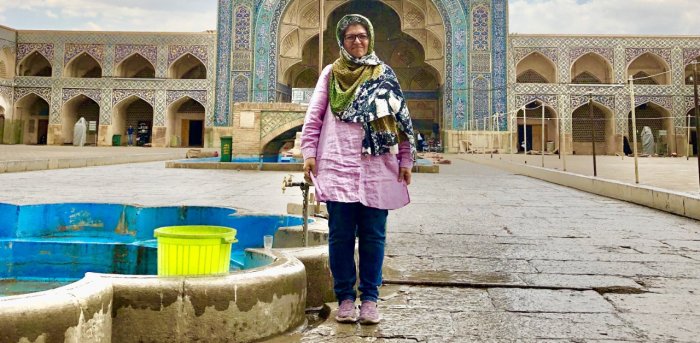
From, the sky-kissing palaces in the city, to the dust-biting burials in the graveyard, there is something in common; that’s brevity. The spacious chambers, the courtyards, the pavilions, gardens, and everything that once added stars to the beauty of the palaces is now in ruins. Their patrons have shifted themselves permanently to the graveyards to become one with the earth. Their relentless pursuit of worldly pleasures yielded them nothing but a fistful of dust for their mouths.
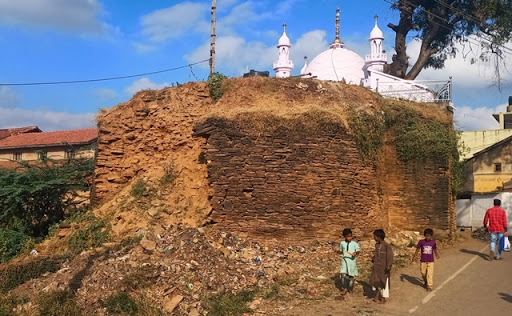
Wandering aimlessly inside the graveyard of Shahnur town, of Haveri District, I threw glances at various burials. At one of the corners, there were a few graves with monolithic sarcophaguses, with intricate floral patterns and calligraphy etched on them. Their presence in the graveyard was unobtrusive, suffused with weed and vines. When enquired, they belonged to the Nawabs of Shahnur. To the other side there were graves built with stones, crumbling to the ground, as though the time has wreaked havoc on them. Those were the graves of their kith and kin. The graveyard is also replete with countless burials of town dwellers, of recent times. There is a single cubicle, four-walled structure, with a large dome and minarets. That was a tomb of wife of one of the Nawabs, who belonged to the lineage of Prophet (PBUH).
Those who would strut about with arrogance are no more, and their descendants are hard to locate; like the beetles on a tree, that run away in all directions, when it is shaken. The time has also played a cruel game, as there are no chronicles to portray their life and time of the past. Only the legends make rounds inside the city, glorifying few of them as equal to saints and others are portrayed in lowlight.
I cringe, and often falter as I walk through those ruins. Their whines and whimpers are unbearable to my heart. Everyone thinks they are soulless; stone, mud and water; however, like everything else in the universe, they have life, embedded in their each element. They want them to be buried next to their masters, rather live a burdensome life. The pitiful wails, however, fall on deaf ears. I become their sole companion in grief, as we both believe we have so much in common to share with.
source: http://www.muslimmirror.com / Muslim Mirror / Home> Indian Muslim / by Anees Maniyar / December 07th, 2020
Dhebar says he got interested in politics at 16 years of age when his elder brother asked him to help a candidate for the municipal election.
Aijaz Dhebar is Mayor of Raipur. (HT Photo)
Thirty-years ago, while everyone would enjoy the conviviality of much awaited recess, a kid from Raipur used to sit alone. He did not have the luxury of bringing food due to his family’s penurious condition. One day, an empathetic lady teacher sensed the loneliness of the child and since then always handed over her tiffin-box to that kid.
That boy, Aijaz Dhebar, now 39, is Raipur Mayor, the first Muslim in Chhattisgarh to hold this post.
His teacher, Iccha Madam, now in her seventies, recalls Dhebar’s days of penury and says that in the last 30 years he has never missed teacher’s day. “He is among the first to ring door bell of my house and wish me teacher’s day,” she said.
“Those were difficult days for us…My father was just a worker in a shop and he had 10 children and therefore, we could not afford lunch in school. Every day, I used to pray to God before recess…..I felt humiliated,” Dhebar recalls, sitting in Mayor’s Chamber in the White House — the municipal corporation building in Raipur.
“Later, my father opened a scarp shop in Muadhapara and then our family’s financial condition started improving,” he says.
Dhebar got interested in politics when he was 16.
“One day, my elder brother instructed me to help a candidate who was fighting for municipal election and it was my first foray in politics. My brother, Haneef Dhebar, was close to Ajit Jogi and later I came close to some of senior leaders of Congress… I was made Baijnathpara ward president of Congress in 1995-96,” Dhebar said.
Dhebar became close to Jogi, who appointed him state president of National Students Union of India in 2001. “In 2006-07, I moved away from Jogi family due to personal reasons,” he says.
“Then I got in touch with Charandas Mahant, who gave me a post in Congress. I worked across the state and organized protests and events against the BJP government,” Dhebar claims.
But, Dhebar earned an image of rowdy in Chhattisgarh politics, which he vehemently denies. “There is was only case against me, in which I have been exonerated,” he says.
But, his rivals in the Congress say he has an image of ‘nuisance’ creator in the party. “I am sure by next assembly election the party will realize its mistake of making Dhebar mayor. He will have a negative impact on all the four assembly seats of the city,” a says a senior Congress leader, preferring anonymity.
But, those close to Dhebar said his image of an “aggressor” is result of his political fight against the Bharatiya Janata Party (BJP) during the saffron party’s rule in the state for 15 years.
“He fought on the streets when BJP was in power and therefore he is often described as an aggressive person. Each and every protest organised by Congress was either led by Vikas Upadhyay (now an MLA) or Dhebar…I have seen him since he was ward president of Congress party in the city…He is always devoted towards for the party and its objective,” said Sandeep Sahu, a coordinator of Other Backward Classes wing of All Indian Congress Committee (AICC).
Dhebar claims that his image was “distorted” by some people for vested interest. “If my image was so bad, I would not have won by the highest margin in municipal election in the state,” he says in his defence.
BJP leaders alleged that Dhebar became Mayor because he was close to those in power in Chhattisgarh.
“During legislative elections, he threatened Congress leader PL Punia and was denied a party ticket after which he ransacked the Congress office. This shows that who has promoted him. He handles all the big mining projects for some important persons in Congress. His image is of a trader not a politician,” Gauri Shankar Srivas, BJP spokesperson, claiming that Dhebar got Mayor’s post because of CM Bhupesh Baghel.
Dhebar had no qualms in agreeing with Srivas on this. “In the era when there is big debate on Citizenship Amendment Act (CAA) and National Register for Citizens (NRC) across the country, Bhupesh ji trusted me,” he said.
In his own words, Dhebar has seen meteoric financial rise. From a family, which was not able to provide him lunch in school, he now owns a lush hotel in Raipur and has invested in at least 10 construction projects in the city. “Ye sab apni mehnat se kiya hai (All this I have got through my hard work)… Not a single paisa is illegally earned,” he says, claiming that he delves in real estate and hospitability business.
Political commentator, Nand Kashyap, said he has earned his position.
“He has been very active since the state was formed and held many dharnas and protests against the previous BJP government. I will not call his appointment as Muslim appeasement. I think, he deserved the post,” Kashyap said.
source: http://www.hindustantimes.com / Hindustan Times / Home> India News / by Ritesh Mishra, Hindustan Times, Raipur / January 31st, 2020
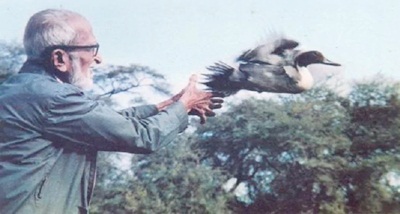
Today is the Birth Anniversary of renowned ornithologist Salim Ali. Born in Mumbai on 12th November in 1896, Sálim Moizuddin Abdul Ali was not only a bird lover but also a naturalist. He is often referred to as the ‘Birdman of India’. He was the first Indian to conduct systematic bird surveys across India and wrote several books that popularized ornithology in India. His research work is considered highly influential in the development of ornithology. He was a well-known environmental crusader who often stood for protecting the wildlife.
Salim Ali played a pivotal role in establishment of Bharatpur Bird Sanctuary (Keoladeo National Park) and prevented the destruction of what is now the Silent Valley National Park. Along with Sidney Dillon Ripley, he wrote the landmark ten-volume Handbook of the Birds of India and Pakistan, a second edition of which was completed after his death.
He was awarded the Padma Bhushan in 1958 and the Padma Vibhushan in 1976, India’s third and second highest civilian honours respectively. Besides the Padma Bhushan and the Padma Vibhushan, Ali received the Gold Medal of the British Ornithologists’ Union in 1967. He was the first non-British citizen to receive the honour.
source: http://www.newsonair.com / All India Radio (AIR), News Services Division / Home> News Highlights / November 12th, 2020
Hanif Mohammed wants to take you out on his boat to share the wonders of the sea. He is also promoting sustainable fishing with his new online portal.
Over a hundred dolphins swimming alongside each other in clear blue waters. And a few whales too. It was a lucky day for Kovalam-based Hanif Mohammed Q and guests on his boat. “It’s another world out there,” says Hanif, recalling the sight. An interior designer, Hanif has been fishing out of passion for 15 years, and owns two boats. He knows the wonders of the sea first-hand, and wants to share it with others.
“I take people on small trips into the sea,” says the 40-year-old, adding that from July to August, and February to March, guests can witness the migration of dolphins.
Hanif demonstrates how fishing is done along the way. “I want to encourage parents to show children the outdoors; to let them experience Nature at its best,” he adds. “They can learn about the sea, among a lot of other things,” he says, adding how once, his guests released turtles caught in a fishing net. He is now in the process of setting up his company, called South Fin for leisure trips, as well as finalising essentials such as changing rooms and toilets. “We will launch in 10 days or so,” he says.
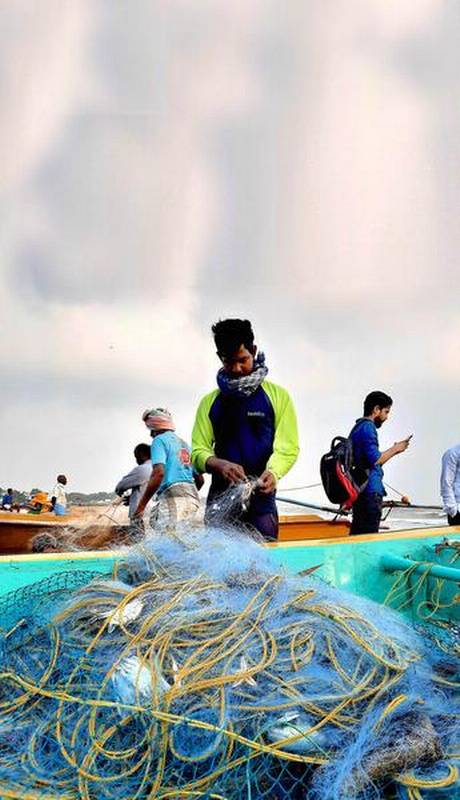
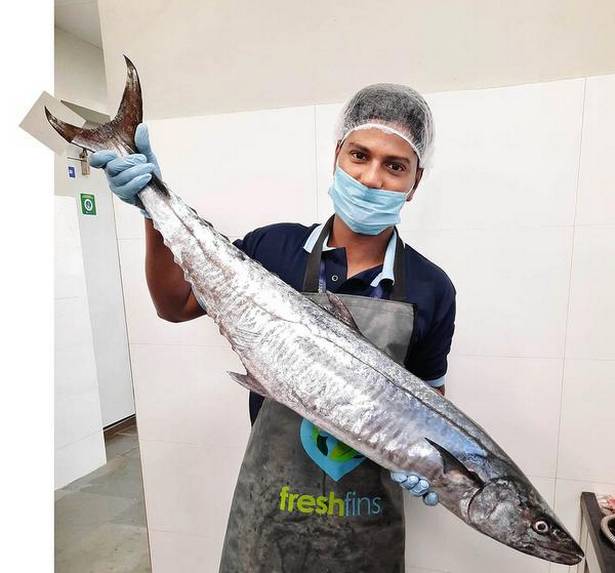
Hanif has launched yet another recent venture: Fresh Fins, an initiative that lets people from Chennai order fresh fish online. “My intention is to help small boat fishermen make a better living,” he says. With less financial support from the Government and no access to facilities to store their catch, these fishermen often end up selling to middle-men for a pittance. “I want to take their catch directly to customers,” he explains.
Right now, he sells catch from over 45 boats from Kanyakumari to Ennore and 90% of his team, right from call-centre executives to delivery persons, are from Kovalam. “There are 40 people in my team right now, and we deliver as far as Mogappair and Anna Nagar West,” he says.
Apart from eliminating middlemen and ensuring small boat fishermen get a good price for their catch, Hanif wants to familiarise people with seasonal fish and promote sustainable fishing.
“Customers should get used to the idea of eating what is local and seasonal,” he says. “This way, they will be able to enjoy a wide range as opposed to the usual vanjiram that big boats bring from as far as Andhra Pradesh and Odisha.”
For details, visit freshfins.in. To know more about the fishing trips — prices depend on the distance and number of people — call 9696089696.
source: http://www.thehindu.com / The Hindu / Home> Society / by Akila Kannadasan / November 18th, 2020
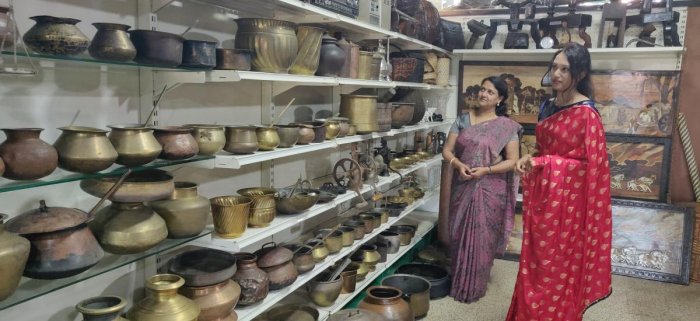
Visitors look at the vast range of antique utensils and other items exhibited from the collection of Ponnacchana Madhu in Madikeri on Friday.
Madikeri, KARNATAKA :
She was speaking after inaugurating the exhibition of antique items from the collection of Ponnacchana Madhu at Coffee Krupa building near Raja Seat in Madikeri on Friday. The exhibition a part of Janapada Dasara, was organised by Taluk Janapada Parishat.
“The items that were used by our ancestors had scientific applications. Some utensils in the older days were designed to improve the health of people. Unfortunately, the young generation is forgetting the significance of the livelihood of their ancestors,” she added.
Zilla Janapada Parishat president B G Anantashayana said that the folklore was close to nature. Folklore is a form of knowledge. But, the modernity has been taking us away from this knowledge, he added.
Taluk Janapada Parishat president Anil H T said that Ponnacchana Madhu, the exhibitor, had collected rare items in the last three years.
These items will be on display till October 26. The work by Madhu and Preethu couple is laudable, he added.
Collector and Exhibitor Ponnacchana Madhu said that he purchased old items in the households, after convincing the elders in the houses. Many tourists have been willing to purchase them from me. However, they are not for sale. The collection began with an old lamp contributed by an old lady called Arifa Munavar, a scrap dealer in Madikeri.
Taluk Janapada Parishat Treasurer Ambekal Navin Kushalappa, Parishat Directors Savita Rakesh and Veenakshi were present.
Exquisite collection
The collection showcases traditional weapons, a 120-year-old mud bowl, an ancient lamp from a temple in Tamilnadu with 84 diyas, puja items, African dolls, bronze items, utensils, coffee grinding machines and so on.
The agricultural equipment are an added attraction.
source: http://www.deccanherald.com / Deccan Herald / Home> State / by DHNS, Madikeri / October 17th, 2020
KMS Hakkim Biryani also offered biryani for Rs 1 to frontline warriors who are battling the coronavirus pandemic.
Tiruchities throng in large as hotel chain offers biryani for 10 paisa | EPS
Tiruchy :
To celebrate the World Biryani Day in a unique manner, a popular Biryani chain in Tiruchy sold delicious biryani for a mere amount of 10 paise on Sunday. The restaurant chain also offered biryani for Rs 1 to frontline warriors who are battling the coronavirus pandemic .
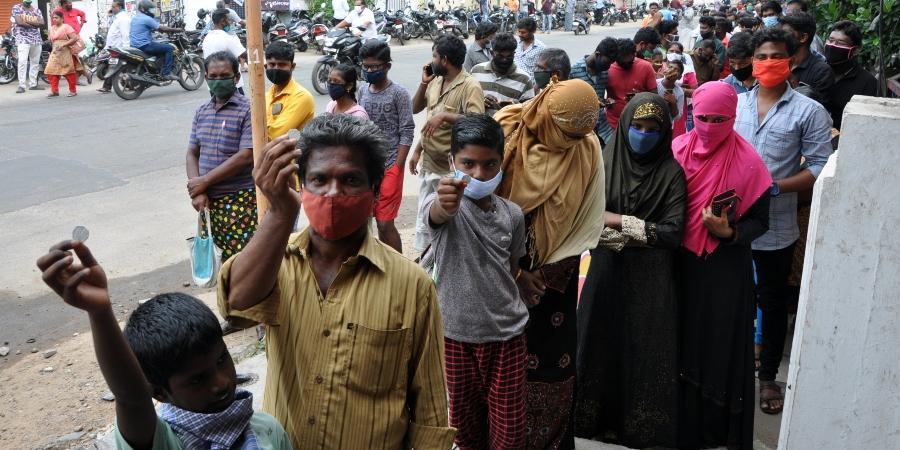
Contrary to the regular Sunday morning look, the Shastri road in Tiruchy was bustling with activity and excitement after KMS Hakkim Biryani centre sold Biryani to the public for 10 paise. With the outlet advertising that the offer is valid only for the first 100 customers, several people beelined in front of the restaurant holding demonetised 10 paisa coins in their hands.
Speaking to TNIE, KMS Mohideen, owner of the KMS Hakkim Biryani Chain said, “We wanted to appreciate the frontline workers for braving their lives and decided to offer biryani at a cost of Rs 1 on the World Biryani Day. However, we did not want the other customers to be left out, so we introduced an idea to sell biryani for the public who in possession of the demonetised 10 paisa coin.”
With the biryani being offered for such an unbelievable price, several people including children and women tried their luck. Incidentally, few customers waiting in the lines expressed that they spent the last couple of days searching their houses in and out so that they could find 10 paisa coins and purchase biryani.
Ravindran, a city resident who had come along with his son in hope of purchasing a packet said, ” My father in a conversation with my son had taught him about the currency values in the olden days and gave him a few 10 paisa coins as memorabilia. After we saw the advertisement on social media, our entire family started searching the house thoroughly to find the demonetised coin.”
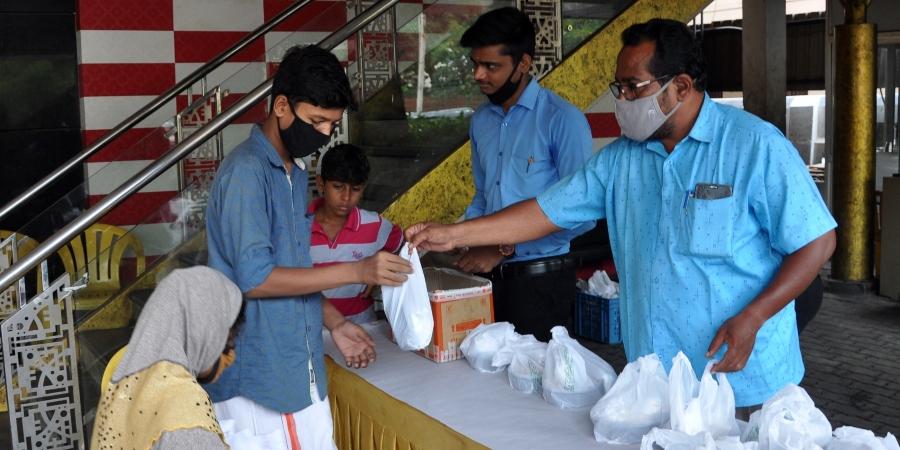
The biryani centre today through its two outlets served a total of 210 people- 100 customers through the 10 paisa offer and 110 COVID warriors. The customers were served with Chicken biryani along with raita and dalcha in neatly packed containers. Although they offered token to frontline workers on Saturday itself by verifying their ID cards, the tokens for 10 paisa offer were issued only on Sunday.
“A total of 110 frontline workers- 45 from the police department, 35 from the Corporation department, 20 from the health department and 10 sanitation workers were served with delicious biryani. Although the parcel to the regular customers was limited to the Biryani and the raita, we had added Chicken 65 and Sweet Kesari for the frontline workers parcels to appreciate their efforts and make them feel special,” said, a manager of the hotel chain.
source: http://www.newindianexpress.com / The New Indian Express / Home> States> Tamil Nadu / by Jayakumar Madala / Express News Service / October 11th, 2020
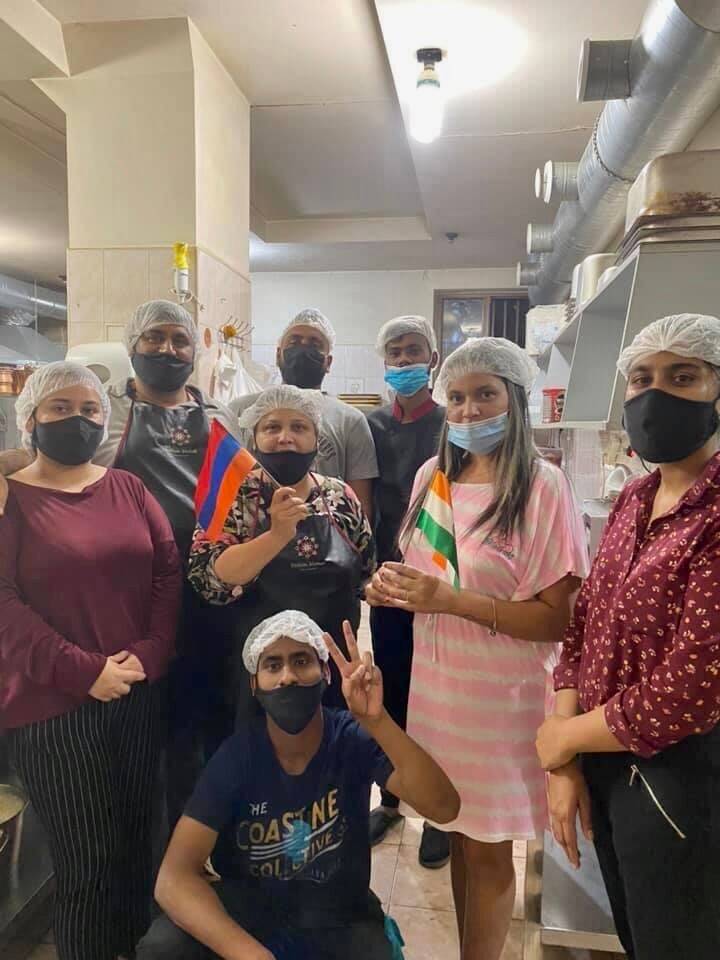
Parvez Ali Khan’s restaurant in Armenia’s capital Yerevan is delivering packages of cooked food to those forced to flee their homes in the Nagorno-Karabakh region.
Patiala (PUNJAB)INDIA / Yerevan, ARMENIA :
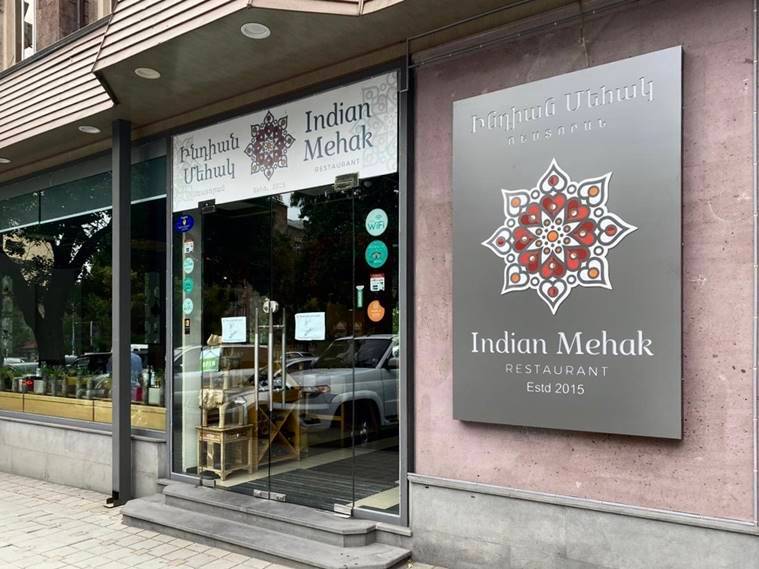
When fresh clashes erupted between Armenia and Azerbaijan in Nagorno-Karabakh in the South Caucasus approximately two weeks ago, Parvez Ali Khan knew that he had to do something for the country that he now calls home. Khan, a 47-year-old from Patiala, India, had moved to Armenia five years ago with his wife and two daughters, in the hope of economic prospects and now runs Indian Mehak Restaurant and Bar, a two-year-old establishment located in the heart of capital Yerevan, just minutes away from Republic Square.
Parvez Ali Khan runs Indian Mehak Restaurant and Bar in Yerevan, Armenia. (Photo credit: Aqsa Khan)
Since fighting broke out on September 27, Armenian officials have said that the total military death toll has gone up to 244 as of October 6, according to a Reuters report, making it one of the most violent clashes in the region since the 1990s. It is unclear how many people have been forced to leave Karabakh since the fighting began, but social media posts and witness reports suggest the numbers are high.
“I must have seen approximately 30,000 refugees in Yerevan,” Khan says. On October 4, on the restaurant’s Facebook page, the family announced that they were providing freshly-cooked Indian food to people who had fled the Nagorno-Karabakh region and were seeking refuge in the capital. “We are Punjabis and we help people wherever we are. We have always done it,” Khan says.
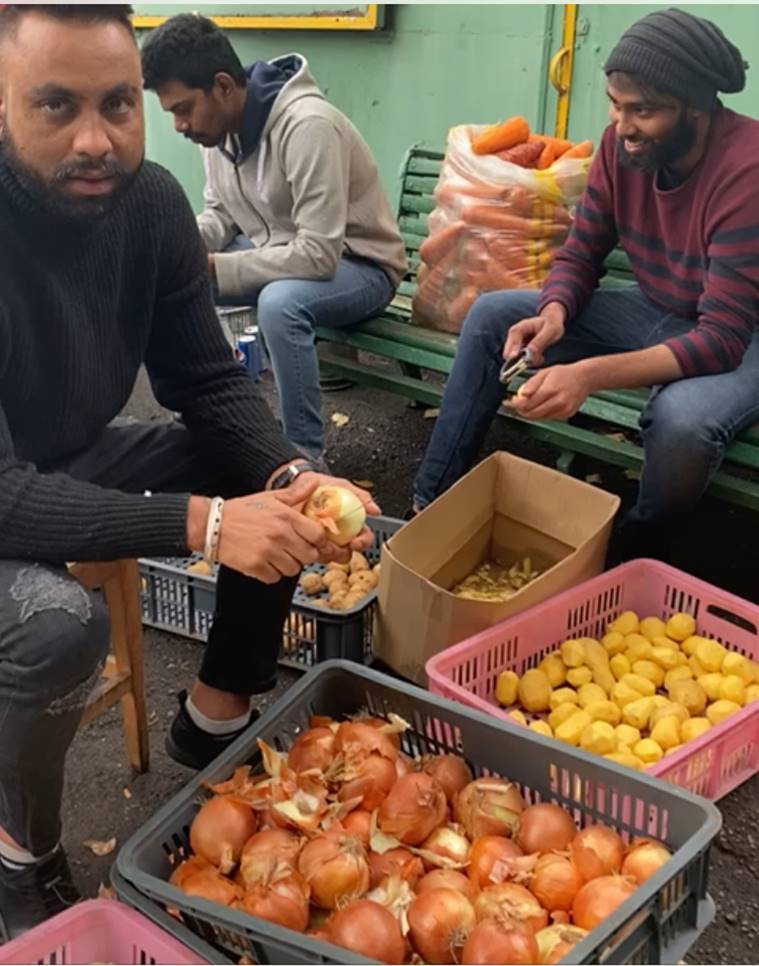
Since the clashes have intensified, Armenians across the country have stepped in to help in whatever way they can, and Khan says he wanted to do his bit. So he turned to the resources he had easy access to—his restaurant’s kitchen. People from the Nagorno-Karabakh region who were seeking refuge in Yerevan were being given dry ingredients, with no access to facilities where they could cook, Khan says.
Overnight, he turned his kitchen into a space where his staff could prepare hundreds of food packages to distribute in the capital. “I had some savings that I had kept aside to open a restaurant in Prague. That didn’t materialise due to the coronavirus outbreak. So I am using those funds for this.”
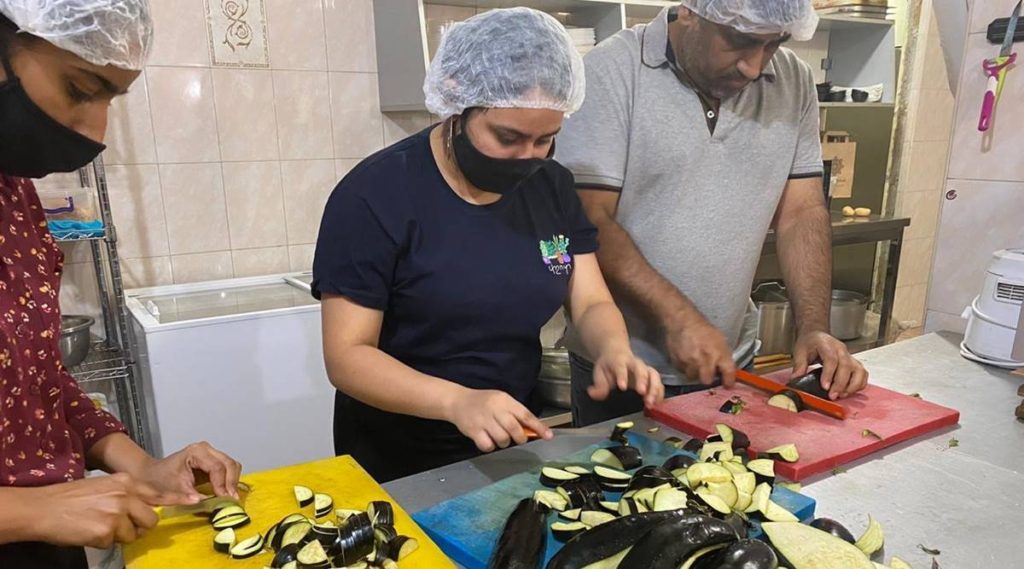
“We started on October 4, and it just blew up,” says 20-year-old Aqsa, Khan’s elder daughter. “We knew there were refugees, but we didn’t know there were so many.” Since then, Khan and his family, along with four employees, have been working 12-hour shifts to prepare boxes with rice and naan, chole-bhature, vegetable dishes with potatoes, brinjal etc., all cooked using less spice than what is customary in Punjabi cooking, to suit the preferences of Armenians.
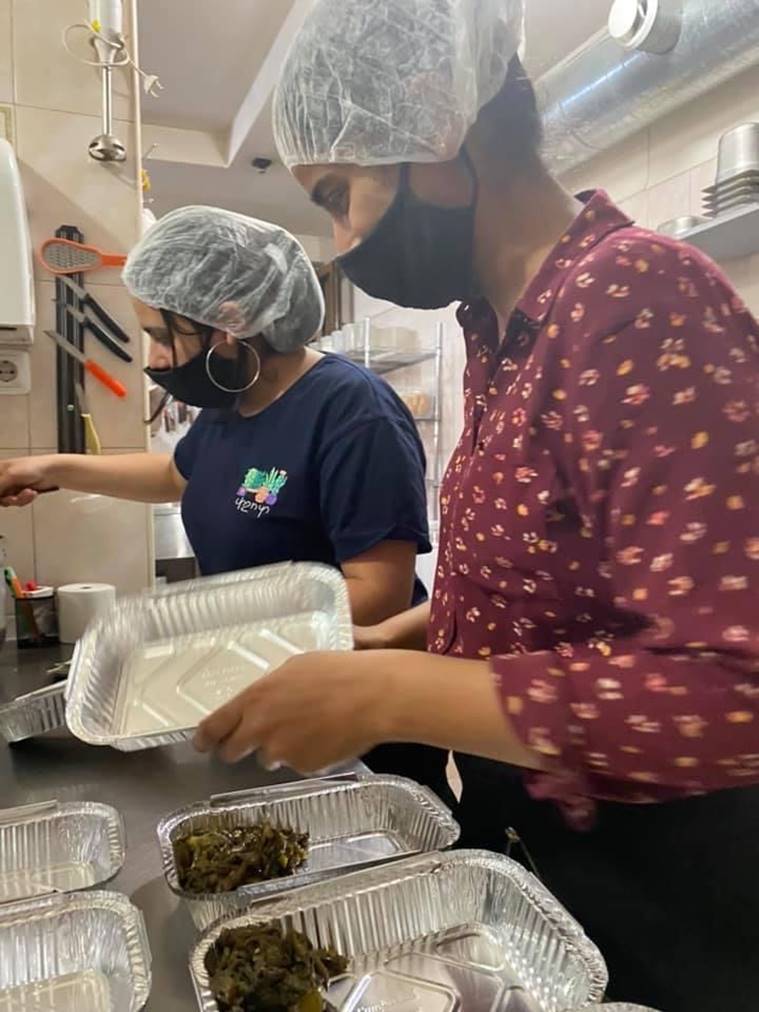
Aqsa Khan (right) and her sister Alsa pack prepared food in their restaurant’s kitchen. (Photo: Aqsa Khan)
But the family doesn’t think they are doing anything unusual. “There is a lot of unity in Armenia,” Aqsa explains, pointing to citizens who have come together to donate whatever was possible—from money to essentials. “We were thinking about how we could help. So we first posted on the Facebook page about donating proceeds from delivery and take-out orders. But then we saw that the refugees didn’t have access to fresh food and we thought this was more impactful.”
Employees at Indian Mehak Restaurant and Bar in Yerevan, Armenia, work round the clock to prepare food packages. (Photo: Aqsa Khan)
Aqsa says that the family found inspiration for the initiative when a local resident approached the restaurant asking for dry ingredients that she could use to prepare food for children to whom she was providing shelter. The family offered cooked Indian food instead. “We thought that we would be doing it for 25 to 30 people only,” says Khan. But the family soon realised that there were many more who needed their assistance.
Aqsa and her sister Alsa, 18, then took to Facebook and announced that the restaurant was offering Indian food to whoever was coming in from Artsakh, another name for Nagorno-Karabakh. “On the first day, some 400 people asked for help,” says Khan. “It grew from there,” Aqsa adds.
As their social media post has spread, the Khans’ phones haven’t stopped ringing. While some callers have been requesting for food packages, many others have reached out to the restaurant to offer assistance in any way they can. “Women are calling us to ask if we need help in the kitchen. People are bringing their cars to help distribute the food,” says Khan.
Recently, a volunteer delivered food from the restaurant all the way to Hrazdan, a town some 50 kms away, where some residents of Nagorno-Karabakh have sought refuge. Another volunteer has helped deliver food to Tsaghkadzor, a town a little further away. While the Khans are cooking the dishes, four Armenians have stepped in to help package the food and deliver it across Yerevan.
“Now refugees are calling us directly, as are organisations who are helping them. Some hotels who have been hosting refugees have also asked us to provide (food packages) for one meal a day,” says Aqsa. “I have never seen anything like this.”
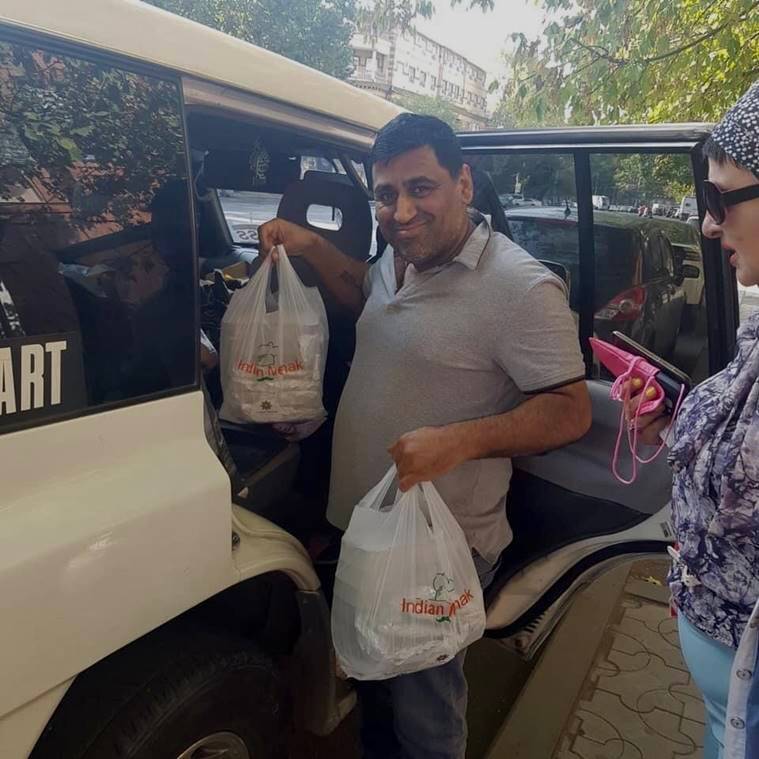
Parvez Ali Khan helps load food packages into a waiting van outside his restaurant in Yerevan, Armenia. (Photo: Aqsa Khan)
Since the initiative is only a few days old, for now, Khan is making use of his restaurant’s supplies to prepare these food packages. The restaurant has found an outpouring of support from people across Armenia and even those in the diaspora. Many have left them messages of gratitude, promising to visit the restaurant when they can. “After the war, I will visit your restaurant and celebrate our victory,” says one message on their Facebook page, with hundreds of others in a similar vein.
There aren’t too many Indians in Armenia, says Khan, and his establishment is among the few prominent Indian restaurants in the country. In Yerevan alone, he believes, there must be around 100 Indian families, with approximately 4,000 Indian students studying medicine, scattered in universities across the country. Following the Indian government’s operation of Vande Bharat flights to help citizens overseas return home during the coronavirus pandemic, many have temporarily left.
The Khan family and their employees pose with the Indian and Armenian national flags in their restaurant’s kitchen in Yerevan, Armenia. (Photo credit: Indian Mehak Restaurant and Bar)
Over the past five years, Khan says his daughters have developed a fondness for Armenia. During their years at school and college in the country, they have made friends, learnt the language and the culture and have adapted well here, while holding on to their Indian citizenship. “They like the country.” The family has been working non-stop to prepare the food packages and they don’t have too much time for more questions. For Aqsa, Nagorno-Karabakh is as much a cause as it is for her Armenian friends and she is doing whatever she and her family can to assist the country that is now home.
source: http://www.indianexpress.com / The Indian Express / Home> World / by Neha Banka, Kolkata / October 07th, 2020
Ravathurpalayam – Neduvacheri Village (Tirupur District) TAMIL NADU :
Villagers of Ravutharpalayam are aware of the Hindu temple built by a Muslim army commander under Hyder Ali in their locality and worshipping Goddess Mariyamman.
Tirupur :
Villagers of Ravutharpalayam are aware of the Hindu temple built by a Muslim army commander under Hyder Ali in their locality and worshipping Goddess Mariyamman. The temple is located 5 kilometres from Avinashi city in Neduvacheri village in Tirupur district.
Speaking to TNIE, Neduvacheri Panchayat President TG Varadarajan said, “Oral tradition point out the Mariyamman temple was built by a Muslim man. The small temple was built with Hindu style of architecture but has small dome on the top. The small dome instead of Gopuram was very unique.” Kumravel a local resident said, ‘Earlier I never believed that the temple was built by a Muslim man. Later, I got to know the facts from the local historians.
Goddess Mariamman is invoked several times a year to regenerate soil, fertility and protect the community against disease and death. Apart from the local villagers, residents from Coimbatore and Erode also visit the temple to get the blessings of the Goddess . According to Virarajendran Archaeological and Historical Research Centre, Director S Ravikumar, “The temple structure is similar village style Hindu temple. It is built in square type 8 feet by 8 feet.
Historical evidences point out, that Hyder Ali a powerful ruler of Mysore Kingdom, had the big influence over Kongu region such as Coimbatore and Erode in 18th Century. These places were ruled by several army commanders who were also in charge of revenue collection and administration. One such officer named Ravuthar was incharge of this region.
His daughter reportedly fell ill with chicken pox. Despite medical treatment the infection couldn’t be cured. Villagers told him the idea of worshipping Goddess Mariyamman. After he made offering and prayers, his daughter was cured. He immediately built a temple dedicated to the Goddess. Currently the temple is more than 250 years old. The entire locality is known by his name Ravutharpalayam.” Neduvacheri Panchayat secretary Kannan said, “The temple attracts quiet a following in the village. Donors have donated several tracts of the land.”
source: http://www.newindianexpress.com / The New Indian Express / Home> States> Tamil Nadu / by Saravanan MP / Express News Service / October 05th, 2020
Read more at: https://www.deccanherald.com/national/historian-rana-safvi-gets-yamin-hazarika-award-891896.html
Historian Rana Safvi has been conferred an award instituted in memory of Yamin Hazarika, the first woman from the Northeast to join the central police service.
Safvi, who has published several books on culture, history, and monuments of India, was chosen for her “contribution to the syncretic culture of India”.
Hailing from Assam, Hazarika was selected for the NCT of Delhi, Andaman and Nicobar Islands, Lakshadweep, Daman and Diu and Dadra and Nagar Haveli Police service (DANIPS) in 1977. She held the post of assistant commissioner of Police in Chanakyapuri (Delhi) and went on to become deputy commissioner of police (Crime against Women Cell) in the national capital.
In the crucial period after the 1984 anti-Sikh riots, Hazarika was in-charge of three key police stations. In 1998, she was posted in Bosnia as part of the UN peacekeeping force. But her life was tragically cut short by destiny as she succumbed to cancer at the age of 43 in 1999.
The ceremony was held online though Hazarika’s daughter Huma presented the silver salver to Safvi in Delhi. Assam DGP Bhaskar Jyoti Mahanta was the guest of honour. He recalled the contribution of Hazarika and also spoke about her grit and determination.
The award is given every year by a collective of women professionals since 2015. Previous winners are author Indrani Raimedhi, athlete Tayabun Nisha, actor Moloya Goswami, environmental activist Purnima Devi Barman and social activist Hasina Kharbhih.
source: http://www.deccanherald.com / Deccan Herald / Home> National / by PTI, New Delhi / September 23rd, 2020
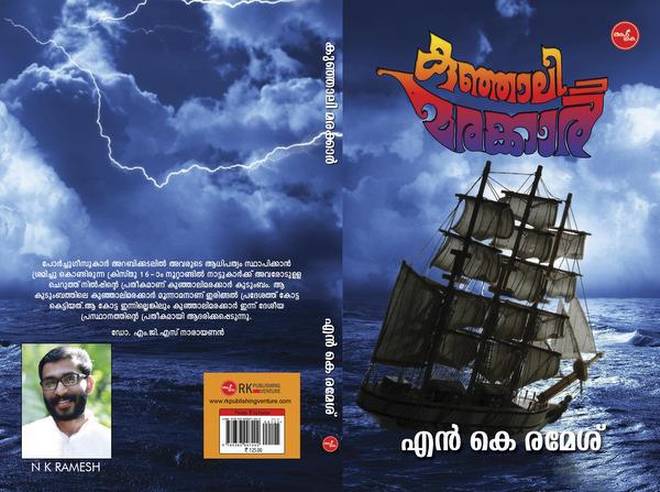
Illustrated book on legendary hero Kunjali Marakkar brought out for children
The popular witticism – when the going gets tough, the tough get going – has literally set off a young anthropologist- cum- archaeologist to author a book for children on Kunjali Marakkar, the legendary hero of the 16th century.
For N.K. Ramesh, a guide at the Kunjali Marakkar Memorial Museum at Vadakara, it was an opportunity to trace the history of the four Kunjali Marakkars, when his contract was terminated after the museum was closed to the public from March.
“Certainly a difference existed between writing for children and for adults. So I put down a simple narration and included illustrations based on important events during the period of Kunjali Marakkar and also a picture of a mural painting of a sea war,” he says.
Kunjali Marakkar was a honorific title given to the Muslim naval chief of the erstwhile Zamorin of Calicut. “The four Kunjali Marakkars who were the naval commanders of Zamorin fought against the Portuguese from 1507 to 1600. In fact, the Kunjali Marakkars were maritime merchants and supporters of Arab trade who lived in the coastal regions of Kayalpattinam, Kilakarai, Thoothukudi, and Karaikal. But they shifted their trade to Kochi and then migrated to Ponnani after Portuguese trade interference,” Mr. Ramesh says.
He took about four months to pen the book with 104 pages. The book has already hit the stands although the official launch has been deferred in view of the COVID-19 protocol.
Historian M.G.S. Narayanan has given an introduction to the book on Kunjali Marakkar, whose battles against the Portuguese were portrayed as a symbolic national movement.
The book also delves into the objective of the construction of a fort by Pattu Marakkar, the third Kunjali Marakkar, at Iringal (Kottakkal) in 1571 and the political dispute between his nephew Mohammed Marakkar, who became the fourth Kunjali Marakkar, and the Zamorin.
Later, the Zamorin joined hands with the Portuguese to defeat the last Kunjali Marakkar. The fort was also demolished and Kunjali executed by the Portuguese. The decline of Kunjali Marakkar, he says, led to establishment of Dutch Dominion and later British rule in India.
Mr. Ramesh, who holds a postgraduate degree in anthropology from Kannur university and Post M.Sc. Diploma in Museology from Aligarh Muslim University, has been credited with numerous discoveries, including the unearthing of Palaeolithic tools from north Malabar.
For a living, the 34-year-old is now engaged in de-husking at farms and odd jobs at Nadapuram and adjoining areas.
source: http://www.thehindu.com / The Hindu / Home> News> States> Kerala / by Biju Govind / Kozhikode – September 15th, 2020