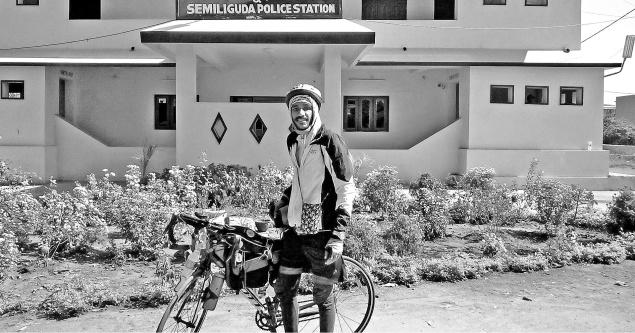
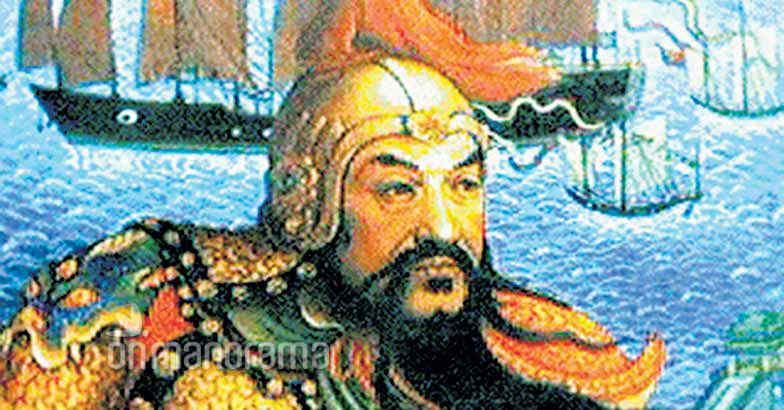
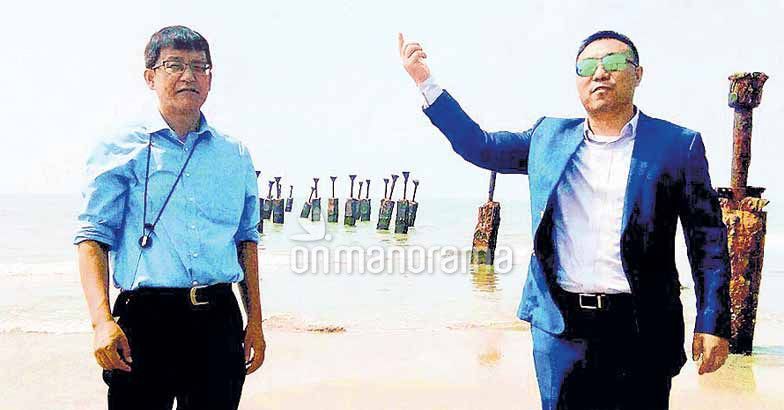
Two Chinese have come to the land of Zamorin to find the final resting place of the Chinese explorer who conquered seas through willpower.
The goal of these researchers is to find the grave and the trading points of Zheng He, the explorer who landed in Kozhikode seven times on ships .
They are professor Haiyun Ma, a Chinese descendant who teaches history at Frostburg State University in the US, and Dr Shaojin Chai, a senior researcher at the UAE’s culture ministry .
Zheng He is a hero in China, where students learn about his adventures. They only know that he died in Kozhikode due to sudden illness. Chinese researchers have come to find out if there is anything in Kozhikode that reminds of him .
A Chinese had been buried at Cheenedath mosque in Valiyangadi. Though the team visited the mosque, they could not find anything specific. Haiyun Ma and Shaojin came to Kozhikode with the help of Abbas Panakkal, a fellow at Griffith University, Australia.
english.manoramonline.com
The man who brought Ma Huan
Zheng He, born in 1371, began his travel at the age of 28. He landed in Kozhikode in 1430 with Chinese silk, vessels, jars and fishing nets. He was received by the Zamorin. He returned to China with spices and other goods many times. Over the period, he brought 2,800 Chinese to Kozhikode. One among them was Ma Huan, a historian. It is said that Zheng He even took elephants and horses from here. It is not clear whether Zheng He, a Muslim, was buried on land or at sea .
source: http://www.english.manoramaonline.com / OnManorama / Home> News> Kerala / by Lenin Chandran / Saturday – January 09th, 2015
A senior professor and his student occupy a table at Wazir Hotel, off the busy Mohammed Ali Road at crowded Bhendi Bazaar. Over endless cups of tea the professor, a sort of walking encyclopedia on people he met in the past, reminisces about Wazir Hotel’s heyday when it was a favourite haunt of poets, lyricists, musicians, singers and qawwals. Lyricists like Shakil Badayuni, Sahir Ludhianvi and Majrooh Sultanpuri chatted up the music maestro Naushad even as legendary qawwal Aziz Nazan discussed details of his delightful mehfils. And then the professor orders tea yet again but the waiter places two empty cups on the table announcing that the tea is over and the hotel is downing shutters forever. That was in 1986.
This scene from senior Urdu journalist-playwright Saeed Hameed-penned and Mujeeb Khan-directed play ‘Wazir Hotel’ after the long vanished famous eatery is part of Imambada-based Urdu Markaz’s second Bhendi Bazaar Urdu Festival (Jan 8-10). Aimed to revive that fast fading flavor of an era when shairi thrived and culture flourished, the festival celebrates a spirit which today lives in tales and memories.
Many memories will come alive when television actor Neha Sharad reads letters of Safia Akhtar (poet-lyricist Javed Akhtar’s mother) to her husband Jan Nisar Akhtar while ghazal exponent Pooja Gaitonde sings some of Jan Nisar Akhtar’s famous film songs, including the immensely romantic Main tumhi se poochhti hoon mujhe tumse pyaar kyun hai (Black Cat). “This festival dispels many myths and one of them is that Urdu belongs to Muslims alone,” explains Gaitonde.
“The idea is to tell people what Bhendi Bazaar symbolized and can still offer if earnest efforts are made,” says Zubair Azmi, director of Urdu Markaz and the festival. The festival maintains its “secular” character. So, apart from a mushaira featuring non-Muslim poets of Urdu, a discussion titled “Celebrating Urdu” will see non-Muslim intellectuals like Jnanpith Awardee novelist Bhalchandra Nemade and Sudheendra Kulkarni talk about Urdu’s contributions to our celebrated composite culture. “The festival is fast becoming a platform to showcase Bhendi Bazaar’s cultural ethos and promote communal harmony,” says local MLA Amin Patel. While admitting Patel’s “critical facilitation” to host the fest, Azmi agrees with him that the fest needs to be held on a larger scale.
It is not the old-timers alone who will get their antennae recharged through a medley of plays, soirees and singing of Sufi kalams and old Bollywood numbers, but even the young and restless can look forward to fun-filled sessions. “Workshops on drama, fiction, scriptwriting and poetry will engage college students to learning the finer points of these arts,” informs the festival’s reception committee chairman Farid Khan.
source: http://www.timesofindia.indiatimes.com / The Times of India / News Home> City> Mumbai / by Mohammed Wajihuddin / January 03rd, 2016
Princess Niloufer, the beloved daughter-in-law of the last Nizam of Hyderabad, may have left the city shortly after the Police Action in 1948. But even a good six decades later, she continues to be an enigma that at once intrigues and haunts Hyderabadis. On her centenary year, even as a photo exhibition by Birad Rajaram Yagnik attempts to reveal unknown vignettes of her life, and a documentary film on her is being worked on by historian Arvind Acharya, Hyderabad Times looks back at the dramatic life of the much loved princess of the city of Pearls. Surely, it was nothing short of a movie!
A fairytale set in 19th Century
When Niloufer Farhat Begum Sahiba was born in Istanbul, in January 1916, the Ottoman Empire was already fast crumbling. When she was barely a toddler, the Ottoman surrender was formalised aboard a British warship (October 1918). And by the time she was seven, the 700 year-old empire had officially fallen. In the backdrop of this downfall, the princess had to leave her fairytale life in Istanbul behind, and move to France with her mother in 1924, never to return. aged eight at that time, Niloufer would go on to lead a very ordinary life, learning to read and write French along with Urdu. Her exercise books had her learning about geography of the world. she stuck bits and pieces of the map in separate pages, oblivious to what the future held for her — a future where she would be remembered as the beloved princess of three cities. And yet, hold reign over none.
The romance with Hyderabad
Cut to 1931. In Hyderabad, Mir Osman Ali Khan, the seventh Nizam — also the world’s richest man — was looking for suitable brides for his sons. And that’s how Niloufer, just 15, found herself in Hyderabad. In a grand, royal wedding held in Nice in November 1931, Niloufer married Moazzam Jah, the Nizam’s younger son.
The Nizam had chosen Durru Shehvar (Niloufer’s first cousin) for his elder son — so the shift to a foreign land was less daunting perhaps. Another reason that made Hyderabad feel like home was that the Princess found a father figure in the Nizam. Though known to be officious and keen on protocol otherwise, the Nizam considered Niloufer his daughter. He even let her call him ‘father’. Life in the Hill Fort Palace was grand, Hyderabad was at its cultural peak, and the Princess took on many avatars — fashionista, socialite, philanthropist.
The sartorial queen
Between 1933 and 1948, Niloufer became a fashionista through whom the world got acquainted with Hyderabad. Her sarees, her choice of jewellery, her lifestyle became a talking point. Photographers, especially a crafty portrait photographer, Antony Beauchamp, loved her easy beauty. the international press adored her. Niloufer is credited with adding Parisian grace to the Indian saree. Her sarees were crafted specially for her, by Madhav Das in Mumbai. She loved chiffons and crepes, and wore them often with a broad woven Banaras brocade border. In fact, Mme. Fernande Cecithe, who was originally hired as a midwife for the princess, later created excellent designs to be embroidered on her sarees too. Her wardrobe is still studied by fashion students across the globe and her collection of sarees are now treasured at the New York Institute of Fashion Technology.
The socialite princess with a golden heart
One of the very prominent facets of Niloufer’s social life was the Lady Hydari Club, through which she also initiatied events and dos to raise funds. In 1941, Niloufer decided to organise the staging of a play Ondine (by dramatist Jean Giraudoux) to raise funds for London, which was recuperating from the damages of World War II. She was told by her father-in-law that a princess must not be seen acting in a play. So, her secretary at that time, Fatima Ghani, who would accompany her all the time and therefore even knew the dialogues, took on the princess’ role of a knight-errant Hans von Wittenstein zu Wittenstein.
But it wasn’t until 1949, that Niloufer’s biggest contribution to Hyderabad was going to emerge. When her maid, Rafath Unnisa Begum, died in childbirth, she was so shattered that she decided to ensure that no more such deaths take place. she decided to set up a maternity hospital, which stands today as Niloufer Hospital in Nampally.
The truth behind the glamourous veneer
She was one of the most beautiful women of her time. She was a much loved princess, both at home and overseas. But Niloufer had long learned that the glamour of all this was just that — an eyewash at best. At the heart of it all, there was pain and emptiness. She spent her best years in Hyderabad, craving to experience motherhood — a desire that was never fulfilled.
By this time, Niloufer had already witnessed her first cousin Durru Shehvar give birth to two sons, Prince Mukarram Jah in 1933 and Prince Muffakham Jah in 1939. Her childlessness put much strain on her marriage. In 1948, Moazzam took a second wife, Razia Begum. And by 1951, Niloufer had decided to split from her Hyderabadi commitments.
She moved back to France with her mother. Nice, back then had many members of royalty in exile, allowing Niloufer to still be socially active. As she aged gracefully, her photos from the era show her wearing the string of pearls that her mother had gifted her at birth.
However, irrespective of where she was based, Niloufer never severed her Indian ties. Her friendship with Jawharlal Nehru was one such connection. One of her letters following the assassination of Gandhi read: “Dear Pandit, You have heard and read the cry of so many millions of hearts — you have felt perhaps more than anyone else that great silence that set the void and the loneliness after he (Gandhi) was no more”. The duo continued to stay in touch, Niloufer wrote to Nehru even during the elections and Nehru who was on the road canvasing for the polls, replied, “But I want to tell you that you will always be welcome here whenever you care to come.”
Finding love again
After a good 11 years of being single, Niloufer met Edward Pope and found love once again. In February 1964, she married Pope in the presence of Nawab Ali Yawar Jung who was the Best Man.
Niloufer died in 1989 and was buried in a grave in Bobigny near Paris. The Muslims-only cemetery that is a two-hour drive from Paris not only has her mother resting there, but also all the members of her Seljuk dynasty. Surely, a life as romantic, as magnanimous, and as dramatic as Niloufer’s, deserves to be immortalised.
source: http://www.timesofindia.indiatimes.com / The Times of India / News Home> City> Hyderabad / by Samyuktha K, TNN / January 06th, 2015
Makhdum Ali Mahimi, who is buried in the popular Mahim dargah, is the patron saint of the city police.
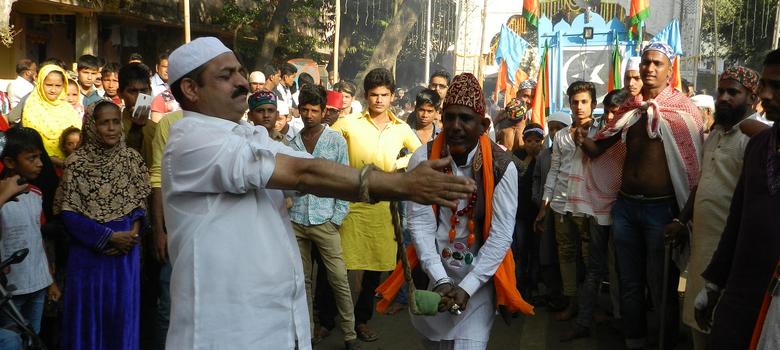
A constable in plain clothes holds his arms out to be whipped.
The Mumbai police was out in full force on Friday to mark the first day of the Urs or death anniversary of Makhdum Ali Mahimi, the man to whom the famous Mahim dargah in the central part of the city is dedicated.
Makhdum Ali Mahimi was a 14th-century Sufi scholar remarkable in many ways, but perhaps the most remarkable is that he happens to have been the patron saint of the Mumbai police since its roots as a citizen’s militia in the 17th century.
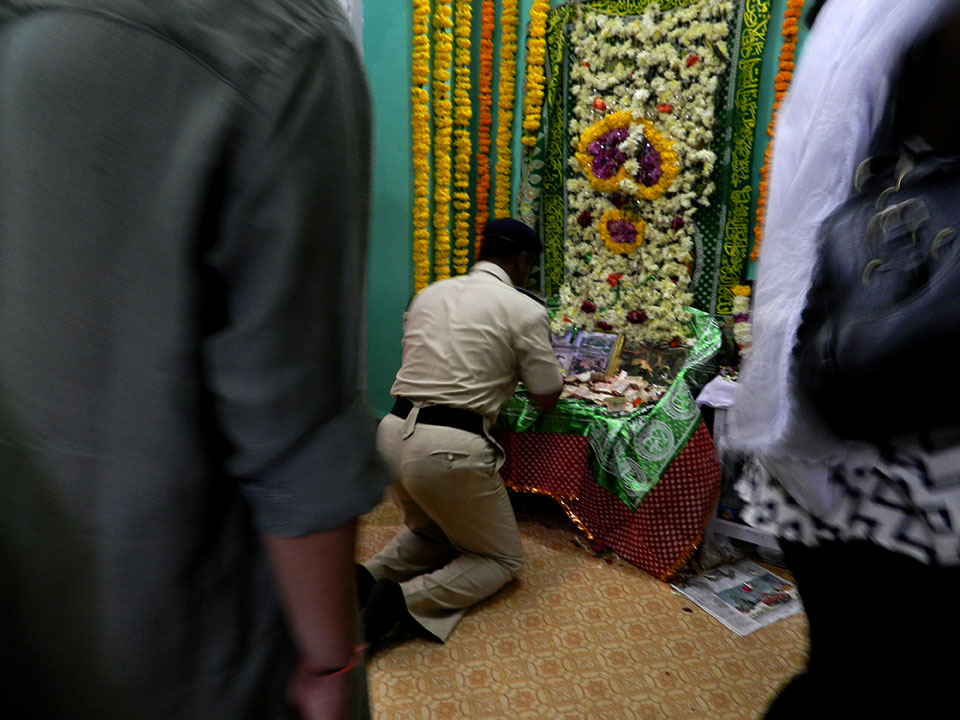
Once a year on Mahimi’s Urs, thousands from around the city, not least the Mumbai police force, come to pay their respects and seek his blessings. The Mumbai police force has the privilege of laying the first chadar, or decorative tomb covering, of the Urs in Mahimi’s respect.
The Mahim police station, about 200 metres away from the dargah, has been built on the site where Mahimi is said to have lived. A green steel cupboard in the Senior Inspector’s room is said to contains the saint’s possessions. During the ten days of the fair held each year to honour Mahimi, the office is thrown open for devotees.
“The full Mumbai police follows Makhdumi Baba,” said Basheer Baba, 55, who is among the dargah officials overseeing the festivities. “Nobody can break that bond. There should be more chances like this of Hindu-Muslim love.”
In the rooom that holds Mahimi’s possessions
An ancient tradition
On hearing that a journalist was in the vicinity, a series of constables in festive plain clothes ushered this reporter in to a small building off the main compound where the retired senior police inspector organising festivities this year, sat with his team of ten constables.
“I was in the papers today,” the inspector said, taking a small, neatly folded rectangle of paper out of his pocket. “See, that’s my name, LB Shaikh.”
Shaikh, as the Times of India said in its three-paragraph note of the procession’s timings, happened to join the police force in 1979 on the very day of Mahimi’s urs. His first posting was at the Mahim police station. This, he said, gave him a special attachment to the holy man.
“He was not a saint – he was our guide,” Shaikh said. “He was a very scholar person, a spiritual and qualified man. Police used to take advice for unsolved cases and he would help us. This is a long tradition of 500 years.”
Scholar and judge
It is in fact slightly longer than that. Mahimi is thought to have died in 1431, 584 years ago. He was born in 1372 to a family of intellectually inclined Arab immigrants called nawaits. He lived in Mahim his entire life.
Abdus Sattar Dalvi, in a brief history of the Mahim Dargah which is dedicated to Mahimi, writes:
“The figure of Makhdum Ali Mahimi has commanded respect for his unquestioned devotion to his mother, his generosity, his liberal outlook, and his achievements as a Sufi and a scholar.”
As a spiritual and intellectual person, he became a member of an unaffiliated group of Sufis called Uwaysi. He was also renowned for his scholarship, particularly for an early incisive commentary in Arabic on the Quran. Mahimi’s legal excellence, Dalvi notes, was such that Sultan Ahmad Shah of Gujarat made him a qazi for the Muslims of Thana district.
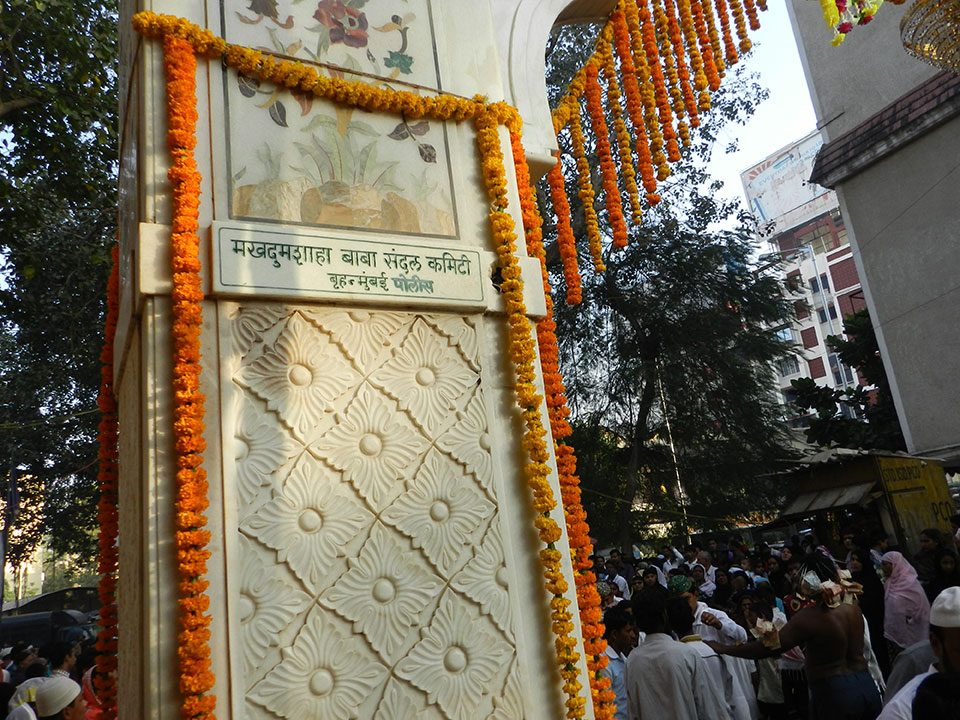
An arch declares the Mumbai police’s attachment to Makhdoom Ali Mahimi.
It was perhaps this appointment that led him to be so closely linked with the Mumbai police. The East India Company formed Bombay’s first militia in 1669, soon after the Portuguese had handed over the group of seven islands to the British in dowry.
The constabulary at that time was drawn largely from conscriptions of land owners, but excluded Brahmins and Banias for a fee. Most of the early recruits were from the Bhandari community of toddy tappers, who were among the original inhabitants of Bombay.
As remained the precedent until Independence, the organising officer of the motley group was a European. It was one of these officers who was said to have worshipped the saint and sought his help for cases.
“A Portuguese sergeant at the time used to worship him and seek his advice a lot,” Shaikh said. “In that way he solved many cases. So at the time of his last illness, he said that after he died, only the police would do Makhdum Shah Baba’s seva.”
Faith runs deep
And so it is today. The Mahim police station was built in 1923 over the site of the saint’s accepted abode. Among the thousands of civilians who lined up on Friday for a chance to seek his blessings, were uniformed members of the police force – traffic police in white, the main force in khaki, and even the red of the police band.
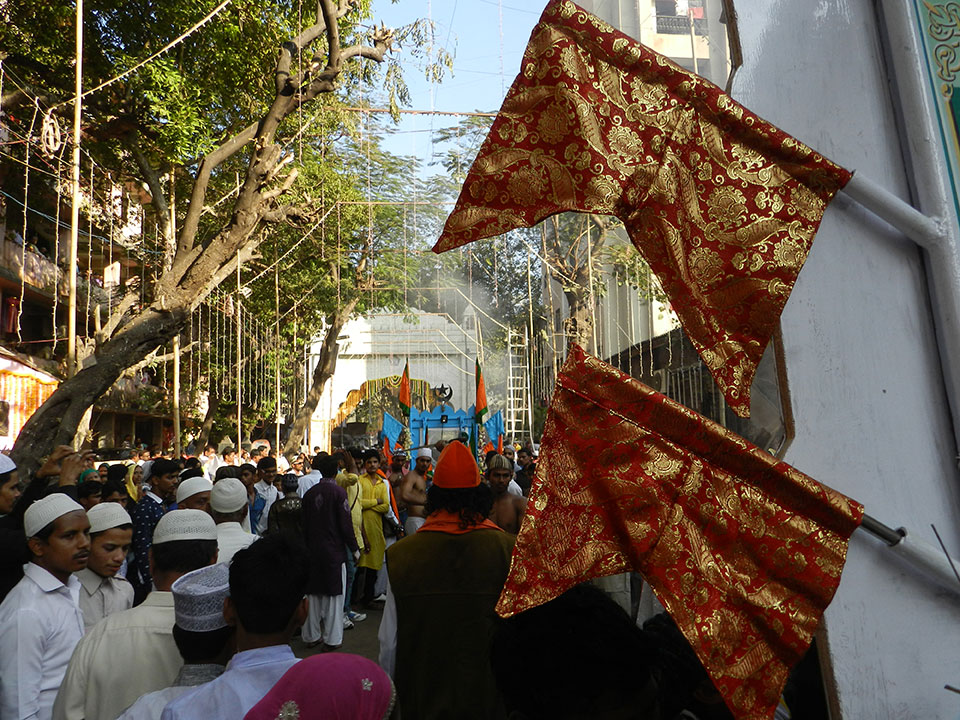
The procession on Friday began, as usual, in the afternoon from the Mahim police station. It ended at the Mahim dargah 200 metres away only at around 11 pm.
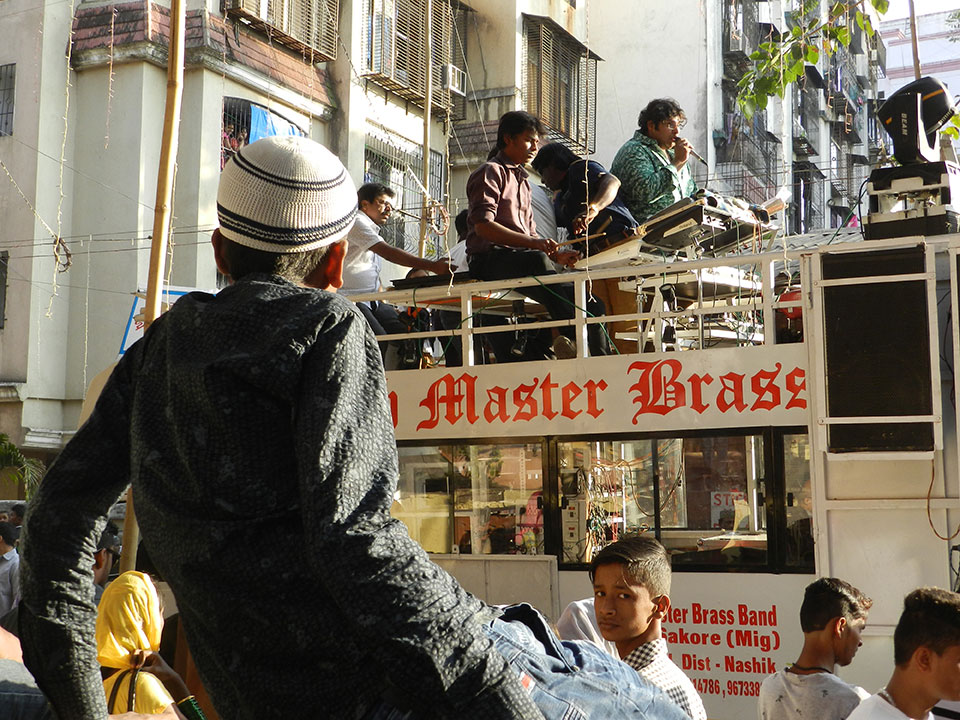
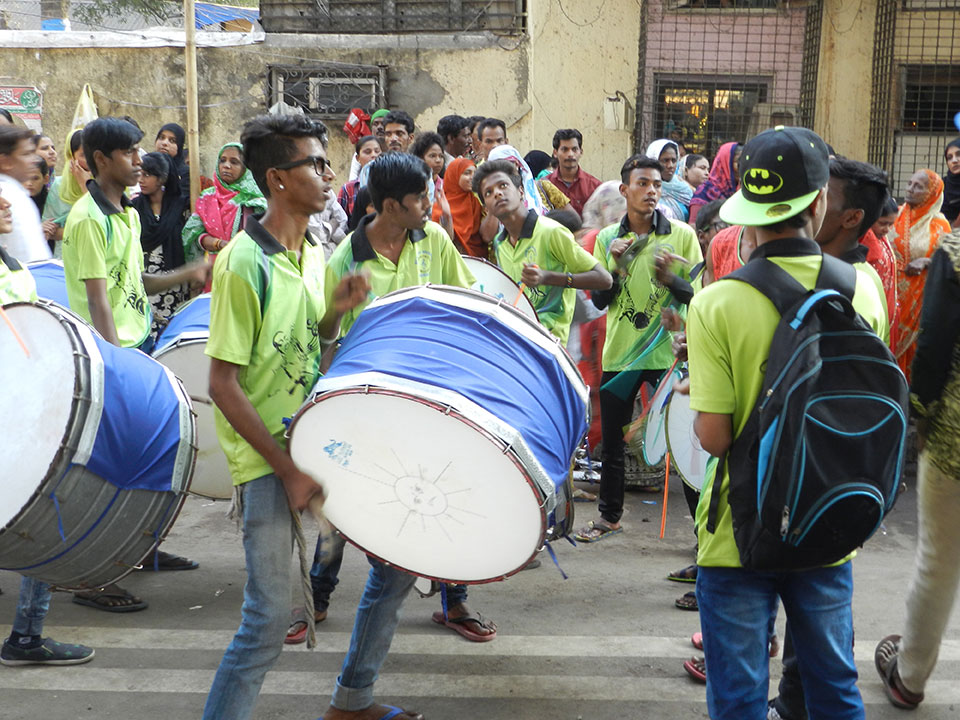
Three vans, all blaring deafening music, marked the procession lines. One, a group called Shaikh Master Brass, had as its star singer a man from Mazgaon whose claim to fame was being one of the qawwali singers in Deewani Mastani from the film Bajirao Mastani.
A woman dressed in decidedly non-festive clothes and looking as if she were on a mission clutched a decibel meter. When asked which organisation she represented, she wordlessly pointed with an air of doom at its measured 104 decibels and set off once again into the din.
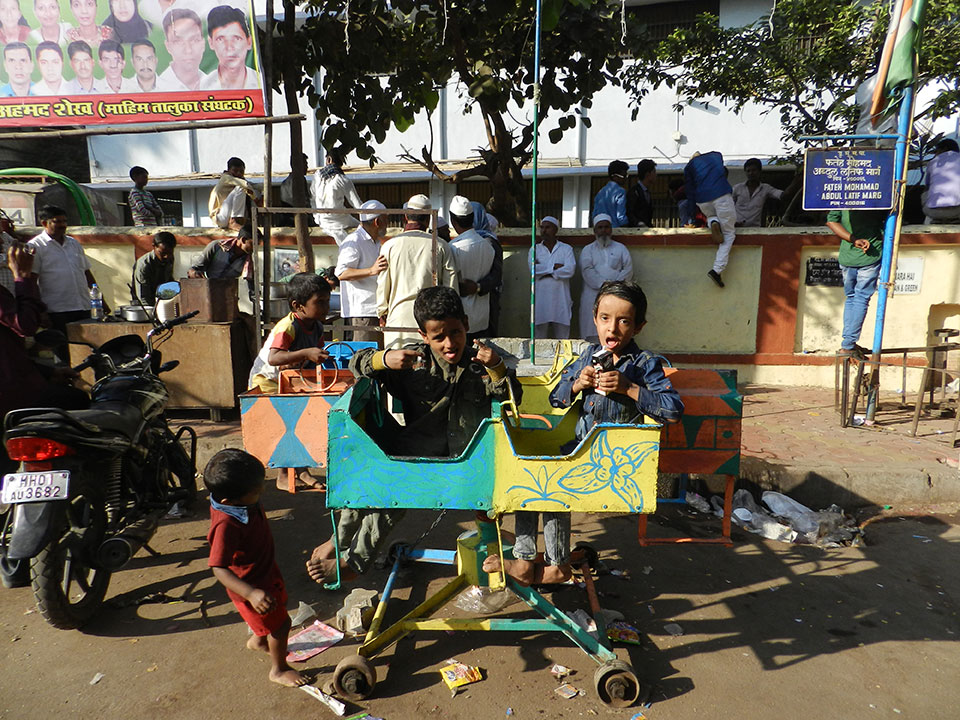
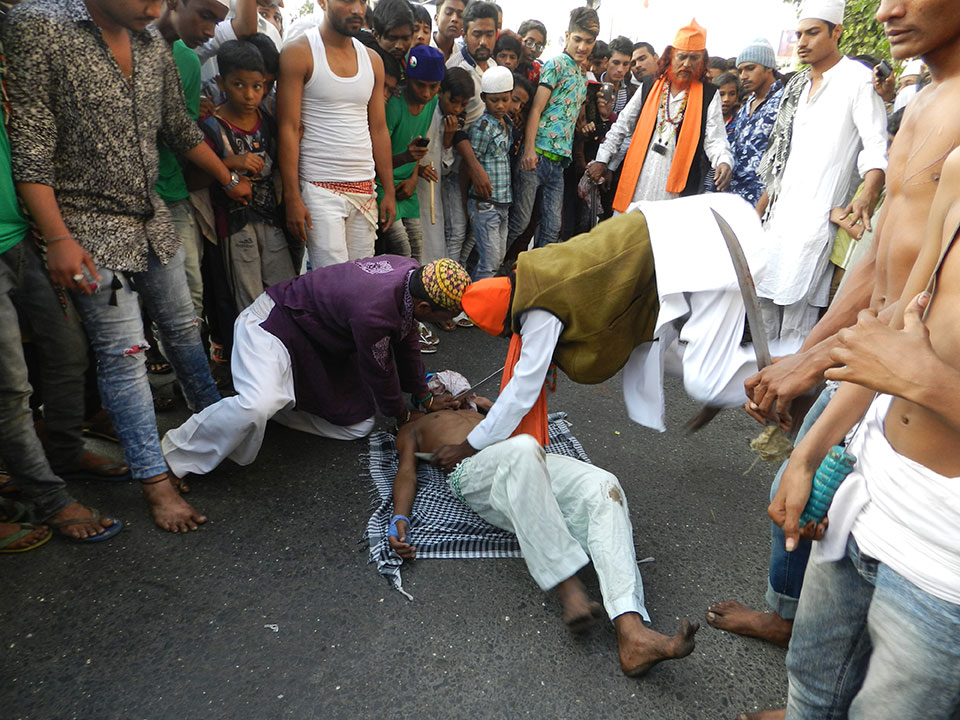
Children and adults alike clambered up to line the boundary walls of residential buildings for a better view as the regular events of an urs proceeded in the centre – devotees swirling incense towards themselves, young men whirling blades to cut their backs, children getting their ears pierced.
Sania Qureishi, 8, was a tough customer. When asked what she liked best about the fair, she pursed her lips and said, “I don’t know yet. I will have to wait and see before I can decide.”
A man for Mumbai
Other places in the city also bear Mahimi’s name, notably the colloquially named JJ Flyover that was until a few years ago the longest in Mumbai. In records, it is called the Qutb-e-Kokan Makhdoom Ali Mahimi Flyover.
Nor is he just the saint of the Mumbai police force. Aspiring actor Ramesh Kumar credits his moderate success in films to him.
“I am a Hindu, but I have faith in Baba,” Kumar said. “Hum jaat ko nahi manta, kalakar hai.”
Kumar, or Junior Johny Lever, as he prefers to be known, said that he has been seeing the procession since he was a child growing up in Mahim. Two years ago, he began to perform comedy and anchor small events at the station. He also got a role as extra in two films. This he credits to the intervention of the saint who he began worshipping six years ago.
Said head constable Chandrakant Salve, “See, the way Mount Mary [in Bandra] and Siddhivinayak temple [in Prabhadevi] are both parts of Mumbai, in the same way even Makhdumi Baba is Mumbai’s only. There is no race or religion here – Hindus, Muslims, Christians, they all believe in him. So do I.”
Behind the optics of the grand gesture, though, some problems remain. Muslims form about 1% of the Maharashtra police force, lower than the national average of 4%, according to the National Crime Records Bureau. That’s the kind of structural imbalance offering a chadar to the saint won’t be able to remedy.
source: http://www.scroll.in / Scroll.in / Home> Syncretic Tales / by Mridula Chary / Photos by Mridula Chary / December 26th, 2015
The Sangeen Jame Masjid at Taramandalpet in Bengaluru.— Photo: Bhagya Prakash k
Bengaluru, KARNATAKA :
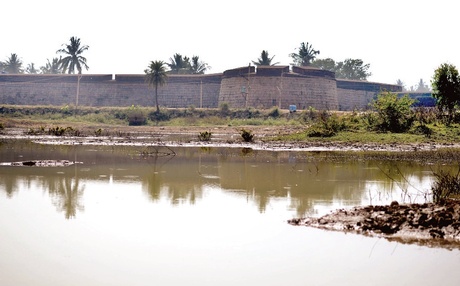
In the congested old market area of the city, where vehicles and pedestrians jostle for space on narrow lanes, lies a tale of Tipu Sultan’s ingenuity that time seems to have forgotten.
It is in this small clearing, now flanked by a sprawling masjid, that thousands of workers had gathered nearly 300 years ago to cut metal, roll gunpowder into barrels and attach sharp metallic pieces to make the once-feared ‘Bangalore Rockets’.
All that remains now of this ingenious machinery that sustained Tipu Sultan through four wars against the British is the name assumed by the few buildings in the area — Taramandalpet , or roughly, the market of the constellation of stars, a name that refers to the pattern of mid-air explosions of these rockets that then rained shrapnel on an unsuspecting enemy.
Residents — primarily shopkeepers and staff of the masjid and madrassa — seem unaware of the place’s rich history that once fuelled Indian rocketry.
“Workers would prepare these rockets that proved very effective against the British. This would then be transported to the armoury at K.R. Market, which still exists,” says Suresh Moona, a historian.
The entire street was a sort of military laboratory, a fact seen in the unearthing of two cannons during the metro construction work between 2012 and 2015.
Much of these signs, however, have disappeared. Activists point out this irony: while the government announced celebrations of the Mysuru King’s birth anniversary — which ended in violent protests — recently, symbols of the Sultan in Bengaluru and even his birthplace near the swanky International Airport on the outskirts continue to fade away.
Syed Shafiullah, vice-president of the Tipu Sultan Publicity Committee, says: “One armoury that we saw is now just piles of thrash and shops. It is a shame that all of it is going. We have been persuading the government to preserve these areas, or at least, to highlight it. It should be a pride that the technology of the British army came from Karnataka,” he says.
source: http://www.thehindu.com / The Hindu / Home> National / by Staff Reporter / Bengaluru – December 27th, 2015
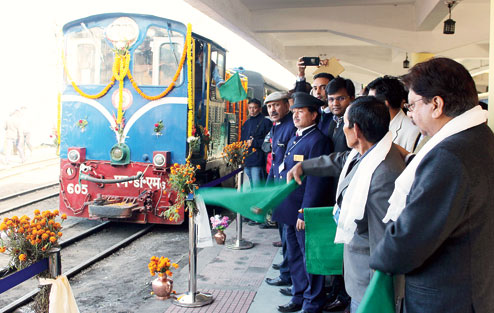
The Northeast Frontier Railway restarted the Darjeeling Himalayan Railway (DHR) toy train service between New Jalpaiguri and Darjeeling on Wednesday.
The service between NJP and Darjeeling was suspended on June 15, 2010, after a landslide near Paglajhora, about 35km from Siliguri, damaged the tracks. The tracks had caved in because of landslide and rain in Tindharia also.
The NFR resumed train services on June 12, 2015, but it was suspended again on June 15 because of landslides.
Repair was undertaken and finally, the service resumed on Wednesday.
According to NFR sources, a passenger special DHR train will leave Darjeeling at 10.15am and arrive at NJP at 5.45pm.
From NJP, the train will leave at 8.30am and reach Darjeeling at 4pm. Each train will have two first-class coaches and a luggage van and would be pulled by a diesel loco.
The toy train was flagged off by Purnabahadur Lepcha, a senior railway employee, at the Darjeeling railway station in the presence of Md. Jamshed, the general manager of NFR, and other senior officials at 9.30am.
source: http://www.telegraphindia.com / The Telegraph,Calcutta,India / Front Page> North Bengal> Story / Thursday – December 03rd, 2015
Just the city of Agra and its close neighbour Fatehpur Sikri have five of the top 10 monuments in the country that are most visited by foreign tourists.
Replying to a query in the Rajya Sabha on Wednesday, Union culture minister Mahesh Sharma said Taj Mahal alone has 23% share of foreign tourists travelling to India. Agra Fort got 12% in 2014. He added that foreign exchange earnings through tourism in India during 2012, 2013 and 2014 stood at Rs 94,487 crore, Rs 1,07,671 crore and Rs 1,23,320 crore respectively.
The minister dismissed claims that the tourism industry had witnessed a decline compared to the last few years. “On the contrary”, he said, “foreign tourists’ arrival growth rate in India has more than doubled between 2012 (4.3%) and 2014 (10.2%). In 2013, it was a mere 5.9%.
In terms of exact numbers, a total of 6.58 million tourists visited India in 2012, which increased to 6.97 million in 2013 and 7.68 million in 2014.
Citing Archaeological Survey of India’s data on foreign tourist arrival at centrally-protected monuments in 2014, Sharma said Taj Mahal with 6.4 lakh visitors, Agra Fort with 3.43 lakh and Qutub Minar with 2.76 lakh were the top three tourist destinations in the country.
The other three monuments of Agra which featured in the top 10 list are Fatehpur Sikri (5th position), Akbar’s tomb (8th) and Itimad-ud daula (10th).
To another query on carbon pollution around the Taj Mahal, the minister said that the Taj Trapezium Zone (TTZ) Authority has banned entry of Euro-I model, petrol/diesel-operated auto loader vehicles from July 31 to reduce vehicular pollution in the vicinity of the Taj. He added that TTZ Authority has also decided to convert petrol/diesel-operated commercial vehicles to CNG. So far, 34,302 vehicles have been converted to CNG in Agra, he said.
However, though the Taj Mahal still remains at the top of the most-visited monuments in the country, there has been a constant fall in the number of foreign visitors to the 17th century monument in the last three years. There were 7.9 lakh visitors from abroad to the Taj in 2012. But the number came down to 7.4 lakh in 2013, further dipping to 6.4 lakh in 2014.
Prior to 2012, the average foreign tourist footfall at the world heritage building had been increasing at a rate of 10-15% per annum. In 2010, 6.1 lakh foreigners had visited the Taj. The number went up to 6.7 lakh in 2011 and further to 7.9 lakh in 2012.
source: http://www.timesofindia.indiatimes.com / The Times of India / News Home> City> Agra / Aditya Dev, TNN / December 02nd, 2015
I got attracted to history only after I entered the museum
HISTORY BUFFDr. J. Raja Mohamed has made his career showcasingTamil Nadu’s rich heritage for the public.— Photo: B. Velankanni Raj
Former curator of Pudukottai Government Museum Dr. J. Raja Mohamedcomments on how we allow our awareness of our past to shape our present
“If we want communal harmony, we must have a proper history to be taught to the people, and the younger generation in particular,” says J. Raja Mohamed.
Having spent over three decades in Tamil Nadu State Department of Museums – first as the Curator of the Pudukottai Government Museum from 1968 to 2003 and retiring as Assistant Director of Museums, Chennai in 2004 – Dr. Mohamed is amply qualified to comment on how we allow our awareness of our past to shape our present.
In a way, Dr. Raja Mohamed’s home in Pudukottai’s Jeeva Nagar neighbourhood is like a museum too, a repository of books from all over the world and his own writings (he is the author of around 10 books in Tamil and English on local history and has published over 100 research papers in art, architecture and history).
Like any good historian, all his statements are backed up with meticulous research. “Many facts in history have been distorted over the years, and we do not know at which stage it was done. Similarly, so many things have not been brought to light,” says Dr. Mohamed, who has specialised in the history of Pudukottai and has also written a seminal reference work on the maritime history of Tamil Muslims (see related story on Page 2 ).
So how did this zoology graduate get so interested in history?
New passion
Born in 1946 in Udayarpalayam (in present-day Ariyalur district) to a middle class family trading in animal hides, the young Raja Mohamed was entering high school when his father suffered a heavy financial loss.
“Paying the Rs. 3 fees for school was a huge problem, and most of my siblings had to stop studying due to this,” he recalls today.
“But I was determined to continue my studies, and so I started working in my free time at bakeries, cool drinks shops and factories, to meet my expenses. Saving those three rupees was very tough because a day’s work would only pay one or two annas (16 annas made a rupee),” he says.
After 2 years of hardship, he was one of 6 students from the Composite District of Tiruchi who won a government scholarship of Rs. 12 which took care of his fees from 9th Standard till the end of school.
He stood first in his B.Sc Zoology course, which made it easier for him to apply for Government service. “I decided to work in the Pudukottai Museum because Zoology graduates didn’t really have a choice in those days,” says Dr. Mohamed. “But I got attracted to history only after I entered the museum.” As proof of that new passion, he went on to earn post-graduate degrees in History, Archaeology, Anthropology, and for good measure, a degree in Law besides a certification in Museum Studies. For his doctoral thesis, Dr. Mohamed researched the maritime history of the Muslims of the Coromandel Coast.
Extensive research
Contradictory interpretation of history has remained a concern for Dr. Mohamed.
“When we read Indian history, the biggest accusation made by big and small scholars alike is that Muslim rulers destroyed temples. Some people may simply be repeating what someone else has said. Nobody has gone into researching the merit of these statements for themselves,” says Dr. Mohamed.
With a grant from the Nehru Trust for Indian Collections at the Victoria and Albert Museum (NTICVA), London in 1994-95, Dr. Mohamed set out to research Islamic buildings in Tamil Nadu.
The result of his work was published by the Department of Museums in 2004 as Islamic Architecture in Tamil Nadu , a book that contains photographs and descriptions of buildings throughout the State, some of which date back to the 8th Century.
The research showed him many new truths, he says. “As inscriptions on the sites prove, each and everyminbar (pulpit) of the old mosques that we find in the seashore areas to this day was made for mosques. Temples were never demolished or converted into mosques,” says Dr. Mohamed.
The main point, he says, is that around a thousand years ago, “The sthapathi or mason who was building the temple, was also the person to build the mosque. So when he built the mosques, he used Dravidian architecture, but avoided portraiture of figures and icons as per the tenets of Islam. Many structures look like temples, but they are mosques. And they have inscriptions from the 9th Century and 10th Century that state that they were endowed by Hindu rulers. These facts have got obscured over the years.”
Dr. Mohamed’s research also concludes that the earliest mosque in the State was built in Tiruchi.
“It is a small structure built during the Pallava era and is shaped like a temple mandapam, but with an Arabic inscription of old character, of 8th Century. We discovered that it was built in AD 734,” says Dr. Mohamed of the mosque that may be found in the city’s modern-day Fort Station area.
He also deciphered 200 temple inscriptions, and helped to unearth the ancient villages of Ollaiyur (now in Thirumayam district) and Senikulamanickapuram, which has now become a part of Pudukottai.
Some of his ongoing projects include a book on the ancient history of Pudukottai (till 6th Century) for the Central Institute of Classical Tamil. During the fieldwork for this book, he found a rock painting at Kudmiyanmalai, which takes the history of Pudukottai to 2000 BC.
A book on the village deities and folk arts of Pudukottai is also nearing completion. “People have been willing to accept new ideas in religion and live in peace, even though this has not been made obvious in our printed historical records,” says Dr. Mohamed, who received the State award for communal harmony in 2012.
A father of two sons and a daughter, Dr. Mohamed credits his wife Abida Begum for her unstinting support that helped him to spend time “at home and in the forest”, for his research. Not having his parents around to see him achieve his career milestones is a recurring regret.
“But my early struggles taught me to trust hard work, and not luck. I loved my job, and I still love it even though I retired long ago,” he smiles.
source: http://www.thehindu.com / The Hindu / Home> News> Cities> Tiruchirapalli / by Nahla Nainar / Tiruchi – November 30th, 2015
In the green, hilly tracts of Kodagu, a small district in Karnataka bordering Kerala, the past is urgent, pressing. A king’s ghost has been summoned again, so his story can be rewritten to suit the age. Tipu Sultan. Perhaps no other Indian king has been mummified by as much subjective judgement. Invariably, he is either a justified villain or an unjustified hero, a tele-serial star or a wanton killer of Hindus. In Kodagu, where Tipu is believed to have put thousands to the sword, a destabilising interrogation of his legacy recently claimed two more lives, over 200 years after the king perished in the British siege of Srirangapatna in 1799. Even as the Karnataka government’s plans to celebrate Tipu Jayanti on Deepavali day—10 days ahead of his date of birth, 20 November—predictably met with opposition from Hindu organisations, the Muslims of Kodagu, many of them descendants of migrants from Kerala, appropriated him as their hero overnight. On the appointed day, the communities clashed violently in the tourist town of Madikeri, the headquarters of the district, resulting in two unfortunate deaths: 65-year-old DS Kuttappa, the district organising secretary of the Vishva Hindu Parishad, was killed when he fell or was pushed from, depending on who you believe, a height during the riot; and 22-year-old Shahul Hamid from Siddapur was shot while returning in a truck from Madikeri. Observers blame the deaths on police and administrative negligence, but the reality of the unrest in Kodagu runs deeper.
From his perch in Srirangapatna near Mysore, Tipu Sultan—and before him, his father Haider Ali—had repeatedly attacked Kodagu in the 1780s in order to secure free passage to Malabar. His incursions into Coorg, replete with the plunder and destruction of temples—a common practice in medieval times even among Hindu rulers—were time and again thwarted by native Kodava warriors, but the region eventually succumbed to the assaults. According to historical accounts, Tipu then ordered ‘both the slain and the prisoners, with the women and children, to be made Musalmans.’ “Kodavas were deeply scarred by Tipu’s excesses but they did not give up. They had their tiri-toks—country guns—and they were skilled at guerrilla warfare. For Tipu’s army, the leeches alone proved a deterrent,” says Addanda C Cariappa, a writer, actor, theatre person and former president of the Karnataka Kodava Sahitya Academy, who is working on a book in Kannada on Tipu Sultan. His pride in the community’s martial heritage and its achievements in the military soon dissolve into alarmism as he talks about the shrinking Kodava population. “We are a dwindling race with a population of just 1.25 lakh. Soon, we will be the Kashmiri Pandits of south India. The religious turbulence of Tipu’s reign is partly to blame,” Cariappa says.
There is no love lost between Kodavas and the erstwhile ruler of Mysore: they will tell you that Tipu was no son of the soil; that he preferred Persian to Kannada and wanted to propagate Islam across south India; and that his epitaph in Srirangapatna and the inscription on his sword commemorate him as a sultan who lived and died for the faith. This, then, was the majoritarian cultural sentiment that formed the backdrop of the Tipu Jayanti celebrations in Kodagu. The Siddaramaiah government has been accused of inciting riots for political gain in a district where all the legislators—two MLAs, KG Bopaiah and Appachu Ranjan, and Prathap Simha, the lone MP from Kodagu—belong to the BJP. Conspiracy theorists go to the extent of alleging that a law-and-order crisis was precipitated by the Siddaramaiah camp to show the new home minister of the state, G Parameshwara, in poor light. Whatever the provocation, the celebrations marked a dark day for communal harmony in the state.
It is dark when we halt at Kuttappa’s house near Madhapur, about 20 km north-east of Madikeri, at the end of a long, snaking drive through banana and paddy fields. The sitting room is bustling with local reporters, Sangh Parivar activists and Kuttappa’s scampering grandchildren. His son Dani wears a dhoti and an unreadable expression. His mother sits unmoving in a corner, her long hair undone,face buried between her knees. “Father knew his life was in danger. But anything could have happened in Madikeri that day and he could not stay away,” says Dani, who works at a factory in Madikeri and is an RSS activist. “They beat him and stoned him, then pushed him to his death. There are eyewitnesses who saw what happened near General Thimmaiah Circle.” The police are awaiting the autopsy report that may throw light on the cause of his death.
On that Tuesday morning, a few thousand people carrying Tipu flags marched towards Town Hall, where his birthday was to be celebrated. The 2,000 policemen who were later deployed to keep vigil over the small district—4,100 sq km of it—had not yet been called in; the district administration was wholly unprepared for trouble. As supporters of the Social Democratic Party of India (SDPI) and Sangh Parivar activists hurled stones at one another, the situation quickly spiralled out of control and the police resorted to a lathi charge. “The Muslims came armed with stones and swords,” alleges Dani. Soon, he is no longer talking about the death of his father, but building a case against “radical Muslims” who, he alleges, have destroyed the peace of the region.
Kodagu is a peaceable place where enmities that lay buried in the dim mists of the past are not easily kindled. Before the flare-up around Tipu Jayanti, the Sultan’s exploits here were largely forgotten—although, if you visit enough Kodava homes, you will have occasion to pet dogs named Tipu. The last time there was a Hindu- Muslim clash in Kogadu was in December 2001, when miscreants vandalised the Harishchandra temple at Palur, about 20 km from Madikeri. Angry Hindu mobs gathered in town, blocking roads and attacking Muslim worshippers; Section 144 was eventually imposed. Like most riots, the 2001 incident reeked of political opportunism and widened the space between Kodagu’s communities. This is happening again now, thanks to a king who has captured the fancy of a nation in search of heroes. Tipu introduced land reforms and modern banking. He abolished alcohol and donated to temples. He was the last Indian ruler to consistently rebel against the British. Yet, large sections of Kodavas do not hesitate to judge an 18th-century ruler by 21st-century morals. “He killed Hindus and converted them. These people who want to celebrate him—what are they celebrating exactly?” Dani asks.
“The problem is that people think in terms of religion in this country,” says actor and playwright Girish Karnad, who received a death threat on social media after remarking that Bengaluru International Airport would have been named after Tipu Sultan, and not after city founder Kempegowda, had the king been Hindu. “It is not as though our politics has changed in 200 years. We still see leaders using atrocities to build their careers. At least Tipu Sultan did not commit these atrocities against his people. I can’t see how what he did was more condemnable. The people of Mysore were happy with him,” he says.
+++
On the banks of the Cauvery at Ayyankeri, a village 6 km from the temple town of Bhagamandala on the road to Madikeri, is a patch of flat forest land planted with kodampuli (Malabar tamarind) trees. A barbed wire fence separates it from private land where rising water levels have made cultivation difficult; consequently, a lush pastoral meadow stretches all the way down to the river, its waters screened from sight by a thin line of trees. Inside the fence stands a small, rounded black stone with the date ‘13.12.1785’ painted on it, next to the words ‘Holocaust of the Humans’. Visiting what is described to me as the Auschwitz and Jallianwala Bagh of Kodagu, I am struck by the absence of history around it. No one in the neighbourhood has heard of Devattiparambu, the grounds where Tipu Sultan is said to have massacred over 30,000 Kodavas on a single day after inviting them to a feast. Yet, Kodavas like Addanda Cariappa are convinced that this is where the king all but wiped out a thriving, fearless people. Cariappa’s book is to be released on 13 December to commemorate the incident. “We used to call this area periya parambu (big ground). The NCC camped here in the 1950s to build a bridge,” says Abdul Rahman, a villager who owns some land next to the river, speaking in Malayalam. “A couple of months ago, some people from the Codava National Council [which has been campaigning for ethno-linguistic tribal minority status for Kodavas] came and looked around for a place to install the memorial. Since this is forest land, they thought it would be safe here,” he says. Rahman and his neighbours attended the Tipu Jayanti celebrations in Madikeri because they were puzzled at the calumny suddenly hurled at their village. Tipu allegedly converted thousands of Kodavas, whose descendants are now known as Kodava Mappilas. Muslims living in Ayyankeri, however, say their ancestors migrated from Kerala. “We have a mosque here that is said to date back 300 years and there are no records of conversion by Tipu Sultan in these parts,” says Rahman. “Nor is there any proof that this was Tipu’s killing field.”
Was Tipu really a monster of ego and a jihadist? Or could he have liberated India from the imperialists? “How does it matter? Lives have been lost,” says Abdul Naseer, the father of Shahul Hamid. “We have lost our only son.” In a small house with green walls, Naseer and his wife Kulusu contemplate their misfortune. “Shahul worked at a Toyota showroom in Bengaluru. He had come to Siddapur to apply for a BPL card so that we could get a discount on his sister’s kidney stone surgery in Mangalore,” says Kulusu. “He did not know a thing about Tipu. He just hitched a ride back home from Madikeri.” About 300 Muslim youth from Siddapur, Kodagu, attended the event, and most of them have since fled the area fearing arrest. “There are no youth in town today. There is fear. The police keep coming back with inquiries,” says Naseer. Police have made over 60 arrests so far and filed 35 cases. A magisterial probe has been ordered. “The people who killed my son go scot free even now,” Naseer says. He flew in from Dubai, where he works as a driver, when he heard his son had been shot. “I remember thinking, ‘It is a bullet to the head, he won’t make it’,” says Naseer, who has no plans to return to the Middle East. “There is no one to earn for,” he says.
While the Madikeri incident may have been precipitated by an unmindful government decision, there is a discernible trend of Muslim radicalisation in Kodagu, says KB Ganapathy, editor-in-chief of Star of Mysore, a widely- read evening newspaper. “I grew up in Kodagu. Muslim women never wore burkhas until a few years ago. Just two years ago, a women’s college in Virajpet took issue with students suddenly appearing in burkhas. The women in turn asserted their fundamental right to wear them, and eventually the parties came to the compromise that they could wear the burkha till the college gate but no further,” he says. “In this situation, the Congress may well be trying to capture the Muslim vote.”
In Srirangapatna, the anniversary of Tipu Sultan’s death is celebrated with much gusto. Followers waving banners with his emblem—a blazing sun amidst tiger stripes— participate in a procession from his mosque to his grave, where they smear sandal paste on the tomb. “I have attended many of these processions—called urs—and they have been peaceful. It is when you politicise the celebration that problems occur,” Ganapathy says. He has argued against idolising Tipu over other kings who fought the British. “Why doesn’t Mamata Banerjee celebrate the birthday of Siraj-ud-Daulah, the last independent Nawab of Bengal? He lived before Tipu’s time,” the editor says.
Tipu was a multicultural icon, a proto-nationalist who understood the future and respected other religions, says leftist historian KN Panikkar, who wants the country to remember him “not as a Muslim ruler but as a ruler of Mysore who gave us an anti-imperialist legacy”. Must we celebrate kings in democratic India? A king is not a perfection of noble qualities. He may fight an intercontinental cast of foes, but he is first and foremost fighting for his territory. “Freedom as we know it today was not part of Tipu Sultan’s imagination,” says Addanda Cariappa. “Just as it was not part of the imagination of the Peshwas or the Rani of Jhansi. They all fought for themselves.”
‘Happy is the country that needs no heroes,’ wrote Bertolt Brecht. Let us live up to the perils of the era and not drag a long-dead ruler to court with us.
source: http://www.m.openthemagazine.com / Open / Home> Nation / by V. Shoba / November 26th, 2015
The Coronation Hall at Taj Falaknuma, which has been thrown open for public viewing after months of cleaning and refurbishing, is all set to give visitors a great experience of witnessing four different faiths under one roof. The restoration of the hall was done under the guidance of Princess Esra Birgin and experts from UK. It was in a decrepit condition with the roof falling apart and the carving turning black due to pigeon poop.
It is after several months of cleaning and polishing that fragrance of sandalwood filled the room, allowing one to cross the corridors admiring its art, sculpture and wood carvings. Sharing his views, raconteur Prabhakar Mahindrakar said, “In 1903, when the sixth Nizam Mir Mahboob Ali Khan attended the coronation of King Edward at Dilli Darbar, a lot of artists and craftsmen came to showcase their work at the mela expecting huge sales.
Unfortunately, no ruler took interest in purchasing the works and the artisans were left disappointed, except for the Nizam of Hyderabad who bought this ‘four-religion art’, which was immediately shipped to the city.” The Coronation Hall, which was used by royal women members and the Nizam, has many interesting facts to entice visitors. It took nearly three years for the Nizam to get the single unit art work to be put on proper display at the hall.
The intricate wood carvings are made in sandalwood and rosewood, which have certain unique features that pinpoint to the secular rule which prevailed during the Nizamera. Palace historian PrabhakarMahindrakar said, “The hall is divided into five sections, each dedicated to a distinct faith. The room begins with the Mughal art and is followed by Thai, Buddhism and comes to an end with Hinduism.
The first section of the room has intricate carving of ‘Tree of life’ in sandalwood on both sides of the hall, and on to the right one can also see the replica of ‘Emperor Jahangir darbar’ which was used by the Nizam to look at the city.” Walking down further, one would be welcomed with huge sandalwood arches which depict the temples of Thai monks and other carvings include Yali and peacocks which play a prominent role in Thai culture.
The next is Buddhism arch which depicts the royal life of ‘Gautam Buddha’ on one side and enlightenment and penance on the other side. The last depicts, Hinduism, where there is a replica of Panchavati, the abode of Ram-Sita while in exile along with many other mythological figures related to Lord Krishna, Goddess Lakshmi, Lord Vinayaka and many more.
source: http://www.metroindia.com / Metro India / Home> LifeStyle> Places / by Metro India News / November 28th, 2015