Category Archives: Travel & Tourism

Israeli academic hails Kerala’s multiculturalism

Says the system preserves the identity of every community

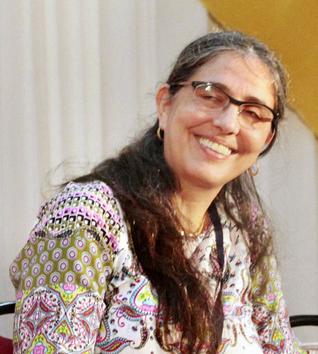
Kerala’s traditional multiculturalism has much to offer to the policy and decision makers in modern times, says Ophira Gamliel from the University of Ruhr, the Israeli academic who has been closely associated with Kerala studies.

Ophira Gamliel says the traditional festivals and performing arts in Kerala are highly structured so as to ensure the collaboration of the various communities at different levels

Speaking to The Hindu on the sidelines of the third International Kerala History Conference here on Friday, Prof. Gamliel says a closer look at the multiculturalism inherited by the State would point to a dynamic system which preserves the identity of every community, even as it provides space for each of them to integrate into one system.

“You don’t lose your identity. Even small communities do not get swallowed. Your literature, culture, everything are well preserved. Instead of getting integrated at the personal level, you are integrated at the community level,” she says.

Prof. Gamliel says the roots of this unique system, still preserved, could be traced to the ancient long-distance trade exchanges which were exceptionally different in character from the modern global trade. “Unlike the modern global trade, which is marked by brutal expropriation of resources and labour, the ancient trade between the western coast of India and west Asia was marked by a great amount of cultural and knowledge exchanges at the community level,” she adds.

Documents

The more-than-1,000-year-old Cairo Documents (referring to deals between west Asian traders and those from Kerala) and the 9th century Tharisapalli plates (referring to a grant issued to Syriac Christians of Kerala) are rich evidences to this multiculturalism. “In fact, the Tharisapalli plates are signed in three languages: Persian (in Hebrew script), Pahlavi, and Cufic Arabic,” she says pointing to the efforts taken to preserve the identity of the different trading organisations.

Even the traditional festivals and performing arts here are highly structured so as to ensure the collaboration of the various communities at different levels. Beyond the complexity of what happens on the stage, this underlying structure assured collaboration at the communal level even in performing art forms, she says.

This unique system of multiculturalism should be subject of in-depth research, especially at a time when traditional communities are under threat of being swallowed up in the wave of globalisation, leading to tensions and conflicts at the community and societal level, she adds.

source: http://www.thehindu.com / The Hindu / Home> National> Kerala / by George Jacob / Kottayam – November 29th, 2015

Bengaluru’s Jewish cemetery with a muslim caretaker shows that ancient conflicts have no meaning here

Bengaluru  :

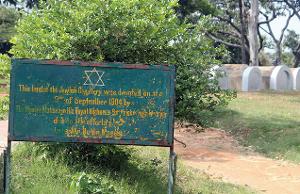
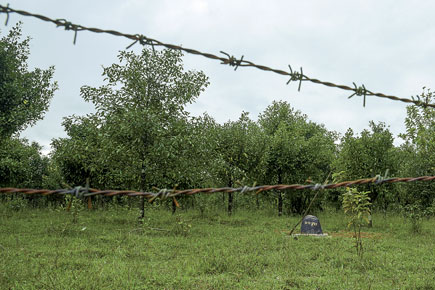
Located off the busy Mysore Road flyover, it is easy to miss the Jewish burial ground, unless you were looking for a bright green facade of the low-roofed house built there. The house has been home for Sheikh Rafiq and family for the last 24 years, since the time he agreed to take care of the graveyard for the Moses family, who have been custodians of the property since 1904.

A gift from Mysore Maharajah Krishnaraja Wadiyar to the family, this cemetery is among a handful of Jewish cemeteries in the country. (TOI photo)

A gift from Mysore Maharajah Krishnaraja Wadiyar to the family, this cemetery is among a handful of Jewish cemeteries in the country, and the only one of its kind in Bengaluru. “I am the third generation of the family taking care of the land and it is hallowed ground for us,” says Sidney Moses, a retired horse trainer.

The first grave to be laid here was of Subedar Major Samuel Moses Nagavkar (a Bene Israeli) in 1904, and six years later, his son Benjamin Abraham Nagavkar was buried here as well,” he says about the oldest graves in the cemetery. The 50 graves that quietly lie there make for an interesting exploration and there are stories to be shared like why it’s the resting spot for a Russian circus owner. “Mrs Isaaco who was proprietress of the famous Russian Circus died while she was in Bengaluru. Her burial here was quite unusual because the whole circus came and they even brought her favourite white horse for the final goodbye,” says Moses. Now, about the curious choice of employing a Muslim family to take care of these Jewish graves, Moses simply states, “My uncle (Maurice Moses) appointed him as the caretaker but there wasn’t any particular reason why he hired him. In fact, Rafiq volunteered for the job.” “He is very clean and has been taking very good care of the graveyard since he joined,” he adds. “The place was covered with weeds and there was a huge anthill when I first came here,” recalls Rafiq of the swathe of land that is well-tended today.

And where the thought of living adjacent to a cemetery is enough to spook most of us, for Rafiq and his family it’s just part of life. “My son was four years old when we moved here and he has practically grown up playing here,” says Rafiq of his son, Sheikh Rizwan, who helps his father in the cemetery’s upkeep today. “Sleeping here in the night doesn’t scare us. In fact, it is very peaceful here,” says Rafiq who views his unusual job as a blessing. “It is a noble job to take care of the dead,” he says before shrugging off the ‘religion’ angle with a mere, “we all pray to the same god and in death, we are all equal.”

source:  http://www.timesofindia.indiatimes.com / The Times of India / News Home> City> Bengaluru / Mahalakshmi  P, TNN / November 14th, 2015

The lady with a legacy

MorrisMinorMPOs10nov2015

As a young boy, Javeed Mehkri would watch his father spend hours with his favourite car — a 1950 model of Morris Oxford, better known in India as the Hindustan 14. Javeed not only learnt about the car and its mechanics but thoroughly enjoyed the drive in it to and from school.

The passion for the Morris Oxford is living on through four generations with Javeed now transferring the ownership of the car to his 22-year-old son Junaid Mehkri. Junaid shares as much passion for the classic beauty as his father.

The car has an interesting history to it and Javeed gets nostalgic when he settles down to talk about it. Javeed says, “My grandfather, AK Mehkri, purchased it. He was working as the superintendent of engineering in the Shimsha hydro-electric station in the erstwhile princely state of Mysore. The car was initially registered and used in Mysore for three years, after which my great grandfather moved to Bengaluru. The car has been with us since,” explains Javeed.

Almost every member of the Mehkri family has driven the car. Those who revelled at its wheel include MG Mehkri, private secretary to the Yuvaraja of Mysore; Dr MS Mehkri, founder of the Bangalore Medical College; and ME Mehkri, a freedom fighter and a well-known philanthropist. “In fact, the landmark, Mehkri Circle, is named after ME Mehkri,” adds Javeed.

Decades after, the car has been restored with some of its parts being replaced and brought to perfect working condition. “The car was taken care of by Rasheed Mehkri, my late uncle. Rasheed passed away in 2013 and wasn’t there to see the car in running condition,” says Javeed.

However, he admits that the biggest challenge, is to maintain the car. “Spare parts for the American-made vintage and classic cars are available online but you will never find perfect spares for British classic vehicles in India. I got some of the parts replicated here but again you have to personally supervise it to make sure you are not taken for a ride. It is an expensive and time-consuming process to maintain these cars,” he says.

Javeed says among those who were drawn to his car was former prime minister of Nepal, Tulsi Giri. “There’s a church just opposite our house and he used to visit the church whenever he was in the City. Once, he saw the car parked outside my house and he asked me why I didn’t do anything to get it back on the roads. When he returned six months later, he again asked me the same question. I got the same advice from my cousin Sajjad. All this hastened the restoration process,” adds Javeed.

Among Javeed’s prized possession is also a 1960 model Lambretta Scooter — his father’s first purchase. “My father rode it and I used to go to college on it. Now, my youngest son Uzair gets dropped by the scooter once in a while,” he says. Like other youngsters of their age — Junaid and Uzair — love swanky cars but they value their two prized possessions more.

The Morris Oxford has been a regular at Karnataka Vintage and Classic Car Club rally for the last two years. And Javeed loves basking in all the adulation the car draws. “It was during one of the rallies that a lady in a car stopped beside us. She asked me: ‘How old is she?’ I said 65. She smiled and said: ‘She’s my age’. Total strangers admire and compliment me on the car,” he narrates.

(Javeed can be reached on Javeedmehkri@hotmail.com)

source: http://www.deccanherald.com / Deccan Herald / Home> Supplements> MetroLife / by Nina C. George / DHNS – Bengaluru , November 10th, 2015

Bikerni Sisterhood

Hyderabad  :

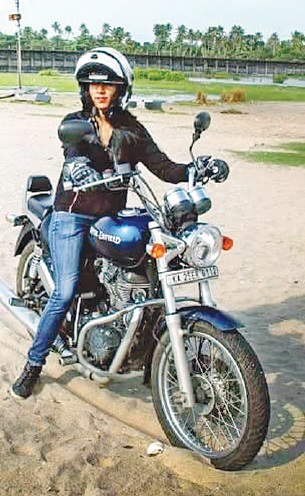
Like most children, 24-year-old Candida Louis’ fascination with bikes began while riding as pillion with her father. The breeze caressing her face as they drove along scenic landscapes gave her a rush of adrenaline and drew her towards biking.

Bucking the trend of machismo that surrounds the male-dominated sphere of biking, Candida, a corporate employee from Bengaluru, refused to confine her biking experience to being a pillion and decided to become a rider herself.

After eight years of riding, Candida is currently on a solo tour across the country – India on a Motorcyle.

On her brief stop in Hyderabad, she begins with a story that is pleasantly surprising and underlines the prominence of brotherhood (sisterhood in this case) of bikers and bikernis in the country.

Candida Louis
Candida Louis

“I finished Kerala, Tamil Nadu, and Karnataka in the South. My next stop was Hyderabad. I saw biker Sana Iqbal’s post in one of the Facebook groups and pinged her asking her about the best routes to Hyderabad,” recalls Candida. They met and then instantly, Sana, who was returning from Bengaluru to her hometown Hyderabad asked Candida to tag along. The two of them reached Hyderabad in the early hours of Thursday morning and Candida made Sana’s home in Mehdipatnam her own for a night.

“I am amazed by the way she received me. She didn’t just let me tag along, she also let me stay with her,” she smiles. Sana Iqbal was on a solo ride herself – Hyderabad – Udupi – Mangalore – Bangalore – Hyderabad. “I wanted to meet up with bikers in Bengaluru and happened to meet Candida,” she tells us. 27-year-old Sana has been riding since she was in grade seven and now, a mother of a four-month-old boy, Sana still finds riding cathartic.

Candida’s solo ride from the start has been picking up things, experiences and advice on the go. The same way, when the two women started off from Bengaluru, they started talking about Gandikota and Belur caves. “I heard a lot about it, but haven’t been there. When Candida asked me about it, we thought why not and then took a diversion,” beams Sana. Just like that, they rode all the way to Gandikota and Belur Caves. “It is beautiful, Gandikota. It is called the Grand Canyon of India, but doesn’t have many tourists,” she adds.

Apart from making new friends and experiencing the thrill of riding, Candida is also on a mission to discover unknown, yet exotic destination on her three-month long journey . “One thing I am looking to do on this tour is also locate those undiscovered places in the country and write about them.

Another place I went to was in Kerala – Varkala. It was beautiful. Again, not a lot of people know about it. I asked locals and they directed me to go there,” shares Candida hoping that she will discover more such places and meet people.

source: http://www.newindianexpress.com / The New Indian Express / Home> Cities> Hyderabad / by Rajitha S / October 31st, 2015

Tipu’s b’day bash divides opinion

Bengaluru  :

The state government’s move to celebrate Mysuru warrior Tipu Sultan’s birth anniversary as an official event across Karnataka on November 10 has ruffled the BJP and right-wing groups. They’ve opposed the government’s move to celebrate the event in a grand manner, terming the ruler as anti-national.

The decision to commemorate Tipu’s birth anniversary as a state-sponsored one was made by chief minister Siddaramaiah at the release of a book on Tipu in 2014.The BJP has accused the CM of trying to appease the minorities with the decision and has opposed the setting up of a university named after the ruler. Senior BJP leader D H Shankaramurthy, who is chairman of the Karnataka legislative council, told TOI that though he cannot comment on the celebrations, he will not attend the main function in Bengaluru.

The government’s move has cleaved opinion on Tipu, with historians, writers and politicians on both sides. While historian M Chidananda Murthy has likened Tipu to Adolf Hitler, writer S Shettar says reviling the rule without research is abuse of scholarship. Shettar said, “Condemning Tipu as anti-Hindu without properly studying the facts about his contributions and administration amounts to abuse of our scholarship. It is possible that Tipu might have hurt the sentiments of a particular community during his rule which could be a political compulsion rath er than his hatred for that community.

The scholars.” With less than a week for the function, right wing groups have gone into a huddle deliberating ways to oppose. BJP legislator from Mysuru, Go Madhusudan, is against setting up of a Tipu varsity , claiming that Tipu had offered support to Afghan ruler Ahmed Khan Abdali in waging war against India. “This shows he was an anti-national and doesn’t deserve to be venerated,” he said.

Historian Talakadu Chikkarange Gowda debunks theories that the ruler killed Hindus for refusing to convert to Islam. “In 1781, Peshwa Parasuram Bahu pillaged Sringeri Shankaracharya’s mutt. It was Tipu who came to the mutt’s rescue. Do right-wingers know that Chhatrapati Shivaji was betrayed by his own Peshwas,” he asked.

He also pointed to temples in the vicinity of Tipu’s palaces in Mysuru or Bengaluru. “I agree there are lapses on his part. But one mistake should be overlooked for the 99 other welfare measures he brought in,” he added.

Barkur Udaya, assistant professor, department of history, Mangalore University, said the anti-Tipu brigade is only reiterating Britishers’ view of him as a traitor.

source: http://www.timesofindia.indiatimes.com / The Times of India / News Home> City> Bengaluru / TNN / November 06th, 2015

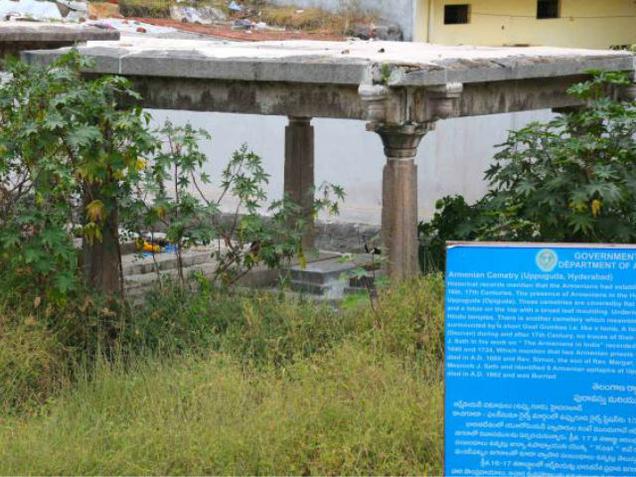
Neglected Armenian cemetery in Hyderabad sports new look

State Archaeology and Museums all set to put new life into most neglected heritage monument of the 17th century Armenian Cemetery situated at Uppuguda (Opiguda) in Hyderabad'old city will likely to opened for the general public and tourists. Photo: Mohammed Yousuf
State Archaeology and Museums all set to put new life into most neglected heritage monument of the 17th century Armenian Cemetery situated at Uppuguda (Opiguda) in Hyderabad’old city will likely to opened for the general public and tourists. Photo: Mohammed Yousuf

The existence of the cemetery of Armenians was brought to light by Mohammed Ziauddin Ahmed Shakeb, a historian from the city in 1970.

Two of Hyderabad’s most famous Armenians, Albert Abid and Alexander Jacob, are not buried at the Armenian cemetery in Uppuguda. But the cemetery is preparing to enlighten people on the role of the two Armenians in the 16 and 17 century. After lying in a state of neglect for decades, the Armenian cemetery, will be opened to public shortly.

The Department of Archaeology and Museums, which is the custodian of the cemetery, renovated the premises some months ago.

“ A caretaker will be posted at the cemetery to look after its maintenance,” said Sunita M. Bhagwath, Director, Archaeology and Museums Department.

Armenians came to India between 16th and 17th centuries as traders travelling through Persia, Afghanistan and Tibet. “A large number of Armenians settled in Hyderabad during the 17th century. Though there are no written records of their activities, traditions and social conditions , the Armenian epitaphs acknowledge their presence,” M.A. Qayyum, former Deputy Director Archaeology and Museums said.

There are about 20 graves in the cemetery, 19 are of Armenians and one is of a Dutch trader.

The graves of two priests Rev Johannes, who died in 1680, and Rev. Margar, who died in 1724, are also here. A single dome on the premises representing the Qutb Shahi style of architecture and two mandapa-like structures, one square and the other octagonal, are distinct features of the cemetery.

The existence of the cemetery of Armenians was brought to light by Mohammed Ziauddin Ahmed Shakeb, a historian from the city in 1970.

“Dr. Shakeb chanced upon a letter written by British Resident W. Haig in Hyderabad to a government official in 1907 about the Armenian cemetery. Soon, officials were informed about it and the place was identified,” Qayyum explained.

Rs. 25 lakh for renovation
The department spent around Rs. 25 lakh for renovating the place. Wild shrubs were cleared and the height of the compound wall has been increased. The authorities took care to see that the wall was renovated using granite, lime and mortar to keep in tune with the character of the precinct.

The tough task ahead for them is to see that the basalt stones with Armenian engravings on the graves are restored. “We will be seeking the help of experts for the job,” Ms. Bhagwath said. Historians suggest that the government seek the Armenian authorities’ help in establishing the identity of all those who are buried here.

source: http://www.thehindu.com / The Hindu / Home> News> Cities> Hyderabad / by Asif Yar Khan / Hyderabad – October 31st, 2015

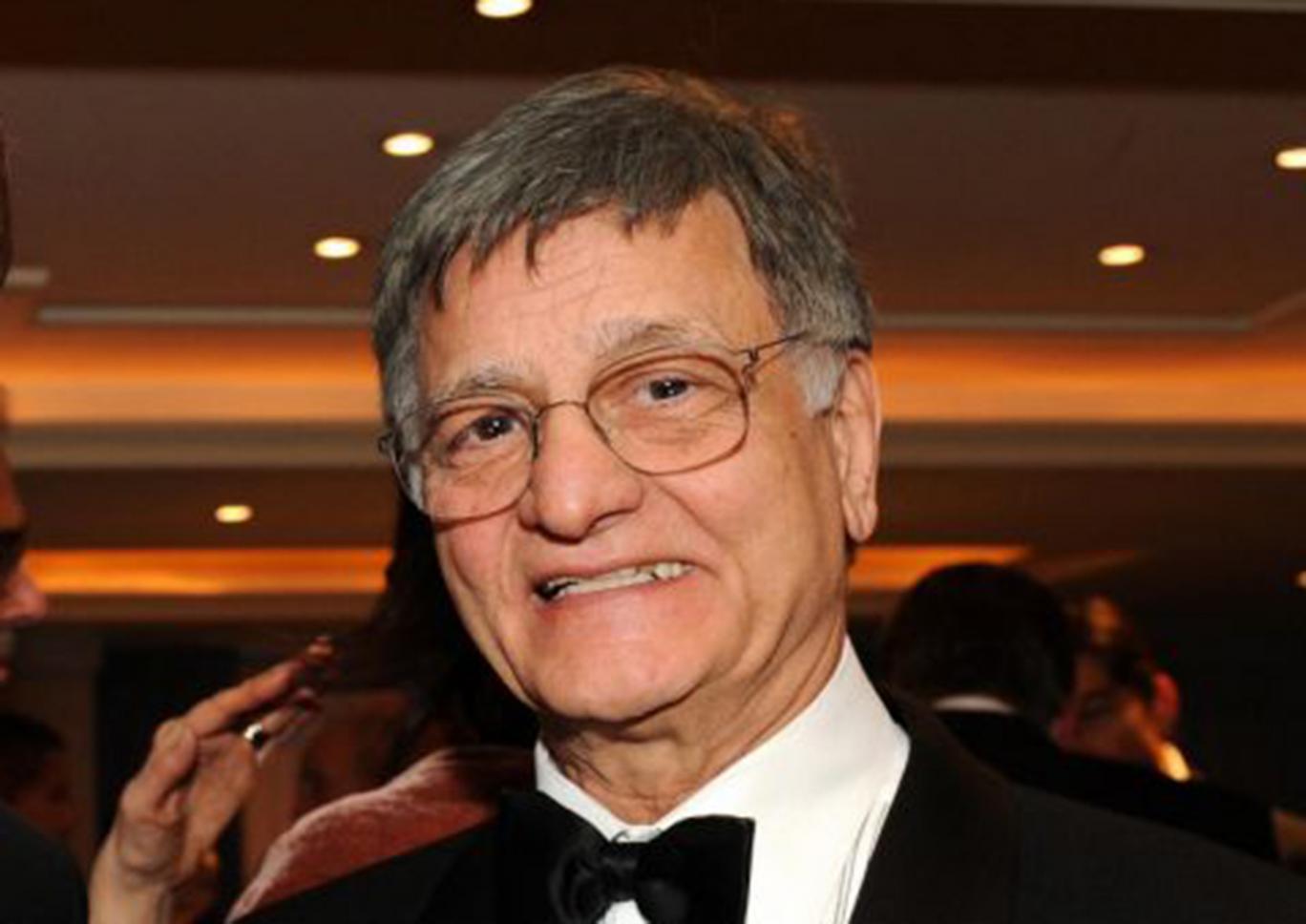
Lord Noon: Labour Peer and ‘curry king’ dies aged 79

Lord Noon was brought up in Mumbai before setting up the hugely successful Noon Products

Sir Gulam Noon, who was known as the curry king, has died aged 79 PA

Labour peer Gulam Noon, who was known as the curry king, has died aged 79, it has been announced.

The prominent entrepreneur made his fortune selling Indian food and was a significant party donor.

He became caught up in the cash for honours scandal after making a significant contribution to Labour coffers.

Tony Blair led tributes to “great character” who he said would be “deeply mourned” while senior Labour MP Keith Vaz said the Asian community had “lost one of its greatest stars”.

Mr Blair said: “Gulam was a great character, brilliant businessman and above all someone dedicated to our country and its future. He was devoted to getting those of different religious faiths working together and was a wonderful role model in the Muslim community. He will be deeply mourned.”

____________________________________________________________________

“Our community has lost one of its greatest stars”

____________________________________________________________________

Lord Noon was born in a single-room house on Mumbai’s crowded Mohammed Ali Road and lived in it along with eight others. He later made his way to the UK where he set up his sweet stall Bombay Halwa in Southall, west London, in 1972 and Noon Products 17 years later.

In 2006 amid claims that financial support was being rewarded with honours, the tycoon joined other donors in asking for his nomination for a seat in the House of Lords to be withdrawn saying he had been left in an “invidious position”. He was made a life peer in 2011.

The decision to award him a knighthood in 2002 sparked criticism by current Labour leader Jeremy Corbyn, who said at the time he was “very disturbed” about the move.

But the businessman said he believed that he had received the honour on merit.

Mr Vaz said: “Today we have lost a giant, not only of the British Asian community, but also of British entrepreneurship. A decent, honourable and generous man, who was dedicated to his family, but also to his country, the United Kingdom.

“Rightly known as Britain’s first curry king, he brought curry to the high street. There are thousands of people in Britain, in India and throughout the world who have benefited from his enterprise, jobs he created, and his big heart. The world of cricket will also miss one of its most devoted followers.

“He was the epitome of everything a first generation immigrant can achieve, someone who literally came with nothing, but was also grateful to Britain for giving him the life chances to prove what an extraordinary man he was, whilst never forgetting his roots in India.

“Our community has lost one of its greatest stars.”

source: http://www.independent.co.uk / Independent / Home> News> UK> UK Politics / by Sam Lister / October 28th, 2015

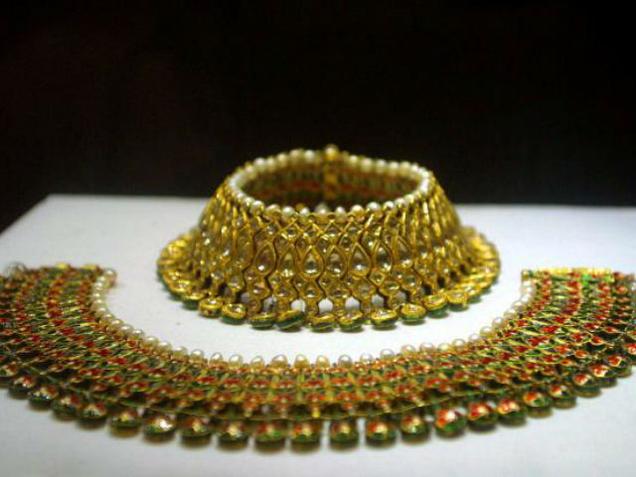
Hyderabad misses glitter of Nizam’s priceless jewels

In the absence of any concrete effort, the jewels are confined to RBI vaults in Delhi. Photo: AP

In the absence of any effort, they are confined to RBI vaults in Delhi.

Vows forgotten and proposals put on backburner have resulted in priceless heritage of Hyderabad staying away from the city and remaining confined to Reserve Bank of India (RBI) vaults in New Delhi.

It had been almost a decade since the Nizam’s jewels, a precious collection with value running into several thousand crore rupees, was exhibited on temporary basis in the city. The then A.P. government vowed to have the collection brought to the city and put on a permanent display here and several proposals were drafted too.

Comprising 173 exquisite pieces, including the famed 184.50-carat Jacob diamond from the treasury of the erstwhile Nizams of Hyderabad, the collection has been with the Union government and deposited in the safe vaults of the RBI.

Few other pieces of the royal compilation include priceless uncut Colombian emeralds, rare carat Alexandrite ring, a necklace with 12 flat diamonds and emerald armbands weighing 150 carats said to have belonged to the Mysore ruler, Tipu Sultan.

Hyderabad, the city to which the jewellery actually belongs, twice hosted exhibition of the collection in the year 2001 and 2006 at Salar Jung Museum which had large crowds thronging for a look.

‘Security not an issue’

Former Director of Salar Jung Museum A.K.V.S. Reddy, who supervised the temporary exhibitions in the city, says the priceless collection belonged to the city and argues a permanent facility to display them here was not unviable.

“Security is key aspect for such galleries and a decade ago when it was displayed here, we had to deploy nearly 120 security personnel. However, with more advanced technologies in the form of camera surveillance and alarms, the requirement will be less,” he says.

Salar Jung Museum officials rule out the possibility of hosting a permanent exhibition of such precious collection at its premises now given the developments at the museum.Telangana Deputy Chief Minister Mohammad Mahmood Ali describes the collection of erstwhile Nizam rulers as an asset of the city and says all efforts will be made to get it here for a permanent display.

source: http://www.thehindu.com / The Hindu / Home> National> Andhra Pradesh / by T. Lalith Singh / Hyderabad – October 28th, 2015

Mark Zuckerberg visits ‘stunning’ Taj Mahal

Agra :

Facebook CEO Mark Zuckerberg visited Taj Mahal on Tuesday, along with group of seven people who were supposedly his colleagues.

At around 4:20pm (GMT + 5:30) Zuckerberg posted an image of him which was clicked by his colleagues while he was sitting on the east side of Taj Mahal watching the magnificent structure.

ZuckerbergTajMahalMPOs28oct2015

Confirming Zuckerberg’s visit to Taj, Image Public Relation Pvt Limited — which handles Facebook public relation in India — said, “Yes, CEO of Facebook did visited Taj Mahal on Tuesday.”
However, Ram Ratan, Archaeological Survey of India conservation assistant, Taj Mahal claimed, “We had no idea about his visit to Taj. It might be possible that he wanted to keep his visit low profile to avoid unnecessary attention.”
According to CISF official source, “Since nobody knew about Mark visit, he must had walk through long queue of security check like all ordinary tourist do.”

The tech entrepreneur will visit IIT Delhi tomorrow to interact with students and faculty at the Indian Institute of Technology in Delhi in a town hall.

Last month during PM Modi visit to US, Zuckerberg had shared an anecdote about his earlier visit to India and claimed that, “when things weren’t really going well — we had hit a tough patch and a lot of people wanted to buy Facebook — I went and I met with Steve Jobs and he said that to reconnect with what I believed was the mission of the company, I should go visit this temple in India that he had gone to early in the evolution of Apple, when he was thinking about what he wanted his vision of the future to be.”
source: http://www.timesofindia.indiatimes.com / The Times of India / Home> Tech / by Arvind Chauhan, TNN / October 27th, 2015

Nadia royal family bears Puja torch since Akbar era

Krishnanagar  :

Illuminated by earthen lamps and torches (mashals), the idol of Ma Raj Rajeshwari looks resplendent in the Akbar-era Natmandir at the Krishnagar Maharaja’s palace.

The serenity is suddenly shattered by the town crier’s shrill call: “Attention! Agnihotri Bajpeyi Raj Rajendro Maharajadhiraj Nabadwipadhipati Mahashaya Krishno Chandro Roy Bahadur is arriving.”

On cue, 108 dhakis beat drums to frenzy.

The Maharaj arrives in an elaborately carved silver palanquin that was gifted to one of his forefathers by Emperor Jahangir. He approaches the pulpit. Shortly thereafter, the palace cannon booms, a signal for the beginning of sandhi puja. A hundred and eight buffaloes are assembled before the Goddess. At shandhikshan, the heads are severed and placed before the Goddess as offering to cleanse the human spirit of its evils. “As a child, I grew up watching these rituals being performed while sitting on my grandmother Maharani Jyotirmoyee Debi’s lap. Growing up, I always held a grudge against Ma Raj Rajeshwari. How could the divine mother, the supreme protector of good and the destroyer of evil, devour so many harmless, helpless lives? I would often bring this up with my father. Being a God-fearing man, he would stick to tradition till the resistance melted away when he saw my infant son Manish crying on witnessing the sacrifice.The practice was stopped in 1987,” said Saumish Chandra Roy , the 39th descendant of Nadia royal family .

Nadia Rajbari’s Durga Puja remains the oldest puja in what was then Anga-Banga-Kalinga or undivided eastern India region. Started in 1603 by Maharaj Rudra Rai, the great grandfather of Krishno Chandro, it has continued uninterrupted till date. “The puja began two years before the death of Emperor Akbar. Since it all happened at the height of the Mughal era, the influence is very strong in the architecture of the natmandir,” said Saumish’s son Manish. However, though the grandeur of celebrations have shrunk over the centuries, the rituals have remained intact.

Ma Raj Rajeshwari has seen Nadia during the most tumultuous of times. In medieval India, persecution and heinous tyranny on the grounds of religion was common.

Blood was spilt for the protection and defense of Nadia’s “honour”, for the protection of the freedom to choose and profess the religion of our choice.”Jato dharma Stato jayo” (Stay in the path of good dharma and victory will be yours) is embedded in the Krishna gar royal family’s coat of arms.

Ma Raj Rajeshwari’s power was tested during Partition. Nadia had initially been ceded to what was then East Pakistan on grounds of religion. “For three nightmarish days, we were Pakistanis. My father Saurish Chandra Roy , the last officially recognized maharaja, had told Sir Cyril Radcliffe (the chairman of the Boundary Commission in British India) that if Nabadwip was lost to Pakistan, then what would remain of the great Hindu faith in the Anga-Banga-Kalinga region?

 
After three days of rioting, rape and arson, a significant portion of Nadia was returned back to India. The entire population went wild with joy when the news was broadcast over All India Radio. People arrived in trucks from far and wide and assembled in front of the palace gates, shouting ecstatically “Ma Raj Rajeshwari’r Jai!”

Though the princely order was abolished by former Prime Minister Indira Gandhi, some royal customs are still followed. The Maharaj was believed to be the protector of his people.Accordingly a clay model of a “shatru”, symbolizing evil, is created which is slain by the Maharaj every year during the Durga Puja. Saumish does the slaying now.

source: http://www.timesofindia.indiatimes.com / The Times of India / News Home> City> Kolkata / by Subhro Niyogi, TNN / October 19th, 2015