Category Archives: Travel & Tourism
Panchala Museum plans gallery for freedom fighters
Bareilly :
With the 69th Independence Day less than a week away, authorities at Panchala Museum are planning to set up a gallery dedicated to the lives of freedom fighters from the Rohilkhand region.
Officials have started collecting pictures, letters and other memorabilia belonging to those who were a part of the freedom struggle.
Abhay Singh, a professor at MJP and the project coordinator, said, “We are requesting families of these bravehearts to provide photographs and texts related to their lives. We are working on a strategy to gather as many belongings of the freedom fighters as we can and we also plan to appeal to the public through newspapers in this connection.”
“Residents aren’t aware of the kind sacrifices freedom fighters from this region made. With the gallery we plan to highlight their glories in our museum. For instance, FR Rahman alias Chunna Miyan who was known as Gandhi of Bareilly worked for creating communal harmony in the city,” Singh added.
However, setting up of the gallery is subject to the availability of required material.
Shyam Bihari Lal, head of the department of ancient history and culture, said, “The gallery will be set up in the museum only after we receive enough material to put things up on display.”
Many people from the Rohilkhand region, including Bareilly, Shahjahanpur, Pilibhit, Rampur, Badaun, Moradabad, Bijnor and Sambhal played an active role in the freedom struggle.
Bareilly was the headquarter of the Rohilkhand region during the revolt of 1857. In fact, on May 31 that year, freedom fighters killed several British officials including the principal of Bareilly College.
The museum is located on the MJP Rohilkhand University campus. Till now, it was only accessible to varsity students but it will be opened to public from this month.
“There will be no entry fee for outsiders but there will be timings for public visits,” said Singh. He added the final touches are being given to the renovation and beautification work at the museum.
source: http://www.timesofindia.indiatimes.com / The Times of India/ News Home> City> Bareilly / by Priyangi Agarwal, TNN / August 10th, 2015
Picking the pieces of a rich heritage
Efforts needed to preserve the unique socio-cultural identity of Kuttichira
Kuttichira, a predominantly Muslim settlement in the coastal region of Kozhikode, holds testimony to the city’s trade relationship with the Arab world.
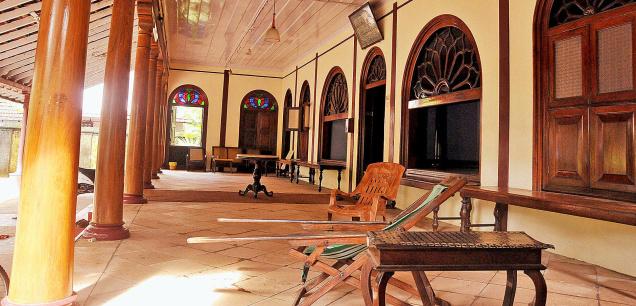
Built around centuries-old mosques, the region comprises hundreds of families who still keep its unique socio-cultural identity at different levels. The last vestiges of its physical expressions—the ancestral homes and a number of household articles—are vanishing and efforts to set up a cultural museum to preserve them failed to bear fruit.
After a few decades, no one would believe that more than 100 members of a family in a matrilineal descent system lived in a single tharavadu at a time, says Hassan Vadiyil, a veteran journalist and a member of a prominent family in Kuttichira.
Six kitchens for a single house may sound like a bit of an exaggeration. But that was what some of these colossal houses had at a time. “Some of them even had three domestic wells around them,” says Mr. Vadiyil, who had first hand experience of the entire socio-cultural practices and customs that were part of life in Kuttichira.
Ramsy Ismael, member of CIESCO, a socio-cultural organisation based at Kuttichira, had a good collection of a number of artefacts related to the cultural life of Kuttichira. They included a decorative cap used by the groom on the wedding day and even furniture used during special occasions like wedding. “But many of them have been lost,” says Mr. Ismael.
Most of the families at Kuttichira have now left their joint families migrated to the Middle East. “Members of the new generation have been completely disconnected from their glorious common past,” says Parappil Muhammed Koya, writer and historian, who has an entire title ‘ Kozhikkotte Muslimgalude Charithram, written on the lives of people in Kuttichira. “Documenting and preserving at least the valuable remnants of this remarkable culture is a necessity,” he says.
At least one of the traditional homes in the area could be purchased or taken over on lease by the tourism department to be converted into a museum which can house whatever is available to tell the story of Kuttichira to the future generation, says Dr. Koya.
“That can also become one of the most valuable tourism attractions of the city if materialised,” he says.
source: http://www.thehindu.com / The Hindu / Home> News> Cities> Kozhikode / by Jabir Mushthari / Kozhikode – August 14th, 2015
Quran dating back to Akbar’s period recovered by Dist. Cops
Ten-member gang trying to sell it for Rs.5 crore arrested
Mysuru :
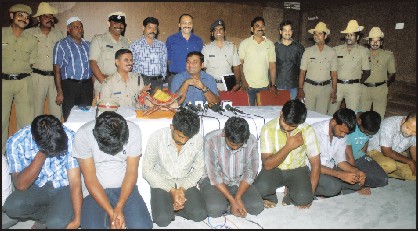
In a meticulously planned and precisely executed operation, sleuths attached to the District Police, seized a 410 year-old Quran, written during Mughal ruler Akbar’s period in the district and also arrested a gang of 10 members who were allegedly trying to sell it for Rs.5crore.
Police have also seized a Ford Ikon car (MH02 AK-4967) from the gang
The nabbed have been identified as S. Nagaraju of Sindhanur, A. Muralikrishna of Sasalamai Camp, Kanakappa Kambli of Yerebeleri village in Gadag district, Kallappa Kambali o Kalaburgi and Sanath of Kollur in Udupi taluk, Ravindra, Vijayendra of Hosanagar in Shivamogga district, Prasad of Heggodu in Sagar taluk, Bhaskar of Sindhanur and Raghu of Karwar.
Addressing a press conference at his office in city yesterday, SP Abhinav Khare said that Police, who came across a video on the antique Quran that the gang was sharing with prospective buyers formed a team to trap the gang.
The Police team, posing as prospective buyers approached five members of the gang near the Railway Station in Hosa Agrahara in K.R.Nagar taluk in the district and nabbed them before nabbing the remaining members in Mysuru city, he said and added that the accused had confessed to have got the antique from some persons in Hyderabad promising to share the proceeds of the sale with them.
Additional SP Kala Krishnaswamy, Rural Dy.SP Vikram Amte led K.R.Nagar Inspector H.N.Siddaiah, DCIB Inspector Gopalakrishna, Saligrama SI Poonacha in the nabbing and seizing operations.
Meanwhile, noted historian and former Vice-Chancellor of Mangalore and Goa Universities Prof. B. Sheikh Ali, who was present at the press conference described the calligraphy as a 604-page book, each separated by a butter paper for better preservation as a piece of Exquisite Art adding that writing in the Quran is legible.
Continuing, Prof. Sheikh Ali said ‘It was written in 1959 of the Hijri calendar, which works out to 1605 A.D. This was around the period when Mughal rule was at its peak in India and the time when Akbar was succeeded by Jahangir.”
He further said that though there is no other information on the last page other than the year in which it is written, there is a sentence that says that the calligraphy is dedicated to the saints.
Interestingly, SP Khare removed his footwear while holding the Quran to pose for photograph before the Quran was carefully placed in a carved wooden stand and covered with a cloth.
source: http://www.starofmysore.com / Star of Mysore / Home> General News / Wednesday – August 12th, 2015
Over a cup of evening tea : A monumental miscalculation ?

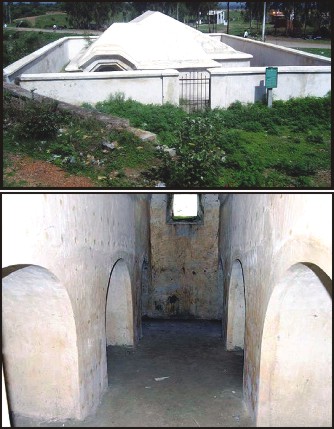
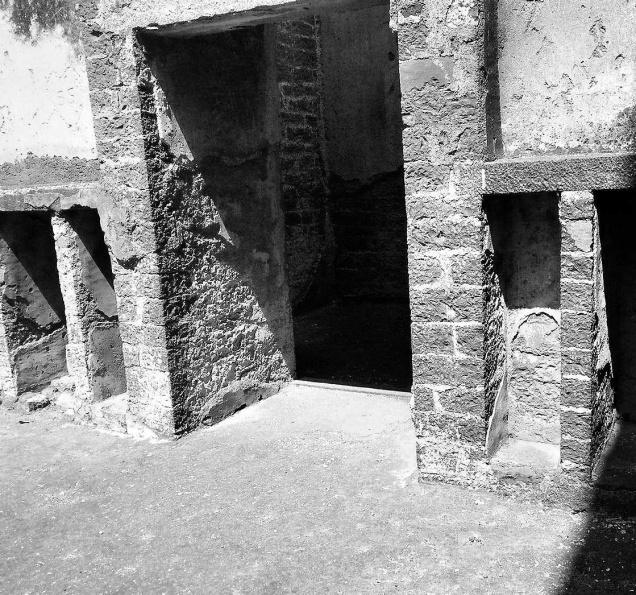
Below – 2) An interior view of the armoury.
by Dr. K. Javeed Nayeem, MD
No, I’m not talking about the hanging of Yakub Memon as you may be inclined to think from the title. It is pointless to dig up the graves of those who are very dead. But nevertheless, many will be doing it for some time to come. I’m talking of something much closer home although this is also about digging up something from the past. It has now been announced that the more than two-centuries old Armoury of Tipu Sultan, which has become an impediment to the Mysuru-Bengaluru Railway line doubling project, will finally be shifted to a different site about 500 meters away from where it stands now, although its new location is as yet unannounced.
This matter has been under consideration for quite some time now and different ways and means of circumventing the ancient obstruction to upgrade a much-needed modern means of transport have been aired from time to time by the Railway authorities and the Government. For a brief while it was even suggested that to avoid disturbing the monument we would even make do with a single track between the Naganahalli and Pandavapura stations. But this move, seemingly very kind to our heritage and hoary past, would have completely defeated the whole purpose of doubling the track thus making a mockery of the entire expensive project.
What I would like to highlight here is the very lackadaisical attitude of our government agencies to proper planning before jumping into the very profitable business of execution. It looks like a very apt case of utter disregard to the axiom of looking before leaping and doing just the opposite instead. Many engineers working for the Railways and many other very knowledgeable and qualified people tell me that with a little proper planning the track doubling work could have been accomplished without the need to re-locate the monument.
This point of view seemed right even to me when I visited the place just yesterday with my son, Adnan to have a first-hand look. It is common knowledge that to a common man with a little common sense, alternative options come easily while to experts with intelligence they often remain elusive. The new bridge across the south branch of the river Cauvery built to carry the second line is almost ready and until now the authorities were unsure of how they would align the track while taking it past the station and across the not-to-wide island with very limited space for the rakes of trains which are getting longer day by day. With no other viable alternative in sight, since the seemingly very wrongly positioned bridge is already in place, they now seem to be all set for another round of grossly unjustified expenditure.
Initially it was announced that the armoury would be dismantled brick-by-brick and rebuilt. Then someone rightly discovered that this was the wrong way of handling a very fragile brick and lime mortar structure and said that they would cut it up like a cake into meter wide cubes and cart them away to the new location. This too did not seem very practicable while being very obviously very unkind to the structure itself.
Now they have reportedly tendered the process to a US firm and its Indian partners who will shift it without dismantling it for a whopping sum of Rs. 11.6 crore. The process is bound to be interesting to watch. These armouries built by Tipu are semi-underground rooms with very thick walls and sloping masonry roofs supported by pillars where gun powder and small arms used to be stored. It is on record that he had built eleven almost identical armouries at Srirangapatna and seven of them are still standing in identical states of neglect.
I have been able to locate and count five of them ever since the time of my childhood. There are five others outside Srirangapatna located at the Manzarabad fort near Sakleshpur, Pavagada, Madhugiri, Sultan Battery in Kerala and Bengaluru. The last mentioned is deep inside Kalasipalyam behind the Bangalore Medical College and although located in the heart of the capital, it is completely dilapidated and has very conveniently become notorious for all kinds of illicit activities. No one either in the Government or the BBMP under whose jurisdiction it falls seems to have thought of preserving it, let alone restoring it to its former state as a keepsake from the past.
None of the seven existing armouries in Srirangapatna too including the one that is very accessibly located at the western corner of the fort near the British martyrs’ memorial obelisk, built in 1907 has been maintained in a state that can attract tourist attention. When that is the case I am left wondering whose sentiments the authorities are trying to avoid hurting by spending such a huge sum of money on relocating and restoring a small hitherto completely neglected piece of history in a very inaccessible location while having allowed the rest of the magnificent fort at Srirangapatna to gradually crumble brick-by-brick due to the abject lack of protection and basic maintenance?
Now, eleven crore rupees is a very large sum of money and if it is spent wisely and honestly it can do immense good to the entire fort that surrounds Srirangapatna thus preserving the beauty and grandeur of the historic town. Spending it just to relocate the armoury that now obstructs an albeit wrongly planned Railway track just as a face-saving measure is a sheer waste of public money most of which will undoubtedly go only to line the pockets of unscrupulous politicians, bureaucrats and contractors who thrive on such needless projects. People should therefore oppose this move. No one is going to mourn the loss of a structure the existence and significance of which they never knew.
There are many other monuments with much greater significance than the armoury under consideration of this present rather wasteful effort which can benefit from some much needed attention. For instance, the fading and flaking paintings at the Daria Daulat Bagh, the many historically important ‘Water Gates’ with narrow passages and steps leading to the river and the once very tranquil Sangam, the point where the two branches of the river meet once again after embracing the island.
Not very long ago before the advent of the now omnipresent and omnipotent parking fee mafia, which enjoys the patronage and participation of some vested interests, this place was a favourite picnic spot for families. It has now become the favourite haunt of thieves, extortionists, drunkards and drug addicts while the authorities conveniently look the other way.
e-mail: kjnmysore@rediffmail.com
source: http://www.starofmysore.com / Star of Mysore / Home> Feature Articles / Friday – July 31st, 2015
An AC with a 550-year warranty

This natural cooling system is in existence in the old Bidar fort
What is the warranty period on your air-conditioning system — five, seven or at the most 12 years? How about a system that has a warranty of 550 years?
Bidar fort houses this system. The Gagan Mahal, or the grand palace that has the takht (throne), has just such a natural cooling structure.
Local guides call it the ‘Bahmani AC’. Built by the Bahmani kings in the 15th century, it still functions.
Cool air gushes out from the bottom of the twin tunnels that are connected to towers on the ceiling. However, the roof of the building has collapsed, depriving visitors of a real air-conditioned experience.
The technique involved is simple. Hot air, sucked in from the surroundings, moves up a quadrangular pillar. It gets cooled, gains weight and comes down. Air is thus cooled by convection and evaporation.
The walls of the tower, exposed to the sun, attract cool humid air towards them. This happens through multiple vents, providing ample supply of cool air. Two such pillars are fixed in each room, on opposite sides of the hall.
These structures, called Badgeer, Malqaf or Hawa Khamba (wind-catcher), are also found in other buildings, including the Rangeen Mahal, Turkash Mahal or Queen’s Palace, and the Diwan-e-Khas or VIP enclosure.
There are some such structures inside the city too. Havelis of zamindars and the rich had these structures. “I had saw them while growing up in the old city,” says historian Abdul Samad Bharati.
V. Govindan Kutty, groundwater expert who has worked on the Surang Bavi system of medieval era aqua ducts in Bidar, said the method of cooling buildings involved both wind tunnels and underground water canals.
“There were several wind-catchers along the Jamuna Mori or the Shukla Teertha channels originating in the old city and ending in the Bidar fort. Some houses had basements where people would collect water. The combination of wind-catchers and underground channels led to general cooling of these houses,” Mr. Kutty said. He points out that this system is used extensively in Iran, where multiple wind-catchers are built over cisterns to chill water.
“The government should take steps to conserve these structures” says Digambar Thakur, heritage enthusiast.
This natural cooling system is in existence in the old Bidar fort
source: http://www.thehindu.com / The Hindu / Home> National> Karnataka / by Rishikesh Bahadur Desai / Bidar – July 31st, 2015
Chef Izzat Cooks Mouth-watering Dishes Without Water!

New Delhi :
For celebrity chef Izzat Hussain, who started out life as a Unani practioner, creating food that is easy to digest and beneficial to the health of countless patrons is de rigueur. Thus, his USP is preparing mouth-watering dishes without water! Yes, you read it right, without water.
“To maintain consistency in the taste of my food, I don’t use water as its taste varies from region to region,” the chef told IANS at an ongoing Awadhi food festival here.
So, what does he substitute water with? A variety of liquids but principally milk.
“There is a certain consistency I find in milk and that’s why it’s my preferred choice. It definitely enhances the overall taste. I use milk for my dishes, milk for kneading dough, cream for pickles and so on,” Izzat explained.

With an enviable lineage tracing back to Nawab Wajid Ali Shah, the last nawab of Oudh, Hussain is known the world over for his Awadhi cuisine.
“There is a strong need to keep the trust and taste of the people who come to savour authentic and healthy food,” he said at the Radisson Blu hotel here.
Having practised Unani, Hussain said he gives a lot of importance to the health of his patrons. “I take great pride in creating food that is easy to digest and beneficial to one’s health,” he emphasised.
Asked about the idea behind the food festival, the celebrity chef said: “The concept of good food and genuine ‘nawabi’ cuisine is changing with every passing day. With these food festivals, I intend to keep alive the originality and heritage of these delicacies and present authentic food on the platter.”
Hussain also debunked the popular belief that Mughlai food needs a lot of oil to prepare and is difficult to digest.
“People think that Mughlai food contains a lot of oil and ghee, but the fact is that these foods take much less oil to prepare compared with other dishes. In fact, it gives us an option to drain out most of the oil once the food is cooked,” Hussain said.
Hussain has a unique distinction of giving to the culinary world a loaf named after him. The flat bread or chapati – named Izzat ki Roti – is made by mixing mixed-grain flour with secret Unani herbs.
Now he plans to develop a concoction of green tea and mulethi (medicinal spice liquorice) which, he said, could be a healthy alternative to normal tea and coffee.
Talking about the food festival, he said it is “one of the best” Delhi has seen in the recent past.
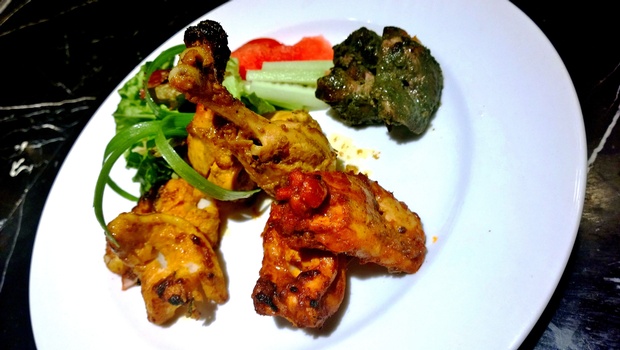
The lavish fare on offer at the festival includes mouth-watering reshmi galouti kebab, malai boti kebab, mutton nehari, murgh begum pasand, mutton dum biryani and murgh tursh pulao, among others for the non-vegetarians.
For vegetarians, paneer kebab, Izzati kebab, Shahi Korma, Chakundari Paneer, Kathal Stew, Kathal Biryani, and Kaju Biryani are on offer.
So, whether you are a vegetarian or a non-vegetarian, you can certainly dig in the platter on offer at the food festival and lick your fingers amid the lush ambience and strains of ‘qawwali’ singing in the background at the Radisson Blu hotel.
source: http://www.newindianexpress.com / The New Indian Express / Home> LifeStyle> Food / by IANS / July 29th, 2015
HISTORY OF FOOD – Arab flavours from 7th century still sparkle in the Muslim cuisine in Malabar
In the northern districts of Kerala, the menu still carries legacies of the merchant traders who visited the region centuries ago.
As lakhs of Muslims break their Ramzan fast with iftaar meals across India, there’s one region where the menu is strikingly distinct from that in the rest of the country. The Muslim community in Malabar, in the northern districts of Kerala, boasts of a unique cuisine that even today shows telltale signs of Arab influence carried across time.
Ask for a Sulaymani in any tea shop in Malabar, stretching from Kozhikode to Kasargod, and you’ll get sweet black tea with lemon. The name is believed to have been lent to this simple drink by the Sulaymani Bohras (Sulaymanis), a Musta’lī Ismaili community from Saudi Arabia and Yemen.
Step into the dining room of any traditional Mappilla (Muslim) home in Malabar at meal times and chances are that you’ll be enticed by the rich and inviting aroma of mandi, a distant cousin of the biryani. Said to be the traditional dish of Hadhramaut and Sana’a areas in Yemen, the mandi among the relatively unknown delicacies found on Malabar dining tables.
A mixture of rice, spices and chicken or lamb, the mandi is made in an oven in the ground tiled with clay bricks. The rice, spices and water are cooked in this oven, while wood coals are placed on top to make sure that steam doesn’t escape. The coal is also used to add the extra smokey flavour to the meat which too is cooked in this oven. Care is taken to use the meat of a young goat, which is tenderer than regular mutton.
“This dish is little known outside Kerala but it is an extraordinarily popular item in Malabar,” said Muhammed Seedi, managing director of the Whitehouse group of restaurants, which has the dish on its menu. “It has to be cooked for at least two and a half hours for the flavours to seep in.”
Mandi is said to be a corruption of the Arabic word “nada”, which means “dew”. The name is an allusion to the tenderness of the meat.
Adapted with local ingredients
“The influence is not just limited to Yemen,” said Ammini Ramachandran, Texas-based author and food writer. “Alissa, a wheat, meat and cinnamon porridge, is similar to harisa, a recipe preserved over centuries by the people of the Middle East. Recipes for this dish are found in 10th century Baghdadi cookbooks Annals of the Caliph’s Kitchen, Sufi Cuisine as well as in the Iraqi cookbookDelights from the Garden of Eden. In medieval Baghdad, it was called ‘hareesi’. Even today, the dish is served in Turkey, [where] it goes by the name ‘herise’, while in Lebanon it’s called ‘ hreessey’.”
She added: “The cuisine was adapted with local ingredients. Take for example ‘ari pathiri’, a thin chapati made out of rice flour. Rice being the staple grain in the region, breads and rotis were alien to the local food habits. The women innovated what they had in hand and made bread with rice powder for their Arabian paramours, who were used to a bread-based diet.”
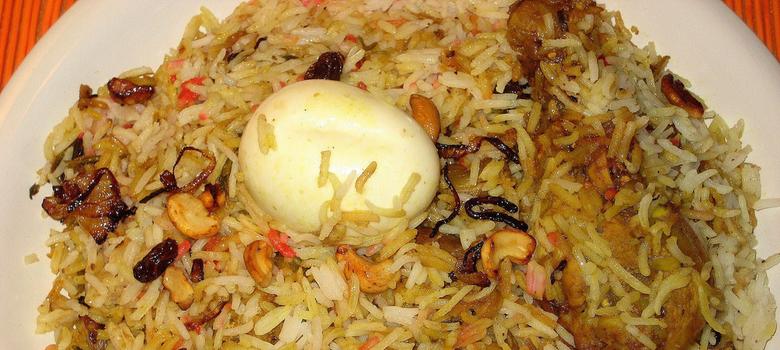
Even the Malabar biryani, one of the key stars of any iftaar table, has a distinct Arabian touch. The rice and the meat are cooked separately and then layered and cooked. “Biriyani ustads”, who specialise in making this dish, are hired to cook it for weddings, special occasions and iftaars. Other dishes, meanwhile, are rustled up by the “pandaaris”, who hold the position of executive chefs.
“The Mappilas were extremely hospitable people, and would share their food with everyone in the neighbourhood,” said Sumesh Govind, managing director of Kozhikode-based Paragon Group of Hotels. “Subsequently, Malabar biryani became a staple in Hindu Thiyya homes as well, especially in the Thalasserry area. So much so that it’s also called Thalasserry biriyani.”
Malabar or Thalasserry biriyani is served with date pickle, raita and coconut chammanthi (chutney), again a fusion of West Asia and Kerala.
Influenced over the ages
Local produce such as mussels have also found their way onto iftaar tables. Ari kadukka, or rice-coated mussels, are among the favourites.
Another iftaar speciality said to have roots in West Asia is the dessert – muttamala or necklace of eggs. Thin filaments of egg yolk are cooked in sweet sugar syrup served over Pinnanathappam, steam-cooked cardamom-scented egg white pudding.
The influence of the Arabs lingers on in this and many other Malabar Mappila dishes.
Muslims or Mappilas tended to congregate more in the Malabar region because of the patronage from the local leaders. Subsequently, Malabar Mappila culture and cuisine came to have an identity of its own.
“The area we know as Kerala today was trading with merchants from West Asia from pre- Mohammedian times,” noted Dr K Gopalankutty, retired head of the history department at the University of Calicut. “After the Roman Empire collapsed, traders from Assyria, Babylon and Egypt as well as the Phoenicians and Arabs dominated this market, some even eventually mingling and marrying into the local population.”
By the 7th century, Muslim traders visited the southern coast of Malabar and shared their culture as they sold their wares.
Well before Abu Fazl wrote about how dozens of master cooks whipped up delicacies for the imperial Mughal kitchens of Akbar in his Ain-i-Akbari, the south western coast of India was already breaking fasts with culinary delights based on recipes brought across the seas from West Asia.
Over 2,000 years after they sailed to southern India, the legacy of these peaceful traders of West Asia continues to live on in the cuisine of Malabar.
Chhota Imambada conservation work not as per norms: ASI

The Archaeological Survey of India (ASI) on Thursday raised a question mark on the authenticity of the ongoing preservation work being carried out by Hussainabad Allied Trust (HAT) at Chhota Imambada and demanded an immediate halt.
The ASI has also objected to the ongoing construction work at the Picture Gallery and has approached its headquarters to intervene. It said construction at the Picture Gallery was sheer violation of the Ancient Monument and Archaeological Sites and Remains (Amendment and Validation) Act 2010 that prohibited any construction within and near the protected monument.
The ASI’s move came after a short survey that it carried out a couple of weeks back to check the authenticity of the ongoing construction work at Chhota Imambada, and architectural marvel built by Nawab Mohammad Ali Shah in 1838.
“The officers were aghast at the way preservation work was being carried out at Chhota Imambada, as it was totally against the norms,” an ASI officer said.
Instead of using mortar, lime and surkhi, the ideal material for preservation work, the officer said the labourers were found using cement. “In those days mortar, lime and surkhi were generally used as binding material for the monuments. But using cement in place amounts to a crime and it will ruin the monument,” the officer who inspected the Imambada said.
He said technically, the same material (as used earlier in the monument) should be used for preservation work. Use of cement would ruin the entire edifice.
The style of preservation was another thing that the officers found highly objectionable and said it was totally against the preservation norms. “Old monuments like Imambada only need to be conserved. But in this case, the labourers were found breaking the plaster and applying a fresh one, using cement,” the officer said.
One had no right to spoil the originality of the structure, the officer said. Be it on the left side of Chhota Imambada or the right side of the main entrance gate, at all the places, the labourers were breaking the original plaster that bore the Quranic verses, calligraphy and aesthetic artwork, he said. They were re-plastering with the same kind of designs. “This way there will be nothing original left. Besides, they are also minimising the scope for any future restoration work that is not at all possible after using cement,” he added.
The ASI also raised an objection over the illegal construction of toilets at the ASI-protected Picture Gallery. “It was found that the toilets were being constructed at the Picture Gallery. It is a protected monument and any construction is illegal,” said NK Pathak, superintending archaeologist, ASI.
Pathak said in this context, a letter had been written to the district magistrate and also to the ASI headquarters.
source: http://www.hindustantimes.com / Hindustan Times / Home> Cities / by Oliver Fredrick, Hindustan Times, Lucknow / June 13th, 2015
145 yrs of Hazrat Ali taboot in Lucknow
Lucknow :
Considered the seat of azadari (practices related to mourning the death of Imam Hussain and his family), Lucknow this year completes 145 years of carrying out the taboot (coffin) of Hazrat Ali on the 21st Ramzan, falling this year on Thursday.
As per Shia belief, Ibne Muljim struck Hazrat Ali with a poisoned sword as the latter was offering morning prayers at a masjid in Iraq on 19th Ramzan. After battling for his life, Hazrat Ali succumbed to injuries on 21st Ramzan.
On this day, Shia Muslims observe martyrdom anniversary of Hazrat Ali (son-in-law of Prophet Mohammad) by holding grand majlis and mourning processions, a tradition started by Syed Hasan Mirza from his house in Moulviganj in 1870 and within a decade, it became so popular organizers had to shift to a spacious place.
The procession now starts from Najaf Rauza (Rustamnagar) and culminates at Karbala Talkatora. By the time the procession reaches Haiderganj it is broad daylight and the coffin is covered with a century-old piece of black cloth brought by Hasan Mirza when he visited Najaf (Iraq). Due to this, it is popularly known as Hasan Mirza taboot. A majlis is also organised where Maulana Meesam Qasim Jerveli recites the Hadees.
General Secretary of the anjuman (committee) that prepares the coffin and fourth generation of Hasan Mirza, Syed Mukhtar Hussain Zaidi, said, “Except for the period from 1978 to 1998, when azadari was stopped in Lucknow, the procession has been taken out every single year.”
source: http://www.timesofindia.indiatimes.com / The Times of India / Home> City> Lucknow / by Uzma Talha, TNN / July 09th, 2015