Category Archives: Travel & Tourism

HIDDEN HISTORIES – House of memories

Pokku Moosa Maraykkar was a prosperous merchant of Poovar who had close links with the royals of erstwhile Travancore.

Pokku Moosa Maraykkar, a Muslim merchant who was instrumental in introducing young Kesava Pillai to Karthika Tirunal Rama Varma, is a name that is seldom remembered in popular history. Kesava Pillai began as an accountant in Pokku Moosa Maraykkar’s warehouse. Later, he became a trusted officer to the royals and rose to the position of Dewan. It is said that Raja Kesavadas, as he was later known, had a special place in his heart for his early mentor’s family.

Although Pokku Moosa Maraykkar’s name is often associated with Raja Kesavadas, it seems that Maraykkar was an important person who had sided with Marthanda Varma during one of the most turbulent phase in the history of erstwhile Travancore.

According to local lore, Pokku Moosa was a member of Valiya Kallaraikkal Veedu, a prominent family of traders who operated from Thengapattanam and Poovar. In 1918 A.D., Amshi K. Raman Pillai wrote about Raja Kesavadas and his association with Kallaraikkal Veedu.

Pillai is of the opinion that Maraykkar was the one who supplied goods to Valiya Kottaram in Thiruvananthapuram, and through this connection the merchant entered into the good books of the royals.

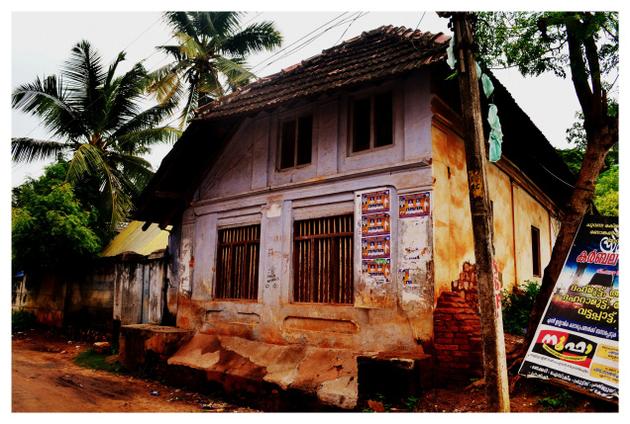
he existing wing of the old Kallaraikkal Veedu in Poovar. / Photo: Sharat Sunder Rajeev / The Hindu

Kallaraikkal Veedu, the ancient house of Pokku Moosa, was a landmark structure in Poovar. This structure has now been replaced by a concrete structure. However, local residents still associate the house with Marthanda Varma. It is said that when Marthanda Varma was hounded by the Ettuvettil Pillamar, he had once sought refuge at the Kallaraikkal Veedu in Poovar. Later, after he vanquished his enemies, Marthanda Varma bestowed the family with honours. The patriarchs of the family were granted the title of ‘Maraykkar’, and thereafter they were considered as nobles in their community.

Kallaraikkal family had a branch in Thengapattanam, where an old well, supposedly dug following the order of Raja Kesavadas, was spotted by Amshi K. Raman Pillai.

The ancient buildings associated with the family, unfortunately, fell prey to modernisation.

In Poovar, a stone’s throw away from the site of the Valiya Kallaraikkal Veedu is located a house of a family member who is struggling to keep up with the changing times.

“This house is more than 150 years old,” says Hassan Kannu who occupies the house. According to Hassan Kannu, in olden days the Kallaraikkal family owned many edifices in the locality and his house is perhaps one of the last to survive.

“This house had seen better days when my ancestors had enjoyed royal patronage,” says Hassan, “I still remember my elder brother’s nikâh, when a horse adorned with silver ornaments was sent from the royal stable to take the groom for the procession,” he adds. This tradition has been recorded by Raman Pillai in an article.

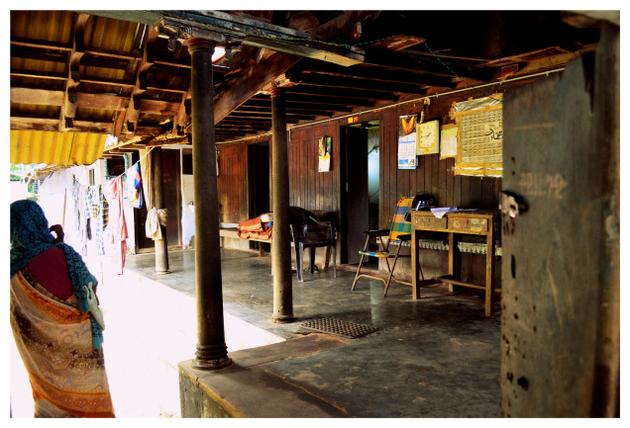
Pillared verandah opening to the inner yard of the existing wing of the old Kallaraikkal Veedu in Poovar./  Photo: Sharat Sunder Rajeev / The Hindu
Pillared verandah opening to the inner yard of the existing wing of the old Kallaraikkal Veedu in Poovar./ Photo: Sharat Sunder Rajeev / The Hindu

The old house, Hassan explains, still retains some traces of its glorious past. The main entrance, a thick wooden door, opens to a spacious yard, with wide verandahs on either side. “Only a small fraction of the house still exists, the padippura, the nalakam, the courtyard wing, and other associated structures have been demolished to make way for new constructions,” says Hassan.

“I don’t know for how long I will be able to maintain the house, but I will do my best,” he adds with a smile.

[The author is a conservation architect and history buff]

source: http://www.thehindu.com / The Hindu / Home> Features> MetroPlus> Hidden Histories / by Sharat Sunder Rajeev / Thiruvananthapuram – July 03rd, 2015

Dubai: Thumbay Group, SNTTA sign MoU to boost medical tourism

Dubai :

“Dubai has a well-deserved reputation for excellence and professional practice and we want to contribute our mite to the vision, mission and goals of the UAE health authorities,” says Akbar Moideen Thumbay, director healthcare and retail, Thumbay group UAE.

ThumbayCT06jul2015

“There are so many issues relating to medical tourism and because the area is developing so quickly it’s becoming essential that hospitals, insurers and policy makers, to name a few work together closely to streamline processes to cater to this market. UAE has tremendous potential to come up as the most important medical-tourism destination for the people of this region,” he added.

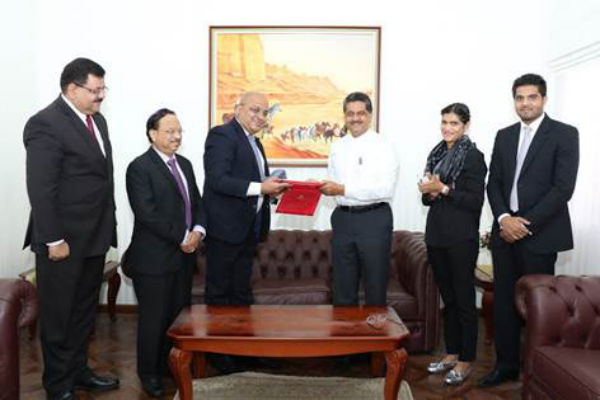
Founder president of Thumbay Group UAE, Thumbay Moideen and T L S Iyer, general manager of SNTTA signed a memorandum of understanding to offer advanced services for medical and health tourists. Akbar Moideen Thumbay, director healthcare and retail, Thumbay Group UAE, Dr Benazir Ameer Ali, director Thumbay International Medical and Health Tourism Department, Valsala Kumar, group general manager (finance and administration) and Vishal Sood, general manager SNTTA were present on the occasion.

Thumbay Hospitals and SNTTA have strategically partnered to assist and offer world-class services at affordable prices to international patients and guests and to look after all their needs whilst in the UAE. We understand the changing dynamics medical tourism and we are learning to adapt, says Dr Benazir Ameer Ali, director Thumbay medical and health tourism department.

The partnership will help Thumbay Hospital to extend its reach and market worldwide to prospective patients. This partnership will leave Thumbay Hospital to concentrate on its commitment of providing world class healthcare at affordable prices. SNTTA will look after the travel, accommodation and other logistics for Thumbay Hospital’s international patients and increase their client base which is a win-win situation for both and create an all-inclusive package for international patients including air flights, hotel accommodation, visa and excursion facilities.

SNTTA will be venturing in medical tourism for the first time and will be able to offer healthcare services to its ever growing number of tourists said T L S Iyer, general manager of SNTTA. SNTTA tourists will now have a preferred healthcare provider in Thumbay Hospitals to take care of their tourists 24X7 in the UAE.

“As part of the strategic plans, Thumbay Group is planning to open representative offices in 20 countries to educate people about medical facilities and services at all Thumbay Hospitals in UAE. We expect to have about 1000 patients as medical tourists per day in the next 5 – 6 years. It is ambitious but achievable,” says an optimistic Akbar Moideen Thumbay.

Medical tourism is now perceived as one of the fastest growing segments in healthcare. The recent trend is for patients to travel from developed countries to third world countries for medical treatment because of cost consideration, waiting time, privacy, and confidentiality, though the traditional pattern still continues. Technology will lead the way in future medical tourism. Along with that we can expect extremely personalized services, niche specialist centers, wider network of partnerships, increased number of accreditation, certifications and industry specific associations said Dr Benazir. To offer our personalized services, we are the first medical tourism provider to have opened a counter in Sharjah International Airport and we are planning to open one in Dubai International Airport soon, she added.

“Thumbay Hospitals have been at the forefront of developing the necessary infrastructure to attract medical tourists. We have a department here establishing this,” Akbar Moideen said. The international medical tourism department of Thumbay Hospitals aims to cater to an extensive number of patients and be known as the preferred hospital for medical tourism in UAE. Currently, Thumbay Hospitals receive inquiries from a wide range of clientele including hospitals, medical practitioners, partnered agents, and various inquiry forwarding websites from across the globe.

Thumbay Hospitals is aligning itself with Dubai’s Vision 2020 for medical tourism. Along with Dubai, the other Emirates of UAE are gearing up to attract more medical tourists in the near future. This would mean increasing patient requirements, higher demand for facilities and larger calls for personalization.

Looking at the current and future trends in medical tourism, Thumbay Hospital has developed enhanced facilities, maintaining highest standards of quality and offering packages with a wide range of personalization options. The medical tourism industry is going through an exciting phase where international and intra-regional activities are taking place within this sector of the health market.

source: http://www.daijiworld.com / DaijiWorld / Home> Gulf / Media Release / Dubai – July 06th, 2015

‘He could tell if something was wrong just by sniffing the food’

Friends and family recall their memories of Abdul Haq, the CMD of iconic city restaurant Empire

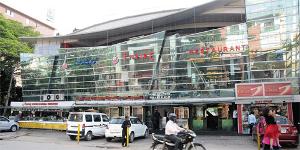
The Empire chain is well-known for its non-vegetarian food

 With 18 outlets across the city, Empire has, quite literally, lived up to its name. A crowd throngs its outlets no matter what time of day it may be, and many a large Sunday lunch and post-movie dinner run has been made in its basic-yet-clean interiors. So patrons were surprised to find that the restaurant was shut on July 1, only to discover that the empire had lost its patriarch, Chairman and Managing Director, Abdul Haq, at the age of 61.

While the restaurant continues to function under the stewardship of Haq’s brothers Kunhi Mohammed (Joint Managing Director) and Abdul Aziz (Vice Chairman), his son Shahid Haq is still grappling with the loss of his father. Haq had become synonymous with the expansion of the restaurant into a chain, from its earliest avatar as a small restaurant in Central Street, Shivaji Nagar in 1966 by his NRI father, Abdul Rahim.

“My father joined the operations in 1980. Initially he did everything from cutting chicken in the kitchen to sitting as a cashier. He had to learn the nitty-gritty of the business because my grandfather would not always be in India,” recalls Shahid. As business improved and he learnt the ropes, in 1998, Haq renovated the place, acquired adjacent shops and bought the property. He set up their first new outpost at Church Street, in 2004, “to attract the younger crowd.”

As the city grew, Empire grew with it, catering to the generation that now brought its children with it. Haq and his brothers introduced some of their signature dishes – from Chicken Kabad to Butter Chicken Gravy, Ghee Rice, Coin Paratha, and Chill Chicken. He understood the importance of modernisation, training staff to better their standard of service, updating the crockery and cutlery and introducing air-conditioning. “But he always wanted to keep the pricing reasonable no matter what,” Shahid recalls. In 1997, they introduced the Non-veg Thali; in 2008 the non-veg buffet. Along with the Dosa Chicken, (“Dosa was a common food but he wanted to make it about our gravy”), it helped cement Empire’s place in the city’s foodscape.

Controversy dogged him when in 2012, he allegedly ran over Selvaraj, a 50-year-old construction labourer from Dharmapuri in Tamil Nadu, who was sleeping on the pavement on Kamaraj Road. Selvaraj’s right leg had to be amputated after the accident.

Although Haq was accused of being inebriated, the claim was rubbished by the then Additional Commissioner of Police (Traffic) MA Saleem, and Haq footed the bill for Selvaraj’s treatment.

While Shahid remembers him as a man who was always stressed that he was not doing enough for the brand, crunching numbers in his mind, it seems he need not have worried so much.

Shahid will now have to cultivate his father’s keen sense of smell and taste – that enabled him to find the flaws in his food just by sniffing it.

source: http://www.bangaloremirror.com / Bangalore Mirror / Home> Bangalore> Others / by Khushali P. Madhwani & Sowmya Rajaram , Bangalore Mirror Bureau / July 04th, 2015

Fish haleem to make debut in Port City

Visakhapatnam :

Haleem lovers in the Port City are in for a bigger treat this Ramzan. For, a local haleem maker-cum-vendor is cooking up plans to introduce Vizagites to fish haleem on July 3, the 15th day of the holy month of Ramzan.

“So far Vizagites have sampled chicken, mutton and vegetarian haleem. But this year, we will be giving them a taste of fish haleem at our outlet,” said Sheik Zuber, proprietor, Dil Se Haleem, which is located opposite the mosque at Jagadamba Junction.

Divulging the recipe of the seafood variety of haleem, Zuber said it will be prepared using Tuna and King Fish (Konam in Telugu). “There are just one or two shops offering fish haleem in Hyderabad. In Andhra Pradesh we will be the first to introduce it. I am trying to arrange the tuna and king fish for the haleem,” he said.

He said fish haleem will be more expensive than mutton but claimed it will be healthier for people suffering from diabetes, heart diseases, cholesterol and eye sight problems though it will be made of pure ghee.

Pointing out that almost 75% of the haleem customers in the city are non-Muslims and are mainly students and corporate employees, Zuber said his stall gets a good response every year and he earns around Rs 5 lakh every Ramzan on an average just by selling chicken and mutton haleem. This year he hopes to rake in higher profits with the introduction of the fish variety.

Mastan Valli, a haleem vendor from Gajuwaka, said the city has nearly 100 haleem centres at key locations with the ones at Jagadamba Junction, RK Beach, Leela Mahal Centre, NAD Junction and Gajuwaka getting a good response from consumers. “Most of the haleem makers go to the sheep market at Hanumanthawaka Junction on National Highway-16. Healthy male healthy sheep are much in demand among haleem makers,” he added.

Mohammed Sadiq, president, Vizag Young Muslims Association, said the city has 52 mosques and nearly three lakh Muslim residents. “Muslims traditionally eat haleem while breaking their fast to get instant energy, but now the dish has become a much sought-after delicacy among Vizagites of all walks irrespective of community,” he explained.

China Rehman, a senior member of the Muslim community in the Old City area, said five years ago there were just a handful of stalls selling haleem near a mosque at Jagadamba Junction, but now the numbers have gone up manifold due to rising demand and increased publicity. “I strongly feel that Vizag will soon turn out to be another Hyderabad when it comes to the haleem business,” Rehman said.

Sources said that nearly 2,000 bowls of haleem are sold every day in the city during the month of Ramzan, generating revenues of around Rs 60 lakh. Zuber said the cost of a family pack of chicken or mutton haleem has gone up this year due to the rise in price of spices. “A bowl of chicken haleem costs Rs 50 this year and that of mutton Rs 100. A family pack of chicken haleem will now cost Rs 180 (750 grams) and that of mutton Rs 300 this year,” he said.

source: http://www.timesofindia.indiatimes.com / The Times of India / Home> City> Visakhapatnam / by V Kamalakara Rao / June 23rd, 2015

Nilgiris sharp shooter drives away ‘rogue elephant’ in Bihar

Udhagamandalam  :

A sharp shooter from Masinagudi village in the Nilgiris returned home after successfully managing to drive a rogue elephant back to forest area in Jharkhand last week despite orders from the Bihar government to shoot it. The tusker killed eight people in Bhagalpur area in Bihar in a span of four days in the first week of June.

Nawab Shafath Ali Khan, a shooter from Hyderabad, is currently a resident of Masinagudi.

An authorized tranquilizer of wildlife, Khan was called by the Bihar forest department on June 5 as a rogue tusker had strayed into Bihar from the adjoining forests of Jharkhand. “While I was capturing blue bulls in forests around Delhi, I received a call from the Bihar forest department,” Khan told TOI.

Khan has trained forest officers and veterinarians of Karnataka, Telengana, Madhya Pradesh, Andhra Pradesh, Bihar and Himachal Pradesh.

The rogue tusker, aged about 20, had entered the town of Bhagalpur in Bihar on June 4 and in a span of four days it killed eight people, including three women and a child, who came in its way.

Khan was summoned to kill the elephant and he flew to Patna from Delhi and from there he was flown to Bhagalpur by the chief minister’s special aircraft. Armed with his 470 double barrel rifle he took charge as designated chief of ‘Operation Rogue Elephant’ and over 100 forest officials were in the operation team to assist him.

Khan said he didn’t want to kill the elephant as it was very young and instead strategically made the pachyderm follow him to the nearest forest which was 12km away in Jharkhand.

“I am happy that during the operation neither the animal nor any human was harmed,” he said.

Khan returned home a couple of days ago after being applauded by the chief minister of Bihar Nitish Kumar for his efforts.

source: http://www.timesofindia.indiatimes.com / The Times of India / Home> City> Coimbatore / by Shantha Thiagarajan, TNN / June 15th, 2015

Food trucks on a roll

Road rovers

spitfireBF29jun2015

 Thanks to the number of food trucks that have come up in the City, the foodies here are a happy lot. Though the concept of food trucks is not new in India, it has been gaining popularity in Bengaluru only over the last two years. These trucks have found many takers and one can always spot a lot of crowd around them.
Owned by Sudarshan MS and Francis Xavier along with two others, ‘De3-The Eatery’ was started in March 2013 and serves Continental, Italian and American food. One can spot it in Shanthinagar, Kammanahalli and Jayanagar. “We always wanted to do something different and focus on quality and cleanliness. The idea of starting a food truck came in as we wanted to popularise the concept of mobile and clean restaurants with an open kitchen. So when people see how their food is being prepared, they get a sense of satisfaction,” says Sudarshan.

Many of these food trucks have a clear idea of their target customers. ‘The Great Indian Bhukkad’ was started by Suraj Agarwal in 2014 and caters mainly to the students of PES University, Banashankari. Parked at the college premises, it offers a variety of rolls and wraps among other Chinese dishes. “Our USP is that we cater only to students and our prices are reasonable. The students know that we serve clean and hygienic food and really appreciate the taste. We are glad that we have been able to establish a relationship of trust with them,” says Suraj.

‘Spitfire BBQ Truck’, which was started in 2014 by Sidhanth Sawkar and Gautami Shankar, moves around in Sahakara Nagar, Kammanahalli, Indiranagar and Koramangala. As the name suggests, it serves barbecued delights. “Bengalureans today are getting into food culture professionally. As the city is a melting pot of different cultures, people here are open to different types of food. Everyone has high expectations from us not just because of the food we provide but also the personal bond that we have built with our customers,” says Sidhanth.

Their experience of working in the food industry in the United States led Siddharth and Bharath to start ‘Off Road Food Truck’ (ORFT). The place, which was started in January this year, often stops in Sahakara Nagar and Kammanahalli and serves burgers, sandwiches, Spanish rice, chicken and fried ice creams. “We were working for different restaurants in the US. It was our interest for food that brought us together. Our idea was to go up to people and serve them rather than they coming to us,” says Siddharth. According to him, cleanliness, affordability and convenience are the things that attract the crowd to ORFT.

Some of these trucks are area specific too. ‘Frying Wagon’ in RT Nagar was started merely two months ago but has been seeing great business. The truck serves Chinese dishes and rolls and the dishes are served only on eco-friendly paper plates. Vijay Kesarkar and Soujanya Vijay, the owners, say, “Our business is picking up and now people are aware of us. They look for cleanliness, quality and hygiene and come to us because we meet their requirements. Our prices are reasonable thanks to which, we have a lot of students coming to us. Even the IT crowd comprises a chunk of our customers.”

‘Meals on Wheels’ is another such truck that can be spotted near Richard’s Park in Frazer Town. Serving Chinese cuisine with a twist, one can often see foodies relishing a variety of momos, Chinese ‘bhel’ and saucy lollipops here. “The concept of food trucks is becoming popular in India and people in the City are more open to it now. The business too is growing at a fast pace,” says Syed Harris, who owns the truck along with Aftab and Maaz.

source: http://www.deccanherald.com / Deccan Herald / Home> Supplements> MetroLife / by Surupasree Sarmmah / DHNS – June 29th, 2015

A bond for communities in Kolkata

Kolkata :

It’s that time of the year again when, every evening, huge crowds line up in front of eateries for the Ramzan dish, the haleem, which ranks high in the order of preference for foodies and, in equal measure, for the faithful who observe ‘Roza’ (fasting).

The stew is a popular ‘iftaar’ dish across the Middle East, Central Asia and the Indian sub-continent. In Kolkata, it is not just the Muslims, but gourmets from other communities too who love ‘haleem’, which means ‘patience’ in Persian because of the time and effort required to prepare it. A debate also rages on which eatery serves the best ‘haleem’.

The top ‘haleem’ picks are from Shiraz, Arsalan, Aminia, Zeeshan, Royal Indian Hotel, Shabir’s (Bowbazar), Islamia, Aliah and Sufia, to name a few. All claim their ‘haleem’ to be special, thanks to the zealously-guarded ‘secret ingredients’ they say they put in.

“Haleem came along with the Arab and Persian settlers to India. But the most remarkable thing about the haleem is that the original way of cooking this dish has not been changed. Arabs used aromatic spices in their food, which has been retained in our version,” said Ishtiaque Ahmed, partner of Shiraz.

Customers at restaurants like Royal Indian Hotel, Aminia, Sabir’s Hotel and Arsalan and Zeeshan don’t mind shelling out Rs 130-180 for each helping. But for those who cannot afford to pay so much, the eateries around Tipu Sultan Masjid are the solution — they sell ‘haleem’ at Rs 75 a plate while the makeshift stalls sell it for as low
as Rs 20.

Aalamir, one such eatery, is popular for its Halim-e-Firdaus. “Firdaus is a Persian word which means heaven. We use a special recipe, which even the staffers do not know. I keep the spices with me here, at the counter,” said Bashir Mohammad, the fourth-generation owner.

Zakaria Street is another favourite destination for ‘haleem’ lovers. Restaurants and halim ‘vendors’ do brisk business as ‘Roza’ ends. Nawaid Amin, the third generation owner of Aminia, says, “We use a blend of 40 ingredients. Sometimes we get ingredients from Unani and Ayurvedic shops. This was a practice started by my grandfather and we have not tampered with the traditional recipe,” he said.

Actor-anchor Mir doesn’t mind queuing up for the stew. “I love the haleem at Arsalan, but there was such a mad rush I had to wait for an hour. I got it packed for my family. Be it Zeeshan, Arsalan or Shiraz — they all make good haleem. But if you want authentic haleem, you need to go to Colootola,” said Mir.

source: http://www.timesofindia.indiatimes.com / The Times of India / Home> City> Kolkata / by Shounak Ghosal, TNN / June 27th, 2015

DOWN MEMORY LANE – Princess still in distress

The pathos of Princess Jahanara’s life is reflected in her grave too

Jahanara Begum led a life of hardships and now more than 300 years after death her agony continues as her grave lies neglected with the Archaeological Survey of India (ASI) and the Nizamuddin Dargah Committee washing their hands off the matter. The ASI says guards are there only to protect the tomb from vandals while the Nizami family, trustees of the shrine of Hazrat Nizamuddin, contend that the ASI is the caretaker since the grave comes under the Ancient Monuments Preservation Act. As it cannot circumvent this it is just a helpless onlooker. But the fact remains that the grave needs repairs and clearing of waste left behind by pilgrims to the adjacent shrine, most of whom don’t even know who Jahanara was!

Illustration by Vinay Kumar

It’s not so much grass that grows on Jahanara Begum’s grave these days as shrubs. Her wish to be buried in a “kuccha” grave was duly fulfilled though a sarcophagus protects it from the elements, open as it is to the sky but situated in an enclosed chamber with perforated marble screens, south of the Dargah of Hazrat Nizamuddin Auliya. Still, when one sees it, one is reminded of the Persian poet Sadi’s poignant lines :

“I saw some handful of the rose in bloom with bands of grass suspended from a dome/I said, ‘What means this worthless grass that it should in the rose’s fairy circle sit?”/Then wept the grass and said, ‘Be still and know the kind their old associates ne’er forgo/Mine is no beauty here or fragrance-true. But in the garden of the Lord I grew.” No wonder grass springs up like hope eternal even on old forgotten monuments, where no roses may bloom. Grass is never a deserter. That was why Shah Jahan’s eldest daughter wanted it to grow on her grave.

Forced spinsterhood found an outlet in poetry and both Jahanara and her sister Roshanara gave vent to their feelings in verse. Persian was the language employed, as Urdu was considered the camp language and was yet to take over its predominant position. Persian similes and metaphors, like the jam (wine cup), the shama (lamp), the moth, the mythical mountain Kohkaf and the bulbul were hardly considered alien at a time when the ambience at the Mughal court was the same as that of Persia, Arabia or Turkey. As a matter of fact, even present day Urdu poetry waxes eloquent on them – and who doesn’t enjoy this escape to a romantic past, so far removed from the mundane image of the modern age when Kohkaf has been identified as the Caucasus mountain?

Even such a selfless person as Jahanara must have no doubt yearned for someone, who could be the master of her heart. Her emotions are portrayed in her poetry, which is that of a pious woman deeply attached to her Maker. She was also a great lover of gardens and laid the Begum Bagh in Delhi, in which was also situated the Begum Sarai. Outside the bagh was the Chandni Chowk, which was also her creation. After Aurangzeb came to power Jahanara preferred to stay with her father, who was held captive in the Agra Fort for seven years until his death on 16th January, 1666. She became a recluse after that and patronized mystics and mendicants until her own death. As per her wishes, she was buried in the tomb she had built for herself in 1681, next to the shrine of the saint she held in high regard.

The hollow sarcophagus is the receptacle, in which the grass grows in accordance with her epitaph. “Let naught cover my grave save the green grass, for grass will suffice as covering for the lowly.” And yet she was the one, who was once the virtual ruler of Hindustan and whose “pandan kharch” (betel leaf expenses literally but pin-money in this case) which was met by the revenue of two flourishing ports of the Mughal empire. Sleep well, gentle princess!

When Rudyard Kipling visited her grave in the 19th Century he couldn’t help comparing her to Christina Georgina Rossetti, the celebrated sister of Dante Gabriel Rossetti (1828-1882) writer of the famous poem “The Blessed Damozel”. Christina too died a spinster in 1894 when the last of the Mughal princess were still alive in the Mori Gate. Hence Kipling’s poignant comparison of the green grass growing over their lowly graves, with Christina’s words ringing in his ears; “Be the green grass above me/With showers and dewdrops wet…/I shall not hear the nightingale/Sing on as if in pain/And dreaming through the twilight/That doth not rise nor set/Haply I may remember/And haply may forget.” Few indeed forget Christina Rossetti after visiting her last resting place! The same is true of Jahanara.

source: http://www.thehindu.com / The Hindu / Home> Features> MetroPlus / by R. V. Smith / June 21st, 2015

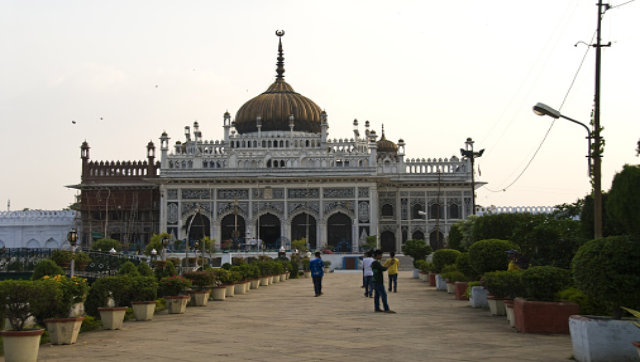
Lucknow zoo renamed after the last Nawab

In a “historic” decision, the Samajwadi Party government has renamed the Lucknow Prani Udyan, popularly known as Lucknow zoo, as “Nawab Wajid Ali Shah Prani Udyan, Lucknow,” making it the first official move-since Independence – to name a monument after a Nawab of Oudh, or Avadh (roughly corresponding with Central Uttar Pradesh ). Nawab Wajid Ali Shah was the last Nawab of Oudh before the province was annexed by the British under the policy of Doctrine of Lapse in 1856. He was banished to Matia Burj in Bengal.

Bird sanctuary too renamed

Another first was the decision to rename the Nawabganj Bird Sanctuary in Unnao district after revolutionary freedom fighter Chandra Shekhar Azad. The bird sanctuary will now be known as “Shaheed Chandra Shekhar Azad Pakshi Vihar, Nawabganj.”

Though Chandra Shekhar Azad was born in Alirajpur district in Madhya Pradesh (July 23, 1906), his father, Sitaram Tiwari, belonged to Badarka village in Unnao district. It was on account of his parental ties with Unnao district that the bird sanctuary has been named after him.

These decisions were taken at a Cabinet meeting presided over by Uttar Pradesh Chief Minister, Akhilesh Yadav on Tuesday.

The Lucknow Zoo was established in 1921 and was named after England’s Prince of Wales as “Prince of Wales Zoological Gardens.” It was renamed as Lucknow Prani Udyan on June 4, 2001.

The State Cabinet further approved the cancellation of the agreement for handing over the power distribution in Kanpur city to Messrs. Torrent Power Limited, Ahmedabad. An official spokesman said the deal was called off through mutual understanding.

Laptops for bright students

The proposal to distribute laptops to meritorious students of high school and Intermediate examinations conducted by UP Madhyamik Shiksha Parishad, Central Board of Secondary Education and the Indian Council of Secondary Education in the year 2015 was also approved by the Cabinet.

Another important Cabinet decision pertained to the demolition of three temporary structures on the service road near bungalow Number 13 in Mall Avenue (former Chief Minister Mayawati’s official bungalow).

source: http://www.thehindu.com / The Hindu / Home> National> Other States / by Atiq Khan / Lucknow – June 24th, 2015

Copa America gets a Malappuram twist

Malappuram :

If Malappuram’s collective heart beats for anything, it is for football — a sport that has grown to conquer the land like no other. And with Copa America, the oldest international continental football competition, already under way in Chile since Friday, it is no wonder that soccer-crazy fans in Malappuram are a restless lot.

Unable to find contentment in just watching the tournament on television, football aficionados in Therattammal — a rural Malappuram village which has moulded several national players like U Sharafali, Sakker Ahammed and K Jaseer — are gearing up for a local version of Copa America.

Starting next week, 12 teams from neighbouring villages in the region would represent the teams participating in the South American tournament and the winners would take home a cup designed just like the one for Copa America.

Besides, football clubs and fans associations across the district are busy organizing small tournaments, hoisting banners and erecting flex boards. Flags and jerseys of prominent teams are also up for sale at Manjeri, Malappuram, Tirur, Perinthalmana, Kondotty, Areekode and Nilambur towns. The flags of Brazil and Argentina, the most popular teams in Malappuram, can be seen fluttering in the streets. Close on their heels are other favourites Chile, Uruguay and Mexico.

Musthafa, a native of Cherumuku near Tirurangadi and a die-hard Brazil supporter, said Brazil fans’ association is already campaigning hard for their team. “We are sure that Brazil will perform well to compensate the defeat against Germany in the semi-final match of the World Cup,” he said.

“Villages and towns here are in a festive mood, organizing various activities in support of their favourite teams,” said Muhammed Saleem, secretary of Malappuram district football association. With ardent supporters of non-playing teams like Germany, France, Spain and Italy also joining the celebrations, the excitement of fans has reached a crescendo.

Local clubs had set up big screens and televisions at several spots where enthusiasts of all ages gathered in the early hours of each day to watch matches.

It, however, remains to be seen if the monsoon showers or Ramzan fasting would dampen the prevailing high spirits.

source: http://www.timesofindia.indiatimes.com / The Times of India / Home> City> Thiruvananthapuram / by T.P. Nijeesh, TNN / June 14th, 2015