Category Archives: Travel & Tourism

Mughal era museum near Taj soon

Agra:

A museum dedicated to the Mughal era will come up in the vicinity of the Taj Mahal at an estimated cost of Rs 10 crore, and the construction work is likely to begin next year.

The proposed museum will be built near Shilpagram parking on the East Gate side of the monument. The land currently belongs to the state electricity department.

According to information, the project’s funding will be partly taken from the corpus granted by the World Bank under the pro-poor tourism development program. The program is aimed at improving infrastructure for tourists in order to generate revenue and employment in the state. The World Bank (WB) has reportedly loaned out Rs 1,800 crore to the country for the development of the Agra-Braj corridor. Rs 10 crore, amount needed for the building of the museum, will be taken from that amount.

Director general (DG) tourism Amrit Abhijat said a memorandum of understanding (MoU) would most likely be signed by the WB, the Central government and the UP government by September 2015. Construction work will start within a year after that. The state cabinet has reportedly given its approval fro the project in principle.

“The museum will have Mughal-era artefacts, armours, textiles and arms on display. The WB wants it to be developed on the lines of international museums. A detail project report (DPR) is under process,” Abhijat said, adding that foreign expertise will be sought to develop the museum.

The DG informed that besides the museum, there is also a plan to create an art gallery to promote trademark products of the city. Stone works, carpets and sweets, especially petha, will be on display at the gallery. There will also be a section from where tourists can buy finished products.

The centre will be built on the lines of Swiss museums, wherein they showcase the intricacies of cheese manufacturing. Similarly, tourists visiting the centre can learn about how carpets have been woven since the time of the Mughals. Petha production will be explained too.

source: http://www.timesofindia.indiatimes.com / The Times of India / Home> City> Agra / by Aditya Dev, TNN / January 13th, 2015

Hazarduari gets ‘Adarsh’ tag from ASI

Kolkata :

Hazarduari Palace in Murshidabad has been declared an Adarsh Monument by the Archaeological Survey of India (ASI) along with three others in eastern India.

The other three monuments are Vaishali-Kolhua in Bihar, Rang Ghar in Assam’s Sibsagar and the Konark Sun Temple in Odisha. These will be in the focus of international tourism promotion plan developed by the central government.

ASI has selected only 25 out of 3,680 protected monuments under the Adarsh Samarak Yojona. The list was made on the basis of the number of tourists these monuments attract annually. The list includes some of the biggest crowd-pullers like Taj Mahal, Khajuraho, Qutab complex and Red Fort.

All of them can be of great interest to international tourists, believes the ministry of culture. “Keeping that in mind, we are developing amenities of international standards, including washrooms, drinking water, signs, cafeterias, audio-visual centres, Wi-Fi connectivity, interpretation centres and encroachment-free areas,” said ASI regional director (eastern region) P K Mishra.

But more than anything else, security will be enhanced. The Centre is thinking of introducing the ‘tourism police’ force that is quite common across the world.

Hazarduari Palace, earlier known as Bara Kothi, is located on the campus of Kila Nizamat in Murshidabad, on the banks of the Bhagirathi. It was built in the early 19th century by Duncan MacLeod under the reign of Nawab Nazim Humayun Jah of Bengal, Bihar and Orissa (1824-1838). In 1985, the palace was handed over to ASI. Kila Nizamat or Nizamat Kila was the old fort of Murshidabad which was demolished to build this grand palace.

Built in the 13th century, the Konark Sun Temple is shaped like a chariot of the Sun God with 12 pairs of ornamented wheels dragged by seven horses.

Rong Ghor, meaning ‘House of Entertainment’, is a two-storied building that used to serve as the royal sports pavilion. Ahom kings and nobles used to watch buffalo fights and other sports at Rupahi Pathar in Rangpur, particularly during the Rangali Bihu. Said to be one of the oldest surviving amphitheaters in Asia, the building was constructed during the reign of Swargadeo Pramatta Singha in 1744-1750.

Kolhua in Vaishali is where the Buddha is said to have preached his last sermon. To commemorate the event, emperor Ashoka erected one of his famous lion pillars here in the third century BC. A hundred years after the Buddha’s death, Vaishali hosted the second great Buddhist council. Two stupas were erected to commemorate it.

Jainism, too, has its origins in Vaishali. In 527 BC, Lord Mahavir was born on the outskirts of the city and lived in Vaishali till he was 22. Vaishali remains an important pilgrimage centre for both Buddhists and Jains.

source: http://www.timesofindia.indiatimes.com / The Times of India / Home> City> Kolkata / by Krishnendu Bandyopadhyay, TNN / January 11th, 2015

‘Celebrate November 20 as Tipu Sultan Jayanti’

The Tipu Sultan Art and Cultural Trust has condemned the State and Union governments for ignoring Tipu Sultan’s contribution to the struggle against British colonialism. The trust has urged the State and the Centre to celebrate Tipu Sultan Jayanti on November 20 every year, and declare it a public holiday.

Speaking at the 214th death anniversary of Tipu Sultan here on Saturday, trust president Irshad Ahmad Bisti said Tipu Sultan was one of the most neglected icons of the freedom struggle. He was a national leader who should be venerated by all regardless of caste, creed or faith, he said.

Mr. Bisti said it was a pity that some people with communal leanings were trying to defame Tipu Sultan and project him as a fanatic.

The trust had been fighting to make sure that Tipu Sultan received the recognition he deserved.

The trust wanted Tipu Sultan Jayanti to be celebrated as a State function, and had demanded that a train be named after him, and a memorial built in Hubli and Dharwad.

It said it submitted several memoranda to Governor H.R. Bhardwaj and Chief Minister Jagadish Shettar, but there was no favourable response, Mr. Bisti said.

If action was not taken, the trust, in association with like-minded organisations, would intensify the struggle, Mr. Bisti added.

source: http://www.thehindu.com / The Hindu / Home> National> Karnataka / by Staff Correspondent / Dharwad – December 05th, 2013

Government Will Celebrate Tipu Jayanti, Says Siddu

Bengaluru : 
The state government has decided to celebrate Tipu Jayanti henceforth, said Chief Minister Siddaramaiah on Monday.

He was speaking at the book release of Tipu Sultan: A Crusader for Change by historian Prof B Sheik Ali, which has been published by the Karnataka Gazetteer Department.

“There has been a lot of pressure from various quarters to celebrate Tipu Jayanti on the likes of Valmiki Jayanti and others. We have decided to take this into consideration and will announce the date shortly,” Siddaramaiah said. Sources said the date is likely to fall in May.

Referring to the book, Siddaramaiah heaped praise on Ali. “However, the book must also be translated into Kannada as it will have a wider reach. There have been allegations that Tipu was against Hinduism. I would like to clarify that this is false and he was known to have built several temples along with mosques. He was a good administrator. The real fight for freedom against the British actually originated with Tipu Sultan,” he said.

Ali said the book primarily focuses on the achievements of Tipu as an administrator along with details about his life.

“Tipu had said that a state’s structure and its success depended entirely on whether the welfare of its people was guaranteed or not. He imbibed the best qualities of the Renaissance and Reformation and implemented it in the administration. The concept of equal rights for all was first initiated by him,” he said. Principal Secretary of the Kannada and Culture Department Shalini Rajneesh said the book had been written and published with a grant of `10 lakh from the Central government.

MP Rehman Ali, Minister for Infrastructure Development, Information and Haj Roshan Baig, Minister for Energy D K Shivakumar and others were present.

source: http://www.newindianexpress.com / The New Indian Express / Home> Cities> Bengaluru / by Express News Service / December 23rd, 2014

A dawn awaits forgotten people

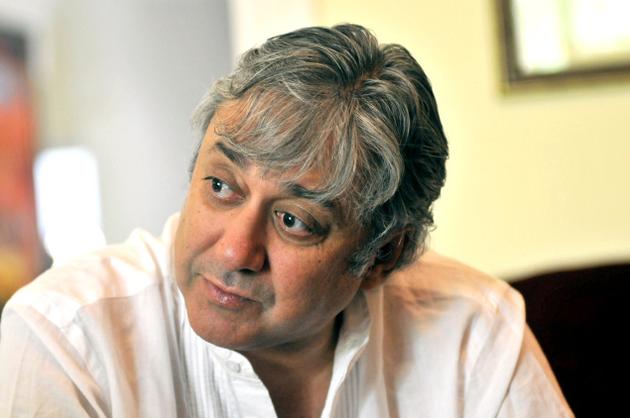
Jungle Tales: Saad Bin Jung loves the wild and the wilderness. Photo: Nagara Gopal / The Hindu

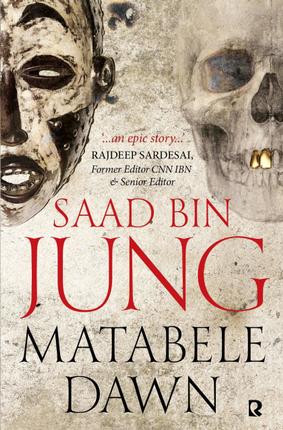
Saad Bin Jung talks about his latest book and what inspired him to pen the thought provoking pages.

Saad Bin Jung is reviving his touch with what we call ‘civilization.’ After spending months in the jungle resorts which he owns in Karnataka and Africa, Saad is seemingly enjoying his life though he would love to return to the jungle at the first instance. After all, holidaying there had never been his intention.

He plays a jungle guide, photographer, observer and lover of the natural life that surrounds him. His visit to the city is with a purpose and closely linked to the life he spends and the thoughts that cross his mind as he watches the animals enjoy the wilderness. He is currently engaged in a multi-city tour to launch his recently authored book Matabele Dawn. Having dedicated his life to conservation, he has spent time with many tribes, in many parts of Africa and India.

Saad Bin Jung's book
Saad Bin Jung’s book

So is Matabele Dawn a culmination of these experiences? “These fortunate meetings have made me realise that conservation is all about addressing a conflict. The conflict between the authorities and the local people /tribes that live in remote areas of both Africa and India. They are a forgotten people that eke out a living against all odds and live in the buffer regions of our protected forests.” He adds, “It is nice to be back in familiar space for a change. But I would prefer the wilderness any day.” And this wilderness helped Saad complete the book comparing his life in India and Africa. The author and activist describes the book as a thought-provoking journey through the heart of Africa and India. Saad elaborates , “Matabeleland was a thriving nation in erstwhile Zimbabwe. When Cecil Rhodes believed that King Solomon’s mines were located here, he mowed down the tribe. In a matter of months Matabeleland ceased to exist. No such mines were found but beautiful people were annihilated.

The book is about the journey of a few of that tribe, about their trials and tribulations as they move towards Maasailands in search of their destiny. Set deep in the heart of tribal India and Africa, it unfolds an epic saga of two lives in disarray where the solution is more lethal than the problem. Chenjerai is born in the African bush and a nation is wiped out. Shaaz’s birth in Europe heralds World War II. Chaos rule their lives and their search for answers remains elusive. When the veil does lift, it brings them face to face with a terrifying evil, one that threatens not just both their lives but also that of generations to come. From the Matabeles of Lobengula and the Maasai of Mbatiany to the Nawabs of India and the Gonds of Bastar, their quest cuts across the very heart of two mysterious worlds, leaning on each other, creating chaos.

The author claims he wrote the book in a way that enables one to smell the land, touch the wilderness and embrace the people and, above all, be a part of the story that shaped the history of both the regions. Real incidents also went onto inspire the author in Saad. “When I read about our Indian tribal girls in central India being tortured and physically abused, my blood boiled and my mind started to tick. The final straw was when I went to Africa and learnt of the Matabeles. That’s when I knew a book was coming but exactly where and how, I was not certain. Through my travels in Africa, the idea of Chenjerai took final shape and finally when I read the old books on central India, about the Nawabs and the tribes therein, the character of Shaaz was born. That I was upset at the way Africa had been raped is without any doubt. A motive took birth and the final puzzle of the book fell into place,” he says.

The descendant of the Paigah family is also troubled at the ease with which India rescinded on its constitutional assurances. He says, “One such promise being the abolishment of the privy purses; having experienced first hand life among a beautiful set of truly vulnerable people, I witnessed the 5000 year old institution of Indian royalty being wiped out from the face of this earth in but a matter of days. It’s filled me with unending anger and frustration and Matabele Dawn was the culmination of such harsh realities that I was exposed to — both in India and Africa — through my journey of life.”

source: http://www.thehindu.com / The Hindu / Home> Features> MetroPlus / by Prabalika M. Borah / December 18th, 2014

Hyderabad’s Numaish will be here soon

Children enjoying the rides at the 72nd All India Industrial Exhibition, popularly known as Numaish, in Hyderabad. Photo: K. Ramesh Babu / The Hindu

Six hours of entertainment at just Rs.20. Can you beat that? Impossible. One can’t have fun and frolic any cheaper. So tighten your belts for the annual ‘Numaish’. There are some new and amazing things to bedazzle visitors in the 75 edition of the All India Industrial Exhibition beginning here on January 1.

Locating the stalls and your dear ones is now child’s play. The smartphone in your hand will be your guide. Keeping pace with the emerging technology, the Exhibition Society has designed an ‘Exhibition App’ to help visitors navigate the sprawling grounds. It is also thinking of providing Wi-Fi in the 23-acre ‘Numaish maidan’.

The Society will also be celebrating the Platinum Jubilee of the Industrial Exhibition. President Pranab Mukherjee is expected to inaugurate year-long celebrations. Chief Minister K. Chandrasekhar Rao will inaugurate the exhibition on New Year Day, the first in the Telangana State.

The history

The Numaish-e-Masnuaat-e-Mulki had its humble beginning in 1938 when the Economic Committee of the Osmania Graduates Association came up with the idea. The 7 Nizam, Mir Osman Ali Khan, inaugurated the exhibition in 1940 at Public Gardens to mark his birthday celebrations. There were just 50 stalls then. The exhibition was shifted to its present venue in 1946 by the then Prime Minister of Hyderabad State Sir Mirza Ismail. Over the years it has grown both in content and coverage assuming an all India stature.

Given the prevailing security situation, the Exhibition Society is not taking any chances on the security front. For the first time, it has installed 8 CCTV cameras of its own. This will be in addition to the door-frame metal detectors, hand-held metal detectors, dog squad and police security.

source: http://www.thehindu.com / The  Hindu / Home> News> Cities> Hyderabad / by J.S. Ifthekhar / Hyderabad – December 16th, 2014

Statues of Akbar’s ‘navratnas’ to come up in Fatehpur Sikri fort

Agra:

The nine gems of Akbar’s court will soon adorn Fatehpur Sikri Fort, with Agra Development Authority (ADA) and Uttar Pradesh tourism planning to install their statues in the premises of the monument.

Despite his illiteracy, Mughal ruler Akbar appreciated the presence of artists and intellectuals. His passion for knowledge and interest in learning from great minds meant that men of great intellect received patronage from the emperor. Such men went on to constitute the nine courtiers, also known as ‘navratnas’, of Akbar’s kingdom. The navratnas are Abul Fazl, Abdul Rahim Khan-I-Khana, Birbal, Mulla Do-Piyaza Faizi, Raja Man Singh, Raja Todar Mal, Fakir Aziao-Din and Tansen.

According to ASI, Mughal institutions such as the ‘Ibadat-Khanah’, ‘Din-i-Ilahi’, ‘Tarikh-i-Ilahi’ , Jharokha-Darshan, the doctrine of Sulh-i-Kul and policy of liberal patronage to indigenous arts and literatures, were founded here.

Under the plan, the statues of the nine courtiers would be built at a cost of Rs 10 lakh and will be set up in the interpretation centre coming up in the Fort complex. Fatehpur Sikri was the capital of Mughal Emperor Akbar for 13 years, from 1572 to 1585. The complex of monuments was declared a UNESCO world heritage site in 1986.

Dinesh Kumar, regional tourist officer, said, “We plan to install the statues the way Akbar used to hold court meetings with them. Tourists will also be provided information about them in detail. Although the place for their installation has not been finalized yet, we are trying to get it done in the interpretation centre. A meeting with the divisional commissioner will soon be held to get his permission.”

The interpretation centre will provide a glimpse of history and culture of the Mughal era as well as facilitate tourists’ visit to the Fort. Its construction work is likely to be completed by next month, Kumar added.

Perhaps the most famous of the ‘navratnas’ is Birbal, a Brahmin advisor in the court of Akbar. He is mostly remembered in folk tales that focus on his wit.

In 1586, he led an army to crush an unrest in the north-west Indian subcontinent, which failed tragically when he was killed along with many soldiers in an ambush by the rebel tribe.

Towards the end of Akbar’s reign, local folk tales emerged involving his interactions with Akbar, portraying him as extremely clever and witty. Birbal’s defeat was one of biggest military setbacks during Akbar’s reign and his death is said to have caused the Mughal emperor much grief.

In the folk tales, Birbal is mostly shown as being younger than Akbar, religious and surrounded by envious Muslim courtiers. These tales involve him outsmarting them and sometimes even Akbar, using only his intelligence and cunning, often by giving witty and humorous responses and impressing Akbar.

Mulla Do-Piyaza is a character from a series of folk tales featuring the Mughal emperor Akbar and his witty courtier Birbal. Mulla Do-Piyaza, also portrayed as witty, is Birbal’s rival. Even though these folk tales originated at the end of Akbar’s reign (1556-1605), Mulla Do-Piyaza began to appear later, popularized by writers in the late 19th century. Most scholars consider him to be completely fictional.

The next most heard of navratna was perhaps Tansen, a prominent Hindustani classical music composer, musician and vocalist, known for a large number of compositions. He was also an instrumentalist who popularized and improved the plucked rabab (of Central Asian origin). Akbar gave him the title Mian, an honorific, meaning learned man.

Abul Fazal was the vizier of the Mughal emperor and author of the Akbarnama, the official history of Akbar’s reign in three volumes, (the third volume is known as the Ain-i-Akbari). He was the brother of Faizi, the poet laureate of Akbar.

Abdul Rahim Khan-e-Khana, another ‘navratna’ was a poet known for his Hindi couplets and his books on astrology. The village of Khankhana, which is named after him, is located in the Nawanshahr district of Punjab.

A poet and scholar of late medieval India, Shaikh Abu al-Faiz ibn Mubarak was popularly known by his pen-name, Faizi. In 1588, he became the Malik-ush-Shu’ara (poet laureate) of Akbar’s Court. He was the elder brother of Akbar’s historian Abul Fazl. Akbar recognized the genius in him and appointed him tutor for his sons and gave place to him among his decorative ‘navaratnas’.

Man Singh, the Rajput Raja of Amber, a state later known as Jaipur in Rajputana, was a trusted general of the Mughal emperor Akbar, while Todar Mal rose to become the finance minister in Akbar’s darbar. He was born in Laharpur, Uttar Pradesh in a Hindu family.

Faqir Aziao-Din was a mystic and a chief advisor in emperor Akbar’s court. Akbar regarded his advice on religious matters in high esteem.

source: http://www.timesofindia.indiatimes.com / The Times of India / Home> City> Agra / by Aditya Dev, TNN / December 14th, 2014

The old world charm

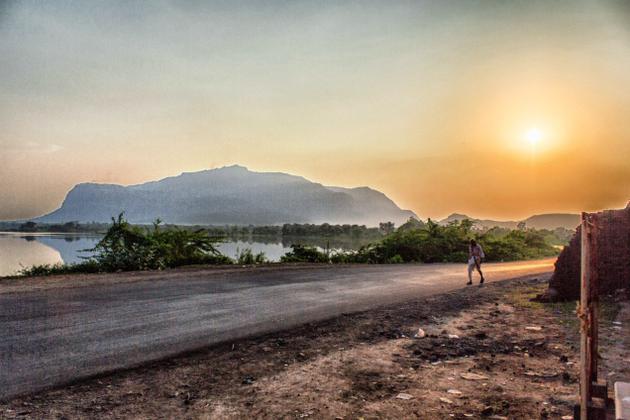
Sites of Champaner. Photos: Mohit Goel and Aakash Mehrotra / by Special Arrangement

History has shaped Champaner as a fascinating city,

A few faint images cross your mind when you talk of Champaner: a strategic trade route, the capital of arguably the most influential sultanate, a graceful example of urban landscaping, mesmerizing Muslim and Jain architecture. But the loudest of all images is that of a ransacked, deserted city. In Champaner, history speaks in its ruins. A city which grew from a town of moderate importance to become the capital of an influential sultanate, flourished for decades only to be attacked, ransacked and left deserted and lost to wilderness, all in one century.

Champaner has everything of the old world charm; there are mosques, an old palace, a fort, a step-well and ancient streets you can walk on. Along with the hill fort and temple of Pavagarh it is now called the Champaner and Pavagadh Archaeological Park. An hour’s journey from Vadodara, brings you to this UNESCO World Heritage site.

Champaner has a fairytale history. It was founded by the Rajput king Vanraj Chavda of the Chavda Kingdom in the 8th Century. The neighbouring city Pavagadh worked as a buffer area between Mandu and Gujarat, and a key strategic point on trade routes emanating from Gujarat to whole of India. After flourishing for years under the Rajput rulers, Champaner was captured by Mahmud Begda in 1484. He renamed the city Mohammadabad and moved the capital from Ahmedabad to here. In 1535, the city was captured by Humayun, and since the Mughals had control over both Gujarat and Malwa then, the city no longer enjoyed the status of a strategic buffer area. This marked the start of decline of Champaner and rise of Ahmedabad. When it was rediscovered by British, only 500 people inhabited the city.

Twenty years under the reign of Mahmud Begda gave this city models of urban planning to speak of. Being a capital and a strategic center, the city has huge fortifications. We entered through stoned road with huge ramparts on both sides. These ramparts led to mosques that still stand sound, with some wounds of history. The mosques of that bygone era lied unassumingly in the middle of the ruins of the citadel. One such elegant piece is the Jami Masjid. The intricate carvings in the pillars, walls and the mehrabs can give rise to many an artist. . One interesting thing about the mosque is the eclectic mix of Persian and Hindu style of design in the walls and the frescos. An evident piece is the kalash, a Hindu religious symbol on the mehrabs.

Our next halt was the Shehar ki masjid, contrary to its name which indicates it been a civilian place, it was the mosque reserved for the royal family. A little plain in design, the mosque is constructed on a raised plinth and the central arched entrance is planked by two minarets. At some distance in a secluded corner are the Nagina Masjid and the Kamani Masjid. Kamani Mosque is different from other mosques of Champaner as it follows the arcuate style (column and arch) indicating that it was built towards the end of sultanate period in Gujarat when this style had started gaining popularity.

Uphill enroute holy Pavagarh trail, is the Pavagarh Fort, located on the summit of the abrupt hills. The wide fortification walls, which once ran upto six kilometers, now stand in ruins with remains of variable height extants. Between the southern and the northern Gate, one can still find the patterns of the urban planning. In these complexes, one can find streets, civil baths, town patterns and even rows of shops, all having lived through the vagaries of time. The whole area is now an excavation site and the ASI never misses finding some rare jewels here. There are also graveyards, mausoleums and even richly decorated temples in these ruins.

As one moves uphill, following the Patha (pilgrim’s route) leading to the ropeway to the Kalikamata temple, one comes across many architectural structures that were forerunners of the architectural styles adopted later. The elements indicate a fine import of Hindu design in the Muslim architectural ideology. Unlike the present mosques styles, some tombs are almost all square in plan, with a dome resting on columns.

Another elegant structure on the hills is the seven arches (saat kamaan) of which only the six arches remain. Built from yellow sandstone in arch form, this served as a military base. One thing that makes Champaner stands out among all its contemporaries is the adroit townsman-ship, which one can still trace in the ruins. Arranged in a circle with the Jami Masjid in the center, the water arteries run upto all nine gates of the city. Over hills there are evidences of large reservoirs and earthen beams which drained into these reservoirs to collect the rain water running downhill. This entire series of arteries and water reservoirs, eventually ended into the largest lake, the bada talao, on the plain below the city. The big mosques like the Jami masjid also had elaborate water harvesting structures in their compounds.

We headed towards the bada talao, where another beautiful, dilapidated structure draped in bright orange of the dusk, was waiting for us. Even though only the walls remain of Khajuri mosque, this structure deserves a long stay.

With my feet tapped in the bada talao, I looked at the Pavagarh hill, and the mystery draped in the evening mist. I saw a small town spreading across the floor of valley and trailing up the bare hills, with a lake in the middle and ruins of a fort looking down at it as guardian; the setting seemed a miniature painting of a place inextricably caught in the web of history; tucked on the horizon.

The author is a blogger at handofcolors@wordpress.com

source: http://www.thehindu.com / The Hindu / Home> Features> MetroPlus> Travel / by Aakash Mehrotra / December 14th, 2014

Indian Soldiers of World War I Remembered

Diplomats of France, Germany, Britain and Turkey along with Telangana representative BV Papa Rao (centre) paying homage to Indian soldiers of World War I memorial monument in Hyderabad on Friday | a suresh kumar

Hyderabad :

After 100 years of the first World War, Hyderabad hosted a rare moment where the diplomats from the belligerent countries of the historic war came together on a single platform to pay homage to the Indian soldiers who died fighting the war.

France and Britain together fought against Germany in World War-I. In fact they were rivals in the second World War as well.

The diplomats of the all three countries along with the Consul General of Turkey, shook hands with each other on the same stage and prayed for the world peace here on Friday.

This took place at the ‘World War-I monument’ at Chaderghat during the  Commemoration Day of the Indian soldiers who died fighting the first World War. The historic monument which is located right next to the victory ground at Chaderghat was built in 1920 by the locals in the memory of Indian soldiers. Recalling the sacrifice of the soldiers, Andrew McAllister, the British deputy high commissioner in Hyderabad said, “We can’t forget the sacrifice they made in the war. This is a great opportunity for all of us to recall our past and build a bright future.” He also highlighted the role of Hyderabad in the World War. “Many soldiers from the Nizam’s Army fought in the war. In fact the Begumpet Airport played a key role as the air base for British empire during the war,” he added.

Achim Fabig, the Consul General of the Federal Republic of Germany described the meet as a symbol of peaceful world today. “Once our countries fought against each other, but now we all are here and we all want the world to be peaceful” he said. Talking about current diplomatic relations, he said, now all the countries are making efforts to build friendly relationships with each other and it is indeed a good sign.

This commemoration meet was organised by the INTACH, Hyderabad chapter in collaboration with the Alliance Francaise, Hyderabad. “This monument has a great history and it needs to be recognised. This the reason we organised the event,” said P Anuradha Reddy, convenor, ITACH Hyderabad. Eric Lavertu, Consul General of France and Merad Omerogul, Consul General of Turkey were also present at the event.

source: http://www.newindianexpress.com / The New Indian Express / Home> Cities> Hyderabad / by Express News Service / December 13th, 2014

Retro beauties roll down city streets

Lucknow:

Sunday was a fun day for city’s motor sports aficionados and patrons of vintage cars and motorbikes. It was time to enjoy the ride in the retro beauties rolling down the streets of Lucknow. From Austin Chummy 1926 and Ford A 1928 vintage cars to Nortan, Birmingham Small Arms Company (BSA) and Royal Enfield motorcycles the annual vintage car and motorcycle rally once again brought back memories of a bygone era.

Organised by Hindustan Petroleum Corporation Limited (HPCL) and Vintage Car and Motorcycle Club of Lucknow as a part of Lucknow Mahotsava, the vintage rally started from Koneshwar, Chowk after being flagged off by district magistrate Raj Shekhar.

Over 45 vintage beauties on wheels comprising 30 cars and 15 motorbikes were on the streets of Lucknow, the owners flaunting their priceless possessions.

Meandering through the roads of Old City passing through Rumi Darwaza, Chhota-Bada Imambaras, Hazratganj and also through the posh modern localities like Vibhuti Khand, the rally terminated at Indira Gandhi Prathisthan, Gotminagar.

Owner of the oldest vintage car Austin Chummy 1926, M A Khan, who has been participating in the rally for the past 21 years from the time Lucknow Mahotsava first organised such an event, said, “Old beauties always retain their charisma and preserving them helps conserve a cultural heritage.”

Along with the Lucknowites the rally comprised participants from other cities of Uttar Pradesh too.

Dr Tarun Sehgal, a resident of Sitapur and a proud owner of a treasured classic car, MGTC 1947 who has been participating in the event since past 11 years, said, “Every time I take out my MGTC 1947 model I enjoy the experience of driving and basking in the vintage glow.”

Secretary of Vintage Car and Motorcycle Club of Lucknow and also one of the participants, Sandeep Das believes though maintaining vintage or even for that matter classic vehicles is an expensive affair, the passion of the proud owners overrides the money spent and energy consumed.

In Car Parlance

Vintage cars– Cars manufactured before and till December 31 st 1939(Second world war) are called vintage cars

Classic cars– Cars manufactured between 1940-1962 are termed as classic cars.

ource: http://www.timesofindia.indiatimes.com / The Times of India / Home> City> Lucknow / by Uzma Talha, TNN / December 01st, 2014