Category Archives: Travel & Tourism

Karanji Park gets Orchidarium

Wildlife photo expo inaugurated; Great Indian Rhinos released for public viewing at Zoo

Mysuru, Karnataka  :

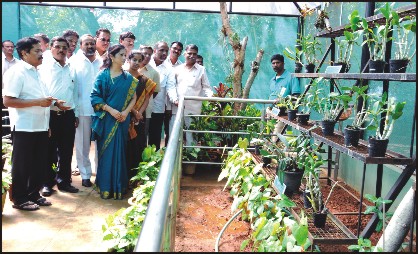
Adding to the existing attractions at Karanji Lake Nature Park, an Orchidarium with 98 Orchid plants of various varieties was inaugurated by Rehana Banu, Chairperson, Zoo Authority of Karnataka (ZAK), at the Park premises on Lalitha Mahal Road in city this morning.

RehanaBanuMPOs10dec20134

Orchidarium is an indoor enclosure for keeping and cultivating plants and observing them under natural conditions, especially for the cultivation of various types of Orchids.

Orchidarium is an area that provides the desired environmental conditions for different varieties of Orchids grown abundantly for cultivation and conservation of Orchids both endangered and otherwise.

It is provided with optimum lighting conditions for the plants while protecting them from direct and harsh sunlight. The structure is covered with mesh with a roof to protect the plants from direct sunlight.

Prior to the inauguration of the Orchidarium, the Wildlife Photography exhibition was inaugurated at the Zoo Library by MLA M.K. Somashekar.

The expo, which is being held in two categories like Zoo Animals and Wildlife Photography has a total of 220 pictures clicked by both amateur and professional photographers.

In the Zoo Animals category, pictures of Hippo and its baby, playful bear cubs, tiger and its cubs playing and other pictures of Zoo animals are on display.

In the Wildlife Photography category, prize winning photos of World Wildlife Day contest clicked by photographers S.R. Madhusudhan, G.S. Ravishankar, M.K. Sapthagirish and others has been put on display.

A pair of Great Indian Rhinos, three-year-old Virat and one-year-old Bablee, brought to Mysuru Zoo from Patna’s Sanjay Gandhi Biological Park about two months ago, were released for public viewing by Mayor R. Lingappa and MLA M.K. Somashekar at an enclosure made for them at the Zoo premises.

Zoo Executive Director B.P. Ravi, Manager Shivanna, Zoo Veterinarian Dr. Suresh, RFO Girish and others were present.

source: http://www.starofmysore.com / Star of Mysore / Home> General News  /  Thursday , December 04th, 2014

Together, they fly Guinness flag

An aerial view of the national flag formed by volunteers who created a Guinness record in Chennai on Sunday / PTI

30,000 Chennaiites break record with ‘human Tricolour’

At 4 a.m. on Sunday, Chennaiites started gathering at the YMCA grounds here; a few hours later, a Guinness World Record was broken. Over 30,000 people came together to create the world’s largest human formation of a national flag, surpassing Pakistan in this feat.

Nine months ago, a sports club in Lahore made the first attempt to create a human national flag of Pakistan with 28,957 people and held the record for the largest formation till Sunday.

Seyda Subasi-Gemici, adjudicator of Guinness World Records Ltd., said, “It is a big historical day for India. I was very touched when I saw people gather around 5 a.m. and wait till noon in this heat to be a part of this event. They have truly showed their unity today.”

India is prepared to create such huge records and they can recreate this at any point in time, she added.

She recollected how she visited Chennai last year for “Parle Golu Galatta 2011,” the largest doll collection.

Isak Nazar, Governor of Rotary Club International 3230 that organised the event, said, “This achievement that people of Chennai have made is special. We organised this event to instil patriotism among the people and let future generations know about the importance of national flag.”

Planning for the event started 10 months ago.

“We mobilised people from colleges and corporate firms over a period of time. We had a set of architects who planned this,” Mr. Nazar said.

source: http://www.thehindu.com / The Hindu / Home> News> Cities> Chennai / by Staff Reporter / Chennai – December 08th, 2014

Rehana Banu takes over as Zoo Authority Chief

Rehana Banu, who took charge as Zoo Authority Chairperson in city yesterday, being greeted by Zoo Deputy Director Dr. Suresh as Rafiq Ahmed, Syed Akram Pasha and Zoo Member-Secretary R.S. Suresh look on

Mysuru, (ACP,SBD&RNN) :

Former MCC Ward 40 Corporator Rehana Banu yesterday took over as the Chairperson of Zoo Authority of Karnataka (ZAK) at its office inside the Zoo premises in city.

Rehana Banu, who arrived at the Zoo at about 7.20 pm, was greeted by Zoo Deputy Director Dr. Suresh, who offered a bouquet to the new Chairperson. Immediately after taking charge, Rehana met MLAs Vasu, Tanveer Sait and M.K. Somashekar and thanked them.

Zoo AEE Nagendrappa, Superintendent Jayaram, Congress leader Rafiq Ahmed, Corporator Suhail Baig and others also greeted Rehana on her nomination as Chairperson of ZAK.

Meanwhile, Sundar Das, Senior Congress leader from H.D. Kote, yesterday took charge as Chairman of Karnataka Seeds Corporation from Managing Director Vishakanta at its office in Hebbal, Bengaluru.

Narayan, Ananthu, S.E. Basavaraj take charge

It is learnt that former Mysuru Mayor Narayan today took charge as Chairman of Karnataka Safai Karmachari Commission at its office in Sampangiramanagar in Bengaluru.

R. Ananthu: Former Mysuru Mayor R. Ananthu, who has been nominated as Chairman of Mysore Paints and Varnishes (Mylac) has told SOM that he would take charge later today after meeting Chief Minister Siddharamaiah.

S.E.Basavaraj: Former Mysuru ZP President S.E. Basavaraj, who has been nominated as Chairman of Karnataka Maharshi Valmiki Scheduled Tribes Development Corporation Ltd. today took charge at its office in Vasanthanagar, Bengaluru.

K.R.Mohan Kumar and C. Dasegowda await orders

It is learnt that former Dry Land Development Board Chairman K.R. Mohan Kumar, who is tipped to become the Chairman of Mysuru Urban Development Authority (MUDA) and Mysuru City Congress President C. Dasegowda, who has reportedly been nominated as Chairman of Command Area Development Authority (CADA) are yet to receive official orders and the same are likely to be issued today, according to sources.

source: http://www.starofmysore.com / Star of Mysore / Home>  General  News  / Wednesday , November 26th, 2014

ASI forms taskforce for restoring 3 Mughal-era structures

Agra:

The Archaeological Survey of India (ASI) has formed a task force under the organization’s additional director general (ADG) BR Mani for the restoration and protection of three Mughal era-structures – Hanthi Khana, Aga Khan haveli and Khan-e-durran haveli situated on the Yamuna bank in vicinity of the Taj Mahal.

Mani along with senior ASI officials (Agra circle) conducted a survey of the structures on Saturday to ascertain their present condition. They found that all the three structure are in dilapidated condition and encroached upon by locals.

“We will ensure that these monuments are conserved and remain protected from encroacher. A survey has been done,” Mani said.

ASI officials said the selected monuments have found mention in a book written by Ebba Koch, Austrian architectural historian, as riverfront Mughal gardens in Agra. They are located on north eastern side of the monument, said an official.

According to information, Khan-e-durran was Shah Jahan’s governor of the Deccan and played a major role in annexation of Daulatabad fort in 1633. His haveli was later converted into a tannery during British period. At present, its ownership is in dispute. The ASI task fort has also been looking into this matter.

Likewise, Aga khan was the superintendent (also a fuajdar) under Shah Jahan and responsible for maintaining law and order at the river front. “He was also responsible for ensuring proper care of a thousand horses of the Mughal army. He died in 1658,” said an official.

The Hanthi gate was the entry point to the elephant enclosure. Although not much information is available about it, it does find mention in Koch’s book and also in Padshahnama written by Abdul Hamid Lahori in the 17th century.

The ASI will also chalk out a plan to plant trees in the Taj heritage corridor located between the Taj Mahal and the Agra Fort and convert it into a greenbelt. The Supreme Court had passed an order this regard in 2006, but nothing much was done so far because of lack of funds and experts. Now, the project has taken wings once again after former minister of culture, Shripad Naik directed the ASI in August to revive the project.

source: http://www.timesofindia.indiatimes.com / The Times of India / Home> City> Agra / Aditya Dev / November 22nd, 2014

Village commemorates 41 Wagon Tragedy victims on anniversary day

Malappuram :

On the occasion of observing 93rd anniversary of Wagon Tragedy, the darkest chapter of Malabar rebellion during British period on Thursday, a village near Tirur commemorates 40 people hailing from the village, who were killed in the tragedy.

A total of 70 among the 90 odd Mappila rebels who were taken in an air-tight goods wagon from Tirur to Podanur were killed on November 20, 1921. The prisoners were taken into custody when the rebellion was in peak and almost 80 detained rebels were despatched in freight wagon from Tirur to Podanur in Tamilnadu. During the journey about 60 of the rebels suffocated to death in wagon.

It is believed that among the 41 persons from Kuruvambalam who were victims of the tragedy, majority were bachelors who left behind no progeny. “Even the historians and local people were not much aware of the role of the Kruvambalam people in the incident till couple of years ago. According to the elders in the village the youngsters here had played a major role in the struggle against the British during the rebellion and more studies have to be conducted to shed light on the contribution of tragedy victims”, said Salim Kuruvambalam, Malappuram district panachayat member, who took initiative for setting up a memorial for the Wagon Tragedy victims at Kuruvamabalam. The district panchayat president Zuhara Mampad will inaugurate the comemmoration programmes in the village. Historians will also attend the programme.

Talking about role of Kuruvambalam persons in the tragedy, the historian KKN Kurupp said that government should conduct a comprehensive study on the victims of Wagon tragedy and other related incidents of Malabar rebellion. ” As there was no such study held so far the state government should initiate action to start a detailed historical and cultural study on the various incidents during the rebellion period. We are going to observe 100th anniversaty of the rebellion in 2021. But still we have no clear data or official document regarding the incidents and the details of the persons who were killed in Wagon tragedy”, he pointed out.

The historian and scholar M Gangadharan has recently opined that the Wagon tragedy was not a cruellest act of the British oppression during the Malabar rebellion, as about 200 Mappila youngsters pulled out of their house and they were killed infront of their family in October of the same year.

source: http://www.timesofindia.indiatimes.com / The Times of India / Home> City> Kochi / by T. P. Nijeesh, TNN /  November 20th, 2014

Tale of Fading Glory

FakhrUlMulkMPOs25nov2014

Hyderabad  :

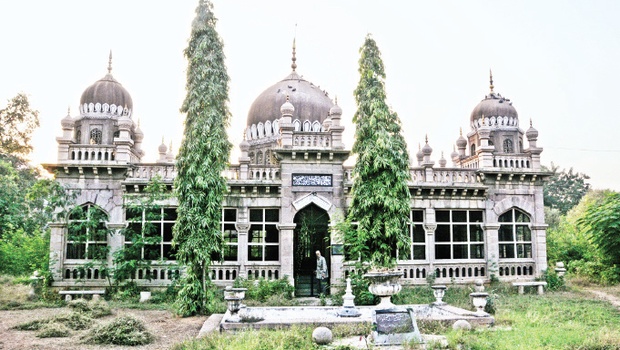
Once a minister in Nizam’s court and a ‘shaukeen-mijaaz’, legend goes that he wore clothes European that were laundered in Paris, ate only European food, threw lavish parties, ‘Umrah-e-Uzaam’ nawab Fakhr-ul-mulk hadn’t wished to live longer to see his small kingdom being swept away by the winds of development, corruption and encroachment. The remnants of the more-than-century-old monument, peeping out from a corner at SR Nagar, tells the story of grandeur and splendour the Nawab was once known for.

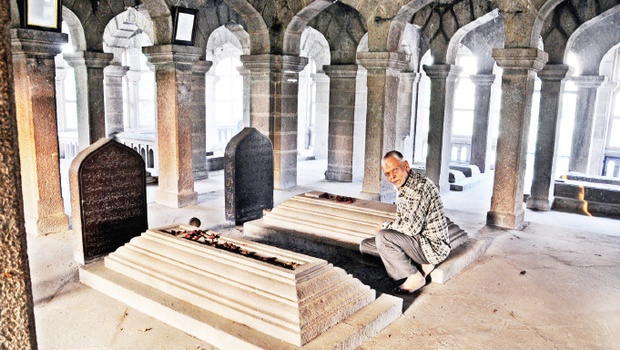
Now a private property, as claimed by the great grandson of the aristocrat, the monument has tombs of Fakhr-ul-mulk, his wife, their five sons and other numerous descendants. “Until 1970, we received jaagir from the government to maintain the tomb. But when it stopped, shops and houses started cropping up on the property,” said Mir Sarfaraz Hussain, the great grand son of the nawab and a retired commissioner of commercial tax.

ZananaMPOs25nov2014

Recently the ‘zannana’ or female entrance of the tomb was obstructed when a mulgi was set up along boundary wall of the structure. “We even approached the GHMC commissoner but nothing has come of it,” rues the Sarfaraz Hussain.

Not just encroachment, but in last 100 years, the industrial development and urbanisation tanned down its shine. The structure has endured traffic pollution for decades. With the metro rail passing through the area, the existential troubles have only increased for the the nawab’s tomb. “When the area fell under HMR plan, they negotiated with the encroachers and paid them. If taken away, we fear the beauty of the tomb be lost as it will be further sandwiched in the dust of developing the transport system,” points out the Mir Amanath Hussain, the great great grand of Fakhr-ul-Mulk and adds that the matter is pending in the court at the moment.

Erected on two acres out of the total four acres and 27 guntas estate, the tomb is a pagan symbol of tomb architecture in Hyderabad. It is also marked as the last major monument to be constructed in the Qutub Shahi revival style of architecture. Constructed with stone, lime stone and sand, it is quite modest but imposing at the same time.

The tomb that was awarded the Intach Heritage award in 2011 for being instrumental in the evolution of tomb architecture in Hyderabad, with its creaking iron gate, wild overgrowth, broken fountain, rumbling pool, unkept pathway — are all the tell-tale signs of sheer negligence. It’s ironic that the sixth generation of the family hardly has any knowledge of their glorious past or of the majestic stone structure in which they are associated with.

“Yearly we spend a lot of money on the upkeeping of the tomb but as you can see its not enough. What’s more is that no one takes interest in the upkeep of the place,” rues Sarfaraz Hussain and adds “when family is apathetic towards our ancestors, there is no surprise if the administration takes no heed of our pleas.” While fighting many legal battles, the retired government employee is also battling his relatives to set up a private committee to look after the upkeep of the structure.

M Vedakumar, a former core committee member of Indian National Trust for Art and Cultural Heritage (INTACH) and the President of Forum for Better Hyderabad opines that retaining the rights of the heritage structure and its precinct by the private parties is justified. “The Government should, however, take into account the condition of the structure and provide assistance for its maintenance,” he said.

He feels that there is a need for a heritage cell to look into all the matter pertaining to the upkeeping of heritage structures. And rightly so, for one doesn’t know how many of the 156 heritage sites will exist for our grandchildren to see.

source: http://www.newindianexpress.com / The New Indian Express / Home> Cities> Hyderabad / by Sadaf Aman / November 25th, 2014

The big fat biryani battle

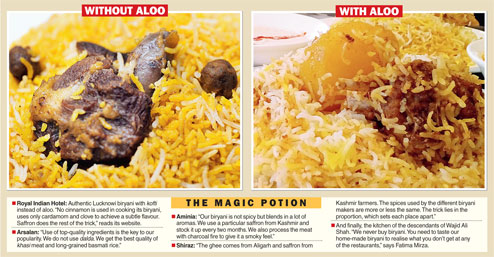
AlooBiriyaniMPOs23nov2014

The A in the B

Shahanshah Mirza cannot imagine his biryani without the aloo. Fatima Mirza could not imagine her biryani with the aloo. Till the girl from Lucknow was married into the Mirza family of Park Circus. “I remember finding the aloo in the biryani quite funny at first,” says Fatima, who friends insist serves up some of the best biryani in town. And yes, with the aloo.

Why are we so bothered about the biryani being cooked in the Mirza kitchen? Simple, that’s where the great “to aloo or not to aloo” debate was born for the Calcutta biryani.

Yes, Shahanshah Mirza is the great-great-grandson of Wajid Ali Shah, the last nawab of Awadh. Foodlore has it that the nawab came to Calcutta after losing his throne and to cut costs, his cooks replaced the meat with the potato. And, foodlore number two: Wajid Ali Shah’s cooks added the aloo but only after falling on hard times following the death of the nawab. Either way, thus was born the Calcutta biryani the city now gorges on.

The nawab’s family line dismisses all this as, well, lore. “The nawab was a connoisseur of food and had given a free hand to his chefs to experiment with dishes. Once his chefs played around with the biryani and put potatoes in it. The nawab liked it so much that he ordered that the aloo be a constant in the biryani henceforth,” says Shahanshah.

And that is how it is cooked to this day in the Mirza kitchen — and in the kitchens of almost every biryani-serving restaurant around town.

With the royal exception of… Royal Indian Hotel.

What started as a humble rented shop in Chitpur to sell culinary creations by Ahmed Hussain, a migrant from Lucknow, is now a two-storeyed restaurant that seats 65 in its AC hall, 75 in the non-AC hall and 40 in the ground-floor dining hall and “remains full at meal times”.

But don’t dare mention the A (aloo) word here. “We only make authentic Lucknowi biryani and our patrons love that. Our biryani does not have aloo, it has kofti (meat balls),” declares Md Irfan, one of the directors of Royal Indian Hotel, stirring up biryani since 1905, the year Lord Curzon divided Bengal.

More than a century on, Calcutta still stands divided. Along the thick potato line when it comes to the biryani.

How tough it is to serve biryani without the potato in a city weaned on that is evident from what Luknow, an Awadhi food restaurant that opened in Park Circus and Ballygunge this year, had to face. With diners insisting that “aloo chhara biryani hoy na (there can be no biryani without aloo)”, Shalini and Vinay Arora, the couple behind Luknow, were in a pickle. The cooks from Lucknow at the helm said: “Awadhi biryani cannot be cooked with potatoes.” But on popular demand aloo was introduced in one of the 11 biryanis on the menu.

No wonder the most popular biryani places in Calcutta just pile on the potato. Arsalan, Shiraz, Aminia, New Aliah — you name it and all of them have it. Aminia of New Market that has been running since August 15, 1947, has three more outlets in Calcutta — at Gol Park, Jessore Road (Nagerbazar) and Rajarhat (Chinar Park). They have been serving aloo with their biryani since inception.

Arsalan, a relatively recent dot on the biryani map of Calcutta (2002), has zoomed to the top of the bestseller chart and now runs five outlets — two in Park Circus, including the landmark one at 191 Park Street, and one each in Ripon Street, Taratala and Hatibagan. For them, there truly is no B (biryani) without A (aloo). “Some customers even look for a second piece of aloo on the plate!” says Arsalan director Akhtar Parwez.

The aloo is also an essential part of the biryani at Shiraz Golden Restaurant, which dates back to 1956. It has 10 outlets in the city stretching from Garia to Dum Dum.

A new kid on the biryani block, Oudh 1590, has tried to create a destination for Awadhi cuisine with the decor and menu at its Deshapriya Park address. But with one concession for the Calcutta palate: the option of the biryani with aloo. “Yes, the Awadhi Handi Biryani without aloo is less popular. People come and specifically ask for the aloo-wala biryani,” admits Debaditya Chaudhury, a partner of Oudh 1590.

Among foodies batting for the aloo in the biryani is musician-food writer Nondon Bagchi. “It is a part of our tradition. The aloo should not be taken out of the Calcutta biryani,” he says.

And slightly further away from home, we asked economist Abhijit Vinayak Banerjee, the celebrated co-author of Poor Economics and a fabled cook in his friends’ circle, where he stood on potatoes in biryani. “Potatoes can be very nice, especially if the biryani is sharp, like a Sindhi biryani,” said the man from MIT in the US. [Sindhi biryani is known to have mint, coriander and prunes in addition to the meat and rice. Originating from Sindh province in Pakistan, some of its variations have potatoes in it.]
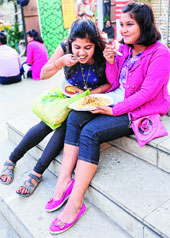
BiriyaniFamilyMPOs23nov2014

The biryani boom

Enough of the potato, let’s get to the meat of the matter now.

To what lengths Calcutta can go for its fill of biryani is evident from the thousands who throng The TelegraphBiryani and Kebab festivals every year at City Centre (Salt Lake and New Town).

And it’s this passion for the rice-and-meat platter that has finally nudged Royal Indian Hotel to join the branching-out biryani brigade. Yes, Royal will have its first branch — “to be opened opposite Quest mall very soon”.

It took four generations and more than a century for this traditional biryani bastion to get a move on. So what prompted them to go south? “Our loyal customers from across Calcutta travel all the way to 147 Rabindra Sarani and often rue that we don’t have an outlet in their part of the city. We believe we are now ready to reach out and take our brand to all corners of Calcutta — north, south, east and west. We begin with south because it is a strategic location, where we can attract a wide clientele from the Ballygunge and Park Circus areas,” says Royal’s Irfan.

The restaurant that enjoys iconic status among loyalists says the popularity of the biryani here picked up after Independence. “Satyajit Ray to Uttam Kumar, Gunter Grass to Khushwant Singh, they all loved our biryani. Yesteryear actress Tabassum would get it packed and take it for Dilip Kumar. And now, Sourav Ganguly loves our Chicken Biryani,” smiles Irfan.

Royal may finally be stepping out of its crease, like Dada used to in his prime, but no one understands the biryani boom better than bestseller Arsalan. “If everything goes right, we intend to open three branches by June 2015,” says Arsalan director Akhtar Parwez. The locations on the radar are Barrackpore, Rajarhat and Jessore Road.

Simmering in the Arsalan handi is a target for “at least 50 outlets across Bengal” in the next 10 years. “If a Bengali loves and craves for Arsalan biryani, he should be able to get it near his home. That’s where we want to take our brand to,” says Parwez, reluctant to divulge the number of plates served per day in their blockbuster outlet at the Park Circus roundabout.

Multiplicity is the name of the game for Shiraz and Aminia as well. Aminia aims to open a branch in Behala, next to Ajanta cinema, and another near the Shyambazar tram depot. Shiraz has launched a chain of quick-service restaurants named Lazeez Express, which “does good business in Kasba”. For Zeeshan, which already has two outlets in the south (Deshapriya Park and Garia), another one near Lake Market is being planned. And then one in Kidderpore maybe.

Two new biryani players — Oudh 1590 and Luknow — are attracting a steady clientele in south Calcutta, enough for Oudh 1590 to eye a second serve near City Centre Salt Lake in January.

Multiplicity is married to makeover in the new-age biryani game, with words like decor and ambience coming into the dictionary. Take Oudh 1590. This Awadhi cuisine restaurant has created a “period dining experience” at its Deshapriya Park address.

The older players, too, are paying attention to the look and feel of their dining rooms. Aminia Rajarhat that opened earlier this year has been built on a Sufi theme.

“Today’s customers are hygiene-conscious and look for places that have a feel-good ambience. So we had to put in a lot of effort to make our Hatibagan address look chic and vibrant,” says Arsalan man Akhtar Parwez.

With the “need to reach out” becoming the mantra — from Royal to Lazeez — the biryani is taking the pizza route. Takeaways and home delivery are playing an important part. “You need to take special care as food items like biryani are best enjoyed fresh from the handi,”says Parwez.

“We depend largely on home-delivery orders, from domestic as well as corporate clients,” says Ishtiaque Ahmed of Shiraz’s Lazeez chain.

And then there’s Facebook, Zomato and Foodpanda for the smart(phone) set to book biryani on the go.

A foodnote: The great biryani debate doesn’t begin or end with the aloo. There’s a greater debate cooking, which questions the very standing of the biryani. But as with most things Calcutta, there is no place for the finer nuances or larger debates of life.

We turn the culinary pages to Abdul Halim Sharar (1860-1926), a courtier in nawab Wajid Ali Shah’s Lucknow durbar, who wrote in Lucknow: The Last Phase of an Oriental Culturethat the real raeez of Lucknow preferred mutton pulao to biryani, which was bit of an aam aadmi food.

The last word is left, once again, to economist Abhijit Vinayak Banerjee from MIT. When asked to define the difference between pulao and biryani, he said: “Pulao is rice cooked in broth. Biryani is made with pre-cooked rice. Kachchi biryani is with marinated but not cooked meat. Normal biryani is with cooked meat. In both cases the meat cooks more and the vapours from that are used to flavour the rice.”

That, sadly, is too fine a flavour for the Calcuttan busy with a mouthful of biryani, aloo and all.

Do you like your biryani with or without the aloo? Tell ttmetro@abpmail.com

ource: http://www.telegraphindia.com / The Telegraph, Calcutta / Front Page> Calcutta> Story / by Sibendu Das / Sunday – November 23rd, 2014
Architectural nuances of Chhatar Manzil impresses INTACH team

Young conservation architect Shweta and her team have come on behalf of INTACH to prepare an inventory of defects and damages.

Lucknow :

Their maiden visit to the Chhatar Manzil reminded them of one of the primary lessons in architecture — Rome was not built in a day. The sentiment ruled the mind of young conservation architect Shweta and her team who have come on behalf of INTACH to prepare an inventory of defects and damages.

“The roman proverb is quoted to teach that conservation of an architectural building is sure to take months and years and instill some sense of patience in us. In this sense, Chhatar Manzil is our patience test,” said Shweta who’s accompanied by architect Shaista and interns Dhravi and Mukul.

They reached Chhatar Manzil at around 1 pm with a camera, a couple of torches, measuring tapes, notebooks and observations in mind made during an assessment of building’s old pictures and descriptions. Presence of an extra floor at many places was the first problem the team noted.

Showing the one on the front facade, Shweta said, “Photographic evidences suggest that the 2nd floor is extra. And from the inside, the twin-floors break into 3-4 sections against the original look.” They discovered that portion housing canteen was the most altered segment. Here, old pillars have been scooped out to make way for drains. Shifting of CDRI has left behind scores of huge holes and burrows in this part. Chemical waste and other glass substances is also to be disposed.

Air conditioners ducts have created many bruises on the oriental building. “Rectangular tin boxes to fit ACs inside circular windows look like a patch stitched over velvets,” remarked one of them. On the rear side of the building, temporary structures particularly tin sheds ruin the look.

Dampness and vegetation are the other two challenges. However, biggest of all problems is unavailability of material that describes the inner portions of the building. “In this case, we would bank on the characteristics of the construction system of the age,” said Vipul Varshney, convener INTACH Lucknow chapter who also inspected the place later during the day. “Lack of dampness in the basement is a good news as it would make restoration easy,” she added.

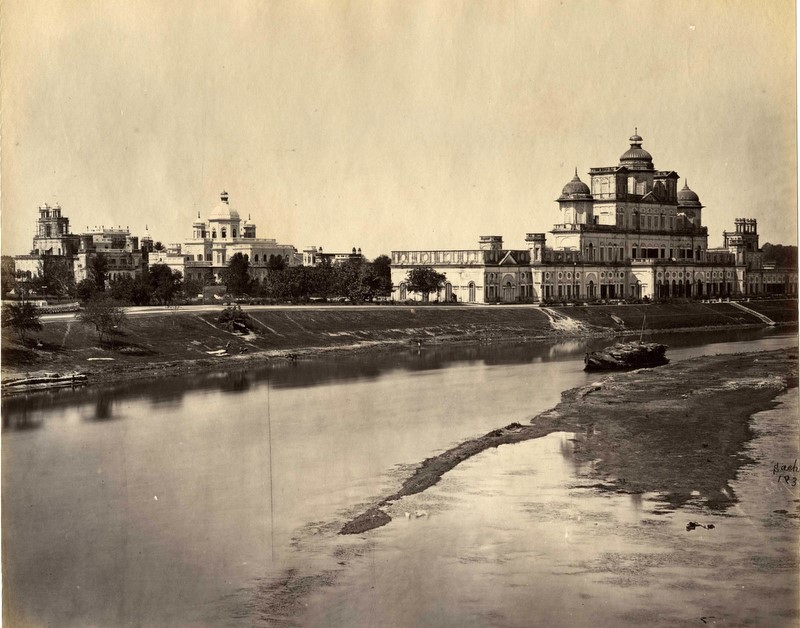
"Chutter Munzil, Lucknow," a photo by Edward Sache, c.1880's; and * / www.columbia.edu
“Chutter Munzil, Lucknow,” a photo by Edward Sache, c.1880’s; and * / www.columbia.edu

Journey of the building

Nawab Saadat Ali Khan bought this grand piece of architecture 200 years ago for Rs 50,000 from Claude Martin, a French army officer and architect.

Not meant for public eyes, Saadat Ali Khan commissioned the construction of an extension, which is now Chhatar Manzil. From then, it became the principal residence of the Avadh sovereign.

Nawab Saadat Ali Khan died before the completion of the construction of Chhatar Manzil and it was completed by his successor Nawab Ghazi-ud-din Haidar.

After the war of independence in 1857, the British acquired the palace and turned it into the United Services Club — stripping much of its former grandeur.

After Independence, it was taken over by the government and on February 17, 1951, then-Prime Minister Jawaharlal Nehru inaugurated the Council for Scientific and Industrial Research (CSIR) here to start the first drug research laboratory in the country.

Now that it has been handed over to the state archaeological department, the doors of Farhat Baksh Kothi and Chhatar Manzil will be opened to public for the first time in history.

Later, the even more opulent Qaiserbagh Palace by Nawab Wajid Ali Shah overshadowed Chhatar Manzil’s grandeur. During the mutiny, Indian soldiers used the palace as a shelter.

source: http://www.timesofindia.indiatimes.com / The Times of India / Home> City> Lucknow / by Shailvee Sharda, TNN / November 20th, 2014

Rare Mughal-era jewels go on display at New York exhibit

About 60 jeweled items, including a gem-set tiger head finial originally from Tipu Sultan’s throne and a jade dagger owned by Mughal emperors Jahangir and Shah Jahan, has been displayed at an exhibition at the prestigious Metropolitan Museum of Art.

Photo01MPOs17nov2014

The objects are from the private collection formed by Qatar’s Sheikh Hamad bin Abdullah Al-Thani and will be presented at the museum in the exhibition ‘Treasures from India: Jewels from the Al-Thani Collection’ opening October 28 till January 25.

Photo02MPOs17nov2014 

The display includes historical works from the Mughal period in the 17th century and from various courts and centres of the 18th and 19th centuries, including Hyderabad.

Photo03MPOs17nov2014

A highlight of the exhibition, made possible by iconic jewellery designer and manufacturer Cartier, would be a gem-set tiger head finial originally from the throne of Tipu Sultan that incorporated numerous cabochon diamonds, rubies and emeralds in a kundan setting.

Photo04MPOs17nov2014

Among the Mughal works will be a jade dagger — originally owned by two emperors — the hilt was made for Jahangir and it was re-bladed for his son Shah Jahan, who built the Taj Mahal.

Photo05MPOs17nov2014

In the 19th century, the dagger was in the collection Samuel Morse, inventor of the Morse code.

Photo06MPOs17nov2014


Photo07MPOs17nov2014

(Courtesy: PTI and AFP)

DISCLAIMER : Views expressed above are the author’s own.

source: http://www.blogs.timesofindia.indiatimes.com / The Times of India / Home / Team TOI in The Photo Blog / October 28th, 2014

Cracks in Tipu’s fort

Karnataka : Bengaluru : 15/11/2014 . Crack on the wall of Tipu's fort near K R Market in Bangalore on 15th November 2014 . Photo : Bhagya Prakash K
Karnataka : Bengaluru : 15/11/2014 . Crack on the wall of Tipu’s fort near K R Market in Bangalore on 15th November 2014 . Photo : Bhagya Prakash K

Once the nucleus of an ambitious plan to build a new city – Bengaluru – by the city’s founder Kempe Gowda, Tipu Sultan Fort or Bangalore Fort today is a far cry from its former state of glory. Visitors are now greeted by cracks that have developed in the fort walls above the temple that one sees after entering the protected monument nestled in the busy K.R. Market area.

The cracks, it is learnt, appeared recently although the fort was restored only two years back. The Archaeological Survey of India (ASI) officials blame it on the age of the monument. “Essential steps for its conservation were taken two years ago, but there are no major plans as of now,” an official said.

Karnataka : Bengaluru : 15/11/2014 . Crack on the wall of Tipu's fort near K R Market in Bangalore on 15th November 2014 . Photo : Bhagya Prakash K / The Hindu
Karnataka : Bengaluru : 15/11/2014 . Crack on the wall of Tipu’s fort near K R Market in Bangalore on 15th November 2014 . Photo : Bhagya Prakash K / The Hindu

The ASI will now to analyse the cracks to ascertain their width and depth before taking up conservation work.

Incidentally, the Namma Metro’s underground section, where blasting work had been taken up, passes beneath the fort. However, the ASI official said that the cracks in the fort walls had nothing to do with Namma Metro work.

Meera Iyer, co-convenor, Indian National Trust for Art and Cultural Heritage (INTACH), said there is a need for better maintenance. “There is not much supervision though there are security guards,” she added.

In fact, the ASI has barred access to public to the top portion of the fort, which leads to the dungeon where British prisoners were kept as the space was used for “inappropriate activities” such as gambling.

Ms. Iyer suggested that the fort should be used as public space for cultural activities, like it had been done a couple of times when a music concert and a play about Tipu Sultan were organised. To this proposal, an ASI official said with prior permission from the New Delhi head office of ASI, non-private cultural events can be held.

Historian S.K. Aruni mentioned that restoration of a wall that had collapsed due to heavy rain three years ago may have caused the cracks. “It is natural to see another part develop cracks if restoration work is undertaken,” he explained.

source: http://www.thehindu.com / The Hindu / Home> News> Cities> Bengaluru / by K.C. Deepika / Bengaluru – November 16th, 2014