Category Archives: Travel & Tourism

Rare Mughal-era jewels go on display at New York exhibit

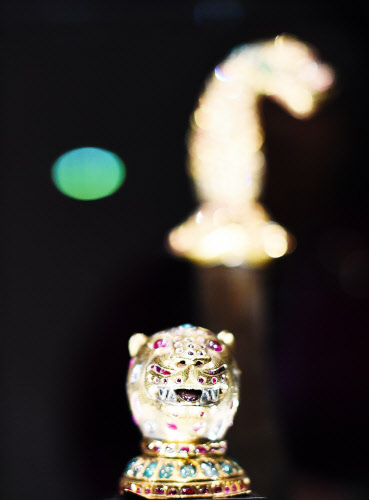
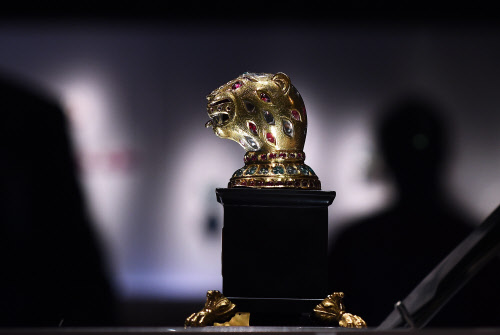
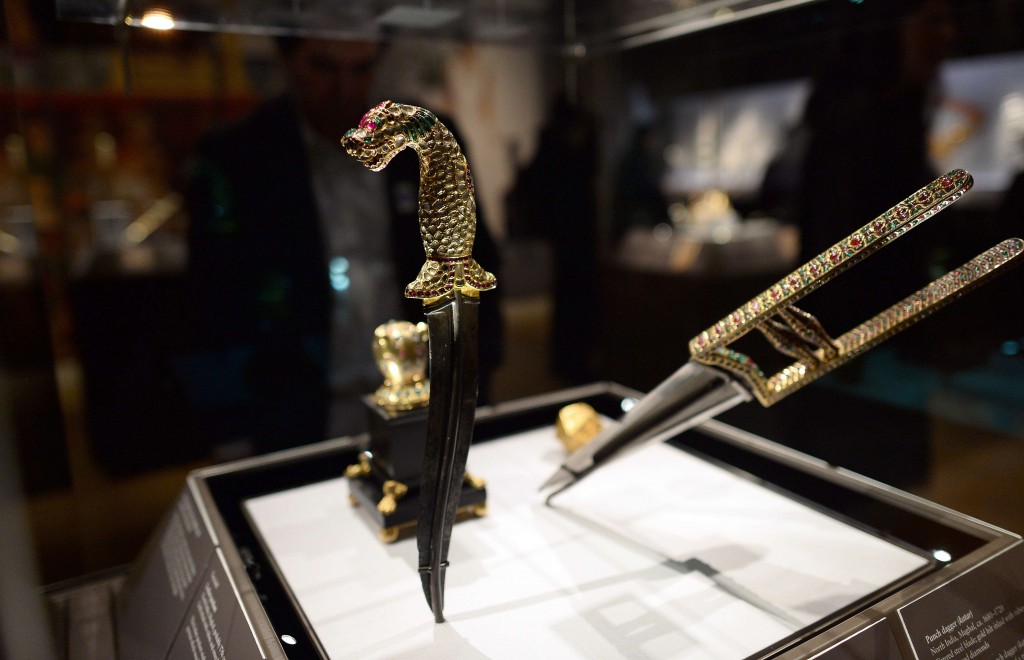
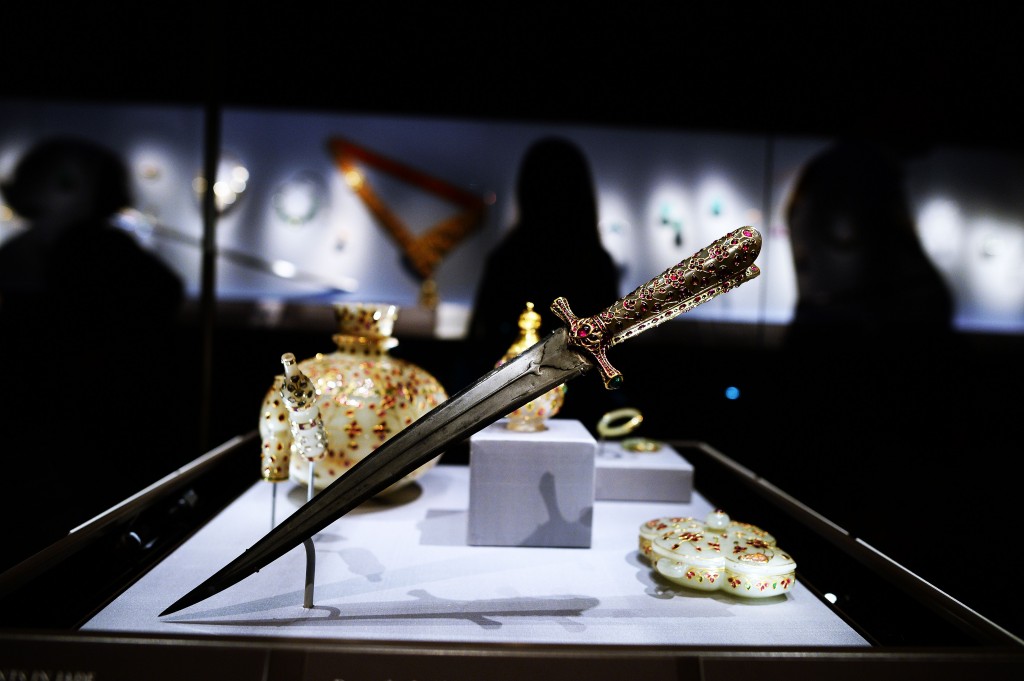
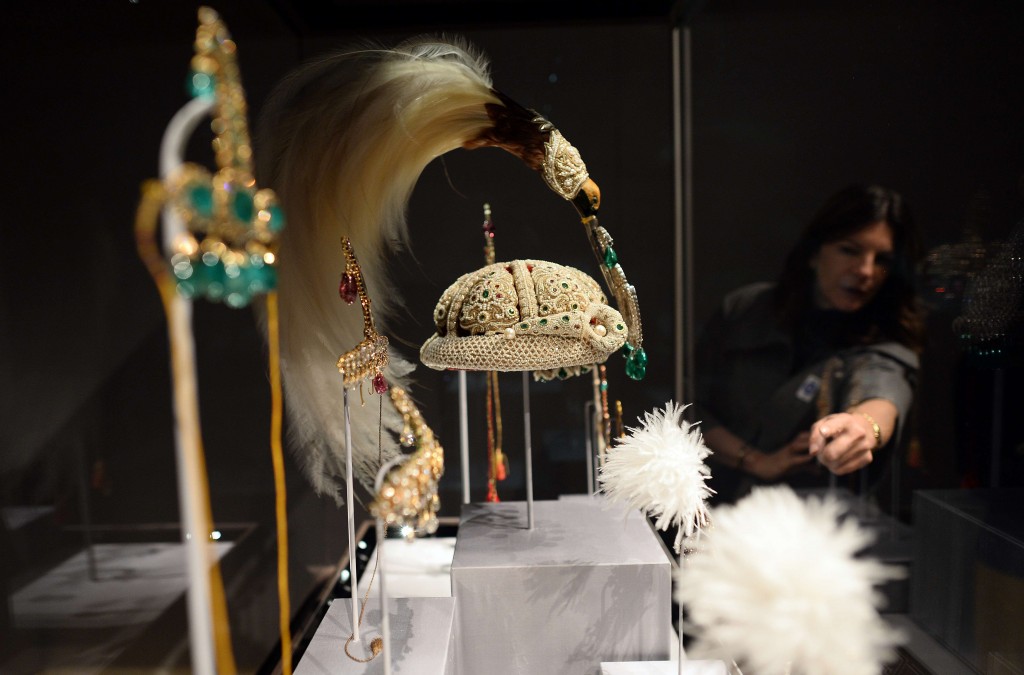
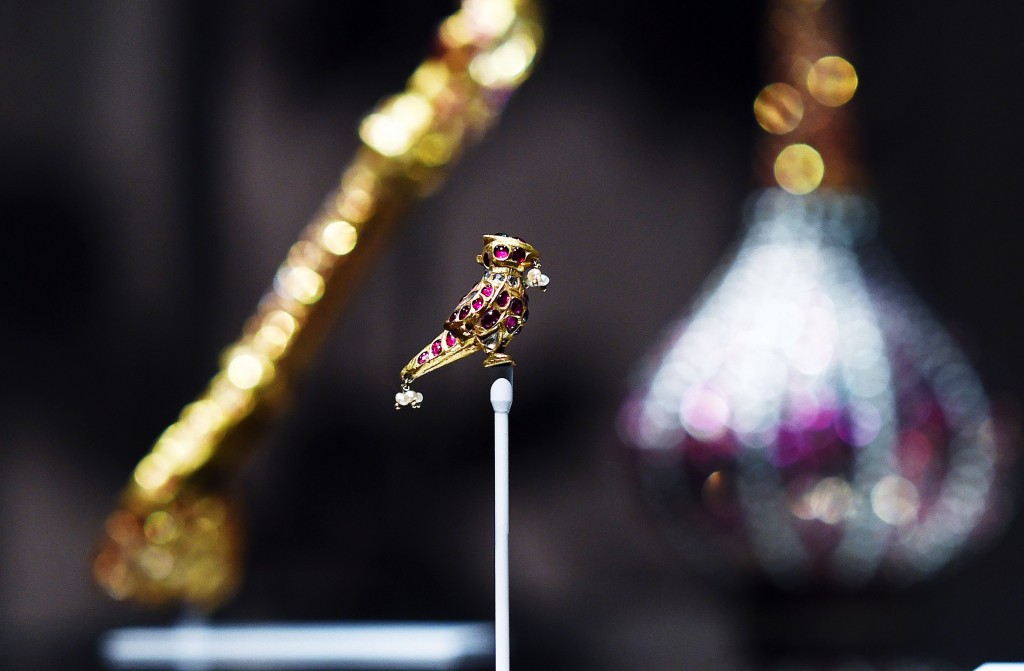
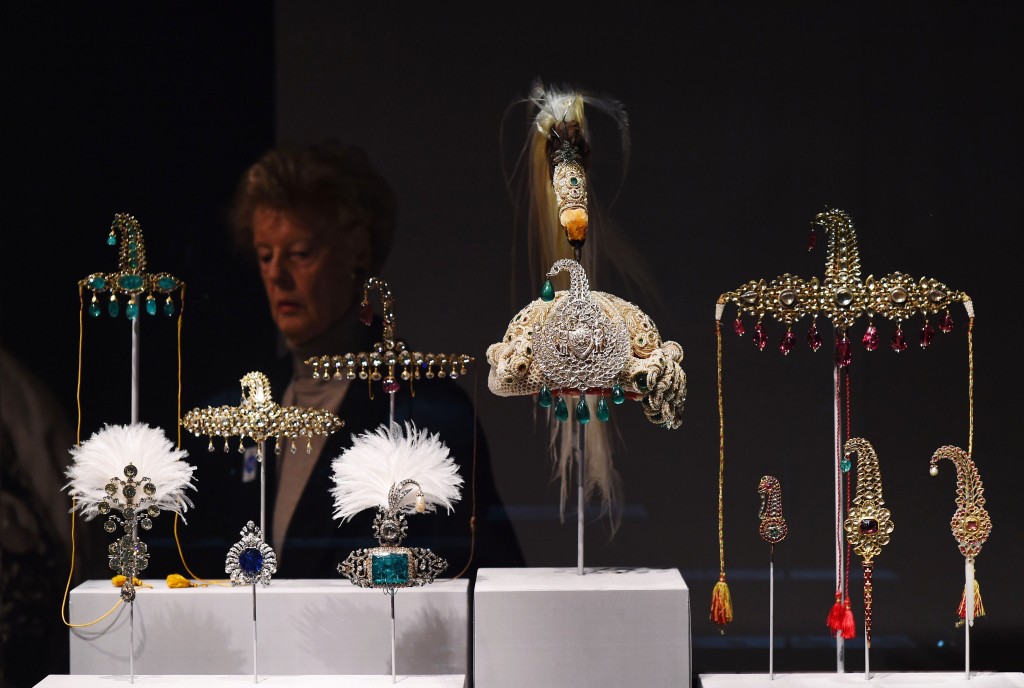
About 60 jeweled items, including a gem-set tiger head finial originally from Tipu Sultan’s throne and a jade dagger owned by Mughal emperors Jahangir and Shah Jahan, has been displayed at an exhibition at the prestigious Metropolitan Museum of Art.

Photo01MPOs17nov2014

The objects are from the private collection formed by Qatar’s Sheikh Hamad bin Abdullah Al-Thani and will be presented at the museum in the exhibition ‘Treasures from India: Jewels from the Al-Thani Collection’ opening October 28 till January 25.

Photo02MPOs17nov2014 

The display includes historical works from the Mughal period in the 17th century and from various courts and centres of the 18th and 19th centuries, including Hyderabad.

Photo03MPOs17nov2014

A highlight of the exhibition, made possible by iconic jewellery designer and manufacturer Cartier, would be a gem-set tiger head finial originally from the throne of Tipu Sultan that incorporated numerous cabochon diamonds, rubies and emeralds in a kundan setting.

Photo04MPOs17nov2014

Among the Mughal works will be a jade dagger — originally owned by two emperors — the hilt was made for Jahangir and it was re-bladed for his son Shah Jahan, who built the Taj Mahal.

Photo05MPOs17nov2014

In the 19th century, the dagger was in the collection Samuel Morse, inventor of the Morse code.

Photo06MPOs17nov2014


Photo07MPOs17nov2014

(Courtesy: PTI and AFP)

DISCLAIMER : Views expressed above are the author’s own.

source: http://www.blogs.timesofindia.indiatimes.com / The Times of India / Home / Team TOI in The Photo Blog / October 28th, 2014

Cracks in Tipu’s fort

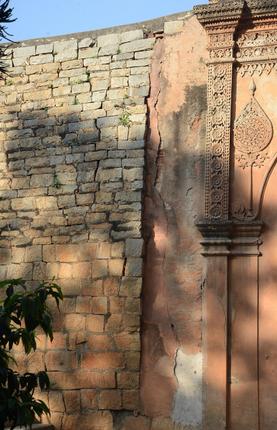
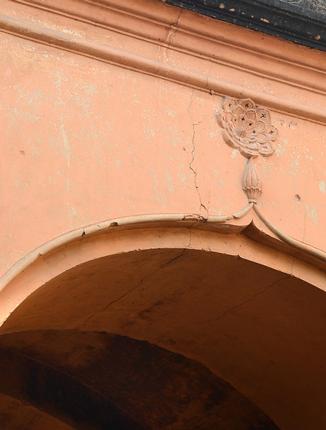
Karnataka : Bengaluru : 15/11/2014 . Crack on the wall of Tipu's fort near K R Market in Bangalore on 15th November 2014 . Photo : Bhagya Prakash K
Karnataka : Bengaluru : 15/11/2014 . Crack on the wall of Tipu’s fort near K R Market in Bangalore on 15th November 2014 . Photo : Bhagya Prakash K

Once the nucleus of an ambitious plan to build a new city – Bengaluru – by the city’s founder Kempe Gowda, Tipu Sultan Fort or Bangalore Fort today is a far cry from its former state of glory. Visitors are now greeted by cracks that have developed in the fort walls above the temple that one sees after entering the protected monument nestled in the busy K.R. Market area.

The cracks, it is learnt, appeared recently although the fort was restored only two years back. The Archaeological Survey of India (ASI) officials blame it on the age of the monument. “Essential steps for its conservation were taken two years ago, but there are no major plans as of now,” an official said.

Karnataka : Bengaluru : 15/11/2014 . Crack on the wall of Tipu's fort near K R Market in Bangalore on 15th November 2014 . Photo : Bhagya Prakash K / The Hindu
Karnataka : Bengaluru : 15/11/2014 . Crack on the wall of Tipu’s fort near K R Market in Bangalore on 15th November 2014 . Photo : Bhagya Prakash K / The Hindu

The ASI will now to analyse the cracks to ascertain their width and depth before taking up conservation work.

Incidentally, the Namma Metro’s underground section, where blasting work had been taken up, passes beneath the fort. However, the ASI official said that the cracks in the fort walls had nothing to do with Namma Metro work.

Meera Iyer, co-convenor, Indian National Trust for Art and Cultural Heritage (INTACH), said there is a need for better maintenance. “There is not much supervision though there are security guards,” she added.

In fact, the ASI has barred access to public to the top portion of the fort, which leads to the dungeon where British prisoners were kept as the space was used for “inappropriate activities” such as gambling.

Ms. Iyer suggested that the fort should be used as public space for cultural activities, like it had been done a couple of times when a music concert and a play about Tipu Sultan were organised. To this proposal, an ASI official said with prior permission from the New Delhi head office of ASI, non-private cultural events can be held.

Historian S.K. Aruni mentioned that restoration of a wall that had collapsed due to heavy rain three years ago may have caused the cracks. “It is natural to see another part develop cracks if restoration work is undertaken,” he explained.

source: http://www.thehindu.com / The Hindu / Home> News> Cities> Bengaluru / by K.C. Deepika / Bengaluru – November 16th, 2014

Tipu Sultan birth anniversary

The 264th birth anniversary celebrations of Tipu Sultan has been jointly organised by the office-bearers of Mysore City (District) Congress Committee and KPCC Minority Department at Mysore City Congress Committee office,  Devaraja Market Building, Sayyaji Rao Road, tomorrow at 11 am.

DCC President C.  Dasegowda will preside.

For details, call Mob: 93417-98906.

source: http://www.starofmysore.com / Star of Mysore / Home>In Brief  / Sunday , November 09th, 2014

How Begum Hazrat Mahal got her share of fame

Lucknow  :

Begum Hazrat Mahal’s wouldn’t have been an inspiring tale of patriotism had it not been for Pandit Jawaharlal Nehru. The Royal Family of Avadh is in possession of testimony written by Begum’s descendant Prince Anjum Qader.

Great grandson of Begum Hazrat Mahal, Kaukab Qader was present at function to honour martyrs of 1857 revolution in Lucknow and was saddened that the contribution of his ancestor was second to none, yet she was ignored. He and his younger brother Anjum decided to meet Pandit Nehru. In Anjum’s own confession written two years after Pandit Nehru’s death, “I prepared a memorandum and, picking up our youngest brother Nayyer from Aligarh Muslim University, we arrived in New Delhi on August 15, 1957.”

Their claim to the 1857 legacy made news and attracted the PM’s attention. Anjum was bowled over by Nehru’s ‘disarming charm’. All praises for the Queen of Oudh, he inquired about her grave so that something to perpetuate her memory there could be done. In response, Anjum said it was government’s duty to search for it and honour the Begum’s final resting place. Jawaharlal Nehru frankly admitted the lapse and promised to do the needful.”

The 10-minute appointment lasted for an hour and ended with the family providing the PM some reference material. Two months later, Indian government informed the family that the Begum’s grave was found in Kathmandu city and Indian Embassy in Nepal was taking care of it.

On May 9, 1958, Indian government announced state recognition for 1857 Freedom Struggle leaders including Begum Hazrat Mahal. UP government too promised a memorial. “Although we are not aware of the happenings behind the scenes, Mr. Nehru’s hand could easily be felt in the changed attitude,” Anjum writes. Soon after, the famous Victoria Park in Lucknow was renamed after the nawab begum who never gave in to British. Months later, Nehru held his public meeting in the same park.

source: http://www.timesofindia.indiatimes.com / The Times of India / Home> City> Lucknow / by Shailvee Sharda, TNN / November 13th, 2014

Birding session marks birth anniversary of Salim Ali

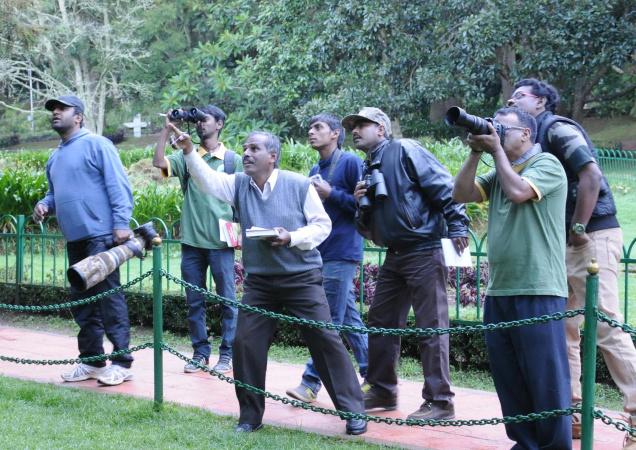
Bird watchers at the Government Botanical Garden in Udhagamandalam on Wednesday. - PHOTO: M. SATHYAMOORTHY / The Hindu
Bird watchers at the Government Botanical Garden in Udhagamandalam on Wednesday. – PHOTO: M. SATHYAMOORTHY / The Hindu

As many as 25 species spotted at Government Botanical Garden

Spread over 55 acres and dotted with hundreds of trees and flower beds apart from many ponds, the Government Botanical Garden here played host to a birding session organised by the Nilgiri Wildlife and Environment Association on Wednesday to commemorate the 118th birth anniversary of Salim Ali, the father of ornithology.

With the undulating venue and the occasion complementing each other, members of the association and students of Wildlife Biology in the Government Arts College returned with the satisfaction of having spotted birds belonging to about 25 species.

Pointing out that the most prized sighting of the day was a Kashmir Fly Catcher, the association’s executive committee member K.Vijay told The Hindu that the migratory bird from the Himalayas, which has been classified as endangered by the International Union for Conservation of Nature, could not be seen here last year.

Pointing out that its presence now signifies the commencement of the migratory season, he said that among the other birds spotted were the Grey Wag Tail, the Black and Grey Fly Catcher, the Common Hawk-Cuckoo, Pond Heron, Great Pit and the Nilgiri Blue Robbin.

Responding to a query, Mr.Vijay said that the botanical garden with its wild fruits and flowers is an ideal bird habitat.

Birding destination

Expressing the view that it can be promoted as a responsible birding destination, he said that the authorities concerned should regulate the activity and restrict it to one or two days a week. Stating that birding is a very effective stress buster, he said that it also encourages people to walk. Volunteers including students of Wildlife Biology should be engaged to create awareness among tourists about the role of birds in protecting the ecology.

source: http://www.thehindu.com / The Hindu / Home> News> Cities> Coimbatore / by D. RadhaKrishnan / Udhagamandalam – November 13th, 2014

Murshidabad to get heritage hotels

Kolkata  :

Murshidabad, 250 kilometres north of Kolkata and the erstwhile capital of undivided Bengal, offers an unparalleled treasure-trove of heritage to tourists, both domestic and international. But, thanks to years of neglect and indifference, the majestic buildings are falling apart and the art, crafts and cuisines of the past are fading into oblivion.

The Murshidabad Heritage Development Society (MHDS), which has launched the revival project for Murshidabad through conservation of buildings, running of museums of family heirlooms, exhibitions of lost arts and crafts, cuisines, handloom and textile, have now planned to initiate the next level of heritage campaigns — converting some of the palatial buildings into heritage hotelsto attract tourists and generate a tourism-centric industry.

MHDS, along with the Archaeological Survey of India (ASI), on the occasion of World Heritage Week will hold a seminar at Palladian in Kolkata on November 22 to create awareness about the rich and vibrant heritage of Bengal encompassing architecture, arts and history and build a learning bridge between our past, present and future.

But, if you think that Murshidabad is only a hub of the Nawabi heritage, you should look beyond. Along with Nawabi culture, a powerful stream of rich traders and bankers, mostly from Rajasthan, had made its mark here. More than 400 years ago, they came, settled, prospered, built mansions, places of worships and even schools and colleges. They were known as ‘Sheherwali’. “We have identified 97 such heritage buildings with fascinating architecture and historical importance,” said Sandip Nowlakha, founder secretary of MHDS.

Murshidabad cuisine in general, or ‘Sheherwali’ cuisine in particular, is one such fascinating aspect of the heritage. “The love for food, especially all things sweet, is an apt description of any ‘Sheherwali’ cuisine. Food features prominently in the community, having evolved passionately through centuries of their existence in Bengal. ‘Sheherwali’ cuisine is possibly the finest vegetarian spread one can find, even in modern times,” said Siddharth Dudhoria, the founder president of MHDS.

The symposium aims at fine-tuning the heritage-tourism model being developed by the MHDS. It would put together experts across the country and bring forth some successful models. “Heritage can be a great revenue earner. Unless we drive this point home, we cannot make younger generation understand the value of our heritage. Several heritage buildings at places like Azimgunj, Ziagunj, Lalgola, Kathgola can be heritage hotels offering finest heritage experiences. Once heritage generates revenue and employment, the care for it would reach the zenith,” said Pradeep Chopra, president of MHDS.

source: http://www.timesofindia.indiatimes.com / The Times of India / Home> City> Kolkata / TNN / November 12th, 2014
National Bird Watching Day attracts large crowds in Ramnagar

Ramnagar (Uttrakhand) :
Nature enthusiasts and students gathered at a barrage on the river Kosi in north India, observing migratory birds on the occasion of National Bird Watching Day, celebrated to mark the 116th birth anniversary of renowned biologist Salim Ali.

Armed with binoculars, notebooks, field guides and cameras, they stood at the edge of the reservoir, making a note of the resident and migratory species present at the site.

The bird watchers said that it was important to educate people about the importance of conserving the country’s diverse fauna.

“We brought a few children who study in a local school, so that they can make themselves aware of bird life. The message for the people of the country and people in the world is that we must keep (these birds) alive, so that we learn about them and protect them,” said a birder, Rohit Sati.

The waters of the reservoir had large numbers of Ruddy Shelducks and cormorants swimming, feeding and sunning themselves.

The reservoir at Ramnagar is close to India’s iconic Jim Corbett National Park, which is home to over 500 species of birds, a sizeable chunk of more than 1200 species found all over the country.

Winter sees many species of birds migrate from north and central Asia and other, colder parts of the world, as the birds breed and live in the more temperate climate of the Indian subcontinent.

The Director of the Rainbow Wildlife Awareness organisation, Rajesh Bhatt said that the reservoir itself played host to over 200 species of resident and migratory birds.

“The important birds here are the Ruddy Shelduck, the Ibisbill, wallcreeper, cormorant, garganey, pintail, Bar-headed Goose, which can be seen easily,” Bhatt said.

Born in 1896, Salim Ali, known as ‘the Bird Man of India’, made his name as one of the first Indian naturalists to conduct systematic surveys on birds. His field guides are used by many birdwatchers when they set out in pursuit of the hobby.

Ali, who died in 1987, is also credited with the creation and recognition of such biodiversity hubs as the Keoladeo National park in Rajasthan and the Silent Valley National park in Kerala. (ANI)

source: http://www.aninews.in / ANI News / Home> National / November 12th, 2014

Salim Ali’s Birth Fete

Kollam : 

Diverse events are on the cards to celebrate the birth anniversary of renowned ornithologist Salim Ali, often observed as the National Bird Watching Day, on November 12.

The events are being organised by the Social Forestry wing of the Dept of Forests and Wildlife and World Wildlife Fund-India.

source: http://www.newindianexpress.com / The New Indian Express / Home> States> Kerala / by Express News Service / November 11th, 2014

Medical tourism explored in first forum

Quality care stepping stone for medical tourism

Dubai:

The Dubai Health Authority (DHA) has rolled out the first phase of the medical tourism pacakges which caters to the domestic market.

UAE residents and those already in the country such as delegates to the conference can avail of discounts of up to 70 per cent in areas such as wellness, weight loss, dentistry, orthopaedics, breast cancer screening and fertility treatments. The domestic packages do not offer visa and hotel stay.

Delegates from around the globe attended the first day of a two-day inaugural health regulation conference in Dubai which looked at major efforts by Dubai to become a medical tourism hub.

Medical tourism packages aimed at tourists will be rolled out soon, marking the second phase. A host of partners such as DHA, Dubai Tourism and Commerce Marketing (DTCM), and members of the private health-care and hospitality sector, among others, are working in tandem to make this possible shortly. These packages will be made available to DTCM-approved tour operators who will be allowed to market these.

According to Dr Layla Marzouqi, acting head of DHA’s health regulation committee, everything has been worked out and the second phase of the medical tourism packages will become a reality in the coming months.

One of the ideas explored was plans by Dubai health authorities to rate hospitals similar to the hotel industry which bases gradings on customer service and satisfaction.

Public-private partnerships are also seen as key to unifying efforts to draw investment to new projects that will attract those interested in medical travel, said experts examining the issues in panels and workshops.

Eisa Al Maidour, DHA Director-General, inaugurated the conference which has drawn more than 1,000 professionals from the field of health regulation and medical tourism and key stakeholders in the public and private health care sector.

Other stakeholders such as pharmaceutical companies and health care providers are also attending.

Enhancing the quality of health care to augment medical tourism was discussed, said the director-general in his inaugural speech.

“Health regulation is fundamental to achieve quality health services and protect patient safety; a strong health regulatory system leads to sustained growth of the health sector which in itself is a catalyst for medical tourism. This conference provides an opportunity for stakeholders to discuss the latest advances as well as share their experiences in the field of health regulation and medical tourism,” he said.

How public private partnerships could promote investment and take medical tourism to the next level is key, he added.

Dr Layla said, “Public private partnerships (PPP) are a very important concept in medical tourism in all the countries that have a robust health sector. In India, for example, it is the private sector which is partnering with the government to strengthen the infrastructure while the government is ensuring quality control, thus complementing each other. In the UAE we are very aware of this as more than 70 per cent of our hospitals are in the private sector. In Dubai, out of the 20 hospitals we have only four are government. Of the 2.700 health-care facilities in the emirate, only 17 are government. We want the private sector to collaborate with us, come forward with investments and take medical tourism to the next level.”

Dr Layla said that DHA’s health regulation department was in the process of creating a grading protocol for hospitals where hospitals would have hotel-like gradings beginning from five-star based on certain criteria.

“The most important criteria is that of quality health care. This will cover the quality of doctors and other health-care professionals at the hospital, the number of surgeries carried out, the incidence of surgical errors and the number of customer complaints. The next criteria was of ambience which will take into account patient care, the presence of a translator, food and nutrition facility to support the needs of the patient, among other things,” she said.

“The focus of medical tourism is good quality and reasonable pricing. The regulation department will work closely with the funding department to determine the prices that graded hospitals can charge and we will make sure we freeze those. If a hospital is found lowering its standards, it will not be able to increase its prices and that will create healthy competition among such facilities,” she said.

Dr Azad Moopen, Chairman and Managing Director of Aster and DM Healthcare, said his group was keen to take up PPP projects and added that the private sector needed to raise the bar on quality health care and make investments in good doctors to attract medical tourists.

His organisation, he said, was ready to work with DHA to bring those standards to the emirates.

“There are three main reasons why people around the world seek medical travel. They are looking for expertise that is available, the cost of the procedure and the turnaround time to carry out the procedure. If we can provide them with high-quality medical care at reasonable costs and within a short period of time, it will attract people from around the world.” He recommended that the private sector needed to focus on further increasing the number of hospitals, specialist medical centres, hospital beds, diagnostic centres and pharmacies, state-of-the-art surgical and trauma care facilities, wellness and cosmetic care centres along with introduction of cutting-edge medical technologies.

Dr Jameel Ahmad, Managing Director of Prime Healthcare Group, felt PPP was a welcome move, benefiting both the public and private sector. “We are ready for this kind of a collaboration as we tie in the concept of hospital and hospitality very well, being situated next to two major hotels and the Dubai airport. We are in a position to offer medical tourism packages in the area of orthopaedics, sports medicine, dentistry and cosmetic surgery,” he said.

source: http://www.gulfnews.com /  Gulf News / Home> UAE> Health / by Suchitra Bajpai Chaudhry, Senior Reporter / October 22nd, 2014

Know the magic of ‘four’ in Charminar

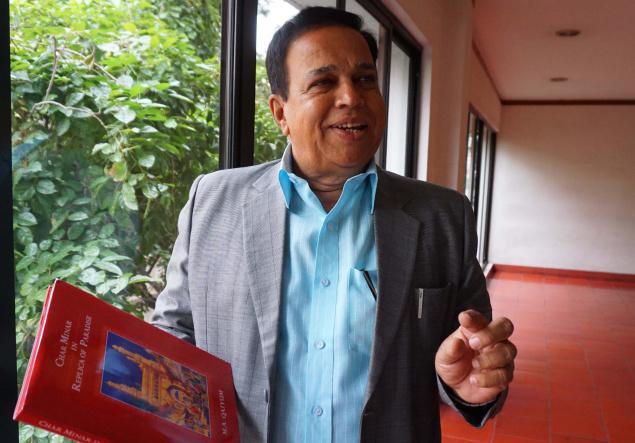
M.A. Qaiyum, historian, with his new book "Charminar in Replica of Paradise" Photo: Satyanarayana Gola / The Hindu
M.A. Qaiyum, historian, with his new book “Charminar in Replica of Paradise” Photo: Satyanarayana Gola / The Hindu

Do you know that great geometric combinations and mathematical reasoning has gone into the construction of Charminar? Visitors are usually astounded by the beauty of the 16 century monument, but not many know how the number ‘char’ (four) and its multiples figure in the designing of the structure. In at least 22 spots the magic of four dazzles.

Of course, the main Minars and arches are four. So are the small arches decorated on each side of the main arch. The number of galleries built in each Minar at different level is four. Again each Minar is divided into four parts. The supporting arches (big petals) to galleries and main dome in each Minar are four. The number of entrance arches built in four directions to enter the Minar is also four. And it was the fourth Qutb Shahi king, Mohd. Quli Qutb Shah, who built the Charminar!

There are also effigies of pigeon, parrot, squirrel and peacock in the delicate stucco work of Charminar. Mind-boggling, isn’t it? If your curiosity is aroused, don’t mind. You can now find all about Charminar, the little known and not so well-known things, in the new book on the monument authored by M.A. Qaiyum, retired deputy director, Department of Archaeology and Museums.

The book titled “Charminar in Replica of Paradise” is, perhaps, the first publication devoted entirely to the legendary Qutb Shahi masterpiece.

“So beautiful, so old and so complete”. One is compelled to repeat this comment of a western traveller after going through the 220-page book. The 190 multi colour photos, illustrations and paintings on real art paper make it a collector’s item.

Mr. Qaiyum traces the 400 years of journey from Qutub Minar to Charminar (1192-1591 AD). He throws light on monuments all over the world which sport Minars to explain the concept of minarets. For instance, there are references with pictures of the first Turkish mosque with four Minars built between 1569-75, the Qaismi Mosque with four minarets built in Iranian architects in Baghdad, the four Minars on the main entrance gate of Emperor Akbar’s mausoleum in Agra. Not just this. The book contains pictures of spiral minaret (Iraq), square minaret (Morocco), cylindrical minaret (Afghanistan).

Mr. Qaiyum discusses in detail the Paradise gardens and their significance in Persian life and culture. A well laid out garden is a symbol of happiness and prosperity. The ‘Char Bagh’ or four garden pattern was introduced in India by the first Mughal king, Babar. This concept was also followed when Charminar was constructed. “In later years the gardens and parks gave way to streets and houses and few know that Hyderabad once had a virtual garden of Paradise”, says Mr. Qaiyum. He can be reached on phone 8978877448.

source: http://www.thehindu.com / The Hindu / Home> News> Cities> Hyderabad / by J.S. Ifthekhar / Hyderabad – October 28th, 2014