Category Archives: Travel & Tourism

The future of the Ajmer dargah

Ajmer, RAJASTHAN :

A view of the dargah of Moinuddin Chishti in Ajmer

Ajmer’s dargah of Moinuddin Chishti is undergoing massive restoration work

The dargah of Moinuddin Chishti, fondly remembered as Khwaja Garib Nawaz, or the benefactor of the poor, in Ajmer, will, in two years’ time see a restoration and an incorporation of modern facilities. Considered a holy place of hope, where people from different denominations believe their prayers will be answered, the dargah was built in the 13th century. The tomb was constructed in wood, later covered with a stone canopy. In 1579, Akbar reconstructed the sanctum sanctorum and built the dome. It was renovated in later years by Jahangir, Shah Jahan, and Jahanara.

The project, a part of the CSR wing of Hindustan Zinc Limited, is headed by architect Surbhi Gupta, a heritage management consultant. At present, the dargah that was organically built with various materials, ranging from brick and marble to sandstone, is seeing restoration and redevelopment of the interiors of the Mehfil Khana, widening of gates, structural consolidation, facade work in the courtyards, cleaning of stone surfaces, and new terracing in lime concrete.

“There is no single language of design or material as the dargah was never planned systematically,” says Surbhi, working on one of the most important pilgrimage sites of South Asia with members of her studio Rasika that specialises in heritage management.

The square structure of the royal darbar (Mehfil Khana),was built in 1888 AD. She says it “has been painted over as a part of living tradition. The idea is to bring out its character as a space meant for performances. The architectural character needs to be revived to bring back the original identity of the structure. The patterned ceiling will be designed on the lines of Kashmiri Khatambandh (a woodwork ceiling with a carved geometric pattern), and Mughal stone inlay flooring,” says Surbhi.

Work is also going on at the famous Shahjahani Gate, built by the Mughal emperor Shahjahan to mark the expansion of the dargah complex beyond the Buland Darwaza.

The project — under the Swacch Bharat Abhiyan — also revolves around sanitation, cleanliness, and waste management within the dargah’s periphery. The work entails providing clean drinking water for pilgrims, building toilets, and kiosk management.

“Every day, seven tonnes of rose petals are wasted. For the flower-waste disposal, a compost waste converter has been installed.” As the Khwaja was known far and wide for his large-heartedness and hospitality, the dargah distributes degh ka khana (food from a cauldron) comprising rice, almonds, cashew nuts, raisins and ghee. “The food is prepared in two big deghs , which were made during Mughal emperor Akbar’s reign. A retort packaging machine (sterile packaging of plastic and foil) has been installed to increase the shelf life of food from three hours to three months.”

Feeding into the Swacch Bharat Abhiyan, Surbhi says that her team is working on the revival of wudu (Islamic ritual purification) points so that pilgrims can wash their hands, face and feet before offering namaz. Right now, the overflow leads to a cesspool of water. “We are also building newer ones that are aesthetic as well as functional,” says Surbhi, who from her days in college at CEPT, Ahmedabad, has been interested in heritage structures.

She chose Chunnamal ki haveli in Old Delhi, as a research project. “On the ground floor were shops, first and second floors were residential spaces. It had five chowks (internal courtyards). And it was built as an organic edifice over many decades during the 18th century,” she says.

Meanwhile, she hopes to look at the parts around the dargah. “The approach street is famous for food, craft and gota work done on the chadar laid at the dargah by devotees. We have proposed a facilitating centre that includes a large shopping space, kiosk, and toilets inside the complex,” she says.

source: http://www.thehindu.com / The Hindu / Home> Society> History & Culture / by Madhur Tankha / Septemeber 03rd, 2019

In Kolkata, history builds bridges between communities

Kolkata, WEST BENGAL :

Sabir Ahamed leading a KYN walk. Photo: Special Arrangement

Neighbourhood walks resume after pandemic to promote communal harmony

While history has turned out to be a source of confrontation in some parts of the country, with the Taj Mahal and the Gyanvapi mosque once again in the news for the wrong reasons, history is building bonds between communities in Kolkata.

A social experiment called ‘Know Your Neighbourhood’ or KYN, which began in 2016, has returned after a pandemic-forced gap of two years, and is once again using history — through neighbourhood walks — to dispel apprehensions and promote communal harmony in West Bengal.

The next walk is in June, and the one held most recently — on April 23, during Ramzan — had led to the 1784-built Niyamatullah Ghat Masjid in north Kolkata. The mosque visit was held under what KYN organisers call Dosti-ki-Iftar, which has Muslims and non-Muslims breaking bread together, and saw about 150 participants, several of them non-Muslim women who were allowed into its premises for the first time.

“The idea came to me in 2015, when communal violence was taking place in parts of West Bengal — in Barasat, in Naihati. Rumours were being spread and there were cases of lynching. That’s when we realised that there was inadequate information and adequate misinformation about Muslims. KYN is an attempt to bridge the gap between communities using dialogue as a tool,” Sabir Ahamed, national research coordinator with the Pratichi Trust, and the convenor of KYN, told The Hindu.

“Neighbourhood walks in an important tool of dialogue because even though we share the same geography and live in the same city, we do not go to each other’s neighbourhoods or bother to find out about each other’s customs. Hatred breeds in this atmosphere of ignorance. Today, KYN has become a popular campaign, aiming to tackle religious prejudices and dismantle stereotypes,” Mr. Ahamed said.

The initiative, according to him, has succeeded in breaking new ground. During one of the walks, non-Muslim women climbed to the top of a minaret of the famous Nakhoda mosque for a majestic view of old Kolkata. Participants also discovered that water from the Hooghly river is used for ablutions before the offering of prayers at the mosque.

“Many young people admitted — after our events — that they harboured hatred because of misinformation and that they had changed their minds. A young lady told us that she never got into a cab if she found the driver to be a Muslim. Many students often refuse field surveys in Kidderpore (a locality with a large population of Muslims) because they fear something might happen to them, many believe that all you see in Muslim neighbourhoods is green flags — we need these ideas to change,” Mr. Ahamed said.

“That’s why we would like to work with colleges and univarsities to bring about a lasting change in the way we know each other. We are working with Presidency University and other colleges,” he said.

Samata Biswas, who teaches English at the Sanskrit College and University, said of her experience at recent walks in Kidderpore and in Taltala: “They reminded us of the confluence of faiths, cultures and people that has created modern Calcutta. From the Tamil church at Kidderpore to the historic Calcutta Madrassa which is older than both Presidency and my own institution — this aspect of Bengal’s history is often forgotten, the one that has Anglo-Indians, Jews, Parsis, Muslims, Tamils and Afghans living and working together in Calcutta.”

She added: “The trip to Baker Hostel, where Sheikh Mujibur Rahman was a resident, reminded me of the shared history of the two Bengals and Calcutta’s contribution to Bangladesh’s Liberation War. These are stories we seldom hear — stories that remind us that Calcutta is not merely for and by the Bengali bhadralok (elite), and that it has accommodated multiple cultures, institutions, cuisines and religious beliefs.”

source: http://www.thehindu.com / The Hindu / Home> News> Cities> Kolkata / by Bishwanath Ghosh / Kolkata – May 14th, 2022

Belur temple fest begins with recital of Quran

Belur (Hassan District), KARNATAKA :

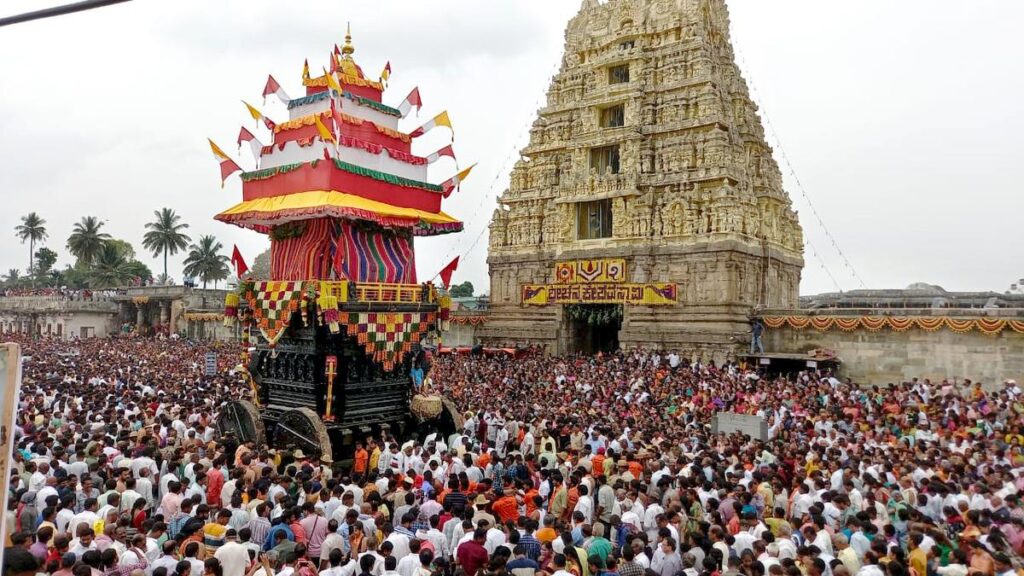
Hundreds of devotees attend the rathotsava (chariot or car festival) at the historic Chennakeshava temple in Belur, Hassan district of Karnataka on April 13, 2022. | Photo Credit: Prakash Hassan

Moulvi reads excerpts from the Quran (Koran) to mark the beginning of the rathotsava (chariot or car festival) at the historic Chennakeshava temple in Belur

“I have been participating in the festival for the last 50 years,” says Syed Sajjad Khaji of Dodda Meduru, who read out excerpts from the Quran (Koran) to mark the beginning of the rathotsava (chariot or car festival) at the historic Chennakeshava temple in Belur on April 13.

His forefathers had read out excerpts from the Quran (Koran) during the festival in the past, and his children would continue the tradition in future, he says. “Whether you read Bible, Bhagvad Gita or the Koran, all texts spread the same message,” he adds, philosophically.

While Karnataka has seen several instances of Muslims being barred from putting up shops during temple festivals, the rathotsava at the 900-year-old Chennakeshava temple struck a different note by staying with the syncretic tradition. The festival began only after the moulvi recited the Koran, a custom whose origins are not clearly known in the temple built by Hoysala rulers.

Video | Moulvi recites Quran to mark beginning of Chennakeshava temple festival in Belur

https://www.thehindu.com/news/national/karnataka/moulvi-recites-quran-to-mark-beginning-of-chennakeshava-temple-festival-in-belur/article65321932.ece

K. Vidyullatha, Executive Officer of the temple, said that the custom is mentioned in the temple manual, which dates back to 1932. “We are following the customs mentioned in the manual. I am told this tradition has been followed for centuries. According to the chief priest, the custom began with the objective of involving people of all religions in the festival,” the officer said.

The temple regularly gives foodgrains to the families that play a role in the festival, as per the manual.

The festival saw around 15 Muslim shopkeepers putting up stalls in the temple premises, with civil society groups putting pressure on the authorities not to exclude them.

Ahead of the festival, members of Vishwa Hindu Parishad and Bajrang Dal had submitted a memorandum to the taluk administration seeking a ban on Muslim traders during the festival. They demanded that no Muslim be allowed to put up stalls during the festival, like in temples in Shivamogga and Sirsi. They succeeded in closing a shop run by a Muslim in a building that belongs to the temple. The Executive Officer ordered closure of the shop citing the Karnataka Hindu Religious Institutions and Charitable Endowments Act, 2002, which restricts allotment of space in Hindu religious institutions to non-Hindus.

Later, members of Dalit Sangharsha Samiti, Communist Part of India (Marxist), Raitha Sangha and other progressive organisations organised processions in Hassan and Belur to put pressure on the district administration not to comply with the demands of the Hindutva organisations. They wanted the district administration to facilitate the temple festival in a harmonious manner and participation of every community in the event. Elected representatives of the district too stressed on the need for participation of all communities., resulting in permission for all entrepreneurs to set up stalls during the festival.

source: http://www.thehindu.com / The Hindu / Home> News> National> Karnataka / by The Hindu Bureau / Hassan, April 14th, 2022

There’s a museum in the corridors of Jehan Numa Palace

Bhopal, MADHYA PRADESH :

The New Museum

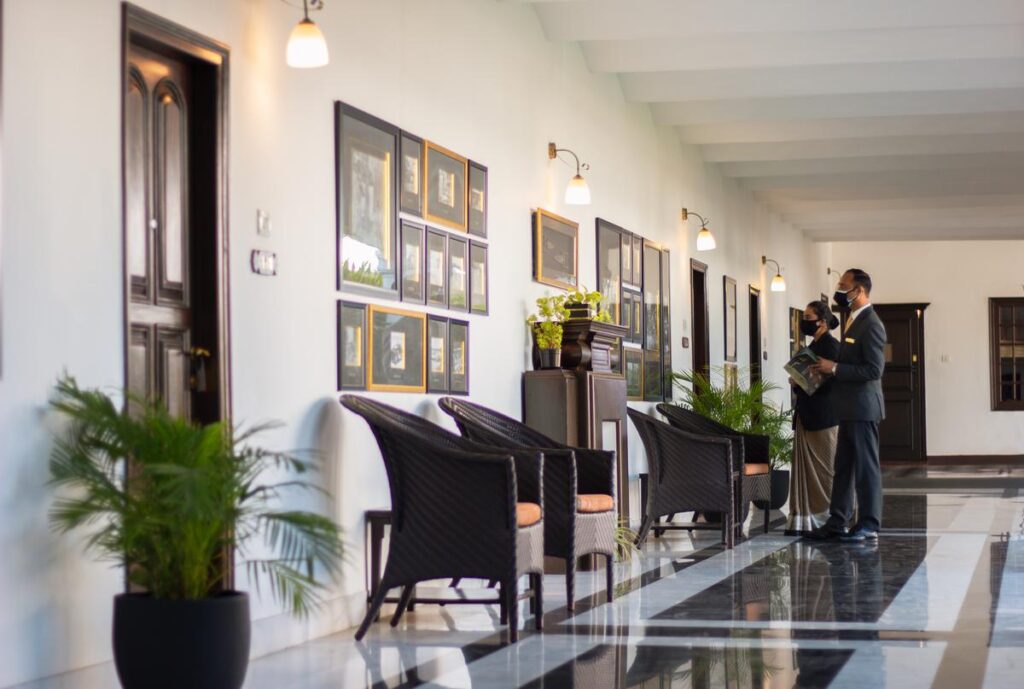
Tall marble pillars frame photos, automobiles and more, as the Bhopal royals open up their past at the Jehan Numa Palace Hotel

Over the years, the Jehan Numa Palace in Bhopal — built on the slopes of the Shyamla Hills in 1890 by General Obaidullah Khan, commander-in-chief of the Bhopal State Force, and the second son of Nawab Sultan Jehan Begum — has worn many garbs.

The white marble edifice, which melds British Colonial, Italian Renaissance and Classical Greek architectural styles with facets of Art Deco, was constructed as the general’s office, and then used as his sons’ secretariat. After Independence, it became a government hostel, and later, the offices of the Geological Survey of India.

In 1983, after restoring the five-acre property, the general’s grandsons reopened it as a heritage hotel — its colonnaded corridors showcasing sepia-toned portraits, and the interiors housing rooms, four restaurants, two bars and a spa. Now, the pandemic has given it another facet: a museum, which came together almost like a “jigsaw puzzle”, says Faiz Rashid, director of the Jehan Numa Group of Hotels and a member of the Bhopal royal family.

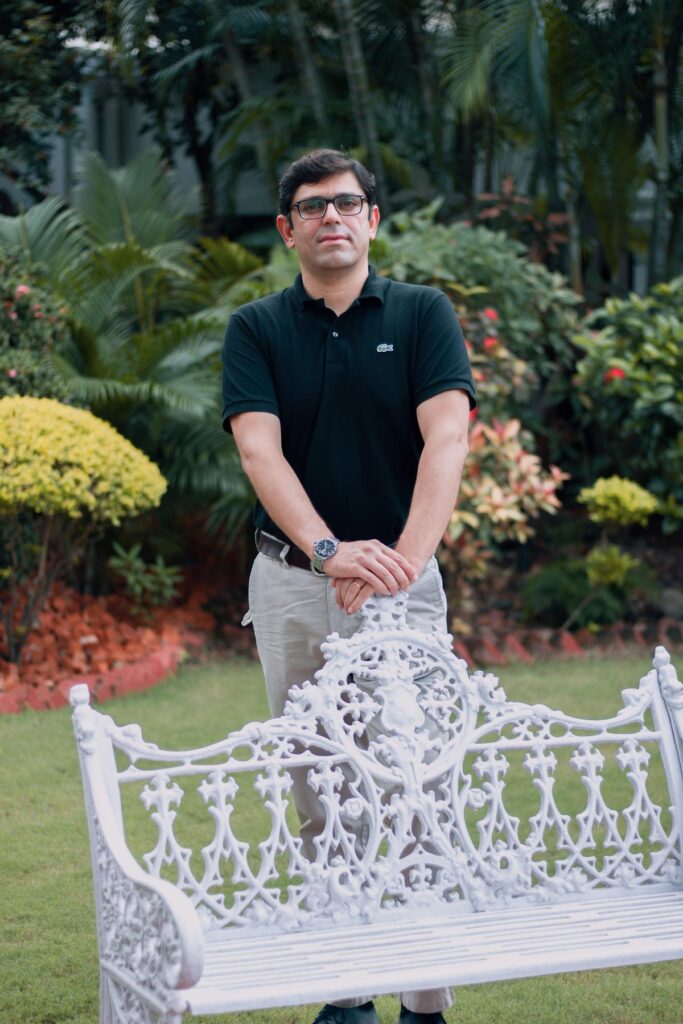
Faiz Rashid

A colonnaded showcase

“[Over the last 20-odd months] we tried to come up with innovative ways to nurture hospitality. Because of the time on hand, we started looking at family archives and thought why not share the legacy with the world,” says Rashid. He tells me about putting together memorabilia: artefacts, attire, “lovely letters in Urdu” written to his great grandfather, documents, “invoices of the cars the royal family bought [like a Ford Phantom and a customised Bentley]” — all of which are now on show at the hotel.

“General Obaidullah Khan accompanied his mother, the last begum, on her foreign trips. He was inspired by different architectural styles, and the display is a pictorial history of the hotel’s evolution from the time it was built in the 19th century,” he says.

The corridors along the central courtyard, with its famed 100-year-old mango tree, were chosen as the ideal backdrop for the display. I take a virtual tour of the elegantly-framed archives, arranged in clusters on the walls of the chequered black-and-white marble and granite corridors, zooming into the photographs, and taking in glimpses of the life and times of a pre-Independence royalty that was progressive and involved, wealthy but not flamboyant, stylish but never garish.

From letters to thoroughbreds

The family took the help of Joe Alvarez, the well-known jazz singer who has written a coffee-table book on Bhopal, to curate the memorabilia.

“We divided them into nine subjects, starting with the four begums, the last nawab, dignitary visits, nawabi sports and the outdoors, and such,” says Alvarez, who has also generated a voice-over, and added a QR code to enable a Walk-In Museum audio guide.

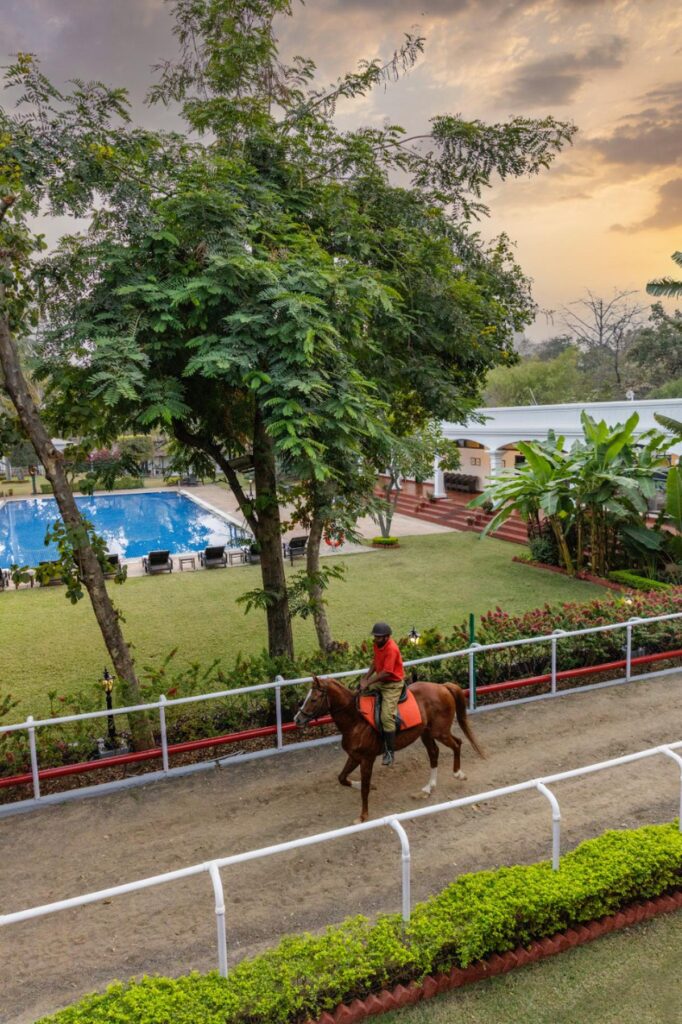
The track at the Jehan Numa Palace Hotel

He expounds about the images of a thriving stud farm, something that continues till date (a trotting track set up when the hotel opened gives visitors a peek into the royal family’s passion for breeding thoroughbreds), of custom-built automobiles, branded guns and weapons, and official visits by dignitaries.

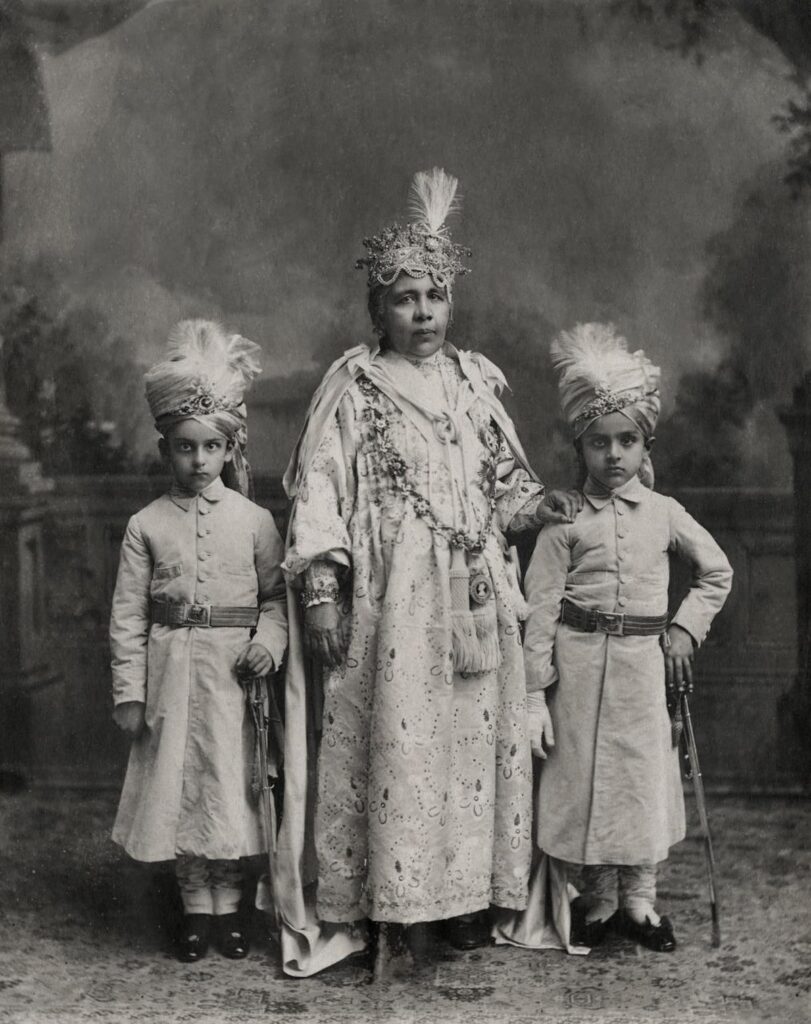
The begum’s photo from the archives

“The nawab begums of Bhopal were very dynamic and built the city differently from male rulers. They focussed on all areas, from education to women’s empowerment. We realised so much of their contribution — like building hospitals, enhancing the railways, opening schools — while putting this together,” shares Rashid, adding that, in 1889, Shah Jehan Begum funded the construction of Britain’s first purpose-built mosque at Woking. The collection is still evolving as more memorabilia makes its way to them slowly, from the extended family. A plan to restore and display the wedding dresses of the begums is also in the pipeline.

The museum is open to all. Rooms at the hotel are from ₹8,000 onwards. Details: jehannuma.com

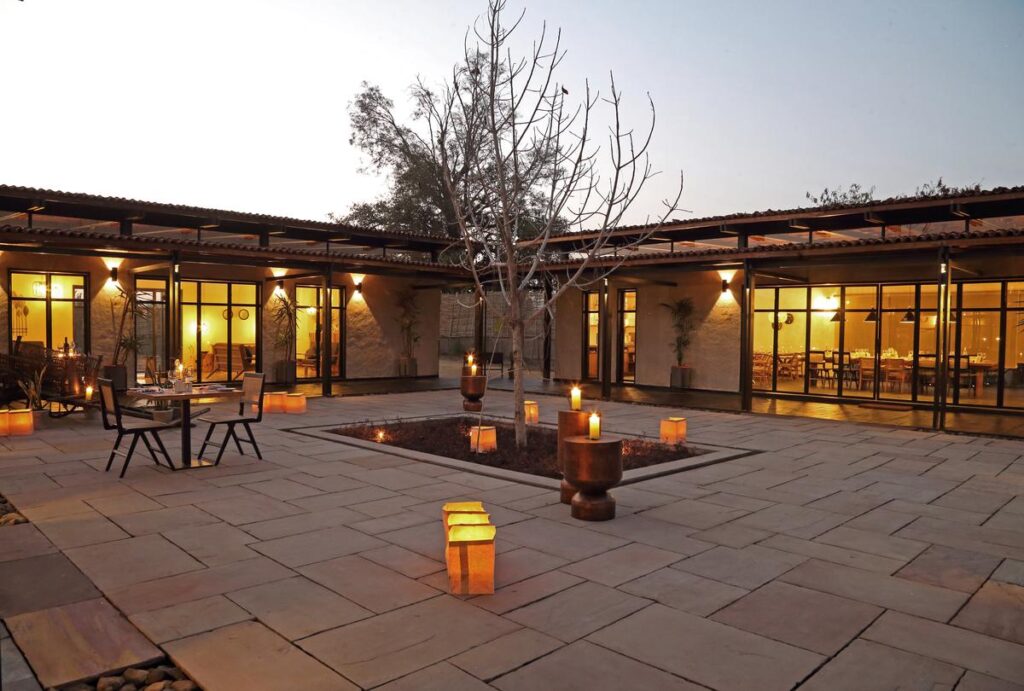
Bori Safari Lodge

Spot the tiger at Bori Safari Lodge

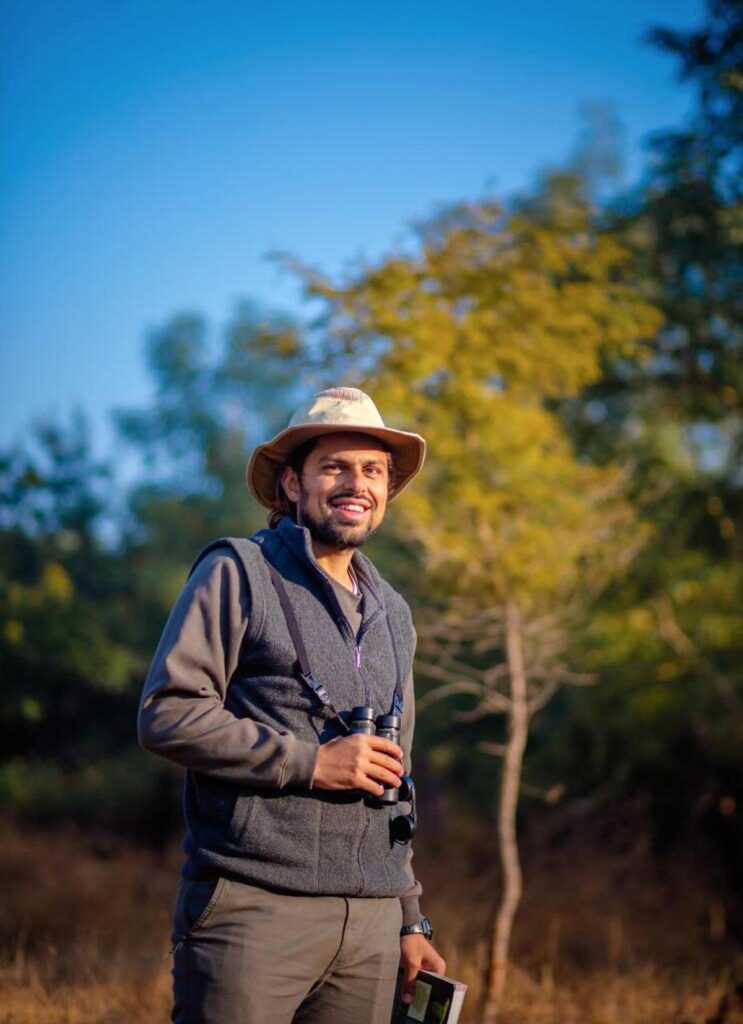
Another post-pandemic hospitality initiative is Bori Safari Lodge, an eight-room wildlife camp started by Rashid’s brother, Aly, in the Satpura Forest. “When we started the Reni Pani Jungle Lodge [a two-and-a-half hour drive away] in 2009, it was about experiencing the diversity of the forest, with river safaris, walking trails and birding. With the Bori, the tiger comes centre stage,” says the trained naturalist, who has partnered with the state tourism department.

Aly is a trained naturalist

A tiger relocation programme successfully initiated four years ago has revitalised the habitat and the local population. “The tigers have not only flourished, but have actively begun mating.” Aly — who has great memories of spending his childhood in the forests — also leads expeditions to spot snow leopards in Ladakh and seek out the red panda in the Northeast. “This [project] is a means to conserve the landscape. The alternate income for the locals will recharge the community, support conservation, and will help wildlife be seen as an asset.”

From ₹25,000 onwards (all inclusive)

source: http://www.thehindu.com / The Hindu / Home> Entertainment> Art> Weekend Travel Special 2022 / by Priyadershini S / April 15th, 2022

Immortal grace

DELHI :

The Thin Edge | Revisiting the restored, resplendent Humayun’s tomb

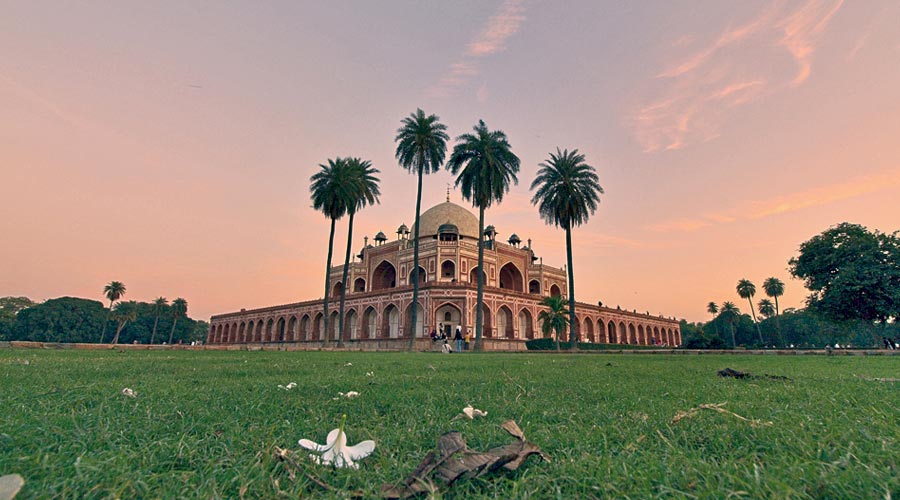
Humayun’s tomb / File picture

I have visited Humayun’s tomb several times, seeing it transform from its earlier decrepitude to the beautiful, sensitively restored monument-space it is today.

The tomb was one of my favourite old buildings even before the restoration — something about its clean lines, its proportions that manage to effortlessly mix intimacy with graceful grandeur, the restrained colour scheme of red sandstone interrupted by sparely deployed white marble, all of it has always nourished me more than the overwhelming, in-your-face beauty of many other Indian mausoleums and temples.

With the restoration now complete, the tomb itself and the ancillary buildings have also been given a context of green, well-tended gardens, which allow the other venerable monuments on the site — the trees and foliage — their own presence, their own visual Kabuki with the man-made masonry.

Recently, I went to see the tomb again, but this time with architect friends who were visiting the city. Like me, this couple had also visited earlier but they had not seen the finished restoration. Walking around the space with two pairs of somewhat differently-trained eyes was a lesson. Things I’d never noticed were pointed out: the exact alignment between the succeeding gateways; the ‘reveal’ as you cross the final threshold and can actually see the whole structure; and how different it was from what happens at, say, the Taj Mahal.

One of the friends spoke about how the white dome interacts with the sky, glowing sharply in the chiaroscuro of dawn and dusk, almost disappearing in muted top light, coming back into round vividity against dark clouds. Examined minutely were the almost invisible rain channels worked into the stone as well as the slope of the platform to coax away the monsoon water, none of which I’d noticed before. Explained was the way the sandstone slabs were placed with minimum mortar and the fact that they fronted a stuffing of lime and stone rubble.

To the east of the tomb stretched a tumult of trees, almost hiding the nearby gurdwara, with the railway line faint in the distance, while the north side had the view of the attendant water aqueducts and the lines of the water channels that must have inspired Louis Kahn and Luis Barragán in their design of the Salk Institute in California.  

The spring morning light changed around us as groups of youngsters pranced up and down the stairs and sashayed across the flagstone, moving in unspoken group-selfie choreography, freezing from time to time without tangible signal into Instagram-mudras. Inside the shadowy central chamber, boisterous groups of young men yelled and blew klaxon whistles, bathing in the amazing acoustics before guards chased them away. On the grounds, on the benches under the quartet of pilkhan trees, a couple sat in chaste-canoodle mode while schoolgirls prowled around politely, looking for victims to interview for their class assignment. The austere beauty of the building, the lush, basant authority of the trees and the celebratory clusters of young people together made a whole that transcended architecture, arbour and holiday ardour.    

The friends I accompanied are part of a loose movement of Indian architects drawing notice and accolades because of their alternative approach to building for our times.

This approach is defined by several things; a deep study of local grammar and traditions that inform any new design; a rigorous examination of the environmental impact of any new building, with innovative solutions to cooling and energy consumption becoming central to a project from the very beginning of conceptualization; an aim for genuine, non-grandiose beauty in the final design, all of this entirely subservient to who will use the building and how they will experience it in daily use. This movement is not confined just to India or to the subcontinent. A few days after my friends’ visit, came the welcome news that Diébédo Francis Kéré of Burkina Faso and Germany had won the Pritzker Prize, the most prestigious international recognition for architectural work.

This is not the place to detail Kéré’s work but what is important to note is that the architect has consistently built across some of the most deprived areas of Africa, working with local people, using the simplest local materials in the most inventive ways to produce buildings and projects which pair stunning design with amazing utility. Thus, a local school building may be made from compacted clay, with its ceiling and walls designed to cool the classrooms without any air-conditioning or glass cladding; a lighting scheme in another building may involve embedding into a ceiling traditional pots sliced into half; a Parliament building for Benin may echo a palaver tree under which people traditionally gather for meetings, while a proposed Parliament for Burkina Faso may be in the form of a ziggurat where the assembly is underground below a terraced public park, where the people are literally above the legislators. “I want people to take ownership over the parliament building,” Kéré has said and in that one sentence perhaps lies the core of his philosophy.

A few minutes drive from Humayun’s tomb brings you to the tin-sheet canyons that enclose the biggest heist of urban commons in the history of independent India. Here, at the Central Vista, the most pompously authoritarian, most ecologically damaging, most backward-looking glass and concrete office blocks, the prime minister’s mansion and the fortress-like new Parliament building are being constructed for a huge amount of public money at a time of grim scarcity. This area, for decades one of the few places where even the poorest of the city could walk in greenery, will now become a high-security showpiece for the bloated egos of those in power. In a city full of beautiful mausoleums, these future tombs for those ruling over us today will not stand any test or comparison. But meanwhile, whether in Kutch or Koudougou, in Dakar or Dhaka, human ingenuity, generosity and aesthetic grace will continue to produce architecture that re-affirms life and joy.

source: http://www.telegraphindia.com / The Telegraph Online / by Ruchir Joshi / March 22nd, 2022

Amin Jaffer’s new chapter in Paris

Kigali, RWANDA / Paris, FRANCE :

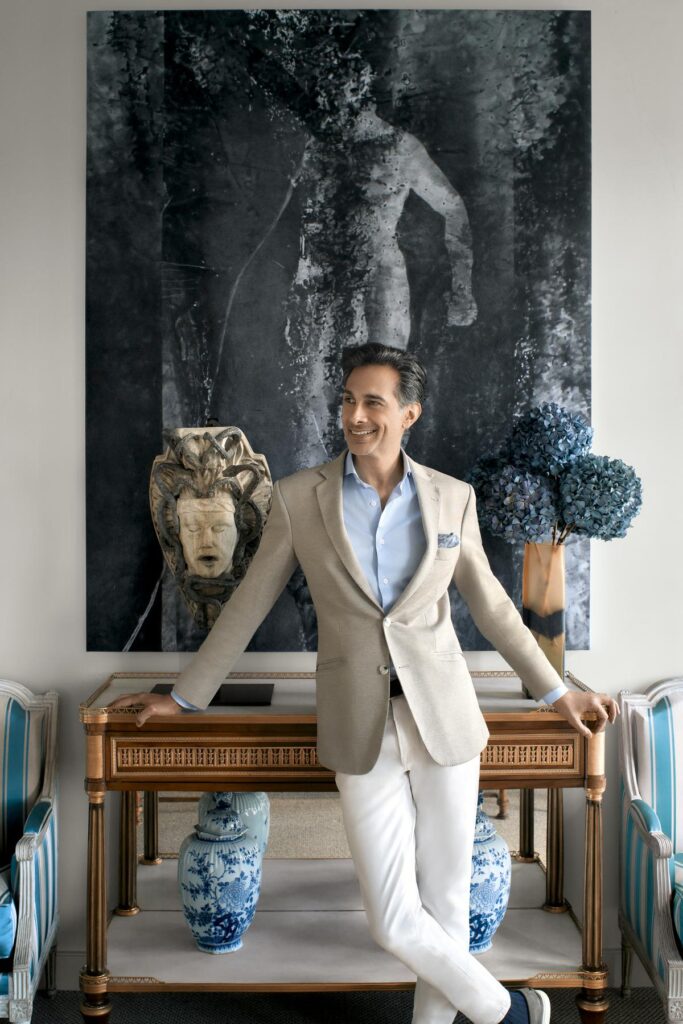
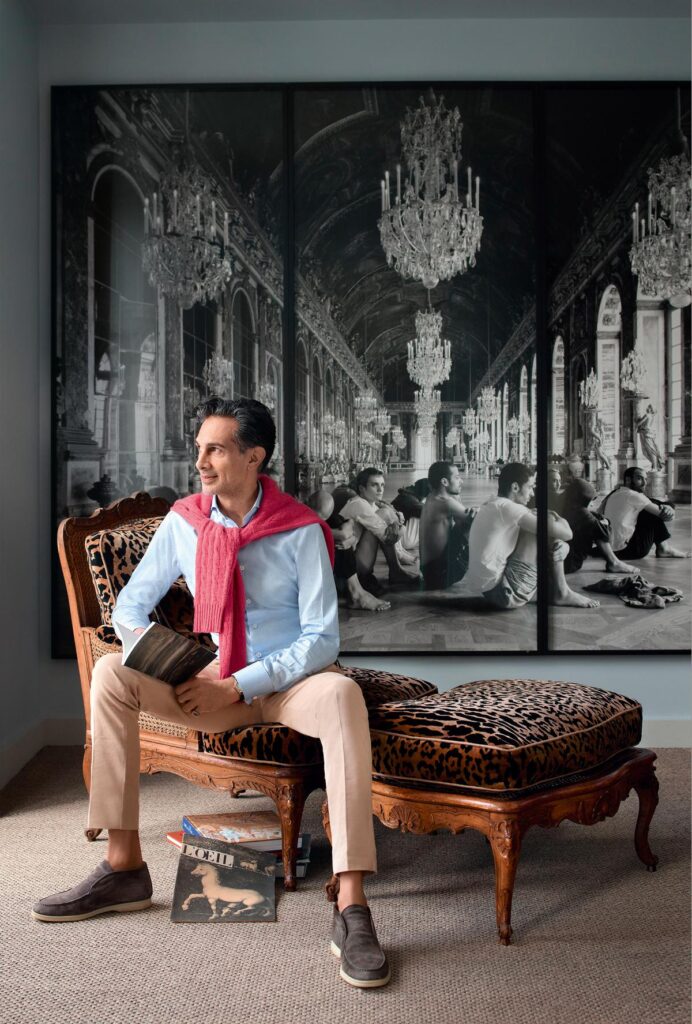
Amin Jaffer in his library dining room, standing in front of Yuntao Zhang’s painting of Cellini’s Medusa | Photo Credit: Architectural Digest / Antonio Martinelli

The Rwanda-born Indian curator, who has made the French capital his home, on the Al Thani collection’s first museum, his new book, and the importance of private collections

Writer, curator, collaborator, colonial furniture specialist: Amin Jaffer wears his titles effortlessly. And in the last couple of years, he’s added another one — that of Paris denizen — after he uprooted his English life of 25 years to move into a hôtel particulier (a grand townhouse) on Quai Voltaire along the Seine.

The move made sense. An “éminence grise of the international art world”, as an Architectural Digest article calls him (Jaffer is on the cover of the magazine’s 10th anniversary issue this month), he was “spending a lot of time in Venice, and the commute to London was becoming taxing”. But more importantly, his newest project, a private museum for the Al Thani Collection, is in the city, at Place de la Concorde’s Hôtel de la Marine.

“Sheikh Hamad bin Abdullah Al Thani was looking for a more permanent place to house the treasures of his collection,” says Jaffer, recalling how at the time, the French government body Centre des Monuments Nationaux was thinking of converting the former storage space for royal tapestries at the Hôtel — a four-year, €132 million restoration project. “They proposed that the Al Thani Collection could exhibit its masterpieces there.” With a 20-year agreement in place, acquiring a Parisian pin code thus gave him a twofold advantage, both with work and keeping up his continental way of life. (The last few weeks alone have seen Jaffer travel to Seville and Carmona in Spain and Parma and Venice in Italy.)

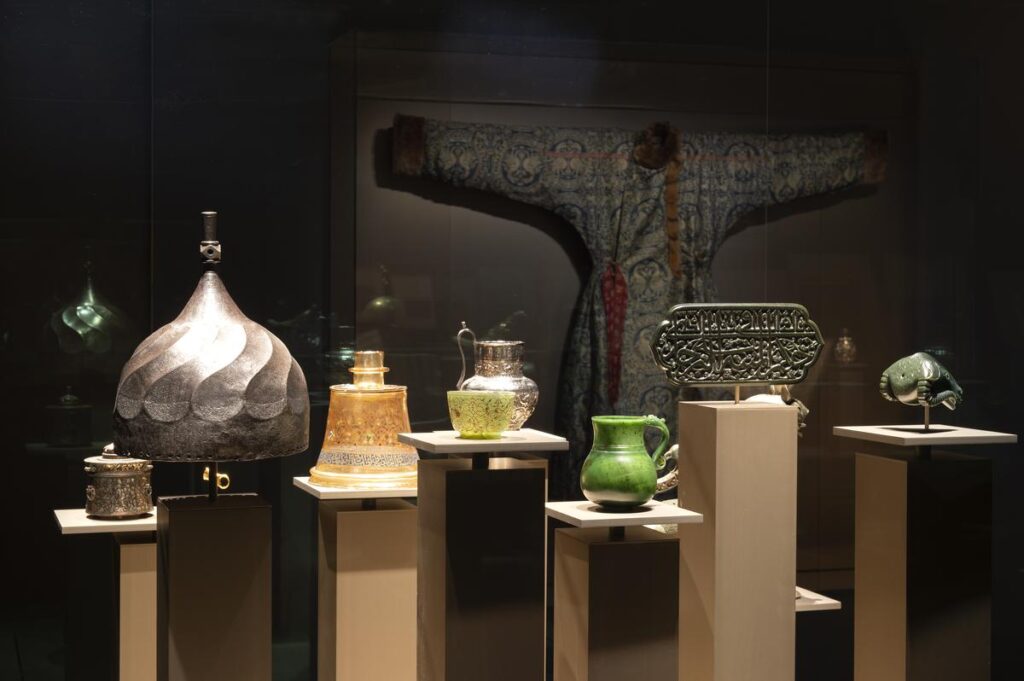
The Al Thani Collection at Hôtel de la Marine | Photo Credit: Marc Domage

Polaroid and a passion for art

The view of the Louvre from his third floor flat definitely tipped the scales in its favour. (The photos he shares on his Instagram, @aminjaffer_curator, are proof enough.) And the fact that Vivant Denon, the first director of the museum, had once been a resident in the 17th century building. Moreover, as he explains in an email that he squeezes in between flights, he’s always had a special connection with the Louvre. As a six-year-old, he had visited the museum with his mum, spending an entire day exploring its rooms, a Polaroid camera clutched tightly in his hands. He still has the photographs. “The adrenalin rush of seeing a great work of art inspired me then — as it does now,” he says, adding how by the time he turned 10 he had visited most of the major museums in Europe. “Other seminal moments include an early visit to the Musée des Beaux-Arts in Brussels and a trip to Rome to see the Vatican collections.”

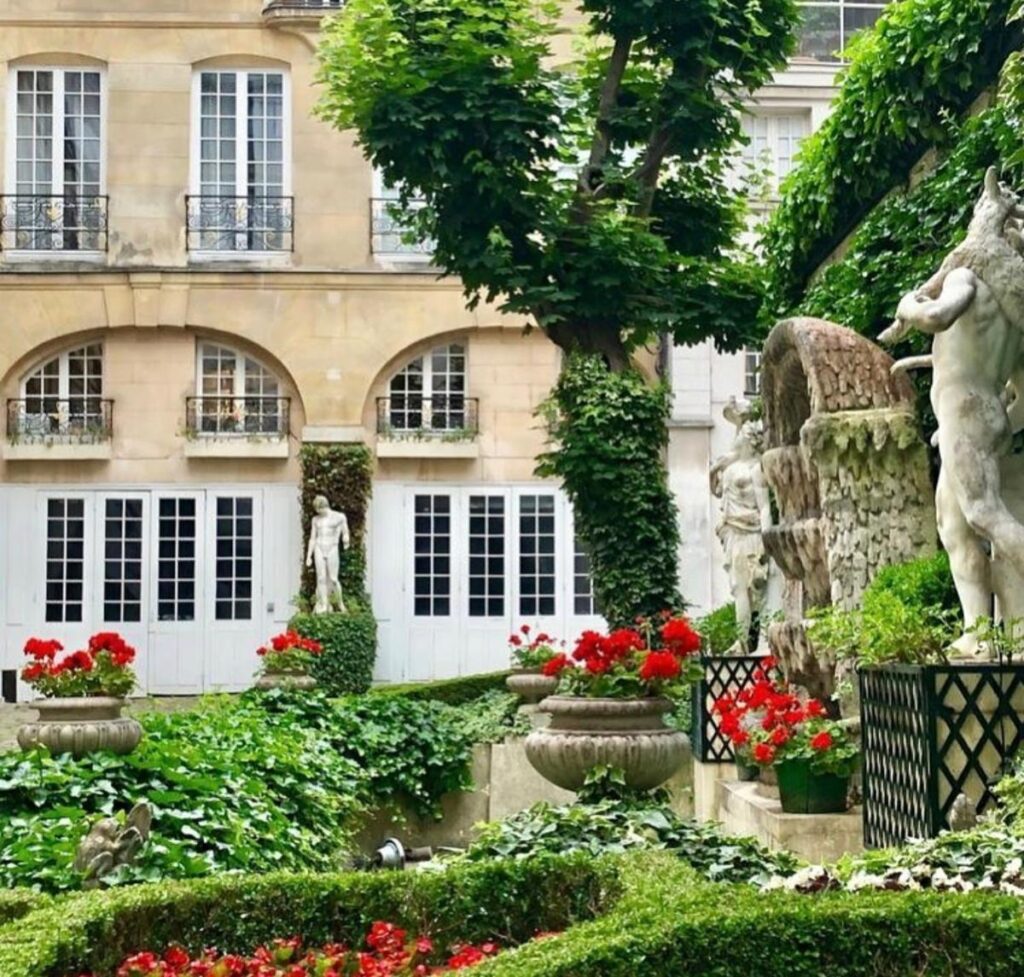
The courtyard at L’Hôtel de Beuvron with its Rococo fountain | Photo Credit: @aminjaffer_curato

But he nearly missed his calling. Born into an Indian business family in Kigali, Rwanda, a career in art wasn’t an option growing up. His subjects in university were economics and commerce! That is, until he chose the history of French opera and French Renaissance châteaux as his first year electives and reignited his love affair with the arts.

Today, Jaffer, who is in his early 50s, is not only the chief curator of the Al Thani Collection, but also works with leading museums around the world in a “curatorial role, focussed on public projects, exhibition programming and producing catalogues”. His resume includes long stints at the V&A Museum in London as curator and as the International Director of Asian Art at Christie’s.

Amin Jaffer in his home office, sitting in front of a triptych by Reza Aramesh | Photo Credit: Architectural Digest / Antonio Martinelli

The perks of a private collection

“Born in central Africa, educated in Europe and America, I do feel something of a hybrid and I am drawn by works of art that are born from the encounter of two — or more — civilisations,” says Jaffer, who has recently “been fascinated by the fusion of Spanish and Amerindian culture, particularly in the domain of painting”. This ties in beautifully with the Al Thani Collection and its catalogue of more than 5,000 works of art drawn from across world civilisations.

It makes us wonder, how important are such private collections in the art world? “Pioneer collectors have vision and resources that compliment the public art offering,” he says, explaining how such collections play a significant role in the programming of national institutions. “Recent examples in Paris [besides the Al Thani Collection] includes the Bourse de Commerce and the Fondation Louis Vuitton. In India, Kiran Nadar has developed a programme of exhibitions around her collection that makes an essential contribution to the art scene,” adds the Indian art expert who played a key part in launching Christie’s first auction in Mumbai in 2013.

At Hôtel de la Marine | Photo Credit: Marc Domage

On board with digital

Jaffer’s personal collection is equally varied. A triptych by Iranian photographer Raza Aramesh, of Afghan refugees sitting in the Versailles’ Hall of Mirrors, takes pride of place in his home office, while a painting of Italian sculptor Benvenuto Cellini’s Medusa by Chinese contemporary artist Yuntao Zhang hangs in the library dining room. Elsewhere, Qing period armchairs, Louis XVI commodes, and Bouke De Vries’ Memory Jars are tucked into corners and under tables. “My most recent passions are French 18th century silver and hardstones from late Antiquity, especially objects in porphyry. I am learning more about Symbolist painting, too,” he says.

His days of confinement (as the French called the lockdown) helped broaden his base. When not watching life on the river, he was visiting digital museums and “researching parallel institutions” around the world. “What’s certain,” he says, “is that technology will play a greater role in the way we enjoy works of art — whether through the presence of more immersive, digitally-led exhibitions [such as the RMN Grand Palais’ immersive Venice show opening in autumn] or the sharing of information about works of art through digital platforms [like the one for the Palazzo Pilotta collection in Parma, which he experienced last weekend].” Does this mean he’s also on board with NFTs? “Of course, the phenomenon interests me,” he says, “but I do not yet have sufficient expertise to comment on anything in this new domain.”

The Al Thani Collection | Photo Credit: Marc Domage

Left Bank to the Concorde

For now, he’s back at his home at L’Hôtel de Beuvron, listening to Wagner and Mahler, and updating his Instagram. V&A’s new exhibition, Fashioning masculinities — on the male dress and its influences — has caught his eye, though he admits his personal wardrobe is rather formulaic. Tailored clothes in a limited palette of colours is the ‘uniform’, accented by pocket squares and ties that reflect the season or his mood. “Cufflinks are a weakness,” he shares, “and the best ones are by [Indian jeweller] Viren Bhagat, without doubt.”

Even as Jaffer immerses himself in life on the Left Bank, work at the museum is keeping up its momentum. “Some substantial pieces have been added to the collection in the past two years, which reflect the diversity of interests [of Sheikh Al Thani]. These will be shared with the public through displays at the Hôtel de la Marine,” he concludes.

source: http://www.thehindu.com / The Hindu / Home> Entertainment> Art / by Surya Praphulla Kumar / March 19th, 2022

Farman Ali, the last of the great chefs

Lucknow, U.P. / NEW DELHI / Bengaluru, KARNATAKA:

At Falak in Bengaluru, a custodian of the old Urdu-speaking culture and culinary traditions brings storytelling to the table

While the lights of Dubai-esque skyscrapers speak of a new Bangalore and its ambition, the salubrious weather on the terrace is a testament to an old city — pleasant and genteel, never mind traffic, chaos or climate change!

This convergence of the old and the new is a theme, as I sit down to a meal at Falak, the new restaurant at Leela Bhartiya City. The meal is to flow like a quintessential 19th century Lucknowi dastaan (story), hyperbolic and stylised, to mimic the oral storytelling tradition, dastaan-e-goi.

In my bookcase, I have a copy of Tilism-i-Hoshruba, the truly first Indo-Islamic romance epic, an extension of the dastans of Amir Hamza, of the Persian tradition, albeit in translation. When it was first published, in a serialised form, between 1881-93, by the iconic Naval Kishore Press in Lucknow, it marked an important moment for the Urdu-speaking-and listening audience of northern India, long familiar with the Persian romance tradition — with fantasy, adventure and the implausible built in. But I turn to Hamza, to also dive into the inherent syncreticism on the pages, as the mores of a Persian world collide and merge with those of local Braj Bhasha-speaking cultures of the Indo-Gangetic plain.

Finding nuanced Avadhi in Bengaluru

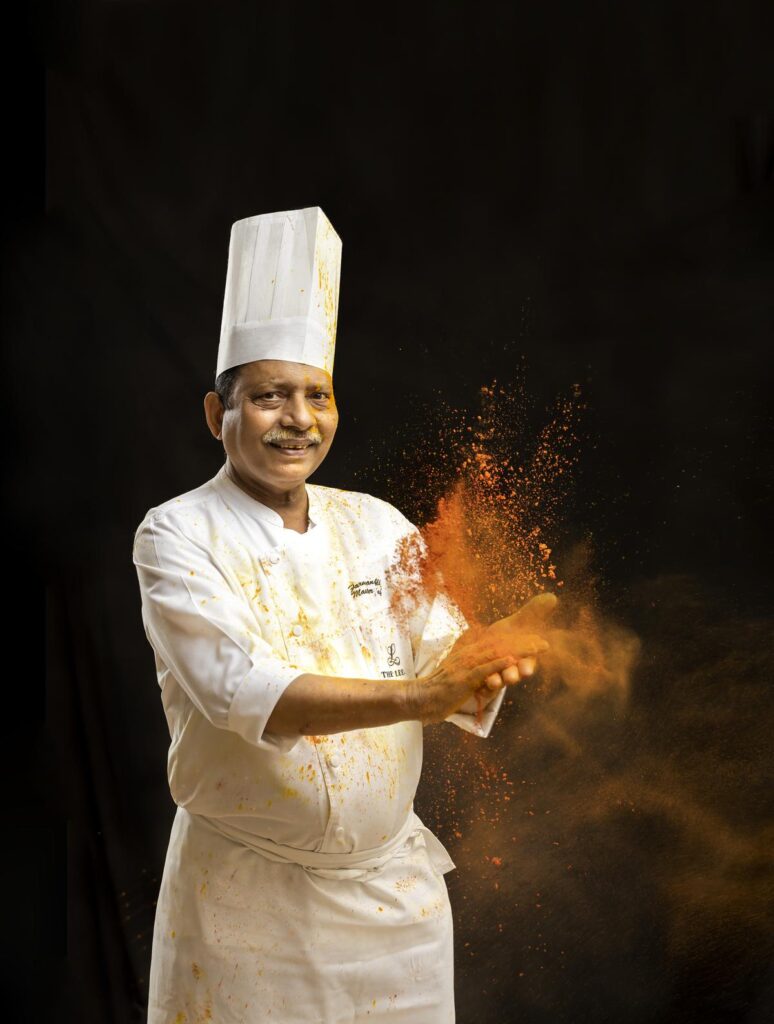
It’s a surprise to find a restaurant referencing this art form, to present Lucknowi (as also other Mughalai) dishes. Used to so much pastiche when it comes to Avadhi, the detailing in the menu is also unexpected. The food that arrives confirms that this perhaps is one of the most nuanced Avadhi/Mughalai restaurant opening in recent times — here in Bengaluru, rather implausibly, rather than Delhi, Mumbai or even London! Everything falls into place, however, when Farman Ali, all of 70, a chef who cooks behind the fiery range and sigri himself, and presides over the kitchens of Falak, makes his appearance.

When he hears about of my own Lucknowi antecedents, Ali abandons the idea of narrating food lore. With an extreme politeness that marks old Nawabi etiquette, he asks me, “ Ab aap ko kya dastan sunaye? [what possible tales can I tell you?].” And bursts into poetry, instead!

The rest of the evening goes by with the chef dropping verses from Daag or Ghalib or the other few who made 19th century Delhi one of the most literary cities in the world, even if we have forgotten that genre of poetry of lament created almost exactly at the time as Shelley, Wordsworth and the Romantics.

pix

Parts of an ancient story

For Ali, I realise, this is not performance — though it is quite in sync with modern chefs expected to be performative as they spend time building brands ‘front of the house’. Instead, this is a way of life, a culture that has all but completely faded. As the meal progresses — the nihari (pepper-laced stew of old Delhi’s spice market, concocted, according to lore, to ward off cold and flu thought to emanate from the Yamuna canal in Chandni Chowk) being replaced by the qorma ( nihari evolved into the subtle Avadhi qorma, catering to aristocrats who thought it ill-mannered to be smelling of spices after a meal) being replaced by the ‘ balai’ka tukda for dessert (not dubbed ‘ shahi’ royal bread pudding here; balai being the correct term for clotted cream) — we talk not food but art.

One of the dishes served at Falak | Photo Credit: Special arrangement

“After 1857, so many artisans and poets fled Delhi for the Deccan,” says Ali. “Culture spreads like this.” He is right, of course. But the ghazal or qasidas aside, it’s also the biryani that has diffused. Farman Ali’s is the old Delhi/Lucknowi style (he grew up in old Delhi and still has a house there) where rice is cooked in stock, and the ‘ pulao’ is not the layered and overtly spiced dish that its Hyderabadi cousin is. Old ‘Nakhlauwallas’ — such as yours truly — contend there was no Avadhi biryani at all, before the restaurants took over, just many fanciful and well-documented pulaos such as the ‘ moti’ (pearls) or the ‘cuckoo’, served with fried onions and thin yoghurt, no chutney or gravy.

The man behind Jamavar

Ali worked in restaurants in Delhi and Dubai before being handpicked by The Leela’s Capt CP Krishnan Nair to create the food of Jamavar nationally, to cook and serve pan-Indian food. Based in Bengaluru, he curiously escaped much national attention, retiring just before the pandemic, but was called back by the owners of Bhartiya City, foodies themselves, to cook food closer to his roots.

If cuisine is an expression of a culture, at a particular point in history, its custodians and storytellers are as important as the taste of dishes.

In India, at this moment in time, it is perhaps important to look back on the custodians of the old Urdu-speaking cultures and their culinary expressions. What kind of a society produced these stylised dishes? Farman Ali, in many ways, is the last of the great chefs, many of whom were feted much more and earlier in their careers than him — such as Imtiaz Qureshi of ITC Hotels (and his family, such as son-in-law Ghulam Qureshi of Dumpukht), and chef Ghulam Rasool of Taj Hotels.

source: http://www.thehindu.com / The Hindu / Home> Life & Style> Food / by Anoothi Vishal / March 19th, 2022

Seven women loco pilots honoured by Government Railway Police

INDIA :

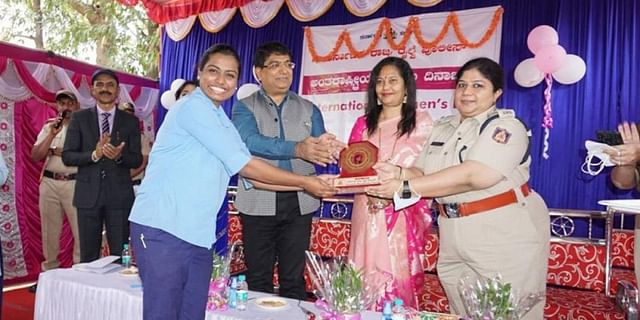
The Government Railway Police (GRP) on International Women’s Day honoured seven women serving as loco pilots and assistant loco pilots in trains operated by the South Western Railway.

One of the loco pilots being awarded by GRP in recognition of their exemplary services.

Bengaluru :

The Government Railway Police (GRP) on International Women’s Day honoured seven women serving as loco pilots and assistant loco pilots in trains operated by the South Western Railway. In recognition of their exemplary services to the Railways, S B Gayatri Krishna, V S Abhirami, C Minu Mubaraka, Nimi Chand, Rangoli Patel, Nimisha Kumari and P Noorul Meharna were honoured.

Additional Director General of Police, Railways, Bhaskar Rao and Superintendent, GRP, DR Siri Gowri were present at the event held at KSR Railway station. M P Omkareshwari, Road Transport Joint Commissioner (Bengaluru Rural), Psychologist Soujayna Vashista, and Senior Divisional Security Commissioner, RPF, Debashmita Chattopadhyay Banerjee, were also present on the occasion.

source: http://www.newindianexpress.com / The New Indian Express / Home> Cities> Bengaluru / by Express News Service / March 09th, 2022

The First Prime Minister of Bihar. His grave lies at Brookwood Cemetery in Woking, England.

Patna, BIHAR / London, U.K :

I have been visiting Shah Jahan Mosque and the Brookwood cemetery in Woking for a few years now.

Woking, is a small town almost 30 miles from London. The town is famous for it’s first purpose build mosque in the UK .

 During, the two great wars this mosque served a purpose of spiritual centre for Muslim soldiers in Britain.

A few miles from the mosque lies a burial ground which was a designated ground for Muslim soldiers of WWI. Later, it has been transformed into a memorial park.

Shahjahan Mosque, Woking

Brookwood Cemetery is situated almost five miles from the Shah Jahan Mosque. The Cemetery is one of the largest in Europe. There are a number of famous Victorian Muslims resting here. Today, Woking has large Muslim population, mostly from Pakistan and they are very active in the community and maintaining the mosque very well.

My, very first trip was unplanned and somewhat impulsive. Though it was incredibly enlightening as well as moving. In 2016 after Eid prayer, on a spur I decided to drive my family to Woking. At the time I had only two boys; My eldest was 3 and his brother a year old. I had no idea how to reach to the mosque and locate graves of the early ‘Victorian Muslims.’ However I was committed to do both on the same day. On my SatNav I entered the postcode of Shah Jahan Mosque.

After two hours of drive we reached the Shah Jehan Mosque. There, we saw young and old, boys and girls in Asian Eid costumes. Contrary to the typical British cloudy weather it was a sunny day. Green dome of the mosque and good size open space with another impressive brick building gave an impression as if we are in a small but an affluent village of India.

The festive mood and the perfect sunny day was inviting us to explore and finish the target. After spending an hour there, we decided to drive to Brookwood cemetery.

The most challenging part was to locate the old Muslim section of the cemetery, where I wanted to the visit graves of Abdullah Yusuf Ali, Marmaduke Pickthall and Lord Headley.

To solve the problem, after reaching the cemetery gate; my intuition suggested me to drive only on the road which took us to the right side of the cemetery. First right, second right and then the third right. After a very short drive it was evident that the direction of graves has started changing, Muslim names with some Islamic symbols – crescent and stars on grave stones reassured me that we have entered into the Muslim section of the cemetery. In the end I reached to the place I wished. It was not easy to recognise Mr. Pickthall’s grave, three rows further, very close to the road is buried my favourite Abdullah Yusuf Ali the well known translator of the Holy Qur’an in today’s contemporary world who passed away in 1953. I was in search of another unmarked grave of Mr. Abdullah Quilliam, when my wife called me to show something. She excitedly pointed to a marked grave of the first Prime Minister of Bihar.

Grave of Mohammed Yunus

My wife is born and brought up in the UK. However she is fluent in Urdu and has enormous interest in her Indian roots. She located the grave of the ‘First Prime Minister of Bihar’ – Haji Mohammad Yunus. It was a huge surprise for me.

Barrister Mohammed Yunus (Sitting)

I don’t have any direct relationship with Late Haji Mohammad Yunus Saheb. However one of his nephews was my grandfather’s junior in the court and was a very close friend of his. My paternal grandfather was a successful and famous criminal lawyer who practiced in a small town in Bihar. Both of them worked in the same Court. In the 1940s my grandfather’s friend (Haji Yunus’s nephew) was the only Muslim in the town who had a Radio.

Barrister Mohammed Yunus

In fact in our ancestral town it was his radio that broke the bad news of Mahatma Gandhi’s cold blooded murder. Broadcasts from his Radio clarified that the murderer of Gandhi was ‘not a Muslim but a right wing Hindu’ .  Which was a momentous relief for the frightened local Muslim population during the violent and uncertain communal climate of the partition of India.

So, finding his grave reminded me of the old story of partition. When I was in school, our eldest uncle shared his experience as a child and narrated us with many stories of the partition; further, how they were taken to a safe place in Bengal for a short period of time by train.

Barrister Mohammed Yunus as Prime Minister of Bihar

Below are photographs of Haji Mohammad Yunus grave stone and other famous British Muslims residents of the Brookwood Cemetery. May they all rest in peace; may Almighty Allah accepts their deeds and grant them highest place in Paradise. Ameen.

source: http://www.heritagetimes.in / Heritage Times / Home> Bihar> Heritage / by M S Siddiqui / July 29th, 2020

Preserving Persian Epigraphic Heritage

JAMMU & KASHMIR :

The earliest Persian and Arabic inscriptions are seen on the tombstones and walls in the olden graveyards of Kashmir

The historic tombs of the most famous Shahmiri period sultans and nobles, which included Sultan Sikander and Sultan Zain ul Abideen are also in this historic cemetery. [Tomb of Zain ul Abideen in Srinagar’s old city–Representational Image]File/ GK

With the establishment of Muslim sultanate in Kashmir, in late fourteenth century, the Sanskrit language and Sharda alphabet were also taken over by Persian and Arabic alphabet. The tradition of Sharda epigraphic culture also declined considerably and it gave way to Persian and Arabic inscriptions.

The earliest Persian and Arabic inscription are seen on the tomb stones and walls, in the olden graveyards, Khanqahs and mosques of Kashmir. Number of such inscriptions are documented in my book titled, Kashmir inscriptions of Kashmir, which was published in the year 2013 by Gulshan Books, Srinagar.

Persian inscription on a stone slab at the historic graveyard of Khanqah-e-mu’llah old Srinagar.

Epigraphs of royal graveyard at Mazari Kalan

Mazari Kalan popularly known to public as “Mazari Shiekh Bahau-ud-Din Ganj Baksh (RA)” lies in the foot of Kohi Maran to the west of Malkah. The history of the Mazar reveals that the site originally was proposed by Zain-ul-Abideen Badshah in 1421 AD for housing the only burial of her beloved wife called Ashama Bibi who belonged to a noble family of Bahaqi lineage. But when Sheikh Baha-ud-Din (RA), the reputed saint and Murshid of the Sultan left for heavenly abode in December 11, 1439 AD, he was laid to rest in this proposed site. Over the resting-place a shrine was also then erected.

Stone inscription in a dilapidated condition

The shrine looks to have been renovated, but it has lost most of its interesting architectural features. Adjacent to the shrine is seen the grave of a poet, Mir Illahi, who is saidto be the court poet of the Budshah. A beautiful inscription bearing few lines of his lyric is erected over the grave.

The grave of Asaha Bibi lies near the gate of the Mazar. The other burials it houses of the reputed saints and nobles of their times include; the grave of Solman, Sayyied Habib Shah Kashani, Moullana Mohammed Anie, Baba Qayim, Khwaja Mohammed Kakroo, Moullana Mohammed Balkhji, Sheikh Mohammed Trabali, Mulla Sarf-ud-Din Farhat, Mulla Nurullah Kath, Molvi Amir-ud-Din, Molvi Qulam-ud-Din Jami, Sayyied Mohammed Kermaniand others.

These all graves are very old and are crowned with gravestones, which are brilliantly carved in beautiful Arabic and Persian inscriptions.

Epigraphs of royal graveyard at Zain kadal

The royal graveyard of Zainkadal, locally called Mazari Salateen, enshrines the final resting places of Shahmeri Sultans. The historic tombs of the most famous Shahmiri period sultans and nobles, which included Sultan Sikander and Sultan Zain ul Abideen are also in this historic cemetery.

The tomb of Mirza Haider Dauglat, who administrated Kashmir as a Mughal governor for about 11 years during 1540-1552 AD, is also found in this historic graveyard.

There is a brilliant epigraph in Persian characters laid over his grave which is believed to have been installed by Moorcraft a British traveler during his vest of Kashmir in 19th century.

Persians inscription stone slab on the tomb of Mirza Haider Daughlat, Zainakadal Srinagar.

Zaindeep Epigraph

Persian stone inscription of Zain ul Abideen, SPS Museum Srinagar

Although there is no evidence of any standing Budshah’s Palace found anywhere in Kashmir valley but there is a magnificent stones slab inscription housed in the SPS museum at Lalmandi Srinagar which the experts claim provides vital information about Zaindeep, one of the famous Palaces of the Budshah’s period. Experts claim that this stone slab inscription, besides other details, has also provided the date of construction of this highest palace.

This inscription is Persian Nashk style. It is learnt that the inscription way back has been recovered from the Zianlank island of world famous Wullar lake in Bandipura district and later was shifted to this museum for its proper preservation. The inscription gives AH 841 as the date of construction of this world famous Zaindeep.

While providing description of this stone slab inscription experts say that this inscription is in Persian characters and is divided in four panels. The first two lines mentions the majesty, strength and the name of the Palace as Zaindeep and also describes it as the world famous, while as the date of foundation in Muslim calendar is mentioned in the last two lines in Persian words, which is calculated as 841.

Inscription of the palace

Ene bakha chun faluk muhakum bad

Mashoor ba zain deep dar alam bad

Shah Zain ibad ke daru jashin kunand

Pai vasta Chun tareekh khurdesh kahrum bad.

84l the inscription dates to 841 AH.

(The fort built by Shah Zain ul Abieein is so high and strong as the sky; and it is famous by the name of Zain deep. The king was very happy and celebrated the event when this palace was built)

Broken Stone inscription at Mazare Salateen old Srinagar

Besides these royal graveyards, the other historic and royal graveyards also carried brilliant epigraphs either engraved on tomb stones or on stone walls, these included Mazari Kalan, Mazari Salateen, Mazari Khanqah Mu’llah, Mazari Madine Sahib, Mazari Malik Sahib, Mazari Safakadal, Mazari Malkah and Mazari Bijbehra,.

But these human records are not preserved anywhere in these historic cementers. These inscribed records have fallen prey to the unchecked weathering and human vandalism.

Most of their inscriptions have defaced and it is very difficult to identify and decipher their epigraphs; steps are required to be taken to conserve this unprotected and unconcerned epigraphic heritage.

Disclaimer: The views and opinions expressed in this article are the personal opinions of the author.

The facts, analysis, assumptions and perspective appearing in the article do not reflect the views of GK

source: http://www.greaterkashmir.com / Greater Kashmir / Home> Op-Ed / by Iqbal Ahmad / February 20th, 2022