Tag Archives: Muslim Chefs of India

Home chef Farah Kadir gets the cut and the cook right with Beyond Biryani

Shahjahanpur, UTTAR PRADESH / Kolkata, WEST BENGAL :

My Kolkata shelves its biryani cravings for a day as Farah whips up a storm of Yakhni Pulao, Shami Kebab and Nargisi Kofta.

Video and images by Ritagnik Bhattacharya

When Farah whipped up Butter Chicken for 30 family members as notun bou in the Kadir household, she didn’t dream that in about two decades she would be supplying houses around the city with neatly packed boxes of biriyani, korma, pulao and kebabs. “My mother and grandmother were great cooks, so I always enjoyed cooking. It was never something I dreamed of doing professionally,” says Farah, who grew up in Shahjahanpur, Uttar Pradesh. She hails from a family of Pathans, originally from Afghanistan.

“Her legend just kept growing!” says her husband, Rubayat, her greatest fan and critic. “You know how we got married? Her brother-in-law lives in Kolkata and decided she absolutely has to marry a Kolkata foodie. Enter, Rubayat!” he says with a flourish.

They waited until their younger daughter had graduated school to resume full-fledged operation. The pandemic only expedited an eventuality which was long-simmering in the Kadir kitchen. Their friends were habituated to wrangling dinner invitations to Farah and Rubayat’s Ballygunge home for the fare which most regular Mughlai restaurants will find difficult to replicate. When social distancing became the norm, friends demanded that the food be sent to them. And so Beyond Biryani was born.
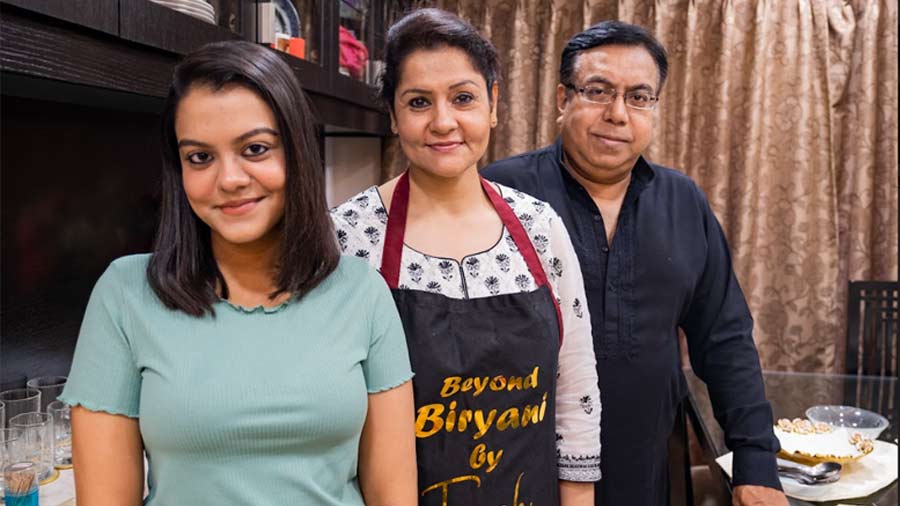
Farah (centre) with her younger daughter Ifrah and her husband, Rubayat

“Calcutta is crazy about biryani but we also want people to explore dishes beyond biryani,” explains Rubayat. He’s always at hand to taste her recipes and to guide patrons on their menu choices. He’s likely to bristle if you ask for an egg in the biryani and grimace if you want to pair the korma with biryani instead of roomali roti. “A boiled egg adds nothing to the biryani! It can be boiled separately and placed inside the rice. Besides, it takes up space in the container and which would you rather have anyway, more rice and aloo or a plain boiled egg?” he demands to know.

Not being a fan of boiled egg in my biryani anyway, I acquiesce. Farah’s biryani, having gained popularity and fame, tends to pop up at dining tables across the city, catching guests by delighted surprise. Following the trail to its source, I’m here today to dig into offerings that go beyond the Kolkata dum.
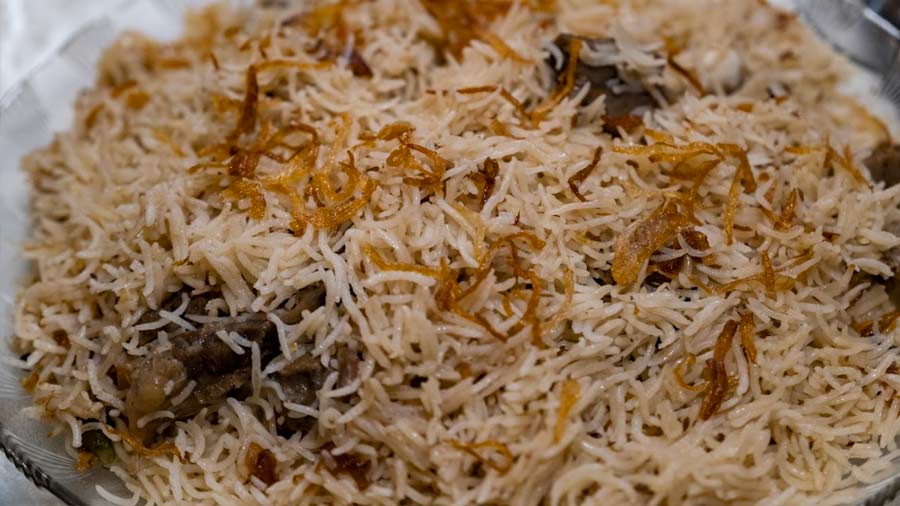
Yakhni Pulao

The flavour of the Yakhni Pulao is enhanced by the fact that the rice is cooked in mutton stock. It’s lighter than the biryani, which just means you’ll get to eat a lot more and fall into a bhaat-ghoom that much quicker. This one’s definitely a winner for summer.
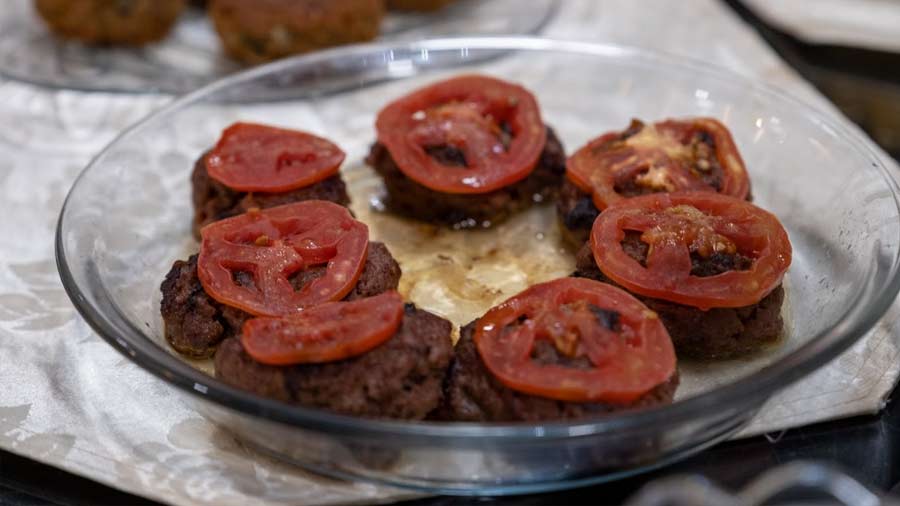
Mutton Afghani Kebab

The Mutton Afghani kebab was one of Farah’s mother’s specialities, so it’s straight from the family legacies. Reminiscent of a galouti kebab, this one achieves just the right amount of tender with the help of papaya and not a slab of fat. “I don’t use extra fat or dalda. I cook like I would cook for my family,” explains Farah.
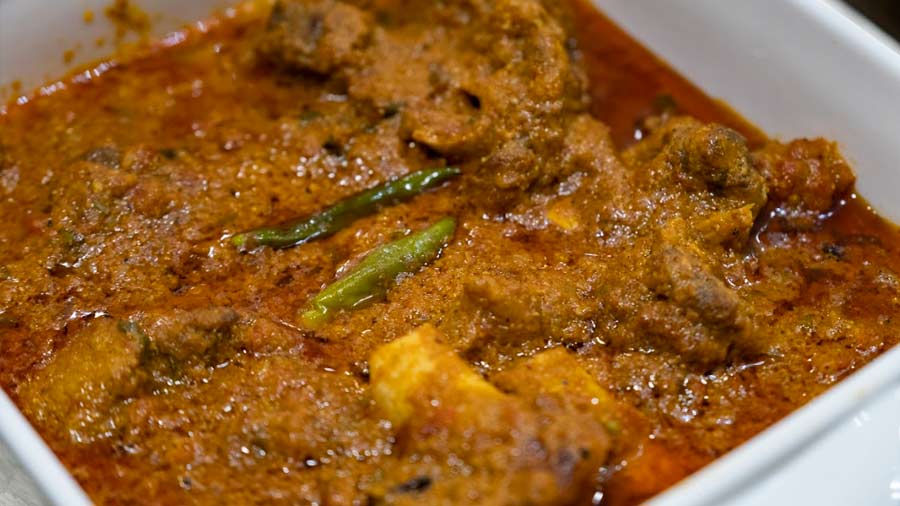
Mutton Akbari

Mutton Akbari, like every great meat dish, is served on the bone, albeit almost falling off it. It cooks in its own juices, and though you might be tempted to moisten your biryani rice with it, like every good Bengali who likes his jhol, Rubayat insists you have it with paratha. Don’t worry, you’ll love that too.
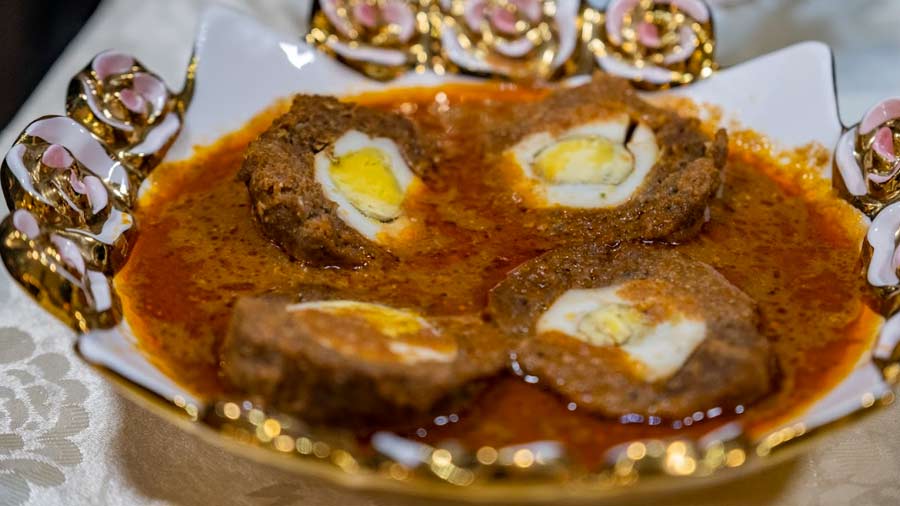
Nargisi Kofta

This one, another maternal hand-me-down, is one of the stars of the menu. The Nawabi cousin of the Bengali dimer-devil, Farah’s Nargisi Kofta is fried to a perfect brown and then placed in a surprisingly light gravy. All you need is a plate of fluffy white rice to soak it up with.
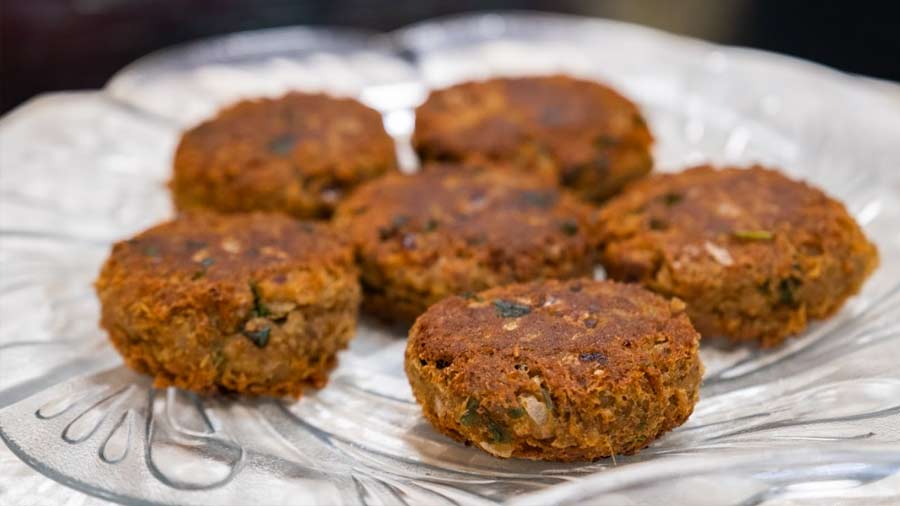
Shami Kebab

The Shami Kebabs are Farah’s primary claim to fame. “They’re our fastest moving item. These kebabs go all over the world – Canada, America, Bangkok. My elder daughter used to take it back with her when studying in the US. It’s the one dish I cook every day, as mutton, chicken or even soya which is also very popular. In fact, the soya is actually very tasty,” says Farah.

Which brings us to the crucial point that there are a great many vegetarian items on the menu as well. “We have very many vegetarian clients who are regulars too,” says Farah.

Farah’s full of surprises. She is able to make a mean prawn dish without tasting it because she prefers to not eat seafood. “There’s a de-shelled crab in butter garlic which I tasted in Trishna, Mumbai, that I’m trying to get her to recreate. She’s never eaten it, so I have to describe it really well,” says Rubayat, with all the purpose of a man setting out on a mission.

The other element of surprise lies in the size of Farah’s kitchen. It’s a small space attached to an apartment, just as fuss-free and efficient as the cook. It’s clean, compact and no-nonsense, spilling out a feast for a gourmand. In this kitchen, Farah insists on doing everything herself. She sets out every morning to buy meat from a regular Park Circus shop and then methodically goes about the cleaning, chopping and marinating. “The secret lies in knowing which cut of meat to use for which dish. The meat required for biryani, shami kebab and korma are all very different,” explains Farah.

“It’s the cut and the cook which determines the success of a dish,” sums up Rubayat, succinctly. “She has no recipes. It’s all on andaz, which is amazingly never wrong.”
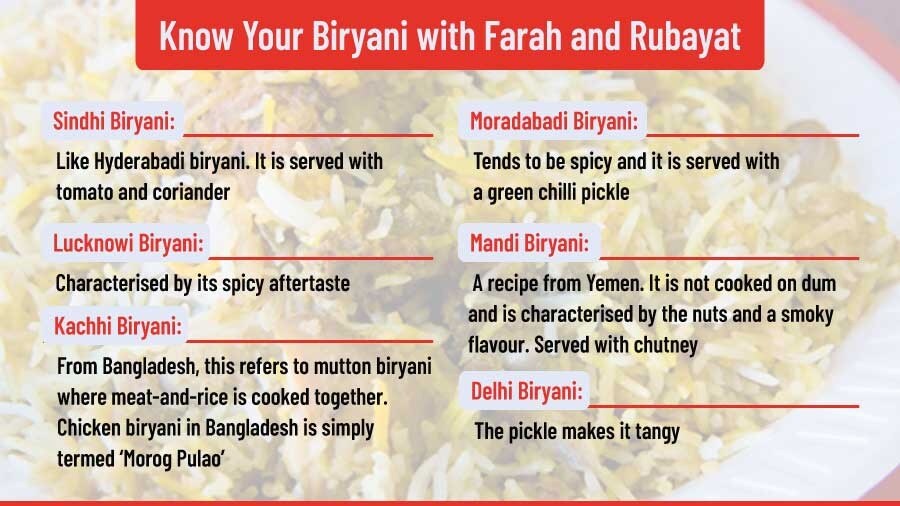
Farah is of the opinion that her dishes are infused with the flavours of Delhi because her grandparents lived in the capital city. Of course, she learnt just how Kolkata likes to have its biryani and proceeded to get it just right. It’s not the only biryani she knows how to make though, in case you’re enthused to go, not just beyond biryani, but beyond the Kolkata Biryani.
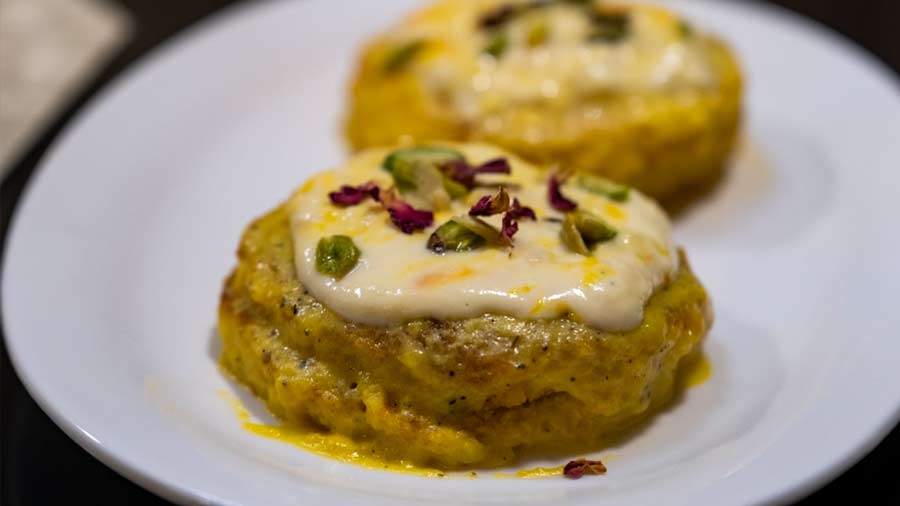
Shahi Tukda

Yes, Farah makes dessert too! Because in Kolkata we need our mishti mukh, even if we can look beyond the biryani.

source: http://www.telegraphindia.com / Telegraph Online / Home> My Kolkata / by Ramona Sen / June 14th, 2022

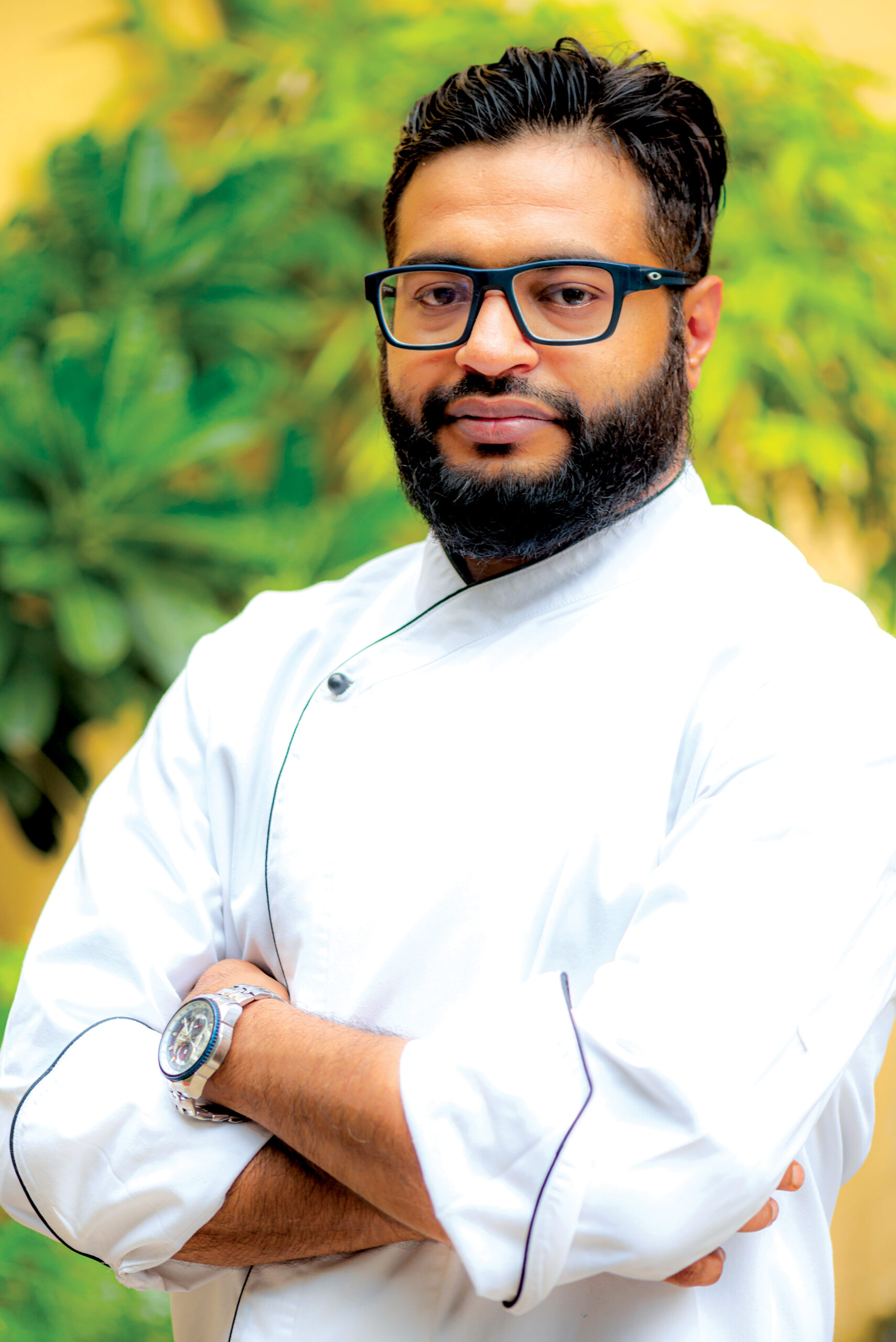
Garlic in kheer, narangi korma—a chef celebrates Awadhi cuisine, with a pinch of innovation

Lucknow, UTTAR PRADESH / DELHI :

Ishtiyaque, the eldest son of chef Imtiaz Qureshi, a Padma Shri awardee, has worked in various departments, from bakery to butchery.

Chef Ishtiyaque Qureshi preparing kebabs at the Jashn-e-Lucknow food festival in Delhi | Photo: Tina Das | ThePrint

New Delhi: 

When he offered his guests a bowl of kheer, a traditional dessert made with thickened milk, chef Ishtiyaque Qureshi had a wicked twinkle in his eyes. He knew he would leave them flabbergasted when he revealed the key ingredient—garlic. 

Not just the guests, but even other chefs had no clue that the pearly pods in the dessert were not almonds. The kheer was part of a delectable spread of Awadhi cuisine at the Jashn-e-Lucknow food festival at Delhi’s JW Marriott.

“When he (Ishtiyaque) asked me to taste it, I could never guess what it was. It has truly been quite the experience watching him work tirelessly from morning to night,” said Yashasvi Yadav, a management trainee at JW Marriott. 

Yadav had been working closely with Ishtiyaque to prepare 23 dishes using 20 ingredients for the festival held between 21-23 February. With rajanigandha in vases, lanterns, and roses, the tables were set to complement the Awadhi cuisine. 

From melt-in-the-mouth Kakori kebabs to the rich dum gosht biryani, and the experimental narangi chicken korma, the slow-cooked dishes had people going for multiple servings.

These dishes reflected the artistry of Ishtiyaque, the eldest son of chef Imtiaz Qureshi, a Padma Shri awardee. Ishtiyaque has been carving out a niche for himself—from opening the Kakori House restaurant in Mumbai to working as a consultant for several popular hotels in India, dabbling with the frozen food industry, and now starting the restaurant Murgori, which serves chicken Kakori kebabs.

Ishtiyaque was on his feet for 14 hours on the first day of the festival, in a kitchen shared with another food pop–up. “We made 23 dishes in just three stoves,” he said, smiling, as he talked to guests in detail about the dishes. 

Deeply appreciative of his legacy, Ishtiyaque has, however, charted a course very different from his father, who spent his career with the ITC group. 

Ishtiyaque has worked with various brands like The Leela, Kempinski, and InterContinental. He has also been instrumental in the makeover of several brands, including Aafreen, a fine–dining Indian restaurant of JW Marriott Pune.

Ishtiyaque learned from the best—his father—while working through school. “When I was 12, during school holidays, my father skilfully lured me to the Maurya operations. With the temptation of swimming in the pool and eating at the bakery, he put me in the kitchen,” said Ishtiyaque.

He worked in various departments, from bakery to butchery, and credits that hands-on training for building a solid foundation for his career.

Culinary artistry

The young boy didn’t want to cook; he wanted to join college instead. But with a big family to support, another earning member was necessary. He initially worked at ITC Maurya during the day while attending classes at Delhi’s Ram Lal Anand College in the evening. 

Ishtiyaque later left for Jeddah, Saudi Arabia, in 1986 after his father helped him get a job there. Three years later, he returned home and interviewed with ITC’s then-chairman, YC Deveshwar, at ITC Maurya in Delhi. He soon found himself at the Dum Pukht restaurant in Mumbai, which was then part of the Sea Rock Hotel.

He also worked with legendary French chef Roger Moncourt, who was the executive chef at ITC Maurya in New Delhi. “I remember he removed beef and pork from the Indian restaurant,” said Ishtiyaque. This separation—which he also recently recommended at a new restaurant—helped increase the clientele for fine Indian dining.

This was around the time when Datta Samant’s trade union raised slogans like ‘Dilliwale murdabad’. Nevertheless, Ishtiyaque found his space, experimenting with slow-cooked delicacies and reviving age-old techniques that define Awadhi cuisine.

Over the years, he has also mastered techniques from the frozen food industry, blending science with culinary artistry—all while carrying forward his father’s legacy. 

Food innovations

The father-son duo often cooked together, especially after doctors advised both parents to stop consuming red meat. This led to one of Ishtiyaque’s innovations—the chicken Kakori kebab. 

“For three years, they never guessed it wasn’t made of mutton but chicken. That’s when I realised this is a great option for the market, for those who cannot or don’t want to consume red meat,” said Ishtiyaque.

His father always made sure to have dinner at home, where his mother would rustle up delicacies like aloo gosht, saag gosht, or meat cooked with seasonal vegetables. Ishtiyaque prefers home–cooked meals and staying in rather than travelling, even though work often keeps him on the move. 

One dish that had people queuing up for second and third helpings was the narangi chicken korma. “While making the list of ingredients, the chef asked me to get oranges. Even the person in charge of the hotel’s vegetable and meat stock was curious why Awadhi food might need oranges,” said Yadav.

The result of Ishtiyaque’s experiment was a refreshing, aromatic stew. “To me, that is fusion food—when you marry one ingredient with another, instead of overpowering the dish or just laying a few strands of microgreens on a plate. That is just scamming,” said Ishtiyaque.

According to him, training chefs today isn’t what it used to be, as people no longer want to invest the same time or energy. The way his father worked and taught now feels like part of a bygone era.

“I was lucky that we could spend his last years together. He was charismatic and an extrovert. Even till the end, he wanted good food and was joking with the nurses,” said Ishtiyaque.

“But I will always be there for my guests,” he added, pausing briefly to speak to someone dining alone.

Ishtiyaque often cooked for his parents and was always eager to hear his father’s feedback. “He would suggest improvements, and sometimes my mother would be like, ‘Your son has cooked, let it be.’ But that is who he was. And I think like him and have the same kind of passion that he did,” he said.

(Edited by Aamaan Alam Khan)

source: http://www.theprint.in / The Print / Home> Features> Around Town / by Tina Das / March 02nd, 2025

Chef of the Week : Chef Zoheb Qureshi

Lucknow, UTTAR PRADESH :

His grandfather taught Gordon Ramsay the secrets of dum cuisine. Chef Zoheb Qureshi hails from what is considered as the First Family of food in India. His grandfather, Chef Imtiaz Qureshi, is one of the two chefs to receive a Padma Shri honour and his father, Gulam Qureshi has been the brand custodian at Dum Pukht, ITC Maurya, Delhi for the last 15 years.

Zoheb’s preparations exemplify the philosophy of Giza-e-Khusus meaning cooking delicious food while retaining its nutritive value. He has taken upon himself the daunting task of running the first chef-led online food delivery format in the country, Cross Border Kitchens. He says, “I am on a mission to make people taste what authentic Nehari or Mirch Baigan ka Salan is or what an original dum biryani tastes like.”

In a candid conversation, he talks more about himself and his work:

Your philosophy of food?

It’s a common ground offering people a universal experience. It brings people together belonging to varied cultures and beliefs.

Your fav cuisine?

Awadhi

Your idol?

My father – Gulam Qureshi

Your fav spice?

Cardamom

Your hot selling dish?

Awadhi Gosht Biryani

Lessons learnt in the kitchen?

Every day is a new day in the kitchen that teaches you something new. However, my evergreen lesson that I stand by daily is to never go to the cooking range without all the ingredients.

How do you like to de-stress?

Listening to music calms me down.

How do you define yourself?

Someone who’s forever eager to learn & unlearn.

What are you passionate about?

About different techniques in cooking and travelling to new places to learn about its food culture.

Last meal on earth, what would you choose?

Phirnee

Recipe: Murgh Rampur Biryani

Ingredients:

Chicken (50 gm) piece        400 gm

Basmati rice                        250 gm

Brown onions                     25 gm

Desi ghee                           50 gm

Cloves                                4

Cinnamon sticks                 2

Bayleaf                                1

Green cardamom                 4-6

Cream                                 25 ml

Beaten curd                        75 gm

Salt                                     to taste

Yellow chilli powder            10 gm

Mace cardamom powder     15 gm

Ginger garlic paste              25 gm

Rose water                          5 ml

Kevda water                        5 ml

( screwpine)

Sweet ittar                          1 drop

Slit green chillies                25 gm

Mint leaves                          25 gm

Ginger julienne                   10 gm

Royal cumin seeds              2 gm

Lemon juice                        20 ml

Water                                  ½ litre

Whole wheat flour dough

(for lining the lid)      100 gm

Process:

Step 1 : Cooking of chicken

  • Marinate the chicken with Biryani masala powder, hung curd, rose water, red chilli powder and cook in tandoor
  • Cook the chicken with jhol, yellow chilli powder, mace cardamom powder, saffron, ittar, kewra and rose water.

Step 2 : Boiling rice

  • Wash, soak basmati rice for 10 minutes. Boil water in a pan and add the wholespices, salt to taste and lemon juice.
  • Add the rice and cook till 2/3rd done.

Step 3 : Cooking on Dum

  • Layer the chicken. Add a mixture of ghee and cream.
  • Garnish with mint leaves, ginger juliennes, brown onions and saffron dissolved in water.
  • Line the lid with flour dough and seal the vessel.
  • Put the vessel on an iron griddle and cook for 15 minutes.

Once the biryani is cooked, serve it with raw onions, lemon, chutney and raita.

source: http://www.thepatriot.in / The Patriot / Home> Specials / by Sharmila Chand / October 04th, 2019

Farman Ali, the last of the great chefs

Lucknow, U.P. / NEW DELHI / Bengaluru, KARNATAKA:

At Falak in Bengaluru, a custodian of the old Urdu-speaking culture and culinary traditions brings storytelling to the table

While the lights of Dubai-esque skyscrapers speak of a new Bangalore and its ambition, the salubrious weather on the terrace is a testament to an old city — pleasant and genteel, never mind traffic, chaos or climate change!

This convergence of the old and the new is a theme, as I sit down to a meal at Falak, the new restaurant at Leela Bhartiya City. The meal is to flow like a quintessential 19th century Lucknowi dastaan (story), hyperbolic and stylised, to mimic the oral storytelling tradition, dastaan-e-goi.

In my bookcase, I have a copy of Tilism-i-Hoshruba, the truly first Indo-Islamic romance epic, an extension of the dastans of Amir Hamza, of the Persian tradition, albeit in translation. When it was first published, in a serialised form, between 1881-93, by the iconic Naval Kishore Press in Lucknow, it marked an important moment for the Urdu-speaking-and listening audience of northern India, long familiar with the Persian romance tradition — with fantasy, adventure and the implausible built in. But I turn to Hamza, to also dive into the inherent syncreticism on the pages, as the mores of a Persian world collide and merge with those of local Braj Bhasha-speaking cultures of the Indo-Gangetic plain.

Finding nuanced Avadhi in Bengaluru

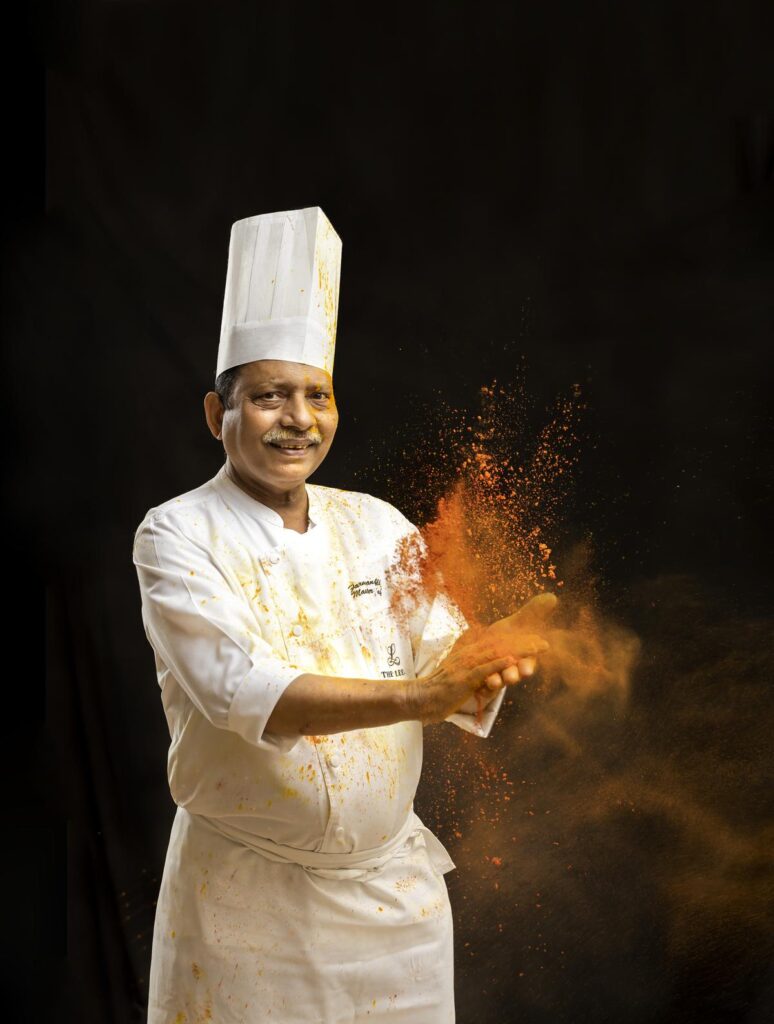
It’s a surprise to find a restaurant referencing this art form, to present Lucknowi (as also other Mughalai) dishes. Used to so much pastiche when it comes to Avadhi, the detailing in the menu is also unexpected. The food that arrives confirms that this perhaps is one of the most nuanced Avadhi/Mughalai restaurant opening in recent times — here in Bengaluru, rather implausibly, rather than Delhi, Mumbai or even London! Everything falls into place, however, when Farman Ali, all of 70, a chef who cooks behind the fiery range and sigri himself, and presides over the kitchens of Falak, makes his appearance.

When he hears about of my own Lucknowi antecedents, Ali abandons the idea of narrating food lore. With an extreme politeness that marks old Nawabi etiquette, he asks me, “ Ab aap ko kya dastan sunaye? [what possible tales can I tell you?].” And bursts into poetry, instead!

The rest of the evening goes by with the chef dropping verses from Daag or Ghalib or the other few who made 19th century Delhi one of the most literary cities in the world, even if we have forgotten that genre of poetry of lament created almost exactly at the time as Shelley, Wordsworth and the Romantics.

pix

Parts of an ancient story

For Ali, I realise, this is not performance — though it is quite in sync with modern chefs expected to be performative as they spend time building brands ‘front of the house’. Instead, this is a way of life, a culture that has all but completely faded. As the meal progresses — the nihari (pepper-laced stew of old Delhi’s spice market, concocted, according to lore, to ward off cold and flu thought to emanate from the Yamuna canal in Chandni Chowk) being replaced by the qorma ( nihari evolved into the subtle Avadhi qorma, catering to aristocrats who thought it ill-mannered to be smelling of spices after a meal) being replaced by the ‘ balai’ka tukda for dessert (not dubbed ‘ shahi’ royal bread pudding here; balai being the correct term for clotted cream) — we talk not food but art.

One of the dishes served at Falak | Photo Credit: Special arrangement

“After 1857, so many artisans and poets fled Delhi for the Deccan,” says Ali. “Culture spreads like this.” He is right, of course. But the ghazal or qasidas aside, it’s also the biryani that has diffused. Farman Ali’s is the old Delhi/Lucknowi style (he grew up in old Delhi and still has a house there) where rice is cooked in stock, and the ‘ pulao’ is not the layered and overtly spiced dish that its Hyderabadi cousin is. Old ‘Nakhlauwallas’ — such as yours truly — contend there was no Avadhi biryani at all, before the restaurants took over, just many fanciful and well-documented pulaos such as the ‘ moti’ (pearls) or the ‘cuckoo’, served with fried onions and thin yoghurt, no chutney or gravy.

The man behind Jamavar

Ali worked in restaurants in Delhi and Dubai before being handpicked by The Leela’s Capt CP Krishnan Nair to create the food of Jamavar nationally, to cook and serve pan-Indian food. Based in Bengaluru, he curiously escaped much national attention, retiring just before the pandemic, but was called back by the owners of Bhartiya City, foodies themselves, to cook food closer to his roots.

If cuisine is an expression of a culture, at a particular point in history, its custodians and storytellers are as important as the taste of dishes.

In India, at this moment in time, it is perhaps important to look back on the custodians of the old Urdu-speaking cultures and their culinary expressions. What kind of a society produced these stylised dishes? Farman Ali, in many ways, is the last of the great chefs, many of whom were feted much more and earlier in their careers than him — such as Imtiaz Qureshi of ITC Hotels (and his family, such as son-in-law Ghulam Qureshi of Dumpukht), and chef Ghulam Rasool of Taj Hotels.

source: http://www.thehindu.com / The Hindu / Home> Life & Style> Food / by Anoothi Vishal / March 19th, 2022