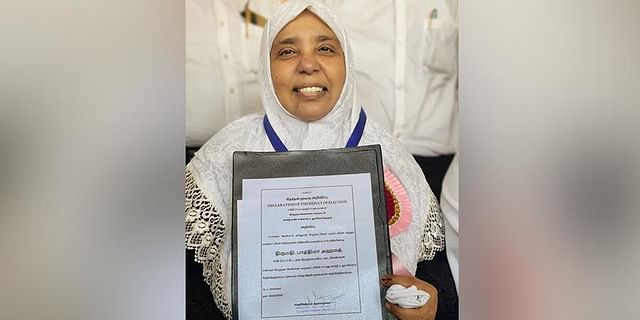
Notably, Fathima’s father, Abdul Samad, an ex-Member of Parliament, won from the Harbour area during the 1958 urban local body polls.
AS Fathima Muzaffer led numerous anti-CAA protests in Chennai. (Photo | Special Arrangement)
Chennai :
The woman, who led numerous anti-CAA protests in Chennai, AS Fathima Muzaffer from the Indian Union Muslim League (IUML)-DMK alliance emerged victorious in ward 61 of the Chennai Corporation on Tuesday by a huge margin of votes.
After five and a half decades, IUML’s own symbol (ladder) was used and this is the first time in the history of the party that a woman candidate has contested in Chennai.
Notably, Fathima’s father, Abdul Samad, an ex-Member of Parliament, won from the Harbour area during the 1958 urban local body polls. Fathima bagged 6,347 of 11,443 votes in her ward.
“It is a historic moment for IUML as we contested only from one ward and won. This is a silent answer to the ongoing hijab fiasco. Also, this is my first political campaign. I have been a social activist largely and hope to do the same as a councillor — serve the public,” said Fathima, who is also the national president of IUML’s women’s wing.
With numerous colleges, a prestigious stadium and four slums in her ward, Fathima says she wishes to bridge the gap between the elite and downtrodden.
“I want to implement a lot of youth programmes. Since this ward has good population of youth, it is crucial. Apart from this, social equality and communal harmony will always be at the forefront.”
Fathima’s family has been in politics for three generations.
Her grandfather, Moulana Abdul Hameed Baqavi was a freedom fighter and reportedly the first person to translate the holy Quran into Tamil.
She has also won a lot of awards in the field of social service for her work on women’s empowerment and education, especially in the Muslim community.
source: http://www.newindianexpress.com / The New Indian Express / Home> Cities>Chennai / by KV Navya, Express News Service / February 22nd, 2022
If you thought your handwriting doesn’t matter in the digital world, think again.
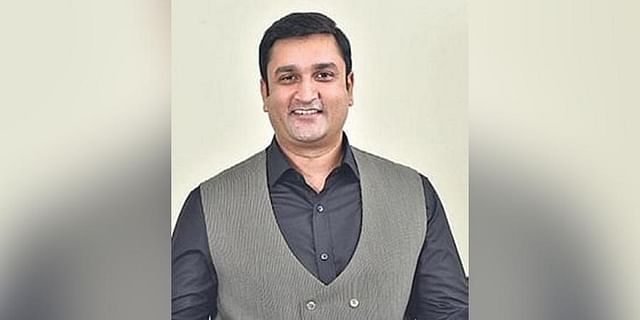
Imran Baig,Global Penmanship Academy (File Photo)
Bengaluru :
Growing up, we’ve all heard that handwriting is a skill that never fades. However, over the years, writing has become less and less common thanks to gadgets taking over our existence. But Imran Baig, founder of Global Penmanship Academy, a handwriting analyst, is working on making people fall in love with writing once again, and supporting them to forge their future using the power of a pen.
“It’s a skill that many of us have but just don’t know the right approach to, and that’s why my workshops come in handy for them,” says Baig, who takes three classes over the weekends, teaching one the different tools to write and how to achieve the speed they want.
Baig got certified in 2004 from Handwriting University International, California, at the age of 21, making him the youngest individual in the world to pass out of the university. He has developed specialised programmes on Handwriting Development for children and Grapho Therapy for adults.
“Since children are growing up, starting them out early is a good approach. This way, they will learn about which pen or pencil is ideal for them, based on their finger structure. They will also learn the right speed to write in so they can attend their exams more efficiently,” he says.
“As for adults, finding their right signature is the most important factor as they are often influenced by something we have observed growing up. Through the workshops, I help them analyse and understand which style of theirs showcases their personality. This will help their personality development as well,” adds Baig.
He points out that grapho therapy — usually done after the detailed analysis of the overall personality of someone by studying their handwriting — is a great way to understand the compatibility of a person.
“Though the workshop I had before Valentine’s Day wasn’t really related to the day, it’s important to talk about how one’s handwriting can help understand your compatibility with another person. In a world of texting and typing, I’m trying to encourage people to write more, rewire the way they think and present themselves and develop their personality along the way,” says Baig, who points out that comments like “Thank you for introducing me to myself” from those who attended his workshop is why he does what he does.
source: http://www.newindianexpress.com / The New Indian Express / Home>Lifestyle> Books / by Anila Kurien, Express News Service / February 21st, 2022
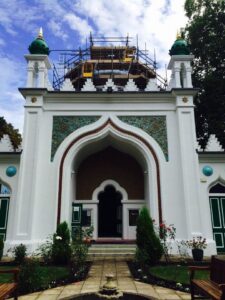
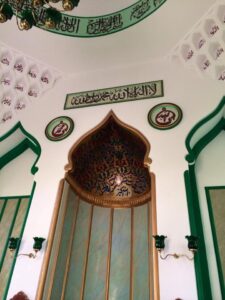
I have been visiting Shah Jahan Mosque and the Brookwood cemetery in Woking for a few years now.
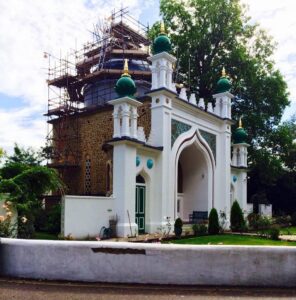
Woking, is a small town almost 30 miles from London. The town is famous for it’s first purpose build mosque in the UK .
During, the two great wars this mosque served a purpose of spiritual centre for Muslim soldiers in Britain.
A few miles from the mosque lies a burial ground which was a designated ground for Muslim soldiers of WWI. Later, it has been transformed into a memorial park.
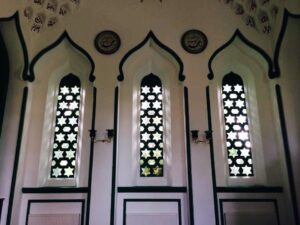
Shahjahan Mosque, Woking
Brookwood Cemetery is situated almost five miles from the Shah Jahan Mosque. The Cemetery is one of the largest in Europe. There are a number of famous Victorian Muslims resting here. Today, Woking has large Muslim population, mostly from Pakistan and they are very active in the community and maintaining the mosque very well.
My, very first trip was unplanned and somewhat impulsive. Though it was incredibly enlightening as well as moving. In 2016 after Eid prayer, on a spur I decided to drive my family to Woking. At the time I had only two boys; My eldest was 3 and his brother a year old. I had no idea how to reach to the mosque and locate graves of the early ‘Victorian Muslims.’ However I was committed to do both on the same day. On my SatNav I entered the postcode of Shah Jahan Mosque.
After two hours of drive we reached the Shah Jehan Mosque. There, we saw young and old, boys and girls in Asian Eid costumes. Contrary to the typical British cloudy weather it was a sunny day. Green dome of the mosque and good size open space with another impressive brick building gave an impression as if we are in a small but an affluent village of India.
The festive mood and the perfect sunny day was inviting us to explore and finish the target. After spending an hour there, we decided to drive to Brookwood cemetery.
The most challenging part was to locate the old Muslim section of the cemetery, where I wanted to the visit graves of Abdullah Yusuf Ali, Marmaduke Pickthall and Lord Headley.
To solve the problem, after reaching the cemetery gate; my intuition suggested me to drive only on the road which took us to the right side of the cemetery. First right, second right and then the third right. After a very short drive it was evident that the direction of graves has started changing, Muslim names with some Islamic symbols – crescent and stars on grave stones reassured me that we have entered into the Muslim section of the cemetery. In the end I reached to the place I wished. It was not easy to recognise Mr. Pickthall’s grave, three rows further, very close to the road is buried my favourite Abdullah Yusuf Ali the well known translator of the Holy Qur’an in today’s contemporary world who passed away in 1953. I was in search of another unmarked grave of Mr. Abdullah Quilliam, when my wife called me to show something. She excitedly pointed to a marked grave of the first Prime Minister of Bihar.
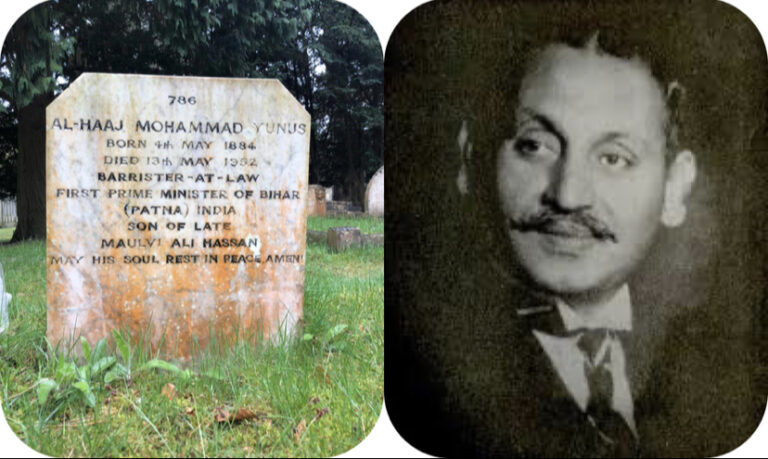
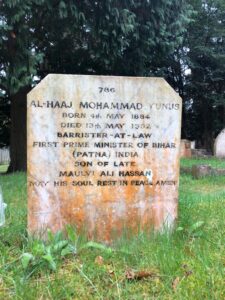
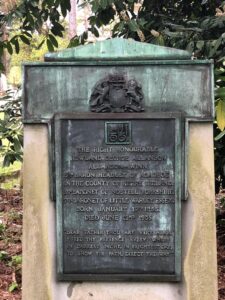
Grave of Mohammed Yunus
My wife is born and brought up in the UK. However she is fluent in Urdu and has enormous interest in her Indian roots. She located the grave of the ‘First Prime Minister of Bihar’ – Haji Mohammad Yunus. It was a huge surprise for me.
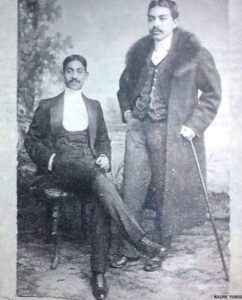
Barrister Mohammed Yunus (Sitting)
I don’t have any direct relationship with Late Haji Mohammad Yunus Saheb. However one of his nephews was my grandfather’s junior in the court and was a very close friend of his. My paternal grandfather was a successful and famous criminal lawyer who practiced in a small town in Bihar. Both of them worked in the same Court. In the 1940s my grandfather’s friend (Haji Yunus’s nephew) was the only Muslim in the town who had a Radio.
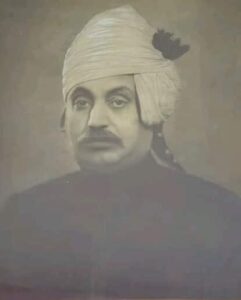
Barrister Mohammed Yunus
In fact in our ancestral town it was his radio that broke the bad news of Mahatma Gandhi’s cold blooded murder. Broadcasts from his Radio clarified that the murderer of Gandhi was ‘not a Muslim but a right wing Hindu’ . Which was a momentous relief for the frightened local Muslim population during the violent and uncertain communal climate of the partition of India.
So, finding his grave reminded me of the old story of partition. When I was in school, our eldest uncle shared his experience as a child and narrated us with many stories of the partition; further, how they were taken to a safe place in Bengal for a short period of time by train.
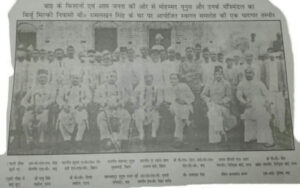
Barrister Mohammed Yunus as Prime Minister of Bihar
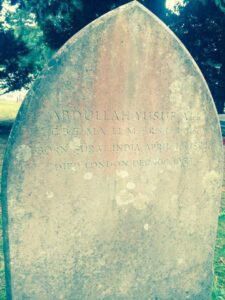
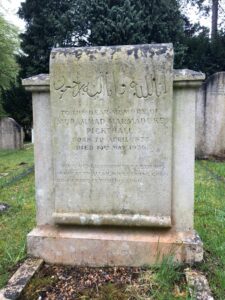
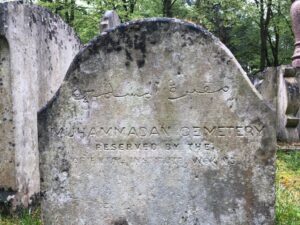
Below are photographs of Haji Mohammad Yunus grave stone and other famous British Muslims residents of the Brookwood Cemetery. May they all rest in peace; may Almighty Allah accepts their deeds and grant them highest place in Paradise. Ameen.
source: http://www.heritagetimes.in / Heritage Times / Home> Bihar> Heritage / by M S Siddiqui / July 29th, 2020
Farheen Naaz (39), an experienced education professional, calls herself a “menstrual educator by passion.” | Picture by arrangement
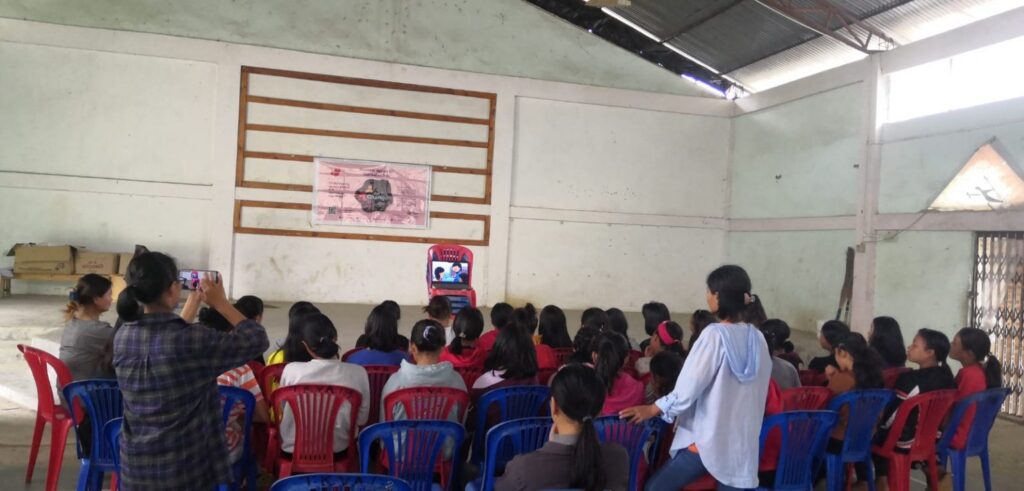
The objective of Farheen Naaz’s organisation is to break the taboo that has been built around menstrual hygiene since ages and normalise period talk, which is frequently hushed by elders in most Indian households.
New Delhi :
During the first and second wave of Covid-19, Farheen Naaz was busy distributing relief kits to marginalized communities in New Delhi. The kits however, had only one sanitary napkin packet. One of the women told her there was more than one menstruator in her house. That interaction left her thinking how the menstruation needs were left unaddressed during the pandemic and in ordinary times.
Farheen (39), an experienced education professional, calls herself a “menstrual educator by passion.”
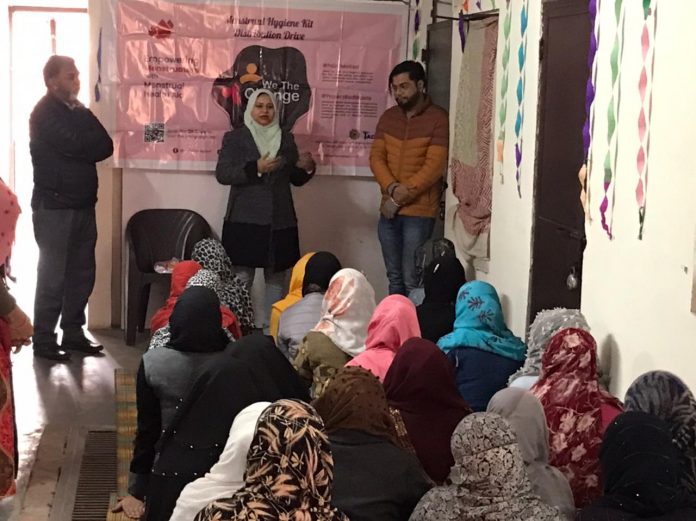
In September 2019, she started We The Change, a women-led Delhi-based not for profit, working towards creating awareness and inculcating correct knowledge about menstrual hygiene amongst the community, including members who do not menstruate. The organisation started with online sessions and talks, soon growing to conducting on-ground drives.
We The Change distributed more than 950 menstrual hygiene kits (containing 50 sanitary pads, 50 disposal bags, two cloth panties and a bar of soap) across India during the pandemic. They plan to double their target and reach out to 2000 menstruators pan India.
“The objective of our organisation is to break the taboo that has been built around it since ages and normalise period talk, which is frequently hushed by elders in most Indian households,” says Farheen. “While this might be a topic that might have been directed towards only adolescent menstruators over time, our organisation has decided to include families of the menstruators as well to create a comfortable and safe space for these conversations.”
Farheen says she realised the problems are far deeper than just not getting access to menstrual products. “Mothers and grandmothers are the main sources of information for many menstruators, and hence they do not get access to the kind of resources and information that they should get,” she says. “Shame makes many menstruators susceptible to harm because they learn taboos and misinformation.”
We The Change initiative has collaborated with Menstrupedia, an educational comic book on menstruation that is used in schools across the country for workshop and training purposes. | Photo by arrangement
Having worked in sectors focusing on institutional education, menstrual education, skill development and social work, she hopes she can bring a significant change in the society and smooth over the differences that exist between different genders, castes and socio-marginalised classes.
“We partner with and train local teachers so that students can come to them with their issues and get information from menstrual health-trained teachers,” she explains.
We The Change initiative has collaborated with Menstrupedia, an educational comic book on menstruation that is used in schools across the country for workshop and training purposes.The plan is to buy and donate these books to menstruators pan-India, and use this material to train adolescents in menstrual health and menstrual waste management.
Sustainability in menstrual health and hygiene is often talked about. But a majority of women are unable to use sustainable menstrual products due to lack of resources such as clean water and the cost of these products.
Farheen has come up with a menstrual waste-management project called the #ProjectRedWaste, which is specifically aimed at providing recycled paper bags with a red dot on them to menstruators to safely dispose of menstrual waste, such that sanitation workers also identify these and separately handle them.
Farheen says this work has helped her realise how fixing menstrual issues is central to breaking several societal barriers. A large part of her programme therefore involves education about menstruation, women empowerment, battling transphobia, and inculcating leadership amongst young menstruators.
Suchitra is an independent journalist working on social justice, focusing primarily on gender justice. She tweets at @Suchitrawrites
source: http://www.twocircles.net / TwoCircles.net / Home> Lead Story / by Suchitra, TwoCircles.net / February 07th, 2022
The convocation ceremony of KGMU will be held on December 17. 42 meritorious people will be awarded with Gold, Bronze and Silver medals.
In this, 24 girls and 18 boys have won medals.
Foundation Day celebrations will be celebrated on 18th December. In this, 90 medals will be awarded to 57 students. In this also the female students continue to dominate. 38 meritorious girl students will be decorated with medals around their necks, while 19 students have succeeded in capturing the medals. In both the ceremonies, 154 medals and prizes will be given to the meritorious.
This information was given by Vice Chancellor Dr. Bipin Puri on Monday.
Name of the three medals for Uzair : In the Brown Hall, the Vice Chancellor told a press conference that the celebrations would be held at the Atal Bihari Vajpayee Scientific Convention Center. Vice Chancellor Dr. Bipin Puri informed that MBBS student Ahmed Uzair has won the most prestigious Chancellor of KGMU, Hewett and University Gold Medal.
After a long time, a meritorious has captured all the three medals. Uzair will get the maximum 13 gold in the convocation. There will also be a book prize and a silver medal. The Vice-Chancellor said that MBBS student Shivam Singh would be awarded four gold and one silver medal. MBBS student Akanksha Singh will get a gold medal.
Prime Minister can be the chief guest Prime Minister Narendra Modi may be the chief guest of the function. The administration has intensified the preparations for his arrival. The Vice Chancellor said that an invitation has been sent to the Prime Minister. There is every chance of them coming. Governor Anandiben Patel will preside over the convocation. He said that Justice Ramesh Sinha of the High Court would be present at the foundation day celebrations.
Two new medals Medical Dean Dr. Uma Singh informed that two new medals have been started this year. Gold medal has been started in the name of Dr. GK Malik, former Chairman of the Department of Pediatrics. Medals are being awarded to the student securing the highest marks in the written paper in Neonatal. Whereas Gold Medal has been started in the memory of Dr. BN Dhawan in the Department of Pharmacology.
Meritorious said: Work in research “Hard work never goes in vain,” said Ahmed Uzair, chancellor, Hewett, and university medical laureate. I never studied for a medal. To become a better doctor and researcher, he has worked hard day and night.
It gives great pleasure to receive all three prestigious medals of KGMU. It feels good if you get the fruits of your hard work.
My father Dr. Maulana Mohammad Ansari, mother Dr. Shahla Haleem and maternal grandfather Dr. Abdul Halim are also doctors.
All the members of the house are associated with the service of humanity. That’s why I also have an inclination to become a doctor from the beginning. I am a student of MBBS 2016 batch.
Many research papers have been published till now. That’s why we have to go ahead in the field of research. Under the same, got a job in Drugs Medical School to do research work in neuro surgery. For research area, the company office will have to go to New Jersey, US.
Going into surgery Dr. RML Mehrotra Memorial Gold Medalist Akanksha Singh said, ‘When I was seven years old, my father Late. The shadow of Mahendra Singh had risen from his head. Mother Rajeshwari Singh is posted in the DRM office. Nana Uma Shankar has retired from RPF. Mother worked hard and taught. I live with family in Alambagh. Brother is an engineer. He says that from the beginning he had dreamed of becoming a doctor. Which is now coming true. My name is in the list of gold medal winners, it is nothing less than a dream for me.
I am the first doctor in the family Dr. BR Agarwal Memorial Gold Medal winner Dr. Neelam Chauhan said, ‘I had a dream to become a doctor since childhood. I am the first doctor in my family. Mother is a housewife. While the father has retired from the bank. At present, work has to be done by staying in KGMU. In the future, I have to become a plastic surgeon so that the faces of people who have been burnt in the fire can be cured. My husband is also a doctor in KGMU.
Dreamed of becoming a doctor after seeing Aprin and Aala Dr. TN Chawla Gold Medal Dennistry winner Dr. Neeti Solanki said, ‘I had a dream to become a doctor since childhood. Seeing Aprin and Aala in childhood, he decided to become a doctor. After working hard, I have achieved this position. Some marks could not get admission in MBBS. But got a seat in Dental. Now we have to move forward in the field of dental. I am working in prosthodontistry. I am the first doctor in my house. Mother is a housewife and father is a businessman.
These will be honored on the foundation day MBBS Ananya Tripathi, Aviral Dua, Aaradhya Garg, Y Ashutosh Bhardwaj, Ayush Sahu, Sonal Yadav, Nikita Chauhan, Ramji Ballabh, Vidushi Verma, Mishakt Fatima, Anjali Singhal, Guneet Kaur, Anamika Gupta, Deepak Bansal, Aparajita Kulshrestha, Aparna Singh, Lipika Agarwal, Mahima Keshari, Vikram Pal, Sumit Singh, Kaushal Kishore Singh, Priya Gangwar, Anubhav Mukherjee, Pradyut Kumar Amat, Durgeshwari Balaji, Shiva Gupta, Ayesha Khan, Nishant R Subhash, Akanksha, Purvi Gupta, Divyanshu Gupta, Devanshi Katiyar, Girjanand Mishra
The land was handed to the Government Higher Primary School in Bachegowdanahalli, and registered in the name of the headmaster, who can utilise it to enable rural children avail education.
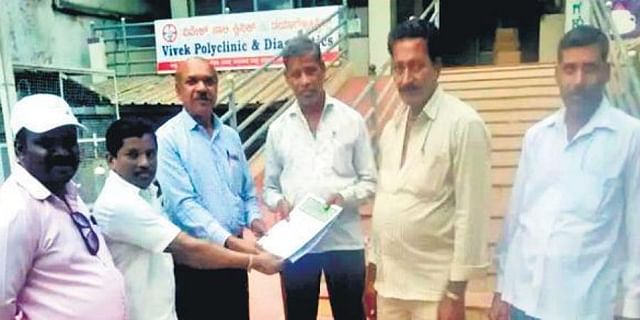
Mohammed Rakib hands over land documents to the Bachegowdanahalli government school authorities at the registration office in HD Kote
Mysuru :
At a time when the hijab row has engulfed most districts of the state, a Muslim family from a remote village in HD Kote taluk of Mysuru district has donated 2.5 acres of their land to a government school in a bid to promote education.
Fulfilling the dream of their late father Mohammed Jafar, a resident of Marchalli village, who had pledged to donate a piece of land for serving the educational needs of children in the neighbouring villages and improving literacy rate, his children have now donated 2.5 acres, valued at over Rs 50 lakh, for the purpose.
The land was handed to the Government Higher Primary School in Bachegowdanahalli, and registered in the name of the headmaster, who can utilise it to enable rural children avail education. Speaking to TNIE, Jafar’s son Mohammed Rakib said, “My ‘Ayya’ (father) had pledged to donate a plot of land to the school, to ensure that no one is deprived of education and help improve the literacy rate in the region.
We are six siblings — four brothers and two sisters. We had a discussion and decided to give away 2.5 acres as per the wishes of our late father, and we got the land registered in favour of the school on February 15.”
The family, which is into agriculture, owns over 12 acres of land in the village and has donated 2.5 acres of it. Their hope that if there is any dearth of classrooms, new ones can be built on the donated land, or the latter can also be turned into a playground for children, or used for other development activities.
Expressing happiness over the gesture, HD Kote Block Education Officer Chandrakanth said, “The donated land can be utilised to help develop the school and also for the construction of new classrooms, if required, in future. This gesture of the family is exemplary and will motivate others to help.”
source: http://www.newindianexpress.com / The New Indian Express / Home> Good News / by Karthik KK, Express News Service / Februrary 18th, 2022
Chaapa continues to remain popular among the Bihari Muslim families both nationally and internationally and even today, Bihari Muslims around the world opt for chaapa clothes for their children’s weddings.
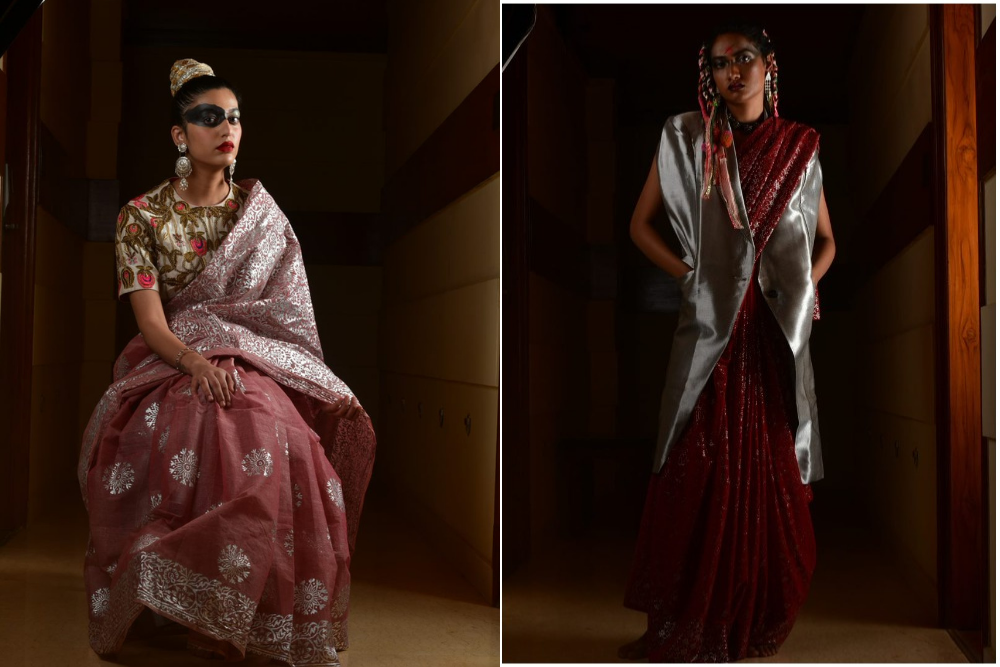
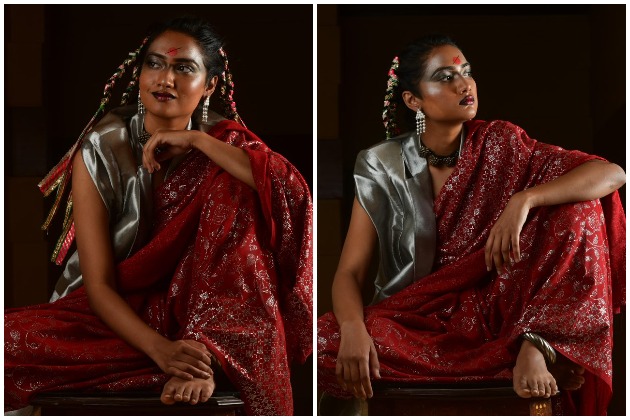
Models Nandini (left) and Kajal (right) sport traditional Chaapa sarees with a modern twist. Outlook Photos/Tribhuvan Tiwari
India, with its diverse cultures and traditions, has a rich heritage of indigenous fashion. With global trends taking over markets, many of these traditional and unique styles of couture and dressing are fading out of fashion. Tucked in the heart of Bihar’s Patna, however, are the ‘Chaapa’ dresses of Bihari Muslims, a style of clothing that have withstood the test of time and the onslaught of mass production.
Chaapa is a traditional Bihari bridal dress made with silver block print. This dress was specially designed to be worn by the bride on the day of Nikah (wedding). No Bihari Muslim nikah ceremony is complete without the chaapa.
The word chaapa came from chaap (which means print in English) and the history of this traditional dress can be traced back to the nineteenth century where Francis Buchanan in a journal mentioned the chaapa clothes and their significant demand among the Muslim Bihari families in 1811 – 1812.
Earlier chaapa was fabricated in the entire Bihar but today due to the cultural influence, the chaapa style has become confined to Patna, Bihar Sharif and Gaya.
Initially, chaapa was available only in two colours, red and green. But currently, they are available in other colours such as yellow, blue, violet, pink etc.
Chaapa continues to remain popular among the Bihari Muslim families both nationally and internationally and even today, Bihari Muslims around the world opt for chaapa clothes for their children’s weddings.
(Md Umar Ashraf, a civil engineer by education who later pursued a masters in journalism, is the founder of www.heritagetimes.in, a website dedicated to bringing out the lesser-known facts of Indian history. He has served in the capacity of historian for several museums undertaken by the Ministry of Culture as well as projects under NBT. Several newspapers and portals have covered his impact on popular history.)
source: http://www.outlookindia.com / Outlook / Home> National / by Md. Umar Ashraf / November 11th, 2022
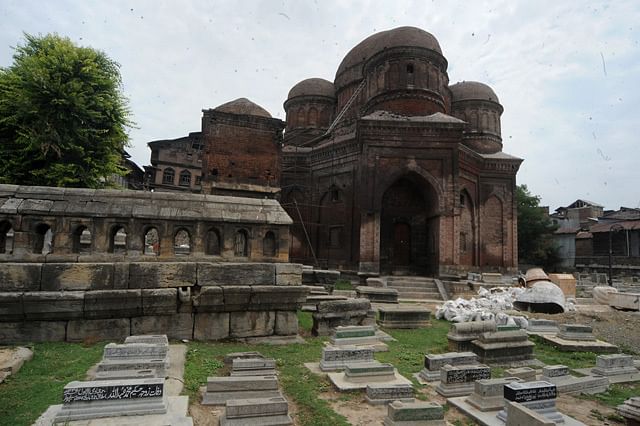
The earliest Persian and Arabic inscriptions are seen on the tombstones and walls in the olden graveyards of Kashmir
The historic tombs of the most famous Shahmiri period sultans and nobles, which included Sultan Sikander and Sultan Zain ul Abideen are also in this historic cemetery. [Tomb of Zain ul Abideen in Srinagar’s old city–Representational Image]File/ GK
With the establishment of Muslim sultanate in Kashmir, in late fourteenth century, the Sanskrit language and Sharda alphabet were also taken over by Persian and Arabic alphabet. The tradition of Sharda epigraphic culture also declined considerably and it gave way to Persian and Arabic inscriptions.
The earliest Persian and Arabic inscription are seen on the tomb stones and walls, in the olden graveyards, Khanqahs and mosques of Kashmir. Number of such inscriptions are documented in my book titled, Kashmir inscriptions of Kashmir, which was published in the year 2013 by Gulshan Books, Srinagar.
Persian inscription on a stone slab at the historic graveyard of Khanqah-e-mu’llah old Srinagar.
Epigraphs of royal graveyard at Mazari Kalan
Mazari Kalan popularly known to public as “Mazari Shiekh Bahau-ud-Din Ganj Baksh (RA)” lies in the foot of Kohi Maran to the west of Malkah. The history of the Mazar reveals that the site originally was proposed by Zain-ul-Abideen Badshah in 1421 AD for housing the only burial of her beloved wife called Ashama Bibi who belonged to a noble family of Bahaqi lineage. But when Sheikh Baha-ud-Din (RA), the reputed saint and Murshid of the Sultan left for heavenly abode in December 11, 1439 AD, he was laid to rest in this proposed site. Over the resting-place a shrine was also then erected.
Stone inscription in a dilapidated condition
The shrine looks to have been renovated, but it has lost most of its interesting architectural features. Adjacent to the shrine is seen the grave of a poet, Mir Illahi, who is saidto be the court poet of the Budshah. A beautiful inscription bearing few lines of his lyric is erected over the grave.
The grave of Asaha Bibi lies near the gate of the Mazar. The other burials it houses of the reputed saints and nobles of their times include; the grave of Solman, Sayyied Habib Shah Kashani, Moullana Mohammed Anie, Baba Qayim, Khwaja Mohammed Kakroo, Moullana Mohammed Balkhji, Sheikh Mohammed Trabali, Mulla Sarf-ud-Din Farhat, Mulla Nurullah Kath, Molvi Amir-ud-Din, Molvi Qulam-ud-Din Jami, Sayyied Mohammed Kermaniand others.
These all graves are very old and are crowned with gravestones, which are brilliantly carved in beautiful Arabic and Persian inscriptions.
Epigraphs of royal graveyard at Zain kadal
The royal graveyard of Zainkadal, locally called Mazari Salateen, enshrines the final resting places of Shahmeri Sultans. The historic tombs of the most famous Shahmiri period sultans and nobles, which included Sultan Sikander and Sultan Zain ul Abideen are also in this historic cemetery.
The tomb of Mirza Haider Dauglat, who administrated Kashmir as a Mughal governor for about 11 years during 1540-1552 AD, is also found in this historic graveyard.
There is a brilliant epigraph in Persian characters laid over his grave which is believed to have been installed by Moorcraft a British traveler during his vest of Kashmir in 19th century.
Persians inscription stone slab on the tomb of Mirza Haider Daughlat, Zainakadal Srinagar.
Zaindeep Epigraph
Persian stone inscription of Zain ul Abideen, SPS Museum Srinagar
Although there is no evidence of any standing Budshah’s Palace found anywhere in Kashmir valley but there is a magnificent stones slab inscription housed in the SPS museum at Lalmandi Srinagar which the experts claim provides vital information about Zaindeep, one of the famous Palaces of the Budshah’s period. Experts claim that this stone slab inscription, besides other details, has also provided the date of construction of this highest palace.
This inscription is Persian Nashk style. It is learnt that the inscription way back has been recovered from the Zianlank island of world famous Wullar lake in Bandipura district and later was shifted to this museum for its proper preservation. The inscription gives AH 841 as the date of construction of this world famous Zaindeep.
While providing description of this stone slab inscription experts say that this inscription is in Persian characters and is divided in four panels. The first two lines mentions the majesty, strength and the name of the Palace as Zaindeep and also describes it as the world famous, while as the date of foundation in Muslim calendar is mentioned in the last two lines in Persian words, which is calculated as 841.
Inscription of the palace
Ene bakha chun faluk muhakum bad
Mashoor ba zain deep dar alam bad
Shah Zain ibad ke daru jashin kunand
Pai vasta Chun tareekh khurdesh kahrum bad.
84l the inscription dates to 841 AH.
(The fort built by Shah Zain ul Abieein is so high and strong as the sky; and it is famous by the name of Zain deep. The king was very happy and celebrated the event when this palace was built)
Broken Stone inscription at Mazare Salateen old Srinagar
Besides these royal graveyards, the other historic and royal graveyards also carried brilliant epigraphs either engraved on tomb stones or on stone walls, these included Mazari Kalan, Mazari Salateen, Mazari Khanqah Mu’llah, Mazari Madine Sahib, Mazari Malik Sahib, Mazari Safakadal, Mazari Malkah and Mazari Bijbehra,.
But these human records are not preserved anywhere in these historic cementers. These inscribed records have fallen prey to the unchecked weathering and human vandalism.
Most of their inscriptions have defaced and it is very difficult to identify and decipher their epigraphs; steps are required to be taken to conserve this unprotected and unconcerned epigraphic heritage.
Disclaimer: The views and opinions expressed in this article are the personal opinions of the author.
The facts, analysis, assumptions and perspective appearing in the article do not reflect the views of GK
source: http://www.greaterkashmir.com / Greater Kashmir / Home> Op-Ed / by Iqbal Ahmad / February 20th, 2022
Sakibul Gani scored 341 runs off just 405 balls with the help of 56 fours and 2 sixes. He maintained a strike rate of 84.20.
Bihar’s 22-year-old batter Sakibul Gani etched his name on the history books by breaking the record for the highest individual score by a cricketer on first-class debut. Becoming the first batter to score a triple hundred on first-class debut, Gani amassed 341 runs off just 405 balls with the help of 56 fours and 2 sixes in a Ranji Trophy Plate Group match against Mizoram at Jadavpur University Campus 2nd Ground in Kolkata on Friday. He maintained a strike rate of 84.20.
The previous highest on first-class debut also belonged to an Indian. Madhya Pradesh’s Ajay Rohera held the record for more than three years. He had scored an unbeaten 267 against Hyderabad in Indore in December 2018. The third on the list is former Mumbai captain Amol Mazumdar. He had scored 260 on debut way back in the 1993-94 season.
Sakibul, who has a decent List A record with 377 runs in 14 matches, came in to bat at No.5 when Bihar were 71 for 3. He then forged a mammoth 538-run stand for the fourth wicket with Babul Kumar, who was unbeaten on 229 when Bihari decided to declare their first innings at 686 for 5.
On Day 1 of the Ranji Trophy on Thursday, Ajinkya Rahane scored a century for Mumbai in the match against Saurashtra.
Delhi batter Yash Dhull also registered a ton on his first-class debut against Tamil Nadu in Guwahati.
The Ranji Trophy would be held in two phases and now it has been confirmed that the pre-Indian Premier League (IPL) phase would run from February 10 to March 15. The post-IPL-phase would run from May 30 to June 26. The Ranji Trophy this season would see 64 matches being played across 62 days.
There are eight Elite Groups and one Plate Group. There would be four teams in Elite Groups and six teams would make up the Plate Group. One team from each Elite Group will qualify for the quarterfinal stages. The lowest-ranked of the eight qualified teams will have to play a pre-quarterfinal with the top team from the Plate Group.
(With ANI inputs)
source: http://www.sports.ndtv.com / NDTV Sports / Sports Home> Cricket> News / by NDTV Sports Desk / February 18th, 2022
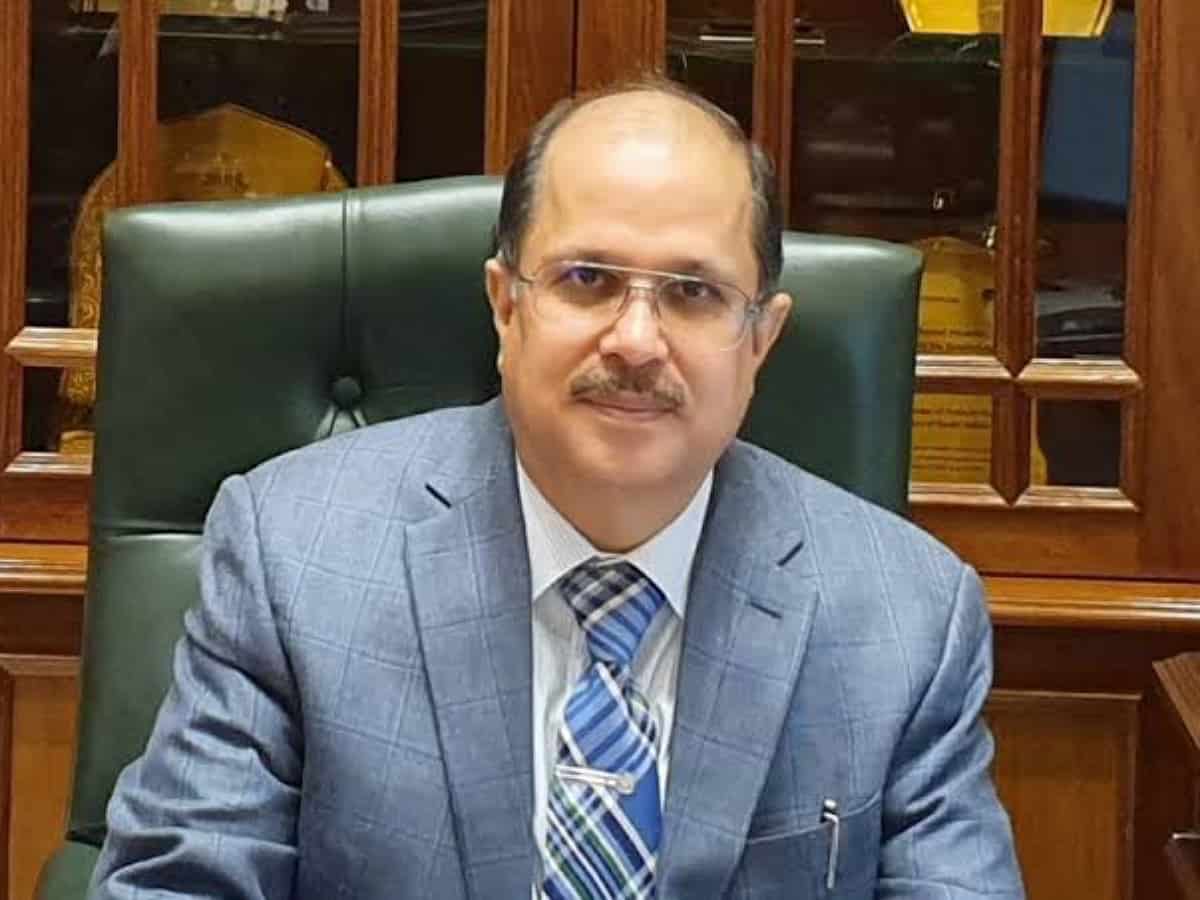
Dr. Ausaf Sayeed expected to accept his new assignment in New Delhi next month.
Dr. Ausaf Sayeed
New Delhi:
India’s ambassador to Saudi Arabia, Dr Ausaf Sayeed, has been appointed to a new position as secretary, overseas Indian affairs in the country’s Ministry of External Affairs.
He has been appointed as the Secretary, (consular, passport, visa and Overseas Indian affairs). He is expected to accept his new assignment in New Delhi next month. The name of his successor in Riyadh is yet to be announced, but as per reports, the selection process has begun.
In terms of the bureaucratic arrangement, the new post is a promotion because the post is several degrees higher than that of an ambassador. The appointment was approved by the Indian cabinet on Tuesday.
About Dr Ausaf Sayeed
Dr Ausaf Sayeed completed his three-year term in Saudi Arabia after being appointed ambassador to Saudi Arabia in March 2019.
Dr Ausaf Sayeed’s tenure in the Kingdom of Saudi Arabia first as a Consul General and as Ambassador has been exemplary in strengthening Indo-Saudi bilateral relations.
He belongs to a well-known educated family of Hyderabad. His father, Awaz Sayeed, was a well-known modern Urdu essayist and short-story writer. He has performed diplomatic services in Egypt, Qatar, Denmark, Yemen, Chicago and Shashail.
Dr Ausaf Sayeed is known for his love for the Urdu language and its propagation. Wherever he was posted, he always convened Urdu Mushairas and brought Indian diaspora on a single platform.
source: http://www.siasat.com / The Siasat Daily / Home> News> India / by News Desk / February 16th, 2022