Great dynasties of the world: The Mughals

INDIA :

Ian Sansom on a clan whose empire became synonymous with India
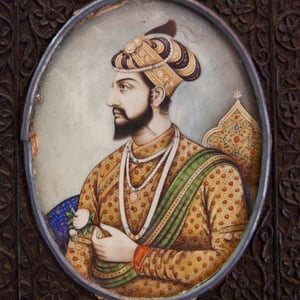
Shah Jahan, who built the Taj Mahal. / Photograph: dbimages/Alamy

In the month of Ramadan of the year 899,” writes the great Babur (1483-1530) in his autobiography, The Baburnama, “and in the 12th year of my age, I became ruler in the country of Fergana.” Babur – his name means “tiger” – inherited the tiny kingdom of Fergana, in what is now Uzbekistan, from his father. The family was descended from Genghis Khan and Tamerlane the Great; Babur the boy-king became the first of the Mughal emperors, a family of Turko-Mongol rulers who, according to the historian Abraham Eraly, “so decisively stamped their personalities on India that the Mughal Empire became, in the public perception, synonymous with India.”

Babur established his empire through conquest, successfully invading India in 1526. His son, Humayun (1508-1556), who succeeded him, came close to losing everything that his father had achieved. It wasn’t until the rule of Akbar (1542-1605), Humayun’s son, that the Mughal Empire was consolidated. Akbar, like Margaret Thatcher, slept only four hours a night. When he was awake, which was most of the time, he set about expanding the Mughal territories abroad and reforming the government at home. He ended the tax imposed on non-Muslims. He invited Jesuit missionaries into his court. And he formed his own religion. Above all, he knew how to make friends as well as enemies. According to his court historian, Abul Fazl, “His majesty forms matrimonial alliances with princes of Hindustan and of other countries; and secures by these ties of harmony the peace of the world.”

Jahangir (1569-1627) succeeded his father, Akbar, in 1605. He preferred to drink and carouse rather than to rule, and his wife, Nur Jahan, took on the responsibility of the state. The fifth Mughal emperor, Shah Jahan (1592-1666), was more like his grandfather Akbar and his great-great-grandfather Babur: a schemer, a man of grand plans and ideas. When his wife, Mumtaz, died in 1631, Shah Jahan was grief-stricken, so much so that, according to one observer, he “gave up the practice of plucking out grey hair from his beard”. He also decided to build his wife a memorial. The English travel writer Peter Mundy described the construction: “The building is begun and goes on with excessive labour and cost, prosecuted with extraordinary dilligence, Gold silver esteemed common Mettal, and Marble but as ordinarie stones.” According to Rudyard Kipling, the place was “the embodiment of all things pure, all things holy, and all things unhappy”. It was the Taj Mahal.

Shah Jahan’s rule ended with a war of succession between his sons, in which Aurangzeb (1618-1707) emerged triumphant. Having killed his brothers, he imprisoned his father. After Aurangzeb the decline of the Mughals began. In 1738, India was invaded by the forces of Nadir Shah, ruler of Iran. Territories were divided. Then the British East India Company moved in.

The last of the long line of Mughal emperors was Bahadur Shah II, known as Zafar. “Personally, he was one of the most talented, tolerant and likeable of his dynasty,” writes William Dalrymple in The Last Mughal  (2006). The first emperor, Babur, had been a warrior. Zafar was an aesthete – a poet and an architect. Alas, empires tend not to survive under aesthetes. “While the British progressively took over more and more of the Mughal Emperor’s power,” writes Dalrymple, “the court busied itself in the obsessive pursuit of the most cleverly turned ghazal, the most perfect Urdu couplet.”

Zafar died in exile in Rangoon in 1862. His courtiers were hanged and much of Mughal Delhi was destroyed. “The death of the ex-King may be said to have had no effect on the Mahomedan part of the populace,” wrote the British commissioner at the time, “except for a few fanatics who watch and pray for the final triumph of Islam.”

source: http://www.theguardian.com / The Guardian – International Edition / Home> Family> Great Dynasties of the World / by Ian Sansom / July 16th, 2019
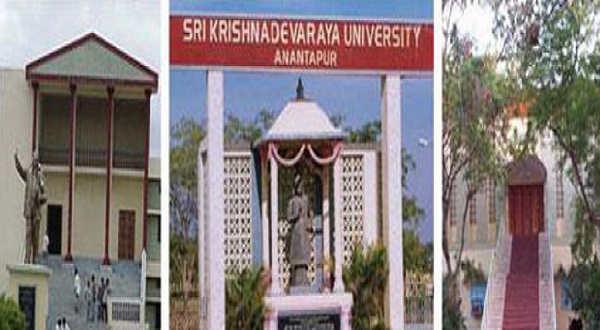
Professor Rahmatullah Appointed New VC of Sri Krishnadeveraya University

Hyderabad, TELNGANA / Anantapur, ANDHRA PRADESH :

KrinadevarayaUniversityMPOs29apr2019

Hyderabad (IANS) :

Professor S.M. Rahamatullah, Dean, Satellite Campuses and Professor, Department of Public Administration, Maulana Azad National Urdu University (MANUU) was Thursday appointed as the Vice-Chancellor of Sri Krishnadeveraya University (SKU), Ananthapur, Andhra Pradesh.

Andhra Pradesh Governor E.S.L. Narasimhan in his capacity as the Chancellor of the University appointed Rahamatullah as the Vice-Chancellor of SKU for a term of three years.

Rahamatullah joined MANUU as Professor, Public Administration on March 1, 2007. He served in different capacities including Registrar and Dean, according to a statement from MANUU.

Dr. Mohammad Aslam Parvaiz, Vice-Chancellor, Dr. M.A. Sikandar, Registrar and teaching fraternity expressed happiness over his appointment and described it as an honour for Urdu University.

source: http://www.caravandaily.com / Caravan Daily / Home> Indian Muslims / by IANS / January 18th, 2019

Achampet youth gets 57th rank in Civils

Thummanpet (Nagarkurnool District), TELANGANA :

ShahidMPOs29apr2019

Nagarkurnool:

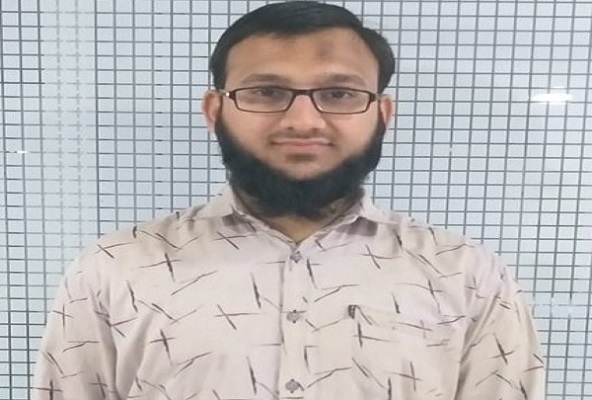
Mohammad Abdul Shahid of Nagarkurnool district secured 57th rank in Civil Services. Shahid is the second person in Telangana to achieve this feat while Karnati Varun Reddy from Miryalaguda achieved 7th rank.

Three months ago, Shahid got selected for Indian Foreign Services (IFS). But as he is more interested in Indian Administrative Services (IAS), he attended the interview for the same later and bagged 57th rank. He made not only his parents proud but also the entire Nagarkurnool district.

Born to Rehana Begum and Anan, Shahid belongs to Thummanpet village of Balmoor mandal under Achampet constituency of Nagarkurnool district. He did his primary education in Achampet and later continued his schooling in Navodaya School at Vattem.

An avid reader and hard worker in studies, Shahid had already set his goal from the beginning to crack civil services and accordingly set his study plans and finally achieved his desired goal.

“It is really a dream come true for me. All this is achievable only because of the continuous support from my parents, teachers and well-wishers, who were always encouraging and boosting my morale.

I thank all those, who has been supporting me and encouraging me in my endeavour,” said Shahid.

source: http://www.thehansindia.com / The Hans India / Home> News> State> Telangana / by Hans News Service / April 07th, 2019

Rifath Sharook, Mohammed Abdul Kashif Played Lead Role in Designing World’s Lightest Satellite

Karur, TAMIL NADU :

Rifath Sharook (Photo: Rifath’s Facebook profile)

New Delhi :

On January 25, India’s Polar Satellite Launch Vehicle (PSLV-C44) successfully injected Microsat-R and Kalamsat-V2 satellite into their designated orbits. Two young engineers who played lead role in designing and building world’s lightest satellite Kalamsat-V2 are Rifath Sharook and Mohammed Abdul Kashif.

They were part of a 12-members team of Space Kidz India- a group which trains aspiring space students. The group was being led by 18-year-old Sharook who hails from Tamil Nadu. Sharook is the youngest student of the team. Giving the credit of building the satellite, the media called him one-man army.But Sharook rejects to take credit solely.

Apart from Kashif (lead engineer), those who are in his team include Vinay S Bhardwaj (design engineer), Yagna Sai (lead technician) and Gobi Nath (biologist).

They were all working on rocket and space technology under the mentorship of Chennai-based Srimathy Kesan, who is the founder of Space Kidz India.

Sharook who hails from Tamil Nadu’s Karur is Chief Technology Officer (CTO) at Space Kidz India. Sharook’s father, Mohammed Farook, was also scientist. When he was in Class V, his father had left for heavenly abode. He was interested in space since his childhood.

“My dad was also a scientist. He’d do independent research on astronomy. We’d spend hours watching the space through a telescope,” Sharook was quoted by rediff.com as saying.

Talking about the Kalamasat V2, Mohammed Abdul Kashif said “We have produced a new electronic architecture for this satellite that ensured that it was lighter, smaller, more economical and consumed less energy while functioning like any other communication satellite”.

He added “There are a wide variety of uses it can be deployed for. But with this launch, we are only testing the technology and seeing how it operates”.

The satellite was 64 grams, 3.8 centimeter-cube-sized and it is world’s lightest and smallest satellite. It was made through the competition ‘Cubes in Space’ which was a collaboration between NASA and ‘I Doodle Learining’.

Muslim boy Sharook and Kashif played larger role in building the world’s lightest satellite and it was named also after a Muslim scientist A P J Abdul Kalam, who was the president of
India.

source: http://www.caravandaily.com / Caravan Daily / Home> Indian Muslim> Indian Muslims / by Caravan News / February 04th, 2019

‘Islamic studies can help ward off misconceptions’

Hyderabad, TELANGANA :

Eminent scholar Abdul Ali addresses MANUU seminar

There is no justification for the so-called Islamophobia based on a deliberate mischievous misrepresentation of contemporary Islam and muslims, said eminent scholar Abdul Ali, former head of department of Islamic Studies, Aligarh Muslim University.

“Islamic Studies as a branch of Social Sciences can play a vital role in removing misconceptions and misunderstandings about Islam and Muslims,” he said while delivering the keynote address at a national seminar held at on “Islamic Studies: Concept, Present Scenario and Future,” organised by the Department of Islamic Studies, Maulana Azad National Urdu University (MANUU) here.

Participants of the seminar paid homage to the victims of recent terror attack in Sri Lanka. Mohammad Aslam Parvaiz, Vice-Chancellor of MANUU, in his presidential address, quoted extensively from the Quran, highlighting the parameters set by the holy book to lay the foundation of a society based on communal harmony and peaceful co-existence. Dr. Parvaiz asked the scholars to revise the syllabi of Islamic Studies and make provision for interface study with other branches of Social and Natural Sciences.

source: http://www.thehindu.com / The Hindu / Home> News> Cities> Hyderabad / by Special Correspondent / Hyderabad – April 25th, 2019

Gujarat Boy Ashraf Kesrani Tops All India NEET-PG Test

Vadodara, GUJARAT :

Ashraf Kesrani, a student of Baroda Medical College has topped NEET-PG

Ahmedabad :

Ashraf Kesrani of Vadodara, a student of Baroda Medical College , Gujarat has topped the All India Postgraduate National Eligibility-Cum-Entrance Test (NEET-PG), securing the first rank in the country.

Ashraf scored 1,006 out of 1,200 marks in the NEET-PG result declared by the National Board of Education (NBE) on Thursday.

NBE conducts NEET for admissions to medical courses (MD/ MS) and PG Diploma courses. A total of 1,48,000 candidates appeared for the test from across 165 cities in India, out of which, 78,660 students have been qualified.

In Gujarat, 6,000 students had appeared in the test.

Coming from a middle-class family, Ashraf said he has accomplished his dream of studying at the best medical college without having to pay exorbitant fees. He wishes to pursue MD medicine from Maulana Azad Medical College in New Delhi.

“It was my dream to get top ranks so that I can study without putting my father under the financial burden of paying hefty fees for PG medical courses. I am happy that I have fulfilled this dream,”  The Times of India quoted Ashraf as saying.

Asharf Kesrani is the first in his family to become a doctor.

source: http://www.caravandaily.com / Caravan Daily / Home> India> Indian Muslims / by Caravan News / February 03rd, 2019

This madrasa graduate is in line to be IAS, IPS officer, says it helped him crack UPSC exam

Aminabad, BIHAR :

Shahid Raza Khan, from Aminabad in Bihar, did his school education from a madrasa. He secured an all India rank of 751 in this year’s UPSC examination.

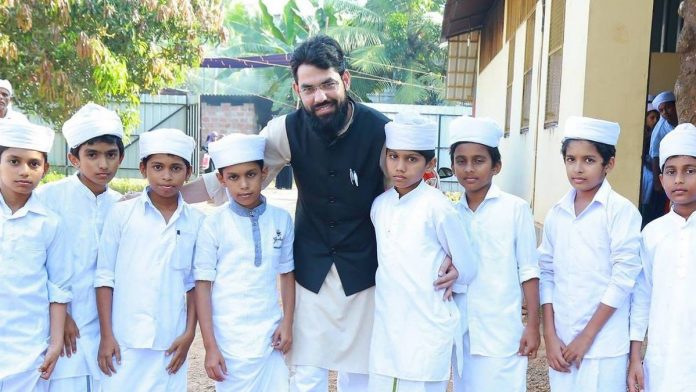
Shahid Raza Khan with students from his madrasa in Kerala | By special arrangement

New Delhi:

A madrasa graduate from Bihar and a student of Jawaharlal Nehru University (JNU), Shahid Raza Khan, cracked the civil services examination this year with an all-India rank of 751, which he hopes will get him into elite services such as the IAS, IPS and IFS.

Khan is part of a small but growing tribe of madrasa students to score high in the prestigious UPSC examination, the gateway to Indian bureaucracy.

Khan credits his UPSC success to the time he spent at the madrasa, which, he says, taught him how to memorise and how to remain calm at all stages in life.

“We used to memorise the Quran and other literature in Arabic. It gave me a clear advantage in preparing for the civil services because I could memorise things easily,” Khan told ThePrint over the phone from his hometown in Aminabad, Bihar, where he is celebrating his success with his friends and family members.

The 28-year-old spent seven years preparing for the exam.

His journey began in 2011 when he came to Delhi after completing his studies at the Al Jamiatul Ashrafia, a well-known seminary in Mubarakpur, Uttar Pradesh. Khan completed his graduation and post graduation in Arabic literature from JNU. He is currently pursuing a PhD in Islamic Studies from the university.

‘Studying at madrasa was my choice’

While Khan says JNU played a huge role in his success, he believes that going to a madrasa does not mean a person cannot study mainstream subjects or get into mainstream, non-religious careers.

Even as all his other siblings — he has seven brothers and sisters — went to regular schools after Class 10, Khan chose to continue his studies in a madrasa because of his interest in religion.

Khan says his father, who retired from a government job and his mother, a homemaker, encouraged him to pursue his dreams.

“Going to a madrasa to study was my own choice because of my interest in religion. I went to a local madrasa in my village till Class 10 and after that, I continued further education at Mubarakpur,” he said.

“I studied Islamic Studies, Philosophy, Quran and other things at the madrasa. I joined JNU in 2011 for my graduation as I thought that the environment would be conducive to prepare for the civil services examination. I started my preparation in 2012.”

Along with his Arabic Studies course, Khan studied science, mathematics, English and other subjects from the National Council for Education Research and Training (NCERT) school books to prepare for the UPSC exam.

“My time at the madrasa was a lifetime learning experience and something that I wanted to pursue. Teachings that I received there always keep me calm in life and give me a greater purpose,” he added.

With his research on politics on Islam, he wants to challenge the theories of Islam.

“I am working on politics of Islam and things such as jihadism,” Khan said. “Through my research, I want to challenge the existing theories and notions of Islam, the way the religion is viewed.”

As a bureaucrat, he wants to do the best he can for the society.

source: http://www.theprint.in / The Print / Home> India / by Kritika Sharma / April 23rd, 2019

Oklahoma Commission on Status of Women Gets Kashmiri-American Muslim Commissioner

JAMMU & KASHMIR / NEW DELHI / Oklahoma , U.S.A. :

Dr. Nyla Ali Khan
Dr. Nyla Ali Khan

Oklahoma City :

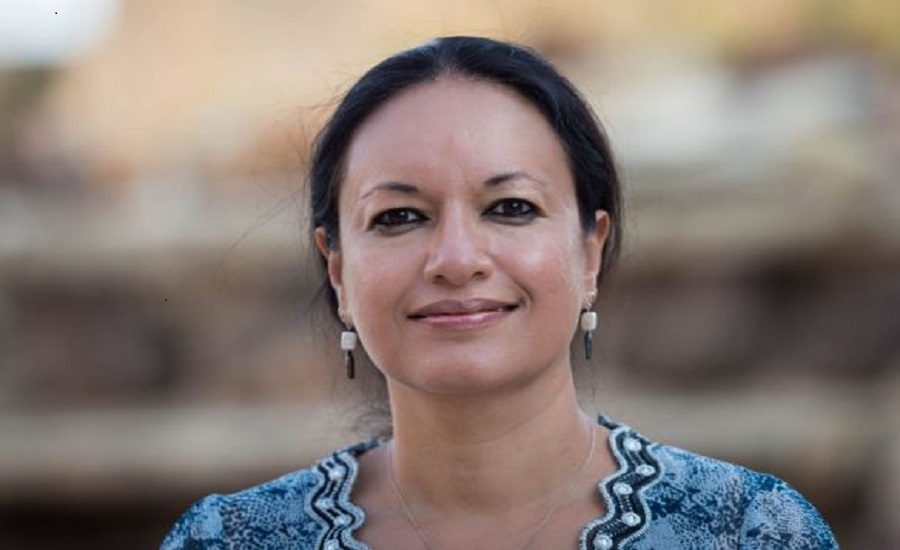
Dr. Nyla Ali Khan has been appointed as a Commissioner on the Oklahoma Commission on the Status of Women. She has been appointed for a five-year term by Senator Greg Treat, who is President Pro Tempora of the Oklahoma Senate.

“The Oklahoma Legislature created the Oklahoma Commission on the Status of Women in 1994 to act as an advisory entity on equity issues relating to gender bias; monitor legislation to determine whether it is discriminatory toward one gender or the other; act as a resource and a clearinghouse for research on issues related to women and gender bias; report annually to the governor, president pro tempore of the Senate, and speaker of the House of Representatives regarding its activities and make recommendations concerning needed legislation or regulatory changes relating to equity and gender bias.”

Dr. Nyla Ali Khan is the first South Asian Muslim member of the Oklahoma Commission on the Status of Women. She said that as a member of the Oklahoma Commission on the Status of Women, she acts as a resource and provides expertise to the Commission. She provides research and information on societal violence and structural inequities that result from deep-rooted prejudices against women. Dr. Nyla Khan said, “The questions to which I seek to provide well-substantiated answers are as follows: How can we, as women, develop the ability to organize and mobilize for social change, which requires the creation of awareness not just at the individual level but at the collective level as well? How can we develop self-esteem for which some form of financial autonomy is a basis? How can we make strategic life choices that are critical for people to lead the sort of lives they want to lead? We require a quality education for these mammoth tasks.”

c.reddirtreport.com

source: http://www.caravandaily.com / Caravan Daily / Home> Indian Muslim / March 12th, 2019

Neglected and lying in ruins, ‘world’s smallest mosque’ cries for attention

Hyderabad, TELANGANA :

Once the land on which the Jino-ki-Masjid and the Dargah was build was to the tune of 600 acre.

JinoKiMasjidMPOs24apr2019

Hyderabad :

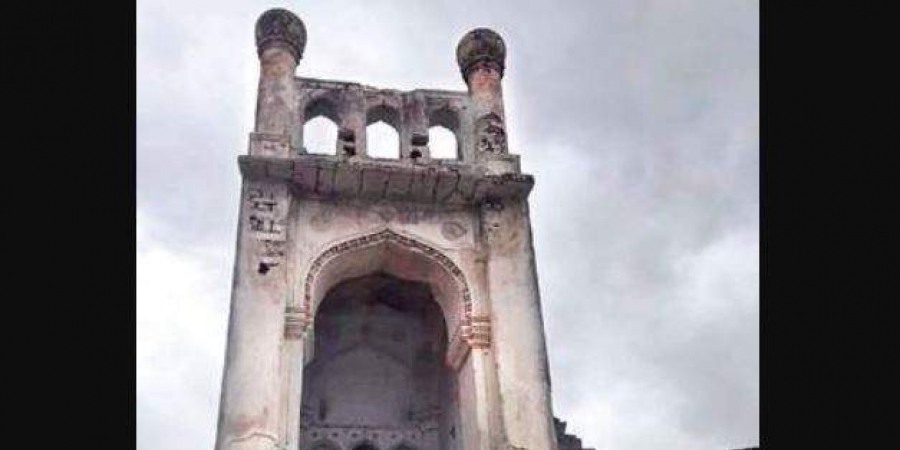
Located a stone’s throw away from the Dargah Hazrath Syed Shah Imaad Uddin Mahmood Al Hussaini, a nondescript structure stands out in front of the scenic hilltop on the banks of Mir Alam tank. This Qutub Shahi structure, popularly known as the Jino-ki-Masjid, may well be the ‘smallest mosque’ in the world.

Less than 10 sq m in area, this structure has the traditional elements of Qutub Shahi architecture including turrets and a big arch, under which there is a small space for devotees to pray. However, although it is located within the complex of the Dargah, the small structure stands dilapidated. The lime plaster has given away at various places, revealing the skeletal brickwork underneath.

The turrets are also broken at places, and so arch. The way to the mosque is also rocky, with no clear path. The mosque’s state could very well pose as a risk for visitors. The mosque gains importance as the Dargah complex was home to Syed Shah Imamuddin Husaini alias Mir Mahmood Nimatullahi, one of the oldest sufis of Hyderabad. In ‘Landmarks of the Deccan’, its author Syed Ali Asgar Bilgrami wrote, “He first came to Hyderabad from Najaf (Mesopotamia) during the reign of Sultan Abdullah Qutub Shah and stayed on this hillock.”

Mahmood had laid several buildings erected on this hill. “The mason who worked here were paid over and above the wages and the pregnant women-labourers were paid double the wages,” Landmarks of the Deccan said, adding that since no one knew his source of income, “it was a general belief that the Saint had some supernatural means of income”.

Once the land on which the Jino-ki-Masjid and the Dargah was build was to the tune of 600 acre. However, now, with time, most of it is occupied with houses built on one side of the hillock. The place comes alive during Urs, usually held on the 13th Shaban of the Islamic Calender, which was on April 19. During that time, many visit the Dargah, and hence it becomes important to conserve and repair the ‘smallest mosque’.

source: http://www.newindianexpress.com / The New Indian Express / Home> States> Telangana / by Express News Service / April 23rd, 2019

After two years, century-old Ma Hajiani Dargah restored to glory

Worli – Mumbai, MAHARASHTRA :

MaHajianiDargah01MPOs23apr2019

Conservation architect Vikas Dilawari’s work on Worli shrine is a significant chapter in the city’s built heritage

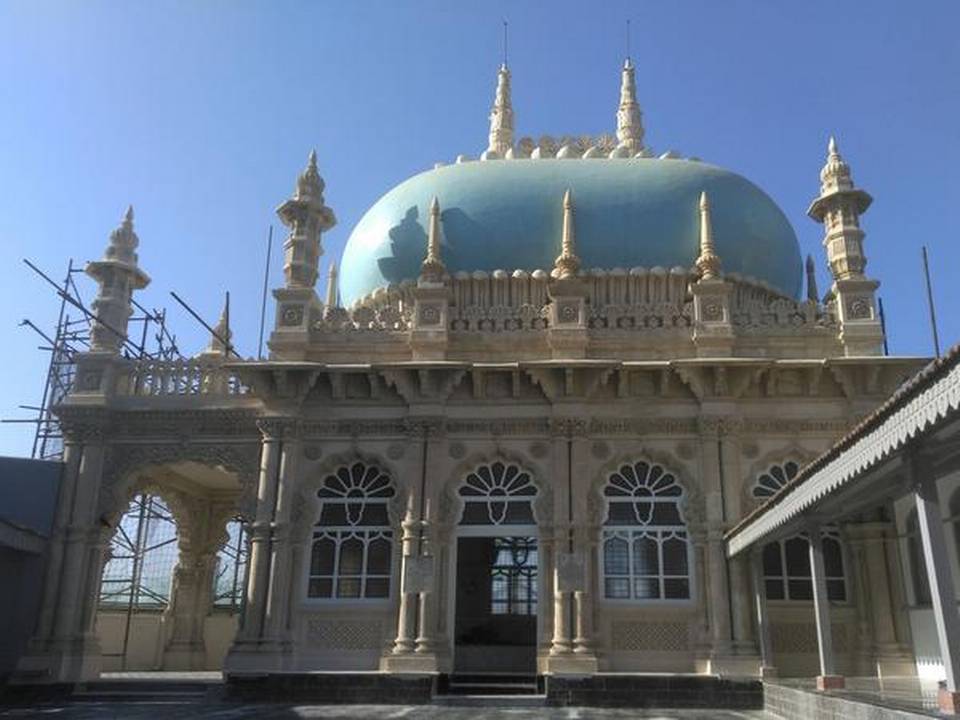
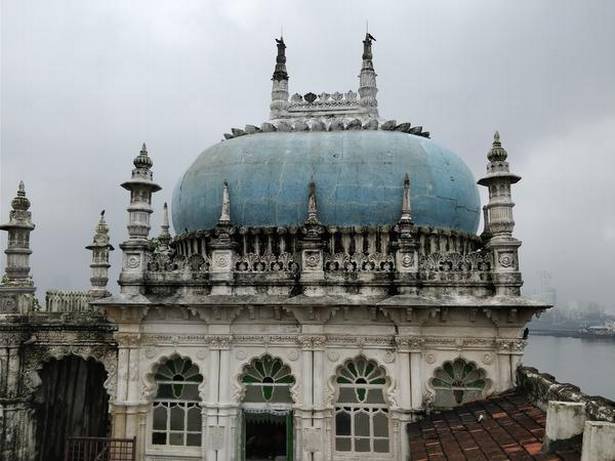
Cocooned in the shielding hold of the bay, just off the arterial, traffic-clogged road that hugs the coastline, is the 111-year-old Ma Hajiani Dargah, restored to its former glory. The restoration of the building began in November 2017 and was completed by conservation architect Vikas Dilawari on April 19, which also marked the eve of Shab-e-Baraat.

The dargah is one of the lesser-known spots of quiet in the city, often interchanged with the more popular Haji Ali Dargah, a stone’s throw away. Built in 1908 when Sir George Sydenham was the Governor of Bombay — primarily in Porbandar stone and basalt ashlar plinth — it is an ideal example of Indo-Saracenic architecture. Subtle influences of the colonial style of construction are evident, particularly in the ornamental work. “This is a very unique building. It is a magical place, of tranquillity, at the tip of the land on a natural rocky outcrop, elevated so gracefully,” Mr. Dilawari said.

MaHajianiDargah02MPOs23apr2019

Over the years, the dargah’s neighbouring plots of land were sold to private developers. The towering Samudra Mahal — a piece of prime real estate — was where the residence of the Scindias of Gwalior once stood, before being demolished in 1960. “Until a few decades ago, the Mahalakshmi temple, the Haji Ali Dargah, and the Ma Hajiani Dargah would have been the beacons along the coast of Bombay. The proliferation of high-rises without appropriate urban design is certainly impacting the pristine setting, and this might change further with the introduction of the impending coastal road,” Mr. Dilawari said.

A nautical past

The dargah is the site of three graves: Ma Hajiani, Haji Ismail Hasham Yusuf, and his son, Sir Mohamed Yusuf, draped in red and green brocaded chaddars and rose petals. The Yusuf family has been eminent in shipping trade and philanthropy in the city. Haji Ismail Hasham Yusuf founded the Bombay Steam Navigation Company in the late 19th century, and established the erstwhile Marine College at Rashid Mansion in Worli as a charitable institute, later moved to the island of Nhava and still functional as Training Ship Rahaman.

The mausoleum is built in honour of Ma Hajiani, a saint believed to be the sister of Saint Pir Haji Ali Shah Bukhari. The Haji Ali Dargah, houses the tomb of the latter. According to legend, they died at sea and their bodies were washed ashore, a few metres from each other. They were then buried at the respective spots they were found. Subsequently, two tombs were built — Haji Ali for the brother and Ma Hajiani for the sister. At the Ma Hajiani Dargah, women have always been allowed to access the maqbara. Women frequent in large numbers, making offerings of red or green glass bangles: red indicating one’s wish for marriage, and green for offspring.

source: http://www.thehindu.com / The Hindu / Home> Society> History & Culture / by Khorshed Deboo / Mumbai – April 23rd, 2019