The Department of Physics, Aligarh Muslim University (AMU), has brought global recognition to the institution as part of the internationally acclaimed ALICE Collaboration, which has been awarded the prestigious 2025 Breakthrough Prize in Fundamental Physics.
The prize has been conferred on the ALICE Collaboration for its detailed measurements of the Higgs boson properties confirming the symmetry-breaking mechanism of mass generation, the discovery of new strongly interacting particles, studies on rare processes and matter-antimatter asymmetry, and explorations of nature at the smallest scales and under the most extreme conditions.
This recognition celebrates the significant contributions of the AMU Physics team under the leadership of Prof. M. Anisul Ain Usmani, Chairman, Department of Physics, and Prof. Shakeel Ahmad, Project Investigator. Their research efforts have been integral to the global scientific investigations conducted at CERN’s Large Hadron Collider.
Prof. Shakeel Ahmad, a senior physicist and dedicated member of the ALICE Collaboration, has played a vital role in these high-impact studies. Along with his team of researchers from AMU, he has contributed extensively to the international effort, thereby enhancing India’s standing in the global high-energy physics community.
The Breakthrough Prize, widely regarded as the “Oscars of Science”, carries a total award of three million US dollars, with five hundred thousand dollars allocated to the ALICE Collaboration. This amount has been donated to the CERN & Society Foundation to support doctoral students from member institutes, including AMU, providing them opportunities to pursue research at CERN and strengthen international academic cooperation.
The prize was accepted on behalf of the ALICE Collaboration by Marco van Leeuwen of Nikhef, who served as the spokesperson from 2023 to 2025.
The University has congratulated Prof. Shakeel Ahmad and his team for their exceptional contributions and extended appreciation to all faculty members, research scholars, and students associated with the project for their commitment to scientific excellence.
source: http://www.radiancenews.com / Radiance News / Home> Pride of the Nation> Focus / by Radiance News Bureau / July 28th, 2025
Prof. Mohammad Rihan of the Department of Electrical Engineering, AMU
Aligarh:
Professor Mohammad Rihan of the Department of Electrical Engineering, Aligarh Muslim University (AMU), has been selected for the 2025 IEEE Power and Energy Society Hingorani Award for Excellence in Solar Photovoltaic Systems, a globally recognised honour bestowed upon individuals for outstanding contributions to the advancement and application of solar photovoltaic technology.
Currently on deputation as the Director General of the National Institute of Solar Energy (NISE), Prof. Rihan has emerged as a prominent figure in India’s clean energy transformation. He also chairs the Bureau of Indian Standards (BIS) Solar PV Committee, shaping critical policy and regulatory frameworks.
Prof. Rihan’s work at AMU includes leading the large-scale integration of solar energy into the campus distribution system, setting a benchmark in sustainable campus energy solutions.
He will be presented with the award at the IEEE International Conference on Power Systems (ICPS), scheduled at IIT Hyderabad from December 7 to 9.
source: http://www.radiancenews.com / Radiance News / Home> Pride of the Nation> Awards> Latest News / by Radiance News Bureau / August 01st, 2025
Close on the heels of a news item on tribal students swimming across Koteswari river to reach school in Dhar district, Madhya Pradesh comes yet another incident of a school teacher’s involvement to swim across Kadalundi River to reach the school on time in neighbouring Kerala. As a matter of fact, the Mathematics teacher got his calculation right in ensuring the students’ education isn’t affected at any cost.
In a bid to save time and ensure punctuality, the teacher wears a waterproof bag to carry his clothes and teaching materials and changes after reaching the other side, and heads straight to the classroom, often before the morning bell rings. This has been the case for him right from joining the school. Really pathetic to read the story which raised many questions on why the local panchayat seldom took any initiative on this count.
It is learnt that Abdul Malik has chosen to swim across the Kadalundi River from 1994 to avoid three-hour travelling in multiple buses to reach the school which is a laborious task. “Better to swim than depend on unreliable transport,” Malik reportedly told the media. Interestingly, the teacher is affectionately called ‘Tube Master’ by his students. No doubt, his punctuality received accolades from the department.
In a step further, Malik teaches swimming to students above grade five, helping them overcome their fear of water and equipping them with a vital life skill. In short, he has inspired both the students and teachers. But for the social media platforms, the teacher’s story wouldn’t have come to light. According to Logical Indian, Abdul Malik’s story is a shining example of how perseverance, empathy, and a sense of duty can transform not just individual lives, but entire communities.
Malik’s environmental advocacy further demonstrates how personal commitment can drive collective action for a cleaner, more sustainable future. At the Logical Indian, we believe stories like Malik’s deserve to be celebrated and supported, as they remind us of the extraordinary impact of ordinary citizens. According to Project Nightfall, the teacher carries his clothes, books, and lunch in a sealed plastic bag that he holds above the water’s surface for the swim.
Abdul Malik’s case isn’t an isolated case as there are a plethora of schools situated in high range and interior areas across several States where more often than not the tribal students have to cross river streams to reach their schools. What is irking is the fact that despite repeated representations to the concerned authorities, no tangible action has been taken so far. This only proves to show the apathy of the powers-that-be.
Sadly, the department of education’s convergence project which is referred to as Access Roads for All Learners (ARAL) which seeks to provide accessible and safe road networks for teachers, personnel, learners, and parents through the construction of roads and bridges leading to remote and far-flung schools, has been put on the back-burner sans any effective action.
[The author is former Indian Express and Deccan Chronicle chief]
source: http://www.radiancenews.com / Radiance News / Home> Education> Latest News / by M Rafi Ahmed / August 01st, 2025
In a remarkable display of talent and precision, Khadija Rabbani won the bronze medal in the Youth Women’s category of the Double Trap event at the 23rd Rajasthan Open State Shooting Championship, organized by the Rajasthan Rifle Association.
Khadija demonstrated exceptional skill by scoring 10 points in both the first and second rounds, securing her place on the podium. Her success is a testament to her dedication and the expert guidance of her coach, Syed Saad Ali, whose mentorship has been instrumental in her journey.
The championship saw enthusiastic participation from numerous young and experienced shooters across multiple categories. The event aimed to promote shooting sports and nurture emerging talent in Rajasthan, offering a vital platform for athletes to showcase their abilities.
Expressing her joy after the win, Khadija said, “This is a proud moment for me. The guidance of my coach, Syed Saad Ali sir, and the support of my family have been the foundation of this success. I am determined to work harder and achieve even more in the future.”
Her achievement has brought pride not only to her family and coach but also to the local shooting community. The Rajasthan Rifle Association lauded her performance and expressed confidence in her bright future in the sport.
Khadija’s accomplishment serves as an inspiration for budding shooters and highlights the importance of hard work, determination, and expert coaching in achieving excellence in competitive sports.
source: http://www.radiancenews.com / Radiance News / Home> Pride of the Nation> Awards> Latest News> Report / by Raheem Khan / August 01st, 2025
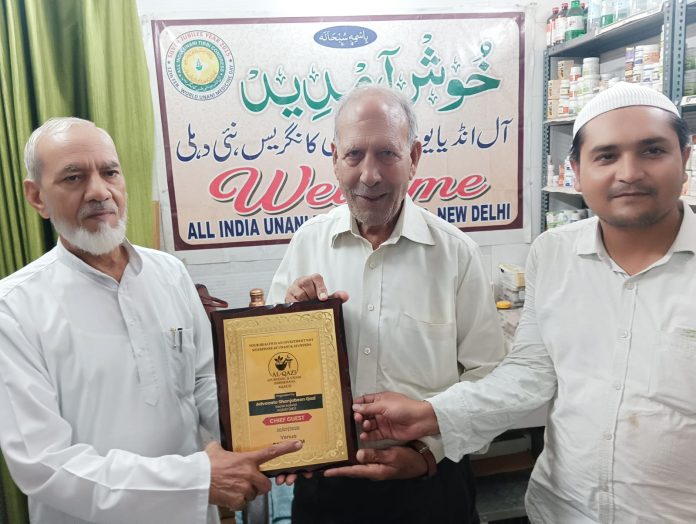
At the office of the All India Unani Tibbi Congress, located in Daryaganj here, Hakim Imamuddin Zakai of Neelam Dawakhana, Delhi, a prominent Unani physician, was presented with a Certificate of Honour.
On this occasion, while addressing fellow Unani doctors, Dr. Imamuddin Zakai emphasised the need for persistent efforts to promote the Unani system of medicine. He urged Unani practitioners to prioritise the use of Unani medicines as much as possible and called upon pharmaceutical companies to ensure the supply of high-quality medicines. He further appealed to both central and state governments to formulate policies for the advancement of Unani medicine, just as they do for the promotion of Ayurveda – especially considering that Unani medicine has been practised for centuries.
Dr. Syed Ahmad Khan, Secretary General of the All India Unani Tibbi Congress, stated that Hakim Imamuddin Zakai has been successfully running his clinic through the Unani system of treatment for over five decades, effectively showcasing the benefits of Unani medicine to the public. He also highlighted Hakim Zakai’s dual contributions to both the Unani medical system and the Urdu language.
“Today, we are conferring this Certificate of Honour in recognition of his invaluable services,” he added.
source: http://www.radiancenews.com / Radiance News / Home> Pride of the Nation> Awards> Latest News / by Radiance News Bureau / July 27th, 2025
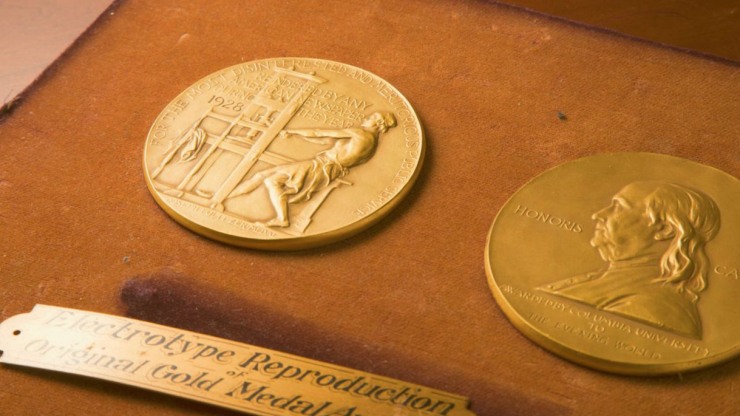
Obverse and reverse sides of the gold Pulitzer Prize for Public Service medal, which also serves as a symbol of the Pulitzer Prizes in general
A Kashmiri photojournalist Rafiq Maqbool was named finalist for the Pulitzer Prize along with Eranga Jayawardena of Sri Lanka for breaking news photography for images capturing anger over economic collapse in Sri Lanka.
“Rafiq Maqbool and Eranga Jayawardena of Associated Press. For a compelling visual narrative documenting public fury over Sri Lanka’s economic collapse, including clashes between protesters and police, the takeover of government buildings and jubilation as protesters occupied the plush presidential mansion,” Pulitzer Prize mentioned.
The winners of the 2023 Pulitzer Prizes were announced from Columbia University on Monday afternoon.
The Pulitzers are regarded as the highest honor that a US based journalist or organisation can receive.
“At a time when the media business is abuzz with excitement and anxiety about powerful new tech tools, there is nothing — nothing — artificial about the courageous reporting and storytelling the Pulitzer Prizes honors today. Journalism is a differentiator, not a commodity,” said Poynter President Neil Brown, the co-chair of the Pulitzer Prize Board.
source: http://www.freepresskashmir.news / Free Press Kashmir / Home> Achievers / by News Desk / May 09th, 2023
Zaggigam Village (Pulwama District), JAMMU & KASHMIR :
Umar Ahmad Ganie of Zaggigam village of Pulwama district, he cleared the NEET 2023 with 601 marks. (Photo: Qayoom Khan)
Pulwama:
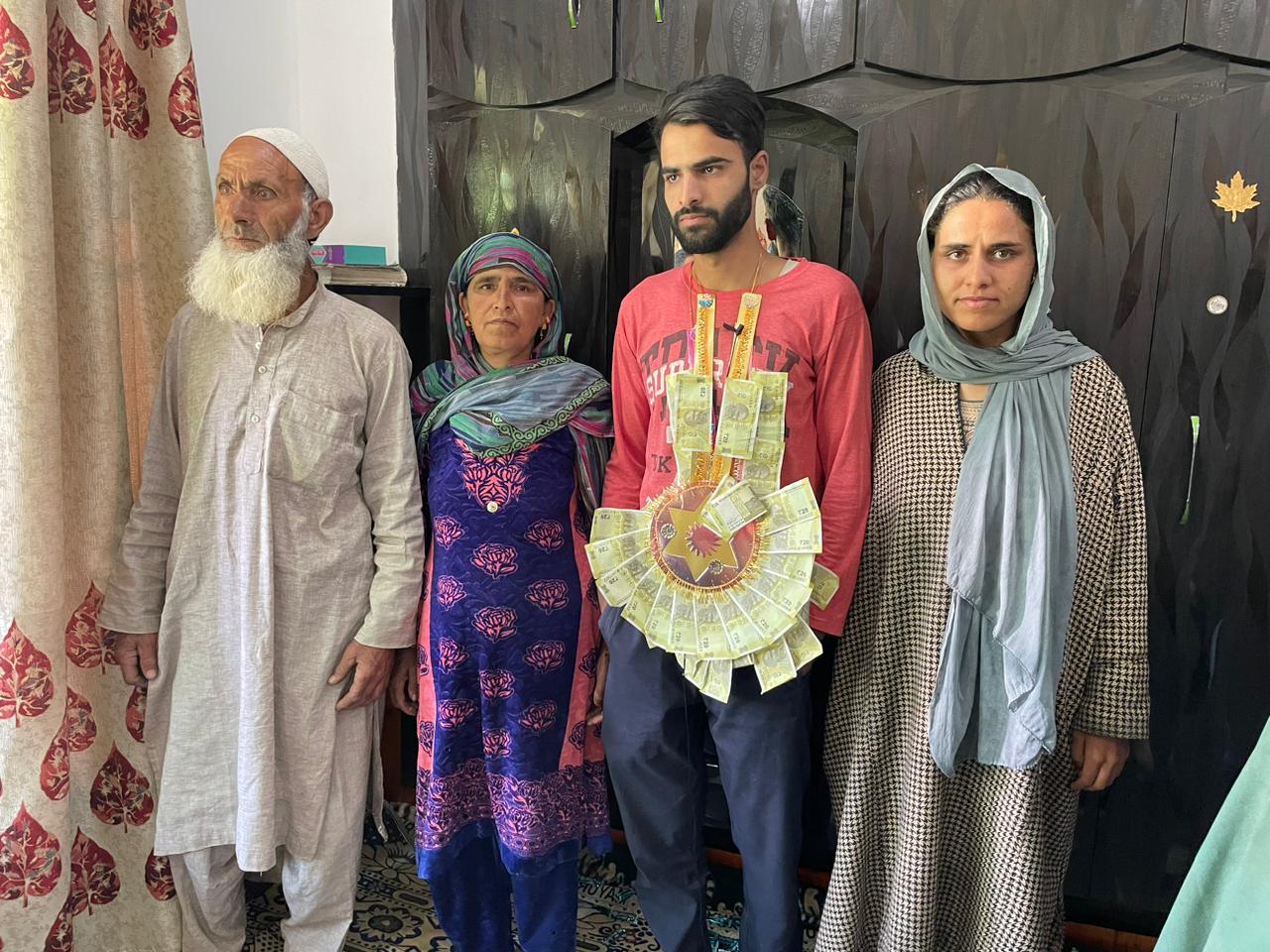
As the National Testing Agency (NTA) announced results of the National Eligibility cum Entrance Test-Undergraduate or NEET UG 2023, on June 13, one among the successful candidates was Umar Ahmad Ganie of Zaggigam village of Pulwama district.
Currently, Umar is away from home and working as a painter to support his family. He secured 601 marks in the test signifying a remarkable achievement and a testament of self-study, hard work, dedication, and perseverance.
What makes his achievement unique is that he has never enrolled in any coaching institute be it a class 11th, 12th or for the NEET.
Umar’s family was informed by locals that their kin has cleared the NEET, which is a single entrance test for admissions to MBBS and BDS colleges across India. After appearing for the NEET exam, Umar joined a local painter who helped him to give work as he wanted to support his family.
“He is currently outside the village working as painter to help his poor family,” said one of his neighbours, Gulzar Ahmed Naikoo.
Umar had even decided to leave studies as he wasn’t in a condition to afford the registration and other fees for college after the 12th class.
His exceptional performance in the exam is a reflection of his knowledge, skills, and commitment to his studies. He has shown a great determination and focus, and his success is well-deserved, Naikoo said.
Another candidate Abdul Basit from Chewa-Kalam village has bagged first position from Jammu and Kashmir. At All India Ranking (AIR), Basit has secured 113th rank.
Twin sisters from Damhal Hanjipora in Kulgam district have also qualified the entrance in their first attempt.
Syed Bismah and Syed Sabiya from Watoo village have secured 625 and 570 marks, respectively.
Pertinently, in 2022, the pass percentage of UG NEET qualifiers had increased by nearly 10 percent in Jammu and Kashmir corresponding to the previous year
In NEET-2021, only 42.59 percent students from JK had qualified the exams. But this year, more than 52 percent of students have qualified for the exams.
The official figures revealed by the National Testing Agency showed that in 2022, a total of 38,140 students had registered from JK and of them 36,374 appeared and 20,005 qualified it.
Likewise, in 2021, a total of 34, 615 candidates had registered from JK out of which 31,479 appeared and 14,743 qualified.
Bora Varun Chakravarti of Andhra Pradesh and Prabanjan J of Tamil Nadu energed as toppers of NEET Exams 2023.
source: http://www.freepresskashmir.news / Free Press Kashmir / Home> Achievers / by Qayoom Khan / June 14th, 2023
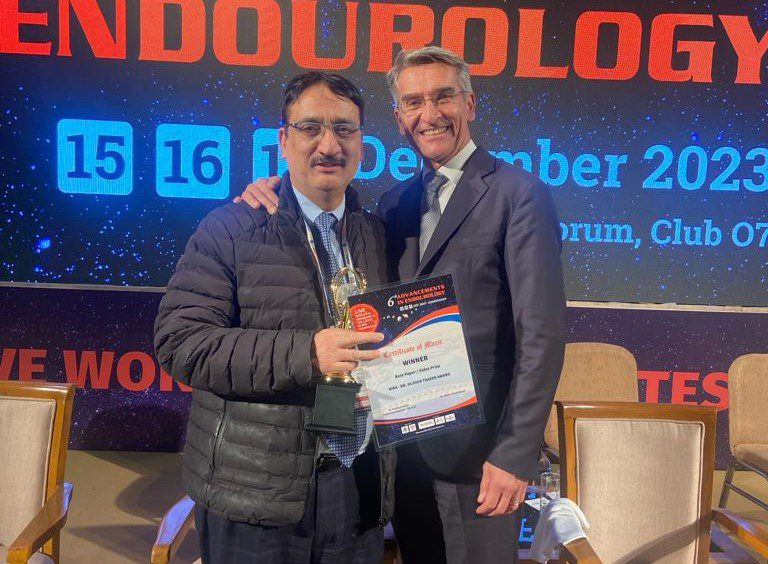
Professor Syed Sajjad Nazir, the Head of the Department of Urology and Renal Transplantation at SS Hospital GMC Srinagar, Jammu and Kashmir has been honoured with the Oliver Trexar Award.
The recognition was bestowed upon him for his video presentation on the use of laser techniques in treating impacted large upper ureteric calculi.
This work was showcased at the 6th Advancements in Endourology in Ahmedabad from December 15-17, 2023, attended by a distinguished international faculty.
The video presentation demonstrated a novel methodology, earning praise from peers and experts in the field.
The award was presented during an international conference inaugurated by Home Minister of India Amit Shah and Chief Minister of Gujarat Bhupinder Bhai Patel.
In response to receiving the award, Professor (Dr) Syed Sajjad Nazir expressed his deep honour and commitment to advancing urological care.
The Department of Urology, under his leadership, has been at the forefront of minimally invasive techniques for renal stones, particularly with the introduction of RIRS since 2018.
Congratulating the department, Principal/Dean GMC Srinagar Dr Masood Tanvir commended the team’s efforts in improving patient care and outcomes.
Dr Tanveer Iqbal, Associate Professor of Urology, emphasised that the recognition not only applauds the urology team’s dedication but also underscores the importance of laser techniques in treating upper ureteric calculi.
source: http://www.freepresskashmir.news / Free Press Kashmir / Home> Achievers / by News Desk / December 21st, 2023
In a riveting revelation, Dr. Sahar Qazi, a Bioinformatician—born in Kashmir and raised in Delhi—unveils a groundbreaking vision for transforming healthcare in the region. Witnessing the exodus of Bioinformatics enthusiasts from the valley due to limited opportunities, Dr. Qazi advocates for the establishment of Bioinformatics as a standalone department in Kashmir universities. The urgency becomes apparent as she addresses the prevailing healthcare challenges, with breast cancer topping the list among women, necessitating transformative contributions through Bioinformatics integration.
Dr. Qazi details how Bioinformatics holds the key to revolutionizing healthcare in Kashmir. From Cancer Genomic Medicine for personalized treatment plans to AI-driven early detection systems, her work is poised to shape a healthier future for the people of Kashmir. Her exclusive interview with Free Press Kashmir unveils the myriad avenues where Bioinformatics is making unprecedented strides, from unravelling the mysteries of microbial communities to identifying various SARS-CoV-2 strains during the COVID-19 pandemic.
Dr. Qazi’s accolades, notably the DST-AWSAR Award, highlights her commitment to bridging the gap between complex research and public understanding. As a Scientist-B (Bioinformatics) at AIIMS, her role in dissecting genomic data and predicting genetic variations stands as a testament to the transformative power of Bioinformatics in elevating the precision and overall quality of healthcare delivery.
Let’s start with your journey into Bioinformatics. Can you share with our readers what inspired you to pursue this field, and how has it shaped your career?
My introduction to Bioinformatics in my 12th grade back in 2012 marked the beginning of a transformative journey. Bioinformatics, a field encompassing physics, chemistry, biology, statistics, computer science, and mathematics, intrigued me with its flexibility – the ability to work from anywhere, breaking free from the conventional 9 to 6 lab setting.
Post-school, my exploration continued through graduation at the University of Delhi, where I delved into the practical aspects of Bioinformatics, not just its theory. The seamless fusion of my computer science and biology background made this multidisciplinary field easily comprehensible. Pursuing both master’s and doctoral degrees in Bioinformatics, I harnessed computational tools to unravel the intricate complexities of biological data.
In essence, Bioinformatics has given me the insight to navigate the vast biological data landscape. Like a skilled goldsmith refining raw gold into a radiant masterpiece, I, as a bioinformatician, decipher unstructured biological data to understand nature. This dynamic journey has not only broadened my understanding of life sciences but also fuelled my passion for research, contributing to the advancement of knowledge in genomics, proteomics, and beyond. I can say, Bioinformatics has been the guiding force sculpting my career, fostering a profound appreciation for the symbiotic relationship between biology and computational sciences.
For our readers unfamiliar with Bioinformatics, could you provide a simplified explanation of what you do and why it’s crucial in today’s scientific landscape?
In the realm of Bioinformatics, envision it as an amoeba, diverse yet unified in its significance. My role centers on applying computational techniques to dissect extensive biological datasets. Proficient in data analysis, programming, and statistical modelling, I decode complex patterns within genomics, epigenomics, transcriptomics, and proteomics. Using algorithms, I unveil genetic variations and delve into molecular interactions.
The importance of Bioinformatics today is paramount. With the surge in biological data from technologies like high-throughput sequencing, Bioinformatics becomes the linchpin for managing, analysing, and interpreting this wealth of information. It catalyses scientific discovery, aiding in disease understanding, drug development, and personalized medicine. Essential in genomics, epidemiology, and systems biology, Bioinformatics propels advancements in healthcare, agriculture, and environmental science. As our comprehension of biological systems grows, Bioinformatics becomes pivotal in navigating big data for innovative solutions to intricate biological challenges, ultimately benefiting society at large.
With a significant number of publications and book chapters, could you highlight one of your most impactful research findings or contributions to the field of Bioinformatics?
In the expansive landscape of Indian healthcare, marked by its burgeoning population, my focus lies in the critical realm of cancer research, particularly gynaecological malignancies. Breast, ovarian, and cervical cancers loom large in Indian women’s health, presenting a complex interplay of genetic, environmental, socio-economic, and cultural factors. Notably, these cancers often evade early detection, limiting treatment options and compromising survival rates.
My contribution to this field involves crafting novel algorithms for personalized medicine in cancers, a pioneering approach that tailors medical treatments based on an individual’s genetic makeup. As a Scientist-B (Bioinformatics) at AIIMS, New Delhi, my role revolves around dissecting genomic data from ovarian and breast cancer patients. By identifying specific genetic markers associated with gynaecological diseases, my work delves into predicting genetic variations, gene-disease associations, drug responses, and the survival of patients pre/post-chemotherapies. This integration of advanced computational methods has remarkably hastened the translation of genomic data into actionable insights, revolutionizing the practice of medicine. This research stands as a testament to the transformative power of Bioinformatics in elevating the precision, effectiveness, and overall quality of healthcare delivery, aligning with the evolving landscape of personalized healthcare.
Your accolades include three national awards, with the most recent being the DST-AWSAR Award in 2022. How have these recognitions influenced your research and career trajectory?
The DST-AWSAR Award, a recognition bestowed by the Department of Science and Technology (DST), Government of India, has significantly shaped my research journey. This accolade, centered on enhancing writing skills for articulating research, provided a unique platform to communicate complex scientific concepts to a broader audience. In my award-winning entry in the Ph.D. category, I creatively narrated the story of ovarian cancer formation and metastasis, drawing inspiration from literary works like George Orwell’s “Animal Farm,” Hussain Zaidi’s “Dongri to Dubai,” and the South Indian blockbuster “Pushpa: The Rise.”
The challenge was to distil intricate scientific findings without resorting to jargon. I metaphorically portrayed unhappy ovarian cells as hooligans, orchestrating chaos in the fictional city of The Ovary and spreading their mischief to neighbouring cities like “The Los Liver,” “The United Lung Emirates,” “The Spleen,” and “The Brain.” The recognition from the Ministry of Science & Technology, India, not only added a fun dimension to my research but also emphasized the importance of effectively communicating science. This award has reinforced my commitment to making science accessible and engaging, bridging the gap between complex research and public understanding.
Tell us about your current research and your role at AIIMS. What are some current projects or areas of focus for you and your team?
At AIIMS, New Delhi, our focus revolves around pioneering an AI-based early detection system for ovarian and breast cancers, coupled with the identification of specific clinical biomarkers. The developed AI system is currently undergoing enhancements through the integration of pan-omics data, elevating its predictive accuracy. In a significant stride, we’ve implemented this model at the Department of Gynae & Obstetrics and the Department of Dentistry, AIIMS, for immediate clinical support.
Simultaneously, our team is delving into the intriguing realm of the cancer-testis antigen (CTA) gene family, specifically exploring the POTE (Prostate placenta, ovary, testis, embryo expression) gene family. This gene family has emerged as a pivotal factor in various human cancers, including prostate cancer, ovarian adenocarcinomas, cervical cancers, colon cancer, and non-small cell lung cancer (NSCLC). Our research aims to unravel the intricacies of POTE’s involvement in cancer development, paving the way for targeted interventions and advancements in cancer diagnostics and treatment.
Considering the healthcare landscape in Kashmir, how can Bioinformatics contribute to developing more targeted and effective healthcare strategies for the people in the region?
Born in Kashmir and raised in Delhi, I’m deeply aware of the challenges faced by aspiring Bioinformaticians in the region, witnessing many students leaving the valley to pursue this field. With only a handful of institutions offering professional degrees in North India, there’s a compelling case for establishing Bioinformatics as a standalone department in Kashmiri universities. Turning to the healthcare landscape in Kashmir, where breast cancer ranks as the most prevalent among women, alongside lung, colorectal, and esophageal cancers, the integration of Bioinformatics promises transformative contributions.
Bioinformatics can pioneer targeted and effective healthcare strategies in Kashmir through several avenues. From enabling Cancer Genomic Medicine for personalized treatment plans, tracking diseases through robust epidemiological analysis, and enhancing early detection with Bioinformatics-based algorithms, to accelerating drug discovery for region-specific health challenges—each facet bears the potential to revolutionize healthcare delivery. Moreover, integrating diverse healthcare data sources and leveraging health informatics can provide a comprehensive view of the population’s health, leading to improved patient care. The collaborative efforts of healthcare professionals, researchers, and Bioinformaticians are crucial for the successful implementation of these strategies, ultimately shaping a healthier future for the people of Kashmir.
Given your background in Computer-Aided Drug Design, how do you foresee the future of drug discovery and development, particularly with advancements in computational methods?
The future of drug discovery and development is poised for transformation, driven by leaps in computational methods. The rise of artificial intelligence, machine learning, and big data analytics is making pharmaceutical research more predictive and data-centric. Computational approaches, fuelled by vast datasets, are revolutionizing the identification and optimization of drug candidates, potentially shortening development timelines. Precision medicine, shaped by individual patient data analysis, is steering towards personalized therapies for enhanced efficacy and minimized side effects. The integration of structural biology and molecular dynamics simulations provides unprecedented insights into molecular interactions, guiding rational drug design. As this computational revolution unfolds, ethical considerations and regulatory frameworks will be pivotal in ensuring responsible and secure technology application. The future promises a convergence of computational prowess and biological understanding, ushering in an era of targeted, effective, and personalized therapeutics. This interdisciplinary landscape, blending computational methods, data science, and traditional approaches, is set to accelerate innovation, delivering more effective and targeted therapies across various diseases.
The field of Bioinformatics has witnessed some remarkable strides. Can you shed light on some of the game-changing advancements that are reshaping research and healthcare, and how these innovations are making an impact?
In the dynamic field of Bioinformatics, remarkable strides are reshaping research and healthcare. The cost-effective next-generation sequencing is unlocking the era of personalized medicine, tailoring treatments based on individual genetic profiles. Structural Bioinformatics, employing techniques like cryo-electron microscopy, is revolutionizing drug design by offering precise visualizations of molecular structures. Metagenomics and microbiome research, powered by bioinformatics tools, are unravelling the mysteries of microbial communities, influencing our understanding of human health. During the COVID-19 pandemic, Bioinformatics played a pivotal role in identifying different SARS-CoV-2 strains, showcasing its critical importance in infectious disease surveillance. Single-cell omics and artificial intelligence integration are providing unprecedented insights into cellular behaviour, expediting data analysis, biomarker discovery, and the identification of therapeutic targets. These advancements represent a paradigm shift, presenting unparalleled opportunities to enhance patient outcomes, elevate diagnostics, and propel biomedical research into uncharted territories.
How do you envision the future of Bioinformatics, and what career opportunities do you see emerging in this field?
Bioinformatics, far from being a recent venture, traces its roots back to the 1950s, pioneered by Margaret Oakley Dayhoff, aptly known as “The Mother & Father of Bioinformatics.” Despite the coining of the term in the 1970s, Bioinformatics has been an integral part of the developmental eras of computation and sciences. Today, the landscape has evolved into translational bioinformatics, pushing beyond conventional boundaries. The future promises a dynamic expansion of translational bioinformatics, driven by technological innovation and enhanced integration with other scientific disciplines. As biological data continues to burgeon in volume and complexity, bioinformatics stands as the linchpin for extracting meaningful insights, propelling advancements in personalized medicine, drug discovery, and agriculture.
The convergence of bioinformatics with artificial intelligence, machine learning, and quantum computing is poised to usher in a new era of data analysis and interpretation. Anticipating this trajectory, career opportunities in bioinformatics are set to surge across sectors like healthcare, pharmaceuticals, biotechnology, and agri-genomics. Professionals equipped with expertise in data science, computational biology, and bioinformatics will be in high demand, occupying roles such as bioinformatics scientists, data analysts, computational biologists, and bioinformatics engineers. The interdisciplinary nature of bioinformatics ensures diverse career paths, from academia to industry, fostering a vibrant landscape of innovation and discovery.
Moving beyond Bioinformatics, let’s talk about the broader digital transformations in society. How do you think these transformations are shaping our perspective and lifestyle, and what role does bioinformatics play in this digital era?
Advancements in Bioinformatics are at the forefront of transformative changes shaping our perspective and lifestyle in the digital era. Bioinformatics, unravelling the complexities of genomics and biological data, is not just a scientific tool but a catalyst for a deeper understanding of our biology. This knowledge influences lifestyle choices by promoting personalized approaches to health, empowering individuals to make informed decisions based on genetic predispositions. The integration of bioinformatics into healthcare marks a paradigm shift, enabling preventative measures and personalized treatments. Beyond health, bioinformatics fosters collaboration and accelerates discoveries, impacting various aspects of our lives. In this digital age, bioinformatics emerges not merely as a tool but as a transformative force, guiding our perception of health and steering us toward a future where precision and personalized approaches become the norm.
As we wrap up, what advice do you have for aspiring bioinformaticians and individuals interested in the intersection of biology and technology?
For those venturing into the realm of Bioinformatics and the captivating intersection of biology and technology, my advice is to build a robust foundation in both domains. Develop proficiency in programming languages, statistical methods, and data analysis tools while nurturing a profound understanding of biological principles. Embrace the interdisciplinary nature of bioinformatics by staying inquisitive, keeping pace with advancements in biology and technology. Gain hands-on experience through real-world projects, collaborations, and contributions to open-source initiatives. Networking is pivotal, so actively participate in conferences and connect with professionals. As the field evolves, maintain adaptability and be ready to apply your skills to diverse challenges in healthcare, genetics, and beyond. The amalgamation of biology and technology holds boundless potential, and your passion, skills, and commitment can leave an indelible mark on the forefront of scientific innovation. In essence, be as adaptable as an amoeba, navigating the dynamic landscape with a smile.
With Artificial Intelligence (AI) and Machine Learning (ML) techniques leaving their mark across diverse fields, it’s intriguing to explore their influence on Bioinformatics. Dr. Sahar Qazi, could you elaborate on how these technologies are impacting the landscape of bioinformatics, and what potential they hold for the future of research and applications in this field?
AI and machine learning are reshaping Bioinformatics, unlocking new possibilities in processing and interpreting vast biological datasets. In the realm of big medical data, characterized by its four Vs – volume, variety, velocity, and veracity, these technologies shine. Their prowess lies in identifying intricate patterns within genomics, proteomics, and other -omics data, propelling more efficient drug discovery, disease diagnosis, and personalized medicine. In drug discovery, machine learning expedites candidate identification by predicting potential drug-target interactions and assessing compound properties. Beyond this, they enable personalized medicine by integrating diverse patient data to tailor treatments based on individual genetic profiles. As AI advances, its potential in predicting protein structures, understanding complex biological networks, and deciphering the genetic basis of diseases expands. The future of bioinformatics hinges on the seamless integration of AI and machine learning, promising unparalleled opportunities to decode the complexities of biology and usher in transformative breakthroughs in research, diagnostics, and therapeutic interventions.
source: http://www.freepresskashmir.news / Free Press Kashmir / Home> Achievers / by Aashiq Hussain Andrabi / January 06th, 2024