Jailed Kashmiri journalist Irfan Mehraj, digital and TV journalist Akanksha Saxena, and Srinagar-based journalist Khalid Khan have been announced as the winners of the 2024 Human Rights and Religious Freedom Journalism Awards (HRRFJ).
The awards, organised by the Indian American Muslim Council, a Washington, D.C.-based advocacy group, were presented at a ceremony in Chicago, Illinois. This year, the competition received over 210 entries across four categories.
The prestigious award for ‘Best Video Story on Human Rights and Religious Freedom’ was jointly won, with the top honour going to the three journalists from Deutsche Welle for their impactful documentary, “On Drugs – Kashmir’s Heroin Epidemic.”
The piece stresses upon the growing heroin crisis in Kashmir and lives of people ravaged by addiction in the region.
Among the finalists, Tej Bahadur Singh from Newsreel Asia was recognised for his work titled “UNEQUAL LIVES | Everyday Struggles of Dalits in Gujarat,” which explores the persistent struggles faced by the Dalit community in Gujarat.
Danish Faooq Pandit from The Wire was also acknowledged for his compelling report “Haldwani Unrest: Violence, Arrests and Unanswered Questions,” which scrutinises the violence and ongoing tensions in Haldwani.
Saptarshi Basak from The Quint made it to the final list with his moving documentary, “One Year of Manipur Violence: Horrors of Relief Camps — From Imphal to Churachandpur,” depicting the grim realities of life in relief camps following the violence in Manipur.
According to a Human Rights Watch statement issued earlier, said, “While on a professional assignment on 20 March 2023, Mehraj was summoned for questioning and detained by the National Investigation Agency (NIA) of India in Srinagar under provisions of the Indian Penal Code and the Unlawful Activities (Prevention) Act.”
Irfan has been booked under the draconian UAPA. According to the NIA, Irfan was previously summoned to Delhi in a case related to “NGO terror funding”. The NIA in its press note claimed he was a “close associate” of the Kashmiri human rights defender Khurram Parvez.
In June 2023, United Nations experts expressed serious concerns regarding the charges against and arrest of Mehraj and Parvez, stating that their continued detention is ‘designed to delegitimize their human rights work and obstruct monitoring of the human rights situation in Indian-administered Jammu and Kashmir.’
On 7 March 2024, UN experts sounded the alarm on the “harassment and prolonged detention of human rights defenders and journalists” in the country.
source: http://www.freepresskashmir.news / Free Press Kashmir / Home> Achievers / by News Desk / August 26th, 2024
How a series of breakfast conversations grew into an exhibition and a book.
On some mornings, Diba Siddiqi would sit down at the breakfast table in her parents’ home in Bengaluru, and record her father’s voice.
He would hold forth on everything under the sun – science, history, justice, conflict, photography, politics, poetry, philosophy, the evolution of language and silence. The musings continued well after the meal was over and an Olympus digital voice recorder Diba Siddiqi had placed nearby would capture her father’s thoughts.
The sheer range of topics wasn’t surprising. Obaid Siddiqi was one of India’s most eminent scientists whose pioneering work in the field of molecular biology and neurogenetics are well known.
Siddiqi was keen to have an account of her father’s stories in his own voice so that she could revisit them later. She had tried taking notes, but found the process distracting. She started using the digital recorder so that she could give him his full attention.
But the recordings, which started in 2007, ended in 2013 when the senior Siddiqi was killed in an accident while taking a stroll near his home. He was 81.
Immersed in history
Months later, Diba Siddiqi finally revisited the “breakfast monologues” as she called them.
She immersed herself in the stories her father had shared of growing up in eastern Uttar Pradesh in pre-Partition India and the sadness at how the Siddiqis lost track of family members who moved to Pakistan.
It wasn’t long before Siddiqi began to dig through old family photographs, many of them developed in darkrooms by her father and his siblings.
It didn’t stop at that. Diba Siddiqi’s mother, Asiya, is a distinguished historian, who has spent a large part of her life studying Mumbai’s past. Siddiqi began to delve into her mother’s life too.
The result is Rooh: The Enduring Spirit, an exhibition of old family photographs interspersed with new images Diba Siddiqi has taken of places that played an important part in her parents’ lives. A book of the same name is set to be released shortly.
Dominating figure
It’s obvious that Obaid Siddiqi was an overarching presence for his daughter. “My father was this colossal figure in my life,” said Siddiqi. “No language is adequate to express his continuing presence in my life. I still find myself quietly and unconsciously carrying on conversations with him.”
Born in Basti, Uttar Pradesh, in 1932, Obaid Siddiqi completed an MSc from Aligarh University before obtaining a doctorate from the University of Glasgow in Scotland. His family lived in Benares in two spells between 1932 and 1948 before finally settling down in Aligarh.
Preventive detention
The includes an account of the two years Obaid Siddiqi spent in jail from 1949 under preventive measures at a time when 30,000 communists were detained across country. Recalling his period of detention in the company of 13 Communist leaders, he said:
“So you see jail authorities, they used the criminals, who were called pukkas, to beat us up. They were prisoners who had served ten years, fifteen years, had life imprisonment… They acted like small unofficial wardens to control other prisoners. They were dressed to look like police. They beat up our friend Syed Ali badly, giving him galis, saying, ‘Pakistan se saala Pakistani Communist banta hai!’
However, Obaid Siddiqi could also recognise the benevolent side of the police officer who had beaten up the comrades, realising that human nature can never be categorised as entirely good or bad.
His parents and six siblings managed to send him letters during his imprisonment. His sisters arranged to smuggle letters in and out of jail while delivering home-cooked food to him once a week.
In 2014, Siddiqi visited Benares, where her father spent some time as a child. Waking at the crack of dawn every day, she walked around the ancient city, photographing the people and its streets.
Mumbai chronicler
Siddiqi also took many pictures in Mumbai, a city whose past her mother has written about extensively. One of Asiya Siddiqi’s celebrated works recreates the lives of people who went bankrupt in the 19th century. Roaming the bylanes of Mohammad Ali road and Dongri, in Mumbai, Siddiqui imagined that the ghosts of these people “and their descendants surely dwell in the neighbourhood I roamed in… The descendants of tailors, carpenters, blacksmiths, milk vendors, courtesans, dancing girls and prostitutes may continue to live and work here.”
Though the project is intensely personal, she believes it has broad appeal. She said she hoped viewers would let her work touch their mind and spirit and perhaps remind them of their own histories. “It is an expression of life that I have been a part of,” she said. “It has been about finding a voice in the images and bringing it together in one space.”
Rooh: The Enduring Spirit can be viewed at Bangalore’s 1 Shanthi Road gallery until February 11.
source: http://www.scroll.in / Scroll.in / Home> Photo Feature / by Zinnia Ray Chaudhuri / February 09th, 2016
Obaid Siddiqi, one of the most outstanding scientists of modern India, died in a freak accident in Bangalore on July 26. While he was out on a walk on July 21, a moped being driven by a young person of the neighbourhood rammed into him, and caused severe brain damage from which he could not recover.
He leaves behind his wife, Asiya Siddiqi, who is herself a very distinguished historian, and four gifted children: Yumna, whose area is English literature, Kaleem, who is a scientist, Diba, a promising photographer, and Imran, also a scientist whose work on seed-cloning has the potential to revolutionize agriculture in developing countries and questions the rush to Bt for raising yields.
But I want to talk not about the family that Obaid and Asiya raised but about the family of siblings and their spouses that surrounded Obaid, the larger family, as it were, to which he belonged. It was such a remarkable family, it so captured within itself all that is salutary in the development of modern India, that its individual members are worth recalling.
There were two sons, including Obaid, and five daughters, born to his parents. The youngest daughter, Imrana, married to the well-known social activist, Anubrata (Dunu) Roy, was a paediatrician at the All India Institute of Medical Sciences who turned to academic work in the social sciences and became one of the founders of the Centre for Social Medicine and Community Health at the Jawaharlal Nehru University. This centre, of which Binayak Sen was once a faculty member, remains to this day an unparalleled institution in India.
She was for decades our neighbour on the JNU campus. She was not just a close friend but one who epitomized what friendship should be, and it is through her that I came to know the remarkable Siddiqi family. Being a doctor in residence, in the early years of JNU when the campus had meagre medical facilities, she was the informal physician for every household, cheerfully available day and night; and she saw my family, especially my two children, through numerous medical emergencies. Because of her unbounded generosity, we called her “the Florence Nightingale of the JNU campus”; but that was unfair to her, since she was also a highly skilled medical practitioner, unlike Florence, and combined her expertise with a radical social philosophy.
One of her older sisters, Maimoona, was married to Ali Ashraf, a founder of the communist party in Bihar, and the first to translate the Communist Manifesto into Urdu. (Maulana Azad had earlier translated and published only some extracts in his newspaper.) Maimoona was herself a communist activist, and, together with her husband, worked at the party headquarters in Bombay bringing out its Urdu newspaper, and lived in the famous party commune set up by its general secretary, P.C. Joshi. In later years, she taught Urdu first at the Patna College and subsequently at the Aligarh Muslim University.
Ali Ashraf’s friend, Ziaul Hasan, also a very early member of the communist party in Bihar, married another of the Siddiqi sisters, Tahira, and also lived for long at the Bombay party commune while working for the party’s Urdu newspaper. B.T. Ranadive, then in ‘disgrace’ following the collapse of his 1948 line, was at the same commune and comrades were somewhat circumspect about socializing with him; but the Hasans struck up a deep friendship with him. Ziaul Hasan was then sent to Srinagar to work with Sheikh Abdullah, when the latter sought the help of the communists for carrying out land reforms in the state. Jammu and Kashmir, as is well-known, was the first state in India, even before Kerala and West Bengal, to implement radical land redistribution. He and his family lived with Imrana on the JNU campus for some years when he was working as a journalist on the staff of the Patriot newspaper, and my discussions with him on several evenings, when he would be reminiscing about the commune or berating me for my sectarian understanding, are a treasured memory.
Yet another of the sisters, Sayera, a highly distinguished economist who taught at the Aligarh Muslim University, was the first person, after the nationalist writers of the colonial period, to make an estimate, and a meticulous one at that, of the magnitude of “the drain of surplus” from India to Britain. A life-long communist, she married a fellow student against whom she had once taken disciplinary action as the All India Students Federation leader on the AMU campus. This fellow student, belonging to the AISF, was Irfan Habib, the famous historian and pre-eminent Marxist intellectual of the country.
The last sister, Shaista, was attached to the medical college at AMU and built from scratch its department of obstetrics and gynaecology. The other brother, Aslam, also belonged to the AMU faculty, to the department of engineering. He was asked to set up the university’s computer centre; he did so and served as its director for some time.
Obaid Siddiqi belonged to this family. All the traits that characterized the family, the generosity, the brilliance, the gentleness, the self-effacing commitment to work, the contempt for careerism, and the disdain for fame and status, were concentrated, as it were, in him. And he also shared the family’s social commitment and passion for effecting a revolutionary transformation in the country. Irfan Saheb once remarked to me that Obaid Siddiqi must have been the only Fellow of the Royal Society in its entire history who had spent time in jail for communist activities. That was during the “BTR period”, following the party’s Calcutta congress, when Obaid was an activist of the AISF at the AMU.
His passions included Urdu poetry (he was chancellor of the Urdu University at Hyderabad), Persian, and above all, music. He learned to play the sarod from Annapoorna Devi, and played it beautifully. He was meticulous about doing riyaz everyday, and later took lessons from the Dagar brothers who became his good friends.
I met Obaid Siddiqi occasionally on the JNU campus when he stayed overnight at Imrana’s place, having come for some meeting from Mumbai where he was then located at the Tata Institute of Fundamental Research. But I got to know him better when he came to deliver the Krishna Bharadwaj Memorial Lecture at the Centre for Economic Studies and Planning of JNU. The topic was “Do animals think?” and Obaid Siddiqi gave, in very simple language to a packed and overflowing audience, an account of his internationally acclaimed research into the neurology of the Drosophila fly. His answer to the provocative question of the title of the lecture was that while “thinking” was too ambitious a term to describe what animals did, several very elementary forms of it, suggesting a more developed consciousness beyond mere instinct, appeared to characterize them. The discussion that followed the lecture carried over into dinner and long afterwards into the night.
I met him a little more frequently when we both served on the research council of the National Institute of Science, Technology and Development Studies of the CSIR. But I got a chance for closer interaction at the convocation of the Kalyani University in 2003. By then he had moved to Bangalore where the TIFR was setting up an off-shoot for research on biology; he had been asked to head it and had already gathered around him a brilliant group of young researchers. Kalyani University was conferring an honorary doctorate on him, and on Sunil Gangopadhyay and Ganesh Pyne; and I had been asked to deliver the convocation address. We were lodged together at the same guest house for the event.
His acceptance speech was brief but extraordinarily illuminating. It was based on research work done at the Indian Statistical Institute, Calcutta, and highlighted the fact that the Indian population, barring small numbers inhabiting remote regions, was remarkably racially mixed, and hence far less diverse than commonly supposed. His interest in the area had possibly been stimulated by his radicalism, which approved a scientific finding that undermined any racial segregation of the population; but he referred only to the scientific finding itself.
Obaid Siddiqi was a compelling speaker, without flourishes, but with a solid command over facts and a meticulousness of reasoning that did not allow one’s attention to stray. His using the brief Kalyani speech to present what he thought was interesting rather than his own research is indicative of an attitude that values scientific advance over personal achievement, and sees knowledge as interconnected. He shared this perception of interconnectedness of knowledge with his friend, another great scientist from the subcontinent, Abdus Salam; it lifted him above the normal run of scientists into an outstanding intellectual. His death is a huge loss to the country.
_________________
The author is Professor Emeritus, Centre for Economic Studies, Jawaharlal Nehru University, New Delhi / Prabhat Patnaik The Author Is Professor Emeritus, Centre For Economic Studies, Jawaharlal Nehru University, New Delhi
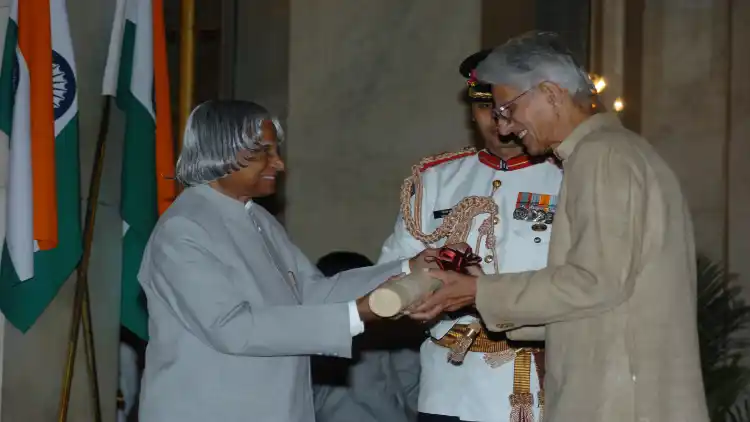
Obaid Siddiqui receiving Padma Vibhushan from the President
Genes and DNA are the words we hear frequently on our Televisions and other media. Genetic mapping has revolutionised the way humans understand organisms in general and themselves in particular. The past few decades have witnessed developments in biotechnology and genetics leading us to understand and treat diseases hitherto thought curable. Very few among us know that one of the important men who laid the foundation of this revolution was an Indian, Obaid Siddiqui.
Born on this day in 1932 in Basti, Uttar Pradesh, Obaid Siddiqui completed his Masters in Botany from Aligarh Muslim University (AMU) in 1953. Initially, he joined AMU as an agricultural scientist, after his Masters, and later moved to Indian Agriculture Research Institute (IARI), New Delhi. At IARI Siddiqui had prepared a testbed for wheat crossbreeds. But a devastating hail storm destroyed the crop and ruined his year-long labour. A frustrated Siddiqui, who had a keen interest in genetics, an emerging field at the time, wrote a letter to Professor Guido Pontecorvo at Glasgow asking him for a research opportunity with him. Pontecorvo accepted him and Siddiqui started his PhD at Glasgow on microbial systems – a paradigm shift from Botany.
During his PhD, Obaid made some path-breaking observations, which revolutionised the field of Genetics. Two very important observations made by him were:
His studies were the first reports of fine mapping of a gene.
He pointed out the concentration of mutational sites in a small part of genes.
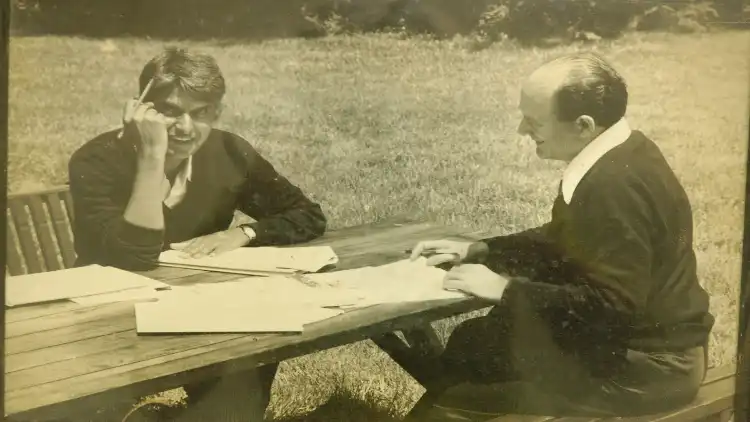
Obaid Siddiqui with Semour Benzer
So, when he submitted his PhD thesis in 1961 Siddiqui had already revolutionised the sciences in general and genetics in particular. Considering the fact that he shifted from Botany to a different field makes his achievement even more stellar.
The same year Siddiqui moved to Pennsylvania to work with Alan Garen as a postdoctoral fellow. Here, he discovered the suppressors of “nonsense” mutations. In simpler words, he discovered why a few mutations in a gene would not express themselves and remain suppressed. The discovery was a logical result of his earlier pioneering work in mapping of genes. Another important impact of this discovery was the finding of “nonsense” codons, the stop signal of genes. Har Gobind Khorana, Robert Holley, and Marshall Nirenberg received the 1968 Nobel prize for identifying “nonsense” codons and they personally acknowledged the role of Siddiqui in their research.
Siddiqui did not pursue his study of Codons further which got others a Nobel Prize because his heart was not in the USA. Siddiqui wanted to return to India to serve his motherland. This selfless patriot left the lucrative opportunities and told Alan Garen, in 1962, that he wanted to return to India.
Garen asked renowned physicist Leo Szilard to write to Homi Bhabha asking him to arrange a position for Siddiqui in India. Ignoring the opposition from fellow scientists in India, Bhabha showed confidence in Siddiqui and gave him the responsibility of establishing a molecular biology unit at Tata Institute of Fundamental Research (TIFR).
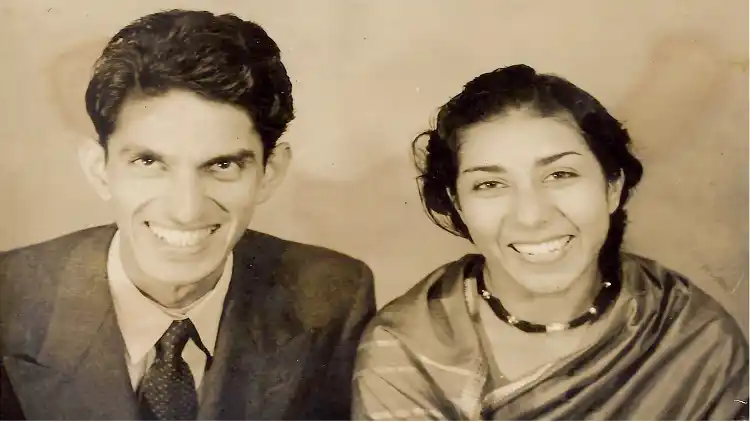
Obaid ASiddiqui with Wife Asiya Siddiqui
At TIFR, Siddiqui nurtured a younger crop of scientists and also brought Indians working in foreign labs back to India. With one of his students, P. Vijay Sarathy, Siddiqui showed that recombinant bacteria inherit DNA of bi-parental origin thus laying the foundation of principles of lateral gene transfer. In layman’s language his findings are the basis of the now well-known principle that genes pass from one generation to another.
With his other students like Kavita Arora and Veronica Rodrigues, Siddiqui showed that taste and smell of Drosophila have a genetic basis and thus opened a new field of chemosensory neurogenetics. These findings led others to research the role of genes on sensory perceptions, learning and memory.
Siddiqui was not a man who would compartmentalize his intellect to one branch of science. He contributed to fields as diverse as plants, Drosophila, bacteria, and genetics. He did not stop at research. He was an institution builder and established the National Centre for Biological Sciences in 1992 in Bangalore. Siddiqui was known for nurturing young minds by giving them the freedom to question.
Moreover, Siddiqui was a man who believed that sciences cannot operate in isolation of society. Scientists have a social responsibility and Siddiqui understood this. He stood for Human Rights, campaigned against communalisation and took part in social movements. Not only a music lover of Hindustani Music, Siddiqui was an established Sarod artist.
Obaid Siddiqui was awarded the second-highest civilian award, Padma Vibhusahan, by the Government of India. He was the true son of the soil who left lucrative offers in a foreign land to establish a research culture in India. His students are now serving the nation, which includes the present Principal Scientific Advisor of India, Professor Vijay Raghavan.
source: http://www.awazthevoice.in / Awaz, The Voice / Home> Stories / by Saquib Salim / July 26th, 2021
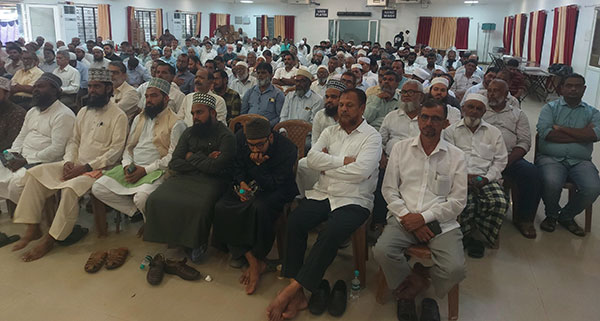
“There is growing concern among communal forces regarding the progress of the Muslim community, and this has led to them being increasingly targeted,” said Maulana Syed Tanveer Hashmi, a member of the Karnataka State Waqf Board and All India Muslim Personal Law Board. He stressed that the community must intensify its efforts towards educational and overall development, especially encouraging the youth to aspire for civil services.
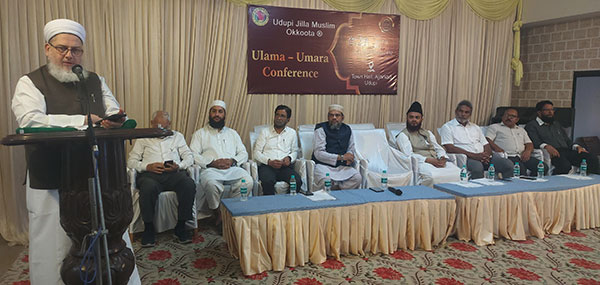
He was addressing a seminar titled “Current scenario and our responsibilities” organised by the Udupi District Muslim Federation at the mini auditorium of the Udupi Town Hall on Tuesday.
Maulana Hashmi highlighted the need to integrate Islamic values deeply into daily life to reform the challenges prevailing in society. “The community must actively engage in social service, extend help to the underprivileged, and foster harmonious relationships with people of other religions. During festivals, we must invite our non-Muslim brothers and share the joy of the celebration with them,” he said.
He further emphasised that Muslims should fully practice religious values and instil Islamic principles within their families, including children, women, and men. Education must be prioritized, with awareness cultivated within the community to promote academic growth.
Cautioning against objectionable behaviour on social media, he urged the youth to be responsible and avoid provocative posts. “We must stay away from the hateful narratives of ‘Godi Media’, communal provocations, and toxic online environments,” he stated.
Sulaiman Khan Sahib from Bengaluru, assistant general secretary of the All India Milli Council and Karnataka co-coordinator of the “Save Waqf, Save Constitution” movement, also addressed the gathering.
The event was presided over by Udupi District Muslim Federation president Muhammad Wawla. During the seminar, a book titled ‘Dharmadharma’ authored by federation member and writer Mustaq Hennabail was released.
The stage was graced by senior vice president Rafiq Kundapur, vice presidents Shabhi Qazi, Fareed Sheikh, and Fayyaz Byndur. The programme began with a recitation from the Holy Quran by Udupi Jamia Masjid Imam Maulana Rasheed Umri.
The event was welcomed by Maulana Zamir Ahmad Rashadi. Former district president M P Modinabba delivered the introductory address.
General secretary Ismail Hussain Katapady extended the vote of thanks, while Yaseen Kodibengre compered the event.
source: http://www.daijiworld.com / Daijiworld.com / Home> Karnataka / by Daijiworld Media News Network – Udupi / July 29th, 2025
E. Abu Bakar (born in 1952) is a significant figure in the socio-political landscape of India, particularly known for his role as a leader in the banned Popular Front of India (PFI). He is also a founder member of All India Muslim Personal Law Board,
Born and raised in Kerala, Abu Bakar became actively involved in social and political activism early in his life, driven by a deep sense of commitment to the rights and empowerment of marginalized communities, especially Muslims.
Abu Bakar’s leadership in PFI has been marked by his efforts to address issues related to social justice, communal harmony, and the upliftment of the downtrodden. Under his guidance, PFI has focused on various initiatives aimed at improving the socio-economic conditions of underprivileged communities. These initiatives include educational programs, legal aid, and awareness campaigns about constitutional rights and social justice.
A charismatic and articulate leader, E. Abu Bakar has been vocal about the challenges faced by Muslims in India, advocating for their rights in a democratic framework. He has been actively involved in organizing campaigns and movements that highlight issues of discrimination, police brutality, and state excesses. His approach often emphasizes the need for community unity and strategic action to address these challenges.
However, Abu Bakar’s leadership has also been contentious. PFI has faced criticism and legal scrutiny over its activities, with allegations of involvement in extremist activities and incitement of violence. Despite these controversies, Abu Bakar has maintained that PFI is committed to lawful activism and peaceful advocacy for the rights of marginalized groups.
Throughout his career, E. Abu Bakar has remained a polarizing figure, admired by many for his unwavering commitment to social justice, while also facing criticism from those who view his methods as provocative.
He has been in custody for two years following his arrest on September 22, 2022, under UAPA from his residence in Kozhikode.
At the time of his arrest, Abubacker, had no prior criminal record. He has been bedridden since January 2020 due to severe health conditions. He underwent extensive treatment for cancer, including chemotherapy and surgery, which involved the surgical removal of 80% of his abdominal and intestinal area. This has left his digestive system severely compromised. He also suffers from Parkinson’s disease, diabetes, vision loss, and hypertension, further deteriorating his overall health.
source: http://www.the100indianmuslims.com / The100 Indian Muslims / Home / 2024
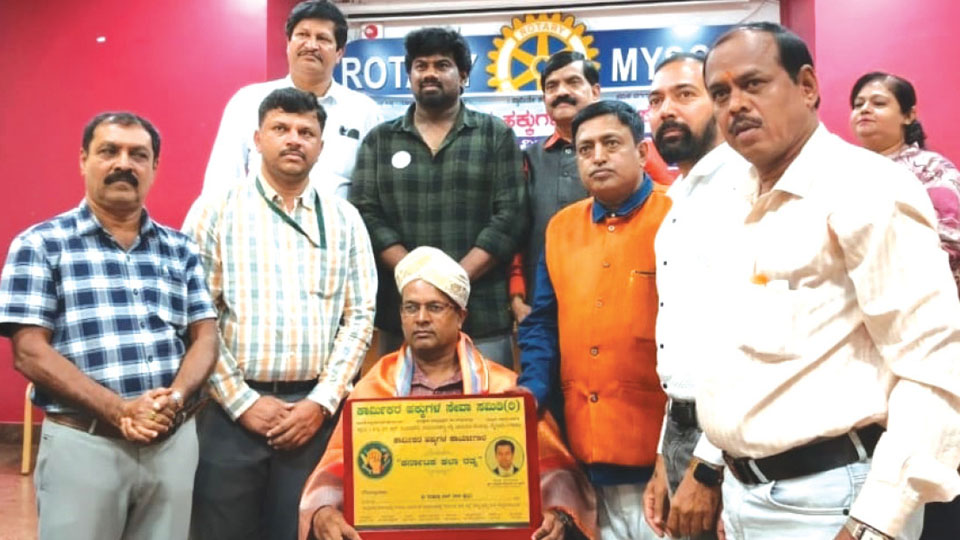
Radiulla Khan, Organising Secretary of Mysuru District Kannada Sahitya Parishat, being presented with ‘Karnataka Kala Ratna’ State Award during the workshop on ‘Labour Rights’ organised by Karmikara Hakkugala Seva Samiti at Rotary Hall on JLB Road in city recently.
The award was presented to Radiulla Khan in recognition for his works in multilingual films especially in Kannada language as a junior artiste.
M.S. Naveen, Chief Legal Aid Guardian, District Legal Services Authority (DLSA), V. Vinay Kumar from Employees State Insurance Corporation, industrialists and social workers M. Lalita Rao, Shubh Krupesh, V. Ramamurthy and Prashanth P. Aask, Actor-director Mahesh K.H. Belur, journalist Kasthurichandru and others were present.
source: http://www.starofmysore.com / Star of Mysore / Home> Photo News (headline edited) / July 26th, 2025
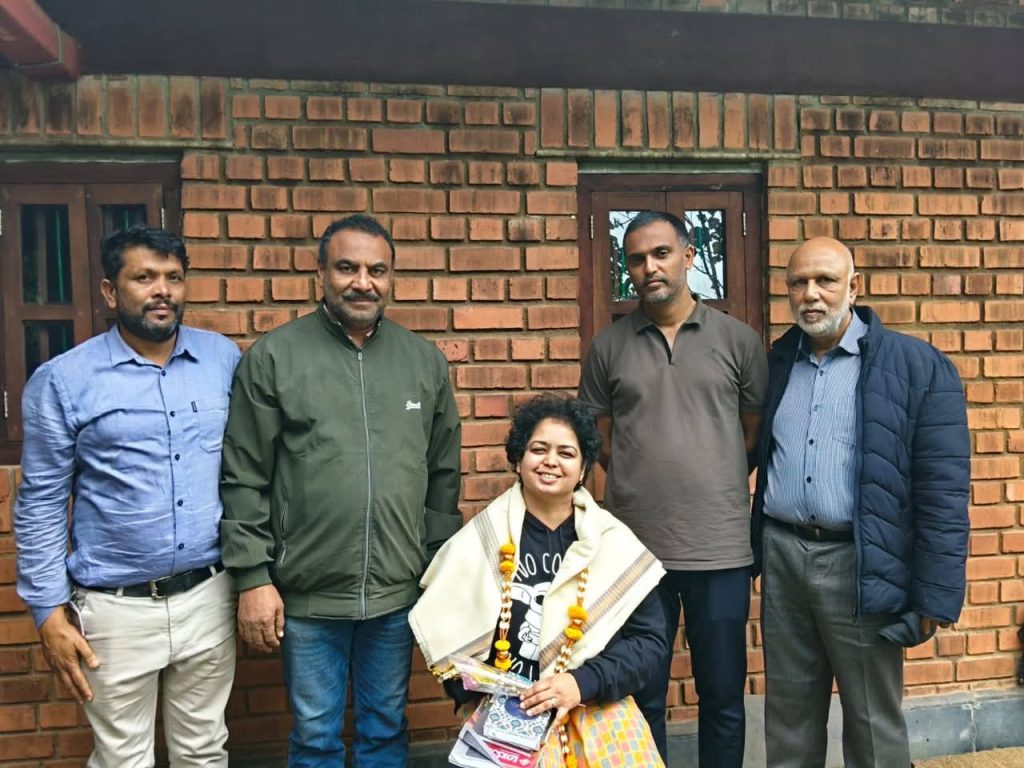
The Jamaat-e-Islami Hind Women’s Unit honored acclaimed writer and Booker Prize winner Deepa Basti at her residence in Madikeri on Tuesday, recognizing her remarkable contribution to literature.
During the felicitation, members of the unit encouraged Basti to focus on promoting human values through her work, highlighting the powerful role of literature in bringing about societal change.
Responding to their thoughts, Basti acknowledged that the literary field holds immense potential to influence social transformation and stressed the importance of sustained efforts in that direction.
The program was attended by Kodagu District Women’s Unit President Muheena Abubakkar, Madikeri President Waheeda Shaukat, and members Bibi Fatima, Maryam Mafeeda, and Tahira.
Also present were District President C.H. Apsar, Madikeri Local President G.H. Mohammed Hanif, members Mohammad Mustafa, and journalist Abdullah, all of whom extended their congratulations and best wishes to Basti for her future endeavors.
source: http://www.thehindustangazette.com / The Hindustan Gazette / Home> News> National> Karnataka / by The Hindustan Gazette / July 12th, 2025
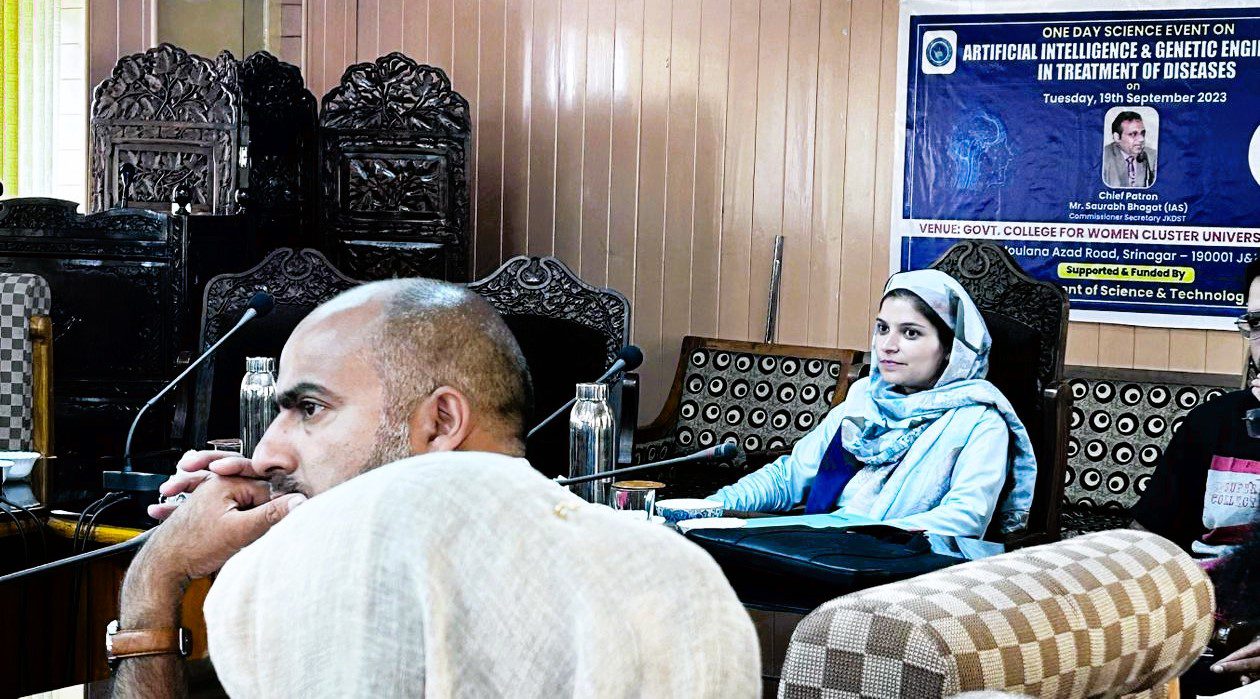
Dr. Qudsia Gani is a prominent physicist whose passion for revitalizing physics education in Kashmir is both inspiring and transformative. Born and raised in the valley, Dr. Gani has made it her mission to address the decline in physics enrollment at colleges, advocating for the subject’s profound applications in both industry and artificial intelligence.
As an assistant professor in the Department of Higher Education, Govt. of J&K, and leading the Physics department at GDC Pattan, Baramulla, Dr. Gani is actively involved in diverse research projects and mentoring exams. Her journey, culminating in a specialization in Nuclear and Particle Physics from the University of Kashmir, has positioned her as a prominent advocate for the cause of physics education.
From challenging the persistent gender stereotypes in Physics to navigating its current state in Kashmir, Dr. Gani provides insights into her experiences, challenges, and aspirationsin an engaging conversation with Free Press Kashmir.
Breaking stereotypes is a journey many admire, especially in the dynamic landscape of Kashmir. Against this backdrop, could you start by sharing the factors that influenced your decision to choose Physics as a field of study, especially in the face of the persistent stereotype in our society that women can’t excel in this domain?
I will not attribute anything to gender or to circumstances, nor did I know of any iconoclasts early on in my childhood to get inspired from. I have always made use of my raw intelligence to move ahead in life. Each one of us should respond to the inherent calling and be brutally honest with oneself. This is essentially what I did.
To my understanding, women are not born with the fear or phobia of mathematical sciences. Probably they are infused with it.
In the Indian context, one should look up to Shakuntala Devi, the mathematical wizard who made it to Guinness book of world records and is well known as a human computer.
It was only after I grew up, that I knew I had broken some stereotypes and set some examples. Like, I am the first woman to secure distinction in Physics in the University, then I was the first to crack the elite national level competitions like CSIR-NET/JRF and GATE. I was also the first ever woman to top the JKPSC selection list of assistant professors in Physics. My teachers and the appointing authorities who are all men, by the way, have always considered me well-deserved for all my accomplishments, irrespective of my gender.
The best way to break stereotypes is to be unaware of them and not pay heed to them.
But what sparked your decision to become a teacher, and how did this calling unfold in your life?
I had aspired to be an engineer and had obtained an 88 percentile in a state level exam to pursue software engineering. However, my father was supporting a family of six members, one of them with serious medical condition for which he was exhausting all his resources.
For not being able to afford the expenses of a professional degree, I took recourse to academics which usually unfolds into teaching. I chose Physics since I found it the most exciting intellectual pursuit which gives a broader perception about many different fields. I had a natural bend towards this subject among all the stuff that I was reading in school.
I express it with all humility that my teachers would often call me the next “Madam Curie” whenever I would solve a tedious numerical problem in the class. My Mathematics teachers would secretively tell my father, “Your daughter is not just good but she is exceptional in Mathematics”. Such compliments have always humbled me. The constant appreciations and encouragements of my teachers finally pushed me where I am today. I am enjoying doing Physics.
Reflecting on your teaching experience, what do you find most rewarding about being a Physics teacher?
Physics teaching is considered to be one of the most challenging and fulfilling careers you could consider. Physics teachers are the most sought after even in countries like USA and UK. Therefore, you automatically carry an aura of prestige and decorum.
You’ve an out-of-box identity and relevance at your workplace. Your presence is deeply noted and your absence is deeply felt. Your colleagues as well as the students hold you very high. Nonetheless one should stay humble amidst all glory and glamour.
But how would you describe the current state and future potential of physics education and research in Kashmir?
Well, it is pathetic! By now, there is a pool of PhD holders in the discipline of Physics, not to speak of other disciplines. The governments don’t have to offer much to them. As a result, some of them are switching to other fields. It is no surprise that we have seen a significant fall in the number of students opting for university education, especially in Kashmir. I would not like to point out any major drawback with the curriculum or with the teachers in place. It is only in terms of a limited output after a long term of hard-work that has demotivated them.
To have a job and a decent livelihood are after all, the most real and the most rational concerns of any educated person. Unless there is a policy renewal in terms of providing jobs and other opportunities, especially in the sector of science and technology, the future of Physics shall tend to remain bleak in our part of the world.
But then, we now have a new education policy, NEP, in place which comes with a myriad of changes aimed at internationalization, diversity and inclusion. What does it mean to you as a teacher?
The respondents to this policy fall in two categories, the supporters and the critics. The critique is that the policy lays more emphasis on a general rather than a specialized framework of different courses. But all sorts of progress of a nation in different fields would need more specialists than generalists especially in the current era.
Previously, all general aspects of education were to be followed and finished in school only. While coming to college, a student had to mend to specialize. The policy also aims at acquiring and upgrading various skills for the students to be self-reliant but it cannot be without realizing that the schools and the colleges do not have the necessary facility in terms of infrastructure and equipment to impart such trainings. Let the vocational training and industry training be taken up separately and not be messed up with educational institutions. That is why we have already seen some states doing away with the new education policy.
Do you anticipate that the new policy will in any way influence or change the perception about the subject of physics among students in Kashmir?
Well, it is too early to provide a definitive assessment of the new policy. While on one hand, it does not lay much emphasis on specialization, but on the other hand there is also optimism regarding the policy’s potential to broaden the students’ choices, encourage diversity and enhance the overall quality of education. Let at least one batch of students, graduate under the new scheme to see where they are able to land. If the choices really diversify or deluge, remains to be seen.
But beyond your role as a teacher, your contributions as a writer are noteworthy. Can you share your specific writing interests and shed light on the areas that you typically cover in your articles?
Thanks for your appreciation. Yes, I have been contributing to science pages of the leading national and regional newspapers and journals, from quite some years now. I have specific interest in Cosmology, Particle Physics and Astrophysics. Thankfully, I have received an immense response from my readers which keeps me going.
As a writer covering scientific topics, how do you navigate the balance between making complex scientific concepts accessible to the public and maintaining accuracy?
Well, I don’t take my readers through the abstract assumptions or the mathematical formalism needed to evaluate a hardcore physics idea, because I understand that I am reaching out to a mixed audience. I just bring to them the interpretations and meanings of different ideas, mostly of astrophysics.
I can confidently say, I have been able to evoke lot of interest in all segments of people from professionals to businessmen to employees to literary to commoners, besides the students of all age groups.
What are some of the recent developments or discoveries in physics that excite you the most?
There are many, but I am driven by two of them. One is the discovery of gravitational waves remotely proposed by Einstein and recently discovered by the famous LIGO experiment. This idea also lends credence to the theory of multiverse or parallel universes. This is going to be a hot topic in the physics fraternity for many decades from now.
The second is the idea of neutrinos; the minute indetectable particles which are actually jam packing the Universe. In fact, I hold my PhD in the same topic. There is a high likelihood that everything in the world in a few decades from now may prove to be neutrinos only.
OK, but what are some of the common misconceptions or myths about physics that you encounter in your work or in the public domain?
Physics is supposed to be hard but it can be broken down to simpler ideas. One can always find it interesting and appreciate the beauty of its contents. It is said that Physicists are socially awkward persons who don’t mix up with others so easily nor do they fall in love, or be good life partners. A physicist may not necessarily be a nerd. He/she may also be jolly and loving.
In a beautiful chain of words, Stephen Hawking writes in a subtle way that he pursued PhD to get a job and he wanted a job to marry Jane. Sometimes, Physicists make an influence in the society, far more than that of leaders or statesmen. Some time back I had written about the politico-effectiveness of Einstein, for example. Similarly, Isaac Newton is rated as the second most influential person in the entire human history, by some analysts. We are also sometimes labeled as atheists but how many people know that Newton was a theologian of equal footing as he was a physicist.
Alright, so what resources or support do you believe teachers need more of to improve education in Kashmir?
There are already many strategies in place that can work well in support of educators but I am sure that bulk of educational institutions in Kashmir are not having or availing them. Teachers need access to high-quality instructional resources by way of separate libraries for them, as well as the online support systems like smart classrooms and sophisticated science and language labs. Some schools and colleges are working on it using what is called LMS or learning management system. Teachers can also benefit from professional development programs conducted by various institutions of higher learning.
However, facilities and provisions don’t mean much unless the students have the desire to learn and let there be some degree of cooperation from their parents as well. Our youngsters are looking for short cuts to success which for their kind information don’t exist. Rest, we can always make up for the deficiencies in resources. It is not a big deal.
What advice would you give to someone aspiring to become a teacher and what actually makes a great teacher in your opinion.
For anyone aspiring to become a teacher, especially in the higher education, I have one important piece of suggestion in the context of Kashmir. While our students keep piling up their degrees one after the other, they don’t pay the necessary attention to crack various competitions and fellowship exams which could really give them a boost. Nor do they acquire the desired skills which could have made them worth the job market. In addition to a PhD degree, a student should necessarily go for various national eligibility exams without which the recruiting agencies do not honour their degrees and it is clearly laid down in their selection criteria. There are also many students who think it easy to compromise the quality to acquire their degrees in a short time. Later they realize that they have cut a sorry figure as they are unable to defend their work on certain platforms.
A person aspiring to become a teacher should be an efficient communicator who is able to raise and maintain a two-way interaction in the classroom with a productive outcome. Besides, he/she should constantly update in terms of content and teaching skills. A good teacher is able to deliver an intricate idea in simplest terms. According to Einstein, if you can’t explain it simply, you don’t understand it well enough.
Is Artificial Intelligence a direct application of Physics? Has it taken over the world and do you treat it as a boon or bane?
Yes, indeed, AI is drawn from some fundamental principles of physics. It is used to model and simulate complex systems to help machines to learn, adapt, and make intelligent decisions. However, machines don’t have self-awareness and emotions. They are very unlikely to match the human conscience or take over us. Nonetheless, AI is transforming every walk of life and we have to keep pace with the current trends or we shall cease to have a meaningful existence in future.
Calling AI a boon or bane is much like the essay we would be asked to write in school, whether science is a boon or bane. Going gracefully ahead with AI in future, will depend on our intent and our values and virtues. Moreover, the development of AI is heavily regulated, and is subject to strict ethical and legal guidelines. Its operation is quite transparent and accountable, to the best of my knowledge. Rest is rumor and hearsay
OK, so how can the education system and teachers better support both students interested in physics and those not interested, igniting passion for physics and making it more engaging and relevant?
This is an important question that you have asked. Physics can be popularized in many ways. Learning by doing projects and labs, holding of science fairs and workshops can be of great help. Though, these practices are already in vogue, but not to the requisite level. The physics teachers can volunteer for some mentorship examinations for students at all levels of education. The students with any grades or score in Physics are eligible to write these exams. These are held by various physical societies such as Indian Physical Society (IPS), Indian Physics Association (IPA) and Indian Association of Physics Teachers (IAPT). Luckily, I am a life member in all the three.
I have been conducting Olympiads for school students since 2019 by registering an exam center at JK Institute of Mathematical Sciences. I have also been conducting two more popular exams for college students. These are National Standard Examination (NSE) and National Graduate Physics examination (NGPE). The advantage of cracking such examinations at an early age is that the students get enrolled in various institutions of higher learning for integrated courses with handsome fellowships. Quite early on in their life, they get monetary support to achieve their higher education in well reputed institutions which is indeed a huge motivation.
Similarly, the schools and colleges should frequently invite noted Physicists (teachers and scientists) across the country for popular talks and interactions with their students to get them inspired. Seminars and conferences should be regularly organised to impress upon the importance of science in nation building. The popular science movies must be played at various events to highlight the importance of the subject in almost all walks of life.
What message or encouragement would you like to convey to the students specifically about the subject of physics, highlighting its relevance, potential, or any insights you’ve gained through your own experience with the subject?
There is a general consensus that Physics is the most fundamental and exact of all the sciences. Its laws are basic to deep understanding of other sciences such as astronomy, materials science, chemistry, photonics, life sciences, earth sciences, medicine, engineering and environmental science. It lends credence to the equations of Mathematics by giving them a meaning.
To me, Physics is not just about metrics and measurements nor is it only about mechanical entities like machines and gadgetry. It has rather encroached into almost all domains of human conscience including origin and evolution of universe, the concepts of life and death or even into religion and philosophy. It grills you for everything else. Physicists are the only professionals who have secured prestigious prizes in other fields of knowledge as well. Physics has given me a great personal and professional satisfaction. It is exciting if pursued with consistency and a living spirit.
Physicists hold a key to the glory of nations. Recall Chandrayan, for instance, and many more such upcoming missions. One can render a great deal of service to mankind in general and to the nation in particular by holding to the principles of Physics. It can also win you an international recognition. The names like Newton and Einstein are synonymous to intelligence. Glory comes default with it.
source: http://www.freepresskashmir.news / Free Press Kashmir / Home> Achievers / by Aashiq Hussain Andrabi / February 03rd, 2025
The late poet and former Director of Doordarshan, Farooq Nazki
Professor Naseem Shifaye chosen for Charaag-i-Sukhan Award for ‘Bu Vanyeth Zaan Kass’ book
Bandipora:
The Literary Forum Bandipora (LFB) on Wednesday announced its prestigious yearly literary awards for 2025, recognising two renowned poets and scholars of Kashmiri literature.
The late poet and former Director of Doordarshan, Farooq Nazki, has been posthumously awarded the Nazki Award for his exceptional contributions to Kashmiri literature. Professor Naseem Shifaye has been chosen for the Charaag-i-Sukhan Award for her acclaimed book “Bu Vanyeth Zaan Kass”.
The announcement was made after a day-long meeting and consultation session chaired by Mir Tariq Rasool, Vice President of LFB and Chairman of the Awards Committee. Other notable members present included Mubashir Saleem Nazki, Dr. Adil Mahiuddin, Sufi Showkat, Rouf Ghayal, Dr. Bashrat Fakir, Dr. Asrar, Mansur Muntazir, and others. “We have nominated Farooq Nazki for Nazki Award and Prof Naseem Shafie for her book after a detailed discussion and deliberations after receiving name of many poets and writers” Mir said adding ” the awards are conferred on merit, content and contribution,” Mir said while speaking on the selection process.
Mir said LFB has been honouring eminent writers at award functions being held in Bandipora for the past 10 years. The award was instituted, in 2015, in memory of Prof Rashid Nazki a poet, academician and founder of Adbi Markaz Kamraz.
The Nazki Award, established in memory of Prof. Rashid Nazki, a poet, academician, and founder of Adbi Markaz Kamraz, honors poets and writers who have made substantial contributions to literature. The Charaag-i-Sukhan Award recognizes poets or writers for outstanding publications in the preceding year.
Speaking on the Occasion Mir highlighted that previous recipients of the Nazki Award include luminaries like Professor GR Malik, Professor Shafi Shouq, and Shahnaz Rashid. He said the grand award ceremony will take place during the annual Nazki Day event, now scheduled for the last week of February 2025 in Bandipora. Initially planned for January 5, the event has been deferred due to severe weather conditions.
“Nazki Day is a yearly tradition to honor the memory of Prof. Rashid Nazki and celebrate literary achievements. Proper invitations will be sent to the awardees or their representatives for the ceremony,” Mir said. He said this year’s awards reinforce Bandipora’s role as a hub for literary and cultural enrichment, furthering the district’s legacy and Forum’s will in promoting Kashmiri literature. (KNO)
source: http://www.freepresskashmir.news / Free Press Kashmir / Home> Achievers / by News Desk / December 26th, 2025