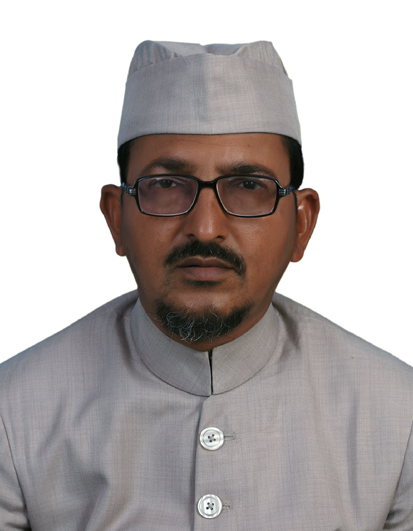
Prof Towqueer Alam, Department of Sunni Theology, Aligarh Muslim University has been appointed Editor of Fikr-o-Nazar, a quarterly literary and scholarly magazine published by the university, for a period of one year or until further orders, with immediate effect.
Prof. Falahi joined the Department of Sunni Theology as a lecturer in 1993 and became a professor in 2010. He has published about 35 books in Urdu, Arabic, English and Hindi, and more than 200 research papers in the journals of national and international repute.
He visited Mercer University, Atlanta USA in April 2016 as a Visiting Professor and travelled to UK, Iran, Kuwait, and USA to present lectures at international conferences.
The research areas of his interest are Quraniyat, Arabic Literature and Comparative Study of Religions.
source: http://www.radiancenews.com / Radiance News / Home> Latest News / by Radiance News Bureau / March 05th, 2024
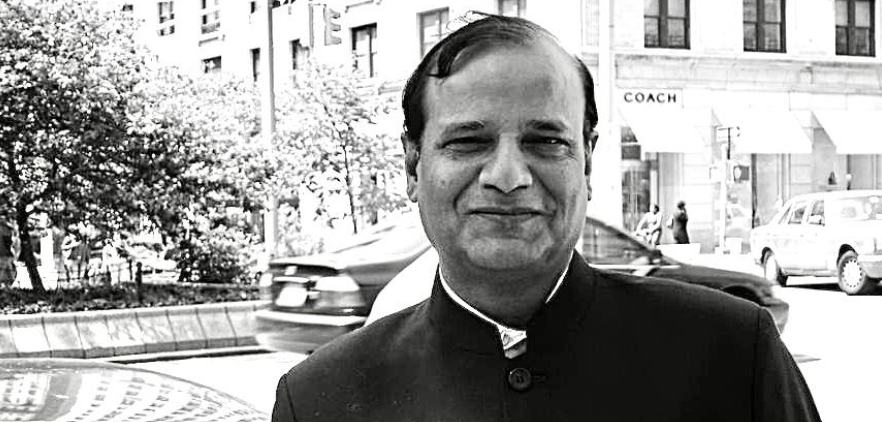
Dr Hussain was the kind of man, that if he himself were to read (or edit) this obituary, he would flinch at the mention of his generosity as a doctor or friend. Good deeds were to be done, he believed, not to be remembered or recounted.
Dr. Farasat Hussain (1952-2023)
This Sunday (August 6) when a group of people assemble to remember Dr Farasat Hussain, in ‘Renaissance’, an aptly named Cultural Centre in Gaya, set up by his lifelong friend, noted litterateur Sanjay Sahay and his wife Durba Sahay, the inter-faith gathering will be much more than a tribute to him. They will of course meet to talk about the good doctor who died on July 28 at the age of 71 in Delhi. But the meeting will embody the very essence of Dr Hussain’s life which was dedicated to bridging divides and building relationships. Be it religious, caste and class, there was not one single divide he had not jumped across.
The meeting will be very personal, no doubt, but it will also be a tribute to the India he inhabited for most of his life, where he was proud to serve as a doctor, live his life as a Magadh ka baashinda, a Bihari, an Indian, and all in all, a lively human being. But it will also be a necessary reminder in these vicious and polarised times of people who with their singular focus on humanitarian work are the secret sauce of what keeps or certainly kept India going.
Born in Bihar’s Chhapra district in 1952, Dr Hussain made Gaya his home soon after he completed his post-graduation in Orthopaedic Surgery at Government Medical College, Ranchi in 1983.
As a young doctor, he would kick-start his Rajdoot motorcycle and ride off to remote villages across Bihar to attend to emergencies. A pioneer in polio corrective surgeries in Bihar, he conducted scores of special camps where he performed more than 3,000 polio surgeries for poor children when he started his work here decades ago. He even conducted Caesarean sections when a gynaecologist wasn’t available.
In a state where public health was never really a thing, doctors like Farasat Hussain were the system. He was anyway an exceptional surgeon who had multiple opportunities and offers to make a career in the lucrative corporate medical sector, but he didn’t even consider it. He stayed in Gaya where he mixed his practice as a doctor with large-scale social work, community building and helped initiate a multi-faith effort to ensure communal harmony across the Magadh region.
But for people there, he wasn’t just a skilful surgeon and an efficient clinician, he was also a psychologist. His unique sense of humour, they suspected, was part of his treatment plan for a patient. Dr Hussain didn’t merely look at the disease of his patients, he treated the person. In a place where health infrastructure had crumbled in the decades of the 80s and 90s, he was an address for the sick where they knew they would surely get help.
He was also closely associated with the upliftment of the disabled population, who remember him as a mentor and benefactor for helping them with their livelihood. Several disabled people travelled from across the region, despite difficulties, and joined his funeral.
In 2010, the government of Bihar honoured Dr Hussain for his work. At that time, he was national president of the Association of Sports Medicine of India. He was honoured for his contribution to promote sports among disabled people, especially polio patients.
Dr Hussain was closely associated with Arpan, an organisation of disabled people in Gaya, where he was instrumental in motivating disabled youngsters to participate in sports and other activities to turn their physical challenges into opportunities that helped them move away from a life merely at the fringes of society.
Dr Hussain mentored Krishna Murari, who subsequently represented India at the sitting volleyball competition in the US.
Several other disabledyoungsters from the Magadh region also attended national sports events in cricket, volleyball and cycling. His focus on encouraging disabled youngsters to take up sports was to help in their inclusion in the social fabric, not as dependents, but as equal partners.
Dr Hussain was an integral part of the inter-faith dialogue, peace and harmony initiatives in the Magadh region.
This is why those who attended his burial say that it aptly exhibited the fruits of his lifelong work to build bridges between communities. Buddhist monks came to pay their respects to him. Hindus and Muslims came and prayed for him. Several disabled men came for the first time into a graveyard, only to express their love for the departed. There were madrassa children, who were helped by him when their institution was in extreme financial distress. A befitting farewell to a man of all persons.
Dr Hussain had been closely involved with one of Bihar’s oldest minority educational institutions – Mirza Ghalib College, where he consistently promoted progressive and secular values. Mirza Ghalib would be proud of all that he upheld there. He was also involved with a number of charity organisations, such as an orphanage at Cherki for more than two decades. This home for poor, underprivileged orphans is one of the biggest in India.
Dr Hussain was an exceptional man, who stood out because he was so restless and always busy, working, helping; a doctor in the truest sense of the word.
I happened to meet him several times, and saw an adoring grandfather to a precocious and thoughtful Farris. His quiet charm, polished demeanour and contagious smile did not mean that he ever held back on his views. A man capable of sharp candour and an openness of the heart, he could surprise you with his diagnosis of the social situation.
Dr Hussain was the kind of man, that if he himself were to read (or edit) this obituary, would frown and take serious umbrage at even a mention of his generosity as a doctor, friend, and human being. Good deeds were to be done, he believed firmly, and not to be remembered or recounted.
He is at eternal rest now. But his life needs to be celebrated for how he lived it and how he wanted the world around him to be. There is a need to nourish his legacy, intangible as it may seem. This is true today more than ever before, as we seem to have a hard time even imagining living a harmonious life as a collective.
He knew very well that there was no magic pill to fix the social fabric, no ready rafoo. But the good doc he was, he knew what it took to keep trying to get there and the importance of keeping all kinds of fevers down.
RIP, Dr Hussain.
source: http://www.thewire.in / The Wire / Home> English> Health> Rights / by Seema Chishti / August 05th, 2023
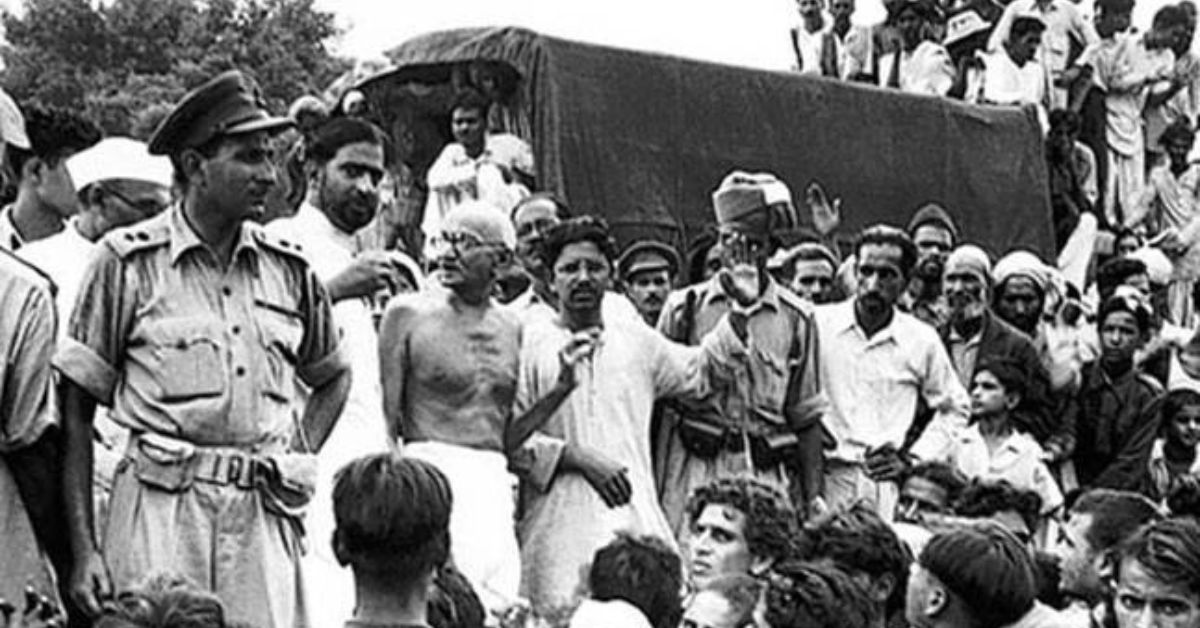
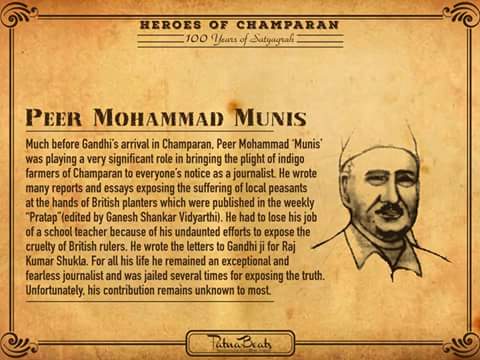
The Champaran Satyagraha is a landmark chapter in India’s history, and an important catalyst for it was journalist Pir Muhammed Munis, whose letter to Gandhi set the stage for the monumental resistance.
In 1917, when British rule prevailed over India, the government prepared a list to keep track of 32 of MK Gandhi’s closest associates. At number 10 was a name that history hasn’t forgotten since.
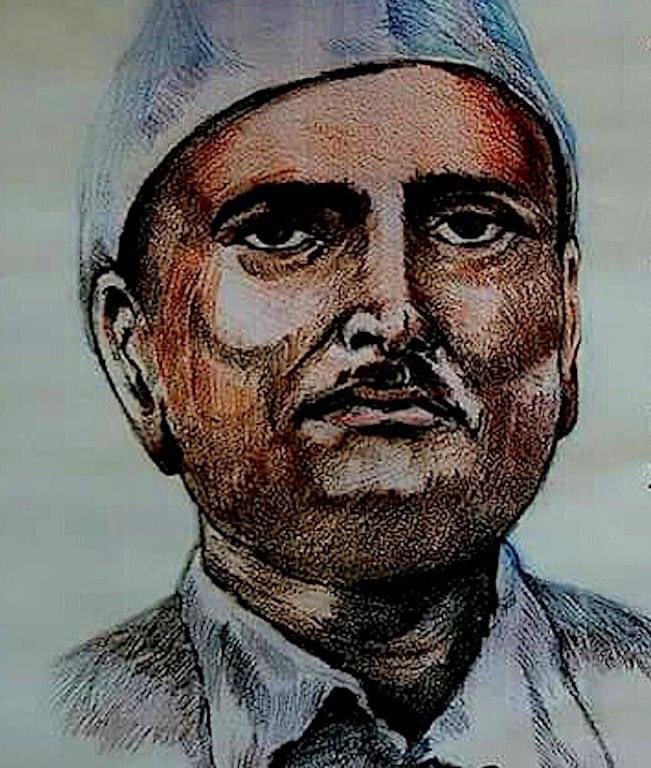
Pir Muhammed Munis, a journalist known for the power of his pen, was instrumental in his role in the Champaran Satyagraha movement, also touted as India’s first organised act of civil disobedience.
Through his body of work, he scripted a record of heroism that is etched into the sands of time.
To truly appreciate Munis’ role in the struggle for Independence, we trace our steps to 1916, when the British Raj was exercising exceeding control over Indians. One particularly vulnerable group were the farmers in Champaran, Bihar.
The source of contention was the agrarian practices in the region. While the British were intent on the peasants growing indigo, a lucrative cash crop with sizable demand in the markets abroad, the farmers were deprived of land for growing food crops instead. This tussle culminated in a famine, causing the farmers to rise in revolt against the dominion of the British. As the conflict escalated, word reached Gandhi. How?
Pir Muhammed Munis was behind it.
A ‘rouge journalist’
The uprising of the peasants in Champaran wasn’t going unnoticed. The country was reading about it thanks to Munis, who left no stone unturned in letting his views reflect his patriotic feelings. In the years to come, Pir Muhammed Munis would go down in history as the journalist who raised his voice when it was most difficult to be heard.
He chronicled the efforts of the farmers, the unlawful practices of the British and more such news in Hindi — despite the elite class being fluent in Urdu, Persian and English — displaying his ardent love for the language. In his later life, he went on to advocate for Hindi to be propagated amongst the masses. Anecdotes suggest during his later interactions with Gandhi, Munis even went on to teach the legend the language, a skill that greatly helped the latter.
So persistent and vocal was he about his patriotic opinions that he was termed as “notorious”, “bitter” and “dangerous” by the British, eventually being branded as a ‘badmash patrakar (rouge journalist)’.
A British Police document from the Azadi Ke Deewane Museum at Red Fort reads, “Pir Muhammed Munis is actually a dangerous and hoodlum journalist who through his questionable literature, brought to light the sufferings of a backward place like Champaran in Bihar.”
The letter that set the stage for the uprising
Pir Muhammed Munis fought for the farmers in the Champaran region of Bihar, Picture source: Twitter: Muslims of India
But nothing stopped Munis from continuing to write, his pen a double-edged sword. His works appeared frequently in Pratap, a Hindi weekly, and monthlys such as Gyanshakti and Gorakhpur. He was also on the editorial board of Desh launched and edited by Dr Rajendra Prasad.
The most famous letter among his repertoire of literary works is a letter he penned with local farmer Rajkumar Shukla, intended to be sent to Gandhi on 27 February 1917. Shukla conveyed the grievances of the farming community, while Munis coupled this with his power of words. An excerpt from the letter reads, “Our sad tale is much worse than what you and your comrades have suffered in South Africa”.
In another letter dated 22 March 1917, Munis once again voiced his concerns about the peasants in Champaran, and asked Gandhi to pay them a visit. And when he did on 10 April 1917, people commended the bond between the two, often calling Munis Gandhi’s pillar as he hatched plans for the Champaran Satyagraha.
As the first Satyagraha movement, it set the stage for future mass protests and uprisings. Gandhi set up schools in the Champaran area, gathered volunteers, conducted village surveys, organised protests, and strikes, and advocated for control over the sale of crops to be given to the farmers. And through this mutiny, Munis was by his side.
This did not go down well with the British. As a letter written by W H Lewis, sub-division officer to the commissioner of Tirhut division indicates, “… Mr Gandhi got offers of assistance, the most prominent is Pir Muhammad. I have not (sic) full details of his career, but either Whitty or Marsham could give them. He is, I believe, a convert to Muhammadanism and was a teacher in the Raj School. He was dismissed from his post for virulent attacks on local management published in or about 1915 in the press. He lives in Bettiah and works as a press correspondent for the Pratap of Lucknow, a paper which distinguished itself for its immoderate expressions on Champaran Questions… Pir Muhammad is the link between this Bettiah class of mostly educated and semi-educated men and the next class, i.e. the Raiyats’ own leaders…”
The result of the tyranny
History never forgets the cries of the just, and the Champaran Satyagraha was proof of this.
The mutiny ended with the British officers agreeing to formulate the Champaran Agrarian Act of 1918. The Act abolished the forcible cultivation of indigo and thus relieved tremendous pressure being put on the farmers here. The event has gone down in history as one of the first major revolts that forced the English to introduce a Bill in favour of the Indians.
With the Tinkathia system being abolished, the farmers thought the worst was over. But the British continued to oppress them in different ways. Fuelled by ending this once and for all, Munis started Raiyati Sabha, a platform that would advocate for and protect the rights of the farming community. For this, Munis faced a six-month jail term.
This wasn’t the last of imprisonment. In 1930 he was imprisoned in the Patna Camp jail for three months for his participation in the Salt Satyagraha of the Civil Disobedience Movement.
However, nothing could deter him from his goal of protecting the rights of his countrymen. In 1937, he led sugarcane producers who were protesting against intermediaries who were pocketing a major part of the earnings. He was also elected member of the Champaran Zila Parishad (District Board) on the Congress ticket and became President of Bettiah Local Board, from which he resigned to join the Individual Civil Disobedience Movement.
Throughout his lifetime, he advocated for rural development, popularisation of Hindi in primary schools and the rights of his fellow Indians. Until his passing away on 23 September 1949 Munis continued to be a leader worth looking up to for his countrymen.
Lauding the efforts of Munis on his passing away, Pratap editor Ganesh Shankar Vidyarthi, wrote in his newspaper, “We have the utmost sorrow that Pir Muhammed Munis of Bettiah, Champaran district has died. We have the privilege to see such souls who are quietly lying aside. The world doesn’t come to know anything about their issues. The lesser these sons of Mother India are renowned, the more profound is their work, the more philanthropic.”
He further wrote, “You recited the dreadful story of Champaran to Gandhi ji and this was a result of your hard-work only that Mahatma Gandhi visited Champaran which made this land a pious place and the place which is unerasable in the pages of history”.
The new information technology minister of Bihar Mohammad Israil Mansuri belongs to a socially backward Dhuniya community.
Mohammad Israil Mansuri. | Photo: Facebook/Israilmansuriofficial
Patna (Bihar) :
Mohammad Israil Mansuri, a Rashtriya Janata Dal (RJD) MLA is the new minister of Information Technology in the government of Bihar.
Mansuri, 46, belongs to the Dhuniya community and uses Mansuri as a surname. In Bihar, the Mansuris are primarily involved in quilt making. He is considered to be the first in his community to become a minister in the government.
Mansuri started his political career in 2001 as a Mukhiya (village head). Though he calls himself a “servant of all communities,” in political terms he is a Pasmanda (socially backward).
Mansuri completed his early education in his village Mathurapur, Patahi in the Muzaffarpur district. He studied up to I.Sc. and later joined politics.
His father Mohammad Usman does not have prior experience in politics and his wife Zubaida Khatoon is a homemaker. His only daughter Neha Tarannu is studying Unani medicine. Mansuri used to work with his father in litchi gardens and at his grocery shops. He is the third among six siblings of four brothers and two sisters. One of his brothers runs a fruit shop while the other is a teacher. He wanted to be a teacher but could not clear the main examination in 1994 while he had also passed the preliminary test for T.C. in Railways after passing his 12th board examination the same year.
He first joined Nitish Kumar’s party Janata Dal in 1996 and was part of the party till Kumar joined hands with the Bharatiya Janata Party in 2017. He resigned from JD (U) and joined RJD.
Talking to TwoCircles.net, Mansuri thanked the Almighty and his party leaders Lalu Prasad and his son the deputy chief minister of Bihar Tejaswhi Yadav for choosing him to be a minister. “For me being a Mukhiya too was a big dream. Then in 2020, I got a ticket from RJD and got elected as an MLA in my first attempt from the Kanti seat. I was extremely surprised when I got a call to take the oath as a minister. It seems that my struggle in politics has impressed my leaders Lalu and Tejashwi,” he told TwoCircles.net.
“To struggle and strive for something comes naturally to me. I studied in a school where we had to take our Bora (Jute bag used as a mat) and did not have a pen and notebook but slates to write on. I used to cycle 10 to 15 kilometres to bring the grocery items for our shop while I was in school. As I had an interest in social work, I got a chance to meet people. Though I come from the Mansuri community, my popularity in all communities is equal,” he said.
Mansuri was caught in controversy soon after he became a minister. He travelled with the chief minister Nitish Kumar to the Hindu holy city of Gaya as he was the in-charge minister of that district. When he entered the Vishnupad temple accompanied by Kumar, a huge controversy erupted as “non-Hindus were not allowed to the sanctum sanctorum of the temple. “I used to visit all places of worship without caring for the religion. I was not made aware of the restriction at that temple. I entered without any intention to breach the rule.”
When asked what his focus would be as a minister of the IT department, he said, “IT is a fast-changing sector. We would try to keep our state updated in this field. We would also see how many jobs we can provide to the youths from our department as this government aims to give ten lakh jobs.” He checks his emails and runs his Facebook page by himself and has his own website.
All India Pasmanda Muslim Mahaz President and former Rajya Sabha member Ali Anwar told TwoCircles.net that as Mansuri belongs to Pasmanda Biradari his election as MLA and now elevation to a minister is a great morale booster for the downtrodden section of the Muslim community. “Lalu and Tejaswhi took the right decision to induct Mansuri as a minister and many more such steps are needed for the society,” he said.
Former Director of Jagjivan Ram Institute of Parliamentary Studies and Political Research – Srikant sees it as a necessary step to bring upward mobility to the people who belong to the lower strata of society. “Since Mansuri belongs to the most backward section of the society his empowerment in politics is in accordance with the theory of Ram Manohar Lohia and Mahatma Gandhi,” Srikant said.
Srikant added that it was a time taking process to empower the Pasmanda section but a positive step has been taken.
www.israilmansuri.in
Sami Ahmad is a journalist based in Patna, Bihar. He tweets at @samipkb
source: http://www.twocircles.net / TwoCircles.net / Home> Careers / by Sami Ahmad, TwoCircles.net / August 30th, 2022
Meanwhile, BJP is deliberating upon the reasons for the failure of operation lotus in Bihar and the future course of action in the changed situation there
Bihar Chief Minister Nitish Kumar after the expansion of his cabinet has made public that there will be 5 Muslim ministers in his cabinet of 31 Ministers that took oath on August 16, 2022.
The JD-U broke away from the BJP and was successful to retain power in the newly formed government with the RJD and other allies. The JDU gave only one ministerial berth to its member from the minority community from its quota. Jama Khan was made Minister of Minority Affairs.
In Contrast, the RJD gave three Ministerial berths to the minority community from its quota. Shamim Ahmed made sugarcane minister, Shahnawaz Alam got disaster management, and Mohammad Israil Mansoori got information technology.
Congress, the alliance partner of the JDU-RJD combined government has given only one ministerial berth to a member of the minority community. Afaq Alam has become the animal husbandry and fisheries minister of Bihar.
If we compare 2022 with 2020 when the JDU aligned with the BJP to form the government in Bihar, there was not a single Muslim Minister in Nitish Kumar’s cabinet. Even the Minority Affairs Ministry was held by Ashok Chaudhary, a close confide of the Bihar CM. This was worse than in Uttar Pradesh where the lone BJP Muslim MLA was made Minister of Minority Affairs.
In the cabinet expansion, the Rashtriya Janata Dal (RJD) got 16 ministerial berths. The Janata Dal-United (JDU) got 11, the Congress got 2 ministerial berths. Jitin Ram Manjhi’s Hindustani Awam Morcha and an Independent MLA Sumit Kumar Singh also found a place in the new cabinet.
It is learned from the sources that 5 ministerial berths are kept reserved for future expansion of the Bihar cabinet that can have up to 36 ministers, including the Chief Minister.
The Grand Alliance in Bihar has a strength of 163. Now it has climbed to 164 after Sumit Kumar Singh an Independent MLA extended his support to the JDU-RJD alliance and got a ministerial berth in the new government. The RJD- JDU government in Bihar is likely to prove a majority in the Assembly on August 24.
Earlier Chief Minister Nitish Kumar pulled the rug below the BJP’s feet when the saffron party was set to launch a surgical strike code-named operation lotus. Buoyed by the success of its operation in Maharashtra last month with his man Friday Eknath Shinde the BJP propped up RCP Singh the former Union minister who was to plot a coup by taking JDU MLAs to some safe haven in the BJP-ruled state.
However, before he could make any moves, the Chanakya of Magadha got the wind of the ‘Gujarati trap.’ He first exposed RCP Singh’s ill-gotten wealth and sought his explanation. This made BJP’s ‘Mohra’ resign from the primary membership of JD(U). This happened on August 7.
Even before the BJP could launch a strike on Nitish Kumar with the help of RCP Singh, the Vikas Prush of Bihar parted his ways with the BJP. He hems a new alliance with the RJD and other political parties and took oath on August 10 with RJD’s Tejashwi Yadav as his deputy. This is how Nitish Kumar becomes the Chief Minister of Bihar for the seventh time.
The BJP got the taste of its own medicine in Bihar. Now the BJP top brass is holding meetings with the party’s leaders in Bihar. The saffron party is to deliberate upon the reasons for the failure of operation lotus in Bihar and the future course of action in the changed situation there.
[Syed Ali Mujtaba is a journalist. He can be contacted at syedalimujtaba2007@gmail.com]
source: http://www.ummid.com / Ummid.com / Home> India / by Syed Ali Mujtaba / August 18th, 2022
Sakibul Gani scored 341 runs off just 405 balls with the help of 56 fours and 2 sixes. He maintained a strike rate of 84.20.
Bihar’s 22-year-old batter Sakibul Gani etched his name on the history books by breaking the record for the highest individual score by a cricketer on first-class debut. Becoming the first batter to score a triple hundred on first-class debut, Gani amassed 341 runs off just 405 balls with the help of 56 fours and 2 sixes in a Ranji Trophy Plate Group match against Mizoram at Jadavpur University Campus 2nd Ground in Kolkata on Friday. He maintained a strike rate of 84.20.
The previous highest on first-class debut also belonged to an Indian. Madhya Pradesh’s Ajay Rohera held the record for more than three years. He had scored an unbeaten 267 against Hyderabad in Indore in December 2018. The third on the list is former Mumbai captain Amol Mazumdar. He had scored 260 on debut way back in the 1993-94 season.
Sakibul, who has a decent List A record with 377 runs in 14 matches, came in to bat at No.5 when Bihar were 71 for 3. He then forged a mammoth 538-run stand for the fourth wicket with Babul Kumar, who was unbeaten on 229 when Bihari decided to declare their first innings at 686 for 5.
On Day 1 of the Ranji Trophy on Thursday, Ajinkya Rahane scored a century for Mumbai in the match against Saurashtra.
Delhi batter Yash Dhull also registered a ton on his first-class debut against Tamil Nadu in Guwahati.
The Ranji Trophy would be held in two phases and now it has been confirmed that the pre-Indian Premier League (IPL) phase would run from February 10 to March 15. The post-IPL-phase would run from May 30 to June 26. The Ranji Trophy this season would see 64 matches being played across 62 days.
There are eight Elite Groups and one Plate Group. There would be four teams in Elite Groups and six teams would make up the Plate Group. One team from each Elite Group will qualify for the quarterfinal stages. The lowest-ranked of the eight qualified teams will have to play a pre-quarterfinal with the top team from the Plate Group.
(With ANI inputs)
source: http://www.sports.ndtv.com / NDTV Sports / Sports Home> Cricket> News / by NDTV Sports Desk / February 18th, 2022