Tag Archives: Bihari Muslims

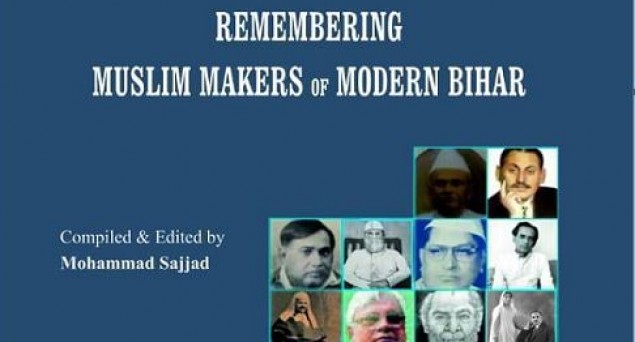
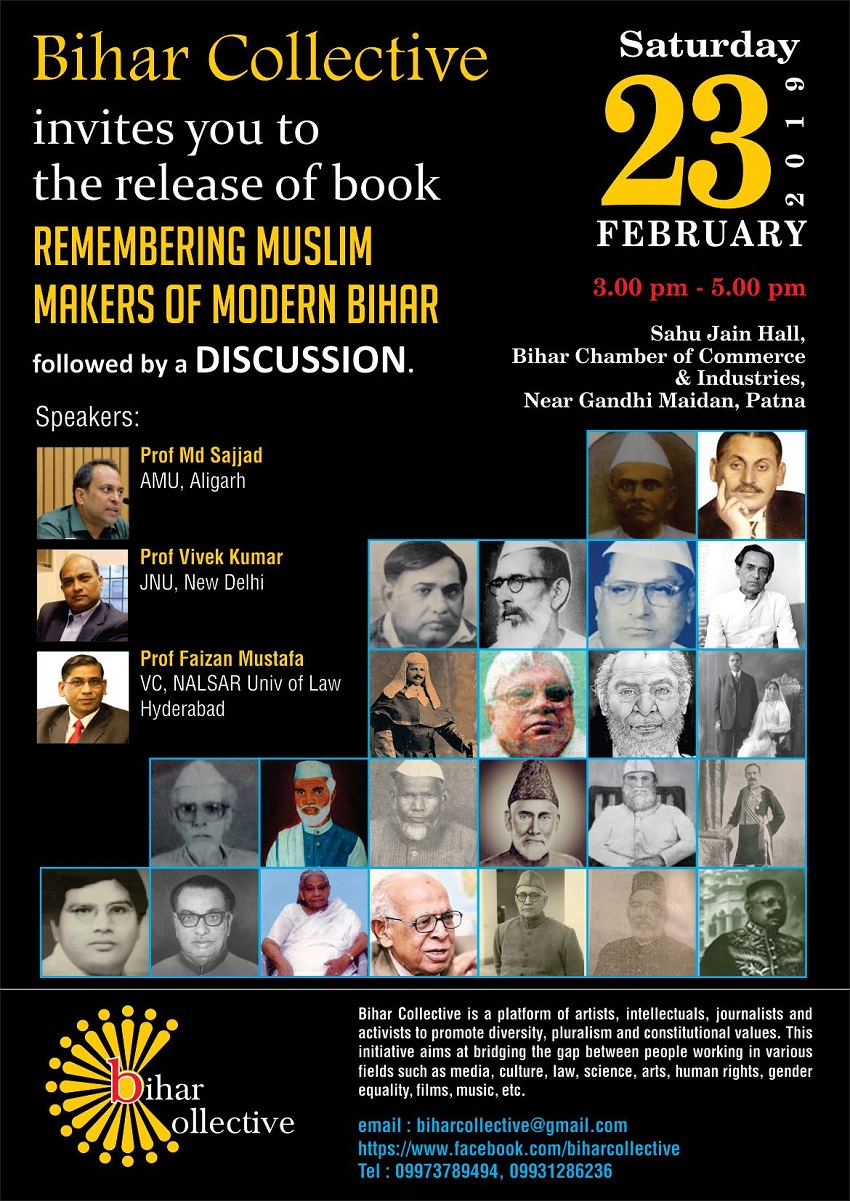
Bihar Collective to Release Booklet “Remembering Muslim Makers of Modern Bihar” in Patna on Feb 23

Patna, BIHAR :

Patna :

In an era of unprecedented majoritarian ascendance and anti-Muslim hatred, Bihar Collective, a platform of intellectuals and activists, has brought out a booklet highlighting the contribution of eminent Muslims in making the modern Bihar in the last 200 years.

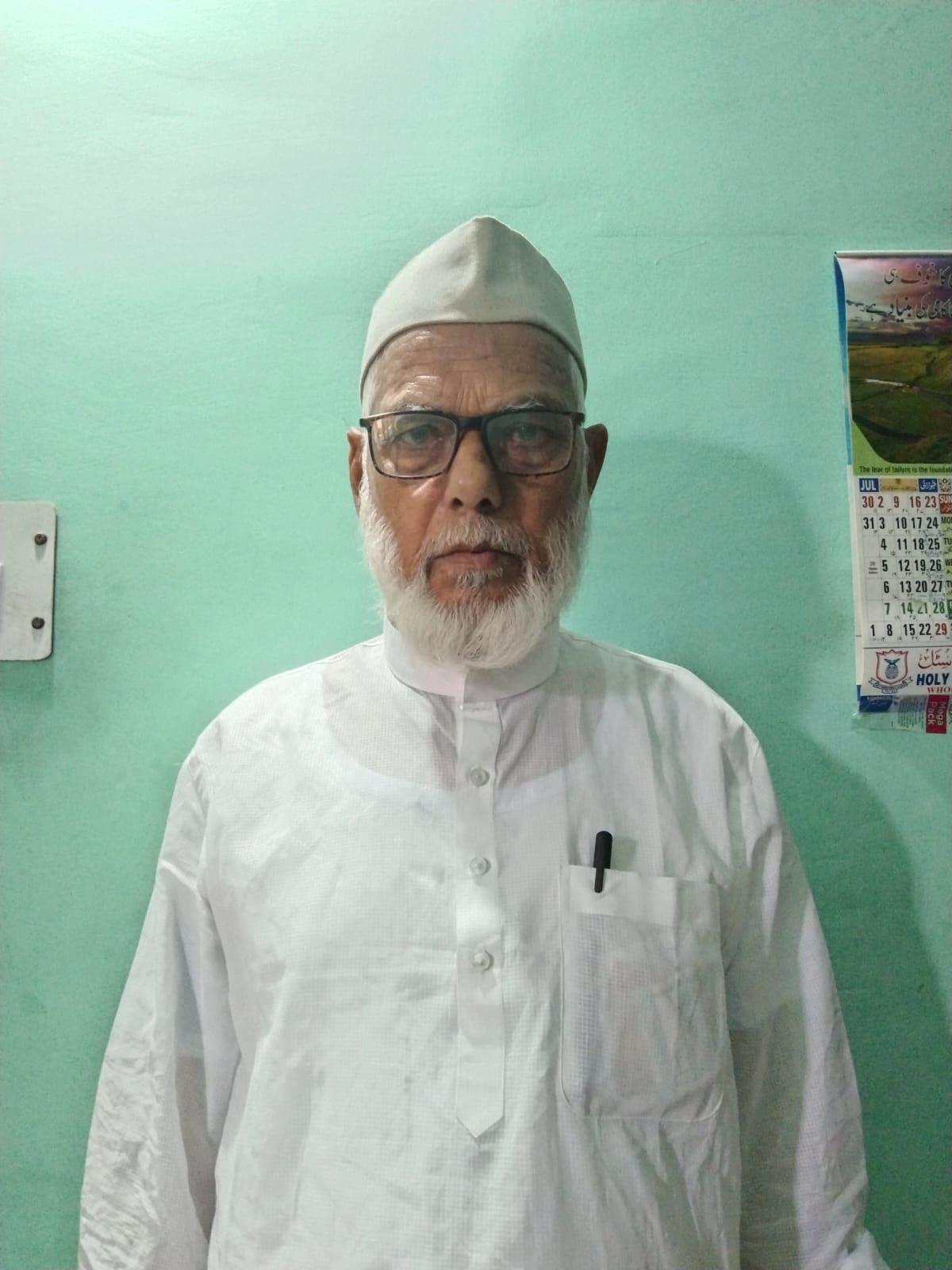
The booklet titled Remembering Muslim Makers of Modern Bihar has been compiled and edited by renowned academician and writer Prof. Mohammad Sajjad on the initiative of Bihar Collective.

The booklet will be released at an event in Patna on Saturday (February 23).

On the occasion, a discussion will also be held with Prof Faizan Mustafa, Vice Chancellor, NALSAR University of Law, Hyderabad; Prof Vivek Kumar, JNU, New Delhi; and Prof Mohammad Sajjad, AMU, Aligarh as panelists.

A Brief about Booklet:


Pre-empting a reasonable question about the title of the booklet, Prof Sajjad, who has compiled and edited it, writes in its preface: “A simple and obvious question that may readily arise is: why only Muslim makers of modern Bihar? Why not others too? This is indeed a valid and pertinent question.”

Responding to the question, he further says: “Candidly put, this is because of an unprecedentedly menacing rise of majoritarianism, bigotry, and anti-Muslim hatred, with open support of the state.

The Muslim identities are ominously threatened. There are also unabated attempts to dilute (or even take away) whatever little accomplishments have been made by the forces of social justice and secularism.

Only the Muslim segment however is threatened by the jingoist, exclusionary, violent nationalists, to be thrown out to another country. As if the other country is a dustbin, owned by these bigots, into which they can throw away everything they dislike! As if only the religious majority constitutes the nation! Notably, these jingoists had aligned with the British and had stayed away from the national movement.”

“Muslim contributions in the nation-making (and in the freedom movement) remain under-acknowledged, forgotten or even omitted. Erasure of their histories and memories seem to have become even more pronounced and vociferous, now, than ever before…The Bihar Collective therefore decided to compile a short profile of these inspiring role models, history-makers…This is small and humble step towards retrieving and restoring the nationalist provincial pantheons bearing Muslim identities,” says Prof Sajjad.

He, however, admits that the list of Muslim heroes of Bihar given in the booklet is not exhaustive as “…many have been left out essentially because of lack of documentations and researches. Not many have left their own accounts/memoirs; the available memoirs/accounts have not written much about all the personalities. In many cases, even otherwise “resourceful” descendants and/or associates of the history-makers have not been able to provide us with adequate (and credible/verifiable) details.”

Prof Sajjad hopes this small exercise may lead to some big academic work on these history-makers. “In short, this kind of venture may be said to be an ongoing exercise. This effort may hope to open up (and obtain) more details about such history-makers and would also get to know about many more of such peoples and processes, we failed to include here in this hastily prepared tiny volume, amidst constraints of resources and time.”

Names of Muslim Makers of Modern Bihar Mentioned in Booklet:
1. Syed Imdad Ali (d.1886]
2. Khuda Bakhsh (1842-1908)
3. Syed Amir Husain (1843-1910)
4. Imdad Imam Asar (1849-1934)
5. Shah Badruddin(1852-??)
6. Syed Ali Bilgrami (1853-1911)
7. Rasheed-un-Nesa (1855-1926)
8. Syed Noorul Huda (1855-1939)
9. Justice Syed Sharfuddin (1856-1921)
10. Shaikh Gulab (1857-1920)
11. Sarfaraz Husain Khan (1860-1931)
12. Maulana Mazharul Haque (1866-1930)
13. Batakh Miyan Ansari (1867-1957)
14. Sir Fakhruddin (1868-1933)
15. Syed Ali Imam (1869-1932)
16. Syed Hasan Imam (1871-1933)
17. Salahuddin Khuda Bakhsh (1875-1931)
18. Shafi Daudi(1875-1949)
19. Khwaja Md. Noor(1875-??)
20. Abdul Wadood (d.1955)
21. Syed Abul Hasan (1878-1960)
22. Sir Sultan Ahmad (1880-1963)
23. Maulana Sajjad (1880-1940)
24. Pir Mohammad Munis (1882-1949)
25. Abdul Bari (1882-1947)
26. Syed Sulaiman Nadvi (1884-1953)
27. Mohammad Yunus (1884-1952)
28. Shah Md. Zubair (1884-1930)
29. Syed Abdul Aziz (1885-1948)
30. Zubaida Begum Daudi (1886-1972)
31. Syed Tafazzul Karim (1886-1964)
32. Mr. Mohammad Shafi (1888-1955)
33. Qazi Ahmad Husain (1889-1961)
34. Dr. Syed Mahmud (1889-1971)
35. Ali Husain Aasim Bihari (1890-1953)
36. Shah Mohammad Umair (1894-1978)
37. Abdul Ahad Mohammad Noor (1894-1975)
38. Hakeem Md. Kabiruddin (1894-1976)
39. Maulana Usman Ghani (1896-1977)
40. Manzoor Ahsan Aijazi (1897-1969)
41. Shah Md Ozair Muni’mi (1899-1961)
42. Maghfur Aijazi (1900-1966)
43. Syed Jafar Imam (1900-1965)
44. Syed Badruddin Ahmad (1901-1983)
45. Mohammad Tahir (1903-???)
46. Syed Jafar Imam (1903-1979)
47. Syed Fida Husain (1904-80)
48. Abdul Qaiyum Ansari (1905-1974)
49. Wajihuddin Minhaji (1907-1984)
50. Syed Md. Aiyub (1910-1964)
51. Abdul Sami Nadvi (1913-????)
52. Abul Hayat Chand (1914-1958)
53. Ahad Fatmi(1915-1980)
54. Zawwar Husain (1916-80)
55. Shafiqullah Ansari (1917-1980)
56. Shah Mushtaq Ahmad (1917-2002)
57. Abdul Ghafoor (1918-2004)
58. Col. Mahboob Ahmad (1920-1992)
59. Taqi Raheem (1920-1999)
60. Zahra Daudi(1923-2003)
61. Shakoor Ahmad (1924-1981)
62. Syed Hasan (1924-2016)
63. Yunus Lohia (1925-2019)
64. Ghulam Sarwar (1926-2004)
65. Syed Shahabuddin (1935-2017)

A Brief about Author:


Prof Mohammad Sajjad teaches late-colonial and post-independent Indian history at the Centre for Advanced Study in History, Aligarh Muslim University. He has written several books including Muslim Politics in Bihar: Changing Contours; and Contesting Colonialism and Separatism: Muslims of Muzaffarpur since 1857.

His articles are published in reputed academic journals from Routledge, Sage, EPW etc. and also in anthologies from the Oxford University Press and Cambridge University Press.
Bihar Collective:
It is a platform of artists, intellectuals, journalists and activists to promote diversity, pluralism and constitutional values. It aims at bridging the gap between people working in various fields such as media, culture, law, science, arts, human rights, gender equality, films, music, etc.
Email: biharcollective@gmail.com
Facebook: https://www.facebook.com/biharcollective

source: http://www.indiatomorrow.net / India Tomorrow / Home> Society / by India Tomorrow / February 21st, 2019
Outstanding Students Honoured with Medals for Academic Excellence in Patna

Patna, BIHAR :

Patna :

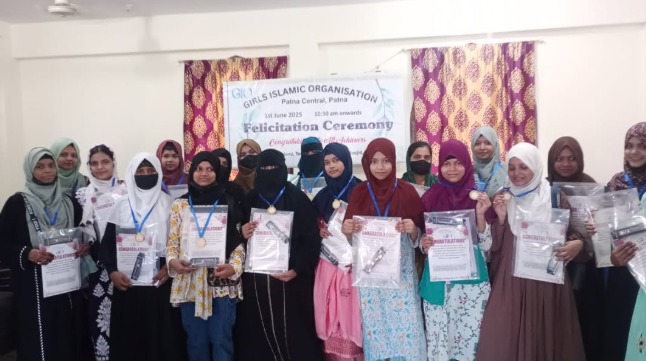
Girls Islamic Organisation (GIO), Sultan Ganj Unit, Patna, organised a felicitation ceremony on Sunday at Markaz-e-Islami, Tekari Road, to honour over 100 meritorious students who secured excellent marks in Class 10 and 12 examinations. The achievers were awarded medals and congratulatory cards in recognition of their academic accomplishments. The event also included guidance sessions to support their future educational journeys.

The chief guest, Mohammad Shehzad from Allied IAS, delivered a comprehensive guidance talk under the theme Care and Guidance, sharing professional and academic opportunities from an Islamic perspective along with practical insights.

Motivational speaker Shazia Ahsan emphasised the value of hard work, self-confidence, and positive thinking in her inspiring speech aimed at empowering the students.

Dr. Zubiesh Firdous, Secretary Women’s Wing Jamaat-e-Islami Hind Bihar, delivered a thought-provoking address on the topic Balancing Deen and Dunya (religion and worldly life). She stressed the need for a harmonious blend of religious and secular education.

Umme Kulsoom, President of GIO Sultan Ganj Unit, introduced the organisation and highlighted its mission of empowering girls and women through education and awareness.

The event was attended by teachers, students, and parents who appreciated the efforts taken by the organisation.

The program began with a spiritual reminder from the Qur’an by Anjum Mukhtar. A soul-stirring na’at (poem in praise of the Prophet ﷺ) was beautifully rendered by Musheerah Fatima, filling the atmosphere with a spiritual essence. Saima Parveen presented an emotionally resonant poem, which was well received by the audience.

The event concluded with closing remarks and a vote of thanks delivered by Shagufta Bano, City Secretary of Patna .

source: http://www.radiancenews.com / Radiance News / Home> Education> Report / by Radiance News Bureau / June 01st, 2025

Book Review: Reclaiming Syncretic Histories – A Journey Through Bihar’s Sufi Landscape

BIHAR :

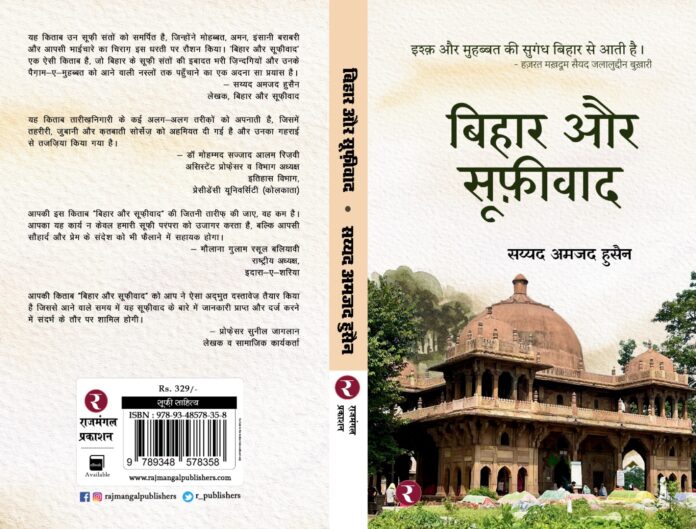
In a time marked by growing communal tensions and polarizing narratives, young author and scholar Syed Amjad Hussain’s book ‘Bihar Aur Sufivad’ arrives not only as a work of history but also as a much-needed spiritual intervention. Spanning more than 300 pages, the book immerses the reader in Bihar’s rich and pluralistic Sufi heritage, offering a profound counter-narrative rooted in peace, love and human dignity.

Bihar is generally remembered for its political agitations and socio-economic challenges, but beneath the surface lies an older, deeper history – a rich tapestry of sufi saints who arrived as early as the 12th century. Through systematic research and a respectful tone, Hussain revives this forgotten spiritual geography.

Beginning with the arrival of Hazrat Peer Shah Mushk Nafah, Hazrat Momin Arif Ansari Yemeni and Hazrat Imam Muhammad Taj Faqih Zubairi Hashmi, followed by the transformative presence of Hazrat Qazi Syed Shahabuddin Suhrawardi Peer Jagjot Kashgari in Fatuha (Patna), the book presents a chronologically overlapping map of Sufi presence in Bihar. These are not mere biographies; they are glimpses into a world where divine love was not only preached but lived, practiced and internalised.

Thematic Depth, Scholarly Rigor

Divided into well-organised sections, ‘Bihar Aur Sufivad’ details the lives of 20 influential sufi saints. Each chapter offers insights into their teachings (taalim), spiritual practices, miracles (karamaat) and most importantly, their social engagements. The saints in Hussain’s work are not passive mystics withdrawn from the world; they are reformers, healers, poets and bridges between communities.

The book also discusses the various sufi orders (silsilas) present in Bihar – Firdausi, Shattari, Husami, Warsi, Chishti, Qadri, Suhrawardi and Naqshbandi – illustrating how each infused its own spiritual philosophy into the soil of Bihar. Of special mention is Hussain’s inclusion of female figures such as Hazrat Bibi Kamal of Kako Sharif, a rare and valuable recognition of women’s contributions to Bihar’s mystic culture.

Language, Tone and Accessibility

Hussain’s writing flows with a gentle rhythm that recalls classical Urdu and Hindi scholarship yet remains accessible to contemporary readers. The prose is rich and poetic without sacrificing academic precision. His background as a researcher is evident in the meticulous citation of works in Persian, Urdu, Arabic, Hindi and English, many of which are obscure or little known to the general public.

This is not a dry academic treatise; it is a living, breathing narrative of spiritual heritage, crafted to engage scholars, young seekers and general readers alike.

Relevance in Today’s India

What makes the book particularly significant is its timing. At a moment when histories are being erased or rewritten to suit political agendas, this book affirms that India’s collective spiritual heritage must not be forgotten. The sufi saints of Bihar transcended caste, creed and religion. Their khanqahs were open to people of all faiths. They preached service, not supremacy.

In this age of ideological divisions, Hussain’s work reminds the bridges that once united communities. It is a call to return – not to nostalgia, but to the ethics of inclusiveness, humility and compassion that the sufis embodied.

‘Bihar Aur Sufivad’ is more than a book; it is a spiritual journey and a historical reclamation. In reviving the voices of Bihar’s forgotten sufi saints, Hussain does more than pay tribute; he builds a bridge for contemporary readers to reconnect with a heritage that offers solutions to some of our most pressing problems.

This book deserves a place not only on library shelves but also in classrooms, living rooms and community discussions. It is an invitation to think, to remember and to heal.

Hussain has not merely authored a book – he has attempted to revive a spiritual legacy and present it afresh to the modern world. This work warrants a place of honour in the study of Indian Islam, Sufism and regional spiritual histories. It is hoped that it will inspire further research, dialogue and, most importantly, personal transformation.

It is strongly recommended for scholars, spiritual seekers and anyone interested in the rich diversity of India’s syncretic traditions.

Book Name: Bihar Aur Sufivad / Author: Syed Amjad Hussain / Publisher: Rajmangal Prakashan / Published: April 27, 2025 / Language: Hindi / ISBN: 978-9348578358 / Pages: 308 / Price: Rs 329

(Dr. Shujaat Ali Quadri is an Indian journalist, deputy director of the Indo-Islamic Heritage Center and the chairman of the Muslim Students Organisation of India)

source: http://www.twocircles.net / TwoCircles.net / Home> Arts & Culture> Book Review / by Dr Shujaat Ali Quadri / May 07th, 2025

Abdullah Bihar Topper in JEE (Main), Says Miles to Go

Aunsi (Bisfi – Madhubani District), BIHAR :

Patna:

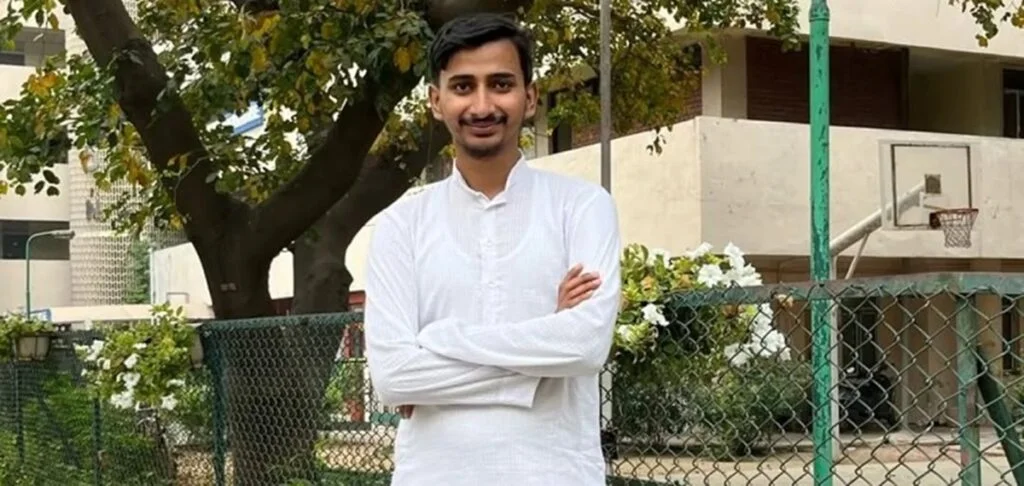
Abdullah, known by only his single name, topped the list of successful candidates from Bihar who appeared for the JEE (Main) 2025, Session 2. The result was announced late at night on Friday. He scored 99.9945499 percentile, but he is not in a celebratory mood. He wishes to top the JEE (Advanced), which ensures admission in the best IIT.

Abdullah hails from Aunsi in Bisfi under Madhubani district. His father, Mohammad Sabir Hussain, is an assistant teacher, while his mother, Tarannum, is a homemaker. Abdullah is the eldest among five siblings.

Abdullah is preparing for the next stage of JEE – JEE (Advanced) at Kota, Rajasthan. He is very keen to study Computer Science. He wants to do better in the upcoming test, while his father says that Abdullah also aims to qualify UPSC.

Abdullah, after getting the result, said that he felt very good for it but it was just beginning and he has miles to go. He said that his routine continues to be the same and he was focusing on completing his daily assignments.

Abdullah completed his matriculation from Madhubani and then moved to Kota for his preparation. He secured 90 percent marks in his I.Sc. examination. Abdullah keeps from smartphone as he considers it a distraction.

source: http://www.radiancenews.com / Radiance News / Home> Education / by Radiance News Bureau / April 20th, 2025

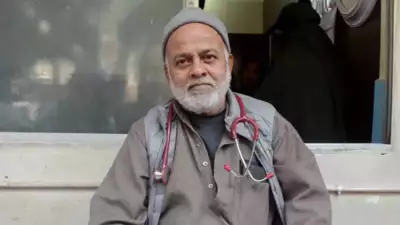
Dr. Ejaz Ali: The Patna Doctor Who’s Been Charging Rs 10 for 30 Years

Patna, BIHAR :

Patna : 

In an era where medical expenses are skyrocketing, a doctor from Patna has been a beacon of hope for the poor and underprivileged.

For an astonishing three decades, Dr. Ejaz Ali has been charging a mere Rs 10 for consultation, earning him the revered title of “messiah” among his patients.

From March 20, 2008, to July 7, 2010, he represented the Janata Dal (United) in the Rajya Sabha from Bihar. He has also served as the National Convenor of the All-India Backward Muslim Morcha, an organization dedicated to campaigning for Dalit Muslims since its founding in 1994.

Since 1984, Dr. Ali has worked as a general surgeon in Bikhna Pahari, Patna. The kind physician took a different approach, while the others around him charged exorbitant fees. By keeping his fees at Rs 10, he made himself available to those in need.

His clinic, which is situated in Bikhna Pahari on Ashiana-Digha Road, draws patients from all across Bihar who are looking for reasonably priced healthcare.

With more than 100 patients every day and multiple surgeries completed, Dr. Ali’s dedication to affordable healthcare is clear. He emphasizes his consistent commitment to aiding people in need. In order to save them money on lodging and other costs, he makes sure that every patient who has travelled to visit him receives a consultation that same day.

In addition to charging minimal fees for consultations, Dr. Ali performs surgeries at a reasonable cost. He permits his patients to pay in installments and even declines to charge them.

The late wife of Dr. Ali was a doctor as well. His three children now work in the same field, truly carrying on their father’s legacy. They asserted that their father has always put patients first.

His daughter, Gynecologist Dr. Suraiya Anjum, says, “He is the type of person who never yells or becomes agitated. Patients frequently regard him like a messiah.

Despite his fame and recognition, Dr. Ali remains humble and dedicated to his work. His clinic continues to attract patients from all over the state.

source: http://www.twocircles.net / Two Circles.net / Home> Articles> Indian Muslim / by TCN News / February 03rd, 2025

From a Village to Google: Zoriz Ahmed’s Journey of Perseverance and Success

Jalwara Village (Darbhanga), BIHAR :

The success story of a villager in Bihar reflects the transformative power of education. secured a prestigious position at Google with an impressive annual package of ₹39 lakh

Jalwara, BIHAR :

Zoriz Ahmed, a bright student from Rahmani30 educational movement started in Bihar state’s capital city of Patna, has recently achieved a remarkable milestone. After completing his engineering degree at IIT Delhi, Zoriz secured a prestigious position at Google with an impressive annual package of ₹39 lakh. His journey, marked by perseverance and dedication, has become a beacon of hope for others.

Hailing from Jalwara, a small village in Darbhanga, Zoriz’s path to success was anything but easy. The QT assembly constituency, where his village is located, has historically struggled with low educational attainment. Despite these challenges, Zoriz’s parents, Shakeel Ahmed and his wife, a homemaker, prioritised their son’s education. Shakeel rented a room in Darbhanga to ensure Zoriz had better schooling.

Zoriz’s aptitude for mathematics and problem-solving became apparent early on, and in 2019, he was selected for Rahmani30, the institution focused on preparing underprivileged students for the IIT Joint Entrance Examination (JEE).

At Rahmani30, Zoriz found the environment that would shape his future. “The teachers at Rahmani30 were exceptional, but what truly set it apart was the combination of a disciplined, religious atmosphere and a laser-sharp focus on academic excellence,” Zoriz shared. The institution’s rigorous training, combined with its focus on values, helped Zoriz hone both his technical skills and personal growth, ultimately leading him to IIT Delhi.

Zoriz’s family faced constant financial difficulties. “There were times when we struggled to make ends meet, but my father never let me feel the burden. His sacrifices and unwavering belief in my potential kept me going,” Zoriz recalled. Despite these hardships, he remained committed to his education, believing that challenges foster growth. “The darkest moments of the night come just before the dawn,” he said, quoting a Chinese proverb that mirrors his journey.

Now, Zoriz stands at the threshold of a new chapter with Google, where he will work with an annual package of ₹39 lakh. “It’s not just about succeeding academically,” Zoriz emphasised. “Education shapes us into better individuals and that is the true measure of success.”

His success is not only a reflection of his academic excellence but also of his values, discipline, and hard work. “The teachers, the values, the hard work — it all comes together to shape the person you become,” Zoriz said.

Zoriz’s journey reminds us of the power of education and perseverance. He encourages others, especially those from underprivileged backgrounds, to remain dedicated to their goals. “If I can make it, so can others. The road may be tough, but it’s worth every bit of effort,” he said.

Zoriz’s success highlights the critical role of institutions like Rahmani30 in shaping the futures of talented youth from underserved communities. “Rahmani30 allowed me to realise my potential. Without it, I wouldn’t be where I am today,” he said, emphasising the importance of mentorship and access to quality education.

Zoriz Ahmed’s story is a powerful testament to the transformative power of education and the importance of perseverance. His success is not just his own; it is a symbol of the potential that lies within every young mind, regardless of background.

source: http://www.clarionindia.net / Clarion India / Home> Featured> India> Indian Muslim / by Team Clarion / December 26th, 2024

These Biharis left their luxurious life for imparting education to the underprivileged

Siwan, BIHAR :

Siwan (Bihar): 

Malcolm X rightly said, “Education is the passport to the future, for tomorrow belongs to those who prepare for it today.”

Dr Wasim and Tanweer Ahmad perhaps had the same thoughts in their minds as they came up with the idea of providing an enriching environment to those who cannot afford the luxury of education. They along with their colleagues left their comforts of life and well-established occupation to impart education to the underprivileged children of their home district i.e. Siwan.

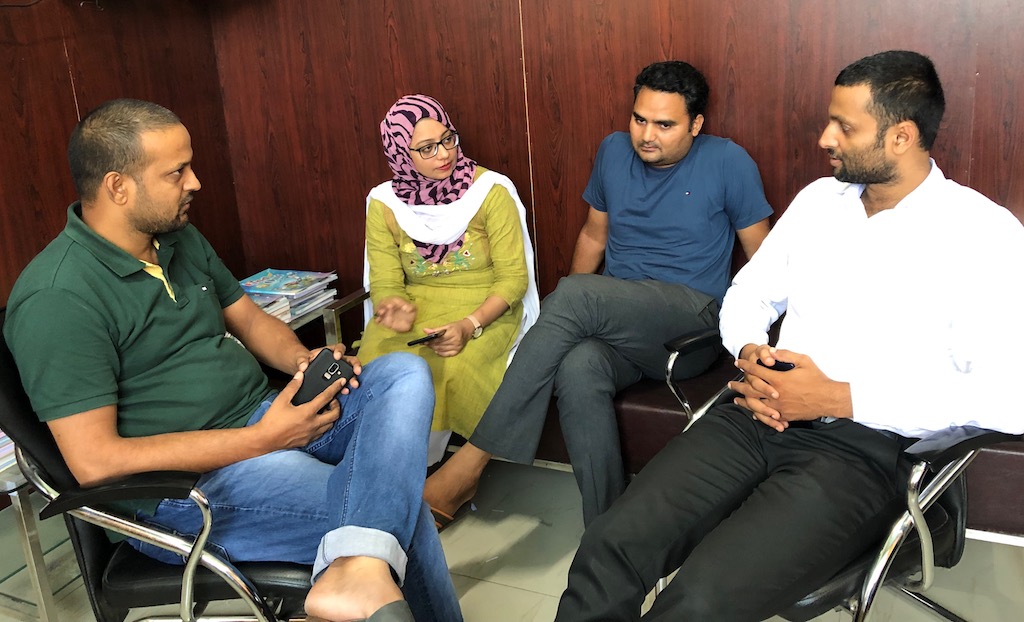
Dr Wasim along with Tanweer Ahmad, Sharique Ahmad, and Sana Hussain, were keen to establish an institution that would serve as a ladder to the children who were underprivileged and could not afford basic education due to the paltry amount of resources.

Dr Wasim is a doctor from Aligarh and has completed his education from Aligarh Muslim University (AMU). He worked in a government hospital but gave up his job, to educate the children who are the leaders of tomorrow and who are the faces of our future.

Tanweer Ahmad, who hails from Siwan itself has completed his MBA from Williams college of LONDON and holds the post of the Director and he juggles between the tasks of administration as well as imparting knowledge to the children.

Sana Hussain, who holds the post of the Principal at the school, has achieved her master’s degree from South Korea. She works hard to maintain the smooth functioning of this institution’s administration and imparts education to the blooming buds.

Sharique Ahmad, who is also a pillar of this school, has achieved his double master’s degree in Education and English from Delhi University and AMU respectively. He works as a student counsellor and teachers’ trainer at the school. He aims at not only providing efficient educators but also endeavours to become a patient listener and a solution provider to these curious and creative minds.

They established a school named ‘bloombuds’ in Barharia, Bihar. Bloombuds was an idea born due to the concerns of its founders over rising illiteracy rates in certain parts of Bihar. The school came into existence in January 2016.

“This school has been established with the idea of providing an enriching environment to those who cannot afford the luxury of education”, says Dr Wasim, the chairman of the school.

Sana Hussain says, “We are constantly endeavouring to provide all essential facilities for the children. We aim at providing every facility that we couldn’t get while we were students; we are constantly working to educate the young minds. We are often told that we shouldn’t have left our jobs and compromised on our well-settled future but the contentment we derive out of imparting knowledge to these underprivileged children and providing them with resources that could help them  lead a better life is unmatchable.”

These four pillars of bloombuds are in a constant endeavour at providing all essential facilities for the children. They aim at providing every facility that they couldn’t get while they were students; they are constantly working to educate the young minds. They are continuously struggling to impart knowledge to these underprivileged children, so as to provide them with resources that could help them to lead a better life.

This institution has not only provided educational aid but has also stood by its children through all thick and thins.

These mentors took complete responsibility of their students from selecting the students for the entrance exam to allowing them a stay at the hostel and preparing them from beforehand.

Dr Wasim says, “We brought these students to Delhi for their exam and stayed with them until they were back safe. To promote girls’ education, Bloombuds provided 50% discount on the admission fee for girls in the last couple of years. The bloombuds family has set an example of what overall support and aid should be like.”

“Due to the collective support, hard work and indulgence, the Bloombuds family feels very proud of the selection of its six students. These students of bloombuds have cracked the Jamia Millia Islamia School’s class 9th entrance examination. We couldn’t be happier”, he added.

When we inquired about the background of these students, we came to know that all these students belong to families where they believe that education is only for the rich and the upper class.  The parents due to insufficient resources are not able to provide their children with adequate facilities, almost all the mothers are homemakers, fathers either work as drivers or in chemist shops or are shopkeepers, some even work as farmers and have little or no educational qualifications. Nevertheless, these students with their hard work and a little encouragement proved that one can achieve anything with the help of committed guidance and supervision. The parents at first were sceptical to send their children to this university, but when they saw the environment, they at once knew that this was the best for their children.

The parents due to insufficient resources are not able to provide their children with adequate facilities, almost all the mothers of these students are homemakers, and one of them is a teacher in a government school. The fathers either work as drivers or in a chemist shop or shopkeepers, some even work as farmers and have little or no educational qualification. But these students with their hard work and a little encouragement proved that one can achieve anything with the help of committed guidance and supervision. They made their parents and teachers proud after cracking the entrance exam. Four out of six students are girls, and all belong to rural areas.

On how important this result was to him, Sharique Ahmed says, “For the people belonging to a small town like Siwan, Jamia and Aligarh are a dream place to study not just for students but also for parents. Siwan is a place which is known for coaching centres and too expensive, but this school made it easy. They used to organize free coaching in summer vacation for the students as well,”

Talking about the obstacles faced in this journey, he adds, “In this blooming, there is only one hurdle and that is a hostel for girls. Parents are ready to send their children to Jamia, but their main concern is the hostel. While interviewing Zeba’s father, Mr Wahabuddin who is working in the Gulf also has only one condition and that is a hostel. So, the movement which has been started by Bloombud is becoming smooth day by day, but accommodation is one obstruction in this metro city.”

(Mehwish Matloob is pursuing MA History from Jamia Millia Islamia.)

source: http://www.beyondheadlines.in / Beyond Headlines / Home> India / by Mehwish Matloob for Beyond Headlines / August 03rd, 2019

A teacher par excellence

Darbangha, BIHAR:

I was in grade 7 or 8 when Wasi Ahmed Shamsi sahab joined B D Y High School as an Urdu and Persian teacher. Tucked away on the bank of a pond and surrounded by cultivable land and greenery, the school in rural Darbhanga was like a sanctuary, a gurukul. Away from the din and bustle of a populated location, the school was emotionally attached to people in neighbouring villages though it kept a physical distance from them.

Though the tiled roof leaked in monsoon and wall plaster had peeled off at places, giving the whole structure an impoverished look, we regarded the school as a boon. It was a privilege to be at this school which had earned a reputation for discipline and churning out good students.

The school nurtured dreams and helped shape many destinies.
It was in that positive ecosystem that Wasi sahab joined the team of a dozen or so teachers. Clad in white kurta-pajama with the skull cap covering his head, he did not wear a long beard. Like his appearance, Wasi sahab was not very orthodox in thinking too. Since he was educated at Madrassa Shamsul Hoda, Patna, one of the oldest Islamic seminaries of Bihar, he had imbibed many values which orthodox maulvis would disapprove of.

Since my father and Wasi sahab were colleagues though they taught different subjects, they had a cordial relationship and they shared a lot of things, especially about progress of their children.

Wasi sahab had spent years in urban set up before he took transfer to a school close to his village. He wanted to work for his people and therefore he got transferred from a school in Madhubani.

He was fond of reading newspapers and magazines and had even set up a library at his home. The fact that his nephew Abdul Bari Siddiqui, a senior member of Lalu Prasad Yadav’s RJD and a former minister had also built his house in the same mohalla where Wasi sahab lived enhanced Wasi Sahab’s stature. Many of those who visited Siddiqui sahab invariably visited Wasi sahab too.  After all, he was a reputed teacher, a wise man, a man of letters, a concerned citizen.

Wasi sahab valued journalism and would “console” my father whenever he despaired at my choice of career as a journalist. If I learned my Ghalib and Iqbal a little early, credit goes to this good teacher who made his lectures interesting. He would ask us to read books beyond what was prescribed in the textbooks. Since I often saw him reading–books, magazines, newspapers–I unknowingly emulated him. He helped create in me a hobby for reading. He was happy that I chose to become a journalist.

After retirement, Wasi sahab undertook a herculean task of writing a book on people of his ilaqa (locality) who had made a mark in life.
One summer evening I visited his village home. Clad in just lungi and gunjee (vest), with a ceiling fan whirring overhead, I saw this then septuagenarian retired teacher writing furiously on his pad. Surrounded by books and papers, he was figure of a wordsmith who thought he had little time left on this earth. Age and health issues, especially diabetes, made him restless. He wanted to complete the project he had embarked upon as soon as possible. He wanted to finish the book before the final call came.

Our telephonic discussions were long. I had encouraged him to complete the project before it was too late. Concerned about his health, I would tell him not to exert himself too much as he would fall ill often. Finally, he completed the huge volume he had spent countless hours on. The bulky book in Urdu carries life sketches of many famous personalities Wasi sahab had met at different stages in his life. I was pleasantly surprised to see that he had devoted a few pages writing about my family too, especially the struggle of my father to educate his children. Wasi sahab valued education and had great regards for those who endeavoured to educate themselves and others.

When some of my friends held a discussion on my book “Aligarh Muslim University: The Making Of The Modern Indian Muslim” at Dr Zakir Hussain Teachers’ Training College, Darbhanga, he was kind enough to attend it. And he spoke eloquently about AMU’s contribution and my humble efforts to record some of the fine features of AMU.

I remember, years ago, he had organised an educational conference in his village where the famous Urdu journalist of Patna Ghulam Sarwar who later became a minister too was invited as a chief guest. It is also because of Wasi Sahab’s efforts that Ghulam Sarwar, a great orator, had attended our school’s annual Jalsa- a-Seeratul Nabi function. The headmaster late Ramswaroop Yadav had made a rule that Muslim students would hold Seerat Jalsa, in honour of the holy Prophet, while Hindu students would celebrate Saraswati Puja. Interestingly, both Hindu and Muslim students would participate in one another’s functions. Remarkably, my father, a devout Muslim, would be made in charge of distribution of prasad or sweets as gifts to the visitors at the annual Saraswati Puja. What a great example of communal harmony the school had set?

Koi lauta de woh din for se mere pyare Hindustan mein!!

Of late,Wasi sahab was not keeping well. Despite his poor health, he wanted to bring out an abridged version of his voluminous book. I don’t know if he could complete it or not.

This afternoon I recieved three calls. First, from my elder brother, then from youngest brother, followed by a call from Mujtaba, son of Wasi Sahab. All informed me about the sad demise of Wasi Sahab, my beloved teacher who taught us diligently and honesty. But more than that, he inspired us to strive to excel.

Wasi sahab will be remembered at least for two things–for being an ideal guru, a teach par excellence and for his valuable contribution to writing and preserving the history of the locality he grew up in. He has done a great service to the person of the area. Wasi Sahab now sleeps peacefully among many of his people who preceded him.

Rest in peace, Sir. I will miss you.

Maut uski hai kare jiska zamana afsos/Yun toh duniya mein aye hain sabhi marne keliye

(Death is one which is grieved by the world/Otherwise everyone is fated to die one day).

source: http://www.timesofindia.indiatimes.com / The Times of India / Home> India / by Mohammed Wajihuddin in Beyond the Burqa, Spirituality, TOI / January 07th, 2024

Meet Mohammad Furqan, Madrasa Graduate Selected for University of Notre Dame, Indiana

Darbangah District, BIHAR / Indiana, U.S.A:

From a humble beginning as a student of a Madrasa to being selected for Masters in Peace Studies at University of Notre Dame, one of world’s leading universities, Furqan’s journey is an answer to those critics of madrasas who refuse to accept their relevance and contribution to the society and academia.

Meet Mohammad Furqan, Madrasa Graduate Selected for University of Notre Dame  | ummid.com

While hundreds of Madarasas are being shut down allegedly for being non-productive, a good number of graduates of independent Madrasas are making great academic strides. One such Madrasa graduate, Mohammad Furqan has qualified for the Masters of Global Affairs in Peace Studies at the University of Notre Dame, Indiana, USA.

Furqan’s selection has been widely welcomed by graduates of different Indian madrasas and especially by the graduates of Madrasa Discourses Program run by the Keogh School of Global Affairs, University of Notre Dame.

Buoyed by the good wishes, Furqan said:

“It all started with the Madrasa Discourses, and it would have not been possible without the great leadership of Prof. Ebrahim Moosa and Dr. Waris Mazhari. Coming from an ordinary family, I could have never imagined to study in the USA with scholarship.”

Belonging to Darbhanga district of Bihar, Furqan graduated with a Fazilat degree from Madrasa Alia Arabia, Masjid Fatehpuri, Delhi in 2016, after which he did BA (Hons) in English Literature from Jamia Millia Islamia (JMI). In 2023, he completed Masters of Arts in Islamic and Arabic Studies from JMI.

[M Furqan with his friends at Jamia Millia Islamia New Delhi in a file photo.]

While continuing his formal studies, Furqan also pursued the three-year research program for Madrasa graduates namely “Advancing Scientific and Theological Literacy in Madrasa Discourses”, offered by the University of Notre Dame. It is where he made the most of his time and had the opportunity to interact with a number of renowned academicians and scholars from different countries.

Recalling those years Furqan says:

“It was indeed a life changing journey for me to connect with you all for more than five years”.

Extending his special thanks to his Madrasa Discourses fellows Mohammad Ali, Manzar Imam, Mohammad Ehtesham, Mohammad Fozail, Muhammad Zeeshan, Mohammad Aadil Affan, Ghulam Rasool, Md Khaleeque Rehmani, Abul Aala Subhani, Syed Abdur Rasheed, Tajammul Husain, Saif ul Hadi and others, Furqan expressed his intention to remain connected with what he called “our shared commitment for our society and madrasa community.”

From a humble beginning as a student of a Madrasa to being selected for Masters in Peace Studies in one of world’s leading universities, Furqan’s journey is an answer to those critics of madrasas who refuse to accept their relevance and contribution to the society and academia.

Indian madrasas need some reform but more than that they need to sustain and serve the society to carry forward the huge academic and intellectual legacy which has been the hallmark and pride of India’s story of diversity and open discourse.

(A graduate of Madrasa Discourses Program, the writer, Manzar Imam, is Director of MJ Achievers Academy LLP)

source: http://www.ummid.com / Ummid.com / Home> Education & Career / by Manzar Imam / April 01st, 2024

Meet Shams Aalam from Bihar who receives two World No.1 Rankings and Won 06 Gold Medals, at Reykjavik Games

BIHAR:

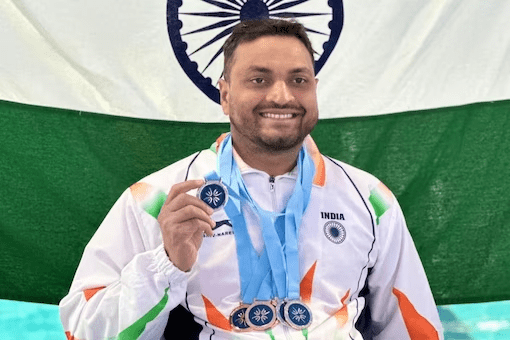
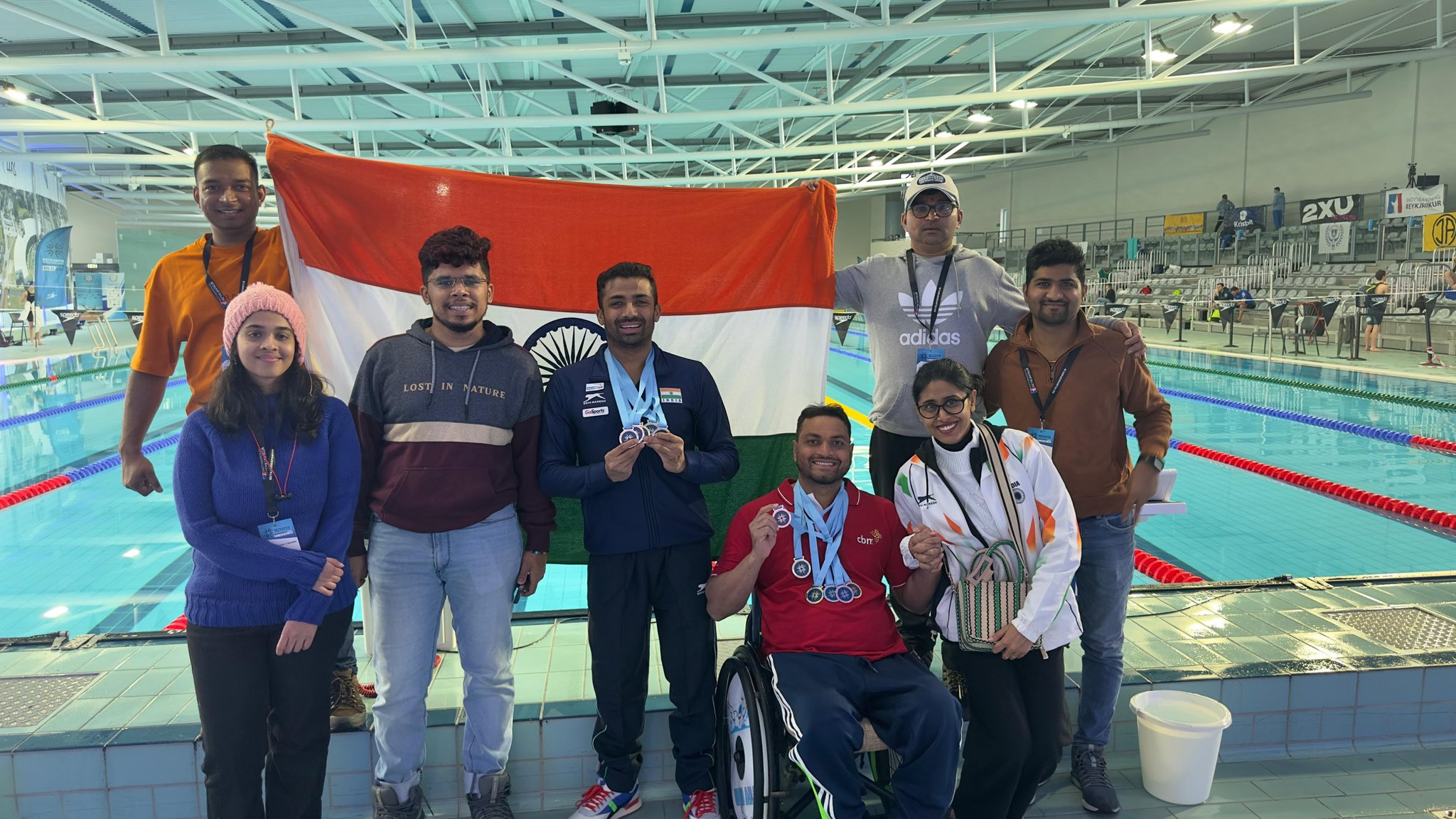
Mohammad Shams Aalam Shaikh won 6 gold medals at the Reykjavik International Games held at Laugardalslaug Iceland from 26-28 January 2024, whilst representing India.

Aalam has ranked no. 1 in men’s 100m butterfly stroke and men’s 50m breaststroke, according to World Para Swimming’s official world rankings for 2024.

In Iceland last month, Shams Alam won 6 medals, including one gold in 200m individual medley, one silver medal in 50m and 100m breaststroke and butterfly stroke, and three bronze medals in 50m and 100m backstroke and 100m butterfly stroke.

Aalam also broke Herojit Singh and Shreekant Desai’s time records in 100m butterfly and 100m backstroke, respectively.

In his interview with TOI, Alam seemed confident that he’d qualify for the Paris Paralympic Games 2024 by meeting the Paralympic time requirements soon enough. He will also be participating in the National Paralympic Games scheduled in March this year, in Gwalior. 

“I am yet to reach the Paralympic qualification mark with my timings at Reykjavik but I am confident that I will get enough opportunities to secure a berth at the Paris Games. The National Games will be my next shot at the Paris quota,” Aalam said in his interview with the Times of India.

Image

Mohammad Shams Aalam is a 37-year-old, paraplegic swimmer, who holds the world record in the longest open sea swimming by a paraplegic individual.

Born in Bihar, Alam was interested in sports as a child, particularly karate and swimming. However, after a spinal cord injury in 2010, Alam took up professional swimming and even went on to represent India at the Asia Para Games in 2018. 

source: http://www.maktoobmedia.com / Maktoob Media / Home> East India / by Maktoob Staff / February 27th, 2024