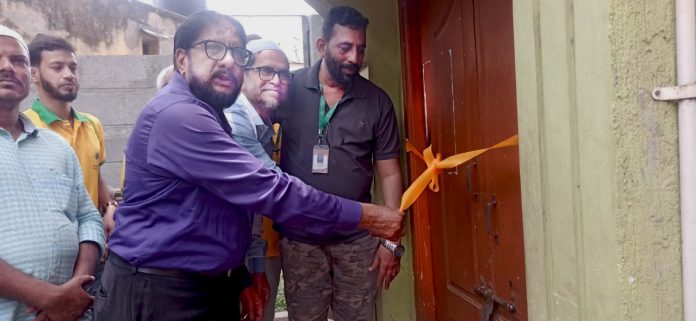
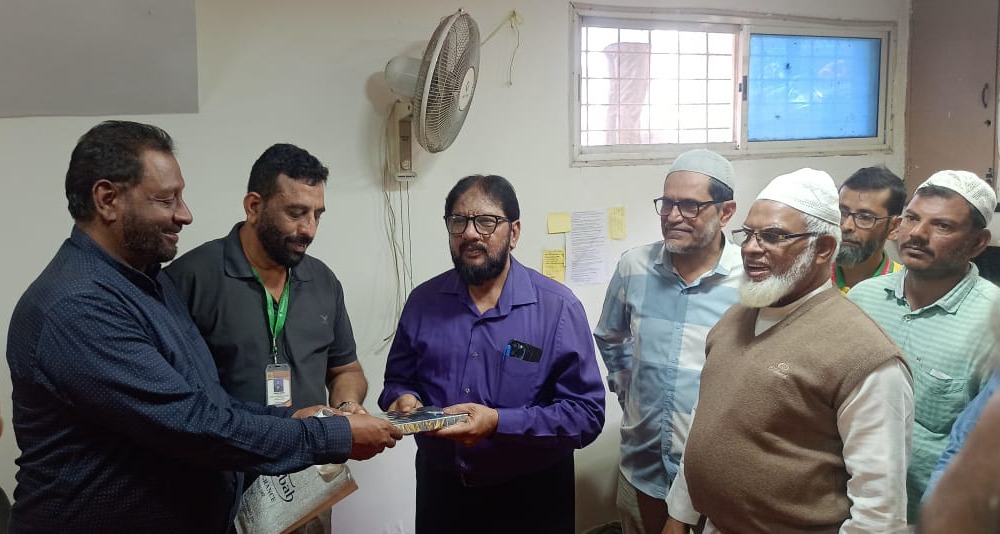
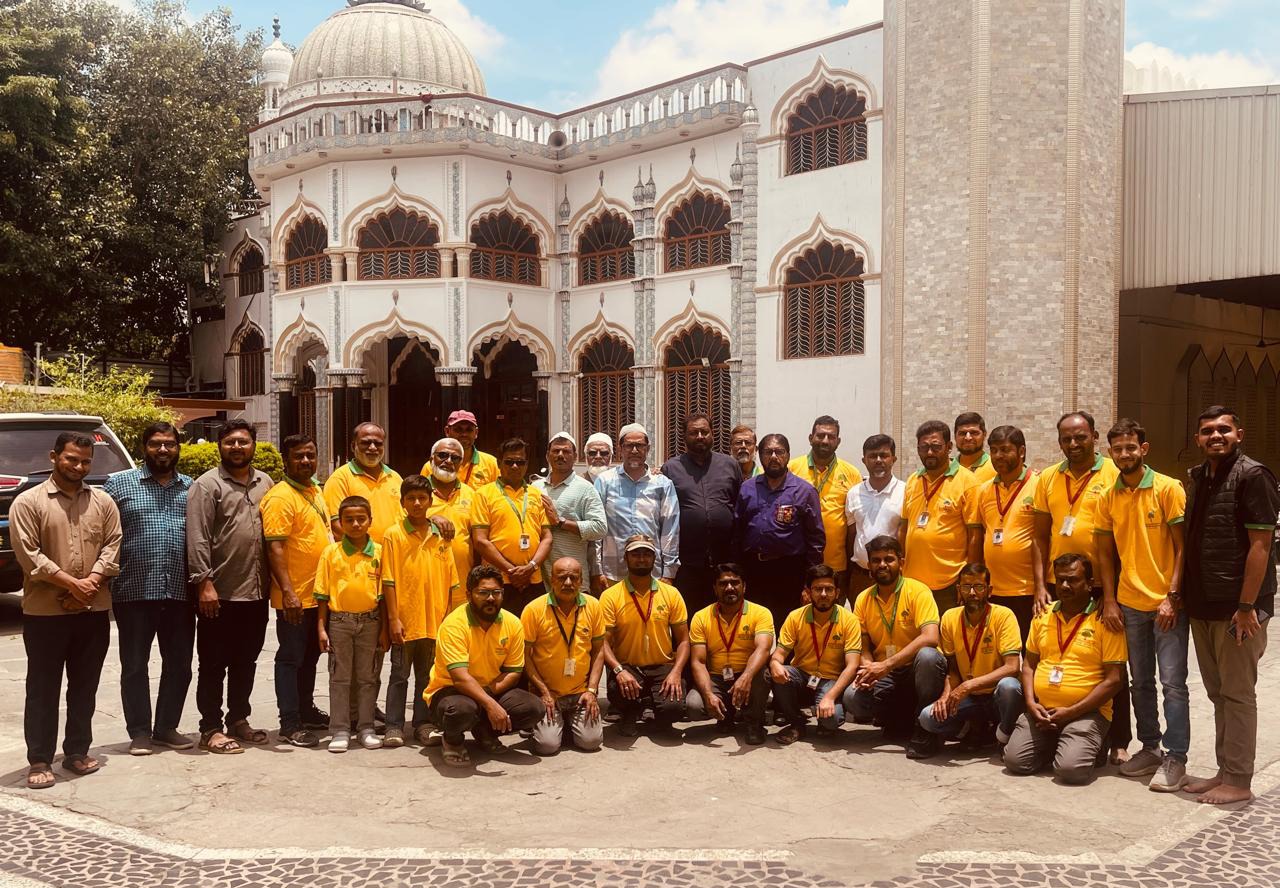
The Humanitarian Relief Society (H.R.S.), a Karnataka-based volunteer-driven organization known for its swift emergency and disaster relief work, inaugurated a new Rescue Equipment Room in the Yeshwanthpur area of Bengaluru.
The addition marks another milestone in the organization’s growing network of response facilities across the state, with similar units already operational in Mangalore, Hubli, and Gulbarga.
The inauguration ceremony, held at the Yeshwanthpur Islamic Center auditorium, was attended by key civil defence and community leaders, highlighting the increasing integration of civil society efforts with formal emergency infrastructure. Mr. Najeeb Ahmad, Civil Defence Officer and recipient of the Chief Minister’s Gold Medal, served as the chief guest. In his keynote address, he praised H.R.S. for its consistent and impactful humanitarian services:
“We saw during the COVID-19 pandemic how vital community organizations can be when working alongside government initiatives. H.R.S. has emerged as a model for such cooperation, with trained volunteers who are quick to respond in times of crisis.”
He stressed the importance of access to professional-grade rescue equipment, citing instances where the absence of proper tools had led to preventable loss of life or injury. Commending H.R.S. for identifying and addressing this critical gap, he added:
“This Rescue Equipment Room is not just a facility for H.R.S. but a resource for the entire community. Residents of Yeshwanthpur and neighboring areas should make full use of it.”
Mr. Ahmad also encouraged H.R.S. volunteers to consider formal registration with the Home Guards, which would enable them to expand their reach and gain official recognition in disaster response operations.
The event opened with a welcome address by Mr. Hyder Ali, Assistant Secretary of H.R.S., who outlined the organization’s mission and expanding capabilities.
He was followed by Mr. Suhail Ahmad, local President of Jamaat-e-Islami Hind, Yeshwanthpur, who provided an overview of H.R.S.’s recent relief and rescue initiatives across Karnataka.
The presence of General Secretary Mohammed Markada, who was seated on the dais, underscored the strategic importance of the Bengaluru expansion. He noted that the Yeshwanthpur facility would serve as a vital hub in the city’s western corridor, enhancing H.R.S.’s ability to respond rapidly within Bengaluru’s urban landscape.
Senior members and field operatives in attendance included: • Ameer Siddiqui, Commander, H.R.S. • Abrar Ahmad, Assistant Commander • Dr. Aftab Wasim, Zonal Leader • Mujeeburrahman, along with captains, assistant captains, group leaders, and trainers Veteran community leader Mr. Murad Saab also graced the occasion.
source: http://www.radiancenews.com / Radiance News / Home> Latest News / by Radiance News Bureau / August 04th, 2025
When Ibrahim Saeed breathed his last in the quiet hours between May 26 and 27, 2007, it was not merely the passing of a leader – it was the end of an era. For the people of Karnataka, particularly those in the fold of Jamaat-e-Islami Hind (JIH), his death marked the departure of a towering moral force, a bridge-builder, and a man whose words carried the weight of wisdom and the warmth of sincerity.
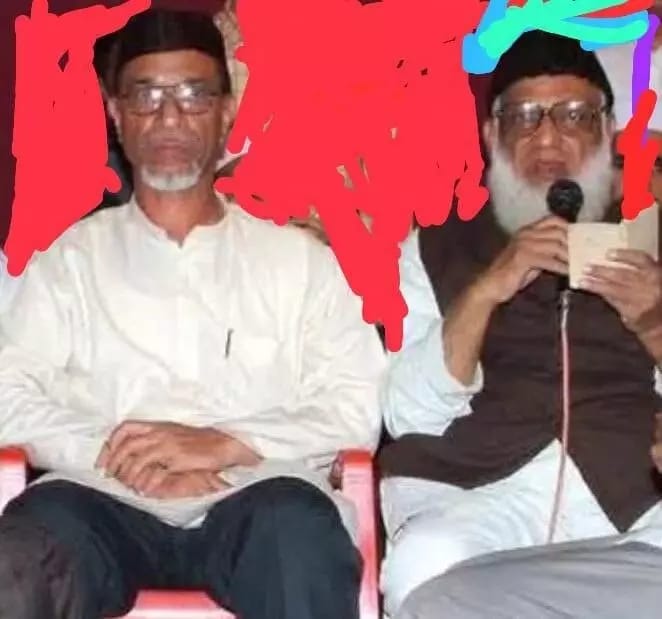
Ibrahim Saeed(L) with Maulana Sirajul Hasan, then Ameer Jamaat-e-Islami Hind
As a former President of JIH Karnataka, Ibrahim Saeed was not just a man of designation – he was a man of deep dedication. He led with humility, served with sincerity, and above all, connected with people at the human level. His leadership was rooted not in authority, but in affection.
A Childhood of Values, A Youth of Vision Born in coastal Karnataka, Ibrahim Saeed grew up in an environment where religious grounding and intellectual openness walked hand in hand. From an early age, he was drawn to the Qur’an, not merely as scripture to be recited, but as a message to be understood and shared. This foundational attitude remained the hallmark of his life-long da’wah journey.
His eloquence in Kannada and Urdu, coupled with a rare sensitivity to social realities, made him a powerful communicator. He spoke not to impress, but to illuminate. For young Muslims and for non-Muslim listeners alike, he offered Islam not as an ideology to be defended, but as a path of truth, mercy, and justice.
A Da’ee Who Belonged to All Perhaps the most defining feature of Ibrahim Saeed’s personality was his deep affection for all people, regardless of faith or background. His relationship with non-Muslim brothers and sisters was truly extraordinary. Whether it was participating in interfaith programmes, comforting victims of injustice, or simply walking the narrow streets of Mangalore or Udupi, greeting people with a smile – he was universally loved and respected.
He was never one to see da’wah as monologue. To him, it was dialogue – rooted in respect, empathy, and sincerity. His tone was always soft, yet his message never diluted. Non-Muslim intellectuals and activists often remarked on how deeply they admired his character, and how Islam seemed more beautiful when explained by Ibrahim Saeed.
His inclusive vision of Islam was most evident in the way he reached out to Dalit communities across Karnataka. He would often visit Dalit colonies, organising interactions with men and women in their own neighbourhoods. On one such occasion, a woman asked him plainly, “You are a Muslim. Why do you come to our colony and conduct programmes?” He replied with characteristic humility, “Dalits are the most marginalised communities in India, and Islam teaches that every human being is equal. I want to convey that you and I are the same – no discrimination, no untouchability.”
This brief yet profound exchange summed up the essence of his mission: to live and preach the Qur’anic message of human dignity, social justice, and equality.
Leading Without Holding On During his tenure as President of JIH Karnataka, Ibrahim Saeed steered the organisation with clarity of purpose and a focus on grassroots empowerment. He built bridges across regions, across communities, and across hearts. His vision was long-term: develop not only structures but people – individuals with integrity, faith, and commitment to social transformation.
What set him apart was his ability to let go. Even as his health declined due to terminal cancer, he made it a point to travel to Bangalore to formally hand over his responsibilities to his successor. It was a gesture that reflected his humility and organisational discipline. He believed in nazam or system, not in personality cults.
Courage in the Shadow of Death When the diagnosis of Stage IV lung cancer came, he did not flinch. His calm reply – “Alhamdulillah” – shocked even the doctors. He rejected aggressive treatments, choosing instead to accept Allah’s decree and live his remaining days with dignity and devotion.
Despite his declining health, he continued to write, meet people, and offer guidance. He even addressed national-level meetings, delivered Qur’anic lectures in towns like Uppinangady, and met with activists who sought his counsel. His final I’tikaf – spent in the Kutchi Memon Masjid – fulfilled a long-held yearning and marked a full spiritual circle.
His close friends recall that even in moments of physical weakness, his humour remained intact. His conversations were never heavy with sorrow. They were light with grace.
A Funeral Like No Other When the end came, the grief was personal and collective. People poured in from every district of Karnataka. The Janazah at Central Juma Masjid in Mangalore drew an unprecedented crowd – cutting across class, creed, and political affiliations. Senior leaders like H.D. Kumaraswamy, Mallikarjun Kharge, Jaffer Sharif, and Roshan Baig came to pay their respects. Rahman Khan embraced his son and said what many felt in their hearts: “We’ve lost a rare gem.”
A Legacy of Light Today, Ibrahim Saeed lives on – not only through his family and writings, but through the countless people he inspired. He lives in the students who remember his compassionate words. He lives in the non-Muslim neighbours who saw Islam’s beauty through his actions. He lives in the members of JIH Karnataka who still consider him a moral guide and fatherly mentor.
In a time when voices grow louder but less sincere, when leadership is often reduced to branding and bravado, the life of Ibrahim Saeed stands as a timeless example of principled activism, prophetic wisdom, and universal compassion.
His passing left a void that perhaps no one can fill – but his legacy lights the path for those who dare to walk it.
[With input from Mohammed Markada and Ameen Hassan]
source: http://www.radiancenews.com / Radiance News / Home> Focus> Pride of the Nation> Personality / by Mohammed Talha Siddi Bapa / May 30th, 2025