Tag Archives: Muslims in Maharashtra Police

Why Pune cop Rajas Shaikh is called Amitabh Bachchan of the poor

Bhiwadi (Purandar Taluka) / Pune, MAHARASHTRA :
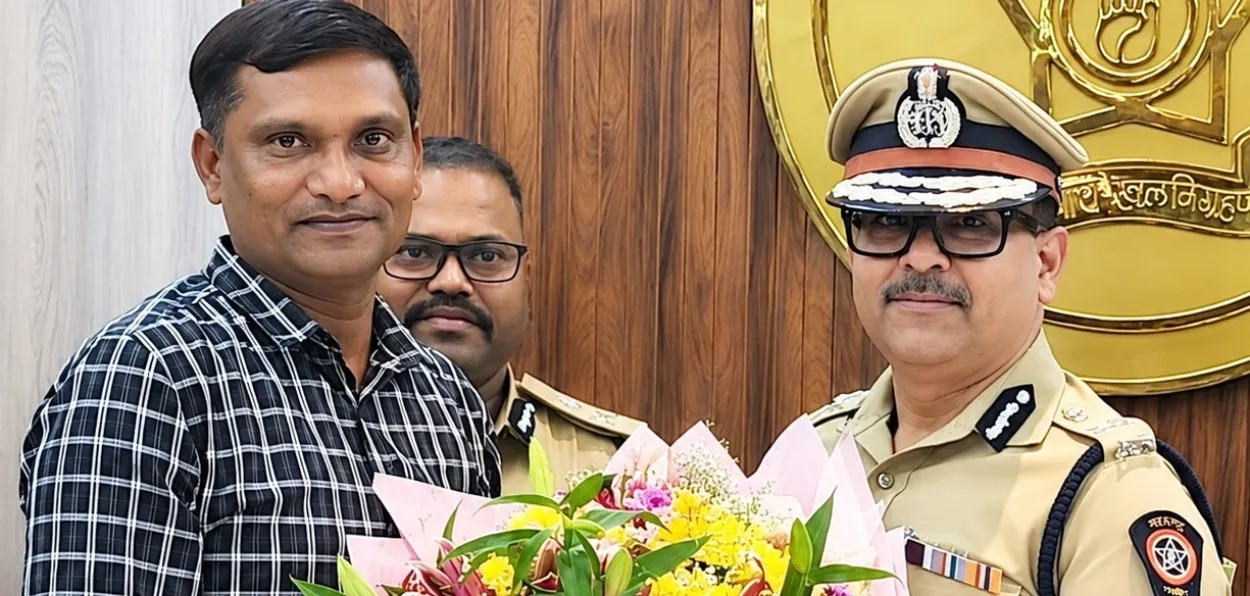
Rajas Shaikh, ASI, Pune City Police, being felicitated by the DG, Maharashtra Police

On a dark night in a deserted, zero-network area of Bopdev Ghat in Maharashtra, a gang-rape was reported. The case shook the nation, and all attention turned to its investigation. It was a blind case, with the criminal having left no clues whatsoever.

Rajas Shaikh, Assistant Sub-Inspector of Pune City Police, was given the responsibility of finding the rapist.

The location had no mobile network and no CCTV cameras. The culprit had switched his and the victim’s phones to flight mode. Not a single clue was left for the police to begin the investigation.

Rajas Shaikh worked day and night, checking CCTV footage. In a blurred image, he spotted the logo of a hotel on the suspect’s T-shirt. Beginning with this small clue, he immediately located the hotel and interrogated its owner.

The owner recognised his employee, and the police took the culprit into custody. He confessed and also revealed the names of his two accomplices.

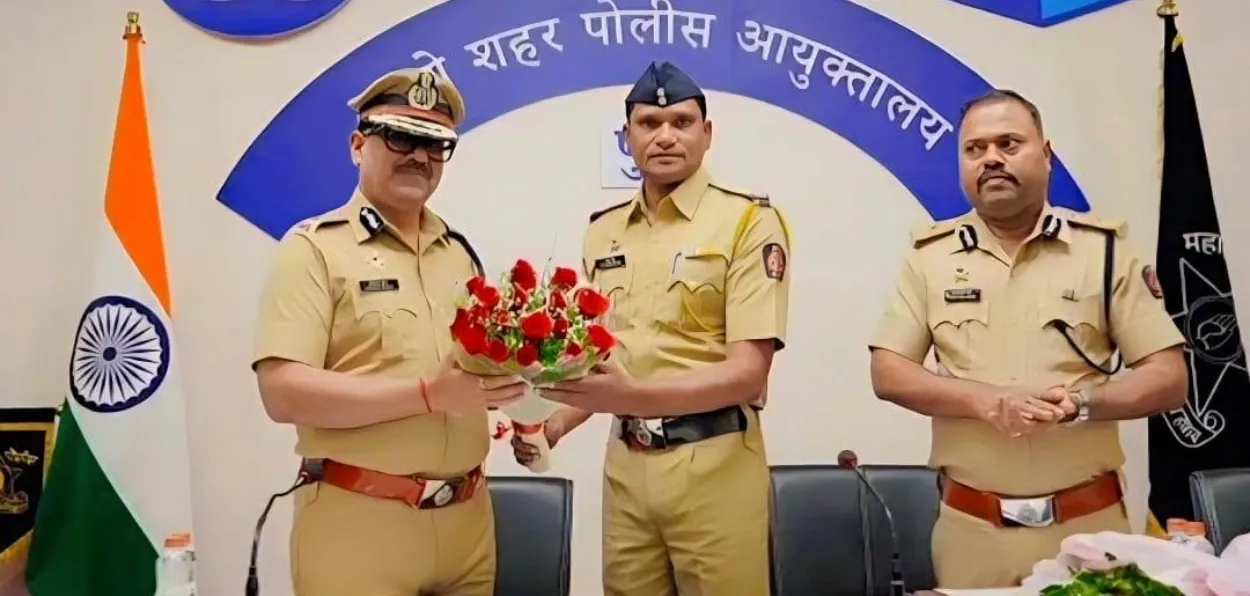
Recalling the successful investigation, Rajas Shaikh says, “When this investigation was completed, a very senior IPS-rank officer hugged me tightly and congratulated me. Senior officers usually don’t hug anyone, but that day I got the satisfaction that my work was truly valued.”

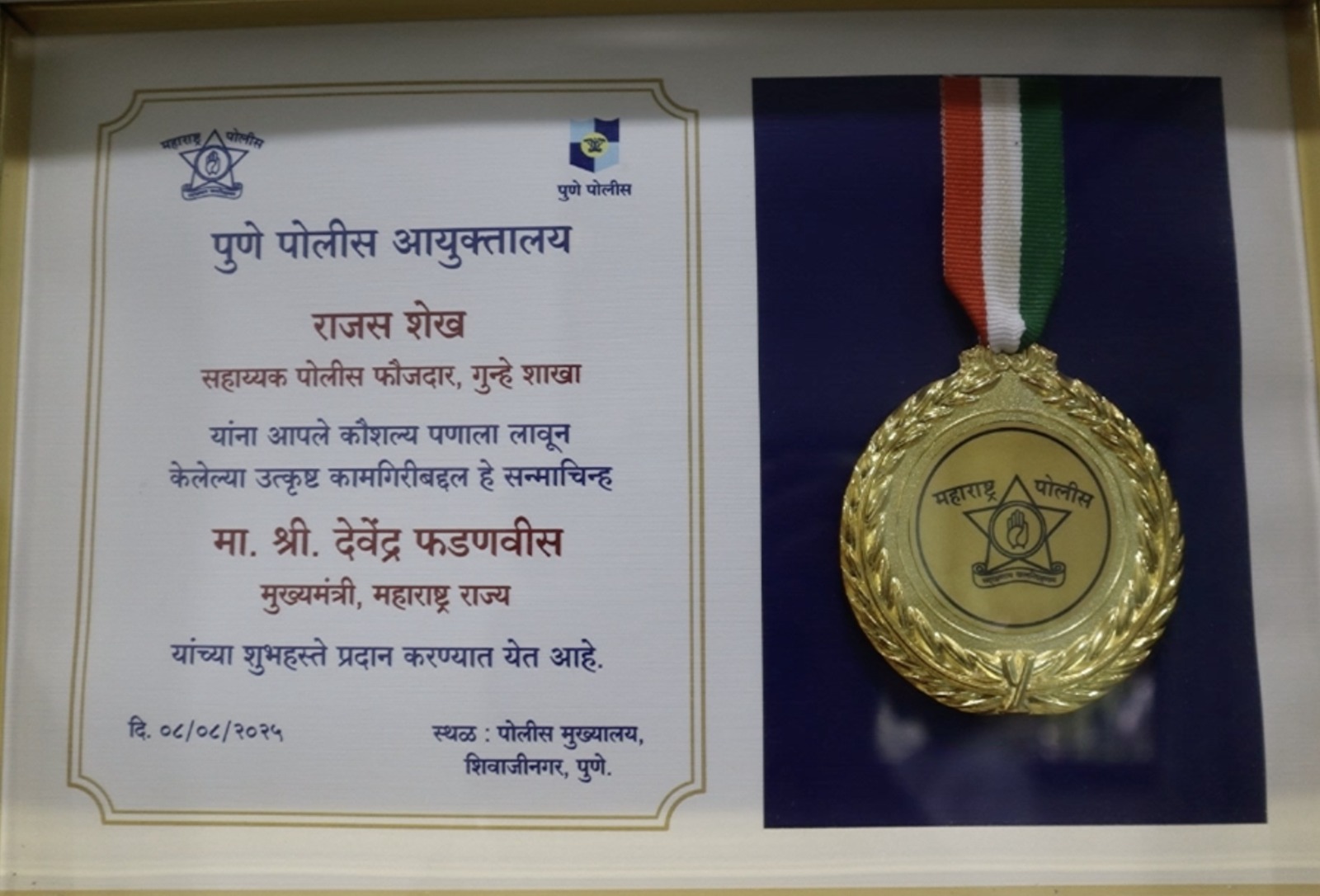
This complex case is among several such investigations that Rajas Shaikh has conducted during his 32 years of service. In recognition of his services, the Union Home Ministry recently honoured him with the ‘Ati Utkrisht Seva Padak’ (Medal for Most Excellent Service).

Speaking to ‘Awaz-The-Voice’, Rajas Shaikh said, “The other day a friend called and gave me the news of receiving the Government of India’s Ati Utkrisht Seva Padak. For two minutes, my heart was heavy, and tears welled up in my eyes. The hard work and service I have put in all these years had finally borne fruit.”
Rajas Shaikh joined the Pune City Police Force in 1995. A tremendous craze for the khaki uniform and a strong desire to do something impactful for society and the country while being in uniform drew him towards the police.

After graduation, he received a call from the Employment Exchange and decided to go for police recruitment. He was selected in his very first attempt.

Rajas is an athlete. He is a national-level volleyball player and has participated in long jump, high jump and triple jump.

His sports background came in handy in clearing the police entrance tests.

Initially, he worked as a helper in the storeroom and the reserve armoury section at Police Headquarters. He maintained records and handled the supply of weapons, ammunition and police uniforms for Pune city.

In 2002, he was transferred to the Traffic Branch. He was given responsibility for handling the then recently introduced prepaid auto-rickshaw service.

He also handled administrative work at the DCP office.

It was during Rajas Shaikh’s tenure at Wanowrie Police Station that his career in crime detection began. He says he was lucky to have good superiors as mentors who helped him in his journey as an ace investigator.

While at Wanowrie Police Station, he nabbed culprits in various crimes, including murder, burglary and kidnapping.

The most famous and challenging case among these was the triple murder committed by a man named Masalkar. He had brutally murdered his own mother, wife and little daughter. The media’s entire focus was on this case.

Everyone thought this man could not possibly be the culprit. But Rajas Shaikh’s sharp eyes caught his suspicious demeanour.

Speaking about this case, Rajas Shaikh said, ” Initially, my seniors said why I was interrogating a man who had just lost his mother, wife, and baby?’

But I had a strong suspicion inside. We interrogated him, and it was revealed that he had hatched this conspiracy to marry his girlfriend, and the court later convicted him of crimes of murdering the three.”

During his posting at Kondhwa Police Station, he was assigned a case involving the disappearance of a poor man’s child. According to the father’s statement, some individuals had stolen his baby. The notion that the police only work for rich people was proven wrong by Rajas Shaikh and his team.

Searching day and night, they tracked down the baby in just two days. The baby had been taken to beg at the large fair of Mhaskoba in Veer village of Pune district. The police went there, safely took custody of the baby and handed it over to the mother.

Speaking about that moment, Rajas says, “The way that mother held her baby and started crying, it was the most satisfying moment of my life. That satisfaction was far greater than the one after solving other cases.”

In December 2017, he started investigating two cases involving the theft of ATM machines from the same location.

His team tracked CCTV footage for nine days, from Pune to Kirloskarwadi in Sangli district. On the ninth day, they traced one suspect and arrested him in Osmanabad. After interrogation, they apprehended the other members of the gang from Belagavi on the Karnataka-Maharashtra border.

The gang had built a trolley, pulley and slider. They would extract the ATM machine with the pulley and slide it directly into the vehicle. The gang’s exposure led to the solving of 19 crimes in Satara, Sangli, Kolhapur and Osmanabad.

Later, after being transferred to the Crime Branch, while working in the Anti-Narcotics Cell, he busted MD drug and marijuana smugglers, exposing their massive network. He also put culprits involved in Nigerian frauds and ATM cloning behind bars.
Rajas Shaikh’s native village is Bhiwadi in Purandar taluka, famous for its rebellion against the British. Rajas Shaikh says, “There is a different kind of attitude in the soil of my Bhiwadi. Carrying that same attitude, I have fearlessly worked in the police department to date.”

Because of this very working style, retired senior officers used to affectionately call him ‘The Amitabh Bachchan of the Poor’. Not tolerating injustice oneself and not letting injustice happen to anyone else is a principle he has followed throughout his service, and he says he will continue to follow it throughout his life.

He has a set working style when inspecting a crime scene. He says, “If one goes to the crime scene and observes closely, a clue is 100% guaranteed to be found. If you grab onto that one thread and work, success is definitely achieved; this is my experience.”

Rajas Shaikh’s family was extremely poor. There were six brothers and sisters in the family. His parents worked as farm labourers but educated all their children. Today, all five of his brothers and sisters are graduates.

“My mother was illiterate, but she used to sit us down to study holding a stick. She used to say there is no salvation without education. The concept of parent-teacher meetings has come up now, but back then, whenever my mother came to the Saswad market every Monday, she would visit our school and ask the teachers about our progress.”

Rajas Shaikh lives in a joint family with his siblings. His wife, Najma, is a graduate of Wadia College. His elder daughter has done her B.Tech from MIT, while the younger daughter is in the 12th standard and she too wishes to become a police officer.

Rajas Shaikh has received more than 280 awards, including the Director General of Police’s ‘Quality Service Medal’ and two certificates of honour from the Chief Minister of Maharashtra.

He has also received the ‘Excellent Service Medal’ given for 15 to 25 years of unblemished service, and the Central Government’s ‘Most Excellent Service Medal’ given for service above 25 years.

On his work style, he says, “If people’s work is done according to the rules and with a smiling face, there is no stress at all. Everyone should always enjoy their work.”

Since police working hours are not fixed, their lifestyle can be stressful. But while balancing his job and health, Rajas takes care of his mental and physical well-being by eating only home-cooked food every day. He exercises, practises pranayama and meditates for 40–45 minutes every morning.

Giving valuable advice to the younger generation, Rajas concludes, “Set a goal and consistently keep trying towards it. Consistency and wholehearted efforts will definitely lead you to your goal.”

source: http://www.awazthevoice.in / Awaz, The Voice / Home> Mizan / by Bhakti Chalak, Pune / September 21st, 2026
Urdu-medium Student from Konkan Village: Doctor, Excise Inspector and Now Police Officer

Sai (Konkan Village), MAHARASHTRA :

Dr Hina Qasim Foplinkar, daughter of an ST bus driver, completed BHMS, served as an excise inspector and fought a legal battle before securing her police selection in Maharashtra

Mumbai :

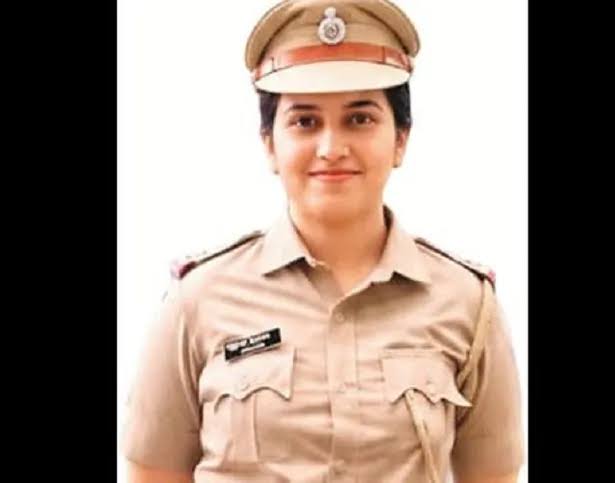
Dr Hina Qasim Foplinkar, who began her education at an Urdu-medium school in the small Konkan village of Sai, has been selected for the post of Deputy Superintendent of Police/Assistant Commissioner of Police after clearing the Maharashtra Public Service Commission examination.

The daughter of a Maharashtra State Road Transport Corporation bus driver, Foplinkar first became a doctor, then spent nearly seven years working as an inspector in the Maharashtra Excise Department before clearing the MPSC examination. She is currently undergoing training at the Maharashtra Police Academy in Nashik.

Foplinkar completed her early education at RZP Urdu School in Sai. She then studied at Advocate Haroon Solkar High School in Sai, where she completed Class 10, followed by Class 12 in science at SS High School and Junior College in Morbe.

She completed her BHMS in 2014 and became a doctor.

Speaking to Urdu daily Inquilab, Foplinkar said her teachers in Sai and Morbe played an important role in her educational journey by guiding her and encouraging her to pursue higher education.

“During my BHMS studies in Kharghar, I learnt about government jobs and competitive examinations,” she said.

After completing her graduation, Foplinkar worked for a year at different hospitals. During this period, she came across an advertisement for a free competitive examination preparation programme run by Savitribai Phule Pune University.

She cleared the entrance examination and was subsequently provided free accommodation and preparation facilities for around two years. She said this period helped her prepare for competitive examinations.

“During this period, I successfully cleared all the stages of the examination for Excise Inspector,” she said.

Nearly Seven Years in the Excise Department

Foplinkar joined the Maharashtra government’s Excise Department as an inspector in 2018. During her nearly seven years in the department, she served in areas including Andheri, Matunga and Chembur.

Despite having a government job, she continued preparing for further competitive examinations.

“I had a feeling that I had to do more. I continued my studies while performing my government duties,” she told Inquilab.

Her attempt to move into the state police service, however, did not come without setbacks.

Foplinkar appeared for the MPSC examination in 2023 and cleared all three stages but did not succeed at the medical stage and therefore could not secure a place in the final merit list.

She appeared again in 2024 and cleared the examination, but her name was again absent from the final list. She then challenged the matter through legal proceedings.

According to Foplinkar, she spent eight months pursuing the case before the decision was made in her favour.

“I had to fight a legal battle for eight months for my right. You have to raise your voice against injustice within the system and within the prescribed legal framework. It is not an easy task. In the end, the decision came in my favour,” she said.

Parents’ Sacrifices

Foplinkar has attributed her success to the sacrifices and support of her parents.

Her father worked as an ST bus driver but later decided to go to Kuwait to provide better educational opportunities to his two daughters. He worked as a driver for a private company there for around 10 years.

“My parents’ sacrifices are part of my success. Their prayers and hard work are the reason I have reached this position today,” Foplinkar said.

Her career has also drawn attention because of her educational background. She studied in an Urdu-medium school in Sai before pursuing science education, completing BHMS, entering government service and later clearing the state civil services examination.

Foplinkar’s journey is being seen as an example for students studying through Urdu, particularly those from smaller towns and villages.

She believes Urdu does not prevent a student from achieving professional success, provided students continue to acquire knowledge and skills and prepare themselves for competitive examinations and new opportunities.

Her progression from an Urdu-medium school in a small Konkan village to the medical profession, the Excise Department and now police service has made her an example of perseverance for students, particularly Muslim girls pursuing higher education.

source: http://www.clarionindia.net / Clarion India / Home> Editor’s Pick> India> Indian Muslims / by Clarion India Team/ August 25th, 2026

Maharashtra’s First Muslim Woman Police Officer Retires After 36 Years

Sangli, MAHARASHTRA :

ACP Rehana Sheikh, who received nearly 150 awards and served across Maharashtra, says she will continue to serve the nation even after retirement

Mumbai/Sangli , MAHARASHTRA :

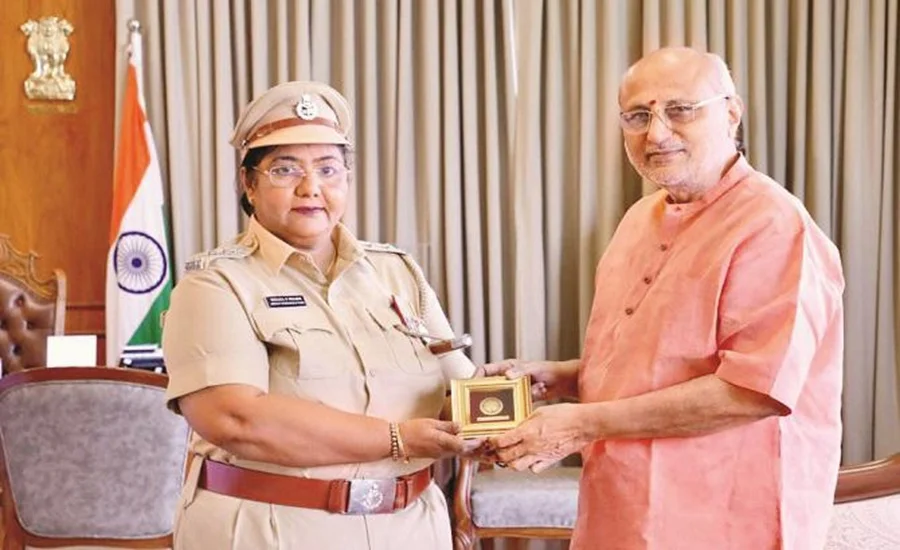
Rehana Sheikh, Maharashtra’s first Muslim woman police officer, has retired after nearly 36 years of dedicated service. She started her journey as a sub-inspector and retired on 31 May from the post of Assistant Commissioner of Police (ACP). At the time of retirement, she was working in the VIP security at Raj Bhavan in South Mumbai.

Governor of Maharashtra CP Radhakrishnan honoured ACP Rehana Sheikh on her retirement. She was recognised not just for her long career but also for her contribution to law enforcement and her trailblazing role as the first Muslim woman in the Maharashtra police force.

Speaking to Clarion India, Rehana Sheikh said, “I was the first Muslim woman to become a police officer in Sangli and Maharashtra. When I applied, 25,000 women took the police recruitment exam. Only 25 were selected and I was the only Muslim woman among them.”

Sheikh, who hails from Sangli, said her father served in the military, but no one in her family had worked in the police before. Her dream began when she was a national-level volleyball player. Watching the TV serial Udhan, which showed a woman police officer, inspired her to serve the country.

“A kabaddi player from our neighbourhood had become a sub-inspector. I had job offers from banks, but my volleyball coach asked me, ‘Do you want to be a clerk or an officer?’ That question changed my life,” she recalled.

Despite social challenges and the fact that a police job was not seen favourably at the time, her family stood by her. Rehana’s journey in the force was marked by both professional achievements and personal hardships.

“Shortly after I joined the force, my father passed away. I had to take care of my mother, younger sister and brothers. Then I got married in 1991, but my husband died in an accident in 1993. My son was very young at that time,” she said.

After her husband’s death, she was transferred to Solapur and later promoted and posted in Kolhapur. She remarried in 2004 and continued her service with dedication in various cities and districts of Maharashtra.

Rehana Sheikh worked during some of the most dangerous times in Mumbai’s history. “When I began my career, the underworld was very strong. Crimes were violent — beatings, murders. Now, the nature of crime has changed. We see more cybercrime and online fraud,” she explained.

She played an active role in many high-profile operations. “I was part of the police team during the Lokhandwala shootout. I was also involved in the search at Arun Gawli’s Dagdi Chawl, where we seized weapons. Those were difficult times, and I believe the new generation will find such work challenging.”

She also spoke about being among the first batch of women allowed to work at police stations. “Earlier, women officers were only posted at airports or less active places. We were the first to be allowed to work in police stations.”

Balancing home and duty has never been easy. “My husband and my colleagues supported me. I had the responsibility of my family and later my in-laws, too. But I managed both because of their support and Allah’s grace,” she said.

During her long career, Rehana Sheikh was honoured with nearly 150 awards. But for her, the real success lies in the lives she touched and the message she now wants to spread.

“My message to women is: be educated and join the police force. Serve the society, the nation and the country. Even after retirement, I want to continue working for the betterment of people,” she said with pride.

ACP Rehana Sheikh’s journey from Sangli to the top ranks of Mumbai’s police force is not only inspiring but also a symbol of determination, courage, and service.

source: http://www.clarionindia.net / Clarion India / Home> India> Indian Muslim / by Team Clarion / June 03rd, 2025

Uzma Shaikh: Orphan who battled Poverty, Covid to become Police Sub Inspector

Ashti (Beed District) , MAHARASHTRA:

Uzma Shaikh’s decision to join the police force was inspired by a senior Police Inspector who visited her college as a guest when she was preparing for the 12th board exam.

Ashti (Beed): 

Azm mohkam ho to hoti hai balaayen paspa, Kitne toofan palat deta hai sahil tanha. This Urdu couplet which loosely translates as ‘If the determination is strong then the evil calls are pushed back, How many storms does the shore turn away alone’ best describes the journey of Uzma Shaikh who will soon don the hat of a Police Sub-Inspector in Maharashtra.

Uzma Shaikh was 3 months old when her father passed away. Acute poverty forced her mother to leave her in-laws home in Ashti – a city in Beed district of Maharashtra, and shift to her parent’s home.

Uzma’s maternal grandfather was not too well off to take care of his widowed daughter. A small bhangar shop was the only source of income of her Nana – maternal grandfather. Then he also had two other daughters to feed and look after.

Realizing the hardship of her father, Uzma’s mother started working first as a help and later as a cook for a school to prepare Mid-Day Meal for students.

“Despite facing hardship economically, my grandfather will never agree for his daughters to work anywhere. My mother however continued to work albeit without the knowledge of my grandfather”, Uzma recalled.

A few months later, Uzma’s mother got a temporary job at the Forest Department on someone’s recommendation to plant soil in a nursery. Uzma’s grandfather expressed displeasure but was helpless by the situation.

Unfortunately, Uzma’s Nana and Nani too passed away after a few months.

“Now, besides raising me, my mother had the responsibility of other members of the family”, Uzma recalled adding, “Ammi started working even harder.”

Uzma was lucky that she continued with her studies except for two years when she was forced to drop out because of the financial burden. Nonetheless, Uzma passed the Class 10 SSC exams from Zila Parishad Kanya Parshala Marathi Medium School in Ashti and 12th board from B.D. Humbarde Mahavidyalaya, Ashti.

In two years when Uzma dropped out, she learned Mehndi art and went one marriage to another to apply Mehndi on brides and newly-wed, and also to women and girls during festival season.

“This helped me raise some money and start my education afresh”, she recalled.

Uzma’s Journey to becoming Police Sub-Inspector

Uzma’s decision to join the police force was inspired by a senior Police Inspector who visited her college as a guest when she was preparing for the 12th board exam.

“I was immensely impressed by the greatness and dignity of the police uniform. An aspiration arose in me, I asked, how to become a Police Sub Inspector. He explained the details”, Uzma recalled.

After 12th, Uzma took admission in the same college to pursue the BCA (Bachelor in Computer Application) degree course. It was during her second year in the degree course that Uzma started seriously thinking to fulfil her dream of becoming a police officer. One of her college lecturers guided her further. Uzma needed to crack the Maharashtra Public Service Commission (MPSC) exam to become an officer which required an extensive training.

For Uzma, the time then came for the toughest – to take permission from her mother.

“I shared with my mother my desire to become a Police Inspector and asked her permission to go to Pune”, Uzma said.

She was reluctant for the obvious reason.

“From where the additional expenses would be managed?” she asked.

Uzma was able to convince her mother somehow. Other family members from Uzma’s parental as well as maternal sides, too were taken on board. They promised moral and financial supports.

In Pune, Uzma searched for the cheapest available hostel and mess. It was 2019 and Covid 19 Pandemic had just started to spread. Unfortunately, Uzma became the early victim of the Pandemic and she was forced to leave Pune and return to her home in Ashti.

Not to let Covid-19 spoil her ambitions to crack the MPSC exams, Uzma enrolled herself in a local library and continued with her studies. But, in an unfortunate turn of event, someone complaint to the Librarian about her Covid infection who cancelled her registration.

“The only option now I had was to study at my home half of which was destroyed by the PWD as part of its road widening project”, she said.

“A small corner of my home was now the area of my all academic activities. The money I raised by applying Mehndi during marriage and festival season was used to buy books and study materials”, she recalled.

Her hard work paid and she cleared the MPSC Prelims in her first attempt. She returned to Pune in 2020 when the Covid-19 Pandemic subsided to prepare for Mains.

“The MPSC Main was deferred because of the Pandemic. The delay provided me additional time to prepare for the coveted exams, and Alhamdulillah, like the Prelim exams, I cleared the MPSC Mains in my first attempt”, she recalled.

Police job requires Physical Test. Uzma cleared it too with an impressive 90 per cent score.

So far so good, Uzma however had a nervous breakdown in the Interview phase of the exam. When the final result was announced, Uzma did not find her name in the Merit List.

“Due to nervous breakdown, I couldn’t do well in the interview and got out of the final cut-off list though by only one mark”, she said.

Uzma still had a chance as her name was on the 3rd position in the waiting list. Uzma was in low income category and an EWS Certificate could have definitely come to her rescue. But, due to lack of the necessary documents she could not get one.

Against this backdrop, Uzma pinned her hope on someone to opt out and allow her to move from the waiting list to the main list. At the same time, Uzma decided to re-appear for the MPSC exams.

Then there was a miracle. Uzma’s earlier waiting list was confirmed and she finally made her way to the final selection list.

“After 11 months of the training period, I am set to become a Police Sub-Inspector”, a beaming Uzma said.

Her dream of becoming a Police Officer coming true, Uzma has a message for other girls.

“If an orphan poor child of a remote place can do it, why not you? You have everything. I would especially like to tell girls to be attracted towards government jobs where there are countless opportunities waiting for them”, she said.

[A version of this article is published by Roznama Inquilab, Mumbai on April 10, 2024. The writer Akhlaque Shaik is Career Counsellor and Columnist at daily Inquilab.]

source: http://www.ummid.com / Ummid.com / Home> Life & Style / by Akhlaque Shaikh / April 11th, 2024