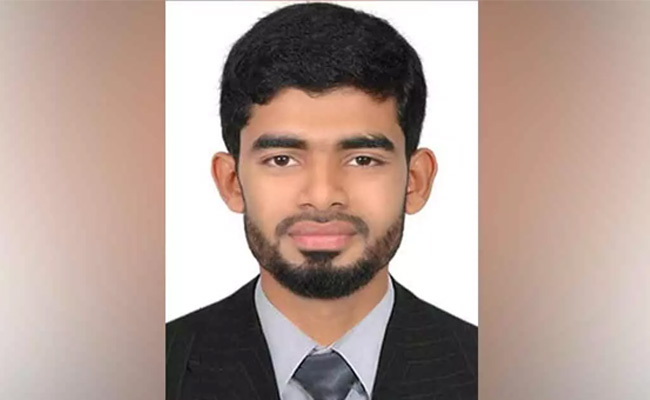
Kasaragod District Kannada Journalists Welfare Association has selected Vartha Bharati journalist Samshuddeen Yenmoor for its annual ‘Dattinidhi Award’.
The association, which has been working for nearly two decades to promote the Kannada language, culture and the welfare of journalists in Kerala, presents this award with sponsorship from Dubai-based entrepreneur James Mendonca.
The award includes a cash prize, citation and memento. It will be presented at a function scheduled on May 16, 2026, at 9:00 am at the Hall of Subbayyakatte Aided Higher Primary School in Kasaragod district.
The programme will be held under the chairmanship of Shivananda Tagadur, State President of Karnataka Union of Working Journalists.
Among those expected to attend are Karnataka Legislative Assembly Deputy Speaker Rudrappa Lamani, Minister N.S. Boseraju, Manjeshwar MLA A.K.M. Ashraf, Chief Minister’s Media Advisor K.V. Prabhakar and Karnataka Border Area Development Authority Chairman Somanna Bevinamarad, among others.
The details were shared in a statement issued by association president Ravi Naikap.
source: http://www.english.varthabharati.in / Vartha Bharati / Home>Karavali / by Vartha Bharati / April 30th, 2026
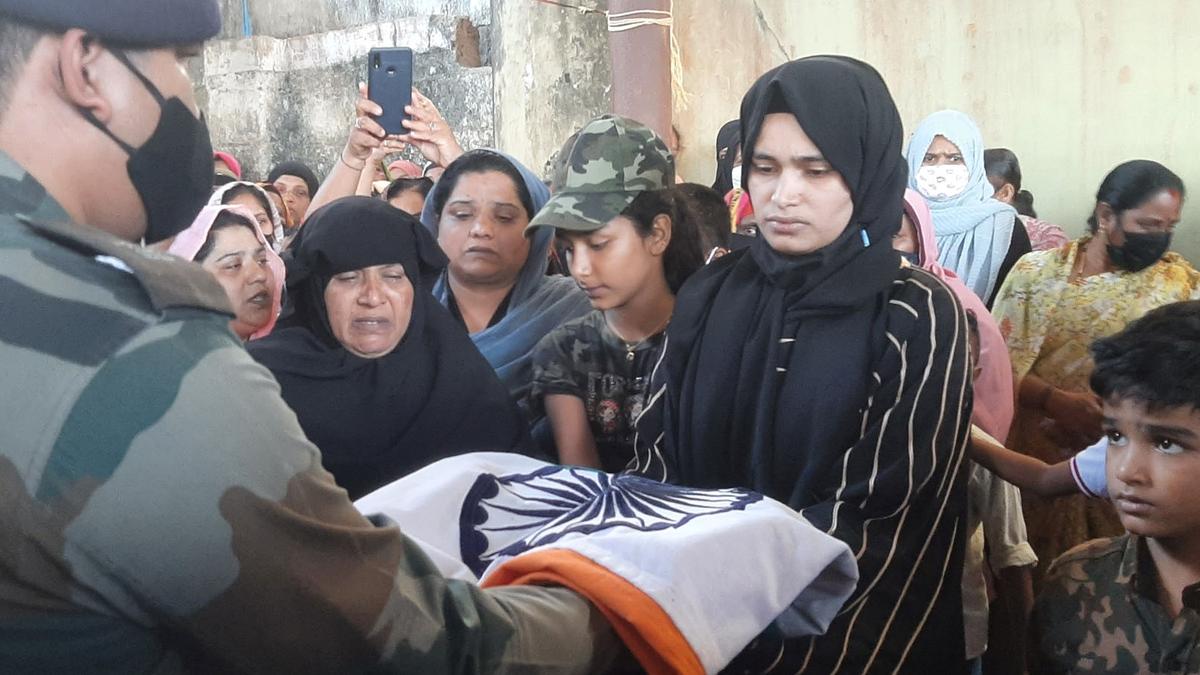
Army personnel handing over the tricolour to the wife of Hawaldar Althaf Ahmed, who died in Kashmir on February 22. | Photo Credit: Special Arrangement
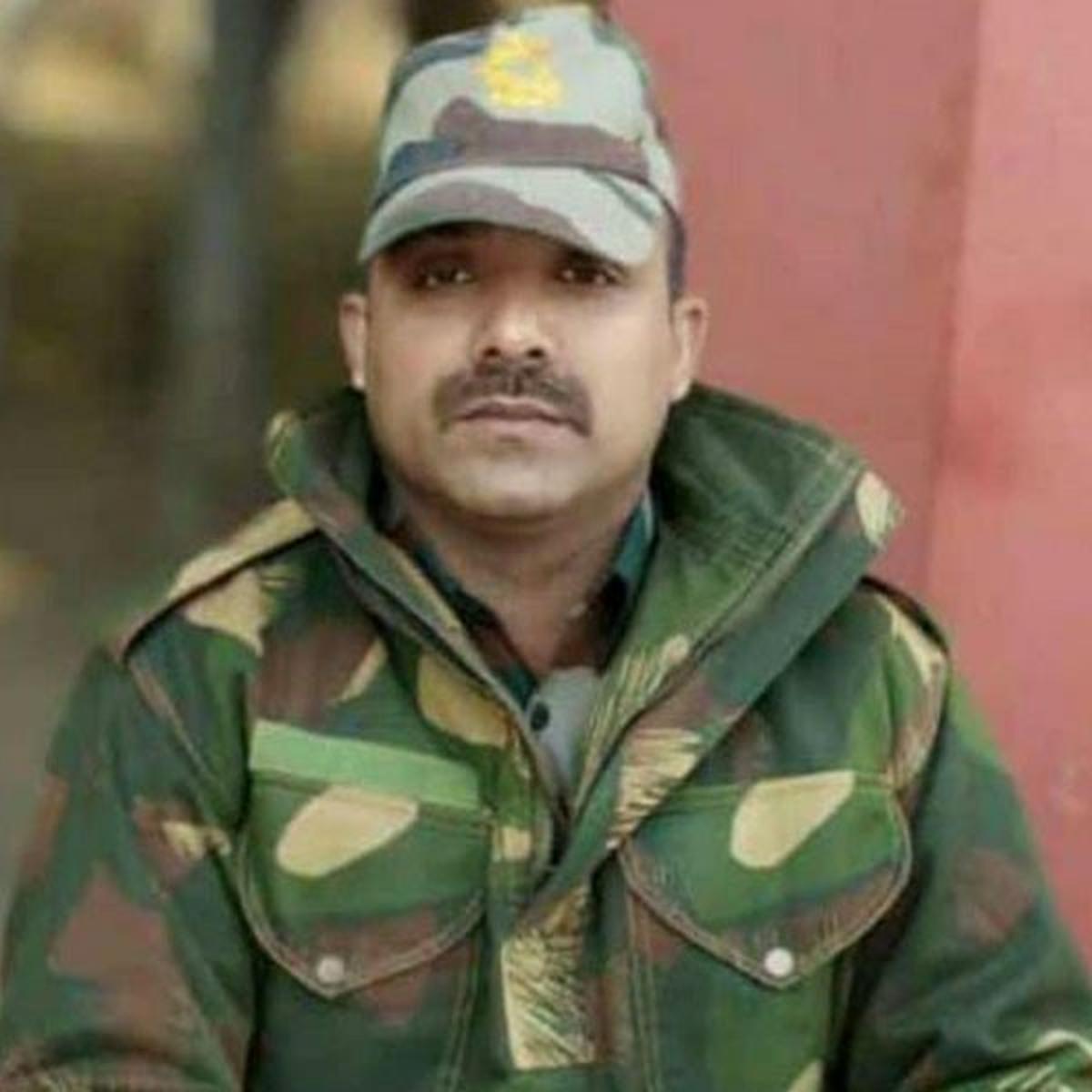
Althaf Ahmed | Photo Credit: Special Arrangement
The last rites of 37-year-old Indian Army Hawildar Althaf Ahmed, who died in a blizzard while on duty in Kashmir, were performed in his native in Meenupete in Kodagu district’s Virajpet taluk with state honours on Saturday.
The body of Althaf Ahmed, who had died on February 22, arrived in his native in Kodagu early on Saturday as its departure by air from Srinagar was delayed owing to bad weather. The body was kept at Eidgah Maidan in Meenupete for the public to pay their last respects before it was laid to rest at the burial ground as per Islamic rituals.
Virajpet MLA K.G. Bopaiah, MLCs Suja Kushalappa and Veena Achaiah, besides Deputy Commissioner B.C. Satish, Kodagu Superintendent of Police M.A. Aiyappa and other senior officials of the district administration were among the large number of people, who paid their last respects.
According to sources, Althaf Ahmed grew up in Meenupete and completed his SSLC in St Anne’s School in Virajpet and Pre University Education at the Virajpet Government Junior College. He later joined the Army Ordnance Corps (AOC) regiment. He had been serving the Army in various places since the last 19 years.
While guarding the border in Kashmir, Althaf Ahmed was caught in a blizzard on February 22 and died.
After the ceremonial gun salute during the funeral of the martyred solider, Army personnel handed over handed over the tricolour that draped Althaf Ahmed’s body and his uniform to his wife and two children. He leaves behind his mother, wife, a son and a daughter.
source: http://www.thehindu.com / The Hindu / Home> News> India> Karnataka / by Special Correspondent / February 26th, 2022
Nishat & Misba turn Panache into one of Mysuru’s most loved fashion exhibitions…
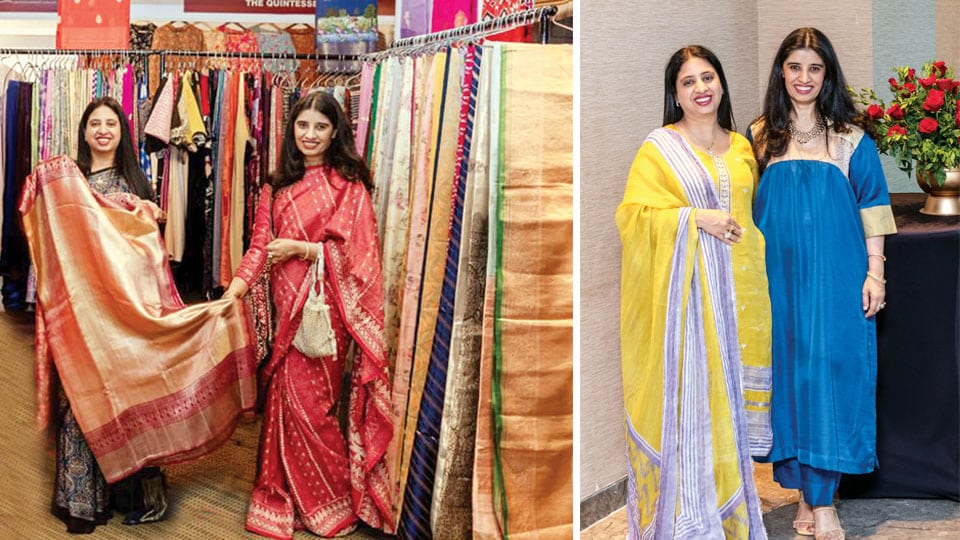
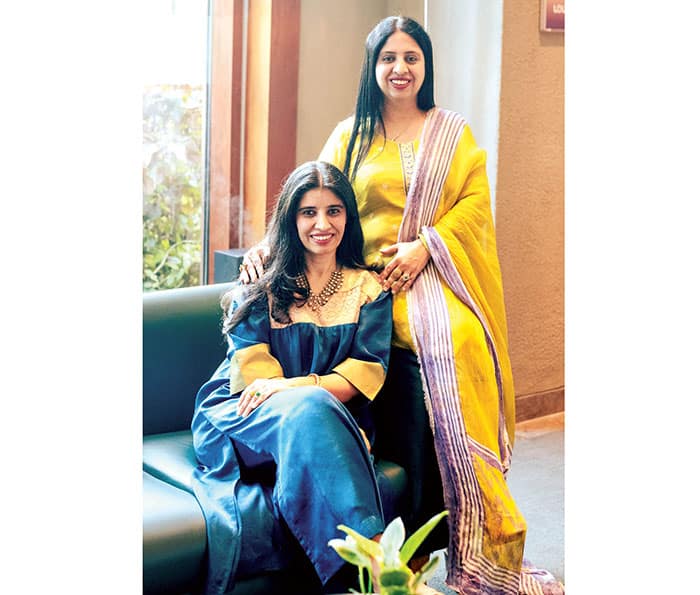
Nishat Mohsin and Misba Umrean, Co-founders of the fashion exhibition platform ‘Panache’, have been curating memorable fashion experiences in Mysuru for several years.
What began as a modest initiative has grown into one of the city’s most-loved fashion exhibitions, offering a thoughtfully curated experience while bringing designers and fashion enthusiasts under one roof.
Alongside its successful editions in Mysuru, ‘Panache’ has also travelled to Bengaluru and Coorg in collaboration with several high-end brands.
While successfully steering ‘Panache’, the duo also balances their entrepreneurial journey with family life and personal passions.
Nishat, born in Bengaluru & raised in Mysuru, is married to a businessman and is a mother of two who enjoys designing spaces and nurturing plants.
Misba, born in Mysuru and now based in Bengaluru, is a B.Com graduate, married to a Bengaluru-based professional and a mother of three who enjoys travel, adventure sports and cooking.
Speaking to Star of Mysore, the sisters open up about their journey, inspiration and vision behind ‘Panache’: “Fashion is not just about clothing, it’s about creativity, craftsmanship and giving designers a platform to shine.” —Ed
Star of Mysore (SOM): How did the fashion extravaganza Panache begin? And what inspired you both to venture into fashion exhibition curation?
Nishat Mohsin and Misba Umrean: ‘Panache’ was envisioned by Nishat in 2008 as an intimate platform connecting designers with fashion enthusiasts. When Misba joined in 2009, the exhibition gained new momentum and gradually evolved into a celebrated fashion destination.
Coming from business-oriented families, we always aspired to create something of our own. Our journey into exhibition curation is driven by a deep appreciation for fashion not just as clothing, but for the creativity and craftsmanship behind it. Through ‘Panache’, we’ve had the joy of bringing ideas to life while giving designers a platform to shine.
OM: Mysuru is known for its legacy of royalty and rich cultural identity. Do you think Mysureans have a unique fashion sense? And when it comes to style, what defines them more, silk sarees or contemporary fashion trends?
Nishat and Misba: Absolutely. Mysureans have a refined and graceful sense of style. Silk sarees hold a special place; they’re timeless, elegant and deeply rooted in tradition. At the same time, they embrace contemporary styles and modern silhouettes with equal grace. What makes their style truly distinctive is this seamless blend of heritage and modernity, marked by elegance and understated sophistication.
SOM: In your opinion, how has the representation of women in fashion events evolved over the years?
Nishat and Misba: The evolution has been remarkable. While women were once seen mainly as participants or models, today they lead as designers, entrepreneurs and key decision-makers, shaping the industry.
Fashion platforms have become powerful spaces for women to express their creativity and vision through their brands, and it’s inspiring to witness and contribute to this evolution.
SOM: How has the role of social media and digital platforms changed how fashion exhibitions are promoted and experienced?
Nishat and Misba: Social media have introduced a new dimension to fashion exhibitions. Promotions that once relied on word of mouth now reach audiences instantly. Digital platforms create anticipation even before the event begins, allowing us to connect with our audience early and extend the energy of the exhibition beyond its closing day.
SOM: What has been your most memorable exhibition moment? Have you encountered a last-minute crisis? How do you navigate them?
Nishat and Misba: Some of the most memorable moments are often the simplest. Watching a designer sell out, or a visitor finding exactly what they were looking for, is priceless.
Naturally, live events come with their share of challenges, from logistical hurdles to unexpected technical setbacks. Over the years, there have been many last-minute surprises and we address them with composure, teamwork & mutual trust.
Nishat Mohsin (sitting) with her younger sister Misba Umrean
SOM: How do you ensure smooth collaboration among teams and what defines the success of an exhibition for you?
Nishat and Misba: Effective collaboration begins with clear communication and mutual respect. We involve designers, production, and marketing teams from the very beginning. So, everyone feels aligned and valued.
For us, the success of an exhibition goes beyond numbers. It lies in the connections created when designers feel supported, visitors leave inspired and the continued trust people place in ‘Panache’ year after year.
SOM: How do you stay calm and manage stress when the event date is approaching?
Nishat and Misba: As the event date approaches, there is always a certain rush, but over the years with ‘Panache’, we have learnt that staying calm is a conscious choice. Careful planning helps minimise last-minute stress. A quiet prayer, deep breaths and trusting our team help us stay grounded and we believe that positive energy always reflects in the event.
SOM: What advice would you give someone who wants to break into fashion or event management?
Nishat and Misba: Fashion and event management may appear glamorous, but they require discipline, patience and emotional intelligence. Start small, build genuine relationships and stay consistent, as reputation is paramount. Above all, understand people, fashion is not just about clothing, but about emotions and confidence.
SOM: What message would you like to share with women this Women’s Day?
Nishat and Misba: To every woman, we would say that strength is not defined by others; it lies in your ambition and compassion. Celebrate your achievements without guilt, dream beyond your fears and never diminish yourself to make others comfortable. Your journey simply needs to be your own.
source: http://www.starofmysore.com / Star of Mysore / Home> Feature Articles> Top Stories / by Shadan Muneer / March 16th, 2026
Madhu’s father is a farmer and mother is a homemaker.
Both of them had been able to reach upto the interview round a few times in their previous attempts, yet missed making it to the final list by a few marks.
Bengaluru :
Two candidates from Kolar are among the 22 candidates from Karnataka who have cleared the UPSC Civil Service Examination (CSE) 2025. While A Madhu secured the 436th rank, Tousif Ulla Khan secured 741st rank at the national level. Both of them had been able to reach upto the interview round a few times in their previous attempts, yet missed making it to the final list by a few marks.
Tousif, a resident of Bangarpet, cleared the CSE in his fifth attempt. He said, “I was qualified for an interview in my fourth attempt in UPSC CSE 2024 but missed to be in the final list by one mark. But I kept up my hopes. I am happy to have cleared it in my fifth attempt, but I am not sure if I will be able to join the service as it depends on the allocation I receive for my rank.”
Tousif started preparing for the CSE in 2021, soon after his graduation, and he happened to land a job in the Council of Scientific and Industrial Research (CSIR) as an assistant section officer in Hyderabad last year.
“The job helped me sustain in this UPSC journey, as I was able to support myself, as well as my family, financially,” he said.
Madhu, who hails from Eragasandra village in Kolar, also hails from a humble background.
His father is a farmer and mother is a homemaker. He pursued his studies in government schools and colleges. “I have been able to qualify for an interview four times. Despite this, I failed in the prelims in 2023, and it was an eye opener for me. In my third attempt in 2024, I secured 544th rank and was allocated Indian Revenue Service. This year, I am hoping to get Indian Administrative Service with my rank as well as my OBC status,” he said.
source: http://www.newindianexpress.com / The New Indian Express / Home>Karnataka / by Rashmi Patil / March 08th, 2026
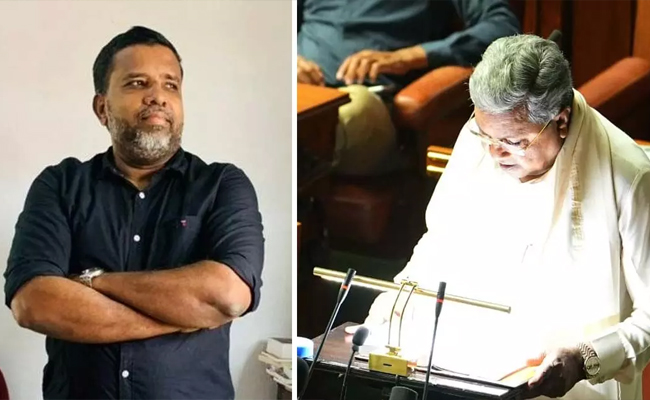
In a unique manner, Chief Minister Siddaramaiah quoted lines from a poem by B.M. Basheer, poet and News Editor of Vartha Bharati before the State Legislature on Friday.
Siddaramaiah, who was presenting the state budget for the current year, recited Basheer’s poem before announcing new initiatives on women and child development:
“Mother likes roses For she knows How difficult it is To bloom among thorns”.
source: http://www.english.varthabharati.in / Vartha Bharati / Home> Karnataka / by Vartha Bharati / March 06th, 2026
Bhatkal (Uttara Kannada District / Karavali , KARNATAKA :
The Editor of Naqsh-e-Nawayath, Mohammed Abdul Aleem Qasmi
The association of Bhatkal with the Arab world goes back to over a thousand years and this coastal town in Uttara Kannada takes immense pride in it. From clothes, perfumes to streets named after Arab cities, the Arab influence is visible. But one of the most enriching experiences of this tradition is the language of Nawayathi, which is a mix of Persian, Urdu, Arabic, Marathi and Konkani. The language is almost exclusive to Bhatkal, with only a few villages outside the town speaking this language. In the sixth of the nine-part series, Amit Kumar talks about the origins, history and legacy of Nawayathi and how it seeks to survive in the modern age.
“No matter where we go, we can identify our people. All it takes is a few words of Nawayathi,” says Maulavi Abdul Aleem Qasmi, the owner and editor of Naqsh-e-Nawayath, the only Nawayathi newspaper published in India. The 73-year-old resident of Bhatkal has been running the newspaper, published fortnightly, for the past 41 years, first as the owner and then as the editor after the demise of its founding editor Syed Abdul Rahim Irshad in 1996, after which the newspaper shifted from Mumbai to Bhatkal. Now run from an old building in Dubai market in Bhatkal, the fortnightly newspaper remains an important face of the language and the efforts to safeguard it. In fact, it is with a glint in his eye that Qasmi points out that even after all these changes, the newspaper, which has 16 pages, still sells about 3,000 copies per issue. About 80% of the copies are sent via post to its readers while the remaining are bought in the city. “The numbers have remained consistent and that makes me happy. The entire paper is proofread and published by two people,” he adds.
Bhatkalis offer a number of perspectives to now Nawayathi came into being. According to Qasmi, it is an amalgamation of nine languages (naw/nav=nine, ayath=language), although he is unable to suggest all the nine languages from which the language originated. In its current form, the language is closest to Konkani. Qasmi says that when the Arab traders came to India, a number of them settled here in Bhatkal due to its favourable climate and location. The descendants of these Arabs would later be identified as Nawayath.
The office of Naqsh-e-Nawayath, the only Nawyathi newspaper of India
While the language itself owed its roots to a number of languages, from the very beginning it used the Persian script. His newspaper, which once focussed on the most important news from the region, made the shift to more feature-based items over the past decade. “With the advent of the internet and the emergence of local websites and news channels, there was little for us in the form of news. So we now focus on Islamic teaching, columns from our readers and obituaries and marriages. In fact, now the obituaries and marriages sections are the main USP of our newspaper,” he adds.
Persian, Nawayathi and Urdu: How written documents evolved in Bhatkal
According to Maulana Abdul Aziz Kaziya, an expert on Nawayathi and a member of Nawayath Mehfil, an organisation which is working to restore the glory of the language, Nawayathi was not initially used in a written form. “Up to the 17th century, almost all our records and written material remained in Persian even though Nawayathi was the spoken language. It was only around the end of 17th century that the language began to be used in written form too in the Persian script. I have seen documents, contracts and official letters written from that period in Nawayathi,” he says. But with the 20th century, a new challenge faced the Bhatkalis. “When the Anjuman Hami-e-Muslimeen was established in 1919, they were faced with a decision,” says Kaziya. “They wanted to create an education system that would help students equip themselves with the modern world while retaining the core Islamic principles. So, they chose Urdu over Nawayathi and since then Urdu has become the de facto language of education here,” he adds. While it proved to be a positive for students, it nevertheless relegated Nawayathi to the status of a “home” language, Kaziya adds. “Even today, almost all families speak Nawayathi at home and amongst each other. But it was never, and is unlikely, to be taught in schools,” he says.
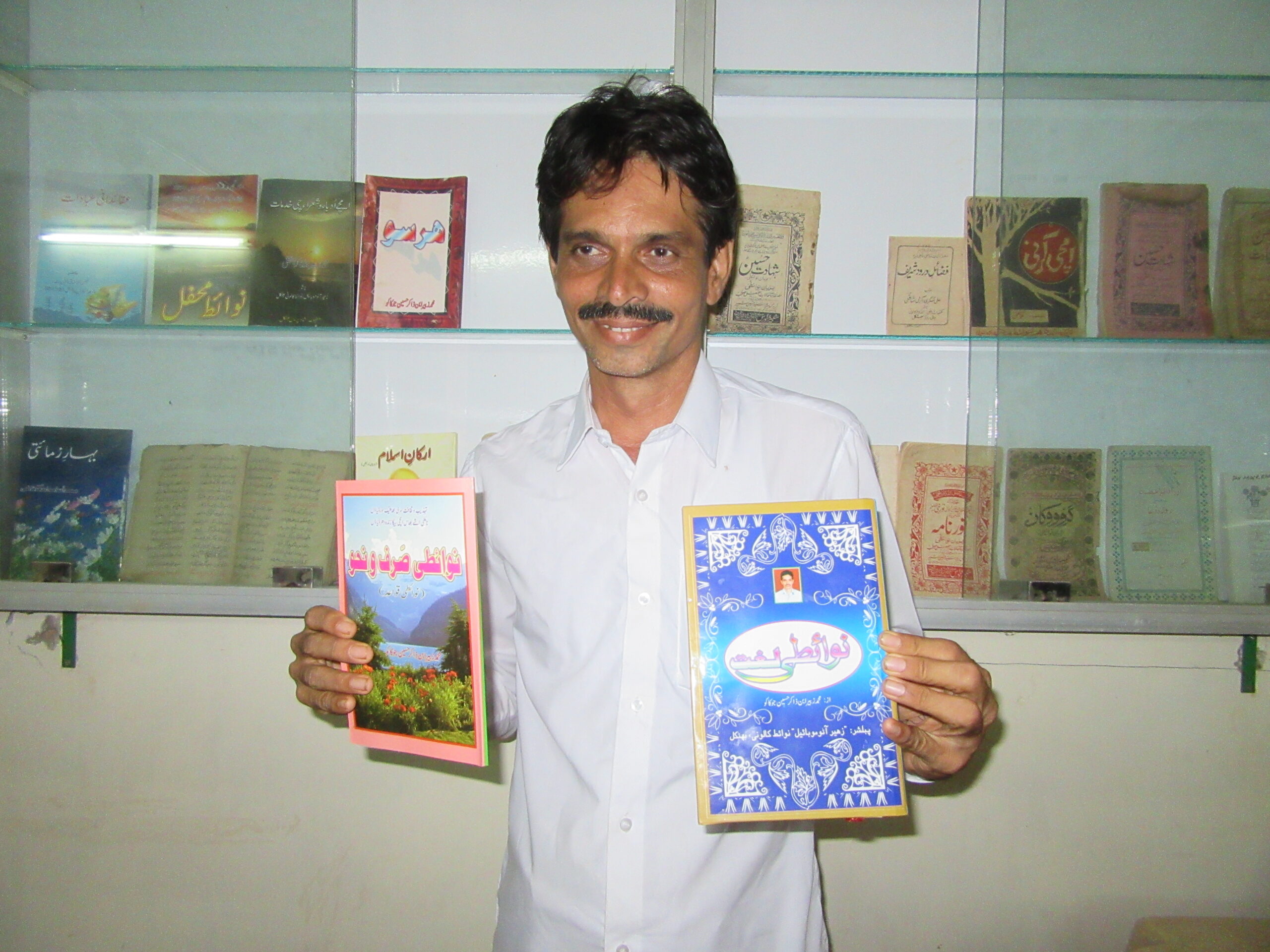
Mohammed Zubair Jukaku, who has written the first Nawayathi book on Grammar and a dictionary.
Scholars, poems and the future of the language
Aikage Sayyano-Khalabe Ismail (18th century): Nawayathi Dua
The original song has 143 verses. Here are the first ten.
Aikage Sayyano, mege sangta Allahche Pashi, Taufiq Mangta… Toge naito amige kiwro, Tekage waknuk napawe Iwro Toge postolo amchoge dhani Teka nai zodo upawanit koni Manat mokhat aslale to Zane Techege mazuk na-hale pane Izanak suzanak techege niamato Inwa gawrwa techege sifato Inauche gaurauche tekachge sazawar Techege athwen inauta janawar Mohammed nabiyacho karage wakan Allahge rakhnit tumchige Iman Gosacho mogyo amchege wari Yeko zan nahi techege pari Taikage fetaules amcher rabban Aplege kudrat ko karuk bayan Jibreel yawn teikage Sangile, Qur’an ghewn teicharge diwile
Translation: Listen, friends (female) I am going to tell you; I am going to pray to Allah for prosperity He is the master, we are the slaves; Words are not sufficient to praise him. He looks after us, he is our Lord; None is born equal to him. Whatever is in the mind and mouth (lips) he knows; Without his knowledge, the leaf does not move. His bounties are bestowed upon the small as well as the great; His attributes are to be found in both the rich and the poor. He is the only one fit to be praised and respected; His praises are sung by animals. Sing the praises of Prophet Muhammad; Allah will safeguard your faith. The Friend of God is unto us; There is no one like him. God sent him unto us; In order to reveal to us his Power. Gabriel came and revealed to him; He gave the Qur’an to him.
(From The Nawayaths of Kanara: Victor D’Souza, 1955)
These lines are still taught to many children in Bhatkal as a dua (prayer). Nawayathi has been blessed with a number of eminent authors: Sairul Nisa, Maulud Nanna, Garvo Vakhan and Kaile Bayan among others, but you would struggle to find their books in Bhatkal today. The former editor of Naqsh-e-Nawayath, Syed Abdul Rahim Irshad is regarded by many as the most prominent author/contributor Nawayathi, and his book Faal-e-Sakhan is regarded as the first attempt to go beyond Islamic teachings/writings in Nawayathi and delve into the realm of imagination and poetry. However, you would be hard pressed to find a copy of even this book in Bhatkal.
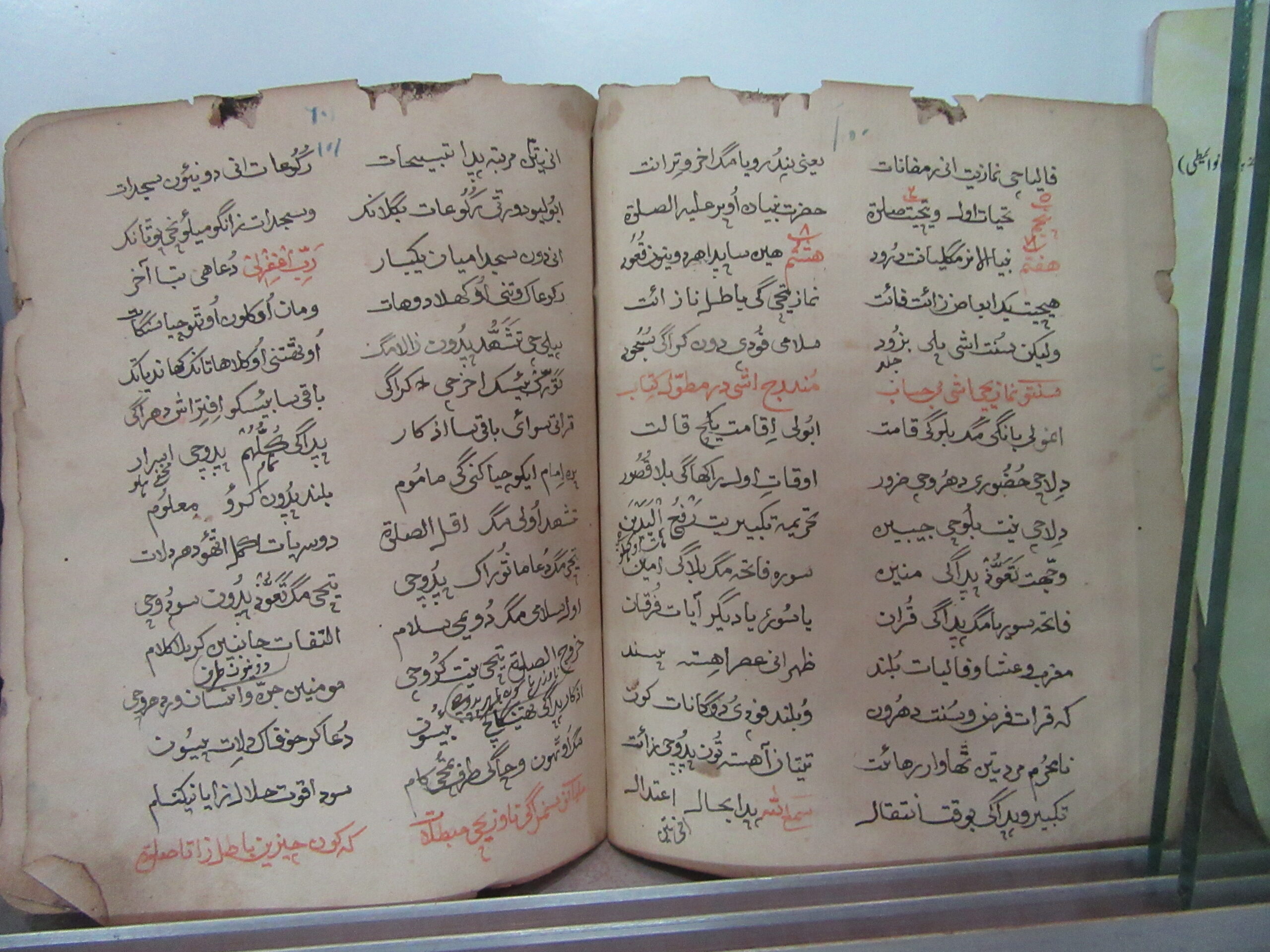
A manuscript of Nawayathi text preserved in the Nawayath Mehfil’s office.
While the language flourishes in the spoken form, it is clear that the same cannot be said of its written form and the literary works. According to Qasmi, the preference for Urdu and Arabic over Nawayathi has in some ways, negatively impacted the local language. “I doubt if the present generation has read much in Nawayathi since the local schools and madrasas give preference to Urdu, English and Kannada,” he adds.
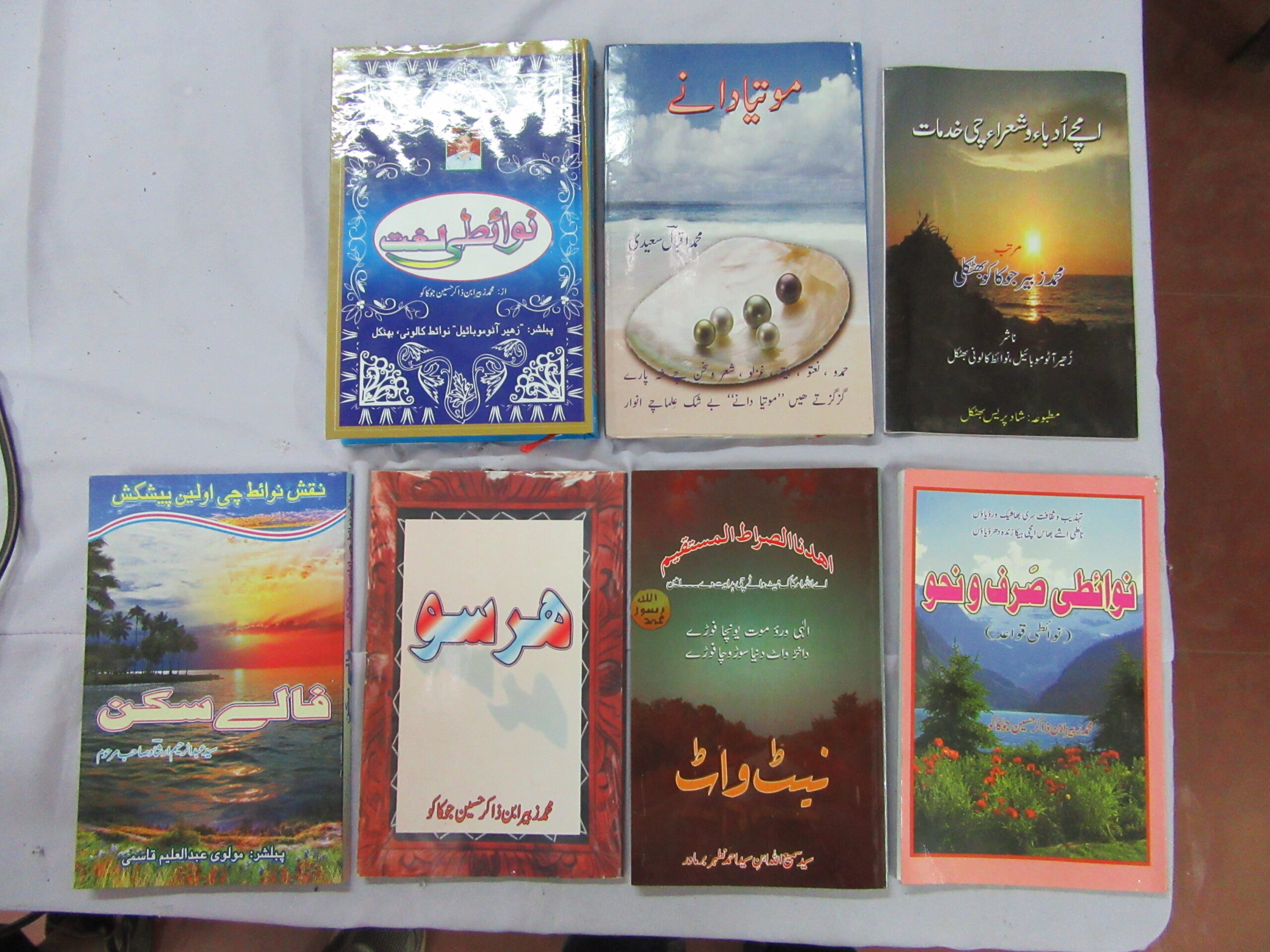
In light of the decline in the status of Nawayathi, a committee called Nawayath Mehfil was formed about 12 years ago. Mohammed Zubair Jakaku, joint secretary of the Mehfil, has written four books in Nawayathi, including the language’s first-ever dictionary and a grammar book, says that there is an attempt to revitalise books written in Nawayathi, and that they are republishing old authors to ensure that these treasures are not lost forever.
A bunch of new books published in the Nawayathi language
The committee is working on reviving old Nawayathi texts along with working on a translation of Quran to Nawayathi. “We have Quran in 55 languages in our museum and I believe that a copy of the Nawayathi Quran will be a welcome addition to the same. This language is distinctly unique and a matter of pride for us. I hope we do justice to it,” says Qasmi. For now, the language looks safe in the hands of Bhatkalis and in a city that has been given undue attention for all the wrong reasons, it acts as a glue that keeps the society together.
source: http://www.twocircles.net / TwoCircles / Home>News / by TCN staff / January 24th, 2017
Bhatkal (Uttara Kannada District / Karavali), KARNATAKA :
Bhatkal:
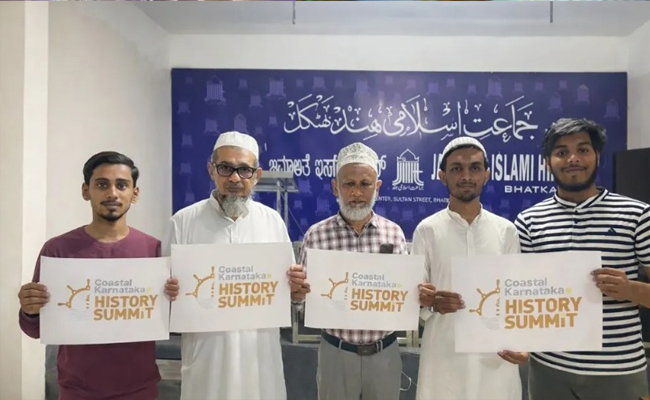
Preparations are under way for the upcoming Coastal Karnataka History Summit, with the official logo of the academic event unveiled at Dawat Centre by Students Islamic Organisation of India Bhatkal Unit in Bhatkal on February 22, 2026. The summit is scheduled to be held on May 5, 2026.
The initiative is being organised by the Centre for Education and Research & Analysis (CERA) with the aim of documenting and examining the historical evolution of Coastal Karnataka, including Uttara Kannada, Udupi, Dakshina Kannada and adjoining areas of Kasaragod.
At the launch event, the organisers released the official Call for Papers, inviting scholars, researchers, academicians and students to submit original and unpublished research.
Abstracts of 200 words, either in English or Kannada, must clearly mention the research question, methodology and key findings. The deadline for abstract submission is February 28, 2026. Selected participants will be informed by March 15, and full papers must be submitted by April 20.
The summit will centre around five broad themes. One section will explore the trade and economic networks of the coastal belt, including maritime routes, port towns, fisheries and commodity-based exchanges such as pepper trade. Another domain will examine social structures, caste formations and inter-community relations, along with the role of Islamic, Arab, Persian and local traditions in shaping the region’s cultural fabric.
A separate section will focus on the origin and growth of linguistic communities such as Tulu, Konkani, Beary, Moya Malayalam and Navayati.
Governance and administration under different rulers — including the Alupa dynasty, Rani Abbakka, Tipu Sultan, the Nawaith Sultans of Bhatkal and developments after Independence — will also be studied.
The fifth theme will highlight social reformers such as Narayana Guru, Syed Madani, Malik Deenar, Vakkom Moulavi, Sayyid Fazl Pasha and Kudmul Ranga Rao, and their contributions to education and social reform.
The logo launch programme was attended by senior journalist Dr. Haneef Shabab, JIH Bhatkal President Moulana Syed Zubair SM, SIO Bhatkal President Mohammed Zayan Bangali, Unit Secretary Githreef Rida Manvi and Media Secretary Mashaikh Talish.
Organisers said the summit intends to create a structured academic space for discussing the region’s layered past and bringing local histories into wider public and scholarly discourse.
For submissions and queries, researchers may contact coastalkarnatakahistorysummit@gmail.com.
source: http://www.english.varthabharati.in / Vartha Bharati / Home> Karavali / by Vartha Bharati / February 24th, 2026
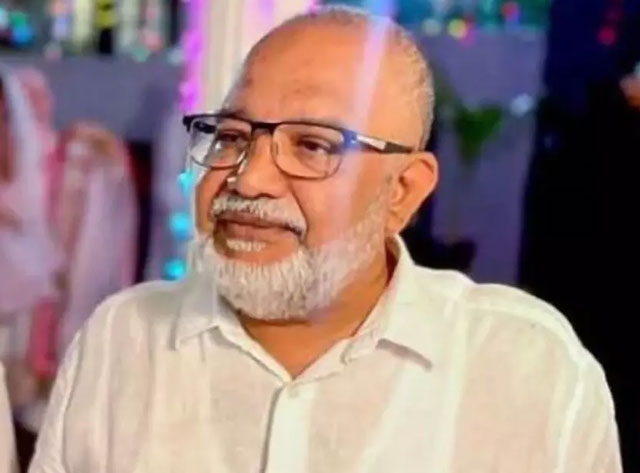
Abubakar Haji, a well-known figure in social, political and religious circles and a resident of Krishnapura, passed away at his residence on Sunday afternoon at 2 pm following a brief illness.
Abubakar Haji was widely respected for his active involvement in community affairs and public life. He had served as the former president of Badrul Huda Juma Masjid in Krishnapura and was known for his dedicated service to the community.
In the political arena, he had contested the elections from Mangaluru North constituency representing the Kannada Nadu party, earning recognition for his grassroots engagement and leadership.
He is survived by his two sons, Faizal and Naufal, besides a large number of relatives and well-wishers.
According to family sources, the funeral rites will be held at the Krishnapura Idgah Kabarsthan before Maghrib prayers on Sunday.
source: http://www.daijiworld.com / DaijiWorld.com / Home> Karnataka / by Daijiworld Media Network – Mangaluru / March 01st, 2026
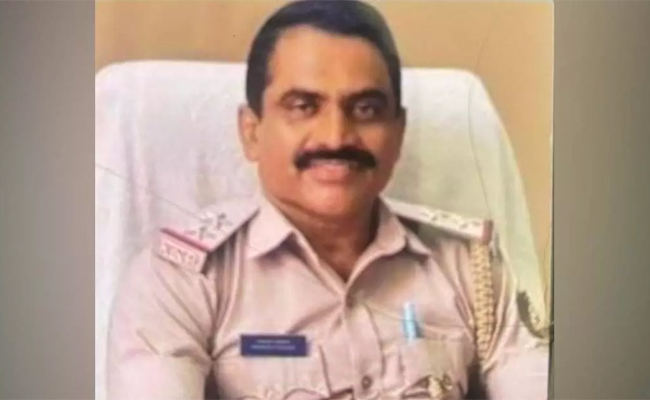
Kundapur Rural Sub-inspector Nasir Hussain reportedly collapsed while participating in a marathon for police officers in Ajjarakadu, Udupi, on Sunday and died shortly after. He was 58.
The district unit of the Police Department had organized a 5-km marathon at the Ajjarakadu grounds on Sunday morning. Hussain was among hundreds of police officers who participated in the run.
The SI is said to have collapsed suddenly while on the track and turned seriously ill. He was immediately taken to a private hospital in Udupi, but the doctors who checked him reportedly there declared him dead.
Nasir Hussain was earlier posted as sub-inspector in Amasebailu, Kundapur Town, Kundapur Traffic, Shankaranarayana and Karkala Rural in Udupi district as well as various police stations in Chikkamagaluru district.
source: http://www.english.varthabharati.in / Vartha Bharati / Home> Karavali / by Vartha Bharati / March 01st, 2026
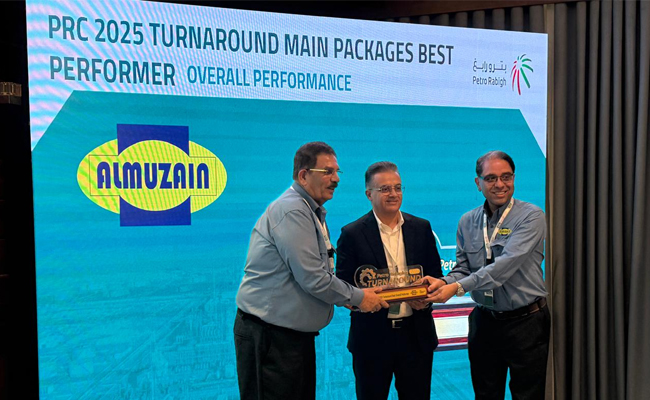
Almuzain Company was awarded the Best Performer for the Main Packages of the 2025 Mega Turnaround at Petro Rabigh, which is ranked as the largest turnaround executed based on its scope and complexity.
The prestigious award was presented by Othaman AlGhamdi, President and CEO of Petro Rabigh. Almuzain management representatives Bajpe Zakaria and T.V. Deepak accepted the award on behalf of the entire Almuzain team who contributed to this achievement.
The overall performance award covers safety, quality and on-time completion, contributing to the success of the project.
The company secured the Best Performer Overall Turnaround First Prize.
source: http://www.english.varthabharati.in / Vartha Bharati / Home> Gulf / by Vartha Bharati / February 10th, 2026