Tag Archives: Muslims of Murshidabad

Mamatazul’s ISRO job symbolises big dreams of smalltown people

Salar, (Murshidabad), WEST BENGAL :
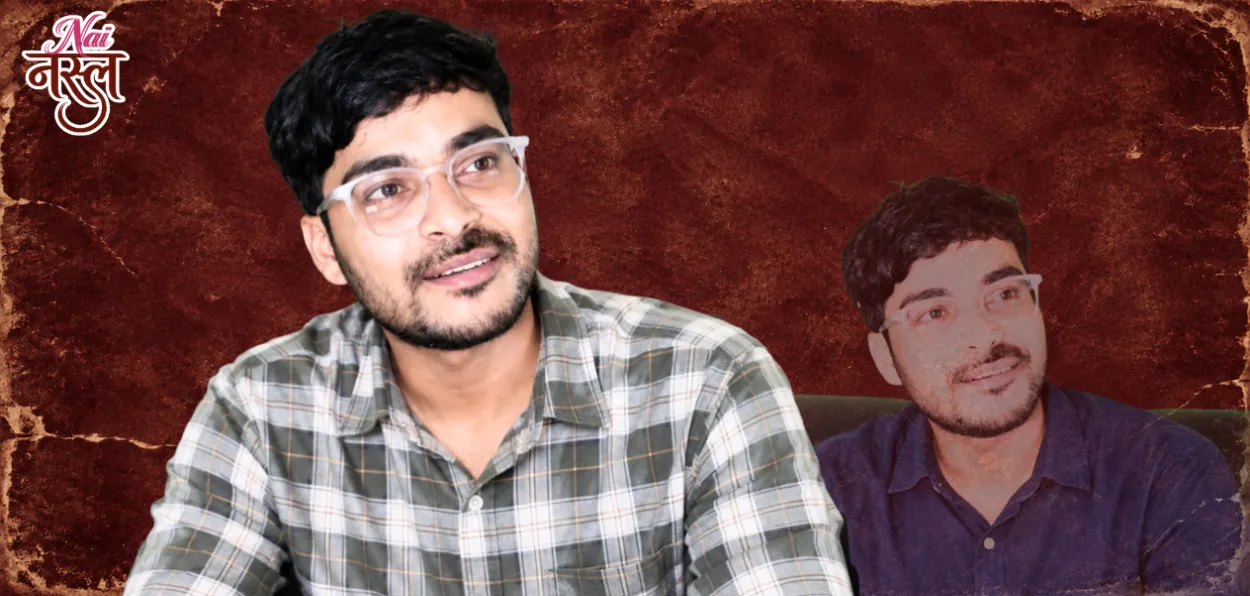
Mohammad Mamatazul Hasan

There is something special about success stories emerging from small towns of India. The achievement of one person can give many others the courage to dream.

The story of Mohammad Mamatazul Hasan of Salar, Murshidabad, is one such story. His story of being selected as a space engineer in the Indian Space Research Organisation (ISRO) is the story of an ordinary family aspiring to see the next generation achieve something extraordinary.

It is a story of his parents’ quiet sacrifices, Mamatazul Hasan’s determination and, above all, the courage to dream big while growing up in a small town.
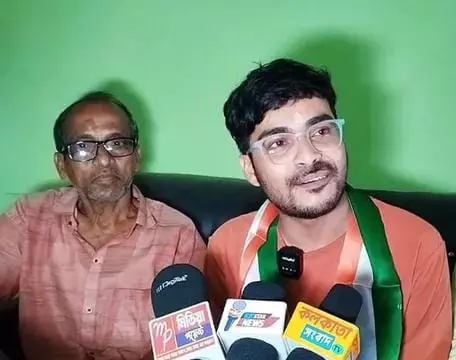
Mohammad Mamatazul Hasan with his father speaking to the media

According to a report published by The Indian Express on May 27, 2025, Mamatazul Hasan secured a job as a space engineer at ISRO. The report stated that he received his appointment letter on May 5. As the news spread, his family and the people of Salar celebrated his achievement.

An appointment letter may be just a few sheets of paper. But within those pages lay years of hard work, waiting and dreams.

Mamatazul’s father, Mohammad Azgar Ali, works as a copyist at the registry office in Salar. His mother is a para-teacher at a school. They do not come from a family of industrialists or senior government officials. It is a household with an ordinary income. Yet, parents always encouraged their son to dream big.

When Mamatazul’s family learned about his success, his father could not hold back his tears. He said that he became emotional after hearing the news. The family had done whatever it could within its means to support their son.
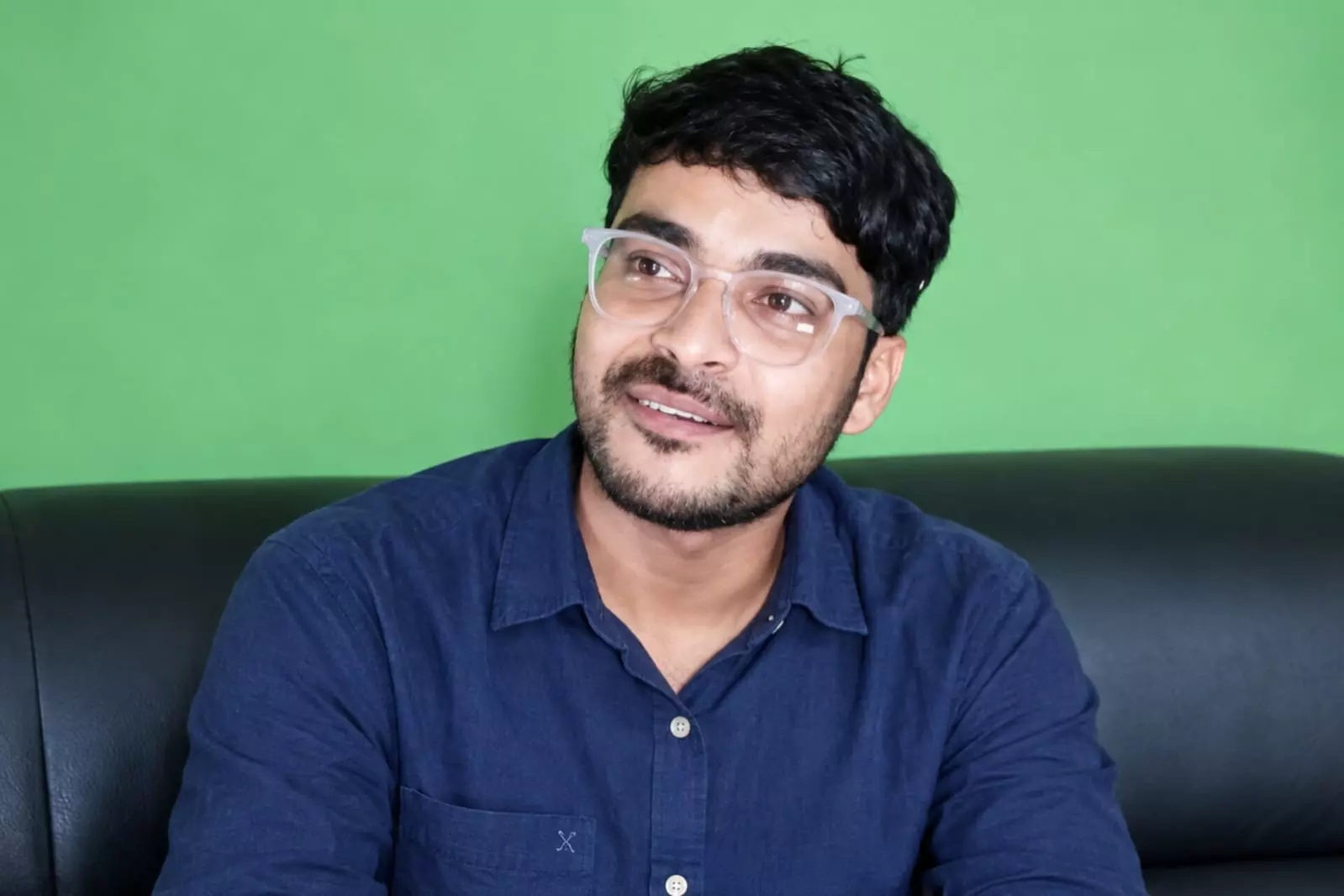
Mohammad Mamatazul Hasan

Those tears may also have carried memories of his son’s childhood, the hours spent at the study table, anxiety before examinations, worries about the future and, finally, the moment when the long-awaited success arrived.

For a father, what could be a greater reward than seeing his son hold an appointment letter from ISRO?

Mamatazul’s success did not come overnight. He initially worked for a private company while continuing to prepare for government recruitment examinations. He wrote several examinations, made repeated attempts and waited for opportunities. Eventually, the opportunity at ISRO arrived.

Mamatazul’s journey, too, had its share of this unseen struggle.

Speaking about his achievement, Mamatazul has said he had never imagined that he would reach this point. He found it difficult to put into words what he felt after receiving the appointment letter.

But he firmly believes in one thing: there is no substitute for hard work. If one remains focused on a goal and works consistently, success will eventually follow.

Matatazual knows that dreaming alone is not enough. A dream must be transformed into daily effort. And when that effort finally produces the desired result, tears of emotion are only natural. Mamatazul, too, has said that he could not hold back his tears at that moment.

The people of Salar now see Mamatazul as one of their own.
Mohammad Mamatazul Hasan receiving an honour

This story has the potential to change many lives. A school student may now study science with greater interest. A father may decide to continue his child’s education despite financial limitations. A mother may tell her daughter, “You can do it too.” And a young person may quietly think, If Mamatazul can reach ISRO from Salar, I can try too.

Mamatazul showed that if someone from Salar in Murshidabad can dream about space, compete in difficult examinations, try again after setbacks and eventually hold an ISRO appointment letter.

Of course, the journey is not easy. Students from remote areas can face limitations in access to opportunities and infrastructure. Therefore, Mamatazul’s achievement cannot be viewed only as a story of individual merit. It is also a story of family support, education, perseverance and the ability to make the most of an opportunity.

As India’s space programme continues to expand, the country needs a new generation of scientists and engineers. Scientists and engineers working together across ISRO’s missions have helped India advance its capabilities in space technology.

Mamatazul Hasan from Salar in Murshidabad now has the opportunity to become part of that vast endeavour.

Mamatazul Hasan’s story is therefore more than the story of a young man’s professional success. It represents the dreams of countless young people from the remote corners of Bengal who continue to believe that the sky may be far away, but the journey towards it begins on the ground.

source: http://www.awazthevoice.in / Awaz, The Voice / Home> Mizaz / by Debkishore Chakraborty / October 12th, 2026
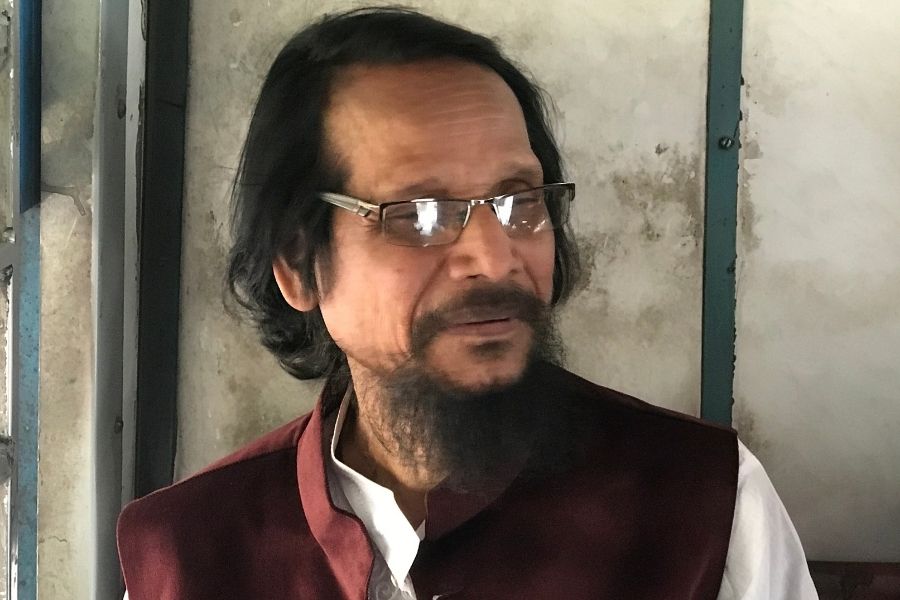
Eradicating books from our lives will never be possible: Abul Bashar

Murshidabad, WEST BENGAL :

The award-winning Bengali author talks about his books, development of minority communities, Kolkata Book Fair, social media, and more.

Abul Bashar — the author of ‘Agnibalaka’ and several other popular titles — is one of the prominent voices documenting the lives of minority communities in Bengal / Wikimedia Commons

Born in Murshidabad at a time when the zilla’s literacy rate was 12.9 per cent, it was an uphill battle for Abul Bashar to not just educate himself but also to live his dream of becoming an author.

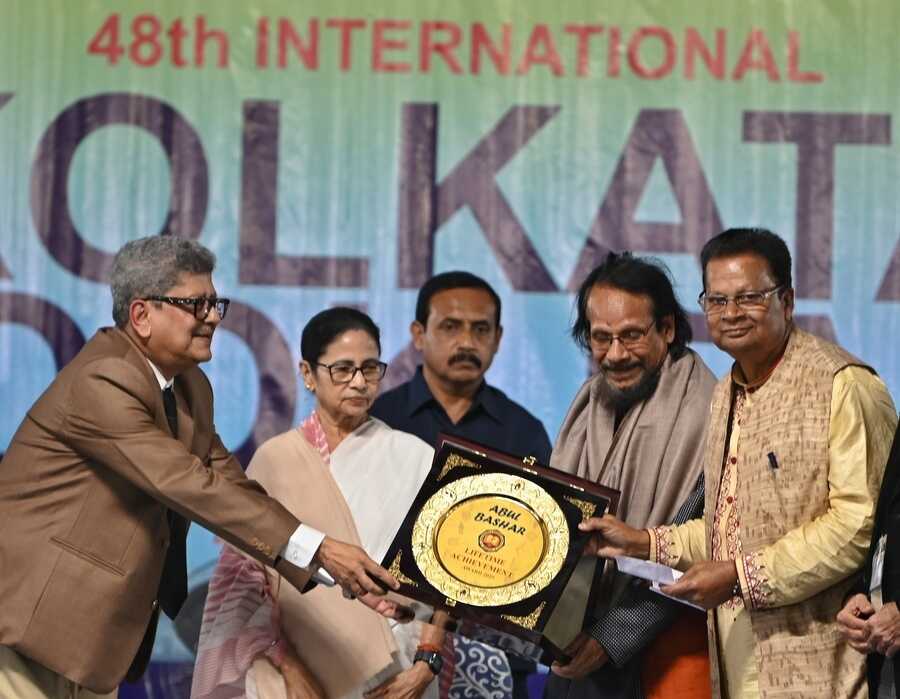
With 40 books to his name, including popular titles such as Agnibalaka, Marusvarga, Jol, Mati, Aguner Upakkhayan, and Dharmer Grahon, Bashar has documented the lives and issues of minority communities and socio-religious matters through his works. A recipient of top honours such as the Ananda Puraskar and Banga Bhushan, he was awarded the Guild Lifetime Literary Award in 2025 at the 48th International Kolkata Book Fair.

My Kolkata met Bashar at the boi mela for a conversation, discussing India’s evolution, the status of the Bengali Muslims, his career as an author, and more. Edited excerpts follow.

My Kolkata: India celebrated its 76th Republic Day this year. You were born in 1951. As an author who has been documenting the growth of society in his works, how do you see India’s evolution?

Abul Bashar: One thing that has been catching my attention is that the culture that comprises both Hindus and Muslims is in a state of dialectics and adjustment with the ‘Indian culture’. We have imbibed the virtues of Indian society, but there are a few aspects of Bengali society that do not marry well with the Indian society. This concerns me, because this is not how it was earlier. The incidents around the Babri Masjid and the Ram Mandir have changed the political diaspora of India.

It is now a global situation and not just confined to India. It is prevalent in the subcontinent that religious minorities are under attack. Civilisation is under threat, but this is not how it is supposed to be. The Indian Constitution speaks about equality towards minority communities, their representation in the power structure of the society, and a homogeneity of culture. These were the ideals of Rabindranath Tagore and Mahatma Gandhi. The lack of homogeneity in the culture is worrying me. Of course, the extent varies from place to place, but there are a few incidents that happen that make me feel imperiled.

In this country, the constitutional rights and duties of people from all walks of life are directly and intrinsically involved with the idea of democracy. India is a pluralist country where diverse religious identities and cultures cohabit in an interesting milieu, but this fabric is facing a push back.

You have written extensively on Bengali Muslims. What do you think of their current socio-religious status?

More than the religious identity, the Muslim community continues to be backward in terms of financial independence, and I give more importance to financial independence. One of the primary tenets of India is the growth of any backward community — be it among Hindus, Muslims, or any other community. The Constitution aims towards that.

The financial backwardness of the Muslim community has affected the education of modernism. It is difficult for a financially backward community to become modern. The State, thus, has to fulfill its responsibility towards removing this roadblock so that a symbiosis between community and modernism takes place.

I have not only written about the Muslim community, but also about the Hindu community. My novel, Maruswarga, can be termed — ekjon Bangali lekhoker Ihudi upanyash (a Bengali writer’s Jewish novel). My work is extensively based on various mythologies and the folk culture of Bengal, focusing on the baul-fakirs. There is a unique amalgamation of Buddhism and Islam in the bauls, which was evident through the life of Lalon Shah. My thoughts revolve around these aspects, and I want comprehensive development of the Muslim society through cultural amalgamation.

Through my books, I have addressed the religious superstitions and other roadblocks that can cause hindrance to the development of society.

Abul Bashar was conferred the Guild Lifetime Achievement Award by chief minister of West Bengal, Mamata Banerjee, on January 28 at the inauguration of the 48th International Kolkata Book Fair / My Kolkata

Do you think awards and accolades you have received have made it easier for your voice to reach society?

No, absolutely not. In my initial days as an author, I found that the readerbase of my genre of writing in West Bengal was very constricted because I belonged from a backward society. I have had a readerbase in Bangladesh since the inception of my career. Here [in West Bengal], it has taken time, but a community of people who read my kind of writings have developed. My thought process, and my novels that are based on mythology have found an academic discourse, and a doctoral candidate from Murshidabad, did his PhD on my work at Jadavpur University.

What surprised me was that a member of the society that created barriers for me and refused to accept my words did a doctoral thesis on the mythical treatment in my literature as an academic discourse. Society has evolved, and the environment of the present times is removing roadblocks, making way for an educated middle-income strata that is progressive and free thinking.

From Agnibalaka to Bhor Poati Tara — how do you see your evolution as an author?

It is a journey that I made, I would say. I have been influenced by several thoughts at different points in my life. I was an activist of Leftist politics that was different from today’s times. Leftist politics was known as the politics of sacrifice. Agnibalaka’s protagonists, if you notice, are characters who do not conform to societal norms. They are free thinkers and are characters who have imbibed Marxism in order to elevate their lives. They are the voices of dissent against stigmas and stereotypes of society.

Agnibalaka is a political novel in which dialectical materialism among various stratas of the society as well as the dialectics in interpersonal relationships between two political parties is shown. The conflict between the social strata during the 19-month long Emergency period in India, and how Marxism could be brought into praxis — Agnibalaka is an experimentation on that.

However, I do not share the same thoughts today, and by this I mean that it has been removed from my life in some ways. I have not removed it from my life, but the ideology is gradually vanishing on a global scale. It is possible that my experiments or observations are incorrect, but in today’s time, this is how I see it.

When the world starts facing a situation like today in reference to Marxism, existentialism takes its course, and becomes a replacement and anti thesis for Marxism. Everyone is in a state of endangerment, and the very thought that society that was created for its residents, is now in oblivion. Social norms were made for the development of people, but development is not entirely dependent on norms. An excessive emphasis on following social norms has given rise to conflict between man and society. This was the reason behind the two World Wars. This has also given birth to existentialist literature, as well as poets like Jibanananda Das and Michael Madhusudan Dutta.

Abul Bashar at the Kolkata Book Fair, 2025 / My Kolkata

The Kolkata International Book Fair is one of the largest book fairs in the world. In a day and age when social media has diminished attention spans, how do you see the importance of book fairs?

Social media is not a replacement for books. There is no conflict between gadgets that we use on a regular basis versus books. Gadgets like phones are essential to attain information and gain knowledge, but literature is not just information. When we speak of literature, we usually refer to the written. But what about oral literature, which is a significant part of Bengali literature? The works of Lalon Shah, for instance, are originally songs and are kabya sahitya (poetry). Another example is Rabindrasangeet — a youngster, who is engrossed in his or her phone, is also a listener of Rabindranath Tagore’s music.

There is a trough and crest when it comes to readership, but eradicating books from our lives will never be possible — just like classical music, songs like Kaa Karu Sajni, or verses of Kabir. We have to increase our habit of reading because that will increase our creativity and strengthen our culture as well as inter-personal relationships. There is evolution in the publishing industry with the digitisation of books, which has increased the readerbase. And because of book fairs, there is a boost in the number of bibliophiles.

What is your next work?

I intend to go back to my zilla (Murshidabad) to work on a piece that would complete an unfinished novel.

source: http://www.telegraphindia.com / The Telegraph Online / Home> My Kolkata / by Pooja Mitra / February 02nd, 2025