Renowned singer Zakir Abbasi has been awarded the prestigious Shining Diamond Excellence Achievers Award for his outstanding contributions to promoting road safety awareness through music. The award ceremony, organized by Traffic Welfare and Road Safety Foundation, Ministry of Corporate Affairs, Government of India, took place at Magal Sain Auditorium in Karnal, Haryana, on Sunday.
Abbasi, who serves as Secretary of Bazm-e-Mausiqi and is also Jhunjhunu’s Election Icon, has been recognized for using his musical talent to raise awareness about road safety across the country. His songs on the subject have had a significant impact on the public, making him a source of pride for the Jhunjhunu district.
The award ceremony was graced by several prominent personalities, including Raghavendra Kumar, popularly known as ‘Helmet Man,’ Haryanvi singer Veer Dahiya, and actor and director Raj Arora. Zakir Abbasi gave a special performance of one of his road safety songs during the event, earning widespread appreciation.
District Collector Ramavatar Meena, Madrasa Board Chairman MD Chopdar, President of Bazm Sarfaraz Khan, Advocate Dharampal Banshiwal, Treasurer Manwar Diwan, and other members of Bazm-e-Mausiqi congratulated Abbasi on his achievement. The foundation recently appointed Zakir Abbasi state coordinator for Rajasthan.
source: http://www.radiancenews.com / Radiance News / Home> Pride of the Nation> Awards> Latest News / by Radiance News Bureau / October 14th, 2024
The Delhi Urdu Academy has announced the prestigious award, recognizing Intizar Naeem’s autobiography Ujalon Mein Safar.
Intizar Naeem, a renowned poet, intellectual, former General Secretary of Idara-e-Adab-e-Islami Hind, former Director of Radiance Viewsweekly and Ex-Managing Editor of Peshraft, and founder of Madhur Sandesh Sangam – an institution dedicated to the representation of Islam in Hindi – has been lauded for his contribution to Urdu literature with his autobiography. Ujalon Mein Safar has been awarded first prize in the Academy’s 2021 awards.
His autobiography has already received recognition from the Uttar Pradesh Urdu Academy as well.
In this work, Naeem encapsulates his seven decades of experiences, highlighting his efforts, particularly in the preservation and reclamation of Waqf properties.
Critics have praised his insight, noting that if Muslim leaders had acted upon his recommendations, the serious challenges facing Waqf assets today might have been averted.
source: http://www.radiancenews.com / Radiance News / Home> Pride of the Nation> Awards> Report / by Radiance News Bureau / October 16th, 2024
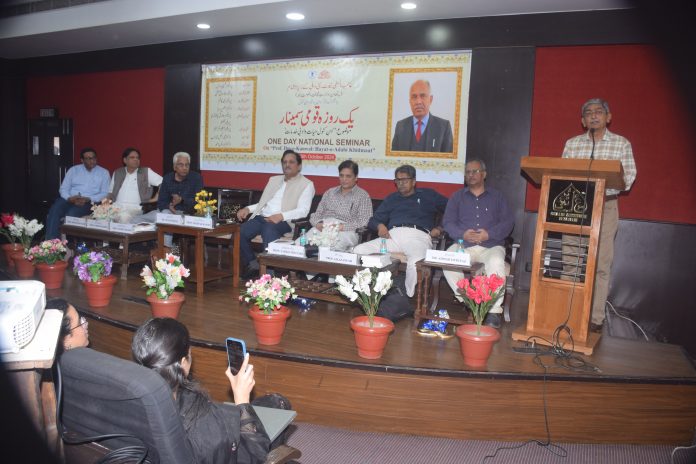
(From R to L) Prof. Aslam Parvaiz, Dr. Ahmad Imtiyaz, Prof. Ghazanfar, Prof. Tariq Chhatari, Prof. Shahpar Rasool, Prof. Sagheer Afraheem, Prof. Farooq Bakhshi, Prof. Muhammad Kazim
Special Report by Dr. Afzal Misbahi, Assistant Professor of Urdu, MMV, BHU, Varanasi, and former student of Prof. Ibn Kanwal.
New Delhi:
The Ghalib Institute, in collaboration with students of the late Prof. Ibn Kanwal, organized a one-day national seminar titled “Ibn Kanwal: Life and Literary Contributions” at the Ghalib Institute’s seminar hall. The event saw participation from renowned scholars, writers, and academics who reflected on the multifaceted legacy of Ibn Kanwal, known for his mastery in fiction, storytelling, and academic research.
Presiding over the inaugural session, Professor Shahpar Rasool highlighted Ibn Kanwal’s deep connection to Urdu literature and his dedication to mentoring students. Distinguished guests included Prof. Aslam Parvaiz, Prof. Tariq Chhatari, and Prof. Ghazanfar, with the keynote address delivered by Professor Sagheer Afraheem.
In his keynote, Prof. Afraheem provided a comprehensive overview of Ibn Kanwal’s journey from his early days as a student to his celebrated career as a literary figure. He emphasized Kanwal’s innate love for storytelling, a passion inherited from his family, and his ability to poignantly capture the pain of lost relationships and cultural decay in his stories.
Speaking on the occasion, Prof. Muhammad Kazim remarked that the overwhelming response from those wanting to contribute to the seminar showed the deep respect and admiration many held for Ibn Kanwal. He revealed that four universities are currently conducting research on Kanwal’s contributions to Urdu literature.
In a heartfelt opening address, Prof. Farooq Bakhshi shared personal memories of Ibn Kanwal, describing him as a person whose depth of character could be likened to the vastness of the sea. He recited a couplet to encapsulate Kanwal’s unique persona: “A man as deep as the waters of the ocean, A figure as intriguing as tales and legends.”
Prof. Ghazanfar presented his essay titled “Band Raste,” which artfully chronicled Kanwal’s life and achievements. Prof. Tariq Chhatari delved into Kanwal’s short stories, highlighting his distinctive style influenced by the tradition of storytelling, which brought a unique richness to his fiction.
Prof. Aslam Parvaiz, in his address, praised Ibn Kanwal’s honesty and integrity, calling him a sensitive and compassionate individual. Prof. Parvaiz noted the large number of students who attended Kanwal’s funeral as a testament to his popularity and impact as a teacher.
Delivering the presidential address, Prof. Shahpar Rasool reflected on Kanwal’s close relationships with his peers and his passion for poetry and literature. He commended Kanwal’s vast literary activities and lasting influence on Urdu literature.
The seminar featured papers from scholars across institutions, including Dr. Abu Shaheem Khan, Dr. Afzal Misbahi, Dr. Akmal Shadab, Dr. Mumtaz Alam Rizvi, Dr. Yameen Ansari, Dr. Uzair Israel, Dr. Mohammad Arshad, Dr. Shamsuddin, Dr. Wasi Ahmad Azmi, Dr. Alia, Dr. Nisar Ahmad, Dr. Tufail, and Dr. Abdul Hafeez, among others. Participants from Aligarh Muslim University, Banaras Hindu University, MANUU Hyderabad, and other prestigious universities also contributed to the seminar.
The event concluded with the launch of Ibn Kanwal’s book “Mazeed Shuguftagi,” edited by his daughter, Sabiha Nasir. The seminar witnessed attendance from his family members, students, and well-wishers, along with notable figures like Prof. Khalid Alvi and Prof. Mohibullah.
Dr. Idris Ahmad, Director of Ghalib Institute, delivered the vote of thanks, while Dr. Imtiaz Ahmad conducted the session. The seminar was a heartfelt tribute to the life and contributions of a beloved teacher and literary giant, Ibn Kanwal.
source: http://www.radiancenews.com / Radiance News / Home> Latest News> Report / by Radiance News Bureau / October 15th, 2024
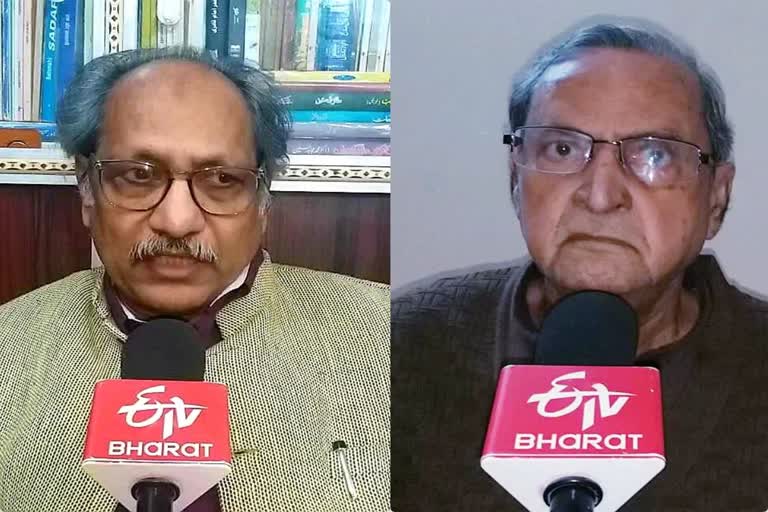
The Urdu scholar community expressed deep grief and regret on the death of the country’s famous playwright and poet Professor Ibne Kanwal and called his death a loss for the Urdu world. Condolences on the death of Professor Ibne Kanwal.
Patna:
As soon as the news of the death of Prof. Ibn Kanwal (Nasir Mehmood Kamal), the former President of the Urdu Department of Delhi University, fiction writer, dramatist and poet, became public, the literary and academic circles of Dabestan Azeem mourned.
Prof. Ibn Kanwal retired from the Urdu Department a few months ago after teaching for almost 40 years in the Urdu Department of Delhi University.
In recognition of his literary services, he has been awarded many honors at home and abroad, including the Sir Syed Award, Kunwar Mahinder Singh Awards, etc.
Prof. Ibn Kanwal’s teachers include Prof. Khurshid-ul-Islam, Prof. Qazi Abdul Sattar, Dr. Khalilur Rehman Azmi, Prof. Shahryar, Prof. Noorul Hasan Naqvi, Prof. Atiq Ahmad Siddiqui, Prof. Manzar Abbas Naqvi, Prof. Naeem Ahmed and Prof. Asghar Abbas.
More than thirty books of Professor Ibn Kanwal have been published. Among them, the people of the third world, Indian civilization in the context of Bostan Khyal, from the story to the novel, closed roads, criticism, and Hussain and Urdu fiction became famous.
Prof. Safdar Imam Qadri, president of the College of Commerce, expressed his condolences on the death of Professor Ibn Kanwal and said that the Urdu world has suffered a great loss due to the death of Ibn Kanwal.
He had made his unique identity among the contemporary fiction writers as well. He said that I had a friendly and brotherly relationship with Ibn Kanwal. He was often met at Aligarh Muslim University, he was a very creative and affable person. His disciples are spread in every corner of the country.
Renowned critic Prof. Aleemullah Hali said that the most important feature of Prof. Ibn Kanwal’s fictions was their narrative color and harmony. He saw the present era from a new angle and used to create his creations accordingly. He had a deep study of stories and stories remained his favorite subject.
Professor Shahab Zafar Azmi, President of the Urdu Department of Patna University, said that many fiction writers who wrote after the eighties wrote fiction in a narrative style, but among them, Ibn Kanwal is unique and prominent. He used to be popular in every gathering due to his good manners and serious nature. He gave many important creations to Urdu literature, by which the Urdu world recognized these abilities. He used to have deep ceremonies with the writers and poets of Azimabad. His sudden death is a great loss to the Urdu world.
source: http://www.etvbharat.in / ETV Bharat / Home> ETV Urdu / by translation from Urdu / February 12th, 2023
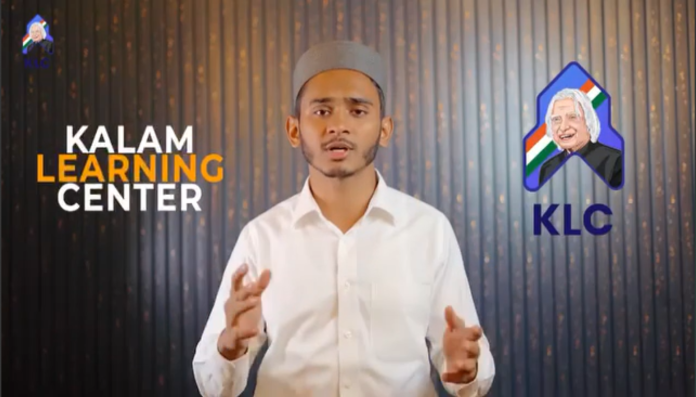
In a landmark effort to uplift the educational aspirations of Muslim minority students across India, the Kalam Learning Centre has announced the launch of a substantial Rs.50 crore scholarship fund.
This ambitious initiative, which stands as one of the largest scholarships programs specifically targeting Muslim minority students, aims to provide essential financial support to deserving students, helping them achieve their academic dreams without the burden of economic constraints.
The scholarship program is open to students from Class 5 to Class 12, as well as recent 12th-grade graduates who are preparing for their next academic steps. The initiative covers a wide spectrum of students, making it accessible to a large segment of the Muslim minority population. To qualify, students will need to participate in a scholarship examination conducted by the centre, ensuring that the scholarships are awarded based on merit and need.
By offering these scholarships, the Kalam Learning Centre aims to empower young students with access to quality education, removing financial hurdles that often prevent talented individuals from pursuing higher studies. The centre’s vision aligns with the broader goal of enhancing the educational landscape for minorities in India, especially at a time when educational inequalities persist across different sections of society.
The `50 crore scholarships fund represents a significant milestone in the ongoing efforts to promote inclusive education. It is set to play a pivotal role in the academic journeys of thousands of students, allowing them to focus on their studies, reach their full potential, and contribute meaningfully to society. This initiative will not only benefit the students but also strengthen the foundation of India’s future workforce by nurturing young minds through education.
In addition to this, the scholarships program resonates with the legacy of Dr. APJ Abdul Kalam, India’s former president and renowned advocate for education. Several scholarships across India bear his name, each dedicated to advancing his dream of a fully literate nation. These scholarships, offered by various state governments, educational institutions, and organizations, aim to provide deserving and financially struggling students with the necessary resources to complete their education. Dr. Kalam’s legacy continues to inspire efforts like the Kalam Learning Center’s initiative, which seeks to build a more inclusive and educated India, one student at a time.
Through this scholarship, the Kalam Learning Centre is not only supporting individual students but also contributing to the broader mission of promoting literacy, equality, and opportunity for the underrepresented and marginalized sections of society. This initiative sets a precedent for other organizations to follow, encouraging more efforts to bridge the educational gap for minorities in India.
For more information or registration, you may click here, or download Kalam Learning Centre App, or call KLC helpline number +91-9335004071.
source: http://www.radiancenews.com / Radiance News / Home> Education> Focus / by Radiance News Bureau / October 15th, 2024
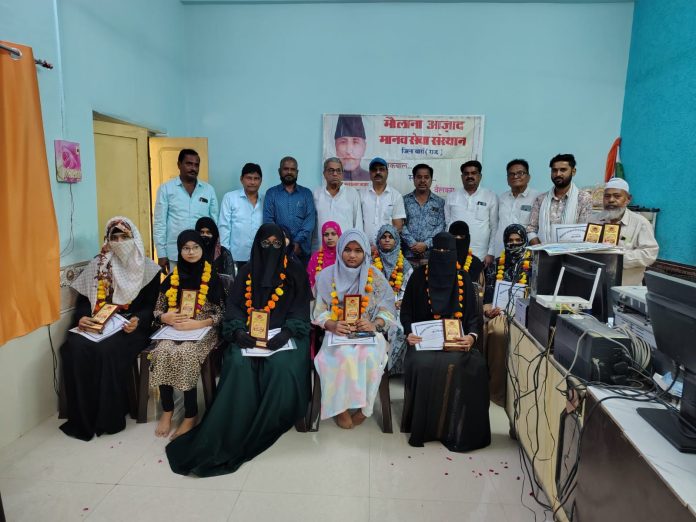
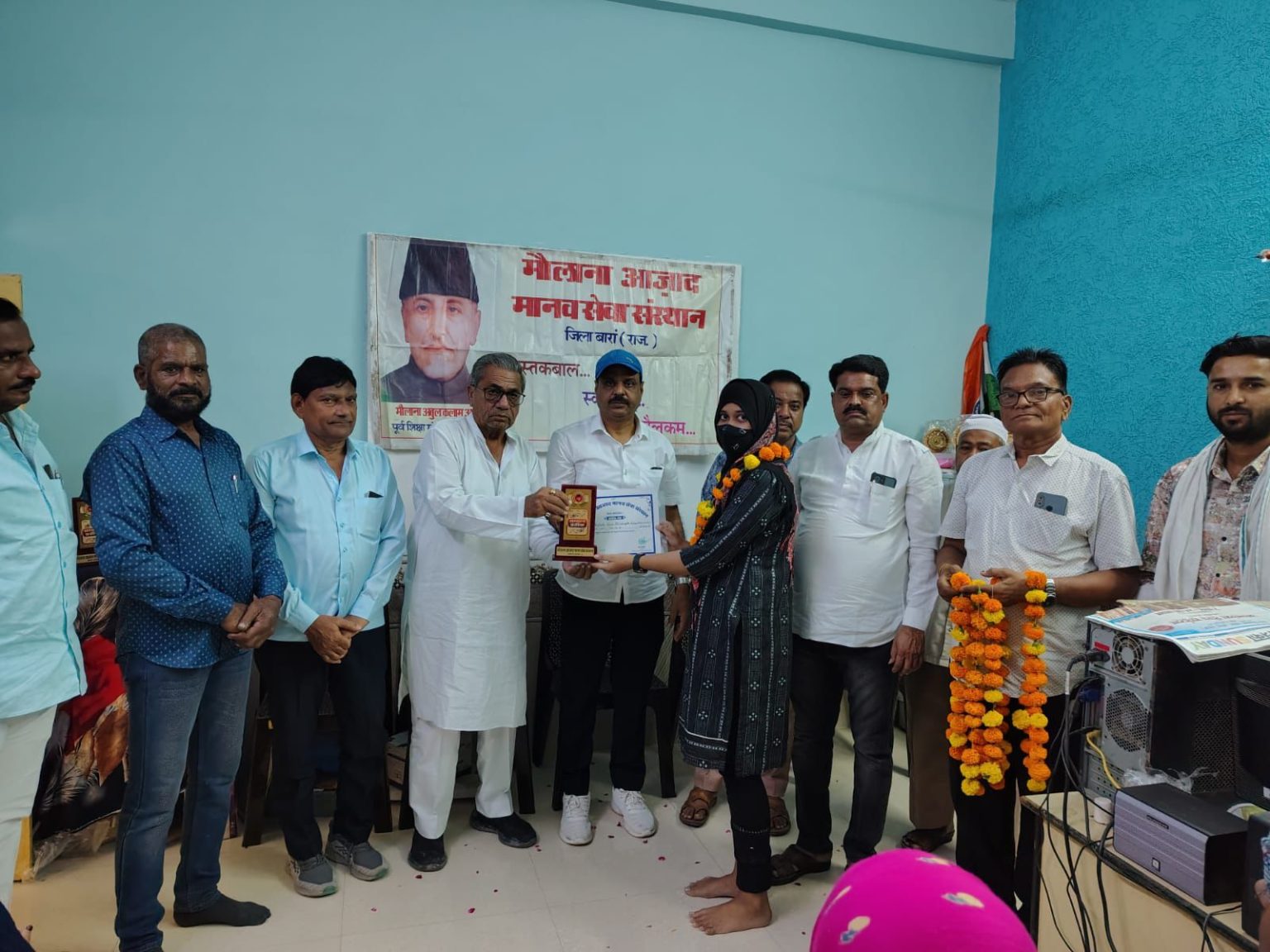
In a heartfelt tribute to Missile Man and former President of India, Dr. APJ Abdul Kalam, the Maulana Azad Manav Seva Sansthan (MAMSS) organized a ceremony at Madrasa Anjuman Islamia to honour 15 outstanding Muslim girls for their academic excellence.
The girls, who secured top marks, were awarded mementos, certificates, and flower garlands as part of the event, which marked Kalam’s birth anniversary.
Chief guest, Kailash Sharma, a senior leader from the state Congress committee, along with other distinguished guests, shed light on Dr. Kalam’s inspirational life journey. Born on October 15, 1931, into a modest Muslim Ansari family in Rameswaram, Tamil Nadu, Dr. Kalam rose from humble beginnings to become one of India’s most revered scientists and leaders. His immense contributions to India’s space and nuclear programmes were praised during the event.
Notable figures, including Madrasa Anjuman Islamia President Majid Salim, Trade Federation General Secretary Kanhaiya Lal Chittoda, District Congress Committee Vice President Zakir Mansoori, Councillor Mohammad Sharif Rangrez, and Madrasa Board Deputy Chairman Shahid Iqbal Bhati, also addressed the gathering, emphasizing Dr. Kalam’s enduring legacy.
The event saw enthusiastic participation from Dr. Nasir Hussain Yunani, Abdul Wahid, Munna Master, Nasir Khan Bunty, Mohammad Irfan Mansuri, and other community members.
source: http://www.radiancenews.com / Radiance News / Home> Latest News / by Raheem Khan, Radiance News Bureau / October 17th, 2024
Rainbow Peacock Marbled Paper (source: The Whimsical Marbler)
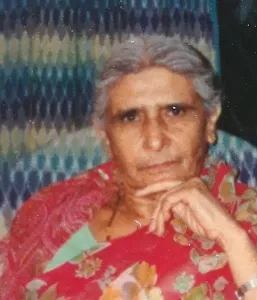
Fatima Alam Ali (1923-2020) was a writer of pen portraits (khaake) and humorous essays (tanz-o-mizah) from Hyderabad. Her work offers an untapped and intimate glimpse into the literary personalities and gatherings that flourished in mid-twentieth century Hyderabad.
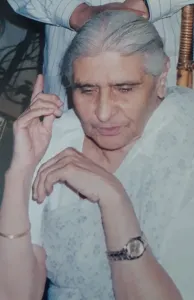
Fatima Alam Ali (Source: Asma Burney)
Surprisingly, her writing has not received the proper attention it deserves. This can be attributed to the general neglect of the pen-portrait and non-fiction writing in general in the study of Urdu literature. Most scholarly work and translation has focused on poetry and fiction. However, her work is also neglected, in part due to the triple marginalization that women writers from Hyderabad face—as women, as citizens of a former princely state, and as Urdu writers from the Deccan.
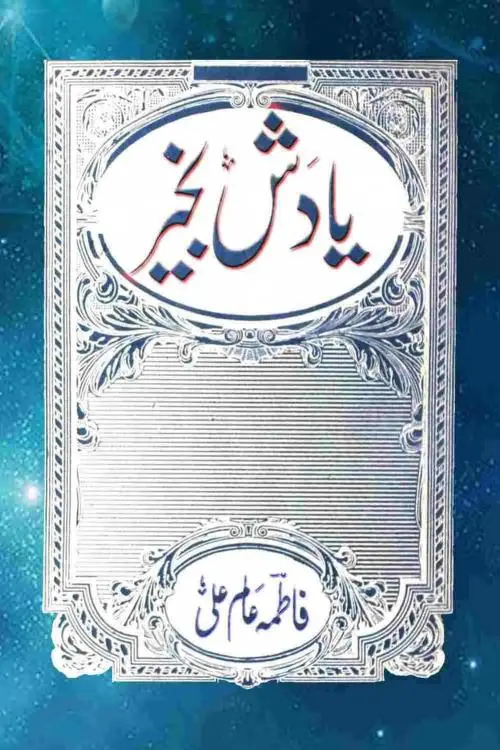
Yaadash Bakhaer by Fatima Alam Ali (Source: Archive.org)
Fatima first began writing at school in Lucknow at the behest of Urdu teacher and writer Razia Sajjad Zaheer. She was later encouraged to continue by Jahanbano Naqvi, another Urdu teacher and writer, when she was at Women’s College (Osmania University) in Hyderabad in the 1940s. Nurtured by a network of women writers, Fatima published widely in newspapers, magazines, and books while also reading her work on All-India Radio and at literary gatherings. In 1989, a collection of her pen-portraits and humorous essays were compiled in a book called Yaadash Bakhaer (“May God Preserve Them”). This text is a rich storehouse of information and insight into contemporary figures living in Hyderabad as well as the reflections of a woman writer coming into her own.
Fatima was the daughter of one of the great Urdu luminaries of the mid-twentieth century, Progressive writer and journalist Qazi Abdul Ghaffar (1889-1956). He began the influential left-wing newspaper Payaam in Hyderabad. Her cheerful and lively personality notwithstanding, Fatima mentions how she felt not only gratitude but also a sense of anxiety about this connection.
Interactions with her father’s peers and members of the Progressive Writers movement were always burdened by the awareness that she was Qazi Sahab’s daughter. She believed that she was respected because of her relationship to Qazi Sahab and not the merit of her own achievements. This left Fatima’s writing dotted with self-deprecating and apologetic comments that gesture towards a certain “anxiety of authorship.” The gendered aspect of this anxiety has been explored by Sandra Gilbert and Susan Gubar in the context of Victorian Women’s writing.
One place this anxiety of authorship appears in Fatima’s work is a long disclaimer she gives about her perceived inability to write about her father. She appeals to her readers that if they do not like her pen-portrait of him, they should forgive her, and if they do like it, then they should attribute it to the “noorani faiz” (luminous grace) of her father. Such prefacing apologies are part of established convention in Urdu and Persianate prose genres (such as the biographical tazkira). However, with women writers, they can be additionally tinged with gendered anxieties stemming from durable patriarchal norms and values.
Fatima’s pen-portraits draw attention to many contemporary Hyderabadi authors. Her portraits bring to life luminaries such as the writer and scholar Agha Hyder Hasan, an old Aligarh connection and dear friend of her father’s, and the scholar Habib ur-Rehman. We also see through her eyes her childhood playmate Ainee, who met her unchanged and with the same affection after a meteoric rise in the literary firmament as Qurratulain Hyder. She remembers Razia Sajjad Zaheer – “a woman in a man’s world” – as a mesmerizing teacher, hardworking mother, talented writer, and maternal figure. Fatima, whose own mother had died soon after her birth, remembers Razia with great emotion and is unable to find the words to describe the love she had given her.
Fatima grew up being mothered by the father figures in her life, an analogy she frequently draws. She describes her unusual and lively relationships with these men, who included, besides her father, her maternal uncles, Agha (whom she called “Chacha”), Habib ur-Rehman (“Baba”), and even Makhdoom Mohiuddin. With Qazi Sahab and Agha, the teenaged Fatima had relationships that were akin to friendships, marked by banter that was strangely grown-up. This was frowned upon in a conservative society that still believed in upholding a certain image of older men as abstract figures demanding veneration and formal distance. Fatima’s banter included teasing her father about the women who would fall for his dashing good looks and jokes with Agha Chacha about her future marriage.
It is not surprising, then, to locate the sense of ease with which Fatima writes and remembers the towering male literary figures of her youth. She writes fluidly and eloquently about them and with the same comfort and affection as she does about Razia Sajjad Zaheer or Zeenath Sajida.
Of particular interest and value in this regard is a memorable essay called “Adabi Mehfil” (“Literary Gathering”) that Fatima wrote – decades later – about an all-male mushaira that was hosted at Qazi Sahab’s home when the Progressive Writers’ Conference took place in 1945. Those who attended included Agha, Makhdoom, Jigar Moradabadi, Fazlur Rehman, Sikandar Ali Wajd, Hosh Bilgrami, Kaifi Azmi, Majrooh Sultanpuri, Ali Sardar Jafri, Ghulam Rabbani Taabaan, Sahir Ludhianvi, and Srinivas Lahoti.
Qazi Sahab could not afford the arrangements that were made in aristocratic homes, so they had only a buffet table under the open night-sky. There were no huqqas, only cigarettes, and the sole accessory demonstrating any continuity from an older tradition of mushaira was the paan that was arranged carefully and offered from a khaasdaan.
Fatima Alam Ali (Source: Asma Burney)
In engaging detail, Fatima introduces us to the august personalities of poets, writers, and intellectuals, as they dine with friends and peers before the mushaira begins. It is in her astute, sympathetic observations of these quintessential performers over dinner that we see their human dimensions, somewhat stripped of the dazzle of celebrity. Indeed, small aspects of their personalities often form the most attractive and compelling features of Fatima’s writing. She explains how they spoke more than they ate, how Srinivas Lahoti took over as host and led people to the table, and how Agha Hyder Hasan, who was unaccustomed to the new culture of buffet dining, sat by himself on a chair and balanced his plate on his lap.
Yet, Fatima writes as much as a fan as the host of such a gathering. She tells us, for example, how she held her breath while Makhdoom recited, afraid to disturb even the air around him. In vivid, engrossing detail, she recreates the charged atmosphere of the mushaira, where “in the Lakhnavi style,” everyone gives way to the others until Qazi Sahab intervenes and directs one of the younger poets to begin.
The euphoria when a striking verse is skillfully recited, the enthusiastic requests for certain well-known compositions, the restlessness when a particularly fraught verse is delivered, the unspoken code of hierarchy and ceremony, and even the specific verses that were produced – all these are represented in sparkling prose and bring the mushaira alive for the reader. What adds to the immediacy and vividness of her writing is that she addresses the reader periodically, saying “just look at this!” or “did you see that?,” transporting the reader to the time of imaginative reconstruction.
At the same time, Fatima does not shrink from criticizing these great men, telling us regretfully that the gifted ghazal proponent Majrooh Sultanpuri is now but a “filmi” poet or that Sahir Ludhianvi was already full of himself before he became famous. Through her sensitive, discerning descriptions of their appearance, temperament, and individual style of recitation, we get an intimate glimpse into their personalities: Majaaz, who was always shy when sober; sleepy, languid, dishevelled Kaifi, who always had a strange glitter in his eyes at mushairas; Jigar’s jaunty self and the errant wisp of hair that peeped flirtatiously from his cap; Sulaiman Areeb, who would cadge cigarettes from an indulgent Qazi Sahab, who in turn would sway in pleasure when Makhdoom sang his best verses; Makhdoom, the people’s poet, who would ask for achaar with his qorma and later be inundated with requests for his verses; and the evergreen wit and flamboyance of Agha, the quintessential Mughal from old Delhi.
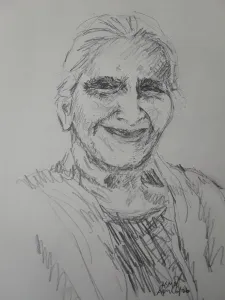
Fatima Alam Ali (Artist and Source: Asma Burney)
In engaging detail, Fatima introduces us to the august personalities of poets, writers, and intellectuals, as they dine with friends and peers before the mushaira begins. It is in her astute, sympathetic observations of these quintessential performers over dinner that we see their human dimensions, somewhat stripped of the dazzle of celebrity. Indeed, small aspects of their personalities often form the most attractive and compelling features of Fatima’s writing. She explains how they spoke more than they ate, how Srinivas Lahoti took over as host and led people to the table, and how Agha Hyder Hasan, who was unaccustomed to the new culture of buffet dining, sat by himself on a chair and balanced his plate on his lap.
Yet, Fatima writes as much as a fan as the host of such a gathering. She tells us, for example, how she held her breath while Makhdoom recited, afraid to disturb even the air around him. In vivid, engrossing detail, she recreates the charged atmosphere of the mushaira, where “in the Lakhnavi style,” everyone gives way to the others until Qazi Sahab intervenes and directs one of the younger poets to begin.
The euphoria when a striking verse is skillfully recited, the enthusiastic requests for certain well-known compositions, the restlessness when a particularly fraught verse is delivered, the unspoken code of hierarchy and ceremony, and even the specific verses that were produced – all these are represented in sparkling prose and bring the mushaira alive for the reader. What adds to the immediacy and vividness of her writing is that she addresses the reader periodically, saying “just look at this!” or “did you see that?,” transporting the reader to the time of imaginative reconstruction.
At the same time, Fatima does not shrink from criticizing these great men, telling us regretfully that the gifted ghazal proponent Majrooh Sultanpuri is now but a “filmi” poet or that Sahir Ludhianvi was already full of himself before he became famous. Through her sensitive, discerning descriptions of their appearance, temperament, and individual style of recitation, we get an intimate glimpse into their personalities: Majaaz, who was always shy when sober; sleepy, languid, dishevelled Kaifi, who always had a strange glitter in his eyes at mushairas; Jigar’s jaunty self and the errant wisp of hair that peeped flirtatiously from his cap; Sulaiman Areeb, who would cadge cigarettes from an indulgent Qazi Sahab, who in turn would sway in pleasure when Makhdoom sang his best verses; Makhdoom, the people’s poet, who would ask for achaar with his qorma and later be inundated with requests for his verses; and the evergreen wit and flamboyance of Agha, the quintessential Mughal from old Delhi.
At the same time, she comments on the unreliability and instability of memory, cautioning us that time, place, and people are likely to get mixed up in her writing. And yet, she reveals an astonishing ability to reproduce verbatim specific verses or entire ghazals or nazms that were recited at literary gatherings. This signals how our memories operate, focusing on the enduring impression that certain events and experiences make on us, rather than external or superficial contexts.
Fatima’s pen-portraits are always coloured with expressions of nostalgia and loss and an urgency to record these figures, their work, and their milieu for posterity to ensure that they are not forgotten. In the process, she creates an important “memorative” collection that provides unique information, insight, and perspective upon a particularly important period in the history of Urdu literature.
source: http://www.maidaanam.com / Maidaanam.com / Home / by Nazia Akhtar / October 11th, 2011
By Nazia Akhtar. Nazia is Assistant Professor of Literature at the International Institute of Information Technology, Gachibowli-Hyderabad. Her research interests include the literature and history of Hyderabad, Partition Studies, women’s writing, and comparative literature.
That culinary addition is attributed to Chef Manzilat Fatima’s great-great grandfather Wajid Ali Shah, the Nawab of Awadh.
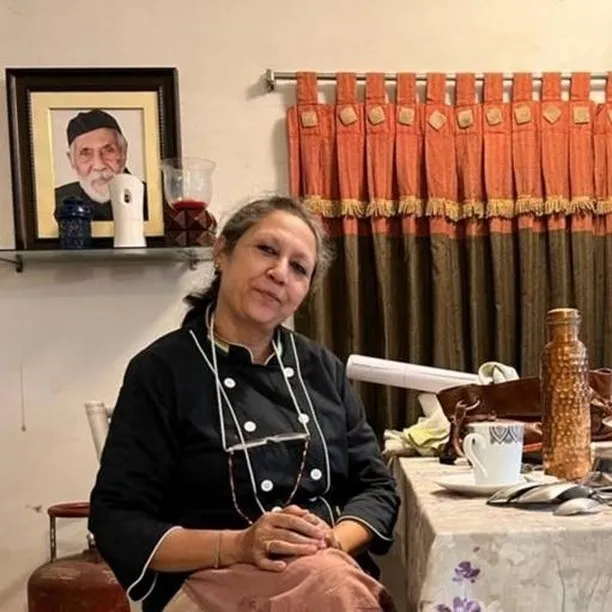
Chef Manzilat Fatima, April 22, 2024. (image courtesy: Umang Sharma)
Manzilat’s great-grandfather did
On most evenings, Manzilat Fatima’s rooftop restaurant in South Kolkata, aptly named Manzilat’s, is packed with food connoisseurs waiting to taste the incredible dishes she prepares for them. But there is another reason foodies climb four flights of stairs to her quaint little eatery.
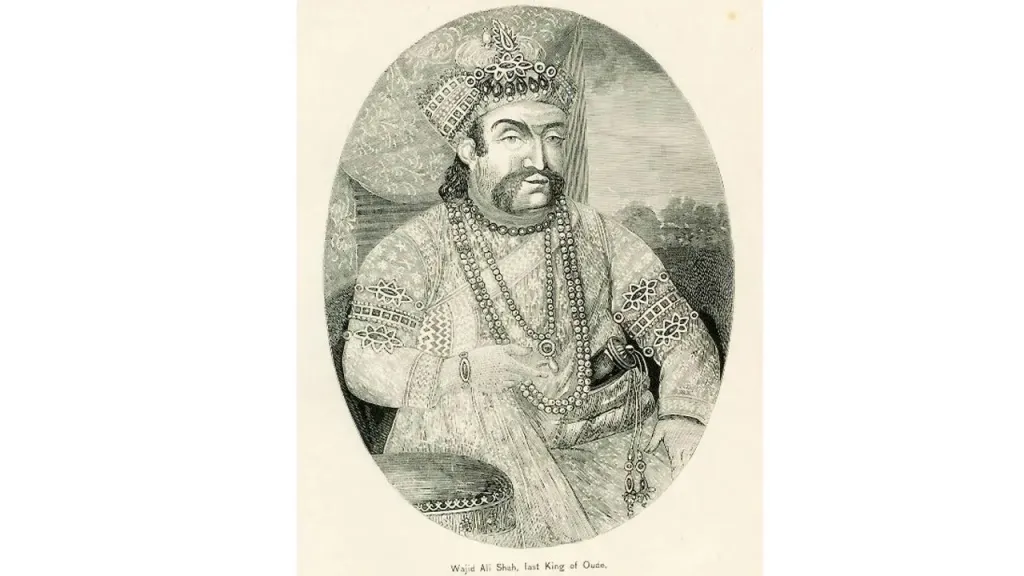
An engraving of Nawab Wajid Ali Shah. Pic Courtesy/ Wikimedia Commmons
What Manzilat does, is nothing short of remarkable. Not only does she tantalize the tastebuds of food lovers with exceptional dishes such as Chicken Lazeez Shami Kebab, Lakhnavi Murgh Biryani, or the famed Lakhnawi Mutton Yakhni Pulav – but she also evocatively creates a bridge between the present and the royal past of Wajid Ali Shah, the last Nawab of Awadh.
Manzilat Fatima is the great-great granddaughter of the Nawab who made his home in Kolkata after the British East India Company annexed his kingdom. He gave the culinary world the famed aloo in Biryani.
A descendant of Awadh
“I am a direct descendent of Wajid Ali Shah and Begum Hazrat Mahal ,” Manzilat reveals.
After the annexation, her great, great grandmother Begum Hazrat Mahal who took charge of Awadh, put her son Birjis Qadr on the throne in 1857. Birjis Qudr was the son of Jaan e Alam Wajid Ali Shah and Begum Hazrat Mahal.
Manzilat is the daughter of Dr. Kaukub Qudr Meerza, the grandson of Birjis Qudr, she explains.
Like her pantry, stocked with delectable food, Manzilat is a storehouse of stories and fascinating history.
A conspiracy at play
According to Manzilat, despite having no inheritance, Birjs was still the legal heir of Wajid Ali Shah and Begum Hazrat Mahal.
“Birjs Qadr had a son Mehr Qadr who was my grandfather,” adds Manzilat. “He did not have any siblings growing up. He did have a family, but they were assassinated in cold blood on August 14, 1893.”
Manzilat says that the British invited Mehr Quadr from Kathmandu to Calcutta under a false pretext. “The other descendants of the Awadh royal family wanted to snuff out the last crown king, even though there was nothing to inherit by then.”
There was a deeper conspiracy at play.
A dish of Awadhi biryani (image courtesy: Manzilat Fatima restaurant)
A poisoned dinner
“In order to snuff out this branch they cooked up a conspiracy along with the British and invited him and his family over for dinner where they laced the food with poison. In that tragedy, he, along with a son and daughter as well as his guards and dogs were murdered.”
Only Mehr Quadr’s wife, Mehtab Ara Begum, survived. She was pregnant with Manzilat’s grandfather and did not attend the dinner. “Had she gone for the dinner, the entire course of history would perhaps have been different,” says Manzilat.
Her grandmother, Mehtab Ara Begum, survived along with an unborn child – Manzilat’s father- and a daughter who was four years old at that time. The little girl grew up and married, but died childless. But the lineage of Wajid Ali Shah continued through Mehr Qadr and Manzilat’s father Kaukub Qudr Meerza.
“My lineage shaped me into a very loyal Indian,” she says. “We grew up hearing stories of valor of Begum Hazrat Mahal and Birjs Qadr and how, after 1857, (she) chose to live free in Kathmandu, Nepal. Our history helped us be grounded and honest. We learned the art of sacrifice.”
From lawyer to chef
Growing up, Manzilat heard stories about the tragedy and the conspiracy that destroyed her family – from their time in Lucknow until Birjs Qadr’s assassination, and how her grandfather was protected and grew up very sheltered because of the constant threat to his life.
Being a chef was not always the game plan. Manzilat studied at Aligarh Public School and graduated with an English (Hons) degree from Women’s College, Aligarh Muslim University. She enrolled at Calcutta University for her Master’s in English and a few years after her marriage, even completed a five-year LL.B course in 2002.
Chef Manzilat Fatima (image courtesy: (Umang Sharma)
Manzilat opened the doors to her kitchen to food lovers from all over the world. As the smoke rises from her tender Mutton Awadhi Galwtii Kebab, or tear-drop-shaped condensation rolls down her chilled Khus ka sherbet, or even as patrons savor the pillowy soft aloo in their biryani, Manzilat knows that she has not only served some delectable dishes but offered her guests a panoramic view into the world of her ancestors and what they stood for – the mighty Wajid Ali Shah, the indomitable Begum Hazrat Mahal.
In the fragrant aroma of her kitchen, Manzilat Fatima is the custodian of the legacy of the last Nawab of Awadh. Her guests experience more than just culinary delights; they immerse themselves in a narrative of courage, tradition, and the enduring spirit of Awadh.
source: http://www.indiacurrents.org / India Currents / Home> Food> India> Lifestyle / by Umang Sharma / April 26th, 2024
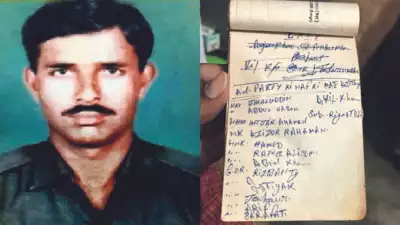
The last conversation between Kargil hero Naik Abid Khan and his wife Firdaus Begum was a poignant one.
“It was the morning of June 30, 1999, when my telephone rang .
I received the call, and on the other side, my husband Naik Abid Khan said, ‘Apna aur bachchon ka dhyan rakhna, mera wapas aana mushkil hai. Maine poochha aisa kyu bol rahe hain to wo bole mushkil hai aur duaa karna mere liye aur meri battalion ke liye’ (Take care of yourself and the children, it is difficult for me to come back.
When I asked why are you saying this, he replied it would be difficult to return and asked me to pray for his battalion).”
On July 5, 1999, two soldiers arrived at Firdaus Begum’s house and spoke to her father and father-in-law. Her father informed her that Abid’s leg was fractured, but she intuited that had it been merely a fracture, the army soldiers would not have come to inform them personally. Her worst fears came true when she was informed that her husband had been killed in action.
Sena Medal awardee Naik Abid Khan, a native of Moh-Kazi Sarai in Hardoi, was born on May 6, 1972.
After completing his early education, he joined the army on Aug 4, 988, at the tender age of 17. He was inducted into the 22 Grenadiers Battalion of the illustrious Grenadiers Regiment.
“Three months before Operation Vijay, he had come home on leave for 8-10 days during Bakrid. When he was leaving, he asked me to accompany him to the railway station to see him off, but I refused saying that I always feel very sad when he leaves and that I would have to return home from the station alone. I regret I didn’t go to see him off.”
“I was pregnant and had the responsibility of two daughters and a son. At that time, my elder daughter was seven, my son was five, and the youngest daughter was just two. Abid’s posting was in Hyderabad, but he was sent to Kargil. Twenty- five years have passed, but his uniform and one of his diaries still provides me the strength to live. On the last page of his diary, there are names of the soldiers from his battalion and all of them were killed in action,” she said.
During Kargil War, Abid was first shot in the leg, but he climbed the hill and fired indiscriminately at Pakistani bunkers, killing 17 enemy soldiers before succumbing to a second bullet that struck his neck.
In June-July 1999, Naik Abid’s unit was deployed in Batalik sector of Ladakh as part of Operation Vijay. The unit was functioning under the command of the 70 Infantry Brigade, with overall control being exercised by the 3 Infantry Division. The attack began on the night of June 30. Abid and his comrades led by Major Ajit Singh Shekhawat, managed to reach the objective but were counter-attacked by the enemy.
Heavily outnumbered, the Grenadiers fought continuously for three nights, inching forward, unmindful of the losses. The Pakistanis became impatient over Naik Abid Khan and his comrades’ resilience and asked their artillery to redouble the barrage. The fighting continued at an elevation of thousands of feet, amidst heavily fortified bunkers equipped with artillery and automatic weapons. The battle of Khalubar culminated in its capture.
source: http://www.timesofindia.indiatimes.com / The Times of India / Home> News> India News / by Fazal Khan, TNN / July 31st, 2024
Articles 29 & 30; Dr Sarfaraz Ahmed Khan highlights lesser-known articles protecting minority rights
NUJS’ Dr Sarfaraz Ahmed speaks on World Minorities Rights Day | eNewsroom
Kolkata:
December 18, holds great significance, as it marks the World Minorities Rights Day. The day serves as a reminder to those in power of their pledge to safeguard the rights of religious, racial, linguistic and ethnic minorities residing in their country.
In Kolkata, the day extended beyond Chief Minister Mamata Banerjee’s tweet and was celebrated across the city.
So, if a section of Jan Bazar had been cordoned off to allow the Congress Party to address the rights of minorities in India, then a little away from their location, Kolkata’s Mayor Firhad Hakim was addressing another group of people at a symposium on the ‘Inclusion of minorities is vital for sustainable democracy’ and little further away in Central Kolkata, All India Milli Council’s Kolkata chapter called for a yet another discussion on the road ahead for the minorities in India.
The panelists comprising Dr Sarfaraz Ahmed Khan, Associate Professor, National University of Juridical Science, Kolkata; Maulana Shafique Qashmish, VP AIMC, West Bengal, Rafay Siddique, convenor AIMC, Kolkata and Amaan Ahmed of AIMC.
The two-hour-long session aimed to raise awareness about December 18 and its significance. “The event is to raise awareness, promote understanding, and actively champion the rights of minority communities in India,” informed Maulana Qashmish.
Adding to that Dr Khan, spoke at length about the significance, evolution and the need for ‘The World Minority Rights Day’. “The whole idea of safeguarding the minority rights stems from the fact that no society can progress, if it is not inclusive,” Dr Khan.
“Our constitution was being drafted around the time the Universal Declaration of Human Rights was declared,so those drafting it took care of incorporating clauses to safeguard minority rights. It was to create an inclusive India,” he said.
Speaking about the Indian Constitution and its safeguards, he made the audience aware of two lesser-used but vital articles that protect minority rights. “Article 29 of the Constitution states that any section of Indian citizen having a distinct language, script or culture of its own shall have the right to conserve the same. Also, no citizen shall be denied admission into any educational institution maintained by the State or receiving aid out of State funds on grounds only of religion, race, caste, language or any of them.”
He elaborated on Article 30 of the Indian Constitution, which grants all minorities, whether based on religion or language, the right to establish and administer educational institutions of their choice. And the second clause of this article states that the State shall not, in granting aid to educational institutions, discriminate against any educational institution on the ground that it is under the management of a minority, whether based on religion or language.” However, he lamented over the fact that Muslims till date have been unable to use these two articles for their best.
“We the people of India, is a right given to the people of India by those drafting the Constitution. No government is going to put your rights on a platter before you. It’s upon the citizens on how they make sure that their rights and provisions are given to them,” said Maulana Qashmish.
Siddiqui mentioned, “Creating awareness about minority rights has become even more important today. Today, minority communities are facing a lot of issues right from the arrest of activists spearheading the CAA-NRC movement, the houses of those speaking against the government being bulldozed, drafting laws that are discriminatory among many other issues.” He added, “Hence, we have reached a point when we need to be aware of our rights and also the legal recourse to get them.”
On being asked what the panelists had to say about Umar Khalid and Khalid Saifi being behind bars even today, Dr Khan said, ‘What has happened is unjust. The prosecution team may struggle to present substantial evidence and in the end, they are likely to be acquitted. Sadly, by the time they are released their prime years will have been spent behind the bar.”
source: http://www.enewsroom.in / eNewsRoom / Home> Bengal> Inclusive India / by Staff Reporter / December 20th, 2023