All posts by mpositiveone@gmail.com

Resetting her Compass, Samina Bano got off the Corporate Ladder to Champion RTE in UP

BIHAR / Lucknow, UTTAR PRADESH:

Chance, coincidence and an unflinching belief in the plans of the cosmos propelled Samina Bano to quit the corporate world to champion children’s right to equitable access to education.
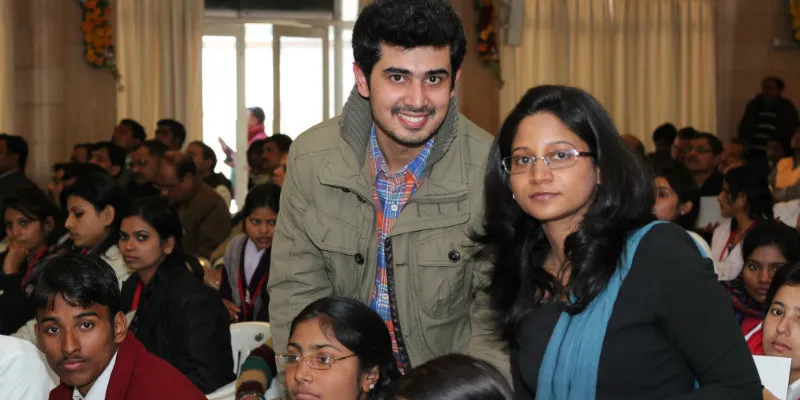
Sometime in late 2012, Samina Bano, then a Chicago-based consultant with Deloitte Consulting, started to notice what she believed to be ‘omens’ all around. She loved her corporate life – thrived on its challenges and enjoyed its ceaseless travelling, yet was convinced it was time to move on. “There was this persistent feeling that I was meant for something else,” she says.

A hazy idea of what that ‘something else’ entailed was brought about by a chance reading of How to Change the World by David Bornstein. “Till that point, I did not know how to make the best use of my education and skills. I first read the term ‘social entrepreneur’ in the book and figured out that was the way ahead for me,” she recalls.

It would take a chance reaching out to one such change maker in Bihar for Samina to understand that Uttar Pradesh – a state with some of the poorest development indicators, was where she must use her skills. Another chance conversation on the Right to Education Act (RTE) helped her decide the area she must work on.
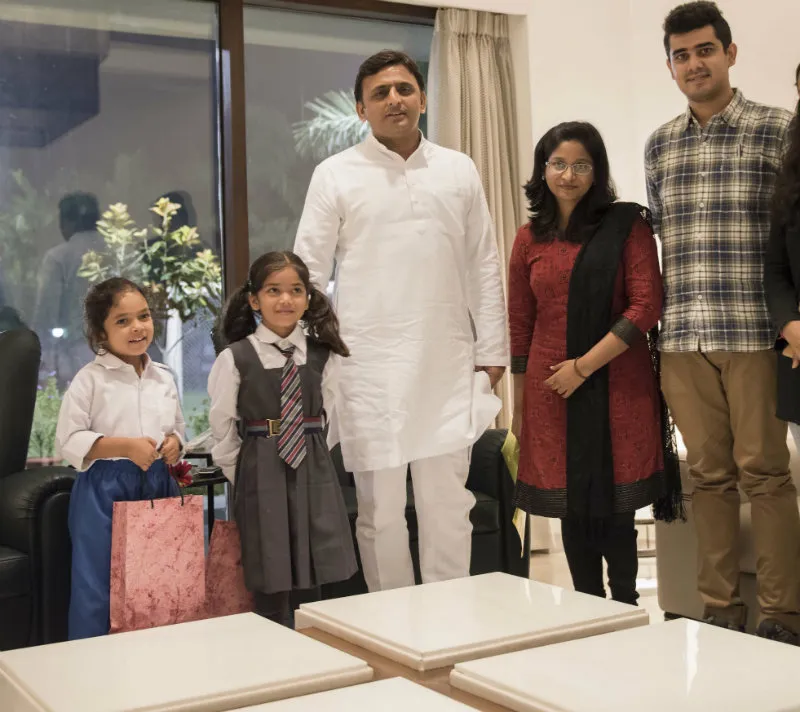
Samina’s work channelled initially through the Bharat Abhudaya Foundation and subsequently through the RightWalk Foundation (both of which she founded), has focused on Section 12(1)(C) of the above Act. The Section mandates that all private unaided schools (with the exception of minority-run schools) reserve 25 percent seats in their entry-level class for children from socially and economically disadvantaged groups.

Since 2009, when the Act came into force, that Section had never been implemented in UP- home to the world’s largest child population. In 2012, two years before Samina started working, the State recorded zero admissions under the Section, but in 2017, this number had leaped to 27,726.

This was made possible by the bringing together of various stakeholders, awareness building, handholding of parents, creating interface with the government, activating a helpline for RTE admissions and creating an online digital system to institutionalise the admission process. The most prominent push in this effort came yet again from a chance fight.

“The first parents who approached us for admissions fell within a one-kilometre area of a branch of City Montessori School. Under the State government’s rules, it was the ‘neighbourhood school’ to which the children were entitled to admission. We were turned away 15 times by the school. Finally, when the District Magistrate ordered the school to admit 31 children, it approached the High Court”, Samina recounts. It turned out to be a David versus Goliath fight which the school (recognised in 2013 by the Guinness Book of World Records as the world’s largest school) had every reason to win had it not been for Samina and her team’s persistence.

“We did not leave the court case to the government. We worked with its counsel to provide the right arguments. The school was represented by the likes of Gopal Subramanium and Shanti Bhushan.  At no point in time were we assured of a win. Yet, we were sure we were going to try,” she says.

The High Court’s order in September 2015 against the school (which then went on to appeal against it only to have its plea dismissed by the Supreme Court) was the most strongly worded message of Samina’s persistent belief that inclusive education was the way ahead for a more egalitarian society. She says, “The law is the same for everyone. Injustice is not acceptable. If you take an initiative with the right conviction, dedication, faith, belief, integrity and truthfulness, God will help you to find the right path”.
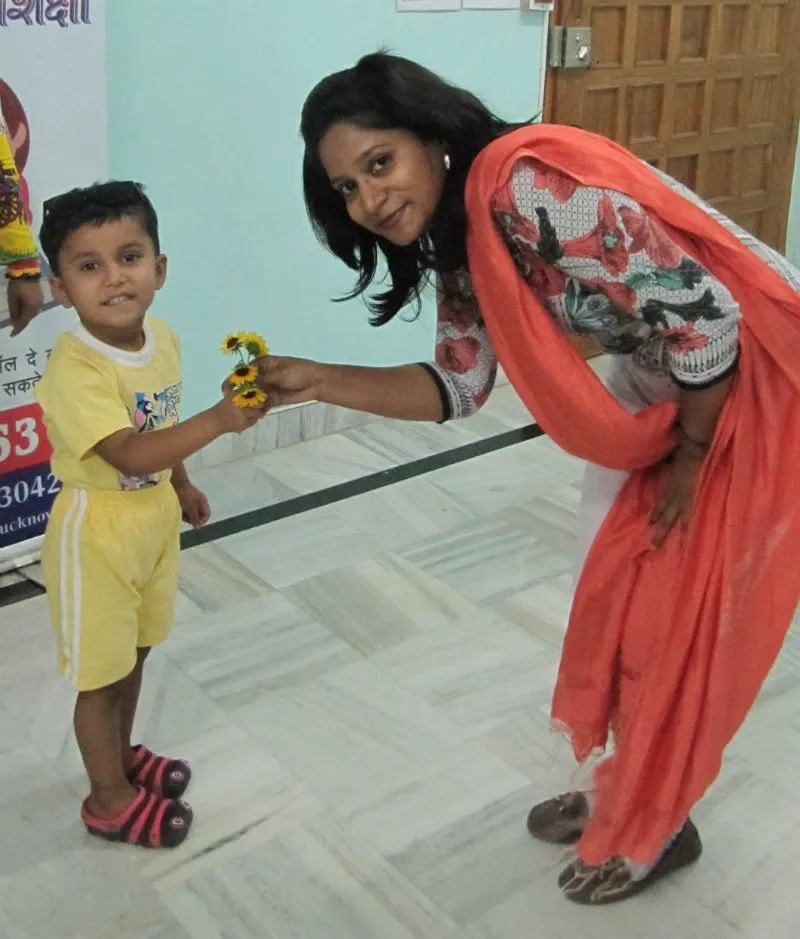
This was a lesson Samina had first learned as a child of eight at one of the air force stations her airman father was posted. “I did not understand why there must be a playground reserved only for the children of officials,” she says. Then when she learned in civics class one day that a playground was public property, she rallied classmates and marched up to the station commander demanding that the playground either be opened to all children or their lessons be modified to reflect the inequality.  “My victory gave me the hope that anything wrong happening with the world need not stay that way. If we try, even an eight-year-old can make a difference,” she says of that learning.

The transition to working with the government and bureaucrats has been tough admits Samina, While the communication, problem-solving, team and interpersonal skills she learned in her corporate stint helped her, she was hamstrung by women’s inherent inability to network after work hours. Her background in high-end technology did little to convince men of her abilities. “My disability made them think that I must have gotten into engineering through a quota,” she says referring to an accident that left her with more than 50 percent paralysis in one leg.

She has been challenged by vicious rumours of her being related to a prominent politician, accused of having a communal agenda in her dogged pursuance of the RTE and even faced physical threats. “I have had to work almost thrice as hard for recognition of my abilities,” she says. She has also had to bear criticism of her supposed aggressiveness which in men would have been lauded as leadership ability.

Yet never one to shy away from challenges, Samina believes she has been guided by instinct in her work life. This was first manifested when she gave up her MBBS course for a change to engineering, driven by her love for Physics and Mathematics, and refusing to bow to the stereotype that the medical professional was the safest bet for women who studied science.

Her dogged fight against being typecast has yielded rich honours for Samina. She is the recipient of the International Ashoka Fellowship, and the Acumen Fellowship, and counts the APJ Abdul Kalam Award for Innovation in Governance and Women Super Achiever Award from the World Women Leadership Congress, among her many recognitions. Yet it’s in the heartfelt gratitude of parents and children that she finds her greatest reward.

Having created an enabling environment for the implementation of the RTE – not just through admissions but by training government officials at every level, bringing private school managements up to speed on how to provide inclusive education and effecting policy changes, Samina is ready to move on to her next challenge. “Our philosophy is to strengthen government systems for effective and efficient delivery of services, such that they can function independently of us”, she explains. Thus, after 2018, she sees RightWalk as addressing new challenges in education and in other sectors.

And through it, all as Samina, 31, says, “I shall continue to listen to my heart and heed the omens.

source: http://www.yourstory.com / Your Story / Home> Stores / by Puja Awasthi / February 20th, 2018
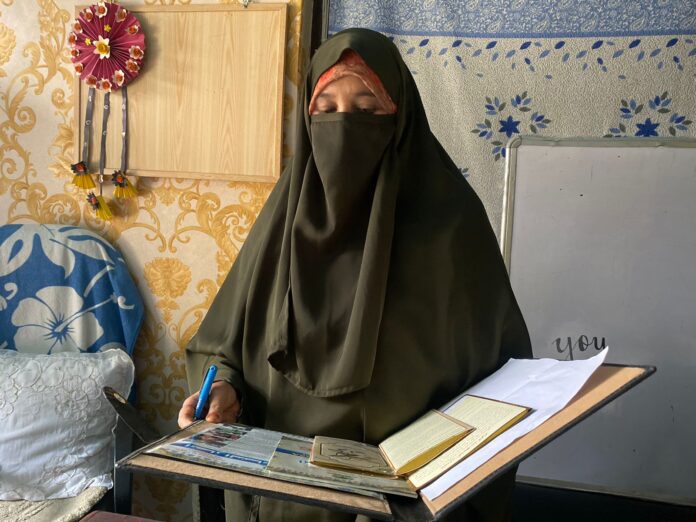
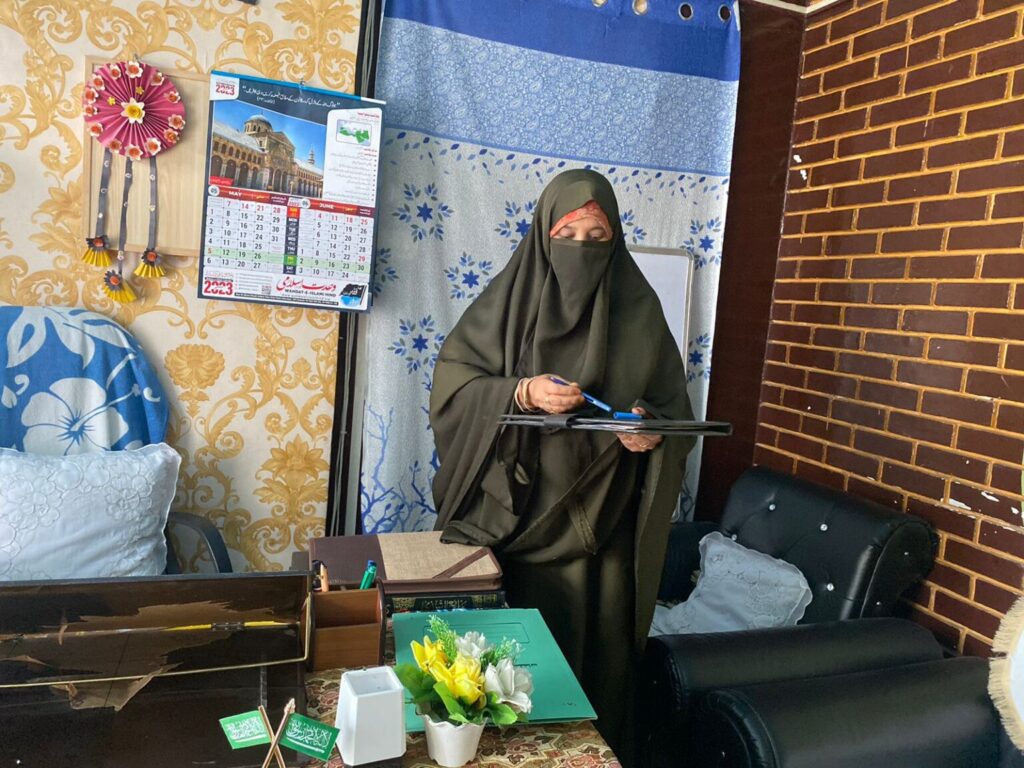
Meet Mubeena Ramzan, the trailblazer in imparting women’s education and property rights

Sopore (Baramulla District) , JAMMU & KASHMIR:

“In today’s world, if something goes wrong in our household, women are held responsible,” said Mubeena Ramzan, an iconic figure for women’s rights and upliftment in Kashmir. Featured in “The World’s 500 Most Influential Muslims of 2019” and born in the ‘apple town of Kashmir’, Sopore, she had always been a “sensitive” child who always looked around for people who were not so privileged. She had a strong desire to help the underprivileged but financial constraints made her helpless. Growing up, she aimed to change this and be instrumental in helping the lesser fortunate women around her.

“When I initially started, we were just a few people but the recognition of our Kashmiri people who stood with me and joined our cause made me happier,” she shared about being among the most influential Muslims of 2019. Mubeena completed her studies in her native town and joined a private college run by Anjuman Moin-ul-Islam which was the only college for women at Sopore then. “Whenever things are wrong at home, a woman is asked to do a job and support the family,” she recalled. Speaking about her immediate surroundings, she detailed how women were still suppressed “in the garb of religion as interpreted by the village elders and religious leaders.” Disturbed by such wrong interpretations of the status of women in Islam, she was motivated to get educated and work towards improvisation concerning women rights.

“There is an ayah in the Quran which talks about women to remain inside four walls of their homes but we have forgotten that every ayah had its own context,” Mubeena stated while defining her motivation to pursue Islamic Studies. “Our so-called maulvis used Islam as a tool to suppress women while Islam is the only religion which empowers women in every aspect of her life,” she added. Driven by this zeal, she went to the University of Kashmir for pursuing Masters in Islamic Studies. Her choice of studying the interpretation of Islamic teachings was aimed “to look inside the teaching which catered to women.”

“In Islam, women have been given property rights but whenever a daughter asks for her share she is abandoned and fought off,” says Mubeena. Her harrowing experiences of witnessing abandoned women with limited access to clothes, food or water motivated her to enrol for a B.Ed., M.Phil and PhD in Islamic Law. Her vision remained to challenge the deliberately flawed interpretations of Islamic teaching that caused Muslim women untold misery. After her studies, she initially started working as a research associate, looking for opportunities to educate, help and empower women through Islamic teaching. She feels that when people “want to truly empower a woman they should give her the share from the property.”

“In Islam, women don’t have any economic liabilities, men were created as the protector and guardian of women so it’s his responsibility to look after her,” Mubeena explained. She completed two theses on Islamic Law and Social Evils as well as on Shah-e-Hamdan and Orientalism. Her education has taught her that “there needs to be more resources for women’s empowerment and education.” To contribute to the cause, she continued working in various educational institutions as a contractual lecturer and research associate and went on to open her own institution for women, Jamia Islamia Mahdul Muslimaat.

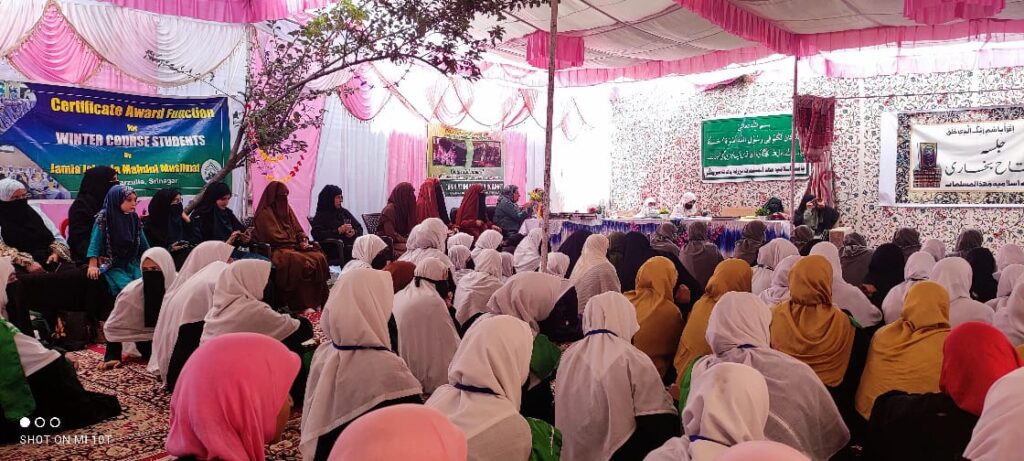
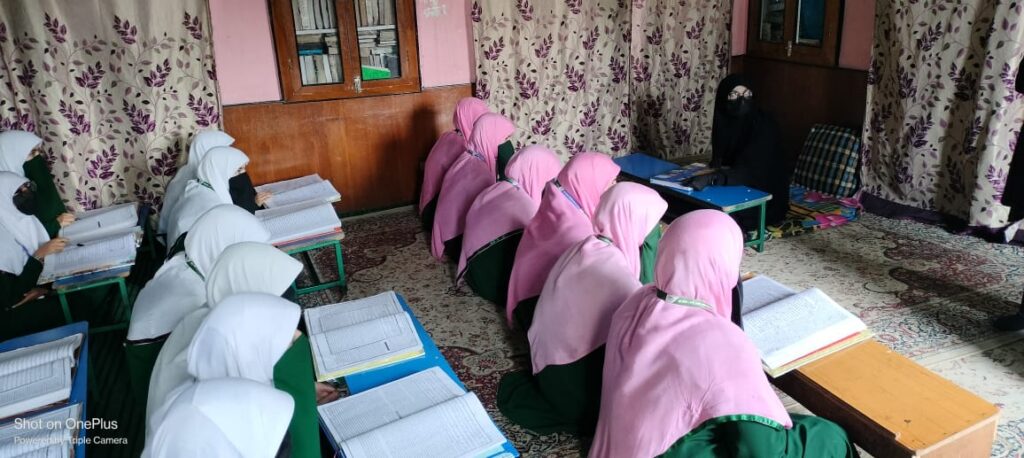
“The vocational training in activities like cutting, tailoring, and computer skills here empower and helps us to support ourselves financially,” says Nahila Wani, a senior student at Jamia Islamia Mahdul Muslimaat. The school provides shelter, food, clothes, and education free of cost to all needy students. “Many students who have received an education from this institution have gone on to open their own schools, benefiting our society,” shares Nahila who added that the well-balanced curriculum “fosters independence and awareness among women, making them conscious of their duties and rights.”

“There were so-called preachers who said that I can’t run this institution as I am a woman,” she said while recounting the initial three years of starting the institution. She explained that initially the establishment faced many problems but over time they installed networks with professional teams including top doctors in the valley. The emphasis here lies in educating women in Quranic exegesis, science of Hadith, Jurisprudence, and History, while also training them in languages like Arabic, English, Urdu, and computer skills. “Our goal is to equip them with the necessary skills to become self-reliant and competent individuals,” said Mubeena.

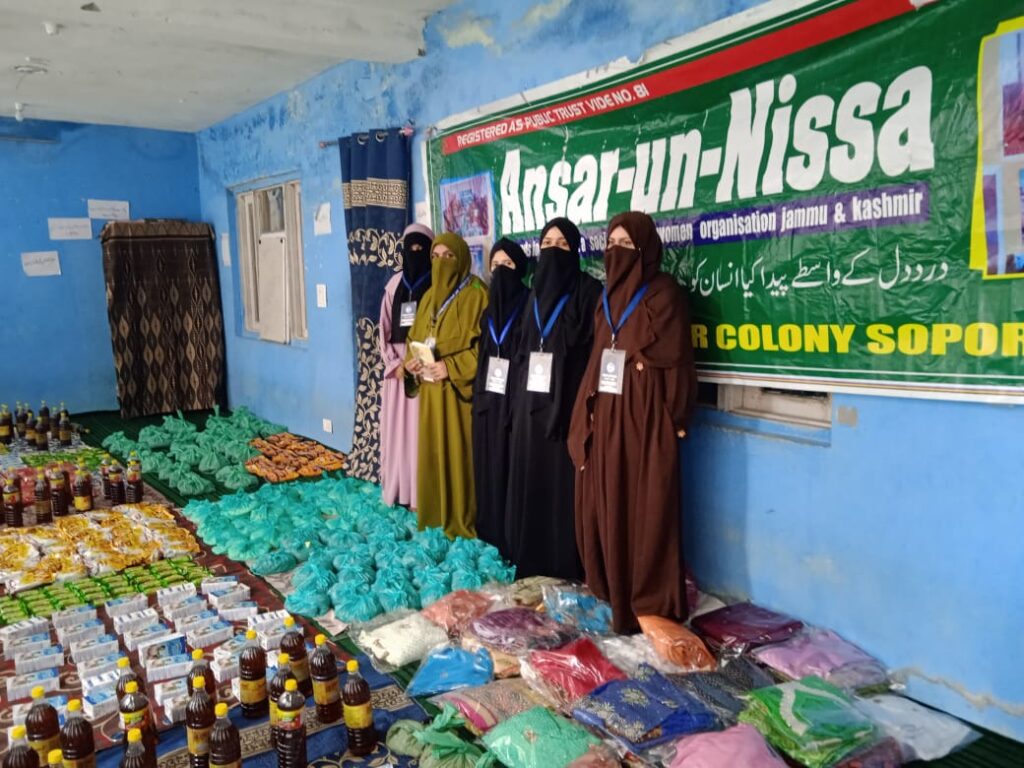
In 2014, Mubeena also started Ansar-ul-Nisa, a socio-religious organization that provides special support to needy orphans, would-be-brides, and widows. Through the organization, she came across several cases of suicidal cases of women, especially among married women. According to the latest National Crime Records Bureau (NCRB) report, there was a 15.62% increase in crimes against women in 2021 compared to the year 2020. Over 7,000 arrests were made in cases of women harassment in the union territory in 2021. In the 2011 Census, among 64 lakh women in the valley, the crime rate per lakh population in stood at 61.6% as of 2021. 315 cases of rape, 1,414 incidents of attempt to rape, and 14 dowry deaths were reported in 2021 wherein 91.4% of cases showed that the accused were known to the victims. Around 1,851 cases of physical assault on women with the intention to outrage their modesty was also caused. The figures clashed with the lockdown in COVID-19 when suicidal tendencies among Kashmiri women grew rapidly, the same time around Mubeena’s team was expanding women counselling activities.

The counseling cell works 24×7 hours to help Kashmiri women in such events wherein one of the cases she dealt with was involving a girl who was abandoned by both her parents who had separated and remarried and registered her as an orphan. Her organization fought on the social front against her father ultimately convincing the local elders to rightly grant some portion of the property in her name. The girl was married off soon after and is currently living happily with her husband and a daughter. Two more orphan sisters studying in Jamia Islamia Mahdul Muslimat received legal help to secure property share from their grandfather and are now living with their mother in their own house. Stories like this abound in Mubeena’s organizations.

“We believe in providing a safe space where newly married women, divorcees, and those suffering from mental health disorders can come to share their stories and find relief,” shares Mubeena. Through her institution’s counseling team of highly qualified professionals including top doctors and professors, they divert efforts to support them financially and emotionally. “As we look to the future, we aim to establish a helpline number to further expand our reach and continue to provide crucial support for those in need,” she said. At present, 600 girls are studying in the institutions and about 500 widows also receive financial assistance. Due to lack of funds, her plans of opening a college for skills-oriented courses are delayed.

Speaking about her future plans, she detailed that she aims to build an institution where all modern subjects are taught at par with Islamic education, alongside martial arts and vocational skills like cutting, designing, oratory, etc. “Our whole motive is to make women empowered through education,” Mubeena iterated her future plans.

Sadaf Shabir is an independent journalist. She tweets @sadafreports 

source: http://www.twocircles.net / TwoCircles.net / Home> India News /by Sadaf Shabir / May 24th, 2023

Novigo Solutions mark decennial celebrations

Mangaluru, KARNATAKA:

Honors long serving employees with Electric Scooters and Gold Coins.

Mangaluru: 

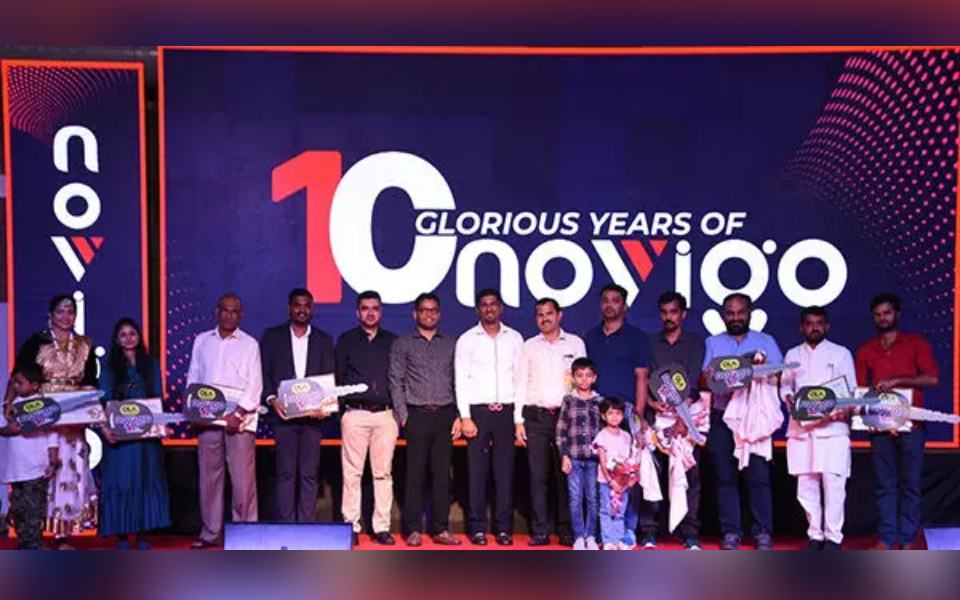
Mangaluru based IT Company Novigo Solutions on Saturday evening celebrated its 10th year anniversary at the Avatar hotel hall in Attavar, marking a significant milestone in the city’s rapidly growing IT Infrastructure.

The company in April this year giving a major boost to the city’s IT sector unveiled its new offshore delivery center at Karuna Pride Center in Falnir. The event was graced by Anantha Radhakrishnan, CEO of Infosys BPO.

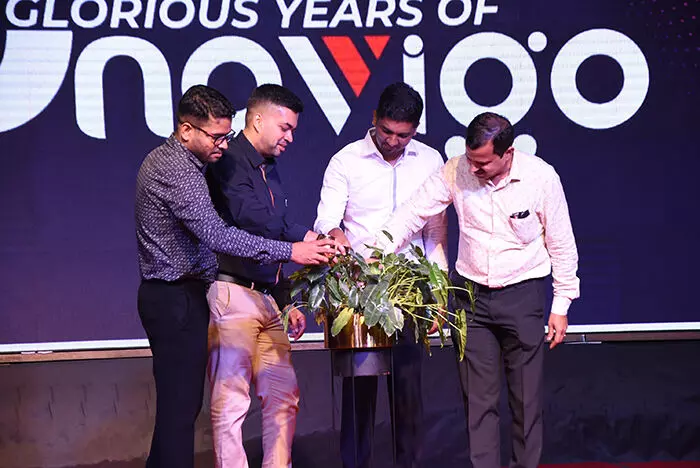
The Decennial celebration program was inaugurated by the Managing Director and CEO of Novigo Solutions, Praveen Kumar Kalbavi, along with the co-founders: Chief Technology Officer Mohammed Hanif, Chief Operating Officer Mohammed Jarood, and Chief Customer Officer Shihab Kalandar.

Following the inauguration of the event, addressing the gathering CEO Praveen Kumar Kalbavi mentioned that Novigo Solutions, which began a decade ago, has provided immense employment opportunities to locals and has achieved remarkable success in the global IT market. Besides, the company has also successfully created an environment where employees can work freely. The company that started with just 20 individuals, now proudly employs over 800 IT professionals. Its development centers are operational in Bengaluru, Mangaluru, Chennai, and Kochi. He also expressed plans to expand to other cities in the future.

He further added that “We have global offices in USA, Saudi Arabia, UAE, Netherlands, and Singapore, . Recently, we have established our center in the UK as well. Our company has clients from over 20 countries around the world.”

Commending his co-founders and the Novigo family, Kalbavi added that “I would like to thank my three co-founders for this achievement in this decade-long journey of the company,” he said that he is especially proud of all the members of the Novigo family, especially of those who have been serving the company as employees for several years.

In the event, nine individuals who completed 10 years of service in the company were honored with electric scooters as tokens of appreciation. At the same time, the company also honored 45 employees with a gold coin for serving the company for five years, all of the employees were specially honored by the company along with their families.

Various competitions including singing and cultural dance were organized for the employees, and winners were awarded. Apart from the competitions, several entertainment programs were also conducted.

Novigo Solutions: an overview

Novigo Solutions is an IT company that has made a significant impact in the industry since its establishment in 2013. Founded by four experienced professionals, Novigo won a major project from one of the largest credit unions in the US, which highlighted the company’s strong delivery capabilities and gave them a foothold for further growth. Novigo expanded its workforce to 100+ professionals and gained clients from multiple countries, leading to the establishment of a second data center in Bangalore. In 2018, Novigo earned its CMMI level 3 certification and increased its global reach by registering an office in Singapore. Novigo consolidated its customer base in 12 countries, including 5 Fortune 500 clients, and continued to expand with the acquisition of Karanji Infotech. The company now has clients from across 20 countries across the world. Novigo’s reputation continued to grow, leading to the acquisition of a SAAS company, Nyletech. The company currently has development centers operational in Bengaluru, Mangaluru, Chennai, and Kochi, and global offices in USA, Saudi Arabia, UAE, Netherlands, and Singapore. The Company is one of the first to join hands with UiPath, and became its first diamond member and gained USN certification in the APAC region. Novigo’s hard work was recognized in 2016 when it was awarded the “Emerging Company of the Year” award at the Indian Achievers Forum and was also awarded as a Microsoft Gold Partner. Novigo’s success story is a testament to its founders’ determination to place Mangalore on the global IT map, and it has become a leading IT company recognized globally.

source: http://www.varthabharati.in / Vartha Bharati / Home> Karavali / by Vartha Bharati / August 19th, 2023

‘History’s Angel’: Past and present collide to tell uncomfortable truths about Muslim lives in India

New Delhi / Shillong, MEGHALAYA / Bengaluru, KARNATAKA:

Anjum Hasan’s novel considers what it is like to live in troubling times.

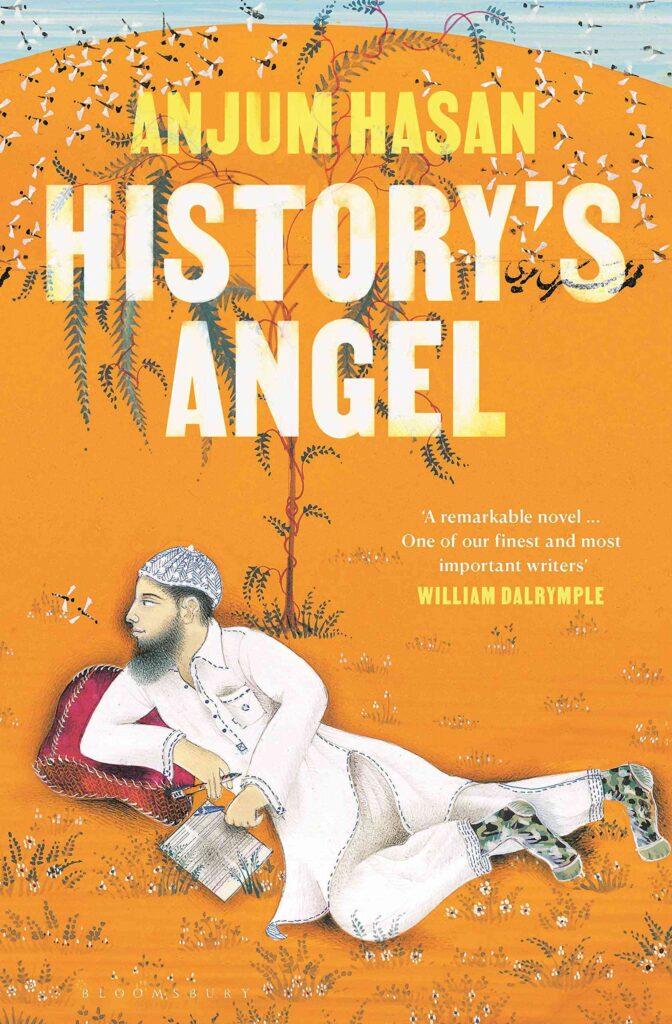
History’s Angel, Anjum Hasan, Bloomsbury India.

Living in an ancient city is like living in two time periods – the present (when you are alive) and the past (when the city was alive and you were not). It’s a strange conundrum. In a city like Delhi, where Alif from History’s Angel lives, the past creeps into the present in ordinary, mundane ways. There’s Humayun Tomb to visit, the Red Fort that you see on your way to work, the ruins of Tughlakabad where people reside…the city of Delhi is effortlessly ancient and ever-expanding. And what about the intangible past – the memories of what Delhi used to be, the violence that ravaged it and the unexpected friendships that were born in dire times, the natural seat of power that stood strong even as the city exchanged hands between emperors and regimes? History is a double-edged sword – there’s pride in continuing the legacy and there’s a burden of living with its failures.

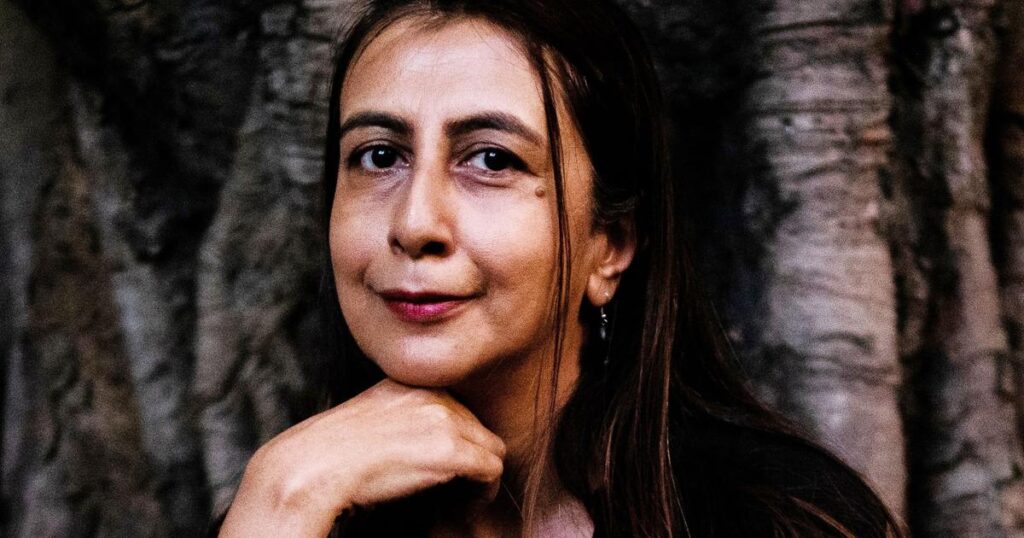
Author Anjum Hasan. | Lekha Naidu

Anjum Hasan’s latest offering, History’s Angel considers what it is like living in Delhi in troubling times (something the city always seems to be in). Alif teaches history to students aged between nine and 14 at a private school. He believes in history – its nuances, nonlinear existence, and its ability to make its students upright, empathetic people. But Indian school education system does not care for holistic scholarship. As long as the students successfully mug up facts and figures and hurl them onto the answer sheets, the teacher’s job is done. But Alif has bigger aspirations – he wants the children to understand and appreciate history in all its complexity. And in striving for this noble goal is where the trouble begins.

Humayun, Hanuman, Hindustan

Hell breaks loose when nine-year-old (upper caste Hindu student) Ankit Kumar disappears from his sight on an excursion to Humayun’s Tomb. Alif imagines the worst, but after a brief period of great anxiety, Ankit is finally found. Overcome with relief, Alif is only too happy to indulge the child when he seeks permission to ask a question. Only it is not what Alif was expecting.

Ankit asks his teacher, “Are you a dirty Mulla?” Perhaps before Alif could even make sense of the child’s question, he reaches for the boy’s ear and twists it. Corporal punishment is a punishable offence – as it should be – but in this case, it is something of a reflex action. Alif is stunned and he feels helpless.

Always keeping himself out of the way of trouble, and with his faith dialled down to the minimum, Alif does everything he can to be a “good Muslim”. However, the India he lives in is not so kind. The story, as it moves from one tongue to another and one imagination to another, takes a grotesque form. The final version is this: Ankit disappeared after Alif insulted his god Hanuman and threatened to throw him out of the rickshaw. In the absence of any reliable eyewitnesses, it is Alif’s words versus the majority’s hostility which is ever ready to exaggerate the failings of Muslim citizens.

The school where Alif teaches is a mini India. There are people of all faiths and cultures but one seems to be quickly taking precedence over the others. Alif wonders why the children stopped singing Muhammad Iqbal’s Saare Jahan Se Achcha in the assembly, why the principal was conducting a havan on the school premises, or why history lessons on Muslim emperors were no longer essential. The principal clearly instructed him to not bring religion into the school – visits to Humayun’s Tomb etcetera – while Hindu traditions were proudly being paraded as the culture of the country. Alif can see the gradual shift from Iqbal’s Hindustan to the narrow-minded, saffron-tinted Bharat. And so can we.

The state of any minority in our country has never been worth much and now, even more so. The hostility and open call for violence is not just encouraged but rewarded. The news cycle works on repeat – lynchings of Muslims, the murder of an untouchable, a Kashmiri’s freedoms curbed, a journalist attacked or jailed, a farmer dead from suicide. And screaming news reporters who are oblivious to it all. An endless, vicious cycle that sucks the common man dry. And it is in this soul-sucking, gut-wrenching India that people like Alif and his wife Tahira strive to be perfect (Muslim) citizens.

Horrors, hounding, humiliation

Simple things like renting a house become an impossible dream as brokers ask the couple if they slaughter goats at home and tell them – feigning kindness – that there are no mosques or madrasas nearby. Tahira and Alif are made to participate in humiliating interrogation – they are not only questioned about their faith and eating habits but made to answer for Muslim invaders and also those who stayed back. The fact that these events happened many centuries ago and the “invaders” had long since integrated with the Indian peoples is immaterial.

The indignity that Muslims are subjected to in India is one-of-its-kind. Disparaging remarks are always at hand and fingers are quick to point to Muslims when something goes wrong in the nation-state. Alif’s mother says stoically, “Things are bad…but if that is what’s bothering you then forget it. Because it is not new.” It is not new. Through the elderly lady’s voice, Anjum Hasan tells us that this has always been the reality of being a Muslim in India. It always has been humiliating. Of course, things have become alarmingly bad in the last decade, but none of us should think even for a moment that India was a secular haven before.

Alif’s is an interesting characterisation – his history teacher persona makes him acceptable as an upright citizen. In India, a teacher exists beyond the classroom – they are considered quite literally a “guru”. In the same way, Alif exists beyond the textbook. He contemplates the Sufi way of life, sorrowfully remembers the demolition of the Babri Masjid and the violence that followed, and imagines the horrors of the Partition.

Not just the past, Alif must also answer for the loud azaan and “land jihaad” of the present. It’s a life of questions and interrogations and like most of us – any of us – Alif does not always have an answer. He is no more responsible for the actions of Muhammad Ghori than Hindus are for the pillaging and killing that many kings of their religion were known for. But only one of them is allowed to cut the cord from the notorious past.

While Hasan easily incorporates the past in her portrayal of the contemporary Indian Muslim, the figures and events of this past can sometimes be distracting. The nine-year-old child who gets the wheel turning on Alif’s ruination fades into the shadows – how did the child become so hateful, what made him falsely accuse his teacher, and why did he not fear being punished? I wanted to know more.

Ahmad, a minor character in the novel, is a devout Muslim. And being devout often means enforcing one’s personal beliefs on others. He complains that Alif’s family “shirks shirks shirks” their faith –photos of human faces adorn the walls at home, Alif’s mother does not cover her head, the men do not always attend prayers at the mosque, the women go out to work, and the children are not being educated in madrasas. Hindus have alienated and hounded Muslims, and so have Muslim fanatics. The common Muslim who just wants to go about their day without getting into trouble is on the losing side of a lost war. Hasan’s attack on Muslim orthodoxy is subtle yet impressive.

History’s Angel ends on a predictive note. You can see it coming however it does not dampen the reading experience – surely you were not expecting justice to be delivered to a wronged Muslim history teacher?

pix02

source: http://www.scroll.in / Scroll.in / Home> Book Review / by Sayari Debnath / July 30th, 2023

Indian football legend Mohammed Habib passes away at 74

Hyderabad, TELANGANA:

Habib represented India in many international tournaments from 1965-76. He was considered by many experts as one of the best players the country has ever produced.

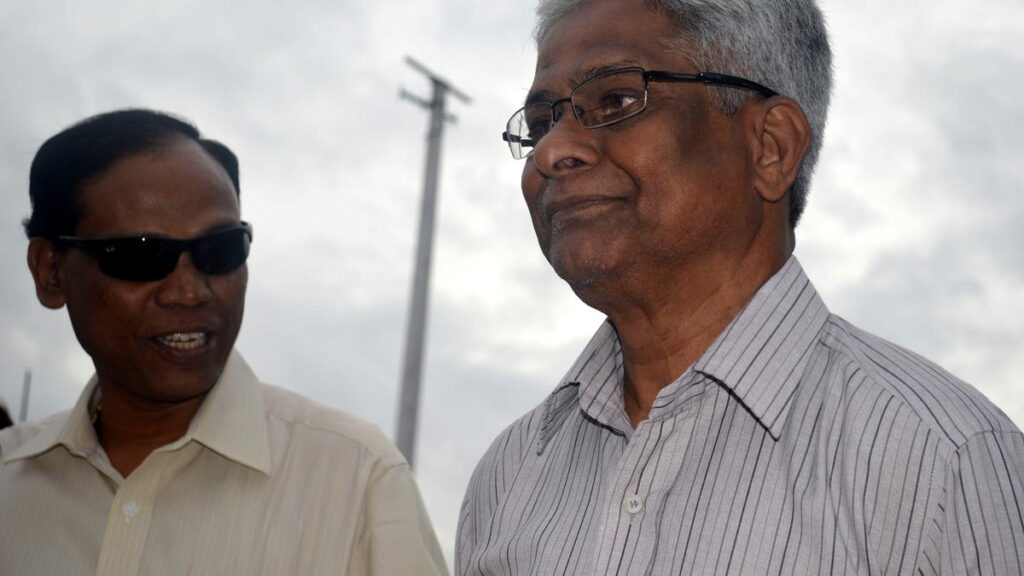
Md. Habib was an important member of the Indian national team that won the Pesta Sukan Cup in 1971 and finished third in the Merdeka Cup and the Asiad in the year before. | Photo Credit: SUBRAHMANYAM VV/The Hindu

Mohammed Habib, the playmaker par excellence in the history of Indian football is no more. He was 74 and suffering from dementia and Parkinson’s syndrome for the last couple of years.

He is survived by his wife and three daughters.

Habib represented India in many international tournaments from 1965-76. He was considered by many experts as one of the best players the country has ever produced.

He was also a bronze medallist in the 1970 Asian Games in Bangkok led by his fellow Hyderabadi Syed Nayeemuddin and managed by the great P.K. Banerjee.

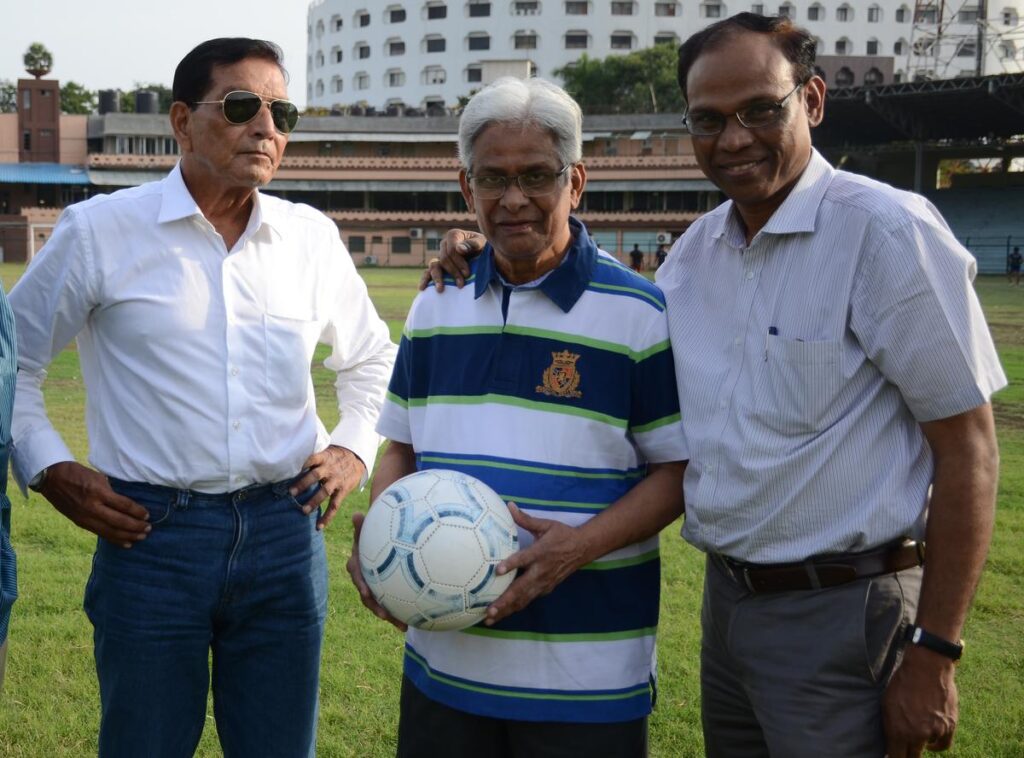
Syed Nayeemuddin, Mohammed Habib and Victor Amalraj at Lal Bahadur Stadium in Hyderabad. | Photo Credit: V.V. Subrahmanyam/The Hindu

One of the highest points of Habib’s career was when he played for Mohun Bagan against the visiting Cosmos Club which also featured the legendary Pele in 1977 in a ‘friendly’.

“It will remain one of my greatest moments and which was appreciated by Pele himself at the end of the match, hugging me and wishing me best of luck wishes,” Habib had once told Sportstar in one of his interviews.

During many conversations over the years, Habib always took pride in reminding me that it was with great pride that he wore the jersey of Mohammedan Sporting whom he joined in 1971.

For 17 long seasons starting from 1966-77, Habib, despite his diminutive nature, was a stalwart walking on the football grounds in Kolkata, according to former India captain and Hyderabadi Victor Amalraj.

Habib was also instrumental in shaping the Tata Football Academy into a force to reckon with his sincerity, passion and professionalism.

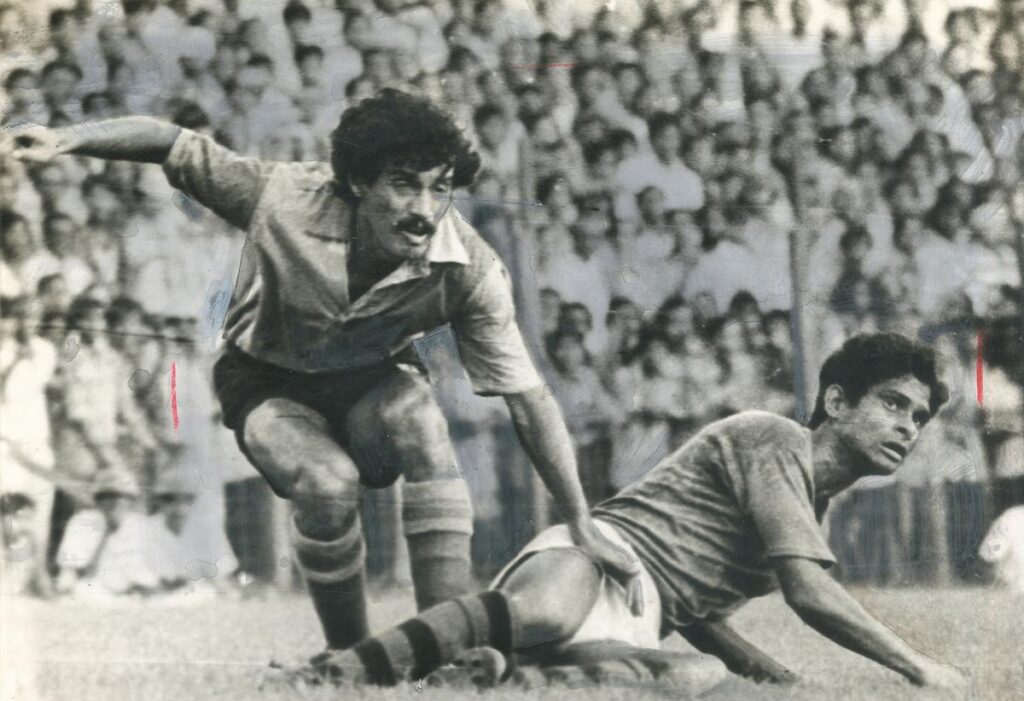
Habib (right) in action for Mohun Bagan against East Bengal’s Chinmoy Chatterjee, during the Calcutta Senior Division football league. | Photo Credit: The Hindu Archives

In fact, Habib’s younger brother Mohammed Akbar was also a brilliant footballer who dominated the Kolkata maidan for a long time.

“It is a sad feeling to see him suffering from this syndrome for he was such a gifted footballer who on his day was the most-dreaded striker, mentored and moulded in his latter half of his career by the great P.K. Banerjee,” Amalraj recalled.

“I have seen fans mob Habib in Kolkata where he is some sort of a God given his awesome reputation as a player. Not many be aware that Habib, a product of City College Old Boys (Hyderabad), pushed East Bengal to new heights of excellence helping it win almost every major trophy in the early ‘70s’ said the former international, who had the distinction of leading all the three big clubs of Kolkata – East Bengal, Mohun Bagan and Mohammedan Sporting.

“I learnt many tricks from Habib bhai,” said an emotional Amalraj.

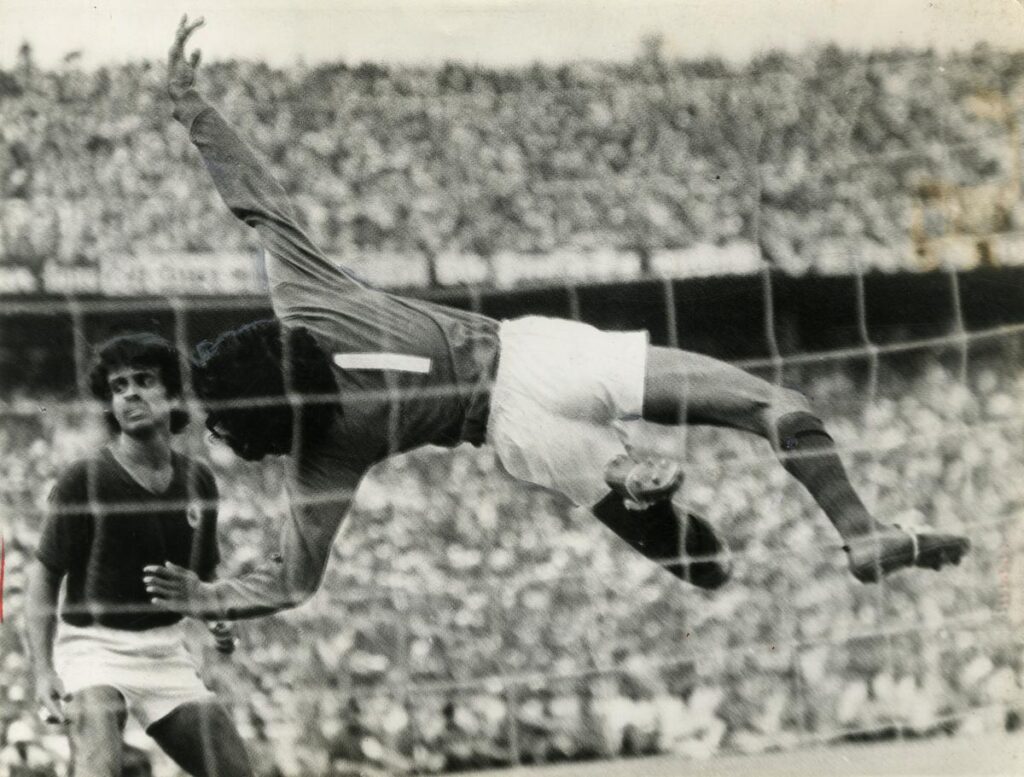
East Bengal forward Habib beats Pratap Ghosh of Mohun Bagan to give his team a 1-0 in the finals during the Fourth Federation Football Championship in Kolkata on May 08, 1980. | Photo Credit: The Hindu Archives

Interestingly, Habib had great influence on even Amalraj with the latter playing under him and also vice-versa between 1978-82. “I have learnt many tricks from Habib Bhai,” he says.

Telangana Football Association President Mohd Ali Rafath, Secretary G. Palguna, TFA chairman and also the owner of Sreenidi FC Dr K.T. Mahi, and Hyderabad FC owner Varun Tripuraneni were among those who expressed condolences.

source: http://www.sportstar.thehindu.com / Sportstar / Home> Football> Indian Football / by V V Subrahmanyam / August 15th, 2023

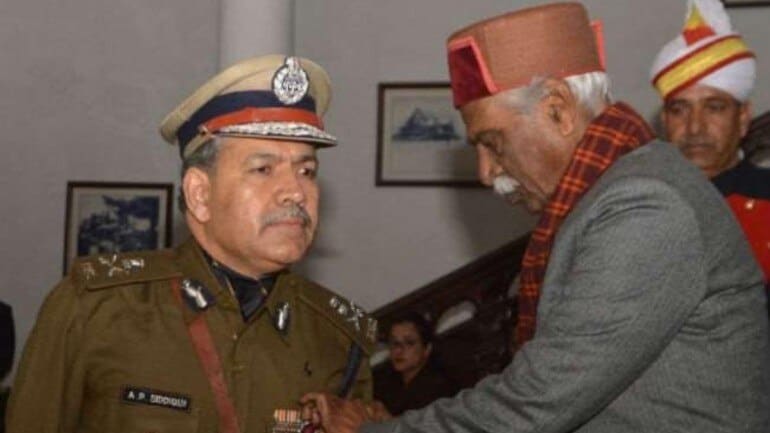
Jamia Registrar AP Siddiqui Awarded President’s Medal

INDIA:

Pic courtesy: India Today

New Delhi: 

AP Siddiqui, Registrar of Jamia Millia Islamia (JMI) and senior IPS officer has been awarded President’s Medal. Governor of Himachal Pradesh Bandaru Dattatreya gave away the award to Siddiqui for Distinguished Service, in an Investiture Ceremony at Rajbhawan Shimla, Himachal Pradesh on February 11, 2020.

Siddiqui a 1991 batch IPS officer of Himachal Pradesh cadre was selected for the honour for his instrumental role in breaking the ISI network when he was heading the CID unit of Himachal Pradesh police. He joined as Registrar, JMI on deputation in November 2016. Before joining JMI, Siddiqui was Additional Director General of Police (Headquarter) in Himachal Pradesh.

Siddiqui also received President’s Police Medal for Meritorious Service in 2008.

Siddiqui  also served as Superintendent of Police (Anti Corruption). In 2001 he was part of the UN’s Mission in Kosovo. He worked at the Narcotics Control Bureau in Delhi from 2004-09 on deputation.

President’s Police Medal is a decoration awarded to members of law enforcement agencies in India for distinguished service in the police or in central police or security organisations.

source: http://www.siasat.com / The Siasat Daily / Home> News> Delhi / by Rasia Hashmi (headline edited) / February 13th, 2020

Professor Farukh Arjmand Of AMU Receives ‘Distinguished Women Scientists Award 2016’ In ISCBC-2017

INDIA:

Professor Farukh Arjmand Of AMU Receives ‘Distinguished Women Scientists Award 2016’ In ISCBC-2017

Aligarh: 

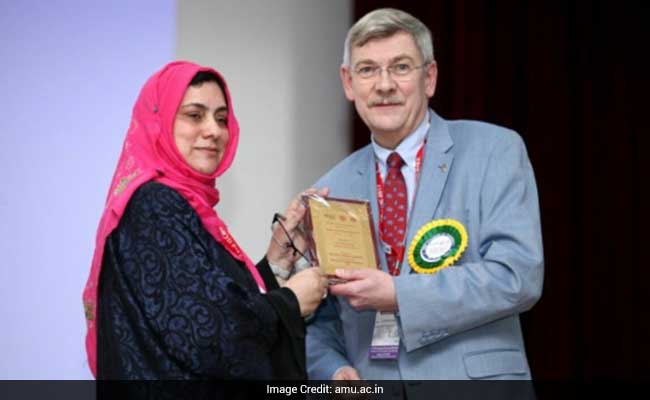
Aligarh Muslim University academic, Professor Farukh Arjmand associated with the University’s Department of Chemistry has been conferred with the ‘Distinguished Women Scientists Award 2016’ by the Indian Society of Chemist and Biologist. Prof Arjmand received the award during the 23rd ISCB International Conference (ISCBC-2017) Interface of Chemical Biology in Drug Research held at Chennai, said a press release from the university.

After receiving the award, Prof Arjmand also delivered a lecture on ‘De novo tailored design of new metal-based drugs or drug precursors for antitumor chemotherapy: Structure elucidation by Single X -ray crystallography and their in vitro binding and cytotoxicity profile.’ Her award lecture was chaired by Prof Erick V Vander Eycken, a highly renowned Chemistry academician from Belgium.

Prof Arjmand has an experience of 25 years in the research of medicinal inorganic chemistry. She has visited many countries, including China, USA and Thailand for her academic research pursuits.

She has guided 14 PhDs and presently six students are pursuing PhD under her supervision.

Prof Arjmand has also completed several research projects awarded by DBT (Government of India), CSIR and UGC, New Delhi and TWAS, Italy. She has published 120 research papers in peer reviewed journals of international repute in the area of ‘Design of new metal-based antitumor drug entities.’

Several distinguished speakers presented their work in ISCB conferences including Prof. Robert H Grubbs, Nobel Laureate (California Institute of Technology, Pasadena, USA) who delivered a keynote lecture on the olefin metathesis reaction.

ISCB has also instituted ISCB AWARD FOR EXCELLENCE and ISCB YOUNG SCIENTIST AWARD and other awards to recognize scientific excellence in the area of Chemical Sciences, Biological Sciences and Drug Research.

source: http://www.ndtv.com / NDTV.com / Home> Education / by Shihabudeen Kunju S / February 19th, 2017

AMP’s 3rd National Awards For Social Excellence 2023 Honours Changemakers And NGOs

Mumbai, MAHARASHTRA:

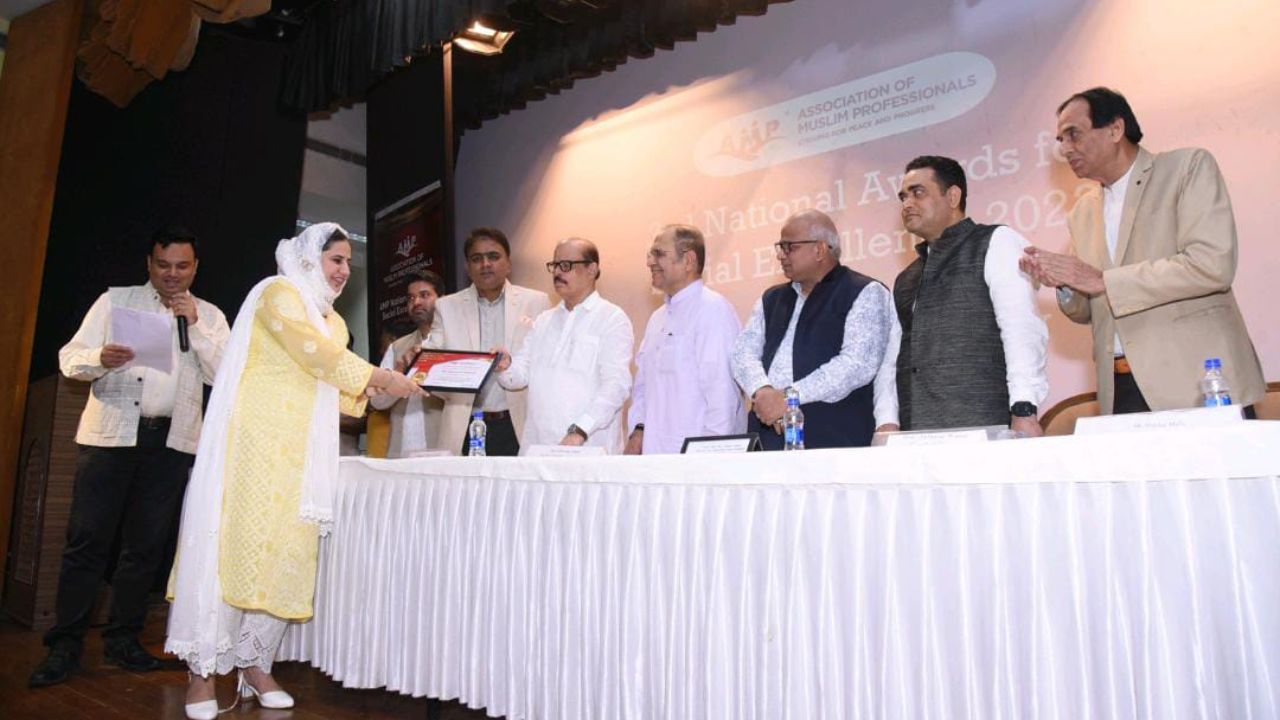
The winners of the 3rd AMP National Awards for Social Excellence 2023 was announced during an esteemed gathering at the Hakeem Abdul Hameed Auditorium, Jamia Hamdard, New Delhi. The occasion, aligned with India’s Independence Day, saw the commendation of 86 National and State-level NGOs and 100 inspiring Changemakers. The event also included the bestowal of the Lifetime Achievement Award and the Omar Khatani Special Award.

Association of Muslim Professionals (AMP) is an organisation of volunteer Muslim professionals, who are working towards the socio-economic empowerment and development of Muslims in India. Started in 2007 by Aamir Edresy, AMP is present in more than 100 Cities of India and as many as 16 countries globally.

The highlight of the event was the posthumous presentation of the Lifetime Achievement Award to the Late Zaheeruddin Ali Khan, the renowned journalist, and Managing Editor of The Siasat Daily. Acknowledging his profound contributions to the welfare of the people, particularly in the States of Andhra Pradesh and Telangana, the award recognized his legacy in shaping societal progress.

The Omar Khatani Special Award was bestowed upon the Business & Employment Bureau (BEB) of Jamia Hamdard, a commendation of their exceptional dedication towards creating positive impacts in the community.

Shri Tariq Anwar, Former Minister of State for Agriculture & Food Processing, Government of India, graced the event as the Chief Guest. Speaking highly of AMP’s work in education and empowerment, he emphasized the transformative role that NGOs could play in society with concerted efforts.

Prof. Akhtarul Wasey, Former President of Maulana Azad University, Jodhpur, and Guest of Honor, hailed AMP’s work as instrumental in fostering societal development. He praised the organization’s ability to transform the culture of criticism to one of service.

Aamir Edresy, President of AMP, delivered the Keynote Address, highlighting AMP’s commitment to collaboration and the impactful work carried out alongside various organizations. He underscored the importance of acknowledging and motivating the endeavors of these entities.

Dr. Shahid Akhtar, Professor at Jamia Millia Islamia and Member of the National Commission for Minority Educational Institutions (NCMEI), Government of India, recognized AMP’s efforts in encouraging and rewarding organizations and individuals for their contributions. He expressed the intent to collaborate further to guide minority institutions in benefiting from governmental education policies.

Farooq Siddiqui, AMP NGO Connect Project Head, hosted the event skillfully and revealed the awardees across diverse categories, emphasizing the significant reach and partnerships established through AMP’s initiatives.

Prof. Mohammad Afshar Alam, Vice Chancellor of Jamia Hamdard, welcomed guests and participants, while Shaukat Mufti, Executive Secretary of Business & Employment Bureau (BEB), Jamia Hamdard, conveyed gratitude on behalf of the event organizers.

The distinguished 9-member jury, including A. R. Khan, IAS (R), U. Nisar Ahmed, IPS (R), and Prof. Rihan Suri (JMI), meticulously selected the awardees from an array of accomplished nominees.

In the category of NGOs, Hamdard National Foundation – HECA, Business & Employment Bureau (BEB), Ajmal Foundation, Manappat Foundation, Miles to Smiles Foundation, Payam e Insaniyat Foundation, and Masjid One Movement were notably recognized. In the Changemaker category, the notable names included Shams Ur Rehman Alavi, Firdouse Qutb Wani, Aqueel Khan, Dr. Faruk G Patel, Asad Ashraf, Dr. Sana Ali Khan, Faiqa Saulat Khan, and Mohammad Anas.

The AMP’s 3rd National Awards for Social Excellence 2023 ceremony celebrated the trailblazers and organizations that are driving positive change in society, leaving an indelible mark on the nation’s social fabric.

source: http://www.thecognate.com / The Cognate / Home> News / by The Cognate News Desk / August 17th, 2023

Arwi, the Arabic-influenced dialect of Tamil, struggles for survival in India

INDIA:

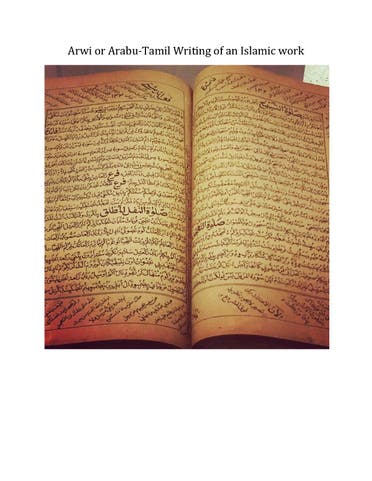
Arwi is the link language that was born by integrating Tamil and Arabic scripts used by Tamil Muslims when Islam entered south India. (Supplied)

Apart from harboring 780 languages, India is also home to a large number of scripts which have been lost while some are on the brink of extinction.

One of the many almost forgotten ones is called Arabu-Tamil, also Arwi, the link language that was born by integrating Tamil and Arabic scripts used by Tamil Muslims when Islam entered south India.

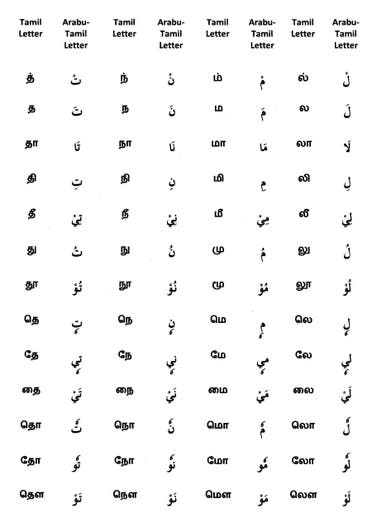
Evolved as a result of the interactions between Arabs and Tamils in medieval times, Arwi or Arabu-Tamil is an Arabic influenced dialect of Tamil written with an extension of the Arabic alphabet with extensive lexical and phonetic influences from Arabic.

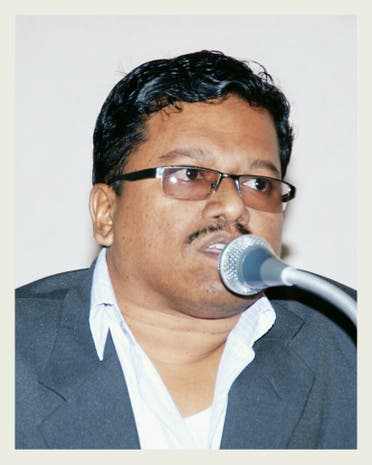
A call to revive the language is getting vocal. Dr. K.M.A. Ahamed Zubair, assistant professor of Arabic, the New College, Chennai, who has done research on Tamil Muslims, their societies, cultures and development, is one of those calling for the revival of Arabu-Tamil.

There have been calls to make Arabu-Tamil books part of school curriculum. (Supplied)

Advent of globalization

Talking to Al Arabiya English, Zubair, who has also penned 16 books and edits two journals, says, “With the advent of globalization, languages like Arabu-Tamil have become endangered. In order to contain their further decline we need to take several measures.”

Listing out the suggestions for reviving Arabu-Tamil, Zubair said that language is significant for determining one’s culture.

“All the Arabu-Tamil language books available should be collected and re-printed. Unpublished manuscripts should also be collected and printed. Besides, the Arabu-Tamil language should be made compulsory in all the Madrasas of Tamil Nadu and also Sri Lanka where the language was extensively used in the bygone days,” he says.

According to him, Arabu-Tamil books must be taught to children attending schools as part of school curriculum. “The Arabu-Tamil community must be encouraged to use it in their daily lives. Periodicals and magazines using this language should be re-introduced,” he said.

Dr. K.M.A. Ahamed Zubair who has done research on Tamil Muslims is calling for the revival of Arabu-Tamil. (Supplied)

A cultural synthesis

Describing the evolution of the language, Ahamed Zubair stated, in a paper published some years ago, “The visiting Arab Muslim Traders and the native Tamil converts to Islam in Tamil Nadu state of India and Sri Lanka came into closer contact as a result of their commercial activities. They were bound by a common religion, but separated by two different languages”.

Zubair said that they felt the need for a link-language and Arabu-Tamil served as a medium of transformation of the Muslim Tamil society of Tamil Nadu and Sri Lanka in their daily lives to write many religious, literary and poetry texts for communication.

“The Arabu-Tamil script represents the Tamil language (having left-to-right script) using an Arabic style of script (having right-to-left script). The Arwi or Arabu-Tamil script was widely used by the Muslim Tamils of Asia for their day-to-day communication,” he said.

The paper further states that from 8th to the 19th century, this language enjoyed its popularity among Tamil speaking Muslims of Tamil Nadu and Ceylon (old name for Sri Lanka).

The extinct of Arabu-Tamil language, which once safeguarded the interest of the community, is a big loss to the Tamil Muslim community as this was their religious language. (Supplied)

Muslims of Ceylon

“It continues to enjoy the same popularity with the Muslims of Ceylon even today. The Tamil speaking Muslims of Ceylon consider this Arabu-Tamil literature as their most beloved literature,” it says.

However, after the 19th century, the language began to lose its popularity primarily because of its old style and colloquial expression. “As a spoken language it is now about to be extinct, though a few Madrasas still teach the basics of the language as part of their curricula,” the paper says.

It is said that the origin of Arabu-Tamil literature may be traced to Kayalpatnam, Melapalayam and other important towns of Tirunelveli district in Tamil Nadu. According to Zubair, the Arabu-Tamil language and literature provided a kind of platform to learn Islamic teachings.

Arabu-Tamil language and literature provided a kind of platform to learn Islamic teachings. (Supplied)

Ghazzali translations

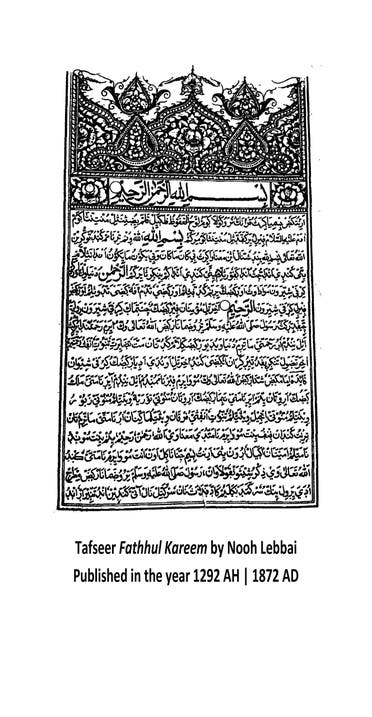
Works of noted Islamic scholars such as al-Ghazzali were translated into Arabu-Tamil by Sayyid Muhammed Alim Pulavar apart from a number of translations of Friday sermons in Arwi. A commentary of Holy Quran by a Tamil scholar Shaykh Mustafa Wali (1836-1887) was written in Arabu-Tamil language.

At present, there are more than 40 universities in India where Arabic is being taught, in addition to colleges. These Arabic departments can do further research on the Arabu-Tamil language. The extinct of Arabu-Tamil language, which once safeguarded the interest of the community, is a big loss to the Tamil Muslim community as this was their religious language.

“With measures which I have listed we may again witness the period of renaissance in Arabu-Tamil language and literature in the years to come. Its revival and renaissance is badly required,” says Zubair.

source: http://www.english.alarabiya.net / Al Arbiya News / Home> Features / by Aftab Husain Kola / September 07th, 2018

Tracing the Roots of a Rampur Winter Specialty

Rampur, UTTAR PRADESH:

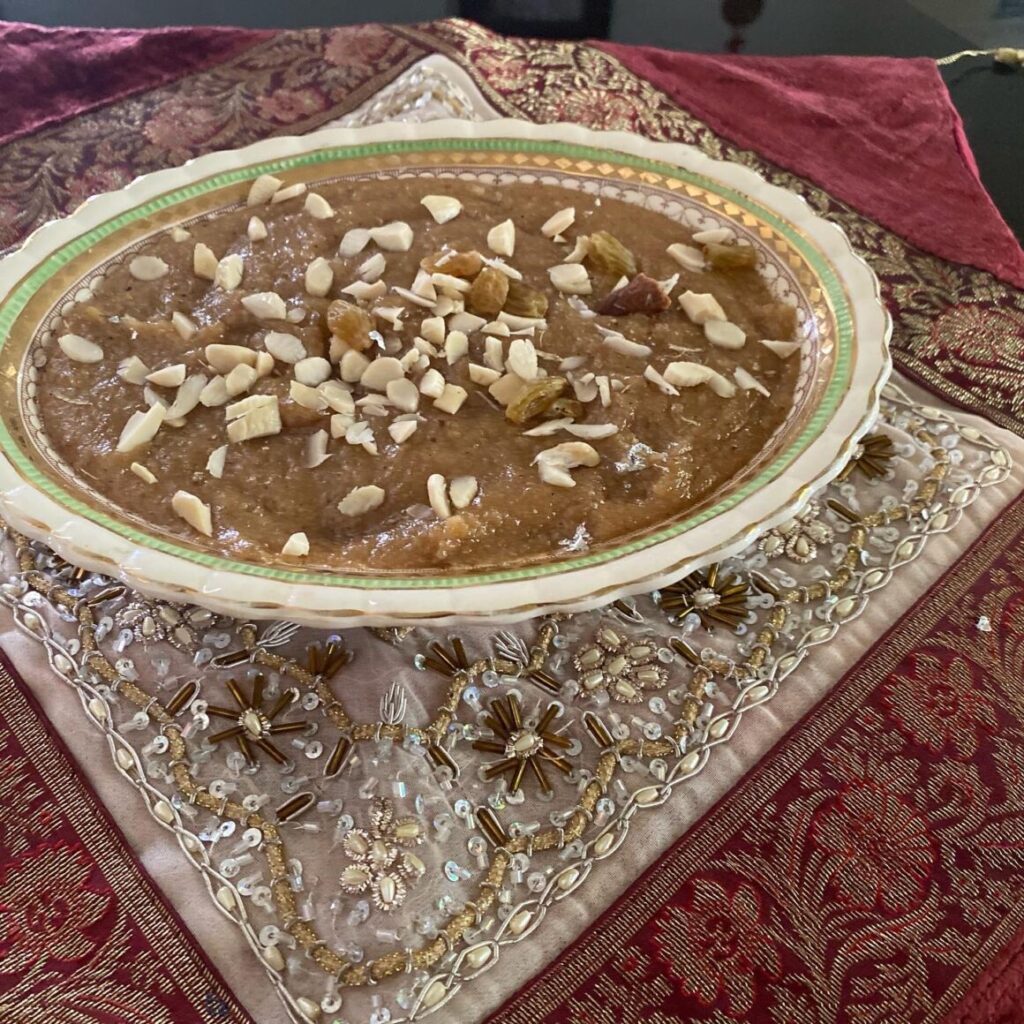
RAMPURI ADRAK HALWA COOKED ACCORDING TO A RECIPE BY MUNEEZA SHAMSIE. PHOTO BY TARANA HUSAIN KHAN.

Was the adrak halwa truly created for an ailing Nawab? Determined to find the origins of the halwa, food researcher Tarana Khan looks for clues in Rampur’s libraries, kitchens and at a local halwa festival.

We needed to cook adrak halwa urgently before publishing it in our series on forgotten foods for Scroll.in. Pakistani writer Muneeza Shamsie had inherited the sweetmeat recipe from her parents’ cooking diary, and added it to an article on her family’s gastronomic journey from Rampur to Karachi. The recipe required three straight hours of cooking. But since there was a shortage of gas supply in her country, I—as the curator of the series—gallantly stepped in. My old cook Akhtar bhai and I could take turns to stir and sauté the halwa. I was curious about the roots of adrak halwa,a specialty of my hometown Rampur.

Muneeza’s mother, Jahanara Habibullah, was the sister-in-law of Nawab Raza Ali Khan (ruled 1930-1949), and had experienced the best culinary traditions of the famed Rampur royal dastarkhwan. She had written in detail about the cuisine in her memoir, Remembrance of Days Past: Glimpses of a Princely State During the Raj. Their household in Karachi had two Rampur khansamas (male chefs), Sabir and Amjad, who had transported Rampur’s culinary traditions to Pakistan. The recipe for adrak halwa was adapted by Muneeza’s gourmand father, Isha’at Habibullah, from the cooking techniques of the two khansamas.

But adrak halwa no longer appears at our dining table during winter. The image of adrak halwa being cooked for my grandfather and set in a silver bowl from which Nana Abba took a spoonful on cold winter mornings is probably a family memory that predates my childhood. In fact, I don’t remember ever eating it as a child.

Culinary wisdom—which I must have accessed through collective memory—dictated that October, the month of tender ginger shoots, was the best time to cook the halwa. Muneeza’s recipe called for an elaborate list of ingredients, and a painstaking procedure which began with soaking the shoots overnight, and grinding it thrice on the sil-batta with some milk.

I conserved manpower, aka Akhtar bhai, for sauteing while I used the mixer grinder. The ginger paste needed to first be put through a sieve to remove the fibres, and then cooked in milk, ghee, and cream till it was thick enough to drop from a spoon. The real work began when we added sugar, and sautéd it to a deep golden hue. It took an hour of vigorous stirring for the ghee to separate from the halwa, and form a thick glistening layer. I unscrupulously drained it by half.

I tested the halwa on my unsuspecting cousin and his non-Rampuri wife. The wife curled her lips, and said she’d never had a more obnoxious sweet dish. My cousin asked for a second helping. I loved the halwa, but it had a sharp, spicy and gingery aftertaste that clung to the back of my throat. My husband said it tasted like hakim’s majoun (medical concoction), and that I should have sautéed it more; he remembered a darker adrak halwa being cooked in his ancestral home. I gritted my teeth, smiled, and told him to join us in sauteing the next time we prepared the halwa.

Muneeza’s recipe called for an elaborate list of ingredients, and a painstaking procedure which began with soaking the shoots overnight, and grinding it thrice on the sil-batta with some milk.

His comment also amused me, though. Citing a blanket oral history, several articles and food blogs mention that the halwa was devised by the Rampur khansamas when a Nawab was advised by his hakim to eat ginger for knee pain. The Nawab, who hated ginger, was surreptitiously fed the halwa, and grew fond of it. Always a curious food researcher, I decided to dig deeper.

Was it created for an ailing Nawab in the huge Rampur kitchens, or was it an organic amalgamation of multiple cuisines of that period? Culinary exchanges were the norm of the time, and the Rampur cuisine had acquired several dishes and modified their Pathan cuisine under the influence of the Mughal and Awadhi cuisines. Working on a research project centred around culinary memory and lost heritage varieties, I had been translating nineteenth century cookbook manuscripts preserved in the Rampur Raza Library. I turned to these to find the origins of the halwa.

Digging in libraries and kitchens

Known to be culinary connoisseurs, Rampur Nawabs used their elaborate dining tables as a facet of diplomacy. Persian cookbook manuscripts were collected and commissioned by the Nawabs as we collect recipe books—a frame of reference and a guide for culinary transformation. Some of the Persian cookbook manuscripts at the Raza Library are copies of original Mughal or Awadhi cookbooks; a few were commissioned by the Nawabs as reference books of sorts.

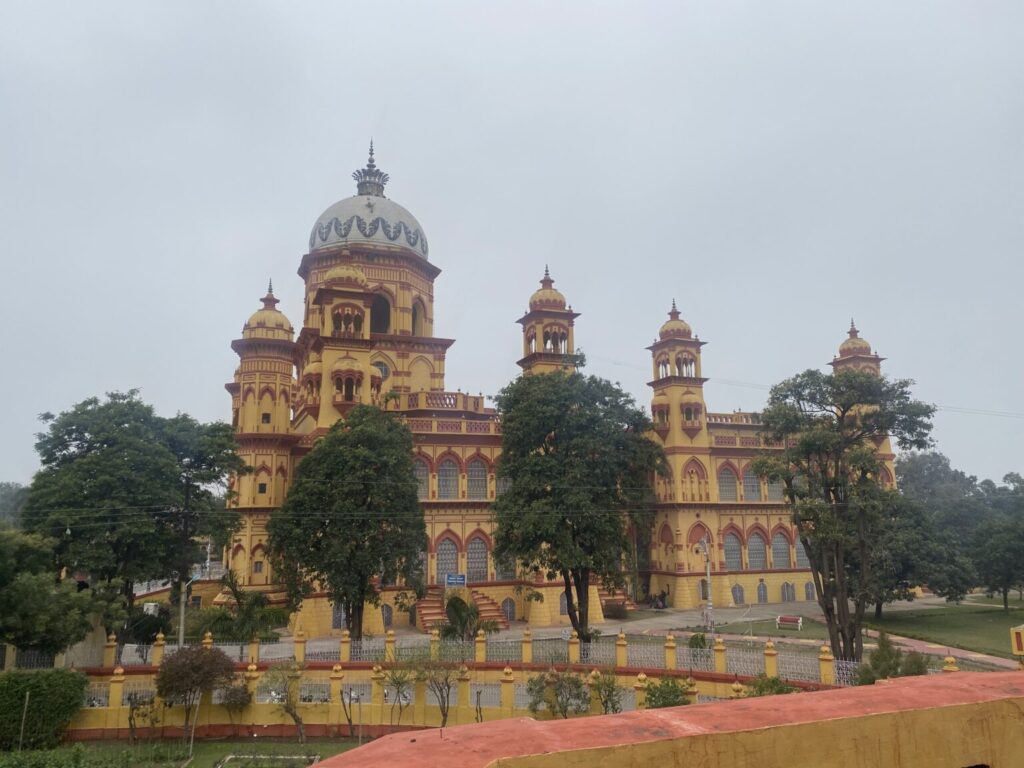
THE RAMPUR RAZA LIBRARY (THE BUILDING IN RED AND YELLOW) WHICH IS HOME TO VALUABLE MANUSCRIPTS, MINIATURE PAINTINGS, ASTRONOMICAL INSTRUMENTS, AND RARE ILLUSTRATED WORKS IN ARABIC AND PERSIAN LANGUAGES, BESIDES 60,000 PRINTED BOOKS. PHOTO BY TARANA HUSAIN KHAN.

One slim volume, Nuskha hai ta’am (Food Recipes), identifies Nawab Kalbe Ali Khan (ruled 1865-1887) as its author. It begins rather unconventionally, with recipes of 11 halwas, most of them variations of the iconic sohan halwa. Adrak halwa doesn’t find a mention in this manual of Rampur cuisine. Another cookbook, Risala dar tarkeeb ta’am (Compilation of Recipes), written under the patronage of Khansaheb Muhammad Shah Khan of Nankar—possibly a nobleman from Rampur tehsil of Nankar—was collected in 1816. This also doesn’t mention the adrak halwa in its repertoire of Mughal and Awadh-inspired dishes. These two volumes are the only ones written under the patronage of Rampur aristocracy.

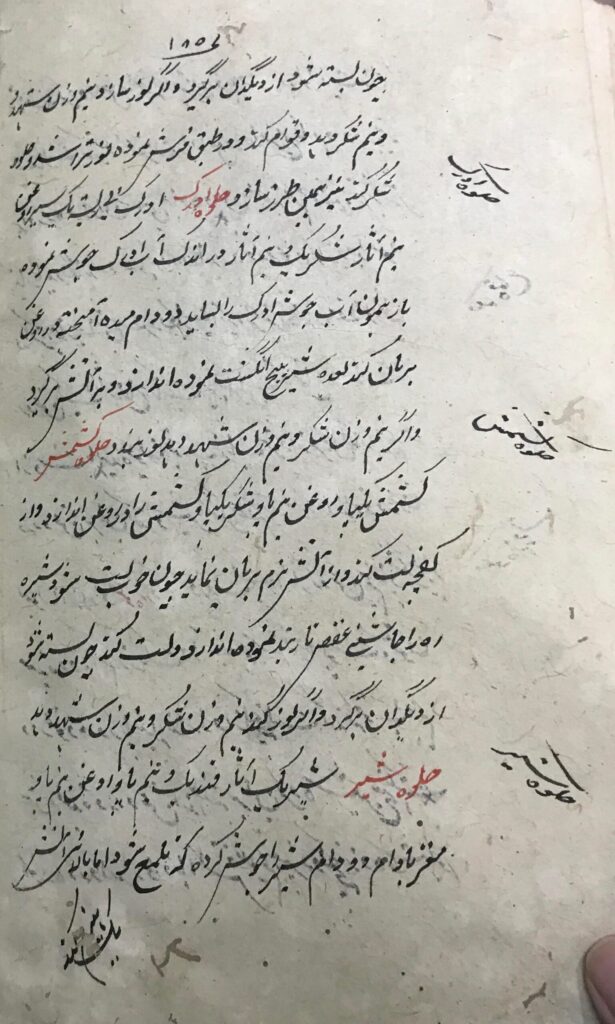
However, two other volumes—the Risala dar tarkeeb ta’am and Khwaan e Neymat (The Receptacle of Divine Bounty)—contain recipes similar to adrak halwa. It calls for just three ingredients: ginger, sugar and ghee. No milk, cream, spices, and aromatics are prescribed. Published in 1876, Alwaan e Neymat (The Highest Divine Bounty), an Urdu cookbook by Munshi Bulaqi Das Dehlvi, has a similar recipe too.

Interestingly, all the three recipes call for blanching adrak before it is ground to reduce the spicy aftertaste. Adrak halwa was therefore definitely cooked in the nineteenth century in Mughal cuisine. Haft Khwan Shaukat, the oldest surviving cookbook printed in Rampur which ran three editions (1873,1881 and 1883), also doesn’t include the adrak halwa.

I next looked through Shahi Dastarkhwaan—a Rampur cuisine cookbook written by a Rampuri khansama and published in 1957—with several dishes from Rampur cuisine of that time. Latafat Ali Khan Rampuri, the author of Shahi Dastarkhwaan (Royal Dining), describes an elaborate adrak halwa recipe with the list of ingredients corresponding to Muneeza’s heirloom recipe—milk, cream, spices and aromatics along with the basic three ingredients. As in Muneeza’s recipe, no blanching is involved. Rather, the ground ginger is to be boiled in milk. Ali Khan ends with the important line: “Ye halwa Rampur ki tarz par banane ki tarkeeb hai, ummeed hai ki pasand farmaya jayega.” (This halwa is prepared by the special Rampur recipe, I hope you like it.)

RECIPE OF ADRAK HALWA IN MANUSCRIPT ‘KHWĀN E NEYMAT’ (THE RECEPTACLE OF DIVINE BOUNTY) AT THE RAMPUR RAZA LIBRARY. PHOTO BY RAMPUR RAZA LIBRARY.

At some point in Rampur’s culinary history, the adrak halwa evolved—in the hands of the Rampuri khansamas—into an exquisite sweetmeat with a differentiated procedure and sumptuous ingredients. Today, it is rarely cooked in Rampur households, possibly due to the time and effort involved. Most Rampuris buy adrak halwa from Amanat Bhai’s shop, renowned for its halwa sohan. So that’s where my quest took me next: the kitchen workshop above the famous Amanat Bhai ki Laal Dukan.

Amanat Khan set up shop in the 1930s outside the Rampur fort, and became known for supplying halwa sohan, boondi ladoos and other sweets to Nawab Sayed Raza Ali Khan (ruled 1930-1949), his son Nawab Sayed Murataza Ali Khan as well as for other members of the royal family. The shop is now looked after by Amanat bhai’s grandson, Haris Raza, who inherited the business and recipes from his father.

Haris measured out samnak (wheat germ flour) and semolina, mixed it in milk, and cooked it in a large kadhai; he added ginger paste when the mixture became brownish. This was a completely different recipe for adrak halwa. Samnak is the base for Rampuri halwa sohan, and is never used in adrak halwa. Amanat bhai’s adrak halwa—which is fabulous, with only a slight gingery tang—is a variation of halwa sohan adapted for popular taste.

Most Rampuris buy adrak halwa from Amanat Bhai’s shop, renowned for its halwa sohan. So that’s where my quest took me next: the kitchen workshop above the famous Amanat Bhai ki Laal Dukan.

As the stars of my halwa journey aligned, the district administration of Rampur, in collaboration with the Women’s Welfare Department, decided to organise a halwa festival in October 2021. All the khansamas and women chefs of Rampur—who had started home catering during the covid-19 pandemic—were invited to participate in Zaika-e-Rampur, a halwa-tasting festival. The ingenuity of Rampur khansamas was on full display at the festival. There were several weird and fabulous halwas we tasted that day, including neem halwa, meat halwa, turmeric halwa, and dates halwa.

I had already been working with some khansamas to revive the heirloom dishes of the Rampuri cuisine through our project, ‘Forgotten Foods: Culinary memories and Lost Agricultural Varieties in India’ under the lead of University of Sheffield. The series on Scroll.in was a part of this project. As a social impact effort, we sponsored chef Suroor and Bhura khansama—both local chefs of Rampur—in setting up their stall at Zaika-e-Rampur.

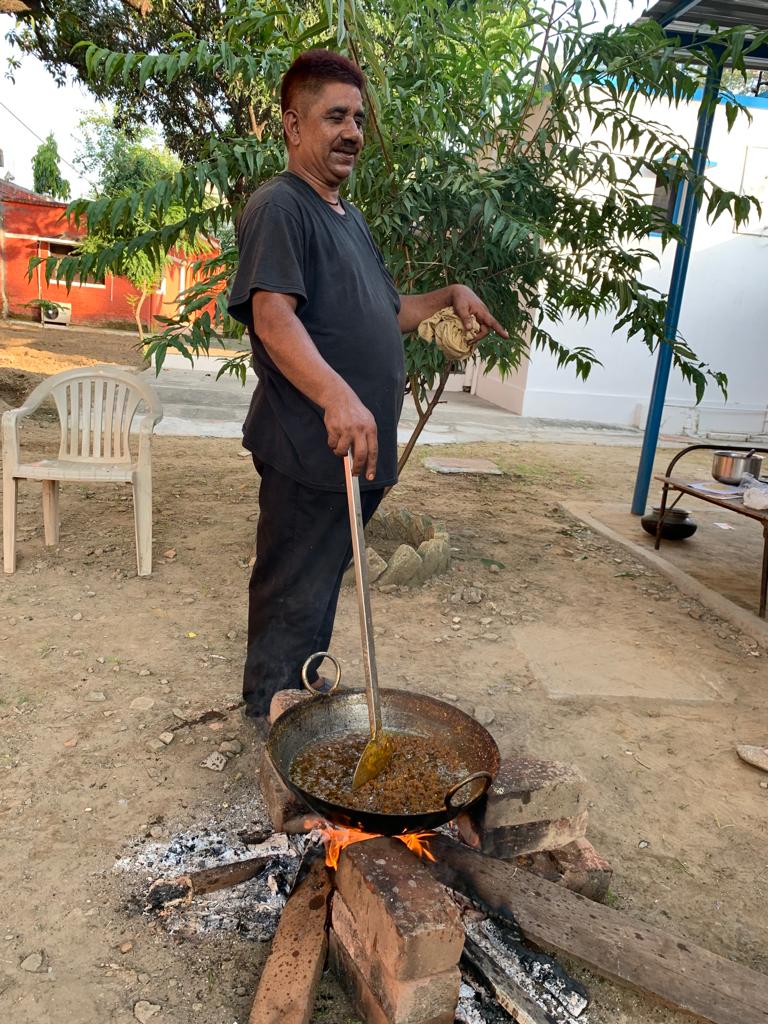
HAJI BHURA KHANSAMA PREPARING ADRAK HALWA. PHOTO BY TARANA HUSAIN KHAN

Since my halwa of interest was adrak, I watched Bhura bhai closely as he fashioned a rustic wood chulha, set a large degh on it, and prepared the ginger paste. I was in for a surprise when he fried the ginger paste in ghee for a few minutes, and then cooked it in milk. The frying mellows the aftertaste, he told me. There was no blanching, or boiling in milk. Even the dry fruits for garnish were fried, and added to the halwa.

This was the fourth recipe I had come across, indicative of the circuitous transformations that adrak halwa had undergone through the centuries. Interestingly, the other Rampur khansamas like Mehfooz khansama, who owns a popular restaurant in the city, use the same procedure as Bhura bhai. Some others add jaggery and honey instead of sugar.

I have tasted at least seven variations of adrak halwa through my research, and can say with some authority that the oral history of the Nawab with knee pain cannot be corroborated. Adrak halwa in Rampur—at some point at the beginning of the twentieth century—took on an elaborate form quite different from the Mughal-Awadh style. The people of Rampur made it a part of their winter halwas—one they ate with gusto to combat the cold and heal stiff joints—until it seeped into culinary memories and almost-forgotten manuscripts.

————-

Dr. Tarana Husain Khan is a writer and food historian based in Rampur. Her articles on Rampur cuisine, culture and oral history have appeared in Eaten Magazine, Al Jazeera, Scroll, The Wire, Open Magazine and DailyO. Her book on Rampur cuisine, ‘Rampuri Cuisine: Food History, Memories and Recipes’, will be published by Penguin India in 2022. She is currently working on a Global Challenges Research Fund and Arts and Humanities Research Council funded research project, ‘Forgotten Food: Culinary Memory, Local Heritage and Lost Agricultural Varieties in India’. She also curated the Forgotten Foods series of articles on Scroll for the project and is currently co-editing an anthology ‘Forgotten Foods: a Culinary Journey Through Muslim South Asia’.

source: http://www.thelocavore.in / The Locavore / Home> Culture / by Dr Tarana Hussain Khan / July 12th, 2022