The results of the 2nd PU exams in Karnataka were announced on April 21.
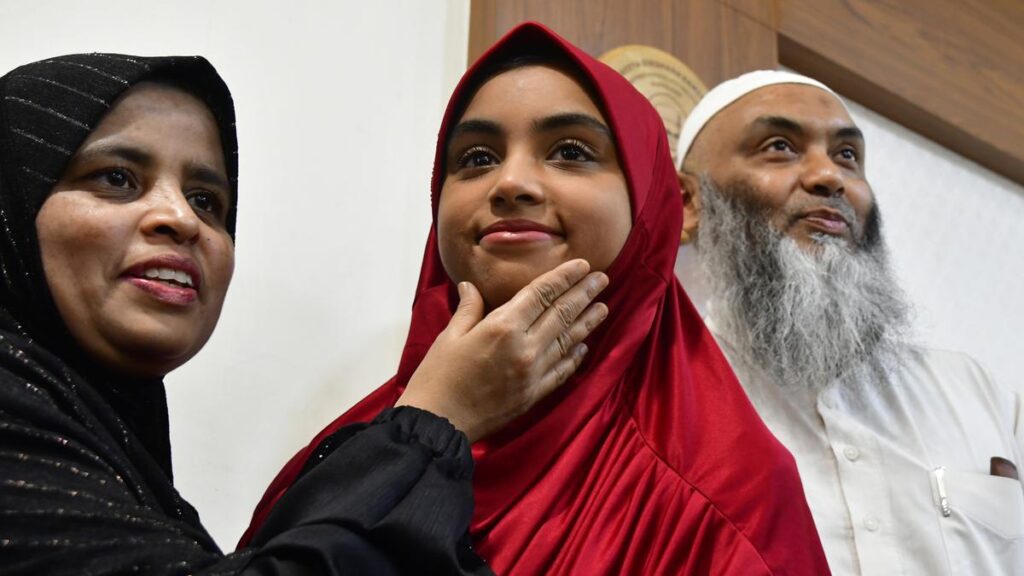
Tabassum Sheikh, 2nd year PU arts topper with her parents Abdul Khaum Sheikh and Parveen Modi, after the results of 2nd PU exams in Karnataka were announced, in Bengaluru on April 21, 2023. Tabassum is a student of NMKRV PU College for Women, Jayanagar. | Photo Credit: Murali Kumar K
The results of the 2nd PU exams in Karnataka were announced on April 21 by Ritish Kumar Singh, Principal Secretary in the Department of School Education and Literacy, and Ramachandran, Chairman of Karnataka School Examination and Assessment Board.
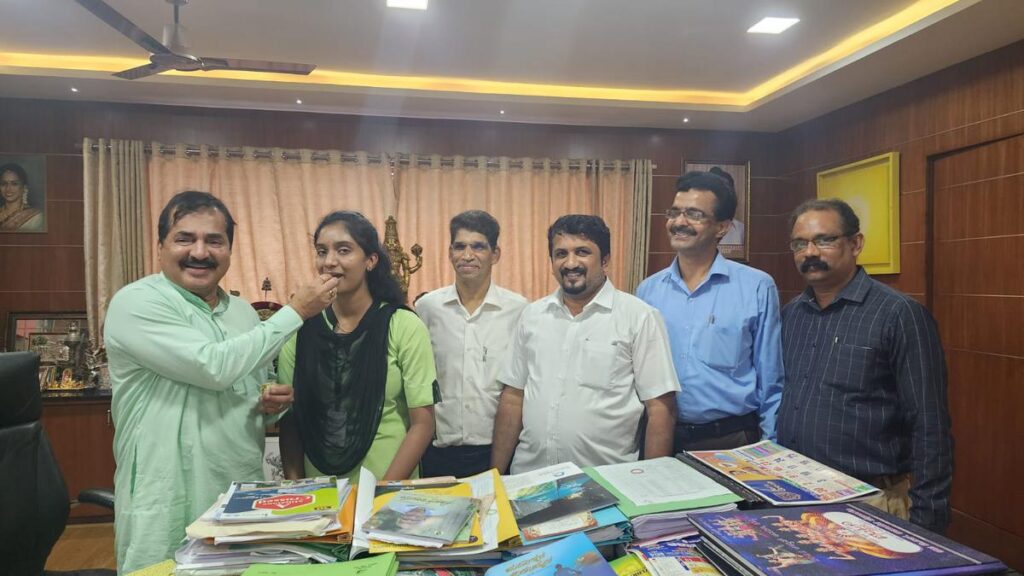
M. Mohan Alva, chairman, Alva’s Education Foundation, Moodbidri offering sweets to Ananya K.A., who topped the commerce stream in the second PU exams in Karnataka. The results were announced on April 21, 2023.
Ananya K.A. , commerce student, Alva’s PU college, Moodabidri is the topper in Karnataka scoring 600 marks out of 600. She hails from Kushalnagar in Kodagu district. She joined Alva’s PU College under the institution’s scholarship scheme
In the arts steam, Tabassum Sheikh, NMKRV PU College, Bengaluru is the topper with 593/600 marks.
S.M. Koushik from Gangothri PU college, Srinivaspura, Kolar district, and Surabhi S. from R.V. PU college, NMKRV campus, Bengaluru are the toppers in the science stream with 596 marks for 600.
How PU students performed as compared to last year
At 74.67%, the pass percentage in the II PU exams shot up by 12% from the previous year.
Of the 7,02,067 students who appeared for the exams, 5,24,209 have cleared them. A total of 4,79,746 (78.97%) regular students, 33,833 (48.42%) repeaters and 10,630 (43.02%) private candidates passed.
The pass percentage in the arts stream (1,34,876 students) was 61.22%, in commerce (1,82,246 students) was 75.89%, and in science (2,07,087 students) was 85.71%.
This year too, the pass percentage of girls is higher than boys — 2,82,602 girls (80.25%) passed against 2,41,607 (69.05%) boys. The performance of rural students was better than those in the urban areas — 1,19,860 (74.79%) rural students passed against 4,04,349 (74.63%) urban.
A total of 1,09,509 students got distinction (above 85%), 2,47,315 students got first class (60% to 85%), 90,014 students got second class (50% to 60%) and 77,371 students secured more than the minimum marks to pass (35% to 50%).
source: http://www.thehindu.com / The Hindu / Home> News> India> Karnataka / by The Hindu Bureau (headline edited) / April 21st, 2023
As the results of II PU were announced, the department has released the list of students who became the toppers in the district.
In arts stream, Hanumanth, Swami Vivekananda PU College in Gurmitkal, secured 577 marks with 96.17%, Maheboob Shaikh Sahir from commerce stream, who is studying in Don Bosco PU College Yadgir, secured 560 marks with 93.33%, while Prajna B.M. from science stream, who is studying in Sairam PU College Shahapur, has secured 588 marks with 98%.
The other toppers in arts stream are: Amaresh secured 575 marks (95.83%), Chaitanya 575 marks (95.83%), Arunkumar 569 marks (94.83%), and Nagamma 569 marks (94.83%).
In commerce stream: Ishwarya secured 547 marks (91.16%) and Nagaraj secured 546 marks (91%).
In science stream: Abhishek secured 588 marks (98%), Savitri 580 marks (96.66%), Akash 580 marks (96.66%), Shruti secured 580 (96.66%), and Surendra secured 577 marks (96.16%), respectively.
source: http://www.thehindu.com / The Hindu / Home> News> India> Karnataka / by The Hindu Bureau / April 22nd, 2023
Syed Abdul Rahim and Ajay Devgn in the poster of Maidaan
In an era of Indians recognizing their unsung heroes and reviving their memories, a biopic on Syed Abdul Rahim, India’s most successful football coach, is all set to be released on June 23.
The teaser of the film Maidaan featuring Ajay Devgn as the legendary coach of the Indian national football team was released by Zee Films recently. It has already crossed 35 million views of YouTube in five days.
Under Syed Abdul Rahim’s guidance, the Indian team was rated as one of the most powerful teams in the sport, and the period – 1952-1962 turned out to be the golden period of Indian football.
The teaser opens with the resounding music of A R Rahman and the powerful image of the Indians playing Yugoslavia (a country now spilt into Bosnia and Herzegovina, Croatia, Macedonia, Montenegro, and Serbia) in heavy rain.
It seems the bare-footed Indians lost the match against Yugoslavia as Rahim (Ajay Devgn) is shown in tears in the teaser. The film is produced by Bonny Kapoor.
According to reports, from his early days, this Hyderabad-born Rahim spotted talented boys on the football fields of Hyderabad and trained them to cobble up an Indian team.
With him as the coach of the national team, India finished fourth in the Melbourne Olympics and won the gold medal in the Asian Games of 1962 beating Japan and Korea.
Although Rahim is credited for ushering in the Golden Era of Indian football, he passed away unsung. He was never conferred with any award and many say he was too focused on coaching and never mingled with leaders or influencers to get noticed by them.
Maidaan’s teaser is a 90-second clip that tells the story of a fight against the odds by Rahim and his Indian team. The trailer opens with monochrome shots from the 1952 Summer Olympics held in Helsinki (Finland). India fared badly on that occasion and lost 10-1 to Yugoslavia in the preliminary round.
The resounding defeat did not discourage Rahim; instead, it brought out his fighting spirit.
He studied the training methods used by the European teams. Rahim studied their training and tactics and then modified the same to suit Indian conditions. He realized that Indian players had less physical stamina and there was no point copying the European methodology.
Rahim adapted the European ways to suit the Indians and it worked wonders. It must have taken Rahim’s meticulous planning and precision in training the Indians that helped the team perform great in the next Olympic Games in 1956 when India defeated Australia
On 1st December 1956, India stunned the world with the team’s excellent performance and defeating host Australia 4-2. Ace striker Neville D’Souza scored a hat trick and Krishnaswamy scored one goal.
This match is an abiding memory of the glorious era of Indian football.
Today, Indian football fans are disappointed to see Australia plays in the final phase of the FIFA World Cup while India has dropped to the bottom. Indian team employs expensive foreign coaches and support staff but the results are not commensurate with the efforts and expenses.
Sources said the filmmakers had consulted the Football legend’s son S.S. Hakim who died in 2021. Hakim was an Air Force officer who had played in the Olympics and was a highly qualified coach and referee too.
In the film, Ajay Devgn speaks the Hyderabadi (Deccani) version of Urdu. After many delays due to the pandemic and other reasons, the film is scheduled for a theatrical release on 23rd June 2023.
source: http://www.awazthevoice.in / Awaz, The Voice / Home> Story / by ATV, posted by Aasha Khosa / April 15th, 2023
Nauman Akram and his welfare group have chosen hospitals and passenger terminals to extend help by offering food, water and juices as a moral responsibility to those fasting.
Iftar food bag given to fasting relatives of a patient at a hospital in Raipur. (Photo | Express)
Raipur :
During the ongoing sacred month of Ramadan, when Muslims engage in observing fast, a former well-known hockey player devotes his time with his small team of youths to reach out to those who keep fast staying in hospitals while enduring challenging or difficult situations and provide them with Sehri (before sunrise meal) and Iftar (after sunset food) daily.
Nauman Akram’s Raipur-based welfare group believes that a large segment of the Muslim population may not be blessed with enough food and provision since they usually have little except to work hard to make ends meet during Ramadan.
Akram, also a former national hockey umpire, has chosen hospitals and passenger terminals to extend help by offering food, water and juices as a moral responsibility to the fasting people who are away from their homes and essentially need the support that brings them some solace during the pious month.
“We visit big hospitals like Raipur AIIMS, Dr Bhimrao Ambedkar hospitals among others to distribute small food bags among the patients and their fasting families. We also interact with Muslim travellers. The food packets are prepared by us daily. The distressed relatives of patients or the travellers in buses or elsewhere are already in demanding situations. So, any small support raises their morale and brings them some comfort”, he said.
Akram also solicits assistance from various Muslim groups through social media to lend a helping hand for his noble task. “Sehri particularly remains much in demand as finding the food post-midnight is really a major problem for the fasting people in hospitals or any passenger. So we prepare and distribute it by 3 am”, he added.
The menu of Sehri usually comprised chapatis, egg curry or bhurji, biryani and fruits. Similarly, iftar food contains dates, fruits, samosa, baked items and juices among others. Religious scholars have appreciated the service citing that the month of Ramadan is also about compassion for others, caring for the needy and sharing with empathy.
source: http://www.newindianexpress.com / The New Indian Express / Home> Good News / by Ejaz Kaiser / Express News Service / April 11th, 2023
Guru Dutt’s masterpiece ‘Pyaasa’ (1957), just before its soulful dirge on relationships, shows two poets reciting ‘shers’.
The elder one later also politely reprimands a guest for his snide remark at the “servant” (Dutt), who had begun humming “Jaane woh kaise log the..”, declaring: “Mian, shayri koi daulat-mando ke jagir thodi hai”. Though unnamed, his appearance, sher, and comment were enough to identify him.
Urdu Poetry and Social Reach
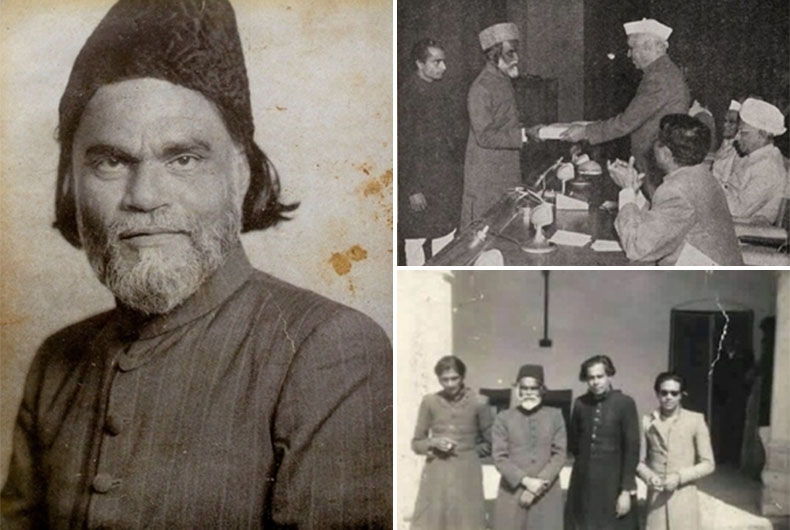
The unnamed actor was representing Ali Sikandar ‘Jigar Moradabadi’, who, in his heyday, was so known by his persona – an intense gaze but an air of absent-mindedness too, groomed beard but slightly unkempt long hair, traditional garb and courtly behaviour, as well as poetry, that he could be shown without being named.
‘Jigar’ is seen as the last standard-bearer of the classical ghazal, or the ghazal’s classical tradition, but was rather a ‘bridge’, between its highpoint in the mid-19th century and its transition to the 20th century and beyond.
He was also a connecting link between Urdu poetry and its widening social reach as the dialogue the character utters shows – and is followed by him encouraging Dutt to continue:
“Tum kuch keh rahe the, barkhurdar. Chup kyun ho gaye. Kaho, kaho..”
Jigar Moradabadi – Real Life
This was true in real life too – a young Jigar took instruction from Nawab Mirza Khan ‘Dagh Dehlvi’ – who had participated in mushairas with Ghalib and Zauq – and himself later, mentored poets like Asrar-ul-Hasan Khan ‘Majrooh Sultanpuri’, Jan Nisar Akhtar, and others.
And then like many contemporaries, he did not write for films, yet his work willy-nilly figured in them. While “Kaam aakhir jazba-e-beikhtiyar aa hi gaya/Dil kuch is surat se tadpa unko pyaar aa hi gaya” was used in ‘Pyaasa’, in ‘Daag’ (1952), the Hasrat Jaipuri-written “Ham dard ke maaron ka, itna hi fasana hai/Peene ko sharaab-e-gam, dil gam ka nishana hai” seemed inspired by his “Ham ishq ke maaron ka itna hi fasana hai/Rone ko nahi koi hasne ko zamana hai”.
Then, ‘Be-Raham’ (1980) used this sher – along with most of its ghazal which begins: “Ik lafz-e-mohabbat ka adna yeh fasana hai/Simte to dil-e-aashiq phaile to zamaana hai”. Another master sher in this is “Yeh ishq nahi aasan itna hi samajh lijiye/Ek aag ka darya hai aur dub ke jaana hai.”
Before that, Shyam Benegal’s ‘Junoon’ (1979), the 1857 drama starring Shashi Kapoor, used his ghazal, “Ishq ne todi sar par qayamat.”
How Jigar’s Prime Couplets became popular in films?
But, the prime example was how the prime couplet of ‘Jigar’ became most known to film buffs after actor Raj Kumar made it a dialogue, delivered in his bombastic, drawling style: “Ham ko mita sake yeh zamaane mein dam nahi/Ham se zamana khud hai zamaane se ham nahi.”
Born in April 1890 in Moradabad, ‘Jigar’ was the son of Syed Ali Nazar, who worked in the Law Department and was inclined to poetry too, being a disciple of Khwaja ‘Wazir Lakhnavi’.
After elementary education, including in English, he worked as a salesman for a local spectacles dealer. Later, he turned to poetry full-time, settling in the town of Gonda, where he found in noted poet Asghar Hussain ‘Asghar Gondvi’ a mentor of sorts. He was a familiar face in mushairas all over the country till the mid-1950s, when he began slightly distancing himself from shayri, ahead of his death in September 1960.
‘Jigar’, as mentioned, was a paladin of the classical tradition, and as such, his shayri usually dwelt on love and other facets of the human condition. As he said:
“Un ka jo farz hai vo ahl-e-siyasat jaane/Mera paigham hai mohabbat jahan tak pahunche.”
Yet, while he used the usual tropes associated with the topic, he imparted his own stamp on them with his own stylistic variations.
One of these was paradox. Take:
“Atish-e-ishq woh jahannum hai/Jis mein firdaus ke nazaare hai”, or “Kamaal-e-tishnagi hi se bujha lete hai pyaas apni/Isi tapte huye sahra ko ham darya samajhte hai”, or even “Mohabbat mein yeh kya maqam aa rahe hai/Ki manzil pe hai aur chale jaa rahe hai” and “Usi ko kehte hai jannat usi ko dozakh bhi/Woh zindagi jo haseenon ke darmiya guzre”.
“Abad agar dil na ho to barbad kijiye/Gulshan na ban sake to bayaban banaiye” is another example.
Then, ‘Jigar’ frequently resorted to some deft wordplay and situations: “Tere jamaal ki tasveer khinch doon lekin/Zabaan mein aankh nahi aankh mein zabaan nahi”, “Suna hai hashr mein aankh use be-parda dekhegi/Mujhe dar hai na tauheen-e-jamal-e-yaar ho jaaye”, and “Aghaaz-e-mohabbat ka anjaam bas itna hai/Jab dil mein tamanna thi ab dil hi tamanna hai.”
Vivid imagery was another strength: “Baithe huye raqeeb hai dilbar ke aas-paas/Kaaton ka hai hujum gul-e-tar ke aas-paas” and “Har taraf chaa gaye paigham-e-mohabbat ban kar/Mujh se achhi rahi qismat mere afsanon ki.”
And ‘Jigar’ could use rhetorical devices, like repetition to good effect, as in: “Dil hai kadmon par kisi ke sar jhuka ho ya na ho/Bandagi to apni fitrat hai Khuda ho ya na ho”, “Kabhi un mad-bhari aankho se piya tha ik jaam/Aaj tak hosh nahi, hosh nahi, hosh nai” and sometimes, alliteration: “Hai re majbooriyan mahroomiyan nakaamiyan/Ishq aakhi ishq hai tum kya karo ham kya karen.”
At other times, he could be engagingly simple: “Garche ahl-e-sharab hain ham log/Yeh na samjho kharab hain ham log”, or “Pehle sharab zeesht thi ab zeesht hai sharab/Koi pila raha hai piye ja raha hoon main.”
And a philosophical outlook can always be discerned. It may be active like: “Kya husn ne samjha hai kya ishq ne jaana hai/Ham khaak-nashinon ki thokar mein zamana hai” and “Apna zamana aap banate hai ahl-e-dil/Ham vo nahi jin ko zamana bana gaya”, or a bit resigned: “Jo un pe guzarti hai kis ne use jaana hai/Apni hi musibat hai apna hi fasaana hai”, “Maut kya ek lafz-e-bemaani/Jisko mara hayat ne maara”, and “Yeh misraa kaash naqsh-e-har-dar-o-deewar ho jaaye/Jise jina ho marne ke liye taiyar ho jaaye.”
There is much more to enjoy in the extensive corpus of ‘Jigar’, whose own epitaph could be: “Hami hab na honge to kya rang-e-mahfil/Kise dekh kar aap sharmaiyega.”
source: http://www.ummid.com / Ummid.com / Home> International / by Vikas Datta / IANS / April 16th, 2023
Nadvi has been the president of the All India Muslim Personal Law Board for the last 21 years.
President of the All India Muslim Personal Law Board Maulana Rabe Hasni Nadvi. (Photo | Twitter)
Lucknow :
President of the All India Muslim Personal Law Board Maulana Rabe Hasni Nadvi died here on Thursday after a prolonged illness.
Senior executive member of the board Maulana Khalid Rasheed Farangi Mahali told PTI that Maulana Rabe Hasni Nadvi died around 3.30 pm at the Lucknow-based Islamic Educational Institute Nadwatul Ulama (Nadwa).
Mahali said Nadvi had been brought to Lucknow from his ancestral home in Raebareli four days ago as he was suffering from pneumonia.
He is survived by three daughters.
Nadvi has been the president of the All India Muslim Personal Law Board for the last 21 years.
His farewell prayers will be held at 10 pm in Nadwa and the body will be laid to rest in Raebareli on Friday.
source: http://www.newindianexpress.com / The New Indian Express / Home> Nation / by PTI / April 13th, 2023
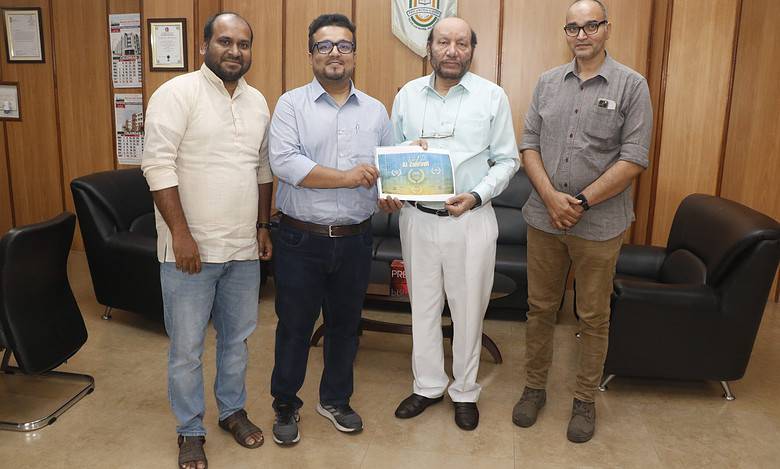
The film ‘Alzahravi’ bagged the best film award in the category of Best Visual Effects and Animation whereas ‘Polymer, the Promise of PDMS’ has been recommended for a citation.
Hyderabad:
Two films of the Instructional Media Centre, Maulana Azad National Urdu University (MANUU) produced under the MANUU Knowledge Series have won accolades at the 24th CEC UGC Educational Video Festival organized by Consortium for Educational Communication (CEC), an Inter-University Centres set up by the University Grants Commission.
The film ‘Alzahravi’ bagged the best film award in the category of Best Visual Effects and Animation whereas ‘Polymer, the Promise of PDMS’ has been recommended for a citation under the Best Film Documentary award category along with the other three films.
According to Rizwan Ahmad, Director, IMC, the film Alzahravi by Omer Azmi, Producer IMC explores the life, struggles, and achievements of the renowned scholar, Alzahravi, and his contributions to the field of medicine.
Polymer, the Promise of PDMS by Obaidulla Raihan, Cameraperson, is a thought-provoking film based on a research output by researchers from the Central University of Hyderabad, where they have developed a polymeric material which is graphene base media mists smart composite material which will revolutionise the technology in near future.
Prof Syed Ainul Hasan, the Vice-Chancellor, congratulated the centre on this achievement and said IMC is steadily gaining recognition for its unique and thought-provoking approach to digital media. Appreciating the Media Centre Team’s effort who met him today at his office the Vice-Chancellor expressed the hope that the MANUU knowledge Series will continue to inspire and educate audiences and contribute to the growth and development of Urdu and dissemination of knowledge.
Rizwan Ahmad said both films were also selected previously at various film festivals nationally and internationally. This honour is a testament to the hard work and dedication of the directors of the films and the entire team. MANUU Knowledge Series aims to promote the Urdu language and culture, as well as highlight important issues and stories through the medium of film, a press release said.
source: http://www.siasat.com / The Siasat Daily / Home> News> Hyderabad / by Indo Asian News Service (IANS) / April 12th, 2023
The results were announced at the inauguration of an exhibition of photo stories that was shortlisted for the award on Saturday, April 15, in Mangaluru.
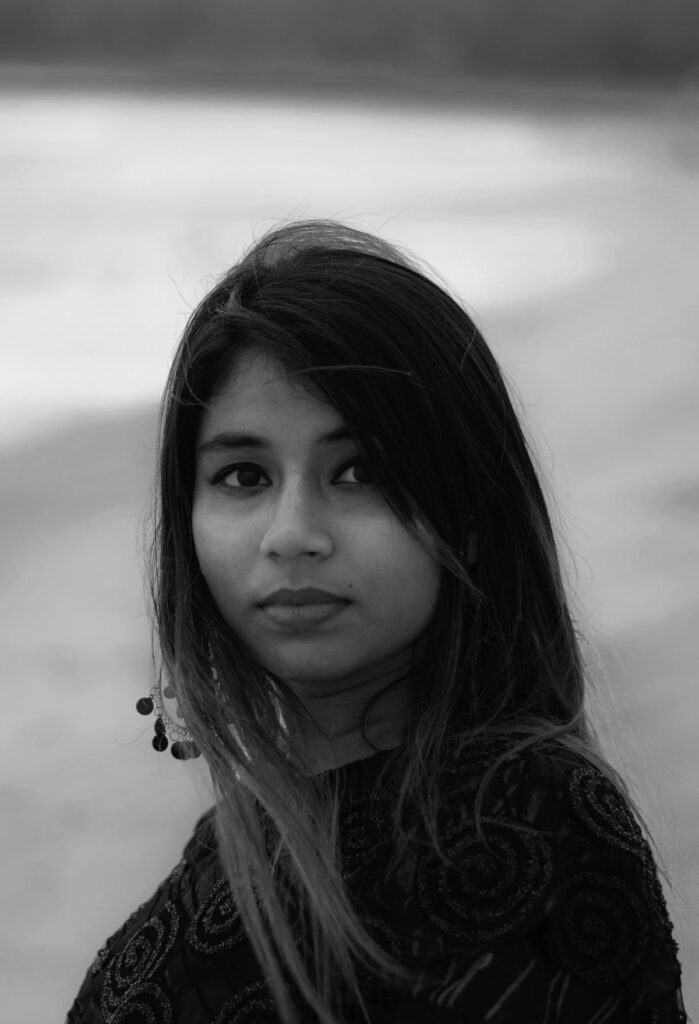
Mariyam Rasheeda | Photo Credit: SPECIAL ARRANGEMENT
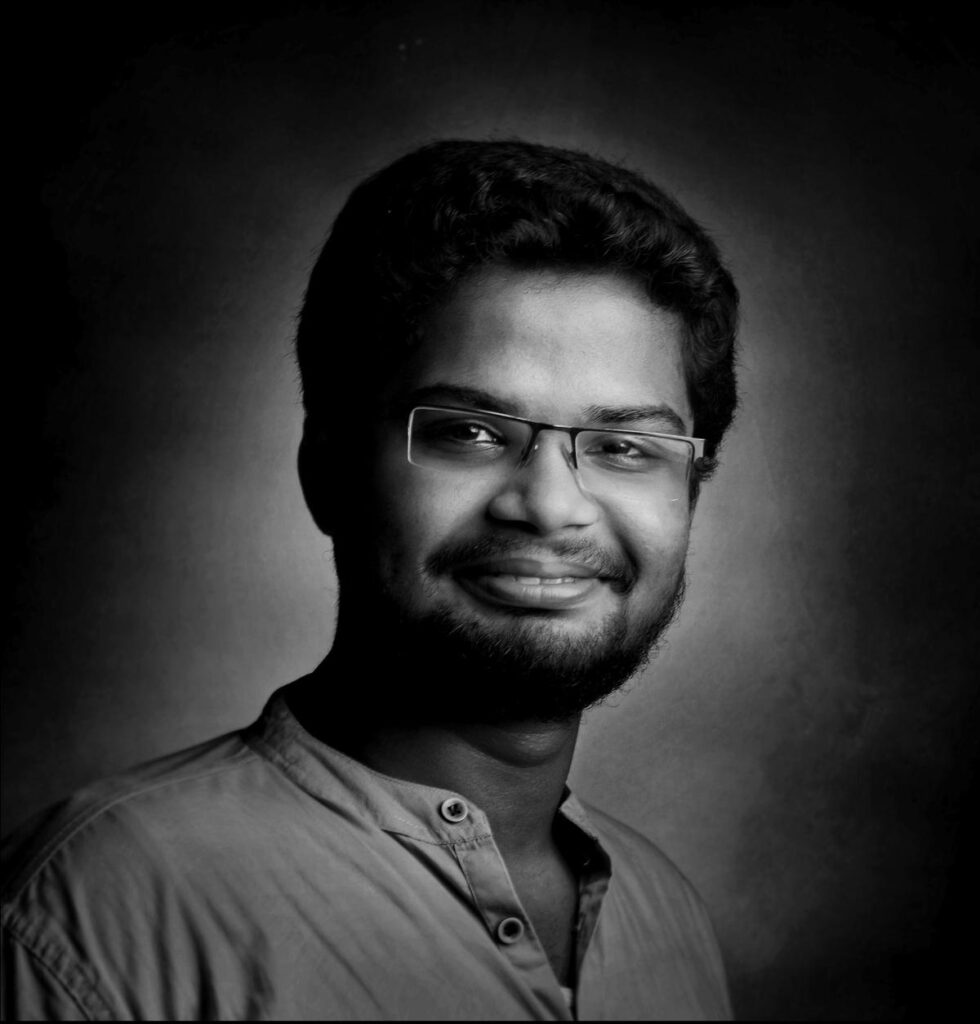
Murali M. Abbemane and K.M. Mariyam Rasheeda were declared winners of the Dr. Krishi Photo Story Award 2022 of the “Under 30 Photo Story Contest” organised by the Mangaluru Chapter of Indian National Trust for Art and Cultural Heritage (INTACH) in association with Art Kanara Trust.
Murali M. Abbemane | Photo Credit: SPECIAL ARRANGEMENT
The results were announced at the inauguration of an exhibition of photo stories that was shortlisted for the award on Saturday, April 15, in Mangaluru.
Pranam Shreedhar and Shravya Manjunath were the finalists. Likhith Raj Gatty and Sowjanya Jogi (joint project), Neel Kote and Vivek Gowda were the shortlisted contestants. The contest was announced in August 2022 and elicited 28 entries, said a release.
Physician and writer B. Srinivas Kakkilaya, photojournalist Yajna and advertising photographer and filmmaker Prakash Braggs, who was one of the jury members, were the dignitaries on the occasion.
Releasing ‘Metaphors of Physical & Emotional Spaces,’ a book on shortlisted entries, Dr. Kakkilaya spoke about his friendship with Late Dr. Krishna Mohan (Dr. Krishi). “Krishna Mohan was one of the first Mangalorean to explore the internet and launch a website, inspiring many others.” During COVID-19, he was active in dispelling myths and creating public awareness by publishing scientific information.
Responding to an audience query, whether a story is required to explain a photograph, Mr. Yajna said, “A single shot photo is a work of art and should speak for itself. But, a photojournalist or a photo storyteller needs to build a context around the single or multiple photos to reach out to the viewers.”
Mr. Braggs explained the ‘less is more’ concept in photography. “It’s not about what you include in the photo, but what you leave out.”
The exhibition of photographs would be open to the public till April 23, between 11 a.m. and 7 p.m at Kodialguthu Centre for Art and Culture, G.G. Road, Ballalbagh.
source: http://www.thehindu.com / The Hindu / Home> News> Cities> Mangaluru / by The Hindu Bureau / April 17th, 2023
She exhibited tricolour painting in mandana, a tribal art form of Madhya Pradesh. It took more than 6 months to prepare all the artworks, she said.
Artist Nawab Jahan Begum with her art work | FP Pic
Bhopal (Madhya Pradesh):
Artist Nawab Jahan Begum from Bhopal has used 24 carat gold in a Gond artwork. She said that this was the first time that 24 carat gold was used in Gond art. “I used liquid gold, which is being liked by visitors here. Many people greatly appreciated the tribal art of Madhya Pradesh,” she said
Nearly 17 works of the painter were on display at Kala Spandan Exhibition in Mumbai inaugurated by film actor Anita Raj. The exhibition was organised from November 24 to 27. She exhibited tricolour painting in mandana, a tribal art form of Madhya Pradesh. It took more than 6 months to prepare all the artworks, she said.
Besides, she exhibited three convertible art works. “Three works have 10 different paintings. It was a different work, which was appreciated.” Her Hindi calligraphy artworks were also on display.
Begum has obtained MA degree in drawing and painting. Her signature styles are abstract modern art paintings, which she make using knife and adds gold to it to give it a royal feel and look. She took part in many national and international painting exhibitions and sold paintings in the UK, Australia, Saudi Arabia, Dubai, Maldives.
She has also made a painting for Taj Lakefront Bhopal. Her works are on display at Bhopal airport and Cymroza Art Gallery in Mumbai.
source: http://www.freepressjournal.in / The Free Press Journal / Home> Bhopal / by Staff Reporter / November 29th, 2022
In popular memory, historical narratives are more often than not laced with silence, neglect, nostalgia and heroism thus blurring the line between history and fiction. Public memory tends to remember the selective events according to ideological or political conveniences while the whole narrative in its context is often forgotten.
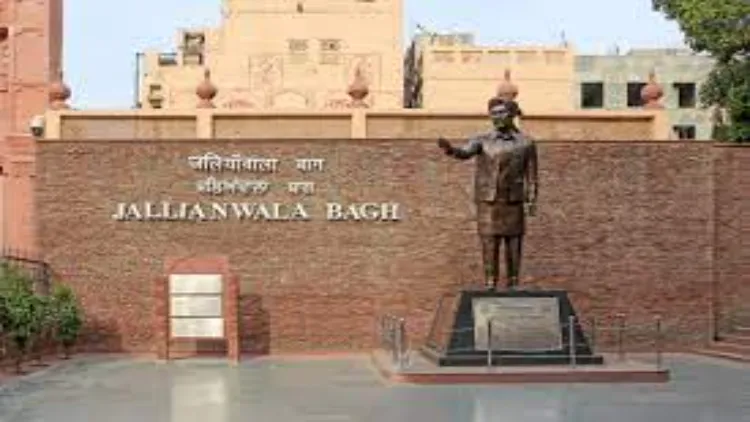
The Jallianwala Bagh Massacre is one such event which stands out in public memory as a solitary incident. Popular imagination puts the killing of hundreds of Indians on 13th April, 1919 at Amritsar as an event completely disassociated from time and space. It is needed that the massacre should be read in context with the time and space.
Why did the people gather at Jallianwala Bagh?
Indian leadership in general supported the war efforts of the British during the World War – I (WWI) on a promise that the country would be granted self rule or some kind of political autonomy after the war would be over. The British, after the war, backtracked on the promise. Rather to check the nationalist voices brought a Rowlett Act in force which enabled police to imprison Indians without evidence. Several Indian Muslims were aggrieved at the humiliation of Turkey and the British believed that it was their only challenge. With the Rowlett Act at their disposal these Pro-Khilafat voices could be easily suppressed. They did not foresee the possibility of Hindus joining hands with the Muslims, and vice versa and pose a problem for their colonial rule.
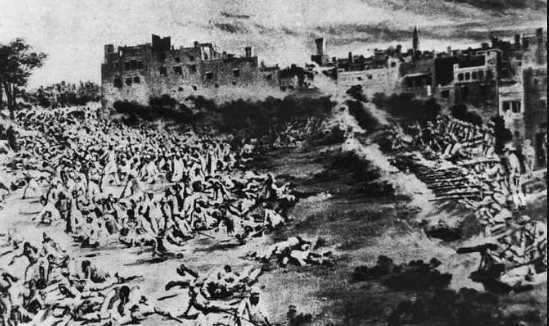
An artist’s depiction of the scene of massacre
On 18th March, 1919, the Rowlett Act was passed. Mahatma Gandhi along with other nationalist leaders termed it a Black Act and called for a protest movement against the same. The day chosen for protests and strikes was the 30th March that was later changed to 6th April. In Delhi a protest was held on 30th, because of lack of communication, and the police did not hesitate from firing upon the unarmed people. More than 50 protestors were killed in Delhi. The British had cleared their intention of using violence against the non-violent protesters.
On 6th April protests and strikes were held across the country, yet Punjab displayed an exemplary zeal of nationalism. What disturbed the British most was the fact that orthodox Hindus of Arya Samaj and orthodox Muslims of different Wahabi and pan-Islamist organizations joined hands against the British. The most popular leaders of Punjab at the time – Dr. Saifuddin Kitchlew and Dr. Satyapal, were prohibited from making public statements but still unity could not be broken. At different places people were fired upon but the nationalist sentiments could not be killed.
On April 9, Muslims came out to celebrate Ram Navami across Punjab. This was becoming too much for the British. In Amritsar Saifuddin and Satyapal oversaw a grand Ram Navami procession where Muslims were as zealous as Hindus were. It led the British to arrest the two leaders and sent them to an unknown location. The people gathered at the Deputy Commissioner’s office to register their protest and they were fired upon. Many were killed. The fear of a Hindu-Muslim unity was so frightening for the British that even after Jallianwala Massacre they arrested and killed Muslims for participating in Ram Navami celebrations.
Ghulam Jilani, who was an Imam of a mosque, was arrested on 16th April with Khair Din for leading the Ram Navmi processions. Police tortured them in the most horrific and inhuman fashion by inserting sticks up in their anus until their excreta and urine would not come out. Khair Din died of the torture while Jilani survived to narrate the ordeal. More than a hundred Muslims were tortured in this manner to celebrate Ram Navmi.
On the other hand in Lahore, on receiving this news, in an unprecedented manner more than 25,000 Hindus and Muslims gathered in Badshahi Mosque and Hindu leaders, like Rambhaj Datta, addressed the people from the pulpit of the mosque. In Lahore, not only the British used bullets but also brought their loyalists into the picture.
A few sold out Indians like the leaders of Muslims League issued statements that allowing Hindus into the mosque and addressing from pulpit amounted to the sacrilege. Still, most of the Muslims in Punjab were supporting the war cry of the protestors: Hindu-Musalman ki Jai (Victory to Hindu-Muslims).
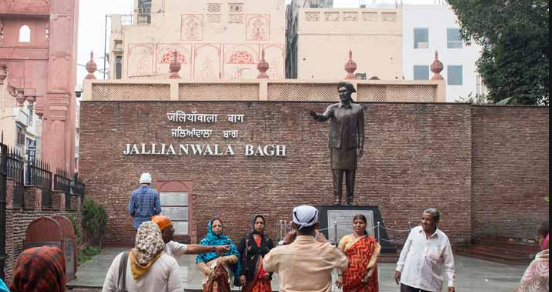
Visitors clicking pictures at Jallianwala Bagh
It was noted in a government report tabled at the British Parliament, “It (Hindu-Muslim) union had only one purpose, a combined attack on the government.”
Meanwhile, on 13 April, the Baisakhi Day, a meeting was scheduled at Jallianwala Bagh, near Golden Temple, to protest the arrests of Saifuddin and Satyapal. Hindus, Muslims and Sikhs gathered at the Bagh. Colonel Dyer with his troops entered the place and fired upon the unarmed protesters. A gory story of blood, death and massacre happened that each and every Indian knows by heart. Hundreds of Indians died. The tale of this massacre became folklore and inspired generations of revolutionary Indians like Bhagat Singh, Ram Mohammad Singh Azad and others. But, what we miss out is that the British did not stop at this. Punjab remained a laboratory of British atrocities.
The next day, April 14, people in Gujranwala woke up to find a beheaded calf at a public place. It did not take a rocket science to decipher a sinister plot to cause enmity between Hindus and Muslims. People gathered and protested such malicious attempts of the government to disturb the peace. Frustrated at their failed attempt and seeing that the unity has strengthened even further, army airplanes were called in to bomb the city. Yes, you are reading it correctly.
Within two decades of the invention of aero planes and less than a decade of its first military use in WWI when the technology was novel even for armies the British used it upon the innocent civilians of Punjab. A fleet of three planes dropped bombs and fired machine guns on the city and adjacent rural areas. Bombs were dropped at schools, hostels, mosques, marriage ceremonies etc. The government report specifically mentioned that the district is dangerous because followers of Arya Samaj and orthodox Muslim Wahabis like Fazal Ilahi and Zafar Ali Khan had joined hands. An armoured train with machine guns mounted in it was also used to kill along the railway tracks in Gujranwala.
The tales of torture, suppression and killings was repeated allover Punjab. While Jallianwala Bagh rightly gets its mention in our books and survived the public memory the causes behind it and a long trail of violence proceeding and succeeding the event have been forgotten. The very fact that the British used their worst form of violence to counter Hindu-Muslim unity itself speaks about the power of this unity. We need to remember the cause for which our forefathers and foremothers had laid down their lives.
(Saquib Salim is a historian-writer)
source: http://www.awazthevoice.in / Awaz, The Voice / Home> Story / by Saquib Salim / 2021
.webp)