With petrol prices increasing, Asad Abdullah conceptualised the idea of developing an electric cycle in which six people can be accommodated.
Innovation on a dozen wheels by ITI-trained diploma engineer in electricals, Asad Abdullah. (Photo | EPS)
Innovation on a dozen wheels
All that innovation needs is a brilliant mind and passion coupled with the patience to apply it. Asad Abdullah, 22, of Azamgarh proved it by developing a 6-seater electric cycle. Asad’s innovation got recognised by none other than Anand Mahindra, chairman of Mahindra Group, who tweeted a small video of the cycle and made the innovation so viral that the video crossed 1 million views since December 1.
Mahindra tagged the chief design officer of the auto sector of his company asking if this device could find global application. With petrol prices increasing, Abdullah conceptualised the idea of developing an electric cycle in which six people can be accommodated.
He used scrap material and the motor of an old battery-operated. two-wheeler to develop the cycle in a month’s time at a cost of Rs ₹10,000-12,000. “I want to make it commercial and sell it to others at an affordable price,” says Asad Abdullah, an ITI-trained diploma engineer in electricals.
Lucknow touches zero covid mark
After a long span of 32 months, the city of Nawabs touched zero Covid figure mark as the last patient recovered from the ailment and no new case was reported, claim health authorities. The last patient who recovered and was discharged on Tuesday had tested positive last week. “This zero is a precious figure and we are making all efforts to sustain the status in Covid,” said Dr Manoj Agrawal, Lucknow CMO.
Lucknow has never had a status of zero Covid active cases since the 2020 pandemic. The first case in the state capital was reported in the third week of March 2020. Lucknow’s first Covid-19 patient was a doctor who returned from Canada. The second case reported was also that of a doctor and the third one was of a Bollywood singer Kanika Kapoor, who turned out to be a mass spreader after returning from the UK.
10 UP heritage sites up for adoption
UP Archaeological directorate has shortlisted 10 heritage sites up for adoption under the ‘Adopt Heritage Scheme.’ These sites include the Alambagh building of Lucknow, Potrakund in Mathura, Kalpa Devi and Astik Baba temples in Sitapur, Caves of Devgarh of Lalitpur, Raj Mandir Guptar Ghat in Ayodhya, Lakshmi temple in Jhansi, Fort of Tahrauli in Jhansi, Fort of Balabehat in Lalitpur, Digragarhi in Jhansi and Shiv temple of Bithoor in Kanpur.
Those interested in adopting the heritage site would be known as Smarak Mitra who would sign a memorandum of understanding (MoU) with the department and work towards the conservation of the site. Smarak Mitras will also be responsible for arranging logistics for the tourists at the site.
source: http://www.newindianexpress.com / The New Indian Express / Home> Nation / December 07th, 2022
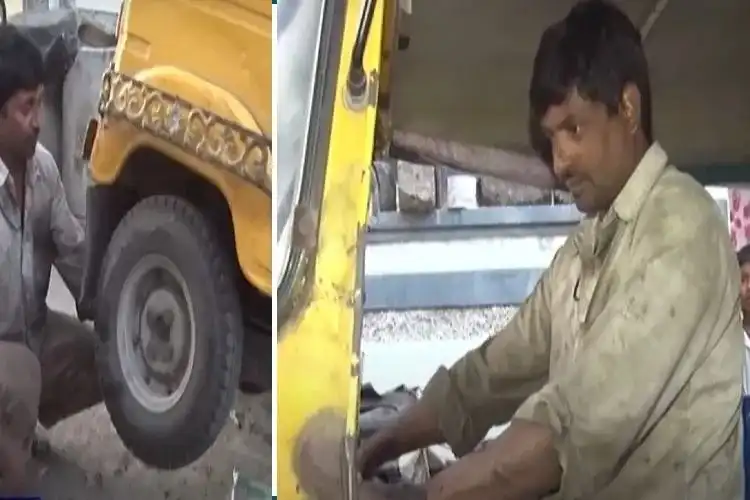
It may sound unbelievable but is true. Mohammad Hafeez, who is blind in both eyes, is a much sought-after auto mechanic. He lives his life with dignity and is not paralyzed due to a lack of physical vision.
Muhammad Hafeez, a resident of Kashibagh, Warangal district, was not born blind; he lost his eyesight in two accidents and yet he never gave up on life.
Not to break under a spell of tragedies and misfortunes, Mohammad Hafeez is good at detecting the problem in a vehicle through its acoustics. The sound of its parts is what makes him understand the problem in a vehicle that has come for repair.
The 50-year-old Muhammad Hafeez was leading a happy life as an auto electrician when a heavy thing fell on his head in 2003. Due to the accident, he suffered a serious injury and ended up losing sight in his left eye. This badly affected his income.
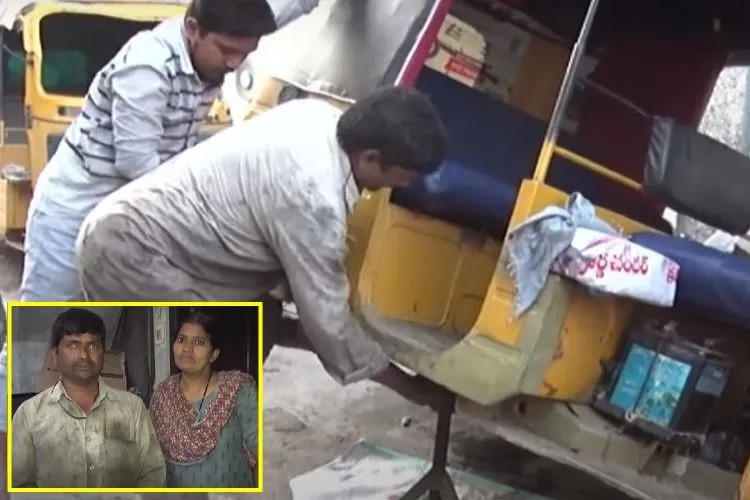
Mohammad Hafeez with his wife
However, he did not give up. With the support of his family and well-wishers, he bought an autorickshaw and started driving it to support his family. However, fate had something else in store for him.
Another tragedy rocked Mohammad Hafeez’s life. In 2005, a burning firecracker hit his right eye and he again lost his vision for life.
Mohamad Hafeez comes from a poor background. His father MD Afzal Anu works as a private security guard in Mamula Bazaar, while his mother Meher Nisa is a housewife and suffers from heart disease.
Mohammad Hafeez started working as an electrician in 1994. His wife Nazima works as an Anganwadi worker.
After her husband lost his eyesight. Nazima was offered this job on a humanitarian basis.
They have a daughter, Afsana, and a son, Muhammad Muzamil. Afsana works in Hotel Gachibowli in Hyderabad, while Muhammad Muzamal is a first-year student of the ITI. The family lives in a rented house. Muhammad Hafeez earns five hundred rupees a day.
Speaking with Awaz The Voice, Mohammad Hafeez said that he is alive today because of top police officer B Somati. When he met with an accident in the year 2003, the then DSP B Somati reached the spot in time and shifted him to MGM Hospital, Warangal.
Muhammad Hafeez said that he is alive today because of Somati Madam’s timely help and he thinks of her as a messiah.
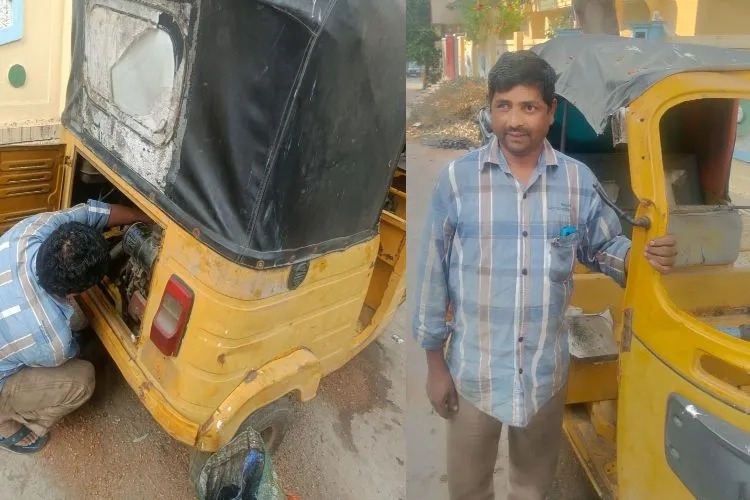
Mohammad Hafeez with an auto that he has repaired
He said that after the accident, the then member of the Legislative Assembly Biswa Raju Saria, Mayor Erabili Sorna, and a few corporators donated an autorickshaw to him. “I started the second innings of my life as an auto driver. My other eye was also damaged in the accident and I was permanently blind, although my eye was operated open I could never regain my vision.”
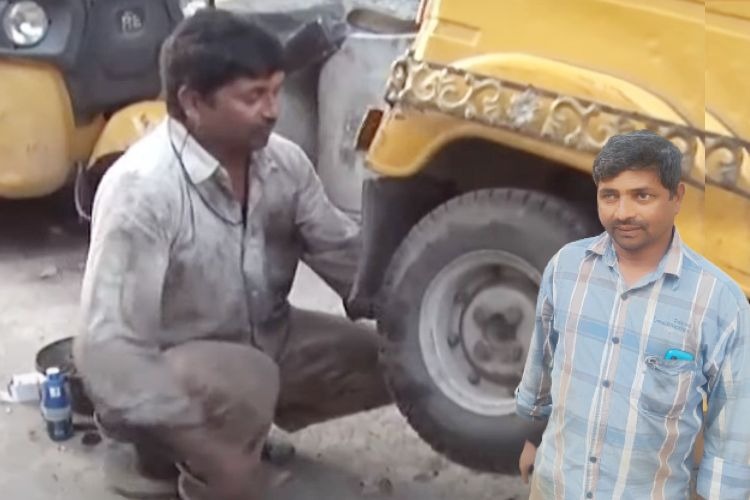
Mohammad Hafeez did not give up and started learning auto repair work. He detects the engine malfunction by the sound of the car and repairs the car by touching the parts with his hands.
Muhammad Hafeez said that he learned the job for one and a half years. He was happy to support the family by paying for auto repairs and the education of his two children. He said his wife was very supportive.
Mohammad Hafeez said that any work is difficult but not impossible. He said that the youth, especially the disabled, should look for ways to live a dignified life based on their strengths and abilities instead of depending on someone and extending a helping hand.
He said he is supporting his family by working hard. He asked all the good-hearted humans and the rich to come to the help of others so that people like him get encouragement.”.
source:http://www.awazthevoice.in / Awaz, The Voice / Home> India /by Sheikh Muhammad Yunus, Hyderabad / by awazthevoice.in / December 09th, 2022
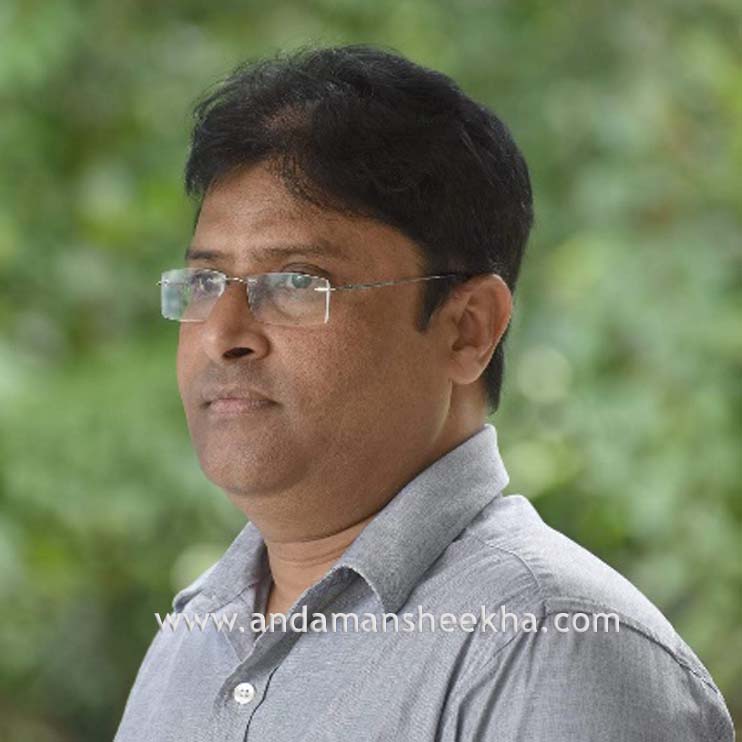
Veteran Journalist, activist and an encyclopaedia of Andaman history, Mr. Zubair Ahmed is no more among us. Sad demise of Mr. Zubair Ahmed has left people of Andaman and Nicobar Islands, his friends, family members and followers deeply shocked. The fearless voice of these Islands, Mr. Zubair Ahmed was deeply loved by Islanders because he had what hardly a few have today- a spine to fight for injustice.
His writing in newspapers and blogs on Andaman history, childhood memories and social issues were extremely popular among Islanders. Mr. Zubair Ahmed’s out of box thinking and ability to question authorities on crucial issues made him favourite of masses.
Mr. Zubair Ahmed, after working in Times of India, Bengaluru moved back to Andaman and Nicobar Islands and started republishing ‘The Light of Andamans’ with veteran journalist Late Govind Raju and other senior journalists. ‘The Light of Andamans’ became extremely popular in no time. He was also the Editor of ‘The Sunday Islander’ an online news portal from A&N Islands.
Other than Journalism, he was deeply involved in Education, social works and social reform activities.
His death has left a void in the media fraternity of Andaman and Nicobar Islands. The Andaman Sheekha Daily team deeply mourns the death of Mr. Zubair Ahmed. Meanwhile, the Andaman and Nicobar Media Federation and Daily Newspaper Association have also mourned the death of Mr. Zubair Ahmed.
source: http://www.andamansheekha.com / Andaman Sheekha / Home> City> Featured / by Vikramaditya / July 08th, 2022
Ghazala Wahab explains what it is to be a Muslim, a member of the largest religious minority in India today, and why the community lives in fear as prejudices persist.
The book opens with an unputdownable 42-page introduction that delves into the root of fear and despair among Muslims who have embraced the country as theirs but are polarised because of the identity they bear.
The shock and shame of communal riots, orchestrated mass violence and lynchings that served political agendas and led to societal divisions during the past decades hits you, as journalist Ghazala Wahab lays bare instances from her life.
Balanced narrative
She meticulously balances her narrative because she wishes to build a bridge of conversation. While she addresses fellow Muslims asking them to embrace modernity and be an integral part of positive change, she also alerts non-Muslim Indians about their perception of Muslims based on prejudice and hearsay, not facts.
Self-examining her own community members, she admits it never struck her how an average Muslim struggles to stay alive because she looked at things from her position of privilege. As she researched, she found equal opportunity and justice are only concepts and that law- making and law-enforcing agencies act in contradiction to vilify and stigmatise Muslims.
It is a vicious cycle, writes Ghazala, because the post-partition Muslims have remained an irrelevant votebank and sought security in their ghettos perpetuated by illiteracy, poverty and unemployment. The mullahs and clergy have easily taken them under their religious fold to exploit them. The general backwardness of the community has fed into a sense of loss of identity and unmet aspirations for Muslim youth, men and women.
Personal experience
In the mid-80s, Ghazala’s father shifted from their ancestral home in a middle class mohalla to an upscale Hindu-majority neighbourhood in Agra. His successful business and hobnobbing with the powerful, gave him the comfort of keeping his family under a security net. But that was till Agra was engulfed in violence post-kar seva after BJP leader L.K. Advani rolled out his rath yatra from Somnath to Ayodha in October, 1990, and was subsequently arrested. As sporadic violence spread across north India, Ghazala’s family wondered where they would be more secure — in their new neighbourhood or in a Muslim majority insulated mohalla.
Ghazala’s father called his brothers to safety and her mohalla uncles requested them to move back to the old Muslim locality. Ultimately everybody stayed where they were as fury was unleashed on their community everywhere. A young collegian then, Ghazala, her parents and three siblings were at home when an angry mob led by a neighbour shouted slogans, smashed windows, pelted stones and damaged their car. Desperate phone calls for help went unanswered.
When Ghazala’s father went to the police station to enquire about the adult males who were forcibly picked up from the mohalla during search operations, senior officials known to him avoided him. Those he thought had accepted him treated him as nothing more than a Muslim when it came to communal division. For Ghazala’s father it was not about being a victim but it was more about the humiliation, a betrayal of belief.
Turning point
Her family survived the riots but it left a scar. Her parents chose to go silent and it irked Ghazala that a victim should feel ashamed. She saw the same resignation and defeatist attitude when the Babri Masjid was razed. It unnerved her because she sensed it was a turning point not just for her family but for most Indian Muslims.
“Civility was the first casualty, replaced by communal prejudice and demonstrative religion,” she writes.
Many members in her extended family began to draw comfort from religious conservatism. She talks about a cousin who started wearing a headscarf and told her she was more comfortable with her Muslim friends as they didn’t have to pretend with one another, whereas to her Hindu friends she was a validation of their liberal outlook.
The conversation disturbed Ghazala as she never perceived two distinct identities in herself — a Muslim and an Indian. The issue was complex and so were several disparate questions.
Ghazala leans on poignant narration about the average Muslim being confused and scared through examples of those who have hidden their identity and reverted to Hinduism under perceived coercion. “They could never participate as equal partners in the country’s development. Only 2.6 per cent of Muslims are in senior-level jobs and a small number have achieved a reasonable upward mobility,” she writes.
On a positive note, Ghazala says Muslim society is changing. The protests against CAA/NRC in December 2019, she feels, has given rise to an assertive community even though her 1990 experience returned to haunt her in February 2020 when her paternal aunt’s family panicked as a mob reached their northeast Delhi colony. Anger and helplessness resurfaced when her aunt called her for help and her uncle refused to escape or abandon his life’s savings. The sense of fear doesn’t leave, she says.
Born a Muslim: Some Truths about Islam in India ; Ghazala Wahab, Aleph Book Company, ₹999.
soma.basu@thehindu.co.in
source: http://www.thehindu.com / The Hindu / Home> Books. Reviews / by Soma Basu / May 15th, 2021
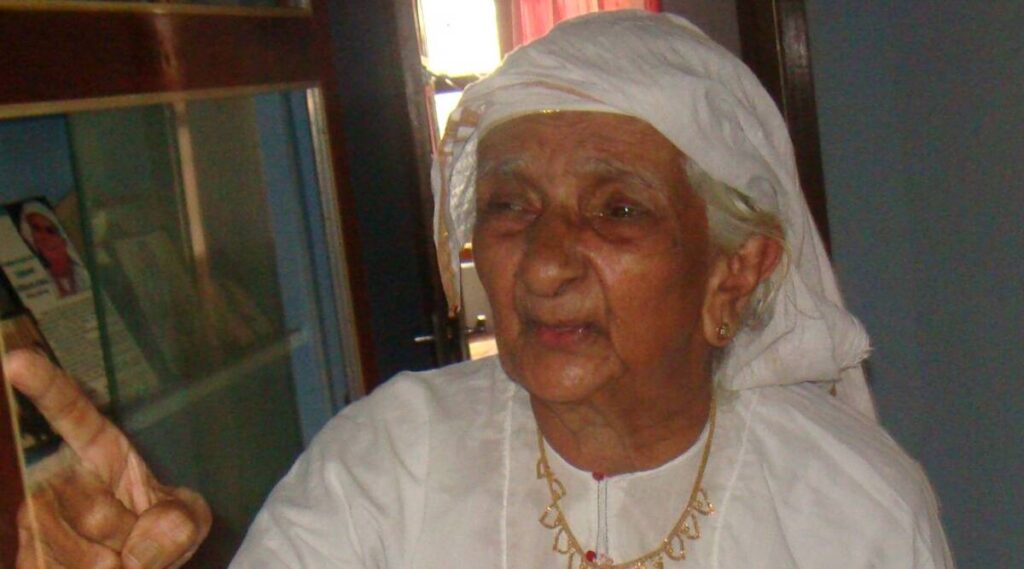
The Muslim community had frowned upon the girl, who went to school to study English wearing burqa. She had faced the insult from her community but her father O V Abdulla, who was a religious scholar, stood with her and encouraged her to continue English education.
Mariyumma was an avid reader of English and hence local people used to call her English Mariyumma. Wikimedia Commons
THE FIRST Muslim woman in North Kerala to get English education, Maliyekkal Mariyumma, died on Friday in Thalassery, Kannur district. She was 95.
An icon of English education among Muslims in North Kerala, Mariyumma had been an inspiration for generations.
Condoling the death of Mariyumma, Chief Minister Pinarayi Vijayan said, “We have lost a person who had left her indelible footprints along with the history of Thalassery. Braving the barriers of conservatism, she learned English and thus became a guiding light for others. She fought for the educational rights of Muslim girls. Always a progressive face, she had also been an icon of religious harmony. Her death plunges a generation and a region into grief.”
Born in 1927, Mariyumma belonged to one of the prominent Muslim families in Thalassery. After completing lower primary education, she joined Sacred Heart Convent School in Thalassery for further studies. She was the only Muslim girl among 200-odd students at the school established in 1886. She studied the English alphabet in class 5.
Later, she recalled that as she did not understand English, her father consoled and encouraged her to continue studies. At noon, she used to go to a relative’s house for namaz. Realising this, the nuns arranged a facility for her namaz at the school. She recalled how nuns created a love for the English language in her mind.
The Muslim community had frowned upon the girl, who went to school to study English wearing burqa. She had faced the insult from her community but her father O V Abdulla, who was a religious scholar, stood with her and encouraged her to continue English education.
Abdulla had studied only up to class 2, but he used to read and write in English. Mariyumma continued her convent education till 1943, the year she was married off after she completed fifth forum (class 10).
After marriage, she associated herself with Muslim Mahila Samajam to continue her social work. Later, she focused on activities aimed at empowering women.
Mariyumma was an avid reader of English and hence local people used to call her English Mariyumma. The image of Mariymma reading English daily had inspired hundreds of Muslim girls to pursue education.
source: http://www.indianexpress.com / The Indian Express / Home> Cities> Thiruvananthapuram / by Shaju Philip / August 06th, 2022
Traditional makers of classical Indian string instruments worry about the extinction of their art, with little interest among the younger generation, and most of their clientele now based abroad.
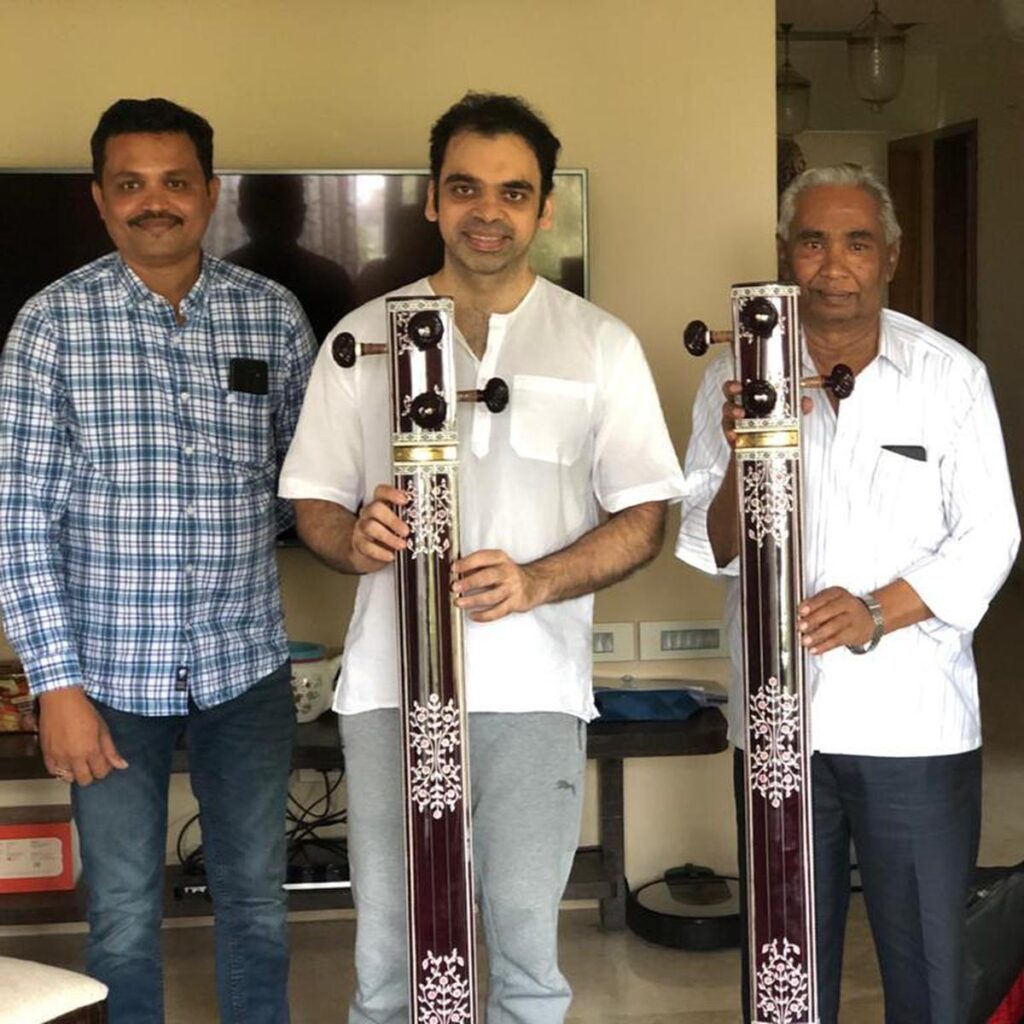
Tanpura artist Altaf Mullah, classical vocalist Rahul Deshpande and Yusuf Mullah (Altaf’s father and Tanpura maker to Bhimsen Joshi). | Photo Credit: Special Arrangement
For generations, Altaf Mullah and his family, residents of Miraj in Goa, have been in the business of tuning the strings and twisting the pegs of Indian string instruments such as the tanpura, surbahar, rudra veena and vichitra veena. They are currently headed for a tour of the United States and the United Kingdom, to hold workshops on how best to keep these instruments tuned, for their clients abroad, a number that now oustrips their domestic market.
On the face of it, it seems as though Mr. Mullah and his family have negotiated the ravages of modernity on traditional businesses quite well, by shifting their client base abroad. But the story is quite different. In fact, the workshop is being sponsored by the Indian Council for Cultural Relations (ICCR) after a distress email from Mr. Mullah, who feared the extinction of this art of making and maintaining string instruments.
“We are the fifth generation making these string instruments. We were given Rajashray (royal patronage) in 1862, but the way things were going, this art would not survive beyond this generation. We make upto ₹500 per day, the younger generation is not that attracted to it,” says Mr. Mullah. His father, Yusuf Mullah, is a much-feted string instrument maker, with Hindustani music maestro Bhimsen Joshi having been a faithful patron.
After having knocked on many doors, Mr. Mullah wrote to ICCR president Vinay Sahasrabuddhe about the systemic and immediate problems faced by his tribe of string instrument makers. “For 1.3 billion people, and countless afficianados abroad, there are only 220 karigars (artisans), mostly concentrated in Goa or Kolkata,” he said.
Mr. Sahasrabuddhe’s response was immediate, and one of the first things he did was to set up a meeting between Mr. Mullah and the Postmaster General of India, in New Delhi. “Our immediate issue was that the parcels of instruments that we used to send abroad [which is the bulk of the business] were through speed post. The department of posts changed it from weighted charges to volumetric post, that raised our costs by three times the amount. We were really struggling,” said Mr. Mullah. The Postmaster General agreed to make an exception for the parcelling of string instruments and some relief was gained.
“Our major problems, however, remained. Our worst period was of course between 1990-2000 with the rising popularity of electronic instruments. Fortunately, acoustic sound made a quick comeback, and our business went up again, but not enough to attract the next generation,” he said.
Mr. Sahasrabuddhe told The Hindu that preserving the tradition of making and maintaining Indian string instruments was important as they were “the tangible and intangible heritage of India, and Indian musical tradition.” In fact, there is now talk of standardising a curriculum via the All India Council for Technical Education (AICTE) for this purpose, to create a base of instrument makers, and prevent the skill from dying.
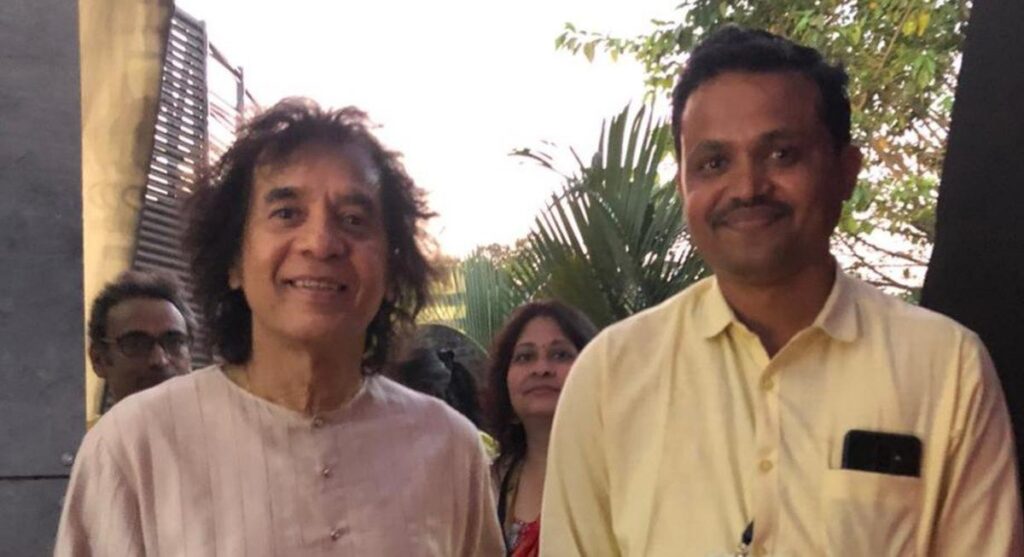
The Mullahs’ client list, ranging from composer A.R. Rahman to India’s nightingale, the late Lata Mangeshkar, to Bhimsen Joshi and tabla maestro Zakir Hussain — reads like the who’s who of Indian music.
Tanpura artist Altaf Mullah with Tabla maestro Zakir Hussain. | Photo Credit: Special Arrangement
Indian string instruments, especially the tanpura, have been historically referenced through much of Indian history. In his devotional song, “O Sadho”, the poet-saint Kabir draws a parallel between the human body and the tanpura. “ Yaha tan thaata Tambure kaa, paanch tatwa ka banaa hai Tambura, khaenchta taar marodata khoonti, Nikalta raag hajure ka, O Sadho” (O seekers, this body is a splendid tanpura, made of five elements, strung together with nine resonances. Tighten the strings, twist the pegs and it sings the song of the Lord).
As the irreplaceable accompaniment to the sound track of India, the tanpura, struggling for breath, was hoping to “get a ventilator soon”, said Mr. Mullah.
source: http://www.thehindu.com / The Hindu / Home> News> India / by Nistula Hebbar / December 04th, 2022
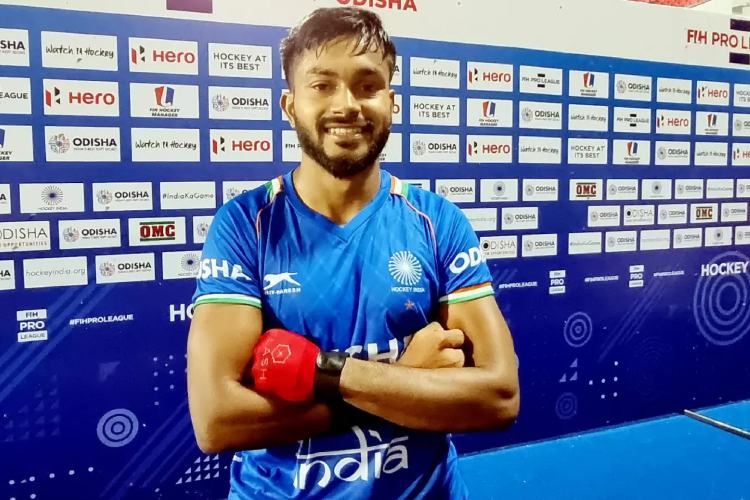
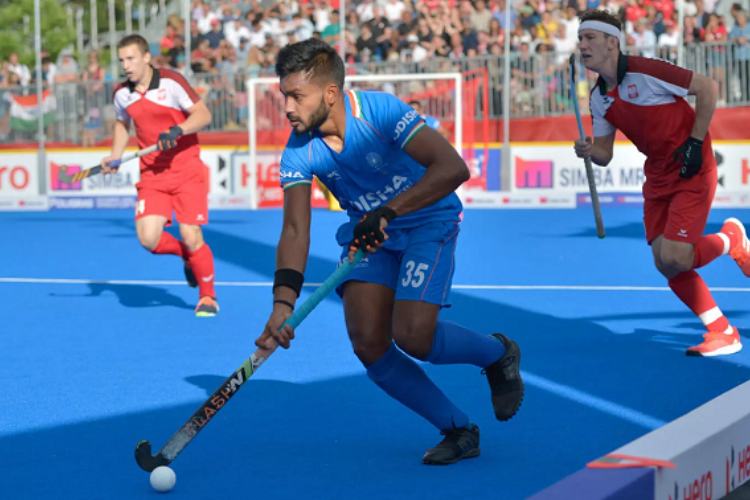
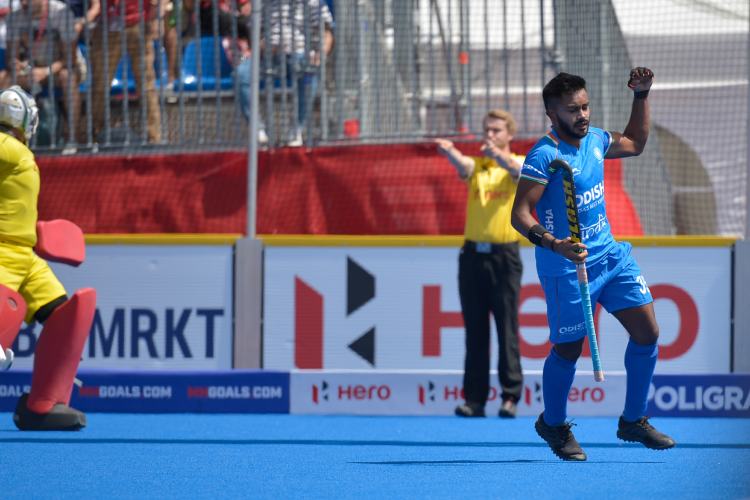
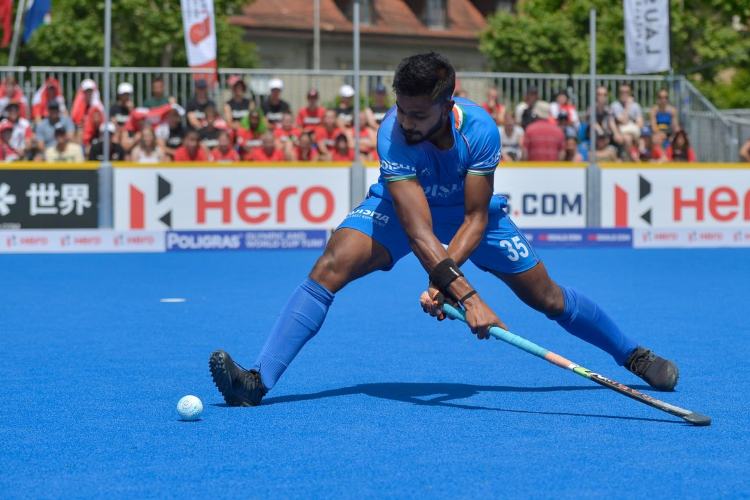
From the disappointment of not making it to the Indian team despite being called for two national camps, to donning the India jersey, Mohamed Raheel Mouseen travelled eight years trying to impress the national selectors and chief coach of the Indian Hockey team, Graham Reid.
25-year-old Raheel, finally made his India debut against New Zealand in the FIH Pro League Hockey Championship in Bhubaneswar in October.
“It was a wonderful feeling to be wearing the India jersey. Dream come true. I played Hockey only to play for the country,” says an excited Raheel.
As providence would have it, he played his first match for the country in the same stadium where he had come as a teenager to watch an India-Pakistan match.
Way back in 2014, Raheel was among the few trainees of Sports Authority of India Sports School, Bangalore who came to the Kalinga stadium to cheer for the Indian team in a Champions Trophy match against Pakistan.
“I played hockey only to play for the country”
“I still remember the atmosphere was electric. I visualized myself playing on the turf with so many people watching,” he says.
The dream that was in its nascent stage, took a firmer shape that day. “The crowds, the national anthem playing, the frenzy in the stands, the pride I saw in the players…it all stitched together and I knew one day I will play for India,” adds Raheel.
“I knew one day I will play for the country”
But he also knew it won’t be as if he will wake up the next day and someone will hand him the India jersey. “I was determined to do the extra yards to earn the India cap,” he adds.
A sports buff, who follows the English Premier League and the fortunes of the Royal Challengers Bangalore in the Indian Premier League, Raheel comes from a family of Hockey players.
His father was a state player who played for the Hindustan Aeronautical Limited team in the local league. His elder brother was twice called for the junior national camp. All good achievements but not good enough to etch their names in the annals of Indian hockey.
“I have ensured the one missing piece is added to the family wall,” Raheel says with a smile.
He started playing Hockey at the age of five. So impressive was his growth as a player that by the age of 15 in 2012, he got selected to join the Sports Authority of India Sports School. After graduating from there he joined the Centre of Excellence.
“It was at SAI, my Hockey went on to the next level,” he says. Under the guidance of renowned coaches including former international, Jude Felix, Raheel continued to sharpen his skills as a striker in the hope of catching the attention of selectors and the senior team management.
“Olympics is a definite box I want to tick”
He was called for the senior national camp in 2018, but did not impress enough to make the final cut. However, his stellar performance in the domestic circuit, earned up a call for the Hockey 5s tournament in Lussane, Switzerland in 2022. There he emerged as the top-scorer with 10 goals, and was a key to India’s title triumph in the inaugural championship.
From there, it was only a matter of time before he made it to the India team in the proper format.
His performances impressed Graham Reid and after a few months in the national camp, Raheel was called to do India duty in the FIH Pro League. He is currently in Australia where India is playing five matches in preparation for the upcoming world cup in January.
Raheel who considers former internationals from Karnataka, VS Vinay and Arjun Hallapa as his role models, wants to now ensure the opportunity that has come his way does not slip off easily.
“I am looking for longevity in the Indian team. I want to play for the country for as long as possible. Olympics is a definite box I want to tick,” he says looking at the India jersey he wore in the FIH Pro League.
And fans will be hoping he weaves the same magic on the field as a Mohammed Shahid or a Zafar Iqbal for a good time to come.
source: http://www.awazthevoice.in / Awaz, The Voice / Home> Sports / by Nakul Shivani, New Delhi / November 30th, 2022
Billionaires in Africa, Maha tycoons follow father, feed thousands in hometown
Yavatmal :
Decades ago, a humble Maharashtra State Road Transport Corporation (MSRTC) district driver Abdul Narsinghani had a strange habit before going off to work.
Every morning he would instruct his wife Fatima to pack a few ‘rotis’, he put them in his pocket and at various stops of his ST bus en route, would distribute them among a few poor people he encountered.
His young kids — sons Aman, Aslam and daughter Farida — closely watched all this but often wondered at their father’s undue concern for others when they themselves eked out a bare existence in a 200 square feet slum tenement in Yavatmal.
Years later, Aman, 45, and Aslam, 43 are successful business magnates in Congo, (formerly Zaire), Africa, and Farida I. Budhwani is a housewife in Mumbai, but now they warmly cherish their simple father’s small acts of charity for fellow beings.
“We brothers completed our high secondary school (Class XII) and got jobs in Uganda, so we went there in 1998. In just three years (2000), we got an offer to start a pharmaceutical business in the adjoining country, Congo, and we grabbed the opportunity,” Aman told IANS.
That was the turning point for the Narsinghani brothers, and they became the first Indians to start a business in Congo, and their venture is named Sara Pharmaceuticals.
“Many Africans have a fetish to pop in medicines for everything… We imported various types of medicines from India or China and then sold them there… Slowly, that tiny business has grown into a pharma-cum-electronics empire with a turnover of over Rs 1,200 crore per annum,” said Aman.
On their frequent trips back home from Africa, they never forgot their father’s daily habit of donating ‘rotis’ or his wise advice – ‘Let nobody go empty handed from my door’ – and decided to do something to take it forward.
“From 2009, we have launched a community kitchen that feeds around 750 people for lunch and some 250 for dinner daily… 98 per cent of the beneficiaries are the local poor people, irrespective of religion or status, all are equally welcome…” said Aman.
The daily offering through ‘Khidmat-E-Khalk’ (Selfless Service) is either good quality rice-vegetables, lip-smacking vegetable or chicken biryanis and other foodstuff as the people may desire, and distributed at a couple of locations in Yavatmal, 365 days a year.
It was during the Covid-19 pandemic (2020-2021) lockdown that the small kitchen proved its true worth and utility for lakhs of deprived people, especially the migrant folks stranded far from home.
“In the first six months of the stringent lockdown, we fed over 1.50 crore people. We also distributed food-kits of around 25 kg rations worth Rs 2 crore to the helpless people who had lost their jobs,” said Aslam.
After the lockdown eased a bit from October 2020 onwards, the Narsinghani brothers shifted their attention to the local Shri Vasantrao Naik Government Medical College & Hospital, where they served free food to all the patients for over one year.
As the pharma business of the siblings flourished in Central Africa, the duo also progressed, upgrading from their humble 200-sq.ft. slum abode to a palatial 10,000 sq.ft mansion in Yavatmal, where they rank among the most esteemed citizens.
The devout Khoja Muslim, Abdul Narsinghani, who gave his children an invaluable lesson to care for fellow humans, witnessed everything with joy and pride. He passed away peacefully in 2015, while his widow Fatima, 71, continues to guide and support her two sons in all their ventures.
Doing business in Africa is not everybody’s cup tea, given the political turmoil in many countries there, plus the social, cultural and language barriers, but the Narsinghani brothers managed to learn Swahili in just a couple of years and were accepted with open arms in Uganda, Congo and other countries in Central African region.
“Though we have seen a lot of social-cultural-political upheavals there in the past 25 years, but luckily, the Indian community there does not face problems from any quarter and we are probably treated as ‘more than equals’ among the rest,” Aman smiled.
The pharma business has gradually expanded within Africa, and lately the duo diversified into electronics trading which is picking up hugely through their several retail outlets.
“The Almighty has been magnanimous and benevolent to us and coupled with what our parents bequeathed us, we are trying in our own little way, to repay all the blessings,” acknowledge the Narsinghanis. — IANS
source: http://www.muslimmirror.com / Muslim Mirror / Home> Culture> Indian Muslims / by IANS / December 04th, 2022
Since time immemorial, people across cultures have been looking down upon women for their assumed enfeebled existence, but curiously the invincible might of the nation-state is primarily imagined in terms of feminine sensibilities. Nation and women share several traits, such as purity, chastity, and piety that must be protected.
This flimsy admiration aside, women continue to be the object of the stifling affliction of subjugation, marginalization and gender equality. The pitiable condition of Muslim women in India, their boundless deprivation and their servitude to patriarchal misrepresentation of religion look self-evident. Not many know that through determination and self-belief, daughters of destitution knocked over many unsurpassable hurdles and attained unprecedented success.
Undeterred by searing double jeopardy, some determined Muslim women weaved a gripping and admirable narrative of self-discovery and phenomenal individual growth that strengthened collective consciousness, empowerment and national aspirations in the six decades. They have had many firsts to their credit. The fairly long list includes the names of Fathima Bibi ( the first female supreme court judge who took over in 1989); Suraya Tyabji; (the incredible artist who designed our national flag in 1947); Begum Akhtar (the first female singer who judiciously wrapped up Vivadi Sur in Ghazal singing and earned the title of Ghazal Queen), Sania Mirza (the first Indian woman to win the ATS tennis title) Rokeya Sakhwat Hussain, ( jotted down the first female utopian novel, Sultana’s Dream”, 1905 in which gender roles were reversed.) Ismat Chughtai (the first fiction writer who explored various dimensions of the forbidden female sexuality in her short story Lihaf), Rasheed Jahan (edited an anthology of short stories, Angare that presented a poignant and heart wrenching account of exasperating struggles that women have to confront in the patriarchal society) and Qurratul Ain Haider (who judiciously used stream of consciousness to explore and reflect upon the gender injustices). Some Muslim women such as Razia Sultana, Chand Bibi and Begums of Bhopal, especially Sultan Jahan, committed themselves to the male-driven and exhausting path of leading the country, and they mapped new terrains of courage, bravery and governance. However, their contribution to collective life is not adequately documented.
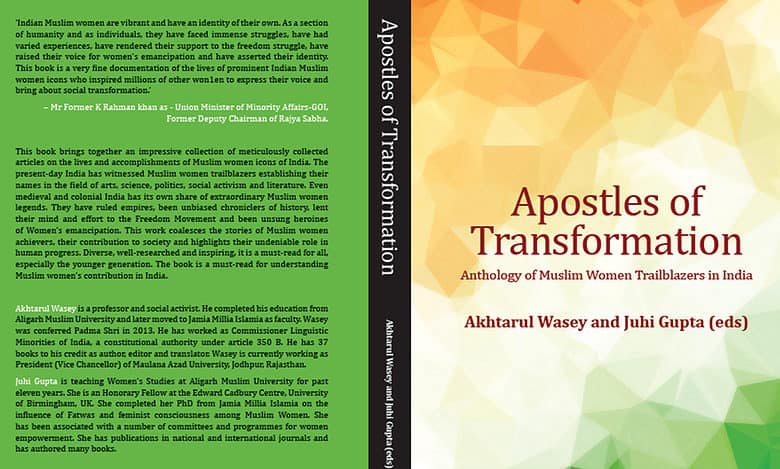
These vital pieces of information largely lay in oblivion and have been aptly articulated and cogently documented in an astutely edited anthology of Muslim women trailblazers, Apostle of Transformation, published recently (Peter Lang, 2022). The anthology, edited by a well-known Islamic scholar Akhtarul Wasey and a promising academician Juhi Gupta, carries an assortment of 23 articles that engages the constitutive acts of turning mundane life into moments of epiphany by Muslim women. Their pulsating and coming-of-age experiences need to be told candidly.
Akhtarul Wasey and Juhi Gupta took pains to upend the widespread but erroneous perception that hardly considers Muslim women beyond being silent and passive onlookers. The book produces a gripping and layered narrative of those women who are to be reckoned as role models, but why their awe-inspiring efforts have not fetched the requisite response? As a central premise of the study, this question hardly took off, and the editors dish out a laudatory and partially plausible answer instead. For Wasey and Juhi, Muslim women, by and large, sump up a story of hope and resilience, and they assert, “In reality, Indian Muslim women, in the past and the present, have exerted their freedom, identity and agency. One way or the other, they have found ways to create, contribute, act and participate in various fields and ascended to prominence. Be it art, science, nation-building or politics, there have been hordes and hordes of Indian Muslim women pioneering, participating and contributing to development in the specific field.”
The creative dexterity, sweep of learning and speculative intelligence of Muslim women resonate with almost every genre of literature and non-fiction, and Urdu is not the only beneficiary. Azarmi Dukht Safavi, Rakshanda Jaleel, Rana Safavi, Annie Zaidi, Sami Rafeeq, Nazia Erum, Rana Ayub, Ghazala Wahab, Huma Khalil, Zehra Naqvi, Reema Ahmad, Nasra Sharma, Sadiqa Nawab Saher and the like make it for Persian English and Hindi with remarkable success. Their stories bear witness to what the editors asserted in the preface.
Several prominent authors and academicians, including Syeda Hameed, Rasheed Kidwai, Madhu Rajput, Bharthi Harishankar, Shahida Murtaza, Sabiha Hussain Ayesha Muneera, Azra Musavi, Shiangini Tandon, excavate details and they set forth a discourse whose emotional arc looks irresistible.
The book zeroes in on many prominent women by employing the case study method. Syeda Hameed, in her ear-to-ground and empathetic story of an accomplished author Saliha Abid Hussain whose fifty books, including her profoundly consequential autobiography, Silsila-e- Roz-o- Shabh (sequence of Days and nights), hardly got the recognition she deserved. It rightfully peeved Syeda Hameed, who candidly enumerated her oeuvre by observing that she was a chronicler of her times with natural talent for storytelling and, above all, a woman who believed, practised, and propagated her religion in its most liberal and humanitarian spirit.
Not many knew that Qudsiya Sikandar, Shah Jhan and Sultan Jahan were more than fortuitous rulers of Bhopal. Rasheed Kidwai employed laudatory idiom for adeptly documenting how their rule saw justice, gender sensitivity, peace and reforms even as faith and traditions remained intact. Surayya Tayyabji’s incredible artistic dexterity and pivotal role in designing our tricolour continue to elude public attention, and Shahida Murtaza’s academic rigour-filled succinct article, Surayya Tayyabji, the Resolute woman, supplements it.
The dreadful and calamitous partition is dotted with poignant tales of sufferance, and heart wrenching stories of the abducted women remained inarticulated. It was the turn of a celebrated author and activist, Begum Anees, who put together permeating and nuanced memories of the event and its earth-shattering aftermaths from the standpoint of women subjected to unprecedented affliction. Azra Musavi made her autobiography, Azadi Ki Chaon Mein (In Freedom’s Shade), the object of a single pristine look. Azra’s lucid close reading of the text draws forth an informed debate on how the two states faltered in fulfilling the aspiration of people.
Ayesha Muneera astutely spells out the contours of Rokeya Sakhawat Hussain’s creative world, and she argues that Sultana’s Dream is a feminist, political, and ecological utopia. She sides with Nilanjana Bhattacharya by terming it an anti-colonial text. For her, the novel works against India’s colonialization and internal colonization of women within Indian society. Rokeya’s trail-blazing text subtly conjures a dystopian world where gender roles are reversed, but the environs remain dreadful.
Naima Khatoon produced an evocative piece on Begum Akhtar, one of the most accomplished singers of Ghazal, Dadra and Thumri that India ever produced. She blended music and poetry with remarkable ease.
In her article, Sabiha Hussain ropes in feminist and cultural studies tools to map the creative terrains of Ismat Chughtai and Qurratul ain Haider.
Juhi Gupta turns her attention to the family of Sheikh Abdullah, the pioneer of Muslim women’s education, and she perceptively analyses the contribution of Begum Abdullah, well-known educationist Mumtaz Jahan, famous author Rasheed Jahan and prominent actor Begum Khurshid Mirza (Renuka Devi).
Shah Alam insightfully unravels the vanguards of change, and his laconic account, Vignettes of Muslim women Politicians in India reads well.
Faiza Abbasi, Mayuri Chaturvedi, Chand Bi, Tauseef Fatima, Bharti Hari Shankar, Rekha Pandey, Abida Quansar, Madhu Rajput, Bilal Wani, Naseem Shah, Shirin Sherwani, Shivandgini Tandon, Ruchika Verma, Anam Wasey and Huma Yaqub are the other contributors who made the anthology an intriguing read.
source: http://www.siasat.com / The Siasat Daily / Home> Featured News / by Shafey Kidwai / November 12th, 2022
A well-known writer and Aligarh Muslim University (AMU) faculty member, Prof M Shafey Kidwai has been appointed as the Chairman of the renowned Qatar-based literary organisation ‘Majlis-e-Frogh-e-Urdu Adab’.
MFUA had the late Indian theorist, literary critic, and Urdu scholar, Prof Gopi Chand Narang on the honorary post of Chairman of that organisation.
The ‘Majlis-e-Frogh-e-Urdu Adab sets forth a platform to encourage fresh litterateurs in the domain who are mentored by experienced writers and poets with distinctive styles and practices. As the Chairman of the Adab Aalmi Award Jury Committee from India, one of the important roles will be to acknowledge those adept at the art,” said Majlis Chairman, Mohammad Atiq.
Extending congratulations, AMU Vice-Chancellor, Prof Tariq Mansoor said: “I am pleased to see that Prof Kidwai has been chosen to head the jury of a prestigious award. The university community is celebrating the dedication he has shown on the way to a well-deserved and earned success”.
Prof Kidwai is a known scholar, academic, bilingual critic, translator and author.
He has been writing for a number of reputed Urdu and English journals. His reviews and articles regularly appear in The Hindu, The Hindustan Times, The Indian Express, The Outlook, The Book Review, The Indian Literature, The Frontline, Siasat.com and others.
He has authored five books in English and eight in Urdu and published more than 100 articles in peer-reviewed journals.
He is a recipient of the Sahitya Academy Award (2019), Kalinga Literary Award (2021), Iqbal Samman (highest literary award of Madhya Pradesh Government, 2018) and Amir Khusro award (highest literary award of Uttar Pradesh Urdu Academy, 2017).
Prof Kidwai has been teaching communication studies, film studies, broadcast journalism, sports journalism and Urdu journalism for over 35 years at the Department of Mass Communication, AMU.
source: http://www.siasat.com / The Siasat Daily / Home> Featured News / by siasat.com news desk / August 13th, 2022