All posts by mpositiveone@gmail.com

How India’s birdman, Sálim Ali, showed us the interconnectedness of life

Mumbai, MAHARASHTRA :

A recent collection of his radio talks point to the stellar role birds play in preserving our environment
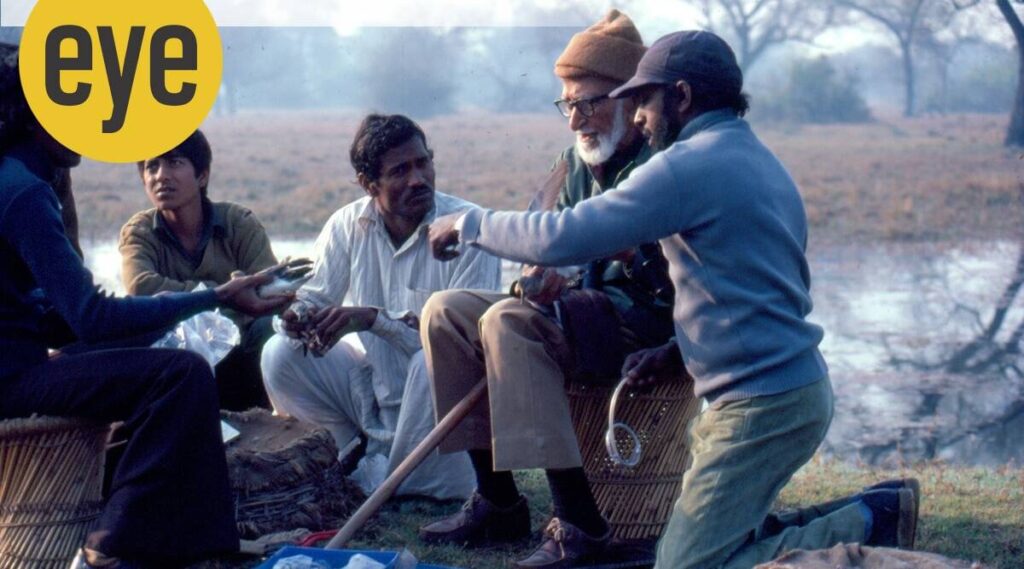
Sálim Ali could reach out to a cross-section of society, telling them about birds and the stellar role they play in preserving our environment. (Source: Black Kite)

From busting myths about fireflies lighting up the homes of weaver birds to explaining the whys and hows of the spectacular phenomenon of bird migrations, there has been, perhaps, no one better than Sálim Ali, India’s best-known ornithologist, to demystify the avian world. To Ali’s already formidable list of works, comes another: a collection of his radio talks. Edited by Tara Gandhi, Words for Birds (Black Kite), the book shows him doing what he did best — reaching out to a cross-section of society on birds and the stellar role they play in preserving our environment.

“He was an excellent communicator. He gave a number of lectures and he communicated to people of different professions. For instance, while speaking to mountaineers, he would say — ‘since you go to great heights, to places that ornithologists are not able to go to, look out for nesting sites, for Lammergeiers, the big vultures that are seen in high altitudes. Look around and if you see any birds, let us know, take down notes’. He would talk to people to get out of their own turf or specialisation and become interested in the wider picture,” says Gandhi, who was guided by Ali for her MSc. in field ornithology  shortly before he passed away in 1987, at the age of 90.
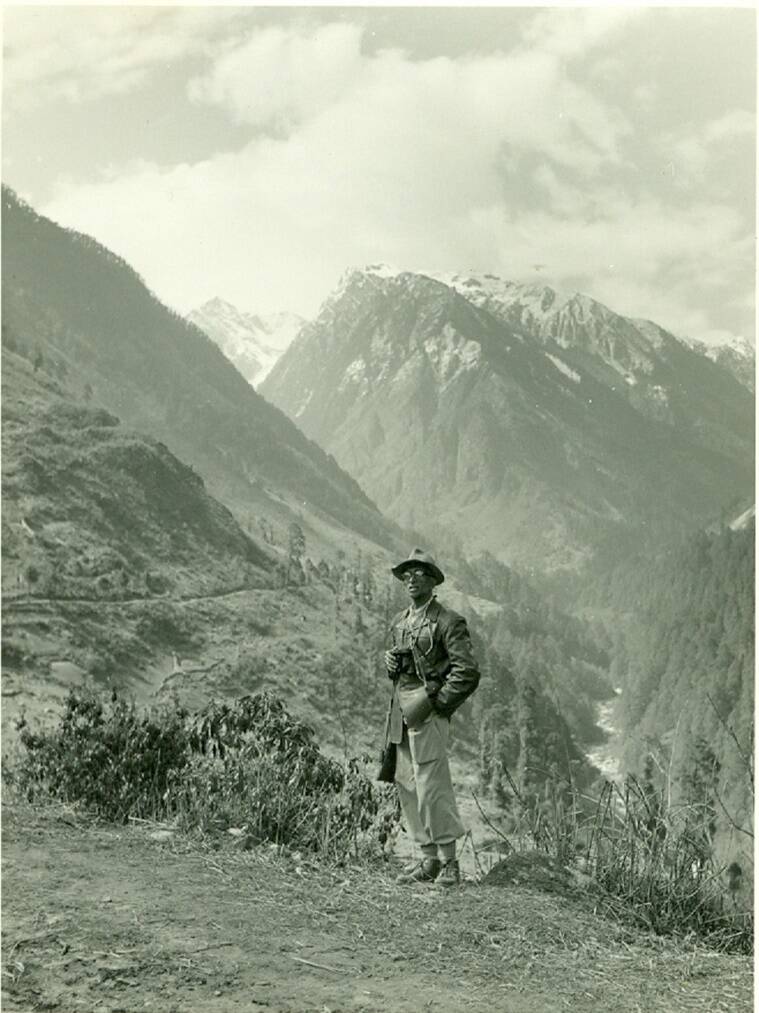
India’s birdman, Sálim Ali. (Source: Black Kite)

He was, as she says, ahead of his times in understanding the importance of involving people in conservation. “You will come across one of his talks where he tells his listeners that if you see any unusual birds on the seashore, write to us. This struck me. Nowadays, we talk about citizen science, lay people’s involvement in scientific documentation. A number of bird watchers are specially involved in citizen science — doctors, teachers and people from many other disciplines are making bird lists and sending them to be compiled. A lot of important material comes out of analysing this data . Those days, nearly 60 to 70 years ago, Sálim Ali would urge his readers and listeners to write to the Bombay Natural History Society (BNHS) to record the information.”

Ali who took over the BNHS after Independence and remained with it for decades, was key in keeping the organisation going and in initiating a systematic study of birds. “He had a vision, which was much ahead of his time and very contemporary,” says Gandhi, who has previously edited A Bird’s Eye View: The Collected Essays and Shorter Writings of Sálim Ali (II Volumes, Permanent Black, 2018) and is the author of Birds, Wild Animals and Agriculture: Conflict and Coexistence in India (The Orient Blackswan; 2015).
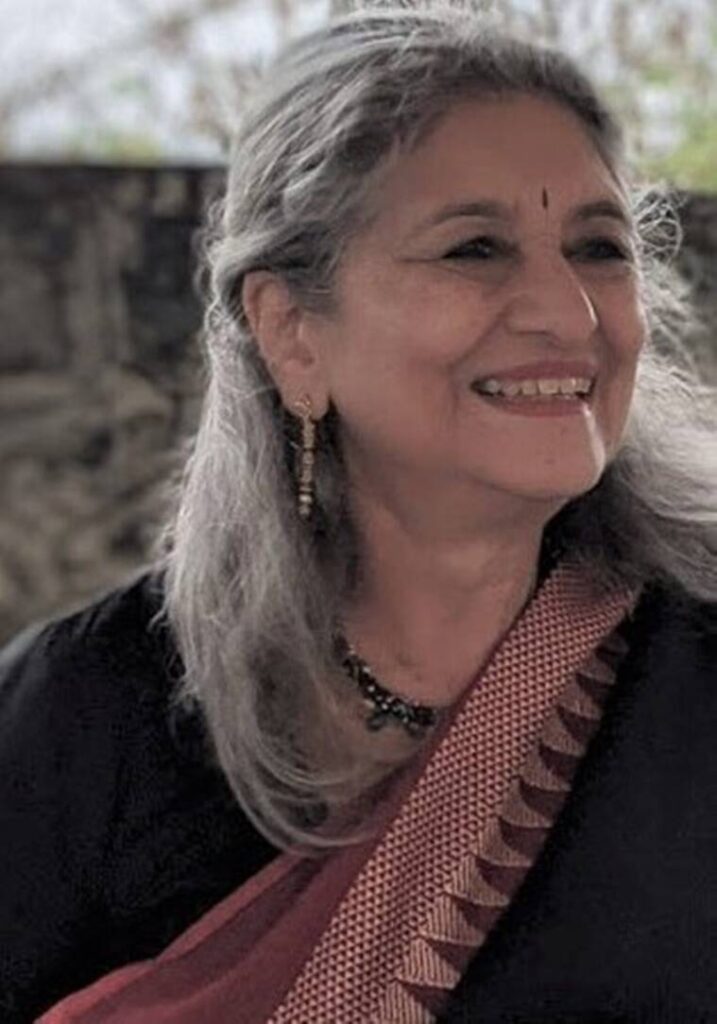
Tara Gandhi, who has edited ‘Words for Birds’.(Source: Black Kite)

Delivered between 1941 and 1985, Ali’s talks were recorded mainly at the All India Radio (AIR) station in Mumbai and range from one on trends in bird study to talking about bird life for a school broadcast, in conversational Hindustani titled Chand Hairat Angez Parandon aur Janwaron ke Ghar, speaking to children who didn’t speak English. In his autobiography, The Fall of a Sparrow (Oxford University Press, 1985), he recounts his days as a guide lecturer in the Natural History Section of the Prince of Wales Museum in Mumbai, where he remembers particularly enjoying “talking to pupils from the School for the Blind, because of the lively interest they showed.” Gandhi says, “He made an effort to reach out to children to make them understand more about birds and nature in an easy way.”

After his stint at the Museum, Ali spent a year in Germany, training under Erwin Stresemann at the Berlin University Zoological Museum, returning to India in 1930 and launching on a series of bird surveys across the country. Beginning at a time when ornithology, in his own words, was the “Cinderella of Indian Zoology”, Ali can be credited for taking the discipline outside museums and collections and out in the natural habitat and widening its scope. “The kind of projects he undertook later on from the ’60s onwards were extremely important and absolutely pragmatic. He took on a project on birds in the aviation sector, that is bird hazards in aviation. It was a huge project and it was entirely for saving human lives, for preventing huge losses. The study tried to find methods to avoid bird hits on aircraft — observing the time of the day, the trajectory of the birds, which species were involved and how to prevent them from congregating in the airports. Earlier, his surveys were about collections which became a valuable and permanent resource , but later, he moved away completely from the whole idea of merely collecting specimens when he became the head of BNHS,” says Gandhi.

But being dubbed India’ birdman sometimes shadowed his role as a conservationist. “He would say repeatedly that everything is interlinked in nature. It is not just the birds themselves, it is the habitat of the birds and different ecosystems in India he wanted conserved for the sake of all the flora and fauna within them. He spoke about conservation of endangered species and regretted that so many species had died out. Ali was instrumental in getting a number of national parks and protected areas established. Through his communication skills he was even able to persuade royal families to set aside their hunting reserves for conserving the species within them,” says Gandhi.

source: http://www.indianexpress.com / Indian Express / Home> Books and Literature / by Devyani Onial, New Delhi / April 03rd, 2022

6,000 Km In 110 Days: Delhi Woman Sufiya Khan Breaks World Record For Golden Quadrilateral Run

NEW DELHI :

Sufiya Khan began her run from the national capital on December 16, 2020

6,000 Km In 110 Days: Delhi Woman Breaks World Record For Golden Quadrilateral Run
Sufiya Khan travelled the golden quadrilateral by foot.

Sufiya Khan has set a Guinness World Record for the shortest time taken to travel the ‘golden quadrilateral’ – a network of national highways connecting Delhi, Mumbai, Kolkata and Chennai – by foot. The ultra runner from Delhi completed a journey of 6,002 km in just 110 days, 23 hours and 24 minutes. 

Sufiya began her run from the national capital on December 16, 2020. By April 6, 2021, she has completed the golden quadrilateral circuit. A gruelling journey, to be sure, but the 35-year-old athlete was determined to see it through.

“No, I did not think of giving up in the entire attempt,” she was quoted as saying by Guinness World Records. “Though there were very many injuries that happened during the run my full focus was on completing this attempt in minimum time.”

Sufiya was supported on her run by her husband, who drove the support car, took care of her nutrition and physiotherapy and managed her schedule. Besides this, local runners and cyclists joined her at various stretches of her journey.

“Almost all the cities where I was running through, runners and cyclists were joining and supporting us,” Sufiya said. “Most of the time in cities and small-town people were hosting me at their home for a night stay and dinner. Many times during the attempt we took hotels and couple of nights we had to sleep on roadside shelters.”

On Saturday, she was certified as the “fastest female to run along The Indian Golden Quadrilatrel Road.”

_____

Facebook.com / SufiyaSufiRunner

Sunday 27 March 2022 at 06:11

New Guinness World Records and It’s Officially Amazing!!
Fastest female to run along The Indian Golden Quadrilatrel Road (6002km in 110 days 23 hours)

Glad to share it with you all who was a part of this amazing world record expedition.
I am very grateful to all you amazing people who ran along for few miles to few hundreds miles, who warmly welcomed me in their city, who arranged homefood for me, who encouraged me to run when i was down, who celebrated my every success as t…See more

1.4K46924

________

Sufiya describes ultra-distance running as her passion. Ultra running is any footrace longer than the traditional marathon distance of 42.195 kilometres. 

“Ultra-distance running is my passion and I have left my aviation job for it so I always have time for such a journey. I train myself for long runs. This was my third expedition of long-distance running in-country,” she said.

She already holds a Guinness World Record for the fastest woman to run from Kashmir to Kanyakumari. 

source: http://www.ndtv.com / NDTV / Home> OffBeat / by Sanya Jain / March 30th, 2022 (headline edited)

Kerala man’s story of reaping rewards of dairy farming in coconut grove

KERALA :

8 yrs into venture, V Hakeem has over 150 cows and supplies 650l of milk daily, reports A SATISH

Palakkad :

By 2am, V Hakeem is on his feet. He then goes to his coconut grove, located more than a kilometre away, and wakes up his eight migrant workers. And they begin work at his dairy farm in the village of Kamblichungam near Chittur. Hakeem’s foray into dairy farming happened with the cost of purchasing manure for his coconut grove becoming unaffordable. “So I decided to set up a dairy farm inside the grove,” he recounts.

Eight years down the line, Hakeem now has more than 150 cows and supplies 650 litres of milk daily to the Panniperunthala milk society, of which he is the president.

On Friday, he received the district’s best farmer award instituted by the dairy development department. Last year, he supplied 1.36 lakh litres of milk. Animal Husbandry and Dairy Development Minister J Chinchurani gave away the award. “It is the involvement of the farmer that brings in the results,” Hakeem says.“Apart from high-breed varieties like Holstein Friesian and Jerseys, we also have native varieties like Sahiwal, Vechur and Gir.” 

He decided to set up the shed there as the cows can be housed in a cool place. “There are coconut palms on all sides, which helps the cattle stay cool and produce more milk. The only issue is that I have to replace the sheets of the shed occasionally as dry palm leaves fall on them.”

He now plans to install a machine that can automatically milk 20 cows in seven minutes. “It will reduce the workload,” he points out. Hakeem says dairy farmers should be given at least Rs 50 per litre to ensure a minimum return on investment, with the cost of feed and other inputs increasing substantially. 

source: http://www.newindianexpress.com / The New Indian Express / Home> Good News / by A Satish, Express News Service / April 03rd, 2022

Real and unruly: Saikat Majumdar reviews Of Dry Tongues and Brave Hearts

Agra, UTTAR PRADESH / NEW DELHI :

The women’s writings and paintings collected here pose fundamental questions about the relation between art and marginality

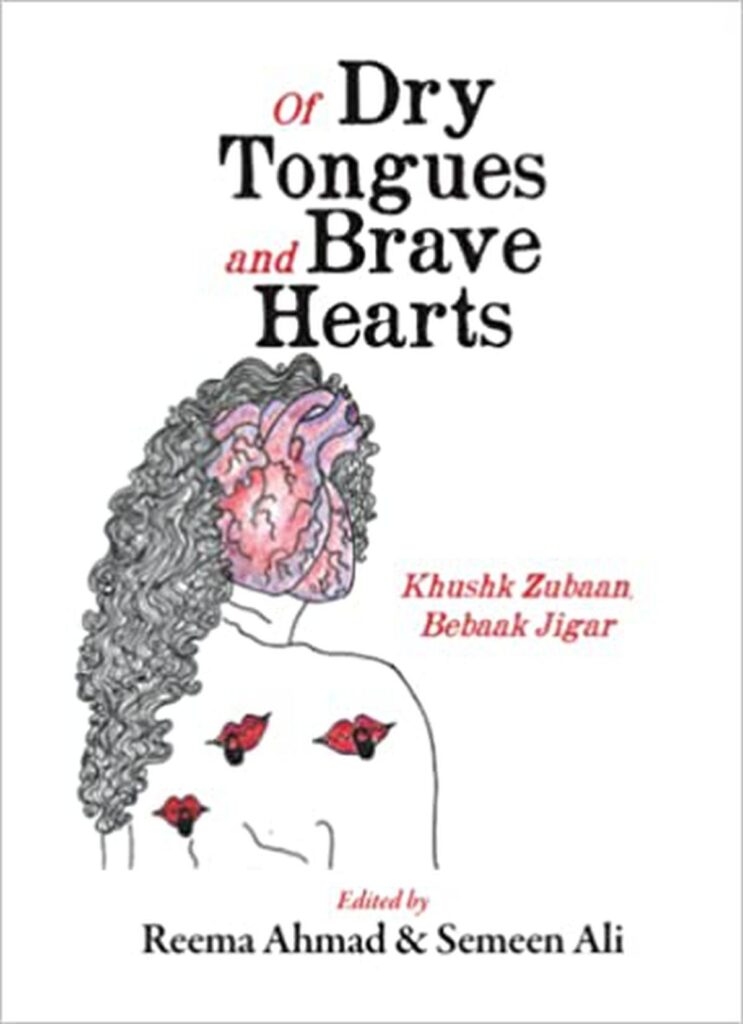
When tongues run dry but hearts remain fearless — can there be a plight direr than this tearing apart of body and mind? The drought on the tongue is the silence of fear, hiding a heart that rails against terror, pledging to shatter the quiet. Reema Ahmad and Semeen Ali have come up with a dream title for their edited collection of poetry, prose and painting by women, many of them newer voices, some unheard before, published by a daring and often-experimental publisher of poetry, Red River.

This jagged collection poses fundamental questions about the relation between art, passion, marginality, and the vagaries of everyday life. With close to 150 contributions combining verse, narrative, reflections and images, the heart of this book is filled with courage, and tongues remain dry no more — they spill rivulets of passion, anger, love, protest, and triumphant celebrations of the quotidian.

Hope is a lie

The sheer range reimagines the relation between creativity and passionate selfhood through a spectrum where the accomplishments of craft are uneven. But the honesty never is, and since in the end, honesty occupies the true heart of artistic craft, it also invites us to broaden our understanding of technical finesse beyond the usual and the expected.

Early in the collection, Debolina Dey confesses that “These poets have taught me/ to be a ruthless hunter of metaphors/ as if your body/ could be something else.” The body returns in its quotidian oppression in Sukla Singha’s story, ‘That ‘90’s Show: Blood, Shit and Other Things’, chronicling the daily humiliation, of body and labour, of a mother, experienced and narrated by a young daughter, but ending with the strange billowing of the heart: “A storm of jet-black hair in the air. A Meitei woman’s boisterous laughter. Nobody had the guts to ruin that magic.”

The vernacular is not only the name of reality here, but also of synergy between languages. Namita Bhatia’s Hindi poem, ‘Cactus’, opening with the eloquent grunt, “Mai cactus hun — cactus”, ends, in Reema Ahmad’s translation, with the “chaste hope” “That if my skin be peeled off/ I may bleed only milk”. But in her engrossing short story, ‘An Obscure Life’, Ketaki Datta reminds us that often hope is a lie — that her friend Swapna who claimed to a hotel singer had died without ever becoming one, after a life of prostitution known only to her mother.

In this dry-tongued world, poetry, as Sneha Roy knows, is a forever transgression: “Like a pillar of ‘shameless poetry’ standing tall/ in Plato’s failed and banished world.” Poetry lies in the humble and the mundane, not in flamboyance, as in Aratrika Das’s dream that her son grows up to cook in a kitchen of daily, soiled labour, not in the TV kitchen with glamorous aprons and hi-tech gadgets.

Haunted by sensation

Bodies are real and unruly in this collection. In her poem, ‘On Carving a Watermelon’, Yashasvi Vachhani voices a woman whose lover tells her: “you have a pretty face, if only you lost some of it/ some of the meat that calls your bones home”. As that “piece of art inedible”, she watches as “you hand me a knife/ and say begin”. Zehra Naqvi, in a poem of visual experimentation, reclaims the female body away from male desire and maternal nourishment: “Because our breasts belong to us. Not to the men who desire us. Not to the children who feed on us.” Dipali Taneja writes about the ageing body haunted by memories of sensation: “You hear that your uterus is senile!/ It may well be, but your skin is not.”

The lines face Teena Gill’s painting, Dancing Woman, and the meditative trance on her face strangely intensifies the bodily sensation in Taneja’s poem. Ikilily of Pink Lips, in Neha Chaturvedi’s ominous fairy tale of that name, nurses a curse — she can have sex, but if “so much as a thought of love entered her mind about the man or the woman she was with, the person would die.”

The myth contrasts sharply with the sculpted realism of Shamayita Sen’s poem, ‘Consent’, which states: “The birdcage in your chest/ will have to ask for consent/ for mine to respond.” Till the very end, the ineluctable violence of desire shapes the paradox of Khushk Zubaan, Bebaak Jigar.

Of Dry Tongues and Brave Hearts; Edited by Reema Ahmad & Semeen Ali, Red River,₹599

The reviewer’s most recent book is The Middle Finger, a campus novel about poetry, performance, and mentorship.

source: http://www.thehindu.com / The Hindu / Home> Books> Mixed Collection / by Saikar Majumdar / April 02nd, 2022

How a Messi fan in Kerala village became a football journalist in Spain

Mangattuparambu Village, KERALA / Vigo, SPAIN :

Jushna Shahin’s passion for the sport made her achieve the unthinkable.

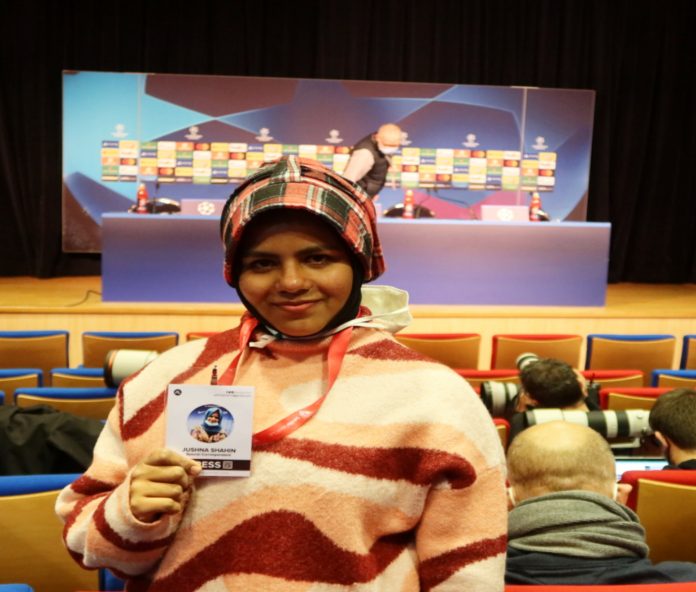
Jushna at the conference room Spain. | Picture by arrangement

Kerala :

Jushna Shahin’s earliest memories are of watching football matches on TV with her family in Kerala’s Mangattuparamb village.

As a die-hard Lionel Messi fan, Shahin got her chance to do her bit for the game in 2009 when she was selected as one among the 70 students in JNU for the language assistant program in Spain by the Ministry of Education, Spain. “In our village, girls rarely went outside of their homes, other than going to school etc,” Shahin, a teaching assistant and football reporter in Spain, told TwoCircles.net. “Girls going out to play was out of the question, and that put an end to my dream of playing the sport.”

The Kendriya Vidyalaya high school where she studied encouraged sports, but Shahin was not comfortable with the usual sports uniform of shorts and t-shirt. 

This did not keep the girl away from football. “I  spent my time learning about the sport, and its laws and rules,” she said. 

Love for Spanish and Messi
Shahin said she wanted to study Spanish when she was in 10th grade so that she could talk to Messi.“I don’t know if it will materialize or not but I will make efforts,” she said. 

In 2019 when she got her first salary working in Spain, Shain bought tickets for the UEFA Champions League in Barcelona to see her sports hero play live. “It was unreal and amazing,” she said. 

The following day, she went over to the Barcelona club’s office and handed over a hand- letter meant for Messi, hoping that he would reply one day. 

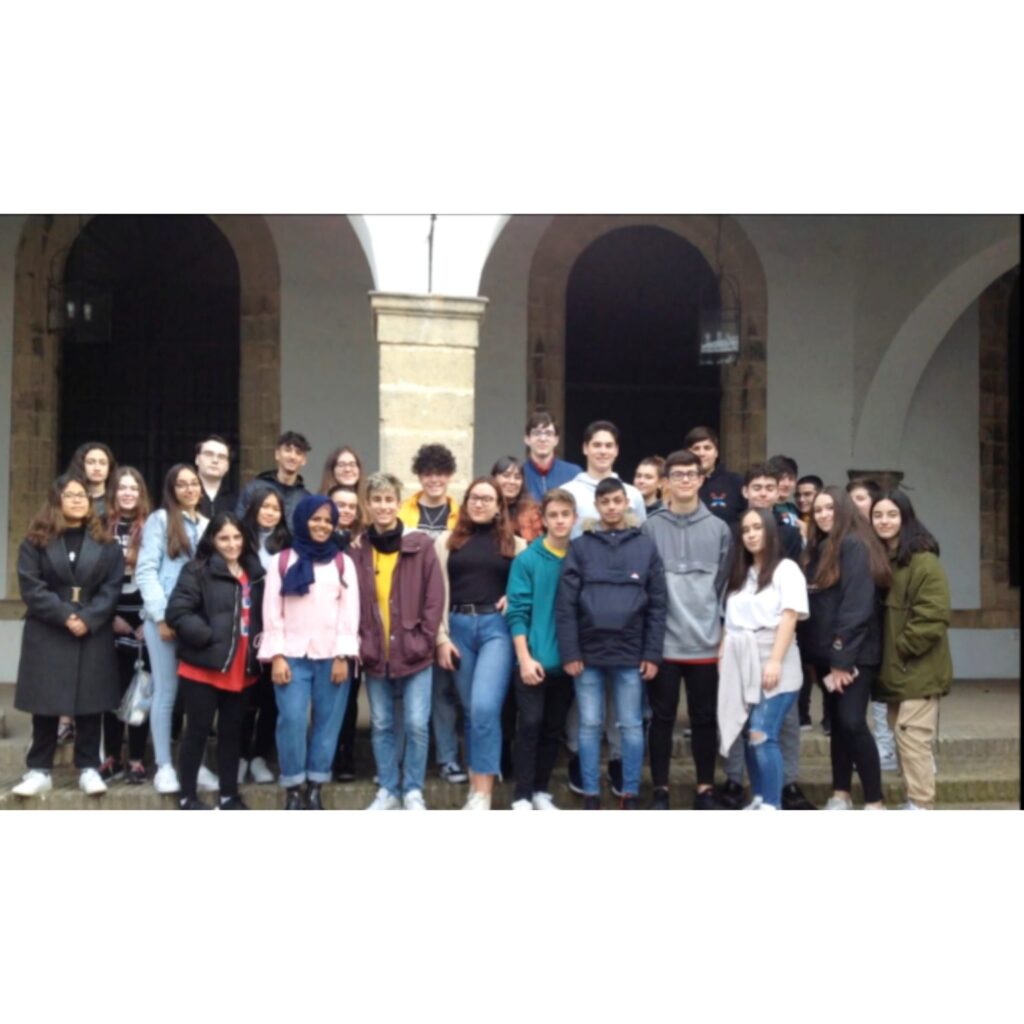
Jushna Shahin on a visit to a Vine Cathedral with her students at the IES Santa Isabel de Hungria, Spain. | Picture by arrangement

Last year when Messi moved to the Paris Saint Germain (PSJ) football club in France, Shahin flew to Paris and witnessed the team getting trained. “My heart-throbbing moment was when I watched Messi getting trained,” she said.

While in 11th grade, Shahin attended a camp organized by students of central universities to help those interested to pursue studies outside Kerala. Contacts she made from the camp helped her  for the entrance exams. “Even after I  cleared the exams, my  parents were not  convinced about pursuing Spanish as a graduation course. However, they gave in to my wishes,” she said. 

In September 2019, Shahin traveled to Spain on her first international trip. 

After landing in Spain she found that the Spanish she had learned from textbooks was not the same as spoken by people in Spain. “It was a challenge. Also, the other Indian student’s who had been selected were all placed in different cities of Spain. To travel to a new country was exciting but I felt tense and insecure initially,” she said.

Love for sports writing
In 2014, when Shahin was at JNU, she started writing journalistic pieces for the Companion magazine. She would  write short reports about the matches she watched. Her interest in sports writing led her to report for The Footy Times , which is an online magazine devoted to publishing football journalism. She started reporting for the magazine during the 2018 FIFA World Cup and has been writing for it since. She has also reported for Malayalam news channel MediaOne and online news website MaktoobMedia.

Shahin  recalled two events as the most exciting during her work as a football reporter. In 2021 when the stadiums were closed to the public amid a global pandemic, she was one of the few media persons with accreditation pass reporting the semi-finals of the Copa del Rey in Spain. “I was seven months pregnant at the time,” she said 

In February 2022, she got accreditation from the Paris Saint-Germain (PSG) Football Club to report the UEFA Champions League round 16 in Paris. She also attended a press conference at the home stadium of PSG club where hers was one among the ten questions asked to Karim Benzema (Real Madrid captain). “Now that stadiums are open for the public, I don’t think I will get the chance to go in with the media persons alone to watch a match in a closed stadium. That makes my reporting during the last year very special,” Shahin said.

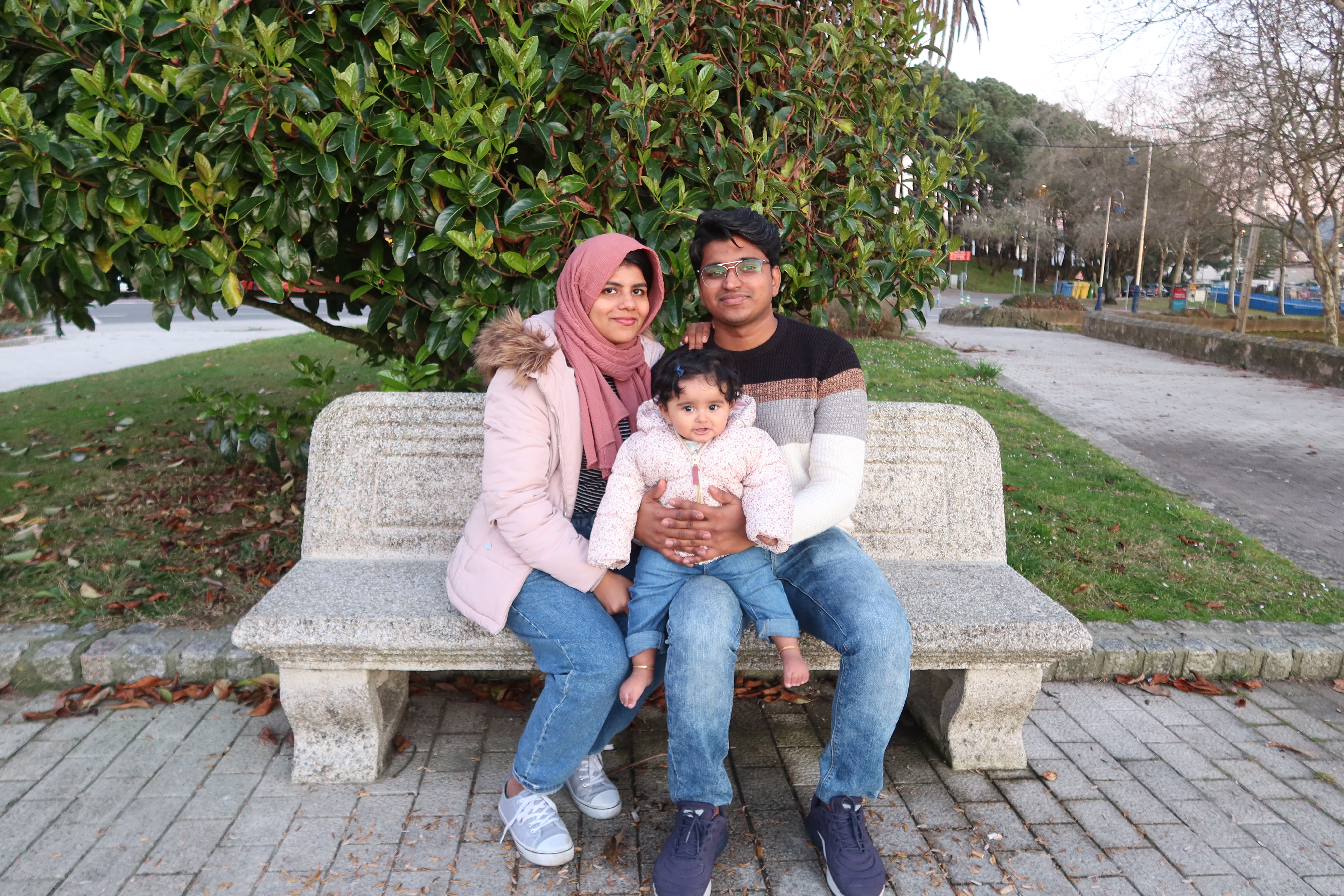
Jushna with her husband Awad and daughter Eva. | Picture by arrangement

Having been called crazy for her dreams and passion, Shahin shrugs it off and said, “What’s important and special for you might be very silly for the other person. It’s better not to see and look at your dreams in other people’s frameworks. Create your own dream and respect it, and be confident. Instead of just dreaming it, try to work on it. The only thing that matters is whether you are happy with it or not,” she added.   

Shahin’s parents had seen her love for football only as a childhood interest and never knew she would pursue a career related to the game.

“More than her craze for football through Messi, I am happy that she is in the field of football journalism,” said her father CKA Jabbar, veteran journalist and associate editor of Malayalam news portal kvartha.com. “Love for football and writing have been in her since childhood, and she worked hard to follow her dream,” said her mother, Nazila CH, working in the Animal Husbandry Department under the Government of Kerala in Thiruvananthapuram.

Shahin now lives with her husband, Awad Ahmad, and eight 8-months-old daughter in the city of Vigo in north-western Spain. 

Najiya O is a freelance journalist based in Calicut, Kerala. She tweets at  @najiyao

source: http://www.twocircles.net / TwoCircles.net / Home> Lead Story / by Najiya O, TwoCircles.net / March 26th, 2022

NEET 2021: Muslims “State Topper” in 5 states

INDIA (BIHAR, LADAKH, LAKSHWADEEP, MIZORAM, +):

In an impressive academic performance once again Muslims have emerged as “NEET State Topper” in 5 states for the year 2021.

NEET 2021 Toppers: 

In an impressive academic performance once again Muslims have emerged as “NEET State Topper” in 5 states, including one abroad and overseas.

According to NEET 2021 Toppers’ List released Tuesday . Mohammad Zeya Belal, Zarina Batool, Farzina Yasmin Laskar, Shafeek Ahamed AM and Arsalan Mosaddiq are National Eligibility cum Entrance Test State Toppers (NEET UG 2021 Topper)in 5 states.

According to the NEET 2021 State Toppers List of 38 States and Union Territories, Zeya Belal, who also figured in the list of NEET 2021 Top 20, secured the first rank in Bihar. Zeya Belal has bagged 715 out of the total 720 marks in NEET 2021.

Other NEET Toppers 2021 who are Muslims include Zarina Batool who secured 596 marks and topped Ladakh, Farzina Yasmin Laskar who bagged 573 marks and topped Mizoram, whereas Shafeek Ahamed AM got a total of 489 and secured the first position in Lakshadweep,

The 5th Muslim topper is Arsalan Mosaddiq. Arsalan bagged 690 marks and topped NEET overseas centres.

The NTA did not disclose at which centre Arsalan appeared for NEET 2021. It was however announced that besides various exam centres in India, NEET was also held this year in Dubai and Kuwait .

In 2020, a total of 06 Muslim students had found their place in the list of NEET toppers. Among them was Shoyeb Aftab from Assam who had secured AIR 1 in 2020. Aftab is currently studying at AIIMS, New Delhi.

The NEET exams were conducted on September 12 at over 3,800 centres across 202 cities in India.

Around 16 lakh students from all over the country and abroad had applied to appear for the exam.

The NTA declared the NEET result Monday evening. In a first, the NTA sent the NEET score to the candidates on their registered e-mail addresses before publishing it on the official website.

Three students – Mrinal Kutteri from Hyderabad in Telangana, Tanmay Gupta from Delhi (NCR) and Karthika G Nair from Maharashtra have bagged 720 out of the total 720 marks in NEET UG 2021 and secured AIR 1, AIR 2 and AIR 3 ranks.

source: http://www.ummid.com / Ummid.com / Home> Education &Career / by ummid.com news network / November 03rd, 2021

ET Businesswoman of the Year 2021: Samina Hamied – The woman who carries forward a storied legacy, seeking profit, but never at the cost of values

Mumbai, MAHARASHTRA :

Hamied has successfully steered Cipla on an accelerated growth path with a focus on boosting margins, without diluting the core values it stood for.

Synopsis

“I am humbled and honoured to receive the ET’s Businesswoman of the Year Award. This recognition belongs to each and every one of our 25,000 employees who stand with Cipla, putting patients’ interests before their own and upholding our purpose of Caring for Life,” Hamied, executive vice-chairperson, Cipla, told ET.

Samina Hamied represents a rich legacy. Her grandfather, KA Hamied, a freedom fighter and nationalist, founded Cipla in 1935, making it one of India’s oldest pharmaceutical companies. Her uncle Yusuf Hamied is the doyen of Indian pharma known globally for making affordable generic AIDS drugs accessible to millions of patients in Africa and other low- and middle-income countries.

“I am humbled and honoured to receive the ET’s Businesswoman of the Year Award. This recognition belongs to each and every one of our 25,000 employees who stand with Cipla, putting patients’ interests before their own and upholding our purpose of Caring for Life,” Hamied, executive vice-chairperson, Cipla, told ET.

Hamied has successfully steered Cipla on an accelerated growth path with a focus on boosting margins, without diluting the core values it stood for.

Both as executive director from July 2015 and as executive vice-chairperson from September 2016, Hamied has been instrumental in driving the company’s transformation from a traditional low-cost drug manufacturer to one with a young professional management and an aggressive approach towards inorganic expansion. Under her, Cipla also restructured its business and has also initiated cost-optimisation measures.

She spearheaded Cipla’s entry into the US market with strategic acquisitions of two generic companies, InvaGen Pharma and Exelan Pharma, for $550 million in 2015.

From FY15 to FY21, Cipla’s US revenue grew close to five times. US business contributed one-fifth of the total revenue in FY21.

Cipla’s revenue from operations grew at a compounded annual growth rate of 7% in the last 5 years to Rs 19,160 crore in FY21. Ebitda margin and net profit rose 12% CAGR in the last 5 years to 22.5% and Rs 2,405 crore, respectively, in FY21.

During Covid, Cipla launched antivirals, antibody cocktails, testing kits, masks and sanitizers. Cipla’s India business grew 15% year-on-year to Rs 7,736 crore.

Hamied focuses on board and governance issues, furthering Cipla’s global partnerships, shaping its corporate culture and hiring the right talent.

source: http://www.economictimes.indiatimes.com / The Economic Times / Home> English edition> Business News> Industry> Healthcare-Biotech> Healthcare / by ET Bureau / March 28th, 2022

Justice Syed Mahmood: An Icon of Judicial Resistance to British Colonialism

BRITISH INDIA :

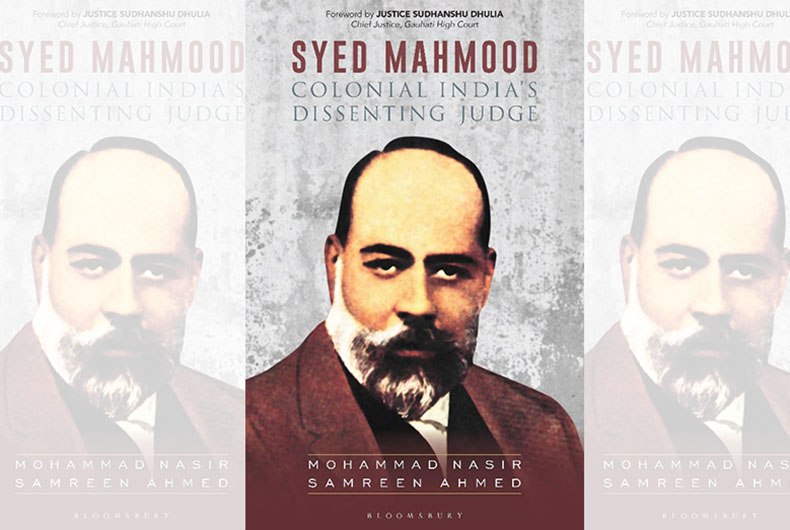
Appointed to the High Court at the remarkably young age of 32, Justice Syed Mahmood displayed during a tenure of just six years that law without conscience was merely a facade for the perpetration of injustice

New Delhi: 

In the late 19th century, Justice Syed Mahmood, son of the great social reformer Sir Syed Ahmad Khan , and the first Indian judge of the Allahabad High Court, became an icon of judicial resistance to British colonialism at the apex of British power across the world.

Appointed to the High Court at the remarkably young age of 32, he displayed during a tenure of just six years that law without conscience was merely a facade for the perpetration of injustice.

A number of his dissenting judgments became a template for reference by future generations, Mohammad Nasir and Samreen Ahmed write in “Syed Mahmood: Colonial India’s Dissenting Judge” (Bloomsbury).

Outside of law, his largely invisible but wide-ranging intellectual corpus engages with questions related to colonial transformation of education and its reconciliation with Muslim identity, national integration and religious tolerance.

His role in the making of Aligarh Muslim University (AMU), presently celebrating its centenary, was notable, but survives only as a footnote in history.

This book chronicles the triumphs and tragedies of Syed Mahmood’s life, and his contribution to shaping the consciousness of modern India. It succeeds in exhuming a seminal figure from the dust of history and demonstrates how the past continues to speak in the present.

Mohammad Nasir is Assistant Professor in the Department of Law, Aligarh Muslim University (AMU). He has written on legal and socio-political issues for Hindustan Times, Indian Express, The Wire and OPEN. He co-edited the Special Centenary Issue of the Aligarh Institute Gazette, a periodical started by AMU founder Sir Syed in 1866.

Samreen Ahmed is a legal researcher and writer based at the Aligarh Muslim University. Her academic writings have been published in the Economic & Political Weekly.

source: http://www.ummid.com / Ummid.com / Home> India / by IANS / March 29th, 2022

Sahala Farsana wins best law student award

KERALA :

Award named after N.R. Madhava Menon, father of modern legal studies in India

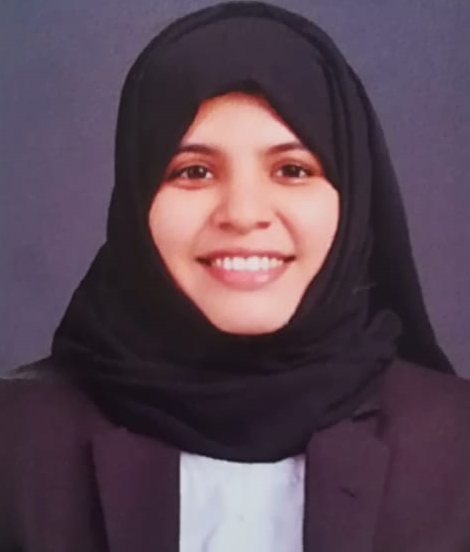
C.K. Sahala Farsana, student of the Nehru Academy of Law, Lakkidi, and first-rank winner of Calicut University in five-year LLB examination, has won this year’s N.R. Madhava Menon Memorial Award for the best law student.

The award has been given by the Victims Information, Sensitisation, Welfare and Assistance Society (VISWAS), an organisation providing succour for the victims of excesses and crimes.

Ms. Farsana was adjudged the best student considering her academic and non-academic performance, especially her leadership in social work. She had won prizes in quiz, debate, and essay competitions held in several parts of the country.

Kalyani Balachandran from Al Ameen Law College, Kulappully, was adjudged the runner-up. M. Shabas from V.R. Krishnan Ezhuthachan Law College, Elavenchery, and Amrit M. Nair from Al Ameen Law College, Kulappully, won consolation prizes.

Former district judge M.R. Balachandran Nair, former diplomat Sreekumar Menon, and Deputy Director of Prosecution K. Sheeba constituted the judging committee.

Principal district judge B. Kalam Pasha gave away the awards instituted in the memory of N.R. Madhava Menon, who was widely considered the father of modern legal studies in India. Menon was a former Vice Chancellor of the National Law Universities and former director of the National Judicial Academy.

VISWAS secretary P. Premnath, vice presidents B. Jayarajan and R. Devikripa, joint secretaries Deepa Jayaprakash and N. Rakhi spoke.

source: http://www.thehindu.com / The Hindu / Home> News> National> Kerala / by Staff Reporter / Palakkad – January 10th, 2022

Mangaluru: SDM Law College student Suhana secures university rank 2 in final exams of LLB

Ullal Kodi, Mangaluru, KARNATAKA :

Mangaluru: 

Suhana Safar, a fifth-year student of BA LLB integrated course at SDM Law College Mangaluru, has secured second rank at the Karnataka State Law University (KSLU) examination.

Suhana is a resident of Ullal Kodi and daughter of Haneef and Ruqiya.

She had appeared for the KSLU final year exams 2021 in Kannada medium and has secured second university rank.

source: http://www.english.varthabharati.in /Vartha Bharati / Home> Karavali / March 30th, 2022