From A Dreamer’s World | Photo Credit: Special Arrangement
A brilliant blue fish glides in a patch of orange pumpkins, another lies still among lilac orchids hoping his camouflage allows him to blend in. These are a few finned beauties artist Shoeb Dastagir has depicted in his solo show A Dreamer’s World.
“I find fish quite calming and I can spend hours looking at them; that is why I began capturing them in my paintings,” says Shoeb, adding he spends a lot of time at the aquarium in Mysore Zoo. “I enjoy watching videos of aquatic life on my phone, too.”
He reels off their names — bumblebee goby, oscars and arowanas, tiger fish, a Brunei beauty and a shark — and how they are all a part of this show. “I am a Piscean, so no matter how hard life gets, fish are a calming refuge for me,” says the artist. “Fish are always calm, going about their lives despite the confines of their surroundings.”
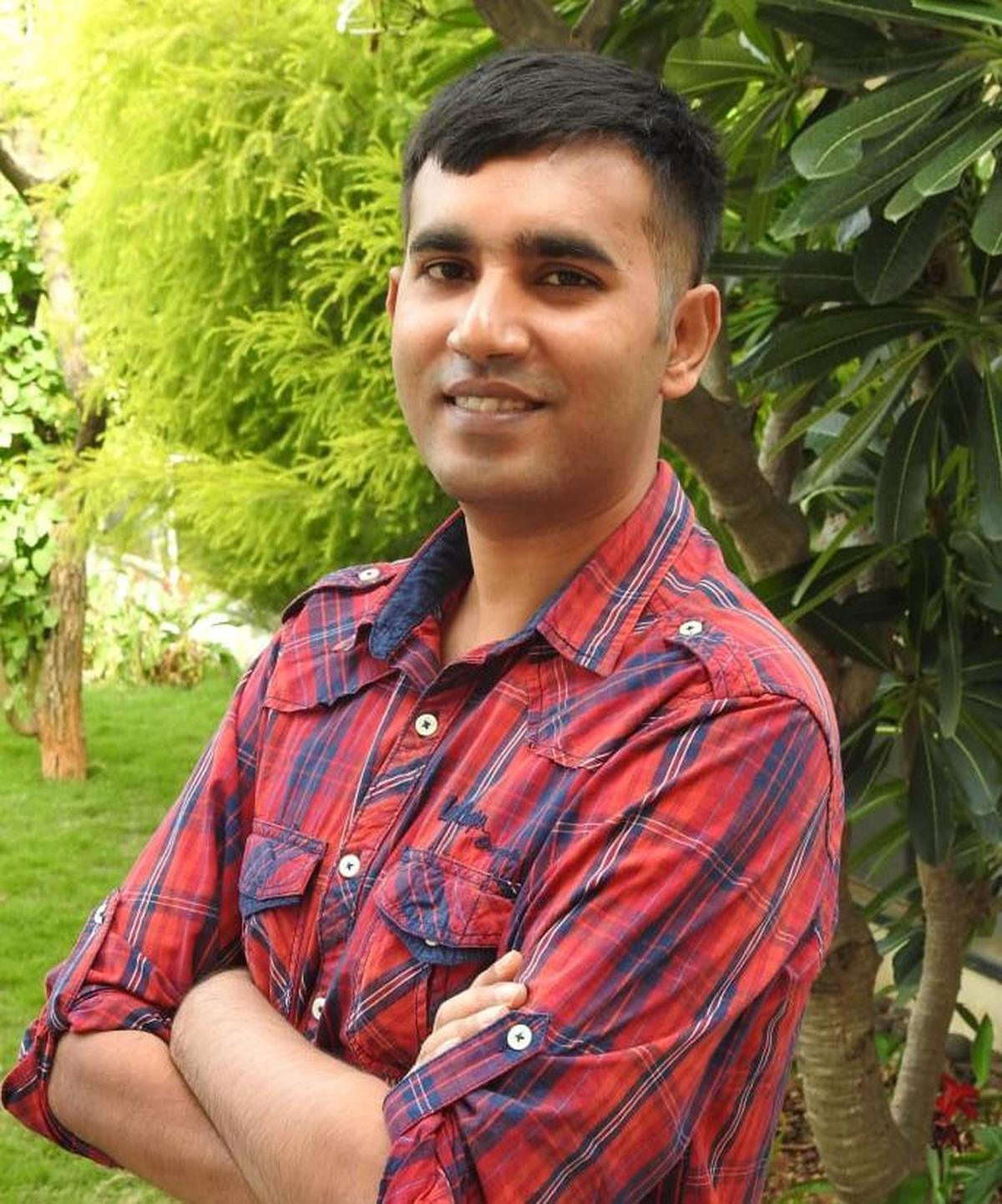
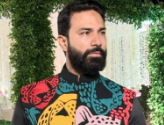
Shoeb Dastagir | Photo Credit: Special Arrangement
He talks about his love for “sunny colours such as tangerine orange, avocado green, icy blue and buttery yellows”. All these hues and more are to be found in his works that exude a touch of whimsy and play out in a fantastical land where an astronaut steps around teacups, fish nestle between blue pea and pearls, and an old-model television sits atop a bouquet of yellow roses.
Though Shoeb draws his inspiration from the natural world, a lot of his art is birthed in his vivid imagination that fuel his compositions of poetry, prose and songs as well. According to his mother Ayesha Dastagir, all these creative interests lead Shoeb to produce bigger and detailed paintings. “One can see a lot of mystical characters apart from the animals and fish, of course. I believe it is his subconscious, sensitivity and imaginary fantasy world that combine to produce something new and different.”
Most of the works in A Dreamer’s World have been executed using pastels and watercolours on paper over the the greater part of a year. Though Shoeb used to paint with oils and canvas, this change in medium came about when he moved from Bengaluru to Mysore, and working on paper seemed a more viable option as space was a constraint at the new place.
From A Dreamer’s World | Photo Credit: Special Arrangement
The artist, who signs his works as Schoeb, his official name which is often misspelt, is currently working on a series of portraits.
The upcoming / current exhibition comprises 24 pieces on display apart from a few others which are a part of the series and are available for sale at the gallery.
A Dreamer’s world by Shoeb Dastagir will be on display at MKF Museum of Art, Bengaluru from November 8-19. Entry free, Mondays closed.
source: http://www.thehindu.com / The Hindu / Home> Entertainment> Art / by Ruth Dhanraj / November 06th, 2025
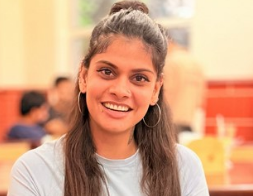
Saniya Samreen receiving a Gold Medal from Justice Dinesh Maheshwari, Chairperson of the Law Commission of India and former Judge of the Supreme Court, at the 9th Convocation of the Central University of Karnataka (CUK) held on Saturday. | Photo Credit: ARUN KULKARNI
Defying all odds, Saniya Samreen, daughter of a fruit vendor from Aland town in Kalaburagi district, bagged the Gold Medal in Master of Commerce (MCom) at the 9th convocation ceremony of the Central University of Karnataka (CUK) held on Saturday.
She received the medal from Justice Dinesh Maheshwari, Chairperson of the Law Commission of India and former Judge of the Supreme Court, in the presence of Vice-Chancellor Battu Satyanarayana, Registrar R.R. Biradar and Controller of Examinations Kota Sai Krishna, on Saturday.
Ms. Samreen, who completed her schooling and college education in Aland before joining CUK for her postgraduate studies, said that her achievement was a result of perseverance and family support.
“All of my achievements are the result of hard work, dedication, and the unwavering support and guidance from my family and mentors,” she with gratitude during her interaction with media representatives on the sidelines of the convocation.
Her father, Mr. Shamu Bagwan, earns his livelihood as a fruit vendor, while her mother, Mrs. Raziya Begum, is a homemaker. “My parents’ constant belief in me has been the driving force behind my success,” Saniya added.
Saniya, who has also qualified both the Karnataka State Eligibility Test (KSET) and the National Eligibility Test (NET) for assistant professor, said she wishes to build her career in academia.
“I aspire to contribute to the field of commerce through teaching and by shaping future professionals,” she said.
source: http://www.thehindu.com / The Hindu / Home> News> India> Karnataka / by The Hindu Bureau / November 08th, 2025
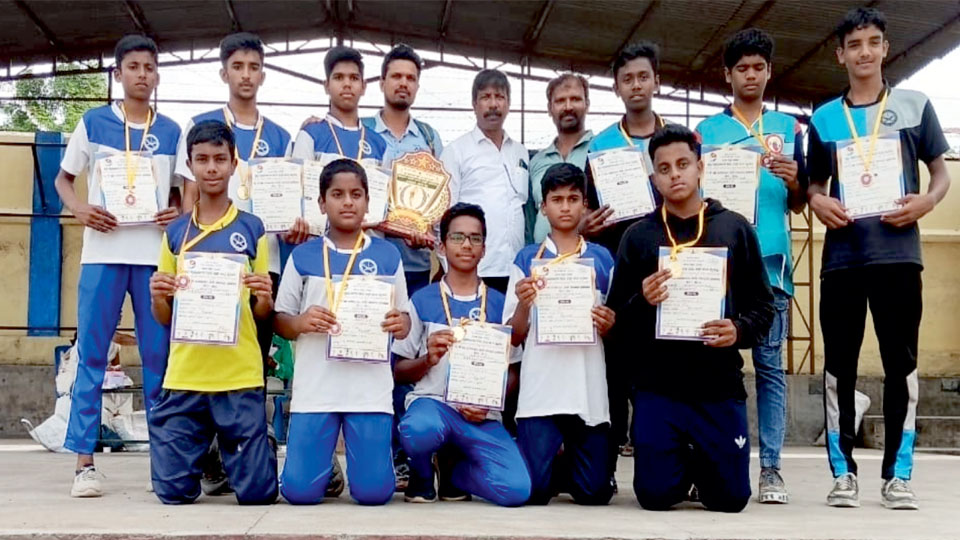
Boys team of Al-Kareem School won the Taluk-level U-17 Throwball Tournament for Boys organised at St. Philomena’s High School recently.
The team defeated Ramakrishna Ashram in the final match.
Members of the team included Mohammed Attaulla (Captain), Farhan Khan (Vice-Captain), Mohammed Junaid, Mohammed Nadeem, Afreed Ahmed Khan, SinnanShariff, Roshan Ali, Mohammed Toufiq, Zaid Ahmed and Zayan Ahmed.
source: http://www.starofmysore.com / Star of Mysore / Home> Sports / November 10th, 2025
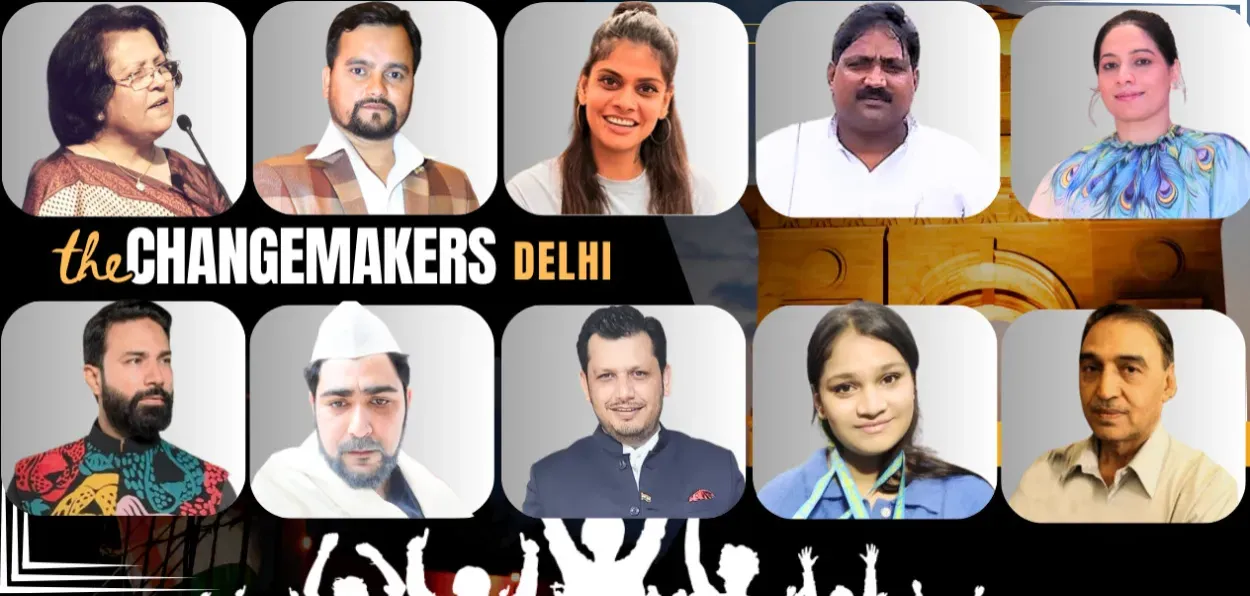
Delhi is the city of enterprising people, many of whom are migrants from smaller towns and cities. Many achieved successes in careers, businesses and professions — but some of them transcended the boundaries of success. They are trailblazers who give it back and inspire others. Here, we feature ten personalities of Delhi whose work makes them extraordinary and the Changemakers:
Sirajuddin Qureshi
Sirajuddin Qureshi a well-known industrialist who laid the foundation of India’s meat industry and food processing. Besides, he is one of the founders of the India Islamic Cultural Centre in Delhi. He is a trailblazer in modernising and scaling up the meat and food processing industry under the aegis of his Hind Group. He set up the first modern slaughterhouse and expanded his food business to 50 countries.
However, his lasting contribution to society is his relentless campaign for promoting education among the Qureshi clan, who were small-time meat sellers and traders. He persuaded his community members to pledge to promote the education of girls and women, opt for simpler weddings and encourage youth to join professions. His social campaign was so successful that today, only 20 per cent of the Qureshi men are meat sellers, and women have higher educational standards.
Azra Naqvi
Azra Naqvi wears many hats, but her core remains attached to Urdu, the language, she claims, she breathes, thinks in, and is in her DNA. Despite having lived a fulfilling life with her husband in many countries, dabbled in different professions and roles, her heart always pined for her favourite language. So, when she got a chance to work as a consulting editor with Rekhta Foundation, she made the most of the opportunity.
Besides fulfilling her passion for Urdu at Rekhta, Azra Naqvi found an innovative use of the WhatsApp application on her mobile. First, she connected 200 Urdu women writers to establish a first-of-its-kind literary organisation, Bainalakwami Nissai Adabi Tanzeem (BANAT). The BANAT has created a sisterhood of Urdu writers. So far, BANAT has published two anthologies based on WhatsApp communication, while a third one is in process. Using the WhatsApp group, Azra Naqvi collected theme-based writings of 40 women writers.
Siraj Khan
‘Yes, We Can’ stands as a reminder that unity and opportunity can transform lives. This non-profit organisation is dedicated to empowering communities, nurturing youth potential, and creating safe spaces for growth. At the heart of this movement is Shiraz Khan, a changemaker from Old Delhi, whose journey of self-discovery and resilience has shaped the ethos of “Yes, We Can”. The seeds of Yes We Can were planted in 2015. For Shiraz Khan and his co-founder, Nandish, the pandemic wasn’t just a crisis; it was also a wake-up call. They realised that people needed support not only in material terms but also in inspiration, guidance, and community.
From grassroots awareness drives to collaborations with youth-led groups, Yes We Can has quickly grown into a space where possibility meets action. Shiraz often says, reflecting the organisation’s focus on building resilience rather than dependency.
Sahar Hashmi
Mental health in India remains a taboo; words like depression, anxiety, or personality disorder are either laughed off or bring shame. Breaking this deafening silence is Sahar Hashmi, the 29-year-old woman from Delhi. She not only overcame her mental illness but also became a beacon of hope for others suffering in silence.
In April 2025, Sahar launched a campaign, “Breaking Stigma: One Mile at a Time”. She took a 2,779 km bike ride from Delhi to Kashmir. This journey was not just about crossing the geographical boundaries, but an emotional journey against the stigma and silence of society on mental health.
Asghar Ali
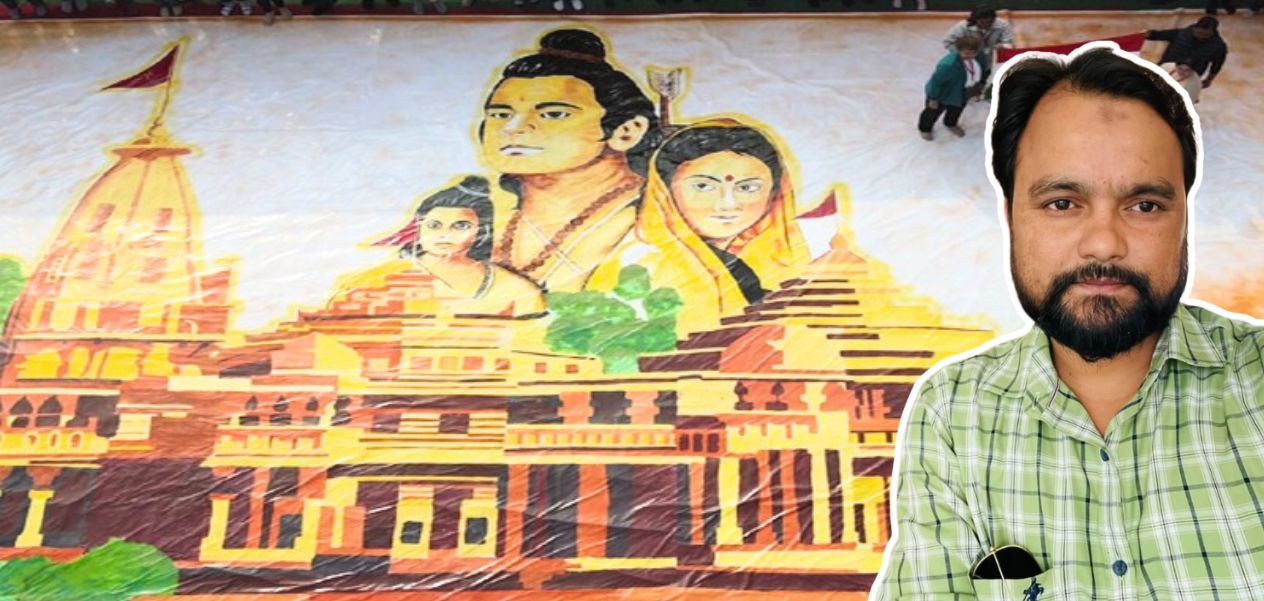
Delhi-based artist Asghar Ali is spreading the message of Ganga-Jamuni tehzeeb (Inclusive Indian culture) in society through his art. Asgar Ali, a Muslim by faith, has more than 50 paintings based on Lord Krishna and his life story to his credit.
Asghar Ali said that since his childhood, he was fascinated and influenced by Shri Krishna, colours of his peacock feathers and the flute. Asgar Ali’s major work is on the childhood form of Shri Krishna (Bal Krishna), his youth, his objectives in the Mahabharata war, as well as his leela (stories).
Asgar Ali had also organised an exhibition of his Krishna-themed paintings at the recently concluded International Geeta Mahotsav at Kurukshetra, Haryana, where people appreciated his work.
Amna Mirza
Amna Mirza is a trailblazing teacher who prefers holding her lectures outside her classroom amidst the pieces of history strewn around in Delhi. She not only makes teaching interesting, but also helps heritage and modernity coalesce. In the rat race of the modern world, Dr Amna Mirza stands tall as a teacher bringing about profound changes in people’s mindsets.
A political science professor at the University of Delhi. Dr Mirza’s journey defies the rigidity often associated with academia. She wears many hats with ease: educator, social worker, cultural custodian, and above all, a proud Delhiite who believes in nurturing the soul of a nation through its people and plurality.
Mohd. Meraj Rayeen
Md. Meraj Rayeen’s inclusive campaign to improve the conditions of indigenous Pasmanda Muslims, who comprise approximately 80 per cent of the Muslim population, is shaping social change.
Rayeen says, “Politics alone cannot be the solution to every problem.” Based on this thought, he founded the ‘Pasmanda Vikas Foundation’ over a year ago. The organisation has undertaken substantial work to change the lives of people and instil new hope and confidence within the community.
This foundation is not into rhetoric in favour of Pasmanda Muslims’ rights on political platforms; It addresses issues such as education, health, economic empowerment, and social justice.
Meraj Rayeeen believes that the development of Pasmandas is possible only with the awakening and cooperation of the community members. but the entire Muslim society, especially the Ashraf class.
Uvais Ali Khan
Uvais Ali Khan is a successful Chartered Accountant and a changemaker whose journey stands as a beacon of determination and service to society.
He quit his job and started his own business in a small apartment in Laxmi Nagar, East Delhi. Borrowing from friends and banks, he began building not just a company, but a platform for change. Uvais believes in a simple but powerful idea: “Providing basic skills to an individual can open avenues for them to get a job. That single opportunity can change the life of a family for generations.
Adeeba Ali
Adeeba Ali’s life is a testimony to the power of the human spirit and willpower. The 17-year-old is not only a rising star in the world of para-shooting but also an inspiration to many others struggling with self-pity and helplessness.
Five years ago, Adeeba fell from the balcony of her house in Nizamuddin. Four years later, she stunned everyone with her stellar performance at the 26th National Shooting Championship held at the Madhya Pradesh State Shooting Academy, Bhopal, in December 2023.
Adeeba’s success is not just a story of winning two medals; it is a story of perseverance that transformed disability into a new identity, not a hindrance.
Syed Sahil Agha
Storytelling is associated with Sufis and Khanqahs; it’s a medium of the message of peace and love, which instils patriotism, unity, and religious harmony, and nurtures the Ganga-Jamuni (inclusive) civilisation. Keeping the tradition in mind, Syed Saahil Agha revived this art and gave it a modern context. Today, he is one of the most well-known names in the world of storytelling.
Syed Saahil Agha conducts storytelling programs in India and abroad. He says, “I realised that people prefer listening over reading, so I thought stories should be narrated so that the public can become familiar with the past and also learn lessons from it.”
He says his aim is not just to narrate stories but also to promote Indian civilisation.
source: http://www.awazthevoice.in / Awaz, The Voice / Home> The Changemakers / by Aasha Khosa / November 09th, 2025
Mangaluru, KARNATAKA / Kozhikode, KERALA / Dubai, U.A.E :
Shabana Faizal with her husband Faizal Kottikollon
New Delhi :
Mangalore-based Shabana Faizal has emerged as the youngest woman among India’s top 10 philanthropists, according to the EdelGive Hurun India Philanthropy List 2025.
She has donated ₹40 crore (approximately $1.5 billion) through the Faisal & Shabana Foundation to education, health, and social development.
Shabana Faisal’s journey from being raised in a small town in Mangalore to co-leading a global enterprise is about he hard work and ambition.
Her entrepreneurial journey began in 1995 as a retailer of unique, speciality and luxury products. After leading the company for eight successful years, she decided to team up with her husband, entrepreneur Faizal Kottikollon, and support him in running the world-class foundry, Emirates Techno Casting (ETC).
Shabana took charge of all human resources and administrative processes at ETC, where she created a significant impact in shaping the company’s business success.
In her role as Vice Chairperson of KEF Holdings, she is actively involved in guiding the business’s growth strategy across global markets. Deeply committed to social improvement, Shabana and her husband founded the Faizal & Shabana Foundation in 2007, with the vision of ‘Giving to Create Impact’.
At 53, Shabana’s work has placed her among some of the most influential women in India’s philanthropy world, including Rohini Nilekani, Kiran Mazumdar-Shaw and Bina Shah.
EdelGive Foundation, in collaboration with Hurun Research Institute, recently released the 12th edition of the EdelGive Hurun India Philanthropy List 2025.
The list honors India’s most generous individuals and families. Over the past three years, 191 philanthropists have donated a total of ₹10,380 crore, representing an 85% increase in contributions.
The education sector continues to lead as the top donor, receiving ₹4,166 crore from 107 donors.
Shabana is the mother of four children – Sophia, Sara, Zakaria, and Zarina – but continues to play an active role in business and philanthropy. Her work makes her one of India’s most influential female philanthropists, exemplifying how professional leadership and a commitment to giving can combine to create widespread social impact.
The EdelGive Hurun India Philanthropy List 2025 states that the top 25 donors contributed ₹50,000 crore in just five years, or an average of ₹46 crore per day. Mumbai leads in philanthropy, contributing 28% of total donations, followed by New Delhi and Bengaluru.
source: http://www.awazthevoice.in / Awaz, The Voice / Home / posted by Aasha Khosa / November 10th, 2025
In the Western view, Jihad is depicted within a framework of communal hostility and destruction, but in the documents of Malabar it is a word of interfaith harmony and peaceful coexistence, Abbas said.
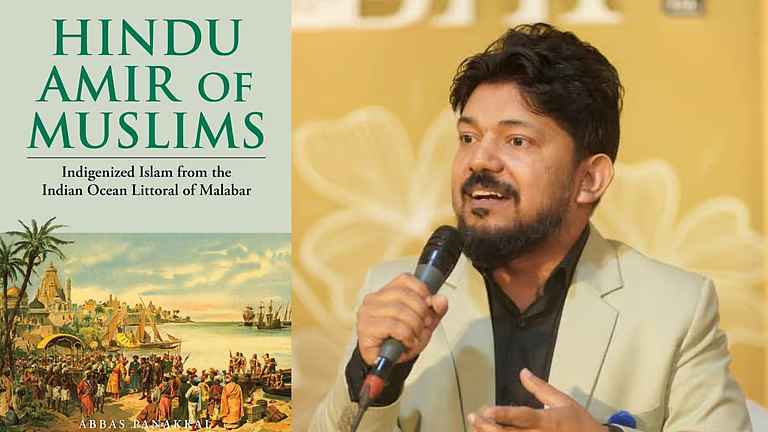
Author of the book ‘Hindu Amir of Muslims: Indigenised Islam from the Indian Ocean Littoral of Malabar’ Abbas Panakkal.Photo | Special Arrangement
Kozhikode :
Contradicting popular narratives put forth by extremist Islamic organisations and the West that portray Jihad as a violent aggression on non-Muslims to establish the supremacy of Islam, is a one originating in Kerala that describes the unified efforts of Muslims and non-Muslims to protect a Hindu king.
Historian Abbas Panakkal’s intriguingly titled book Hindu Amir of Muslims: Indigenised Islam from the Indian Ocean Littoral of Malabar counters the argument that a non-Muslim cannot be the Amir of Muslims, quoting the works of Islamic scholars such as Sheikh Zainuddin Makhdoom and Qazi Muhammad. Some Muslim organisations assert that a true believer should at least strive mentally to establish an Islamic rule, otherwise his/her Islam will remain incomplete.
Abbas argues that Islamic scholars around the sixteenth century had called for Jihad against the Portuguese when the intruders locked horns with the Zamorins. In the Western view, Jihad is depicted within a framework of communal hostility and destruction, but in the documents of Malabar it is a word of interfaith harmony and peaceful coexistence, Abbas said.
“Qazi Muhammad’s poem Fat’hul Mubin narrates an incident during the attack on Chaliyam fort, built by the Portuguese. Zamorin was the ruler and the Muslims had taken a vow to sacrifice their life in the fight for the king. On hearing this, the Hindus felt sad and said that Muslims should not let Muslims die as they are the minority. Finally, they decided to fight together,” Abbas said.
The Qazi conducted prayers for the king and requested all Muslims to pray for the non-Muslim sovereign. He criticised Muslim kings, who signed treaties with the Portuguese and supported their cruelties, the book says.
“Here, jihad was declared to support the local ruler, irrespective of his religion. It was not to crown a Muslim ruler or to turn a Darul Harb into a Darul Islam. Within the Kingdom of Zamorin the Jihad became a tool of accord and interreligious cohabitation,” the book says.
Abbas quotes an incident narrated in Fat’hul Mubin to show the camaraderie between Hindus and Muslims during the siege of the Chaliyam fort.
Zamorin’s mother wrote a letter to the Muslim leaders seeking their intervention and important warriors of the times including Kunjali Marakkar, Umar Anthabi and Abdul Azeez gathered at a mosque in Kozhikode along with the officials of Zamorin to discuss the war strategies.
Tufat al-Mujahidin by Sheikh Zainuddin Makhdoom II, written in the sixteenth century, narrates the privileges enjoyed by Muslims under the rule of Zamorin. Proper burial was given to the bodies of Muslim offenders as per the Islamic custom while the bodies of non-Muslim criminals were left to be consumed by wild animals, says the book.
“Non-Muslim rulers actively supported the construction of mosques and the organization of religious observances, and the state provided funding for the salaries of qazis (judges) and other religious officials, such as mu’addins (callers to prayer). In this pluralistic context, where Muslims enjoyed considerable freedom and leniency,” the book said.
source: http://www.newindianexpress.com / The New Indian Express / Home> Kerala / by MP Prashanth /August 06th, 2025
A new book sheds light on the ‘Malabar Revolt’ in a region which had a history of Muslims and Hindus collaboratively persevering in their resistance against colonial forces. Other books explore its links to the Khilafat movement and why it is more than a peasant uprising.
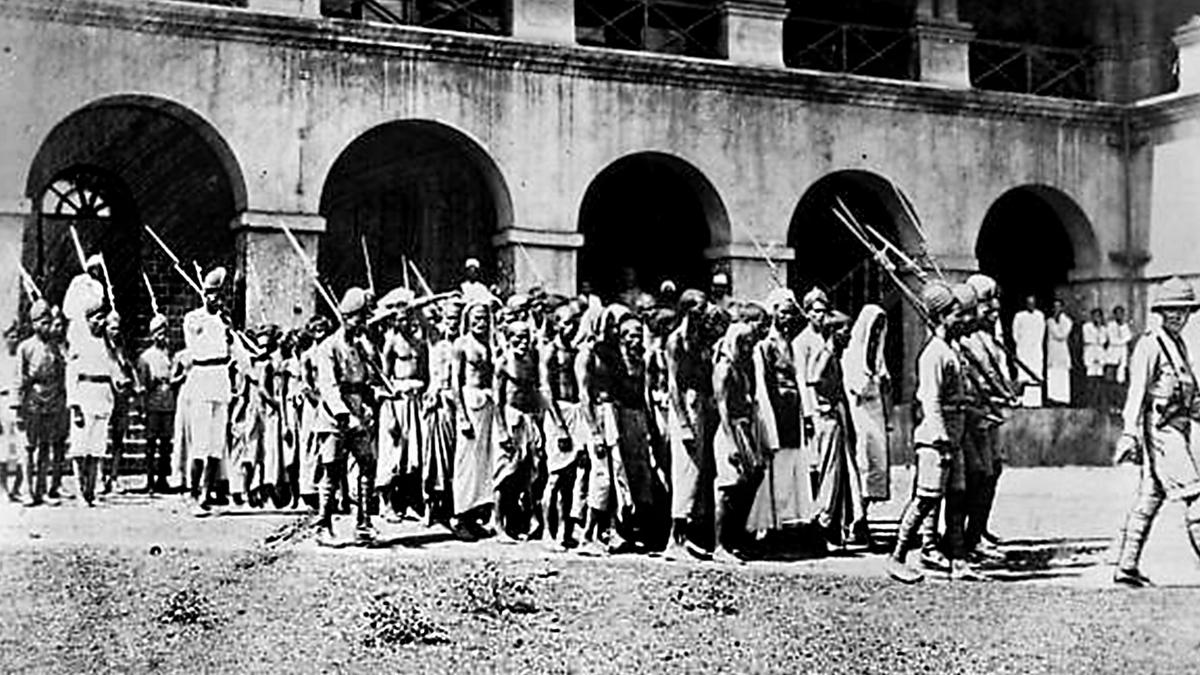
Moplah prisoners go on trial in Calicut | Photo Credit: Getty Images
Growing up in Delhi, one had only a limited idea about the resistance movement in the Malabar region. The popular history books tended to treat it at best as a little outpost of the freedom movement. Noted historian Bipan Chandra in India’s Struggle for Independence (Penguin) dubbed it as a peasant movement.
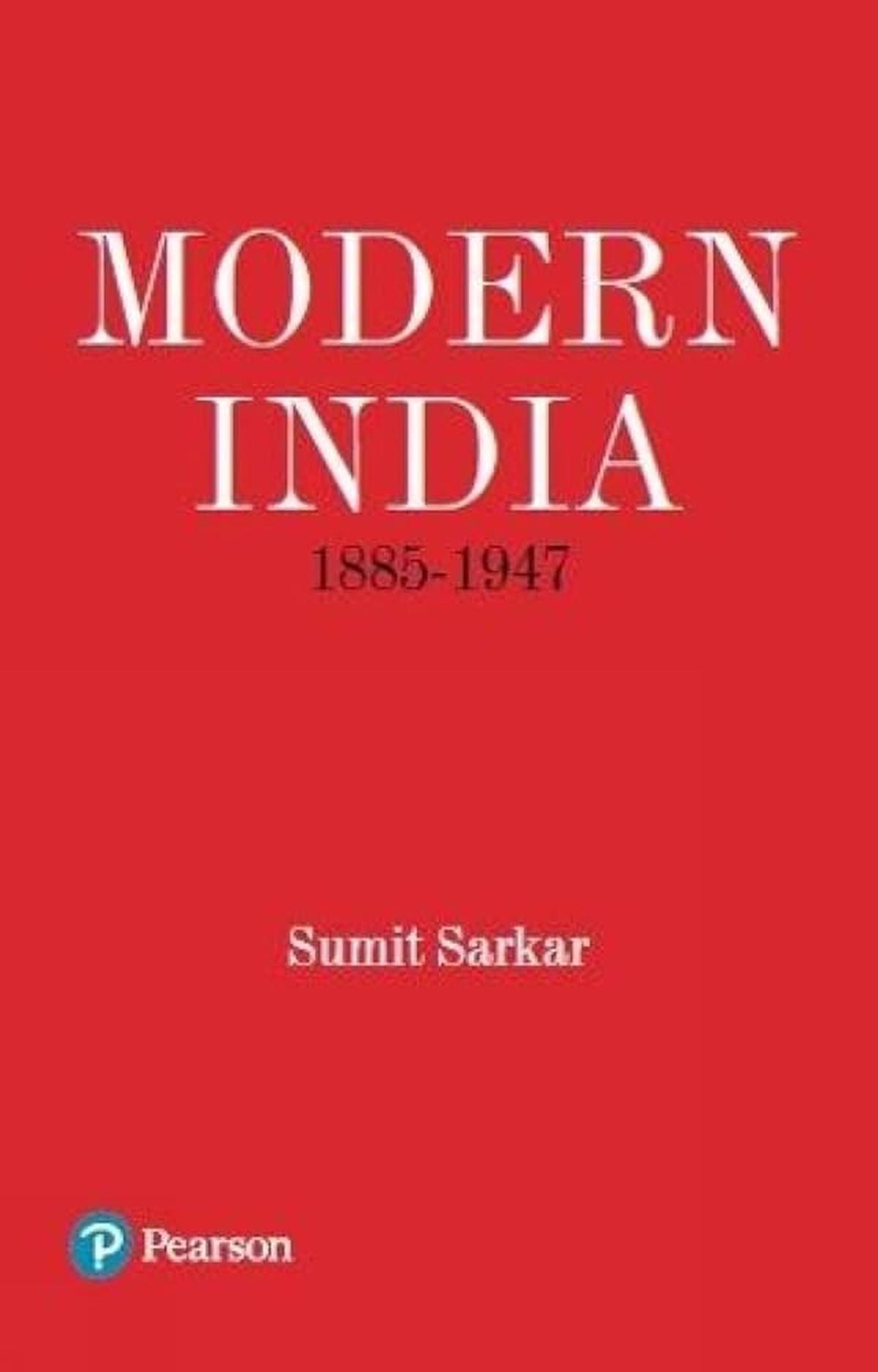
“In August 1921, peasant discontent erupted in the Malabar district of Kerala. Here, Mappila tenants rebelled. Their grievances related to lack of any security of tenure, renewal fees, high rents…the impetus for resistance had first come from the Malabar District Congress Conference at Manjeri in April 1920,” Chandra writes. Sumit Sarkar too, confined himself to calling it an “anti-landlord revolt” in his book, Modern India (1885-1947), published by Pearson. There have been noises about the association with the Khilafat movement in academic circles, though. Just as there are historians who see it merely from a communal prism. A holistic picture had failed to emerge.
Enlightening exploration
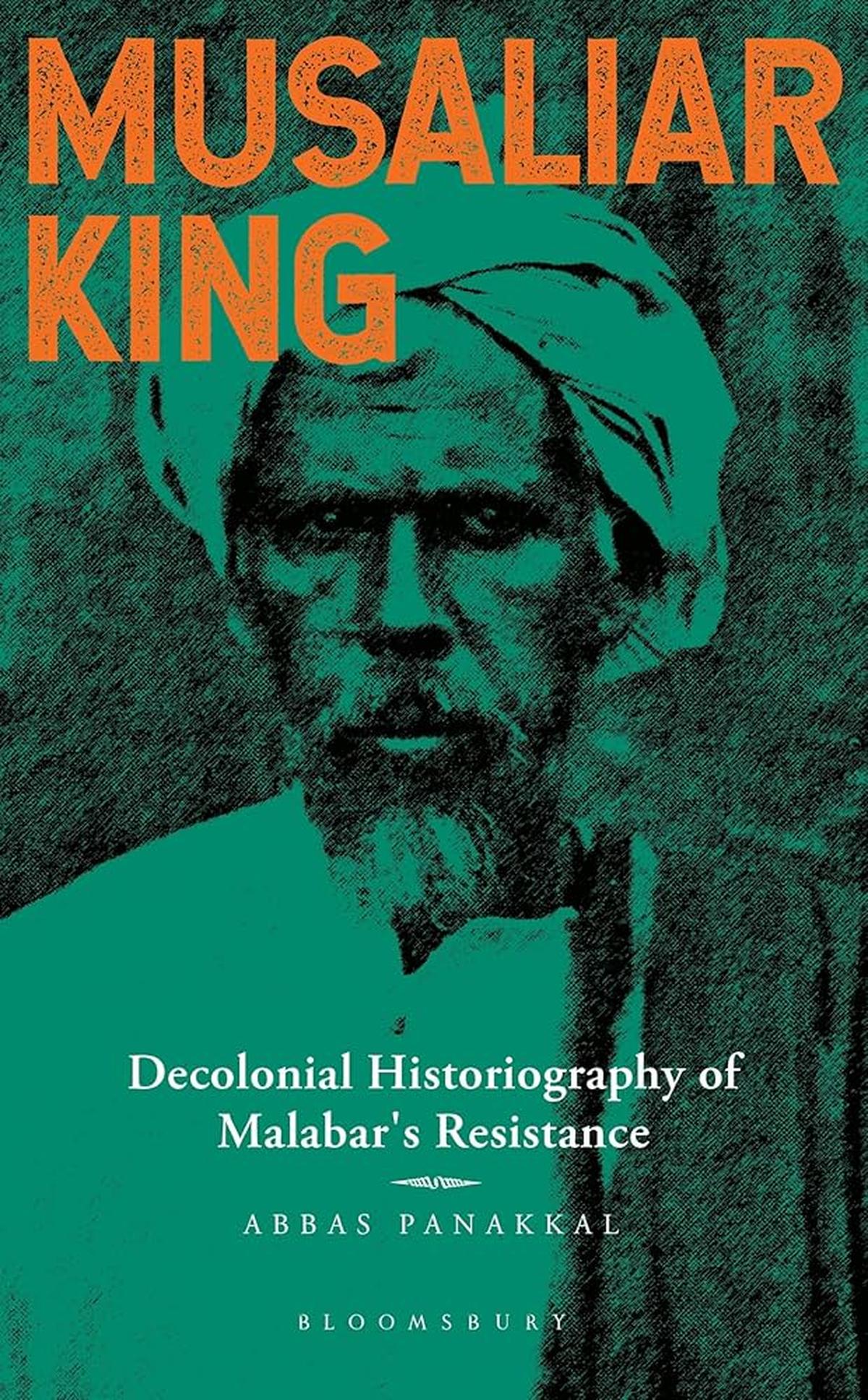
Some belated but well-deserved attention on the resistance movement has come courtesy Abbas Panakkal’s Musaliar King: Decolonial Historiography of Malabar’s Resistance (Bloomsbury). Starting off as an exploratory exercise on the 75th anniversary of the movement, Panakkal’s venture transforms into an enlightening journey.
Early in the book, the author writes, “The socio-geographical landscape of our community underwent profound transformations in the wake of the cataclysmic events of 1921-22. This epoch witnessed a staggering loss of lives, the forced displacement of families… The old mosque of Tirurangadi emerged as a veritable repository of memories and narratives, a historical bastion of ideological resistance against the British colonial apparatus.” Fittingly, it was on the commemoration of the 75th anniversary of the 1921 resistance that Panakkal started his exploration, speaking to the family members of those directly involved.
Among them was Muhammed Ali Musaliar, grandson of Ali Musaliar, a luminary of the 1921 struggle. The British referred to Ali Musaliar as a king; the locals regarded him as a community and spiritual leader, calling him Musaliar Uppapa. Indeed, if Musaliar was a ‘king’, Malabar was his ‘kingdom’.
Incidentally, the term Malabar is derived from the vernacular Mala, signifying hill, and the affix originating from the Arabic word barr, which means the source of all goodness. The region had a long tradition of anti-colonial resistance dating back to the 16th century. “Muslims and Hindus collaboratively persevered in their resistance against colonial forces,” writes Panakkal.
This strong anti-colonial stance had unforeseen consequences. The British, with not a little help from some Indian officials, sought to undermine the movement. Among them was C. Gopalan Nair, Malabar district deputy collector, who “unabashedly deployed his literary prowess in favour of the British cause”. Observes Panakkal: “The usage of terms such as Malabar Revolt and Moplah Rebellion to delineate these struggles is emblematic of this issue. Revolt itself is a term crafted by colonial administration, characterising violent actions against a recognised government or ruler.”
‘Peaceful coexistence’
There were others, though, whose hearts beat for the locals, luminaries who either linked the resistance to the Khilafat movement or, in isolation, read it as an agrarian struggle. Among them were Saumyendranath Tagore, who regarded it as “an organic and spontaneous ‘uprising’ of the Malabar peasantry against British imperial rule” and E.M.S. Namboodiripad, who too “didn’t discount the role played by agrarian discontent”. There was a common thread: the oppression and exploitation meted out by colonial officials and landlords was no less severe upon the Hindu peasants as they were on their Muslim counterparts. Writes Panakkal, “The Malabar narrative heralded a rare phenomenon: the harmonious convergence of Hindus and Muslims. This coalition was underpinned by a shared objective — to oust the oppressor — and a collective aspiration for a peaceful coexistence in the region.”
It is something with which even R.N. Hitchcock, police superintendent of Malabar, agreed. As written by N.P. Chekkutty in Mappila and Comrades: A Century of Communist-Muslim Relations (Other Books). “Hitchcock also reveals that Hindus were involved in the rebellion, at least in some parts of the affected areas. ‘The Hindus took an active part only in the extreme south-eastern area of the Valluvanad taluk and in small numbers for a concise time. They were then responsible for much property damage’.” In his persuasively argued book, with much of the focus on the post-resistance time in the late 1930s and 40s, Chekkutty also talks of the rebels not harming any substantial section of the local population before going on to document the failure of the Congress to retain local Muslim support after the resistance movement. It was a vacuum which both the Communist Party of India and the All India Muslim League attempted to fill.
The Khilafat angle
Interestingly, against this background of common cause transcending the confines of faith came the pan-Islamist Khilafat movement. Things became even more ironic as Malabar’s historical tapestry of anti-colonial resistance “had been woven with threads of unity binding Muslims and non-Muslims in a shared ‘jihad’ to safeguard the throne of the Hindu king, the Zamorin of Calicut,” as analysed by Panakkal. Khilafat, Non-Cooperation, Mappila, with seemingly disparate social elements, all fused to bring about a strong anti-colonial movement.
Indeed, here both the communities enjoyed a rare camaraderie, and there was a happy collective involvement even in religiously significant events like the nercha and utsavam. During the latter, Muslim families returned with bags full of jaggery candies, much like Ali Musaliar used to do for Amina, his daughter. Sums up Panakkal: “The experience of Muslims and Islam in South India is different from the experience in North India, and this is not trivial.”
source: http://www.thehindu.com / The Hindu / Home> Books> Bibliography / by Ziya Us Salam / September 18th, 2025
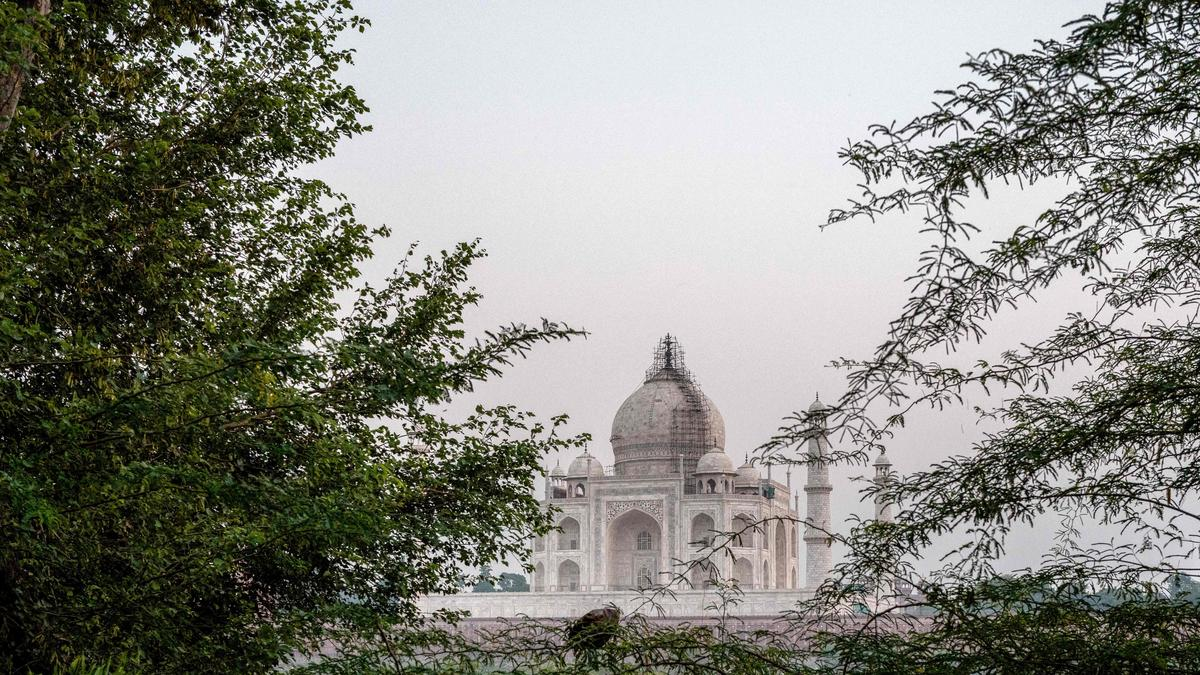
Tushar Goel’s film, ‘The Taj Story’, has reignited controversy over the Taj Mahal’s origins, claiming it is a Hindu temple rather than a mausoleum built by Mughal emperor Shah Jahan. The film’s debut highlights debates about the interplay of history and ideology in contemporary India.
Scaffoldings are pictured as restoration work goes on at the dome of the Taj Mahal in Agra on October 17. | Photo Credit: AFP
A little over 60 years ago, Purushottam Nagesh Oak slept and dreamt. He woke up and claimed that the Taj Mahal in Agra was actually a Hindu palace going back all the way to 4th century. Friends of Mr. Oak, an English teacher-turned-lawyer-turned-journalist but never a historian, told him that the Taj Mahal couldn’t have been a fourth century structure as the technology employed in building the Taj in the 17th century didn’t exist back then. The fantasist turned a pragmatist, and Oak brought his argument forward by a few centuries. The Taj was now claimed to be a Hindu temple. This was in 1989. He wrote articles and a book too, but found no support from historians. Even the Supreme Court dismissed his claims as “a bee in his bonnet” in 2000.
But post-2014, history is like a revolving door, you enter and exit at your ease and pleasure. You pick and choose, you circumvent and invent. Dress it up as a movie and claim you are looking at history anew. That is how we get a movie like Tushar Amrish Goel’s The Taj Story, starring former BJP MP Paresh Rawal; just like we had The Kashmir Files and The Bengal Files, starring Anupam Kher and Mithun Chakraborty, all ideological partners of the Bharatiya Janata Party (BJP).
With The Taj Story, Goel goes where no historian has gone. Proof, evidence and knowledge amount for nothing as the director makes a case for the Mughal monument being actually a Hindu temple, much like the BJP leader Sangeet Som who called it alternately a Shiva temple and a monument built by a man who incarcerated his father. Mr. Som obviously couldn’t make out a Shah Jahan from an Aurangzeb and hence got mixed up. Much like Oak, oops, Goel, who sees no difference between history and mythology, facts and fantasy.
Recorded history
Talking of facts, the Taj Mahal was built by the Mughal emperor Shah Jahan after his favourite wife Arjumand Bano Begum breathed her last after bearing the last of their 14 children. Its chief architect was Ustad Ahmed Lahori. The land for her last resting place was procured from Mirza Raja Jai Singh of Amber who had inherited it from Raja Man Singh, a celebrated general of Akbar, who was Shah Jahan’s grandfather. Shah Jahan compensated Jai Singh with four havelis from the royal property for the massive haveli in which rests Mumtaz Mahal. His firman to Jai Singh, the latter’s agreement and the Mughal emperor’s subsequent letter of granting him four havelis in lieu of one, are all part of history; unlike the claim of The Taj Story which talks in terms of a massacre and genocide of the locals for fulfilling the wishes of an emperor and his consort!
The work on the tomb started in 1632 with the finest craftsmen from across the country and West Asia. The chief mason was Mohammed Hanif from Baghdad who earned ₹1000 a month for his efforts. The pinnacle was built by Qayam Khan of Lahore and its Quranic inscriptions were done by Amanat Khan Shirazi. The mosaic work was done by local Hindu workers. Above all, some 20,000 workmen toiled for 22 years to build the monument to love. Its white marble came from Jaipur, lapis lazuli from Sri Lanka, crystal from China and coral from Arabia. The monument uses the double dome technique, previously seen only in the Humayun’s tomb in Delhi, and never seen in the country before the arrivals of the Turks.
Not the first time
Over the years, many have tried to appropriate credit for its beauty and majesty. In the 17th century, it was claimed by many in the West that the architect of the Taj was Venetian Geronimo Veroneo, a jeweller by profession. Then came the claim by Mughal Beg in Tarikh-e-Taj Mahal that it was designed by Muhammad Effendi, an architect supposedly sent by the Sultan of Turkey. Effendi though was as much an architect as Oak was a historian. In the mid 19th century it was claimed that the monument was the result of the genius of Frenchman Austin de Bordeaux, a jeweller. However, Austin died in 1632, the year the work on the Taj began. With his death all claims of Austin being the Taj’s architect were buried. And facts began to be raised.
As for fantasy, well there is Goel’s film, never mind its claim of presenting the “untold history of the Taj Mahal”. The film, replete with stereotypes of kohl-lined, skullcap-donning Muslims aims at building a nation’s memory on unreasoned mythology, far removed from the well argued debates of history. Much like Oak’s view that Christianity was nothing but Krishan-Niti. Not game for any ridiculous claims in an insipid film which opened with a mere 14% attendance in the first show? Watch M. Sadiq’s 1963-saga Taj Mahal. Sure, you would remember its song, ‘Jo wada kiya woh nibhana padega’, penned by Sahir Ludhianvi and sung with much love by Mohammad Rafi and Lata Mangeshkar. Sadiq’s film with Pradip Kumar and Bina Rai in the lead cast, made no effort at replacing history with mythology.
source: http://www.thehindu.com / The Hindu / Home> Entertainment> Movies> In the limelight / by Zia Us Salam / November 07th, 2025
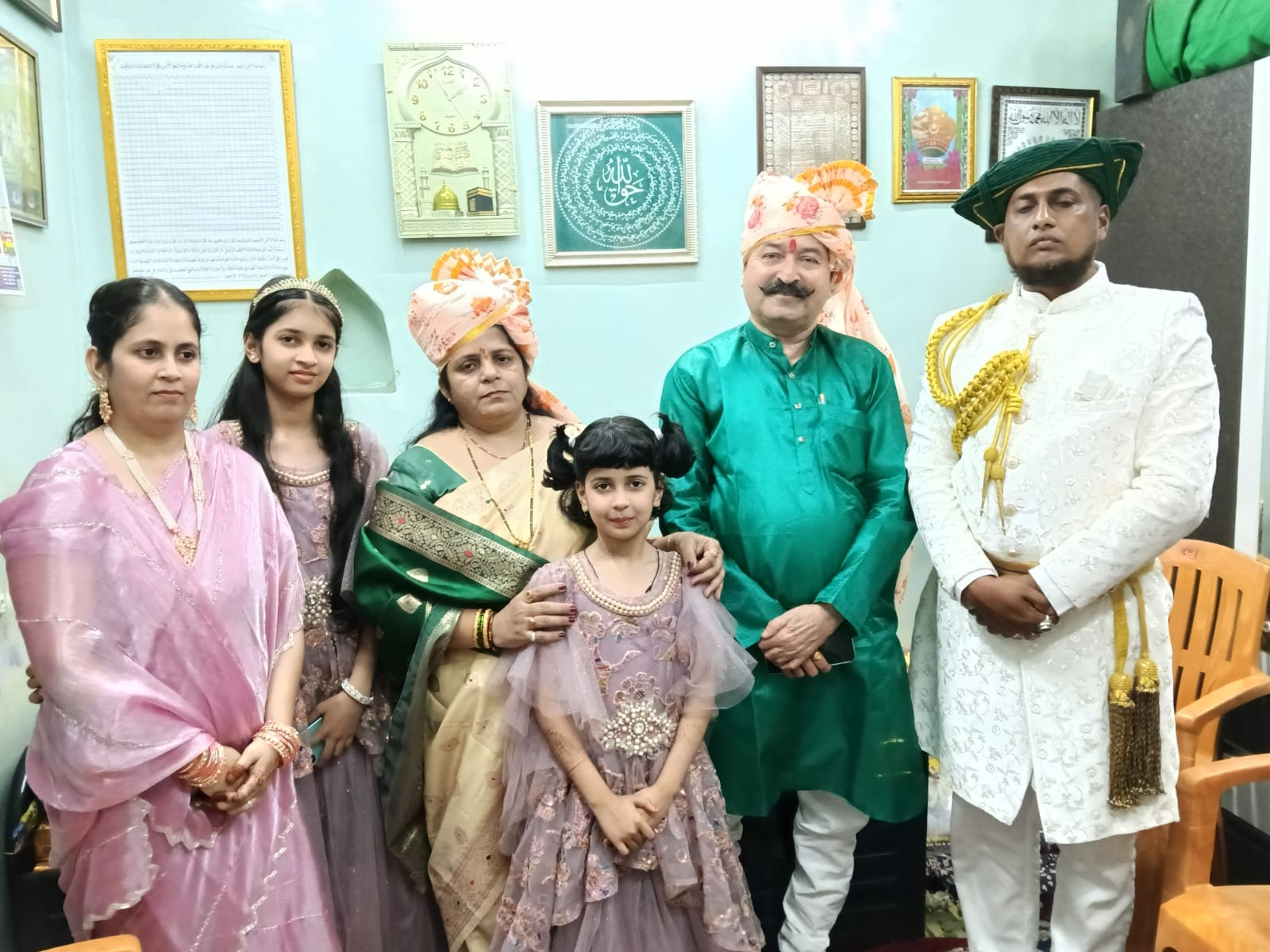
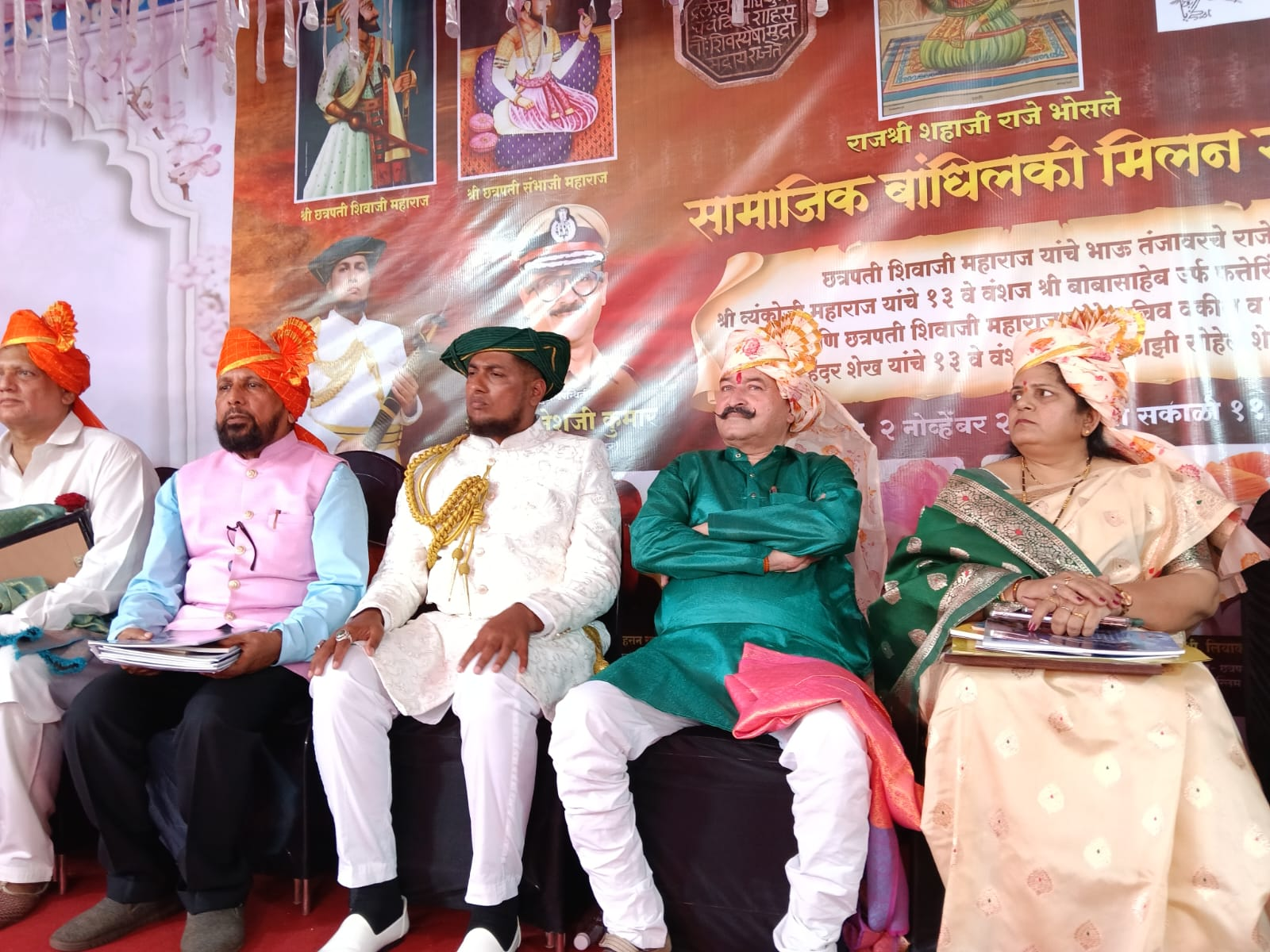
Sohail Shamshuddin Shaikh with Fattesingh Raje Bhosale at Pune
The home of Sohail Shamshuddin Shaikh in Pune, Maharashtra, is a piece of living history. He has preserved the legacy of his ancestors’ service and valour dating back to the era of Chhatrapati Shahajiraje Bhosale (the father of the iconic 17th-century Maratha king, Chhatrapati Shivaji Maharaj) and the Peshwas.
This story begins about 400 years ago. Shahajiraje Bhosale had granted a special sanad (royal charter) to Sohail Shaikh’s ancestors. Sohail Shaikh has preserved this charter to this day. It is not just a document; it is a testament to his family’s glorious history and their unbreakable bond with the Bhosale dynasty.
After Shahaji Maharaj’s passing, the Shaikh family continued to serve. Later, during the Peshwa era (the period of the Maratha prime ministers), his ancestors served in an important position of Qazi (an Islamic judge). For eight to ten generations, they served the Swarajya (Shivaji’s self-rule movement) and later the Peshwas.
The families of Sohail Shamshuddin Shaikh and Fattesingh Raje Bhosale at the Pune meet
Sohail Shaikh has also preserved many judicial documents and historical records from Shivaji’s time. These documents offer insights into the work of his ancestors and the social system of that era.
Today, his 14th generation is settled in Pune, and remarkably, they have continued the legacy of service. Just as his ancestors were in the service of the king and the state, today’s generation is in government service. Following in his ancestors’ footsteps, Sohail Shaikh is the fifth generation of his family to serve in the police force.
Unfortunately, this great legacy of Sohail Shaikh’s family was largely overlooked. However, ‘Awaz Marathi’ brought his story to all of Maharashtra through a video. Since that time, Sohail has been interviewed by many news channels and media outlets. He has since become known as a descendant of Qazi Haider, who held an important position in Chhatrapati Shivaji Maharaj’s court.
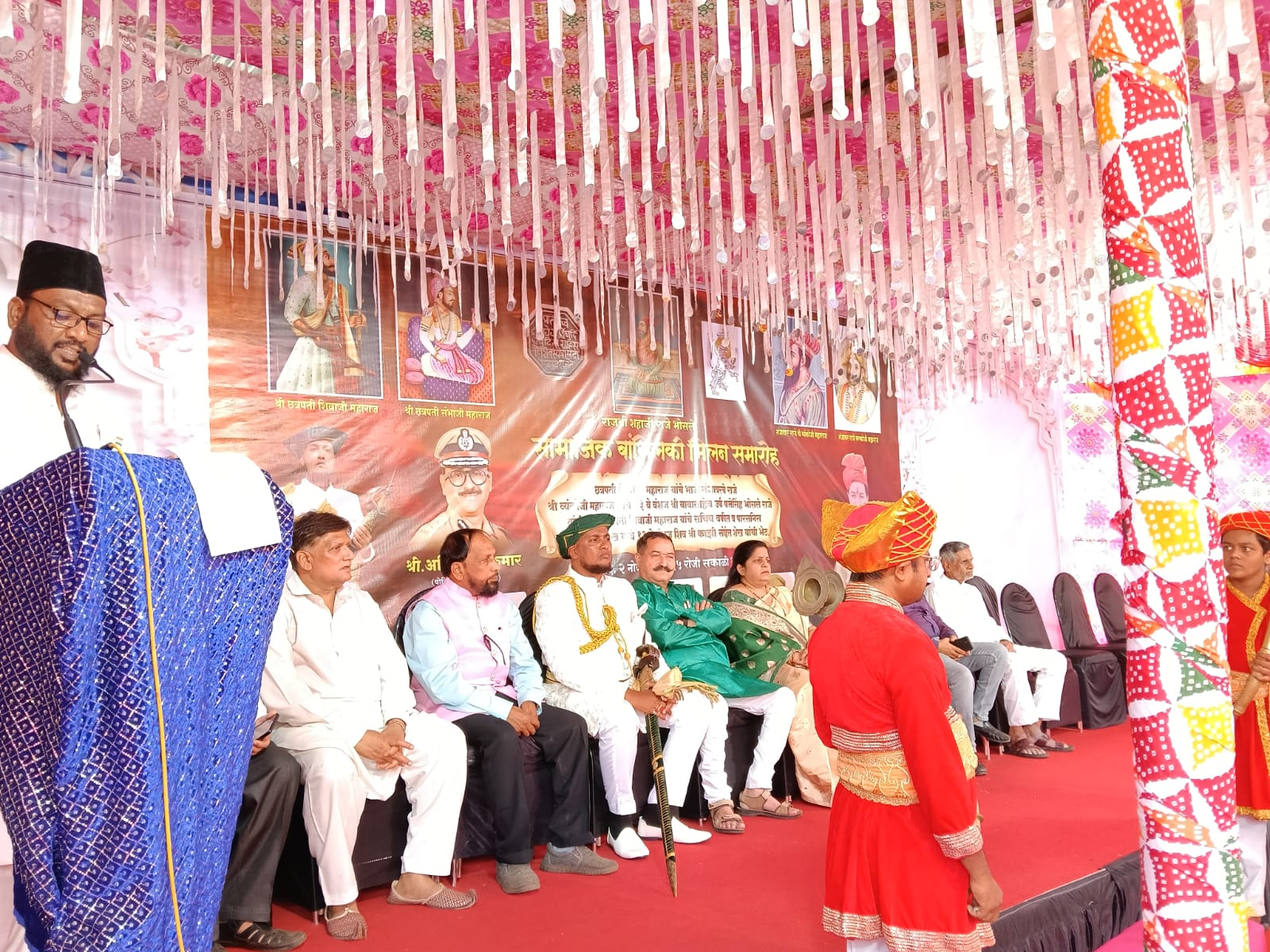
The Pune meeting
As the next step, a historic event took place on November 2. A meeting was held between Babasaheb alias Fattesingh Raje Bhosale, the 13th descendant of Raja Vyankoji Maharaj of Tanjore (Chhatrapati Shivaji Maharaj’s brother), and Qazi Sohail Shaikh, the 13th descendant of Chhatrapati Shivaji Maharaj’s secretary, lawyer, and envoy, Qazi Haider Shaikh.
This is an example of how historical religious harmony is being preserved. ‘Awaz-the Voice, Marathi played a significant role in making this meeting happen.
Speaking about this meeting, Sohail Shaikh says, “‘My interview with Awaz Marathi made this meeting possible. My video reached Fattesingh Raje Bhosale, and he immediately contacted me. He then set a date and came to meet me. This meeting was historic and upheld social commitment, which is why we named the ceremony the ‘Social Commitment Meet’.”
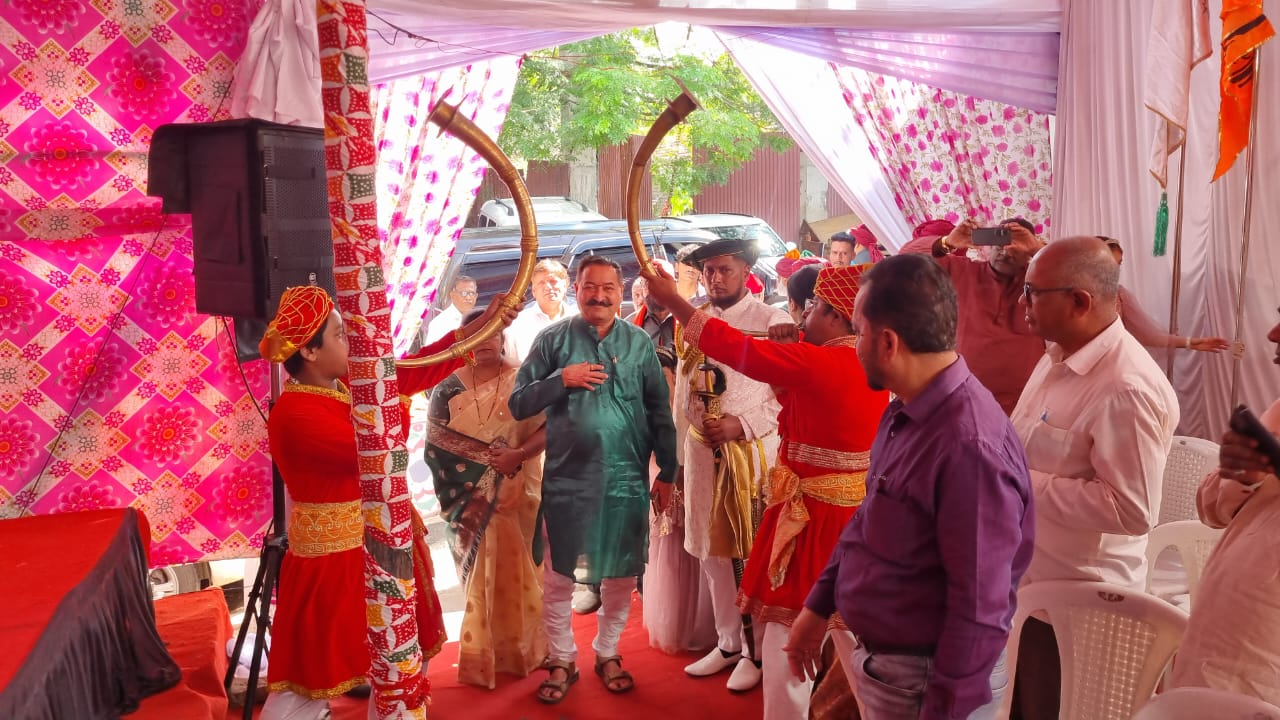
Fattesingh Raje Bhosale entering the venue of the meeting in Pune
Sohail Shaikh said, “This ceremony was truly historic. Descendants of Maharaj’s Muslim and Maratha commanders, police officers, and social activists were present. Fattesingh Raje was overjoyed to see this all. He spoke to everyone with deep emotion and pride. We have put up banners outside my residence detailing my ancestors’ history, which were inaugurated by Raje.”
He added, “Speaking with Maharaj, we learned more historical facts. About 375 years ago, when Chhatrapati Shivaji Maharaj was on his Karnataka campaign, he went to meet the Qutubshah of Golconda. At that time, our ancestor Qazi Haider was with him, along with other commanders. That is when Vyankoji and my ancestors had met. Meeting Chhatrapati Shivaji Maharaj’s family is a matter of pride”
Sohail Shaikh proudly states, “We have always had a place of deep respect for Chhatrapati Shivaji Maharaj in our hearts. And for our families to be connected is truly a matter of great pride. This was a golden moment for Fattesingh Raje and me to meet after nearly 375 years. We are happy to be part of this.”
Sohail Shamshuddin Shaikh with Fattesingh Raje Bhosale at the Pune meet
Babasaheb alias Fattesingh Raje Bhosale, the 13th descendant of Raja Vyankoji Maharaj of Tanjore, told Awaz-the Voice, Marathi, “This meeting was very important for maintaining unity in society. The main purpose behind this meeting was to stop the ongoing Hindu-Muslim disputes in society and to re-establish an atmosphere of harmony, just like in the old days.
“We have to carry forward the principles of Chhatrapati Shivaji Maharaj and Vyankoji Raje, which was to take everyone along—the Bara Balutedar (the 12 traditional village artisans) and the Athara Pagad Jati (all 18 castes and communities) … We all must follow the constitution that Babasaheb Ambedkar wrote based on Shivaji Maharaj’s principles.”
Fattesingh Raje Bhosale said that this meeting was held to create harmony in society. He said, “Today, political people are fanning the flames of caste disputes for their own benefit, which must stop somewhere. All communities must maintain their unity. This is our heartfelt wish.”
source: http://www.awazthevoice.in / Awaz, The Voice / Home> Stories / by Bhakti Chalak, Pune / November 07th, 2025
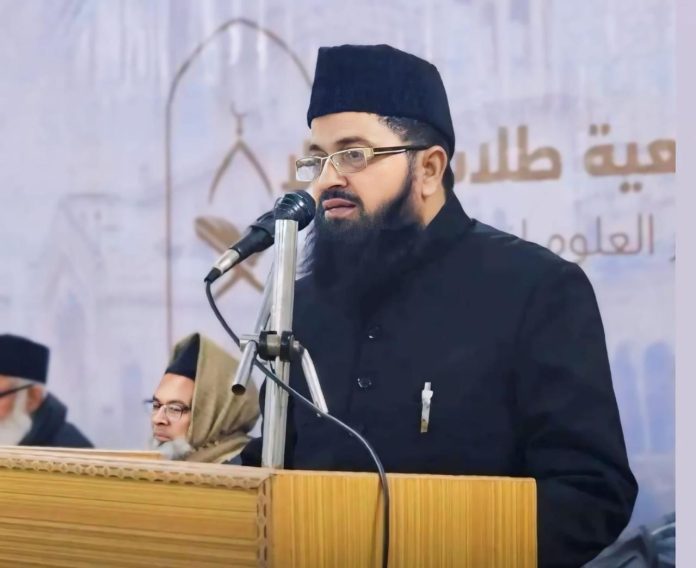
Dr. Nazir Ahmad Nadwi, senior faculty member of Darul Uoom Nadwatul Ulama, Lucknow passed away after a brief illness on 7 October 2025 in Lucknow. His sudden demise came as a shock for everyone.
Almighty Allah bestowed upon him extraordinary qualities and a variety of calibres. His personality was a marvellous amalgamation of a teacher, orator, journalist, academician, preacher of Islam and translator par excellence.
Born in 1965 in district Itawa, Uttar Pradesh (India), he received his basic education in his hometown. Thereafter, he joined Darul Uloom Nadwatul Ulama for higher studies. He did his Alimiat in 1987 and Fazilat (Specialisation in Hadith) in 1989 respectively. He also did his Ph.D. from the University of Lucknow. After completion of education from Nadwa, he was appointed as an employee in Al-Raid (Fortnightly), an Arabic wing of Nadwatul Ulama. While working at Al-Raid, he came in close contact with Maulana S.M. Wazeh Rasheed Nadwi, an accomplished journalist and prominent Islamic scholar. No doubt Maulana Wazeh left an indelible impact upon his life. It was Maulana Wazeh who had developed journalistic flavour and literary taste in him. Besides, he derived considerable academic benefits from Maulana S.M. Rabey Hasani Nadwi, former Rector of Nadwatul Ulama and Maulana Dr. Saeedur Rahman Azami Nadwi, Principal of Darul Uloom Nadwatul Ulama, Lucknow.
After a few years, he was promoted as a teacher. He was an embodiment of all sublime qualities and virtues, necessary for a good teacher. He proved himself as a selfless and dedicated teacher. His method of teaching was unprecedented.
He was a beloved teacher and scores of students quenched their thirst for knowledge from him.
Maulana led a very simple life. He left behind remarkable marks. He always kept himself away from name and fame. He did everything merely for the sake of Allah.
It should be noted that Maulana Nazir Nadwi achieved distinction in many languages such as Urdu, Arabic, English, Hindi, and Persian.
There are a number of things about Dr. Nazir Ahmad which people noticed and have written about. I personally have been most influenced by his personality. To him nothing was more precious than time. He was very punctual and meticulous.
The nicest thing is that he treated all with equal courtesy. He was a paragon of morality. He never showed egotism, pride and haughtiness. He performed his duties with honesty and integrity.
He had literary flavour, poetic flourish and journalistic taste. He wrote numerous articles for different newspapers and journals including Al- Raid. He also compiled a few books.
On his demise various condolence meetings were held in and out of India in which glowing tributes were paid to the departed soul.
A condolence meeting was held in Nadwa’s Jama Masjid on the second day of his death. In his condolence message, Maulana S. Bilal Abdul Hai Hasani Nadwi said, “Maulana Nazir Ahmad Nadwi possessed extraordinary qualities and sublime norms. He was a dedicated teacher who knew pros and cons of the Arabic language. He taught in Nadwa for more than three decades. He paid particular attention to each of his students to prepare them for the great task of spreading education in every nook and corner of the country. He left behind a galaxy of students.
Besides, he had profound knowledge of the Qur’an and Hadith. Truly speaking, he was a man of letters. His passing away is a great loss to Nadwa.
Describing his outstanding contributions in the field of the Arabic language, Maulana S. Ammar Hasani Nadwi, Nazir-e-Aam Nadwatul Ulama stated that Maulana Nazir Ahmad was a great Arabic scholar. He was well trained by Maulana Wazeh Rasheed Nadwi. He had good command over different languages. He always talked with authenticity and reference. A good number of students benefited from him. He will always be remembered for his selfless services.
Decidedly, Maulana’s sad death is an irreparable loss. He was not just a teacher but an institution. He is survived by his wife and a daughter. His funeral prayer was led twice. The first funeral prayer was led by Maulana S. Bilal Abdul Hai Hasani Nadwi, Rector of Nadwatul Ulama at the premises of Nadwa and the second was led by Imam of the late Maulana’s village and was buried in his ancestral graveyard. A host of his admirers from various parts of the country thronged to attend the last rites of Maulana Nadwi.
May Allah adorn his grave with luminosity and refulgence and grant peace to his soul! Aameen!
[Dr .Obaidur Rahman Nadwi is Faculty Member of Darul Uloom Nadwatul Ulama, Lucknow, Uttar Pradesh]
source: http://www.radiancenews.com / Radiance News / Home> Art & Culture> Focus> Obituary> Personality / by Dr Obaidur Rahman Nadwi / November 07th, 2025