Tag Archives: Sirajuddin Qureshi – Chairman – Hind Agro Industries

“Kashmir: A Journey Beyond Time”: Book Launch Triggers Debate on History, Article 370

NEW DELHI :

New Delhi :

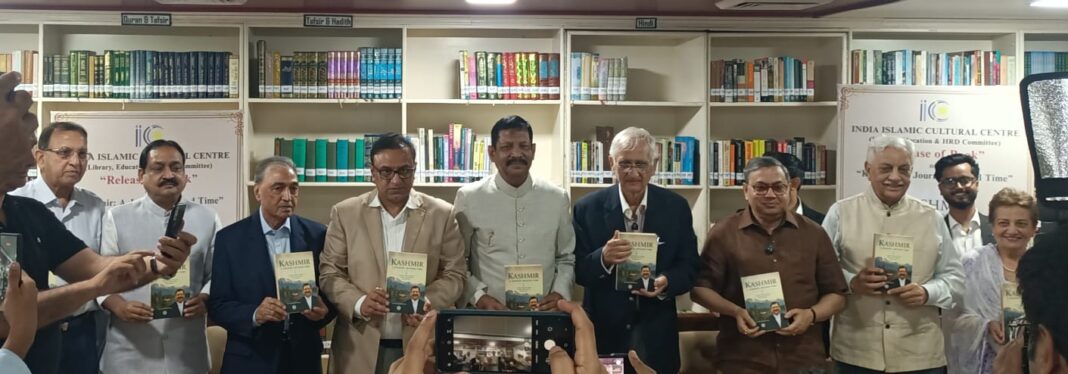
Advocate Irshad Ahmad’s book titled “Kashmir – A Journey Beyond Time” was released at the India Islamic Cultural Centre (IICC) on Wednesday, bringing together former judges, political leaders, legal professionals and public figures who reflected on Kashmir’s history, natural beauty, political developments and the experiences of its people.

Speaking at the book release, Justice Iqbal Ansari, former Chief Justice of the Patna High Court, congratulated Ahmad and urged people to read the book to develop a deeper understanding of Kashmir. Recalling his own visits to the region, Justice Ansari said that Kashmir’s extraordinary natural beauty stood in sharp contrast to the difficult circumstances he witnessed there.

Describing Kashmir as a “tragic place”, he said its people were good and hospitable but had experienced difficult lives. He recalled seeing restrictions and challenging conditions during his visits and said these experiences left him deeply saddened.

Justice Ansari also discussed the historical circumstances surrounding Jammu and Kashmir’s accession to India. Recalling the events following the end of British rule, he said Jammu and Kashmir was a princely state whose ruler, Maharaja Hari Singh, initially sought to maintain an independent position. According to Ansari, the situation changed following the entry of forces from Pakistan into the region, after which the Maharaja sought India’s assistance and signed the Instrument of Accession.

He emphasised that the accession initially related to three subjects, defence, foreign affairs and communications, while Jammu and Kashmir retained substantial autonomy in other areas.

Justice Ansari subsequently turned to the history and constitutional significance of Article 370. He questioned the popular narrative that Sardar Vallabhbhai Patel was unaware of, or opposed to, the provision. According to him, discussions concerning Article 370 took place at Patel’s residence, while a draft letter concerning Sheikh Abdullah was also sent to Patel for approval.

He said Patel subsequently played a role in securing support for the provision within the Congress Working Committee. Justice Ansari argued that Article 370 was conceived as a constitutional mechanism through which the applicability of provisions of the Indian Constitution to Jammu and Kashmir could be determined while preserving the state’s special constitutional position.

He stressed that claims concerning Article 370 and Patel’s role should be assessed in light of historical records rather than simply repeated as established facts. Referring to the subsequent abrogation of Article 370, Justice Ansari said there had been limited opportunity for a dispassionate public discussion about its constitutional and political implications.

He expressed appreciation for Ahmad’s effort to document his journey through Kashmir and said the book could encourage readers to engage more deeply with the region’s history, people and contemporary realities.

Former Union Minister Salman Khurshid also congratulated Ahmad on the publication. He said the book on Kashmir should perhaps have been written much earlier and suggested that greater engagement with the region could have contributed to addressing some of the problems associated with it.

Khurshid referred to the Supreme Court’s judgment concerning Article 370 and noted that Justice Iqbal Ansari had articulated his views on Kashmir and the constitutional provision. He also suggested that a separate book should be written on the Central Bureau of Investigation (CBI) and its significance in India’s constitutional and institutional framework.

Addressing the question of Kashmir’s relationship with the rest of the country, Khurshid said that even if some people believed the situation had improved, sustained efforts were necessary to ensure that the people of Jammu and Kashmir never felt separated from the rest of India.

He emphasised the importance of strengthening relationships with the people of the region and avoiding actions or approaches that could deepen feelings of alienation.

Recalling former Prime Minister Atal Bihari Vajpayee’s formulation of “Kashmiriyat, Insaniyat and Jamhooriyat”, Khurshid described the phrase as an important message associated with Kashmir. He said India should work towards an era in which Kashmir makes a significant contribution to the country’s future and receives the attention and care appropriate to its place as the “crown of India”.

The author, Advocate Irshad Ahmad, described the occasion as a deeply emotional moment, saying he had never imagined that he would become the author of a book. Recalling his journey to Kashmir, he said he had initially travelled there as an ordinary visitor but returned with experiences and impressions that eventually inspired him to write.

Ahmad said the beauty of Dal Lake, mountains, valleys, shikaras and gardens, along with the warmth and hospitality of Kashmir’s people, left a lasting impression on him. These experiences, he said, became the foundation of his book.

He said the central theme of his journey was “Sangharsh”, or struggle, which he described as an integral part of human life and an important source of inspiration and strength. Referring to Winston Churchill’s well-known exhortation to “never give in”, Ahmad said the spirit of perseverance had remained an important part of his own journey through different phases of life, including engineering, politics and public service.

Ahmad said he had already published around 650–700 books and credited the encouragement of friends and well-wishers for motivating him to continue writing. He particularly addressed young people, saying that determination and sustained struggle could help them achieve their objectives irrespective of the profession or field they chose.

He clarified that Kashmir – A Journey Beyond Time was not intended to be a conventional historical work. Instead, he said, it was based on what he personally saw, experienced and felt during his journey through Kashmir. He also indicated that he planned to write another book dealing with Islamic culture and animal cultural history.

Sirajuddin Qureshi, former President of the India Islamic Cultural Centre, congratulated Ahmad for completing the book, particularly because the project had been undertaken quietly and without much public attention. He said the author deserved appreciation for presenting Kashmir in what he considered its proper context rather than attempting to write about the region without experiencing it firsthand.

Qureshi highlighted Kashmir’s natural beauty and recalled its longstanding reputation as a destination comparable to Switzerland. While acknowledging that numerous books had already been written about Kashmir, he said Ahmad’s effort to present the region through his own journey and observations added significance to the work.

Pradeep Rai, President of the Supreme Court Bar Association, also congratulated Ahmad and reflected on the enduring significance of books. He said societies had undergone enormous changes over thousands of years, with rulers, communities and social structures changing, while Kashmir’s mountains, rivers and natural landscape had remained enduring features of the region.

Rai said books had the power to make writers’ names live on through generations because readers continued to remember authors through their works. Referring to his interest in Amir Khusro and writings in which Kashmir has been mentioned, he said successive dynasties and historical developments had shaped the region and its society.

He praised Ahmad for travelling through Kashmir and documenting what he personally witnessed. Rai observed that understanding contemporary Kashmir required a willingness to see the region directly and engage with its people and society.

The book release thus became not merely a literary occasion but a wider discussion about Kashmir’s history, constitutional evolution, social experience, natural beauty and relationship with the wider Indian society. Across their remarks, the speakers emphasised the value of documenting personal experiences and engaging with Kashmir through history, literature and direct human interaction.

source: http://www.indiatomorrow.net / India Tomorrow / Home> News> Society / by India Tomorrow / October 01st, 2026

10 extraordinary persons who enrich life in Delhi

DELHI :

Changemakers of Delhi

New Delhi :

Delhi is the city of enterprising people, many of whom are migrants from smaller towns and cities.  Many achieved successes in careers, businesses and professions — but some of them transcended the boundaries of success. They are trailblazers who give it back and inspire others. Here, we feature ten personalities of Delhi whose work makes them extraordinary and the Changemakers:

Sirajuddin Qureshi

Sirajuddin Qureshi a well-known industrialist who laid the foundation of India’s meat industry and food processing. Besides, he is one of the founders of the India Islamic Cultural Centre in Delhi. He is a trailblazer in modernising and scaling up the meat and food processing industry under the aegis of his Hind Group. He set up the first modern slaughterhouse and expanded his food business to 50 countries.

However, his lasting contribution to society is his relentless campaign for promoting education among the Qureshi clan, who were small-time meat sellers and traders. He persuaded his community members to pledge to promote the education of girls and women, opt for simpler weddings and encourage youth to join professions. His social campaign was so successful that today, only 20 per cent of the Qureshi men are meat sellers, and women have higher educational standards.

Azra Naqvi

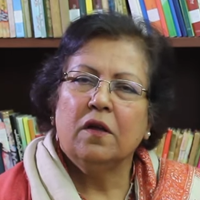
Azra Naqvi wears many hats, but her core remains attached to Urdu, the language, she claims, she breathes, thinks in, and is in her DNA. Despite having lived a fulfilling life with her husband in many countries, dabbled in different professions and roles, her heart always pined for her favourite language. So, when she got a chance to work as a consulting editor with Rekhta Foundation, she made the most of the opportunity.

Besides fulfilling her passion for Urdu at Rekhta, Azra Naqvi found an innovative use of the WhatsApp application on her mobile. First, she connected 200 Urdu women writers to establish a first-of-its-kind literary organisation, Bainalakwami Nissai Adabi Tanzeem (BANAT). The BANAT has created a sisterhood of Urdu writers.  So far, BANAT has published two anthologies based on WhatsApp communication, while a third one is in process. Using the WhatsApp group, Azra Naqvi collected theme-based writings of 40 women writers. 

Siraj Khan

‘Yes, We Can’ stands as a reminder that unity and opportunity can transform lives. This non-profit organisation is dedicated to empowering communities, nurturing youth potential, and creating safe spaces for growth. At the heart of this movement is Shiraz Khan, a changemaker from Old Delhi, whose journey of self-discovery and resilience has shaped the ethos of “Yes, We Can”. The seeds of Yes We Can were planted in 2015. For Shiraz Khan and his co-founder, Nandish, the pandemic wasn’t just a crisis; it was also a wake-up call. They realised that people needed support not only in material terms but also in inspiration, guidance, and community.

From grassroots awareness drives to collaborations with youth-led groups, Yes We Can has quickly grown into a space where possibility meets action. Shiraz often says, reflecting the organisation’s focus on building resilience rather than dependency.

Sahar Hashmi

Mental health in India remains a taboo; words like depression, anxiety, or personality disorder are either laughed off or bring shame. Breaking this deafening silence is Sahar Hashmi, the 29-year-old woman from Delhi. She not only overcame her mental illness but also became a beacon of hope for others suffering in silence.

In April 2025, Sahar launched a campaign, “Breaking Stigma: One Mile at a Time”. She took a 2,779 km bike ride from Delhi to Kashmir. This journey was not just about crossing the geographical boundaries, but an emotional journey against the stigma and silence of society on mental health.

Asghar Ali

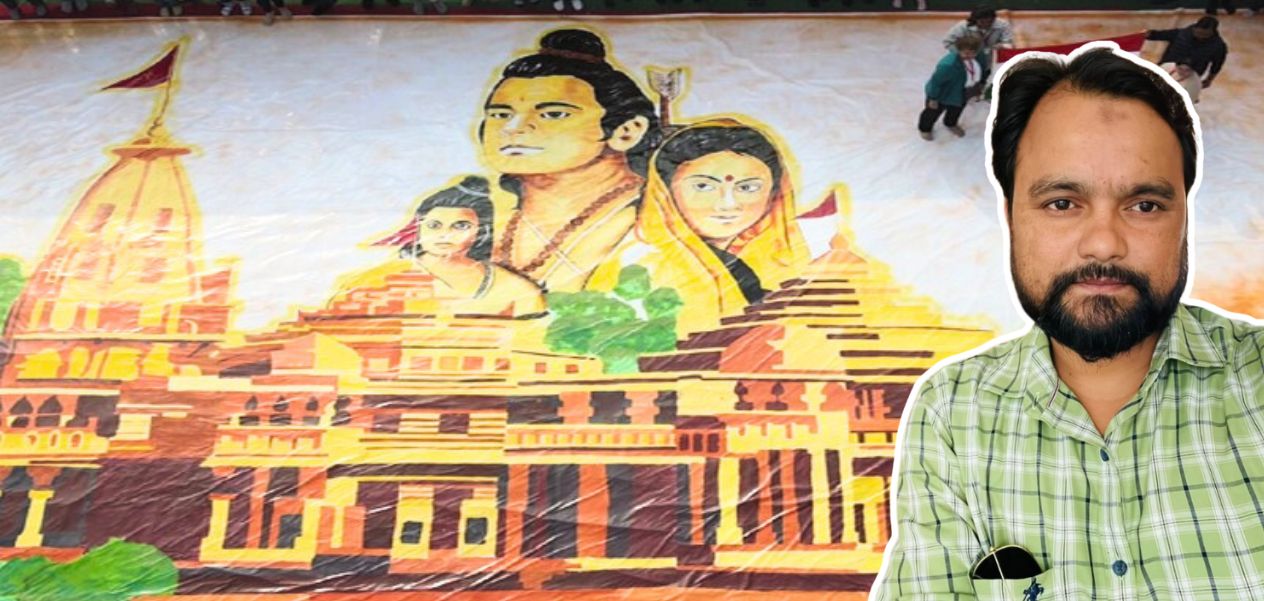
Delhi-based artist Asghar Ali is spreading the message of Ganga-Jamuni tehzeeb (Inclusive Indian culture) in society through his art. Asgar Ali, a Muslim by faith, has more than 50 paintings based on Lord Krishna and his life story to his credit.

Asghar Ali said that since his childhood, he was fascinated and influenced by Shri Krishna, colours of his peacock feathers and the flute. Asgar Ali’s major work is on the childhood form of Shri Krishna (Bal Krishna), his youth, his objectives in the Mahabharata war, as well as his leela (stories).

Asgar Ali had also organised an exhibition of his Krishna-themed paintings at the recently concluded International Geeta Mahotsav at Kurukshetra, Haryana, where people appreciated his work.

Amna Mirza

Amna Mirza is a trailblazing teacher who prefers holding her lectures outside her classroom amidst the pieces of history strewn around in Delhi. She not only makes teaching interesting, but also helps heritage and modernity coalesce. In the rat race of the modern world, Dr Amna Mirza stands tall as a teacher bringing about profound changes in people’s mindsets.

A political science professor at the University of Delhi. Dr Mirza’s journey defies the rigidity often associated with academia. She wears many hats with ease: educator, social worker, cultural custodian, and above all, a proud Delhiite who believes in nurturing the soul of a nation through its people and plurality.

Mohd. Meraj Rayeen

Md. Meraj Rayeen’s inclusive campaign to improve the conditions of indigenous Pasmanda Muslims, who comprise approximately 80 per cent of the Muslim population, is shaping social change.

Rayeen says, “Politics alone cannot be the solution to every problem.” Based on this thought, he founded the ‘Pasmanda Vikas Foundation’ over a year ago. The organisation has undertaken substantial work to change the lives of people and instil new hope and confidence within the community.

This foundation is not into rhetoric in favour of Pasmanda Muslims’ rights on political platforms; It addresses issues such as education, health, economic empowerment, and social justice.

Meraj Rayeeen believes that the development of Pasmandas is possible only with the awakening and cooperation of the community members. but the entire Muslim society, especially the Ashraf class.

Uvais Ali Khan

Uvais Ali Khan is a successful Chartered Accountant and a changemaker whose journey stands as a beacon of determination and service to society.

He quit his job and started his own business in a small apartment in Laxmi Nagar, East Delhi. Borrowing from friends and banks, he began building not just a company, but a platform for change. Uvais believes in a simple but powerful idea: “Providing basic skills to an individual can open avenues for them to get a job. That single opportunity can change the life of a family for generations.

Adeeba Ali

Adeeba Ali’s life is a testimony to the power of the human spirit and willpower. The 17-year-old is not only a rising star in the world of para-shooting but also an inspiration to many others struggling with self-pity and helplessness.

Five years ago, Adeeba fell from the balcony of her house in Nizamuddin. Four years later, she stunned everyone with her stellar performance at the 26th National Shooting Championship held at the Madhya Pradesh State Shooting Academy, Bhopal, in December 2023.

Adeeba’s success is not just a story of winning two medals; it is a story of perseverance that transformed disability into a new identity, not a hindrance.

Syed Sahil Agha

Storytelling is associated with Sufis and Khanqahs; it’s a medium of the message of peace and love, which instils patriotism, unity, and religious harmony, and nurtures the Ganga-Jamuni (inclusive) civilisation. Keeping the tradition in mind, Syed Saahil Agha revived this art and gave it a modern context. Today, he is one of the most well-known names in the world of storytelling.

Syed Saahil Agha conducts storytelling programs in India and abroad. He says, “I realised that people prefer listening over reading, so I thought stories should be narrated so that the public can become familiar with the past and also learn lessons from it.”

He says his aim is not just to narrate stories but also to promote Indian civilisation.

source: http://www.awazthevoice.in / Awaz, The Voice / Home> The Changemakers / by Aasha Khosa / November 09th, 2025