A small coastal town in south eastern Tamil Nadu, which has produced gems like Dr. K.V.S Habeeb Mohammed, the famous Tamil preacher, is a model in other respects too. Predominantly a women dominated town, with no cinema hall, no wine shop and even there is no police station. Almost zero crime rate but high literacy…
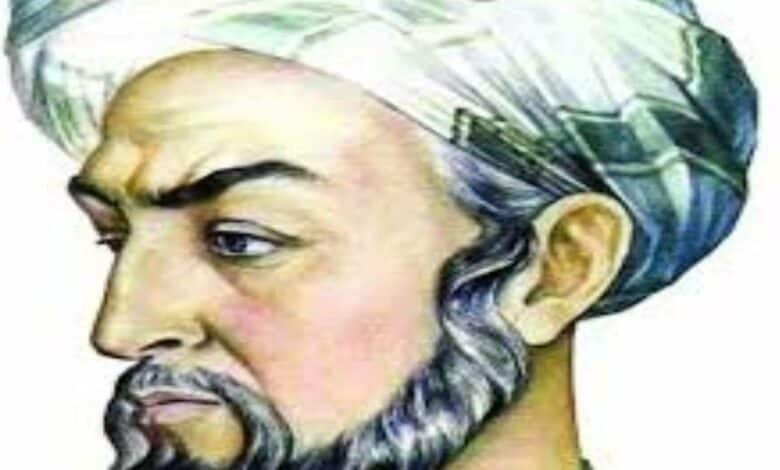
Dr. K.V.S Habeeb Mohammed
A small coastal town in south eastern Tamil Nadu, which has produced gems like Dr. K.V.S Habeeb Mohammed, the famous Tamil preacher, is a model in other respects too. Predominantly a women dominated town, with no cinema hall, no wine shop and even there is no police station. Almost zero crime rate but high literacy rate and God-fearing atmosphere are prominently visible features of the town. Travelers and explorers like Marco Polo and Ibn Battuta have mentioned in their diaries and famous documentarist and filmmaker Benoy K Bhel has also captured Kayalpattinam in his lenses.
Kayalpattinam is one of the coastal towns that had trade relations with Egypt and Arabia since long time. Obviously these became the entry points of Islam in India in the early times itself. Islam has left a lasting impact on this trade town. Rich Muslim traditions, Sufi heritage and centuries-old Arab connections are visible prominently. Kayalpattinam’s contribution to the Islamic spirituality and culture of the region is immense and invaluable. It has produced several religious scholars, great spiritual masters and offered a great space for local and international traders through several centuries. Kayalpattinam has contributed much to the Tamil literature.
Of the forty thousand population there are 1177 females for every 1000 males. The Arab lineage is evident in their features: complexion, physical features and culture. The town has about 30 mosques, one in each street. Madrasas and educational institutions especially imparting education to women like Aroosul Jannah Women’s Islamic college, Ayisha Siddiqua women’s Islamic college, Al Kulliyathun Nasuhiyya women’s Islamic college, Muaskarur Rahman Women’s Islamic college, are few names worth mentioning. Maqbara, tomb of Kazi Syed Alauddin, is another notable place. There are separate lanes for women to pass by, separate counters for them at shops.
The son of Kayalpattinam Dr. K.V.S. Habeeb Mohammed is a famous paediatrician, renowned speaker and author of more than 50 books. His TV talks, lectures and interfaith debates are valuable contribution to the harmony in the entire Tamil population. He is presently based in Chennai.
source: http://www.radianceweekly.net / Radiance Viewsweekly / Home> Miscellaneous / by Mohammed Atherulla Shariff / September 12th, 2023
It was her father, who after recognising the immense potential of drones in surveying, encouraged Rinsha to learn the skill.
Rinsha flying a drone
Kasargod:
There are many 18-year-olds who decide to take a break just after finishing higher secondary education and before taking up higher studies. And of them, most opt to spend their time relaxing. However, Rinsha Pattakal of Malappuram is built differently. Unlike many of her peers, the 18-year-old decided to use her free time to learn a skill. And in doing so, she created history.
Thanks to her dedication, Rinsha became the first woman from the state to receive a licence from the Directorate General of Civil Aviation (DGCA) for flying drones weighing up to 25kg. It was while she was waiting for admission to BTech in Civil Engineering that Rinsha decided to take up drone flying lessons.
The rigorous training she underwent at ASAP Kerala Community Skill Park in Kasaragod, the sole DGCA-approved drone-flying training centre in Kerala, paved the way for her historic achievement. Rinsha also credits Autonomous Unmanned Aerial Systems Pvt Ltd, an organisation in Ernakulam that provides training to aspiring drone pilots in collaboration with ASAP, for her success.
It was her father, who after recognising the immense potential of drones in surveying, encouraged Rinsha to learn the skill. The sole woman student in the ASAP’s first-ever drone flying training batch, Rinsha has set a shining example for young women across the country with her achievement.
The comprehensive 96-hour executive programme in small-category drone piloting, which also includes a five-day DGCA Licensing training, can be successfully completed within 16 days. The course includes specialised training in 3D mapping, unmanned aerial vehicle (UAV) survey, UAV assembly and programming, and aerial cinematography, equipping students with a wide range of skills to excel in the dynamic drone industry. “Drones are revolutionising various fields and have diverse uses such as aerial surveillance, rescue operations, traffic monitoring, weather monitoring, firefighting, drone photography, videography, agriculture, and delivery services,” Rinsha said.
In India, the DGCA Drone Remote Pilot Certificate is now a mandatory requirement for operating drones. The course at ASAP Kerala offers in-depth knowledge of drone flying rules and regulations, ensuring responsible and safe operations. Aspiring pilots above 18 years of age, who have passed Class X and possess a valid passport, are eligible to enrol in the course.
ASAP officials said Rinsha’s achievement serves as an inspiration to all and showcases Kerala’s progressive spirit. “The accomplishment not only empowers women in the field of aviation but also propels the state towards embracing cutting-edge technologies,” said an official.
source: http://www.newindianexpress.com / The New Indian Express / Home> Good News / by Pooja Nair / Express News Service / July 28th, 2023
Shoukat Ali is more than just a teacher; he is a social activist and a symbol of hope for many. His story embodies the profound impact that education and dedication can have on individuals and communities.
As we celebrate Teacher’s Day on the 5th of September, we are reminded of the countless educators who have dedicated their lives to shaping young minds and illuminating the path to a brighter future. Among these remarkable individuals, Shoukat Ali, the founder of the HOPE Foundation, shines as a beacon of hope in the world of education.
Shoukat Ali’s journey into teaching began in the slums, where he and his friends started educating underprivileged children. They founded the HOPE Foundation with a mission to provide quality education to these children. For Shoukat, education is not just a profession; it’s a lifelong commitment deeply rooted in his childhood. He recognized the importance of education early on and began teaching children in his community for free during his student days. His passion for teaching only grew stronger as he pursued higher education abroad.
With the unwavering support of his friends, Shoukat Ali’s dream took shape, and the HOPE Foundation was born. This organization’s primary focus is on creating awareness about education in remote and underserved areas, igniting the torch of knowledge and development. The dedication of his friends, who share his commitment, added strength to the foundation.
Today, the HOPE Foundation stands as a shining example of self-sustainability, with every member contributing from their income. The organization’s reach extends to slum-dwelling children across four Indian states, including Uttar Pradesh, Bihar, and West Bengal. Beyond traditional education, the foundation conducts career counseling programs for college students, spreading the message of hope and ambition.
Umran collaborates with such passionate teachers to reach the right to good education for underrepresented and marginalized communities and help them in every possible way. Looking ahead, the HOPE Foundation has ambitious plans, including introducing computer education to young girls in rural areas, equipping them with essential digital skills, and boosting their confidence. Additionally, a library for students preparing for competitive exams is in the pipeline.
The HOPE Foundation’s impact transcends education; they’ve undertaken significant work in health camps, afforestation, and disaster relief efforts. During the COVID-19 pandemic, the organization distributed essential supplies to people in various districts, exemplifying their commitment to the welfare of society.
As we celebrate Teacher’s Day, Shoukat Ali’s journey serves as a reminder of the transformative power of education and the incredible impact teachers can have on their students and communities. His dedication and tireless efforts have brought hope and opportunity to countless young minds.
In this celebration of educators, let us recognize and honor individuals like Shoukat Ali, who, through their unwavering commitment to education, inspire us all to reach for the stars, no matter where we come from. Happy Teacher’s Day!
source: http://www.umran.org.in / Umran.org.in / Home> Blog / September 03rd, 2023
Sana and Jassim have started a chapter of the Robin Hood Army in Kozhikode, who collect excess food and distributes among the hungry.
Sana and Jassim with their family
We all have advised our children not to waste food. We have also expressed dismay over the amount of food that gets wasted at restaurants and parties. What else? Is that all we can do? Then, meet this couple who has moved from Kuwait. They are collecting surplus food from restaurants and catering services, and donating it to the underprivileged people in Kozhikode.
Fret not anymore, if you have excess food after a function at your home or if you ordered a little too much while having dinner at a restaurant. Because Sana and Jassim’s green veiled volunteers from the newly started chapter of Robin Hood Army in Kozhikode are one phone call away. They will rush to your place to collect the food and deliver it to the needy.
In less than two months, the Robin Hood Army has fed 4,959 people in just 54 drives. A zero-fund worldwide organisation started by Neel Ghose and Anand Sinha on August 26, 2014, the Robin Hood Army is functioning in 133 cities in 13 countries. Its vision is to eliminate hunger. “More than 40 per cent of cooked food in the world is directly going to the dustbin and I believe that every religion emphasises that we shouldn’t unnecessarily waste food,” says Sana.
Sana, mother of three and hailing from Mumbai, had always wanted to dedicate her life to social service and was looking for the right NGOs to work with, when she found out about the services of RHA and applied to be their volunteer in Kozhikode.
“My vision is to make Kozhikode as a zero food wastage city and reach to each and every needy person out there – be it the need for food, education or social awareness, myself and my army will be there,” she says.
From professionals including lawyers and teachers to wheelchair-bound people, they have 45 volunteers at present. Specialised in health coaching and nutrition, Sana Jassim’s husband Mohammed Jassim personally arrives at restaurants and other venues to taste and check the quality of the food before it is donated. He had been working in Kuwait for 40 years in an oil company before he moved to Kozhikode last year.
“Our main purpose is to end wastage of food. This is a nonprofit service. Everyone who commits to volunteer will have to meet their own expenses such as fuel for the transport,” Jassim’s adds.
Presently, Sana and her team including her husband are preparing to start RHA chapters in hyper local areas such as Balussery, Wayanad, Malappuram etc. There will also be educational training for the local kids and their mothers on the beach areas as Sana thinks that even though Kerala is 100 percent literate, the quality of education offered to the underprivileged needs to be improved.
source: http://www.deccanchronicle.com / Deccan Chronicle / Home> Lifestye / by Fathima Shareef, Deccan Chronicle / April 06th, 2019
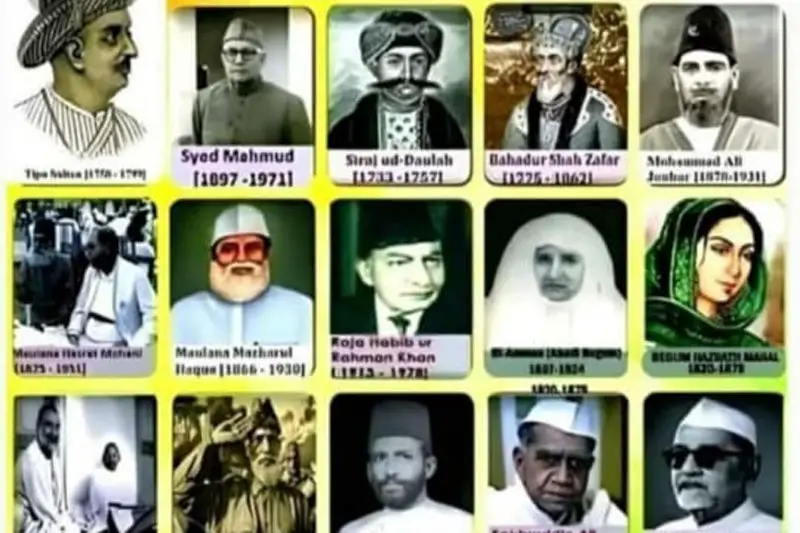
Uncover the remarkable contributions of Muslim freedom Fighters of India to fight for freedom from British colonial rule.
In present times, Indian Muslims find themselves subjected to demonization and unwarranted questioning of their patriotism. Communal elements seek to manipulate history by intentionally excluding Muslims and disseminating false propaganda against them through social media. The vital contributions and sacrifices made by Indian Muslims in the struggle for India’s freedom from British colonial rule are systematically obscured. However, a closer examination of history reveals that not only did Indian Muslims play an essential role in the freedom movement, but they also made significant sacrifices for the cause of anti-colonial nationalism.
Indian Muslims: Unveiling Their Crucial Role
According to a report by the Milli Chronicle, the names of 95,300 freedom fighters are etched on the India Gate in Delhi, and remarkably, 61,945 of these names belong to Muslims, signifying that 65% of these brave individuals were Muslims. The significance of this statistic is eloquently captured by the renowned writer Mr. Kushwant Singh, who boldly states that the story of Indian freedom is etched in the blood of Muslims, emphasizing their disproportionately larger contribution to the struggle, considering their smaller population percentage.
Profiles of Courage: Muslim Freedom Fighters
The annals of history are adorned with the stories of Muslim freedom fighters who put their lives on the line to liberate India from the shackles of British oppression. These individuals, driven by an unwavering determination to secure their homeland’s independence, demonstrated exceptional courage and resilience.
Sultan Haidar Ali Salabat Jung: The First Freedom Fighter
Sultan Haidar Ali, father of Tipu Sultan, pioneered the fight against British colonial forces. A secular leader, he united both Hindus and Muslims in his quest for freedom, although his efforts were eventually betrayed.
Tipu Sultan: A Trailblazer in Battle
Son of India’s first freedom fighter Haider Ali, Tipu Sultan pioneered the use of iron-cased rockets, utilizing them effectively to defeat British forces in several historic battles over two decades.
Shaheed Ashfaqullah Khan: A Martyr’s Legacy
Member of the Hindustan Republican Association (HRA), Ashfaqullah Khan paid the ultimate price for India’s freedom. Notable for his daring attacks on British government trains, his sacrifice remains etched in history.
Maulana Abul Kalam Azad: A Beacon of Unity
Maulana Azad, a key leader in the anti-colonial nationalist movement, became the youngest President of the Indian National Congress. He rallied Hindus and Muslims alike against British oppression and launched Urdu Weekly Al-Hilal to expose British misrule.
Maulana Hasrat Mohani: Champion of Change
Mohani’s powerful Urdu speeches incited Indians to stand up against British rule. His unyielding spirit saw him arrested and jailed, but his impact on India’s fight for freedom remained profound.
Khan Abdul Ghaffar Khan: The Frontier Gandhi
A pivotal figure in the Khilafat movement, Khan Abdul Ghaffar Khan established the Khudai Khitmatgars, promoting peace and unity. Jailed for 13 years by the British, his dedication was unwavering.
Sirajud Daula: Battling Against Betrayal
The last Nawab of Bengal, Sirajud Daula, fought valiantly against British forces. Despite betrayal, he remained a symbol of resistance against British rule.
Vakkom Majeed: Courage Amidst Oppression
Vakkom Majeed’s resilience during the Quit India movement earned him repeated jail terms, highlighting his unwavering commitment to India’s freedom.
Fazl-e-Huq Khairabadi: Life in Exile
Sentenced to life in the notorious Kalapani jail on Andaman, Fazl-e-Huq Khairabadi continued his fight for freedom despite insurmountable odds.
Badruddin Tayabji: Founding the INC
Badruddin Tyabji and Qamruddin Tyabji were instrumental in establishing the Indian National Congress (INC). Badruddin’s wife, Suraiya Tayabji, designed the present Indian flag.
Shah Nawaz Khan: A Triumphant Act
Major of Azad Hind Force, Shah Nawaz Khan was the first to hoist the tricolor at the Red Fort, symbolizing India’s victorious struggle against British imperialism.
Barrister Saifuddin Kitchlew: A Voice for Justice
Jailed for 14 years by the British for protesting against the Jallianwala Bagh massacre and the Rowlatt Acts, Kitchlew’s opposition to the two-nation theory set him apart.
Bakht Khan: A Gallant Defender
Bakht Khan’s courageous defense against the British in Delhi, Bengal, and Lucknow showcased his unwavering dedication to India’s freedom.
Titu Mir: Bengali Rebel
Titu Mir’s armed resistance against British colonial authorities exemplified his determination to free India from British rule.
Syed Ahmad Barelvi: Organizing Resistance
Syed Ahmad Barelvi’s efforts in uniting native armies against the British from Delhi to Kabul showcased his strategic prowess.
Zain-ul-Abideen: INA Officer’s Patriotic Slogan
Zain-ul-Abideen, an officer of the Indian National Army (INA), coined the iconic patriotic slogan “Jai Hind.”
Empowering Women in the Freedom Struggle
The fight for India’s freedom was not limited to men; several Muslim women also contributed significantly to the struggle.
Begum Hazrat Mahal: A Rebel Leader
Rebelling against the British in 1857, Begum Hazrat Mahal seized control of Lucknow from British forces, showcasing her leadership and courage.
Surayya Tyabji: Designing India’s Flag
Wife of freedom fighter Badruddin Tayyabji, Surayya Tyabji designed the Indian flag that we proudly hoist today.
Abadi Bano Begum: A Pioneer in Politics
Abadi Bano Begum, known as Bi Amma, actively participated in politics, matching her male counterparts in the Indian National Movement. Her sons went on to become prominent leaders.
Azizan: A Warrior’s Spirit
Azizan organized a battalion of warrior women, displaying her remarkable skill in the art of war and refusing to yield to British pressure.
A Timeless Legacy
The contributions and sacrifices of Indian Muslims in the fight against British colonialism are immeasurable. While recounting the names of every Muslim freedom fighter may be an impossible feat, their collective impact remains undeniable. The fact that many chose to remain in India underscores their deep-rooted connection to the land. Despite attempts to distort history, India will forever be the cherished home of its Muslim citizens.
Conclusion
Urdu poet Rahat Indori’s words,
“Sabhi ka khoon hai shamil yaha ki mitti me,
Kisi ke baap ka Hindustaan thodi hai,”
encapsulate the essence of Muslim Freedom Fighters of India’ unyielding commitment to their homeland. The sacrifices and contributions of Indian Muslims in the struggle for independence stand as a testament to their unwavering dedication and indomitable spirit. Their stories deserve to be acknowledged and celebrated, inspiring future generations to honor the diverse tapestry of individuals who fought for a free and united India.
source: http://www.munsifdaily.com / The Munsif Daily / Home> News> Indai> Pan India / by Munsif Web Desk / August 18th, 2023
Officials familiar with the operation said that the terrain in the particular area is difficult and “militants fired from a height upon the approaching party”.
Family members mourn the death of DSP of J&K Police Humayun Bhat , who was killed in a gunfight with terrorists in Anantnag district, during his funeral at his residence in Srinagar on Wednesday.(PTI Photo)
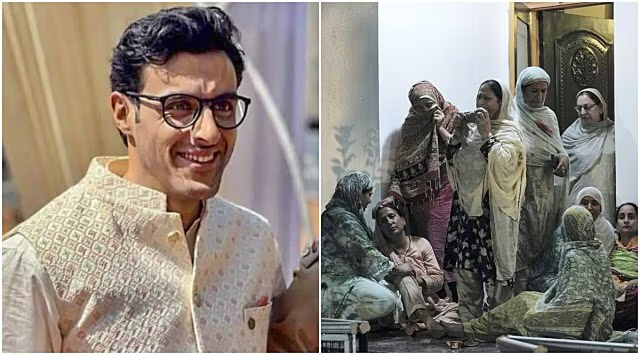
As friends and relatives crowded through the gates of Deputy Superintendent of Police Humayun Bhat’s house, distraught family members could barely say a word through their sobs. The 2018 batch J&K Police officer, who wished to carry forward the tradition of the uniform in the family, was killed along with two officers of the Indian Army as their search party was hit by a volley of terrorist gunfire in the Gadool forest in Anantnag.
Bhat’s father, Ghulam Hassan Bhat, served in the J&K Police until his retirement as DIG Central Kashmir in 2018.
An officer who spent his probation year with him described him as an eager and humble officer. “He was always eager to learn, a friend to all his colleagues. He always led his team and yesterday too he did the same,” said the officer.
Officials familiar with the operation said that the terrain in the particular area is difficult and “militants fired from a height upon the approaching party”.
Another officer who served with Bhat at Srinagar said, “He was an exceptional police officer. I remember when he joined the team, I was greatly impressed by his interest in learning practical policing. He was a dedicated team member, always ready to contribute.”
He said that Bhat was the proud son of a retired police officer and “found great joy in carrying on his father’s legacy by wearing the khaki”. “Gone too soon, his absence leaves a void that words can’t express, and our hearts ache with the loss of such a promising officer,” the officer said.
Bhat studied at Srinagar’s Burn Hall School and trained as an engineer at SSM college of engineering in North Kashmir. The family, originally from Pulwama, had been living in Srinagar for many years. He is survived by his parents, a brother, his wife and a son, who is just over a month old.
After joining the force in 2018, Bhat was posted at Srinagar, then at Pattan in North Kashmir, and he was on his third posting, as Sub Divisional Police Officer (SDPO) at Kokernag, Anantnag.
A senior officer he worked with in the early days of his career described him as brave and compassionate. “His father is one of the most outstanding professionals, a man of principle, and Humayun had those same values. He was passionate about the uniform and never brought his father’s rank into his own professional dealings.” He added that his loss at a time when things are relatively calmer in the Valley “makes this immensely difficult to reconcile with”.
A family friend described Bhat as an “extraordinary officer” and added that he was courageous, conscientious and down to earth. “Similar to his father, his qualities of head and heart endeared him to everyone who came in contact with him. His martyrdom is an irreparable loss to all of us who knew him and his father.”
source: http://www.indianexpress.com / The Indian Express / Home> News> India / by Naveed Iqbal, Srinagar (headline edited) / September 14th, 2023
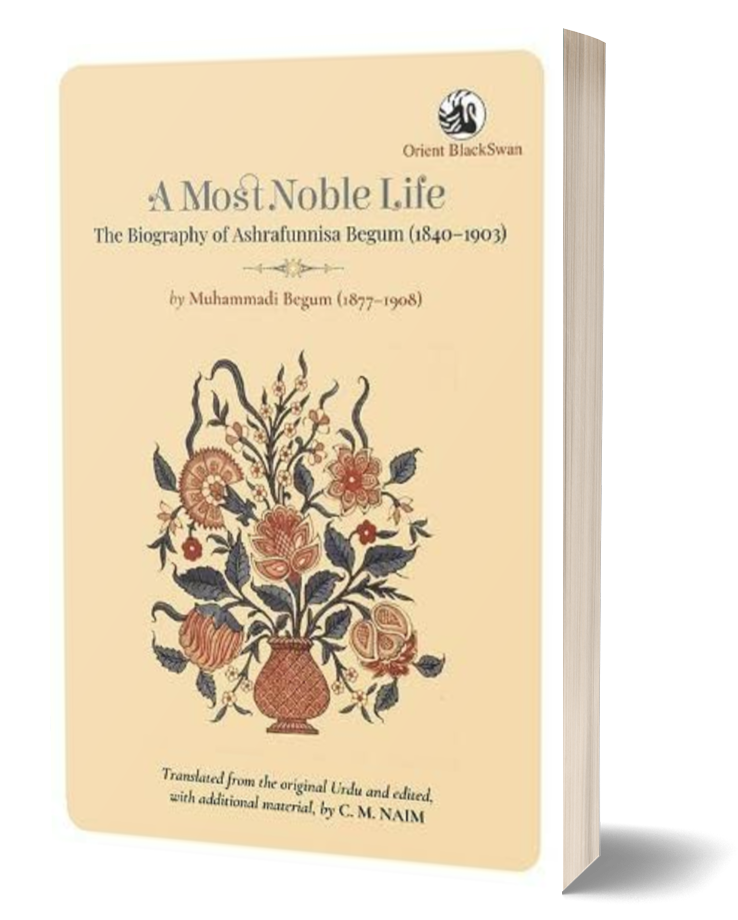
An excerpt from ‘A Most Noble Life: The Biography of Ashrafunnisa Begum (1840–1903)’, by Muhammadi Begum, translated from the Urdu by CM Naim.
Victoria Girl’s School, Lahore was established by Ashrafunnisa Begum. | The school’s Facebook page.
Why was I so eager to read Urdu? At our house, during the 40 observance of Muharram, separate majālis for men and women were held every day. In addition, all year long, a majlis was held every Thursday in fulfilment of someone-or-other’s vow. That was the reason I was so keen to read Urdu. All the ladies in my family knew Urdu quite well. When, on some occasion, happy or sad, they visited other homes, or when other ladies came similarly to our place, my female relatives would read aloud from books on matters of faith and religious observances.
Listening to them, I came to know many of the same by heart – just as one learns stories. It did not, however, lessen my keen desire to be blessed with the gift of reading.
Once I went to all the ladies in the family one by one and implored each to teach me to read. I said, “Teach me just a little bit every day; I would be your slave for life.” But not one was moved in the slightest way by my pleadings. All of them gave the same response: “Have you gone mad, girl? Better find some cure for it. First of all, what would you do with it even if you learned how to read? Secondly, what makes you think it is easy to teach someone to read? It’s not. It is hard work. Who do you think has the time and energy to waste on you?”
I lost all hope when I heard those words, and began to weep. In fact, I felt so hurt that I burst into loud wailing. That made the ladies even angrier. “How nice!” they said, “Now you’re trying to scare us with tears. Well, your silly tears don’t scare anyone. It’s not nice to go around whining all the time just because you want to read. Who ever saw a girl like you? Most girls run and hide if someone even mentions a book. Children your age are scolded and spanked to make them study, but you, on the contrary, weep and wail, wanting to read! Look, you’ve already lost your mother on account of your wretched crying for lessons, who knows what might happen next. Go away! Don’t sit here crying. It gives me the chills.”
I was devastated, and my tears just kept pouring out. Then the ladies said, “For God’s sake, girl, go away! If your grandmother were to see you crying she would immediately assume that one of us had said something nasty to her darling.” God alone knows how I felt when I heard those words. I was not accustomed to such cruel remarks. My parents had brought me up with much love. They had always spoken kindly in my presence, never saying a harsh word to anyone and always treating everyone with patience and civility.
Those words of the ladies were like salt on my already wounded heart. I wiped my tears and, obedient to their command, walked away. But when I was by myself, I prayed to God: “Most Benevolent God, be merciful to me. Guide me to my goal across this dreadful chasm. I promise that if I ever learn how to read, I shall teach that skill to anyone who desires it – even forcibly, God willing, to those who might be unwilling – for so long as I live I shall never forget the pain I feel right now.”
Later one night, when I was beset with similar thoughts, it occurred to me, had I the text of a salām or mujrā, I could myself figure out the words. “It isn’t that great a matter,” I said to myself, “I already know the letters of the alphabet. Let them not teach me. What do I care?” The idea so enhanced my courage and hope that the very next morning I sent a maid to all my friends with this request: “I need some salām and mujre. Please loan me a few. I shall return them after getting them copied.” May God bless them, for each of them sent me one or two.
But who was there to copy them for me? It was only an excuse. I used it again, and said to my grandmother, “Please get me some paper. I shall ask Māmūñ Sahib to make copies of these poems.” She immediately sent someone to the market and got me some paper. Now the question was: how should I make the copies, and where should I hide while I was doing so? I well knew what a disaster it would be if someone became suspicious.
Writing was strictly forbidden to girls, and I had no mother to cover up for me. How was I to reach my goal and also keep it a secret? My aunt was already furious, and called me nasty names for reading the Qur’an so much. “Thank God, this girl hasn’t learned anything else,” she would grumble, “for then she would have time for nothing at all.” God alone knows what my aunt might have said had she ever caught me writing!
Thinking over all this at some length, I finally decided that at midday, when everyone else lay down to rest, I would make some ink with the blacking from the tawā and start copying. And that is exactly what I did. You have to believe me. I scraped some blacking off the tawā, took the ceramic lid from one of the water pots, and grabbed a fistful of twigs from the broom. Thus equipped I went up on our roof, pretending that I was going there to sleep, and excitedly began copying. I cannot describe my happiness at that moment. Childhood is a time of such innocence!
No sooner had I copied a few words than I felt I had won the battle. Before returning downstairs, I broke the lid in which I had made my ink and threw away the pieces. That was the routine I followed every day, using a fresh lid each time to make my ink. The ladies would find the water pot uncovered, and grumble: “What wretch steals the lid every day? May God break her arms!”
I felt so ashamed of my bad deed; I was also scared someone might find out what I was doing. I feared people, for I did not yet have enough sense to consider my misplaced boldness a sin and to fear God. The intensity of my desire made me blind to such matters. I did not give up my improper ways, and continued to blacken sheets of paper with my scribbles. But I had no idea what I was writing. I did not have the sense to know that one cannot learn to read without the help of a teacher. I believed it was like any other skill, that it was something one could learn just by watching others and imitating them. And so I continued to spend much time and effort even if it was for nothing. I still could not read Urdu. Consequently, my crying spells started again. Then God sent me a teacher.
Excerpted with permission from A Most Noble Life: The Biography of Ashrafunnisa Begum (1840–1903), Muhammadi Begum, translated from the Urdu by CM Naim, Orient Black Swan.
source: http://www.scroll.in / Scroll.in / Home> Book Excerpt / by Muhammadi Begum / February 27th, 2023
Rizwana Khan Ghori, a Malayali settled in Sharjah, entered the Limca Book of Records for collecting Disney plush toys worth over Rs 57 lakh.
Rizwana with her collection
Rizwana Khan Ghori, a Malayali woman settled in Sharjah, has entered the Limca Book of Records for her staggering collection of Disney plush toys worth over Rs 57 lakh. Born to Abdul Razackhan Ghori and Mrs Razackhan Ghori, Rizwana began collecting Disney plush toys at 12; now she has 1,100 of them which are kept in a rented two-room flat!
She expresses her intention of trying for a Guinness record, during an email interaction. “I will do it, but for now, I’m just enjoying the moment, and slowly adding to my collection.”
It all started after her mother told her the story of Cinderella and she craved for a doll of Cinderella. Soon, she was the proud owner of one. “I have never borrowed money from my family, friends or relatives for these toys. I used to save up a lot from my pocket money to buy them.”
She gives a lot of credit to her father, who never discouraged her from indulging in her passion and in fact rented a two-bed apartment to house the toys. Her mother, however, was more disapproving of her hobby.
How did she manage to lay her hands on rare ones like the limited edition Molly Cunningham? Her father’s brother is in the US, she says, and he helped procure some of them. Of late, she has also been shopping online. Rizwana remembers that she spent the first five years of her life in Jawahar Nagar, Thiruvananthapuram. “Though I grew up in the UAE, I feel connected to my motherland and am proud of my roots. My father comes from capital city while mother from the cultural capital of Kerala.”
Mother of a three-year-old, Rizwana says she will never grow out of this hobby and will keep collecting all her life. But at the same time, she imagines that one day she would auction the plush toys and give the proceeds to some charity.
She signs off by quoting Walt Disney who famously said that if you can dream it, you can do it.
source: http://www.deccanchronicle.com / Deccan Chronicle / Home> Lifestyle / by T Sudheesh, Deccan Chronicle / March 20th, 2016
Hyderpur Village (Narkelbara Paragnas) , WEST BENGAL:
The Wahabi movement enjoyed a special status when it comes to revolts against the British rule in India, and Titu Mir, whose real name was Syed Mir Nisar Ali, added a militancy to it. It became the source of inspiration for several movements in the Struggle for Independence of India.
Titu Mir was born in a peasant family in 1782 at Hyderpur village, in the Narkelbaria paragana of West Bengal. Syed Mir Hasan Ali, Abida Roqayya Khatun were his parents. He was a renowned wrestler during his younger age and was engaged in several petty jobs. Syed Mir Nisar Ali went on a pilgrimage to Mecca in 1822 and met the founder of the Wahabi movement, Syed Ahmed Barelwi and the founder of the Farazi movement, Haji Shariatullah. The meeting of the three leaders had strengthened the ‘Wahabi[1]Farazi’ movements.
After his return from Mecca, he settled in Hyderpur. He travelled extensively and saw the atrocities of the officials of the East India Company, Zamindars and Mahajans. Syed Mir Nisar Ali witnessed the woes of the people who suffered in the clutches of these exploiters. Titu decided to put an end to the exploitation and undertook a campaign to arouse the people for a rebellion against the foreign rulers along with his spiritual campaign. He started armed struggle against the British Police and East India Company armed forces, who were supporting Zamindars and Mahajans. Zamindars and their men were collecting taxes for wearing beards and harassed Muslims.
Opposing the oppressive taxes levied by the Company rulers and inhuman activities of local Zamindars, Titu Mir himself personally led several revolts. Titu Mir was irked by atrocities and attacks on the common people by Zamindars, Mahazans and British force. Syed Mir Nisar Ali was so courageous that he was even informing the East India Company officials and police about his attacks in advance. His courageous approach attracted the poor towards him.
Thousands of people, irrespective of religious and class barriers, followed him in his rebellion and fought for him against the police and British forces. Titu Mir built a bamboo fort in Narkelbaria where he trained his followers in armed struggle and frightened the Company rulers for about a decade. The British commanders attacked the fort of Syed Mir Nisar Ali (Titu Mir) on 19 November, 1831 at Narkelbaria, where he succumbed to injuries in 1832 .
source: http://www.siasat.com / The Siasat Daily / Home> Featured News / by Nihad Amin / August 28th, 2020
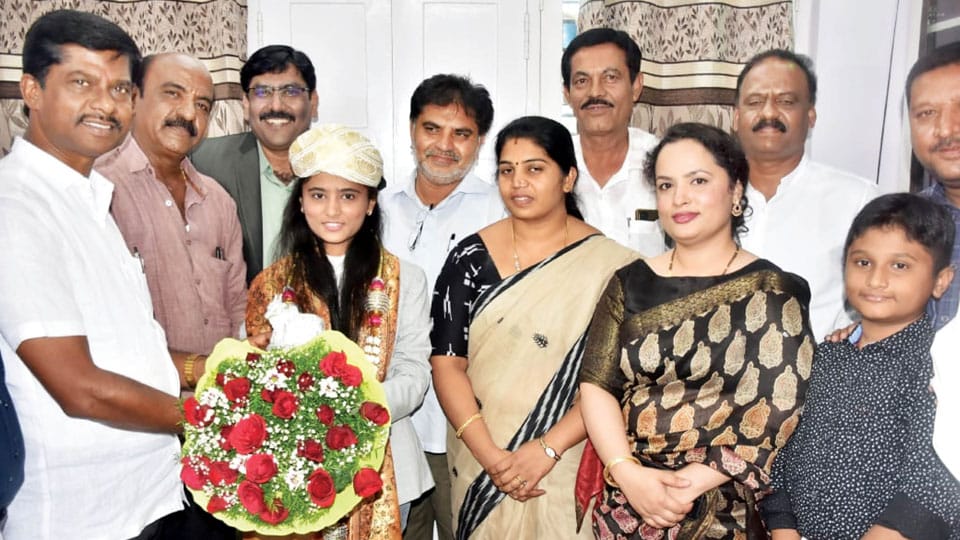
Falkia Khan, a teenager of the city, has been appointed as Brand Ambassador of Swachh Survekshan-2023.
Swachh Survekshan is the world’s largest urban sanitation and cleanliness survey.
The primary goal of Swachh Survekshan-2023 is to encourage large scale citizen participation and create awareness amongst all sections of society about the importance of working together towards making towns and cities better places to reside in.
A resident of Rajivnagar 2nd Stage, Falkia was handed over the appointment letter by Mayor Shivakumar at her house yesterday.
Falkia Khan is a 1st PU student at St. Joseph’s College in Sathagalli. She is the daughter of marble and granite businessman Ajajulla Khan and Farheen Khan couple.
Falkia, who passed SSLC in distinction, has taken PCMB as subjects in PUC. She is aspiring to become an Indian Foreign Service (IFS) Officer, according to her mother Farheen Khan, who spoke to Star of Mysore this noon.
Falkia, who is also a National Muay Thai Boxer, has won Gold in National Championship and many gold medals in boxing and kickboxing, apart from winning gold in Spellbee competitions.
She also holds ‘India Book of Records’ for delivering maximum public speeches.
Mayor Shivakumar told Star of Mysore that “Falkia Khan had been appointed as Brand Ambassador during the tenure of previous BJP led State Government. However, the process of issuing letter of appointment was pending, which was completed yesterday. Falkia is scheduled to visit every wards in Mysuru City Corporation (MCC) limits to create awareness among the people to make Mysuru the No. 1 Cleanest City in the country, in the forthcoming Clean City rankings.”
Chairperson of MCC Public Health, Education and Social Justice Standing Committee Savitha Suresh, Chairman of Finance Standing Committee R. Nagaraj, former Mayor and sitting Corporator Ayub Khan, Corporator Syed Hasarathulla, MCC Commissioner Ashaad-Ur-Rahman-Shariff, Senior Health Officer of MCC Dr. D.G. Nagaraj, Environment Engineers and Health Inspectors were present on the occasion.
source: http://www.starofmysore.com / Star of Mysore / Home> News / August 18th, 2023