Category Archives: Amazing Feats

Muslim youth invents flying car, a schoolboy e-Cycle

Chennai, TAMILNADU / Aurangabad, MAHARASHTRA :

A youth from Chennai has invented a flying car, while a schoolboy from Aurangabad has invented an e-Cycle
Chennai: 

Indian Muslims are silently making their efforts for innovative development in the country. A youth from Chennai has invented a flying car, while a schoolboy from Aurangabad has invented an e-Cycle. Their achievements tell the story that Muslims are second to none in the innovative development of the country.

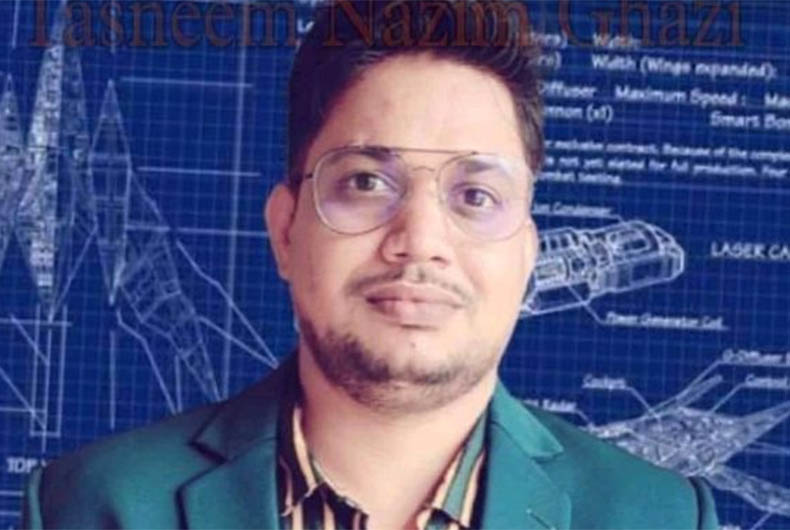
Muhammad Furkan Shoaib, an aeronautical engineer, has fulfilled the dream of million Indians of riding a flying car in the sky. He along with his technical team has innovated India’s first flying car. Furkan Shoaib is a certified UAV pilot and the Chief Technology Officer at VINITA – an Aero-mobility company in Chennai.

The model of this flying car was shown at the London Helitech Exposition on October 5, 2021. Many of India’s news channels showed the car launch in their news coverage. They gave credit for this innovation to the “Make in India” project and failed to mention the promising young engineer’s contribution to this innovation.

The gap was filled by a US website called ‘Future Flight’ that gave coverage to this innovation and also appreciated Muhammad Furqan’s abilities for his stellar contribution to the field of aviation.

Undoubtedly Muhammad Furqan has made the whole country proud. His innovation is a morale booster and inspiration for the youth, especially the Muslim youth, who too want to be on such work of innovation in the country.

Aurangabad :

“e-Cycle”

The second story is of a talented high-school boy Mohammad Faizan from Aurangabad in Maharashtra. Faizan is making waves in social media for his innovation of an e-bike that has made people rushing for a glimpse of him and his invention. Its video is available on YouTube.

Faizan, the tech-savvy student of 8th grade, has transformed a paddle bike into electric one. He actually has transformed the common paddle bike into a motorbike. Attached to the bike are a self-starter switch, accelerator, clutch, breaks, and other features.

Watch Video: Faizan’s e-bike

https://www.youtube.com/watch?v=qRG_QfntzC4&feature=emb_imp_woyt

The bike is powered by an electrical motor. Faizan has connected the motor with a rechargeable battery that takes two hours to get fully charged. A single charge lasts for about 50 kilometers and there is a digital indicator that displays remaining battery levels. The speedo-meter tells the speed of the bike. The innovator claims that the top speed of the bike is 30 kilometers per hour.

These two positive stories from the much-maligned Muslim community show mirror to those who accuse, the 14 percent Muslim minority community of a drag on 84 percent Hindu population.

The negative stereotyping of the Muslims likes “puncher chaap” or “love jihadi” are corona jihadi are dutifully circulated in the media, while the story of these two characters has never been told even though they inspire a whole generation of youth of the country.

[Syed Ali Mujtaba is a journalist based in Chennai. He can be contacted at syedalimujtaba2007@gmail.com.]

source: http://www.ummid.com / Ummid.com / Home> Science & Technology / by Syed Ali Mujtaba / October 18th, 2021
Blood donation in Bengaluru to mark Eid Milad-un-Nabi

Bengaluru, KARNATAKA :

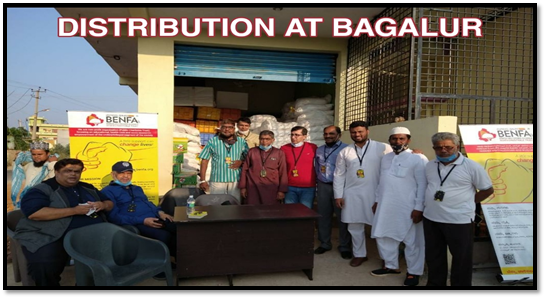
On the occasion of Eid Milad-un-Nabi, muslim community members under the patronage of Jumma Masjid Trust Board organized a blood donation camp at Hazrat Khudus Saheb Eidgah (Khadriya Masjid, Bengaluru), Crescent School in Basavangudi and Chirayu Hospital in Thanisandra on Tuesday.

Over 500 hundred units of blood were collected during the camp through Jeevaraksha Blood Bank, Mediscope Hospital and St Philomenas Hospital.

The camp was organized in association with Emergency Response Team (ERT) Bengaluru, Karol Foundation, Zubeida Sulaiman Charitable Trust and Sunni Jamiyat-Ul-Ulama All Karnataka among others.

source: http://www.thehindu.com / The Hindu / Home> News> Cities> Bengaluru / by Special Correspondent / Bengaluru – October 19th, 2021

Remembering Majaz Lakhnavi, the Keats of Urdu poetry

Rudauli (British India / Lucknow, UTTAR PRADESH :

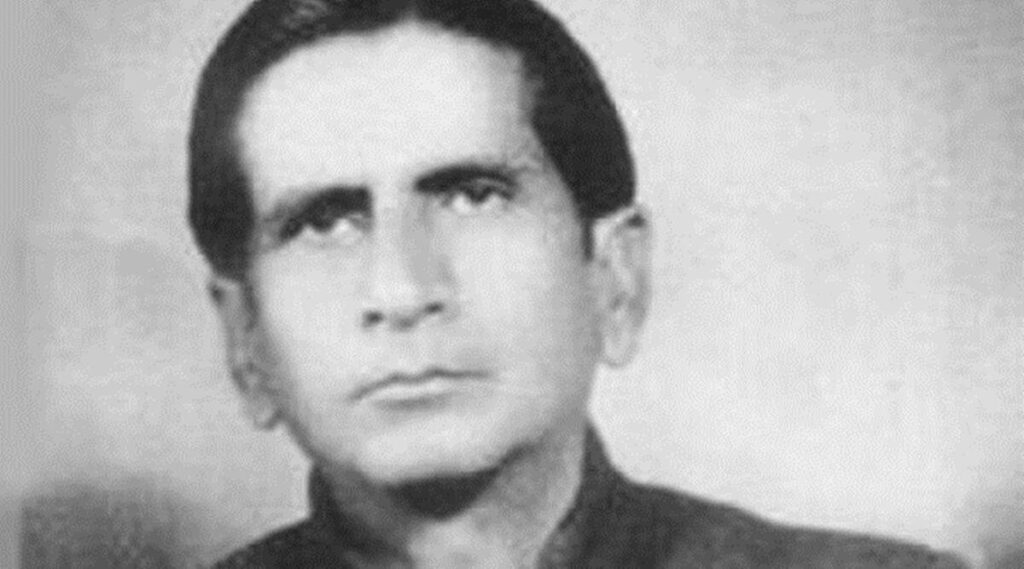
Majaz, uncle of lyricist Javed Akhtar, was one of those rare gems whose poetry reflected two most important aspects: romance and revolution.

Born in Rudauli (then in Barabanki, UP) during Diwali celebrations, he was named Asrarul Haque and later took up the name ‘Majaz Lakhnavi’. (Photo: Wikimedia Commons)

Two days ago, a nazm reverberated across Aligarh Muslim University as the institution celebrated its founder’s day on October 17. Alumni across the globe, who proudly address themselves as ‘Alig’, sang: Ye Mera Chaman, Ye Mera Chaman.

The author of this famous nazm, Asrarul Haque, popularly known as ‘Majaz Lakhnavi’, whose poetry still rules the heart of millions, was born on October 19, 1911.

Regarded as the Keats of Urdu poetry, Majaz was one of those rare gems whose poetry reflected two most important aspects: romance and revolution. In an era when legendary Urdu poets as Faiz, Jazbi, Sardar Jafri, Sahir Ludhiyanvi were in their prime, Majaz rose to fame and carved a niche for himself.

Born in Rudauli (then in Barabanki, UP) during Diwali celebrations, he was named Asrarul Haque and later took up the name ‘Majaz Lakhnavi’. He belonged to a zamindar family. At a young age, Majaz had an inclination towards Urdu poetry. His fame came when he reached AMU as a student where he got the company of literary legends as Ali Sardar Jafri, Ismat Chugtai, and others. During one of the mushairas, Majaz, dressed in sherwani, delivered his famous poem:

Khoob Pehchan lo Asrar Hoon Main,
Jinse-Ulfat ka talabghar hoon, Main,
Ishq hi Ishq hai Duniya Meri,
Fitna-e-Aql se Bezar hoon Main,
Ek Lapakta ho Shola ho, Ek Chalti Hui Talwar Hoon Main.

The audience was mesmerised; the silence established that Majaz had arrived on the scene. There was no looking back. Majaz gave his alma mater a famous nazm, which is now the university tarana (anthem).

Majaz’s popularity rose by leaps and bounds and there were more females than males among his admirers. At AMU, girls used to keep his book ‘Aahang’ beneath their pillows. They would commit to keeping ‘Majaz’ as the name of their children.

Himanshu Bajpai, Daastango, who has rendered several daastans on Majaz, recalls one incident: “Once, Ismat Chugtai told Majaz that girls love him and Majaz quickly replied, ‘And they marry a rich person’.”

Truly, Majaz had a failed love life, and the dejection got him admitted to a mental asylum at Ranchi. His addiction to liquor took its toll. Chugtai asked him, “Liquor or wine, who destroyed your life, Majaz?” Witty and humorous as always, he replied, “I have given this right to both of them.”

His poem Awara was also an instant hit.

Shahar ki raat aur main naashaad o nakara phirun
Jagmagati jagti sadko pe awara phirun
Ghair ki basti hai kab tak dar-badar maara phurin
Ai Gham-e-Dil kya karun, Ai Vahshat-e-Dil kya karun.

Majaz had recited this nazm on the request of people at White Baradari in Lucknow, which eventually turned out to be his last public gathering before his demise.

His poetry, as said earlier, had both romance and revolution. Some of his lines for women empowerment are still relevant.

Tere Mathe pe ye anchal bahut hi khub hai lekin,
Tu is aanchal se ek parcham bana leti toh achcha tha.

Bajpai narrates an incident: “Once, famous film actress Nargis came to meet Majaz. She requested for his autograph and Majaz obliged by writing the above lines on her white dupatta. He identified himself with every deprived person — perhaps this brought him closer to the progressive movement.” In his poetry, Majaz had raised the issues of women liberation and feminism, which are still discussed today.

Majaz’s revolutionary couplets, too, ruled the masses. While other poets raised the pitch in their revolutionary couplets, Majaz rendered his lines that could be sung with revolution. ‘Bol, Ari O Dharti Bol, Raj Sinhasan Daanwa Dol‘ is one such poem. It is simply unbelievable to see anyone write on the worldly intricacies so beautifully — ‘Bahut Mushkil hai Duniya ka Sanwarna, Teri Zulfo ka Pencho Kham nahi Hai‘.

Alas, Majaz remained a loner. Josh Malihabadi even advised him to keep a ghadi (watch) with him while drinking, but Majaz laughed it off, saying, “You drink keeping a ghadi, I drink keeping a ghada (pitcher).”

In December 1955, his end came abruptly, after he collapsed in Lucknow, and passed away before reaching Balrampur Hospital. The present generation may recall him as the uncle of Bollywood lyricist Javed Akhtar.

The poet, whose kingdom was in the hearts of millions, is buried in a six-feet grave at Nishatganj graveyard with his own lines from a nazm on the epitaph.

Ab iske baad subah hai aur subah-e-Nau Majaz
Ham par hai khatm Sham-e-Gareebaan-e-Lucknow

source: http://www.indianexpress.com / The Indian Express / Home> Books & Literature / by Faisal Fareed, New Delhi / October 19th, 2021

BENFA: Changing Lives

Bengaluru, KARNATAKA :

Bengaluru-based BENFA helping poor people.

Bengaluru :

AS they say – think individually, act globally – BENFA is doing just that. BENFA (Bengaluru Friends Alliance) was born with the common goal and the collective efforts of a group of doctors to help the underprivileged section of society. The organization extends financial help to the poor and helps them overcome their financial hurdles in education and healthcare.

Talking about the organization Dr. Saleem Mehkri, Vice President and Trustee, said, “We were already into helping poor Muslim population with their education and health issues.

Then, it was planned by Dr. Suhel Pasha to establish an umbrella organization to facilitate their charity works on a large scale. The organization primarily addresses a large number of poor Muslims and deserving non-Muslims, too.”

Dr. Suhel Pasha, President, BENFA, said, “Twenty percent of the city’s population lives in slums with the lowest standard of education, inefficient healthcare, lack of necessities, and most importantly low standard of living. Even today, one-third of the slum dwellers fall below the poverty line with an income of less than Rs. 2500 per month. So, to help these poor populations, BENFA was established in October 2020.”

BENFA is a registered charitable trust focusing on education, healthcare, and socio-economic empowerment of underprivileged parts of society. How BENFA assists in empowering the disadvantaged? Answered Abdul Mateen, BENFA General Secretary, “We have recently launched a micro-credit scheme to provide loans to the deserving women and men to start their small trades. The loans we give are free of interest. So, they have to return only the principal loan amount without any interest.”

Dr. Saleem informed, “We have launched schemes not only to empower poor men and women financially, but we also aim to empower them through adult education schemes. We provide education and training to unemployed youngsters/adults as per their skills and help them get government or private jobs. We have helped students to pay their fees and paid hospital bills too.”

According to Dr. Saleem, around five people are benefitted every week through their microcredit scheme. So, how does the organization arrange its finances? Replied Dr. Saleem, “We have around 500 members, including 400 male members and 100 female members, who voluntarily contribute and help run the organization successfully. Nobody is forced to contribute.”

Besides these programmes, BENFA actively distributes rations during Eid-Ul-Fitr, performs Qurbani/sacrifices during Eid-Al-Adha, and distributes meat amongst low-income families. Furthermore, BENFA has several groups focusing on different areas, namely-BEEP for education, BHCP for healthcare, BSSP for socio-economic support, BMCS for microcredit schemes, and BALP for adult learning programs.

That is not all. BENFA is slowly and steadily adding more to its activities for the betterment of society. Lately, in collaboration with the field experts, BENFA has organized several webinars related to health and education topics. Pointed out to Dr. Suhel, “We organized webinars to educate people on several issues that focus on health, education, amongst others. We also organize career counselling for youth. We invite experts to address the relevant topics.”

BENFA also played an active role amidst the raging COVID 19 by supplying oxygen to the patients. As Dr. Pasha said, “We supplied oxygen cylinders during COVID 19 and spread awareness regarding the vaccine and also organized a webinar to help people prepare themselves during COVID crisis.”

Dr. Saleem urged people to join the organization as members to extend help to a large number of underprivileged people.

source: http://www.indiatomorrow.net / India Tomorrow / Home> Development> Features / by Rashida Bakait / October 16th, 2021

Former Kerala Jamaat-e-Islami Hind President Expires

Kozhikode, KERALA :

Former Kerala Jamaat-e-Islami Hind President T K Abdullah.

Kozhikode :

Former president of the Kerala Jamaat-e-Islami Hind (JIH),T K Abdullah, passed away today at the age of 92.

He is survived by his wife Kunjamina, sons TK Farooq and TK Iqbal, and daughter Sajida.

A senior Islamic scholar, he was a member of JIH’s Markazi Majlis-e-Shoora, or the Central Advisory Council, the top decision-making body of the Jamaat, from 1972 till now. He was also a member of the Kerala JIH’s State Advisory Council.

A founder member of the All India Muslim Personal Law Board (AIMPLB), he was JIH’s state president from 1972 to 79 and from 1982 to 1984. 

He was also a state executive member of the Ittihadul Ulema.

Abdullah sahib was also the Chief Editor of Islamic Encyclopaedia that Islamic Publishing House, Kozhikode, is publishing.

He was born to a great Islamic scholar Tharakandi Abdurrahman sahib, and Fatima, in 1929 in village Ayencheri in Kozhikode district. 

Abdullah sahib obtained his early education at Vazhakadu Darul Uloom, Thirurangadi Jumma Masjid, Pulikkal Madinathul Uloom and Aliya Arabic College, Kasargod.

He joined Prabodhanam in 1950 and became its deputy chief editor in 1959. When Prabodhanam became a weekly in 1964, he was appointed its first Chief Editor and continued in the same position till 1995.

He, later on, joined the JIH Kerala mouthpiece Bodhanam quarterly journal as the Chief Editor.

When the government banned the Jamaat in 1992 after the demolition of the Babri Masjid, Abdullah sahib was imprisoned along with many other JIH leaders. 

He also helped translate two volumes of Maulana Maududi’s Tafhim-ul-Quran (explanation of the Quran) from Urdu to Malayalam. Besides, he wrote several books, including Nazhikakallukal (Mile Stones) and Iqbaline Kandethal (Finding Iqbal).

In addition, his autobiography was published by the name “Nadannu Theeratha Vazhikal”.

Many of his speeches, articles, and sermons were compiled and published.

source: http://www.indiatomorrow.net / India Tomorrow / Home> Inspiring Personality / October 15th, 2021

KEAM 2021: 3 Muslims Top Engg, Pharmacy, Architecture

KERALA :

KEAM Entrance Exam is conducted every year for admission in Engineering, Pharmacy, Architecture, Medical, Medical allied courses.

KEAM 2021 Toppers: 

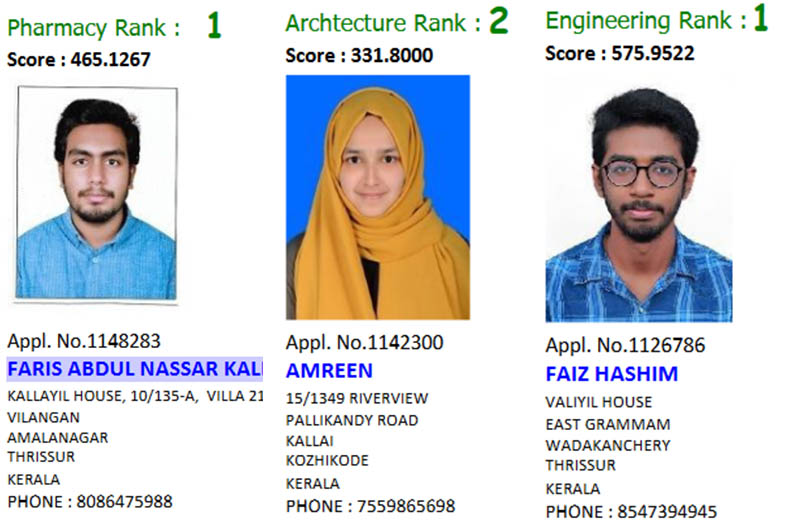
In a spectacular academic performance in KEAM 2021, three Muslim students Faiz Hashim, Faris Abdul Nassar Kallayil and Amreen have bagged the top ranks in Engineering, Pharmacy and Architecture of the important entrance exams.

While Faiz Hashim and Faris Abdul Nassar Kallayil secured the 1st rank respectively in Engineering and Pharmacy, Amreen, a Muslim girl student, bagged the 2nd rank in Architecture.

According to the KEAM rank list released by CEE Kerala on Thursday October 7, 2021, Faiz scored 575.9522 to bag the 1st rank in Engineering, Faris Abdul Nassar scored 465.1257 to secure the top rank in Pharmacy whereas Amreen got 331.8000 score to get the 2nd rank in Architecture.

KEAM Entrance Exam is conducted every year for admission in Engineering, Pharmacy, Architecture, Medical, Medical allied courses. KEAM 2021 was held on August 05 and the result was declared on September 17, 2021.

KEAM 2021 rank list and detailed of toppers however have been released today.

Before the declaration of result, the CEE Kerala had released the Answer Key of KEAM 2021 on its official website.

After the declaration of KEAM result, CEE Kerala had asked students to complete option registration through official website before October 09, 2021.

“KEAM 2021 First Allotment date”

As per the schedule released by CEE Kerala, KEAM 2021 First Phase Allotment will be published in on October 11, 2021 at 09:00 pm.

Candidates who get allotment shall have to remit the fee shown in the allotment memo at any of the Head/Post Offices in Kerala or by way of online payment and confirm their admission between October 12 to 16, 2021.

Office of the Commissioner for Entrance Examinations (CEE) Government Kerala had earlier asked the candidates  who had appeared for KEAM 2021 to verify, and make correction if any, in their profile.

The CEE Kerala on October 02 published category list for reference. The list can be accessed on the official website.

source: http://www.ummid.com / Ummid.com/ Home> India> Education & Career / by ummid.com news network / October 07th, 2021

Migrant boy from Bihar gets full A+ in Kerala SSLC, aspires to become bank manager

Baghalpur, BIHAR / Kozhikode, KERALA:

Muhammad Shahid.

Kozhikode:

Muhammad Shahid, a boy from Bihar’s Bhagalpur and an inmate of Kozhikode Mukkam orphanage cracked Kerala SSLC exam with A+ in all subjects.

His stellar academic performance comes in the background of odds he encountered in his personal life.

Muhammad Shahid, son of Irshad and Beevi, entered the Mukkam Muslim orphanage in 2011. He joined school in first standard, along with 100 other students from various states of India. Though many of them returned to their native state, interest in pursuing education held him back. Those who returned opted for daily wage jobs.

When Muhammad’s father passed away in 2020 January, he was unable to go home to grieve his death. But even that tragedy did not let him down. “It is the moral support given by my teachers and officials at the orphanage that helped me to achieve this result,” says Muhammad.

The boy who brought glory to Manassery MKHMMO Higher Secondary School, plans to pursue commerce stream for his higher studies. He aspires to become a bank manager.

source: http://www.english.mathrubhumi.com / Mathrubhumi / Home> News> Good News / July 15th, 2021

The merchant who bought a mosque

NEW DELHI :

Chunnamal Haveli carries many fascinating tales about the change in lifestyle and architecture of Delhi after 1857

Chunnamal Haveli carries many fascinating tales about the change in lifestyle and architecture of Delhi after 1857

The redone arterial road of Shahjahanabad has attracted attention towards conserving the historical architectural facades of several buildings along the stretch that connects Sri Digambar Lal Jain Mandir to Fatehpuri Masjid.

Along with the facades of heritage homes, there is an urgent need to conserve family and lifestyle histories as part of intangible heritage. In this regard, Lala Chunnamal, the largest living mansion on the iconic street, illustrates a fascinating account.

The Chandni Chowk and surrounding lanes and by-lanes represent, along with several other layers, the lifestyles of the landed elites, merchant classes and evolving middle-class professionals. Several mansions reflect the Mughal period and the British rule in Delhi. Many of these families aligned with the Mughals for practical reasons and changed their allegiance to the new British masters, impacting the nature of lifestyles and architecture.

‘Lalacracy’ era

The period and predominance of merchants and the new landed class in different cities have been described as ‘Lalacracy’ by eminent historian Narayani Gupta in Delhi Between Two Empires 1803-1931: Society, Government and Urban Growth.

Built in 1864, the Chunnamal Haveli continues to be used by Lala’s sixth-generation descendant Anil Pershad and his family. A successful trader, Chunnamal was primarily a cloth merchant (indicative of the exact location of the house in Katra Neel) and had significant trade links in Kolkata, and a summer home in Shimla.

Soon after 1857, Lala Chunnamal bought a large part of the present-day Chandni Chowk and the Fatehpuri Masjid in an auction for a pittance. “Most mosques were closed for a couple of years after the rebellion; many Muslims fled the city. My grandfather, a practical businessman, watched out for the shops around the mosque. The family-owned shops built Shivalayas, dharamshalas and drinking water kiosks in Shahjahanabad, Mehrauli, Nangloi, etc. So why could he not manage a mosque,” remarks Pershad.

He says the family owned the shops from the erstwhile Majestic cinema to the Baptist Church and the area behind the present Bhagirath Palace. “After some years, the family returned the Fatehpuri mosque to the Muslim community. The British recognised the gesture and gave us some villages as a gift,” adds Pershad.

Unlike many others, knowingly or inadvertently, the Chunnamal family saved a mosque from being demolished or turned into a bakery shop or a garrison for the armed forces when the British took over after the First War of Independence.

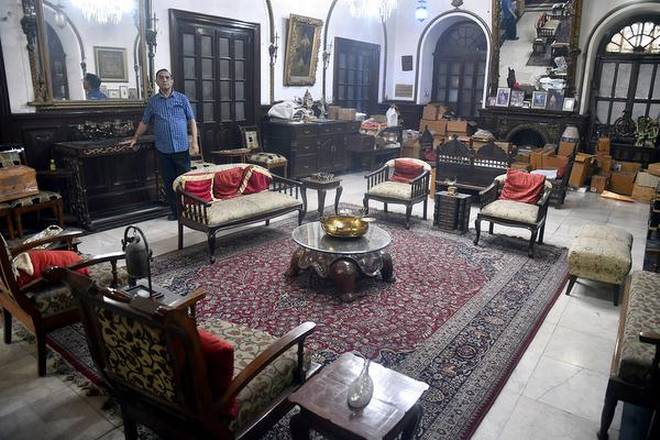
The grand mansion integrated sturdy cast-iron balconies and spun spiral staircases, wooden Venetian windows, and used stained glass. The interiors characterise Indo-Western aesthetics decor like the famed Osler glassware chandeliers for candles, Belgian mirrors, European furniture, clocks, telephones, fireplaces, and even maintenance tools for the fireplace. Sophisticated crafts to embellish the interiors include clay tiles from Sindh that provide a carpet look. The gold-plated stucco work in the ceiling is offset with natural indigo. The roof is decorated with ceiling cloth that displays the best of Indian crafts.

Ice emerged as a much-wanted product since the British required it to cool their drinks and water. Chunnamal owned the famous Baraf Khana or the ice-making unit in North Delhi, the Old Subzi Mandi and Pul Bangash. “Twice-elected to the Municipal Corporation, he was one of the few Indians who were granted membership of the exclusive Delhi Gymkhana Club during the British days,” remembers Pershad. He was also a member of the Roshanara Club, Delhi Race Club and the National Sports Club.

High life

The Chunnamal family bred horses, some were housed in their home stables, while others were in the Delhi Race Club. Members of the family rode horses from Chandni Chowk to New Delhi. A special place for the family was their Rambagh Garden near the Roshanara Club. Viceroys visited, Indira Gandhi came to dine, and the family participated in horse races, including winning the Aminabad horseshow in Lucknow. Some members of the family even came to be members of the secret society of the Freemasons, who continued to meet in the Qudsia Bagh in Civil Lines.

The courtyard hosted gatherings of courtesans, which women of the family watched from behind the bamboo curtains. Pershad’s daughter-in-law Swetcha Pershad described how female service providers like washerwomen and barbers transmitted ‘news’ from one zenana or women quarters to other havelis. The hustle-bustle of the home saw the women under the guidance of a Parsi governess acquire skills in cooking western dishes, accessing recipes from the Woman & Home magazine launched in the 1920s.

Organisations like the UNESCO and urban governments in different parts of the world attempt to formulate policies to balance development with preserving historic urban landscapes. They involve stakeholders, incentivise owners of heritage homes to retain facades while making the inside of dwellings modern.

The remaking of the Chandni Chowk requires holistic policies and their execution before many of more than 30 private-public owned heritage buildings are replaced by buildings that do not go with the character of the historical landscape.

(The author is an expert on cultural heritage)

source: http://www.thehindu.com / The Hindu / Home> News> Cities / by Navina Jafa / October 10th, 2021

Soha Bags Fourth Title Of The Season At AITA Women’s Tennis Event

Bangalore, KARNATAKA :

Soha bags fourth title of the season at AITA women’s tennis event

Bengaluru:  

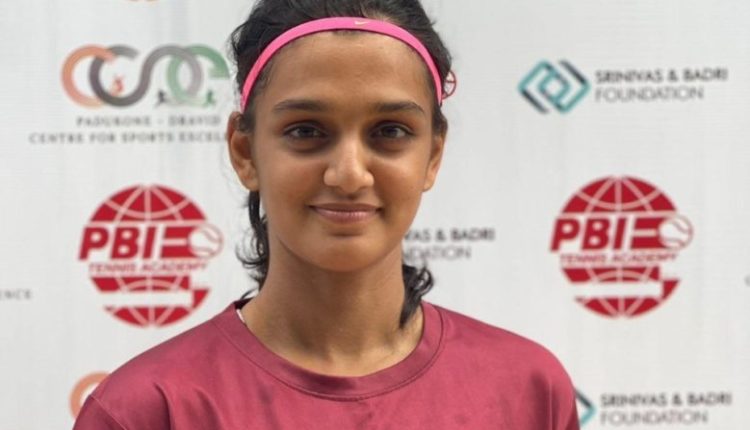
Soha Sadiq came back from a set down to beat Akanksha Nitture of Maharashtra in the final as she bagged her third singles crown of the season at the AITA women’s tennis tournament played under the aegis of KSLTA here on Saturday.

The top seed from Karnataka beat Akanksha 4-6, 6-3, 6-1 to end the tournament with a fine double. Overall, this was Soha’s fourth title of the season as she and Akanksha had won the doubles crown on Friday.

After heavy rains had delayed the start of the final by more than two hours, the 23-year-old Soha dominated the proceedings from the start and was soon 4-1 up. However, she lost the momentum which was quickly grabbed by her opponent as third seed Akanksha went on to win five games on the trot to take the first set, according to information reaching here.

The second set saw both the rivals fight hard for each point until the sixth game with the scores being level. It was then that Soha stepped up on the gas and closed out the set at 6-3.

Soha, after a 2-1 lead, broke Akanksha’s serve in the fourth game of the decider which saw both of them reach deuce five times before the latter succumbed. There was no stopping Soha from that point as she just marched away with the set and the match.

“I am happy to win my third singles title of the season. I didn’t expect it to be a three-setter but luckily I found my rhythm when I needed it most,” Soha, who has just graduated in Commerce from Mount Carmel’s College, was quoted as saying by the KSLTA in a release.

Results (Seedings in pre-fix, States in brackets)
Women’s Singles (Final): 1-Soha Sadiq (KAR) bt 3-Akanksha Nitture (MAH) 4-6, 6-3, 6-1.

(IANS)

source: http://www.ommcomnews.com / Ommcom News / Home> Sports / by Ommcom News / October 09th, 2021

Meet Sadaf Chaudhary, who wants to serve country by becoming an ambassador

Roorkee (Haridwar District), UTTARAKHAND :

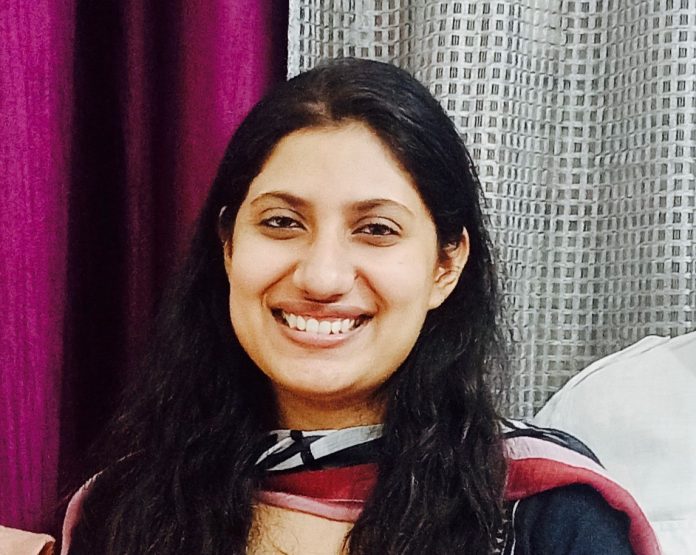
Roorkee girl Sadaf Chaudhary secured the 23rd rank in the UPSC exams.

UPSC topper among Muslim aspirants, Sadaf Chaudhary of Roorkee uttarakhand, who secured the overall 23rd rank, is of firm opinion that improvement in the education of girls in India will bring great social change and calls for the society to provide special attention to the education of girls.

The ambience at Sadaf Chaudhary’s home at Roorkee, Uttarakhand is of glee. There is a continuous rush of local people at her home at Green Park Colony who are visiting to congratulate Sadaf. Sadaf’s pictures are being shared on social media. In the last few days, Sadaf has seen a change in her life. Cell phones of her family members are ringing continuously. No one in Sadaf’s family was able to sleep in the last three days owing to celebrations at their home.

Twenty-seven-year old Sadaf is the eldest daughter of Israr Ahmed and Shahbaz Bano of Roorkee. Her father Israr Ahmed was a former manager at Gramin Bank at the Deoband branch. In the recently announced UPSC 2020 results, Sadaf has secured all over India 23rd rank. She has got the highest rank among the Muslim aspirants.

Talking to TwoCircles.net, Sadaf said that she wants to become an Indian Foreign Service (IFS) officer like IFS Sneha Dubey.

Considering her 23rd rank and OBC quota, Sadaf has a good chance of getting into IFS.

Sadaf said that she chose International Relations as her subject in UPSC as she is “interested in foreign service.”

“I was getting a good salary at an MNC where I used to work. I left that job and worked hard for two years to clear UPSC,” she said.

Sadaf said that “one of the daughters of the country IFS Sneha Dubey is being praised all over the country, I want to follow in Sneha Dubey’s footsteps.”

She said that if the country that she can do a better job as an IAS officer, “I will be mentally prepared for that as well.”

On the day when UPSC results were announced, Sadaf’s mother was praying all day.

Recalling the tense atmosphere at their home before the announcement of the result, Sadaf’s younger brother Mohammad Shad said, “Last year Baji (Sadaf) missed cracking the exams by a few numbers so this year the atmosphere at the home was tense.”

Sadaf said that her UPSC result is beyond her expectations. “I was sure that I will qualify this year.”

To her credit, Sadaf didn’t take any coaching for her UPSC exam. “I have been preparing for last twenty years,” she said.

Recalling her childhood, Sadaf said that as a kid she would go to her grandfather’s house (in Saharanpur, Uttar Pradesh) with her mother during summer vacations. “He had a school there and during the summer vacations I would study everything,” she said, adding, “I got the benefit of regular studies.”

Talking about her strategy of cracking UPSC, Sadaf said she “actually had none.” She said after having breakfast in the morning, she would sit down to study as long as she could. “I would review and assess my preparations once a week.”

She said that she would always try to understand the toppers and what they read as she is fond of reading. “Everyone thinks I enjoy reading, That’s alright, I enjoyed the books, I love them. Books are like friends to me. Reading is my hobby and that has made me successful without coaching,” she said.

The passion for civil services runs through the family. Sadaf’s younger sister Fatima is also preparing for UPSC. “You will have to come here once again because Saima is also very talented and is preparing for UPSC under the guidance of Sadaf,” Sadaf’s brother Sikander Ali told TwoCircles.net. “Fatima is more talented than me and always tops the class,” quips Sadaf.

Sadaf’s mother Shehbaz Bano said that Sadaf is very diplomatic and applies diplomacy at home. Sadaf laughs. “I just get my work done. That’s what diplomacy is,” she said.

Talking about her mother, Sadaf said that she herself admitted her mother to college. Her mother had gotten married after higher secondary. “I would always check if Ammi is reading her books,” she said.

“I realized that Ammi wants to study but couldn’t as she was a mother. I persuaded her to study. So, when I took admission in College, Ammi also took admission in BA. As I completed my Chemical engineering from Jalandhar, Ammi also completed her BA,” Sadaf said.

Sadaf credits her success to a good environment for studies at her home. “We all like to study. My brother recently got a 96.5 per cent and he is not happy with that,” she said.

Sadaf said the assessment done by the schools during the Corona period was not totally correct. “I think studies should be done diligently and there should be a clean competitive environment at home,” she added.

Speaking on Sadaf’s success, her uncle Nadeem Pradhan is full of pride, saying, “Those people and relatives who said girls shouldn’t be sent outside to study are saying now that our daughter has done wonders.”

Pradhan said successful stories always change the mindset of society.

“Today only 40 per cent of girls are able to study. If this number increases, a great social change will take place,” Sadaf said, adding, “We have to give special attention to the education of girls.”

source: http://www.twocircles.net / TwoCircles.net / Home> Lead Story / by Aas Mohammad Kaif, TwoCircles.net / September 27th, 2021