Category Archives: Amazing Feats

A Begum & A Rani: Hazrat Mahal and Lakshmibai in 1857’ review: Giving an obscure figure of the 1857 revolt her rightful place

Awadh, UTTAR PRADESH:

Juxtaposing the life of Begum Hazrat Mahal, who worked behind the scenes, with one of the most well-known heroes of the time, Rani Lakshmibai
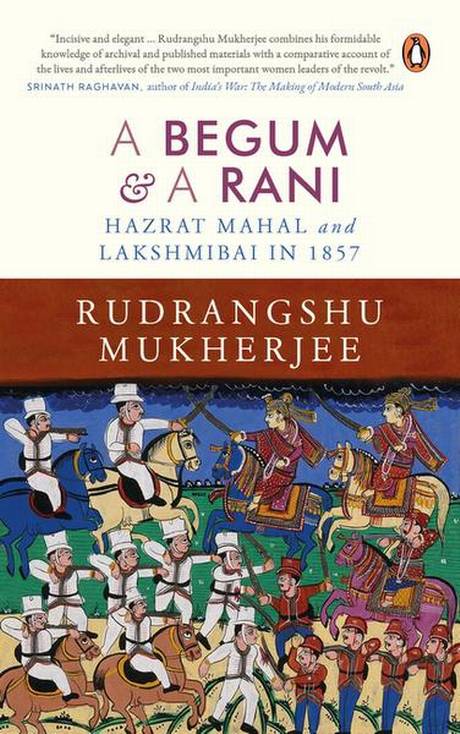
The villain in Rudrangshu Mukherjee’s A Begum & A Rani: Hazrat Mahal and Lakshmibai in 1857 is certainly the British, but it is also time and memory. Mukherjee places Begum Hazrat Mahal, an obscure figure who was integral to the mobilisation of the 1857 revolt — taught to students as “India’s first war of independence” — alongside Rani Lakshmibai, whose life has spurred not just biographies but hagiographies, calcified by myth and movies, the 2019 Kangana Ranaut shriek-historical, Manikarnika: The Queen of Jhansi, notwithstanding.

The book, divided into four parts — Origins, Rebellion, Leadership, Afterlife — is attempting two important correctives.

The first is to give Begum Hazrat Mahal of Awadh her rightful place in history. Daughter of an African slave, she was briefly married to Awadh’s king Wajid Ali Shah, then divorced and left behind in Awadh, as Shah moved to Calcutta after the British annexed Awadh in 1856. She helped mobilise the military and administration of Awadh, which became the war theatre’s centrepiece after Delhi was vanquished by the British. This story is also important to counter the narrative that the 1857 revolt was a pastiche of mindless and uncoordinated violence, because it was meticulously planned. Mukherjee quotes generously, indulgently, with page-long historical anecdotes which could have been paraphrased or woven into the narrative. There are too many anecdotal jolts for a seamless read.

Eventual move

The second objective is to inject some history into the hagiography of Rani Lakshmibai. Mukherjee notes how she wasn’t the ready rebel we think of today. That she even wrote to British officials asking for help, declaring her support to their regime, and it was only when she was pushed against circumstances that she eventually took to the battlefield with vigour, dying in it, memorialised by it.

This is a clever framing here that Mukherjee employs, because there isn’t enough information on Hazrat Mahal to carry an entire book by itself. There isn’t even an available description of how she looked. Her role in the rebellion is behind-the-scenes, and her obscurity is thus, double.

To resurrect her, by pairing her with the most coveted figure of the rebellion — Rani Lakshmibai — is thus necessary, because Mukherjee gets to not just tell their stories, demystified or dusted, but to speak to the larger villainy of historic memory — who gets written about and why?

Putting it in context

Mukherjee is a master of context, providing a sense of the time, even as he is hazy on the details of main events, recounting them as historical facts and not narrations, preferring a depth of detailing around the event over the grip of a historical plot. That said, a map would have been helpful to make sense of the geographic dump of names.

It must be noted, though, that Lakshmibai and Hazrat Mahal never met, and in the 140-page book, their paths, and the paths of their rebellion also don’t cross, as if they were happening in different times, different places.

Sometimes, as a result, the book feels disjointed — that the only reason for having these two stories together is not that they will tangle, but that through comparison, each one’s story deepens, darkens.

Placing these figures side by side, the urge to compare them comes but naturally. Mukherjee’s insistence on Hazrat Mahal’s oblivion comes short of calling her more important and interesting than Rani Lakshmibai. That Rani Lakshmibai fought on the battlefield while Hazrat Mahal fled to Nepal is enough to deify the former, and forget the latter, he finds unfair. That Lakshmibai and her son were receiving pensions from the British government, while Hazrat Mahal who died in obscurity and her son, both refused it, he finds telling. That history is besotted with blood, he finds tragic. That historians can puncture history’s myopia, he finds hopeful. Thus, this book.

A Begum & A Rani: Hazrat Mahal and Lakshmibai in 1857; Rudrangshu Mukherjee, Penguin Random House India, ₹699.

The writer is a critic with a weekly online newsletter titled prathyush.substack.com

source: http://www.thehindu.com / The Hindu / Home> Books> History> Reviews / by Prathyush Parsuraman / October 02nd, 2021
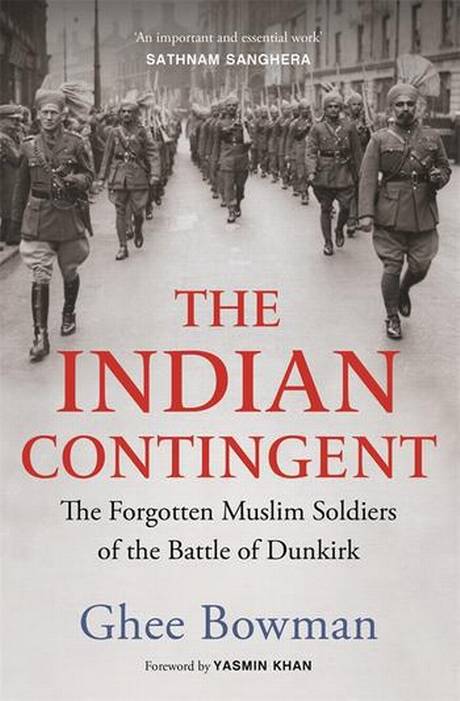
‘The Indian Contingent: The Forgotten Muslim Soldiers of the Battle of Dunkirk’ review: Force K6 in a colonial war

INDIA (Pre-Partition) :

Tracking soldiers from the subcontinent who fought on the battlefields of Europe

Whether it’s Dunkirk or Iwo Jima, we tend to associate World War II with other countries. India, of course, was in the midst of the struggle for independence during the years of the war. But, since the country was a British colony, it was also dragged into the war not just in terms of materials being shipped. A crucial factor were the soldiers from India who fought on the battlefields of Europe but remain unknown.

Multiple threads

Of late, we have had books on the Indian participation in World War II and here is another which looks at soldiers from undivided Punjab who arrived in France in 1939 and returned to find their country on the verge of Partition.

Ghee Bowman’s The Indian Contingent: The Forgotten Muslim Soldiers of the Battle of Dunkirk focuses on a group called Force K6, who were largely from the northwest provinces, now in Pakistan. They were part of the mule transport companies, which helped the British army transport supplies in areas where trucks could not reach. During the Battle of Dunkirk, some of these men were captured but many escaped to Britain and were relocated to various parts of the U.K. where they helped in the infantry training.

Bowman doesn’t lump all the individuals together into one unit. Each person has a story and he unravels the multiple threads till the reader gets a complete picture of the “poets and musicians, cooks and carpenters and a veterinarian… writers, cinema lovers, boyfriends and parents” — as author Yasmin Khan puts it in the Foreword — who comprised the Force K6.

On the one end you have poetry-writing Aurangzeb who died as an 18-year-old in Wales and is still remembered in his village in Pakistan; at the other is mule driver Mahmud Khan who is captured by the Germans, forced to join the Indian Legion, seduces his German officer’s daughter and a male orderly and escapes to Switzerland.

Forming bonds

Bowman also tracks the lives of the men in “obscure corners of the British Isles” where they “formed strong bonds with farmers, children and women”. Some of these bonds resulted in children and the story of Jeff Shapland who finds out about his father Jamal Khan much later in life is moving. Shapland recounts being singled out for his dark looks — at Leeds University South Asian men would talk to him in Hindi or Urdu and his landlady in Bristol wouldn’t let him eat in the common dining room, he was abused and punched by students at his school in Leicester —and how he came to accept himself.

There is a lovely little nugget of jemadar Malik Mohammed Khan visiting a school to hear Welsh folk songs and teaching the children a Punjabi lullaby that went ‘Sunate Sunate Sunate Krishna’. There are also anecdotes from those who were children at that time about their interactions with these soldiers.

In his Prologue, Bowman writes, “This book aims to reclaim them from the backwater and reinstate them in the mainstream: part of the current of recognition of Commonwealth and global contributions to the Second World War.” He has, indeed, succeeded in this.

The Indian Contingent: The Forgotten Muslim Soldiers of the Battle of Dunkirk; Ghee Bowman, Pan Macmillan, ₹699.

krithika.r@thehindu.co.in

source: http://www.thehindu.com / The Hindu / Home> Books> Review / by R. Krithika / October 02nd, 2021

Benevolent Kerala parliamentarian is beacon of light for poor tribal pupils

KERALA / Dubai, UAE :

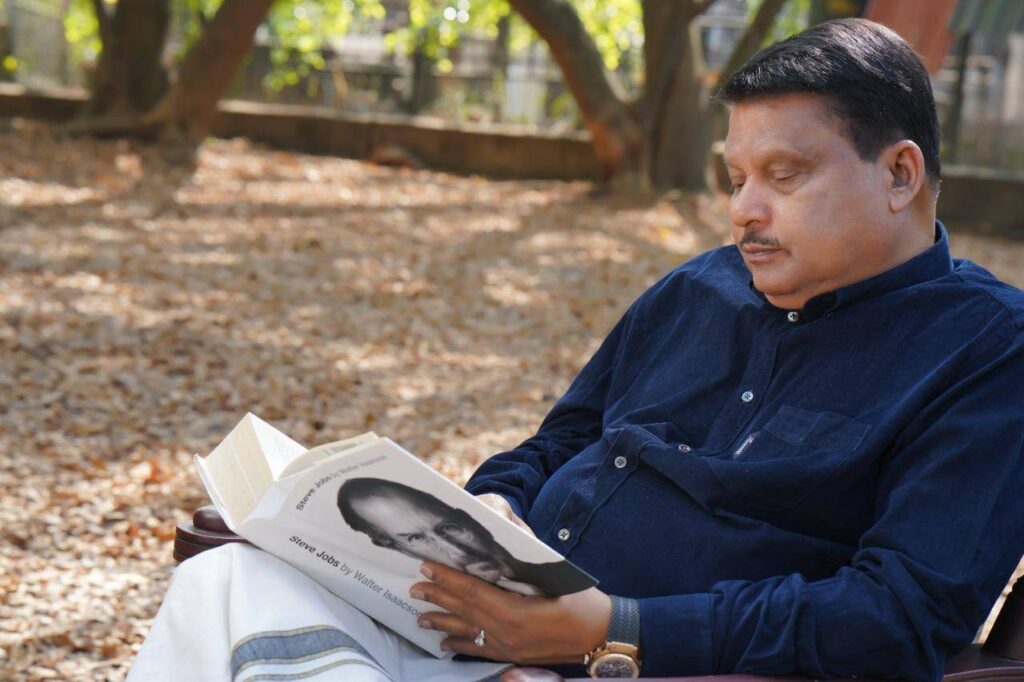
P.V. Abdul Wahab, the IUML leader, successfully implements Indian government’s development plan in Malappuram district.

It’s a dawn of a new era for a group of poor tribal pupils amid these unprecedented viral times at Nilambur taluka — a cluster of villages — in north Kerala’s Malappuram district.

They are back to learning and continuing their school education, which have been suspended since March 2020, when the Covid-19 pandemic struck and resulted in the closure of schools.

Many of the pupils had virtually forgotten in-classroom teaching.

To make matters worse, they were cut off from the rest of the world because of the unavailability of Internet connectivity and lack of smartphones.

P.V. Abdul Wahab, a sitting member of the Rajya Sabha (RS) — the Upper House of Indian Parliament — and a non-resident Indian (NRI), who has been living in the UAE for the past four decades, told that their education suffered since March 2020.

“Some of them could barely remember the names of their schools because the prolonged break had almost wiped out their memories of the campus,” he said.

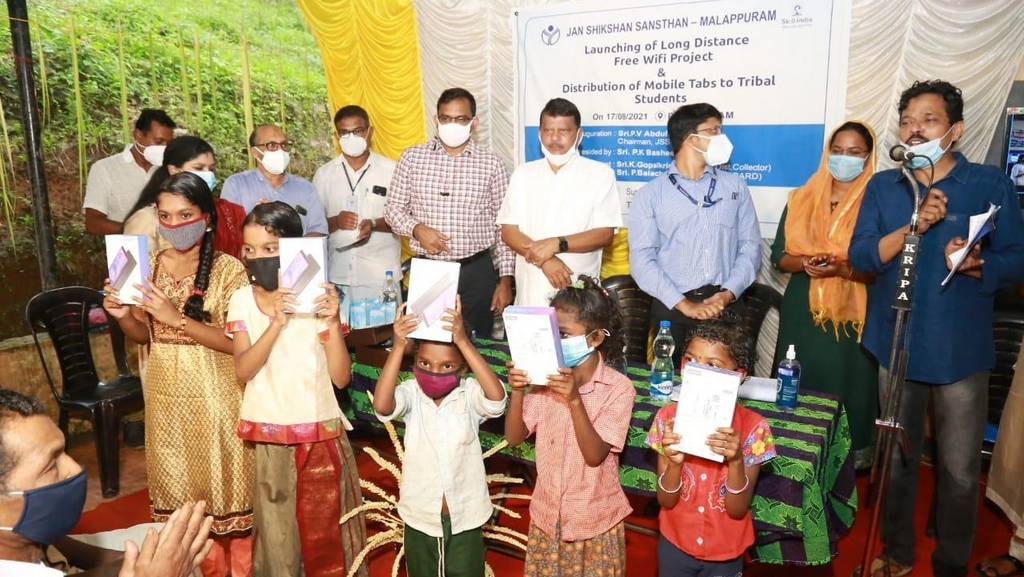
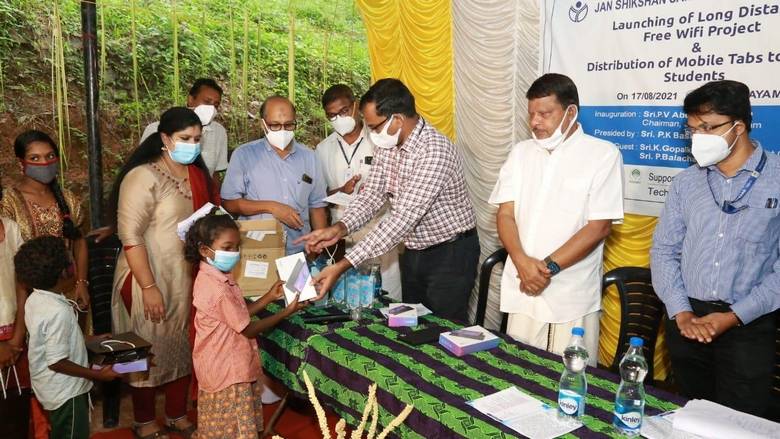
Wahab, who belongs to the Indian Union Muslim League (IUML), which is a potent political force in the district, has arranged for the distribution of Internet-enabled tablets for the tribal pupils under the Indian government’s Jan Shikshan Sansthan (JSS) initiative.

He has been a three-term RS MP and heads the JSS initiative in the district.

So far, around 150 tablets have been given to the tribal pupils, who are overjoyed at being able to reconnect the world at large and continue with their education.

Wahab has been involved with the tribal villages of Karulai gram panchayat as part of the Indian government’s Saansad Adarsh Grama Yojnna, a developmental scheme, and has adopted four villages in the district.

“They live in the middle of the forest in small houses and most of them are unemployed,” Wahab said.

“The only source of economic sustenance is the forest produce that the male tribals collect and sell. Healthcare facilities are abysmal and most of them lack basic amenities such as access to electricity or even telephones,” he added.

The tribal villages are neither well-connected with other parts of the district or the southernmost Indian state and a majority of the locals don’t want to venture out for jobs.

The tribals of Nilambur are a rare exception to Kerala, whose ambitious and enterprising people have been heading out to other parts of India, Arabian Gulf or across the world for better financial prospects.

“But we’re trying to provide employment opportunities for them through specialised training in the hospitality, plumbing and electrical industries,” said Wahab, who has four-decade-long experience in the Middle East, and enjoys a filial bond with Nilambur.

In the UAE, he established the Bridgeway group of companies and along several other firms in his native India; his sons now look after the businesses.

He said the boost on the telecom and education fronts in these tribal villages because of the JSS, which helped instal over 10 basic towers to ensure 5 GHz wireless connectivity to the settlements. “The project aims to create a sustainable social and economic ecosystem for tribal people through a high-speed internet connection,” said Wahab. “It offers a total solution for the digital affairs of the inhabitants of the colonies. This allows them to interact directly with stakeholders and other public servants,” he added.

In the pre-Covid-19-pandemic era, tribal pupils only had access to single-teacher primary schools. The teacher taught all subjects and took four classes simultaneously.

After Grade IV, the tribal pupils would drop out because they were reluctant travel outside their native village.

To make matters worse, the devastating Kerala floods in 2018 and 2019 also destroyed half a dozen computers, a printer and a projector in the school.

The natural disaster was followed by the contagion, which struck a rude jolt as it denied poor tribal pupils’ basic education.

However, the sufferings appear to be a thing of the past, as the poor tribal children can look to a better and prosperous future, thanks to Wahab’s initiative to make the government’s scheme a roaring success.

source: http://www.khaleejtimes.com / Khaleej Times / Home> World> Rest of Asia / by Nithin Belle, Pune / August 26th, 2021

Umran Malik: The J&K bowler whose scorching pace is lighting up the IPL

JAMMU & KASHMIR :

Malik, who bowled the fastest ball yet of IPL 2021, started with tennis-ball cricket

SRH’s Umran Malik celebrates his first IPL wicket in the match against RCB | IPL Twitter

It is no easy task to trouble Glenn Maxwell when he gets into the mood to hit bowlers around the park. The big Aussie was getting warmed up for Royal Challengers Bangalore in the Indian Premier League match against Sunrisers Hyderabad, but fast bowler Umran Malik was proving to be a thorn in his side.

With Maxwell and Devdutt Padikkal steadily building a partnership, Malik threw a spanner into RCB’s run-chase with three excellent overs, making the target of 142 seem like a long way off.

In the ninth over, the speedster bowled three consecutive balls that crossed the 150kmph mark. The third of those was clocked at 153kmph, making it the fastest delivery of this year’s tournament.

He conceded just five runs off that over, returning in the 11th to part with a measly four runs.

In the first over of that spell—the seventh over of the RCB innings—Malik took the wicket of Srikar Bharat and gave away just one run.

Malik had successfully taken the sting out of the RCB onslaught in the crucial middle overs, despite other bowlers like Siddharth Kaul, Rashid Khan and Jason Holder getting hit for boundaries.

Sunrisers won the game by four runs, and both captains would heap praises on the 21-year-old bowler from Jammu and Kashmir.

RH skipper Kane Williamson counted him as one of the positives of a largely disappointing season for his team.

“Umran certainly is special,” said Williamson. “We’ve seen him in the nets for a couple of seasons. [It is a] special opportunity for him and it’s not surprising to see him come and do well. [He has] been a really valuable addition to the side.”

RCB captain Virat Kohli noted that it was important to track Malik’s progress from here.

“This tournament throws up talent every year. Good to see a guy bowling at 150 clicks. It is important to understand the progress of individuals from here on,” Kohli said in the post-match presentation.

“The pool of fast bowlers being strong is always a good sign for Indian cricket and whenever you see talent like this, you are going to have your eyes on them and make sure you maximise their potential.”

After the game, Malik would request Kohli to autograph his jersey, the Indian captain gladly obliging.

Humble beginnings

Malik made his IPL debut against Kolkata Knight Riders on October 3, in which he bowled a 151kmph delivery, which was the fastest by an Indian in the tournament this year. He would only better that, twice, in the ninth over against RCB.

Malik is the son of a vegetable vendor in Jammu. His father told a news channel after his IPL debut that it was no ordinary achievement for their family, because of their financial status.

He was a net bowler for the Sunrisers for two years until getting his big break this week, owing to the absence of T. Natarajan who is down with Covid-19.

Malik would bowl nervously to the likes of David Warner and Kane Williamson in the SRH nets, he told the IPL’s official website.

“I prayed to god that let me bowl well to them. I thought if I have to beat them I have to hit the right length. I kept beating them and I learned from that, I kept bowling on that same length. That made a big difference,” said Malik.

Like Natarajan, Malik entered the sport as a tennis-ball cricketer. He credits this experience for his yorkers and raw pace.

In 2018, when he attended a trial for J&K U-19 players, he saw shoes with spikes for the first time. He had arrived for the trials in jogging shoes and would borrow the spikes from a friend.

The selectors took note of his abilities and he would make it to the U-19 one-day team. He would then participate in the Vijay Hazare and Syed Mushtaq Ali tournaments before being roped in by SRH as a net bowler.

There are comparisons being drawn of Malik’s action with that of legendary Pakistan pacer Waqar Younis.

Former Indian skipper Kris Srikkanth said on his YouTube channel that his “rhythmic” run-up reminded him of Younis.

“His run-up, his action everything resembles a bit of Waqar Younis’s style. He has a very good rhythmic run-up and he is able to bowl at a good pace,” said Srikkanth.

Indian coaches and strength and conditioning trainers will be keeping an eye out for the young speedster to prolong his career and keep him from injuries that commonly plague bowlers with such pace.

The hype around such fast bowlers often leads to unreal expectations and eventually disappointment if they fall by the wayside. But should Malik maintain consistency, he would prove useful for the Indian team with his raw pace and excellent line and length.

(With inputs from PTI)

source: http://www.theweek.in / The Week / Home / by the Web Desk / October 07th, 2021

Double for Bengaluru rider Mohd Rafiq

Bengaluru, KARNATAKA :

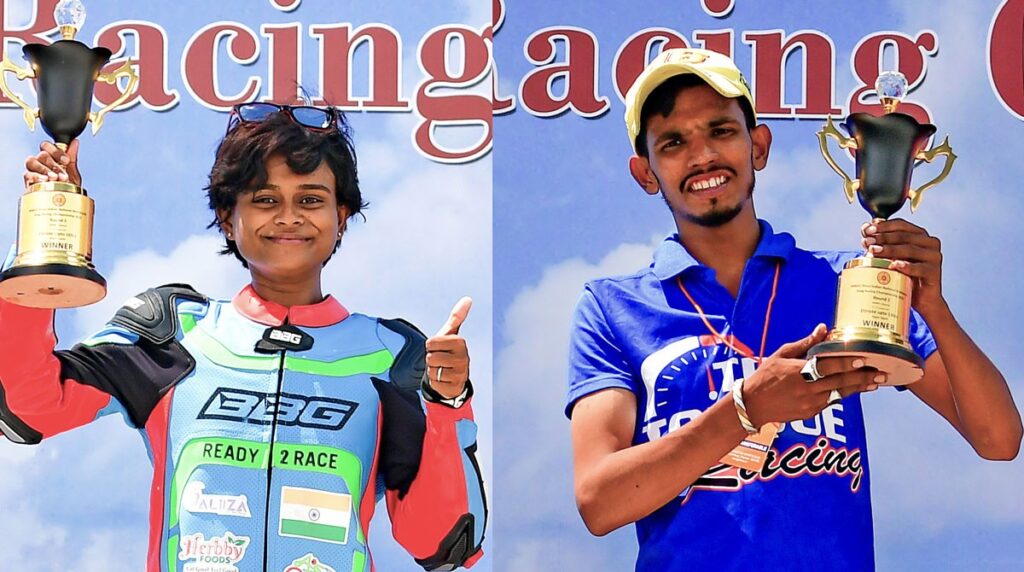
Soundari Sindy (left), winner in Girls category and Mohd Rafiq who achieved a double

Chennai: 

Bengaluru’s Mohd Rafiq dominated the opening day’s proceedings in the second round of MMSC fmsci Indian National Motorcycle Drag Racing Championship 2021 at the MMRT, here on Saturday, with a grand double while local challenger, Soundari Sindy topped the Girls category.

Rafiq was in imperious form as he won in both 2-Stroke 165cc and 130cc categories quite comfortably. After a disappointing practice run, he clocked 12.761 seconds in the Final Run of the 165cc class ahead of Chennai’s Prashanth (12.817) and Aiyaz Rem (12.969) for the 400-metre dash.

Earlier, Rafiq took the honours in the 130cc category with 12.962 seconds, followed by two others from Bengaluru, Touheed (13.438) and Abdul G (13.513).

Sindy emerged triumphant in a three-way battle in the Girls category (4-Stroke 165cc) as she overcame fellow-Chennai competitors Lani Zena Fernandez and Nivetha Jessica.

The two-day event concludes on Sunday when four-stroke bikes, including the superbikes, will be seen in action.

The results:

Girls (4-stroke, up to 165cc): 1. Soundari Sindy (Chennai) (16.462secs); 2. Lani Zena Fernandez (Chennai) (16.522); 3. Nivetha Jessica (Chennai) (17.291).

2-Stroke (up to 165cc): 1. Mohd Rafiq (Bengaluru) (12.761); 2. Prashanth (Chennai) (12.817); 3. Aiyaz Rem (12.969).

Up to 130cc: 1. Mohd Rafiq (12.962); 2. Touheed (Bengaluru) (13.438); 3. Abdul G (Bengaluru) (13.513).

source: http://www.telanganatoday.com / Telangana Today / Home> Sport> Other Sports / by Telangana Today / October 02nd, 2021

MS Academy to felicitate its UPSC CSE toppers

Hyderabad, TELANGANA :

Hyderabad: 

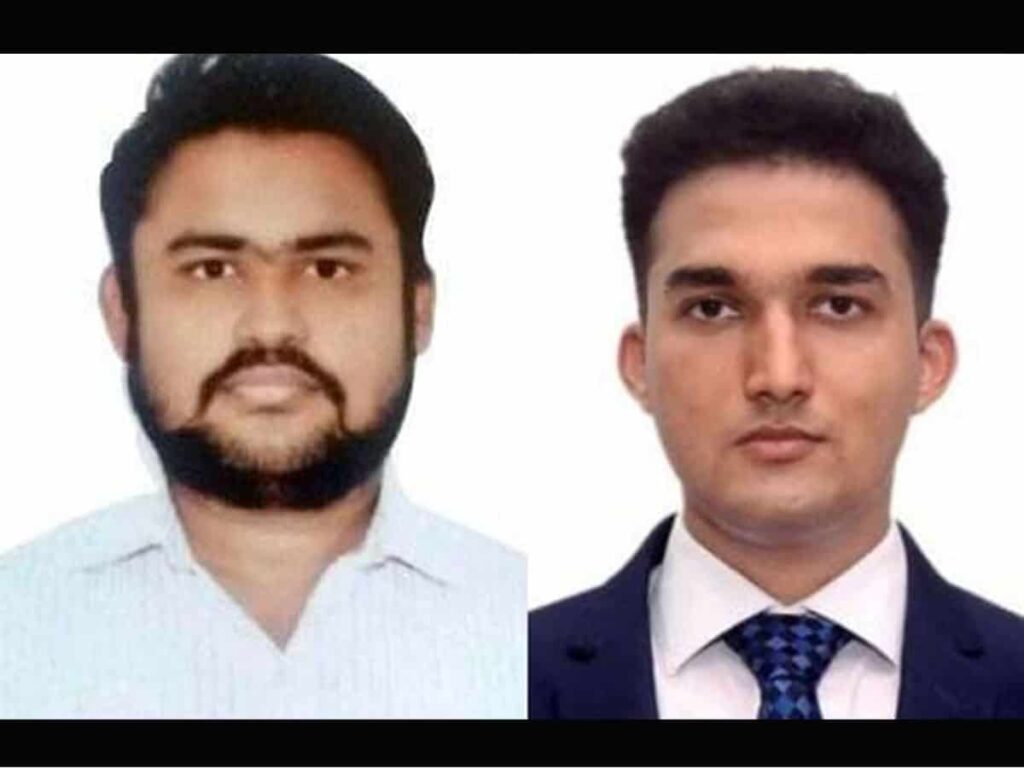
MS IAS academy will arrange a two days’ felicitation program in honour of its toppers Faizan Ahmed (AIR 58) and Md Haris Sumair (AIR 270) who have passed the UPSC civil services exam 2020.  The program “Dream Big 2021”  will be held on 4th and 5th October.

According to details given by the MS Education Academy Senior Director Dr Mohammed Moazzam Hussain, the first day of the program on October 4 will begin in Mallepally campus of the MS IAS Academy at 10 am by giving a warm welcome to both the toppers.  They will address the school, college, and academy girls and boys.

In the afternoon, from  2 p.m. to 3 p.m. both of them will meet the media persons and answer their questions.

In the evening, these distinguished students will be felicitated in the MS Corporate office at Masab Tank.

On 5th October from 10 a.m. to 1 p.m. the toppers will be felicitated by the MS students at Metro Classic Garden Function Hall at Aramghar.

In this second day’s program, both of them shall address a motivational program to the students of MS school, college, and academy.  They will shed light on how to prepare for UPSC and other state civil services examinations.

source: http://www.siasat.com / The Siasat Daily / Home> News> Hyderabad News / by Mohammed Hussain Ahmed / October 03rd, 2021

JMI student Kaif Ali wins Commonwealth Secretary-General Innovation Award for Sustainable Development

NEW DELHI :

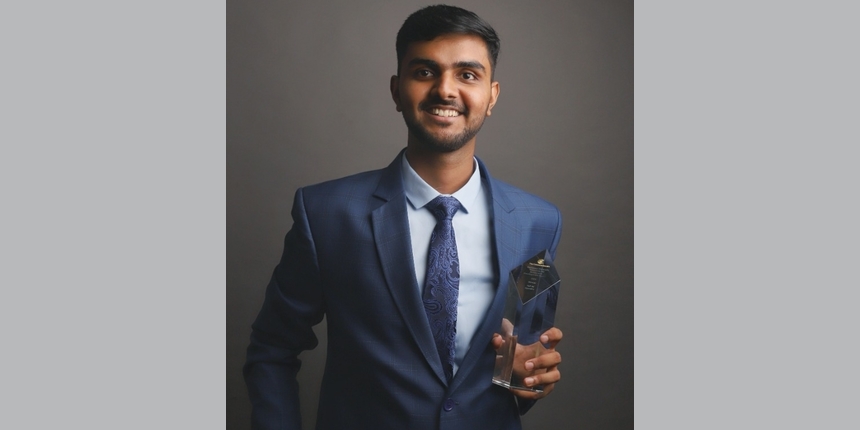
Emerging innovator Kaif Ali, a student of the Faculty of Architecture & Ekistics, Jamia Millia Islamia(JMI) won the prestigious Commonwealth Secretary-General Innovation Award for Sustainable Development-2021.

He is the only Indian amongst 15 awardees from 54 Commonwealth countries to win the prestigious award for his contribution towards Covid19, refugee shelter crisis, and climate change.


Each winner of the award received a trophy, 3,000 pounds (3,00,000 INR approx.) in prize money and the opportunity to scale up their innovations in collaboration with partners and mentors across the Commonwealth.


Kaif has invented low-cost portable housing for Covid-19 quarantine and shelter from extreme weather conditions like earthquakes and flooding.

His design has been recognised by the UN under the top 11 emerging innovation start-ups solving climate challenges.


JMI Vice Chancellor Prof. Najma Akhtar congratulated Kaif for the achievement and said that the university is proud of him. “We expect that it will motivate other students of the university to work hard, think out of the box to get noticed and contribute in nation building”, Prof. Akhtar said.


During the pandemic, Kaif researched how architecture could prevent the spread of disease. He designed a prefabricated sustainable shelter, SpaceEra, that would not only help reduce transmission of the virus but could also house refugees worldwide in the future.


“Winning the Commonwealth Innovation Award lifts my confidence to a greater level and motivates me to work even harder than yesterday and innovate unprecedented solutions toachieve a sustainable future. I pledge to become the voice of the youth transforming the Commonwealth and to Be the Change!”, Kaif said.

source: http://www.jmi.ac.in / Jamia Millia Islamia / Public Relations Office, JMI / September 30th, 2021

AMU scientist’s discovery can make infertile land cultivable

Aligarh, UTTAR PRADESH :

AMU scientist's discovery can make infertile land cultivable

Aligarh :

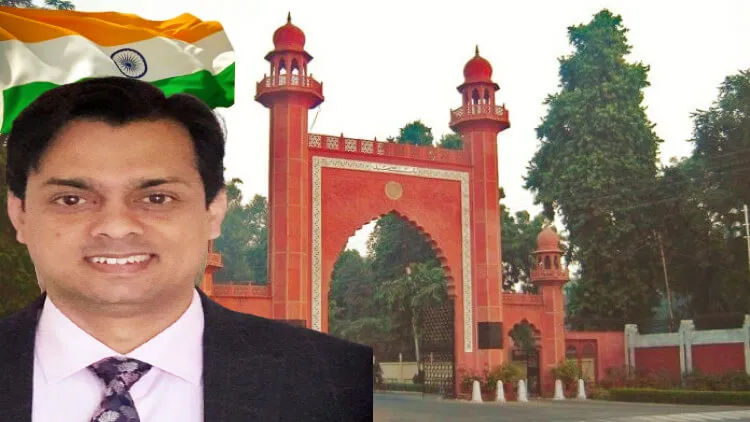
A faculty member of Aligarh Muslim University (AMU), in association with German researchers, has discovered a new protein in plants that will ‘improve the salt stress tolerance of crops.’

This will enable farm land with high salinity soil amenable to cultivation.

Dr Tariq Aftab, assistant Professor, Department of Botany, AMU, together with other collaborators from Germany, have identified a new protein and named it ‘HvHorcH’.

This protein plays an important role in conferring salt stress tolerance in barley plants. Salt stress tolerance of crop plants is a trait with increasing value for future food production.

According to an official release from AMU, the research work has been carried out at Leibniz Institute of Plant Genetics and Crop Plant Research, Gatersleben, Germany during the assignment to Dr Aftab as visiting scientist.

After several years of further studies and repeat trials, the report has been published in the International Journal of Molecular Sciences.

Dr Aftab said that the identification of this protein will open new horizons in developing stress-resilient crop plants. “Global climate change, which is predicted to be accompanied by prolonged and intensified drought periods, is likely to aggravate this situation even further.

Intensified irrigation attempts to combat drought ultimately increase soil salinity and thus eventually impede farmland cultivation when salinity reaches threshold levels that can no longer be tolerated by crop plants.

“It is therefore an eminent goal for a global sustainable food supply to improve the salt stress tolerance of crop plants in order to push these thresholds of soil salinity upwards so that more farmland with high-salinity soil will still be amenable to agriculture,” he explained.

source: http://www.awazthevoice.in / Awaz / Home> Education / September 26th, 2021

Sania Mirza-Shuai Zhang win Ostrava Open women’s doubles title

Hyderabad, TELANGANA :

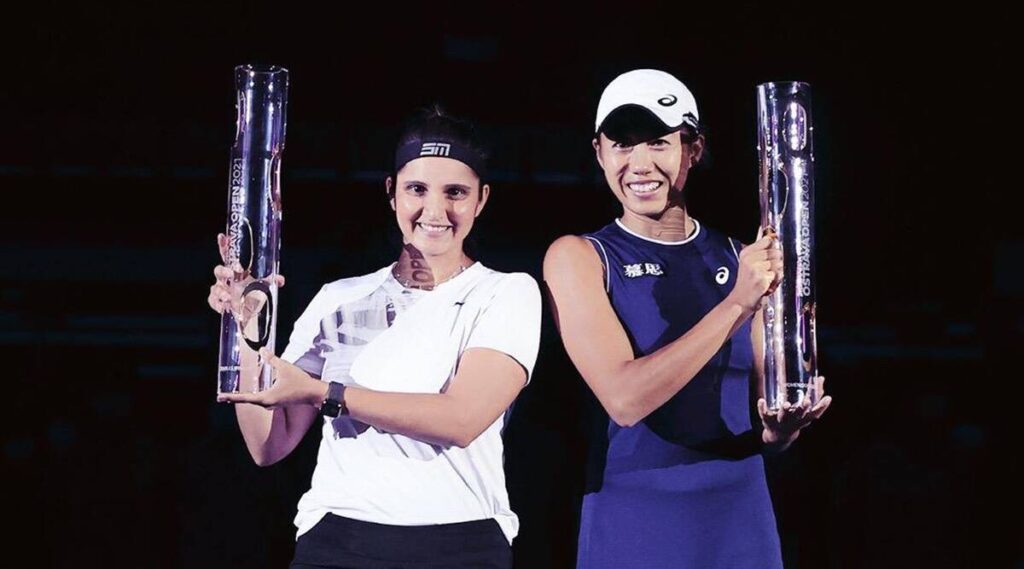
Sania Mirza won her first title of the season as she and her Chinese partner Shuai Zhang (Source: Sania Mirza / Twitter)

Sania Mirza won her first title of the season as she and her Chinese partner Shuai Zhang beat the pair of Kaitlyn Christian and Erin Routliffe in the women’s doubles final of the Ostrava Open on Sunday.

The second seeded Indo-Chinese duo defeated the third seeded pair of American Christian and New Zealander Routliffe 6-3 6-2 in the summit clash in one hour and four minutes.

The 34-year-old Sania and Zhang had defeated the Japanese pair 6-2 7-5 in the semifinals of the WTA 500 event.

It was Sania’s second final of the season, following a runner-up finish at the WTA 250 Cleveland event in the USA last month with Chirstina Mchale.

source: http://www.indianexpress.com / The Indian Express / Home> Sports> Tennis / by PTI / September 27th, 2021

31 Muslims crack UPSC 2020 Civil Services Exam, 03 among top 100

INDIA :

In 2019, 42 Muslims had cracked the exam whereas in 2018 just 27 Muslims had made it to the final result.

UPSC Civil Services Result 2020: 

A total of 31 Muslims have cracked the Civil Services Exam (CSE), also known as IAS exam, the result of which was declared late in the night Friday.

This is another dismal performance of Muslim candidates when just 31 Muslims have made to the final list of candidates who will join the civil services cadre.

In 2019, 42 Muslims had cracked the exam whereas in 2018 just 27 Muslims had made it to the final result.

Among the 31 Muslims who cracked the UPSC Civil Services Exam this year 03 – Sadaf Choudhary (rank 23), Faizan Ahmed (rank 58) and Dheenah Dastageer (rank 63), are in top 100 the list of which was released on the official website upsc.gov.in in PDF.

Also among the UPSC toppers are Ria Dabi, sister of 2018 UPSC Civil Service topper, Tina Dabi. Ria Dabi has secured 15th rank in the UPSC 2020 exams.

The Union Public Service Commission (UPSC) on Friday declared the results of exams held in 2020. A total of 761 candidates have been recommended by the Union Public Service Commission for appointment in the bureaucracy of the country.

Shubham Kumar, a resident of Katihar district of Bihar, has emerged as the UPSC 2020 topper. Kumar has done civil engineering from IIT Bombay and hails from Katihar in Bihar.

Apart from Shubham, Jagriti Awasthi and Ankita Jain have secured the second and third positions respectively in the Civil Services Examination.

“UPSC 2020 List of Muslim Candidates”

1) Sadaf Choudhary (Rank 23)

2) Faizan Ahmed (Rank 58)

3) Dheenah Dastageer ((Rank 63)

4) Md Manzar Hussain (Rank 125)

5) Shahid Ahmed (Rank 129)

6) Shahansah K S (Rank 142)

7) Mohammad Aaquib (Rank 203)

8) Shahnaz I (Rank 217)

9) Waseem Ahmad Bhat (Rank 225)

10) Bushara Bano (Rank 234)

11) Md Haris Sumair (Rank 270)

12) Altamash Ghazi (Rank 282)

13) Ahmed H.Choudhury (Rank 283)

14 ) Sara Ashraf (Rank 316)

15 ) Mohibullah Ansari (Rank 389)

16) Aneez S (Rank 403)

17) Zeba Khan (Rank 423)

18) Faisal Raza (Rank 447)

19) S Mohammed Yakub (Rank 450)

20) Sabeel Poovakundil (Rank 470)

21) Rehan Khatri (Rank 478)

22) Mohd Javed A (Rank 493)

23) Altap Mahd. Shaikh (Rank 545)

24) Khan Aasim Kifayat (Rank 558)

25) Syed Zahed Ali (Rank 569)

26) Shakeerahmed Tondikhan (Rank 583)

27) Mohamed Riswin (Rank 589)

28) Muhammad Sahid (Rank 597)

29) Iqbal Rasool Dar (Rank 611)

30) Amir Bashir (Rank 625)

31) Majid Iqbal Khan (Rank 738)

source: http://www.ummid.com / Ummid.com / Home> India> Education & Career / by Ummid.com News Network / September 25th, 2021