Category Archives: Amazing Feats

A family repertory: The contribution of the Alkazi and Padamsee clans to Indian theatre

Pune, MAHARASHTRA / NEW DELHI :

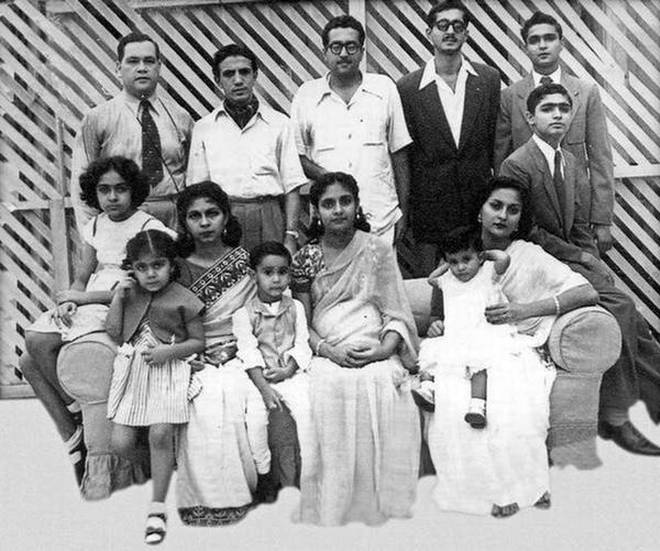
The Padamsee extended family with Ebrahim Alkazi and Alyque Padamsee standing second and fourth from left, respectively   | Photo Credit: From ‘Enter Stage Right – The Alkazi/Padamsee Family Memoir’ . courtesy the Alkazi Theatre Archives

The Alkazi and Padamsee clans have played, and continue to play, an extraordinary role in the history of modern Indian theatre

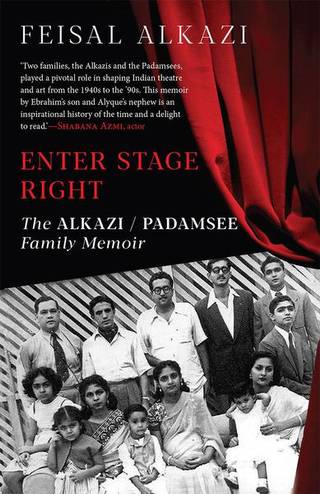
“Oh god, it’s a page turner!” That was the cry from various family members on reading the first draft of Feisal Alkazi’s family memoirs published earlier this year. Titled Enter Stage Right — The Alkazi/Padamsee Family Memoir (Speaking Tiger, 2021), it is an irresistible, exciting read. The narrative details are gripping, the pace exciting, and viewing the times described in the book of the two families in pre- and post-Independence India through the lens of Feisal allows us to enter a world that we can relate to from stories that our parents and grandparents told us of the times they lived through.

Legendary names

Both names are legendary; the Alkazi and Padamsee clans contributed hugely to the formation and recognition of modernism in both Indian theatre and art. It all started when Bobby, or Sultan, Padamsee, the eldest Padamsee brother — the two families had 17 siblings between them, several of whom would distinguish themselves in theatre and the arts — had to return to Bombay after just six months as a student at Oxford due to the outbreak of World War II. What followed was a period of creative efflorescence as

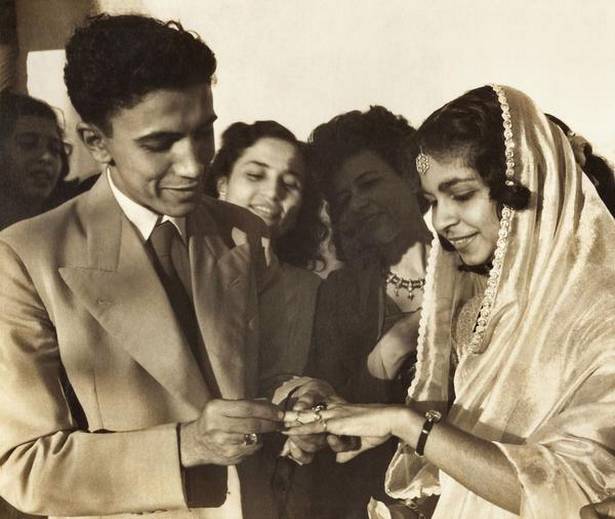
E. Alkazi weds Roshen, October 1946   | Photo Credit: Photo Credit: From ‘Enter Stage Right – The Alkazi/Padamsee Family Memoir’ . courtesy the Alkazi Theatre Archives  

Bobby penned more than 100 poems, drew, painted watercolours and, one day in 1943, gathered a group of keen college students around his mother, the Padamsee matriarch Kulsumbai’s, horseshoe-shaped dinner table weighed down with mouth-watering Khoja cuisine. Bobby announced a plan to launch their own theatre group, the aptly named Theatre Group, as an alternative to commercial theatre, inspired by the group theatre movement of 1930s’ New York. One of those in attendance at that dinner was the young Ebrahim Alkazi.

Human angle

The group would flourish over the next few years, and court controversy with productions like an adaptation of Oscar Wilde’s Salomé, in which Bobby’s 19-year-old sister, Roshen, performed the risqué dance of the seven veils. Bobby would die by suicide aged just 24 in 1946, but the group went on, reaching its zenith in the coming decades, and three of his disciples married his sisters to found a cosmopolitan clan — including Ebrahim, who married Roshen. These were heady times of enormous intermingling, set in the dying days of the Raj and the dawn of Nehruvian India. The search for a new way of living creatively through a rich cultural life that was looking for a unique national identity drew in a very intense and close-knit community and family theatre with a galaxy of close friendships between authors, poets, painters, musicians and actors. As Feisal comments in the memoir, “Going to London together in 1947, there was a Roman Catholic like [F.N.] Souza, a Muslim like my dad, a Jew like Nissim Ezekiel, great friends like Krishna Paigankar and Akbar Padamsee, the idea that they were from different communities was not in anybody’s mind at all… we were always in and out of each other’s houses as well, in my family it was all the artists as well as the theatre people. We grew up with that — it gives a human angle to all these great giants that art historians write about.”

The cover of ‘Enter Stage Right — The Alkazi/Padamsee Family Memoir’  

After training at the Royal Academy of Dramatic Art in London in 1947, Ebrahim returned home and rejoined Theatre Group. However, following a rift with others in the group, he left and founded his own Theatre Unit company at the Bhulabhai Desai Memorial Institute in the 1950s. The Institute played an important role in nurturing modern Indian art and drama, and Ebrahim

found a space for uninhibited creativity there, before he moved to Delhi in 1962 to head the National School of Drama for 15 years. Over the years, his contribution to widening the scope, subject matter and audience for Indian theatre would be extraordinary, as would those of his brother-in-law Alyque Padamsee, Mahesh Elkunchwar, and Safdar Hashmi. Alyque, known for directing productions ranging from the English version of Girish Karnad’s Tughlaq to Jesus Christ Superstar, has also been called the father of Indian advertising, and played Jinnah in Richard Attenborough’s Gandhi. His first wife was Pearl Padamsee, a stage and film actor, director — her oeuvre included Godspell, the first big musical produced in Mumbai — and producer. Their daughter, Raell Padamsee, runs her own production house, ACE, in Mumbai.

Home to stage

The rich family legacy also continues through Ebrahim’s son Feisal, who started devising plays with friends in Barry John’s Music Theatre Workshop in the early 80s. Although theatre is his first love, Feisal wears many hats — theatre and television director, author, educationist, counsellor, filmmaker and founder of Ruchika Theatre. His works include Noor, a sympathetic, gendered lens on Noor Jahan and Mumtaz Mahal; A Quiet Desire, the story of Rabindranath Tagore and of his brother and sister-in-law Kadambari; the adaptation of Kipling’s The Jungle Book into a coming-of-age story, retitled Yeh Bhi Jungle, Woh Bhi Jungle, in which the character Mowgli epitomises every important transition of adolescence in his search for identity.

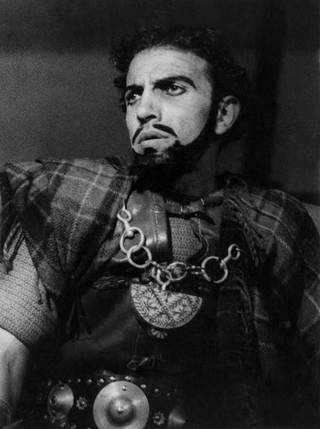
E. Alkazi as Macbeth in a production directed by him   | Photo Credit: From ‘Enter Stage Right – The Alkazi/Padamsee Family Memoir’ . courtesy the Alkazi Theatre Archives

Along with his sister, Amal Allana, and her husband, Nissar Allana, Feisal has strongly believed in the mixing of generations in creative work. “I make it a point that the infusion of the next generation in all the years of Ruchika is so crucial. All our kids are there and the people who started it… to keep the generations going and learning from each other.” Radhika, Feisal’s wife, an accomplished actress and arts educator, says, “It was so new to me, this world — in the family, in the home, in the drawing room — your furniture would be on stage, your clothes would be on the stage.” When Zohra Sehgal worked with Feisal in the Ruskin Bond serial Rusty, she found herself wearing a costume that was from Radhika’s trousseau. Feisal recalls her saying, “Hamare gharon mein aise hi chalta hai” (This is how it is in our homes).

The story of these two families, who played such a vital role in the history of theatre and art, is an imperative chapter in the country’s socio-cultural history.

The writer is a Delhi-based artist, arts educator, curator and researcher.

source: http://www.thehindu.com / The Hindu / Home> Society> Spotlight / by Kristine Michael / July 10th, 2021

From Kerala to Kashmir: A young woman’s solo adventure

SAUDI ARABIA / Kozhikode, KERALA :

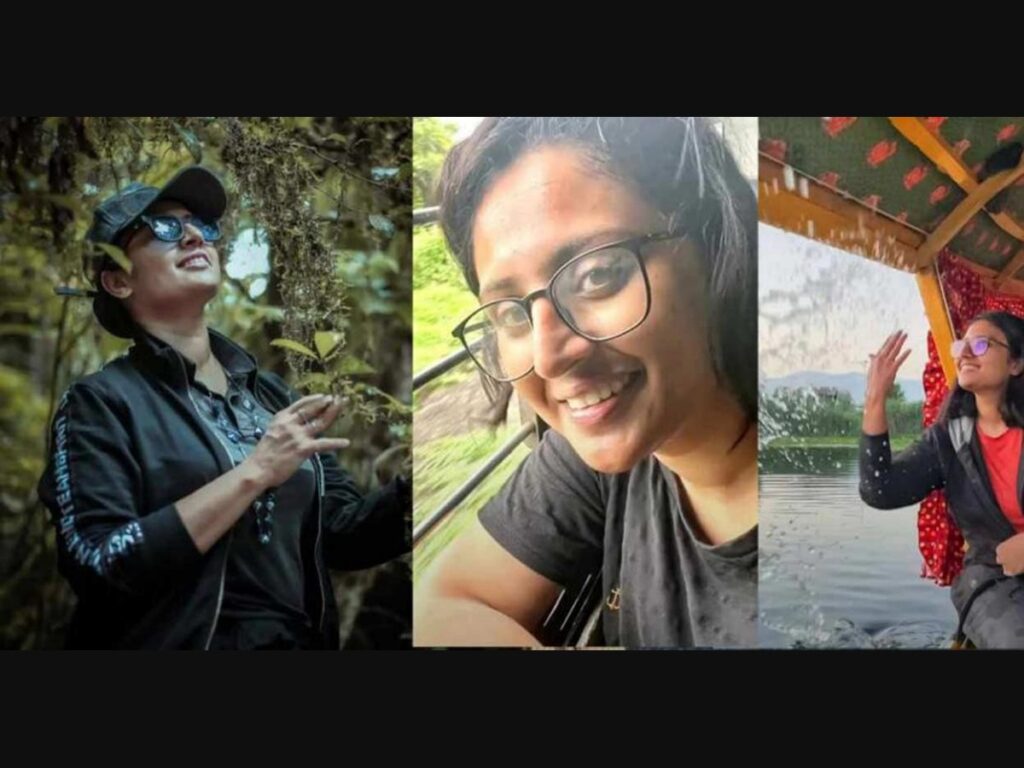
She was not allowed to go on school trips. There was a reason behind it though. She had a habit of wetting her bed at night. Since then she wanted to travel, savour in the free-spiritedness of exploring the world alone. And Amish Mushabir has come back after embarking on a solo trip to Kashmir.

This entrepreneur and mother of two kids took to Kashmir without any prior planning on a stringent budget. She savoured the snow-capped mountains, luminous lakes, and the gorgeous gardens before heading back.

Love for travelling is hereditary

Amis is Tirur Kainakkara Mohammed Ibrahim’s second daughter. Till the age of 40, Ibrahim travelled travelled the world. He came back and married at the age of 40. Her mother hails from Kozhikode. Five years ago he passed away. Amis has inherited his love for travelling.

Amis after finishing her MBA got married at the age of 21 and settled in Saudi Arabia. She worked in an American Company in Saudi for 10 years. Her husband Mubashir, who works as an HR Manager in a Saudi company is aware of her wanderlust.

From Saudi to home

There was a restriction for women to drive alone in Saudi. But Amis would take time off to travel despite the restrictions at GCC.

Two years ago, she came back to India. She had two things planned- a place to pursue her psychology and another to take up her love for travelling. Through a vlog called Travel Badaais, she hoped to chronicle her solo travels. But lockdown put a lid on her plans. Earlier she would book the best of resorts, chart route maps to ensure safety before getting ready to travel. But this time she decided to dodge such safety measures and travel like a common man.

Heaven on earth

So Amis decides to travel to Kashmir without any prior plans. From Kerala, she reached Delhi by train. The plan was to reach Srinagar from Delhi by road. But they weren’t allowing tourists to take the road to Srinagar. That’s why she decided to take a flight to Srinagar. From Srinagar, she hired a scooter and scouted the length and breadth of Kashmir. While travelling to Gulmarg and Pahalgam, she would meet villagers on the way and uploaded them in her vlog. In 8 days she covered 800 km. She would make do with the offered food and lodging and explore Kashmir. No wonder it turned out to be one of the most memorable days of her life.

A few unusual places to see in Kashmir

Kokernag: Which translates as “Hen shaped springs” is 80 km from Srinagar and 25 km from Anantnag and is situated 7,000 feet above the sea level. You can see a collection of freshwater springs, which is also the largest freshwater spring of Kashmir. Trout fishing is hugely popular in this part of the world, and they are even sold to tourists. It’s also famous for Namdah, handicrafts, Gabbah carpet and shawl weaving. You can also catch several places of worship like Hazrat Baba Reshi, Shilagram Temple, Goswami Gund Ashram, Hanuman Temple, Sita Temple, Nila Nag, Ganesh Temple, and Shiva Temple.

Daksum valley: This valley is located in Bhringi River which is ahead of the Mughal Gardens of Achabal. It offers something for everyone—stunning scenery, mountains, picnic spots, plenty of romantic getaways, cone-bearing forests; hidden grassy meadows and snowy mountains. You can see the beauty of natural springs and embrace the lifestyle of traditional villages. It is also a perfect place for camping and trekking. The path that leads to the Simthan Pass is exquisite so are the wooden slopes on either side of Daksum which are covered with grass coating. It’s also a great place for trout fishing.

Gurez: This high-altitude Himalayan village is perched at a height of around 2400m and is 86km from Bandipore and 123km from Srinagar. The valley is encircled by snow-coated mountains and presents a spectacular view of the Kishanganga River flowing through the valley. It’s considered as one of the most amazing places to visit in Kashmir as this valley gives shelter to a small number of exotic wildlife including snow leopard and brown bear. Due to heavy snowfall, Gurez is cut away from the world from November to May. By this time Razdan Pass will be completely snowed out. The tourism department of Kashmir provides Gurez Helicopter services for tourists to promote tourism. Trekking can be dangerous due to its close proximity to the border. However, the scenic landscapes, the beautiful green turf on the woodlands, fishing in Kishen Ganga River, Potato and maize fields posses distinctive charms of their own. Endless forests cling from the bottom of the valley to the peaks; mesmerizing beauty of the Habba Khatoon Peak offers a blissful experience to the tourists. It is difficult to describe the colours of Gurez valley without visiting it once in life.

Tulail Valley: Adding Tulail Valley to your Kashmir Tour list is a great idea. In fact, it can be covered on the same day trip from Gurez as it is a Himalayan sub–valley of Gurez. The road to Tulail from Gurez passes through the scenic landscapes of the Kishanganga River. En route, you will cross the villages of Barnai, Chakwali, Kashpat, Zargai and finally, you can get to see the Purani Tulail Village. The scenic landscapes are a visual treat to your senses. The virgin valley which keeps flourishing in summer is ideal for Instagramming. Again, you can find a lot of freshwater trout here. The green mountains and the flower meadows add a special beauty to this valley. You need a permit to enter the Tulail region from Dawar Police Station. As the village is on the LOC, it is compulsory to seek a series of permissions from Army Camps and SP of this area.

Bangus Valley: This hidden gem is located in the north of Kashmir in the Kupwara district and lies within the Handwara sub-district. The valley is positioned close to the line of control between India and Pakistan and has some really interesting ecological areas surrounded by green grasslands,, meadows, and springs. It is even proposed to be a biological reserve as it produces a fine quality of grass for cattle which also has a medicinal value. Try the spring and summer seasons (April to June) as the weather is pleasant and even monsoon months (July to September) are favourable.

Poonch: Undoubtedly one of the most beautiful places in Kashmir, you can see lush green meadows, snow-capped mountains and the eighteenth century Poonch Fort which is spectacular to say the least. The seven lakes of Girgan Dhok have to be in your itinerary, alongside many religious shrines like Baksh Sahib and Gurudwara Nangali Sahib.

Jama Masjid: This mosque, situated in Nowhatta is considered a pivotal one in Srinagar. This was constructed by Sultan Sikandar during the 1400 AD and was expanded by Sikandar’s son, Zain-ul-Abidin. You’ll find 370 wooden pillars in this mosque and a mesmerizing courtyard – both of them are considered to be the major highlights of this mosque.

Aru Valley: Aru Valley, put together against the snow-clad peaks of the Himalayas is only 12 km from Pahalgam. The valley serves as a base camp for several treks and lakes including Tarsar Lake and Kolhoi glacier. It is also home to the Aru River which is a tributary of the Lidder River. Apart its scenery, you can also try horse riding and hiking. During the winter months, the view of the whole valley covered with snow is a comfort to the eyes.

Amis will be the guide

That’s her dream! A travel institution along with her training academy. She wants to organize travel vacations for single and group tourists. Thankfully, both her children (Faila and Faas) enjoy travelling. Her next plan is a trip with her daughter.  

source: http://www.onmanorama.com / OnManorama / Home> Travel / by V Mithran / July 08th, 2021

‘Women were a Power in Jamia Millia Islamia ever since its inception’

NEW DELHI :

(However) The strength these women brought to the cause has sadly never been recorded or acknowledged, Dr Syeda Hameed said.

Dr Zakir Hussain’s wife Shah Jahan Begum
[Shah Jahan Begum, wife of Dr Zakir Hussain – former President of India and one of the founders of Jamia Millia Islamia in a file photo shared by Dr Syeda Hameed.]

Mumbai: 

Highlighting their contribution in the movement the result of which we see today as “Jamia Millia Islamia”, Dr Syeda Hameed said women were a presence and a power in the Jamia from its very inception though it was never acknowledged.

“From its very inception in 1920, women were a presence and a power in Jamia Millia Islamia. But they never emerged as individuals, always overshadowed by men, who were undoubtedly committed, dedicated, and passionate, but so were the women”, Dr Hameed, scholar, author, writer and former member of the Planning Commission of India said while delivering 17th Dr Asghar Ali Engineer Memorial Lecture.

“(However) The strength these women brought to the cause has sadly never been recorded or acknowledged. It’s time to speak of these women, the architects of Jamia”, she said.

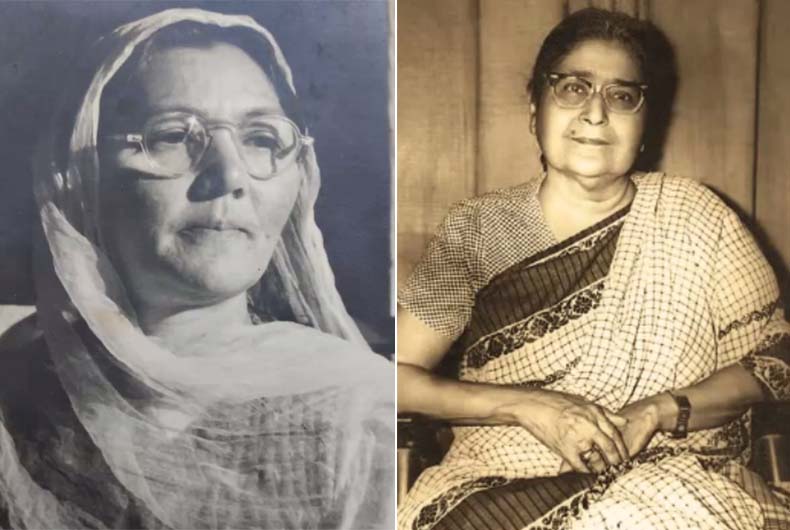
During her lecture, Dr Syeda Hameed especially praised and acknowledged the contributions of Nawab Sultan Jahan Begum – the Ruler of the Princely State of Bhopal, Shah Jahan Begum – wife of Dr Zakir Hussain , Asifa Mujeeb – wife of Mohammad Mujeeb, and Saliha Abid Hussain – wife of Syed Abid Hussain.

Calling them “The Khwateen-E-Awwal of Jamia” – the first women of Jamia, Dr. Syeda Hameed also detailed the last Begum’s contributions in the fields of education, sanitation, public health and her efforts in establishing Aligarh Muslim University (AMU), of which she was the founding Chancellor, and the first and only woman to have served in the position.

“(But) their roles have been diminished and their work remains unacknowledged in the mainstream”, she said in her key-note address titled “Contribution of Muslim Women to Educational Institutions: The Case of Khwateen-e-Awwal of Jamia Millia Islamia.”

Dr Hameed quoted from Saliha Abid Hussain’s speech on Jamia’s Foundation Day in the mid-eighties to prove her point.

“I want to speak of (the) women of Jamia who were like Mughal era Raj majdoors behind Emperor Shah Jahan and the Royal Architects who built the Taj Mahal and never, ever thought of etching their names anywhere on the marble”.

Dr. Hameed also detailed the accounts of Saliha Abid Hussain and Gerda Philipsborn – a German national who later became known as “German Appa-Jaan” of the Jamia.

Dr. Syeda Hameed talked of the jalsas they organised, and their journey from attending events behind the pardah to firmly holding their ground and being in “high demand” at traditionally-male dominated intellectual and literary gatherings and their outspokenness about the rights of women in Islam.

Dr. Hameed talked of the unfinished works of Saliha and the final resting place of Gerda and of Professor Sughra Mehdi, who wrote extensively on the two women and on Jamia, and on the need for their works to be made accessible to more people and in more languages.

Dr. Hameed also recalled Turkish Poet and Activist, Halide Edib Adivar’s series of lectures at Jamia Millia in 1935, and of the early days of the Jamia in Okhla, the basic environment, the lack of electricity, of running water, of roads, and of sidewalks.

“By the banks of river Jamuna, houses were built, modest houses. Very limited income, but plenty of enthusiasm and lots of spirit, and a desire to live together as a human family in which women were the binding force.”

[Begum Saliha Abid Hussain (R) and Asifa Mujeeb.]

While introducing, Begum Asifa, Dr Syeda Hameed detailed how despite coming from a well-to-do family, she chose to live within the means afforded by the newly moved Jamia.

Dr. Hameed’s also remembered the contributions of Begum Syeda Khursheed, who according to her, “was brought up by parents who literally birthed the Jamia” and Shafiqa Kidwai, wife of Shafiqur Rahman Kidwai, former Minister of Education Govt of India. Sahfiqa Kidwai established Balak Mathia Mahal in Delhi for education of girls, and was the member of various apex committees of the Jamia.

“The spirit of the Jamia comes from all these strong and resilient women who collectively built the Jamia and the Muslim women’s movement over decades”, she said.

“That it transcends the test of time and will continue to surface whenever there is a threat to the core values, imbibed in the idea of India, the idea of the university and the idea of Jamia Millia Islamia”, she said.

Professor Zoya Hasan, while throwing more light on the contribution of women in the founding movement of Jamia Millia Islamia talked about Turkish activist, Halide Edib Adivar, who came to Jamia to deliver a series of eight lectures titled ‘Inside India’.

Professor Zoya Hasan said in her lecture series Adivar admired the Jamia movement for its harmonizing intermingling of anti-imperialism and tradition.

“What she found very interesting and impressive was the combination of Indian nationhood with Islamic identity”, Professor Zoya said.

source: http://www.ummid.com / Ummid.com / Home> India / by ummid.com News Network / June 19th, 2021

Dilip Kumar, the pole star of a golden age of Hindi cinema, no more

Mumbai, MAHARASHTRA :

Dilip Kumar (1922 – 2021): The end of an era

Actor Dilip Kumar  

The right blend of star and actor, he was part of the discovery of cinema in India as a means of mass communication seen today

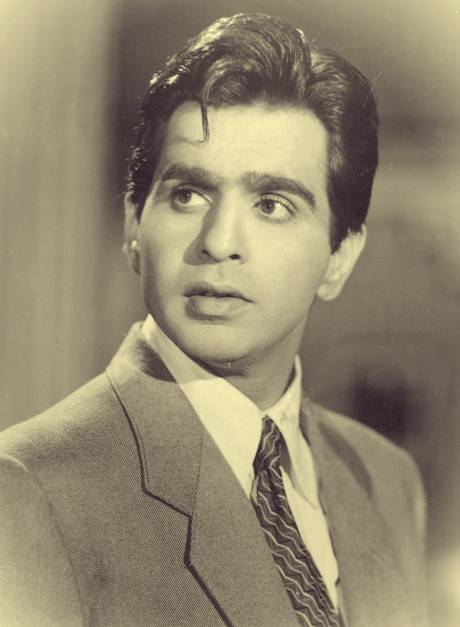
When Marlon Brando was struggling to find a footing in Hollywood, a shy Pathan boy from Peshawar was practising method acting in what was then the Bombay film industry, helping it come out of the Parsi theatre’s influence. As Dilip Kumar transcends to a new stage , the pole star of the golden age of Hindi cinema would be remembered for setting a template of acting for generations to come.

A veritable cultural icon who inspired economist Meghnad Desai to draw parallels between his films and the newly independent India’s tryst with socialism and capitalism in his seminal work, Nehru’s Hero: Dilip Kumar in the Life of India, there is a bit of Dilip Kumar in everyone’s life.

Discovered and later rechristened by Devika Rani of the famed Bombay Talkies, Dilip Kumar, along with Raj Kapoor and Dev Anand, were part of the discovery of cinema in India as a means of mass communication as we see it today. They had had few examples to follow and perhaps it worked to their advantage as each one carved out his own niche.

Out of the three, Dilip Kumar’s naturalistic style never became stale or dated. The right blend of star and actor who could keep both the public and the purist engaged with his craft, he kept his performances subtle, understated but always believable.

Not just his younger contemporaries like Rajendra Kumar, Manoj Kumar and Dharmendra, generations of dependable actors, from Amitabh Bachchan to Shah Rukh Khan and Aamir Khan to Irrfan, built edifices of their performances on the foundation laid by Dilip Kumar. Mr. Bachchan, who played Dilip Kumar’s son in Shakti, once said there was such finality to Dilip sahib’s performances that once he enacted a scene, there was no alternative to it. Irrfan once told this journalist that he often wondered when trained actors like him found it difficult to deal with scars left by tragic roles, how Dilip Kumar, who learnt the craft on his own, came to terms with it. Well, he did approach doctors in London, who advised him to consider lighter roles.

Film historians often label the thespian as the tragedy king for his moving portrayal of a loner who loses everything in love in a series of films such as JugnuDeedar and Devdas, but the eight-time Filmfare Award winner was equally compelling as a winsome romantic in ShabnamAzaad and Kohinoor. Not to forget his intense performances as a revolutionary in Shaheed and a trade union leader in Paigham.

Be it the lawyer who rapes a village girl in Mehboob Khan’s Amar, the journalist who becomes black-marketeer in Zia Sarhady’s Footpath, the atheist in love with a mendicant in Kidar Sharma’s Jogan or the wheel-chair bound Raja Sahib in Aadmi, a role earlier essayed by Sivaji Ganesan, the Padma Vibhushan constantly lunged for complex characters where he was expected to evoke multiple emotions in a single frame.

He experimented not just with characters but also directorial styles. Both Amar and Footpath deal with moral guilt but while Mehboob Khan visualised a mass entertainer, Zia’s treatment was neo-realist. With Tapan Sinha’s Sagina Mahto, he ventured into parallel cinema and earned praise from his contemporaries.

At the time of Mughal-e-Azam, he was the top draw, but the narrative demanded Kumar to play second fiddle to Prithviraj Kapoor, a senior and a friend of his father. He delivered a restrained performance, a subtle counterpoint to the bombastic Kapoor that is etched in the minds of cinegoers. The way he caresses the luminous face of Madhubala with a feather is perhaps the most elegant romantic sequence filmed without a dialogue.

The one that stands out and inspired many adaptations is the dacoit in Gunga Jumna, his ambitious home production where the sophisticated Kumar transformed into an Awadhi speaking rustic who’s forced to pick up the gun.

He played serious roles with such dignity that he didn’t need to be loud to make people laugh. He brought his craft to comic roles as well. In Ram Aur Shyam, the scene that still leaves everyone in splits is the one where Shyam starts playing a poor copy of Ram.

It is this constant urge for variety and chiselling of the craft that the megastar, despite the world at his feet, chose to do only around 60 films spanning over almost five decades. He refused Guru Dutt’s Pyaasa for he found the character similar to Devdas. He said no to David Lean for Lawrence of Arabia as he was not keen to commit the amount of time that the director was asking from him.

In a BBC interview, he once said that when the director came to him with a 30-year-old character, he tried to find and build the first 29 years of his life from the script so that, “I start identifying with the character. Often directors leave it to me to interpret the character.”

Known to help out his colleagues in finding a rhythm that suited the narrative, the actor is said to have ghost directed many films such as Gunga JumnaRam Aur Shyam and Aadmi.

He took the preparation for a character to a different level. For “Madhuban Mein Radhika Nache Re” from Kohinoor, where he played sitar on screen, he trained with sitarist Ustad Halim Jaffar Khan for six months.

It is said while filming for Dil Diya Dard Liya, he ran four rounds of the studio because in the next sequence he was supposed to snatch a rifle from Pran, playing the villain, in a state of breathlessness.

Even in his second innings, when his mannerisms became marked, he impressed with power-packed performances in ShaktiMashaal and Karma.

Off-screen, as a philanthropist, he always maintained that “industrialisation has made us narrow-minded”. He would always say “being developed and being civilised are two different things”.

In the late 1960s, when an argument was made about films promoting alcoholism and that they could be used to promote population control, Dilip Kumar said he was for promoting good values through films but that didn’t mean films become “instructional” or a “vehicle for propaganda”.

A connoisseur of the finer things of life, he had an abiding love for poetry and literature. Often, when he had to sidestep a controversial topic, he would come up with an Urdu couplet that would capture his emotion on the subject. Once when he was asked about his relationship with Madhubala, Kumar invoked Sahir Ludhianvi: “Mohabbat tark ki mainegarebaan see liya maine, zamane ab toh khush hozehar ye bhi pi liya maine” (Love I have renounced and sewn the collar [of the soul/ conscience] that was ripped; O world, now you be happy, for this poison as well I have sipped).

Deeply entrenched in Indian ethos, he never got over his childhood connection with his home town Peshawar where the young Yusuf Khan would be found dribbling a football or listening to stories at Qissa Khawani Bazaar. He remained a symbol of the undivided India as the Pakistan government bestowed upon him its highest civilian honour, the Nishan-e-Imtiaz. He wrote to the then Prime Minister Atal Bihari Vajpayee that if he considered it prudent, he would surrender the award. However, many feel it made his wait for the coveted Bharat Ratna longer.

source: http://www.thehindu.com / The Hindu / Home> Entertainment / by Anuj Kumar / New Delhi – July 07th, 2021

Reviving Forgotten Memories

Kolar / Mysuru, KARNATAKA:

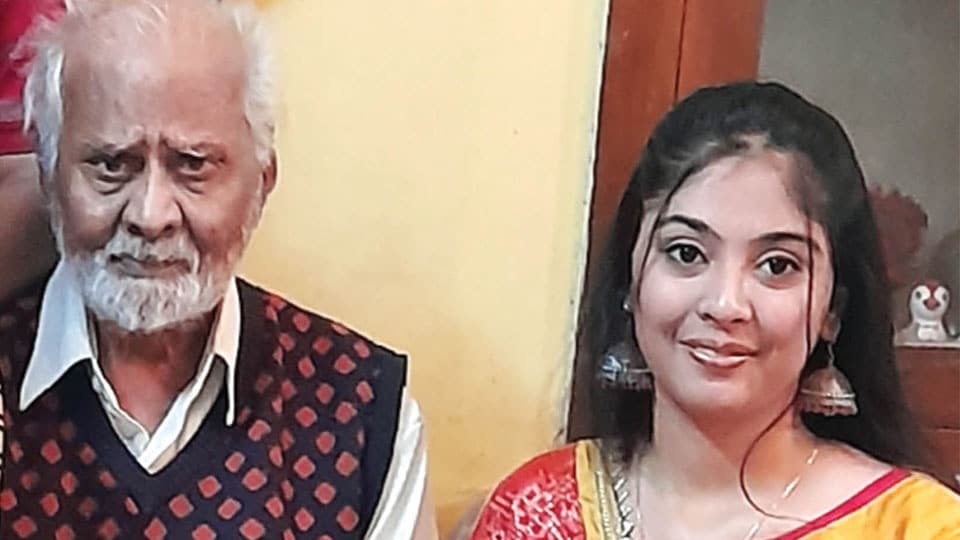
A grand-daughter connects with her nonagenarian grandfather Mohammed Nizamuddin, a trend-setter of football in Mysore State

Indians have seen many names coming forth. It could be in the field of science, technology, freedom struggle, sports etc. — few known, few unknown and a few remained in oblivion.

One such sportsman was a young boy from Kolar, my grandfather Mohammed Nizamuddin, who was a terrific football player and was the trend-setter of football in Karnataka, then called the Mysore State. He played and won many matches. Now as a nonagenarian, he is leading a simple life as a retired Tahsildar, enjoying his success in life with utmost gratitude faraway from fandom.

Journey of football dream

It was a normal day. Out of boredom (lockdown effect) I just thought of talking to my grandfather about his football days. But looking at the sparkle in his eyes and hearing his excited voice, my time-pass conversation became one of the most enlightened high voltage story-telling session. He began with his life as a kid who played football as a mere game, but it was in his teens that football became his passion. He started playing for his University first and then for his State.

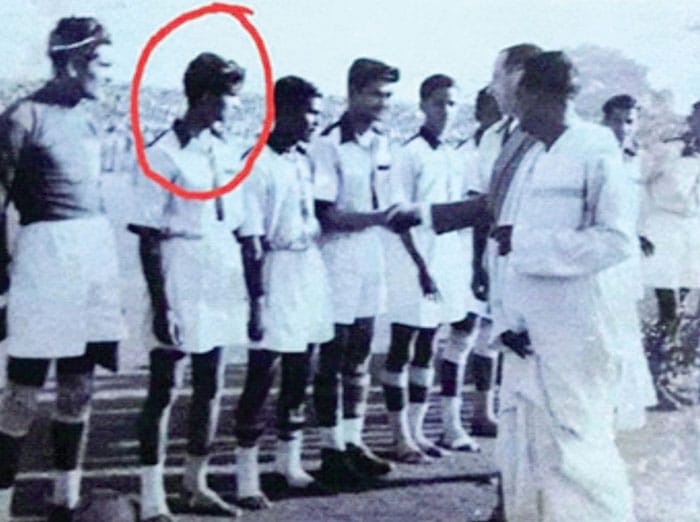
Mohammed Nizamuddin (standing second from left) and his team seen with the Secretary of All India Football Federation.

Born on June 20, 1929, his football career as such started with Mysore University, where he was the captain of his football team and he, along with his team, won many trophies. His University Professors and those who used to see his matches started encouraging him. He was also much appreciated among his team members and slowly his popularity began to grow. 

Looking at his skills, a well-known team of Karnataka at that time “The Bangalore Blues” approached him and he became a part of that team. As the saying goes “It takes a right moment to strike”, that moment in my grandfather’s life came as an opportunity to play the Santosh Trophy for his State (then Mysore State).

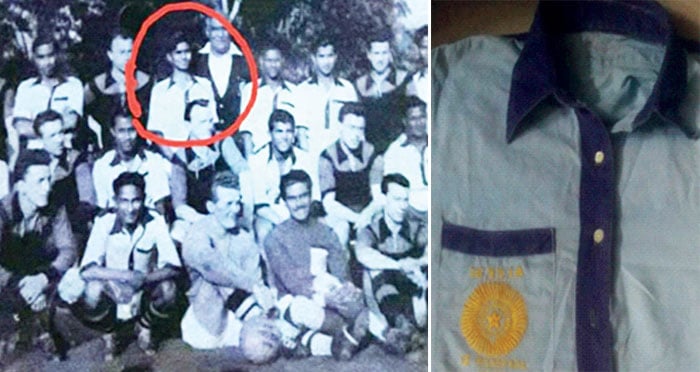
Mohammedan Sporting Club members with the Austrian team at All India Football Federation in 1953. The encircled person is Mohammed Nizamuddin.

1952 – SANTOSH TROPHY

Santosh Trophy is a State-level Football Tournament where many States participate. My grandfather played for the Mysore State. Mysore State in 1956 had won this trophy after a wait of 6 long years. The State was playing well and had entered the semi-finals. It was an interesting nail-biting match. The match was against Orissa (now, Odisha) and Mysore State (now, Karnataka) won by two goals — both scored by my grandfather (Lo, a new star was born in Mohammed Nizamuddin).

Then came the finals. As usual there was a lot of expectancy from the star goal scorer. The match was against Bengal (a very strong team of that time). Mysore won by a goal (again a right goal at right time) and guess what? That one winning goal was scored by none other than Mohammed Nizamuddin.

After six years, Mysore had finally won the Santosh Trophy and so the celebration went on for days. He became a sensation among the youths, who copied his walking style and waited for hours just to shake their hands with him. Such was his euphoria. He also played for the Netaji Club in Mysore.

Later he was invited by Mohammedan Sporting Club (Kolkata) to play for their Club. For nearly 8 years he was with the Mohammedan Sporting Club playing several tournaments like Rover’s Cup, National Championships and scoring many winning goals. 

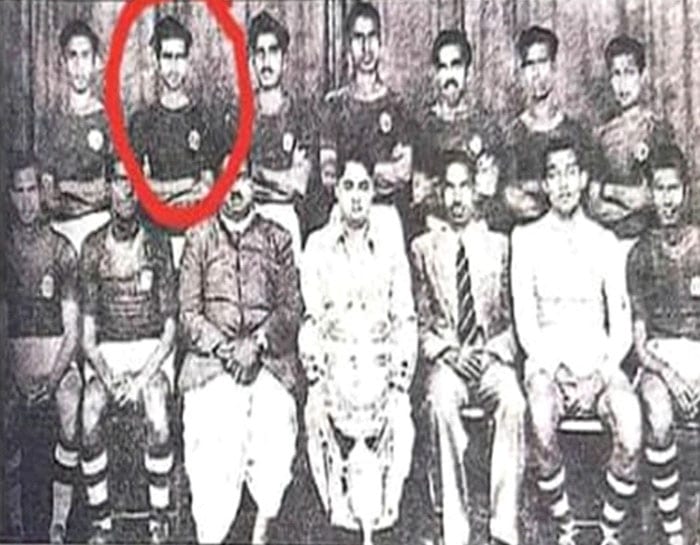
Bangalore Blues team (Pic. courtesy: Times of India).

In 1956, Mohammedan Sporting Club made a major come back in the Rover’s Cup. They won the trophy after a gap of 12 years and Mohammed Nizamuddin was responsible for the major goals scored, which led to the lifting of the Rover’s Cup in 1956 and 1959 matches.

Throughout his career span of 15-20 years in the national football, he had come across many people from different backgrounds like general public, celebrities etc. and not to forget the numerous countries he has visited. All of these have had a great influence on him (he keeps telling me and my sister about the different places he visited, their culture etc.). For great achievements it requires great support too. One such strong pillar of support to my grandfather was his father Abdul Razaq. Along with his father, there were many people like his University College Principal, his Professors, his coaches etc., who encouraged and supported him to the fullest. They played a key role in his success too and he is forever grateful to them.

In the 1960s, he gracefully retired from his football career. A very simple man with simple but strong principles, he never took his celebrity status to his head. He did not crave for limelight instead he opted for a simple life as a Government servant (Tahsildar) and discharged his duties with utmost sincerity.

Even today, when he looks back at his life, he says with pride in his eyes that he was neither dependent nor a burden to anybody in the family and that God blessed him with the best.

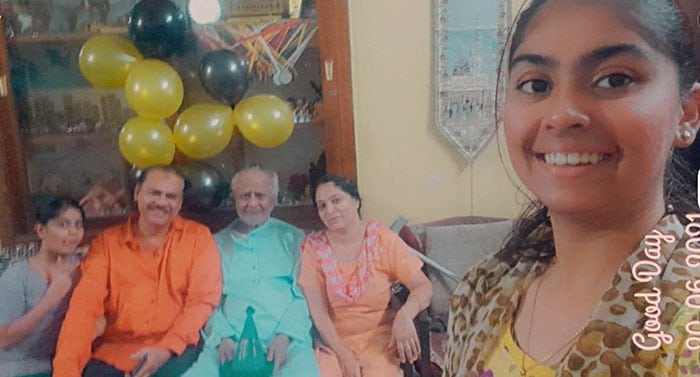
Mohammed Nizamuddin with his family members on his birthday celebration this year.

A BA graduate from University of Mysore, Mohammed Nizamuddin served as Tahsildar in many places including Gundlupet, Yadgir, Sullia and Malavalli. After his retirement, he served as Estate Officer of WAKF Board in Srirangapatna.

His wife passed away 9 years ago. He has 4 children (1 son and 3 daughters). He stays in Bannimantap A Layout in Mysuru with his son, daughter-in-law and two grand-daughters.

source: http://www.starofmysore.com / Star of Mysore / Home> Feature Articles / by Areebah Tasdeeq / July 07th, 2021

Meet Manjuwara Mullah from Assam’s riverine sandbank who is leading Muslim women to social, financial empowerment

Rupakuchi Village (Barpeta District), ASSAM:

Manjuwara Mullah from the north-eastern state of Assam is a social activist whose initiative Amrapari has changed the lives of many women in the poorest region of Assam. This is her story.

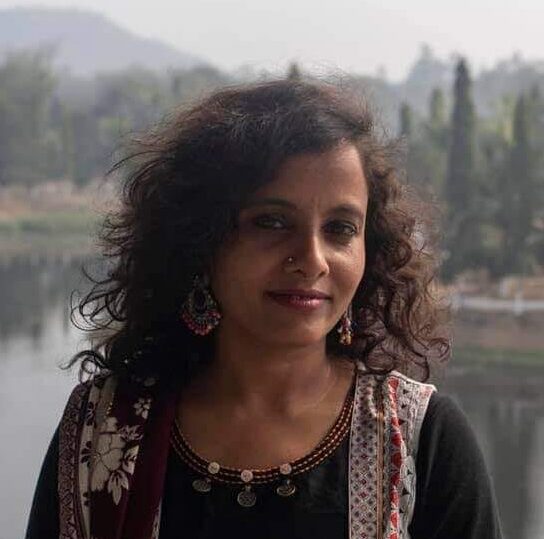
Manjuwara Mullah | Picture by Amrapari

Guwahati :

As a woman social activist Manjuwara Mullah from Barpeta district’s Rupakuchi village in the north-eastern state of Assam would get anxious when distress phone calls from numerous women from the Char areas would pour in seeking her help to get their male family members back home during the Covid-19 lockdown. She faced twin problems — getting the sole breadwinners of the families back home and ensure income for these people so that the impoverished families can sustain the pandemic as well as the economic hardship.

The people of the riverine sandbanks, known as Char areas in Assam, are one of the poorest in the state, have the highest illiteracy rates, a fewer number of landholders and very limited source of income. This crisis, along with the devastating yearly floods force massive labour migration from Char areas of the state to southern Indian states where they work as daily wagers.

For 36-year-old Mullah facilitating the process of getting the migrant labourers back home was an immensely difficult job, and as the migrant labourers took the uphill task of travelling thousands of kilometres to their homes, she started to focus on the women members of the migrants’ families and how they could be engaged in something that earns them money to fend for their families.

Being an activist and with academic exposure to the workings of non-profit organizations, Mullah incorporated her learnings from the sector to form a collective called Amrapari, which eventually turned into a non-profit organization, intending to employ the organic and traditional knowledge of the women from Char areas to provide them financial independence.

Amrapari, a Bangali as well as Miya (dialect) phrase for “we can”, initiative weaponized the traditional knowledge of the women of stitching Kanthas, an embroidery craft on clothes with multiple usage (used as bed covers or also as summer blankets) and also considered as a traditional and cultural artefact of the Bengali origin Muslims of Assam.

“I have been working with urban as well as rural communities for more than a decade. That’s how I am connected with the people at large. My work involved microfinance for the upliftment of women, citizenship issues, child marriage and women rights in the chars. When I got to know about the ensuing financial hardships of these families with whom I have been connected, I was in a lot of distress,” Mullah said when she narrated the circumstances that led to the foundation of Amrapari initiative.

The Char areas are also grappling with issues of girl-child rights violation, women rights violation apart from women in the family facing the economic burdens as men generally migrate for work to other states.

“Amid the trying times of coronavirus induced hardships, I was thinking about change in the Char areas. Merely supporting the women would not help them in the long term. Until they are financially independent their social condition will not change much,” she said.

The women from Char areas and the community, in general, are traditionally skilled in stitching kanthas. “I facilitated the use of the craft and ancestral knowledge to weave for their independence and empowerment,” she said.

The initiative is currently operating from Rupakuchi village, around 130-kilometers away northwest from state capital Guwahati, and sandwiched between Beki and Chaulkhua river which cause ravaging floods and erosions during the monsoon months.

At least 35 women are working as stakeholders, following a model of cooperative benefit sharing at Amrapari.

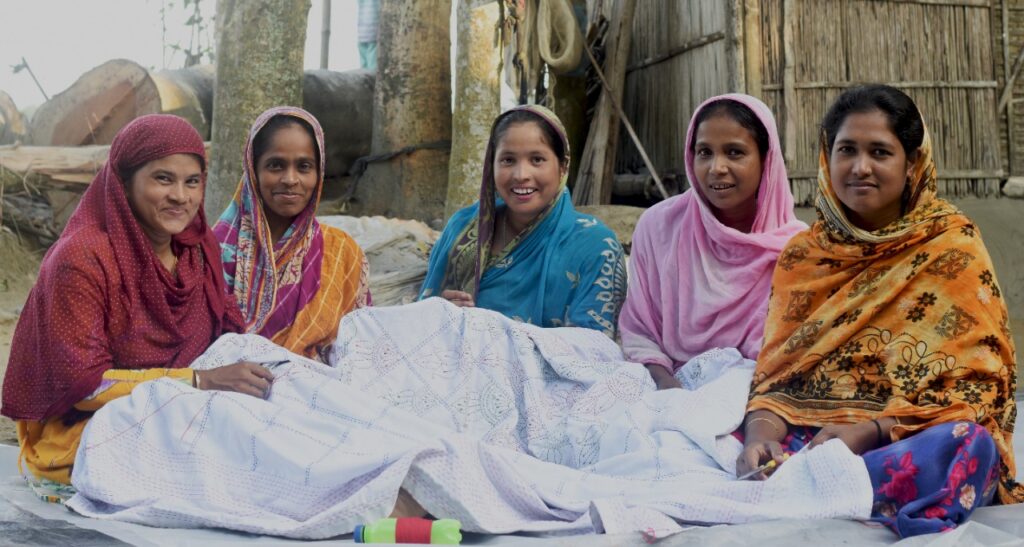
Women supported by Amrapari doing stitching work | Photo by Amrapari

Mullah said that during the initial days of the organization, Anjuman Ara Begum, a human rights activist, helped her a lot. “We discussed at lengths with women from villages and they said that they know stitching and were interested in engaging with the traditional craft,” she said.

More than monetary gain
For 24-year-old Nur Nehar from Rupakuchi village, her engagement with Amrapari means she can bear the educational expenses of her two children.

Married in 2009 as a child bride, Nehar used to stitch small fishing nets at her village which would earn her a meagre amount and living on the constant fear of being uprooted from her house by the annual flooding waters from Chaulkhua river, she is now confident that she will be able to earn the months ends by weaving the quilts.

“Though I knew stitching, but I didn’t know the designer works. It was Manjuwara madam who introduced the designs to us,” Nehar told TwoCircles.net, being happy with the fact that she has earned Rs 15,000 by working with Amrapari.

Moreover, the small initiative has been a ray of hope for many women from remote Muslim villages. Many find respite from the mental trauma that they endured when their husbands had done injustice to them.

A note on the social media page of Amrapari narrates the mental trauma that a woman had to go through. The post reads, “The most painful incident that had happened in my life was when my husband married twice. My mental health was badly affected. But upon working here, I can distract myself and pay the fees of my kids for their education which matters the most,” said one of the members from the group no. 2.”

It has also boosted confidence among many of the participants associated with the organization.

30-year-old Inuara Begum was said, “I would get shy and angry when I first saw my photograph in the posters. But now my photos have become some kind of viral on (social media). The people here and my family encouraged me so much so that I am not shy anymore. This has given me a lot of courage.”

For Umme Sabira Khatun, who is in her mid-twenties and coordinates among the women groups at Amrapari, her imaginations becoming arts on the kanthas is more than satisfactory. “Amrapari has given that platform where I can see my designs turn into appealing arts which I could never have imagined before,” Sabira said.

Mullah said that more than financial aid to the women, Amrapari envisages empowering the women from very remote places. “The experiences shared by the women reflect their own sense of self-identification as well as their independence,” she said.

Promoting their products via social media and e-commerce platforms, the women from Amrapari have been able to tap the market for their traditional kanthas and the women are extending their range of products as well.

source: http://www.twocircles.net / TwoCircles.net / Home> Lead Story / by Mahibul Hoque, TwoCircles.net / May 28th, 2021

Find out why Aslam TP and Mujeeb Rahman are walking from Kasargod to Kanyakumari

Kasaragod, KERALA :

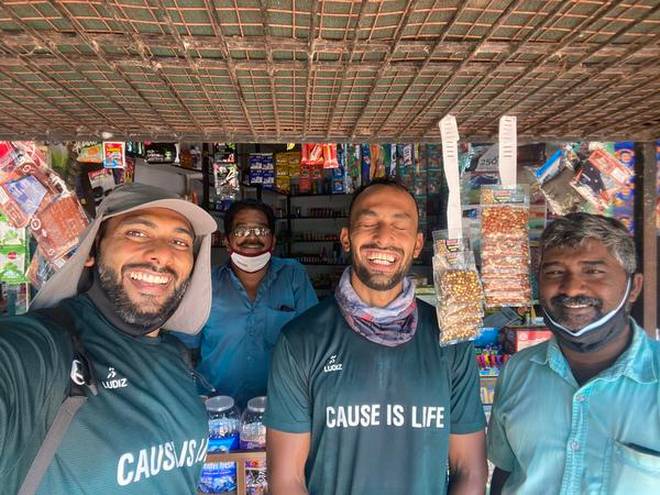
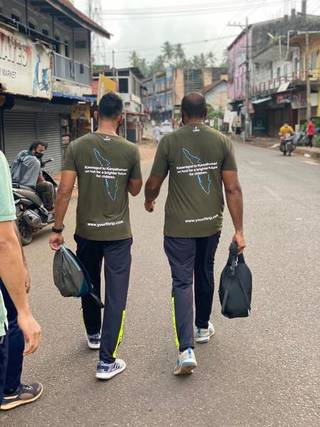
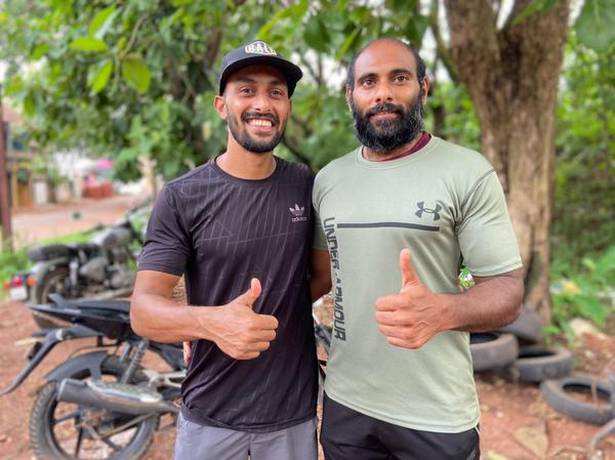
Mujeeb (left) and Aslam share a laugh with locals along the highway   | Photo Credit: Special Arrangement

The two will cover a distance of 600-odd kilometres on foot, to raise money for children’s education

Ambling through the streets of Kozhikode, a visibly tired Aslam TP and his childhood friend Mujeeb Rahman are intercepted by an auto driver.

He wants to know where they are heading, and why they looked so drained. When Aslam tells him about the cause they are trying to raise money for, the auto driver promptly pulls out ₹100 from his pocket and hands it over.

In just seven days of their walk, Aslam and Mujeeb have been met with overwhelming tales of generosity, and as a result, 62% of their target amount (₹7 lakh) has been raised. They are covering a distance of 600-odd kilometres on foot, from Kasargod in Kerala to Kanyakumari in Tamil Nadu, to raise money for children’s education in Kasargod for the Najath Educational and Charitable Society. With the amount raised, they will buy smartphones for online classes. “We walked from Vadakara to Kozhikode on Monday, covering around 49 kilometres, the longest stretch so far,” say Aslam over a call from Kozhikode, Kerala. A serial fund raiser, Aslam took up a similar challenge in Bali last year, where he cycled 397 kilometres to support the education of 45 Balinese children. Currently, he runs a company called Yourfitrip in Bali, which encourages fitness holidays. These include surfing, kayaking, volcano trekking… activities that have helped Aslam stay fit over the years.

He also runs a community called Cause is Life that connects blood donors to receivers. It kept him and his pan-India volunteers busy through the second wave of COVID-19. Just before the lockdown this year, Aslam was in Nagaland, setting up Yourfitrip there, running up hills and walking from one village to another meeting the locals.

“For this walk, Mujeeb and I trained in Kasargod, our hometown, walking 15 to 18 kilometres everyday. We are training our brain to know that we are good to go, even when we are tired,” he laughs. They prepare a chart, based on which their daily route is fixed. “We average about 30-35 kilometres a day. On somedays, it goes up to 45 to 48.”

They start walking at 6.30am and wind up for the night by 7pm. “In case of emergency, we have a backup car that stays 15 kilometres ahead of us,” he adds. They take the highway, spilling into Tamil Nadu from Nagercoil before heading to Kanyakumari. With everything functional in Kerala and food available for takeaway, things have so far been under control.

Aslam says he will complete the walk in 21 to 23 days. Though planned as a 21-day project, the end date is uncertain as they get enveloped by hospitality from people they come across. So far, the duo has been pleasantly surprised by receptions planned in their honour, invites for meals from strangers, and the willingness of people to contribute even if it means handing over the last penny in their pocket. At one of the villages, a group followed them in a car as they wanted to be part of this mission. “I want people to know that we are collectively strong and can do so many things to give others a better future,” he says as he and Mujeeb stretch, lunge and soldier on, with the rain for company.

For details, check out Aslam’s Instagram handle @aslucha

source: http://www.thehindu.com / The Hindu / Home> Society / by Priyadarshini Paitandy / June 30th, 2021

Rohan Bopanna-Sania Mirza pair wins historic all-Indian Wimbledon match

Hyderabad, TELANGANA :

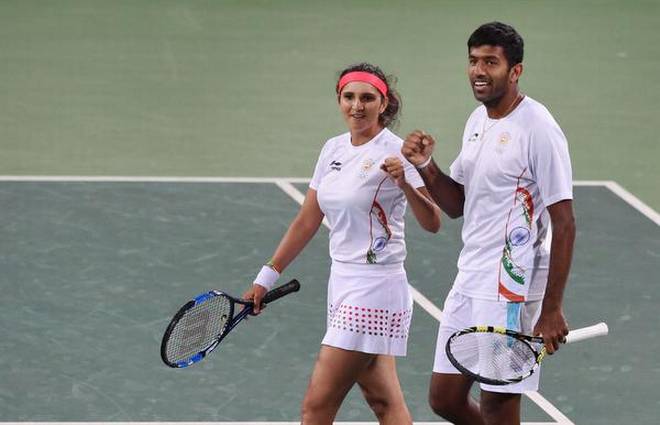
File photo of Sania Mirza and Rohan Bopanna.   | Photo Credit: PTI

It was the first time in open era that two Indian teams competed against each other at a Grand Slam tournament.

The experienced pair of Rohan Bopanna and Sania Mirza defeated the brand new combination of Ramkaumar Ramanathan and Ankita Raina 6-2 7-6 (5) in the historic all-Indian mixed doubles first round match at the Wimbledon here on Friday.

It was the first time in open era that two Indian teams competed against each other at a Grand Slam tournament.

The contest finally brought a Grand Slam debut for Ramkumar, who has made 21 attempts to qualify for the singles main draw of a tennis major.

While the first set ended quickly in favour of the veterans, Ramkumar and Raina presented a good fight in the second set, which even they led for a brief period with a break of serve.

Bopanna was clearly the best player on the court with his powerful serve and solid ground strokes from the baseline as well as the ability to execute a superior net game.

On expected lines, Ramkumar served big while Raina gave her all after growing in confidence.

Mirza’s serve is still not at its best and would improve as she plays more matches.

Mirza has moved has also moved to women’s doubles second round with Bethanie Mattek-Sands while Raina and her American partner Lauren Davis lost in straight sets to the US pair of Asia Muhammad and Jessica Pegula on Thursday night.

The 14th seeds disposed off the challenge from the Raina-Davis pair 6-3 6-2 in 70 minutes.

Bopanna and Divij Sharan are already out, having lost their men’s doubles opening round match.

source: http://www.thehindu.com / The Hindu / Home> Sport> Tennis / by PTI / London, July 02nd, 2021

How a dry fish seller’s son from Kasaragod became most sought after navigator in motorsports world

Mogral Village (Kasaragod), KERALA :

Another proud moment for Kasaragod as Musa Sharif gets nominated for Rajiv Gandhi Khel Ratna, announced district collector D Sajith Babu on his Facebook page.

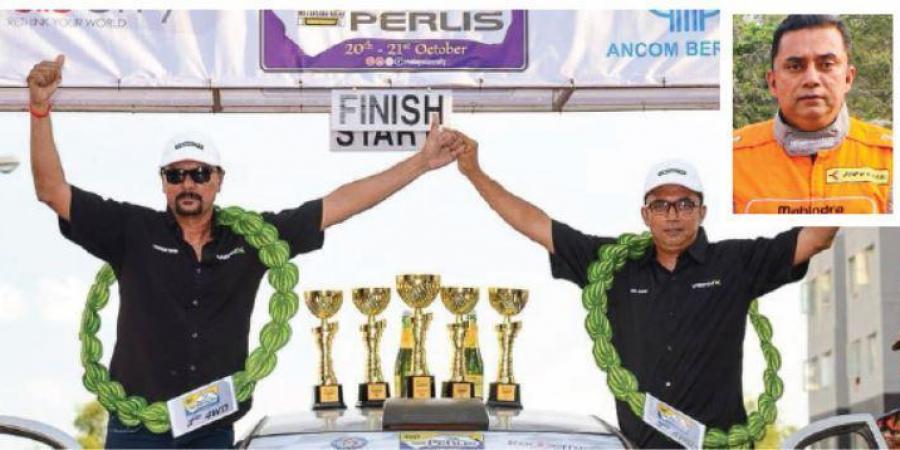
Musa Sharif (right and inset) with Karamjith Singh, Malaysia’s most-decorated rally driver, at the Rally of Perlis in 2018

Kasargod :

Another proud moment for Kasaragod, announced district collector D Sajith Babu on his Facebook page.

Congratulations to the pride of Kasaragod Musa Sharif, said Kasaragod MLA Nellikkunnu.

“Let’s hope the Rajiv Gandhi Khel Ratna will reach Kasaragod through Musa Sharif,” he said.

For Kasaragod — a district with few sporting heroes —  Asia’s ace navigator Musa Sharif, 49, is a legend. He is the most experienced and sought-after co-driver in India’s motorsports world.

Acknowledging his contributions to motorsports in India, the Federation of Motor Sports Clubs of India (FMSCI) has nominated Sharif for the highest sporting honour of India.

“I am honoured by the nomination for Rajiv Gandhi Khel Ratna. Normally, drivers get all the attention. But navigators enjoy the blind trust of the drivers and share the podium with them,” he said. 

Since 2007, he has been the navigator of champion Gaurav Gill, who won the Arjuna Award in 2019, the year when the government recognised FMSCI as the national federation for motorsports. Musa has been a navigator for 29 years. “Coming January, it will be 30 years,” he says.

In these three decades, he has navigated for 49 drivers in 296 rallies, of which 67 were international rallies.

“I never had an off-year,” he chips in.

He has won 21 championships, including eight national championships — seven of them with Gill. Musa has travelled long rough terrains to be where he is today.

He was born to the late Zainuddin Perwad and Aysha in Mogral, a fishing village in Kasaragod. His father used to sell dry fish. 

He got hooked to driving when he got admission for Bachelor of Business Management in Badriya College in Mangaluru, 40km from his home.

Thrice in a week, he used to take his TVS Shogun or Yamaha RX100 to the college. Rest of the days, he would take the bus.

When he came to know of racing events in the city, he thought of giving it a try.

The first race he took part in was the rally organised by Karavali Auto Sports Club in Mangaluru in 1993. Congress’s Mangaluru MLA U T Khader was one of his co-racers.

He won the first championship in his fourth rally. In two years, Team MRF signed him as a navigator and he shifted gear to four-wheel racing.

He started his career as a navigator with Satish Bhat.  In 1997, he joined JK Tyre and then returned to Team MRF in 2001.

In 2013, he joined Mahindra Adventure. Since 2007, Musa Sharif and Gill are together, participating in 63 rallies, and winning in 36 rallies.

Together, they won the Rally of Coimbatore for Mahindra Adventure in January — to emerge national champions again.

His international wins came with Lohitt Urs (Asia Cross Country); Arjun Rao (Malaysian Rally Group N); Sanjay Takle (Malaysian Rally Championship) and Saneem Sani of Thrissur (UAE Rally Championship).

Every driver has a different call sign and navigators have to get adjusted to it. “Before the race, the driver and the navigator take the road twice, and prepare a ‘pace note’. It will be like a story of the road, the turns, and dips, the rise, the angle of the curves,” he said.

On the first trip, the driver gives the notes and the navigator takes them own.

On the second trip, the navigator will guide the driver based on the notes and will make corrections, if needed.

“On the race day, the driver would blindly trust the navigator and go by his command,” he said. 

The navigator
The Federation of Motor Sports Clubs of India (FMSCI) nominated Musa Sharif from Mogral in Kasaragod for the Rajiv Gandhi Khel Ratna

The stats
29 years | 49 drivers
296 rallies | 67 international rallies | 21 championships
8 National championships
7 with Gaurav Gill

source: http://www.newindianexpress.com / The New Indian Express / Home> Good News / by George Poikayil / Express News Service / July 03rd, 2021