Category Archives: Amazing Feats

Freedom Fighter & Islamic Scholar Mufti Abd-Ur-Razzaq Of Bhopal Passes Away, Laid To Rest With State Honours

Bhopal, MADHYA PRADESH :
Bhopal :

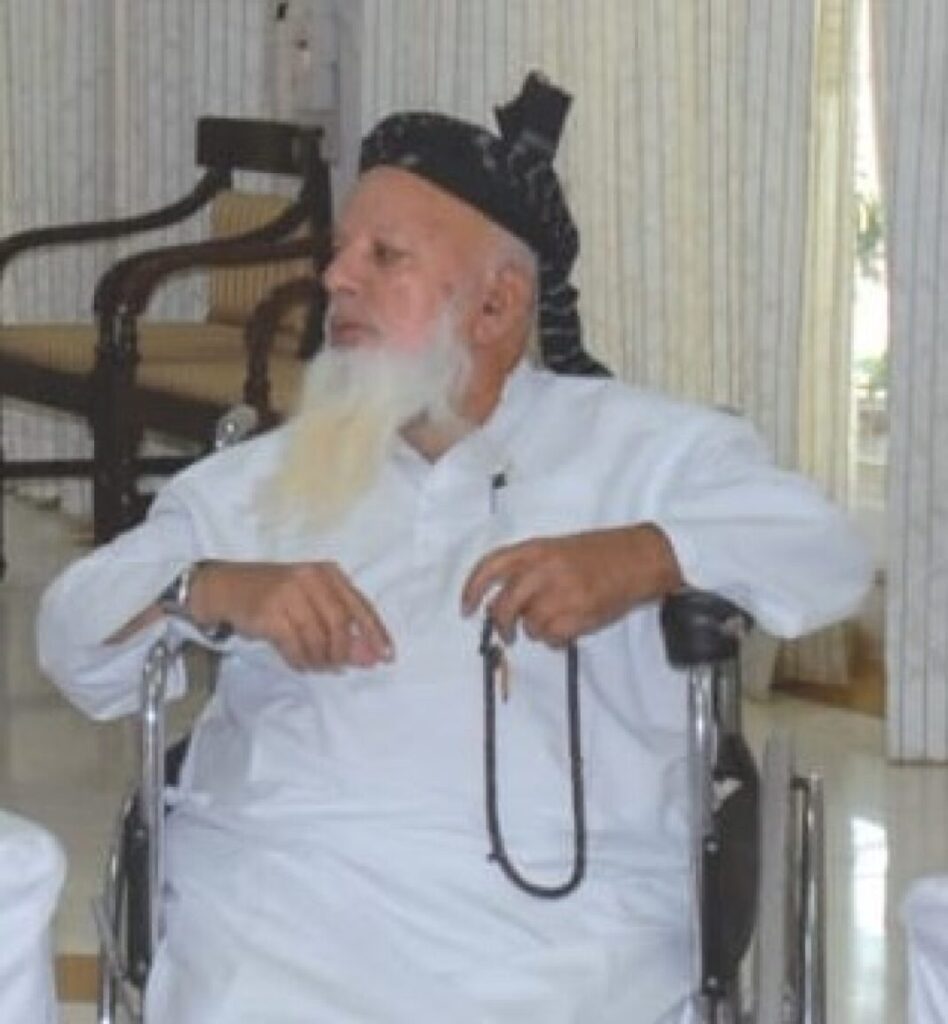
A leading Islamic scholar and freedom fighter Mufti Abd-ur-Razzaq Khan of Bhopal, who was national vice president of Jamiat Ulema-e-Hind (Maulana Arshad Madani faction), breathed his last after a prolonged illness here on May 26. He was about 96 years of age.

Mufti Abd-ur-Razzaq was laid to rest on May 27 afternoon with state Guard of Honours granted by the Madhya Pradesh Government. Since he was a popular figure and had followers cutting across the barriers of religion, cast and creed, the funeral was held amidst tight security apprehending mass turnout in the face of prevailing lockdown and Corona curfew in the city.

He had authored more than 50 books including Sarzamīn-e-Hind: Ambiyā kirām aur Islām; Qur’ān mai kya hai?, Āzādi; Aslāf aur Jamiat Ulama-e-Hind; Islāmi zindagi: paidā’ish se jannat tak; Ahle Qur’ān aur ahle kitāb etc.

Police sealed walled city 

Meanwhile, considering the popularity and his large number of followers, police took precautionary measures to avoid large congregation during his last rites because of corona curfew. The police put up barricades at prominent squares and roads of old city areas and police officers along with district administration also appealed people to avoid gathering because of the Corona curfew. Bhopal entry points from all sides were also sealed to prevent followers and admirers of the cleric from all the districts of the state from entering the city.

Police barricaded the roads in old Bhopal. Only family members and limited people were allowed to attend the funeral. The heavy police force was deployed at all the prime squares and areas including Tarjama Wali Mosque, Iqbal Maidan, Peer Gate, Bhopal Talkies, Nadra bus stand, Alpana Talkies, Sangam Talkies, Moti Masjid, Ret Ghat, Kamla Park and adjoining areas. In addition to barricading all the routes to old Bhopal, the old city area was guarded by additional force of 700 policemen. The routes connecting Bhopal from borders and the roads towards old city areas remained closed.

Equally respected in all circles

Mufti Abd-ur-Razzaq in 1958 had established the Madrasa Islamia Arabia in Bhopal and a mosque popularly known as Tarjama Wali Masjid of Bhopal. He used to teach Islamic preaching in Indian language because of which the mosque gained the name Tarjama (translation) mosque. He was an Indian Muslim scholar, mufti and an activist of Indian freedom struggle, who was equally respected in political, social, civil and all circles. The Governor of Madhya Pradesh, Anandiben Patel, honoured him in January 2021 for his participation in the Indian freedom struggle.

The high point of his life was that he was able to establish a chain of Madrasas/Maktabs all over Madhya Pradesh and Chhattisgarh wherein thousands of students receive Deeni Taleem (Religious education). He was revered by leaders of all religions. He used to organise meetings of leaders of various faiths to establish inter-religious dialogue with objective of creating communal harmony among the people. He was among those religious leaders who ran one of the oldest Gaushala on the outskirt of the city.

Madhya Pradesh Chief Minister Shivraj Singh, MP Congress Committee president & former chief minister Kamal Nath, Rajya Sabha member and Digvijay Singh expressed grief over his demise.

Mufti Abd-ur-Razzaq was born on 13th August 1925. He was schooled in “Masjid Malang Shah”, Jamia Darul Uloom Ilāhiya and Jamia Aḥmadiya in Bhopal. In July 1952, he joined the Darul Uloom Deoband to complete his studies. He studied Sahih Bukhari with Hussain Ahmad Madani; Sahih Muslim with Fakhrul Hasan Moradabadi; Jami’ al-Tirmidhi with Muḥammad Ibrāhim Balyawi; Sunan Abu Dawud with Bashīr Aḥmad; Sunan Nasai and Sunan ibn Majah with Mubārak Hussain; Muwatta Imām Muammad with Meraj-ul-Haq Deobandi; Muwatta Imam Malik with Sayyid Hasan; Shama’il Muhammadiyah with Muhammad Tayyib Qasmi; and Sharah Wiqāyah with Muhammad Salim Qasmi. He completed studying the “Dars-e-Nizami” course in 1377 AH and then specialized in “Ifta” with Mahdi Hasan Shahjahanpuri.

Participated in freedom struggle

Mufti Abd-ur-Razzaq participated in the Indian freedom struggle. In 1947, he was part of a fight that took place in Bhopal’s Qazi camp against the British colonialism. In 1958, he established Madrasa Islamia Arabia, one of the oldest and largest Islamic seminary in Bhopal. He was patron of various Islamic seminaries in Madhya Pradesh. He was also the state-president of the Darul Uloom Deoband’s “Rābta Madāris-e-Islamiya” for Madhya Pradesh. He is credited with the growth and development of Jamiat Ulama-e-Hind in Madhya Pradesh. He served as its national vice-president and the state-president for Madhya Pradesh. In 1958, he was appointed the vice-mufti of Bhopal’s “Dārul Qadha” (Islamic court); and chief-judge in 1968. He served as the Mufti of Bhopal city from 1974 to 1983. He promoted inter-religious harmony by organizing meetings with leaders of various faiths.[10] He was a vivid speaker and instructed Muslims to cope with communal riots with ways befitting the situation.

In 2016, denouncing the Rashtriya Swayamsevak Sangh, Vishva Hindu Parishad and Bajrang Dal activities in Madhya Pradesh, he told Muslims to maintain peace and not to engage in rioting or other things that could damage the peaceful atmosphere in the State. He expressed, “if someone attacks you and you don’t have any other solution but to kill him or to die for saving others from rioters, do not hesitate and go ahead. He also asked the political leaders of Madhya Pradesh to control these right-wing organisations and stop them from attacking and abusing Muslims.

source: http://www.indiatomorrow.net / India Tomorrow / Home> Featured> Religion / by Parvez Bari, India Tomorrow / May 31st, 2021
J&K professor earns rare honor, becomes one of the youngest Indians to figure on Stanford University’s top scientists’ list

Dhangri Village (Rajouri District), JAMMU & KASHMIR :

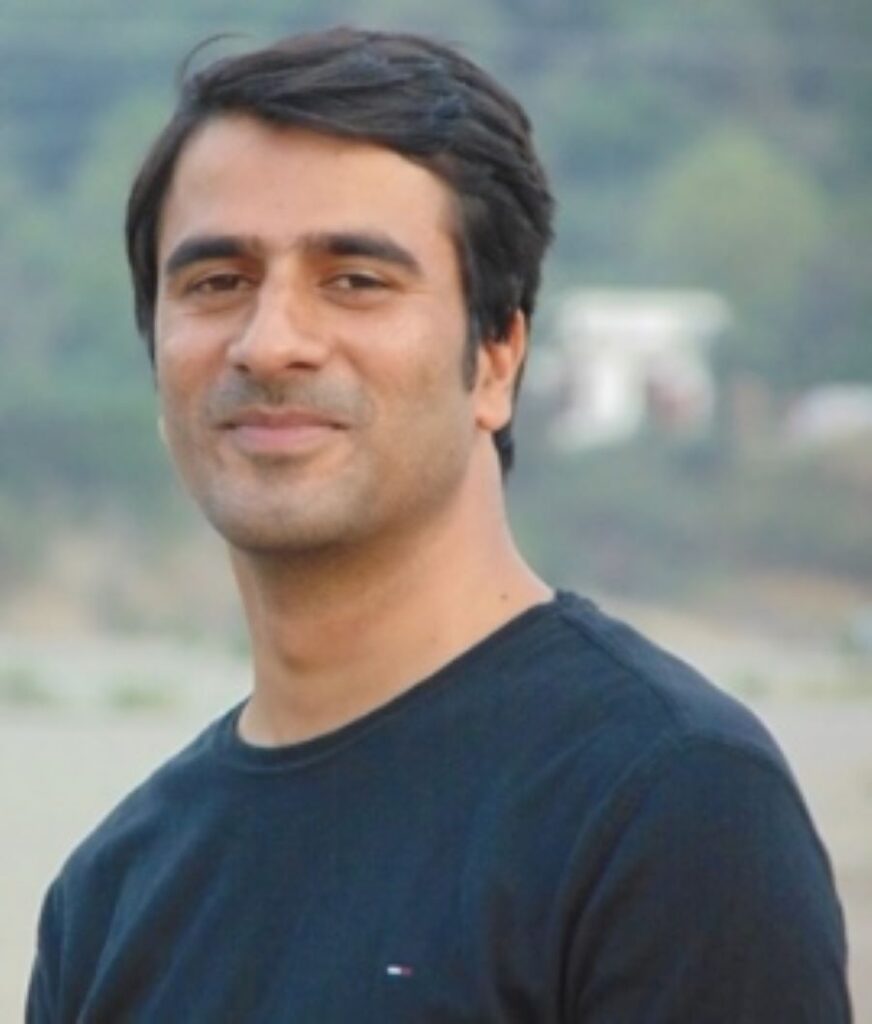
Dr. Shakeel Ahmed

Srinagar :

Life has come full circle for a 31-year-old scientist from the border district of Rajouri, who has become one of the youngest Indians to figure on Stanford University’s list of top 2 percent scientists in the world.

Dr. Shakeel Ahmed, Assistant Professor at the Department of Chemistry in Government Degree College, Mendhar, has published research papers on green nanomaterials and biopolymers for various applications including biomedical, packaging, and water treatment.

He has penned more than 15 books on polymers, nanomaterials, and green materials. The database of the independent study has been published in one of the highly-rated journals, `PLOS Biology’. He is a member of American Chemical Society and Royal Society of Chemistry.

“It is a moment of gratification to be on the list. It will inspire the young generation of Jammu and Kashmir to work for furthering science especially from Pir Panjal region”, Dr. Shakeel said.

It was a hard-earned success for a 31-year-old scientist who lost his father when he was just a year old.

“I was just one year old when my father passed away. At that time there was no breadwinner in my family. I had suffered a lot during my childhood and sometimes it was difficult for me to continue my studies. I am first generation learner in my family”, he said.

Principal of GDC, Mendhar, Dileep K. Raina said it is a matter of great pride that Dr Shakeel has featured on the prestigious list. “It is a matter of great pride for Government Degree College Mendhar that Dr. Shakeel Ahmed of the Department of Chemistry (GDCM) has been named among the top 2% scientists of the world in the field of polymer chemistry,” said the college in a statement.

Stanford University recently released a list of 1,59,683 top 2 percent of most-cited scientists in various disciplines. It includes 1,500 Indians and most of them are from IITs, IISc, and other top institutions.

Hailing from Dhangri village, Dr. Shakeel completed his B.Sc from Government PG College, Rajouri. He completed M.Sc in 2012 from Dr. Saiqa Ikram Department of Chemistry, Jamia Milia Islamia. In 2016, he completed his Ph.D. from Jamia Milia Islamia.

For the last three and a half years, he is serving as an assistant professor in GDC, Mendhar in Poonch district. He has authored numerous books that are available on Amazon and other platforms.

Some of the books include `Green and Sustainable Materials: Processing and Characterization’, `Alginates:  Applications in the Biomedical and Food Industries and `Marine Polysaccharides: Advances and Multifaceted Applications’.

source: http://www.indiatomorrow.net / India Tomorrow / Home> Education / by Ishfaq-Ul-Hasan , India Tomorrow / Srinagar – November 10th, 2020

Four-year-old Qatar resident enters India Book of Records

Doha, QATAR :

Doha:

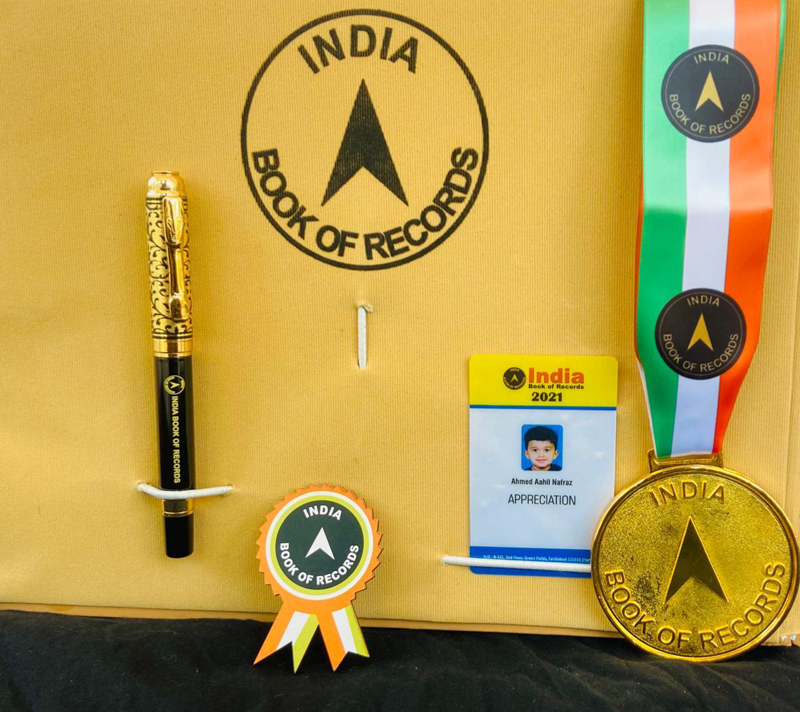
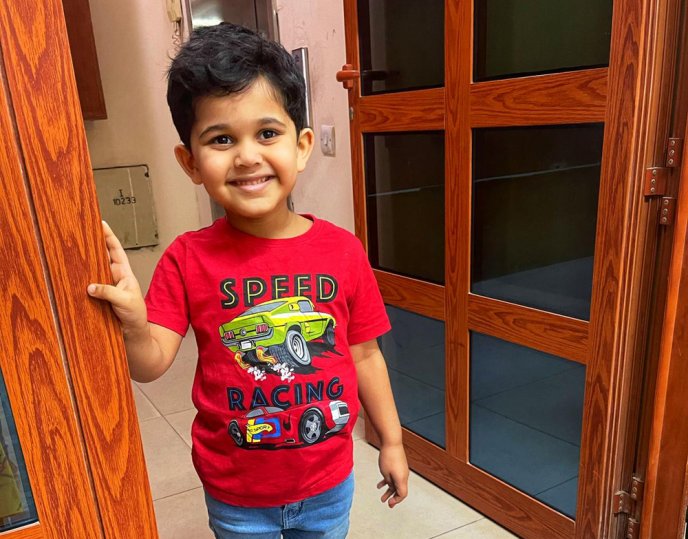
Four-year-old Qatar resident gets an entry in India Book of Records for identifying maximum number of car logos in 30 seconds. 

Ahmed Aahil Nafraz, a KG2 student of Noble Indian Kindergarten, also answered general knowledge questions regarding India and Qatar, various questions regarding sense organs, animals, professions etc on April 13, 2021.

He is now waiting for an entry in International Book of Records. 

Ahmed was interested in cars from a very early age and with help from family members started identifying and memorizing various logos as a hobby and with help of family friends he applied for the record and easily achieved the same.

source: http://www.thepeninsulaqatar.com / The Peninsula / Home> Doha Today> Community / by The Peninsula Online / May 10th, 2021

Covid-19: Wajid Ali Shah’s scion passes away

Kolkata, WEST BENGAL :

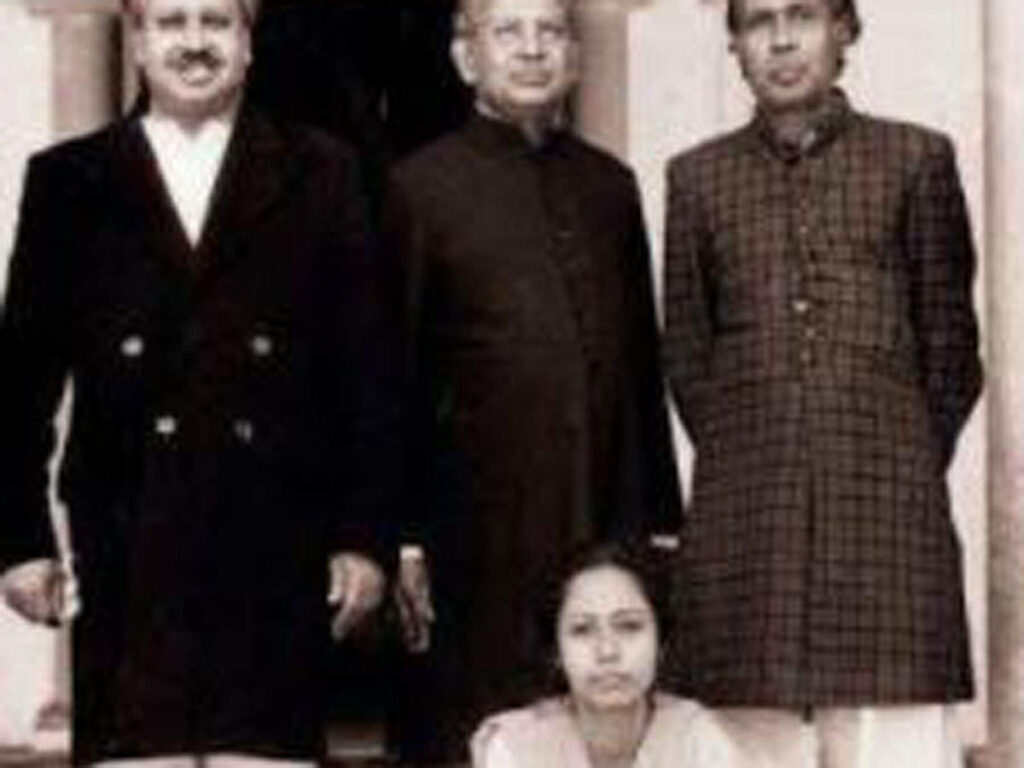
A file photo of Prince Anjum Qudr, Dr Kaukub Quder Sajjad Ali Meerza and Prince Nayyar Qudr posing for a photo with Meerza’s daughter, Manzilat Fatima, at Imambara Sibtainabadin Metiabruz, Kolkata, sometime during 1985-1986

Kolkata / Lucknow :

Kaukub Quder Sajjad Ali Meerza, the great-grandson of Awadh’s last monarch, Nawab Wajid Ali Shah, and grandson of Nawab Birjis Quder, died of Covid-19 in Kolkata on Sunday afternoon, aged 87.

Considered an authority on Wajid Ali Shah’s literary and cultural contributions, he is survived by his wife, two sons and four daughters.

Meerza may be buried on Monday at the royal burial ground(Gulshanabad Imambara), about a kilometre from the Sibtainabad Imambarah in Metiabruz, where Wajid Ali Shah rests.

A popular figure in the billiards and snooker fraternity of  the country, Quder had graduated with honours in economics from St Xavier’s College in the same batch as Amartya Sen.  He studied political science and then a three-year law course.

Subsequently, he studied Urdu at CU, won a silver medal in 1962 and also earned a UGC Junior Fellowship for research on the “Literary & Cultural Contributions of Wajid Ali Shah” in the department of Urdu at Aligarh Muslim University. In 1967, he joined the department as a lecturer and earned a doctorate for his thesis.

Kaukub Quder Sajjad Ali Meerza’s daughter, Talat Fatima, is now translating his book from Urdu to English. “His research was extremely rich. This book, published in the late 70s, has a compilation of some 42 works of Wajid Ali Shah. Some of them are in Persian,” she said, adding that her father preferred to be addressed as “Dr Kaukub Quder Sajjad Ali Meerza” instead of using the title of a prince.

It was his academic interest in his forefather that had also got Satyajit Ray to get in touch with him during the making of “Shatranj ke Khilari”.

On Ray’s birth anniversary this year, his daughter, Manzilat , had tweeted: “There are a couple of letters that were exchanged between Bawa [her father] and Satyajit Ray during the making of Shatranj Ke Khilari.” On Sunday, she spoke about how Ray  had even visited their 11 Marsden Street residence that is popularly known as ‘House of Awadh’. “Ray could have gone to anyone else for information. But he chose to get in touch with my father. In fact, he had made many attempts to meet my father but the meeting never happened. Hence, it was through correspondence that he got the information regarding Wajid Ali Shah. I feel Ray had portrayed Wajid Ali Shah in the right light. Many often claim that Wajid Ali Shah had been exiled, but that isn’t true. He had left the kingdom of his own volition. I believe my father’s information helped him give authentic information about Wajid Ali Shah,” she said.

Quder was also a great connoisseur of food. A big photograph of him along with his two brothers hangs in the rooftop restaurant opened by his daughter. “He was happy when he saw how, in my capacity, I was upholding the family name. Awadhi food was already losing its identity. He was happy I was making the effort to popularize that food,” Manzilat said.

Incidentally, he was the chief referee of first World Snooker Championship held at the Great Eastern Hotel in Kolkata in 1963-64. He had remained the chief referee of the National Billiards & Snooker Championship till it left the Palm Court of the Great Eastern Hotel in the 70s .

“It was my father who coached me to play snooker and billiards. I became the first woman participant from India to play the games at the national level,” said Manzilat.

The rolling trophy of the IBSF World Snooker Championship, the MM Baig Trophy, was designed by him. In the 70s, he had also brought out a pioneering Billiards magazine, “The Baulkline”.

According to his son, Irfan Ali Mirza, “He was the founder-secretary of The Billiards & Snooker Federation of India, The West Bengal Billiards Association and The Uttar Pradesh Billiards & Snooker Association.

Sudipta Mitra, the chief executive officer (CEO) of Peerless Hospital and a student of Meerza, describes his mentor’s demise as a “huge loss”. “A part of our cultural history is lost with his demise. He came with pneumonia and was admitted to the ICCU. Unfortunately, he passed away today afternoon due to Covid pneumonia. Jawaharlal Nehru had initiated the idea of the government of India bearing the expense of his education. He was my research guide while writing the book titled ‘Pearl by the River: Nawab Wajid Ali Shah’s Kingdom in Exile’,” Mitra said

The Peerless Hospital CEO, said according to his research, he was “the last royal pension holder”. “In 1892, the British government had created a royal pension book where only the lineage of Birjish and his wife, Mahtab Ara Begum, who was the granddaughter of Bahadur Shah Zafar, the last  Mughal Emperor of India, was recognized.

Birjish, who was the only son of Wajid Ali Shah and Begum Hazrat Mahal, was the eldest surviving son of Wajid Ali Shah when the latter died in 1887. That is why this lineage has been recognized for royal pension,” Mitra said.

source: http://www.timesofindia.indiatimes.com / The Times of India / Home> News> City News> Kolkata / by Priyanka Dasgupta and Yusra Husain / TNN / September 14th, 2020

‘Piya ka des’: 165 years on, Nawab Wajid Ali Shah’s legacy lives on in Kolkata

Awadh, UTTAR PRADESH / Kolkata, WEST BENGAL :

The nawab, who was deposed by the British, came to plead his case with Governor General Lord Charles Canning, only to be imprisoned at Fort William.

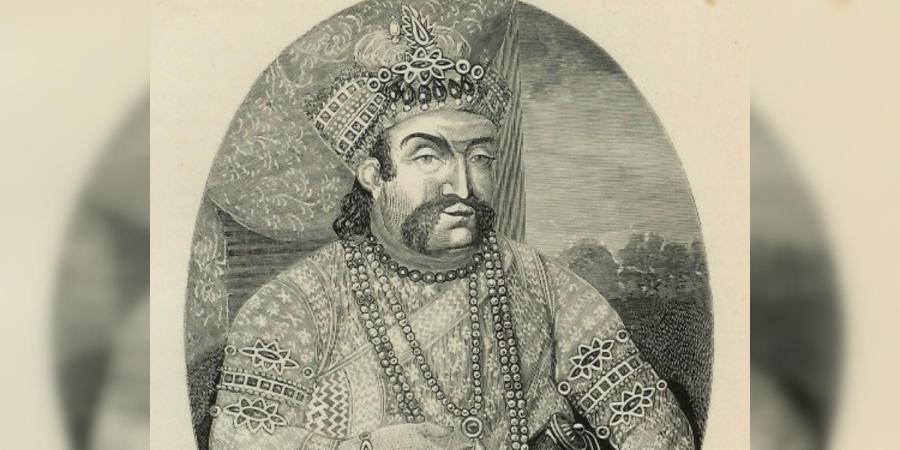
Nawab Wajid Ali Shah (Photo| Wikimedia Commons)

Kolkata :

Some 165 years ago, in the month of May, Nawab Wajid Ali Shah — the last ruler of Awadh — is believed to have written the now-famous lament “Babul Mora Naihar Chooto Jai…Mein Chali Piya ke Des” (O father, my home I leave behind…I go to my beloved’s land), as he made his way to Kolkata to live the next 31 years of his life in exile.

The nawab, who was deposed by the British, came to plead his case with Governor General Lord Charles Canning, only to be imprisoned at Fort William as the East India Company feared that he may turn into a rallying point for sepoy mutineers during the first war of Indian Independence, which broke out the very next year.

After he was freed two year later, Wajid Ali and many from his court who chose to join him in exile decided to live in his ‘Piya ke Des, gifting a legacy of music, dance, Urdu poetry, fashion and fusion cuisine to the syncretic culture of the metropolis.

“My great, great, grandfather Wajid Ali Shah, who landed here by steamer on May 13, could have chosen to live anywhere after he was freed…but he chose this city. We believe he fell in love with its culture and found remnants of his beloved Lucknow in Metiabruz or Matiaburj where he chose to settle,” said Shahenshah Mirza, 54, a civil servant and a history buff.

The nawab, over the years, built some 18 palaces and the landmark Sibtainabad Imambara in Calcutta, but his descendants live scattered as the British demolished the palazzos on one pretext or the other.

Mirza and his father, 86-year-old Sahebzada Wasif Mirza – the president of the Awadh Royal Family Association — now live in a modest though stately old house at Talbagan Lane, off Dargah Road, in the heart of the eastern metropolis.

“Just 500 of his followers came with him in 1856, but as news spread that he was building a Lucknow-like city within a city, at Metiabruz in Calcutta, many of his nobles, artisans and musicians followed and flourished here,” said Mirza.

Though much of the original mini-city which Wajid Ali built was taken over for Garden Reach shipyards, Metiabruz still exists and is now famous as a garment tailoring hub — reportedly accounting for Rs 15,000 crore worth of textile trade a year — mainly on account of the skilled tailors who came here as part of the Nawab’s entourage.

Wajid Ali, who used the pen name “Akhtarpiya” for his poetry, prose and thumris, was a known patron of arts, and with the destruction of Mughal cities in the aftermath of the 1857 revolt, Kolkata subsequently became the new cultural capital, attracting talent from all over north India.

As time progressed, Bengal’s zamindars and rich ‘bhadraloks’ (gentlemen) enthusiastically developed a taste for the Nawab’s leisure activities ‘mujra’ (music and dance soirees), kite-flying and pigeon games (kabootar baazi). “Even today some 3,000 people are engaged in the business of making kites in this city,” explained Mirza.

The nawab introduced the citys elite to Thumri, Dhrupad and Kathak. “Singers and dancers of the calibre of Bindadin Maharaj, Piyari Sahab, Gauhar Jaan, Malka Jaan, Jauhar Jaan came to settle here…Kolkata opened up to Kathak and thumris,” said well-known Shantiniketan-based musicologist Rantideb Maitra.

This, in later years, influenced the film industry and the dance and music forms became part of the pan-Indian culture.

The song ‘Babul Mora’ itself was popularised by Kolkata-based music director Rai Chand Boral when he got Kundan Lal Saigal to sing it for the movie ‘Street Singer’ in 1938, nearly 80 years after it was written.

“Kathak, though it started as a temple dance, had taken a stylised form under the Mughal patronage. When brought to Kolkata by Wajid Ali, who himself often danced as Krishna, it blossomed into a popular classical dance form,” said Shyam Banerjee, another musicologist and Urdu translator.

However, if the average Kolkatan remembers the Awadh ruler with fondness, it is because of the gastronomic legacy he left behind.

Said Manzilat Fatima, another of Wajid Ali’s descendants from his junior begum, Hazrat Mahal — who led mutineers in Lucknow and eventually escaped to Nepal — “He (Wajid Ali) tried to recreate Lucknow but with a difference…(among other things) his kitchen became an experimental centre for new dishes.”

Fatima (53), who runs the up-market restaurant Manzilat’s explained that experiments led to the inclusion of potato — then a rich man’s exotic vegetable favoured by Europeans — and eggs to Awadh’s Biryani. “New spices, coconut milk, mustard oil, all went into the making of Awadhi dishes and the result was the unique dum-pukht Kokata Biryani, now so popular all over,” she said.

The Nawab also set up a printing press in Metiabruz and came out with a weekly gazette in Urdu, adding to the literary and journalistic tradition of the city, which boasts of being the cradle to some of India’s oldest newspapers.

“We feel he was more popular in the city he chose to make his own than in Lucknow…When the legendary filmmaker, Satyajit Ray, asked my father how he saw Wajid Ali’s legacy, he had explained that it lives on, as is evident from the fact that ‘you chose to make your first Hindi movie – Shatranj ke Khilari – on a novel based on the the Awadh ruler’s life’,” added Mirza.

source: http://www.newindianexpress.com / The New Indian Express / Home> Kolkata / by PTI / May 23rd, 2021

Techie turns saviour, sets up helpline for Covid patients

As many as six graduates have volunteered to work with the MHV, attending calls and assisting the needy.

Vijayapura (Bijapur), KARNATAKA :

For representational purposes

Vijayapura :

A 33-year-old techie from Vijayapura has set up a 24X7 helpline to assist Covid-19 patients in finding beds, oxygen cylinders and medicines. Zahoor Kazi, who works as a software engineer at a private firm in Bengaluru, started ‘Mercy Helpline Vijayapura’ (MHV) on May 14 in collaboration with doctors, activists and other software engineers.

As many as 10 doctors, settled abroad (the USA, the UK and the Middle East) and in the state, have agreed to provide free tele-consultation to the patients, mainly for those in home isolation.As many as six graduates have volunteered to work with the MHV, attending calls and assisting the needy. The team has set up a helpline number — 7848025025.

The MHV works round-the-clock and, on an average, receives 30 calls each day from Vijayapura, Bagalkot and Belagavi. It also collaborates with at least five NGOs that help people by supporting them financially in paying hospital bills, supplying grocery kits, cremating unclaimed bodies of Covid victims and other help related to Covid and black fungus.

Speaking to TNIE, Zahroor Kazi, said, “Our main objective is to help the needy in such tough times. We are working in coordination with district officials. We are also creating awareness on Covid-19.” The MHV has so far helped at least 15 patients in getting oxygen beds and about 10 people in getting ventilators. Also, 10 patients have availed the free tele-consultation services.

“Most people who call us are from urban areas. We want to reach out to those in villages too as they have limited knowledge of the disease. Now, frequency of calls to MHV has reduced owing to a dip in cases,” Kazi added.

source: http://www.newindianexpress.com / The New Indian Express / Home> States> Karnataka / by Mahesh M Goudar / Express News Service / May 29th, 2021 

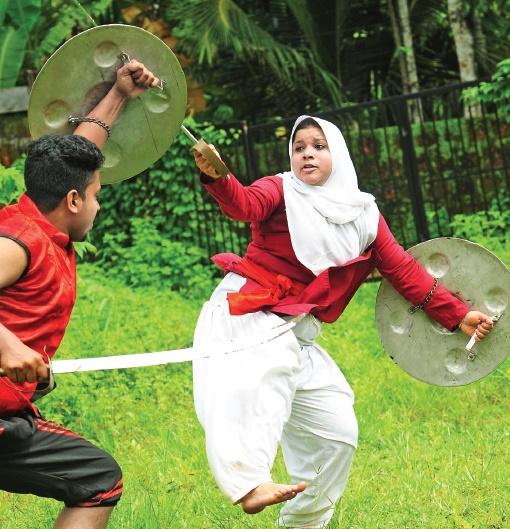
With hijab around her head, this Kerala Muslim girl has conquered Kalaripayattu

When Arifa Kodiyil, a Muslim woman started learning Kalaripayattu at the age of five, it raised many eyebrows. Now, the five-time-national champion is an example to strong women who fight their ground.

Mallapuram, KERALA :

Arifa can effortlessly handle many weapons including, Urumi, Vaal and Paricha, katara (dagger), kathi, kuntham (spear), kuruvadi (blunt wood stick) and neduvadi.

Kochi : 

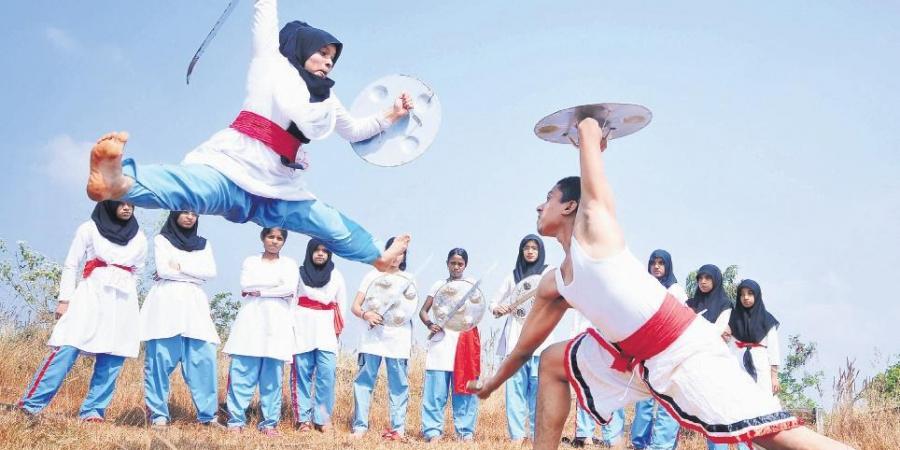
Kalaripayattu, the traditional martial art form that originated in Kerala, has always been a man’s game. But veteran Kalari trainer, Hamzathali Gurukkal brought a change to this custom when he decided to introduce his five-year-old granddaughter Arifa Kodiyil to the artform. The Malapuram-native didn’t have a good start. A Muslim girl learning Kalari did raise many eyebrows. 

Having turned 26 recently, hijab-clad Arifa slays her competitors, flashing her urumi with all might, following the footsteps of legendary warrior Arackkal Ayesha. “Growing up, I used to watch the men in my family practice and teach Kalari. I used to think everyone needed to learn Kalaripayattu. At the age of five, seeing my interest in the art form, my uppuppa decided to train me,” says Arifa. 

Road less taken
This five-time national champion was the first girl from Malapuram to master the art form. “Since I didn’t have any women to practice with, my brother Ashif used to spar with me. At most competitions too, I was the only girl, or rather, the only Muslim who represented Malapuram back in the day,” says Arifa. 

After the demise of Gurukkal Hamzathali, his son K M Haneefa Gurukkal runs the Hamzathali Gurukkal Smaraka Kalari. “When Arifa was introduced to Kalari lessons, many people from the community asked us to not let her perform on stage, that Kalari is not ideal for a woman to practice. We, as a family never paid heed to those words. We always asked our kids not to get bogged down by the comments,” says Haneefa. 

The ones who pointed fingers soon clapped for the family when they realised the importance of self-defence techniques. “We are living in a time when both genders need to know how to protect themselves. More parents have started sending kids in the age of four to our centre,” adds Haneefa.


A woman’s game
Arifa believes it is essential for women to learn martial arts. “In the women-only batch, around 50 girls are being trained at the gurukulam by my father, sister Anshifa, and me,” says Arifa.

Arifa claims that if you know the right moves, a woman can use anything — bag, umbrella, pen or purse — to protect herself. “After undergoing training in ‘Drishti’ a woman will be able to intimidate an attacker or an eve teaser with just a sharp gaze,” says Arifa. 

Arifa can effortlessly handle many weapons including, Urumi, Vaal and Paricha, katara (dagger), kathi, kuntham (spear), kuruvadi (blunt wood stick) and neduvadi. Kalaripayattu trainees can wield weapons only after gaining several years of practice in Meytaari, the first step of training which focuses on grip. 

Eyes Forward
Arifa, an optometry graduate is now living with her spouse in Chekkannor, Palakkad. Her sister, 21-year-old Ashifa, manages the women’s batch. Arifa steps in during special classes and competitions. “My students bagged gold at the recent state competition held in Thiruvananthapuram. Due to Covid, classes are being now conducted online. The training for the upcoming national event is underway,” said Arifa.  

The Central Government’s decision to include Kalaripayattu in the Khelo India Youth Games will benefit many students, says Arifa “It will be a major boost to Kerala’s centuries-old art form. A few of my students have secured scholarships as well,” says Haneefa.

source: http://www.newindianexpress.com / The New Indian Express / Home> Good News / by Mahima Anna Jacob, Express News Service / May 29th, 2021

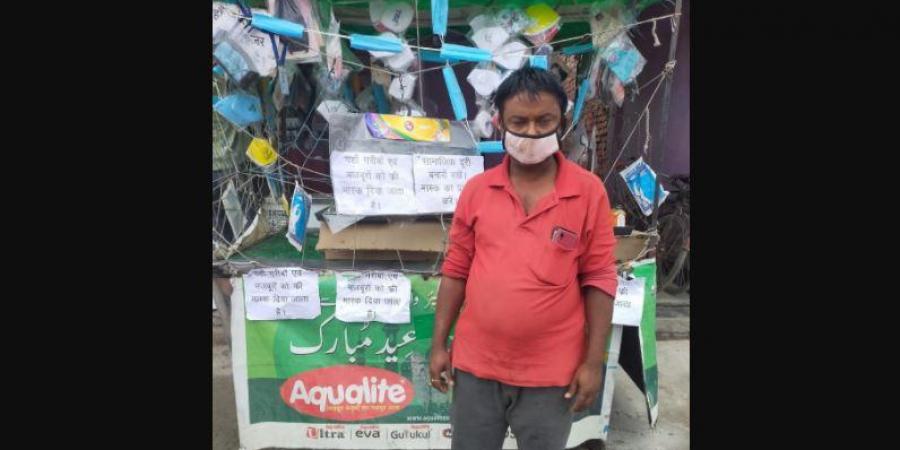
Bihar vegetable hawker turns Samaritan, distributes free masks, hand sanitizers to the poor, labourers

The 41-year-old, Akhbar Ali, distributes them from the very cart on which he sells vegetables from early morning to 10 am daily. 

Bagaha (West Champaran District) , BIHAR :

41-year-old, Bihar vegetable hawker, Akhbar Ali, istributes facemasks and hand sanitizers for free among the poor people and labourers (Photo | EPS)

Patna :

A vegetable hawker now turned humanity-server now distributes facemasks and hand sanitizers for free among the poor people and labourers at Bagaha,  in Bihar’s West Champaran district.

He was moved from within at the sight of a poor man picking up a used face mask that was dumped at a roadside.

The 41-year-old, Akhbar Ali, distributes them from the very cart on which he sells vegetables from early morning to 10 am daily. 

“I called that man and asked why he had been picking up the mask. He told me for wearing on his face as he wanted to live in this world safely from Corona. And his this line moved me so much that I decided to distribute free masks and sanitizer from my cart among the poor people and labourers”, Ali said. The next day he went to the market, bought facemasks and hand sanitizers and started roaming with the items on his hand-pulled cart across the market. 

“I used to go where the migrant labourers came to work and the poor people lived in the town daily after 11 am to evening. Wherever I see the poor people without facemasks, I offer them free of cost and advise them to wear it for safety:” he said. 

He sells masks and other Corona safety-related items to people who can afford to pay for them but gives them away for free to poor people and labourers. 

He said that 50% of the total income he earns from vending vegetables is utilised for purchasing masks and sanitizers for poor people. Ali is simply only able to write and read his name but he said: “In the earning a human-being, both the country and the poor people have equal natural share and one must dedicate the share of ‘watan’ and ‘garib’ as an act of prayer to Allah”, he said. 

He has Hindi signs on display at his cart. One saying “Yahan free masks garibo aur majduro ko milta hai’ (“Here mask free of cost is given to poor and the labourers”) and some others with messages in Hindi asking people to maintain social distancing. 

“From vegetable hawker to humanity server, Ali has become here a name among the destitute and poor people, who seek face masks from him free”, Munna Kumar, a labourer, who was given a pair mask recently said. 

Ali estimates that till date more than 10,000 masks and sanitizers from his earning have been distributed among the poor people and the labourers at Bagaha. 

“Now, I sell vegetables till 10 am and thereafter go out with cart carrying masks and sanitizers to the poor people in the town”, he said. 
 
“Wherever I saw a poor man even on a bus without mask, I run towards him with a mask to give. I will keep serving the poor people-‘garib’ (poor) and “majduro” (labourers) till the corona continues”, he said.

 He has been doing it silently with a line of Mahatma Gandhi “the greatness of humanity is not being human but is being humane’

source: http://www.newindianexpress.com / The New Indian Express / Home> Nation / by Rajesh Kumar Thakur, Express News Service / May 29th, 2021

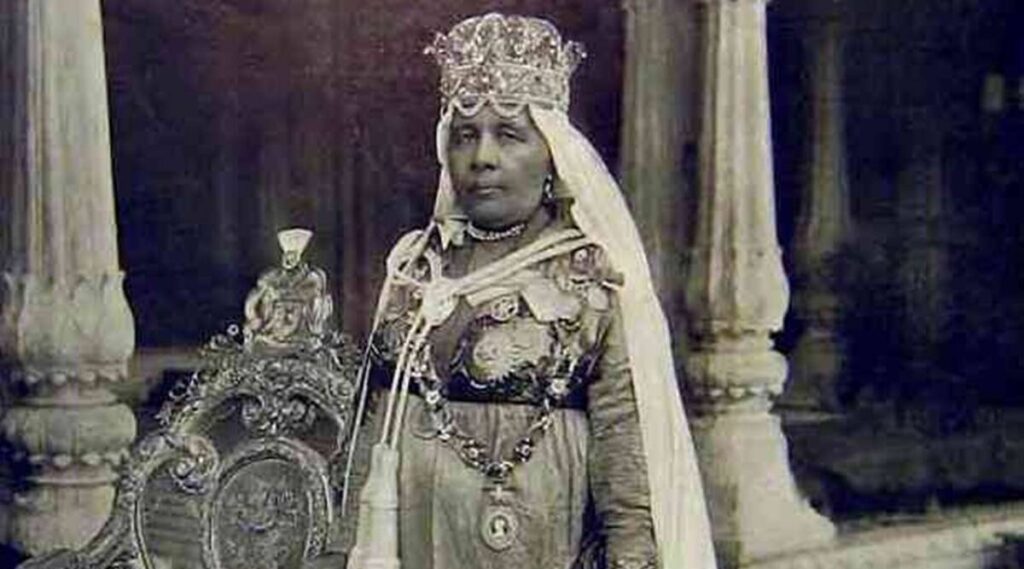
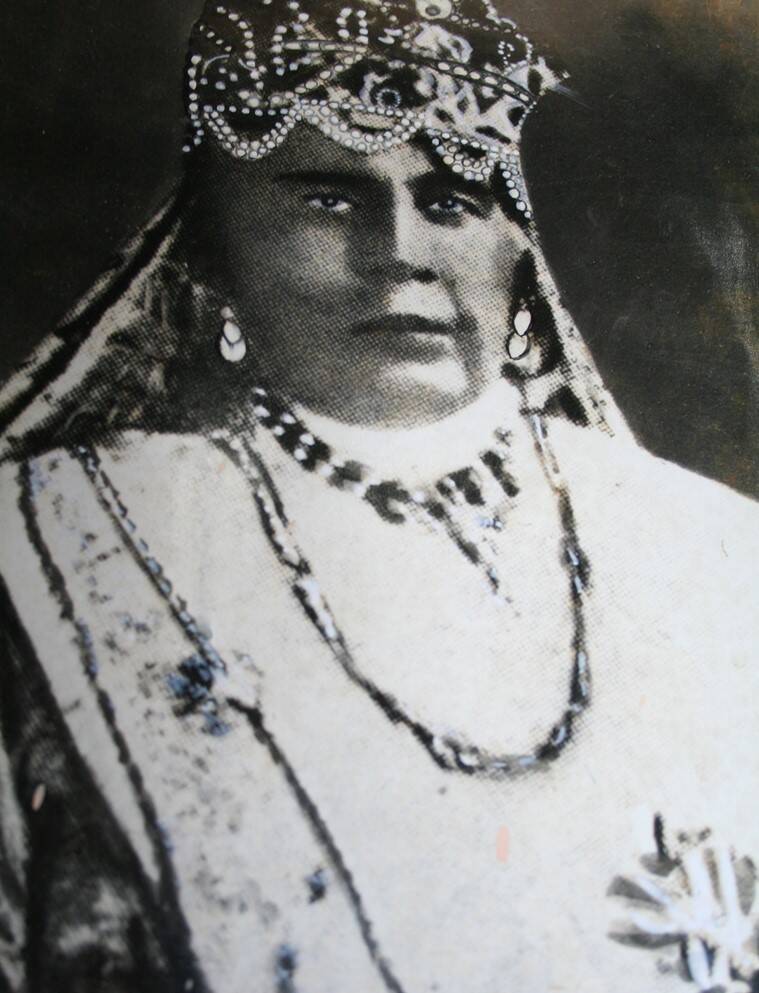
The last Begum of Bhopal: How Begum Sultan Jahan fought patriarchy and educated a generation of women

Bhopal, MADHYA PRADESH :

Born in 1858, Begum Sultan Jahan ascended the throne in 1901. While she was the fourth female ruler of Bhopal, she is credited with many firsts. She was known for ruling in the present with her eyes set on the future. Her progressive policies for women, at a time when they were shackled by the forces of patriarchy, have made her a feminist icon even today.

Begum Sultan Jahan was a pioneer in the field of education and even authored a book, Dars-e-Hayat, about the education and parenting of young girls.

Nearly a century ago, when the term feminism was not yet part of common parlance, the princely estate of Bhopal was run by a line of powerful women. In the absence of male successors, they initiated a matrilineal reign from 1819, which continued till 1926. These rulers are often referred to as the Begums of Bhopal.

During this era, they ruled with authority, dignity and bold reforms — disrupting the patriarchal system that had been laid down centuries before them.

The last Begum of Bhopal was Begum Sultan Jahan. She ruled from 1909 to 1926 after which she stepped down and was succeeded by her son.

Begum Sultan Jahan died on May 12, 1930 at the age of 71. She was known for ruling in the present with her eyes set on the future. Her progressive policies for women, at a time when they were shackled by the forces of patriarchy, have made her a feminist icon even today.

Apart from being a philanthropist and prolific writer, she was a symbol of women empowerment, known for taking up the cause of female education. She was the first female Chancellor of Aligarh Muslim University, which she had nurtured during its nascent stage, when it was still known as the Mohammadan Anglo Oriental College.

In a time when it was rare for women to venture out due to a strict purdah system, she famously constructed a Meeting Hall for Ladies in Lahore.

But above all, Begum Sultan Jahan was an astute ruler who restored the glory of her estate.

It is hard to find a female ruler who authored over 40 books, designed school curriculum, founded women’s clubs, travelled to Europe, met British officials with authority, funded almost all major institutions — both in the country as well as one in Saudi Arabia — and even headed a University as its first female Chancellor.

Interestingly, film actress Sharmila Tagore is the granddaughter-in-law of Nawab Hamid Ullah Khan, the youngest son of Begum Sultan Jahan.

Begum Sultan Jahan, the ruler of Bhopal

Born in 1858, Begum Sultan Jahan ascended the throne in 1901. While she was the fourth female ruler of Bhopal, she is credited with many firsts.

She was not one to stand on the sidelines. An incident from the early days of her regime is often cited to highlight her penchant for ruling from the front. When she took over as Queen, there was only Rs 40,000 in the treasury which was not enough to even pay the salary of her employees. Begum Sultan Jahan decided to tour her kingdom and interact with the village folk. After learning their concerns, she set up the municipality system and even introduced municipal elections.

She also constructed a walled city and a palace for herself. She took steps for improving public health, sanitation, and water supply in the walled city and implemented widespread vaccination drives for its residents.

Apart from being a philanthropist and prolific writer, she was a symbol of women empowerment, known for taking up the cause of female education.

Recognising that women needed a space exclusively for them to assemble and discuss ideas, she laid the foundation stone for a meeting hall in Lahore in 1913.

To encourage women and promote handicrafts, she organised an exhibition called ‘Numaish Masunuaat e Hind’ in Bhopal, where she displayed her own creations. Queens from other kingdoms, such as Gwalior, Jhanjhar, Sultanpur, Narsinghgarh and Gulburgah also participated and displayed their handiwork.

Begum Sultan Jahan as an educationist

She was a pioneer in the field of education and even authored a book, Dars-e-Hayat, about the education and parenting of young girls. There was a time when almost every city of the country had one or more educational institutes for girls which were funded by Begum Sultan Jahan.

To encourage parents to educate their daughters, she set up several schools. However, most initially resisted the idea, as at the time it was considered socially acceptable to teach their daughters at home.

Undeterred, she started the Sultania School and also improved the condition of two existing schools — Madarsa Bilqisia and Madarsa Victoria. She even revamped the syllabus and added subjects such as English, Urdu, Arithmetic, Home Science and crafts. These schools were meant for underprivileged children and hence their expenses were borne by the Bhopal estate. Even in those times, she got the Madarsa Sultania affiliated to the Allahabad Board. This Madarsa was well equipped and even had an ambulance and sections for medicine and nursing. Later she also started a nursing school called Lady Minto Nursing School.

Begum Sultan Jahan did not solely focus on uplifting Muslim girls. She famously founded the Barjeesiya Kanya Paathshala’ and even instituted a scholarship for the underprivileged students of Jain Shwetambar Paathshala.

Despite being a small princely estate, Bhopal had an education budget of one lakh rupees. The educational institutions she supported were not confined to Aligarh alone. She was also funding a Madarsa in Deoband, Nadwatul Uloom in Lucknow and even Madarsa Sultania in Mecca, Saudi Arabia. Institutions such as Lady Hardinge Medical College, Delhi and some renowned colleges in Bombay (now Mumbai), and Calcutta (now Kolkata) received generous grants from her.

Begum Sultan Jahan established the Ladies Club in Bhopal with the aim of involving more women in her mission. She addressed the functions of the Ladies Club. Later, she even organised an event under the aegis of All India Women Association in Sadar Bhopal and established the Sultan Jahan Endowment Trust with a corpus of Rs three lakhs for helping needy students.

Begum Sultan Jahan also went as far as encouraging the rulers of other princely states to promote education. Even Lord Harding praised her efforts.

She authored 41 books, many of which were distributed for free. She also translated a number of English books into Urdu.

Begum Sultan Jahan and AMU

Around that time, more than 600 kilometres away from Bhopal, in the province of Uttar Pradesh, the Mohammedan Anglo Oriental College was taking shape in Aligarh.

In 1910, while returning from Mussoorie, she stayed in Aligarh for the first time. During her visit, she donated Rs 50,000 for the construction of the All India Muhammadan Educational Conference, which still exists today and is known as Sultan Jahan Manzil.

A monthly grant of Rs 100 was sanctioned by her for the girls school started in Aligarh by Sheikh Abdullah, which is now known as the Women’s College of AMU. She designed the syllabus herself and offered it to the school authorities. It was done at a time when there was a paucity of funds and women ’s education had taken a backseat. Later, when MAO College became AMU, she was named its first Chancellor.

During AMU’s centenary celebrations on December 22, 2020, Prime Minister Narendra Modi paid tribute to Begum Jahan and her contribution to the historic institution — “The AMU has the rare distinction that Begum Sultan Jahan took over the responsibility of its founder chancellor. How daunting it would have been one hundred years ago!”

In 1910, she stayed in Aligarh for the first time. During her visit, she donated Rs 50,000 for the construction of the All India Muhammadan Educational Conference, which still exists today and is known as Sultan Jahan Manzil.

As Chancellor of the AMU, she addressed its first-ever convocation ceremony in 1922 amidst renowned scholars from across the country. She also arranged cars and lodging for 175 persons during the jubilee ceremony of the University. Begum Sultan Jahan visited Aligarh seven times, with her last visit being in 1929.

Her speech during the foundation stone laying ceremony of Sultania Boarding House in Women’s College reflects her vision. She said, “Today is the beginning of a new era in the history of Muslims. And, whenever, in the coming time, the history of this era is recorded, today’s programme will be remembered as one of its brightest chapters.”

Her prophecy came true. The school patronised by Begum Sultan Jahan has grown into a college drawing over 3,095 female students from across the country and overseas enrolled in 34 courses taught by 107 faculty members.

The women’s college attracts international students from more than 20 countries including, Afghanistan, Malaysia, Turkey, Thailand, Indonesia, Iran, UAE, Iraq, Yemen, Bangladesh, Libya, Nepal, Syria among others.

The Nasrullah Hostel for Boys in AMU, too, was constructed with her support. It is often said that whenever AMU needed help, Begum Sultan Jahan of Bhopal Estate was among the first to step up.

Following in her footsteps, her son Hamidullah Khan, who studied in Aligarh, founded a Science College in the city, and donated Rs two lakh to it.

(Nasir is Assistant Professor, Department of Law, Aligarh Muslim University; Fareed is Media Advisor, AMU)

source: http://www.indianexpress.com / The Indian Express / Home> Lifestyle> Art & Culture / by Faisal Fareed & Mohammad Nasir (Aligarh, UP) / May 27th, 2021

Kerala ambulance staff praised for saving lives of mother and newborn

KERALA :

Health Minister Veena George applauded the efforts of Ajeesh and Noufal in the middle of a raging pandemic, terming them a model for the state’s health department.

At 2:15 am, under the duo’s guidance, Kausalya gave birth to a boy inside the car without any major complications. (Photo Credit: Kerala health department)

An emergency medical technician (EMT) and an ambulance pilot came in for praise from Kerala Health Minister Veena George for their timely intervention in assisting a pregnant woman deliver her child in a car enroute the hospital.

Around 1:55 am on Tuesday, the family of Kausalya (20), a resident of Koviloor in Idukki district, set out for a hospital in a car after she developed intense labour pain. On the way, they requested for an ambulance of the Kanivu 108 network and a vehicle from the Vattavada Family Health centre with EMT BS Ajeesh and pilot Noufal Khan rushed out.

Somewhere near the Pampadum Shola National Park, the ambulance staff met Kausalya and her family. But by then, her condition had turned critical. When Ajeesh examined her, it became clear to him that she could not be transferred to the ambulance before delivering her child. Ajeesh, with the help of Noufal, then proceeded to make arrangements inside the car for childbirth.

At 2:15 am, under the duo’s guidance, Kausalya gave birth to a boy inside the car without any major complications. The mother and newborn were then transferred to the ambulance and ferried to High Range Hospital in Munnar and subsequently a private hospital in Adimali. Both mother and child are reported to be healthy.

Health Minister Veena George applauded the efforts of Ajeesh and Noufal in the middle of a raging pandemic , terming them a model for the state’s health department.

source: http://www.indianexpress.com / The Indian Express / Home> India>Kerala / by Express Web Desk, Kochi / May 25th, 2021