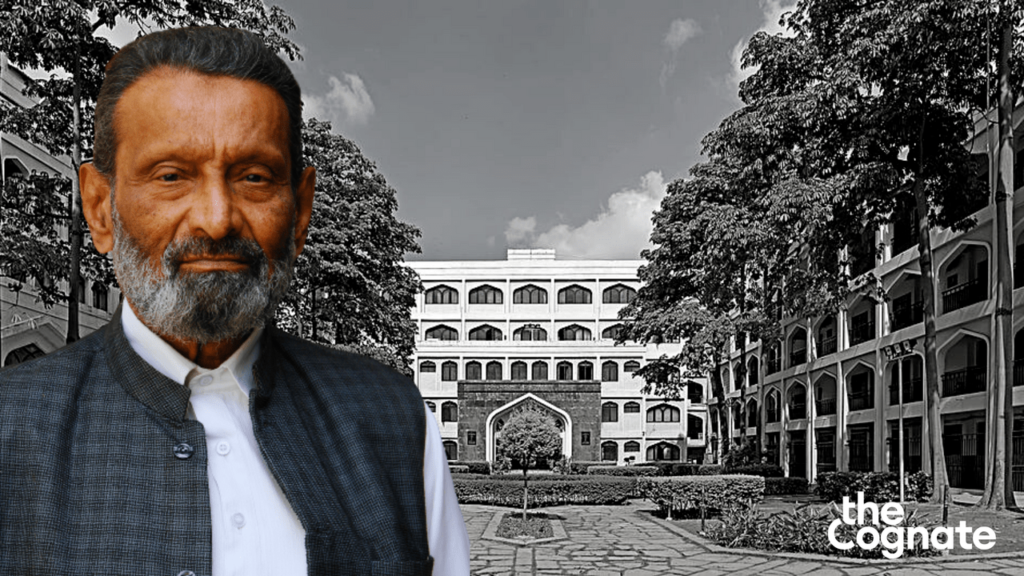
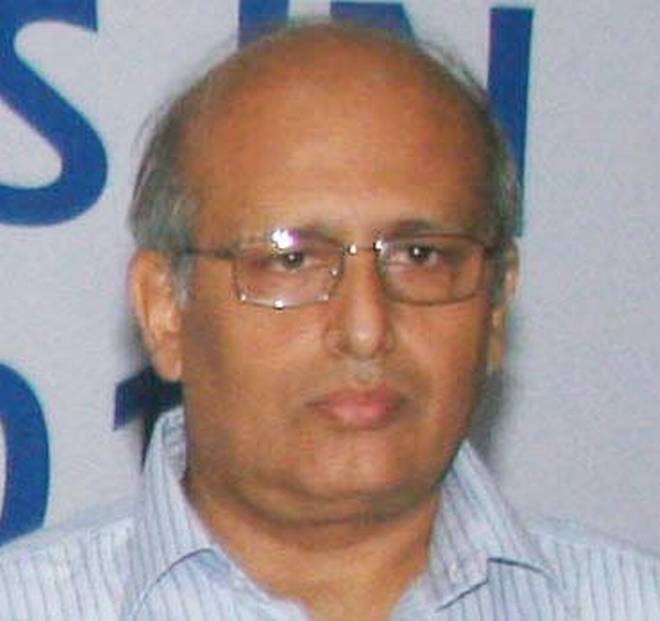
Renowned educationist, founder of Al-Ameen Educational Society and Daily Salar newspaper, and former Pro-Chancellor of Aligarh Muslim University, Dr Mumtaz Ahmed Khan passed away Thursday evening in Bengaluru. He is survived by his wife, one son, and two daughters. He was 86.
Widely referred to as ‘Baba-e-Taalim’, Dr Mumtaz Ahmed Khan founded the Al-Ameen Educational Society in 1966. The Al-Ameen group of Institutions now number more than 200 in Karnataka and all over the country. In Bengaluru, the Al-Ameen institution has various colleges catering to varied streams from pre-university, degree, post-graduation Institute of Management, College of Pharmacy, and Law College to the Al-Ameen College of Education.
Born on 6 September 1935 in Trichy in Tamil Nadu, Dr Khan did his MBBS at Madras University, Chennai in 1963. After getting married he continued his postgraduate studies, M.S. specializing in surgery at Stanley Medical College, Chennai. He moved to Bengaluru in 1965.
In 1966 at the age of 31, he started the Al-Ameen Educational Society also sometimes referred to as the Al-Ameen Movement, which was a pioneering effort to impart education, especially within the state’s Muslim community.
Dr Khan was one of the founders, trustees of ‘Salar’, an Urdu daily newspaper from Bengaluru since 1964; he was also Pro-Chancellor/Treasurer of Aligarh Muslim University.
He is a recipient of several awards like Karnataka Rajyothsava award (1990), Kempegowda Award, Junior Jayees Award and Public Relation Society of India Award.
‘Dr Mumtaz Ahmed Khan Award’ given every year in recognition of exemplary services by members of the community is named after him.
source: http://www.thecognate.com / The Cognate / Home> News / by Shaik Zakeer Hussain / May 28th, 2021
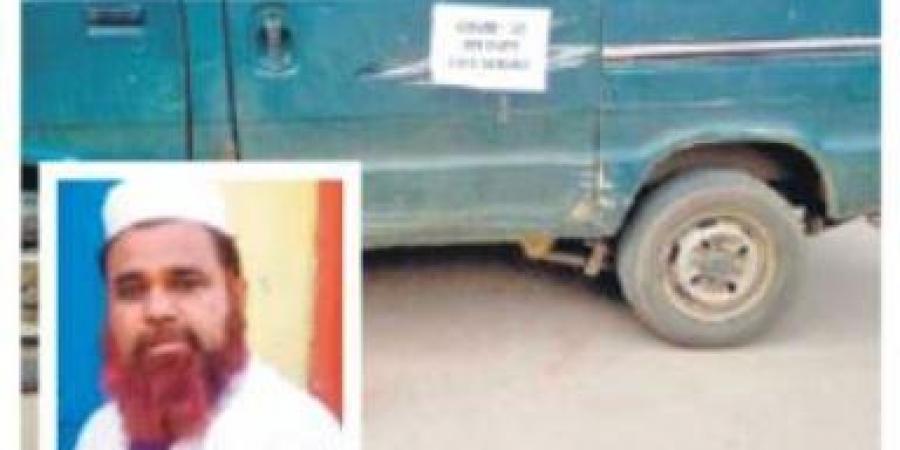
Milan Rafiq, who runs an old furniture shop in Hiriyur town, is not allowed to park his Maruti Omni in front of his house, and neither do his neighbours visit him.
Milan Rafiq (inset) and the vehicle he uses to ferry bodies of Covid victims
Chitradurga :
Milan Rafiq, who runs an old furniture shop in Hiriyur town, is not allowed to park his Maruti Omni in front of his house, and neither do his neighbours visit him.
For he has converted his Omni into a hearse, and ferries bodies of Covid patients to graveyards and crematoriums. He also completes the last rites, and has cremated and buried more than 200 bodies, of which around 80 were of Covid patients. His aim is to give people a final dignified departure, surprising at a time when friends and families are known to abandon both the living and dead.
“Covid has killed humanity. People are not ready to take care of their near and dear ones, including ailing parents on their deathbeds,” said Rafiq. He saw disowned bodies lying in the mortuary of Hiriyur Taluk Hospital, and it disturbed him so much that he decided to take on the last duties himself, irrespective of caste, creed and religion. He doesn’t charge any money, only accepting whatever is given to him, which he uses for the next burial or cremation.
“Before taking the body, I ask the family to get the grave dug, so we can bury the body and close the grave. On an average, I cremate two bodies every day. On Sunday, I cremated four bodies in Chitradurga and Hiriyur,” Rafiq told The New Indian Express.
His has carried out cremations in Chitradurga, Bengaluru and Kolar districts, ferrying bodies from Bengaluru to Kolar, and Madhugiri in Tumakuru. At a time when ambulances charge exorbitant rates, Rafiq just asks where the body should be ferried and sets out in his Omni. The cost of petrol and repairs is met by his group of friends, standing solidly behind him ever since he took up these humanitarian duties.
“I am also using my fixed deposit, I cannot ask families for money when they are in pain. It would be a sin,” he said.
Rafiq’s wife Shahtaj Begum, son Mohammed Zubair and son-in-law Mohammed Ali support him and even help him with the last rites. They wear masks and PPE kits, and sanitise the Omni after work is done. He cites a recent ordeal where there was no one to give them even a glass of water.
“My son, son-in-law, and I conducted the last rites and drank water only after returning to Hiriyur,” he said. Rafiq freely gives his number — 7259859407 — for anytime, anywhere burials and cremations.
source: http://www.newindianexpress.com / The New Indian Express / Home> Good News / by G Subhash Chandra, Express News Service / May 25th, 2021
The first plant is expected to be up and running in Hyderabad next month,” Prof Amirullah Khan, coordinator of Sahayata Trust informed. — IANS
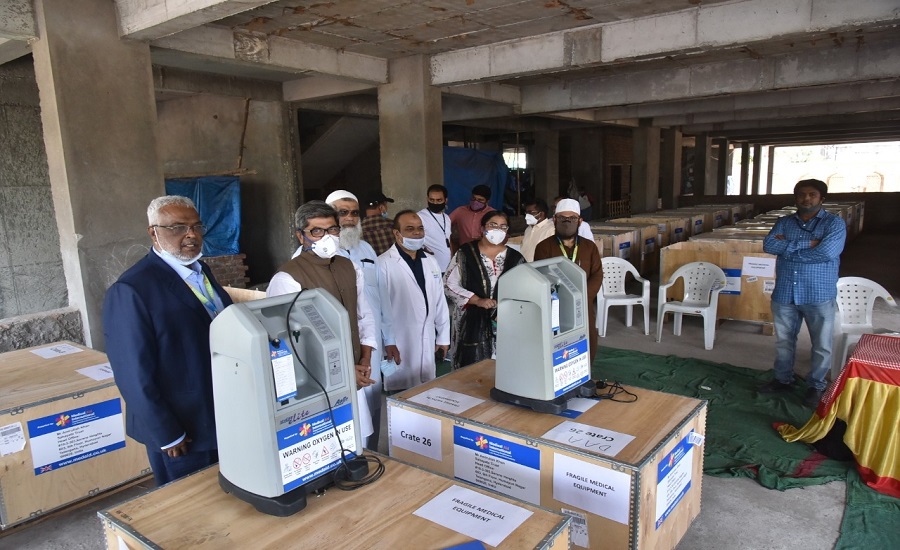
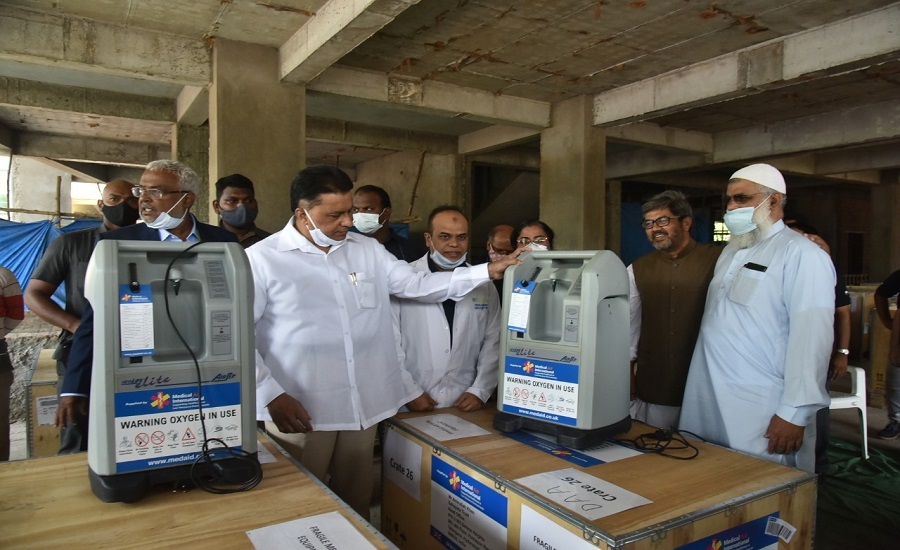
The NGO is also receiving 400 high quality oxygen concentrators from different charities in the United Kingdom and the United States which is described as the world’s largest donation of oxygen concentrators.
Hyderabad :
Sahayata Trust, a Hyderabad-based NGO, plans to set up four medical oxygen generation plants to cater to the requirements of hospitals treating Covid patients.
Each plant will have a capacity of 4,500 litres per day and will come up at a cost of Rs 1 crore each. Two plants will come up in Hyderabad and one in Gujarat. The NGO is yet to decide on the location for the fourth plant.
“The first plant is expected to be up and running in Hyderabad next month,” Prof Amirullah Khan, coordinator of Sahayata Trust, told IANS on Monday.
The development economist said the NGO would be importing the plants. He said these plants would meet the requirements of various hospitals treating Covid or other critically ill patients.
He pointed out that the NGO is also receiving 400 high quality oxygen concentrators from different charities in the United Kingdom and the United States. He described it as the world’s largest donation of oxygen concentrators.
The devices will be allocated on a per-need basis to different NGOs across Hyderabad, Lucknow, Allahabad, Delhi, Ranchi, Bhopal and other cities. — IANS
The first consignment comprising 170 devices arrived in Hyderabad from the UK by a special flight of Qatar Airways on Friday. The second consignment of 270 concentrators is scheduled to arrive next week.
Sahayata Trust has started distributing concentrators to different healthcare organisations in Telangana and other states. “The relief effort will add oxygen to the efforts of NGOs scrambling to procure oxygen to save as many lives as they can,” said Sahayata Trust CEO Syed Aneesuddin.
The devices will be allocated on a per-need basis to different NGOs across Hyderabad, Lucknow, Allahabad, Delhi, Ranchi, Bhopal and other cities. The organisation included Access Foundation, Safa Baitul Maal and SDIF.
Different NGOS across international borders have joined hands for the noble cause at a time when several lives are being lost across India due to shortage of oxygen cylinders and oxygen concentrators during the second wave of Covid-19.
Donation of concentrators is a meticulously coordinated relief effort by UK-based charities managed by the Indian diaspora including Maahir Charity, Deccan Medical College Alumni Association, and Medical Aid in coordination with the US-based Indian Muslim Relief & Charities (IMRC), the parent body of Sahayata Trust.
Syed Aneesuddin thanked Hyderabad Member of Parliament Asaduddin Owaisi who played an important role in helping the consignment reach India within a short span of time.
“These are high quality oxygen concentrators with dual outflow of oxygen enabling two patients to use the same machine at a time. We are training people to use the device using the device manuals received from England. This is a daunting task to coordinate the allocation as well as train and equip the personnel to handle the device in a very short time, especially since every passing minute increases danger of loss of life for people struggling to find oxygen support,” said Amirullah Khan.
India needs about one lakh oxygen concentrators. “The government has been able to import only 1000 from the USA, which means there is a deficit of 99%. In such savaging times, the import of 400 units is a small but significant effort in saving more lives”, said former civil servant Prof Amirullah Khan.
He thanked the state and central governments for waiving the import duty on the equipment. He also thanked Chief Secretary Somesh Kumar for taking up the matter on an urgent basis and Commissioner Commercial Taxes Neetu Prasad who went out of the way working late at night to grant ‘real-time approval’. Due to her personal interest in expediting the process, the consignment was ready for pickup within three hours after arrival. — IANS
source: http://www.clarionindia.net / Clarion India / Home> Editor’s Pick> India / by IANS / May 24th, 2021
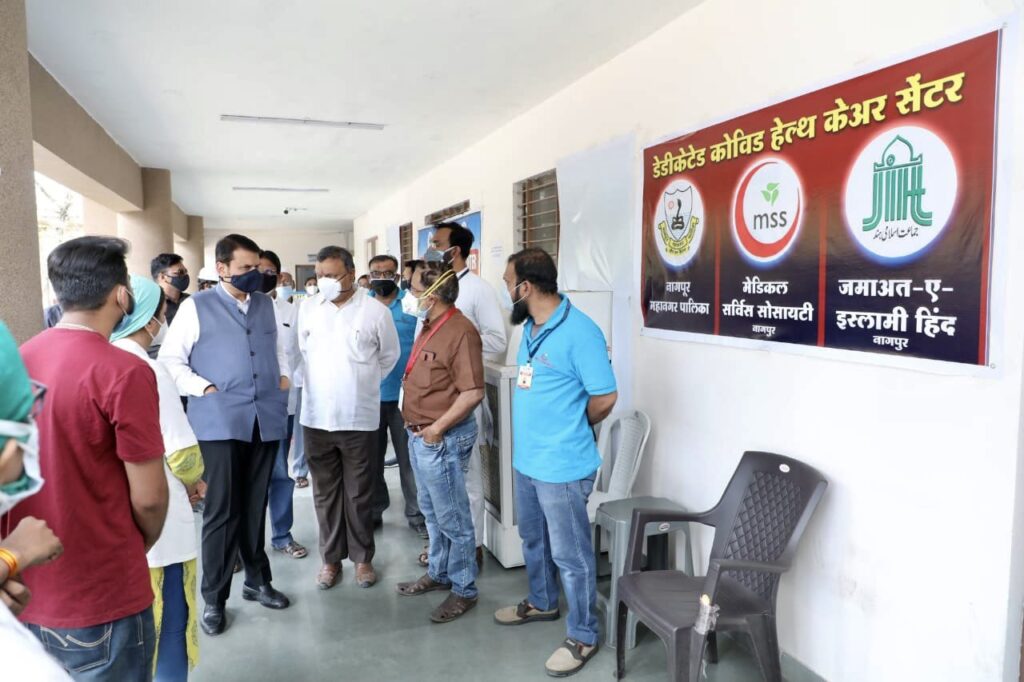
Former Chief Minister of Maharashtra Devendra Fadnavis visited the Dedicated Covid Health Center and commended the people associated with it.
The successful experience has encouraged the organisers to plan a full-fledged hospital after the pandemic is over.
New Delhi :
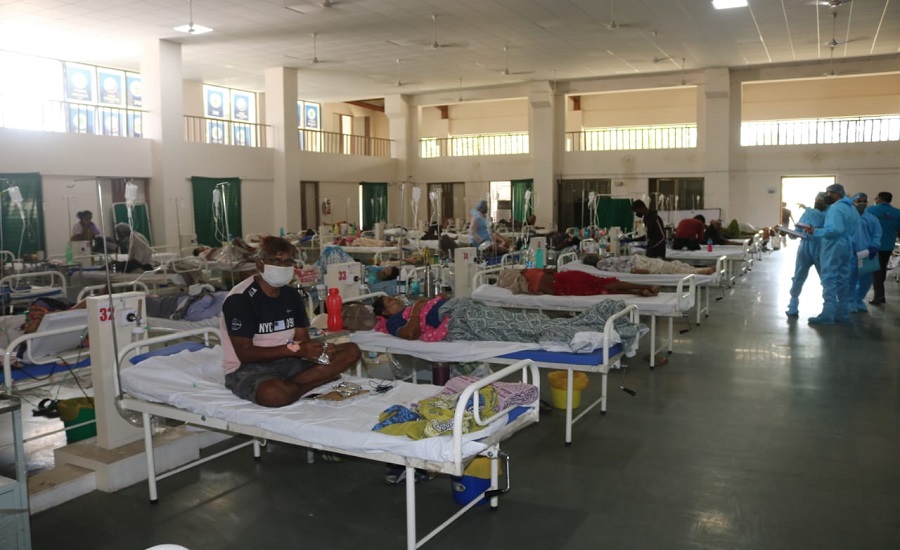
A Dedicated Covid Health Center being run by Jamaat-e-Islami Hind in Maharashtra’s Nagpur city for the last 50 days has treated up to 500 patients, say the organisers of the Centre. The 78-bed Centre or hospital is today a boon not only for the people of the city but the entire Vidarbha region as well as neighbouring Madhya Pradesh and Chattisgarh as Nagpur shares borders with the two states and serves as regional hub of medical services.
When this hospital was launched on April 1, Maharashtra was reeling under the second wave of coronavirus pandemic. Nagpur was the worst-hit in the state. Every day 8,000 new positive cases were being reported here while the health services had totally collapsed. The hospital came as a big relief as it started offering free service with dedicated staff and volunteers.
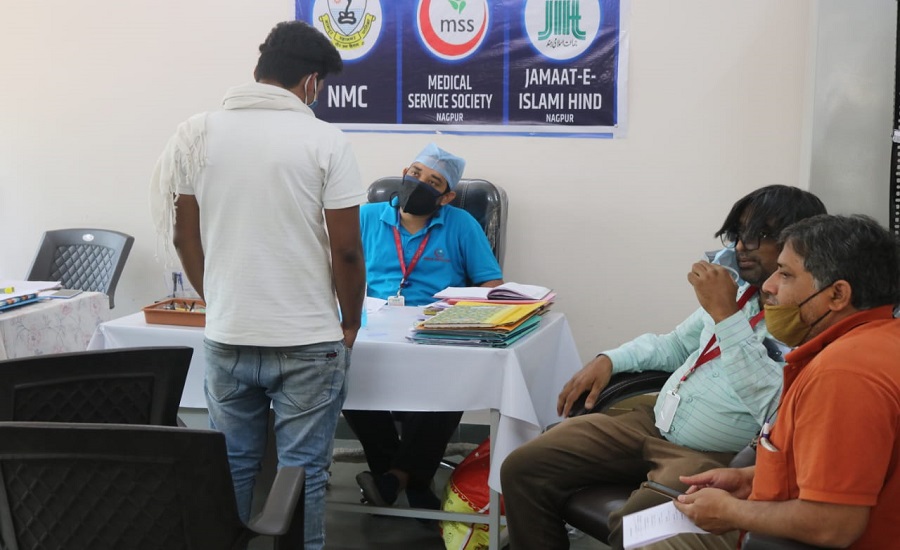
The hospital is run from a building owned by the NMC. “The building was lying unused. The NMC wanted to launch a Covid hospital but they were unable to do it. We offered our services, to which they agreed. So it’s a joint venture of the Jamaat as well as NMC. MSF, or Medical Service Society, an NGO run by the Jamaat, is the third partner,” Dr. Anwar Siddiqui told Clarion India over the phone from Nagpur. Siddiqui is in-charge of the hospital and heads the Jamaat-e-Islami in Nagpur.
The hospital was launched on April 1.
The Jamaat is bearing all the cost of running the hospital. The NMC has provided just three doctors. Rest of the 14 doctors and a host of nurses and other staff have been arranged by the Jamaat. According to Siddiqui, four doctors, including himself, are giving free service while the rest of the doctors and workers have been hired.
The hospital has been receiving mostly chronic cases. It’s notable that during the last 50 days just eight patients have died here. Rest of the patients have been discharged after treatment. “Our recovery rate is best among all the Covid centres of NMC. The Commissioner of Nagpur appreciated us saying that even after observing Ramzan fast you people are giving your services so diligently,” Siddiqui said.
The commissioner is not alone in acknowledging the dedication of people running the facility. Former Chief Minister of Maharashtra Devendra Fadnavis was among a host of dignitaries who visited the hospital and commended the people associated with it. He said in a tweet, “Today our society needs such people and organisations who understand the pain and grief of people and who try to overcome their problems. We are glad to know that the Jamaat has come forward for this work and is trying to help out during this huge pandemic”.
Other notable dignitaries who have visited the hospital are state’s health minister Rajesh Tope, state unit president of Congress Party Nana Patole, Mayor of NMC Dayashankar Tiwari and local MLA.
The 78-bed Centre or hospital is today a boon not only for the people of the city but the entire Vidarbha region as well as neighbouring Madhya Pradesh and Chattisgarh.
Initiatives like this are a sending positive message about the Muslim community which of late has been at the receiving end given the communally surcharged atmosphere created by vested interests. National media, especially Hindi newspapers and TV channels, have given good coverage to the hospital.
Siddiqui said the hospital has drawn the attention of one and all. “A number of individuals and voluntary organisations run by non-Muslims are coming to us with donations and items like face masks, sanitisers and oxygen cylinders.”
The management committee of Nagpur’s Jama Masjid has declared that the weekly Friday collections at the mosque will be sent to the hospital as long as this facility continues.
The hospital has been launched with three months’ planning. That means it will run until the end of June. Siddiqui said his team is ready to extend it for three more months if need arises. Health experts are warning that a third wave of Covid is imminent. However, right now new cases are coming down. For the last five to six days, the hospital is receiving less number of patients. “For the first 45 days all the 78 beds were fully occupied. Now our occupancy is between 60 and 65,” he said.
While hospitals and clinics elsewhere faced shortage of oxygen cylinders, the Jamaat faced no such crisis. “We had bought 100 cylinders soon after the first wave. We were already refilling and supplying them to needy patients. Therefore, supply of oxygen to our hospital has never been an issue” he said.
The experience of running this temporary facility has made the organisers realize the need to have a regular hospital. “Once the Covid pandemic is over we will start working on a full-fledged hospital. Our community especially needs it direly,” Siddiqui said.
source: http://www.clarionindia.net / Clarion India / Home> Big Story / by Shaheen Nazar, Clarion India / May 21st, 2021
‘We got so many calls after the attack.’ ‘Loved ones told us forget all this, nothing was more valuable than our lives.’ ‘But we said, ‘No, this wasn’t the way forward — the people, society, the country needs us at this time.’ Dr Trupti Katdare and Dr Zakia Syed tell Archana Masih/Rediff.com their inspiring story.
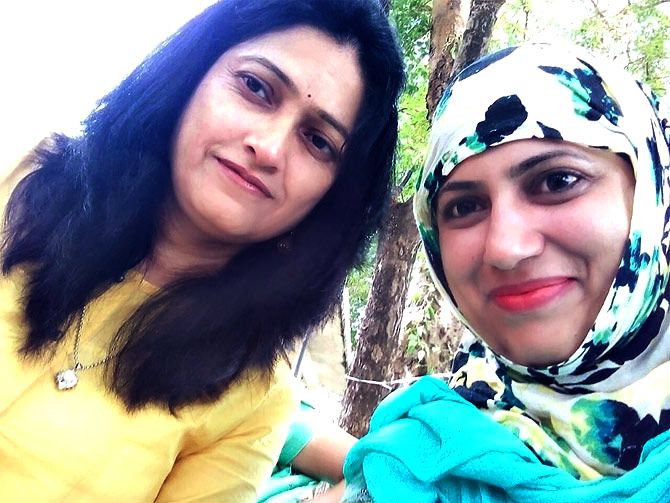
Dr Trupti Katdare, left, with Dr Zakia Syed. All images: Kind courtesy Dr Zakia Syed and Dr Trupti Katdare
Dr Zakia Syed and Dr Trupti Katdare first met during their induction as young doctors nine years ago. The training for their appointments as doctors in the government-run public health centre in rural Madhya Pradesh lasted for a month, but they ended up with an everlasting friendship.
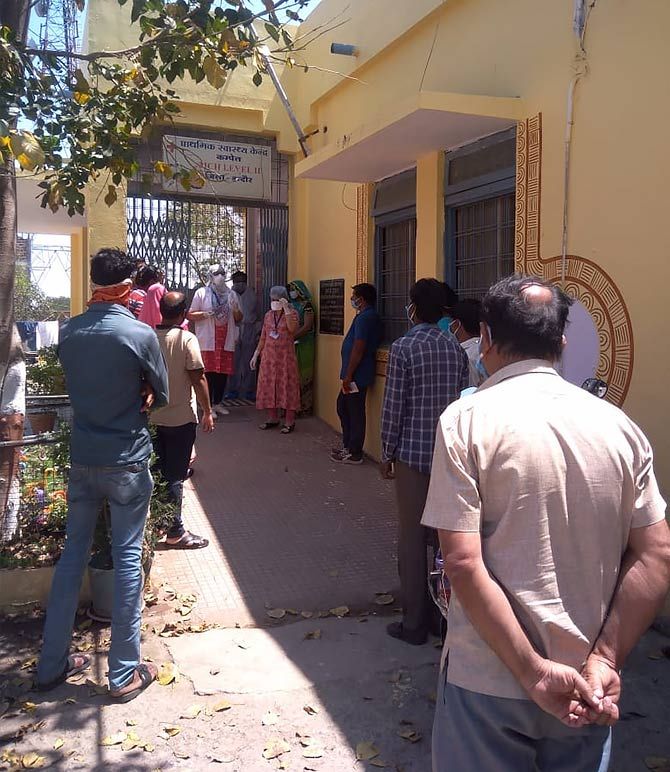
“We are besties till death,” says Dr Trupti, chief medical officer at the public health centre in Shipra near Indore, as she refers to Dr Zakia, who is in-charge of the primary health centre in Kampel, 40 kms away.
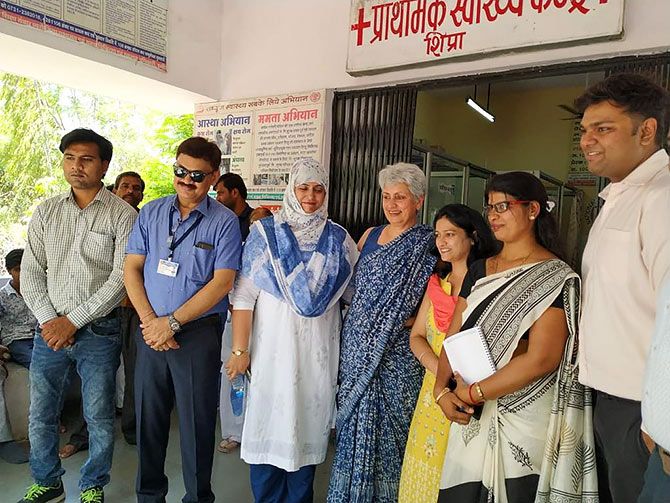
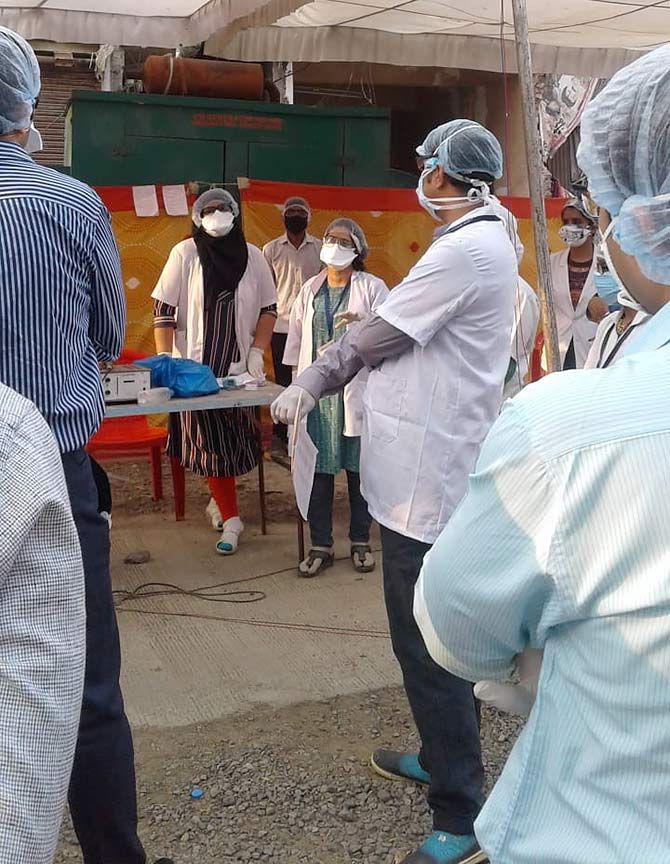
Dr Trupti Katdare and Dr Zakia Syed with other doctors and team members at the Shipra primary health centre.
For the past six weeks, the two doctor friends have been working together at the frontline of the battle against COVID-19 in Indore. They have left their families and moved into a hotel to protect their loved ones from the infection. Dr Trupti is especially concerned about her in-laws who have diabetes and asthma.
When she wanted to wish her husband on his birthday on April 29, they went to her home and wished him from outside.
Dr Zakia last saw her husband and children aged 5 and 9 two weeks ago. She stood outside the gate of her home and had a cup of tea as her son and daughter kept asking her, ‘Mama, when will you come home?’
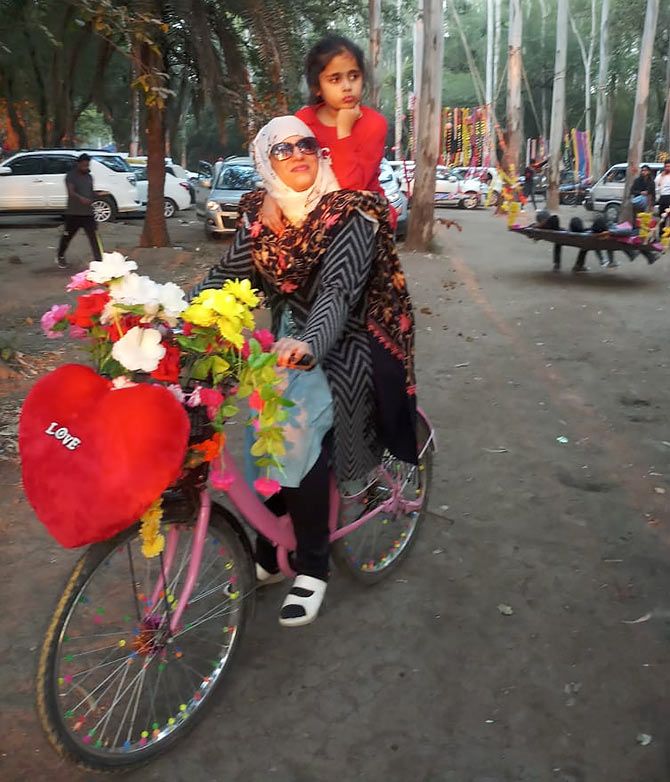
Dr Zakia Syed with her daughter
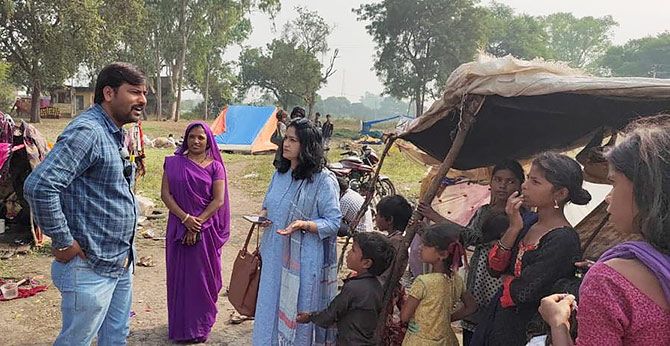
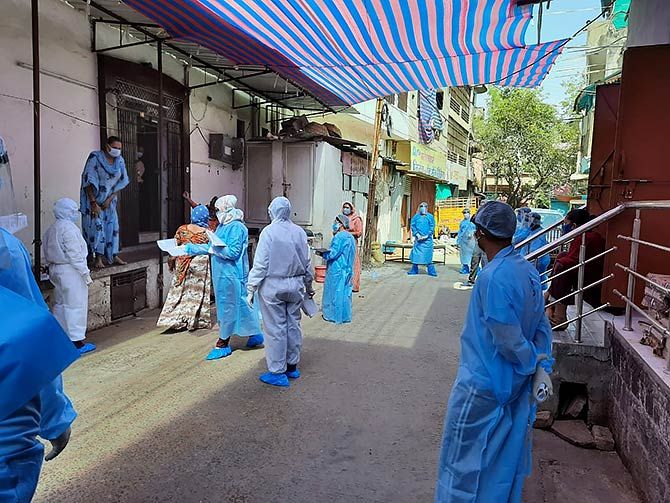
Every morning, the two friends accompanied by paramedics and government staff, set out, criss-crossing the lanes and by-lanes of a large area which falls under three police stations. They deal with positive cases, identify contacts, treat symptomatic cases, get samples collected, send high-risk individuals to quarantine centres and positive patients to a treatment facility.
They have identified 160 positive cases so far and screen around 200 people every day.
Last month, an incident they encountered became one of the triggers for a new law that will protect doctors from acts of violence
Dr Zakia Syed and Dr Trupti Katdare.
Doctors Zakia and Trupti were attacked by a mob while talking to the mother of a man who later tested positive. They were told that the man was not home. He was apprehended by the police two days later.
“We asked for his mobile number and said he should not be moving around in the first place,” remembers Dr Trupti.
This was the third consecutive day in that specific locality and they had never encountered any problem before.
The doctors with their team members.
” Suddenly there was a crowd screaming ‘maro maro‘ running towards us. They started throwing stones. The sub divisional magistrate quickly brought the car in front of us to shield us from the stones. I almost fell. Dr Zakia said she will confront and explain to them. I told her the hostile crowd was in no mood to see reason and pulled her into car. As we drove, the mob was running behind us, hurling stones,” remembers Dr Trupti, over the phone at the end of a 10-hour shift.
“It was very scary.”
“We sustained some blunt injuries where the stones struck us. We were shocked. Shaken,” adds Dr Zakia, the first one in her family to become a doctor, fulfilling the dream of her father who worked in the quality control department at the National Textile Corporation before it shut down. At one time, Indore was known for its three big textile mills.
The doctors filed an FIR. Thirteen people were arrested and the National Security Act was invoked against four. The news of the attack was quickly picked up by the media within hours.
Dr Trupti Katdare out in the field.
” Our worried husbands phoned us, we got so many calls. Loved ones told us forget all this, nothing was more valuable than our lives. But we said, ‘No, this wasn’t the way forward — the people, society, the country needs us at this time,” says Dr Zakia, who wakes up at 4 am and has oats or rusk with a cup of tea as a pre-dawn meal during Ramzan.
In the evening, she breaks her fast with Dr Trupti and Dr Piyush, the third doctor in their COVID-19 response team.
They make tea in the electric kettle in the room and sit down together over tea and dry snacks.
“We said we will not surrender and went back to the same gali the next day after the attack. It was our duty, we could not leave those people until we had screened them and provided treatment,” says Dr Trupti, who attributes her commitment for public service to her father’s zeal for social work.
“They apologised and told us ‘Do not leave us. It will never happen again.’ Now the scenario has completely changed, they cooperate fully and willingly come to be screened and quarantined.”
“After the incident, if either of us had said we will not return, we may not have gone back. But we drew strength from each other and were both determined to finish what we had started,” says Dr Trupti and credits the health department heads, the district administration, family and friends for boosting their morale.
They later discovered that the attack was instigated by rumours and negative messages on social media.
Dealing with a new virus that spreads fast, the two main challenges have been to convince people that though extremely contagious, the disease is not as serious as perceived.
“80% don’t have any symptoms,” says Dr Zakia. Since they work in an area with low socio-economic indices, the second challenge is making people follow social distancing and hygiene.
“Since many are uneducated, it takes time to convince them. Also, it is not easy to make people leave their home and go to a quarantine centre for 14 days,” she explains.
The medical team conducts a survey for possible COVID-19 cases.
A few days ago, they had to screen a community of transgenders after one person tested positive. When the panic-stricken community refused to allow them entry, the doctors had to persuade them with tact, patience and kindness.
“We were able to convince them with our words and screened 50+. They were so happy with our services that they clapped, distributed sweets and sent us away with their blessings,” says Dr Zakia, giving a glimpse into the phenomenal work public health officials have been doing around the country during this emergency.
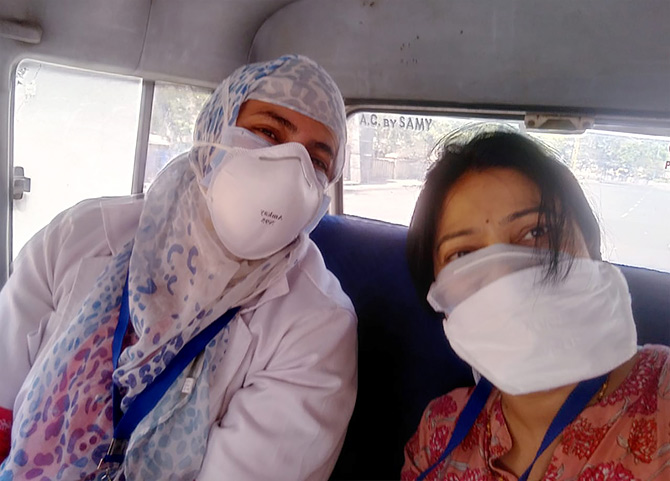
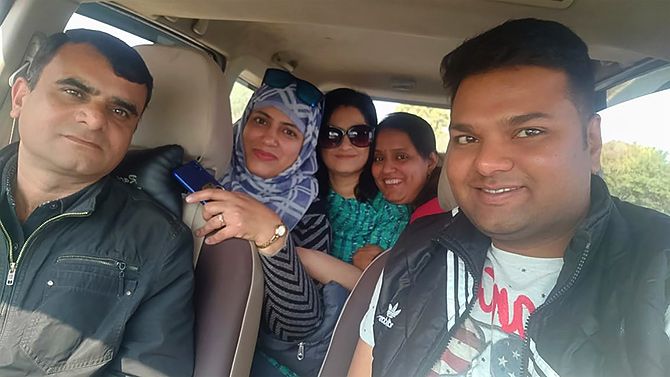
The doctors set out every morning in a car assigned to their team. In the early days, they would go without drinking water for six hours at a stretch because they would be nervous about removing their masks in an area with several positive cases, but not anymore.
“We have been in the field since March 28 and have travelled quite far in this fight against COVID-19. We are deep into it. Now that we have gained some experience, we try to protect ourselves the best we can,” says Dr Trupti.
The team at one of their consulting sessions.
They have established a protocol where they take a water break after four hours which is usually the time it takes to deal with screening, testing, contact tracing and shifting a suspected case to the hospital.
“In the summer, you sweat a lot inside the PPE kit. We try to cover the positive area in one stretch so that we can take the PPE off and eat lunch,” explains Dr Trupti.
“We don’t waste PPE because they are very precious. While screening other contacts, we use double masks, gloves and caps.”
There is no fixed time for lunch which they mostly eat inside the car.
Dr Zakia and Dr Trupti.
Observing roza has caused no problem on the field, says Dr Zakia. Roza strengthens your will power, it detoxifies both your body and soul. I haven’t felt weak and when you have your friend next to you, let me tell you, how can you feel weary?” she says with a ring in her voice that you can almost see her smile across the telephone line.
The doctors have planned a trip to Udaipur once the crisis is behind them.
They will continue their field duties throughout this month and are undaunted by the road ahead.
Dr Trupti in consultation with team members.
“Screening is crucial. It’s good that positive cases are being identified because then you can isolate, treat and prevent it from spreading,” points out Dr Trupti, who misses her primary healh centre and takes great pride that it has a 5-star ranking by UNICEF.
“I hope life returns to normal and I feel it will.”
While they battle on in the trenches, their homes are being held together by their husbands who have learnt how to cook and clean in their absence.
Dr Trupti visits her husband on his birthday on April 29.
“Papa has become both mummy and papa now,” says Dr Zakia.
“My husband keeps encouraging me. With the family by your side you can face any adverse situation,” adds Dr Trupti.
The doctors have 24 quarantine centres in their containment area and have provided their numbers to those under quarantine should they need any assistance.
When a set of people were leaving at the end of 14 days of quarantine, negative reports in hand, their team received a standing ovation.
“It gave us goose-bumps,” says Dr Trupti. “We’ve learnt never to give up. If soldiers can fight for the country, so can we.”
“Some people told us we are soldiers too,” says Dr Zakia, “In white uniforms.”
source: http://www.rediff.com / rediff.com / Home> News / by Archana Masih / May 02nd, 2020
Faiyaz Shaikh, who is in his mid 40s, lost his job in August last year, but that did not stop him from helping the poor families in Ambujwadi slum locality at Malwani in suburban Malad.
Representational Image. (Photo | ANI)
Mumbai :
Crisis brings out the best in people and a man from Mumbai has proved it as he has set up a community kitchen from his own savings for the poor migrant workers suffering due to the COVID-19-induced restrictions.
Faiyaz Shaikh, who is in his mid 40s, lost his job in August last year, but that did not stop him from helping the poor families in Ambujwadi slum locality at Malwani in suburban Malad.
Now, his community kitchen is providing food to around 500 people every day, Shaikh told PTI.
He is also providing them ration and medicines since last year, he said.
Over one lakh migrant workers live in the Ambujwadi locality and their livelihood is dependent on daily wages.
Shaikh said during the lockdown last year, he got help from some NGOs for ration and medicines, but this time, he had to manage things on his own.
“After I lost my job, I got around Rs 10 lakh from my company. I am utilising that money to offer food to the migrants through the community kitchen and also providing them medicines,” he said.
Shaikh said he came up with the idea of a community kitchen after seeing the sufferings of slum dwellers in Malwani.
“The kitchen must continue to feed the children and the needy,” he said.
He said the community kitchen has also helped in providing employment to locals and at the same time, hygiene is also maintained.
Shaikh said his wife has also been running an English medium school in the area since the last 11 years where around 350 students are enrolled.
“The fees of students was waived off for three months last year, and now for the entire year,” he said.
The locality where the school is situated comprises daily wagers and they don’t give priority to the education of their children, he said.
“If the fee waiver was not allowed, there would have been dropouts from school, endangering the future of these children,” he said.
When Cyclone Tauktae brushed past the Mumbai coast last week, strong winds blew away roofs of several houses in the slum colony.
At that time, the Shaikhs provided shelter to these families in the school and made sure they were well-fed.
Asked how he is managing his own livelihood, Shaikh said, “For the last 11 years, I have two families- my own and this slum colony. I can’t differentiate between the two. I will continue to look after both till I can manage.”
source: http://www.newindianexpress.com / The New Indian Express / Home> Cities> Mumbai / by PTI / May 25th, 2021
Noble service: Members of the foundation following COVID-19 protocol while performing last rites. GOPICHAND T.
His NGO has performed last rites of over 700 COVID-19 victims
Humanity First foundation, a Bidar-based NGO, has been performing the last rites of COVID-19 patients ever since the epidemic broke out in 2020.
Majeed Bilal, a small business owner who founded the NGO, says members have performed the last rites of over 700 bodies so far, irrespective of faith.
The rituals of different religions are followed during the final rites . The services are free, though the NGO accepts donations.
Mr. Bilal has spent a considerable amount of his own money on this service. “My family had two small plots in Bidar. I have sold them, to set up this NGO and conduct the final rites of COVID-19 victims with honour,” he told The Hindu.
He feels the stigma attached to COVID-19 is discouraging some families from attending the funerals of their loved ones.
“We mostly work around Bidar. But there haven been instances where our hearses have gone to places like Hyderabad, Kalaburagi, Humnabad, Bhalki, and Aurad to fetch the mortal remains,” he said.
At first, he converted a van that he used for his business into an ambulance and hearse. He rushed patients to hospitals and carried bodies from hospitals to the graveyards. Later, some philanthropists donated two hearses to the NGO.
“In some cases, the families pay us ₹1,000-2,000 per cremation. We use it to buy wood and kerosene. In case of burials, the city municipal corporation helps us by digging pits,” he said.
He began the last rites after an incident near his house early in 2020. “An old woman had died and even her children were afraid to go near the body. CMC personnel carried the body in an earthmover and threw it in a pit. I decided to start volunteering at conducting the last rites and some of my friends joined me,” he said.
Mr. Bilal is married with children. But for over a year he has been living in a boarding house, to avoid any chance of infecting his family members. His friends, business associates, and some family members who have been helping him have also been staying in lodges and boarding houses.
Members of the foundation follow COVID-19 protocol while performing the last rites.
“We have been routinely undergoing RT-PCR tests. I have tested myself 28 times and each time the result was negative. I would like to think that is the Almighty’s way of blessing me,” he added.
source: http://www.thehindu.com / The Hindu / Home> News> States / by Rishikesh Bahadur Desai / Belagavi – May 19th, 2021
She reaches out to people in need with Oxygen cylinders.
Shahjahanpur, UTTAR PRADESH :
A 26-year-old woman from Uttar Pradesh has earned the moniker Shahjahanpur’s ‘Cylinder Bitiya’ (cylinder daughter), for reaching out to people in need with Oxygen cylinders on her Scooty.
Arshi Ansari’s father, Mashkoor (65), fell ill on April 2, the first day of Ramzan. Tests revealed that he was COVID-19 positive. Arshi went to the city magistrate to ask for an Oxygen cylinder for him but was told that there was no such provision for patients in home isolation. The official suggested that she finds a hospital for her father.
Arshi, a resident of Madar Khel area, went to the district hospital but was appalled by its stench and dirt. She then tried a few private hospitals, but was told that they had no Oxygen and that she would have to make her own arrangements.
“I did not want to leave my father uncared for, in a hospital,” says the woman who has completed her Bachelor of Arts in English and Urdu.
Next morning, she again went to the city magistrate and pleaded for a cylinder. This time she was given one.
Meanwhile, Arshi’s appeal for a cylinder on social media had attracted response from a group of volunteers in Rudraprayag, who sent her 10 cylinders.
Though Arshi’s father took a month to get well, after the first 12 days of illness, he did not need Oxygen cylinders. Arshi then decided that she would distribute these to the needy, who could reach out to her through a WhatsApp group. Around Shahjahanpur and even to Hardoi which is 67 km away, to the neighbouring state of Uttarakhand, Arshi has carried the life-giving gas over long distances without any charge. She also gets empty cylinders filled on request.
“No one hoards a cylinder. After have no use of it, they refill it and pass it on to others in need”, she says.
Arshi started distributing Oxygen cylinders during the month of Ramzan. Yet, she says, she never felt any discomfort or hunger. “It is my belief that I got success in my work because it was Ramzan and I had Allah’s blessings”.
When she started the work, she had to face nasty comments from passers-by and cat calling by boys. “There were even filthy posts and memes made on me”, she said.
However, the woman, who runs a computer coaching institute for underprivileged children, said, “It will be so much better to give up this childish behaviour and get out of your homes to help at least one person in need. This pandemic has taught that all we have are each other”.
source: http://www.theweek.in / The Week / Home> News> India / by Puja Awasthi / May 17th, 2021
Pairaband Village (Rangpur),BENGAL (British India):
A PAST WE MUST PRESERVE | She was a pioneer of women’s education and feminist writing who started the first school for education of Muslim girls in Calcutta
Begum Rokeya, 1880-1932 / File picture
Rokeya Sakhawat Hossain, popularly known as Begum Rokeya, was a pioneer of women’s education and feminist writing who started the first school for education of Muslim girls in Calcutta. She considered education to be crucial to women’s emancipation.
She was born in 1880 at Pairaband village in Rangpur, now in Bangladesh. Her elder sister Karimunnesa, who was a poet who wrote in Bengali, was a great influence on her life. Rokeya at 18 was married to Khan Bahadur Sakhawat Hussain, who was 38 and the deputy magistrate of Bhagalpur.
A liberal man who spoke Urdu, he encouraged his young wife to continue her studies in Bengali and English and to write.
Rokeya chose to principally write in Bengali and her works uphold the equality of men and women. Matichur (1904, 1922) is a two-volume collection of her essays on her thoughts about women and society, Padmarag (1924) is about the oppression of Bengali wives and Abarodhbasini (1931) is a robust critique of the severe forms of purdah for women.
Ten years before the American novelist Charlotte P. Gilman published Herland, Begum Rokeya wrote her feminist utopia Sultana’s Dream in 1905. Written in English, it is a novella set in Ladyland, ruled by women.
A few months after her husband’s death in 1909, Begum Rokeya started Sakhawat Memorial Girls’ High School in Bhagalpur, with five students. She moved the school to Calcutta in 1911, where it is still located, but is run by the government.
In 1916, Begum Rokeya founded Anjuman-e-Khawateen-e-Islam (Islamic Women’s Association) to hold discussions on women, education and progress. She advocated change in Muslim women’s lives and spoke up against rigidity and conservatism.
She went from door to door to ask Muslim families to send their daughters to school. She was engaged till the very end of her life in ideas and activities that would lead to the empowerment of women. She passed away on December 9, 1932, shortly after presiding over a session of the Indian Women’s Conference.
Bangladesh observes Rokeya Day on her death anniversary every year.
source: http://www.telegraphindia.com / The Telegraph Online / Home> Culture> People / by Chandrima S. Bhattacharya / March 28th, 2021
Virologist Shahid Jameel. File | Photo Credit: Eswarraj R
The eminent virologist did not give any reasons for his departure
Shahid Jameel, eminent virologist and head of the advisory group to the Indian SARS-COV-2 Genomics Consortia (Insacog), resigned from his post on Friday.
Dr. Jameel confirmed to The Hindu that he’d quit but did not give any reasons for his departure.
Multiple scientists who are part of Insacog — a group of 10 laboratories across the country, tasked with tracking evolving variants of the coronavirus — told The Hindu that Dr. Jameel’s decision appeared to be sudden as he hadn’t communicated reasons for his resignation to consortium members but one of them cited “government pressure” as a potential reason.
Dr. Jameel, who is Director, Trivedi School of Biosciences at Ashoka University has been critical of aspects of the government’s handling of the pandemic.
On May 13, in an invited opinion piece for the New York Times, Dr. Jameel summarised India’s response to the multiple waves and the uneven vaccination rollout and concluded by saying “scientists were facing stubborn resistance to evidence-based policy-making. On April 30, over 800 Indian scientists appealed to the Prime Minister, demanding access to the data that could help them further study, predict and curb this virus. Decision-making based on data is yet another casualty, as the pandemic in India has spun out of control. The human cost we are enduring will leave a permanent scar.”
The Insacog, setup in December, faced initial challenges with funds and equipment but since March has considerably accelerated sequencing samples from all over the country for variants. It has been tracking international variants of concern as well as discovered the so called ‘Indian variant ‘ (B.1.617) that is believed to be instrumental in India’s devastating second wave.
source: http://www.thehindu.com / The Hindu / Home> News> National / by Jacob Kohsy / New Delhi – May 16th, 2021