Category Archives: Amazing Feats

Rebel Sultans: Tracing the origins of Malik Ambar, the hero of the Deccan who started out as an African slave

KARNATAKA / THE DECCAN :

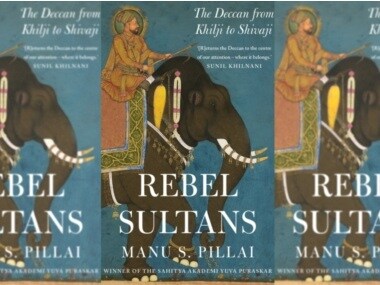
In Rebel Sultans, Manu S Pillai traces the history of the Deccan from the end of the 13th century to the dawn of the 18th, punctuated by tales of drama, betrayal and murder.
Editor’s note: The Deccan, miles away from the empire of the Mughals, was eyed with envy by rulers such as Aurangzeb, so much so that it is said to have contributed to his downfall. Its kingdoms had much to offer; in their courts were Persians and Marathas, in their ranks were African nobles, and in their treasuries were gold and fortunes.

In Rebel Sultans, Manu S Pillai traces the history of the Deccan from the end of the 13th century to the dawn of the 18th. He tells the story of the Vijayanagar empire, the court of the Bahmani kings, and the Rebel sultans — punctuated by drama, betrayal and murder. The book features characters such as Malik Ambar, Chand Bibi and Krishnadeva Raya, and is published by Juggernaut Books.

The hero of the Deccan had skin the colour of coal. Emperors snarled at him from afar, while enemies at home rattled in fear when he marched into their neighbourhoods. Many were those who despised him, but many more still were the masses who discerned in him a champion. His story was certainly unusual, though he was neither the first of his people to serve in the Deccan, nor extraordinary in his antecedents. And yet he emerged as the strongest of them all, reigning indeed as king in all but name. ‘He has a stern Roman face,’ wrote one traveller, ‘and is tall and strong of stature’ though his ‘white glassy eyes’, it was added, ‘do not become him.’ His charities were legendary, as was the valour of the men who pledged themselves to his service. When at last he died, not on the battlefield but secure in a formidable fortress, the Mughals admitted that this enemy was ‘an able man. In warfare, in command, in sound judgment, and in administration he had no rival or equal… He kept down the turbulent spirits of [the Deccan], and maintained his exalted position to the end of his life, and closed his career in honour. History,’ the obituary concludes, ‘records no other instance of an Abyssinian slave arriving at such eminence.’ It was high praise, coming as it did from the imperial court, where two generations of emperors revealed nothing but spite for the man called Malik Ambar.

The Deccan, as we know, had long attracted foreigners to its shores, offering them wealth and a future in these eastern lands. Persians arrived, as did Arabs and Central Asians. Some graduated to princely ranks, while others soared to gratifying aristocratic heights. But among the legions of men absorbed by the Bahmanis and their heirs were also Africans who came primarily from the land we now call Ethiopia. And they too would thrive in the Deccan far above the stations where they began their lives. Some were associated with tales of treachery – Mahmud Gawan’s confidant, who struck his seal on the forgery that delivered him his death warrant, was a habshi (an African) as was his executioner. When Yusuf Adil Shah died, one of the regents who ruled in the name of his son was a black man from Ethiopia – the latter was stabbed to death for displacing Westerners and favouring the Sunni faith. When years later Chand Bibi was imprisoned, her liberator who briefly stood at the forefront in Bijapur was a habshi, as was the man Ibrahim Adil Shah II rejected after eight years of living under his guard. In Ahmadnagar, during the wars of succession in the 1590s, one ruler, whose reign lasted less than a year, found himself without support from his nobles because his mother was ‘a negress’, though when Chand Bibi was besieged by the Mughals, the man who led Bijapur’s and Golconda’s troops to her rescue was also a habshi called Suhail Khan. And many years later, on the eve of the final Mughal conquest of the Deccan, in Bijapur once again would rise a habshi exercising as a short-lived vizier the full and tragic authority of power.

The habshis had almost all of them begun their careers as slaves. And there certainly was a thriving market for men from Ethiopia in the courts and demesnes of the east. Writing as early as the 14th century, Ibn Batuta reports how habshis were ‘guarantors of safety’ for ships sailing in the Indian Ocean, with such fearsome reputations that ‘let there be but one of them on a ship and it will be avoided by… pirates’. Centuries later a Portuguese missionary noted how ‘all the country of Arabia, Persia, Egypt, and Greece are full of slaves’ who made for ‘great warriors’. In India too, this was true. The favour and affection shown by Raziya Sultan in the 1230s to Jamal al-Din Yakut, an Abyssinian warrior, provoked a rebellion and contributed to her brutal murder in Delhi at the close of that decade. At the end of the 14th century, a habshi servant of the Delhi Sultans had established a near-sovereign state in Jaunpur, in present-day Uttar Pradesh, which sustained itself till 1479. Firoz Shah Bahmani in the early 15th century had habshis in his harem, while in that same century a 1487 coup by Africans in the court of the ruler of Bengal led to the rise of a short-lived ‘Habshi Dynasty’ hundreds of miles away, on the other side of the Indian subcontinent. The exquisite Siddi Saiyyed Mosque in Ahmedabad was built by a habshi in 1572, and generations later the Mughal emperor Aurangzeb would appoint the African lord of the fortress of Janjira his naval commander, allocating to him an annual grant of 400,000 rupees to maintain the imperial fleet. In the old quarter of Delhi there is even an area by the name of Phatak Habash Khan, named, evidently, after a habshi courtier who bid farewell to the Deccan, embracing the cause of the Mughal emperor.

While these are episodes that stand out, where Africans from humble origins arrived at positions of honour and power (and sometimes infamy), the beginning of their journeys on this path were never happy. The habshis were often taken as children and sold at a price to be transported abroad. Ethiopia, at the time, was called Abyssinia in the trading world, and the very word ‘habshi’ is a derivation denoting the origins of these slaves. Malik Ambar, too, emerged from this commercial exchange of human goods. Born around 1548 into the Oromo tribe, he was captured as a boy and sold to an Arab for 20 gold ducats. In Baghdad he passed, temporarily, into the hands of another owner, who then sold him to the man who would bring him to India – and to his destiny. It was this master who educated him, though by now he had renounced his name, Chapu, and converted to Islam. ‘Whether he assumed a Muslim identity at the time as an act of genuine faith or simply as a practical matter of assimilation is not known.’ But it certainly helped him in his life ahead, to share faith with the powerful kings and noblemen of the east, in whose service lay his ascent.

Around 1571, now in his early 20s, Ambar, as he was known, arrived in the Deccan where his long-time master sold him to the peshwa (chief minister) of Ahmadnagar. The sale itself was not unusual – though his master had brought him up, the ‘bottom-line was never in dispute: Ambar was property’ and not ‘an heir or son’. However, the man who had just purchased the slave must have opened Ambar’s eyes to a world of possibilities, for the peshwa was himself black and had arrived in the Deccan under similar circumstances. He would, in due course, be assassinated, but to Ambar it must have been clear that in India it was possible to rise beyond slavery and to come into great power and wealth – he himself was merely one of a thousand habshis the peshwa possessed.

Rebel Sultans by Manu S Pillai is published by Juggernaut Books

source: http://www.firstpost.com / FirstPost / Home>Living News / by Manu S Pillai / June 21st, 2018
Laptop proves a lifesaver

Muraroi (Birbhum), WEST BENGAL :

He has helped over 7,000 workers return home in Birbhum and over a lakh stranded workers get food

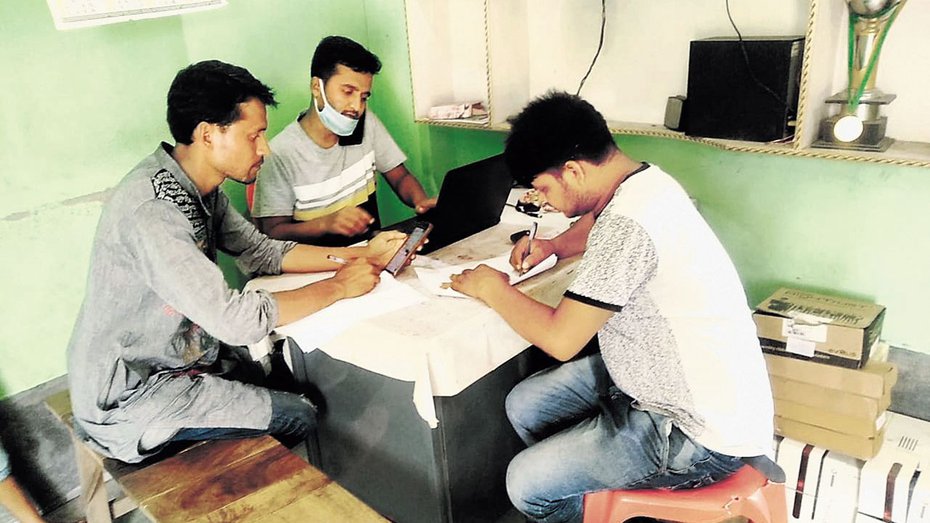
IT professional Sadekul Islam (in front of the laptop, wearing a mask) and his friends at work in Birbhum’s Muraroi / Telegraph picture

Armed with a laptop and a mobile hotspot, an IT professional from Birbhum claims to have helped over one lakh migrant workers during the Covid-19-induced lockdown.

Sadekul Islam, 28, who works in an IT firm in Calcutta, had to return home in Birbhum’s Muraroi during the lockdown.

With help from friends Mohammed Noor Alam and Nasiruddin Ansari in Muraroi, Sadekul set up a network of contacts — mainly phone numbers and email ids of government officials — on his laptop that he said helped over 7,000 workers return home in Birbhum and over a lakh stranded workers get food.

Sadekul said the idea of forming a database of officials came to him when he saw villagers thronging post offices and Aadhaar centres last year in the wake of the amended citizenship law to rectify their documents. “I thought it would be simpler if people knew whom to contact,” he said. His expanding database of officials proved helpful when Covid-19 struck.

From April, Sadekul and his friends started identifying stranded workers from their area and contacting government officials for help.

Sadekul said his contacts ranged from the “panchayat to the PMO”. “The system works,” he said. “Kerala officials were the most helpful.”

Worker Saribul Sheikh, home in Muraroi, said Sadekul arranged food for him and four others when they were “virtually starving in Chennai”.

Muraroi is located along the Birbhum-Murshidabad-Jharkhand border. Many youths work as construction labourers and masons in states such as Kerala, Maharashtra and Tamil Nadu.

“We liaised with officials in Bengal as well as in states where we knew youths from Muraroi were stranded. We gathered information on other places where youths were stranded with insufficient food and contacted officials there,” he said. “Fortunately, it worked out well for everyone.”

Minakshi Bhattacharya, a PhD research scholar from Santiniketan’s Visva-Bharati, was so impressed by Sadekul’s “ingenuity” that she contacted him this week for a study of his initiative.

Sadekul added that times had changed. “One can contact the whole world sitting at home. Only thing is one needs to know whom to call.”

source: http://www.telegraphindia.com / TheTelegraph, online edition / Home> West Bengal / by Snehamoy Chakraborty in Bolpur (Birbhum) / June 26th, 2020

Mammootty’s channel and Indian expat group offer free chartered flights from UAE to Kerala

KERALA :

First free community chartered flights benefit 395 Indians stranded in UAE due to COVID-19

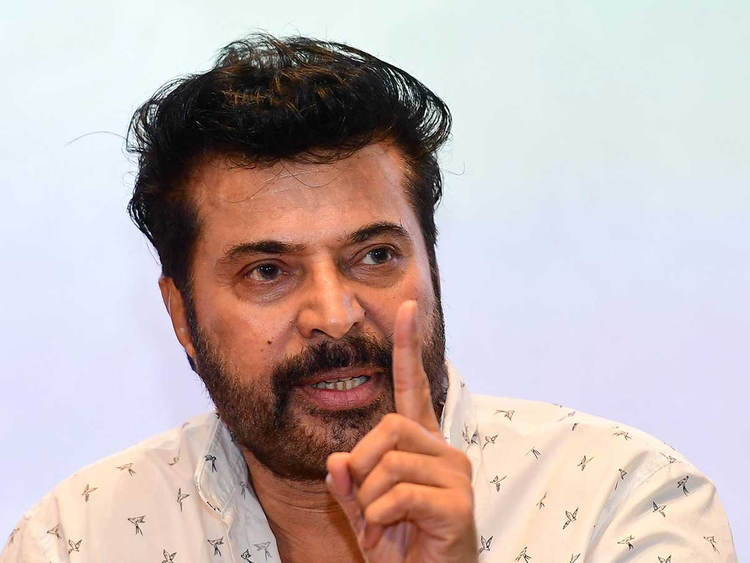
South Indian superstar Mammootty in Dubai, / earlier.Image Credit: Virendra Saklani/Gulf News

Dubai:

For the first time, two free community chartered flights repatriated 395 stranded Indians in the UAE to their hometowns in Kerala today.

While one flight was organised by Malayalam TV channel Kairali TV, under the leadership of its chairman superstar Mammootty, the other one was sponsored by the community group Overseas Malayali Association (Orma).

Kairali TV flew 215 stranded Malayalis home on an Air Arabia flight from Sharjah to Thiruvananthapuram at 6pm today, said E.M. Ashraf, the channel’s Middle East director for news and programmes. “Under the COVID-19 relief programme Kaikorthu Kairali, we had announced 1,000 free flight tickets to Keralites stranded in the Gulf countries. While we had given away some tickets to deserving candidates, we decided to also charter some flights from the UAE,” he told Gulf News on Sunday morning.

At least four free chartered flights are being planned for repatriation from the UAE with the contribution of several community members, businessmen and actors apart from Mammootty.

“We have also received the support from community groups in the UAE such as the Indian Social Centre in Ajman and MAS in Sharjah for organising today’s flight,” said Ashraf.

He said the channel had invited applications from the most deserving members of the community and a committee shortlisted the passengers from stranded visit visa holders, those who lost jobs, elderly patients and the like.

First from Dubai

While several community organisations in the UAE have chartered flights to repatriate stranded Indians, with some offering free tickets and subsidised fares, the first free chartered flight for repatriation by any Indian community group was the one arranged by Orma from Dubai to Kannur on Sunday.

Also on Sunday, a GoAir flight flew home 180 stranded Malayalis hailing from various districts of Kerala, said N.K. Kunhammed, a coordinator of the flight and a delegate of the Loka Kerala Sabha (LKS), a global body of expatriate Malayalis.

He said priority was given to stranded labourers, part-time maids, visit visa holders, pregnant women and families in distress.

Rajan Mahe, an invitee of LKS, who also coordinated the flight, said the group had been trying to arrange free chartered flights for some weeks under the initiative ‘Fly with Orma Care’.

“With the support of the Indian Consulate in Dubai, and the offices of the Kerala chief minister and Assembly speaker, we finally managed to make all the arrangements,” Mahe added.

He said the state government would facilitate the transportation of the repatriated passengers to their respective districts once they land in Kannur International Airport.

“We have arranged dinner for them through the Kannur local administration. If there are people who need further help to reach home from there, we will arrange that also,” he added.

Vipul, the Consul General of India in Dubai, appreciated the charity initiatives.

“I understand that both of these are free chartered flights that will be of great help to the community, especially in this hard economic times due to the COVID-19 pandemic,” Vipul said, appreciating the efforts of all those who had contributed to sponsor the tickets for distressed Indians.

Distressed passengers express gratitude

Distressed and stranded Indians who got a chance to fly home for free on Sunday’s chartered flights expressed their gratitude towards those who had organised these flights.

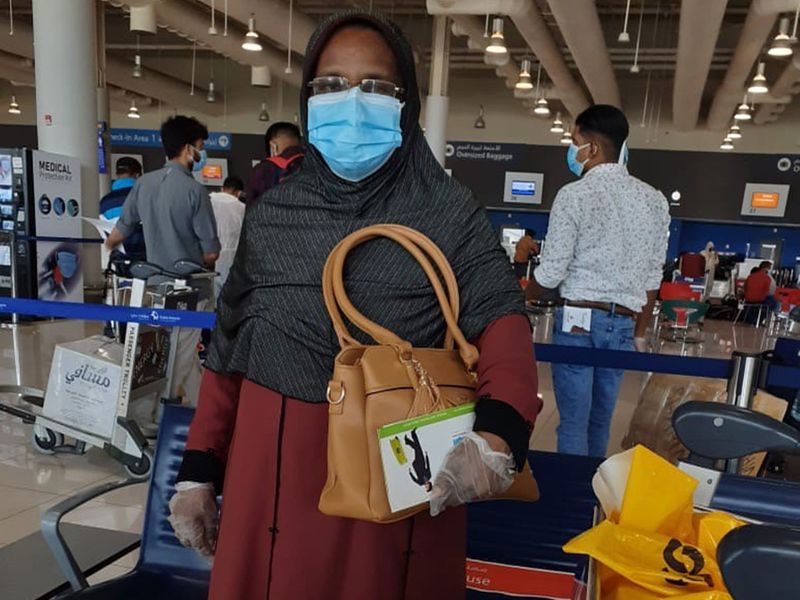
Sahira Beevi / Image Credit: Supplied

Sahira Beevi, who had come to Dubai after her son had fractured his leg, following a fall at a worksite, was among the stranded visit visa holders who were were being flown home by Orma.

“I struggled a lot because my son had already lost his job and was facing Dh30,000 in overstay fines. I had approached many associations for help. It was one Ansari and Orma members who helped us,” she told Gulf News.

“I am thankful to Orma for sending me home. I hope they will help repatriate my son also. He will be able to fly only when his condition improves a bit. He will try for repatriation along with my niece, who had also lost her job and came back on visit visa.”

She also thanked Emirates Companies House for presenting her a ‘Gulf Gift Box’ containing goodies that the company was gifting to returning expatriates.

Two other passengers on the same flight were Nafeesa Kutty and her daughter-in-law Majida Farsana, who had come on visit visas five months ago.

“She came looking for a job and I tagged along. But we didn’t expect the situation to change so fast. She didn’t get any job and my son’s salary was cut. Finally, we have to go back like this. We are thankful to Orma for helping us fly home for free,” she said.’

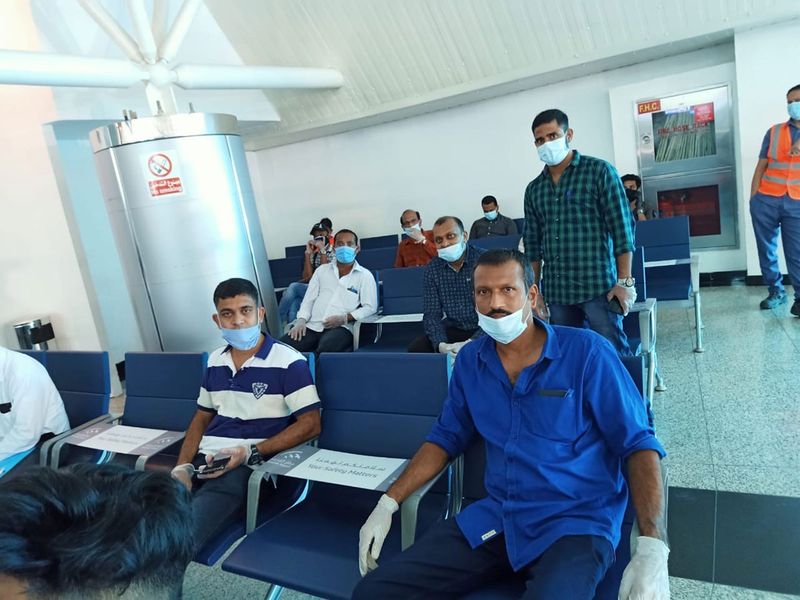
Gineesh Oliyil and colleagues / Image Credit: Supplied

Gineesh Oliyil, an employee of a four-star hotel in Sharjah, and six of his colleagues who have been left unpaid for three months, were among the lucky passengers on the Kairali flight.

“We served people quarantined in the hotel for a month. But, the hotel was shut in April and we have not been paid since then. We were only provided two meals per day.”

He said the members of MAS Sharjah supported them with food kits and also helped them register for the free chartered flight arranged by Kairali TV.

“We somehow wanted to reach home in these uncertain circumstances. We are grateful to MAS Sharjah and Kairali TV for helping us. The free chartered flight is a great initiative that is benefitting many distressed people like us. This is the first time we are hearing about such an initiative and I hope they will fly home more distressed people, including our remaining colleagues.”

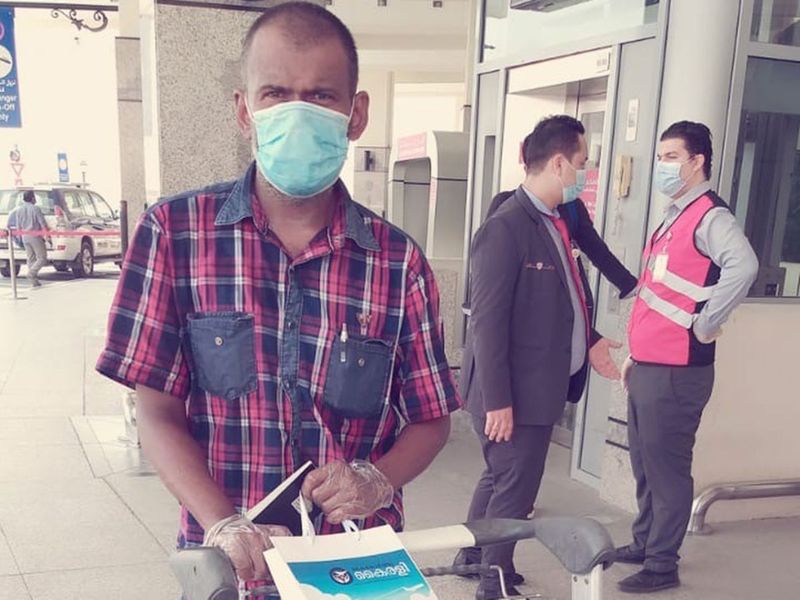
Saravan KH / Image Credit: Supplied

Another passenger on the same flight was Saravanan K.H. He said he was hospitalised for a month after he had a fall in the washroom of his labour accommodation.

“Doctors said my brain was affected due to the head injury and I needed help to move around. It was Shameer from my native place who helped me after I got discharged, at a time when nobody dared take care of a patient.”

He said he had approached many groups to fly home for further treatment and physiotherapy. “Finally, Shameer managed to register me on the Kairali flight and their help has come as a big boon for me,” said Saravanan.

source: http://www.gulfnews.com / Gulf News / Home> UAE / by Sajila Saseendran, Senior Reporter / June 21st, 2020

LOUNGE HEROES| Masrat Zahra: Conflict through her lens

Masrat Zahra
Masrat Zahra

The Kashmiri photojournalist has received the Anja Niedringhaus Courage In Photojournalism Award and been booked under the UAPA. She continues to tell stories from one of the most militarized zones in the world.

Afew days after 5 August 2019, when the Union government revoked Kashmir’s special status, 26-year-old photojournalist Masrat Zahra hopped on to her scooty and rode to Anchar, a locality in Srinagar’s Soura. The region had been plunged into a communication blackout, curfew imposed, military presence heightened and people detained as some of the mainstream media pushed the narrative of normalcy.

Soura was seen as a pocket of resistance—protests and rallies were commonplace.

When Zahra reached, Friday prayers had just ended and the protests began almost instantly—residents raised flags, chanted slogans and began to march towards the main road, Zahra recalls. “From the other end, the (Armed) Forces began to fire tear-gas shells and pellets; there was smoke everywhere. Smoke from the tear-gas shells, and from the cardboard people lit on fire to protect themselves,” says Zahra. “A few pellets hit me as well but did not penetrate (the skin) since I was further away,” she adds. Zahra began taking photographs with her DSLR from behind a tree.

Suddenly, she saw a young woman emerge from among the smoke and protesters. Her face was covered in salt (which helps neutralize the effect of tear gas) and she was screaming in Kashmiri, “Come out, the forces have enteredWe have to save ourselves!”, to the other men of the locality. For Zahra, this was a powerful visual. “Meri nazron se, I saw a courageous girl with anger in her eyes. It was so stunning in that moment,” she says.

It was a memory and photograph that endured. Zahra, who describes herself as “the only woman photojournalist in Kashmir”, reporting the conflict from close quarters, is driven by the need to inspire women. Documenting their role and space in Kashmir as more than grieving mothers or devastated kin presents a break from what Zahra calls “the male gaze with which Kashmir was previously seen”.

A woman in Kashmir puts salt on her face to neutralize the effect of tear gas shells fired by the forces. Credit: Masrat Zahra

In a span of two months, Zahra has been awarded for her work by an international forum and booked by the cyber police under the Unlawful Activities (Prevention) Act (Uapa) for uploading “anti-national” posts on social media. On 11 June, she was honoured with the Anja Niedringhaus Courage In Photojournalism Award by the International Women’s Media Foundation (IWMF)—named after German photojournalist Anja Niedringhaus, who was killed in Afghanistan in 2014.

“This award was for my work. When I was charged under Uapa, they didn’t even acknowledge I was a journalist, they called me a ‘Facebook user’,” she says. “But the outpouring of support has made my mother, who was initially reluctant about my profession, come around to accepting it.” So far, Zahra’s work has appeared in The Washington Post, TRT World, Al Jazeera, The New Humanitarian and several other media outlets.

The photojournalist grew up in the 1990s, at the height of militancy in Kashmir. As a young girl, she recalls looking out from her school bus at military personnel, jackboots entering her home during cordon and search operations, taking officers around the house when ordered. “We would talk to our friends about it in school the next day—yesterday the army men came to our home with guns, you know! We had no idea at the age of 8 or 9 what those operations were, we only found out much later,” she says.

A resident of the old town in Srinagar, Zahra is no stranger to clashes, rallies and funeral processions. As she grew older, she began noticing that every photojournalist in the field was male: “They were telling intimate stories even of women and I would wonder, is this profession made only for men?” She recalls she had no role models to cite to explain her aspirations to her reluctant family. She studied for the journalism entrance test in secret, heading for the exam amidst curfew the city.

“When I was in college (Central University of Kashmir), I would go on assignments with my friend, who was already a journalist. I learnt on the field from a group of photojournalists. Some of the first few things they taught me are things that have stayed with me even today,” she says. “They taught me not to take photographs from the protester’s side, otherwise we would get hit by pellets or bullets, we had to be alert to stones and slingshots, they taught me where to hide, where to get the most powerful shots,” adds Zahra.

She is driven by the conviction that as a Kashmiri, she is able to provide more authentic accounts of her home and people. “When everyone is supposed to be celebrating Eid with their families, I report clashes,” says the photojournalist, describing a time in 2018 when she was hit with pellets on the forehead. “But I know I will not stop doing my work, especially at a time like this when the authorities are trying to muzzle journalistic voices in Kashmir.”

Since 5 August, the government has not allowed high-speed internet access in the valley. Functioning on 2G speeds for nearly a year has made work difficult, particularly during a pandemic. In a region like Kashmir, Zahra maintains, social distancing is a distant dream. On 20 May, for instance, a gunfight between the Armed Forces and militants left a trail of tragedy—at least 15 homes were completely destroyed. “A 12-year-old boy died—small rooms packed with so many people grieving,” says Zahra. “Everyone says stay home, stay safe, but if homes are destroyed, where are people supposed to stay?” she asks.

Still, she has been reporting through the pandemic. Zahra files stories from the media facilitation centre for journalists set up by the government, where they are granted internet access for a few hours of the day. This, she says, increases the risk of contracting the coronavirus, given the number of people using the limited systems available.

But Zahra says nothing can deter her—not being “falsely branded a mukhbir” (informer), not “intimidation by the State” and certainly not any form of discrimination. “I remember on one of my first assignments covering clashes, a boy told me to go home because I will get hurt.

“It has always made me wonder, do male photojournalists not get hit by pellets? Would they not bleed the same way I do? Why must I leave?”

source: http://www.livemint.com / Live Mint / Home> Explore> Lounge> Features / by Asmita Bakshi / June 20th, 2020

Indian Kashmiri inventor creates ventilator out of scraps

JAMMU & KASHMIR :

Waseem Ahmad Nadaf, Inventor

A 22-year-old Indian Kashmiri has invented a ventilator made only from scrap parts: a soap box, a DVD drive, a bottle cap…

Even though the project is still at the prototype stage, the young inventor hopes his creation can contribute to India’s battle against the coronavirus.

source: http://www.arabnews.com / Arab News / Home / by AFP / June 19th, 2020

Despite risks, Muslim doctors in worst-hit Gujarat offer timely care, support to COVID-19 patients

GUJARAT :

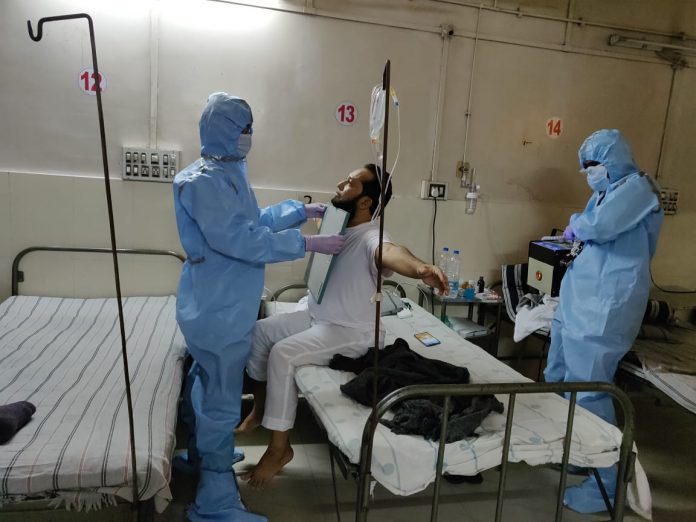
Cured patients with Dr Muhammad Husain’s team

Gujarat:

Muslim medicos in worst-hit Gujarat have been going an extra mile to fulfil their medical-course pledge for helping and curing run-down patients and have proved that not all white-coats are money-grubbing pill-pushers and bone-benders.

On March 1, the state government asked the medical fraternity to gear up for the pandemic and the medics of the minority community rolled up their sleeves to swing into action for serving the sick-as-a-dog patients of the dreaded coronavirus disease.

Even during the holy month of Ramadan and after, Muslim interns and resident doctors of the overcrowded state-run hospitals or physicians of private clinics not only sacrificed their comforts and academic studies but also risked their own lives to save precious lives with the situation worsening day every passing day – as one infected person expired every hour.

Doctors have to wear suffocating PPE suits for several hours.

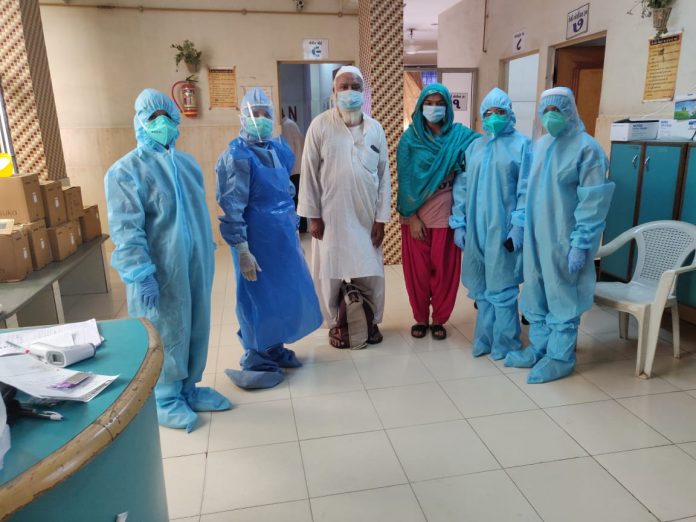
Wearing suffocating plastic PPE suits for as long as 12 hours, the dedicated doctors in the frontline of the fight against the mysterious pathogen work in frightful COVID centres near infectious patients. And yet, they offer their services and personalized care gratis to all castes for a noble cause, not to mention the fact that some healers have to work without PPE kits, N-95 masks and proper gloves.

Not surprisingly, in Ahmedabad alone, some 200 doctors have tested positive and at least 11 of them have died with their boots on even as Gujarat registered the highest mortality rate of 6.2 per cent in India on June 15.

Besides creating awareness and sensitizing unlettered patients about the viral infection and dealing with uncooperative relatives, the hard-pressed medicos have had to stay away from their dear one’s back home lest the latter get infected by the coronavirus.

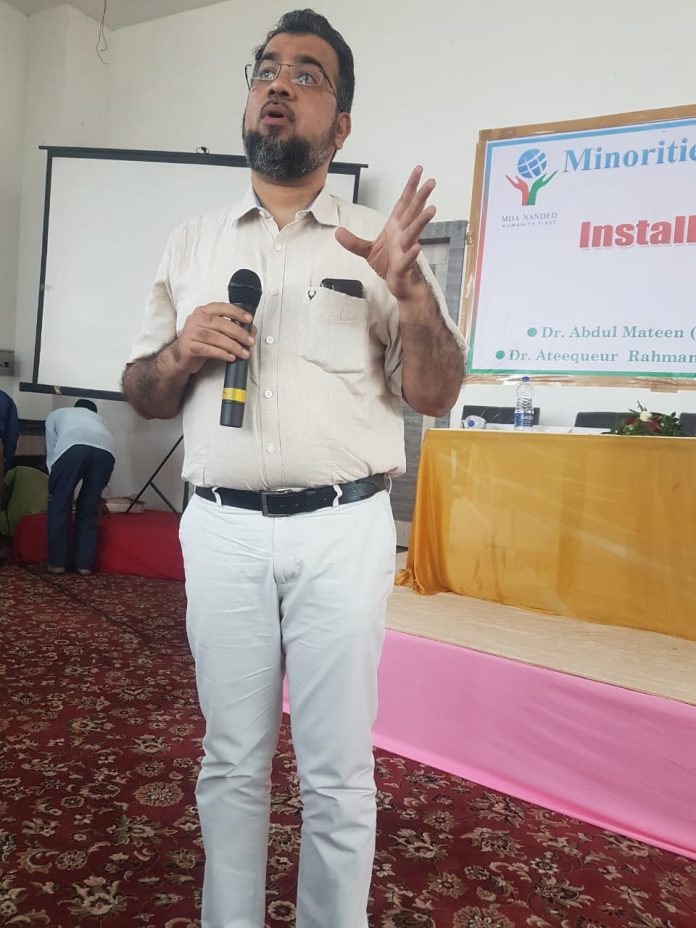
Dr Muhammad Husain

Dr Muhammad Husain of Vadodara has been a great inspiration for doctors of his community. As the corona crisis escalated, the local administration was worried stiff after senior doctors washed their hands off the global pandemic and in turn, the juniors had to meet the challenge of treating the patients in municipal hospitals.

But Dr Husain, who is also the chairperson of the Baroda Muslim Doctors’ Association, decided to pick up the gauntlet and presented proposals to set up four up-to-the-minute COVID care centres in Gujarat’s cultural capital. The beleaguered civic body was too happy to give its go-ahead with the result that hundreds of patients recovered in quick succession in fewer days compared to the discharge rate at other state-run facilities, thanks to round-the-clock monitoring by him.

When blood banks in the city ran dry and patients’ relatives running from pillar to post for the vital fluid, Dr Husain went round Muslim mohallas and sought the help of youngsters who, for the first time, donated blood on the day of Eid al-Fitr at a quickly-organized camp where 300 bottles were collected within just a few hours.

Community leader Zuber Gopalani told TwoCircles.net that, “Dr Husain, along with his bleeding-heart doctor friends, has stood on the road under the scorching sun and distributed immunity-boosting tablets bought from his earnings. All this has made him a real corona warrior.”

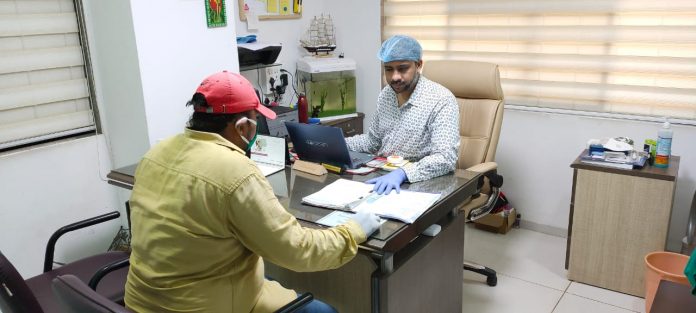
Dr Muhammed Dohadwala (right)

In Dahod city in central Gujarat, Dr Mohammed Dohadwala, a diabetologist, and his 67-year-old father Dr Kaizar, a senior consultant physician, kept their clinics open during the lockdown to help their regular patients even though most of the private doctors remained inaccessible, fearing the deadly viral infection.

“We decided that the work must go on and formulated a foolproof strategy for the safety of staff and patients, and even devised a video consultation platform in our centre for outstation patients,” he said.

Conscious of their social responsibility in these tough times, the Dohadwalas, with the help of a local NGO, distributed special kits of daily essentials among migrants, workers and other needy families in the city.

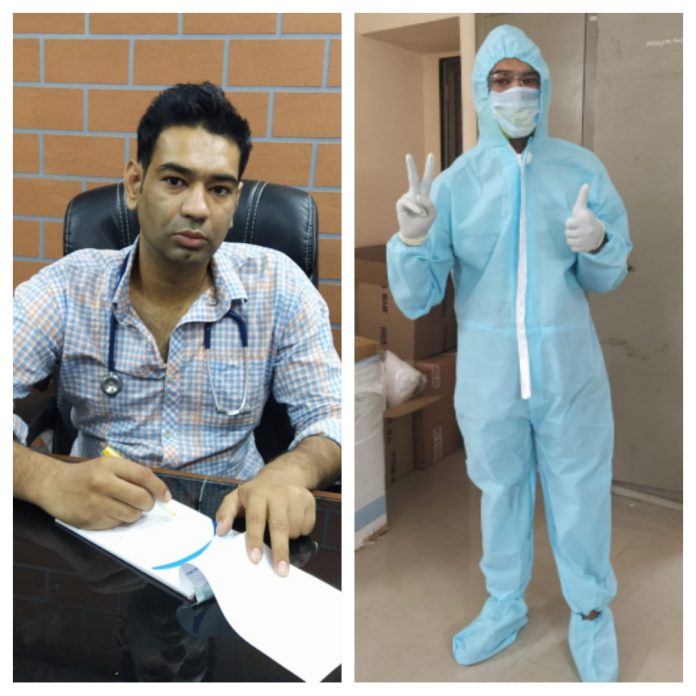
Dr Shakeel Vadaliwala (left) in PPE suit (right)

Ahmedabad-based Dr Shakeel Vadaliwala is a neonatologist specializing in the care of newborns but the dutiful doctor was so busy in serving COVID patients that he could not be near his wife when she delivered a baby girl last month. Even though he was away from home during Ramadan, he observed his fast and performed prayers and made do with simple food but he is happy that as many as 400 of the 800 COVID patients under his care at a government hospital were cured and discharged within a week.

Members of Ittehad Medicos’ Academy have not only kept their clinics open but have also been offering free services to COVID-hit men and women at three hospitals in Ahmedabad.

According to Dr Junaid Shaikh, who has a hectic schedule taking daily rounds at all these three care centres, he had to rent a house for several days to keep his family away from infection.

“I also had to use a PPE suit for three or four days because of shortage,” he told TwoCircles.net.

Mona Desai, president of the Ahmedabad Medical Association, said that Muslim doctors like Dr Didar Kapadia, Dr Murtza and Dr Iftekhar and others are doing a yeoman’s service in these tough times but wondered why cases of assaults on doctors by patients’ relatives were on the rise.

Mujahid Nafees, convener of the Minorities Coordination Committee, Gujarat sums up and says, that, “The sacrifices made by Muslim doctors fighting the pandemic are greater than even those of a soldier battling the enemy troops on the border. A soldier can see the enemies but for doctors, the coronavirus is not visible.”

Dr Muhammad Husain (second from right) and Dr Zuber Gopalani (second from left)

source: http://www.twocircles.net / TwoCircles.net / Home> TCN Positive> Indian Muslim> Lead Story> Pandemic / June 15th, 2020

HT Salutes: Ameena, an Anganwadi worker feeding hundreds of migrant labourers

Nizamabad, TELANGANA :

With countless migrant labourers deciding to journey home on foot amid the Covid-induced lockdown, an Anganwadi worker in Telangana’s Nizamabad decided to take it upon herself to feed as many hungry travellers as possible.

She has been buying and cooking food with her own salary, savings, and her children’s monetary help.

Ameena, who wakes up at 3 am every day to cook the food, has also been receiving donations in the form of money and food to continue her noble work.

Watch the full video for more.

source: http://www.hindustantimes.com / Hindustan Times / Home> HT Salutes / June 10th, 2020

Animal lover in Bihar bequeaths his land to elephants

Janipur (Phulwari Sharif) , BIHAR :

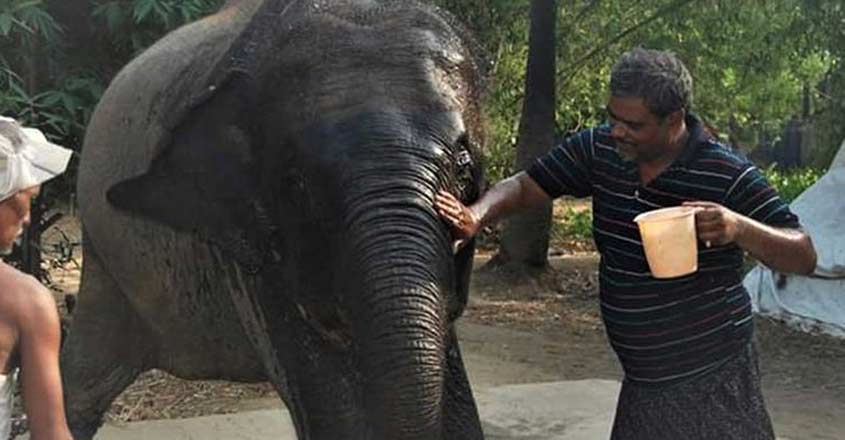
Mohammad Akhtar says elephants came to him as family heritage. Photo: IANS

Patna:

Even as the death of an elephant in Kerala in extremely tragic circumstances, is raging on social media, an animal lover in Bihar comes under the spotlight after he bequeathes his entire wealth to two elephants. He says one of them had saved his life from a criminal.

Mohammad Akhtar (50) from Janipur in Phulwari Sharif near Patna has two elephants aged 20 and 15 years. Moti and Rani live with him.

Akhtar says elephants came to him as family heritage, and that Moti and Rani are the “children” of those elephants. “I have lived with them since my childhood. The two are my family members,” he said, adding there are people who would like him to take care of the animal brought by them.

Akhtar is also chief of the Asian Elephant Rehabilitation and Wildlife Animal Trust (AERAWAT), an NGO. “I gave my 6.25-acre land to the two elephants to ensure that when I am not alive, the animals do not suffer hunger,” Akhtar told IANS.

He also revealed how Moti saved his life. “Moti had gone along with a mahout to Bhojpur district’s Shahpur area, where he fell ill. I had to rush there to treat him. One day, while I was asleep there, I was woken up by Moti’s roar. I saw one man pointing his gun just outside the window. I ran away to save my life,” recalls Akhtar.

He alleged that some of his own family members had joined hands with animal smugglers and were trying to sell the elephant by killing him.

Akhtar says he still fears for his life from his own family members because he has registered his land for the two elephants. He has written to Chief the Wildlife Warden and Patna police chief alleging threat to his life from his family members.

The elephant lover also trains mahouts. He says if the government does not intervene to protect the elephant, “the time is not far when we would see the elephant only in books. He says the elephants are headed for villages in search of food.

source: http://english.manoramaonline.com / OnManorama / Home> Lifestyle> News / by IANS / June 10th, 2020

Habib – the Bade Miyan of Calcutta ‘maidan’

Hyderabad, TELANGANA :

Mohd Habib was a lethal striker of the ball in the 60s and 70s. — File Photo

Known for his nimble footwork, the diminutive Hyderabadi was also referred as Indian Pele.

Hyderabad: 

He was the Bade Miyan of the hollowed Calcutta ‘maidan’. The name of Mohammed Habib stands out amid the galaxy of stars that twinkled on these grounds.

Known for his nimble footwork, the diminutive Hyderabadi was also referred as Indian Pele. His exploits with the ball for 17 long years (1966 to 1983) in the City of Joy brought him many laurels. The huge crowd, the pressure, and the fan following are still fresh in Habib’s memory. “It was the good old days. I loved the game and it was one of the best moments of my career,’’ said Habib, who is now afflicted with Parkinson’s disease.

Residing in Toli Chowki, Habib is a forgotten hero in Hyderabad. “No one knows me,’’ he said with a smile, a few years ago. In a marked contrast, he is a hero worshipped in Kolkata. Nevertheless, his contribution to Indian football is immense.

Now in his 70s, Habib’s famous number 10 jersey evoked nostalgic memories. As a multi-dimensional player, he was a sensation. Skillful and hard-working, Habib was excellent as a striker and a midfielder. As former Indian striker Shabbir Ali said Habib had the elegance, vision, passing, ball control, and technique. “He was a livewire on the ground. He had exceptional fighting qualities. That stood him apart from other players,’’ he said.

Habib said he enjoyed the game. “The roar in Eden Gardens was amazing. It was all about handling the pressure. I cherished challenges.’’

Victor Amalraj, the former Indian midfielder, said Habib had the ability to dodge past three or four players before scoring a goal. “He was an attacking midfielder keeping the forwards busy. He was also capable of playing upfront as he had the speed and dribbling skills. He was a lethal striker. He had a good header too as he leapt high to nod the ball in. He was a true professional. I was lucky to play alongside him and also captain him,’’ said Amalraj.

Habib was a hugely popular player and he commanded a huge market like his brother Akbar. He was considered a big catch with all the big three — East Bengal, Mohun Bagan and Mohammedan Sporting — angling for him.

Although his longest stint was with East Bengal, Habib’s memorable moments came for Mohun Bagan when the club played against the star-studded Pele-led Cosmos team in 1977. That particular match was a huge one for this Hyderabad striker as he struck a goal in the two-all drawn match. It earned plaudits from none other Pele. “I remember getting the ball in my zone. I turned and struck the ball in. There was a huge roar and a hug from Pele himself. That night after the match, he asked me why I’m not playing in European league as a professional. I said I’m a professional here.’’

Hailing from a family of footballers with all six brothers excelling in the game, Habib said it was proud to have so many players from one family. “Azam, Moinuddin, Fareed, Akbar, Jaffar and I all played big-time football.’’

Although he made a big mark in Calcutta, Habib also played for India with great distinction. He was a member of the Nayeemuddin-led Indian team that won the bronze medal in the 1970 Bangkok Asian Games. “I think I was fortunate to play in three Asian Games. Remember India had a glorious history. Today, the Indian football team is languishing. Other nations like South Korea, Japan, Iran, Iraq, China have marched ahead of others. They have made huge strides in world football while we are struggling in Asian football. The Indian football players cannot match the speed and stamina of some of the teams of the Asian countries,’’ said Habib, who later on shone as coach after quitting the game.

He was honoured with the Arjuna Award. Now, suffering from Parkinson’s disease, he is virtually confined to his house.

source: http://www.telanganatoday.com / Telangana Today / Home> Sports> Football / by N Jagannath Das / June 07th, 2020

Vegetable vendor’s son tops Assam madrassa board exam

Kahibari Village, (Barpeta District ), ASSAM :

The topper’s father said the madrassa teachers had helped the teenager by waiving off his monthly fees and offering free tuition to him.

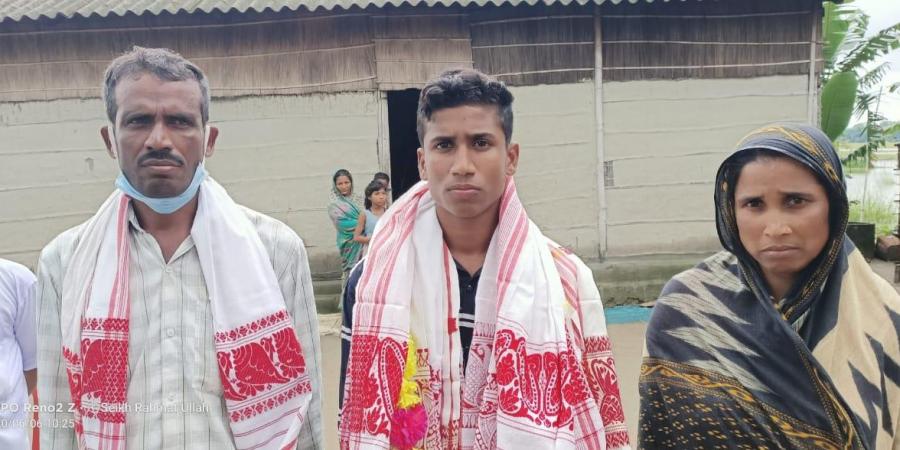
Eyamin Ali with his parents (Photo | Seikh Rahmat Ullah)

Guwahati :: 

Karam Ali’s years of struggle has not gone in vain.

The vegetable vendor’s son, Eyamin, secured the top rank in Assam’s High Madrassa Examination, 2020, the results of which were declared on Saturday.

From the local MLA to panchayat leaders, people swarmed to Ali’s modest house at Kahibari village in Barpeta district of Lower Assam to extend their best wishes to the family.

For over a decade, Ali had pulled a cycle rickshaw to eke out a living for his family of six members. Two years ago, he had made the rickshaw a vegetable carrier by modifying it. Given his son’s achievement, he said “poverty can never stand in the way of excellence”.

“I cannot tell you in words how happy I am today. This is the result of Eyamin’s hard work. He topped every exam of his school life. He studied at an Assamese medium private school up to Class VI. As the expenses there took a toll on me, I got him admitted to government-run Dhakua High Madrassa in Class VII,” Ali told this newspaper.

He said as Eyamin kept excelling in his studies, the madrassa teachers had helped the teenager by waiving off his monthly fees and offering free tuition to him.

“I studied up to Class 12 and I know the value of education. I had always told my children that it would be difficult for me to give them the facilities. They have to study hard and follow what their teachers say. I said if they do that, they will shine in life,” Ali said.

His only daughter has been married off while she was a second semester student at a college. His two other sons are students of Class IX and II.

The family has one study table which Eyamin shared with his brother to study. With no electricity at home, the two brothers studied in the light of a lamp.

“My life has been a story of struggle. But I always took pains to ensure that my focus doesn’t get deviated. I will remain indebted to my teachers who helped me in whatever way they could. I knew I will get the fruits of my struggle. God also helped me,” Eyamin, who aspires to become a doctor and serve the society, said.

He scored 558 out of 600 with letter marks in all subjects.

source: http://www.newindianexpress.com / The New Indian Express / Home> Good News / by Prasanta Mazumdar / Express News Service / June 06th, 2020